mcmorrow Mallory Sen
-=-=
lever
-=-=
The Billionaire Building The Democrats’ New Machine
lever 9 26
earlier this month, a new Democratic machine scored a major victory in Connecticut. First-time congressional candidate Luke Bronin won his Democratic primary by a landslide, ousting 14-term progressive incumbent Rep. John Larson (D-Conn.). Bronin’s win is part of a larger, national push — funded by a secretive hedge fund manager — to elect more establishment-aligned Democrats. Who is this man pouring his millions into the fight?
Today on Lever Time, David Sirota sits down with Lever reporters Katya Schwenk and Luke Goldstein to unmask the man behind the machine. They discuss Schwenk and Goldstein’s recent hit article exploring how one billionaire Democratic donor is attempting to handpick corporate-friendly candidates and crush their most progressive opponents in this year’s mid
You can check out more of Katya Schwenk and Luke Goldstein’s reporting here:
- How A Hedge Fund Billionaire Became The Democrats’ New Kingmaker
- The Democratic Primary Operative With A Wall Street Side Gig
- The New Democratic Machine – And The Billionaires Behind It
Want comprehensive 2026 midterm coverage? Check out The Lever’s new weekly newsletter, Midterm Madness, for election updates, analysis, and more.
This episode was produced by David Sirota and Natalie Bettendorf. The video and audio were edited and mixed by Ron S. Doyle. Our theme music is by Nick Byron Campbell. Marketing support, ad sales, and hosting from the Podglomerate.
TRANSCRIPT
[00:00:00] David Sirota: From The Lever's reader-supported newsroom, it's Lever Time. I'm David Sirota.
[00:00:03] WFSB Archive Clip: If we are gonna fix this mess that we're in, we need to build a Democratic Party that's bringing a whole new energy to this fight.
[00:00:10] David Sirota: Earlier this month, congressional candidate Luke Bronin won his Democratic primary in Connecticut by a landslide.
[00:00:16] WFSB Archive Clip: The former Hartford mayor denying incumbent John Larson a 15th term in Washington last night.
[00:00:22] David Sirota: Many media outlets have painted Bronin's victory as part of this year's insurgency of younger candidates defeating Democratic incumbents in primaries.
[00:00:30] WFSB Archive Clip: The primary was a test, whether voters want experience and seniority or a fresh face and new energy.
[00:00:37] David Sirota: Bronin is certainly a fresher face, decades younger than the 78-year-old incumbent Congressman John Larson.
But Bronin has few ideological commitments, offering up policy proposals with a populist sheen but that are hardly substantive. Larson, on the other hand, was the more progressive candidate in this race, a longtime champion of unions and Social Security. Behind the scenes, something else in this race was going on, and these two reporters have been peeling back the curtain.
[00:01:07] Katya Schwenk: I'm Katya Schwenk.
[00:01:08] Luke Goldstein: And I'm Luke Goldstein, uh, and we're reporters at The Lever.
[00:01:10] David Sirota: For months now, our reporters Katya and Luke have been investigating a new constellation of groups funded by big donors. These groups have built a secret political machine that aims to help corporate-aligned Democratic candidates crush more economically populist Democrats in key primaries across the country.
Today on Lever Time, we're taking a closer look at one of the biggest donors behind this whole battle, a billionaire who's put a dark money apparatus behind Bronin's Connecticut campaign. Who is Stephen Mandel? What exactly does he want? And how is he shaping the 2026 midterm election results? That's all coming up on today's episode of Lever Time.
Welcome back to Lever Time. I'm speaking today with The Lever's investigative reporters, Katya Schwenk and Luke Goldstein.
So a few months ago, the two of you did some digging and broke open this huge story about a constellation of groups aiming to help corporate-aligned Democratic candidates crush more economically populist Democrats in a bunch of primaries, and you exposed the big donors behind all of this.
So let's start by refreshing our memories a bit on all of that and who some of those big donors are.
Let's start with Luke.
[00:02:28] Luke Goldstein: Yeah. So for the piece that we did a couple months back, we were looking at two twin organizations that go by the name of The Bench and Majority Democrats. They funnel money between one another, share a lot of the same staff and donors. And they're these new players on the scene that made a huge splash, uh, in the Democratic primaries this year.
They've helped, um, boost, uh, Josh Turek to victory in his primary race for the Iowa Senate seat, James Talarico in Texas over Jasmine Crockett. And their handpicked candidate was Mallory McMorrow in the Michigan Senate race, who had to drop out actually before the primary date. They also backed Angie Craig, who lost to Peggy Flanagan in the Minnesota race.
And, you know, these, these new groups though have had a lot of success down ballot with congressional races, and they really offer two main kinda assets to candidates who are supported by them. They give them access to a really high-powered network of billionaire donors. Those include Tench Coxe, who's a, a venture capitalist, Michael Novogratz, who's a crypto AI investor, and another guy, Mark Heising.
But the big name that really sticks out is Stephen Mandel. Uh, and so, you know, what we really tried to do for our piece was kind of dig into who this, who this guy is, who's been the primary funder of this whole network, and try to dig into, you know, what the kinda ideological underpinnings may be of this project.
They tend to back more moderate candidates who are going up against progressives in Democratic primaries. The network has played a big role kinda putting their, their thumb on the scale in a handful of races, uh, launching them to victory.
[00:04:03] David Sirota: Okay, so then that raises the question, who exactly is Stephen Mandel? He's the biggest donor, or at least one of the biggest donors, prime mover and shaker behind this whole network. To figure out what he wants, ideologically speaking, from the candidates that he's backing, I think the— right, the first question is who exactly is he?
What can we know about his agenda?
[00:04:26] Katya Schwenk: Yeah. So, you know, Steve Mandel, he's not a household name. And so that, that really was our first question when we started looking into those groups and saw his name coming up again and again as by far the biggest bankroller of this sort of dark money apparatus across a few different PACs and nonprofits.
You know, who is this guy? And like, what, what does he want? What is he trying to accomplish? You know, Mandel is, has been a longtime Democratic donor, actually, is what we found. He is a hedge fund billionaire. His hedge fund, Lone Pine Capital, you know, made it really big in the '90s, and so he has quite a lot of money to spend, and he's been spending pretty prolifically for many years.
He even hosted, we found, you know, former President Joe Biden at his sort of Greenwich mansion in the lead-up to the 2024 presidential elections. But it's really been over the last, you know, year or so that Mandel has taken a more active role. He's bankrolling these organizations that aren't just pouring money.
It's not just like a dark money machine for, you know, the DNC, but he's really trying to pick, to play a role in these primaries and sort of handpick the candidates who might go on to, you know, win. So yeah, I mean, I think he's kept at the same time an extremely low profile. We dug back through his sort of history alongside his wife of charitable giving, as well as sort of a smaller and less well-known political apparatus that he's actually built up in his home state of Connecticut to try to figure out what are his motivations. Um, and we found that's just some pretty interesting results.
[00:05:58] David Sirota: So you've got this guy who's the proverbial man behind the curtain who's funding this infrastructure. And I will say the, the candidates that you mentioned, that this network has been supporting, I mean, they do seem to run a, some kind of ideological gamut depending on how you perceive them.
I mean, James Talarico is an example of somebody who's run very explicitly against billionaires and against money in politics, but who is also backed by this network and does kind of code as a more moderate Democrat in other ways. Josh Turek in Iowa is, is moderate coded, but has also sort of also tried to cast himself as a populist in certain respects.
I think the question is, what ideological commitments, if any, can we perceive the candidates backed by this network, uh, making, to somebody like Steve Mandel specifically or generally to a more corporate-friendly faction? I guess what I'm asking, Luke, is there a through line between the candidates that Steve Mandel is backing, and what they're proposing in terms of policy?
[00:07:11] Luke Goldstein: I think from the outset, to take these groups at their word, they have one commitment, and that's to find candidates who can win, more or less, right? They just care about fielding a set of Democrats who will go up against Republicans in a general election and, you know, help build Democrats a majority, right?
That's their kind of, you know, professed rhetoric, right? And I think what we tried to do in particular was take them at their word and also try to dig into what are the races where they've put the most resources, right? Where are they most heavily invested, and what does that field of candidates really, really look like?
And, you know, the Michigan race was really, for a while, their biggest investment, and I think Mallory McMorrow, who they were backing, had the prototypical bio of a candidate they were looking for. She was kind of in the middle between a more conservative Democrat and a more populist Democrat, and Abdul El-Sayed and Haley Stevens on the other hand.
And, you know, McMorrow adopted certain positions that were very much of the moment. There was a kind of progressive sheen to that campaign. If you dig beneath the surface, there were a couple key issues where I think the network backing her really kind of showed their cards, and one was on the question of data centers.
So McMorrow's position in that race was very much adopted from a policy group in DC that's also part of the Stephen Mandel network called Searchlight Institute, and they put out a whole bunch of proposals that were in opposition to a data center moratorium, which has been backed by kind of more progressive candidates.
They wanted to do something that was tech companies, you know, pay as they go, right? They get to set up their data centers with few restrictions. There's a tax on them specifically to upgrade the underlying infrastructure of utilities, right? So it's this kind of middle path, and that kind of rhetoric we've seen pop up across other races where The Bench and Majority Democrats, funded by Steve Mandel, have invested.
Luke Bronin in Connecticut is another one that we can talk about. But I think just to kind of step back here, right, and, you know, we can try to point to what the wizard behind the curtain here may want. You know, his hedge fund, Lone Pine Capital, almost a third of their portfolio right now is invested very specifically in what's called the picks and shovels of the data center infrastructure build-out.
His portfolio has actually shifted away from what are called the hyperscaler, the Mag Seven AI companies, the Googles, the Microsofts, the OpenAIs, and invested all the way into the suppliers and the physical infrastructure companies that do data centers. So largely this was TSMC, which builds chips, semiconductors, which are crucial for data centers, other energy companies that have struck really particular power agreements with data center developers.
This is really kind of his whole, you know, MO, and I think it's pretty noteworthy that the general political apparatus he's funded has more or less tried to kind of support on the candidate level certain kinds of politicians who will strike this kind of middle path on what to do about AI and data centers, which will of course be the big question for Democrats and whatever party comes into power after the November elections.
[00:10:21] David Sirota: We're gonna take a quick break. We'll be right back.
Welcome back to Lever Time.
I think there's like a chicken or the egg question here, to be honest. I think at one level we can look at somebody like Steve Mandel, who made his money as an investor, and so I think a logical question is, okay, if he's made his money as an investor, investing in this Democratic political infrastructure, is he looking for a return on investment?
I think another way i-is to ask the question, okay, i-in an alternate universe where these entities will never admit and don't admit that they're just an extension of s-some set of donors' attempt to invest and enrich themselves, where we take them at their word that they're making investments in what they perceive to be the kinds of Democratic candidates who can win.
Are they preferencing more moderate, quote unquote, more centrist, quote unquote, candidates as opposed to progressives because they genuinely believe that is the kind of positioning, that is the kind of Democrat who is best positioned to win in a general election? I'm not sure we can actually answer like what's in their mind, what's in their heart, but I just throw that out there for something that I'm thinking about.
Because
I think the question then, Katya, is knowing what we know about Mandel's investment, knowing what we know about Majority Democrats and the organization that they're funding, are they really only interested in so-called electability and therefore they're backing moderate candidates, or are there clues that this is a, like an investment strategy?
[00:12:01] Katya Schwenk: It's a really interesting question, and like you said, I don't know that there is a real straightforward answer. And I do think there is a way to think about Mandel and some of the groups that he's funding as sort of real ideologues, kind of separate from their material interests.
I think he really does. For instance, we wrote about his long-time, very devout support of charter schools, you know, and sort of a more, a controversial area in education that, of course, puts him at odds with teachers unions in many cases and more traditional supporters of public education.
But, you know, it does seem like this has been one of his central issues. And with respect to Majority Democrats, I mean, I, I think that they... You know, it's not only that they claim that they want to elect Democrats that can win. They— like, they do sort of have a strategy for that.
But that's a little bit outside of the bounds of just, you know, moderate or corporate wing of the party as we've sort of understood it up till now. Like, their sort of, their idea, their stated goal is to build, like, a new center, you know, a new wing of the Democratic Party modeled on the corporate wing of the party that existed in the 1990s that sort of revitalizes the establishment.
And I think that's where you see, I think that's how you understand why they're backing some candidates like Talarico, for example, who have like a, a little bit of a populist sheen or something that they, you know, they go after, that they're sort of tapping into the more progressive or populist wing of the Democratic Party and, you know, perhaps co-opting it a little bit.
But it is sort of part of this mission to, like, not just support moderate Democrats 'cause they think that they can win, but build this new corporate wing, kind of reinvent what that even means, and I think that's why we can see why their candidates, in some cases, have more, like, heterodox views.
But yeah, I mean, certainly, I think Mandel's interests and the interests of all the billionaires that are kind of donating alongside him are critical to understanding, you know, where these candidates stand on a variety of positions.
[00:13:56] David Sirota: Yeah. To me, there's a through line here, right? And I always like to look at history. There's a through line from first they were called the Atari Democrats, then they were called the DLC Democrats, the New Democrats, then they were called Third Way. Now I think they're called Majority Democrats and The Bench.
I mean, Luke, is that like a fair way to look at it or am I, or am I being unfair?
[00:14:20] Luke Goldstein: I think the way they present themselves outwardly is, is different, but that's kind of the point. You know, it's this kind of nebulous project that always seems to fit purely to what they think is most politically expedient. And one example of this in particular is that what we should mention along with just the dedication, I guess, to winning, is they've really leaned into this whole political moment, where there's a backlash against, you know, the gerontocracy, right?
This is another kind of big hobby horse for them, right? And we can dive into, you know, why they've been sort of selective, right, in certain races that they've picked out to make this kind of crusade against the gerontocracy a big issue. But Majority Democrats, one of the groups we're talking about here, put out a whole video that kind of was presenting and showcasing this new project that they're doing of trying to topple older incumbents.
And in the, in the video, the very first politician that pops up on the screen is Bernie Sanders, and then it's followed by a bunch of other older members. Elizabeth Warren is one of them. But I don't think you have to read into it too much to see what is trying to be demonstrated there, right?
It's that this fight against the gerontocracy isn't kind of left, or moderate, right? But they're very clearly picking out certain kinds of members to be the face of this gerontocracy. And that was the case in the race for Connecticut's first district between Luke Bronin, who is the Stephen Mandel handpicked candidate.
He was actually on Stephen Mandel's payroll for a number of years. He was a former Hartford mayor, just very kind of generic Democrat, had a bunch of dust-ups with the teachers unions in the state over charter school initiatives at the time, which we dug into. And then several years later, when he's kind of biding his time figuring out what to do next, Stephen Mandel puts him on the payroll for The Connecticut Project, which is one of the nonprofits he's set up in the state.
The Connecticut Project, totally identical in a lot of ways to these new national groups like The Bench that Steve Mandel has also helped set up. There's really a pretty one-to-one parallel there. And then Luke Bronin launches this race against John Larson, who's a 14-term congressional incumbent, is just turned seve— 78 years old.
He's definitely older, right, but has a lot of progressive bona fides. He's supported by union groups. He was supported by Working Families Party, known as, you know, a proponent for expanding Social Security. And I think it's very indicative that this political network felt emboldened to take on someone like Larson with a candidate like Luke Bronin, who was really in many ways running to Larson's right on key questions, you know, like data center, tech policy and AI.
You have progressive challengers against incumbents who are older as well, and they focus on the candidate's age as a way to talk about that incumbent's record on certain issues, if that's healthcare or Medicare for All and such, to show that that politician is older and out of touch on the issues.
Luke Bronin didn't have any of that. There was no policy critique at all of Larson other than the fact that he was, you know, old and, and should have really stepped a— stepped aside. And I think that is one small microcosm for kind of understanding the political operations of this whole network.
[00:17:22] David Sirota: So it's essentially using strategically, selectively the age argument as a way to almost smuggle in a, a different ideologically coded kind of Democrat, a more corporate-friendly Democrat. That seems to be what happened in Connecticut. What comes to mind also is the Massachusetts Senate race that's happening right now.
I mean, you have a, a similar situation where the more progressive candidate, uh, is the incumbent senator, Ed Markey. The younger candidate is the much more, uh, e-economically conservative, corporate-friendly candidate Seth Moulton, who is a, a, a congressperson. Is this network playing in that race? Do we know?
[00:18:02] Luke Goldstein: So not a lot of the core groups. However, Seth Moulton is being backed by another super PAC that's in this network called VoteVets, which we haven't talked about yet. They're ostensibly supporting Moulton because I believe he was in the Air Force, he had some military background.
However, this cycle, VoteVets has really moved in lockstep with this whole political network. They intervene in races alongside The Bench and Majority Democrats all the time. They spent $10 million to help Josh Turek coast to victory in the Iowa Senate primary race, and one of their largest donors this cycle is Stephen Mandel, who has not ever given to VoteVets in any other cycle other than this one.
And, uh, it seems pretty clear they share actually some of the same staff, that there's some coordination strategically in these races for VoteVets to be a major outside spender, whereas The Bench kinda operates more behind the scenes where we'll offer strategic and consulting kind of media advice for campaigns.
[00:18:57] David Sirota: And just to be clear, you broke a big story about VoteVets. Tell us a little bit about that.
[00:19:02] Luke Goldstein: Yeah, I think it fits sort of within this whole, um, uh, picture, 'cause one of the groups that we've been reporting more on since our, our last investigation is, is VoteVets and what role they're really playing in this whole network. So one of their top officials is simultaneously, at the same time that he's involved in this whole network spending, getting, intervening in Democratic primary races, he's been running this astroturf lobbying operation in Washington, D.C. on behalf, very explicitly on behalf of banks and credit card companies to try to kneecap reform efforts to pass legislation that would bring down what are called swipe fees. It's kind of like junk fees that merchants and consumers have to pay because they're reliant on these credit card companies and their payment networks in order to just do basic business.
It's a huge cash cow for banks and credit card companies, and they've enlisted, you know, the top official for a major Dem super PAC to do their bidding in D.C. at the same time.
[00:19:54] David Sirota: I mean, so this speaks to kind of the overlapping interests at play here, where there's a— You know, when people refer to the political class, I mean, I think this is what we're talking about, right? This political class is this blob of like donors, operatives who are working at overlapping organizations, different agendas, not necessarily super transparently.
And I, I glean from all of this that this is, this is an ideological project, being essentially smuggled into Democratic politics under the, uh, auspices of electability, and we just wanna win. Now, I think if that is the case, then I think after these elections, after the midterms, that what we're gonna see, whether by the way these candidates, The Bench's candidates, Majority Democrats candidates win or lose, this is like a trial run to my mind for what is likely to happen in the 2028 Democratic presidential primary.
That they're actually revving up this network and testing it out, kicking the tires, pressure testing it for deployment in the 2028 presidential election when there's gonna be a lot of candidates competing for a lot of different lanes, ideological lanes, branding lanes, moderate, centrist, progressive, et cetera, et cetera.
And obviously money lanes. Who, which donors are they gonna, are g— are they gonna get? Do you have a, a, a sort of a vision of what this might look like in the 2028 Democratic presidential primary?
Which I should remind everyone is gonna start like the day after the midterms.
[00:21:31] Katya Schwenk: Yeah, I mean, I think it's worth noting that, you know, Majority Democrats, the organization was sort of founded explicitly right aft— in the wake of Kamala Harris' loss in 2024. The founding document for the project was, you know, authored by the consultant Seth London, who's been a longtime advisor to big Democratic donors.
So I think we can very explicitly understand Majority Democrats, you know, Mandel's, an organization funded by Mandel that's part of this dark money apparatus, as being founded to, like, basically chart out a path to 2028 for the Democratic Party. So, you know, I think it's really, I think it's correct to sort of understand what's happening right now as, you know, just one step toward that, for this network.
And I think it's been useful for them 'cause they've really been able to build out their political capital and figure out how, you know, th-they can operate more smoothly. But yeah, I mean, I think they're going to be playing a big role in that primary.
Like, their goal is not to just, you know, give a lot of money to whoever the Democratic nominee is, it seems, as, which is what Mandel had historically done. But now he is sort of playing this really big role in who wins, like, the Democratic nomination. I think we can imagine that playing out similarly in 2028.
[00:22:46] David Sirota: We're gonna take one more quick break. Before we continue, I just want to tell you about The Lever's other award-winning podcast, Master Plan. Master Plan's new season, The Kingmakers, traces the decades-long effort to manufacture an all-powerful presidency, from Richard Nixon and Ronald Reagan to Dick Cheney and now Donald Trump.
The podcast shows how a fringe legal theory has been used to hijack the machinery of American government. If you want to understand the world we're living in today, follow Master Plan on Apple Podcasts, Spotify, or wherever you're listening right now. We'll be right back.
Welcome back to Lever Time.
I think the final question is about what these midterms mean for that project moving forward. You've got, a-as we've mentioned, you've got these billionaires who are trying to create this network that's essentially trying to infiltrate the Democratic Party.
They've got electoral organizations, Majority Democrats, The Bench. They've got think tanks like the, the so-called Searchlight Institute that's putting out policies, uh, that are designed to try to blunt the, uh, progressive uprising inside the Democratic Party. This is being, uh, engineered and orchestrated by, for instance, Lis Smith, the Democratic political consultant who ran Pete Buttigieg's, uh, 2020 presidential primary.
So this is all leading up to 2028. But I, I wonder what the results of the 2026 elections might mean for this project. So I think the, Luke, I'll throw to you on the final question about this is, if this network is not successful in 2026, and like for instance, their, one of their most high-profile candidates, Mallory McMorrow, had to end her campaign because it was really failure to launch.
There was a lot of hype behind it, and her campaign ended. If other candidates who this network is promoting as electable, if they are not successful in the 2026 midterms, progressive populist candidates are quite successful in this, in the midterms, does that potentially change how influential these groups are, even though they're gonna be funded, even though they're gonna be active?
Does that change the story they're gonna have to tell? Is it gonna change how influential they are in making their case in the 2028 election?
[00:25:09] Luke Goldstein: Well, dude, I hate to break it to you, but in my experience, there hasn't been a lot of precedent for just the pure merits or victories really determining which way the party goes because this network has the money, right? They have access to Steve Mandel and this whole host of billionaires, so I think a lot of people in Democratic leadership, people who are calling the shots, kind of have to listen to them one way or another.
But yes, it'll change how they message and how they try to control the narrative after the midterms. I think it should be said, there's been a lot of coverage already about all the kind of, you know, all the success that The Bench has already racked up in these primaries. There was a Politico piece that almost was doing a, a score count, you know, of, oh, The Bench has four victories out of five or whatever.
Along with Mallory McMorrow dropping out, which was a big loss for them, the Majority Democrats' handpicked candidate, Angie Craig, also lost in, in Minnesota to Peggy Flanagan, who is, despite being a lieutenant governor, was also more of the progressive pick in that race, was kind of stronger with her rhetoric on ICE than Angie Craig, who has been much more kind of accommodating to immigration enforcement. But yeah, I think that The Bench has a couple big tests ahead for them about whether the Democrats that they have fielded and brought to success through the primaries are actually gonna be able to stand the test against Republicans in the general election. And granted, and really, you know, these are difficult races in, you know, Texas and, and Iowa and such.
There's another congressional candidate, Cait Conley, that their whole network is really invested who's running against Mike Lawler for New York's 17th, which is in the suburb, in the suburbs outside New York. I think that the one other point I guess to make here, depending on what happens in November, is that what we've gathered is that The Bench is more directly involved in these midterm races.
Majority Democrats, the other arm of their apparatus, is the one that's really gearing up for 2028. One of their kind of lead spokespeople really at this point is Senator Elissa Slotkin in Michigan, who's much more explicitly part of the moderate faction among Democrats. They've been really kind of trotting her out doing these kind of splashy, well-publicized kind of town halls almost and conversations with voters, and it's been reported that Elissa Slotkin is likely a presidential hopeful in '28, or if not, she's still positioning herself to be like a behind-the-scenes operator in kind of vetting and selecting who the other candidates will be that will launch races.
I don't really know exactly what gives her the authority to do that, but I guess, you know, she did win a, a swing state that matters for Democrats despite being a one-term senator. So I think that m— you're gonna be hearing a lot about Majority Democrats on The Bench moving forward, even if it's more behind the scenes in terms of funneling money and orchestrating these kinds of kind of political stunts and town halls and such.
[00:27:54] David Sirota: Yeah, and I think the f— the flip side is also gonna be true. I mean, I think that if populist candidates who have defeated this network's candidates in primaries don't win their general elections, I'm guessing that Majority Democrats, The Bench, Searchlight Institute, this whole newfangled corporate faction in the Democratic Party, the DLC, the New Democrats by another name, they will argue that those losses of populist progressive candidates proves that in the 2028 election those candidates should not be nominated.
I'm thinking about Michigan, to go back to that. I think it's very clear in watching this network operate, watching the corporate Democratic faction operate, that that faction, if they were forced to answer, they would say, "Yeah, it would be great if Abdul El-Sayed loses in Michigan, even if that means Democrats don't win Congress, because that gives us a powerful story to tell that, 'Oh, we have to have more corporate-friendly moderates become our general election nominees.
Don't nominate people like Abdul El-Sayed. Don't nominate people like Peggy Flanagan. Don't nominate progressives because they can't win.'" And they would point to those losses in the 2026 election as a kind of cautionary tale, a tale that we've heard, frankly, for my entire lifetime, this faction telling that tale.
I mean, Katya, do you think th— that if El-Sayed loses, if Flanagan loses, if some of these other candidates who have defeated the corporate faction in these primaries lose, that this network is going to spring into action to make an argument, that proves that their argument, their more moderate argument, must win the day?
[00:29:38] Katya Schwenk: Yeah. I mean, I think you can see them, or at least the corporate media and establishment gearing up for that in the Michigan race. Like, there was a headline, I think it was The New York Times, right after the win that was like, "Is Abdul El-Sayed going to cost us Michigan?"
You know, and that is like immediately what the narrative has pivoted to, ginning up fear around that. And I think, yeah, of course, I think they'll take it and run with it. Because again, they want to make the point that McMorrow or their favorite candidate could have won in the general, even if she couldn't won in the primary, didn't win in the primary.
So yeah. And you know, and they've, they've made their opinions on sort of the, the left or the progressive wing of the party very clear. That is the reason when they explained their rationale for the existence of the network to begin with, or the Majority Democrats, you know, they pointed to the progressive groups, progressive nonprofits, like sort of progressive litmus tests as the reason that Kamala Harris lost in 2024, sort of exculpating the donor class as potentially a reason here.
So I, I think, you know, they are clearly averse to taking any kind of accountability for losses like that, and I think they'll definitely use losses of progressives or populists in the party to their own advantage.
[00:30:51] David Sirota: Yeah. I mean, I feel like this has been playing out honestly since McGovern. McGovern losing in 19, has been the cautionary tale against the progressive wing of the Democratic Party for, at this point, 50 years.
But this is the latest iteration o-of that, of the sort of corporate business-friendly wing of the party weaponizing the idea that the progressive wing of the party cannot win general elections. Uh, and I think that's, that is going to be the big debate in the early part of the 2028 Democratic presidential primary, and I think this is all just prelude to it.
And again, I think the reporting that, that you both have done about specifically Steve Mandel, the billionaire, one of the billionaires behind this network, suggests that argument is not the only thing operating on its face, just a concern for whether Democrats win. There are different forces underneath that, financial forces, uh, looking for a, a return on political investment in the form of potentially policy.
I mean, you mentioned data centers. There's deregulation. There's all sorts of different policies that billionaires, crypto policy. There's all sorts of different policies that billionaires are interested in, and I just feel like there's this top-line argument about who is electable that kind of obscures what is actually going on in terms of what the politics are actually about, which is why the reporting on a billionaire like Steve Mandel is so important.
So Luke, Katya, thank you so much for doing the reporting. Thanks for talking to us today.
[00:32:21] Katya Schwenk: Thanks, David.
[00:32:22] Luke Goldstein: Yeah, thanks.
[00:32:24] David Sirota: Thanks for listening to another episode of Lever Time. You can check out more of Katya and Luke's reporting linked in our show notes below. Lever Time is a production of The Lever. This episode was produced by Natalie Bettendorf. Our theme music is by Nick Byron Campbell.
Marketing support from The Podglomerate. Our director of podcast production is Ron Doyle. You can subscribe to Lever Time on Apple Podcasts, Spotify, iHeartRadio, or wherever you get your podcasts. And while you're at it, leave us a comment or a review. We really appreciate hearing from our listeners, and it truly helps spread the word about this show.
Remember, for ad-free episodes, exclusive bonus content, and access to The Lever's entire archive of investigative journalism, please consider becoming a premium subscriber right now. Head over to levernews.com to learn more about becoming a paid subscriber or click the link in this episode's show notes.
I'm David Sirota. We'll be back next week with another episode of Lever Time.
-=-=
---
4 26 Mallory McMorrow - Wikipedia
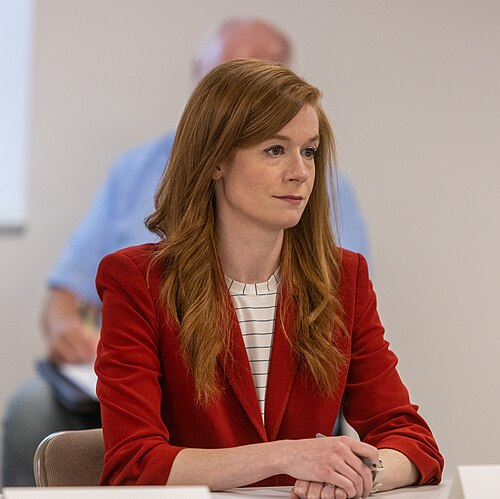
Mallory Ann McMorrow (born August 23, 1986) is an American politician who has served in the Michigan Senate since January 2019.[1] She became senate majority whip on January 1, 2023. A member of the Democratic Party, she represents the 8th district; before that, from 2019 to 2023, she represented the 13th district. Prior to running for the Michigan Senate, McMorrow worked in industrial design. She is currently a candidate for the United States Senate in Michigan for the 2026 election.
Early life and education
McMorrow was born in the Whitehouse section of Readington Township, New Jersey, and graduated from Hunterdon Central Regional High School.[2] She was raised Roman Catholic and her family was active in their local parish.[3] McMorrow sang in her church choir, and her mother taught Confraternity of Christian Doctrine (CCD) classes.[3] However, her parents divorced, and their priest said her mother was "not living up to the Church's expectations". McMorrow said that on Sundays, she and her mother instead volunteered at local soup kitchens outside of the diocese.[4]
McMorrow received a Bachelor of Arts in industrial design from the University of Notre Dame in 2008.[5] During her junior year at Notre Dame, she won a public design contest for the 2018 version of the Mazda3. She also finished second in a contest to design the logo for the Indiana Toll Road.[6][7] After graduation, McMorrow worked for design firms in New York and Los Angeles, as well as for Mattel and Gawker, before moving to Michigan.[6][7]
Political career
McMorrow participated in the 2017 Women's March in Detroit and began writing postcards to Betsy DeVos, the U.S. secretary of education, challenging positions of the Trump administration. She applied to Emerge America's Michigan chapter, which provides training to political candidates.[7]
In 2018, McMorrow ran for the Michigan Senate, seeking to represent Michigan's 13th Senate district. She was unopposed in the Democratic Party's primary election, and faced incumbent Republican Senator Marty Knollenberg in the general election.[8] McMorrow defeated Knollenberg, receiving 52 percent of the vote, with 73,138 votes to Knollenberg's 67,798.[1][9] Michigan Senate Democrats chose McMorrow to serve as the assistant minority floor leader.[10]
McMorrow endorsed Elizabeth Warren for President in 2019 and volunteered for Warren's 2020 presidential campaign in Michigan.[11][12]
In January 2020, McMorrow, lobbyist Melissa Osborn and Michigan Advance reporter Allison Donahue accused Republican state Senator Peter Lucido of sexual harassment.[13] McMorrow stated that Lucido touched her lower back and upper buttocks in November 2018, shortly after she was elected to the state senate, and made comments during a training session that suggested she won her election because of her appearance.[13]
In June 2021, McMorrow co-sponsored the reintroduction of Senate Resolution 60, introduced by Senator Jeremy Moss, which proposed declaring June as Pride Month in Michigan. The resolution was adopted.[14]
In April 2022, Republican State Senator Lana Theis claimed in a campaign fundraising email that McMorrow wanted to "groom and sexualize kindergartners" and teach that "8-year-olds are responsible for slavery"[15][16] On April 19, 2022, McMorrow took to the senate floor to defend herself against Theis's accusations, stating: "I am a straight, white, Christian, married, suburban mom who knows that the very notion that learning about slavery or redlining or systemic racism somehow means that children are being taught to feel bad or hate themselves because they are white is absolute nonsense."[15] Neither Theis nor the Michigan Republican Party apologized for their accusations, and Theis did not respond to McMorrow's speech on the senate floor.[15] McMorrow's speech, which she uploaded to social media platforms, received over one million views just a few hours after it was posted.[15]
During redistricting following the 2020 United States census, prior to the 2022 elections, Michigan's independent redistricting commission merged McMorrow's district with the district represented by fellow Democrat Marshall Bullock.[17] In the primary election held August 2, 2022, McMorrow defeated Bullock for the Democratic Party's nomination for the 8th District.[18] McMorrow defeated Republican Brandon Ronald Simpson in the November general election.[19] On November 17, 2022, McMorrow announced that she would serve as Senate Majority Whip in 102nd Senate session.
On August 19, 2024, McMorrow delivered a speech at the Democratic National Convention and brought out a giant copy of the roughly 900-page Project 2025. It became one of the Democratic Party's most consistent tools against the campaign of Donald Trump and she said, "They went ahead and wrote down all the extreme things that Trump wants to do in the next four years". She gave her support to Kamala Harris for president.[20] McMorrow's debut book, Hate Won't Win: Find Your Power and Leave This Place Better Than We Found It, was published by Hachette Book Group on March 25, 2025.[21][22]
While expressing respect for Democratic Party leaders, McMorrow privately wrote to Joe Biden in July 2024 urging him to step down from the ticket and expressed the need for new leadership in the party in March 2025.[23]
In April 2025, McMorrow announced that she would run in the Democratic primary to replace United States Senator Gary Peters, who had announced he would not stand for re-election in 2026.[24]
McMorrow has been advised by the Democratic operative Lis Smith since 2022.[25][26][27][28]
Political positions
McMorrow has called herself a pragmatist. She has said, "I don't know that I would be in office in my first district if I was at the far left end of the party, and I don't think that's what people are looking for right now."[29]
Abortion
McMorrow supports abortion rights.
In July 2022, a month after the U.S. Supreme Court voted to overturn Roe v. Wade, McMorrow spoke about an emergency medical procedure, dilation and curettage (D&C), which she had undergone that January to remove a malfunctioning IUD. She expressed concern for restrictions of access to D&C and other abortion procedures in the wake of the Roe v. Wade decision, as without it she could have had permanent damage to her reproductive system, making her unable to get pregnant again, or it could have gotten infected and resulted in her death.[30]
Data centers
McMorrow has supported the growth of data centers while also advocating that data centers pay a fair share of taxes, voting as a State Senator to exempt data center equipment from sales and use taxes to incentivize their growth in Michigan.[31]
Economic policy
As chairwoman of the Senate Economic and Community Development Committee, McMorrow pushed for more community investments in regional transit and childcare to supplement the state's traditional reliance on incentives for big companies for economic development.[29]
Health care
McMorrow favors a public option that would allow individuals to buy into Medicare or other government health insurance over Medicare for All.[29]
Israel-Palestine
McMorrow visited Israel in 2023.[32] In April 2025, McMorrow reached out to pro-Israel Democratic groups to emphasize her support for Israel during her candidacy for the 2026 United States Senate election in Michigan and condemned the alleged harassment and antisemitism of pro-Palestinian protests at the University of Michigan directed towards its regents.[33] According to Jewish Insider, by April 2025, McMorrow had returned foreign policy papers to at least one pro-Israel Democratic group, emphasizing her commitment to Israel's security.[34] Washington Examiner reported McMorrow said that she has a respectful relationship with AIPAC, reporting her husband, who is Jewish, interned for AIPAC.[35] She has denied directly seeking support or endorsement from AIPAC.[36]
McMorrow has asked AIPAC to not intervene in the 2026 U.S. Senate Democratic primary in Michigan on behalf of their preferred candidate Haley Stevens and has said that she's been in contact with AIPAC and other pro-Israel groups. She said the groups have been "receptive" to her positions on Israel adding that "they understand the shifting dynamics not only in Michigan but around the country and the world, people are very attuned to the deep influence PACs have that outweighs the influence of people and voters."[37]
When initially asked about the role of the Israeli–Palestinian conflict in the Senate election she responded "two things can be true simultaneously... that Hamas started a violent war, and that war needs to end." McMorrow expressed support for a two-state solution, for the return of hostages, and for providing humanitarian aid to Palestinians in Gaza, saying that peace has been a hallmark of Democratic policy for decades.[38]
:{McMorrow's positions on weapons and support to Israel have adjusted over the course of her Senate campaign and as humanitarian conditions have rapidly deteriorated for Palestinians.[39][40] In April 2025, she declined to say whether she would vote for further security aid for Israel without conditions, wanting to see the legislation first.[41] In July 2025, McMorrow said the U.S. must stop providing Netanyahu offensive weapons as leverage until the resumption of humanitarian aid, demanded Hamas release all of the hostages and disarm, and said the parties must negotiate a permanent ceasefire that they adhere to.[42][43]
McMorrow maintained support of sending defensive arms to Israel, including funding for the Iron Dome to protect Israeli civilians, conditioning further sale of offensive arms as leverage for resuming humanitarian aid, describing hearing at campaign events "people not wanting their tax dollars to create a humanitarian crisis" and characterizing Israel's actions as being the fault of Netanyahu's policies.[43] Asked in October 2025 whether the war legally met the definition of a genocide, McMorrow responded affirmatively, with her campaign citing a September 2025 United Nations Commission of Inquiry report as the convincing factor.[36] McMorrow has since distanced herself from the response, criticizing the question as a political purity test and standing by the United States being Israel's ally.[44]}:
Outreach to voters
McMorrow has proposed a voter outreach strategy of “being unafraid of going everywhere and meeting people where they are,” citing unwillingness to engage with figures such as Joe Rogan resulting in a perception that Democrats are elitist and academic.[23] In contrasting remarks to Jewish Insider in March 2026, McMorrow criticized other Democrats for campaigning with the podcaster Hasan Piker, accusing Piker of antisemitism and misogyny.[45]
Personal life
McMorrow married Ray Wert, the former head of Gawker's content sales department and editor of the weblog Jalopnik. The wedding was held in June 2017 in the Eastern Market district of Detroit.[46] They have a daughter born in January 2021 and they live in Royal Oak, Michigan.[47] Wert is Jewish and McMorrow is Catholic.[48]
Electoral history
...
---
Ballotpedia
https://ballotpedia.org › Mallory_McMorrow
Mallory McMorrow - Ballotpedia
Mallory McMorrow (Democratic Party) is a member of the Michigan State Senate, representing District 8. She assumed office on January 1, 2023. Her current term ends on January 1, 2027. McMorrow (Democratic Party) is running for election to the U.S. Senate to represent Michigan. She declared
---
Corporate Money Machine In Democratic Primaries | Luke Goldstein | TMR
[5 26
The Majority Report w/ Sam Seder
May 5, 2026 The Majority Report w/ Sam Seder
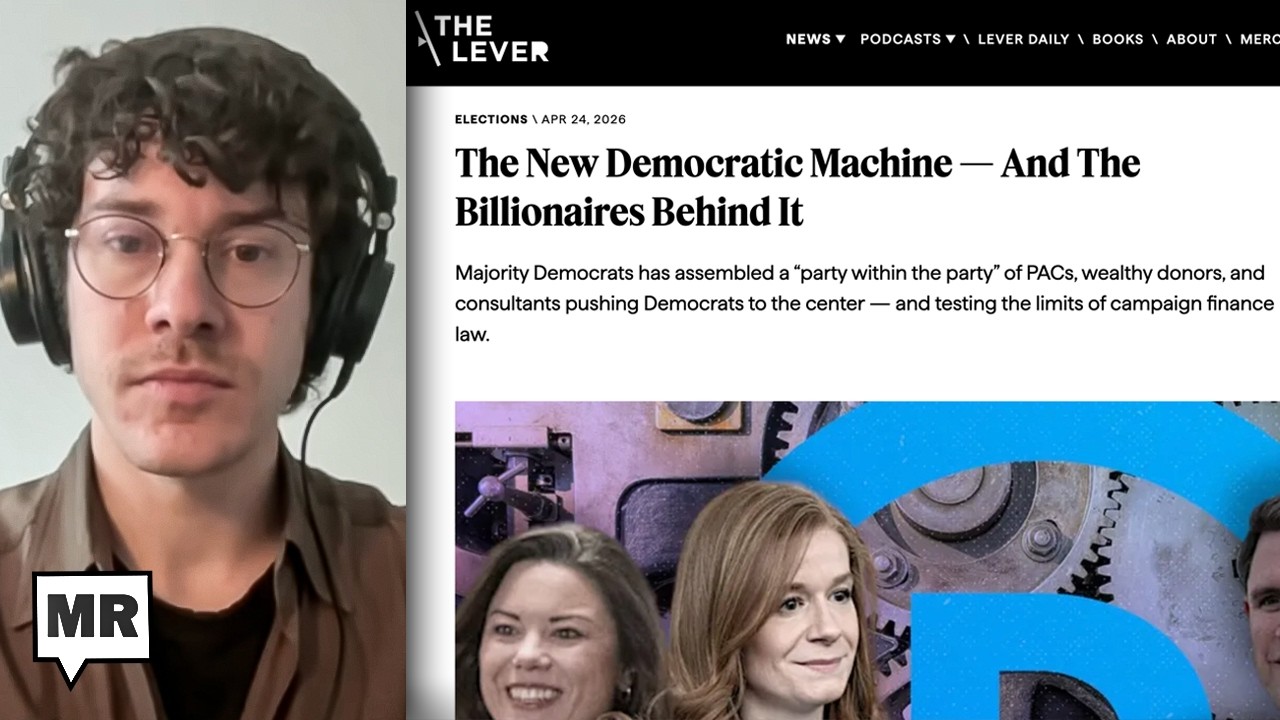
Live-streamed on April 28, 2026. Luke Goldstein, investigative journalist at The Lever, joins the show to discuss his piece: “The New Democratic Machine — And the Billionaires Behind It“: https://www.levernews.com/the-new-dem...
...
1:04
1 minute, 4 seconds
really sort of like a constellation of of Democratic sort of establishment or new Dem. I
1:13
1 minute, 13 seconds
mean, you you uh you compare it to the DLC,
1:17
1 minute, 17 seconds
uh which was where Bill Clinton came out of and and much of the sort of neoliberal
1:25
1 minute, 25 seconds
uh market-based liberalism uh originated at least in the modern era.
1:32
1 minute, 32 seconds
Yeah. No, it it is all it's a little bit nebulous. We we played around with what to call it too. I we're calling it a network, you know, we have some
1:39
1 minute, 39 seconds
tentacles imagery, you know, uh all of that. But, you know, it it's really a methodical political operation that is
1:49
1 minute, 49 seconds
operating at least at a scale that is pretty unprecedented according to a lot of people, you know, we spoke with for this piece. Um I think just to kind of,
1:58
1 minute, 58 seconds
you know, take a step back here, um before we get into all the origins, you know, so this is they're called majority democrats and the bench. They're these
2:05
2 minutes, 5 seconds
kind of twin organizations and they've been getting involved in Democratic primary races all across the country this election cycle. Probably most
2:14
2 minutes, 14 seconds
prominently right now is the the Michigan um the Democratic primaries in the Michigan Senate for the Michigan Senate seat. Um they're backing Mallerie
2:22
2 minutes, 22 seconds
McMaro against Haley Stevens and Abdul Alaied. They also were heavily involved in the Texas Senate primary back in February supporting James Taler Rico,
2:32
2 minutes, 32 seconds
whole whole host of other rac.
2:35
2 minutes, 35 seconds
And they have this giant war chest. You know, they have a amassed a huge amount of funding mostly from, you know, dark money and and a small handful of
2:43
2 minutes, 43 seconds
billionaires connected to the tech and finance industry. And you know, they also have this kind of centrist, you
2:50
2 minutes, 50 seconds
know, kind of moderate political orientation. We can get into that more.
2:55
2 minutes, 55 seconds
What really h has happened here though is they've been involved in a number of controversies. Kind of lowlevel. You know, you'd have to be following these these races pretty closely to pick up on
3:04
3 minutes, 4 seconds
them, but it keeps happening. And it's it's related to the fact that the staff for these packs funded by these two
3:12
3 minutes, 12 seconds
groups um happen to also be working as consultants for the campaigns that they're supporting, which is it's a very
3:19
3 minutes, 19 seconds
unusual relationship and it just, you know, raises some campaign finance concerns. So for this piece, we tried to look into how this whole organization is really structured, who's funding them,
3:29
3 minutes, 29 seconds
and this whole nesting doll of different packs, LLC's, these kind of shadowy consultancies. And more or less what we discovered here is is a very well,
3:40
3 minutes, 40 seconds
highly tuned political operation that has found loopholes to work much more closely with campaigns than really what we've seen in previous election cycles.
3:50
3 minutes, 50 seconds
C can you expand on what is legally permissible with this kind of coordination with dark money with super
3:58
3 minutes, 58 seconds
PACs because I think it's helpful for people to have a refresher about what independent expenditures actually constitute versus say when you donate directly to a campaign.
4:09
4 minutes, 9 seconds
Yeah. Yeah. I mean and it gets really this gets tricky uh pretty quickly. our campaign our campaign finance system right now there's a lot of um like norms
4:18
4 minutes, 18 seconds
and recommendations and then there's actually what you know what what the law is right but you know the basic gist here is that after the citizens united
4:26
4 minutes, 26 seconds
supreme court decision in 2010 we kind of have a dual track system right now if you're a an actual campaign for a
4:35
4 minutes, 35 seconds
candidate running for office you have a whole host of restrictions contribution limits and such but if you're an outside
4:43
4 minutes, 43 seconds
spend spending vehicle, a super PAC. You can raise as much money as you want and you can spin spend unlimited amounts on
4:51
4 minutes, 51 seconds
elections on behalf of a candidate or against other candidates in that race.
4:56
4 minutes, 56 seconds
The one rule here is that you just cannot directly coordinate with with the campaigns. There has to be this kind of
5:02
5 minutes, 2 seconds
separation, right? And operatives pretty much political operatives since that decision have tried to chip away even at
5:10
5 minutes, 10 seconds
that basic separation. And there's ways around it. Some of them have developed very recently. People might remember in the 2024 presidential race, for example,
5:19
5 minutes, 19 seconds
Elon Musk funded this America Pack,
5:21
5 minutes, 21 seconds
right? In the in the final months of that race, America Pack was hiring canvasers to do door knocking, right?
5:28
5 minutes, 28 seconds
That that's the kind of stuff you'd associate the campaign uh you know,
5:33
5 minutes, 33 seconds
doing. That's what they would be spending their their money on. How is America pack? How do they determine what precincts to go to? uh how do they have
5:41
5 minutes, 41 seconds
the election data? It's very hard to imagine that was happening without some back and forth coordination with the Trump campaign, right? That was blessed by the Federal Elections Commission.
5:50
5 minutes, 50 seconds
There's another loophole where candidates can join together and create a joint fundraising committee. So
5:58
5 minutes, 58 seconds
similar, you're you're edging towards a super PAC, but totally legitimate. It's just easier because one donor can cut a large check and that can be distributed
6:06
6 minutes, 6 seconds
to a bunch of different camps rather than the donor doing it separately. In 2024, the Federal Elections Commission said a a joint fundraising committee can
6:15
6 minutes, 15 seconds
also include a super PAC on that committee. So, you can have even more collaboration, coordination between the
6:23
6 minutes, 23 seconds
campaigns and the super PAC. Majority Democrats and the bench do all of that....
HARD VS SOFT HYBRID CAND SERVICES
vc OBAMA MEMO
10:50
10 minutes, 50 seconds
you go through FEC filings as we did for all their different entities, it lists the operating expenditures like who's
10:58
10 minutes, 58 seconds
running the pack. Okay, the entirety of the that pack's operating expenditures are going to this one consultancy called precinct.
11:08
11 minutes, 8 seconds
and precinct comes up throughout this whole network. All of the various almost all the consultants that we had
11:16
11 minutes, 16 seconds
correspondence with are operating from precinct emails and are clearly involved with that consultancy. There's no
11:24
11 minutes, 24 seconds
identifying information about this consultancy. Very little. We dug into it. We found their Delaware incorporation records and the authorizing signature,
11:35
11 minutes, 35 seconds
the guy who founded this this consultancy is a guy named Seth London.
11:40
11 minutes, 40 seconds
Seth London is sort of the the key to this whole operation. This is all kind of his brainchild. He's a venture capitalist, Democratic Party operative
reid hoff reg scrutiny
searchlight inst policy arm DC
...
15:50
15 minutes, 50 seconds
Um yeah. No, I mean I think you're touching on something really important here too, which is along with just this procedural stuff about coordination
15:59
15 minutes, 59 seconds
between packs and outside like what are the actual what are the business ideological interests at at play and such and and I think you're right that
16:07
16 minutes, 7 seconds
sometimes for these donors they're in a certain industry that maybe happens to align with their you know ideological
16:14
16 minutes, 14 seconds
priors or uh and such but there are certain instances I think where the mask slips a little bit more right and And one of the best examples was, I think,
16:23
16 minutes, 23 seconds
what happened with Reid Hoffman on the campaign trail in 2024, right? He his several of his companies and, you know,
16:30
16 minutes, 30 seconds
entities he was involved in were being scrutinized by the FTC. He's calling for the Democratic presidential candidates
16:38
16 minutes, 38 seconds
who housed, you know, said head of the the agency that's, you know, looking over his his shoulder and such. And I think the other part of this operation
16:46
16 minutes, 46 seconds
that's relevant here that we haven't discussed yet is Seth London has also been involved in the creation of the searchlight institute which is more the policy arm of this of this whole group.
16:56
16 minutes, 56 seconds
They're not as involved in the elections dayto-day um or or the packs either.
17:01
17 minutes, 1 second
They're not legally allowed to. They're they're in DC and they're pumping out the policy proposals which seem to play
17:09
17 minutes, 9 seconds
a big role influencing the candidates who are then backed by the packs that London set London has also helped create
17:17
17 minutes, 17 seconds
and the search light institute's board include many of the same donors who are funding this whole operation. So there's Steven Mandal and his wife Sue. They're
17:25
17 minutes, 25 seconds
he's a hedge fund guy. He's heavily invested in the Thai Taiwanese semiconductor manufacturing company
17:33
17 minutes, 33 seconds
TSMC. Um someone else is uh um Simone Cox whose husband is on the board of
17:40
17 minutes, 40 seconds
Nvidia and the Search Light Institute has been very aggressively pushing a new policy paper related to data centers and
17:47
17 minutes, 47 seconds
I that's supposed to be the kind of you know um you know the more moderate uh kind of triangulation approach opposed
17:55
17 minutes, 55 seconds
to a data center moratorum you know that you know Bernie Sanders and the more kind of progressive wing have been pushing for. It's a kind of you tax as
18:02
18 minutes, 2 seconds
you as you go sort of method. Mallory McMorrow has put out a policy proposal in her campaign site that's pretty much
18:09
18 minutes, 9 seconds
identical to to that as well. I think if you look at, you know, Mandal and and the Coxes and, you know, their kind of involvement in the tech industry, these
18:17
18 minutes, 17 seconds
major suppliers to the data center buildout, you know, I think you can you kind of see see where the business interests play in there as well.
18:24
18 minutes, 24 seconds
Yeah. You know how I knew that that was happening in the background is I just happened to see a Madaglacius post uh promoting something to that effect.
18:34
18 minutes, 34 seconds
That's how I knew it must exist somewhere because um you you you know you also just mentioned Adam Gentelson.
18:41
18 minutes, 41 seconds
I think that's his search.
18:45
18 minutes, 45 seconds
Yeah. And um I mean and so there's a this is
...
24:23
24 minutes, 23 seconds
really a lot less direct democracy than you would expect in our system like in including both parties really rejecting
24:32
24 minutes, 32 seconds
a lot of popular uh uh proposals. I mean, of course, including like Israel funding and stuff like that in favor of
24:41
24 minutes, 41 seconds
money. The money is it's breaking much more towards the independent expenditures and the money in terms of the policy outcomes increasingly as
24:50
24 minutes, 50 seconds
well. And you know, I don't know how uh you can have I guess how you can build a
24:57
24 minutes, 57 seconds
coalition that's strong enough to defeat that, but this is very much a creature of that dynamic. Yeah, absolutely. I mean, and you know,
25:04
25 minutes, 4 seconds
just to be clear, I mean, the dark money phenomenon now is actually much larger on the Democratic side even than it is on the Republican side. The way it goes
25:12
25 minutes, 12 seconds
is, I mean, Republicans have the the giant whale donors, let's say, like the largest ones, right, who give the super PACs. Democratic side is a little bit
25:19
25 minutes, 19 seconds
more distributed, but they have all these additional dark money channels where we don't we don't even know where the funding is coming from. And that's true for this network. one of their main
25:27
25 minutes, 27 seconds
organs. Primarily, a lot of their funding is coming from a group called Our American Future, which we know nothing about, but the New York Times did a feature piece on that, you know,
25:35
25 minutes, 35 seconds
they're playing a huge role in these midterms.
std line i do not take corp pac money is disingenuois eg eg reid H
brennan ctr analysis post CU 1.3B$ 2024
===
ref lever
...This setup became a point of controversy in the Texas Senate primary last month and is currently playing a role in Michigan, where the Bench-endorsed Democratic Senate candidate Mallory McMorrow is facing off against progressive challenger Abdul El-Sayed, a physician endorsed by Sen. Bernie Sanders (I-Vt.).
...
lever 5 26
...Then, in January, another organization staged a splashy launch: the Bench, advertising a supposed mission of “changing the Democratic Party from the inside.” The Bench promised to “help strong candidates launch with the tools they need to succeed — from communications and digital strategy to fundraising and staffing — so they can focus on what matters most: talking with voters and winning tough races.”
The Bench has endorsed a broad slate of candidates, including McMorrow in Michigan, James Talarico in Texas, Josh Turek in Iowa, Angie Craig in Minnesota, and Conley in New York.
Although they are separate entities on paper, with slightly different organizational structures, Majority Democrats and the Bench share a deeply interlinked fundraising apparatus and ground game.
In March, for example, Majority Democrats announced a nationwide “Built to Last Tour,” featuring several Bench-endorsed candidates.
While those operations hit the campaign trail, the Searchlight Institute, a new center-left D.C. think tank founded in part with London’s financial assistance, has served as the policy brain trust for both groups’ positions on various issues, seemingly shaping the platforms of their endorsed campaigns.
For instance, in March, McMorrow’s campaign in Michigan released its platform on data centers — a plan that mirrored a Searchlight Institute white paper recommending “data center developers pay their way,” a tech-friendly alternative to the moratoriums on data center development that some lawmakers are advancing.
...
The Michigan Senate race, which is expected to see razor-thin margins in the general election, has become ground zero for the Majority Democrats network’s efforts to shape the Democratic primaries.
In that primary, the new political machine has thrown its weight behind McMorrow, a millennial state lawmaker who quickly rose to leadership in the state Senate and in 2022 bashing Republican demagoguery on LGBTQ issues.
She’s facing off against El-Sayed, a progressive who has campaigned with popular streamer Hasan Piker, and Rep. Haley Stevens (D-Mich.), who is favored by Democratic leadership and widely considered to be the pick of Senate Minority Leader Chuck Schumer (D-N.Y.).