2024 Post Mort
---
SEE RESISTance
note citizens united, dark money, corp greed
see social media musk burned 1/2 value xitter to make it alt rt gop trump platform
===
democratic autopsy.org?
---
---
---
---
DUCK 5 26
- - [
 rawstory.com
Researchers expose algorithm skew that boosted Trump in 2024
2 days ago
](https://www.rawstory.com/trump-2676859361/)
- [
 truthout.org
- [
TikTok Algorithm Favored Conservative Content in 2024 POTUS Race, Study Suggests
23 hours ago
](https://truthout.org/articles/tiktok-algorithm-favored-conservative-content-in-2024-potus-race-study-suggests/)
A NEW study examining the algorithms of the social media site TikTok appears to suggest that content users received on the platform skewed more politically conservative during the 2024 presidential election, regardless of a user’s personal preferences.
Researchers Talal Rahwan and Yasir Zaki at New York University’s Abu Dhabi campus created over 300 “dummy” botaccountstomimic real-life users during the 2024 race. The bots “lived” in Democratic-leaning New York, Republican-leaning Texas, and the “purple” state of Georgia.
After creating the accounts, the researchers trained some to follow and react positively to Democratic messaging, while others were trained to support Republican content. Afterward, the researchers monitored the accounts’ “For You” pages for 27 weeks during the campaign, analyzing over 280,000 videos that were suggested by TikTok.
For the Republican bots, the outcome was predictable: the algorithm resulted in an 11.5 percent higher chance that they’d see more Republican-leaning content than Democratic-leaning posts.
But for the Democratic bots, it was different. Those accounts were 7.5 percent more likely to see Republican posts than Democratic ones.
Related Story
|
TikTok Restricts Gaza Journalist Bisan Owda’s Account Mere Days After US Deal
Owda’s account had 1.4 million followers, she said.
By Sharon Zhang , TruthoutJanuary 29, 2026
“Our findings show partisan imbalances in political information exposure on a platform dominated by algorithmic recommendations, with implications for platform governance and democratic discourse,” the researchers wrote in their study, which was published in *Nature*this week.
“The question arises whether the partisan content recommended on TikTok is skewed towards one party over the other,” the authors added.
TikTok responded to the study’s findings, claiming that its conclusions were largely incorrect. In a statement, the company stated:
This artificial experiment with fake accounts does not reflect how people actually use TikTok. In reality, people discover and watch a wide variety of content on our platform which they continuously shape and can control through more than a dozen tools the authors seem unaware of.
But the study’s authors defended their conclusions.
“Our finding isn’t just about reinforcement; Democratic accounts were shown significantly more anti-Democratic content than Republican accounts were shown anti-Republican content,” Rahwan said, speaking to *The Guardian* about the study’s findings.
“The algorithm wasn’t just giving people what they want; it was giving one side more of what the other side says about them,” Rahwan added.
How social media sites design their algorithms — and whether they are skewed toward one political party over another, accidentally or purposefully — could have real repercussions for elections and the political direction of the country. Indeed, according to data collected from Pew Research, 57 percent of Americans used digital devices “often” to get their news in 2024, higher than any other media, including television (33 percent) and the radio (11 percent).
“In an environment where margins are thin, systematic differences in the kind of political information recommended to tens of millions of young voters are worth taking seriously,” Zaki said.
TikTok Algorithm Favored Conservative Content in 2024 POTUS Race, Study Suggests | Truthout
---
Nature
https://www.nature.com › articles › d41586-026-01314-0
TikTok's algorithm systematically skewed to the right during the 2024 ...
2 days agoAn audit of TikTok's recommendation algorithm using hundreds of automated 'bot' accounts during the 2024 US presidential election finds that the 'For You' feed of the platform steered ...
---
Scott Galloway on TikTok, Musk, and the Radicalization Pipeline | Best of Lincoln Square

959 views Premiered 3 hours ago #politics #lincolnsquare #democracy
---
an 2 25
In his book, The Present Age, the late sociologist Robert Nisbet applied a pithy descriptor to a phenomenon we have seen all too often in public life: the “no-fault” theory of political action, particularly in foreign affairs. “Presidents, secretaries, and generals and admirals in America seemingly subscribe to the doctrine that no fault ever attaches to policy and operations,” he wrote. “This No Fault conviction prevents them from taking too seriously such notorious foul-ups as Desert One, Grenada, Lebanon, and now the Persian Gulf.”
Nisbet did not live to see a spectacular example of his theory. George W. Bush, having failed to prevent the 9/11 disaster his own intelligence agencies foresaw, proceeded to initiate a years-long disaster in Iraq, a catastrophe of his own making. Yet what were the consequences? The American people rewarded him with a second term in the face of abundant evidence of his incompetence and bad faith.
It would appear that Nisbet’s thesis needs revision. What he said was blatantly obvious: of course politicians rarely blame themselves for their own egregious policy failures, for it characterizes the typical behavior of ambitious, self-confident, and often corner-cutting people.
We frequently hear calls for “accountability:” for politicians, tech moguls, and the like... How telling then, that there are no such calls for accountability when it comes to the American people.
What is more significant, and troubling, is the reaction of the people who elect them: why do they more often than not reward leaders who inveigle them into national calamity? Isn’t there also a no-fault doctrine that applies to the American voter, a doctrine that is for the most part rigidly observed by journalists, pundits, and the self-proclaimed wise men who monopolize the op-ed pages of the prestige newspapers?
From the platforms of the chattering classes, we frequently hear calls for “accountability:” for politicians, tech moguls, and the like. Holding someone accountable implies that the person in question is a functioning adult who can be considered responsible for his actions. How telling then, that there are no such calls for accountability when it comes to the American people.
Turning back to Bush, his reelection did not end his reign of error. His policy of radical financial deregulation, about which he and his underlings bragged incessantly, and about which the public had to know if it were remotely paying attention, led in his second term to the greatest financial meltdown in 80 years.
Temporarily chastened, voters latched on to Barack Obama as the savior du jour. It turned out that Obama was no Moses leading the people to the promised land. A nominal Democrat, he was more an old-school Rockefeller Republican whose two terms were mostly an uneventful placeholder in history—not that such administrations are necessarily bad, as the current all-enveloping chaos demonstrates.
But placid, play-it-safe presidencies are boring, particularly for an increasingly infantilized public that needs 24/7 entertainment to stave off that worst of mental states: honest self-reflection. So they grew tired of Perry Como’s crooning, hankering instead after Ozzy Osbourne smashing his guitar and biting the head off a bat. That explains a good deal about how we got Trump 1.0 and 2.0.
Placid, play-it-safe presidencies are boring, particularly for an increasingly infantilized public that needs 24/7 entertainment to stave off that worst of mental states: honest self-reflection.
Wait, say the pundits, weren’t great swathes of the American people in 2016 victimized by the system, suffering from “economic anxiety?” But exit polling data from 2016 showed that Hillary Clinton won by 12 points among voters making less than $30,000 a year and by nine points among those making between $30,000 and $49,999. Trump, on the other hand, won every demographic making $50,000 or more
In 2024, the U.S. economy was the best in almost 60 years, with October unemployment at 4.1 percent. This is not to argue that everything was ideal, but the economy was better than recent U.S. experience, and unemployment and GDP growth were far better than most developed countries.
Accordingly, pundits dropped the economic anxiety excuse. Instead, we have been inundated with think pieces about how Democrats in some unexplained way “lost the working class,” a demographic conveniently left undefined. This claim contradicts continued polling evidence that Trump consistently did better among more affluent voters. The notion that Trump has magnetic appeal among Americans living a precarious economic existence is largely myth.
Otherwise, the media has treated Trump’s election like an asteroid falling from the sky, a natural disaster seemingly without input from the electorate. Why? It may be that the press still refuses to violate the last moral taboo in American public life: the essential innocence and virtue of this country’s citizens.
Denouncing the rascality of politicians is a revered American tradition, from Artemus Ward to Mark Twain, to Will Rogers, right down to the late-night TV hosts of today. Even the ultra-refined Henry Adams, scion of the Adams's of presidential fame, approvingly quoted the line, “A congressman is a hog! You must take a stick and beat him on the snout!”
Perhaps the only well-known American literary figure to take a dim view of the people who actually elect the politicians was H.L. Mencken. He denounced vigilantism during World War I, Prohibition, the 1920s resurgence of the Ku Klux Klan, and the revival of religious fundamentalism that same decade, not as some plague that befell the country from nowhere, but as an expression of Americans’ mob mentality, anti-intellectualism, and search for easy solutions.
Otherwise, American literary tradition gives us Walt Whitman singing the praises of his fellow citizens, Carl Sandberg (“the people, yes . . .”), Thorton Wilder and his sentimental tale of small-town folks, and Frank Capra’s maudlin cinematic paeans to the fundamental goodness of the common clay. Thousands of lesser lights have engaged in similar rhetorical puffery to the present day. The tragic, grown-up sense of social life in Victor Hugo or the great Russian novelists is absent from the American tradition.
Mystification merely being academic slang for bamboozlement, the theory never answers the question: why are the people so easily conned by the most childish lies and distortions...?
Editorial departments still hew to this convention. A journalist friend recently submitted a piece to a well-known center-left magazine arguing that some responsibility must attach to the voters for the 2024 election. The response: “We can’t say the American people are stupid,” even though the editor agreed with the author.
Political theorists from the center to the far left are also prone to this delusion. They have built an edifice of psychological denial on the idea that even if there is a pervasive system of illegitimate corporate or governmental control, it is miraculously unconnected with the character of the people the system administers. Noam Chomsky’s Manufacturing Consent is typical of the species, a late-20th century adaptation of Karl Marx’s theory of mystification: that the common people do not recognize their genuine interest because they have been mystified by the powers-that-be.
Mystification merely being academic slang for bamboozlement, the theory never answers the question: why are the people so easily conned by the most childish lies and distortions when accurate information is easily accessible, and never more so than today? (This is quite apart from the fact that Trump told voters very explicitly about the horrors he would inflict, meaning that something other than gullibility is also at work).
It wasn’t always thus: farmers in the 1890s, the core support for the old People’s Party, knew very well who was screwing them: the railroads, the banks, the grain traders. So did 1930s production-line workers in steel, autos, and rubber, struggling for union recognition: they knew it was their own employers, not foreign competition or some culture-wars chimera that was responsible for their miserable conditions.
But now, farmers vote overwhelmingly for Trump, despite their suffering under foreign retaliatory tariffs resulting from his ill-considered economic policy during his first term and likely further damage in his second. And unionization is at record post-World War II lows, despite the material benefits of union membership.
What changed? Historian Rick Perlstein, writing in The Invisible Bridge, said that in the 1970s, as the crises of Vietnam, racial unrest, and Watergate abated, the American people had a chance to learn from these events: in other words, to grow up and be responsible citizens.
They didn’t. Ronald Reagan’s soothing fairy tale of innocent virtue, of a country sinned against but never sinning, became America’s secular religion. I would extend Perlstein’s thesis by suggesting that this bogus innocence has become embedded in the American psyche and individualized into a personalized martyr complex. Every vicissitude of life is now the fault of some detested minority, or the elites, or the system generally.
The vanguard of this personality type, the people who actually generate the atrocious ideas the Trump regime is now implementing, is what substacker John Ganz calls the “creep-loser.” You know the type from high school: awkward, asocial, and full of resentment against the world for failing to recognize his genius.
Many of them become brooding, failed intellectuals, the sort that were the idea engine of authoritarian movements throughout the 20th century, and who now infest places like the Claremont Institute and Heritage Foundation. They are to MAGA what the Old Bolsheviks were to the Communist movement. It is no coincidence that Steve Bannon described himself as a Leninist. Their goal is simply destruction as revenge.
It is true that all of these resentful fantasists together would barely fill a stadium: hardly a key national voting bloc. But their nihilistic attitude is surprisingly prevalent among “real Americans” who never read Ayn Rand or attended Hillsdale College. Beginning in 2015, pollsters have been rather surprised at the frequency that respondents claim they just want to “burn it all down,” not troubling themselves with what will happen to the social infrastructure that supports their very existence.
If it reaches the point where Americans are sent to Guantanamo for their political opinions, what will be the reaction of the unserious?
Add to them the rapturist Christians, the hard core of the Christian fundamentalist voting bloc (the largest single constituency of the Republican Party). The belief that a millennial holocaust wiping out earth is something to look forward to is in its basic psychology no different from Hitler’s Götterdämmerung in the Berlin bunker or suicide cults like Jim Jones’ People’s Temple. Even the wider fundamentalist belief system is prone to rigidly separate human beings into the blessed and the damned, a mindset hardly consistent with pluralist democracy.
A final demographic is the most diffuse and least attached to any ideology: the tens of millions of unserious Americans who refuse to take anything seriously, for whom the smallest exercise of civic responsibility is either uncool, or boring, or a violation of their freedom to be irresponsible. Some of them voted for Trump because “he’s funny;” you may know the type. No doubt they think even now that plundering Greenland or sending combat troops to Gaza is comedy gold. Others will apply a sort of degenerate folk wisdom that they think is clever, saying they “always vote those in office out, and those out of office in,” or some similar nonsense.
Other unserious people feign a righteous anger over the price of eggs on the assumption that the White House controls the cost of consumer goods regardless of circumstances like bird flu. The price of eggs or broiler chickens is much more important to them than living under the rule of law or handing down a decent and humane society to their children.
Maybe we were always deceived by popular culture, or misread it.
If it reaches the point where Americans are sent to Guantanamo for their political opinions, what will be the reaction of the unserious? No doubt indifference, because it won’t affect them, just as arrests of Jews or Social Democrats didn’t affect “good Germans” in the 1930s. As for the true believers, whether religious fundamentalist or secular neoreactionary tech-nerd, they’ll be cheering it on: they never believed in any nonsense about democracy or human rights in any case.
How can America’s purported thought-leaders seriously maintain that a working majority of Americans (those who voted for Trump and those who didn’t bother to vote because they didn’t care) didn’t consciously will what is now unfolding? As Steve Bannon’s role model Lenin was reputed to have remarked, “who says A must say B:” people are intellectually and morally responsible for the consequences of their actions. To argue otherwise is the equivalent of saying that tens of millions of Americans are legally incapable of signing contracts, marrying, driving cars, or exercising the franchise.
Maybe we were always deceived by popular culture, or misread it. It’s a Wonderful Life is conventionally viewed as a heart-warming Christmas movie, with a depressing second act making the finale all the more sentimentally fulfilling, like Dickens’ A Christmas Carol. Yet, but for the contingency of George Bailey’s having been born and lived, Bedford Falls inevitably would have defaulted to Potterville, hardly an affirmation of the goodness and civic-mindedness of the majority, who might have been expected to resist the designs of the grasping Mr. Potter.
Contingencies work that way in real life, too. But for the pandemic and the resulting inflation, we might be living in a different world. Alas, given the recent price of eggs, most Americans preferred to ditch safe, staid old Bedford Falls for the vulgar excitement of Potterville. The town’s owner, whether Mr. Potter or Donald Trump, will cheerfully ensure that while he might fleece you for every cent and jail you if you defy him, you’ll never be bored.
NOW READ:Resistance to Trump alone will fail — unless we also do this
*Mike Lofgren is a former Republican congressional staff member who served on both the House and Senate budget committees. His books include: "The Deep State: The Fall of the Constitution and the Rise of a Shadow Government" (2016) and "The Party is Over: How Republicans Went Crazy, Democrats Became Useless, and the Middle Class Got Shafted" (2013).
AN 1 25
NO LNX
Alternet+
Trump's billionaires aren't 'oligarchs' — they're something else
John Stoehr January 26, 2025
Hakeem Jeffries posted an example of what I think is a problem in Democratic communications. Call it “the magic-word thing.”
The House minority leader said: “House Republicans pretended not to know about Project 2025 last year. Now they are implementing it. We will hold them accountable for lying to the American people.”
Now, given that the last election was decided by people who don’t know anything about politics, don’t want to know anything about politics, indeed revel in their ignorance of how politics works, you might think a Democratic leader would choose words more wisely.
“Project 2025” is clearly meant for liberals and Democrats, more precisely, very online liberals and Democrats, who understand that it’s shorthand for the horribles coming out of the Trump White House, including efforts to redefine “citizenship” according to whiteness.
There’s something to be said for preaching to the choir, especially now that the Democrats are out of power. But there’s also something to be said for shaping public perception of the party in power. While very online liberals and Democrats respond to the incantation of the magic words, I can’t help thinking that, for everyone else, it falls on deaf ears.
Consider what Jeffries is trying to do – suggest the House Republicans are hypocrites and that the House Democrats, with the support of the American people, will hold them accountable for their hypocrisy.
Sounds good, except the whole thing depends on knowing what the hell “Project 2025” means. I pay attention to politics, but I must admit. I only sorta kinda know what it means. If you were to ask me for a detailed explanation, I couldn’t do it. In any case, it seems that if the magic words need an NPR explainer, they can’t be that magical.
Moreover, they must compete for attention with Trump’s rhetoric, which is designed for consumption by society’s troglodytes, low-lifes and bottom-feeders, which is to say, “Project 2025” is at a disadvantage when compared to “they’re eating the dogs; they’re eating the cats.”
My friend Stephen Robinson put it this way: “There are no reasonable people. I think we just flatter ourselves with that argument. We see this a lot, like when [Democrats] talk about Project 2025, which always sounded cool to me. It was like a sci-fi series. They would say things like, ‘Oh, Trump’s going to dismantle the administrative state.’ Well, OK, but the other side is saying that you’re going to send your kid to school and [liberals] are going to change their gender” (my bold).
So the magic-word thing is really a question of reasonable magic words, which is to say that words are magical if you already know what they mean. They require insider information that comes with a level of intelligence, education and cultivation that goes with being, if not a very online liberal and Democrat, then definitely a liberal and Democrat. In that case, the magic-word thing is for club members, not those on the outside looking in, if they even bother to look in.
Does it have political value?
You would think it does, given the enormous energy that goes into forcing Democrats in Washington and the states to use magic words as signals of fidelity to specific advocacy groups that, along with others, constitute much of the base of the Democratic Party. While there’s value in being precise about words, because words matter, we should reconsider the wisdom of imbuing the magic-word thing with so much energy, because we risk talking to ourselves – or worse, sounding like words are more important than the things words represent, thus giving credence to the allegation that liberal politics is all talk.
US Senator Brian Schatz, of Hawaii, pointed out another problem with the magic-word thing. It becomes symbolic of politics but isn’t really political. “This idea that there are magic words that we must be forced to say defines progressivism and political courage by essentially saying whatever a bunch of activists want us to say, as opposed to doing the thing,” he toldPolitico. “And I think that there are a bunch of people who see what we’re doing as performative for that exact reason. But it’s also just alienating. This magic-words thing has to go away.”
The magic-word thing isn’t going away, as we can see in the way some leading liberals and Democrats are trying to define the second Trump administration as the time of “oligarchs.” President Joe Biden said in his farewell address that “today, an oligarchy is taking shape in America of extreme wealth, power and influence that literally threatens our entire democracy, our basic rights and freedoms and a fair shot for everyone to get ahead. We see the consequences all across America.”
Google searches for “oligarchy” spiked afterward, giving hope to some that the word was sticking. I don’t think it will, any more than “Project 2025” stuck, because “oligarchy,” like “Project 2025,” is too abstract and can’t compete with the rhetoric of the lowest-common denominator.
More important, I think, is that “oligarchy” and “Project 2025” are not gestures of power. It’s one thing to say, as Joe Biden did, that oligarchs threaten “our entire democracy, our basic rights and freedoms and a fair shot for everyone.” It’s another to say that oligarchs are scamming scammers trying to scam you out of your money, which is a more accurate representation of what they are going to try to do.
There was a moment, before he became the vice presidential candidate, when Minnesota Governor Tim Walz dominated the news by calling the Republicans “just weird.” It was a lightning strike, random, organic and authentic. It seemed to capture everything that was right about the Democrats and wrong about the Republicans.
Then it was gone. I don’t know where it went. But at some point, deeper into Kamala Harris’s brief campaign, someone somewhere decided to back off the weird and ramp up talk of “Project 2025.”
It was probably due to pressure that Harris felt to explain her policy positions in minute detail in comparison to Trump’s. By the end, though, voters heard more about something that sounded like “a sci-fi series” than about a demented old man who was “just weird.”
---==
1 25 les
just had a chat with an ATT office manager, a young Black man who is very attentive to his customers. After he learned that I worked with labor unions, he said, “I’ve always wanted to be in a union. My dad was a bus driver, and his earnings and benefits really took care of us. Our healthcare was amazing, $5 co-pay and that was it, no matter what the medical procedure.”
His comments both made me sad and angry. He took me back a few decades, when working people still earned a decent living. That’s the period before runaway inequality and job destruction basically wiped out the American Dream for the working class.
It’s not like we can’t afford to pay people decently. The money is there and then some. In 1980, there were 13 billionaires in the U.S. In 2023 there were 801. The top one-tenth of 1% saw their collective wealth jump from $1.8 trillion in 1990, to $22.1 trillion in 2024. For some context, the U.S. federal budget in 2024 was $6.8 trillion. Or consider that there are 1975,00 bus drivers in the U.S. One trillion dollars could pay them $100,000 a year for 57 years.
Have the Democrats learned anything from Trump’s ascendency? The jury is out. Will they actually take on the financial barons? Or will they continue to take in the money that flows so strongly from Wall Street and Silicon Valley?
Meanwhile the average income after inflation of the average worker did not rise at all from 1980 to 2024. And as we all know, during that time healthcare costs have gone through the roof for nearly all of us.
To add to working-class misery there is never ending job insecurity. One in four employed workers fear they will lose their jobs within the next year, according to polling done by Colorado State University.
And there’s a very powerful connection between job loss and enriching the super-rich. In many, if not most, cases, mass layoffs are used to free up cash for companies to pour into stock buybacks—buying back the corporation’s own shares to artificially boost its price. This moves money into the pockets of the largest Wall Street stock-sellers and the companies’ CEOs, who are mostly paid with stock incentives. In a very real way workers are sacrificing their jobs to enrich the richest of the rich. (To see why mass layoffs have little or nothing to do with AI and other new technologies please see my book, *Wall Street’s War on Workers.*)
In our capitalist economy there has always been a fierce struggle between corporate power and worker power. But when unions represented 25-35% of the private sector, during the post-WWII era, working people had sufficient clout, like that bus driver dad, to provide a good standard of living for their families. Today, with only 6% of the private sector workforce represented by labor unions, the balance has shifted strongly toward corporate power, and wages, benefits, and job security have gone backward.
The power imbalance is so great that our conventional wisdom has changed. Our minds have been warped by corporate power. When unions were strong, runaway inequality was viewed as out and out greed. Today, we are told it’s just the result of entrepreneurial brilliance, that we all benefit from the creation of more and more billionaires, that those left behind simply lack the skills to succeed in our modern economy.
But that bus driver still drives a bus, taking people to work and the doctor or shopping, using much the same skills as generations ago. The difference today is that instead of earning a living wage, as the bus driver once did, workers don’t have sufficient power to gain a decent standard of living. Relegated to gig work or jobs under threat of layoffs, the system is rigged against them.
Historically, working people saw the Democratic Party as the defender of the working-class. Not so today. Instead, they see politicians of both parties as just another group of elites feathering their own nests and protecting the establishment. Very few representatives are seen as willing to take on Wall Street and stop needless mass layoffs, because apart from some occasional rhetoric we don’t see politicians fighting for workers.
The frustration, the resentment, the anger about the rigged system was building long before Donald Trump came on the scene. But there he is, a giant wrecking ball, slamming away at the established order. For those left behind, smashing the establishment feels long overdue.
Have the Democrats learned anything from Trump’s ascendency? The jury is out. Will they actually take on the financial barons? Or will they continue to take in the money that flows so strongly from Wall Street and Silicon Valley?
Looking at the Democrats’ post-election discussions, it could be a long wait until our ATT union-supporter gets a chance to join a union.
Let’s try to have a happy new year, but it is likely to be a tough one for the working class.
===
12 24 HNN TIME
The 2024 Election Marked the Inversion of the Electoral Map | TIME
===
an 12 24
Findings from research conducted by the progressive group Navigator Research show that Democrats are "finding more reason for alarm" after Donald Trump's victory over Kamala Harris last month, according to a Monday Politico report.
Per the report, Three "focus groups — held immediately after the 2024 election and conducted by GBAO, a Democratic polling firm — featured three kinds of voters: young men in battleground states who voted for Biden in 2020 and Trump in 2024; voters in battleground states who voted for Biden in 2020 but didn’t vote at all in 2024; and voters in blue states who had previously voted for Democrats, a third party candidate or didn’t vote in 2020 but voted for Trump in 2024."
Navigator Research's director of polling and analytics, Rachael Russell, told Politico that "the focus groups offer 'a pretty scathing rebuke' of the Democratic Party."
READ MORE:['Starting to falter': Economy likely to 'tank' under Trump — Here’s why
Some ex-Democratic voters call the party "weak" and say its "overly focused on diversity and elites," according to the news outlet.
Furthermore, "When asked to compare the Democratic Party to an animal, one participant compared the party to an ostrich because 'they’ve got their heads in the sand and are absolutely committed to their own ideas, even when they’re failing,'" Politico notes, while "Another likened them to koalas, who 'are complacent and lazy about getting policy wins that we really need.'"
Russell emphasized, "This weakness they see, [Democrats] not getting things done, not being able to actually fight for people — is something that needs to be figured out."
She added, "It might not be the message, it might be the policy. It might be something a little bit deeper that has to be addressed by the party."
READ MORE:['Do their jobs': Dems split on 'building an effective opposition' to Trump’s second term
*Politico's full report is available here.
ref
12/22/2024
Democrats conducting post-mortems on their sweeping losses in 2024 are finding more reason for alarm. And the problem isn’t just Kamala Harris or Joe Biden.
In a trio of focus groups, even voters who previously backed Democrats cast the party as weak and overly focused on diversity and elites, according to research by the progressive group Navigator Research.
When asked to compare the Democratic Party to an animal, one participant compared the party to an ostrich because “they’ve got their heads in the sand and are absolutely committed to their own ideas, even when they’re failing.” Another likened them to koalas, who “are complacent and lazy about getting policy wins that we really need.” Democrats, another said, are “not a friend of the working class anymore.”
The focus group research, shared first with POLITICO, represents the latest troubling pulse check for a party still sorting through the wreckage of its November losses and looking for a path to rebuild. Without a clear party leader and with losses across nearly every demographic in November, Democrats are walking into a second Trump presidency without a unified strategy to improve their electoral prospects.
And while some Democrats blame Biden, others blame inflation and still others blame “losing hold of culture,” the feedback from the focus groups found Democrats’ problems are even more widespread and potentially long-lasting than a single election cycle.
The focus groups offer “a pretty scathing rebuke” of the Democratic Party brand, said Rachael Russell, director of polling and analytics at Navigator Research, a project within the Hub Project, which is a Democratic nonprofit group.
“This weakness they see, [Democrats] not getting things done, not being able to actually fight for people — is something that needs to be figured out,” Russell said. “It might not be the message, it might be the policy. It might be something a little bit deeper that has to be addressed by the party.”
While some Democrats blame Biden, others blame inflation and still others blame “losing hold of culture,” the feedback from the focus groups found Democrats’ problems are even more widespread and potentially long-lasting than a single election cycle. | Samuel Corum/AFP via Getty Images
The focus groups — held immediately after the 2024 election and conducted by GBAO, a Democratic polling firm — featured three kinds of voters: young men in battleground states who voted for Biden in 2020 and Trump in 2024; voters in battleground states who voted for Biden in 2020 but didn’t vote at all in 2024; and voters in blue states who had previously voted for Democrats, a third party candidate or didn’t vote in 2020 but voted for Trump in 2024.
“I think what the Democratic elites and their politicians believe is often very different from what the average Democratic voter is,” said a Georgia man who voted for Biden in 2020 but Trump in 2024. “The elites that run the Democratic Party — I think they’re way too obsessed with appealing to these very far-left social progressivism that’s very popular on college campuses.”
These voters voiced cautious optimism about Trump’s second term, both in the focus groups and a post-election poll that found Trump’s highest approval rating since 2020 in a GBAO survey. The national poll, which surveyed 1,000 people, found 47 percent viewed Trump favorably, while 50 percent disapproved of him — the highest marks he’s received since he left office.
Russell argued that Trump’s high marks reflect a “honeymoon” period, which she predicted will fade once he takes office: “Once things start happening, it’s going to take a turn, and so it’s going to rely really heavily on the actions in the first 100 days to see how we go from here.”
She also noted that the polling suggests openings for Democrats on issues like abortion, health care and taxing the rich, as well as a fear that Trump may go too far on tariffs. Their survey also showed that two-thirds of voters said inflation should be the incoming president’s top issue, but only a third of voters believed it was Trump’s or Republicans’ top issue.
When the focus group participants were asked about inflation and tariffs, many of them said they didn’t fully understand the policy, while others acknowledged they expected prices to go up.
“Obviously I wouldn’t want stuff to go up, but at the same time, in the long run, would it be better off for America and maybe having more stuff made here?” said one man from Wisconsin.
Without a clear party leader and with losses across nearly every demographic in November, Democrats are walking into a second Trump presidency without a unified strategy to improve their electoral prospects. | Chip Somodevilla/Getty Images
Even though the focus group voters did not solely blame Harris for their distaste of the Democratic Party, they also weren’t happy about her candidacy. Participants described her as “inauthentic,” “very dishonest” and “did not seem competent.”
An Arizona man, citing the time Harris said, “you better thank a union [vid]
member,”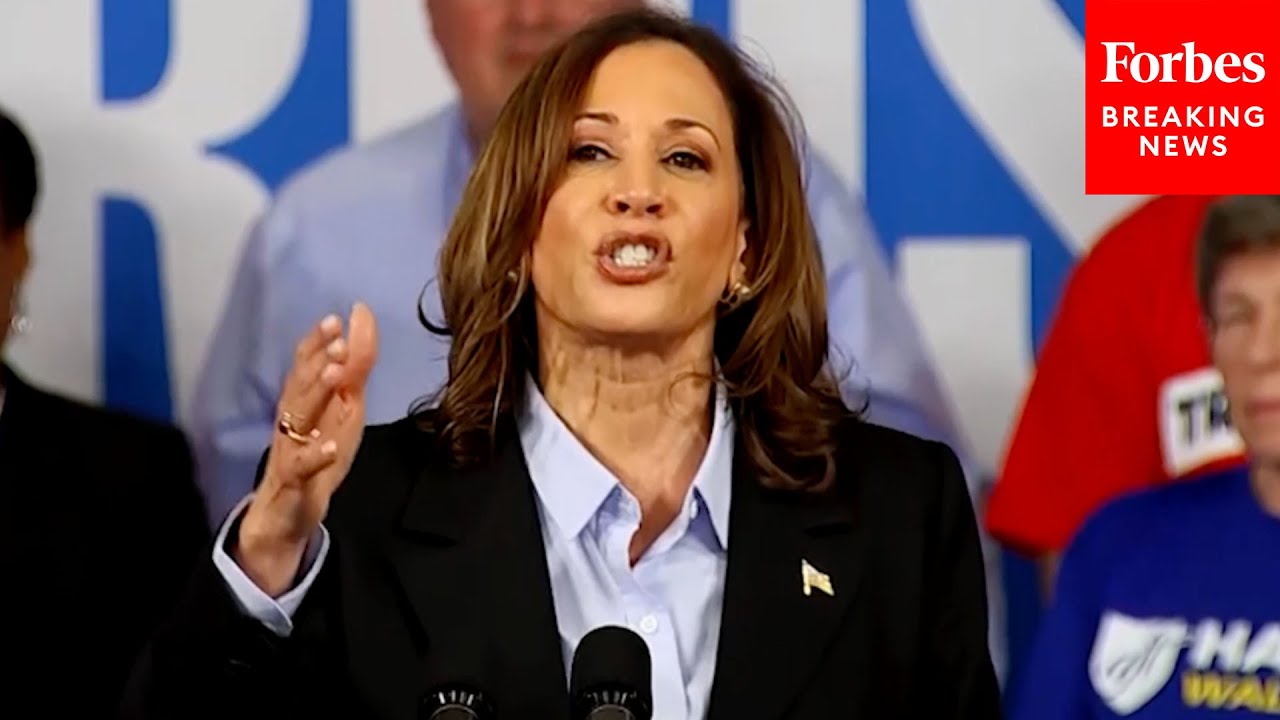 , said “that was very disingenuous to me because I didn’t see an honest person that could be president.”
// New research shows the massive hole Dems are in
“It seemed like a lot of what she came out and said wasn’t really off-the-cuff, wasn’t coming from her,” said another man who voted for Biden in 2020 and Trump in 2024. “Seemed like every interview, every time she came out and talked about something, it was planned out and never her thoughts, didn’t seem genuine to her thoughts, whereas, Trump, even though you never really knew what he was going to say, when he was going to say it, it was always him and genuine to what he thought, so that’s what swayed me.”
The feedback on Harris comes as the vice president mulls her own future, weighing a third presidential run against a bid for California governor in 2026. Some party loyalists have said they’d back another presidential run, arguing that Biden’s late exit from the race burdened the vice president’s three-month sprint. But others are not ready to get on board for it.
Harris to supporters: 'No one can walk away'
Several participants also raised the transgender attack ad that the Trump campaign deployed against Harris, which showed a 2019 clip of her expressing support for gender affirming surgery for state prison inmates. The ad’s tagline included: “Kamala is for they/them. President Trump is for you.”
Democrats disagree on the potency of the attack ad, but several participants raised it unprompted in the focus groups.
Lagging turnout was a major problem for Democrats in November. One woman from Georgia who didn’t vote in 2024 said that she didn’t agree with Harris’ “thinking that it’s okay for children to change their body parts.”
“I think that there needs to be some parameters on what’s accepted in society and what isn’t. Some of the societal norms, and I think that the Democrats have tried to open that up a little too much,” said a woman from Wisconsin who also didn’t vote in 2024.
When asked by the moderator if she was referring to the “trans issue,” the woman said, “primarily that.”
===
rr AN 12 24
Today we don’t know if the United States government will shut down tomorrow because, first, Elon Musk followed by his co-president Donald Trump, persuaded House Republicans to vote against a compromise bill, and then, last night, Republicans couldn’t summon enough votes for a stripped-down continuing resolution because Trump insisted that it contain a measure lifting the debt ceiling.
This is not governing. Trump and the Republicans are not a governing party.
What’s the back story to all this? It’s the oligarchy that put Trump into the presidency.
A half-century ago, when America had a large and growing middle class, those on the “left” wanted stronger social safety nets and more public investment in schools, roads, and research. Those on the “right” sought greater reliance on the free market.
But as power and wealth have moved to the top, everyone else — whether on the old right or the old left — has become disempowered and less secure.
Today the great divide is not between left and right. It’s between democracy and oligarchy.
The word “oligarchy” comes from the Greek words meaning rule (arche) by the few (oligos). It refers to a government of and by a few exceedingly rich people or families who control the major institutions of society — and therefore have most power over other peoples’ lives.
So far, Trump has picked 13 billionaires for his administration. It’s the wealthiest in history, including the richest person in the world. They and Trump are part of the American oligarchy, even though Trump campaigned on being the “voice” of the working class.
America has experienced oligarchy twice before. Many of the men who founded America were slaveholding white oligarchs. At that time, the new nation did not have much of a middle class. Most white people were farmers, indentured servants, farm hands, traders, day laborers, and artisans. A fifth of the American population was Black, almost all of them enslaved.
A century later a new American oligarchy emerged comprised of men who amassed fortunes through their railroad, steel, oil, and financial empires — men such as J. Pierpont Morgan, John D. Rockefeller, Andrew Carnegie, Cornelius Vanderbilt, and Andrew Mellon. It was called the Gilded Age.
They ushered the nation into an industrial revolution that vastly expanded economic output. But they also corrupted government, brutally suppressed wages, generated unprecedented levels of inequality and urban poverty, pillaged rivals, shut down competitors, and made out like bandits — which is why they earned the sobriquet “robber barons.”
World War I and the Great Depression of the 1930s eroded most of the robber barons’ wealth, and much of their power was eliminated with the elections of Franklin D. Roosevelt in 1932 and Democratic majorities in the House and Senate.
America demanded fundamental reforms — a progressive income tax, corporate taxes, estate taxes, limits on the political power of large corporations, antitrust laws, laws enabling workers to form unions and requiring that employers negotiate with them, Social Security, the forty-hour workweek, unemployment insurance, civil rights and voting rights, and Medicare.
For the next half-century, the gains from growth were more widely shared and democracy became more responsive to the needs and aspirations of average Americans. During these years America created the largest middle class the world had ever seen.
There was still much to do: wider economic opportunities for Black people, Latinos, and women, protection of the environment. Yet by almost every measure the nation was making progress.
Starting around 1980, a third American oligarchy emerged.
Since then, the median wage of the bottom 90 percent has stagnated. The share of the nation’s wealth owned by the richest 400 Americans has quadrupled (from less than 1 percent to 3.5 percent) while the share owned by the entire bottom half of America has dropped to 1.3 percent, according to an analysis by my Berkeley colleagues Emmanuel Saez and Gabriel Zucman.
The richest 1 percent of Americans now has more wealth than the bottom 90 percent combined.
The only other country with similarly high levels of wealth concentration is Russia, another oligarchy.
All this has been accompanied by a dramatic increase in the political power of the super-wealthy and an equally dramatic decline in the political influence of everyone else.
While the Biden administration sought to realign America with its ideals, it did not and could not accomplish nearly enough. Trump’s lies and demagoguery exploited the anger and frustration of much of America — creating the false impression he was a tribune of the working class and an anti-establishment hero — thereby allowing the oligarchy to triumph.
In 2022, Elon Musk spent $44 billion to buy Twitter and turn it into his own personal political megaphone. Then, in 2024, he spent $277 million to get Trump elected, also using Twitter (now X) to amplify pro-Trump, anti-Harris messages.
These were good investments for Musk. Since Election Day, Musk’s fortune has increased by $170 billion. That’s because investors in Tesla and SpaceX have pushed their value into the stratosphere.
Trump has put Musk (and another billionaire, Vivek Ramaswamy) in charge of gutting government services in the name of “efficiency.” Musk’s investors assume that Musk will eliminate the health, safety, labor, and environmental regulations that have limited the profits of Musk-owned corporations, and that Trump will put more government money into SpaceX and xAI (Musk’s artificial intelligence company).
Unlike income or wealth, power is a zero-sum game. The more of it at the top, the less of it anywhere else.
The power shift across America is related to a tsunami of big money into politics. Corporate lobbying has soared. The voices of average people have been drowned out.
The American oligarchy is back, with a vengeance.
Not all wealthy people are culpable, of course. The abuse is occurring at the nexus of wealth and power, where those with great wealth use it to gain power and then utilize that power to accumulate more wealth. Today’s robber barons include Elon Musk, Jeff Bezos, Peter Thiel, David Sacks, Charles Koch, Jeff Yass, Ken Griffin, and Rupert Murdoch.
This is how oligarchy destroys democracy. As oligarchs fill the coffers of political candidates and deploy platoons of lobbyists and public relations flaks, they buy off democracy. Oligarchs know that politicians won’t bite the hands that feed them.
As long as they control the purse strings, there will be no meaningful response to the failure of most people’s paychecks to rise, nor to climate change, nor racism, nor the soaring costs of health insurance, pharmaceuticals, college, and housing, because those are not the main concerns of the oligarchy.
The oligarchs want lower taxes, which is what Trump, Musk, and other oligarchs are planning — an extension of the 2017 Trump tax cut, with an estimated price tag of at least $5 trillion.
They want no antitrust enforcement to puncture the power of their giant corporations. Instead, their corporations will grow larger, able to charge consumers even more. Trump is replacing Lina Khan, the trustbusting chair of the Federal Trade Commission, with a Trump crony.
There will be no meaningful constraint on Wall Street’s dangerous gambling addiction. The gambling will only increase.
Wall Street is already celebrating Trump’s victory. The stock market has reached new heights. But the stock market is inconsequential for most people, because the richest 1 percent own over half of all shares of stock owned by Americans while the richest 10 percent own over 90 percent.
There will be no limits to CEO pay. Wall Street hedge fund and private equity managers will also rake in billions more. Government will dole out even more corporate subsidies, bailouts, and loan guarantees while eliminating protections for consumers, workers, and the environment.
It will become a government for, of, and by the oligarchy.
The biggest divide in America today is not between “right” and “left,” or between Republicans and Democrats. It’s between democracy and oligarchy. The old labels — “right” and “left” — prevent most people from noticing they’re being shafted.
The propagandists and demagogues who protect the oligarchy stoke racial and ethnic resentments — describing human beings as illegal aliens, fueling hatred of immigrants, and spreading fears of communists and socialists.
This strategy gives the oligarchy freer rein: It distracts Americans from how the oligarchy is looting the nation, buying off politicians, and silencing critics. It causes Americans to hate each other so we don’t look upward and see where the wealth and power have really gone.
The way to overcome oligarchy is for the rest of us to join together and win America back, as we did in response to the oligarchy that dominated America’s last Gilded Age.
This will require a multiracial, multiethnic coalition of working-class, poor, and middle-class Americans fightingfordemocracy and againstconcentrated power and privilege.
It will require that the Democratic Party, or a new third party, tell the truth to the American people: that the major reason most peoples’ wages have gone nowhere and their jobs are less secure, why most families have to live paycheck to paycheck, why CEO pay has soared to 300 times the pay of the typical worker, and why billionaires are about to run our government, is because the market has been rigged against average working people by the oligarchy.
The agenda ahead is simply stated but it will not be easy to implement: We must get big money out of our politics. End corporate welfare and crony capitalism. Bust up monopolies. Stop voter suppression.
We must strengthen labor unions, give workers a stronger voice in their workplaces, create more employee-owned corporations, encourage worker cooperatives, fund and grow more state and local public banks, and develop other institutions of economic democracy.
This agenda is neither “right” nor “left.” It is the bedrock for everything else America must do.
It may seem an odd time in our history to suggest such reforms, but this is the best time. Trump and his oligarchy will inevitably overreach. The lesson from the last Gilded Age is that when the corruption and ensuing hardship become so blatant that they offend the values of the majority of Americans, the majority will rise up and demand real, systemic change.
It’s only a matter of time. A government shutdown that hurts average people, engineered by the richest person in the world, might just hasten it.
NOW READ:**Elon Musk shows Mike Johnson who's boss**
edit bd 12 24
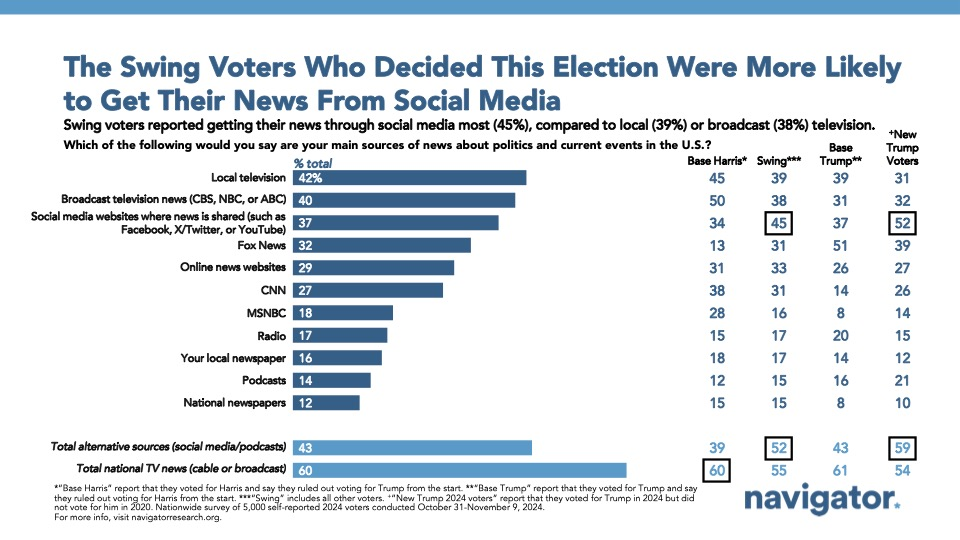
...According to a post-2024 election survey, 45 percent of swing voters (ie, people who were open to voting for Trump or Harris) said they got their news from social media. The number was even higher, 52 percent, among people who had voted for Trump for the first time ever. By contrast, only 39 percent of swing voters watched local news and just 15 percent said they read national newspapers like the Times.
...
---
an 12 24
So many of you have asked me how one of the most loathsome people in America was just reelected president that I thought you might find it helpful if I shared with you some personal history. This may also suggest how to root out Trumpism.
In the fall of 2015, I visited Michigan, Wisconsin, Ohio, Pennsylvania, Kentucky, Missouri, and North Carolina while doing research on the changing nature of work in America.
I spoke with many of the people I had first met when I was secretary of labor in the 1990s. Several brought their friends and grown children to my informal meetings, which became a kind of free-floating focus group spread across states that had once been economic powerhouses but were now economic basket cases.
With the 2016 political primaries looming, I asked my “focus groups” which candidates they found most attractive. At that time, Hillary Clinton and Jeb Bush were the likely Democratic and Republican candidates, respectively.
Yet almost no one I spoke with mentioned either Clinton or Bush. They talked about Bernie Sanders and Donald Trump, oftentimesboth,as candidates they’d support for president.
When I asked why, they said Sanders or Trump would “shake things up,” “make the system work again,” “stop the corruption,” or “end the rigging.”
In the 1990s, many of these people (or their parents) had expressed frustration that they weren’t doing better. By 2015, that frustration had morphed into raw anger.
The people I met were furious with their employers, the federal government, and Wall Street. They were irate that they hadn’t been able to save for their retirements, upset that they had no job security, indignant that their children weren’t doing any better than they had at their children’s age, and outraged that houses were unaffordable, schools second-rate, and everything far more expensive.
Several people I talked with had lost jobs, savings, or homes in the financial crisis of 2008 or the Great Recession that followed it. Now most were back in jobs, but the jobs paid no more than they had two decades before in terms of purchasing power.
I heard the term “rigged system” so often that I began asking people what they meant by it. They spoke about the bailout of Wall Street, political payoffs, insider deals, CEO pay, and “crony capitalism.”
These complaints came from people who identified themselves as Republicans, Democrats, and independents. A few had joined the Tea Party; some had briefly been involved in the Occupy movement. Yet most of them didn’t consider themselves political.
They were white, Black, and Latino, from union households and non-union. The only characteristic they had in common was their position on the income ladder: middle class or below. All were struggling.
Many of the conservative Republicans and Tea Partiers I met condemned big corporations getting sweetheart deals from the government because of lobbying and campaign contributions.
A group of farmers in Missouri were livid about the emergence of “factory farms” — owned and run by big corporations — that abused land and cattle, damaged the environment, and ultimately harmed consumers. They claimed that giant food processors were using their monopoly power to squeeze the farmers dry, and the government was doing squat about it because of Big Agriculture’s money and influence.
In Cincinnati, I met with Republican small-business owners who were still hurting from the bursting of the housing bubble and the bailout of Wall Street. “Why didn’t underwater homeowners get any help?” one of them asked rhetorically. She answered her own question: “Because Wall Street has all the power.” Others nodded in agreement.
Whenever I suggested in a public appearance that big Wall Street banks be busted up — “any bank that’s too big to fail is too big, period” — I got loud applause.
In Kansas City, I met with Tea Partiers who were angry that hedge-fund and private-equity managers had wangled their own special “carried interest” tax deal. “No reason for it,” said one. “They’re not investing a dime of their own money. But they’ve paid off the politicians.”
In Raleigh, I heard from local bankers who thought Bill Clinton should never have repealed the Glass-Steagall Act that separated investment banking from commercial banking. “Clinton was in the pockets of Wall Street just like George W. Bush was,” said one.
Most of the people I met in America’s heartland wanted big money out of politics and thought the Supreme Court’s Citizens United decision was shameful.
Most were also opposed to trade agreements, including NAFTA, that they believed had made it easier for corporations to outsource American jobs and destroy their communities.
Regardless of political party, most thought the economic system was biased in favor of the rich.
The more conversations I had, the more I understood the connection between people’s view of “crony capitalism” and their dislike of government. They didn’t oppose government per se. In fact, most favored additional spending on Social Security, Medicare, education, and infrastructure.
Rather, they saw government as the vehicle for big corporations and Wall Street to exert their power in ways that hurt them.
They called themselves Republicans, but many of the inhabitants of America’s heartland were economic populists. Heartland Republicans and progressive Democrats remained wide apart on cultural issues, such as immigration or abortion or LGBTQ+ rights. But wherever I went, the economic populist upsurge was real.
In 2016, Sanders — a 74-year-old Jew from Vermont who described himself as a democratic socialist and wasn’t a Democrat until the 2016 presidential primary — came within a whisker of beating Hillary in the Iowa caucus, routed her in the New Hampshire primary, garnered over 47 percent of the caucus-goers in Nevada, and ended up with 46 percent of the pledged delegates to the Democratic National Convention from primaries and caucuses.
Had the Democratic National Committee not tipped the scales against him by deriding his campaign and rigging campaign financing in favor of Hillary Clinton, I believe Sanders would have been the party’s nominee in 2016.
Trump, a 69-year-old egomaniacal billionaire reality TV star who had never held elective office or had anything to do with the Republican Party and who lied compulsively about almost everything, of course won the Republican primaries and went on to beat Clinton, one of the most experienced and well-connected politicians in modern America.
Something very big was happening: a rebellion against the establishment.
Hillary and Jeb Bush had deep bases of funders, well-established networks of political insiders, experienced political advisers, all the name recognition you could want — but neither of them could convince voters they weren’t part of the system, and therefore part of the problem.
When I did my interviews, the overall economy was doing well in terms of the standard measures of employment and growth. But those indicators didn’t reflect the economic insecurity most Americans felt and continue to feel, nor did they show the seeming unfairness most people experienced.
The indicators didn’t reveal the linkages many Americans saw, and still see, between wealth and power, crony capitalism and stagnant real wages, soaring CEO pay and their own loss of status, the emergence of a billionaire class and the undermining of democracy, and globalization and the loss of their communities.
The standard measures didn’t show the frustration of American workers without college degrees, who for decades have had to work harder with very little to show for it, and whose lifespans have shrunk.
Fast forward to today. Much of the political establishment denies what has just occurred. They prefer to attribute Trump’s reelection to political paranoia, xenophobia, white Christian nationalism, and the weaponization of the internet with racism, misogyny, or nativism.
Wrong. Trump has been able to channel the intensifying anger of the white working class away from the real causes of working-class distress — away from the big corporations, wealthy individuals, and denizens of Wall Street whose money has rigged the game against average working people.
It was not the first time in history that a demagogue has used scapegoats to deflect public attention from the real causes of their distress, and it won’t be the last.
In 2016 and then again in 2024, Trump galvanized millions of blue-collar voters living in communities that have never recovered from the tidal wave of factory closings and loss of good jobs.
Big money in politics has been the root of the problem. Campaign donations from wealthy individuals and big corporations have turned the economy over to large corporations, CEOs, and billionaires.
Large corporations, CEOs, and billionaires have embraced global trade without giving blue-collar workers any means of coping with it.
They have turned Wall Street into a gambling casino without insuring the rest of America against the risk that those bets would turn bad.
They have allowed giant corporations to monopolize without giving workers the countervailing power to unionize.
This was the premise of Bernie Sanders’s 2016 campaign. It was also central to Trump’s appeal (“I’m so rich I can’t be bought off”) — although once elected he delivered everything big money wanted. And, of course, his promises were empty ones.
In the 2016 primaries, Bernie Sanders did far better than Hillary Clinton with blue-collar voters. He did this by attacking trade agreements, Wall Street greed, income inequality, and big money in politics. Sanders sought to remedy the disease of the Democratic Party — its abandonment of economic populism and of the American dream.
Now that Trump has been reelected and his Republican lapdogs are in control of the Senate and likely to be in control of the House, it’s critically important for Democrats, progressives, and everyone concerned about social justice to see where the anger in America’s heartland has come from, to channel it toward its real causes, and to commit to taking power back from the big corporations, CEOs, and billionaires.
Robert Reich is a professor of public policy at Berkeley and former secretary of labor. His writings can be found at https://robertreich.substack.com/.
===
news sources
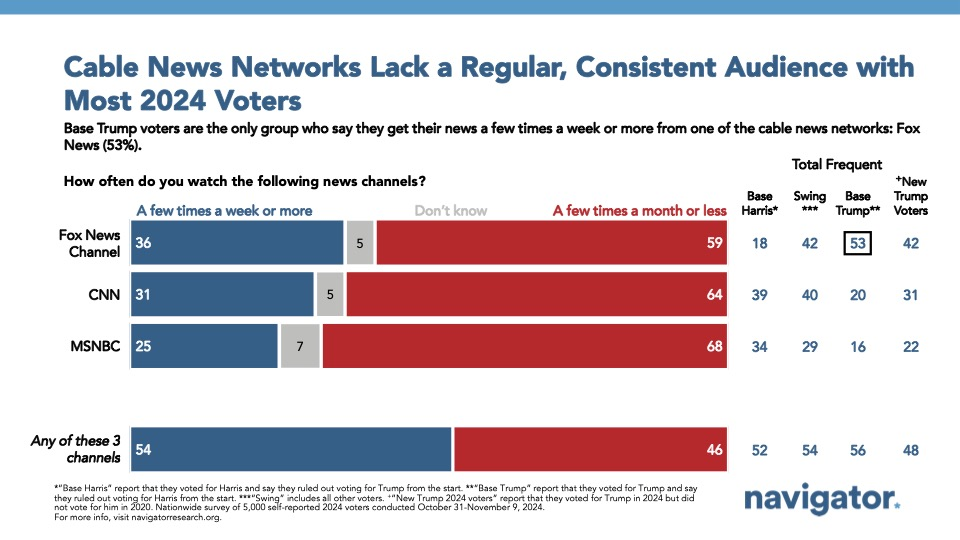
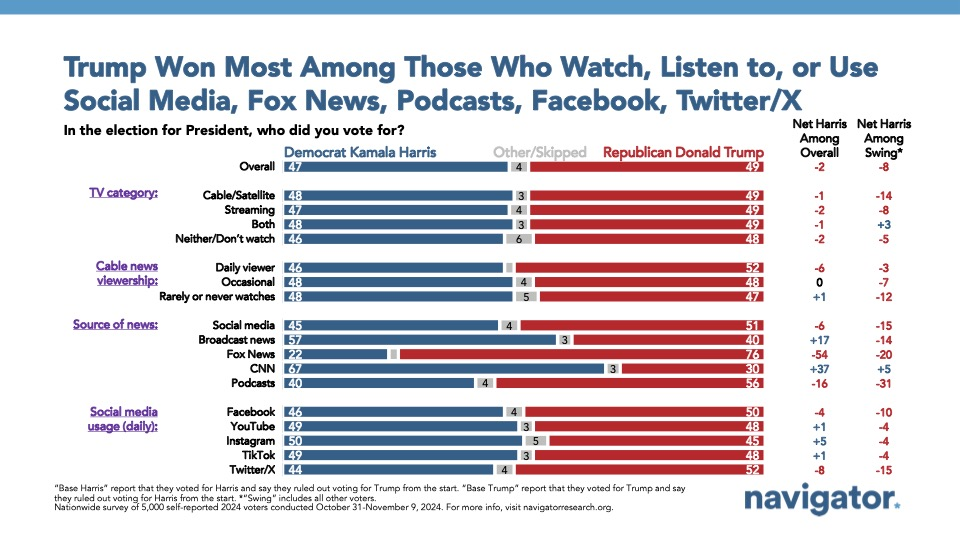
Exit Poll: A Majority of New Trump Voters Used Social Media as Main News Source
---
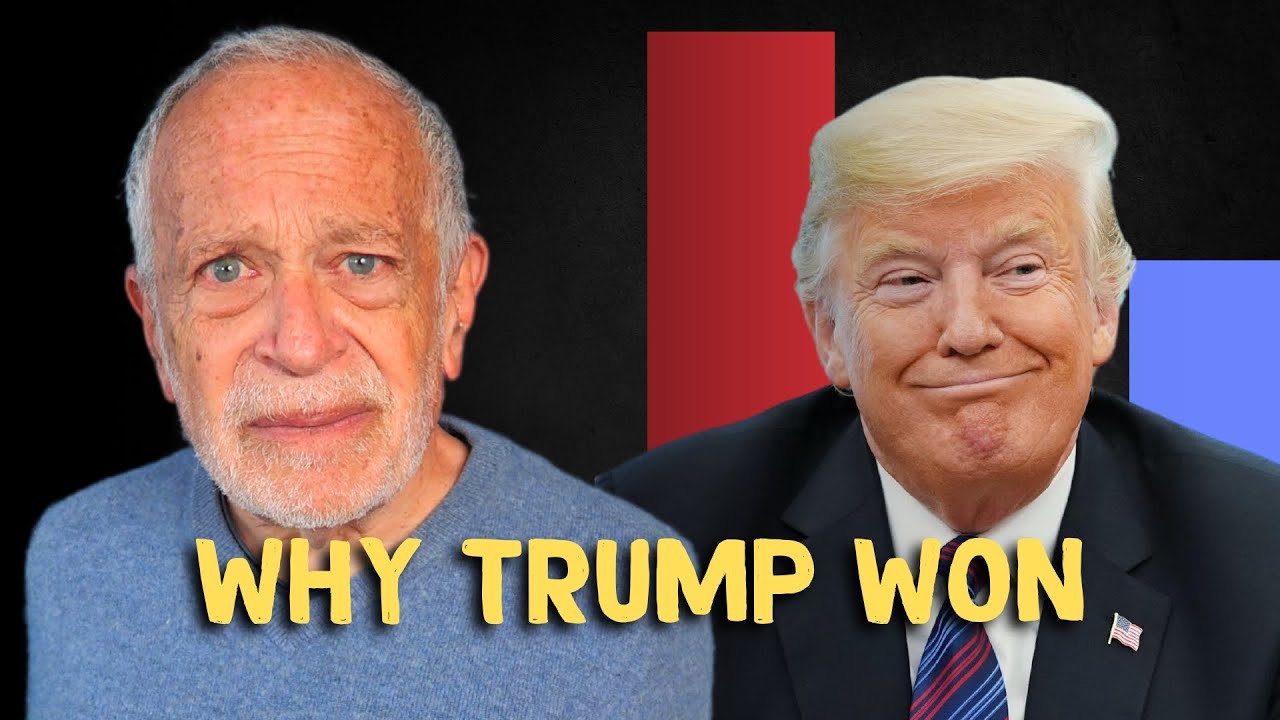
why t won
184,144 views Dec 3, 2024
Should Democrats move to the right? Absolutely not. That's morally wrong and bad politics. The real lesson of 2024 is that Democrats must become an anti-establishment party ready to shake up the system on behalf of working people.
Transcript
I'm hearing a lot of theories, and most of them
are wrong.
We need to take stock
of why we are being held hostage to the far left.
It's certainly not that Democrats need to move to the right.
Oh, please.
That's both morally wrong and bad politics.
And it's not that Harris ran a bad campaign.
I think she ran a good one given that she only had three months to do it in.
And while, yes,
misogyny and racism absolutely played a role,
I don't believe they were the biggest factors either.
A top issue for most Americans was
While the economy has improved over the last four years,
according to standard economic measures,
most Americans without college degrees
— that's the majority —
have not felt it.
These Americans overwhelmingly voted for Trump.
In fact, most Americans without college degrees
have not felt much economic improvement for four decades,
and their jobs have become less secure.
Adjusted for inflation,
the typical income of the bottom 90%
is stuck nearly where it was in the early 1990s,
even though the economy is more than twice as large.
Most of the gains have gone to the top,
leaving many Americans frustrated and angry.
Trump gave voice to that anger.
Harris did not.
The real lesson of 2024
is that Democrats must not
just give voice to the anger, but also
explain how record inequality
has corrupted our system
and commit to limiting the political power
of big corporations and the super rich.
The basic bargain used to be
that if you worked hard and
played by the rules, you’d do better,
and your children would do even better than you.
But over the past few decades,
that bargain has become a sham.
The middle class has shrunk.
Why?
While Republicans
steadily cut taxes on the rich,
allowing inequality to skyrocket,
many Democrats abandoned the working class.
Democrats and Republicans alike embraced
free trade deals that hurt American workers.
They deregulated finance
and allowed Wall Street to become
a high-stakes gambling casino.
Both parties let big corporations gain enough market power
to keep prices and profit margins high.
They let corporations
bust unions and slash payrolls.
They bailed out Wall Street when its gambling addiction
threatened to blow up the entire economy,
but never bailed out homeowners who lost everything.
They welcomed Big Money into their campaigns
quid pro quos that rigged the market in favor of
big corporations and the wealthy.
Now, Joe Biden redirected the Democratic Party
back toward its working class roots,
with vigorous antitrust enforcement,
stronger enforcement of labor laws,
and major investments
in manufacturing,
infrastructure,
semiconductors,
and clean energy.
But we’re only just
beginning to reap the benefits of those policies.
And now many are likely to be reversed.
The Republican Party says
it’s on the side of working people,
but its policies have and will hurt workers even more.
Trump's tariffs will drive up prices.
His expected retreat from antitrust enforcement
will allow giant corporations to get even bigger
and drive up prices even higher.
Republicans will extend and expand
Trump’s tax cuts for the rich.
This will blow up the national debt
and give them an excuse to cut
Social Security and Medicare.
Democrats must stand firm against all of this.
They should demand
They should also demand that corporations
share their profits with their workers.
They should call for limits on CEO pay,
eliminate stock buybacks (which used to be illegal),
and reject corporate welfare.
Democrats need to tell Americans why their pay
has been lousy for decades and their jobs less secure,
and who is to blame.
It's not because of immigrants,
the LGBTQ community, people of color,
the deep state, or any other MAGA scapegoat.
It's because of the power of large corporations and the rich
to rig the market and siphon off
most of the economy's gains.
The Democratic Party
should use this inflection point to become an
ready to shake up the system
on behalf of the vast majority of Americans.
This is, and must be,
the lesson of the 2024 election.
----
an bulwark
an 12 24
The Democratic Party not only lost control of the White House and the U.S. Senate in 2024, but also saw its advantage in traditional Democratic strongholds erode. One veteran Democratic operative is offering several explanations, and solutions for how to rebuild.
In an essay for the Bulwark, longtime Democratic campaign operative Steve Schale wrote that his party has now become "a shell of itself" in the wake of its 2024 loss. He specifically lamented that his home state of Florida has gone from a battleground state that Democrats carried in 2008 and 2012 to a Republican vote sink, with even the bluest counties trending increasingly Republican. He also pointed out that Iowa and Ohio have morphed from competitive swing states to safe GOP states since Barack Obama's presidency.
"That’s not just a canary in a coalmine. It is a massive boulder landing in front of you on the only road home," Schale wrote. "Even worse, my party has largely avoided reckoning with how big that boulder is. We can no longer do that or we will find ourselves in an even worse situation than we do following the 2024 election. Now is not the time for quick fixes. We must make real structural changes."
READ MORE:**'One of the biggest policy changes': This 'grave miscalculation' may have been fatal for Dems**
Schale argued that there are four ways Democrats can rebuild their party to once again have a 50-state presence. He proposed that Democrats should spend money earlier before voters' opinions can "harden" on contentious issues like crime, immigration, transgender rights and the economy. He called for more groups to be involved in helping candidates and campaigns make decisions, as opposed to one super PAC or group serving as a bottleneck. He also said Democrats should be smarter about using data rather than using it as a crutch, and that campaigns should make data work for them, rather than the other way around. And he pointed out that the far right has a "tremendous advantage" in delivering its ideas compared to Democrats.
"After 2020, I had a billionaire ask me what I thought would be useful going forward. My advice was to spend a billion dollars building out an ecosystem like the right to deliver information to not only our base but persuadable voters. There was an acknowledgement of the problem, but that was all," Schale recalled. "I worry that coastal Democrats don’t fully grasp just how much of a disadvantage we face on the news consumption front—especially podcasts and social media—and that to solve it, we need a donor or two willing to invest significant capital."
The Floridian said Democrats' pattern of gradually losing its base should be particularly alarming to party leaders. He noted that in the three predominantly Hispanic counties of Miami-Dade, Hendry and Osceola, Democrats went from having a 324,000-vote margin in 2016 to President-elect Donald Trump winning those counties by a total of 133,000 votes just eight years later.
"The truth is we got here because our brand sucks. We tend to put voters in different buckets—black, Hispanic, young, gay, etc.—and treat these groups like they are more progressive than they really are, and somehow unique from each other," he wrote. "At the same time, we’ve made decisions to stop talking to large chunks of the electorate."
READ MORE:[(Opinion) Too many Democrats need to hear this truth bomb
Click here to read Schale's full essay in the Bulwark.
===
---
ink --> 12 24
Waleed Shahid
As Democrats sift through the aftermath of our electoral defeat, the finger-pointing has been relentless. For many party elites, the culprit is “wokeness.” The story they tell is simple: the party lost because we cared too much about the wrong people. As Anat Shenker-Osorio points out, this is the lie sold by far-right authoritarian movements. They claim the powerless have somehow taken power. They say the country is under attack and the “real” Americans have to save it. It’s a tale as old as time—a cheap distraction, trading hard truths for easy scapegoats. The real tragedy? Democrats are taking the bait, spinning their wheels in the meaning-making of WTF just happened.
Trump’s expanded support in 2024 wasn’t solely a longing for a bygone era where women, immigrants, Black people, and LGBTQ individuals had fewer protections. That sentiment, while undeniably present in parts of his base, was likely baked into his 2020 coalition. The new voters he attracted weren’t necessarily motivated by culture wars as their top priority. Instead, their choices seemed rooted in broader discontent—economic unease, disillusionment with current leadership, and a craving for disruption. This wasn’t a simple referendum on identity politics but a reflection of the complex, often contradictory forces shaping American politics today.
No, Trump won over the median voter because Democrats allowed the deep frustration with our broken political and economic system to fester leaving voters to turn to a figure who promised change, even if it meant embracing the dangerous allure of authoritarianism.
Some Democratic elites now champion economic populism, but their rhetoric remains untethered from meaningful self-reflection. They gesture toward change without confronting what it demands—or how it could reshape the party’s foundation. The Democratic Party has become trapped in a politics dominated by the upper middle class, where fighting for democracy and combating bigotry are framed more as moral performances of negative partisanship than as paths to real change. Identity politics, once rooted in insurgent movements demanding equality and justice, has been diluted into a safe, corporate-friendly jargon. Black Lives Matter became hashtags and kneeling politicians in kente clothes, while structural demands—on housing, healthcare, or policing—were sidelined. This transformation isn’t about representing marginalized voices; it’s about appeasing the sensibilities of donors and professionals who shape the party’s agenda. What passes for boldness is little more than symbolic gestures that flatter elites and alienate everyone else.
This dynamic isn’t accidental. For decades, Democrats have shifted from labor unions and working-class organizing—evidenced by 172 House Democrats voting to cut ACORN funding during Obama’s first term—and instead prioritized affluent professionals and donors.
"Our problem as a party is that the biggest source of our venture capital now comes from labor, which is a group that's becoming less and less important, and representing less and less of a percentage of American voters,” said Democratic strategist Simon Rosenberg in 1999. “We have to replace labor's investment in the party with investment from another source, and hopefully from a source that's growing."
It’s the same strategists and strategy that led Chuck Schumer to declare in 2016: “For every blue-collar Democrat we lose in western PA, we’ll pick up two, three moderate Republicans in the suburbs.” That gamble didn’t pay off in 2016 or 2024.
That shift handed the Democratic Party to a managerial class that treats politics as a balancing act of interest groups rather than a tool for structural change. Over time, the pivot from labor unions and working-class organizing to affluent professionals and donors has gutted the party’s ability to meaningfully challenge the conservative order. What remains is a politics of performative gestures and timid incrementalism—actions designed to placate elite donors and upper-middle-class voters while sidelining the working class and marginalized communities in the name of respectability. It’s a strategy that flatters elite sensibilities but fails to deliver real results.
If Democrats want to reclaim their position as the party of working people, they need to stop hedging and start confronting the power structures that define inequality. That means actually naming the villains: billionaire elites, corporate monopolies, and archaic institutions that choke off democracy and lock ordinary Americans out of governing their own futures.
New York’s Lieutenant Governor Antonio Delgado, a moderate Democrat, compared the Democratic Party’s current moment to Barry Goldwater’s 1964 loss, urging the party to seize defeat as an opportunity to end the neoliberal order that has dominated American politics since Reagan. He critiques Democrats for failing to replace this brittle regime, which prioritizes markets over public good and entrenches economic inequality, with a bold new vision. Highlighting the vital balance between labor and capital, Delgado insists that public servants must reject market-driven greed and instead focus on empowering working families through policies that shift power and resources back to the people. This, he argues, is the path to reconstructing a political order rooted in economic justice and public trust.
President Franklin Delano Roosevelt understood this. He fought fascism abroad and, just as critically, at home—waging war on the economic oligarchs who made government serve profits over people. Today, too few Democrats are willing to take up that fight, leaving billionaires and corporate interests free to extract, exploit, and silence the working class. That cowardice has consequences. To govern in the people’s interest, you first have to be willing to take on those who profit from their suffering.
“For too many of us the political equality we once had won was meaningless in the face of economic inequality,” Roosevelt declared at the 1936 Democratic National Convention. “A small group had concentrated into their own hands an almost complete control over other people's property, other people's money, other people's labor—other people's lives. For too many of us life was no longer free; liberty no longer real; men could no longer follow the pursuit of happiness. Against economic tyranny such as this, the American citizen could appeal only to the organized power of government.”
Roosevelt framed the fight against fascism as a fight against the stranglehold of economic elites, naming their greed as the true enemy of democracy. Kamala Harris, meanwhile, leaned on billionaire Mark Cuban to sell her message and had Uber’s senior staff in her inner circle of advisors.[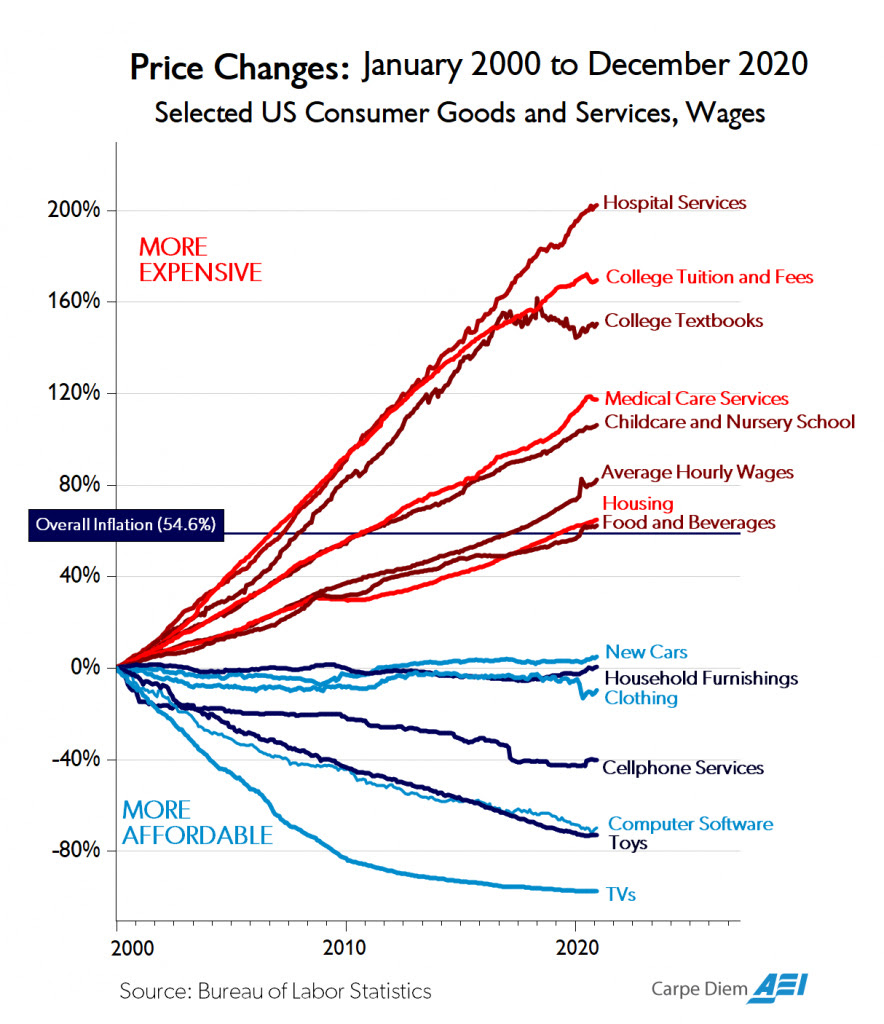 ]
What Democrats Missed
- Policy Must Be Stupidly Simple:Build Back Better was a real shot at change—child tax credits, lowering child care costs, paid leave—policies people could understand. Instead, Democrats became bogged down in the complexities of the Inflation Reduction Act, CHIPS, and infrastructure—important initiatives, but convoluted and mediated through corporate subsidies, as most of the U.S. energy economy is privately controlled. By failing to deliver clear, populist solutions, they confirmed voters’ suspicions: Democrats talk, debate, but never deliver.
Democrats achieved major victories, like negotiating Medicare drug prices, significantly expanding the ACA, and delivering historic pandemic relief. Yet these wins barely registered with the public, lost in the chaos of the modern attention economy. Pandemic relief, once celebrated, faded from memory or turned into a point of cynicism. In the end, the accomplishments were overshadowed by the narrative of an out-of-touch administration, fueling the public’s appetite for change.
Outside of weapons aid to Ukraine and Israel, most voters can’t name a single Biden-Harris achievement related to their number one concern: the cost of living. Pundits compared Biden to LBJ and FDR, but his record fell short of offering anything as simple and tangible as Social Security, Medicare, and Medicaid.
- Inoculate Voters For The GOP’s Divide-and-Rule:Democrats should have been ready for the GOP’s culture wars on immigrants and transgender people years ago. The GOP culture war strategy is simple: stir up fear and division by telling people: if you're struggling, it's because of them—immigrants, queer people, undeserving welfare recipients, the "other." This narrative keeps voters angry and distracted, while the real culprits—billionaires and politicians—push their agenda, protect their wealth and power, and shift the blame. It’s a relentless cycle of pointing fingers at the outsider to conceal the real enemies at the top. Harris and Biden barely addressed the GOP’s core strategy for what it is. But if culture is clearly shifting on issues of race, immigration, gender, and sexuality, and only one side is talking about it, you’ve got a captive audience, ripe with conspiracy theories, misinformation, persuasion, and more.
- The Multiracial Working Class Is the Key: Democrats win when we’re the party of working people. The GOP is weak on economics, but we ignore that to chase after suburbanites distracted by the latest words from Liz Cheney or Mitt Romney about civility and democracy. Meanwhile, voters have been angry for years about wage stagnation, rising healthcare, housing, child care, and education costs. We’ve forgotten how to unite around those grievances and point the finger at who’s holding us back—while we defend institutions that people know aren’t working. It’s time to stop running from our strengths and start speaking to the people who’ve been left behind.
Democrats have lost much of the working class, except for union members, who supported Harris 57-41 over Trump. The party should start by learning from the unions that have already delivered for them. Unions, unlike many Democratic leaders, know how to engage their members on real economic concerns like cost of living and job security. The Harris campaign was crowded with Uber executives, Mark Cuban, Liz Cheney, and celebrities, instead of being anchored by the voices of major labor union leaders—those who engage working-class voters every day and understand their fight for dignity and power. To win back the working class, Democrats must focus on passing laws to increase workers' power in our democracy and workplaces, while building their structural leverage in the economy.
- Norms Can’t Save Us: The Democratic Party has an enduring problem: its leadership and much of its electorate cling to institutional norms even as those norms undermine the values they were built to serve. Biden’s 2020 campaign embodied this dynamic—a promise to stabilize rather than transform—and the collapse of Build Back Better revealed the consequences. Faced with unified control of government, Democrats splintered their agenda, chasing the symbolic victory of bipartisan infrastructure while sidelining once-in-a-generation investments in climate, immigration, and child care. Leaders like Pelosi and Schumer deferred to outdated processes, mistaking caution for pragmatism and institutional inertia for strategy.
Republicans, meanwhile, understand the stakes. Mitch McConnell shattered the filibuster for judicial nominations without hesitation, reshaping the courts for decades. Democrats, by contrast, remain wedded to norms long since weaponized against them, trapped in a Beltway echo chamber where accountability runs horizontally, not vertically to voters. The emerging challenge from The Squad and younger Democrats is more than a critique of the GOP—it’s a critique of Washington’s nostalgic reverence for a status quo that no longer exists. They see clearly what the party’s gerontocracy resists: real change requires letting go of broken norms and returning to the values those institutions were meant to serve. It’s not just a matter of strategy—it’s a matter of survival.
A Blueprint for Populist Realignment
Here’s how Democrats can rebuild—and realign:
- Populist Think Tanks: Democrats need to invest in infrastructure that popularizes, passes and implements simple policies with immediate, tangible impacts — solutions working-class voters can see, feel, and understand. This means funding think tanks and policy campaigns that prioritize direct, social democratic benefits—programs that cut through the noise, deliver results quickly, and match the scale of the problems that working-class voters face. With federal gridlock stalling broader progress, Democratic governors in trifecta states must take the lead, implementing state-level policies that resonate with voters and rebuild trust.
If the left aims to realign the Democratic Party into a vehicle for economic populism, it must create a party within the party—an organized, powerful faction capable of reshaping the party's direction. In other words, the left needs its own version of the Conservative Partnership Institute (CPI), a $45 million juggernaut that has become the operational backbone of the MAGA movement, and effectively operates as a “party within a party.”
CPI is the connective tissue between far-right elected officials, media, think tanks, and movement organizations. They organize strategy retreats, training sessions, and programming for members of Congress and their staffers, focusing on areas such as conducting oversight of Democratic opponents, running opposition research bootcamps, hosting legislative director retreats, developing rapid-response communication strategies, cultivating talent for spokespeople, collaborating with issue-specific experts on policy and ideology, and placing staffers in strategic roles to advance their agenda.
This isn’t just about operational mechanics; it’s about changing how the left approaches power. Right now, too many elected officials and progressive organizations operate like small businesses, focused on preserving their own brand rather than collaborating to advance a collective mission. What’s needed is a permanent support system—one that anchors progressive governance, counters conservative dominance, and redefines what the Democratic Party can achieve.
2. Working Class Fighters As Candidates: In focus groups, people often compare Democrats to turtles, sloths, and slogs—symbols of sluggishness and inaction. This perception stems from a broader complaint that Democrats don’t fight, they just talk. In contrast, Republicans are likened to predators—lions, sharks, tigers—admired even by some in our base for their relentless pursuit of power. To rebuild trust and shed the image of passivity, Democrats should prioritize recruiting working-class candidates who reflect voters’ frustrations and lived experiences, rather than defaulting to former White House officials or CIA employees who reinforce perceptions of elitism and detachment.
To win, Democrats need to shift this image, showing resolve and urgency in their actions, rather than being seen as the party that debates but doesn’t deliver. The fact that voters in Queens and the Bronx backed both Trump and AOC reflects a shared hunger from working class voters for candidates who position themselves as unafraid to challenge broken systems, even from opposite ideological poles. Justice Democrats’ success in recruiting working-class bartenders, nurses, and principals to run for Congress isn’t just a progressive triumph—it’s a glaring indictment of the Democratic Party establishment. These efforts fill a vacuum the party itself should have addressed long ago. If the Democratic Party were effectively cultivating and empowering leaders who reflect the diversity of working-class America, organizations like Justice Democrats wouldn’t need to step in to do the job for them.
- Encourage Movements Do Their Jobs: Instead of sidelining or calling for movement groups to be defunded, party leaders and donors should embrace their critical role in shifting public opinion and grounding politics in the voices of ordinary people. Movements have the power to reframe and humanize complex issues like immigration, transgender rights, and racial justice, minimizing the effectiveness of Republican attacks on persistent Democratic vulnerabilities and creating space for politicians to act on shifts in public sentiment.
In 2020, Democrats surged to victory on the strength of historic turnout, driven by young voters and the largest wave of left-wing and Black freedom protests since the 1960s. Biden’s win coexisted with polarizing slogans like “Defund the Police,” which dominated headlines as the streets reverberated with calls for systemic change. This energy wasn’t separate from the election—it fueled it, with millions inspired by Biden’s promise to pursue “racial justice.”
The left, a force of unrelenting momentum in 2020, reshaped the political landscape with its marches, chants, and demands. But by 2024, that momentum had quieted, the roar of activism fading to a distant echo. Kamala Harris inherited a landscape less charged with the restless fervor that defined Biden’s rise. This fusion of electoral campaigns and protest movements in 2020 reflected a collective hunger for justice, a belief that transformative change was within reach.
Yet by 2024, much of that energy had dissipated. Left-wing groups grew quieter, philanthropic efforts narrowed their scope to electing Democrats, and the broad anti-MAGA coalition struggled to rekindle the bold, grassroots activism that had once thrived, leaving a palpable void in its wake.
Movements don’t just mobilize voters—they bring a sense of "the public" into politics through organizing, mobilization, and earned media, pushing beyond the imagery of calculations driven by people in suits.
To win durable majorities, leaders must invest in these movements, empowering them to tell the stories, build coalitions, and create the moral urgency that drives a sense of public participation in our politics and expands what is politically possible. We need to restore a dynamic balance of conflict and collaboration between movements and parties—the kind of tension that once drove FDR and LBJ to achieve some of the most transformative presidencies in modern history. Without their energy, politics risks becoming stagnant and detached, losing the very constituencies that make change possible.
- Reform Movement Organizations:Movement groups have always navigated the tension between energizing their base, persuading the middle, and disrupting the status quo. Since Bernie Sanders’ 2016 campaign, many groups have shifted from pure protest to deeper political engagement—embracing elections, legislative advocacy, and canvassing as tools to test their ideas and sharpen strategies for building majoritarian power. While federal progress on racial justice and immigration has faltered, wins on climate and economic policy highlight what persistence can achieve.
For years, center-left and progressive groups have grappled with a critical question: are organizations rooted in real constituencies, or are they drifting into donor-driven list-building machines with little connection to working-class bases? The risk of becoming hollow vessels—focused on fundraising metrics rather than people’s material needs—is always real. Leaders should push for clarity: is the goal mass membership, shifting elite or public opinion, legislative wins, or building an online echo chamber to rival the far right’s Daily Wire, Turning Point USA, and $56 million PragerU? Without a clear theory of change, lofty ideals can collapse under their own weight. But with intentional strategy, movements can avoid this drift and build real, durable power.
As Jesse Jackson famously observed, the Democratic Party is like a plane—it needs both a left wing and a right wing to fly. The dynamic between Frederick Douglass and Abraham Lincoln captures this balance: Douglass’s uncompromising moral clarity forced the nation to confront the urgency of abolition, while Lincoln’s pragmatic navigation of political realities turned that vision into actionable policy. Without Douglass, Lincoln risked moral stagnation; without Lincoln, Douglass’s ideals might have drowned in political impossibility. Their collaboration wasn’t smooth—it was tense, necessary, and deeply productive. That same interplay of bold vision and strategic execution is what the Democratic Party needs today
The tension between transactional politics and transformational movements is as old as American democracy itself, and today’s Democratic Party is no exception. In moments of upheaval, ideologically driven movements have often dragged their parties out of complacency and into purpose. Abolitionists gave Republicans emancipation. Labor unions handed Roosevelt the New Deal. Civil rights leaders pushed Johnson to deliver the Great Society. Right-wing economists armed Reagan with trickle-down economics. For progressives today, the challenge is to offer not just another interest group to triangulate, but a clear and compelling answer to the most urgent question of our time: “How should Democrats govern?”
- Win The Battle For Trans Rights: After George W. Bush defeated John Kerry, many Democratic elites blamed the same-sex marriage movement for being too bold and moving too quickly. Yet just a few years later, same-sex marriage became the law of the land, a reminder that organizing often drives the political shifts once deemed inconvenient and impossible. Not long ago, Democrats beat back Republican-led trans bathroom bans in states like North Carolina, proving this fight is far from unwinnable. Caution may feel safe in the moment, but transformative change requires courage to lead. At our best, Democrats are the party that protects the marginalized, not feeds them to the wolves—a purpose we can’t afford to abandon.
To ensure trans Americans are safe and respected, we need to reframe the issue as part of a universal fight for dignity and freedom, not as a niche debate about policing language. Sports inclusion is far from the top concern for trans Americans, but the public often doesn’t understand this, falling for the GOP’s framing of it as central to the debate. Messages like Sarah McBride’s, which expose this obsession as a GOP distraction from solving real issues, alongside messages emphasizing autonomy, freedom, privacy, and safety, are both crucial to reshaping the conversation.
Everyone has faced pressures to conform to gender norms, and everyone deserves the freedom to live authentically, without fear or control. Walking away from the fight for trans rights means ceding the narrative to Republicans, who weaponize fear and suspicion to create a captive audience for their far-right message machine. To counter this, progressives must highlight shared values like privacy, safety, and autonomy while exposing the absurdity of policies like bathroom bans, which rely on invasive enforcement and government overreach. This isn’t just about protecting trans people—it’s about connecting their fight to a universal struggle for dignity and freedom, with year-round earned and paid media campaigns (ads, spokespeople in national media, and appearances on key podcasts and YouTube shows) that persuade the public, reframe trans rights, and build a majoritarian coalition.
It’s strikingly self-defeating to argue that listening to the groups most targeted by Trump’s administration somehow betrays the people “Democrats fight for.” Trans people are facing a Supreme Court case this month that could ban gender-affirming care nationwide, yet Democrats spent the weeks leading up to it attacking trans communities instead of showing solidarity. Governor Andy Beshear’s recent victory in Kentucky offers a smarter path: he didn’t avoid controversial issues—he vetoed anti-LGBTQ and anti-choice bills—but he paired those actions with a relentless focus on delivering material benefits like jobs, health clinics, and better infrastructure. Voters don’t need to agree with every decision if they trust your priorities and see their daily lives improving. Beshear’s success shows that effective leadership isn’t about abandoning our core values; it’s about standing firm on principles while persuading voters that you care about people’s core concerns.
Voter frustration over immigration and the border wasn’t solely concocted—it stemmed from real, tangible disruptions in communities. Many working-class voters felt they were playing by the rules while the government seemed to prioritize newcomers. Long-established Latino immigrants are increasingly resentful as new asylum-seekers gain access to work permits and driver’s licenses, benefits that many undocumented workers have spent decades without. ProPublica’s reporting shows how this frustration, rooted in real policy disparities and unmet Democratic promises, helped drive a notable shift toward Trump, underscoring the complex interplay between immigration policy and political realignment.
These tensions are predictable in every society in human history navigating the line between compassion and control. Nations are defined by borders, and the very idea of "the people" relies on who is included and who is not. Yet Democrats fumbled the opportunity to shape this debate. When far-right Republican governors exploited the asylum crisis, sending migrants to blue states in a cynical stunt, Democrats mostly stood by as the narrative spiraled. Even worse, some Democrats echoed GOP criticisms of the Biden-Harris administration rather than reframing the issue or backing movement organizations in developing earned and paid media campaigns. These efforts could have humanized the migrant experience, mitigated Democratic vulnerabilities, and highlighted how Republicans are exploiting a broken immigration system for political gain. Into this silence stepped Republicans, eager to score political points and dominate the conversation.
- Build Populist Media:Democrats need year-round media campaigns to elevate working-class leaders, particularly from labor unions, and name the villains behind today’s economic struggles. Billionaires and corporations in Big Tech, Big Pharma, Big Oil, Big Ag, grocery store chains, and real estate are bleeding working people dry, with both parties often complicit. Campaigns should build on the work of United Auto Workers and groups like More Perfect Union by spotlighting labor leaders, warehouse workers, and tenants fighting back, turning their stories into a rallying cry against corporate greed and driving a populist narrative that resonates across the political spectrum.
To cut through the noise, these campaigns must be bold and conflict-driven—grabbing attention on TikTok, YouTube, and Instagram while dominating earned media on CNN, CBS, and MSNBC. For all the talk of Democrats losing the working class, labor, and tenant leaders remain pretty much invisible in most national print and TV outlets. We need a spokesperson network to bring working-class voices into national conversations and digital media infrastructure—podcasts and YouTube shows—that make their stories impossible to ignore. To reclaim the narrative, Democrats must center the people who best embody the fight for fairness and economic justice.
To build a 21st-century American multiracial populism, we need a sharper understanding of the forces shaping voter behavior—starting with John Steinbeck’s insight that many working-class Americans see themselves as “temporarily embarrassed millionaires.” For instance, many working-class voters are often described as prioritizing values like hard work, small businesses, providing for your family, upward mobility, and the American Dream, suggesting that a successful populist coalition will require a nuanced approach that respects diverse aspirations. Many voters don’t simply resent the rich (they voted for Donald Trump after all), but they do want a fair shot. They’re not asking for the rich to disappear, but for a world where three men don’t hold as much wealth as the bottom 50%. It’s about creating a vision of prosperity that includes everyone, not just the few at the top.
Lastly, the multiracial working class is extremely diverse—racially, ideologically, religiously, geographically. This won’t happen with a cookie-cutter playbook; it demands well-funded research and strategic investment to craft a populism that resonates across lines of identity while addressing the anxieties uniting these groups.
7. It’s Not Joe Rogan. In the George W. Bush years, media and political elites fixated on conservative talk radio, desperately seeking a liberal counterpart to Rush Limbaugh. Today, the fixation has shifted to Joe Rogan, podcasts, and right-wing echo chambers on YouTube as the supposed key to voter engagement. But the problem isn’t just the lack of platforms or personalities—it’s the lack of ideas that resonate on a visceral level. Conservatives didn’t merely elevate compelling figures; they sold emotionally charged narratives that tapped into people’s frustrations, fears, and aspirations. Democrats, meanwhile, often obsess over the medium but fail to deliver a product that connects with lived realities.
Kamala Harris’s challenges with authenticity and accessibility reflect a broader strategic issue rather than a need to engage specific platforms like Joe Rogan. Her hesitance to lean into unscripted, long-form interactions and her discomfort with intimate, conversational formats have left voters unconvinced of her relatability. Compounding this is her inconsistent public narrative—policy shifts, a lack of clear beliefs, and an introduction to the national stage that felt unsteady and overly managed. In a media landscape favoring unfiltered authenticity, Harris’s resistance to being fully known has widened the gap between her and voters, who increasingly prioritize trust over polish. [~ msg discipline?]
The solution isn’t about finding the next Joe Rogan of the left—it’s about creating a sense of accessibility, authenticity, and belonging. Voices like Raphael Warnock, Alexandria Ocasio-Cortez, Mehdi Hasan, Tara Brach, and Hasan Piker can succeed as major voices on the left not just because of who they are, but because they pair cultural relevance in their unique ways with a sense of agency, hope, and solidarity. :{In an age of rapid secularization, people aren’t just looking for policy fixes; they’re searching for meaning and belonging in ways that feel affirming, not condescending.}: By crafting narratives that address economic and cultural alienation with self-help, humor, imagination, and practicality, Democrats can bridge the gap between policy and personal impact. Without content that resonates on a deeply human level, even the most powerful platforms and personalities will struggle to persuade those who feel left behind.
To build a durable digital media infrastructure, Democrats must invest in influencers who reach audiences through non-political content—fitness, sports, entertainment, beauty, meditation, gaming, lifestyle, and self-help—where trust and cultural connection are already strong. This means funding creators who weave messages of solidarity and agency under the next Trump administration into relatable, everyday content rather than overtly political appeals. By supporting these voices and fostering partnerships across diverse platforms, Democrats can create a media ecosystem that taps into cultural relevance while subtly shaping the narrative on belonging, justice, and collective action.
- Embrace Democracy Reform:Democrats must embrace democracy reform to break free from the two-party doom loop that fuels polarization, gridlock, and disillusionment. The current winner-take-all system incentivizes negative partisanship and makes it increasingly difficult for the governing party to deliver results. Thermostatic public opinion punishes Democrats for governing, no matter their achievements, making it impossible to build lasting trust with voters—another reason they need bold democracy reforms to break the cycle of backlash and gridlock.
Structural changes like proportional representation through multi-member districts with ranked-choice voting offer a way out by making elections more competitive and representative, empowering diverse voices, and reducing the zero-sum nature of our politics. These reforms wouldn’t just broaden voter choice—they would create space for new coalitions, reward collaboration over obstruction, and weaken the hold of the far right.
If Democrats want to restore faith in governance and build a sustainable path to power, they must prioritize a bold and imaginative democracy reform agenda on the local, state, and federal levels. Blue State trifectas have no excuse not to lead the charge on proportional representation, setting a national example for fairer, more inclusive democracy. This goes beyond election mechanics; it’s about transforming a system that rewards division and stagnation into one that fosters representation, accountability, and actually passing laws.
9. Mainstream Media Reform:In 2024, Democrats once again misunderstood the true mechanics of cultural power. As Heather McGhee writes, the right’s influencers aren’t just celebrities; they’re in your headphones, on your screens, talking for hours every day, embedding their worldview into the fabric of daily life. It’s not about a viral moment or a campaign concert. It’s about permanence and persistence—being there, day after day, to shape how people think about the world, subtly and consistently.
Meanwhile, you might think watching CNN or MSNBC offers you a break from Fox News, but it doesn’t. Fox doesn’t just broadcast to its right-wing viewers; it sets the agenda for everyone else. Once Fox locks onto a narrative—whether it’s wokeness, migrant caravans, transgender athletes, or Hillary’s emails—it becomes the story other networks feel compelled to react to. Suddenly, MSNBC and CNN are no longer offering independent analysis; they’re playing Fox’s game. It doesn’t look like Hannity or Fox & Friends. It looks like a measured panel discussion on “will X or Y divide the Democrats?” but the framing is already skewed. Fox isn’t just shaping its audience—it’s shaping the entire media ecosystem.
McGhee observes that while MSNBC is hailed as the liberal answer to Fox News, it tracks the outrage of the day without a clear map of the world it wants to build. Meanwhile, Fox doesn’t just report the news; it digs trenches around its central narrative of grievance. At MSNBC, working-class solidarity and economic populism—the fire that should drive the Democratic Party—flickers but never truly ignites.
The problem isn’t just what gets covered; it’s how it gets covered. Marie Gluesenkamp Perez, a moderate Democrat, spoke on Jake Tapper's show, and for a moment, it felt as if she were speaking in a foreign tongue. She talked about timber revenues drying up, wildfires choking the land, and the quiet desperation of families trying to pass down small businesses—stories that don’t fit the neat partisan battles or tactical sparring the media thrives on. It was plain, unvarnished, and strangely unfamiliar: the language of people, not politics.
Political journalism today is too often consumed by tactical framing: who’s up, who’s down, how something “plays” politically. Policies are often framed through the lens of electability, sidelining their potential to solve real issues faced by people. Will it alienate swing voters? Will it hand Republicans a talking point? These frames shrink monumental issues into partisan chess moves, stripping away their stakes and substance. Over time, this fixation breeds cynicism. It teaches voters to see politics as a game, where nothing is real, no problem is solvable, and everything is just another strategy session. The real tragedy? If every story is about tactics, then nothing is truly about solutions—and that’s how we lose.
If mainstream media wants to lead rather than echo, it must embrace a sharper program—one that grabs viewers’ attention and names both the protagonists and the culprits. This means investing in real journalism on the forces that shape our lives—corporate power, labor exploitation, housing crises, health care failures—and telling these stories through the lens of their human cost, not just their partisan implications. It requires turning the camera outward, away from the Beltway echo chamber of partisan punditry to directly impacted people, and subject-matter experts who can unmask failures and hold the right people accountable. Without this, the media remains tethered to Fox News’s dominance, stuck reacting to the outrage of the day while politics becomes a sterile chessboard, devoid of stakes, villains, or heroes.
- Win The War On Attention: To compete in the war on attention, Democrats must move beyond sporadic appearances and build a robust infrastructure for relentless, narrative-driven engagement.
Joe Biden’s most profound vulnerability in 2020 wasn’t just his age or even his physical fitness; it was the perception that he might not be the true author of his presidency. This wasn’t about whether he could jog up Air Force One’s steps—it was about whether voters saw him as autonomous, decisive, and in command. In an era of hyper-mediated politics, where every narrative metastasizes at the speed of a tweet, this kind of unease is potent. The Biden campaign’s insight was counterintuitive: the antidote to this wasn’t performative vigor but quiet authenticity. By letting Biden speak plainly and directly to voters about policy—unedited, focused, and deliberate—they addressed a deeper anxiety about their candidate’s agency and vision. What emerged wasn’t just an effective strategy for Biden but a reminder of a political truth often lost in the cacophony: clarity and simplicity, when rooted in substance, can cut through even the most insidious narratives.
But after his election, President Biden held fewer interviews and press conferences than any president in modern history, leaving a vacuum that allowed his image to be defined by perceptions of frailty, passivity, and conspiracy theories depicting him as an empty suit, controlled by nefarious forces within the establishment. In a fragmented attention economy where meaning is constantly under siege, leaders like Andrés Manuel López Obrador (AMLO) and Andrew Cuomo have shown how to anchor public focus. AMLO’s daily press briefings, La Mañanera, operated as a structured attentional regime—blending updates, policy narratives, heroes and antagonists, and spectacle to seize and hold public interest. Similarly, Governor Andrew Cuomo’s pandemic briefings became hugely popular spectacles demonstrating leadership while dominating the narrative.
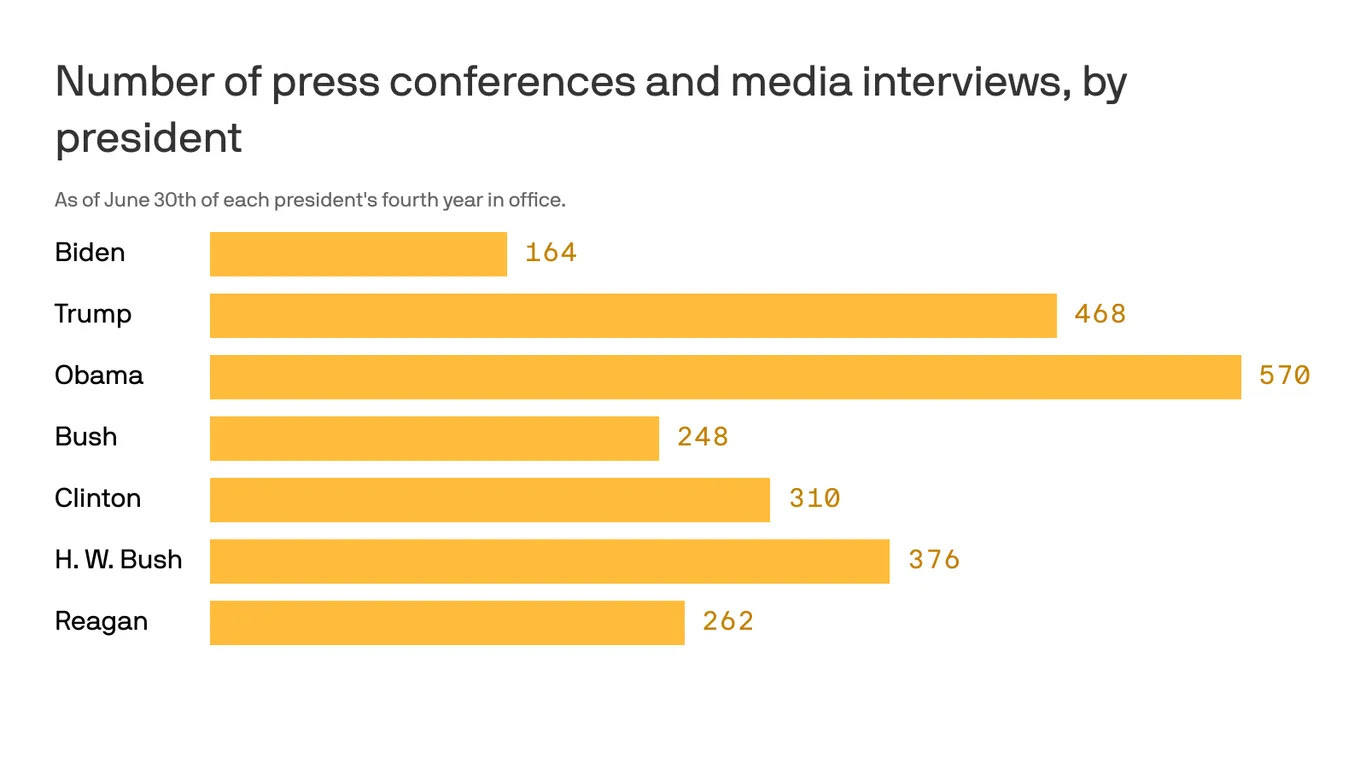 |
Popular Democratic Party leaders must build mechanisms for persistent visibility: daily livestreams, podcasts, or even interactive town halls in partnership with influencers or outlets with major working-class audiences. These aren’t just communication tools but platforms to set the terms of public debate, addressing voter anxieties and aspirations in real time. In a world of collapsed attentional regimes—where algorithms amplify outrage and shallow narratives—the key is to construct spaces where focus, persuasion, and values intersect. By shaping the attention economy with substance, Democrats can counter right-wing spectacle and re-establish politics as both engaging and essential.
The next DNC Chair must rebuild the party around a simple idea: Democrats win when they are the party of working-class people of all backgrounds. That means recruiting populist candidates who look like the voters they need—teachers, nurses, labor leaders—people who live the struggles they’re running to fix. It means ditching technocratic jargon for policies that are bold, easy to understand, and deliver real results, like lowering childcare costs, raising wages, and ensuring rent is affordable. The Chair also needs to play offense on messaging: invest in earned and paid media campaigns that spotlight corporate greed and Republican hate-for-profit, naming the villains behind economic struggles instead of getting bogged down in partisan back-and-forth.
To move beyond the zero-sum gridlock of the two-party system, the DNC should also embrace reforms like ranked-choice voting and proportional representation. These changes would give voters real choices, reduce polarization, and reward collaboration over obstruction. Finally, by pushing for mainstream media reform, supporting independent progressive and digital media, and collaborating with movement organizations on campaigns that persuade broad majorities, the party can reclaim its role as the champion of all working people and rebuild trust in a future that is both pragmatic and transformative.
---
an 12 24
the Atlantic's George Packer believes there are important lessons that Democrats need to take away from President-elect Donald Trump's victory in the 2024 election.
However, he also believes that Democrats need to avoid overestimating the strength of Trump's electoral coalition, which he believes could split relatively quickly.
"The Trump Reaction is more fragile than it now seems," he writes. "Trump’s behavior in the last weeks of the campaign did not augur a coherent second presidency. He will surround himself with ideologues, opportunists, and crackpots, and because he has no interest in governing, they will try to fill the vacuum and turn on one another."
Packer then zeroes in on the contradictions within the Trump coalition that will make it very hard for the president-elect to keep everything held together.
"The Trump administration, with a favorable Congress, will overreach on issues such as abortion and immigration, soon alienating important parts of its new coalition," he argues. "It will enact economic policies that favor the party’s old allies among the rich at the expense of its new supporters among the less well-off. It’s quite possible that, approaching 80, Trump will find himself once more among the least popular presidents in the country’s history."
He nonetheless says that Democrats need to perform a mental balancing act of both correcting the errors of the Biden-Harris administration while at the same time getting on war footing against an administration that will be unprecedently hostile to them.
"The opposition will have to act," he urges. "Much of this action will involve civil society and the private sector along with surviving government institutions—to prevent by legal means the mass internment and deportation of migrants from communities in which they’ve been peacefully living for years; to save women whose lives are threatened by laws that would punish them for trying to save themselves; to protect the public health from Robert F. Kennedy Jr., the nation’s security from Tulsi Gabbard, and its coffers from Elon Musk."
===
AN 12 24
During the 2024 presidential race, Donald Trump relentlessly attacked President Joe Biden and Vice President Kamala Harris on the economy — blaming both of them for post-pandemic inflation in the United States. And the message resonated with enough voters for Trump to pull off a narrow victory over Harris.
According to the Cook Political Report, Trump defeated Harris by roughly 1.5 or 1.6 percent in the popular vote and picked up 312 electoral votes compared to 226 for the vice president.
A victory of 1.5 or 1.6 percent is hardly a "landslide," as Trump's allies have been claiming. But it's a victory nonetheless, and Trump will be sworn in for a nonconsecutive second term on January 20, 2025.
READ MORE:Trump’s tariffs on Mexico could devastate border region: TX economists
Some of Biden's supporters have argued that history will be kind to the outgoing president — not unlike the kind words for the late President George H.W. Bush after he lost the 1992 election to President Bill Clinton. And history, they argue, will remember Biden's job-creation record and the low unemployment of his presidency.
In October, according to the U.S. Bureau of Labor Statistics (BLS), U.S. unemployment was 4.1 percent.
In a December 2 post on X, formerly Twitter, Alex Armlovich — a senior housing analyst for the Niskanen Center — praised Biden's record on creating manufacturing jobs. And he made his point by tweeting a chart from Joey Politano, who publishes a financial newsletter.
Armlovich tweeted, "This rise in US manufacturing construction spend via @JosephPolitano is absolutely mindblowing. So many CHIPS & IRA-fueled factories are about to start opening in January you're not gonna believe it."
:{READ MORE:Bombshell report details 'dangerous' new allegations against Trump Cabinet nominee
In a separate tweet, Armlovich laments that Trump, in 2025, will get the credit for Biden's economic achievements.
Armlovich predicts, "Trump's name will be on every IIJA, CHIPS, & IRA ribbon cut b/c key Dem factions thought NEPA red tape was more important than permitting reform to finish projects in <4 yrs FDR didn't respond to the 1930s by saying 'Mussolini is too fast we need NEPA.' He just started building."
---
an 12 24
If recent political history is any indication, examinations into Republican electoral defeats up and down the ballot may not be far off, according to a political columnist.
In fact, they could be one presidential election cycle away.
Take for example the elections in 2008, 2016 and 2020, when voters gave the prevailing party governing trifectas, MSNBC columnist Michael A. Cohen wrote.
Of course, the GOP was handed the coveted political situation this year, but four years ago it was Democrats who were handed back control of Congress and the White House after Republicans wrestled it away in 2016, the same way Democrats turned the tables in 2008, Cohen noted.
“Quite simply, it might not be long before the election postmortems are being written about the GOP,” Cohen told readers in an opinion piece published Monday for MSNBC.
While Cohen is not doubting the scope of the “bad outcome” the 2024 elections produced for the Democratic Party, he says the data shows some bright spots for the party, including that “Democrats outperformed the presidential ticket in several key Senate races.”
“The Democrats’ defeat has led to a host of postmortems and rAnting on what went wrong and what the party needs to do differently going forward,” he wrote. “But a deep dive inside the numbers suggests that while the election results were bad for Democrats, they aren’t quite as awful as they seem.”
He continued to establish his argument by reminding readers that Democrats were facing “an uphill battle” this year in the face of anti-incumbent sentiment worldwide and that President-elect Donald Trump’s victory was not the landslide win that MAGA world wanted to portray.
“His margin of victory, 1.6 points, was the fifth-smallest in the last 100 years,” Cohen noted.
The columnist concluded by writing that even as Democrats “lost four Senate seats and control of the chamber, considering the 6-point shift in national voting and Trump’s victory, they did better than expected.”
“Going forward, the ubiquity of the occasional Trump voter should concern Republicans,” according to Cohen, a senior fellow and co-director of the Afghanistan Assumptions Project at the Center for Strategic Studies at the Fletcher School, Tufts University. “Can they hold the White House — and their advantages in the House and Senate — if Trump is not on the ticket (and constitutionally, he cannot run for president again)?”
===
an 12 24
When Teamsters President Sean O'Brien spoke at the 2024 Republican National Convention in Milwaukee, some right-wing media outlets painted the speech as an example of unions moving from the Democratic Party to the GOP.
But O'Brien didn't endorse Donald Trump during his speech. The Teamsters president, rather, kept his speech nonpartisan, making general comments about the struggles of the American working class.
In an interview with Capitol & Maine's Kalena Thomhave, former AFL-CIO Political Director Steve Rosenthal debunked the claim that unions are abandoning the Democratic Party for the GOP in huge numbers. This "long-term conservative shift," according to Rosenthal, is a myth.
READ MORE:**Bombshell report details 'dangerous' new allegations against Trump Cabinet nominee**
Rosenthal, during the interview, stressed that Vice President Kamala Harris received more union support than Trump.
"First off, union members voted for Harris in pretty strong numbers," Rosenthal told Capitol & Maine. "Across the three Blue Wall states, (there was a) significant performance by union members. In Pennsylvania, union members made up 18 percent of the electorate. So, almost one out of five votes cast came from union households, and they voted 52 to 47 for Harris, which is better than the (Joe) Biden vote was in 2020, (when) Biden lost union households to Trump 49 to 50 in Pennsylvania. So, she actually did better."
Rosenthal elaborated, "In Wisconsin, Kamala Harris won union voters 53 to 46 — better than (Hillary) Clinton did in 2016 and not quite as good as Biden did in 2020, but still a nine-point margin among union voters in the state. In Michigan, Harris won (union voters) 55 to 44 — not quite as good as Biden did in 2020, but much better than Clinton in 2016."
According to Rosenthal, Trump has "eroded the union vote a little bit" but "not in substantial numbers."
READ MORE:**Mehdi Hasan rips Nikki Haley over Biden jab: 'You hated Trump'**
However, the former AFL-CIO political director emphasized that Democrats will need to articulate a strong economic message in future elections.
Rosenthal told Capitol & Maine, "There's an element there about the message and the messenger. It's not that the (Democratic) Party doesn't stand for workers anymore; it's that the party leadership is not getting in the trenches with workers anymore. Their accomplishments are partially paid short shrift because there's a huge degree of cynicism overall about both parties and politics in general…. There's a distinction between what the party is doing and fighting for and what people feel and see and understand."
Rosenthal continued, "Biden was, by all accounts, the most pro-union president in our lifetimes. It must be incredibly insulting to President Biden, Vice President Harris (and others in the administration), who have done so much over the last few years for unions and workers, to be hearing that the party has abandoned them."
READ MORE:[Data shows dire election postmortems could soon be in store for GOP: columnist
Read Capitol & Maine's full interview withSteve Rosenthal at this link.
---
reich
Harris latest data we have show that she
got 74.6 million votes
Trump got 7. 7 77 million
85 m did not vote
min wage, paid sick leave [corps lobby ~ vs eu], alaska ~ union busting;
nlrb bezos musk; dems have to stop being dep on corps/olig;
trump admin will overreach bc no constraints; tax cuts for rich, tariffs;
higher deficit mean more money to bonds [rich US not china];
GM layoff --> stock buyback; richest 52% own most stocks?
ran choice alaska; vouchers colo kty ~ neb etc
long game eg wisc scotus ~ gerry; dems have none, never have
2015 cranky uncle at end
https://www.youtube.com/watch?v=aKMwCEqNEFw
---
---
PFAW 11 24
11 24
- Angela Alsobrooks is the first Black person elected to the U.S. Senate from Maryland.
- Joe Sheehan is a former school superintendent who flipped his Wisconsin State House seat to blue by 800 votes.
- Mo Green defeated an opponent backed by Moms for Liberty and flipped North Carolina’s superintendent seat blue.
- Kimberly Thomas expanded the Democrat’s majority on Michigan’s Supreme Court 5-2.
- Sean Teare is a progressive prosecutor who won a tight race for District Attorney in Harris County, Texas – the state’s most populous county.
---
---
POD SAVE POST MORT 11 24 david p anti-incumb headwind basically insurmountable
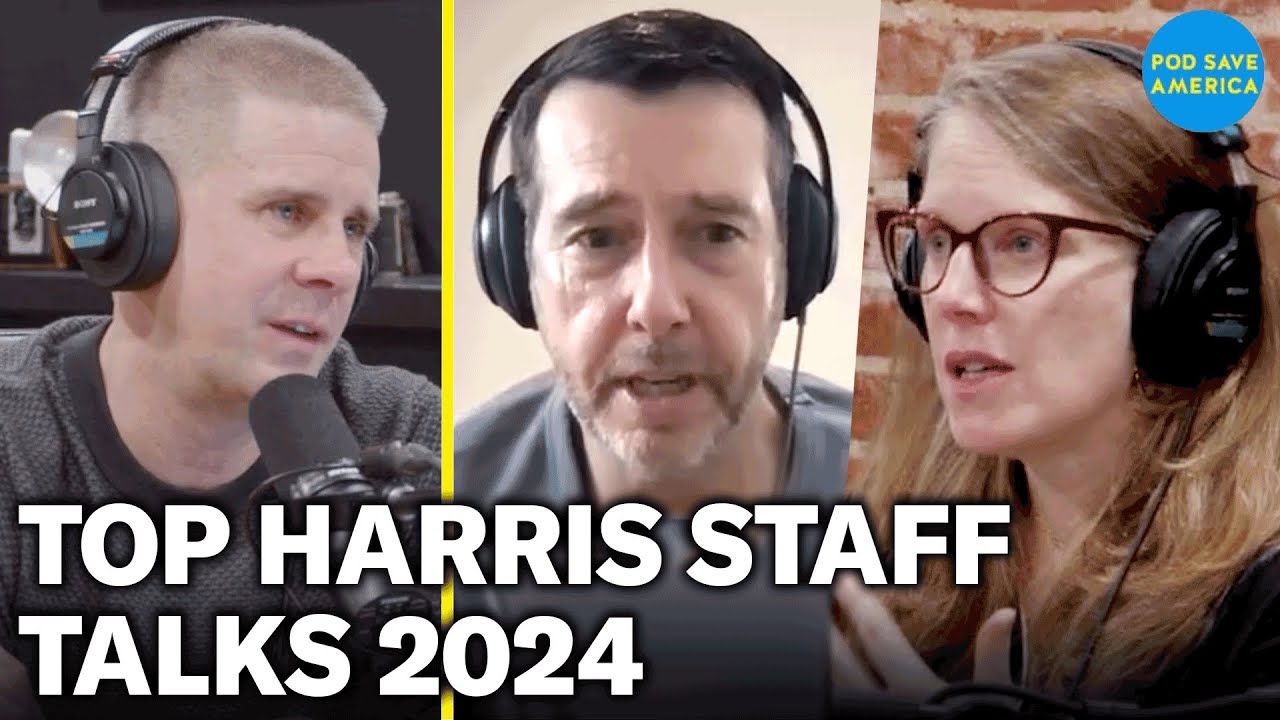
---
an 11 24
One common theme of 2024 election postmortems is that Vice President Kamala Harris lost to President-elect Donald Trump because her campaign was too far-left. Zeteo News editor-in-chief and CEO Mehdi Hasan took issue with that argument.
In a video posted to X, Hasan tore into Democratic establishment figures like James Carville and Adam Jentleson who said the "far left" was holding the Democratic Party "hostage." He blasted headlines in major media outlets like the Washington Post that read: Harris defeat is a stinging verdict for the left," and a New York Times op-ed titled: "When will Democrats learn to say no?"
"Are you f—ing kidding me? This is gaslighting of Trumpian proportions," Hasan said.
READ MORE:'You're a racist disgrace': Mehdi Hasan unloads on JD Vance over late-night post
"There was nothing 'left wing' about Harris. I mean, the centrists literally got the presidential candidate they wanted: A tough-on-crime prosecutor who bragged about owning a gun and spoke about her love for a 'lethal' military," he continued. "A candidate who famously told migrants: 'Don't come to this country.'" And, during the one and only presidential debate, attacked Trump for not backing a bipartisan and very draconian border security bill."
Hasan went on to bash arguments that the vice president's campaign was too left-wing "ridiculous," "detached from reality" and "demonstrably and obviously false." He noted that she didn't once use the phrase "Latinx" or "defund the police" on the campaign stump, and "barely said anything about transgender rights." And he noted that in 2020, when "defund the police" was a more common saying, Democrats won the White House.
"It's as clear as day. Harris did not run a left-wing campaign. She didn't run on Medicare for All. She didn't run on student debt relief. She didn't run on a Green New Deal. And she didn't break with Joe Biden on Gaza," he said. "So when you say she ran 'left,' what on earth are you talking about?"
"This is a presidential candidate who campaigned way more with Liz Cheney and Mark Cuban than with AOC and Shawn Fain. Who listened to her brother-in-law, the chief legal officer of Uber, than to Bernie Sanders," Hasan added. "The truth is, in 2016 and again in 2020, the Democratic establishment united to block Bernie Sanders, an actual leftist, from becoming their nominee. And in 2024, due to Joe Biden's stubbornness, they didn't even have a contest, just a coronation."
READ MORE:Harris visits border to talk immigration policy and target Trump
"So look, the centrists, the moderates, got their candidate in every single election in which the Republicans nominated Donald Trump: 2016, Hillary Clinton. 2020, Joe Biden. 2024, Kamala Harris. And they lost to Trump two out of three times," he concluded. "And now they're going to blame the left for that? No f—ing way."
Watch Hasan's full video below, or by clicking this link.
RELATED: ‘Hostile Takeovers’: Trump Says Immigrants Are Using ‘Massive Machine Gun-Type Equipment’
=
--> aei

936,026 views Nov 18, 2024 #DailyShow #Republicans #Democrats
“You actually have to focus relentlessly on delivering for people in their daily lives and figure out how to do it... so they feel it.” Co-founder of The Liberal Patriot Substack and co-author of “Where Have All the Democrats Gone?” Ruy Teixeira sits down with Jon Stewart to discuss how Democrats lost their coalition of working-class voters and economic instincts. They talk about the decline of Democratic economic policies since Bill Clinton, whether DEI and “woke” culture are turning people away from the party, and what Teixeira views as an era where both Democrats and Republicans may not be interested in forming a dominant majority coalition. #DailyShow #Democrats #Republicans
BIG PICTURE
'Quickly rot from within': Expert reveals 3 traits the US shares with declining empires
https://www.alternet.org/us-empire-decline/)}:
an 12 24
The United States is currently displaying several characteristics that have historically been seen by empires in decline, according to one social scientist.:
Peter Turchin is one of the pioneers of "cliodynamics," which is the field of study concerning statistical analysis of historical dynamics of societies around the world. In a recent essay for the Guardian, Turchin wrote that he and his fellow researchers have noticed the U.S. having three key traits in common with past global hegemons just before a period of decline. Those three factors are "popular immiseration, elite overproduction and state breakdown."
Turchin explained that "popular immiseration" describes a breakdown of the social contract between workers, the private sector and the public sector, which he said began after the Republican assault in the New Deal that happened around the time former President Ronald Reagan took power. He noted that as "the power of unions was undermined," taxes on the richest Americans were "cut back," which was followed by stagnating wages and a decline in life expectancy.
READ MORE:['Not good enough anymore': Union leader explains why Dems lost economic argument to Trump
"With the incomes of workers effectively stuck, the fruits of economic growth were reaped by the elites instead. A perverse 'wealth pump' came into being, siphoning money from the poor and channelling it to the rich," he wrote. "In many ways, the last four decades call to mind what happened in the United States between 1870 and 1900 – the time of railroad fortunes and robber barons. If the postwar period was a golden age of broad-based prosperity, after 1980 we could be said to have entered a Second Gilded Age."
The second trait, which Turchin called "elite overproduction," involves a growing population of the "uber-rich," (which he defined as "those with fortunes greater than $10 million") and their influence in the public sphere. He noted that when adjusting for inflation, this population grew by tenfold over the last four decades. This has led to rich elites either running for office, like President-elect Donald Trump, or funding candidates for office, like many billionaires have done in recent cycles. He also pointed out that "counter-elites" will emerge who oppose the existing political establishment.
"The more members of this elite class there are, the more aspirants for political power a society contains," he wrote. "By the 2010s the social pyramid in the US had grown exceptionally top-heavy: there were too many wannabe leaders and moguls competing for a fixed number of positions in the upper echelons of politics and business."
"As battles between the ruling elites and counter-elites heat up, the norms governing public discourse unravel and trust in institutions declines," he continued. "The result is a loss of civic cohesiveness and sense of national cooperation – without which states quickly rot from within."
READ MORE:[Watch: JD Vance booed by room full of firefighters as he calls himself 'pro-worker'
Finally, Turchin opined that "state breakdown" will inevitably follow popular immiseration and elite overproduction. He argued that Democrats' loss in the November election "represents one battle in an ongoing revolutionary war," but that the goal of the new order is "far from assured" given that "opponents are pretty well entrenched in the bureaucracy and can effectively resist change."
"Popular discontent in the US has been building up for more than four decades. Many years of real prosperity would be needed to persuade the public that the country is back on the right track," he wrote. "So, for now, we can expect a lasting age of discord. Let’s hope that it won’t spill over into a hot civil war."
Click here to read Turchin's full essay in the Guardian.
READ MORE:['A corporate CEO's dream': Labor unions blast Trump-Vance ticket
see ref in big picture
---
---}:
an 11 24 reich?
i keep asking myself how the hell more than 70 million of our compatriots could vote for that jerk. For the purpose of thinking through what happened and what Democrats should do in the future, I’ve organized Trump voters into four groups.
- The fanatic MAGA base: racists, misogynists, homophobes, nativists, xenophobes, and know-nothings. They’ve always been part of America, but they’re more visible now because they wear MAGA hats and attend MAGA rallies. (They also don’t always admit to pollsters they’re voting for Trump because they don’t want to admit their bigotry even to themselves. Democrats shouldn’t try to court them.)
- Those who haven’t yet felt the beneficial effects of Biden’s policies. These voters work hard and play by the rules. They are not ideological, are not wedded to one party or the other, and are pragmatic. They’ll listen to reason if and when they perceive Democrats to be genuinely on their side.
- Angry voters who have been shafted for decades.They don’t have college degrees and live in areas of America that have been abandoned by industry. They want to flick their middle fingers at college-educated elites — successful, affluent, healthier, seemingly happier people with wonderful futures. Democrats should listen to their legitimate grievances and stop acting as if Democrats are superior and enlightened.
- Men — white, Black, and Latino — who have been losing ground, status, and power.They want to return to an America when their fathers or grandfathers were the major breadwinners in their families and ruled the roost. They wouldn’t describe themselves as misogynistic, but they feel bewildered and lost in a society that no longer values or rewards physical strength, endurance, stamina, tenacity, toughness, and other traditional “male” virtues. Dems should open paths to them toward good jobs.
Admittedly, these four groups overlap, and there were others who helped Trump win, such as the religious right and people outraged by Biden’s cooperation with Netanyahu. But for this week’s Office Hours question, please identify which of these groups you believe weremostresponsible for Trump’s win of the popular vote.
Now read:[People expecting Trump voters to turn on him are fooling themselves]
---
an 11 24
Although President-elect Donald Trump's victory over Vice President Kamala Harris in the 2024 election was hardly the "landslide" that many of his allies claim it was, Democratic strategists and organizers were clearly disappointed this year.
Trump, according to Cook Political Report, picked up 312 electoral votes compared to 226 for Harris. The president-elect won the popular vote as well, defeating Harris by roughly 1.5 percent in Cook's vote count (as of Friday, November 22). That's a close election — not a "landslide" — but it's a victory nonetheless.
Moreover, Republicans held the U.S. House of Representatives while flipping the U.S. Senate, where they will have a 53-47 majority in 2025. Longtime Democratic Senators Bob Casey Jr. of Pennsylvania, Jon Tester of Montana and Sherrod Brown of Ohio were voted out of office.
READ MORE:'Wrong': Christian GOP senator fears 'slippery slope' of OK school chief’s Bible push
But Democrats, for all their disappointments in 2024, had their share of wins as well. And The American Prospect's Luke Goldstein, in an article published on November 22, stresses that the Democrats who fared well on Election Night had a "compelling economic message."
"Across the country," Goldstein explains, "candidates not named Kamala Harris found success by more effectively selling the achievements of the Biden Administration and casting a more convincing economic message.… By looking at frontline swing races, it’s very clear that candidates who anchored their messaging specifically in fighting corporate power overperformed the national ticket."
Goldstein adds, "These economic positions weren't branded as progressive or radical but instead, addressed what exit polling showed was top of mind for voters in this election: inflation and overall cost of living."
Goldstein points to Rep. Sharice Davids (D-Kansas), who was reelected, as an example of a Democrat who prevailed with a strong economic message. Others include Rep. Marie Gluesenkamp Perez (D-Washington State), Rep. Pat Ryan (D-New York), Rep. Chris Deluzio (D-Pennsylvania) and Rep. April McClain Delaney (D-Maryland).
READ MORE:House passes bill 'giving Donald Trump unlimited authority' to target political enemies
Zac Donley, Davids' communications director, told The American Prospect, "High costs, particularly for groceries, have been a top priority that many Kansans mentioned while Rep. Davids was on the campaign trail. She is working hard to reduce these costs through a variety of solutions."
Goldstein notes, "Harris' suburban coalition carried her in blue states, but it couldn't bring in enough working-class voters to win nationally. A compelling economic message was better equipped to do that not just in Massachusetts, but in frontline districts and red states across the country."
READ MORE:Ron DeSantis slams the door on Matt Gaetz's hopes of being a senator
*Luke Goldstein's full article for The American Prospect is available at this link.
---
---
no lnx
alternet-
Until there’s a liberal media apparatus, the Democrats will live in Trump’s America
}:
Donald Trump gestures next to Patty Morin, whose daughter Rachel was killed in Maryland last year, during a campaign rally at Santander Arena in Reading, Pennsylvania, U.S., November 4, 2024. REUTERS/Brian Snyder
John Stoehr November 21, 2024
It takes time for things to stick properly, so please bear with me while I say again that Kamala Harris did not lose the election because of things she said. She lost because of things Donald Trump said she said.
So Democratic Party critics are basing their criticism not on what Harris said but on what Trump said she said, as they are accepting as true the allegations of the president-elect against the vice president.
By focusing on things that Trump said she said, rather than on things she said, these critics are missing the real lesson from the 2024 election – that her policies were not the determining factor in her defeat. It was the ear-splitting volume of the accusations against her and the absence of equal and opposite accusations against him.
In the final weeks of the election, the Trump campaign spent more than $29 million on television ads attacking Harris on trans rights. It was “by far, the biggest focal point when it comes to Trump’s ad spending — one of the best barometers of messaging priority there is,” wroteThe Bulwark’s Marc Caputo on October 24. “By contrast, the campaign has spent $5 million over that same time period on TV ads on the economy, making that topic their fifth-most emphasized.”
According to a new study by a Democratic pollster, Trump’s attack ads largely explain the outcome of the election. The report calculated the percentage of swing voters who voted for Trump in the belief that Harris supported federal funding of transgender surgeries on undocumented immigrants. It was a whopping 83 percent.
Conclusion:
“These voters — who remained open to persuasion until the very end — delivered not just a rejection of Harris but what they believed the Democratic Party stands for, absorbing rightwing narratives.”
Harris didn’t lose because of things she said.
She lost because of things Trump said she said.
Critics of the Democratic Party will point out that, ackshually, Harris did say she supported access to gender-transition care for undocumented immigrants. But that was once, in 2019, during her first run, and it wasn’t a campaign pledge. She wasn’t running on it. She gave an affirmative answer to an ACLU questionnaire. This year, her campaign explicitly rejected the questionnaire as having any bearing on her platform as the 2024 nominee. Indeed, she did what critics say she should do. She backed away from lefty woke things like trans rights.
And it didn’t matter.
It didn’t matter because what she said, the substance of her message wasn’t as important to the outcome of the election as the volume of it, which is to say, the substance of what she said could not be heard through the din of the rightwing media apparatus. As media expert Matthew Sheffield said today, nothing was going to get through that, not even the shared reality of the economy. “Through seven TV channels, more than 1,500 talk-radio stations, and millions of social media posts. Republicans sold a fictional narrative about the economy to unsuspecting Americans. Trump inherited a strong economy from Obama and then destroyed it. Democrats never told the story.”
They couldn’t. No one was listening, because no one could hear it. Trump’s attack ads worked in tandem with thousands of media sites, including the one formerly known as Twitter, that have been operating around the clock since 2020, often in parallel with the Washington press corps. They were able to take one small thing Harris said years ago and turn it into a caricature so ridiculous that a convicted felon like Donald Trump could look like a viable candidate by comparison.
It was so loud some voters didn’t know what the Democrats stand for.
And that includes some Democratic voters.
Harris won more votes than Trump did in 2020 (she now has 74.3 million to his 74.2), but she did not win as many as Joe Biden in 2020. (He won 81.3 million votes, the most ever, while Trump won 76.8 million this year, the second-most ever.) Where did they go?
You could say voter suppression laws, but I think a bigger source of “voter suppression” was lies and propaganda, directly or indirectly from rightwing media outlets or from anti-trans attack ads, or in the form of “false-flag efforts” funded by billionaires, including Twitter’s Elon Musk, to make Democratic voters feel like there’s no point in voting for Harris. “The entire goal of the campaign was to push her numbers down,” a top Trump adviser told the Post. Clearly, it worked.
The volume of the rightwing media apparatus, especially when it’s in sync with the Washington press corps, is so loud that it can feel like the ultimate arbiter of our political reality. As one CNN anchor put it this morning, this is Donald Trump’s America. We’re just living in it. Until there’s a liberal media apparatus, one that can meet bad info with good info, the Democrats will continue living in Trump’s America, too.
AOC says real power of ad was not drag bigotry but 2nd person: she is for they them trump is for YOU [will fight for you]
---
an 11 24
The results of last week's U.S. elections were cataclysmic for the Democratic Party, which lost control of the White House and Senate as the Republicans gained a trifecta, but economic justice advocates on Wednesday said that for many working people, the fight for a better standard of living and a political system that places people over Wall Street profits remains the same.
United Auto Workers (UAW) president Shawn Fain acknowledged in aletter to membersthat while the election outcome was not one that "our union advocated for, and it's not the outcome a majority of our members voted for, our mission remains the same."
"We must raise the standard of living for our members and the entire working class through unity, solidarity, and working-class power," said Fain. "No matter who is in the White House."
Noting that "in a democracy, the four most important words are: The People Have Spoken," Fain suggested that the Democratic Party did not convince a key constituency—working people, including an estimated78% of Americans who live paycheck-to-paycheck—that it represents their interests, and as a result handed the presidential victory to President-elect Donald Trump.
While the UAW endorsed Vice President Kamala Harris and Fain campaigned with her, he said, "for us, this was never about party or personality. As we have said consistently, both parties share blame for the one-sided class war that corporate America has waged on our union, and on working-class Americans for decades."
Trump ran an openly xenophobic campaign, but won the support of low-income voters from a range of ethnic backgrounds as he demonized undocumented immigrants and made outlandish, racist claims about Ohio residents from Haiti, sticking to his longtime narrative that immigration—not corporate greed—is to blame for the country's housing crisis, economic inequality, and stagnant wages.
"The task for the Democrats is what it should have been all along: remaking the party into the party of the bottom 90%... the party that rejects Elon Musk and the entire American oligarchy."
As numerous progressives have pointed outsince the election, the Biden administration has introduced a host of pro-worker policies and Harris unveiled numerous economic justice proposals during her brief campaign—but her decision to campaignwith billionaire businessman Mark Cuban and unveil a more Wall Street-friendly tax proposal have been criticized moves that highlighted the Democratic Party's close ties to rich donors and muddied her message to working families.
With the Democratic Party still taking part in the "one-sided class war" referenced by Fain, the UAW leader said that the union "stand[s] today where we stood last week."
"We stand for bringing back American jobs," said Fain. "We stand for taking on corporations that break their promises to American workers. And we stand against the same things we've always stood against. We will never support the destruction of the union movement. We will never support efforts to divide and conquer the working class by nationality, race, and gender. We will never support handouts to the ultra-wealthy or paying for it by cutting crucial federal investments."
"We are unafraid to confront any politician who takes actions that harm the working class, our communities, and our unions," he said.
Fain's comments came as progressive lawmakers including Sens. Bernie Sanders (I-Vt.) and Elizabeth Warren (D-Mass.) spoke at an event titled Delivering for the Working Class.
While the caucus is set to be in the minority in the House and Senate for at least the next two years, the senators used the event to rally Democratic leaders to "learn the right lessons" from Trump's victory.
As Democrats decide who they answer to, Warren asked, "Is it going to be a handful of billionaires? We know what kind of policy they want to set. Or are we going to show voters that Democrats are the ones who are willing to unrig this economy?"
Sanders suggested that Fain's rallying of the UAW's more than 400,000 members will also be a key to fighting Trump's agenda, including Republicans' plans to make cutsto Social Security and Medicare and hislikely reversalof Biden's pro-worker policies.
"The antidote to enormous economic and political power on the part of the few is mass organizing at the grassroots level among working people—to stand up and fight for an economy that works for all," said Sanders.
Just after the election last week, Sanders became one of the first members of the Democratic caucus to release a statementon the party's major losses, driving home the same message he has repeated during his decades in public service: "It should come as no great surprise that a Democratic Party which has abandoned working-class people would find that the working class has abandoned them."
On MSNBC on Wednesday, Rep. Pramila Jayapal (D-Wash.), the chair of the Congressional Progressive Caucus, said the election results in several red states proved that many of Trump's supporters prioritized working class issues.
"Voters actually want the populist, popular ideas that we have been pushing at the Progressive Caucus, certainly, for quite some time," said Jayapal. "They went to the ballot in three states that voted for Donald Trump... and they voted for a higher minimum wage, they voted for paid sick leave."
Voters in Alaska and Missouriapproved ballot measures requiring a higher minimum wage and demanding that employers provide paid sick leave; Nebraska voters also supported a measure allowing workers to earn paid sick leave.
Former Labor Secretary Robert Reich on Thursday also took a close look at voting figures, writing at his Substack newsletter that the election didn't deliver "a very big mandate" to Trump as the president-elect claimed, or even "a 'red shift' to Trump and the Republicans."
"It was a blue abandonment," he wrote. "We now know that 9 million fewer votes were cast nationwide in 2024 than in 2020. Trump got about a million more votes than he did in 2020 (700,000 of them in the seven battleground states). That's no big deal... The biggest takeaway is that Biden's 9 million votes disappeared... So what happened to the 9 million?"
Reich posited that 9 million potential voters refused to vote for Trump, but also didn't turn out for the Democratic Party because they were left thinking, "They don't give a damn about me."
"The task for the Democrats is what it should have been all along: remaking the party into the party of the bottom 90%—the party of people who don'tlive off stocks and bonds, of people who are not CEOs or billionaires like Mark Cuban, the party that rejects Elon Musk and the entire American oligarchy," he wrote. "Instead, the Democratic Party must be the party of average working people whose wages have gone nowhere and whose jobs are less secure."
He continued:
Blue-collar private-sector workers earned more on average in 1972, after adjusting for inflation, than they are earning now in 2024. This means today's blue-collar workers are on average earning lessin real dollars than their grandparents earned 52 years ago.
Yet the American economy is far larger than it was 52 years ago. Where did the additional money go? To the top. So what's the Democrats' task? To restructure the economy toward more widely shared prosperity.
In his statement on Wednesday, Fain said the lives and daily struggles of many working class voters are unchanged after the election.
"Today, our members clock in to the same jobs they clocked into last week," said Fain. "You face the same threats—corporate greed, Wall Street predators, and a political system that ignores us. And we are driven by the same force, as outlined in our UAW Constitution generations ago: 'The hope of the worker in advancing society toward the ultimate goal of social and economic justice.'"
Fain urged union members to get involved in "political action on every level of government, in every state, in every sector has an impact on every contract, every organizing drive, and every standard we win as a union," while Sanders implored the Democratic Party to urgently "determine which side it is on in the great economic struggle of our times."
"It needs to provide a clear vision as to what it stands for," wrote Sanders in a Boston Globe op-ed on Tuesday. "Either you stand with the powerful oligarchy of our country, or you stand with the working class. You can't represent both."
NOW READ:It's time for Democrats to declare class warfarethom FDR
nyt
Opinion Columnist
So what do we do now?
For those who think as I do, the election feels devastating. My country has elected a felon whose former top aides have described him as a fascist and “the most dangerous person to this country.” Yet in an election that wasn’t even close, voters not only chose him but also picked a Republican Senate to empower him further.
This will be a test of our country and of each of us, so let me offer a manifesto for how ordinary Americans of my ilk can respond.
1. I accept Donald Trump’s victory. If we are to stand up to Trump, we must first resist the impulse to be like Trump. We lost. We were outvoted. In a democracy, the majority rules, and that was not us. Yes, there is a contradiction when a democratic election elevates someone working to undermine democracy, but our first obligation is still to respect the voters’ choice.
2. I will be a watchdog, not a lap dog. Accepting Trump as president-elect does not mean surrendering to authoritarianism. In particular, I will be extra vigilant about attempts to abuse the legal system to go after Trump’s critics, and I will support institutions that are the backbone of democracy, such as the legal system, journalism and the civil service. I may hug a lawyer.
3. I will back organizations fighting to uphold human values. During Trump’s first term, the A.C.L.U. did heroic work battling family separation at the border. Planned Parenthood fought to preserve access to reproductive health. So many other organizations stepped up to assist the vulnerable. Let’s support them.
4. I will subscribe to a news organization. This is self-serving, and God knows that we in journalism make mistakes all the time, but it remains true that journalism is critical to hold officials accountable. Oversight from news organizations will be particularly crucial if Republicans end up controlling both houses of Congress. A corollary for that subscription: Hold us in the news business accountable for holding Trump accountable. We journalists shouldn’t dispassionately observe a journey to authoritarianism; we shouldn’t be neutral about upholding democracy.
5. I will try to understand why so many Americans disagree with me.Too many Democrats reflexively assume that any person backing Trump must be a bigot or an idiot. But let’s beware of invidious stereotypes, for finger-wagging condescension alienates centrist voters; it’s difficult to win support from people you’re calling idiots and racists. Many working-class Americans have been left behind economically and have reason to feel angry. And Democrats aren’t going to win elections as long as they seethe at a majority of voters.
6. I will keep my cool.Conservatives regularly accused liberals like me of suffering from Trump derangement syndrome, and perhaps they had a point. When he was president, Trump pushed us liberals leftward on issues like immigration and policing, with some Democrats calling to abolish the police or to eliminate U.S. Immigration and Customs Enforcement. That might have felt noble, but the outcome was more support for Trump.
7. I will care for my mental health.There’ll be many, many times in the next four years when we’ll be irritated, anxious and alarmed, probably with good reason, so we need to find a way to relax and mellow out. For me, that’s backpacking and making wine and cider. In my day job, I shout at the world, and it pays no attention, so it’s a relief to raise grapes and apples and have them listen to me. And remember that sometimes the best therapist has four legs. A few years ago, many families got a pandemic dog, and for some this may be time to get a Trump dog.
8. I will be alert to gender nastiness. This campaign saw Trump gleefully engaging in vulgarity and misogyny, and one result was a widening gender divide. I suspect we may see more such nastiness targeting feminists, and it will be important — particularly for men — to uphold norms and push back at this tide of degradation.
9. I will help Ukrainians.One of the big winners of this election is Vladimir Putin, and one of the big losers is Ukraine. This will be a brutal winter for Ukrainians not just because of the cold and the North Korean troops joining Russian forces but also because America may soon abandon Ukraine. So consider supporting an organization that helps Ukraine, such as Razom.
10. I will back humanitarians around the world. Trump is likely to cut funds for the U.N. Population Fund and other reproductive health organizations, as he did before. The Trump administration may cut support for the U.N. agency providing education and assistance to Palestinians, UNRWA, and it is much less likely to speak out about Israeli abuses in Gaza and the West Bank. It will be less likely to work for peace in Sudan, now probably the world’s worst humanitarian crisis. One way to fight back against isolationism and indifference is to support organizations with a global humanitarian mission.
11. I will push for blue places to govern themselves better.Trump isn’t the only one we should hold accountable; we must also hold ourselves accountable. The truth is that some blue cities out West have fumbled issues like homelessness and public order: San Francisco and Portland are now Republican talking points. And even if liberal policies are stymied at the national level, federalism still allows Democratic cities and states to experiment and devise new approaches to improve education, chip away at poverty and increase the housing supply. Let’s take that opportunity seriously.
12. I will temper my strong views with humility.The challenge is to unflinchingly proclaim our values even as we appreciate that we are fallible and may eventually be proved wrong. Accepting that contradiction curbs the tendency toward arrogance and self-righteousness, which in any case are utterly unhelpful in promoting those values.
13. I will share Thanksgiving with relatives, even if I think they’re nuts. There’s too much division in America, and we hang out too much with people who think just as we do. So if you’re debating whether to break bread with family members whose politics you can’t stand, go for it. Don’t let Trump get between you and your family or friendships.
14. I will start planning for recovery. It’s time to start working for the 2026 congressional elections. That will mean more focus on winning elections nationwide. Too often, Democrats in safe districts in New York or California stake out far-left positions that hurt Democrats in Ohio or Georgia, damaging the causes we believe in. America is a centrist nation, and just because Trump takes extreme stances does not mean we should.
15. Instead of despairing, I will find purpose. For four decades, I’ve reported on pro-democracy activists struggling against dictatorships. I saw them massacred in 1989 at Tiananmen Square in China, and I’ve had too many friends tortured and imprisoned in other countries, but I also saw democracy come to Eastern Europe, South Korea and South Africa. What I’ve learned from people like Archbishop Desmond Tutu is that despair — even a quite reasonable despair — is self-fulfilling, while democratic activists with a sense of purpose can sometimes, unpredictably and imperfectly, make unexpected progress. To avoid being crushed over the next four years, that sense of purpose must be our North Star guiding us forward.
---
david brooks
we have entered a new political era. For the past 40 years or so, we lived in the information age. Those of us in the educated class decided, with some justification, that the postindustrial economy would be built by people like ourselves, so we tailored social policies to meet our needs.
Our education policy pushed people toward the course we followed — four-year colleges so that they would be qualified for the “jobs of the future.” Meanwhile, vocational training withered. We embraced a free trade policy that moved industrial jobs to low-cost countries overseas so that we could focus our energies on knowledge economy enterprises run by people with advanced degrees. The financial and consulting sector mushroomed while manufacturing employment shriveled.
Geography was deemed unimportant — if capital and high-skill labor wanted to cluster in Austin, San Francisco and Washington, it didn’t really matter what happened to all those other communities left behind. Immigration policies gave highly educated people access to low-wage labor while less-skilled workers faced new competition. We shifted toward green technologies favored by people who work in pixels, and we disfavored people in manufacturing and transportation whose livelihoods depend on fossil fuels.
That great sucking sound you heard was the redistribution of respect. People who climbed the academic ladder were feted with accolades, while those who didn’t were rendered invisible. The situation was particularly hard on boys. By high school two-thirds of the students in the top 10 percent of the class are girls, while about two-thirds of the students in the bottom decile are boys. Schools are not set up for male success; that has lifelong personal, and now national, consequences.
Society worked as a vast segregation system, elevating the academically gifted above everybody else. Before long, the diploma divide became the most important chasm in American life. High school graduates die nine years sooner than college-educated people. They die of opioid overdoses at six times the rate. They marry less and divorce more and are more likely to have a child out of wedlock. They are more likely to be obese. A recent American Enterprise Institute study found that 24 percent of people who graduated from high school at most have no close friends. They are less likely than college grads to visit public spaces or join community groups and sports leagues. They don’t speak in the right social justice jargon or hold the sort of luxury beliefs that are markers of public virtue.
The chasms led to a loss of faith, a loss of trust, a sense of betrayal. Nine days before the elections, I visited a Christian nationalist church in Tennessee. The service was illuminated by genuine faith, it is true, but also a corrosive atmosphere of bitterness, aggression, betrayal. As the pastor went on about the Judases who seek to destroy us, the phrase “dark world” popped into my head — an image of a people who perceive themselves to be living under constant threat and in a culture of extreme distrust. These people, and many other Americans, weren’t interested in the politics of joy that Kamala Harris and the other law school grads were offering.
The Democratic Party has one job: to combat inequality. Here was a great chasm of inequality right before their noses and somehow many Democrats didn’t see it. Many on the left focused on racial inequality, gender inequality and L.G.B.T.Q. inequality. I guess it’s hard to focus on class inequality when you went to a college with a multibillion-dollar endowment and do environmental greenwashing and diversity seminars for a major corporation. Donald Trump is a monstrous narcissist, but there’s something off about an educated class that looks in the mirror of society and sees only itself.
As the left veered toward identitarian performance art, Donald Trump jumped into the class war with both feet. His Queens-born resentment of the Manhattan elites dovetailed magically with the class animosity being felt by rural people across the country. His message was simple: These people have betrayed you, and they are morons to boot.
In 2024, he built the very thing the Democratic Party once tried to build — a multiracial, working-class majority. His support surged among Black and Hispanic workers. He recorded astonishing gains in places like New Jersey, the Bronx, Chicago, Dallas and Houston. According to the NBC exit polls, he won a third of voters of color. He’s the first Republican to win a majority of the votes in 20 years.
The Democrats obviously have to do some major rethinking. The Biden administration tried to woo the working class with subsidies and stimulus, but there is no economic solution to what is primarily a crisis of respect.
There will be some on the left who will say Trump won because of the inherent racism, sexism and authoritarianism of the American people. Apparently, those people love losing and want to do it again and again and again.
The rest of us need to look at this result with humility. American voters are not always wise, but they are generally sensible, and they have something to teach us. My initial thought is that I have to re-examine my own priors. I’m a moderate. I like it when Democratic candidates run to the center. But I have to confess that Harris did that pretty effectively and it didn’t work. Maybe the Democrats have to embrace a Bernie Sanders-style disruption — something that will make people like me feel uncomfortable.
Can the Democratic Party do this? Can the party of the universities, the affluent suburbs and the hipster urban cores do this? Well, Donald Trump hijacked a corporate party, which hardly seemed like a vehicle for proletarian revolt, and did exactly that. Those of us who condescend to Trump should feel humbled — he did something none of us could do.
But we are entering a period of white water. Trump is a sower of chaos, not fascism. Over the next few years, a plague of disorder will descend upon America, and maybe the world, shaking everything loose. If you hate polarization, just wait until we experience global disorder. But in chaos there’s opportunity for a new society and a new response to the Trumpian political, economic and psychological assault. These are the times that try people’s souls, and we’ll see what we are made of.
---
AN NO LNX
Betrayal of the American Dream: How Democrats lost FDR’s middle class
Thom Hartmann November 13, 2024
The great lesson of the election of 2024 is that, to a large extent, class has replaced race as the single most potent political dividing line.
In 1933, Franklin D. Roosevelt took office and began a great experiment. Was it, he asked, really possible to create a society where more than half of a democratic and capitalist nation could enjoy a middle-class lifestyle? On the day of his inauguration the best estimate is that only about 15 percent of Americans had reached that economic milestone.
Back at the founding of our republic, several philosophers and economists suggested it was possible for a majority-middle-class society to emerge on this continent. Adam Smith (of the 1776 Wealth of Nations fame) wrote a book Theory of Moral Sentiments arguing that if a nation were to intervene in the marketplace in “moral” ways that uplifted working class people, such a society could emerge.
Thomas Paine similarly argued in Agrarian Justice for a number of progressive reforms including what today we call Social Security, a guaranteed minimum income, free public education, and the inheritance tax.
NOW READ: The truth bomb too many Democrats need to hear
But from the beginning of America until 1933 most of these dreams were unrealized.
As Smith had intimated in Theory, unregulated capitalism would always produce the outcome Charles Dickens later wrote about in the 19th century: A top 1% that owns about 80% of the nation’s wealth, a middle 3%-5% professional class (doctors, lawyers, small business owners), and around 95% of the people representing a desperate working class living in abject poverty.
(In A Christmas Carol, Ebenezer Scrooge was the middle class; his company was so small it had only one single employee, Bob Cratchit, who represented the bottom 95%. The 1% don’t even show up in most of Dickens’ stories.)
FDR, though, with help from Francis Perkins, his wife Eleanor, and economist John Maynard Keynes thought he could tame capitalism and the capitalists themselves (he accusingly called them the “Economic Royalists”) and set out with his New Deal programs — legalizing unions, minimum wage, unemployment insurance, Social Security, government subsidies for the working poor, etc. — to create a vast American middle class.
This was the beginning of the modern Democratic Party, and the middle class was its great accomplishment; by the time Reagan took office about two-thirds of us were in that group with a single paycheck earning enough to buy a house, a car, take an annual vacation, put the kids through school, and retire with dignity.
Reagan broke with FDR’s policies that he’d once supported (in exchange for the promise of riches and a career from his second wife’s father), and took a meataxe to the New Deal. He busted unions, cut the top income tax bracket from 74% to 25%, and embraced free trade, allowing American manufacturing companies to go offshore in search of cheaper labor.
The result is that only 43% of us are in the middle class today. Adding insult to injury, it takes two full-time workers to get where a single paycheck could in 1980.
This was the beginning of the downfall of today’s Democratic Party, which has been buffeted by the twin winds of Reagan’s neoliberalism from the right and so-called “woke” identity politics on the left.
Trump and his Republican buddies cynically attacked Democrats for their embrace of Reagan’s policies, claiming that the shrinking of the middle class was because Black people and women were competing with white men for all those good jobs and Hispanics were diluting the labor market. At the same time, they argued, Democrats had gone too far in embracing marginalized minorities, particularly (in this election) the Trans community.
Ironically, Kamala Harris never once mentioned the Trans community while campaigning over the past three months, but Trump and the GOP relentlessly beat her over the head with a Willie Horton-like ad about giving free surgeries to Trans immigrants in prison. In this regard, the group using identity politics for political purposes was the Republican Party.
But the biggest lesson of this election is that class has supplanted race and other identity markers as the issue that motivated voters. Working class people in or aspiring to the middle class — including Hispanics, young white men, and to a smaller extent African American men — rejected economic policy (like Harris laid out) and racial, gender, or age cohort identity in exchange for the promise of good jobs and lower prices.
Sure, there was still a lot of identity politics at work: Trump’s anti-Trans ads are the best example, along with his relentless insistence that our nation’s immigrant population are mostly murderers, rapists, and thieves. And it may have been decisive on the margins.
But at its core, what we’re seeing in America is a realignment around class (its own form of identity politics). The middle class and its aspirants that had been supporters of the Democratic Party since the 1930s are now in the pocket of Republicans.
Part of this is the result of a massive, 40-year-long propaganda effort by billionaire-built media empires including talk radio (also in Spanish), three rightwing TV networks, Sinclair radio and TV, social media, and tending-right newspapers. Part is because in 2010 five corrupt Republicans on the Supreme Court legalized billionaires owning politicians and overwhelming elections with the “free speech” of their money.
But most substantially, as Bernie Sanders pointed out last week, it’s the result of the timeless class struggle between working people and what the GOP calls “the elites” (college-educated, upper-income professionals). The former broke big for Trump, the latter for Harris. And millions of minorities, particularly Hispanic men, rejected identity politics for the GOP’s class struggle pitch.
This dynamic is almost identical to the class struggle that brought FDR into power in 1933 and got him elected four times to the presidency, except that the party labels are now — hopefully temporarily — reversed.
The challenge for Democrats is to engage in their own class warfare, particularly since a good chunk of the Party (like the so-called “Problem Solvers Caucus”) are still on the take from big corporations and billionaires.
In this, the Congressional Progressive Caucus can be a great force to reclaim working people, rejecting both Reaganism’s hold on the Democratic Party (both Clinton and Obama embraced neoliberalism, and Biden’s rejection of it is largely unknown) and the notion that voters will always respond to race and gender rather than class.
If Democrats are to regain the working class as a solid and permanent constituency (which they owned from the 1930s to the 1990s), in other words, they must amplify Biden’s and Harris’ fights for higher taxes on billionaires and lower taxes on working people, universal healthcare and free college, reasonably priced housing, raising the federal minimum wage, protecting the right to organize, increase Social Security, and turn billionaires and greedy CEOs into an identifiable group voters can rightfully loathe. Attacking Republicans on the Supreme Court and their Citizens United decision is also vital.
As Kentucky’s Democratic Governor Andy Beshear wrote for The New York Times yesterday:
“I won re-election 12 months ago by five points in a state that Donald Trump just carried by 30 points. … The focus of the Democratic Party must return to creating better jobs, more affordable and accessible health care, safer roads and bridges, the best education for our children and communities where people aren’t just safer but also feel safer.“
This doesn’t mean Democrats have to abandon allies representing racial, religious, and gender minorities as some are suggesting; that would be both a betrayal and political suicide.
But it’s way past time for a significant recalibration, particularly at the grassroots/working class level. As Pete Davis writes in The Nation:
“Instead of funding itself primarily through membership dues, the [Democratic] party offers fancy events for the wealthy and ceaseless, disrespectful texts for the rest of us. Parasocial relationships with celebrities and famous politicians are emphasized over real relationships with fellow neighbors and local chapter leaders.
“When you go to Democrats.org, clicking ‘Take Action’ does not direct you to a page with your local Democratic committee’s meeting times and locations. The bolded call-to-action button on the party homepage is ‘DONATE,’ not ‘JOIN.’”
Thus, as Trump rolls out his cabinet and policies — which will primarily benefit the morbidly rich and giant predatory corporations — Democrats must pound on the class warfare aspect of what the GOP is really up to.
The Democratic Party has done it before and held power for half a century; they need to do it again. With gusto!
NOW READ: The truth bomb too many Democrats need to hear
---
alternet-logo
no lnx
Why Trump voters should be held accountable for their choice
John Stoehr November 13, 2024
For now, I’m not getting involved in the debate over what Kamala Harris did wrong. For one thing, whatever conclusions are drawn now will almost certainly be forgotten by the time of the next election. For another, the debate takes vital attention away from the choice of the majority of American voters, which is to say, their terrible choice.
Why did they break for Donald Trump? Lots of worthy people are going to spend lots of time exploring that question. I won’t, though. What I know is that Trump campaigned on easily proven lies. What I also know is his supporters chose to believe them. What I care about now are the consequences of that choice, and those consequences are going to be bad for all of us, including everyone who voted for him.
Yesterday, the president-elect said among the first things he’s going to do is eliminate the US Department of Education. That agency not only sends federal money to local school districts, it makes sure children are treated equally. This is usually understood in terms of race, but special-education is protected too, and it needs it. There was a time in American history when special-needs kids were told to sink or swim.
My kid is one of those kids, and if the funding and protection she now has disappears, I’m going to take that personally. I’m going to blame everyone who supported Trump. I won’t care if they didn’t believe he’d follow through on his pledge. I won’t care if they didn’t know about it. I won’t care if they were lied to by the rightwing media apparatus. I won’t care if the kids of Trump voters are themselves victims of their parents’ bad choices. I’m going to blame them and I will be right to.
Ignorance is no defense in law.
It should be no defense in politics either.
Trump has also promised to impose punishing tariffs on imported goods from countries like China and Mexico. Tariffs are a tax and every adult knows how a tax works. Yes, some of his supporters pretended not to know that importers pass that cost on to consumers. But whether they did or didn’t is going to be irrelevant to me when I’m paying two or three times more for necessities like food and clothing.
As I’m standing in the checkout at Stop & Shop, sticker-shocked for the umpteenth time, I’m not going to be wondering what Kamala Harris could have done to persuade white working-class Americans to vote for her. I’m not going to feel sympathy for them, knowing that they decided to impoverish themselves out of spite and resentment. No, I’ll be too busy cursing them for the titanic assholes they are.
Trump has also promised to deport millions of so-called illegal immigrants. He said he’ll only go after “the bad ones” and his supporters, even some Latinos, decided to believe a liar. But I’m not going to care how they came to that decision if the government starts snatching taxpayers out of their homes, arresting and detaining whole families, including US citizens, in the insane belief that doing so is going to make America great again. Why should I care about why they voted the way they did when the consequence of that choice brings chaos to communities, decimates the labor supply and raises prices?
Trump has denied it, but his Republicans are looking forward to taking another crack at repealing the Affordable Care Act. Tens of millions of Americans depend on Obamacare, including independent businesspeople, like me, who could not do what we do without the law. Voters who supported Trump are included in that number, but again, it does not matter to me whether they knew a vote for him was a vote for abolishing affordable insurance. I tend to lose interest in the reasons behind another person’s choices if those choices ruin me.
The conventional wisdom is that Trump inflamed resentments in order to win. What’s missing from that story is that the resentments are over race, or rather racism. Fact is, lots of white people feel like nonwhite people are taking something from them when they do better for themselves. Trump has made an art form out of getting white people to believe nonwhite people are robbing them, making them poorer, even when the economy is rapidly benefiting those same white people.
Well, when it comes to resentment, you haven’t seen anything yet.
If Trump does what he says, by the time he’s done, America is going to be poorer, sicker, weaker and more chaotic. In some cases, he will have done irreparable harm, as he did last time he was president, including to the people who supported him. And he will have done it because … well, it doesn’t matter. They made their choice and it was terrible.
And the rest of us will be right to resent it.
---
an 11 24
The Daily Show” host Jon Stewart opened his show Monday by taking Democrats through the wringer in a stinging takedown of their election night defeat last week, joking with his audience, "It turns out the election was stolen by more people voting for Donald Trump.”
“It’s quite the caper,” Stewart said to laughter. He opened his show Monday by demanding a close-up camera view before taking on a serious tone and declaring: “Welcome to the resistance," he said, pausing as the audience applauded. "I’m actually being facetious.”
He continued his opening segment by dissecting the Democrats’ election night loss with a smattering of humor and defeat, and then offered his own assessment of what the Democratic Party – and the political analysts – got wrong.
“I’m glad to say Democrats did protect democracy, just for the other side,” he said. “But it’s a delight to hear about why it happened from so many people who were so wrong about what was going to happen,” Stewart said.
ALSO READ:Trump didn't win — disinformation did
“Everybody’s talking about this ‘wokeness’ theory,” he continued. But, he noted that the Democrats “didn’t talk about pronouns, they didn’t say ‘Latinx,’ it was the opposite. They didn’t do the woke thing…they acted like Republicans for the last four months. They wore camo hats and went to Cheney family reunions.”
He said instead, Democrats were mostly running “against an identity that was defined for them based on a couple of months of post-George Floyd defund the police ‘Me Too’ Instagram posts from four years ago."
He continued his post-election assessment by telling viewers that the general mood in the country that the Democrats discovered on election night was that “government wasn’t working for them.”
“And then Democrats in particular were taking their hard-earned money and giving it to people who didn’t deserve it as much as them. So the Democrats got shellacked," he said.
“But, I just want to assure people that this isn’t forever,” Stewart told his audience, before discussing the 1984 election results when Democrats won just a single state.
“We don’t know what’s going to happen in four years, at all.”
---
---
an
11 24
For the first time in 20 years, a Republican won both the Electoral College and the national popular vote. One political data expert has a theory why several million voters who showed up for President Joe Biden didn't do the same for Vice President Kamala Harris last week.
In an interview with Rolling Stone's Andrew Perez, former AFL-CIO political director Michael Podhorzer broke down the data behind the 2024 presidential election and found several revealing explanations for why Democratic voter turnout collapsed over the last four years. He said one notable data point that was misunderstood by pundits was that the country didn't move right — rather, the winning coalition that sent Biden to the White House was simply absent from the polls.
"Pick any group you have heard about 'moving right,' say non-college voters," he said. "The category, non-college voters, in 2024 is not the same set of individual non-college Americans who cast ballots in 2020. A very disproportionate share of those 2020 non-college Biden voters stayed home. They didn’t move right; they moved away from the political process altogether," Podhorzer said. "The inevitable effect of that is that the non-college voters in 2024 were more Republican, simply because fewer non-college Democrats bothered to vote."
READ MORE:'Presumptuous and condescending': Latino journalists warns Dems against scolding Hispanics
"To be clear — I’m not saying that there were no conversions — there were, but that’s hardly the biggest part of the story," he continued. "And to be clear this is not meant to suggest that Democrats have nothing to answer for — if anything they have more to answer for, since all they had to do was get them out to vote again."
Podhorzer went on to opine that Democrats failed to maximize their opportunities as the governing majority over the last four years, noting that they "promised to battle for the soul of America and got little done about that." He also assigned blame to the "mainstream media," saying major news outlets "just checked out" in the latest election cycle and failed to properly inform voters about the danger former President (and now President-elect) Donald Trump posed.
"The big difference, what was most alarming this fall, was how much less alarmed everyone was in the media and civil society than they had been four years ago," he said. "Four years ago, we had honestly forthright coverage of how bad Trump was, and very much less this time around. And although there were excellent side-pieces on that, it was as if the people doing the daily reporting about the election didn’t bother to read it, and just covered it like it was a normal election. People were just not as alarmed."
Aside from media coverage and voter patterns, Podhorzer suggested that one big reason voters were happy to let a disruptive force like Trump back into the White House was at how Americans felt more disconnected from their government and public institutions than ever before. He argued that the 2008 financial crisis fundamentally changed the relationship American workers have with their jobs, and that the Covid-19 pandemic and the resulting economic instability it caused worsened it.
READ MORE:'One of the biggest policy changes': This 'grave miscalculation' may have been fatal for Dems
"So you have two parties, two approaches — one which says, 'Yeah, we’ve got to burn this system down,' which, in rhetoric, is appealing. But when they hear, 'I can’t get an abortion,' it isn’t anymore," Podhorzer told Perez. "And then you have the party that is saying, 'We will defeat Trumpism,' telling you that they’re doing it to protect those institutions and that way of life that you have lost your patience with, that you’ve lost your support for. And that’s what this is about — and why it keeps going back and forth between who not-loses elections — because [the parties are] not putting on the political menu what people want to buy."
Podhorzer also cast doubt on the conclusions some pundits have drawn that Democrats weren't properly focused on kitchen-table issues important to the working class, and likewise doubted that Democrats' fortunes would improve with increased emphasis on economic messaging. He observed that the political donor class for both parties was united in their foundational philosophy of undermining government regulation of the private sector, and was pessimistic that the flood of corporate money in elections — that took off after the 2010 Citizens United v. FEC Supreme Court decision — would taper off anytime soon.
"[I]t isn’t a tactical error that we’re in this position. It’s a consequence," he said. ”That is a bipartisan agreement that’s been in place for quite a while, and Citizens United opening up the system to even more billionaire money makes it even more difficult to imagine that changing."
Click here to read Podhorzer's interview with Rolling Stone in full (subscription required).
READ MORE:Democrats had an 'economic populist message' but voters were 'utterly indifferent': columnist
===}:
AN NO LNX
The 50-year war on democracy that built Trump's oligarchy and killed the American dream
Thom Hartmann November 07, 2024
When plunder becomes a way of life for a group of men in a society, over the course of time they create for themselves a legal system that authorizes it and a moral code that glorifies it.” — Frédéric Bastiat, Economic sophisms, 2nd series (1848)
We just watched the final fulfillment of a 50 year plan. Lewis Powell Jr. laid it out in 1971, and every step along the way Republicans have followed it.
It was a plan to turn America over to the richest men and the largest corporations. It was a plan to replace democracy with oligarchy. A large handful of America’s richest people invested billions in this plan, and its tax breaks and fossil fuel subsidies have made them trillions. More will soon come to them.
As any advertising executive can tell you, with enough money and enough advertising — particularly if you are willing to lie — you can sell anybody pretty much anything.
Even a convicted felon, rapist, and friend and agent of America’s enemies.
America was overwhelmed this fall by billions of dollars in often dishonest advertising, made possible by five corrupt Republicans on the Supreme Court, and it worked. Democrats were massively outspent, not to mention the power of the billionaire Murdoch family’s Fox “News” and 1500 hate talk radio stations.
Open the lens a bit larger, and we find that it goes way beyond just this election; virtually every crisis America is facing right now is either caused or exacerbated by the corruption of big money authorized by five corrupt Republicans on our Supreme Court.
They are responsible for our crises of gun violence, the drug epidemic, homelessness, political gridlock, our slow response to the climate emergency, a looming crisis for Social Security and Medicare, the situation on our southern border, even the lack of affordable drugs, insurance, and healthcare.
All track back to a handful of Supreme Court justices who’ve sold their votes to billionaires in exchange for extravagant vacations, luxury yachts and motorhomes, private jet travel, speaking fees, homes, tuition, and participation in exclusive clubs and billionaire networks that bar the rest of us from entry.
For over two decades, Clarence Thomas and his wife have been accepting millions in free luxury vacations, tuition for their adopted son, a home for his mother, private jet and megayacht travel, and entrance to rarified clubs.
Sam Alito is also on the gravy train, and there are questions about how Brett Kavanaugh managed to pay off his credit cards and gambling debts. John Roberts’ wife has made over $10 million from law firms with business before the court; Neil Gorsuch got a sweetheart real estate deal; Amy Coney Barrett refuses to recuse herself from cases involving her father’s oil company.
None of this is illegal because when five corrupt Republicans on the Court legalized members of Congress taking bribes they legalized that same behavior for themselves.
As a result, we have oligarchs running our media, social media, and buying our elections, while the Supreme Court, with Citizens United, even legalized foreign interference in our political process.
Our modern era of big money controlling government began in the decade after Richard Nixon put Lewis Powell — the tobacco lawyer who wrote the infamous 1971 “Powell Memo” outlining how billionaires and corporations could take over America — on the Supreme Court in 1972.
In the 1976 Buckley v. Valeo decision, the Court ruled that money used to buy elections wasn’t just cash: they claimed it’s also “free speech” protected by the First Amendment that guarantees your right to speak out on political issues.
In the 200 preceding years — all the way back to the American Revolution of 1776 — no politician or credible political scientist had ever proposed that spending billions to buy votes with dishonest advertising was anything other than simple corruption.
The “originalists” on the Supreme Court, however, claimed to be channeling the Founders of this nation, particularly those who wrote the Declaration of Independence and the Constitution, when they said that “money is the same thing as free speech.” In that claim, Republicans on the Court were lying through their teeth.
In a letter to Samuel Kercheval in 1816, President and author of the Declaration of Independence Thomas Jefferson explicitly laid it out:
“Those seeking profits, were they given total freedom, would not be the ones to trust to keep government pure and our rights secure. Indeed, it has always been those seeking wealth who were the source of corruption in government.”
But Republicans on the Supreme Court weren’t reading the Founders. They were instead listening to the billionaires who helped get them on the Court in the first place. Who had bribed them with position and power and then kept them in their thrall with luxury vacations, “friendship,” and gifts.
Two years after the 1976 Buckley decision, the Republicans on the Supreme Court struck again, this time adding that the “money is speech and can be used to buy votes and politicians” argument applied to corporate “persons” as well as to billionaires. Lewis Powell himself wrote the majority opinion in the 1978 Boston v Bellotti decision.
Justices White, Brennan, and Marshall dissented:
“The special status of corporations has placed them in a position to control vast amounts of economic power which may, if not regulated, dominate not only our economy but the very heart of our democracy, the electoral process.”
But the dissenters lost the vote, and political corruption of everything from local elections to the Supreme Court itself was now virtually assured.
Notice that ruling came down just two years before the Reagan Revolution, when almost all forward progress in America came to a screeching halt.
It’s no coincidence.
And it’s gotten worse since then, with the Court doubling down in 2010 with Citizens United, overturning hundreds of state and federal “good government” laws dating all the way back to the late 1800s.
Thus, today America has a severe problem of big money controlling our political system. And last night it hit its peak, putting an open fascist in charge of our government.
No other developed country in the world has this problem, which is why every other developed country has a national healthcare system, free or near-free college, and strong unions that maintain a healthy middle class. It’s why they can afford pharmaceuticals, are taking active steps to stop climate change, and don’t fear being shot when they go to school, the theater, or shopping.
It’s why they are still functioning democracies.
The ability of America to move forward on any of these issues is, for now, paralyzed with the election of Trump and the GOP taking over the Senate.
This is not the end, though; hitting bottom often begins the process of renewal.
Many Americans will continue to speak out and fight for a democracy uncorrupted by the morbidly rich.
And so will I.
WICKED SMART
mma
MAGA propaganda machine helped carry Trump back to the White House — and it’s not done poisoning America
Written by Matt Gertz
Published 11/07/24
Donald Trump was reelected president on Tuesday, four years after fomenting a coup which saw a mob of his supporters storm the U.S. Capitol and then leaving the White House in disgrace. He owes his return at least in part to a rankly dishonest right-wing information ecosystem that helped carry him through countless scandals that would have ended the careers of most politicians, driving his comeback to the pinnacle of power.
Conservative audiences are dependent on a right-wing media complex that bombards them with falsehoods and grievances while dissuading them from consulting any alternative sources of information, be they legacy news outlets or government officials or medical experts.
Once Trump captured the GOP and ascended to the presidency in 2017, that bubble served him and his interests. Within it, for example, his supporters were convinced by a sprawling conspiracy theory portraying the then-president as the victim of a shadowy “deep state” cabal that justified vast retribution.
The January 6 insurrection presented Trump’s propagandists with a crossroads. Rupert Murdoch, whose media empire includes right-wing bastions like Fox News, The Wall Street Journal, and New York Post, privately sought for him to become a “non person.” But Tucker Carlson and his allies at Fox and elsewhere instead went to work creating a counternarrative in which Trump was blameless. People who knew better either played along or actively participated in the whitewashing of that day.
Trump’s various indictments for a host of crimes provided additional hinge points. Right-wing media figures who could have used evidence of his abject criminality as a rationale for cutting him loose instead rallied to him and sought to delegitimize those seeking to bring him to justice.
The right-wing media bubble’s eagerness to excuse Trump’s actions gave him a dominant position in the Republican primary. As he romped to the nomination, his opponents complained that they were unable to gain traction because the party’s propaganda wing had united behind him.
Trump again became the nominee of one of the two major parties. He selected Ohio Sen. JD Vance, a Carlson favorite, as his running mate, and demonstrated the importance of the right-wing echo chamber by giving Carlson himself a prime-time speaking slot at the Republican National Convention.
With the general election set between Trump and Vice President Kamala Harris, right-wing propagandists went to work holding the GOP base together with a combination of grievance-mongering and silence.
They flooded the zone with a bogus narrative of “migrant crime” while ignoring evidence that violent crime was actually plummeting from its Trump-era high.
They instructed their audiences to treat immigrants as a scapegoat, falsely claiming that federal disaster aid desperately needed to respond to hurricanes had been siphoned off to benefit migrants and ginning up grotesque lies about Haitian immigrants eating pets.
They lashed out at the press, urging the Republican base to treat Trump’s poor showing in his debate against Harris as the result of media bias.
When an unprecedented string of former Republican officials and Trump’s own former administration aides came forward with dire warnings of what Trump did in his first term and could do in a second one, they hid the news from their audiences.
And they kept quiet on a host of unpopular aspects of Trump’s policy agenda, from Social Security to reproductive rights, while beating back burgeoning scandals over his alleged January 6 crimes, communications with Russian President Vladimir Putin, and a political event at Arlington National Cemetery.
Journalists and political strategists will spend the next weeks and months grappling for explanations as to how Trump returned to the White House. But without the support of the right-wing propaganda machine, he would not have been in position to sweep his party’s nomination in the first place — and in an evenly divided country amid a global anti-incumbent wave, that provided a strong position to win the presidency.
Now, the same propagandists who helped him back to power are poised to help him carry out his extreme agenda of destruction and retribution.
jon stoehr edit bd
ymail 11 24
What do the Democrats do now?
Whatever they do, it better start with better information.
I was wrong about this election. Maybe I erred largely on the side of hoping too much. I hoped that most people in America understood that Donald Trump was the worst candidate of our lifetimes. And as a consequence of understanding that, I hoped that most people would make the right decision for themselves, their children and their country. How wrong I was.
I don’t blame Kamala Harris. I don’t think anyone should. The vice president ran pretty much the perfect campaign, according to people who have worked with presidential nominees. In terms of policy, in terms of messaging, in terms of get-out-the-vote – it was as good as anyone could expect from a candidate who started in July. Her campaign was “all gas, no brakes.” I think she did everything she could. So did all the pro-democracy people out there. It just wasn’t enough.
We can and will argue about why this happened. Some will say that Joe Biden should have decided sooner against running for reelection. Some say that Harris didn’t take this or that policy position to appeal to this or that voting bloc. Some say that a woman, especially a biracial woman, was never going to win anyway. Some say that the Washington press corps failed to inform the electorate properly. And so on.
While all of these complaints have merit in and of themselves, I think none of them explains what happened on their own. Bottom line: most people, which is to say, most white people in this still majority-white country, wanted what Trump was offering them, even though what he was actually offering was either little more than machismo and vengeance or policies that will hurt everyone if implemented.
Trump is, as a shrewd observer put it, the whitest white man we have ever seen. That can erase a multitude of sins. “So am I to understand that leading a coup, promoting the Big Lie, being found liable for rape and guilt of fraud, growing more extreme, threatening to be a dictator and suffering dementia actually strengthened Trump politically?” David Rothkopf said. “It does not compute.” But it kinda sorta does.
If it was hard for my liberal and Democratic brethren to hear before the election, it shouldn’t be now. Lots of Americans do not believe in democracy in any universal sense. They believe in democracy that is exclusive, indeed that is punitive. Trump has promised retribution against his enemies and lots of Americans liked the sound of that.
My hope was that there were more people who wanted our democracy to be inclusive than there were those who wanted it to be exclusive. My hope was that the story of progress in America, with expanding rights and opportunities for all, would continue the way it seemed to after Joe Biden’s election. It’s moments like this, in the aftermath of a shocking election, when I find myself second-guessing such hopes.
Some are already saying that the Democrat Party needs to soul-search. The election, said Connecticut’s Democratic Governor Ned Lamont, “was a real wake up call for Democrats. It was overwhelming. We can point to Trump’s personality, whatever you want to say, but Democrats lost a lot of the working families. We lost a lot of males — lost males of different races, color and creed. And it ought to be a wake up call, and we’ve got to be fighting for the middle class and fighting for them every day. And I think they feel like we lost sight of that.”
But I don’t think the Democrats need to change who they are and what they stand for to reach just enough white people in just enough swing states. The Biden presidency put the federal government on the side of the working and middle classes. Indeed, Biden talked endlessly about the dignity of work, a clear signal to “a lot of males.” The Harris campaign aimed to build on that by expanding Medicare, cutting taxes for families, helping small businesses grow, fighting for labor rights and so on. The Democratic Party as it stands is a multiracial party oriented economically toward everyone who works for a living.
In other words, the Democratic Party is populist in that it stands for and advances policies that are popular. The Republicans know and fear that. Otherwise, they would not have taken credit for infrastructure projects nationwide that Biden and the Democrats enacted and that nearly every congressional Republican voted against. Moreover, when pollsters ask respondents which policies they like best, majorities usually favor Democratic policies over policies that the GOP offers.
What the Democrats do not do, but that the Republicans do do, is single out to ridicule a subgroup or subculture for the purpose of making just enough white people in just enough swing states feel better about themselves. To be precise, the Democrats do not tear down immigrants or trans people or anyone to give the impression of justice being served to voters who believe that minorities are taking something from them. They do not dance around that gray area between bigotry and “the economy.” They don’t do that and never should. If they do, they will collapse, as a party, from the inside out.
But what should the Democrats do?
:{For now, I’ll say this: whatever they do, it had better be with the understanding that we are now living in a new age of fear, ignorance and superstition to such a staggering degree that we will go back, to paraphrase Harris, if the Democratic Party doesn’t take it seriously. Lies, propaganda and disinformation are coming from all corners of the globe, including from places like Russia, China and Iran, but the clearinghouse here is the GOP and the rightwing media apparatus. }:
Joe Biden and the Democrats saved the economy and made it the envy of the world. They pulled us out of a pandemic that killed a million of us. They brought prosperity back to every one of the so-called “left behind” counties. They tamed inflation post-covid without triggering a ruinous recession. But none of that mattered to swing-state voters awash in lies. The Forward’s Alex Zeldin put it this way: “If your media consumption is a Fox morning show, Joe Rogan, Lex Fridman, Jordan Peterson, Prager, Ben Shapiro, Steven Crowder, rightwing memes on reddit, Twitter and Instagram, and your nightly consumption is Fox, you will have no way of knowing anything good Democrats do.”
===
thom h //
===
11 7 24
Donald Trump is preparing to crash the American economy. He intends to do it by tearing up vital parts of our American government. He may even hire Elon Musk to pull it off. And from his point of view, this is not going to be a bad thing. The farther the economy crashes, the greater the buying opportunity for billionaires. It all has to do with something called the administrative state.
While it’s not sexy or even particularly interesting to the average American voter, having a strong administrative state is essential to a high-functioning economy. A strong administrative state is the only thing that protects entrepreneurs and small businesses from being squashed like bugs by monopolistic behemoths, and small businesses are our nation’s main growth engine.}:
:{For example, over 70 percent of all new jobs created since 2019 were created by small businesses, producing almost 13 million new jobs over the past 25 years. Small business creation is up 50 percent over Trump’s years:{ because the Biden administration has been enforcing the rule of law, including taking on the giant tech monopolies. Small businesses now account for over 43 percent of all American economic activity.}:
A strong administrative state is also the only thing that can protect the environment from those who’d destroy it for their own profits. It’s the only thing that can protect consumers from defective or even deadly products and food or drug contamination. It our only defense against predatory banks, airlines, and insurance companies, among others. A strong administrative state that follows and enforces the rule of law — as opposed to the kind of grift-driven kleptocracies typical of strongman governments — is essential, in other words, to a functioning national economy.}:
Here in America, we see this best in the contrast between lightly bureaucratic and largely unregulated Red states and more bureaucratic and regulated (and taxed) Blue states and counties. While Red and Blue states are represented in Congress about 50/50, as the Brookings Institution found a few years ago: > “Biden’s winning base in 509 counties encompasses fully 71% of America’s economic activity, while Trump’s losing base of 2,547 counties represents just 29% of the economy.”
But now the administrative state is in the crosshairs of the incoming Trump administration, and their planned assault on it will almost certainly cause a loss of economic vitality, probably even leading to a major recession (every*Republican president since Nixon has had a major recession after tinkering with tax and regulatory policies;none*of the Democratic presidents have created one since Carter, and his started under Nixon). We also see this at the level of the nation-state. As Professor Timothy Snydernotes: > “Now consider the Russian and Hungarian economies. Russia sits on hugely valuable natural resources, and yet is a poor country. The profits from its oil and gas are in the hands of a few oligarchs. > >
“Hungary sits in the middle of the European Union, the most successful trade project of all time. And yet Hungarians are poorer than their neighbors, in part because the Orbán regime corruptly channels EU resources to friendly oligarchs. > > “The lesson is clear. Democracy is a method of checking corrupt rulers. When there is no functioning democracy, corruption is unchecked. And democracy is an element of a more fundamental guarantor of prosperity, the rule of law. In Hungary and Russia, the rule of law has been bent and broken, to the benefit of the few, and to the detriment of the many. Ending the rule of law is the Trump-Vance platform.”
Gutting the administrative state is the first and imperative aspect of ending or weakening the rule of law. Because, as Steve Bannon famously told America, the main goal of the Trump administration is “the ‘deconstruction’ of the administrative state.” He added: > “Every business leader we’ve had in is saying not just taxes, but it is also the regulation. I think the consistent …[thing] is the deconstruction. The way the progressive left runs is, if they can’t get it passed, they’re just going to put in some sort of regulation in an agency. That’s all going to be deconstructed and I think that that’s why this regulatory thing is so important.”
We saw this movie before, during the last Trump administration. He put a coal lobbyist in charge of EPA, an oil lobbyist at Interior, a Telcom lobbyist and lawyer at FCC, a professional union-busting lawyer in charge of the Labor Department, an advocate for replacing public schools with religious ones in charge of the Education Department, etc., etc. But that was more mere corruption than a wholesale destruction of administrative agencies. Since the Chevron deference decision by the Supreme Court this past year, though, it’s now possible that Trump could actually destroy the American administrative state.
Even whenChevronwas still intact eight years ago, the result of Trump’s corruption in his previous administration, just like with Reagan’s and Bush’s deregulatory campaigns, was a massive recession that started*before*Covidcame along. Trump will fire Lena Kahn at the Federal Trade Commission, blowing up the antitrust efforts of the Biden administration; the fat cat billionaires already are eagerly anticipating running amok (which is why they threw billions at Trump’s campaign). The result, predictably, will be another Republican economic disaster for America’s working class.
Interestingly, our country’s most famous investor also seems to be thinking along these same lines. Warren Buffett has recently sold over $325 billion in stock and is simply sitting on that huge pile of cash. Why? Probably the Oracle of Omaha can see the same thing I’m pointing out here: Trump is preparing to turn the economy over to Musk and his billionaire buddies and the result will be a disaster.
A disaster, by the way, that will be very useful to Buffett and other billionaires; recessions and depressions are when America’s largest fortunes are typically made or expanded because they represent great buying opportunities to those with cash, while at the same time the small companies being squeezed are willing to sell for a song.
:{:{ So get ready; we’re in for a bumpy few years as America descends into a strongman-run oligarchy while the Supreme Court and Trump’s toadies rip apart the protections of the administrative state we’ve so carefully constructed in the years since the Civil War and the Republican Great Depression. It may well be a disaster for your 401(k), and millions will lose their jobs in a recession. If Musk cuts $2 trillion from the federal budget, as promised, it will almost certainly impact Social Security and take a huge bite out of programs for veterans, children, and the disabled. It would probably also have to end all subsidies under the Affordable Care Act, and end hundreds of billions in federal aid to infrastructure construction programs. Get ready now, to the extent that you can. Forewarned is forearmed. }:
===
// ITALIANS GOING FOR WHITE STATUS?
---
AN 11 24 PRO PUB
Texas Democrats have long viewed the state’s growing Latino population as their ticket to eventually breaking through the Republican Party’s dominance. Tuesday night, however, showed that the GOP has made significant gains in peeling away those voters, and nowhere was that more apparent than along the border.
After years of losing the statewide Latino vote by double digits, Republicans set a high-water mark with Donald Trump capturing 55% of the critical voting bloc, besting Vice President Kamala Harris’ 44% share, according to exit polls.
In the traditionally Democratic strongholds along the border, Trump managed a near sweep.
He won 14 out of the 18 counties within 20 miles of the border, a number that doubled his attention-grabbing 2020 performance in the Latino-majority region. He carried all four counties in the Rio Grande Valley just eight years after drawing a mere 29% in the region — a feat that included delivering 97% Latino Starr County to Republicans for the first time since 1896. And, though he lost El Paso, one of the border’s most populous counties, he narrowed margins there in ways not seen in decades.
His gains along the border were the most for a Republican presidential candidate in at least 30 years, exceeding even the inroads made by native Texan George W. Bush in 2004.
Trump’s success in appealing to heavily Latino communities was evident throughout the country as he became the first Republican presidential candidate to win Miami-Dade County in more than three decades and nearly doubled his share of the Latino vote in Pennsylvania, even after a comedian at one of his rallies called Puerto Rico a “floating island of garbage.” But Trump’s performance is particularly striking in Texas, where Democrats have all but tied their fate to the idea that, as long as the state’s Latino electorate continued to grow and stayed reliably blue, Republicans would one day cease to win statewide elections.
In addition to dominating the presidential race, Republicans saw other gains along the border. U.S. Rep. Monica De La Cruz, a Republican from Edinburg, held onto a key GOP seat anchored in the Rio Grande Valley, and Republicans picked up a state Senate seat and two state House districts in South Texas that were previously held by Democrats. U.S. Sen. Ted Cruz, who won reelection by carrying a majority of Latino voters, said the results amounted to “generational change.”
Democrats saw their own bright spots. Eddie Morales Jr., a state representative for a sprawling border district that stretches from Eagle Pass to El Paso, held onto his seat on Tuesday, though he narrowly eked out a victory two years after winning by a more comfortable 12-point margin. U.S. Rep. Henry Cuellar, a Democrat from Laredo, also won by an unexpectedly narrow margin of about 5 percentage points against a GOP challenger whom he vastly outspent.
Joshua Blank, research director for the Texas Politics Project at the University of Texas at Austin, said it’s too early to tell if Republican gains will hold or extend beyond Trump himself. But, Blank said, Democrats would be wise to worry about the possibility that this shift endures.
Trump’s success among Latino voters seemed to stem from an understanding that, in places like Texas, many Latinos “think of themselves as multiracial” and have grown up in communities where race and ethnicity are not top of mind, Blank said. Trump targeted Hispanic men who rarely vote by appealing “to their pocketbooks, to their masculinity, to their place in culture and society, but not directly to an identity as a racial and ethnic minority.”
“Does that mean that these voters are going to stay in the Republican column? We don’t know. Does it mean that they’re going to support somebody who’s not named Donald Trump? Unclear,” Blank said. “But he has changed the terms of the debate in a way that I think Democrats are uncomfortable with.”
Not unlike his appeal among other constituencies, Trump won over Latino voters by hammering Harris on economic challenges that many of them — rightly and wrongly — blame on President Joe Biden.
University of Houston political science professor Jeronimo Cortina said Trump’s challenge now would be to deliver on his promises to improve voters’ economic fortunes. And he said he’d expect voters to hold Trump accountable if he doesn’t. Cortina noted that many Latinos supported Bush’s 2004 reelection, only to desert the Republican Party in favor of Democrat Barack Obama in 2008 amid a flailing economy.
“Realignments occur when there’s a sustainable change, and right now, it’s not clear we have that,” Cortina said.
He also said it would be premature to say whether Trump’s appeal — to say nothing of the Republican Party’s — was anything other than fleeting because, in local races, Latinos still tended to prefer Democrats.
One such example is the race for sheriff in Val Verde County, nearly three hours west of San Antonio.
In that race, Democrat Joe Frank Martinez held onto his seat, beating his Republican challenger after receiving 57% of the vote, even as Trump won the county with 63% of the vote.
According to Martinez, Project Red TX, a GOP-backed PAC, initially tried to get him to switch parties. When he declined, the PAC backed his opponent, who ran a campaign centered around the issue of immigration, even though that is not part of the sheriff’s job.
This year, the group supported more than 50 local candidates, primarily in border counties. The three candidates it backed in Val Verde County lost, though Wayne Hamilton, a veteran GOP operative who heads the group, noted that he also supported a number of local candidates who won their races with Trump carrying the county atop the ballot. One such case was in Jim Wells County, where Trump received 57% and the Democratic sheriff was narrowly ousted by a Republican challenger.
Hamilton said Latino voters living at or near the border flocked to Trump over what they see as the Biden administration’s “collapse in border enforcement and failing to do their job” by preventing more migrants from crossing into Texas.
Record numbers of arrivals overwhelmed border infrastructure in numerous communities. In Val Verde, some 20,000 mostly Haitian migrants arrived almost at once in 2021, forcing officials to shut the international port of entry while they figured out how to respond to the situation.
Public outcry was most acute, Hamilton said, in counties with high poverty rates where residents were more likely to feel that their community was “being overrun by people that are even poorer, with even greater needs.”
Hamilton celebrated that Trump flipped Starr by 16 points this year, a 76-point swing from his 60-point deficit there in 2016.
Down the ballot, though, Democrats, including the incumbent sheriff, managed to hold on to their positions despite aggressive campaigns on the Republican side. “All of those candidates that ran as Democrats, all won, so the Trump presidency is basically an isolated seat,” Starr County Democratic Chair Jessica Vera said.
Still, she said, if national and statewide Democrats want to keep the county blue, they need to work together with local leaders to connect with voters there.
Hamilton said some newly converted Trump voters might feel less inclined to vote against their local Democratic officials, especially in the smaller border counties, because they tend to be known in the community.
“The further down the ballot you go, it all becomes more personal,” Hamilton said. “It’s not a guy I see on TV, right? It’s the guy I go to Mass with.”
Local Democratic Party officials, including Sylvia Bruni in Webb County, a longtime Democratic stronghold, said they had warned their state and national headquarters about the advances Republicans were making in their districts. But she said she had gotten little support and instead had to rely almost entirely on whatever funds her group could raise on its own.
That’s not going to be good enough in the future, Bruni said. “We need help.”
---
---
mail 11 24
there is a paradox of the 2024 election result: Democrats advanced what they believed to be a profoundly inclusive platform, but they read to many voters as an out-of-touch, elitist party. Meanwhile, Republicans advanced a flagrantly exclusionary agenda, almost exclusively favorably to the richest and most powerful Americans, and they read to many voters as a populist movement friendly to the working class.}:
There is no point in fact-checking what people perceive. Elections are not math tests. There are no “right answers.” What people hear is all that matters, not what you intended to say.
The Ink
Some of this paradox is explained, I think, by an underappreciated difference between platform and posture. There is the matter of what you stand for, and the rather different issue of how you stand. We all have that friend who believes all the right and beautiful and just things, but wouldn’t help you in a pinch. We all also have that friend or relative or neighbor who believes awful things but would be the first person to offer to help us move.
For reasons we will still be examining for some time, Democrats have somehow ended up in a situation where their platform is all about openness, but their stance reads to many voters as closed. It feels — and whether rightly or wrongly is beside the point — like a judgmental movement for inclusion and equity. Republicans have, at the same time, chosen a platform devoted to closings — of the border, of the gates of citizenship, of the generosity of the safety net, of fundamental freedoms — but their stance reads to many voters as open, inviting, come-as-you-are. It feels to many like a nonjudgmental movement for exclusion.
Please don’t misread this on purpose. It is not an endorsement of the right’s methods. But I think we need to be straightforward about this paradox. It is a scandal to allow the most exclusionary platform in modern American history to be read as openhearted to so many. It is a scandal that so many of the very people it would degrade feel attracted to the cause.
Part of what’s going on here, I think, is the Republicans embracing an ethic that I first heard from progressive community organizers: Meet people where they are.
This is the organizer’s code, the idea behind all other ideas. But when I wrote my book The Persuaders, many of the organizers on the left whom I profiled were sounding an alarm through my book about their own movements turning away from this ethic. They worried about their movements seeming to have prerequisites to join. Linda Sarsour, the progressive activist, described her own movement as being like a prison where you have to enter one gate and have that gate close behind you to cross the next gate. You had to know the right terms, never mess up, not have questions about the right approach to advancing social justice for marginalized groups, and, frankly, silence concerns you might have about the best strategy.
That Republicans have ended up with more of a “meet people where they are” ethic is beyond ironic. Again, I’m speaking of posture, not policy; stance, not substance. But they have managed to create the sense of an open invitation to join this movement of closings. There is a thirst for converts, rather than a suspicion that they may not be aligned with you on every last issue. There is an understanding that a lot of politics is actually about vibes and having your cause be an aspirational brand people want to join; and the Republicans made inroads with many nontraditional voter groups this time around by having the MAGA hat function as a status symbol, allowing people to flex and separate themselves from other members of their own communities, showing people that they are winners who didn’t need the Democrats’ offers of help.
But what turbocharges these differences in stance is a gigantic media ecology on the right that functions as a voter radicalization funnel. Meeting people where they are means that you pull people into that funnel at its very wide end. As they enter, they are merely annoyed by things around them — upset about inflation, frustrated at not being able to own a home, feeling destabilized by the rising status of women and people of color, unsure of their role. And the funnel — consisting of traditional media, newer media like podcasts and video talk shows, social media, and YouTube content — slowly pulls them from annoyance with questions toward ever more radical and pungent certitude. It doesn’t require them to be at the pointy end of the funnel at the beginning. The point of the funnel is to pull in everyone. The movement is self-confident enough to think that it can turn anyone bothered by a pea under their mattress, whether valid or invalid, utterly racist or genuinely born of pain, into a believer.
The pro-democracy movement needs to build its own funnel, now. It cannot and should not be a mirror image of the right’s funnel. It should be grounded in truth, not lies, and generosity, not closedness. But it needs to be a total media ecology that can meet people at any level of annoyance, curiosity, irritation, gripe, doubt, with any question — and move them toward a more humane and magnanimous view of the world. It needs to take lost and lonely boys and men and move them toward a sense of how to be in a gender-equal world. It needs to invite people to see their own story in the story of a pluralist America of the future. It needs to be longer on invitation, shorter on blame. It needs to meet you where you are, and be confident enough to move you, over years even, toward greater consciousness.
There is simply no such media ecology right now, no such organizing infrastructure at the scale required. People who want to build things like this get no help from those who could help them. People sit around and fret about Tuesday but don’t have the vision to help build the mental infrastructure for a different future.
Let’s change that.
---
an 11 24 comm dr
Amid the postmortems and reckoning that will now follow the wreckage of Donald Trump’s return to “absolute” power, as authorized by the Supreme Court, there are a two notes in particular that deserve a deeper dive.
First. In Missouri, a state Trump won by 58 percent, voters also acted to increase the state’s minimum wage to $15 an hour and to require employers to provide paid sick leave to workers. Proposition A was backed by unions and workers’ advocacy groups, social justice and civil rights organizations, and even over 500 state business owners despite the opposition of the Chamber of Commerce, the big corporate lobby wing.
“We’ve shown the rest of the world, the rest of the country, that regardless of what’s going on outside of our state, we’re able to come together and win,” said Terrence Wise of Stand Up KC, a coalition of low wage workers. “We felt that we have the power as everyday Missourians to come together and make our lives better.”
In Nebraska, another red state won by Trump, voters also passed a paid sick leave measure, Initiative 436, by 75 percent. Paid Sick Leave for Nebraskans and other supporters noted that 250,000 Nebraskans were working full-time without paid sick days, especially in restaurants and other service jobs, construction, manufacturing, warehousing, retail, educational support, and transportation.
“These are old school Democratic Party policy proposals that Republicans have actively voted against in DC, but are hugely popular. Harris barely campaigned on them—despite progressives begging her to. Voters were clearly looking for solutions to their economic angst and agreed with Democrats on these policies, even if not associating those policies with Harris and her party,” ABC News correspondent MaryAlice Parks said in a social media post.
Second. In the multitude of exit poll results, one particularly stands out—94 percent of registered Republicans voted for Trump, the exact same percentage he received in 2020. The heavy campaign focus on pulling away Republican voters from Trump turned out to be a pipe dream.
The old cliché “it’s the economy stupid,” triumphed again. It was the major issue for many Joe Biden voters in 2020 who Vice President Kamala Harris lost in 2024.
Much has been written and said about Latino voters, but the *Washington Post* assessment seems right: Seven in 10 Latino voters nationally rated the economy as “not so good” or “poor,” and a narrow majority supported Trump. Four in 10 Latino voters termed the economy their top issue, and those chose Trump by a 2-to-1 margin.
Another demographic that should cause concern are the youngest voters. Again from the Post analysis: Though voters under 30 supported Harris by 13 points, in 2020, Biden won that age group by a 24-point margin.
Some of those were certainly disaffected by the Biden/Harris administration’s disastrous support for Israel’s horrific war and ethnic cleansing against Palestinians in Gaza, the West Bank and Lebanon. But there are many indications that many more were discouraged by an economy of relentless high prices the past four years and by the difficulty in finding living-wage jobs.
The Biden administration passed important legislation to tackle inflation and high prices, and it made laudable efforts to reduce student and medical debt despite the unified Republican opposition and conservative courts. Yet, the pain of struggling families, including many young people across the country, persisted.
After Biden’s calamitous debate with Trump in late June, he unveiled an expansive progressive campaign platform on multiple issues influenced byBernie Sanders, Alexandria Ocasio-Cortez and other Squad members, the Progressive Caucus and Congressional Black Caucus. It included multiple proposals to end medical debt and other dramatic reforms.
“To win the election, the president … needs to … fight for a bold agenda that speaks to the needs of the vast majority of our people — the working families of this country, the people who have been left behind for far too long,” Sanders wrote in a New York Timesop-ed on July 13.
Harris embraced much of that agenda and she expanded it with innovative ideas to call for a national ban on corporate price gouging on grocery and other food costs, expanded child tax and new born credits, subsidies for new home buyers, and more.
She could have done more, such as aligning with proposed progressive reforms such as those passed by voters in Missouri, Nebraska and other states, and highlighting the vital work of Federal Trade Commission chair Lina Khan in attacking corporate abuses. Instead, much of the critical final weeks was focused by the campaign’s appeals to Republican voters and the emphasis on demonizing Trump.
In large part the campaign reflected the direction the Democratic Party establishment has taken, away from working class issues since the advent of neoliberal policies in the 1970s and carried out by most Democratic Party presidents since.
In a Guardian* column](httpXs://www.theguardian.com/commentisfree/2016/nov/10/democrats-working-class-americans-us-election) after Trump’s victory in 2016, former Labor Secretary Robert Reich made trenchant observations about the Democratic Party shift, aptly headlined “Democrats once represented the working class. Not any more.”
Reich wrote: What has happened in America should not be seen as a victory for hatefulness over decency. It is more accurately understood as a repudiation of the American power structure.}:
Recent economic indicators may be up, but those indicators don’t reflect the insecurity most Americans continue to feel, nor the seeming arbitrariness and unfairness they experience. Nor do the major indicators show the linkages many Americans see between wealth and power, stagnant or declining real wages, soaring CEO pay, and the undermining of democracy by big money.}:
*The Democratic party once represented the working class. But over the last three decades the party has been taken over by Washington-based fundraisers, bundlers, analysts, and pollsters who have focused instead on raising campaign money from corporate and Wall Street executives and getting votes from upper middle-class households in “swing” suburbs.
Democrats have occupied the White House for 16 of the last 24 years, and for four of those years had control of both houses of Congress. But in that time they failed to reverse the decline in working-class wages and economic security.
The power structure is shocked by the outcome of the 2016 election because it has cut itself off from the lives of most Americans. Perhaps it also doesn’t wish to understand, because that would mean acknowledging its role in enabling the presidency of Donald Trump.”*
It's now 2024 and very soon it will be 2025. The working people of this country can't wait a moment longer for Democrats to learn the lesson progressives have been screaming for decades.
===
11 6 24
KOS HUNTER
Disinformation kills democracies—and our political climate is now one in which disinformation runs roughshod over all else
Originally posted at [The Journal of Uncharted Blue Places
Once again, Americans have voted to send Donald Trump scuttling back into the White House. We are all very worn and it's not a good morning for trying to piece together any grand narrative from that, and already on the various social platforms we're seeing Hot Takes from all of the people who have made lucrative careers about being very wrong about everything.
Rather than attempting one of their triple-bank-shot explanations for why Americans saw the ugliest campaign ever waged and still voted for the coup-attempting narcissistic criminal who headed it, I think simpler explanations will suffice. Trump did nothing he hasn't done for the last ten years. There were no October surprises. Disinformation flew fast and furious, as it has for the same ten years, and we knew it would. Indeed, the anecdotal voter interviews that have peppered the airwaves in the last six months have shown, incontrovertibly, that most voters believe very very false things and using those falsities to justify their ballots.
Here is what we know for certain:
1) Americans are much, much crueler people than we care to admit to ourselves. Trump closed out the campaign with overt racism and calls for ethnic cleansing, and Americans who voted him either liked the idea of ethnic cleansing very very much, cheering and egging him on, or at worst tut-tutted and claimed that it would be worth it because of some largely fictional belief about the economy being "better" back in the days of mass pandemic death.
This isn't particularly surprising. But we like to pretend it isn't there, even as Americans rally around monuments to murderous slaveholding rebels and set off pipe bombs to kill whoever their conspiracy theories have convinced them are enemies—the newspapers and television broadcasts go to great lengths to suppose that it is an expression of "economic anxiety" or that the people holding the torches only want their "culture" preserved. Pretending it isn't there is, in every generation, the primary tool used to defend those hatreds.
2) In nearly every modern election we've seen the same result play out: People vote, often overwhelmingly, to protect abortion rights, civil rights, voting rights, and other cornerstones of the Democratic Party agenda. Then they pull the lever or fill out the bubble to elect Republicans to be the ones in charge of enacting that agenda.
We can piss around with bank-shot explanations of this all we want, but voters are quite consistent in producing this result. Americans wantbroadly liberal policies—and they want them to be delivered by pompously religious white men.
The simplest explanation for that is the one Trump voters themselves bellow. Voters want broad rights when they think those rights will go to people like them—and absolutely do not want those same protections if they think someone who does not look like them will be in charge of dispensing them.
We see this play out in healthcare debates, where broad portions of the (Southern, especially) electorate overwhelmingly approve of "Obamacare" policies but would rather chew their own feet off than let a Black president hand them out. Donald Trump is the avatar for the oldest sort of "identity politics" the nation has: Racism. Misogyny. The American demand to gainonly if it involves taking from somebody else.
3) The most defining characteristic of this election, however, remains the same. It was a race held in a media environment in which factual information was not just deprioritized in favor of the stakeless professional gossipfests that every outlet insists to be the only true form of political coverage, but factual information was hidden from the public by those same sources. We heard all about Joe Biden's alleged unfitness for office because The New York Times publisher and editors yellow-journalismed their way into making it a supposedly defining moment.
In the meantime, Donald Trump's speeches show a man so reduced in form that many of his ramblings are literally incoherent—and you would not know that, if you did not have to watch a steady stream of them, because those same editors scraped his actual words out of their stories in favor of reporting what a spokesperson later claimed Trump "meant."
Flush all of that aside, and you would still be left with a social media and real-world media environment so stuffed with intentional disinformation that stumbling on true facts becomes a game of chance. Voter after voter responds to interviewer questions by saying nonsensical things that aren't true, but that they believe to be true. Voters believe that Trump will "protect" abortion rights because that's what they read—even as he brags of curtailing them. Voters believe Trump will only deport "bad" immigrants—even though the authors of those deportation policies insist that no, they mean to deport legal immigrants and the American children of legal immigrants both, whether criminal or pillars of their communities.
And that is because the media, the "free press" we like to blather on about with undeserved pride, has been fully and completely captured by (1) corporate entities that have a vested interest in feeding Americans some "truths" while hiding others, and (2) a collection of individual members of the billionaire class who dump more money into promoting intentional partisan disinformation than all of the rest of the American public can muster.
That's not democracy. You can't have democracy, if that's the playbook to be used; democracy hinges entirely on the ability of a citizenry to guide the direction of their country by examining the true state of the country and casting votes accordingly. If there is no true state to be determined—only a progression of "migrant caravans" that may or may not exist, or midwestern cities supposedly taken over by Muslims or captured by Columbian cartels, or a candidate who both brags of his anti-abortion record while well-dressed men on television claim the opposite—all of it is moot. The vote measures nothing. There are no "issues," only dueling slates of propaganda.
And that is not where we are heading. That is where we are. It has happened. It has been happening for decades. It accelerated when Rupert Murdoch and Roger Ailes launched an entire news network devoted to manipulating the information environment. It accelerated when we abandoned protections that had been set in place to ensure no one wealthy freak of nature could single-handedly control a large portion of the entire nation's communications apparatus. It is done.
And that is why the party that set a violent mob on the U.S. Capitol four years ago has seen no consequences, legal or otherwise, for an act of horrific betrayal. Those who own the media outlets insisted that the seditionists not be thrown out of our discourse, because the people who own the media outlets depend on those extremists to dismantle what they, too, need or want dismantled. The heads of CNN scrambled to find extremist voices willing and insistent on normalizing even criminal acts—and it has become a revolving door, as each of the extremists they bring to the air get ejected again after doing or saying something that can no longer be papered over. Jeff Bezos intervened to blunt The Washington Post's full assessment of Trump—because Jeff Bezos, the man, has a space program and government contracts to court.
As does his direct competitor, Elon Musk, a fellow billionaire who dismantled Twitter and replaced it with an engine to promote conspiracy theories and white supremacy.
Democracy cannot exist if facts do not exist, and political journalists, the parties, and the people who have purchased everything from our communications networks to their own Supreme Court justices are insistent, already, that facts do not exist.
That is where we are. Getting back will require defeating all of that—and a government soon to be headed by men who have very loudly declared their intent to never, ever give it back.
===
ap
Steve Peoples, Joey Cappelletti and Chris Megerian, Associated Press
WASHINGTON (AP) — Democrats spent billions of dollars warning American voters that Donald Trump posed an imminent threat to democracy, that his economic policies would benefit only his wealthy friends, that he was literally a fascist.
In the end, voters didn’t care — or if they did, it didn’t matter.
And now, after Kamala Harris’ decisive loss, Democrats enter a second Trump presidency with no clear leader, no clear plan and no agreement on what caused them to be so wrong about the 2024 election.
“I think there needs to be a cleaning of the house, there needs to be a new generation of leaders that emerge,” said Rep. Ro Khanna, D-Calif., among the few Democrats with presidential ambitions to address the party’s future on Wednesday. “There needs to be new thinking, new ideas and a new direction. And, you know, the establishment produced a disaster.”
With votes still being counted, Trump was on track to become the first Republican in two decades to win the popular vote, although the scope of his Electoral College victory was likely to fall short of President Barack Obama’s 2008 performance in which he won 365 electoral votes.
Trump picked up a small but significant share of younger voters, Black voters and Hispanic voters, many of whom were feeling down about the economy, according to AP VoteCast, a sweeping survey of more than 120,000 voters nationwide. The Republican president-elect also made progress among voters without a college degree.
Most of the elected Democrats who are most often mentioned as 2028 presidential prospects — including the governors of California, Illinois, Michigan and Pennsylvania — declined to weigh in when asked. Others canceled scheduled interviews.
The few progressives willing to speak publicly offered different explanations. Relatively few were blaming President Joe Biden for backtracking on his promise not to run for reelection, which blocked the party from picking a replacement in a traditional primary.
Sen. Bernie Sanders, the Vermont independent and former Democratic primary candidate, had warned Harris before Election Day that she was focusing too much on flipping Republican votes and not enough on pocketbook issues. He issued a statement excoriating party leadership.
“It should come as no great surprise that a Democratic Party which has abandoned working class people would find that the working class has abandoned them,” he said. “First, it was the white working class, and now it is Latino and Black workers as well. While the Democratic leadership defends the status quo, the American people are angry and want change. And they’re right.”
Others weren’t so eager to make wholesale changes.
“Our challenge is not to overreact to this election,” said Rep. Don Beyer, D-Va., who easily won reelection Tuesday night. “We had a candidate with a relatively low profile — no one knew much about Kamala Harris … who took on one of the best-known people in the history of mankind.”
Just eight years ago, Democrats were stunned by Trump’s shocking victory over Hillary Clinton. But at that time, many were united in blaming the loss on dysfunction within the Democratic National Committee. Others blamed Russian influence efforts supporting Trump or FBI Director James Comey’s statement excoriating Clinton’s handling of classified information in her emails while serving as secretary of state.
There are no excuses this time. The results show Democrats’ current problems extend well beyond its political machinery.
Operatives from the party’s progressive wing condemned Harris’ campaign for investing too much time and resources on winning moderate Republicans at the expense of the party’s working-class base, including union workers drawn to Trump’s promises to impose tariffs on friends and foes alike and threats to American businesses thinking of moving jobs offshore.
Warnings about Trump’s threat to U.S. democracy were important, they said, but the issue was not top of mind for most voters.
“In the coming months, our party will be doing a lot of introspection, lots of thinking,” said Democratic Rep. Shri Thanedar, whose district contains much of Detroit. “Democrats focused on Trump’s character. His legal problems, being a felon. But for the large part, the people who are economically suffering, who feel that they are worse off economically, did not pay much attention to his character.
Others were less diplomatic.
Alexandra Rojas, executive director of the far-left Justice Democrats, said that the party’s leadership must “take responsibility for how a second Donald Trump presidency became possible again under their watch.”
“The Democratic Party is rapidly losing its legitimacy amongst the everyday people and marginalized communities continuously used as stepping stones to win elections,” Rojas charged, even as she acknowledged “there are no easy answers for where we as a country and movement go from here.”
Indeed, the data suggests that Democrats have serious work to do.
Biden drew about even with Trump among voters without a college degree four years ago, earning 47% of their vote compared to Trump’s 51%. But voters without a college degree inched toward Trump in 2024, giving him a clear advantage with 55% of their vote. Fewer — 43% — backed Harris. yes but college = less racist/ sexist?
The modest movement of those without a college degree was pronounced among younger voters, with Trump earning 52% now compared with 44% four years ago, and among nonwhite voters, 32% vs. 25%.
Overall, about half of voters under age 30 supported Harris. That’s compared to the roughly 6 in 10 who backed Biden in 2020. At the same time, Black and Latino voters appeared slightly less likely to support Harris than they were to back Biden four years ago, VoteCast found.
Jef Pollock, a veteran Democratic pollster, said the Harris campaign “was dealt a bad hand given the international rebuke of incumbent parties all over the world as voter frustrations over the economy have boiled over.”
“But Democrats have to look internally and ask ourselves what can we do to rebuild our relationship with rural, working class, and Latino voters as well as young men,” Pollock said. “Clearly they believe we are not addressing their every day needs.”
DO THEY THINK TRUMP WILL, OR THAT NO ONE WILL THUS fu BURN IT DOWN? ALR RT NOTHING MATTERS LOL; OR FOX ECHO TRUMP CONSTANT LIE BS OUR GNP IS GREAT, I WILL FIX ALL BORDER DRILL BABY TARIFFS
For now, it’s unclear if the party will go through any kind of formal self-examination process to determine exactly what went wrong.
RELATED ARTICLES
- Elon Musk bet big on Donald Trump. Here’s what he stands to gain – and lose – from his win
- Stephens: Do liberals lack the introspection to see what went wrong?
- Leubsdorf: Trump’s second term likely to be much different
- Becker: We must learn from history, reject Trump’s talk of mass deportation
- In blue California, conservatives count their victories
After the 2012 election, the Republican National Committee famously commission an internal “growth and opportunity” report to chart a path forward. But even then, the GOP found electoral success only after Trump ignored the report’s recommendations to strengthen the party’s infrastructure and adopt a more welcoming and inclusive message.
After the 2016 election, Democrats also made changes to their party infrastructure and fundraising after a period of introspection as well.
Democratic strategist Faiz Shakir, who led Sanders’ 2020 presidential campaign, is worried that Democrats won’t do the introspection necessary after this devastating loss.
“A healthy party is challenging itself to do that kind of an autopsy and hear what we did wrong,” he said. “I don’t even know that there is going to be that kind of a process.”
Sanders himself was more blunt in his statement.
“Will the big money interests and well-paid consultants who control the Democratic Party learn any real lessons from this disastrous campaign?” he said. “Will they understand the pain and political alienation that tens of millions of Americans are experiencing? Do they have any ideas as to how we can take on the increasingly powerful Oligarchy which has so much economic and political power? Probably not.”
Cappelletti reported from Detroit. Associated Press writers Dan Merica, Farnoush Amiri and Stephen Groves in Washington contributed.
---
AN 11 24
The consensus among pollsters is that President-elect Donald Trump's victory in the 2024 election was largely due to voters trusting him more on economic issues. One union leader who campaigned for Vice President Kamala Harris is now weighing in on why he thinks Harris failed to convince voters that she was best suited to oversee the economy.
In a thread posted to X (formerly Twitter), Jimmy Williams — who is general president of the International Union of Painters and Allied Trades (IUPAT) — lamented that a second Trump term would be "disastrous for my members." He wrote that he traveled across multiple Rust Belt states lobbying his union's 140,000-plus members to get behind Harris in the months before Election Day, and got a keen understanding of why her message failed to penetrate to blue-collar workers.
"VP Harris got a stronger percentage of union voters this election than President Biden did in 2020. But she still lost!" Williams wrote. "That’s because the Democratic Party has continued to fail to prioritize a strong, working class message that addressed issues that really matter to workers. The party did not make a positive case for why workers should vote for them, only that they were not Donald Trump."
READ MORE:'Bunch of bigots': Teamsters union slammed for not endorsing Harris despite backing Biden
"That’s not good enough anymore! Rather than offer a positive agenda on what immigrant workers bring to our country, they bought into the punitive, 'tough,' anti-worker messaging that is championed by Trump, even though we know it’s the bosses’ fault," he continued.
As Williams pointed out, Harris' failed gambit to bring moderate Republicans into the Democratic Party "big tent" partially relied on her outspoken support of the conservative immigration reform bill that failed to pass through the U.S. Senate in 2023. The bill's chief author, Sen. James Lankford (R-Oklahoma), celebrated it as "by far the most conservative border security bill in four decades." Had it passed, it would have severely restricted the asylum application process and allowed the president to shut down the border to all migrants if illegal border crossings passed a set threshold each week.
Meanwhile, income inequality soared under the Biden administration, even as real (inflation-adjusted) wages for American workers continued to outpace price increases, inflation steadily fell back to 2021 levels and interest rates leveled off. In These Times reported in March that the United States' 737 billionaires saw their own individual net worths soar from $2.58 trillion to more than $5.529 trillion over the last four years. But for ordinary Americans, median household income didn't recover to pre-Covid levels until September of 2024.
In his thread, Williams tweeted that workers' frustration with high prices erasing wage gains persisted, and that Democrats didn't do themselves any favors by downplaying Americans' economic concerns during Biden's tenure in the White House.
READ MORE:'Major misfire': Here's why Harris' effort to court moderate Republicans crashed and burned
"[Democrats] failed to address inflation, saying that it wasn’t a big issue or that the pain that working people feel right now isn’t real," Williams tweeted. "So while we were able to get many of our members out to vote for VP Harris, many other workers went with Trump."
The problem may ultimately be with messaging: While Williams argued that Democrats "failed to address inflation," Biden publicly celebrated every time inflation rates dropped, including when he accomplished what's known as a "soft landing" in which high inflation returns to normal levels without a corresponding spike in unemployment rates. In August — after he had already dropped out of the 2024 race — Biden chided the White House press pool for not properly informing Americans that his economic agenda was delivering tangible results.
"I told you we were gonna have a soft landing," Biden said at the time. "My policies are working. Start writing that way, OK?"
"Trump was able to build a stronger coalition of voters and may very well wind up with a Republican trifecta. This will be disastrous for my members," Williams concluded in his thread. "Working people deserve a party that understands this, one that puts them first and places their issues front and center."
READ MORE:The world's 10 richest billionaires made $64 billion from Trump's victory
Click here to read Williams' full thread on X.
---
AN 11 24 HMNN
After Donald Trump's victory over Kamala Harris Wednesday, Senator Bernie Sanders hammered the Democratic Party in statement, writing, "It should come as no great surprise that a Democratic Party which has abandoned working-class people would find that the working class has abandoned them. First, it was the white working class, and now it is Latino and Black workers as well."
In response to the criticism from lawmakers like Sanders and others, Vox journalist Rachel Cohen explained a President Joe Biden policy that could have been benefited the working class near the beginning of his term in 2021 — if not for Republican pushback.
The social policy reporter wrote via X: "I’m seeing a lot of lefties talking about a failure to appeal to the working class but I think we should be more specific about some of the tensions embedded in this conversation, and I’m going to start with one of Biden’s signature policies - the expanded child tax credit," Cohen began.
READ MORE: Sanders slams 'big money interests' that control Democratic Party after loss to Trump
She continued, "The expanded CTC passed was part of the pandemic relief program, and delivered hundreds of dollars into parents’ bank accounts every month in 2021, ultimately helping 65 million children and keeping 3.7 million of them out of poverty. Renewing and extending it was something progressive organizations, the Biden admin, and the Democratic Party invested a lot of political capital in. There were also dozens of articles in elite publications about how the policy was effective and powerful. I wrote about the research showing its benefit to families."
Cohen then pointed out, "One of the key components of this policy, which made it significantly more beneficial for poorer families, was its elimination of a work requirement, meaning parents had to have some sort of connection to the labor market."
The Vox journalist added that Senator Joe Manchin (D-WV) "was against renewing the CTC without a work requirement, and this was a red line for virtually all Republicans. ([Senator] Mitt Romeny (R-UT) had been open to a version without a work requirement, but then he backtracked ~a year later joining the rest of his party."
Cohen also emphasized that "the perspective of Democrats and progressive allies had been three-fold," noting they believed:
*1) That it's the right and moral policy to do
*2) That it will help families and that will redound politically later for the party in elections
*3) That it will be popular and parents will rally to save it when its one-year expiration comes up, like how people fight against proposed ACA or Social Security cuts
---
CHRIS HEDGES SUBSTACK, BLEAK BUT NOT WRONG?
The Mourning After - by Mr. Fish
In the end, the election was about despair. Despair over futures that evaporated with deindustrialization. Despair over the loss of 30 million jobs in mass layoffs. Despair over austerity programs and the funneling of wealth upwards into the hands of rapacious oligarchs. Despair over a liberal class that refuses to acknowledge the suffering it orchestrated under neoliberalism or embrace New Deal type programs that will ameliorate this suffering. Despair over the futile, endless wars, as well as the genocide in Gaza, where generals and politicians are never held accountable. Despair over a democratic system that has been seized by corporate and oligarchic power.
This despair has been played out on the bodies of the disenfranchised through opioid and alcoholism addictions, gambling, mass shootings, suicides — especially amongmiddle-aged white males — morbid obesity and the investment of our emotional and intellectual life in tawdry spectacles and the allure ofmagical thinking, from the absurd promises of the Christian right to the Oprah-like belief that reality is never an impediment to our desires. These are the pathologies of a deeply diseased culture, what Friedrich Nietzsche calls an aggressive despiritualized nihilism.
Donald Trump is a symptom of our diseased society. He is not its cause. He is what is vomited up out of decay. He expresses a childish yearning to be an omnipotent god. This yearning resonates with Americans who feel they have been treated like human refuse. But the impossibility of being a god, as Ernest Becker writes, leads to its dark alternative -- destroying like a god. This self-immolation is what comes next.
Kamala Harris and the Democratic Party, along with the establishment wing of the Republican Party, which allied itself with Harris, live in their own non-reality-based belief system. Harris, who was anointed by party elites and never received a single primary vote, proudly trumpeted her endorsement by Dick Cheney, a politician who left office with a 13 percent approval rating. The smug, self-righteous “moral” crusade against Trump stokes the national reality television show that has replaced journalism and politics. It reduces a social, economic and political crisis to the personality of Trump. It refuses to confront and name the corporate forces responsible for our failed democracy.
It allows Democratic politicians to blithely ignore their base - 77 percent of Democrats and 62 percent of independents support an arms embargo against Israel. The open collusion with corporate oppression and refusal to heed the desires and needs of the electorate neuters the press and Trump critics. These corporate puppets stand for nothing, other than their own advancement. The lies they tell to working men and women, especially with programs such as the North American Free Trade Agreement (NAFTA), do far more damage than any of the lies uttered by Trump.
Oswald Spengler in “The Decline of the West” predicted that, as Western democracies calcified and died, a class of “monied thugs,” people such as Trump, would replace the traditional political elites. Democracy would become a sham. Hatred would be fostered and fed to the masses to encourage them to tear themselves apart.
The American dream has become an American nightmare.
The social bonds, including jobs that gave working Americans a sense of purpose and stability, that gave them meaning and hope, have been sundered. The stagnation of tens of millions of lives, the realization that it will not be better for their children, the predatory nature of our institutions, including education, health care and prisons, have engendered, along with despair, feelings of powerlessness and humiliation. It has bred loneliness, frustration, anger and a sense of worthlessness.
“When life is not worth living, everything becomes a pretext for ridding ourselves of it … ,” Émile Durkheim writes. “There is a collective mood, as there is an individual mood, that inclines nations to sadness. … For individuals are too closely involved in the life of society for it to be sick without their being affected. Its suffering inevitably becomes theirs.”
Decayed societies, where a population is stripped of political, social and economic power, instinctively reach out for cult leaders. I watched this during the breakup of the former Yugoslavia. The cult leader promises a return to a mythical golden age and vows, as Trump does, to crush the forces embodied in demonized groups and individuals that are blamed for their misery. The more outrageous cult leaders become, the more cult leaders flout law and social conventions, the more they gain in popularity. Cult leaders are immune to the norms of established society. This is their appeal. Cult leaders seek total power. Those who follow them grant them this power in the desperate hope that the cult leaders will save them.
All cults are personality cults. Cult leaders are narcissists. They demand obsequious fawning and total obedience. They prize loyalty above competence. They wield absolute control. They do not tolerate criticism. They are deeply insecure, a trait they attempt to cover up with bombastic grandiosity. They are amoral and emotionally and physically abusive. They see those around them as objects to be manipulated for their own empowerment, enjoyment and often sadistic entertainment. All those outside the cult are branded as forces of evil, prompting an epic battle whose natural expression is violence.
We will not convince those who have surrendered their agency to a cult leader and embraced magical thinking through rational argument. We will not coerce them into submission. We will not find salvation for them or ourselves by supporting theDemocratic Party. Whole segments of American society are now bent on self-immolation. They despise this world and what it has done to them. Their personal and political behavior is willfully suicidal. They seek to destroy, even if destruction leads to violence and death. They are no longer sustained by the comforting illusion of human progress, losing the only antidote to nihilism.
Pope John Paul II in 1981 issued an encyclical titled “Laborem exercens,” or “Through Work.” He attacked the idea, fundamental to capitalism, that work was merely an exchange of money for labor. Work, he wrote, should not be reduced to the commodification of human beings through wages. Workers were not impersonal instruments to be manipulated like inanimate objects to increase profit. Work was essential to human dignity and self-fulfillment. It gave us a sense of empowerment and identity. It allowed us to build a relationship with society in which we could feel we contributed to social harmony and social cohesion, a relationship in which we had purpose.
The pope castigated unemployment, underemployment, inadequate wages, automation and a lack of job security as violations of human dignity. These conditions, he wrote, were forces that negated self-esteem, personal satisfaction, responsibility and creativity. The exaltation of the machine, he warned, reduced human beings to the status of slaves. He called for full employment, a minimum wage large enough to support a family, the right of a parent to stay home with children, and jobs and a living wage for the disabled. He advocated, in order to sustain strong families, universal health insurance, pensions, accident insurance and work schedules that permitted free time and vacations. He wrote that all workers should have the right to form unions with the ability to strike.
We must invest our energy into organizing mass movements to overthrow the corporate state through sustained acts of mass civil disobedience. This includes the most powerful weapon we possess – the strike. By turning our ire on the corporate state, we name the true sources of power and abuse. We expose the absurdity of blaming our demise on demonized groups such as undocumented workers, Muslims or Blacks. We give people an alternative to a corporate-indentured Democratic Party that cannot be rehabilitated. We make possible the restoration of an open society, one that serves the common good rather than corporate profit. We must demand nothing less than full employment, guaranteed minimum incomes, universal health insurance, free education at all levels, robust protection of the natural world and an end to militarism and imperialism. We must create the possibility for a life of dignity, purpose and self-esteem. If we do not, it will ensure a Christianized fascism and ultimately, with the accelerating ecocide, our obliteration.
---
11 24
Over the weekend, HEATED reported on one of the stranger bedfellowships of the 2024 election: Elon Musk, clean tech billionaire, and Joe Craft, coal billionaire.
ICYMI: Craft is one of the largest donors to Elon Musk’s America PAC. The coal baron made a one-time $1 million donation in June, marking his single-largest-ever campaign contribution.
That Craft would fork over $1 million to a pro-Trump effort is not surprising. What’s surprising is that the money would go to Musk, who once helped South Australia quit coal, and whose business plan for Tesla literally proposes to “eliminate fossil fuels.”
So why would Craft throw his weight behind Musk, of all people? My theory is that it has less to do with Musk’s vision for the future of energy, and more so his vision for the future of cryptocurrency.
Because Craft, like Musk, is a certified crypto bro.And if cryptocurrency soars in the near-term future, then Craft is betting that coal will, too.
The coal company mining Bitcoin
Cryptocurrency mining requires an enormous amount of electricity—so much that in 2020, a coal plant slated for retirement was revived because of Bitcoin mining. This has been great news for Craft’s coal company, Alliance Resource Partners.
In an April earnings call, Craft said that cryptocurrency and artificial intelligence is “driving significant growth in anticipated electricity demand over the next several years.” This increase in demand has “given us some more optimism that our coal operations will continue longer than when we started looking at some of this diversification,” Craft said.
And Craft isn’t just waiting for Bitcoin miners to create demand for coal. He’s creating the demand himself. Over the last four years, Alliance Resource Partners has mined a whopping $30 million worth of Bitcoin, Alliance CFO Cary Marshall said on the April earnings call. “We're not actually out there buying Bitcoin or anything of that nature,” Marshall said. “We're mining the Bitcoin associated with these miners that we have.
Craft went on to explain that Alliance has "effectively built” a data center for Bitcoin mining, and is using the excess electricity from its coal facilities to power the energy-intensive Bitcoin mining process.
In addition, Craft said Alliance is renting its excess data processing capacity to other Bitcoin miners, “to take advantage of the low energy costs we have.”
The extra income from Alliance’s Bitcoin mining operations are helping the coal company remain financially stable, Marshall added. “We're mining the Bitcoin, and we're selling generally on a monthly basis to cover our operating costs,” he said. He added that the company currently owns about 425 Bitcoin and expects to mine between 175 to 190 more this year.
Meanwhile, Forbes has called Musk “one of the biggest Bitcoin and crypto price influencers”—which could extend to the government level if Trump is re-elected. If re-elected, Trump has promised to appoint Musk the head of a new department to oversee and mitigate government spending: The Department of Government Efficiency, or DOGE—a reference to Musk’s favorite cryptocurrency, Dogecoin. (Trump has also pledged to create a bitcoin strategic reserve if elected, as well as form a crypto advisory council).
Musk, for what it’s worth, used to be concerned about the potential negative impacts of cryptocurrency on climate change, particularly with regard to coal. In 2021, just weeks after Tesla announced it hadinvested $1.5 billion in Bitcoin, Musk announced that Tesla would no longer accept car purchases via Bitcoin. "We are concerned about rapidly increasing use of fossil fuels for Bitcoin mining and transactions, especially coal, which has the worst emissions of any fuel," he said. "Cryptocurrency is a good idea... but this cannot come at great cost to the environment."
But like all things related to climate change, Musk seems to have abandoned that concern. Today, Tesla is the third-largest Bitcoin holder among public companies, Yahoo reported, and SpaceX “is said to be holding around 8,285 coins.”
Anyway, just thought that was interesting. What do y’all think?
---