Resnick, S fiji pom
see delta, water, denham, valadao
cal taxpayer assoc
billioANRE TAX 5 26
Building a Better California initially raised $35 million, with $20 million coming from Brin, who had engaged in discussions with California business leaders about “raising hundreds of millions of dollars for a California influence campaign.” The largest non-tech donor was Wonderful Company co-owner Stewart Resnick, who contributed $2 million. Other donors to Building a Better California include cryptocurrency investor Chris Larsen; venture capitalists Mike Moritz, Peter Thiel, and John Doerr; DoorDash co-founder Tony Xu; Affirm CEO Max Levchin; and Stripe co-founder Patrick Collison. ^1 ^2
Spreading the money around | California Watch
mostly dems, pulled dnc money gaza?
results?name=stewart+resnick&order=desc&sort=D
BUSINESS
How Corporations Took Over the First Amendment
More and more, it's companies—not individuals—that are benefiting from free-speech rights.
JOE PINSKER [odd choice given beat /family?]
APRIL 1, 2015
https://www.theatlantic.com/business/archive/2015/04/how-corporations-took-over-the-first-amendment/389249/
When the D.C. Circuit Court of Appeals ruled that POM Wonderful was overstating pomegranate juice's health benefits in its advertisements, a press release from the FTC, which was challenging POM in court, called the decision “a victory for consumers.” The Wall Street Journal agreed, describing it as “a notable win.” In a sense, it was: The company was banned from trumpeting its juice as an elixir that could help prevent heart disease, prostate cancer, and erectile dysfunction if there wasn't sufficient research done to back up those claims.
But in another sense, the decision wasn’t a victory at all. Buried in the FTC’s press release was the reluctant acknowledgement that the Circuit Court denied the FTC the ability to require that POM base its advertising on at least two randomized, well-controlled clinical trials. (POM only relied on one.) It’s a loss for consumers if there are situations in which no disclaimer of “initial” or “preliminary” must accompany any product whose benefits were determined by a single study—a fairly flimsy standard, given how frequently published studies are withdrawn.
To arrive at this decision, the Court wasn’t relying on some obscure bit of corporate law; it was relying on the First Amendment. How problematic is it that a company selling at least $100 million worth of juice every year based on sketchy empiricism could defend its preposterous advertising claims in court on free-speech grounds, and still be humored?
-
That’s one question that John Coates, a professor at Harvard Law School and a former corporate lawyer, explores in a recent survey of what he calls “the corporate takeover of the First Amendment.” According to Coates, companies are now the beneficiaries of cases involving the First Amendment just as often as individuals, and the frequency of those cases has been rising since the mid-70s. This represents a troubling appropriation of the law: “Power is taken from ordinary individuals with identities and interests as voters, owners, and employees, and transferred to corporate bureaucrats pursuing narrowly framed goals with other people’s money,” Coates writes.
To determine the most-frequent beneficiaries of First Amendment, Coates analyzed the 423 Supreme Court cases between 1946 and 2014 that dealt with questions of speech. He noticed a turning point in the data in 1975, the year that the Court decided Virginia Pharmacy, a case that overruled the precedent that commercial speech deserved no First Amendment protection. (The case involved a drug store that wanted to advertise its prices, and was challenging a ban that would have prevented it from doing so.) Before Virginia Pharmacy, businesses were involved in an average of 1.5 free-speech cases per year, and they had a 20 percent win rate. After, they were involved in 2.2 cases per year, with a 55 percent win rate.
The Percentage of First Amendment Cases Involving Businesses, 1946-2001
[graf]
(In order to make sure that the data wasn’t being warped by the fact that the Supreme Court is highly selective in the cases it takes on, Coates also examined data from appeals courts. He found that the number of cases citingCentral Hudson, a 1979 casethat formed an important basis for corporate speech, has increased each year since then. Coates's methodology is convincing, but the possibility does remain that what has increased in recent decades is not corporations' desire to appropriate the First Amendment, but regulators' likeliness to try to regulate, for instance, advertising language—in which case an escalated reliance on free-speech precedents could be read as a creative defense rather than a shrewd arrogation of power.)
Coates’s work is a reminder, in a decade when Citizens United is many Americans’ foremost association with corporate speech, not to forget what corporations have and haven’t been allowed to do since 1789.In 1819, Chief Justice John Marshall legally defined a corporation as “an artificial being, invisible, intangible, and existing only in the contemplation of law.” And in the hundreds of years since, corporate speech has been tightly regulated, as courts have restricted what companies can and cannot communicate in contracts, to employees, and to the public. In fact, some 150 years passed between the writing of the First Amendment and its first use to strike down a law in favor of an individual (a decision supporting corporate free speech came even later)—which is to say that corporations got along just fine without First Amendment rights before Justice Powell decided they were in need of help.
So if the Court says, as it did in its decisions in Citizens United and Hobby Lobby, that a company should be viewed as a collection of individuals, it seems to be overlooking centuries of precedents that suggest otherwise—that corporations’ speech is something to be controlled firmly. Given that, as Coates says, these pro-business First Amendment rulings encourage companies to “increasingly place bets not on new technologies and marketing strategies, but on legal and political ‘innovation,’” the courts’ stances are only that much more puzzling.
- the large jump in the 1970s came shortly after Justice Lewis Powell joined the Supreme Court. Powell was well known as a proponent of corporate interests at a time when anticorporate sentiments began agglomerating—a confidential memo he wrote that went public the year before began serving indicates as much. “The time has come,” he wrote to the director of the Chamber of Commerce, “for the wisdom, ingenuity and resources of American business to be marshaled against those who would destroy it.” Suffice it to say Powell sided with the drug store in 1975, and many other businesses during his 15-year tenure.
-=-=
oci 8 26
PROP 41
• Californians for a More Transparent and Effective Government campaign website:
Reform California
• Sergey Brin - Google Co-Founder
• Patrick Collison - CEO of Stripe
• John Doerr - Chairman of Kleiner Perkins
• Max Levchin - CEO of Affirm
• Stewart Resnick - President and Chairman of The
Wonderful Company
• Eric Schmidt - Former CEO of Google
• Tony Xu - CEO of DoorDash Reform California
Donors for Prop 42
As of July 28, 2026
Sergey Brin $83,000,000
Includes funding of parallel Prop 41
No others known
Committee to Build an Affordable
California. (sponsored by Cal Chamber of Commerce)
Building a Better California (Sergey Brin and Michael
Moritz)
Building Resilient Infrastructure for a
California Building Industry Non donor Funds
Biggest cash donors included Sergey Brin, L. John Doerr, III, Michael Moritz(CEO Stripe) and
Eric Schmidt (Sequoia venture capital)
Opponents of Prop 45
• People over Polluters is leading the effort https://
peopleoverpollutersca.com/about
• This measure is opposed by the CADEM,
Working Families Party, California Environmental
Justice Alliance, the California State Building and
Construction Trades Council, California Young
Democrats, California Enviro Voters and more than
250 other organizations, including housing, labor,
health, environmental justice, and conservation
groups.
• OCI Environmental Justice opposesd this measure
• See https://peopleoverpollutersca.com/endorsements for more details
-=-=
-=-=
evil but
Type:Non-profit, 501(c)(4), Organization
Ideological Alignment:Centrist
Issue Areas:Economic Policy, Housing Policy
Formation:
2026
Spokesperson:
Abby Lunardi
Contents
Contents Background and ActivitiesLeadership
Background and Activities
Proposed California Wealth Tax
Building a Better California was established in January 2026 as a social welfare organization with an affiliated political action committee. The group was established by Google co-founder Sergey Brin and former Google CEO Eric Schmidt. According to the New York Times and New York Post, the group was formed to organize the political efforts of billionaire residents and former residents of California in response to a proposed one-time wealth tax of five percent on all asset value over $1 billion. Brin, a long-time California resident, moved out of the state following the proposal and terminated or moved numerous California business ventures. Prior to Building a Better California, Brin had not donated to a California political cause since 2010. Venture capitalist Peter Thiel and investor and second Trump administration adviser David Sacks have also transferred significant assets out of California. ^1 ^2
The tax, which is projected to raise $50 to $60 billion for healthcare funding, would include stock equity in asset values, potentially costing billionaires like Brin tens of billions of dollars, which could only be paid by selling off long-held assets like stocks, thereby limiting the controlling interest of their shares. According to critics, the “fine print in the bill” would also impact the assets of non-billionaires. ^1 ^2
At its launch, Building a Better California claimed to not have taken an official stance on the billionaire tax. However, Nielsen Merksamer, the firm handling Building a Better California’s legal filings, had as of January 2026 already filed five ballot-initiative proposals designed to undermine the proposed tax, including a potential prohibition on retroactive taxes. ^1 ^2
Building a Better California initially raised $35 million, with $20 million coming from Brin, who had engaged in discussions with California business leaders about “raising hundreds of millions of dollars for a California influence campaign.” The largest non-tech donor was Wonderful Company co-owner Stewart Resnick, who contributed $2 million. Other donors to Building a Better California include cryptocurrency investor Chris Larsen; venture capitalists Mike Moritz, Peter Thiel, and John Doerr; DoorDash co-founder Tony Xu; Affirm CEO Max Levchin; and Stripe co-founder Patrick Collison. ^1 ^2
Within its first month, the group spent $11 million supporting ballot initiatives. One initiative, on which the group spent $6 million, would create a $25 billion program to subsidize downpayments on new homes. Building a Better California also contributed $5 million to an initiative to alter parts of the California Environmental Quality Act to speed up home construction. ^1 ^2
Proposed CA Transparency Act
As of 2026, Building a Better California was listed as a sponsor and “top funder” for Californians For A More Transparent And Effective Government, a ballot committee pushing for including the “Improving Transparency, Effectiveness, and Efficiency in California Government Act of 2026 (“Transparency Act”) on the California state November 2026 ballot.
According to handouts promoting the Transparency Act as well as instructions on how to get petition signatures for approving the Act’s placement on the ballot, the new bill would allege to cut down on spending waste and fraud by requiring state auditors to “conduct performance and financial audits of new taxes,” would require findings “to be posted publicly,” and require any excess tax revenue to be “refunded to taxpayers.” ^3 ^4
Leadership
As of 2026, Abby Lunardi was a spokesperson for Building a Better California and the chief marketing officer of Truity, a personality and career testing service. She previously worked as the chief communications and brand officer of the Chan Zuckerberg Initiative, and led branding and marketing efforts at Virgin America. ^1 ^5
-=-=
duck 826

InfluenceWatch
https://www.influencewatch.org › organization › building-a-better-california
Building a Better California - Influence Watch
As of 2026, Building a Better California was listed as a sponsor and "top funder" for Californians For A More Transparent And Effective Government, a ballot committee pushing for including the "Improving Transparency, Effectiveness, and Efficiency in California Government Act of 2026 ("Transparency Act") on the California state ...
---
an 225
Trump recently ordered the release of massive amounts of water from two California dams, and now local farmers are scrambling to preserve precious freshwater resources needed for dry summer months.
The Los Angeles Times reported Friday that the U.S. Army Corps of Engineers — acting on Trump's orders — released water from the Terminus Dam at Lake Kaweah and the Schafer Dam at Lake Success, which are both in Tulare County in the San Joaquin Valley. Whereas water was originally flowing from the Terminus Dam at 57 cubic feet per second (cfs), it's now reportedly flowing at more than 1,500 cfs. The flow from Lake Success went from 105 cfas to 990 cfs as of Friday morning.
In a post to his official X account, Trump tweeted a "photo of beautiful water flow that I just opened in California," writing: "Today, 1.6 billion gallons and, in 3 days, it will be 5.2 billion gallons." He suggested that the water release would help officials in the Golden State fight wildfires in Southern California.
READ MORE:'Help people instead of score political points': Trump feud with Newsom hits boiling point
"Everybody should be happy about this long fought Victory!" he tweeted. "I only wish they listened to me six years ago – There would have been no fire!
In response to an inquiry from the Los Angeles Times, U.S. Army Corps of Engineers spokesperson Gene Pawlik confirmed that the release of water from the dams was done "to ensure California has water available to respond to the wildfires." He added that the water release was "consistent with the direction" of Trump's January 24 executive order announcing "emergency measures to provide water resources in California."
However, water managers in Tulare County told Bakersfield, California-based news site SJV Water — which covers water issues in the San Joaquin Valley – that there are multiple physical and legal barriers that prevent the valley's water from getting to Southern California. SJV Water reported that the water would have to be "pumped at great expense" across the valley to the California Aqueduct, where it would still need to travel hundreds of miles to make it to the Los Angeles area.
“Every drop belongs to someone,” Kaweah River Watermaster Victor Hernandez told SJV Water. “The reservoir may belong to the federal government, but the water is ours. If someone’s playing political games with this water, it’s wrong.”
READ MORE:'Not good': Trump proposes 'getting rid of' FEMA and conditioning California aid on voter ID
The two dams are considered important reservoirs of water for farmers in the San Joaquin Valley, which is known for its "Citrus Belt" that produced more than four million tons of citrus fruits — particularly Mandarin, Navel and Valencia oranges, along with grapefruits and lemons — in the 2020-2021 season alone. Tulare County water manager Dan Vink said the release of water from the dams could make irrigation difficult.
"A decision to take summer water from local farmers and dump it out of these reservoirs shows a complete lack of understanding of how the system works and sets a very dangerous precedent," Vink said. "This decision was clearly made by someone with no understanding of the system or the impacts that come from knee-jerk political actions."
Climate scientist Peter Gleick — who specializes in water issues — lamented on Bluesky that water resources farmers had been "relying on" were effectively "thrown away" by the Trump administration all for the sale of "a photo op & a bragging media post."
"This water will not be captured, will not be useful for cities or farms or firefighting," Gleick wrote. "It is now lost."
READ MORE:Why CA farmers who backed Trump are 'reckoning with an uncomfortable contradiction'
Click here to read the Los Angeles Times' article (subscription required) and click here to read SJV Water's full report.
===
greenwash
https://www.ecowatch.com/bottled-water-industry-billionares-caltech-gift-2640635296.html
billionaire owners of The Wonderful Company, which produces Pom Wonderful and Fiji Water, donated $750 million to the California Institute of Technology (Caltech) for climate research, according to an announcement from the university today.
Stewart and Lynda Resnick's gift to Caltech is the second-largest gift ever given to a university and seeks technological solutions to the combat the climate crisis, as the New York Times reported. The gift recognizes the Herculean task ahead to avert disasters and expresses hope that the some of the world's greatest minds will create the technology to capture carbon and remove plastics from the ocean.
"In order to comprehensively manage the climate crisis, we need breakthrough innovations, the kind that will only be possible through significant investment in university research," said Stewart Resnick, chairman and president of The Wonderful Company, according to a university press release. "Science and bold creativity must unite to address the most pressing challenges facing energy, water and sustainability."
The Resnick's fortune, however, was built by making a large contribution to the climate crisis.
The Wonderful Company includes the brands Fiji Water, Pom Wonderful, Wonderful Pistachios and Teleflora, a flower delivery service. All of those businesses have been criticized by environmentalists for their outsized usage of water and plastic, as the New York Times reported.
The bottled water industry not only creates a massive amount of plastic waste, but also consumes a tremendous amount of energy to bottle, ship and distribute water, often to consumers who have clean, safe water flowing from their taps, according to the New York Times.
The Wonderful Company pistachios and almonds businesses also use a tremendous amount of water. A Mother Jones investigation found that the Resnicks' businesses were California's largest consumers of water during a drought.
The Resnicks gift to Caltech will be used to mitigate a crisis they have helped perpetuate, since it may be used to find more sustainable, less water-intensive ways of producing crops or finding alternatives to plastics.
"If we had an alternative to plastic we would use it," said Mr. Resnick, as the New York Times reported. He added that Fiji Water had committed to using 100 percent recycled plastic by 2025.
Caltech is thrilled with the gift and will construct a new 75,000-square-foot building named as the Resnick Sustainability Resource Center, which will serve as the university's hub for energy and sustainability research, according to a Caltech press release.
The money will support four main research initiatives, according to the university press release:
- Solar Power, which will focus on building smarter electricity infrastructure and converting the sun's energy into fuels and other chemicals
- Climate Science, which will advance efforts in measurement and modeling meant to identify the largest effects of climate change, and efforts in mitigation and adaptation to offset some of the impact of carbon emissions
- Water Resources, which will ensure that this vital resource is managed most effectively through the mapping and monitoring of surface and sub-surface water, together with improvements in water treatment and reuse
- Global Ecology and Biosphere Engineering, which will consider the biosphere and its response to climate change, engineering ways in which microbes may help plants adapt to the changing climate and how best to use biological tools to improve water and nutrient use
"This research will no doubt change the world," noted Dr. M. Sanjayan, chief executive officer of Conservation International, in a university statement. "It may even save the world. It's that profound."
"The risks we face due to climate change present daunting challenges. The discoveries, inventions and innovations that will be spanned by this incredible pledge will be transformative," said Steven Chu, co-winner of the 1997 Nobel Prize in Physics and former Secretary of Energy under President Barack Obama, in a university press release.
- Bottled Water, Brought to You by Fracking? - EcoWatch ›
- Report: 64% of Bottled Water Is Tap Water, Costs 2000x More ... ›
- Caltech receives $750 million for climate research - Axios ›
- Caltech Gets a Windfall for Climate Research: $750 Million - The ... ›
- https://www.kpbs.org/news/2019/may/21/mark-arax-chasing-water-and-dust-behind-california/
- backroom deal 90's resnick bought water bank (not for drought), but planted trees (vitivitch sil vly bought land to get water?!) bad subsidence across tulare lake 2 alum pipes
- linda handed out pom joice at hollywood events, crossed our mason dixon line (_river) bridge cultures of central valley; franklin mint shit merch; biz burglar alarm; cutie name vs __ charter school, salmon not tortilla, tutors for college schol kids, san joachin vlly, pistachio in drought
- [https://www.amazon.com/Dreamt-Land-Chasing-Across-California/dp/1101875208 The Dreamt Land: Chasing Water and Dust Across California by Mark Arax], [https://kpfa.org/episode/upfront-june-18-2019/ audio interview] 6/19 see also [http://rachelcarson-wiki.lt.ucsc.edu/wiki/California#Water.2FOcean CA Water history].
Arax is from a family of Central Valley farmers, a writer with deep ties to the land who has watched the battles over water intensify even as California lurches from drought to flood and back again. In The Dreamt Land,he travels the state to explore the one-of-a-kind distribution system, built in the 1940s, '50s and '60s, that is straining to keep up with California's relentless growth.
This is a heartfelt, beautifully written book about the land and the people who have worked it--from gold miners to wheat ranchers to small fruit farmers and today's Big Ag. Since the beginning, Californians have redirected rivers, drilled ever-deeper wells and built higher dams, pushing the water supply past its limit.
The Dreamt Landweaves reportage, history and memoir to confront the "Golden State" myth in riveting fashion. No other chronicler of the West has so deeply delved into the empires of agriculture that drink so much of the water. The nation's biggest farmers--the nut king, grape king and citrus queen--tell their story here for the first time.
This is a tale of politics and hubris in the arid West, of imported workers left behind in the sun and the fatigued earth that is made to give more even while it keeps sinking. But when drought turns to flood once again, all is forgotten as the farmers plant more nuts and the developers build more houses.
Arax, the native son, is persistent and tough as he treks from desert to delta, mountain to valley. What he finds is hard earned, awe-inspiring, tragic and revelatory. In the end, his compassion for the land becomes an elegy to the dream that created California and now threatens to undo it.
kpfa 8/28
1 mil acres almond san joachain vly ? (inpaired drainage, not much GNP?) Resnick?
denham amnedmnt, valadao
gut ESA [drollinger fish > man] David B esq
salt, flush chem, heat
https://thevalleycitizen.com/the-denham-dossier**-part-iii-**water-for-tunnels/
Denham has a lot of explaining to do. Once again on his biennial campaign tour, Denham’s latest reelection gambit features Secretary of Interior Ryan Zinke.
Secretary Zinke is supposedly helping Congressman Denham work against state requirements for increased flows along our rivers, the so-called, “water grab.” Denham obviously wants to show he has tremendous clout in Washington D.C., but some of his work with fellow Republicans back east isn’t good for his district, no matter how he spins it.
For example, Jeff Denham is supporting Devin Nunes and David Valadeo in their attempts to approve the Twin Tunnels project in the San Joaquin Delta.Already, over five million acre feet of northern California water leave the delta for points south, and that often includes water from our own San Joaquin and Stanislaus Rivers.
The Twin Tunnels project would make it easier to send even more water south, this time through two forty-foot diameter tubes. Republicans Ken Calvert and David Valadeo have added riders to H.R. 6147 which would make it impossible to sue to stop the tunnels as well as exempt California water policy from judicial review. Denham himself added a rider to stop current proposals to update the state’s water plan.
Needless to say, exempting the tunnels from litigation is not only a violation of due process, it also puts government above and beyond public review. Why would Jeff Denham favor such a thing?
Why? Because Jeff Denham has three conflicting challenges:(1) He has to convince voters in the Modesto Irrigation and Turlock Irrigation Districts (MID and TID) he can stop the state from increasing flows along the Tuolumne River (2) He has to overlook Oakdale Irrigation District (OID) water sales because, (3) He has to work with fellow Republicans Nunes and Valadeo to keep water going south and, in the best of cases (for them), increase the amount of water they get from northern California.
It’s a difficult act along a very tight wire, but Jeff Denham is a master of putting perception before reality. And he knows that he couldn’t have better misdirection than the furor caused by the state’s proposal to increase flows along our rivers.
Even though the proposals for increased flows have been on the table for years now, and the opportunity to adjust and negotiate was always present, Jeff Denham did nothing. Now, as is also the case with immigration, Denham needs to make his position on water look right just long enough to get reelected.
But most of all, Jeff Denham is hoping no one will notice he’s never once demonstrated a desire to keep CA-10 water in CA-10 rather than send it south. That’s because when Donald Trump promised to deliver water to “Central Valley farmers,” Jeff Denham, like Devin Nunes and David Valadeo, knew Trump was really talking aboutBIG AG in the southern San Joaquin Valley. They knew because they’ve been helping send water south all along. Denham is hoping the increased flow proposals will obscure the fact that that OID has been selling water south to Westlands Water District for well over a decade. He’s also hoping no one will notice OID water sales came to an abrupt halt when they were challenged in court. They came to a halt because they’re environmentally unsound. OID then began a process of abandoning its own water rights so it could continue to ship water south—not exactly the message you want to send if your region is complaining about water shortages.
The southern San Joaquin Valley is where Stewart Resnick and Boswell Farms have well over 300,000 acres between them. It’s also where corporate giants like Boswell and Resnick have already diverted enough water out of the San Joaquin River that it ran dry for a sixty-mile stretch until a judge ordered restored flows.
Boswell also managed to destroy Tulare Lake, a wonder of nature that once extended 60 miles from end to end and was 36 miles wide. Boswell took all that water and it still wasn’t enough.
The southern San Joaquin Valley is also where farmers, especially BIG AG, have pumped so much groundwater that the land has sunk—as much as thirty feet in some places, and it’s still sinking. Once the lake was gone and rivers dried up and the land had sunk beyond use, James Boswell, Stewart Resnick and friends looked north.
They found that contributions to politicians like David Valadeo, Devin Nunes, and Jeff Denham could bring water south, but Denham had to be careful not to let his constituents in on the scheme.
Now, Jeff Denham has to continue his delicate act of splitting his district into contending forces; instead of working with the major water districts to share their water and keep it here at home, Denham is working to maintain the status quo.But he’s had plenty of experience at such things; after all, every two years he promises a new immigration policy and every two years he fails to produce one.
But what’s important to Jeff Denham isn’t necessarily that anything happen. As has been the case in previous election years, the important thing is optics—Jeff has to look as though he’s working really hard for his district. The simple fact is he’s perfectly happy with the status quo,and always has been. Now, he and his Republican buddies are promising measures they know will meet almost certain defeat in the United States Senate. Oh, and by the way, Jeff Denham, Devin Nunes, and Ryan Zinke also want to do away with the Endangered Species Act—you know, the act that saved the Bald Eagle, California Condor, and, here in CA-10, the Aleutian Canada Goose, from extinction—that act.
California Secretary of Resources John Laird sent a powerful letter to House and Senate Committees on Resources condemning the legislation by Denham and his Republican cronies down south. Diane Feinstein and Kamala Harris have promised to oppose it in the Senate. But perhaps the strongest statement about the tunnels came from California Congressman John Garamendi, who wrote,
“The twin tunnels are an environmental and financial boondoggle that would devastate the ecology of the Delta to funnel more water south. As of today, over 90 parties, including environmental groups and northern California water users have taken legal action against the tunnels…The language in H.R. 6147 would not only insulate the tunnels from needed legal review but would also override water rights across the state.”
Jeff Denham doesn’t care. As long as he can convince his constituents he’s working in their interests and still keep water moving south, he’s the very model of today’s professional politician—a hypocritical servant of big money who puts donor approval before the interests of his own constituents.
==
- http://www.motherjones.com/environment/2016/04/lynda-stewart-resnick-california-water
- Rafaela Tijerina first met la señora at a school in the town of Lost Hills, deep in the farm country of California's Central Valley. They were both there for a school board meeting, and the superintendent had failed to show up. Tijerina, a 74-year-old former cotton picker and veteran school board member, apologized for the superintendent—he must have had another important meeting—and for the fact that her own voice was faint; she had cancer. "Oh no, you talk great," the woman replied with a warm smile, before she began handing out copies of her book, Rubies in the Orchard: How to Uncover the Hidden Gems in Your Business. "To my friend with the sweet voice," she wrote inside Tijerina's copy.
It was only later that Tijerina realized the woman owned the almond groves where Tijerina's husband worked as a pruner. Lynda Resnick and her husband, Stewart, also own a few other things: Teleflora, the nation's largest flower delivery service; Fiji Water, the best-selling brand of premium bottled water; Pom Wonderful, the iconic pomegranate juice brand; Halos, the insanely popular brand of mandarin oranges formerly known as Cuties; and Wonderful Pistachios, with its "Get Crackin'" ad campaign. The Resnicks are the world's biggest producers of pistachios and almonds, and they also hold vast groves of lemons, grapefruit, and navel oranges. All told, they claim to own America's second-largest produce company, worth an estimated $4.2 billion.
The Resnicks have amassed this empire by following a simple agricultural precept: Crops need water. Having shrewdly maneuvered the backroom politics of California's byzantine water rules, they are now thought to consume more of the state's water than any other family, farm, or company. They control more of it in some years than what's used by the residents of Los Angeles and the entire San Francisco Bay Area combined.
Such an incredible stockpiling of the state's most precious natural resource might have attracted more criticism were it not for the Resnicks' progressive bona fides. Last year, the couple's political and charitable donations topped $48 million. They've spent $15 million on the 2,500 residents of Lost Hills—roughly 600 of whom work for the couple—funding everything from sidewalks, parks, and playing fields to affordable housing, a preschool, and a health clinic.
- Last year, the Resnicks rebranded all their holdings as the Wonderful Company to highlight their focus on healthy products and philanthropy. "Our company has always believed that success means doing well by doing good," Stewart Resnick said in a press release announcing the name change. "That is why we place such importance on our extensive community outreach programs, education and health initiatives and sustainability efforts. We are deeply committed to doing our part to build a better world and inspiring others to do the same."
But skeptics note that the Resnicks' donations to Lost Hills began a few months after *Earth Island Journal* documented the yawning wealth gap between the couple and their company town, a dusty assemblage of trailer homes, dirt roads, and crumbling infrastructure. They claim the Resnicks' influence among politicians and liberal celebrities is quietly warping California's water policies away from the interests of the state's residents, wildlife, and even most farmers. "I think the Wonderful Company and the Resnicks are truly the top 1 percent wrapped in a green veneer, in a veneer of social justice," says Barbara Barrigan-Parrilla of Restore the Delta, an advocacy group that represents farmers, fishermen, and environmentalists in the Sacramento-San Joaquin River Delta, east of San Francisco. "If they truly cared about a sustainable California and farmworkers within their own community, then how things are structured and how they are done by the Wonderful Company would be much different."
Lynda Resnick's friends, on the other hand, say she has found her calling. "The work is extraordinary, and rooted in a genuine desire to make a difference in people's lives," says media mogul Arianna Huffington. She brushes off any notion that Resnick is in the business of charity for the sake of publicity. "She even turned me down when I asked her to write about it for HuffPost!" she told me. "She does this work because at this point in her life, it's what she wants to do more than anything."
In a state of land grabs and Hollywood mythmaking, the Resnicks are well cast as the perfect protagonists. But is their philanthropy just a marketing ploy, or a sincere effort to reform California's lowest-wage industry? "If you call yourself the Wonderful Company," Lynda Resnick told me, "you'd better damn well be wonderful, right?"
Sunset House, the Resnicks' 25,000-square-foot Beaux Arts mansion, is imposing even by Beverly Hills standards. Its cavernous reception hall is bedecked with blown-glass chandeliers, its windows draped with Fortuny curtains, and its drawing room adorned with a life-size statue of Napoleon so heavy that the basement ceiling had to be reinforced to bear its weight. The Resnicks purchased and tore down three adjacent houses to make room for a 22-space parking lot and half an acre of lawn. The estate employs at least seven full-time attendants. "Being invited to a dinner party by Lynda Resnick is like being nominated for an Oscar, only more impressive," local publicist Michael Levine told the *Los Angeles Business Journal*. Visitors have included Hollywood A-listers like David Geffen, Steve Martin, and Warren Beatty—or writers like Thomas Friedman, Jared Diamond, and Joan Didion. "I am an intellectual groupie," Lynda told me. "They are my rock stars."
A petite 72-year-old, Lynda has a coiffure of upswept ringlets and a coy smile. In conversation, she reminded me of my own charming and crafty Jewish grandmother, a woman adept at calling bluffs at the poker table while bluffing you back. Growing up in Philadelphia in the 1940s, Lynda performed on a TV variety show sponsored by an automat. Her father, Jack Harris, produced the cult hit The Blob and later moved the family to California. Though wealthy enough to afford two Rolls-Royces and a 90210 zip code, he refused to pay for Lynda to attend art school, so she found work in a dress shop, where she tried her hand at creating ads for the store. By the time she was 24, she'd launched her own advertising agency, Lynda Limited, given birth to three children, and gotten divorced. She was struggling to keep things afloat.
Around that time, Lynda started dating Anthony Russo, who worked at a think tank with military analyst Daniel Ellsberg. The Edward Snowden of his day, Ellsberg was later prosecuted for leaking Pentagon documents about the Vietnam War to the press. The trial revealed that he and Russo had spent two weeks in all-night sessions photocopying the Pentagon Papers in Lynda's office on Melrose Avenue in Los Angeles. She even helped, scissoring the "Top Secret" stamps off documents to "declassify" them. "I did one naughty thing," she told me. "But if I had to do it again, I would."
As Beverly Hills royalty, Lynda Resnick regularly rubs shoulders with big-name Hollywood stars,
- including Barbra Streisand, James Brolin, and Tom Hanks (left to right). Streisand and Brolin: A few years later, Lynda met Stewart Resnick. Born in Highland Park, New Jersey, the son of a Yiddish-speaking Ukrainian bartender, Stewart paid his way through UCLA by working as a janitor and went on to found White Glove Building Maintenance, which quickly grew to 1,000 employees and made him his first million before he graduated from law school in 1962. When he needed some advertising work, a friend recommended Lynda's agency. "I never got the account," she writes in her memoir, "but I sure got the business." They were married in 1973.
Stewart capitalized on his wife's marketing prowess. Their first big purchase as a couple, in 1979, was Teleflora, a flower delivery company that Lynda revitalized by pioneering the "flowers in a gift" concept—blooms wilt, but the cut-glass vase and teddy bear live on. In 1985, they acquired the Franklin Mint, which at the time mainly sold commemorative coins and medallions. Lynda expanded into jewelry, dolls, and precision model cars. She was ridiculed for spending $211,000 to buy Jacqueline Kennedy's fake pearl necklace at auction, but she then sold more than 130,000 replicas for a gross of $26 million.
The Resnicks expanded into agriculture in 1978, mostly as a hedge against inflation. They purchased 2,500 acres of orange trees in California's Kern County citrus belt. Ten years later, during the state's last great drought, they snatched up tens of thousands of acres of almond, pistachio, and citrus groves for bargain prices. By 1996, their agricultural company, Paramount Farms, had become the world's largest producer and packager of pistachios and almonds, with sales of about $1.5 billion; it now owns 130,000 acres of farmland and grosses $4.8 billion.
Along the way, Paramount acquired 100 acres of pomegranate orchards. After the Resnicks' family physician mentioned the fruit's key role in Mediterranean folk medicine, Lynda commissioned scientific studies and found that pomegranate juice had more antioxidant properties than red wine. By 2001 she had created Pom and soon was selling juice in little hourglass bottles under the label P♥M, a hint at its supposed cardiac benefits. Less subtle was the national marketing campaign, which showed a Pom bottle with a broken noose around its neck, under the slogan "Cheat death."
Pom was an overnight sensation, doing millions of dollars in sales by the end of the following year—and cementing Resnick's status as a marketing genius. "Lynda Resnick is to branding what Warren Buffett is to investing," Gloria Steinem wrote in 2009, in one of dozens of celebrity blurbs for Rubies in the Orchard.
Sometimes, though, Resnick's Pom claims went too far. Last year, an appeals judge sided with a Federal Trade Commission ruling saying the company's ads had overhyped Pom's ability to prevent heart disease, prostate cancer, and erectile dysfunction. "I think it was unfair," Resnick told me. "And I think it's a tragedy if the fresh fruits and vegetables that are really the medicine chest of the 21st century have to adhere to the same rules as a drug that could possibly harm you."
It wasn't the first time Resnick had pitched her products as health panaceas. As previously reported in *Mother Jones*, she marketed Fiji's "living water" as a healthier alternative to tap water, which the company claimed could contain "4,000 contaminants." She has pushed the cardiovascular benefits of almonds, touted mandarin oranges as a healthy snack option for kids, and called nutrient-dense pistachios "the skinny nut." Her $15 million "Get Crackin'" campaign, the largest media buy in the history of snack nuts, included a Super Bowl ad starring Stephen Colbert. Pistachio sales more than doubled in just three months and steadily increased over the following year to reach $114 million—proving that, sometimes, money really does grow on trees.
With all this newfound wealth, the Resnicks have ratcheted up their philanthropic profile. At first, it was classic civic gifts: $15 million to found UCLA's Stewart and Lynda Resnick Neuropsychiatric Hospital; $35 million to the Los Angeles County Museum of Art for an exhibition space designed by Renzo Piano and dubbed the Resnick Pavilion; $20 million for the Resnick Sustainability Institute at Caltech, which focuses on making "the breakthroughs that will change the balance of the world's sustainability." (Wonderful claims to have developed an almond tree that has 30 percent higher yields than a conventional tree, using the same amount of water.)
But in 2010 the Resnicks had an encounter at a dinner party that Lynda says fundamentally changed her approach to philanthropy. Harvard professorMichael Sandel, the ethicist known for his provocative questions, asked the assembled guests if they would be happy living in a town that was perfect in every possible way except for one terrible secret: "Everyone in the town knew that somewhere in that village, in a dank basement, there was a small six-year-old child who was being tortured," he said, as Resnick later recalled. "And you couldn't say anything about the torture because if you did you had to leave the town."
When dinner was over and they got back in the car, Lynda said, "Well, I could never allow even one child to be tortured." Stewart turned to her and said, "But the child is being tortured, Lynda. What are you doing about it?"
"And it changed my life that very day," she said.
When she retold the story onstage at the , Resnick stopped short of spelling out exactly what she thought her husband was alluding to. Her interviewer, former CNN chairman and author Walter Isaacson, didn't press her on the matter. Nor would she elaborate when I asked her about it. By then she had certainly seen the negative stories, such as the one in the *Los Angeles Times* that described Lost Hills' jarring "Third World conditions."
Isaacson gently picked up his questioning where Resnick had left off: "And that got you involved in the Central Valley of California," he said. "Why did you choose that?"
"Look, there's poverty and sadness all over the planet," Resnick replied, "but I felt that if I was really going to do work, I should start to do work in the place where our employees worked and live. That would be the most meaningful."
Ithink they ought to start looking at the farmers," a woman in yoga pants snapped. She had just been confronted while watering her lawn in Santa Monica by one of the amateur videographers behind last summer's hottest new California film genre: the drought-shaming video. The YouTube clip shows her being taunted repeatedly before turning to douse the camera-wielding scold with her hose.
The woman's anger at being called out and her eagerness to redirect blame reflect common sentiments in an increasingly dry state. The Resnicks, who've been anticipating the drought for decades, seem shocked that it has taken everyone else so long to wake up.
"Nobody cared. No one cared about water," Lynda Resnick told me. "These last four years with this drought, nobody was looking until it affected them. And now that people have to cut back on their water, all of a sudden it has become important."
It's true that the Golden State's vast network of dams, reservoirs, and canals has served the state so well over the past 80 years that Californians have come to take it for granted. Assumed or forgotten is that some 8.7 trillion gallons of water will flow each day into the massive Sacramento-San Joaquin River Delta, and that 20 percent of it will get sucked by huge pumps into two giant, concrete-lined canal systems and sent hundreds of miles to Southern California's cities and farms. Delta water has transformed the arid Southland into the state's population center and the nation's produce aisle. But it has done so at the cost of pushing the West Coast's largest estuary to the brink of collapse; last year the drought finally prompted regulators to eliminate most Central Valley water deliveries.
"These last four years with this drought, nobody was looking until it affected them. And now that people have to cut back on their water, all of a sudden it has become important."
Something would have to change, and fast. The Central Valley is in some respects the ideal place to grow fruit and nut trees, with its Mediterranean combination of cool winters and hot summers perfectly promoting flowering, fruit setting, and ripening. But there's a reason why few trees of any sort grow naturally in the Valley: It averages only 5 to 16 inches of annual rainfall, or what farmers call "God water"—just 20 percent of what's required for a productive almond or pistachio harvest. One season without water piped in from the Delta can kill an orchard that took five years to mature. Few farmers are more at risk from the cutbacks than the Resnicks, whose 140 square miles of orchards use about 117 billion gallons of water a year, despite employing cutting-edge conservation technologies.
So like other farmers, the Resnicks have turned to the state's dwindling reserve of groundwater, sinking wells hundreds of feet deep on their land. Farmers are the main reason that California now pumps nearly seven cubic kilometers of groundwater a year, or about as much total water as what's used by all the homes in Texas. Sucking water from deep underground has caused the surrounding land to settle as the pockets of air between layers of soil collapse, wreaking havoc with bridges and even gravity-fed canals. Though California passed its first-ever groundwater regulations in 2014, water districts won't be required to limit pumping for at least another four years.
Historically, farmers pumped just enough groundwater to survive, but in the middle of California's now five-year drought, nut growers have also used it to expand. Over the last decade, California's almond acreage has increased by 47 percent and its pistachio acreage has doubled, fueled in the latter case by the Resnicks' advertising genius. Pistachios are now among the top 10 best-selling salty snack items in the United States, and the Resnicks' Lost Hills pistachio factory is the world's largest. To meet robust demand from Europe and Asia, Stewart Resnick last year announced that he wanted to expand nut acreage another 40 percent by 2020. With pistachios netting an astounding $3,519 per acre—4 times more than tomatoes and 18 times more than cotton—he seemed confident the water would flow uphill to the money.
- If you've watched Chinatown or read *Cadillac Desert*, you know something about California's complicated and often corrupt 100-year-old fight over water rights. The state's laws were designed to settle the frontier, and under the "first in time, first in right" rule, the most "senior" water claims are the last to be restricted in times of drought. This means some farmers are still able to flood their fields to grow cattle feed, even as residents of towns such as Okieville and East Porterville have to truck in water and shower using buckets.
But the Resnicks' water rights, by and large, are not senior. To expand their agricultural empire, they had to find another way to tap into the flow from north to south. And to understand how they were able to do that, you have to start with a two-inch-long minnow that smells like cucumbers.
Once an abundant food source for Northern California's dwindling salmon population, the Delta smelt has been nearly eradicated by those enormous pumps capturing the flow of water from the Sierras. In 1993, the US Fish and Wildlife Service listed the smelt as "threatened" under the Endangered Species Act, setting the stage for pumping limits. Worried about getting short shrift on water deliveries, the Resnicks and other farmers in five local water districts threatened legal action. So in 1995, state officials agreed to a deal or, as it has been suggested, a staggering giveaway. The farmers had to relinquish 14 billion gallons of "paper water"—junior water rights that exist only de jure, since there simply isn't enough rainfall most years to fulfill them. In exchange, they got ownership of the Kern Water Bank, a naturally occurring underground reservoir that lies beneath 32 square miles of Kern County, which sits toward the southern end of the Central Valley. The bank held up to 488 billion gallons of water, and because it sat beneath a floodplain it could be easily recharged in wet years with rainfall and surplus water piped in from the Delta. The Resnicks, who'd given up the most paper water rights, came to hold a majority vote on the bank's board and the majority of its water.
Over the next 15 years, a series of wet winters left the bank flush with water: Court documents obtained by the Associated Press showed that in 2007 the Resnicks' share of the bank amounted to 246 billion gallons, enough to supply all the residents of San Francisco for 16 years. The Resnicks invested in their asset, building canals to connect the bank to the state and federal water systems, thousands of acres of recharge ponds capable of sucking imported water underground, and scores of wells. According to the Wonderful vice president who chairs the Kern Water Bank Authority, the water bank "enabled us to plant permanent crops" such as fruit and nut trees.
But a legal cloud has long shadowed the Resnicks' water deal. The Kern County Water Bank was originally acquired in 1988 by the state to serve as an emergency water supply for the Los Angeles area—at a cost to taxpayers of $148 million in today's dollars. In 2014, a judge ruled that the Department of Water Resources had turned the water bank over to the farmers without properly analyzing environmental impacts. A new environmental review is due next month, and a coalition of environmental groups and water agencies is suing to return the water bank to public ownership. Adam Keats, senior attorney at the Center for Food Safety, describes the transfer of the water bank to the Resnicks and other farmers as "an unconstitutional rip-off."
And here's a key fact to consider against this backdrop: The Resnicks aren't just pumping to irrigate their fruit and nut trees—they're also in the business of farming water itself. Their land came with decades-old contracts with the state and federal government that allow them to purchase water piped south by state canals. The Kern Water Bank gave them the ability to store this water and sell it back to the state at a premium in times of drought. According to an investigation by the *Contra Costa Times*, between 2000 and 2007 the Resnicks bought water for potentially as little as $28 per acre-foot (the amount needed to cover one acre in one foot of water) and then sold it for as much as $196 per acre-foot to the state, which used it to supply other farmers whose Delta supply had been previously curtailed. The couple pocketed more than $30 million in the process. If winter storms replenish the Kern Water Bank this year, they could again find themselves with a bumper crop of H2O.
Meanwhile, the fight between farmers and smelt has plodded on, with the Resnicks becoming prominent advocates for pumping even more water south to farms. In 2007, a group called the Coalition for a Sustainable Delta began using lawsuits of its own to assign blame for the estuary's decline to just about everything except farming: housing development in Delta floodplains, pesticide use by Delta farms, dredging, power plants, sport fishing, and pollution from mothballed ships. The coalition's website doesn't mention the Resnicks, but it originally listed a Paramount Farms fax number, and three of the four officers on its early tax documents were Resnick employees.
"We have no influence politically—I swear to you," she told me. "Nobody has political influence in this. Nor would we use it."
Two years later, with a federal judge now restricting Delta pumping for the sake of the smelt, the Resnicks began raising their concerns with friends in Washington. At the top of that list was California's senior senator, Dianne Feinstein. (The Resnicks threw a cocktail party for Feinstein when the Democratic Convention came to Los Angeles in 2000; Feinstein and Arianna Huffington once spent New Year's with the Resnicks at their home in Aspen, Colorado.) Feinstein, who chairs the Senate Appropriations Committee's powerful energy and water panel, typically serves as the key negotiator on California-related water bills.
Responding to prodding from Stewart Resnick, Feinstein sent a letter to the secretaries of the interior and commerce urging their agencies to reexamine the science behind the Delta environmental protection plan. The agencies spent some $750,000 studying the issue anew—only to have researchers again conclude the 2007 restrictions on Delta pumping were warranted.
Lynda Resnick rejects the idea that the couple wields any political power on matters of water policy. "We have no influence politically—I swear to you," she told me. "Nobody has political influence in this. Nor would we use it."
Yet that's hard to square against the Resnicks' approach to state politics. They've given six-figure sums to every California governor since Republican Pete Wilson. They donated $734,000 to Gray Davis, including $91,000 to oppose his recall. Then they gave $221,000 to his replacement, Arnold Schwarzenegger, who has called them "some of my dearest, dearest friends." The $150,000 they've sprinkled on Jerry Brown since 2010 might not seem like a lot by comparison, but no other individual donor has given more. The Resnicks also have chipped in another $250,000 to support Brown's pet ballot measure to fund education.
Now, in a throwback to the sort of massive public-works projects built during his father's governorship, Brown envisions a bold, silver-bullet solution to the state's water crisis. He recently unveiled a $15 billion plan to construct two 40-foot-wide tunnels that could carry 67,000 gallons of water per second from the Sacramento River to the Central Valley. The tunnels would completely bypass the ecologically sensitive Delta, eliminating much of the smelt-endangering pumping—and, by extension, many of the restrictions on Delta water diversions that have crimped the Resnicks' supply.
A win for fish and a win for farmers? Not so fast. Environmentalists fear that removing so much freshwater from the Delta will make it too salty. "You could effectively divert just about every single drop of water before it gets to the estuary in dry years," says Doug Obegi, a staff attorney with the Natural Resources Defense Council's water program. There are laws on the books to prevent that from happening, but Central Valley farmers are working diligently to overturn those laws. In June 2015, Rep. David Valadao, a Republican from the Valley, introduced a bill that would force federal regulators to release more Delta water for agriculture. (The Resnicks have given more than $18,000 to Valadao's campaigns since 2011.) "They really are trying to sacrifice one region for another," says Restore the Delta's Barrigan-Parrilla, who will testify against the plan this fall in hearings before the State Water Resources Control Board. "If these plans come to pass, [the tunnels] are a complete existential threat to our communities, our people, and to the environment."
But the Resnicks have never been ones to let details get in the way of a good marketing campaign. In the summer of 2014, their employees quietly began conducting polling and focus groups to figure out the best way to sell Brown's plan. Months later they launched Californians for Water Security, a coalition of business and labor interests that promotes the tunnels as an earthquake safety measure. "An earthquake strikes a vulnerable place—the heart of California's water distribution system," cautions the group's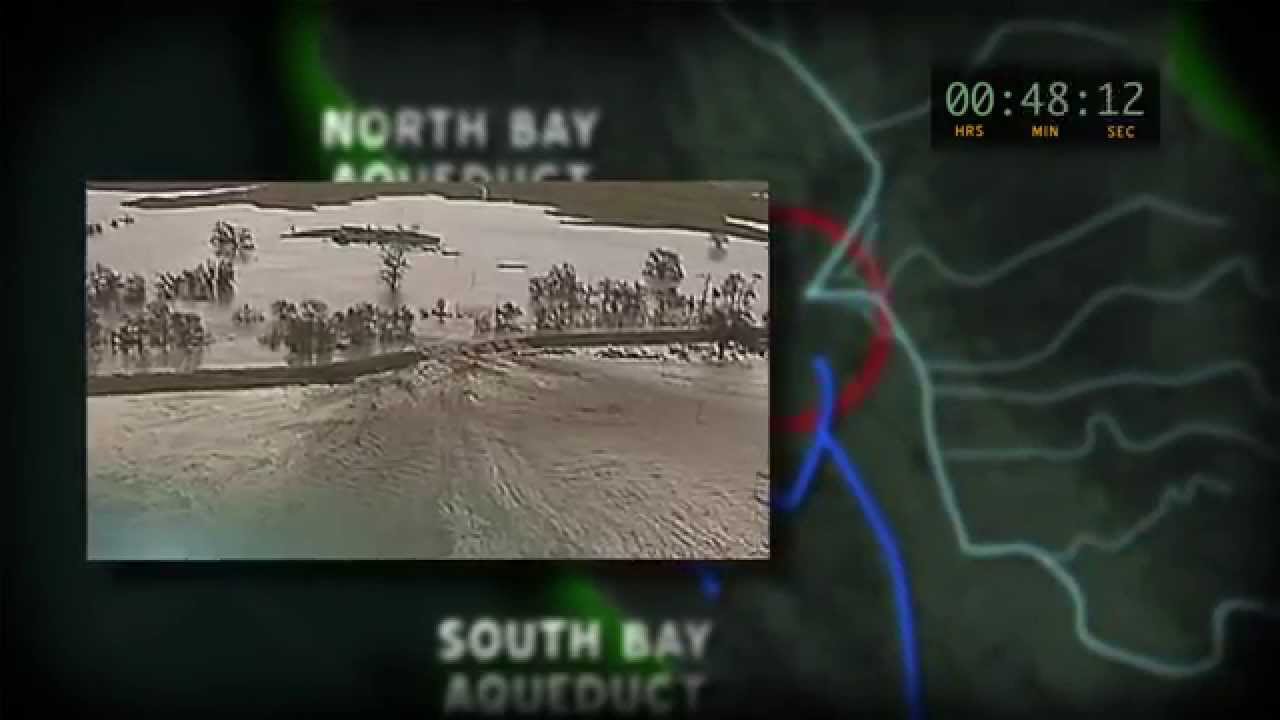 . "Despite expert warnings, crumbling water infrastructure has not been fixed...Aqueducts fail. Millions lose access to drinking water...Our water doesn't have to be at risk! Support the plan. Fix the system."
Three weeks after the ad went live, Gov. Brown held a press conference in which he rebranded his plan as the California Water Fix.
In the heart of the nut boom is Lost Hills, an entirely flat town where more than half the households have at least one adult who works for the Wonderful Company. The population has doubled since 1990, and the influx of so many new families has meant rising costs. It's not unusual for a field hand to spend 40 percent of his $1,800 monthly wage on a one-bedroom apartment. "You pay the rent and don't eat, or you eat and don't pay the rent," says Gilberto Mesia, a Wonderful farmworker with three school-age children. More than half of the town's residents are under the age of 23, a quarter live below the poverty line, and only 1 in 4 adults has a high school degree. "Lost Hills is extreme in every possible way," says Juan-Vicente Palerm, an anthropologist at the University of California-Santa Barbara. "These are the state's poorest workers, and they moved to Lost Hills because that was the cheapest place to live."
On a swelteringly hot day, three Wonderful executives took me on a six-hour tour of nearly everything that the company is doing to improve the lives of the hundreds of employees who reside there. We met at the 14-acre, Resnick-funded Wonderful Park, where they introduced me to Claudia Nolguen, a Wonderful employee and Lost Hills native who coordinates a daily itinerary of free activities for residents. On today's schedule: a morning fitness class, an after-school computer lab, and a movie night. We walked through the park's emerald lawn to see its huge water tower, painted with a mural depicting two hills. "You have found Lost Hills," the slogan said.
Next to the impeccable flower beds at one of the park's two community centers, food bank workers were unloading enough frozen chicken to feed roughly 400 people. They were expecting a smaller-than-normal crowd. "During the harvest, families aren't able to take advantage of the distribution," one of the workers explained. "The usual stay-at-home mom is now working."
We drove to the Wonderful pistachio factory for lunch. The chef in the employee cafeteria made us adobo-chicken lettuce wraps—part of a healthy menu intended to combat diabetes and obesity. Baskets on the tables were filled with free fruits and nuts for the taking. The company's new, far-reaching health initiative also includes free exercise classes in the employee gym, a weekly on-site farmers market, and a program that pays people up to $2,700 a year to lose weight and keep it off. Since the program began in January 2015, the Wonderful workforce has shed 4,000 pounds.
In the plant's nut-grading room, a few dozen seasonal employees wearing orange reflective vests and hairnets sat around folding tables evaluating samples from incoming truckloads of pistachios. Suddenly, a boom box started blaring merengue, and everyone stood up and danced. It was the daily Zumba break. "It feels good to move around," one worker told me afterward.
As part of its focus on its workers, the company has built in-house health clinics at its plants in Lost Hills and Delano. The clinics have a full-time, bilingual doctor, health coaches, and prescription medications—all free of charge. "There are all sorts of costs related to poor health," Stewart Resnick said at the Aspen Institute in July. "My hope is that this really doesn't become a charity, but rather works, and that we will get a payback"—both in terms of productivity and reduced health care costs.
A similar return-on-investment logic infuses the company's educational initiatives. Led by Noemi Donoso, the former chief executive of Chicago's public school system, Wonderful Education last year spent $9.3 million, including at least $2 million on teacher grants and college scholarships in the Central Valley; it pays up to $6,000 a year toward college tuition for children of its employees. It is building a $25 million campus for a college prep academy in Delano and expanding its agriculture-focused vocational program to six public schools. It guarantees graduates of the programs jobs at Wonderful that pay between $35,000 and $50,000 a year. Among the goals is to provide a pipeline of workers to staff its increasingly mechanized operations. "Half the jobs are highly skilled jobs," said Andy Anzaldo, the general manager of grower relations. "They're quality supervisors. They're engineers. They're mechanics."
The Resnicks are quick to point out that it's not just plant workers who've benefited—the nut boom has improved the lives of farmworkers, too. Back when cotton was still king in Kern County, migrant workers who'd picked spring oranges and summer grapes in other parts of the Valley would descend on Lost Hills for a few weeks to work alongside cotton combines during the fall harvest. It wasn't easy to bring kids along, so they usually stayed behind in Mexico or Guatemala. But tree crops are different. After the fall harvest comes winter pruning, spring pest management, and summer watering and mowing. The nut industry's nearly year-round employment has allowed farmworkers to put down roots. They can live with their families, send their kids to school, and start to grasp for the American Dream. Like Rafaela Tijerina did.
Tijerina, who has short gray hair and a cautious smile, grew up in a village near Monterrey, Mexico, before her family moved to South Texas in 1954. She dropped out of school in the eighth grade to pick cotton and chased the cotton trail to Lost Hills, where in 1969 she found a job planting pistachio trees instead. The steady work allowed her kids to graduate from high school and move into the middle class. By 2000, Tijerina and her husband had scraped together enough money to qualify for a USDA loan that helped them buy 330 acres of wheat fields a few miles outside town.
But Tijerina and her husband can't afford to drill wells or even tap into the supply from the local irrigation district; they farm entirely with God water. They haven't harvested a crop in four years due to the drought, though in December they will plow their fields and plant another. Unless winter storms deliver enough rain, it will be their last shot before they sell out. "It's really good land," Tijerina told me, her shaky voice still tinged with optimism. "But the only thing is, we don't have water."
- ==
coca-Cola and PepsiCo Agree to Curb Animal Tests
By BRENDA GOODMAN
Published: May 31, 2007
ATLANTA, May 30 — Under pressure from animal rights advocates, two soft drink giants, Coca-Cola and PepsiCo, have agreed to stop directly financing research that uses animals to test or develop their products, except where such testing is required by law.
Researchers at People for the Ethical Treatment of Animals sought the assurances after discovering studies financed by the companies that used animals like rats and chimpanzees to test taste perception and, in some cases, to bolster support for promotional health claims.
PepsiCo said that it would stop directly financing animal experiments, including some it had financed through grants given to graduate students through its Gatorade Sports Science Institute.
Elaine Palmer, a spokeswoman for PepsiCo, said that while the company had never supported the idea of animal testing, “We had not been policing it, so that part is new.”
Coca-Cola and PepsiCo are the largest largest manufacturers to agree to the ban.
Coca-Cola also said that it would discontinue a grant given to a researcher at Virginia Commonwealth University who has been studying taste perception in rats, which share certain taste pathways with humans.
Representatives of Coca-Cola and the university declined to say how much financing the company was providing or to elaborate on what the ultimate application of the research might be.
A research associate at PETA, Shalin G. Gala, said, “We see these statements from Coke and Pepsi, massive global conglomerates, as the beginning of the end of all animal tests on food.”
Scientists conducting basic research in animal models have cautioned against PETA’s hard line, saying their work, which may have medical benefits, would not be possible in many cases without help from corporate sponsors.
“It’s very easy to characterize scientific research like this in a bad light,” said Dr. John A. DeSimone, a professor at Virginia Commonwealth University who had been working under the Coca-Cola grant. “To do medical research, you sometimes need an animal model.”
Not everyone agrees with Dr. DeSimone’s thinking, particularly when it involves tests on highly intelligent animals, as did a study involving a Coca-Cola scientist, financed by Nutrasweet, that cut open the faces of chimpanzees to study nerve impulses used in the perception of sweet tastes.
“I have never found chimpanzee work justifiable,” said Dr. Alan Goldberg, director of the Center for Alternatives to Animal Testing at Johns Hopkins University.
Dr. Goldberg said that over the last 30 years, advances in alternatives to animal models, many of which are usually more scientifically precise, have already reduced the number of lab animals in use by 50 percent.
“The bottom line for me is that I’d love to see animal studies disappear entirely,” Dr. Goldberg said. “In vitro models are cleaner.”
The two soft drink giants are the latest companies to respond to scrutiny by PETA, which has mounted a campaign to denounce animal testing practices in the beverage industry, an industry that, unlike cosmetics or pharmaceuticals, had largely been unpublicized in the animal testing arena.
In January, Roll International, the company that makes Pom Wonderful pomegranate juice, agreed to cease tests on animals after PETA disclosed a 2005 study financed by the company that tested the juice to see if it might relieve artificially induced erectile dysfunction in rabbits.
http://www.nytimes.com/2007/05/31/business/31testing.html?_r=0
==
==
- ...But some groups have been exempted from the water restrictions, specifically big agriculture, which uses about 80 percent of California’s water, and oil companies. *Democracy Now!* discussed on their show today the new mandates and the implications of exempting some of the biggest water users in the state.
Food & Water Watch California is one of the groups critical of Governor Brown for failing to cap water usage by oil companies and corporate farms, which grow water-intensive crops like almonds and pistachios, most of which are exported out of state or overseas, reports Nermeen Shaikh of Democracy Now! “In the midst of a severe drought, the governor continues to allow corporate farms and oil interests to deplete and pollute our precious groundwater resources,” says Adam Scow of Food & Water Watch California.
- Shaikh and fellow reporter, Amy Goodman, then turn to Mark Hertsgaard, author of a new book, Hot: Living Through the Next Fifty Years on Earth,and whose latest story is “How Growers Gamed California’s Drought.” Hertsgaard, an expert on big agriculture and the drought in California, discusses how the price of water is far too low and how we’re still wasting far too much water. “If we priced [water] properly, which means a little bit higher, there’s enormous strides California could be taking with water efficiency,” says Hertsgaard. “We could essentially wipe out the effects of the drought.”
- But right now we have billionaire farmers like Stewart Resnick bragging about record profits and record production in water-intensive crops like pistachios, almonds and alfalfa, while poorer communities where farmworkers live “don’t have water coming out of their taps anymore,” says Hertsgaard.
Watch the full clip here:
YOU MIGHT ALSO LIKE
mark h
How Growers Gamed California’s Drought
Consuming 80 percent of California’s developed water but accounting for only 2 percent of the state’s GDP, agriculture thrives while everyone else is parched.
“I’ve been smiling all the way to the bank,” said pistachio farmer John Dean at a conference hosted this month by Paramount Farms, the mega-operation owned by Stewart Resnick, a Beverly Hills billionaire known for his sprawling agricultural holdings, controversial water dealings, and millions of dollars in campaign contributions to high-powered California politicians including Governor Jerry Brown, former governors Arnold Schwarzenegger and Gray Davis, and U.S. Senator Dianne Feinstein.
The record drought now entering its fourth year in California has alarmed the public, left a number of rural communities without drinking water, and triggered calls for mandatory rationing. There’s no relief in sight: The winter rainy season, which was a bust again this year, officially ends on April 15. Nevertheless, some large-scale farmers are enjoying extraordinary profits despite the drought, thanks in part to infusions of what experts call dangerously under-priced water.
Resnick, whose legendary marketing flair included hiring Stephen Colbert to star in a 2014 Super Bowl commercial, told the conference that pistachios generated an average net return of $3,519 per acre in 2014, based on a record wholesale price of $3.53 a pound. Almonds, an even “thirstier” crop, averaged $1,431 per acre. Andy Anzaldo, a vice president for Resnick’s company, Wonderful Pistachios, celebrated by showing the assembled growers a clip from the movie Jerry Maguire in which Tom Cruise shouts, “Show me the money,” reported theWestern Farm Press, a trade publication. At the end of the day, conference attendees filed out to the sounds of Louis Armstrong singing, “It’s a Wonderful World.”
==
- Last year, as California endured one of its driest years on record, the Westlands Water District made it rain 3,000 miles away -- on Capitol Hill.
The nation's largest agricultural water district, located in the Central Valley, spent $600,000 on lobbying efforts, according to an analysis by KPCC in partnership with the nonpartisan Center for Responsive Politics. That's by far Westlands' biggest annual expenditure for lobbying -- about six times what it spent in 2010.
The lobbying comes as Congress and federal agencies consider how to respond to three years of drought conditions that have cut water supplies across the state and ratcheted up political pressure from the hard-hit agricultural sector, including many of Westlands' customers.
California farmers grow nearly half the nation's fruits, vegetables and nuts. The California Farm Water Coalition, an industry group, estimates farmers -- and the processors and truckers who get crops to market -- could lose $5 billion this year due to the drought.
How important is this issue? Well, in recent months it's brought President Obama, the House Speaker and the powerful House Natural Resources Committee to the Central Valley.
Congress is considering two major legislative packages -- one already passed by the House, authored by freshman Republican Rep. David Valadao of Hanford; and one introduced in the Senate by California Democrats Dianne Feinstein, with Barbara Boxer as a co-sponsor.
The bills have the common goal of redistributing water to meet farmers' needs, but they differ on execution and the ramifications.
CAdrought.jpgThe House bill, which was co-sponsored by the state's entire GOP delegation, would rewrite water contracts and in the process set aside protections, which has environmental groups up in arms.
The Senate bill would allow regulators to "provide the maximum quantity of water supplies possible" to where it's most needed and boost existing federal drought programs by $200 million.
As is true with many issues in Washington, money is part of the fight. As Bay Area Rep. George Miller, a Democrat, says, "You can make water run uphill if you have enough money."
The DC bucket brigade
California water politics is mostly about geography -- Northern California's watershed versus the Central Valley, which relies on that water coming south to irrigate crops, versus Southern California, with its massive and thirsty urban population.
As the drought has worsened, those various interests have pushed harder for relief through campaign contributions to key members of Congress and by employing lobbyists.
The two biggest spenders on water issues are Westlands, whose customers own 600,000 acres of farmland in Fresno and Kings counties, and the owners of Kern County-based Paramount Farms, the nation's largest grower of pistachios and almonds.
Just how serious is the quest for water? Last year, Westlands hired four different lobbying firms -- even as the overall amount spent by all groups and corporations on federal lobbying has been going down since 2010. All eight of Westlands' officially registered lobbyists previously worked in government -- including a former Republican congressman from Minnesota.
And the $600,000 Westlands spent in 2013 is only what was reported on required disclosure forms. According to an internal document obtained by Southern California Public Radio, Westlands also paid $90,000 last year to former California Democratic Rep. Tony Coelho for "Washington representation," which was not included in Westlands' lobbying reports.
Coelho, who did not respond to requests for an interview, is related to one of Westlands' board members and they are partners in a dairy farm. Westlands also paid another firm nearly $1 million for an "outreach and awareness" campaign.
Democratic lawmaker Miller, who has been on Capitol Hill for more than four decades, says lobbyists keep their "A-game" going all the time, rain or shine, "because you never know when the good Lord's going to turn off the water. So you'd better be ready."
Money is extremely helpful in obtaining access and influence, which is crucial whenever Congress gets involved. That's true whether the cash is in the form of spending on lobbying or campaign donations.
Paramount Farms is owned by Lynda and Stewart Resnick of Los Angeles. Their multi-billion dollar fortune comes from a diverse portfolio that includes Fiji bottled water. They have a controlling interest in the Kern Water Bank Authority, which stores underground supplies of water to irrigate Paramount's nut trees.
The Resnicks don't hire lobbyists at the federal level, but they're generous campaign contributors. They and people who work for their companies have given nearly $457,000 to candidates, political action and party committees since 2011. That includes nearly $321,000 from the Resnicks themselves. (See table at end of story.)
Setting the water table
resnicks.jpg
- You can't just read the House and Senate bills and point to paragraphs that directly help either Westlands or the Resnicks. But John Lawrence, a former Capitol Hill staffer who currently teaches at the University of California's DC Center, says water bills are "very often written specifically in a vague sort of way." Congressman Miller adds: "There's rarely any word in a piece of water legislation that's there accidentally." The bill that passed in the House would mandate an increase in pumping from the Sacramento Delta. Doug Obegi, an attorney with the Natural Resources Defense Council, says that water would primarily go to Central Valley Project contractors, including the biggest -- the Westlands Water District.
The bill also extends for 40 years all existing federal water service contracts -- including the one for Westlands. Lawrence says that takes away any flexibility to make water decisions for a generation. He notes that once you've delivered a "signed, sealed contract, let alone been directed to do it by the Congress," you've taken away any chance at reviewing how future water should be allocated.
Feinstein's Senate bill includes several provisions that would allow Delta water to be sent farther south to Kern County. Patricia Schifferle of the environmental group Pacific Advocates says, because of previous legislative amendments, the water would be made available to the groundwater bank controlled by Feinstein's supporters -- the Resnicks.
(Neither Westlands nor the Resnicks' holding company, Roll International, responded to requests for interviews.)
Feinstein recently revised her bill. This latest version includes a provision to boost Colorado River storage in Nevada, home to Senate Majority Leader Harry Reid. This version could make it to the Senate floor for a vote without going through the committee process.
Horse trading on Capitol Hill isn't new. Some of the lobbying money goes to making sure everyone gets to wet their beak. Miller notes that deals get made -- trading something Midwest lawmakers want in the farm bill for something Central Valley interests need in the water bill. He says there are "a lot of chits out there that have been planted around the anticipation of a water bill coming to the floor of Congress."
If the House bill became law, Ron Stork of Friends of the River says not only would habitat restoration be hurt, but so would two other water consumers: farmers and residential users in the northern part of the state. Delta farmers, with some of the oldest water rights in California, and the city and county of Sacramento, which contract for drinking water, would find their supply "commandeered and delivered south."
The lobbying isn't limited to Capitol Hill. It also takes place at the agency level. John Lawrence says private meetings are held behind closed doors at places such as the Bureau of Reclamation or the Environmental Protection Agency, where there's "greater wiggle room" on how water policies are implemented. Those conversations are confidential, not debated openly in Congressional committee hearings.
Westlands' reports show it lobbied the EPA, the Agriculture Department, the Interior Department (which includes the Bureau of Reclamation) and the Council on Environmental Quality, in addition to Congress and the White House. Three of the water district's lobbyists are former high-ranking officials of the Interior Department.
There's even a place lobbyists and campaign contributions collide: Schifferle from Pacific Advocates notes a 2012 breakfast fundraiser for Feinstein in the offices of one of Westlands' lobbying firms, held "right around the time" of a budget amendment that gave water agencies access to federal water.
In Washington, certain wells never run dry.
Top Resnick family campaign contribution recipients from 2011-2013
Recipient Amount
Committee to Elect an Effective Valley Congressman (Henry Waxman) $100,000
Democratic National Committee Services Corp $30,800
Republican National Committee $30,800
Democratic Congressional Campaign Committee $21,700
Rep. David Valadao (R-Hanford) $17,900
Democratic Senatorial Campaign Committee $13,000
Rep. Jim Costa (D-Fresno) $12,300
Sen. Ed Markey (D-Massachusetts) $11,400
Rep. Jeff Denham (R-Fresno) $11,300
Sen. Cory Booker (D-New Jersey) $10,400
Sen. Tom Harkin (D-Iowa) $10,000
Rep. Joe Kennedy III (D-Brookline) $10,000
LA Political Action Committee $10,000
Rep. Kevin McCarthy (R-Bakersfield) $10,000
Peak Political Action Committee $10,000
To Organize a Majority Political Action Committee $10,000
Sen, Dianne Feinstein (D-California) $9,800
Data source: Federal Election Commission via OpenSecrets.org.
Westlands Water District board members' campaign contributions from 2011-2013
Board Member Democratic Republican Total
James Anderson $2,500 $1,000 $3,500
Thomas Birmingham $10,500 $17,500 $28,000
Frank Coelho Jr. $2,600 $4,750 $7,350
Larry Enos 0 $1,000 $1,000
Daniel Errotabere $875 $5,525 $6,400
Georgianne Errotabere $875 $875 $1,750
Jean Errotabere $875 $4,300 $5,175
Gary Esajian $1,000 $8,500 $9,500
Bridget Neves 0 $2,500 $2,500
Todd Neves 0 $18,850 $18,850
Donald Peracchi $13,600 $45,500 $59,100
Judith Peracchi $5,000 $2,500 $7,500
Alan Sano $2,500 $1,000 $3,500
Christopher Woolf $2,000 $9,374 $11,374
Sarah Woolf $3,000 $3,500 $6,500
TOTALS $45,325 $126,674 $171,999
Data source: Federal Election Commission via OpenSecrets.org
- ===
Hustle and Flow: Here's Who Really Controls California's Water
The Golden State's historic drought has made these water power brokers more powerful than ever.
By Josh Harkinson | Fri Sep. 5, 2014 6:15 AM EDT
Social Title:
Hustle and flow: Here's who really controls California's water
Social Dek:
The Golden State's historic drought has made these water power brokers more powerful than ever.
"Water flows uphill towards money," a source told Marc Reisner in Cadillac Desert, the seminal book on California water politics. Today the complex web of political interests that Reisner detailed some 30 years ago has become even more arcane and intertwined. As California confronts its worst drought in years [1], these power brokers will largely determine who gets water, and who gets left high and dry:
Dianne Feinstein: The chair of the powerful energy and water panel of the Senate Appropriations Committee has a history of siding with the state's agricultural interests, which use 80 percent of the state's water. In a March email to two Cabinet secretaries, Feinstein joined Republicans in urging federal water officials to capture "the maximum amount of water" from the Sacramento San Joaquin River Delta for farmers. Two months later, she pushed a drought bill through the Senate by a unanimous vote, over the objections [2] of environmentalists who said it would open the door to permanently increasing water allocations to farmers at the expense of endangered fish. Environmental groups "have never been helpful to me in producing good water policy," she later told [3] the San Francisco Chronicle. She is now hammering out [4] a compromise bill with House Republicans who want to do even more to gut endangered species laws.
tewart & Lynda Resnick: The Beverly Hills billionaires own a chunk of farmland in Southern California that's larger than four San Franciscos. It includes Paramount Farming Company, the world's largest pistachio and almond growing and processing operation, and Paramount Citrus, the country's leading producer of fresh citrus. The couple also owns Fiji Water [5], Pom Wonderful[6], and Teleflora, the nation's largest flower delivery business. In the 1990s the Resnicks gained control of what was originally meant to be a state-owned water storage bank; it now sells water back to the state at a premium. Since 1993, they've donated nearly $5 million to state and federal campaigns and candidates—typically to whomever is in power. They threw a party at their Beverly Hills mansion for Feinstein and entertained her at their second home in Aspen, Colorado. In 2009, Feinstein sent a letter [7] two Obama cabinet secretaries on the Resnicks' behalf that helped convince the feds to delay a plan to curtail delta water diversions for the sake of endangered fish. Feinstein's new Senate water bill [8] would allow delta water to reach California's Kern County, where it would be available to the Resnicks' water bank.
Westlands Water District: The largest agricultural water district in the United States, Westlands, in the heart of the Central Valley, often incites controversy due to its size, its reliance on water from the ecologically sensitive rivers, and its heavy political expenditures. Last year, the district spent more than $600,000 on federal lobbying [8]. Despite its size and wealth, Westlands holds only junior water rights, which means that its contract with the federal government puts it last in line for water deliveries; the drought will prevent Westlands from receiving any federally managed irrigation water this year—unless its 600 farms can pull some political strings. Last week, Westlands petitioned a judge to halt the planned release of 25,000 acre-feet of water from Northern California's Trinity Lake to aid endangered salmon in the Klamath River. "It's like having four thirsty kids in the car and saying you don't have money for them to drink, and then you pull up on the street and give money to someone else," Westlands farmer Mark Borba told [9] the Wall Street Journal. Though Westlands landowners often portray themselves as family farmers and crucial employers, most of the district consists of highly mechanized operations owned by large corporate conglomerates.
he metropolitan water district of southern california: By far the state's largest urban water district, the Met supplies the taps about half of all Californians—some 19 million people living in Los Angeles, San Diego, and surrounding cities. It sucks up water from all over the West, including the Colorado River and the Sacramento-San Joaquin River Delta, making it a player in just about any aspect of water politics. Though the district supports conservation measures such as rebates for low-flow toilets and incentives for water recycling, it's less progressive than some smaller water districts such as the Sonoma County Water Agency, which, for example, provides some customers with high-efficiency water fixture upgrades at no cost [10]. During the 1990s, the Met built and filled reservoirs that have (so far) prevented Southern Californians from resorting to the kinds of conservation measures seen during the drought of 1977 [11], when restaurants were banned from automatically serving water to their customers. It's now supporting Proposition 1, a November ballot measure that would allocate $2.7 billion for additional water storage projects while also investing money in watershed restoration.
The Association of California Water Agencies: When this coalition's 430 agricultural and urban water districts agree on something, chances are good that it will happen. Last week, the association lent crucial support to the passage of a bill that will make California the last Western state to regulate the pumping of groundwater, a dwindling resource that has been removed from the Central Valley at twice the rate that it's replaced by precipitation. Though riven with debate over the bill, the association ultimately lent its support after winning some ag-friendly concessions [12] and the funding for dams included in Proposition 1. "There's part of the groundwater legislation that's going to have us doing some very painful things locally," Tim Quinn, the association's powerful executive director, told [13] the New York Times. But, he added, "Groundwater management is part of a good solution to a problem, a solution that doesn't involve a contraction of the economy."
Environmental Groups: Influential among coastal politicians and the urban environmentalists who elect them, a slew of environmental groups have something to say about California water politics. Those supporting Proposition 1 include [14]Clean Water Action, American Rivers, Audubon Society, California League of Conservation Voters, California Trout, California Waterfowl Association, Defenders of Wildlife, Ducks Unlimited, Natural Resources Defense Council, the Nature Conservancy, and Trout Unlimited. Notably absent from that list are Friends of the River and the California chapter of the Sierra Club, which are pushing for an alternative bond measure [15] that would allocate more money to conservation, efficiency, and recycling projects.
Community water center: Arguing that "clean water is a basic human right, not a privilege," the CWC, which advocates on behalf of poor communities, has upended the traditional triad of urban, agricultural, and environmental interests that typically dominates California water politics. Last month, the group was brought into [16] last-minute negotiations between key lawmakers and Gov. Jerry Brown's office to ensure that the water bond measure would meet the needs of disadvantaged groups; the final measure commits a minimum of $691 million to helping localities gain access to clean drinking water. The CWC has highlighted the plights of rural, low-income, predominantly Latino towns such as East Orosi, Cutler, and Monson, which rely on contaminated and unreliable sources of water even when a cleaner supply passes nearby on its way to wealthy cities in Southern California. The increasing power of the CWC in Sacramento reflects its influence among California's growing cohort of Latino state legislators.
resources legacy fund: Founded and run by the the lawyer Michael Mantell [17], a former California state undersecretary for resources for Republican Gov. Pete Wilson, the Sacramento-based Resources Legacy fund dominates Golden State water philanthropy. With a $37 million budget, the fund last year doled out more than $11 million in grants to a slew of water-related nonprofits, from the Alliance for Water Efficiency to the Yuba County Water Agency. In addition, the RLF does its own research and advocacy through its influential California Water Foundation, which is run by Lester Snow, the former Secretary of Natural Resources under Gov. Arnold Schwarzenegger; the foundation's recent report [18] on California's groundwater problems is credited with spurring the state Legislature to take action. As if all of that wasn't enough, the RLF also spent more than $500,000 on lobbying in favor of sustainability measures last year, including $225,000 in Sacramento, where it weighed in on the water bond.
Eric Garcetti: "Something radical must be done" to address Los Angeles' thirst for water, the LA mayor proclaimed last year, echoing the words of his predecessor Frederick Eaton, who'd said the same thing more than 100 years ago. But rather than pushing for a return to LA's *Chinatown* [19] roots, Garcetti was advocating a radical shift towards sustainability. He was addressing the One Water Leadership Summit [20] hosted by the US Water Alliance, which advocates breaking down barriers between the management of storm, waste, and drinking water in order to dramatically increase water recycling. Garcetti wants to capture and use some 30 billion gallons of urban runoff in the region by expanding the use of graywater and collecting water in "residential rain barrels." In June he was in Sacramento trying to insert some of those ideas into the state water bond: "I don't think there's enough probably in the older bond that has that," he told [21] the LA Times.
Also read: This hedge-fund manager [23] stands to make a killing as the West dries up.
Source URL: http://www.motherjones.com/environment/2014/08/california-water-politics-drought-players
Links:
[1] http://www.motherjones.com/blue-marble/2014/01/california-drought-scary-facts-snowpack
[2] http://blog.sfgate.com/nov05election/2014/04/15/environmentalists-slam-dianne-feinsteins-drought-bill/
[3] http://blog.sfgate.com/nov05election/2014/05/23/how-feinstein-passed-her-drought-bill-in-the-senate/
[4] http://www.bna.com/california-lawmakers-staff-n17179893869/
[5] http://www.motherjones.com/politics/2009/09/fiji-spin-bottle
[6] http://www.newyorker.com/magazine/2008/03/31/pomegranate-princess
[7] http://californiawatch.org/environment/corporate-farmer-calls-upon-political-allies-influence-delta-dispute
[8] http://www.opensecrets.org/news/2014/04/the-politics-of-drought-california-water-interests-prime-the-pump-in-washington/
[9] http://online.wsj.com/articles/drought-stricken-california-farmers-fight-release-of-water-for-fish-1409182836
[10] http://www.scwa.ca.gov/drought/
[11] http://www.latimes.com/opinion/opinion-la/la-ol-drought-dam-questions-water-bond-20140829-story.html
[12] http://blog.sfgate.com/opinionshop/2014/09/01/lawmakers-vote-to-regulate-california-groundwater-finally/
[13] http://www.nytimes.com/2014/09/01/us/politics/desperately-dry-california-tries-to-curb-private-drilling-for-water.html?_r=0
[14] http://www.acwa.com/spotlight/2014-water-bond
[15] http://www.friendsoftheriver.org/site/DocServer/Enviros__Good_Gov_t_Groups_Push_Commonsense_Water_Bond_P.pdf?docID=8881
[16] http://www.communitywatercenter.org/new_water_bond_hr2w
[17] https://www.linkedin.com/pub/michael-mantell/4/b11/b77
[18] http://www.californiawaterfoundation.org/uploads/1405009459-GroundwaterReportNewsRelease(00256302xA1C15).pdf
[19] http://green.blogs.nytimes.com/2012/04/25/the-water-fight-that-inspired-chinatown/
[20] http://www.planningreport.com/2013/09/24/mayor-garcetti-welcomes-one-water-leadership-summit-los-angeles
[21] http://www.latimes.com/local/political/la-me-pc-garcetti-capitol-visit-20140605-story.html
[22] https://www.flickr.com/photos/99292716@N06/14361289486/in/photolist-nT4n2q-nWTMHH-nV6CmB-nWSYpK-nV6Jwn-nWTKEp-nCCaPR-ohFMbU-oN7aK9-oL74yN-npQWFn-nCVBay-nATvqq-nATyHC-nCHdGE-nCW2Jp-nCDkZT-nATvPm-nCDkjV-nNi8k5-nCDjh4-nmoMKJ-kJKYn2-kJMoZC-kJKdFX-f94m9k-38pyDN-ff47NS-ff45tW-fPzQfL-guZfRX-fPzLew-fPzKCE-fPzKiW-nATun3-nATAgY-nEHpCM-nmrtJ7-nCHfMw-nCW9V8-nCDkLr-nmrPHe-nCDfE4-nmrBN5-nCHiB9-nmrseV-nmrNVH-nmrKna-fPihJk-8QTv9U
[23] http://www.motherjones.com/environment/2014/01/summit-water-hedge-fund-mckenzie-funk-windfall-excerpt
==
exiledonline.com/how-limousine-liberals-oligarch-farmers-and-even-sea...
- ...The leader of these recent water privatization efforts in California is a Beverly Hills billionaire named Stewart Resnick. Stewart and his wife, Lynda Resnick, own Roll International Corporation, a private umbrella company that controls the flowers-by-wire company Teleflora, Fiji Water, Pom Wonderful, pesticide manufacturer Suterra and Paramount Agribusiness, the largest farming company in America and the largest pistachio and almond producer in the world. Roll Corp. was ranked #246 on Forbes’ list of America’s largest private companies in 2008 and had an estimated revenue of $1.98 billion in 2007.
Nov 19, 2009 - A group of water oligarchs in California have engineered a disastrous ...by appointing Resnick to co-chair his agriculture-water transition team.
- ...The leader of these recent water privatization efforts in California is a Beverly Hills billionaire named Stewart Resnick. Stewart and his wife, Lynda Resnick, own Roll International Corporation, a private umbrella company that controls the flowers-by-wire company Teleflora, Fiji Water, Pom Wonderful, pesticide manufacturer Suterra and Paramount Agribusiness, the largest farming company in America and the largest pistachio and almond producer in the world. Roll Corp. was ranked #246 on Forbes’ list of America’s largest private companies in 2008 and had an estimated revenue of $1.98 billion in 2007....
- They are a limousine liberal power couple. Hyperactive in politics, business and philanthropy, the two raise huge amounts of cash for the Democratic party, donate to the arts, support education and hobnob with influential progressives like Arianna Huffington and the anti-global warming activist and producer of An Inconvenient Truth, Laurie David. Stewart Resnick gave over $350,000 to the Gray Davis campaign and various anti-recall groups between 2000 and 2003, a favor Governor Davis returned by appointing Resnick to co-chair his agriculture-water transition team. A shrewd businesswoman, Lynda is credited with single-handedly creating the pomegranate health fad to sell her Pom Wonderful and catapulted Fiji Water to its recent success, one that environmentalists love to hate, as was recently documented in *Mother Jones*by Anna Lenzer.
- But there is a gaping hole in most accounts of the jet-set Baby Boomer couple: their company, Roll International, is one of the largest, if not thelargest, private water brokers in America. Through a series of subsidiary companies and organizations, Roll International is able to convert California’s water from a public, shared resource into a private asset that can be sold on the market to the highest bidder.
- It all comes down to Stewart Resnick’s involvement in the creation of a powerful but little-known entity called the Kern County Water Bank — an underground water storage facility at the center of a plan to bring deregulation to California’s most important public utility: water.

According to a 2003 Public Citizen report titled “Water Heist,” the Kern County Water Bank is an underground reservoir in the hottest, driest, southernmost edge of the Central Valley with a capacity of 1 million acre-feet, enough to convert the entire state of Rhode Island into a swampland one-foot deep or supply the City of Los Angeles with water for 1.7 years. The water bank was envisioned in the late ’80s by the Department of Water Resources as a safeguard against prolonged drought. During wet years, it would serve as a repository for excess water coming in from Northern California and the Sierras, and pumped out in dry years. California spent nearly a hundred million dollars to develop the underground reservoir and connect it to the state’s public canals and aqueducts, but in 1995, California’s Department of Water Resources suddenly, and without any public debate, transferred it to a handful of corporate interests.
Here is how *Los Angeles Times*writer Mark Arax described it in 2003:
The story of how the state’s largest water bank — jump-started with $74 million in taxpayer money — ended up as an integral piece of the private empire of Stewart Resnick begins with a lawsuit, or at least the threat of it.
A seven-year drought ending in the early 1990s pitted Southern California water contractors, such as the Metropolitan Water District, against agricultural contractors, such as the Kern County Water Agency. Each region made its case to the state, telling why it deserved to receive the water guaranteed by long-standing contracts. In the drought’s worst years, urban users got 30% of the draw, while Kern farmers received less than 5%.
In 1994, agricultural and urban interests threatened to sue the state for nondelivery. The main parties gathered in a closed-door meeting in Monterey to hash out a settlement. Public interest groups, environmentalists and smaller water contractors — locked out of the meeting — cried foul.
When it was over, the very flow of California water had been redirected.
Redirected, as in “privatized.”
The details of the transfer are complicated and opaque, but, put simply, the State of California transformed a small number of corporate farmers into a de facto water oligarchy by signing over a massive water holding facility and the many billions of gallons of government-subsidized water that it could store. Arcane and trivial as it may seem, the transfer of the water bank circumvented the usual resale restrictions placed on subsidized water purchased from the state. After the water enters the Kern County Water Bank, it stops being a public resource that could otherwise be used to irrigate crops locally or sold on the free-market to the highest bidder. The transfer privatized water without actually needing to do so explicitly.
But the secretive crew that met in Monterey did more than just privatize one underground water reservoir. California’s water oligarchy hammered out a plan that put them at the controls of the state’s water market and gave them the ability to create non-existent water out of thin air.
The Monterey Amendments, as the revisions that emerged from the closed meetings came to be called, established a legal framework that, for the first time in history, made unregulated water commerce in California possible by creating the concept of “paper water,” which could be traded, transferred, divvied up and put on the books as easily as money in the bank or collateral on a loan without anyone having to transfer a drop. It proved to be a blessing for land speculators during the housing boom that was just around the corner.
- Every large real estate development in California has to prove that a secure water source will be available for the project decades into the future. It was a requirement that, until “paper water” came along, posed a serious hurdle to developers building low-income suburban paradises in the Southern California desert. Water is not a easy resource to come by in the West. Underground sources are being depleted at a record pace and the state’s aqueduct system, which pumps rainwater and snow that melts hundreds of miles south, does not have the capacity to support both exponentially growing sprawl and massive farming operations out in the desert. Even if there were an abundance of virgin rivers to dam and redirect, the hundreds of millions of dollars such projects would cost would eat into the fat profit margins of real estate developers and bring suburban sprawl expansion to a crawl. The “paper water” market banished this pesky problem once and for all. From the mid-90s on, real estate developers could satisfy all their hydration needs by shopping for “paper water,” meaning that they were able to satisfy planning regulations simply by convincing a city or county to purchase virtual water rights. They weren’t securing a real water supply, or even transferring a single ounce. But it didn’t matter as long as the water was on their books.
Most urban dwellers would not be happy with the water even if it did arrive. Because private water storage facilities are not subject to public oversight, “paper water” merchants are not required to adhere to basic water quality requirements, or even to test it. Reports of polluted water being pumped out of private banks and contaminating clean water flowing in the aqueduct are rare only because no one cares to look. In 2008, water pumped out by one of the stakeholders in the Kern bank, Semitropic, had arsenic levels six times higher than federal EPA limits, which caused a plume of arsenic-tainted water to flow south down the state aqueduct towards Los Angeles County and surrounding districts, according to the *Antelope Valley Press*.
But development-crazed Southern California does not seem to care, and neither do the water merchants. Real estate development needed “paper water” as a person in a vegetative state needs their IV drip.
- And so, with no warning and negligible media attention, the Monterey Agreements created the strange, new and unregulated “paper water” market, not unlike mortgage-backed securities and other exotic debt instruments dreamed up by Wall Street, if only because the “paper water” market trades in pure fantasy and is built on deception. For decades, California’s water authorities have been in denial about the amount of water they can deliver to their customers. Contractually, the state is obligated to deliver 4 million acre-feet a year. (Los Angeles uses roughly 600,000 acre-feet a year). But in reality, the state can only deliver half the water it promises. Which means that half of the “paper water” being traded on the open market simply does not exist, and never has. And everyone who deals in water knows it, too. Naturally, this posed a problem. Why would anyone buy water that didn’t exist?
The Monterey Amendments got around this problem by making a few legal alterations that made the state explicitly accountable for its original water contracts, regardless of whether there was water or not. This gave buyers the confidence to fuel real estate developments with non-existent water because the government was contractually obligated to bail them out, rain or shine. Where will the state get that water? Well, it could take it away from small farmers, rural communities and anyone else who is poor and politically unconnected.
- California’s newly established “paper water” market was a speculator’s wet dream. It was a scam opportunity too promising for the deregulation con artists at Enron to pass up. A few years after the Monterey Amendments, Enron apparently took a cue from the Kern bank, set up a water division, bought up a huge chunk of land in the Central Valley that sat atop a natural underground reservoir and started working on a water bank of their own. But Enron’s snake oil brain trust was scheming on a bigger, more global level. Still in the grips of the Dot Com Bubble, Enron wanted to spark an Internet-based water trading revolution and launched a site that they hoped would become the etrade.com of H20. Called Azurix, it would function as an “exchange on the Internet for buying, selling, storing and transporting water in the West, hoping to make water a traded commodity much like natural gas or electricity,” the Wall Street Journal wrote in 2000.
An e-water market where people could buy, sell, trade and speculate on water like any other tradeable commodity? It was the kind of delusional that only people in the grips of a speculative boom centered on the limitless possibilities of a technological revolution could believe in. To think that you could wake up in Shanghai, check out a few weather forecasts and purchase a few million gallons of California water, aiming to buy wet and sell dry — a scam built on insane dreams. A few years later, Azurix went belly up.
- But while Enron’s futuristic vision of water speculation may have come before its time, a more modest version of the water trade was thriving in the Golden State, and it apparently owed it all to one man: Stewart Resnick.
Public Citizen’s “Water Heist” report uncovered evidence that the Beverly Hills farmer was instrumental in the privatization of the Kern Water Bank. Not surprisingly, Resnick’s Paramount Farms emerged with a majority stake in the venture. In fact, Resnick’s farm empire controls the Kern Water Bank so thoroughly that it is not easy to discern where Paramount ends and the Kern Water Bank begins. The Kern Water Bank Authority, which administers the bank, is located in Paramount’s corporate office building outside of Bakersfield, California.
This has brought in massive profits to owners of the Kern bank at taxpayers’ expense, and frequently involve nothing more than buying water at subsidized rates from the state, then turning around and selling it back to a different government agency for a tidy profit.
Just as the Federal Reserve allows banks to borrow money from taxpayers so they can reap huge profits by lending it right back to the masses at a higher rate, the Kern bank allows a handful of corporate farmers to sell a public resource back to the public at markup. According to Public Citizen, in 2001, the Kern County Water Bank bought subsidized water from the State Water Project at $161 an acre-foot and flipped it back to the state’s Environmental Water Account for $250 an acre-foot, making a cool $6.3 million for its owners — just for having the right friends in the right places.
The Environmental Water Account (EWA) was set up in 2000 by the state of California to protect salmon populations in the Sacramento Delta. In dry periods, when Delta water levels would drop below a critical level and pumping stations would start slurping up too many fish and grinding them into mush, the state would slow down pumping and supplement water deliveries by buying back water from whoever had any to spare. The plan looked good on paper, but it turned into a very expensive and useless failure — but only for us and the fish. For members of the Kern County Water Bank, who raked in nearly $40 million dollars by reselling water to the EWA from 2001 to 2004, it worked out pretty well.
As majority stakeholder, Resnick took the lion’s share of the profits. A recent investigation by the *Contra Costa Times* revealed that even as its fish populations teetered on the brink of extinction, California pumped “unprecedented amounts of water out of the Delta only to effectively buy some of it back at taxpayers expense.” From 2000 to 2007, California spent $200 million on buying water for the EWA, of which Stewart Resnick’s subsidiary companies skimmed 20 cents of every dollar for a total profit of $40 million in seven years. With such gracious help from taxpayers, it is no wonder the Resnicks were able to build such a successful business empire.
“For a program that was supposed to benefit the environment, it apparently did two things — it didn’t benefit the environment and it appears to have enriched private individuals using public money,” said Jonas Minton, a water policy expert with the Planning and Conservation League, a California environmental advocacy group, as quoted by the *Contra Costa Times*.
In a 2008 interview with the New Yorker, Stewart Resnick said he initially got into farming in 1978 as a hedge against inflation. Either he was feigning naivete, or he must have quickly realized that he stumbled upon the money-making opportunity of his life, one that helped grow Paramount Farms into an agribusiness empire.
- While California’s farming industry was steadily shedding land and farms all through the 90s, the Resnicks were expanding production and acreage, nearly doubling their cultivated land holdings just in the three years after the Monterey Agreements.
But the profiteering off California’s environment-friendly water program by Resnick and the rest of the Kern Water Bank crew is chump change compared to the profits water merchants like him can make by selling paper water to real estate developers in the semi-desert wastelands of Southern California.
Take the deal that went down this summer between a farmer with a stake in the Kern bank and a McTractHome paradise in the Mojave Desert, 100 miles east of Los Angeles. For roughly $73 million, the Mojave Water Agency acquired permanent rights to 14,000 acre-feet of water pumped out of the Sacramento Delta and delivered via the State Aqueduct, enough water to flood an area the size of San Francisco six inches deep or hydrate up to 30,000 families for a whole year.
- The farmer selling the water was not really a “farmer” in the poor, homesteading, buck-toothed sense of the word, but a private Bay Area-based company called Sandridge Partners owned by the Vidovich family. In addition to running a lucrative cotton and almond growing operation in the heart of the Central Valley, the Vidoviches also control a small real estate empire in the Silicon Valley, building and managing estate developments: office complexes, condominiums, mobile home parks, hotels and shopping centers.
- John Vidovich, the current patriarch of the family business, and his wife Lydia live in an $11.4 million Los Altos Hills home. Hilly, wooded and overlooking the bay just south of San Francisco, it’s one of the ritziest places to live in Northern California and the 8th most expensive zip code in America. (The president of Resnick’s Paramount Farms, Joseph MacIlvane, rubs shoulders with the Vidovich family, sharing a post on the board of directors of the Dudley Ranch Water District, a private water district that owns 9.62% the Kern bank, along with John Vidovich.)
Despite — or maybe because of — the family’s extreme wealth, Sandridge Partners is one of the top welfare queen-farmers in the country. In 2007, it received $1 million in federal farm subsidies, more than any other farmer that year, raking in an additional $6.8 million between 1995 and 2006, according to the Environmental Working Group. Known as “direct payments,” the subsidies are made each year mostly to growers of corn, wheat, rice and cotton, with payout amounts based on past production, sometimes even regardless of whether the crops are still being grown.
But their $73-million water deal shows that farm subsidies aren’t the only, or even the most, lucrative handout that has the Vidoviches living well. The money paid out via farm subsidies pale in comparison to the massive profits that can be reaped from simply reselling the heavily taxpayer subsidized water they receive from the state.
According one state water official, the Vidovich’s $5,200 per acre-foot deal with the Mojave Water Agency was nearly double previous record price paid for water in California.
- Just look at these profit margins: these days, Central Valley farmers buy water from California’s Department of Water Resources for a heavily-subsidized $100 to $500 per acre-foot, while city slickers in San Francisco pay around $8,500 for the same water. With this kind of discount, Vidoviches could score a ten- to fifty-fold spread on their purchase-to-sale price. Even if they paid the maximum price of $500 per acre-foot, the water they sold to the Mojave Desert for $73 million would have only cost them $7 million. That’s $66 million in pure profit, and all they have to do is let a couple of hundred acres of almond groves wither and let California taxpayers, their ritzy Los Altos Hills neighbors included, fill up their bank accounts.
Shocking as this textbook example of transfer of wealth is, it is neither an isolated incident nor a freak loophole. It was the intended effect of the deregulation and privatization of water hashed in Monterey almost 15 years ago, which transformed water into a truly liquid asset that could be traded with ease on the market. (In 2002, the *Sacramento Bee*estimatedthat members of the Kern County Water Bank made at least $128 million from water sales to other cities and counties, which the paper admitted was an incomplete and low-ball figure.)
“Think of the Bank of America, the way it operates with dollars, that’s the way we operate with water,” said Jonathan Parker, general manager of the Kern Water Bank Authority. “What we do is provide a service. We store water at cost and then take water out of the ground, at cost. They pay us to provide that service in the least expensive manner.”
Parker was quoted in 2003. With all the bank bailouts that happened since then, the money-bank to water-bank analogy works even better. The Kern Water Bank shifts the cost for its water onto taxpayers and shifts all of the profits it makes by selling the water to itself. As it turns out, the money-making ideology of “nationalizing losses, privatizing profits” is no longer limited to Wall Street, and hasn’t been for a long time. It’s all part of the business plan for California’s corporate farmers, and a glimpse into the future of California’s water trade.
This is the backdrop against which the hysterics and fearmongering of California’s water debate are being played out. The drought has been getting increasing political and media attention in recent months. At the core of the discussions are plans for a multi-billion dollar Peripheral Canal, a huge aqueduct that would be constructed to bypass the dying Sacramento Delta and tap into fresh water further upstream with supposedly less harm. It sounds nice on paper. But in reality, the Peripheral Canal is a water privatization con that would move water over to Central Valley water bankers and balloon California’s already over-leveraged “paper water” market.
- Governor Schwarzenegger has been trying to push the project through California’s legislature for months, and has received ample support from both sides of the isle. In September, Democratic Senator Dianne Feinstein backed the governor and badgered the Obama administration to step in and help California’s struggling farmers, going as far as including a letter personally written by Stewart Resnick in one of her communiques. In it Resnick went after Obama officials for siding with environmental interests over those “struggling” farmers. That same month, second-rate FOX news anchor Sean Hannity jetted to Fresno to lead an AstroTurf campaign — complete with paid Latino “protesters” and funded by the PR firm Burson-Marsteller, which has done work for a wide range of evil clients, from the tobacco industry to Blackwater to the junta in Argentina — and push for exactly the same thing. Hannity isn’t losing any sleep for backing Resnick’s “liberal” agenda. The Peripheral Canal is backed by powerful corporate interests regardless of party affiliation.
Of course, the profit drive of corporate America is relentless. And we, the people, have short lives and short memories. And that’s the funny thing: this isn’t even a new scam. “The Peripheral Canal had been a top priority of the water interests for forty years,” wrote the late and much admired Marc Reisner in 1986 in his book Cadillac Desert, one of the most eye-opening and sweeping histories of water use in the American West. It was part of Governor Pat Brown’s original master plan for the California Aqueduct, the baby he pushed through in 1960. His son, Jerry Brown tried to finish what his dad started when he took the governor’s seat in the mid-late 70s. But Gov. Brown’s attempt to get it passed collapsed amid a worsening economy and a wet year.
Reisner chronicles the infighting, corruption, fraud and blatant media manipulation of public opinion that took place when corporate interests launched an all-out, yet ultimately unsuccessful, blitz to convince the Californian people that apocalypse would be at hand if the Peripheral Canal was not built 25 years ago.
Now, three decades later California’s legislature is trying to hammer out exactly the same plan, which is as much about opening up more farm land as it is about securing more paper water to fuel suburban sprawl in the desert. And the corporate powers-that-be are using the exact same strategy — fear — to convince California taxpayers to finance their personal wealth.
READ PART II: BILLIONAIRE THUGS SCHEME TO PULL OFF KATRINA-STYLE WEALTH TRANSFER THAT COULD DESTROY CALIFORNIA
Would you like to know more? Read Yasha Levine’s “Dr Pepper’s Wet Dream: Water, Government Subsidies and Transfer of Wealth in the Middle of the Desert” and check out Public Citizen’s report, “Water Heist: How Corporations Are Cashing in on California’s Water” by journalist John Gibler.
www.dailykos.com/.../-New-California-Water-Grab-for-Fracking-and-A...
Jul 27, 2013 - New California Water Grab for Fracking and Agribusiness ..... named Steven Resnick (Paramount Farms) who has bankrolled and pushed for ...
- bacher:
- The alarming role that the peripheral tunnels under the Sacramento-San Joaquin RiverDelta could play in increased fracking in California and the leadership position of the Western States Petroleum Association and oil companies in the state's environmental regulatory processes are two scandals that the mainstream media has for the most part failed to cover.
- Fracking, or hydraulic fracturing, is the controversial, environmentally destructive process of injecting millions of gallons of water, sand and toxic chemicals underground at high pressure in order to release and extract oil or gas, according to Food and Water Watch.
The oil industry, represented by Catherine Reheis-Boyd, President of the Western States Petroleum Association and the former chair of the Marine Life Protection Act (MLPA) Initiative Blue Ribbon Task Force to create so-called “marine protected areas” in Southern California, is now pushing for increasing fracking for oil and natural gas in shale deposits in Kern County and coastal areas.
Adam Scow, the California Campaigns Director of Food and Water Watch, hasn’t missed the connection between fracking and Governor Brown’s plan to build the tunnels – and urges Californians to speak out against the corporate water grab.
- “Governor Brown has proposed building two massive $50 billion water tunnels to divert the Sacramento River to corporate interests in the Central Valley,” said Scow. “Most of the water will go to large agribusiness and oil companies while taxpayers will be stuck with the bill.”
“The Westlands Water District and Kern County Water Agency import water for the biggest agribusinesses and oil fields in the Central Valley,” explained Scow. “Now they’ve gotten Governor Brown to approve a massive tunnels project to bring them even more water, which they will sell for an enormous profit. Even worse, much of this water will go to oil companies who will pollute our groundwater with fracking. Help put a stop to this corporate water grab by asking Governor Brown to protect our state’s precious water.” BIZZOMG
- Scow emphasized that most Californians would see no benefit from this massive water project, but we will be left with the $50 billion price tag. Local water projects to rebuild our crumbling infrastructure and expand stormwater and rainwater systems would provide local jobs and better water security for much less.
“It’s absurd that Governor Brown wants to make us taxpayers pay to redirect the Sacramento River so that oil companies and huge agribusinesses can make even more profits,” said Scow. “Not only would we spend billions on a wasteful project that serves only to pad the pockets of corporate interests, we would be helping oil and gas companies contaminate our already precious water with fracking. Stand up and tell Governor Brown that we won’t pay the water bill for agribusinesses and oil companies.”
Scow and other fracking opponents are asking for a complete ban on fracking. Unfortunately, the power of the oil industry in California was demonstrated on Thursday, May 30 when the State Assembly voted 35-24 to kill a bill originally designed to halt fracking throughout the state. The only bill that passed through the legislature was a weak one authored by Senator Fran Pavley to "regulate" fracking.
He urges people to speak out against the $54.1 billion tunnels today:
https://secure3.convio.net/...
How the BDCP will advance Big Oil’s agenda
Burt Wilson, Editor and Publisher of Public Water News Service (bwilson5404 [at] sbcglobal.net), also contends that the “hidden agenda” of the Bay Delta Conservation Plan to build twin tunnels is to provide water for the environmentally destructive process of fracking in California. (http://www.dailykos.com/...)
Wilson said the “hidden scenario” goes like this: “Gov. Brown wants twin tunnels in the Delta. He won’t allow a public vote on a water bond, so six water agencies, headed by the Westlands Water District and the Metropolitan Water District have formed a business consortium called the State and Federal Water Contractors Association (SFWCA). These six will be the primary funders of the $14-16 billion revenue stream needed to build and initially operate the twin tunnels.”
“Is the SFWCA doing this as a service to the people of California? Of course not. Like all financiers, they expect to make a huge profit. Why else invest $14-billion?” asked Wilson.
Wilson said the SFWCA will “make its money back through handling water transfers from northern California reservoirs, water banks and aquifers–or any way they can get it–to sell at auction the the highest bidder, in this case the oil/gas companies inflated prices to the oil companies who will pay any price to get it.”
“Currently in Greely, CO, the water agencies are selling water to farmers for $30 an acre foot while oil companies are paying $3,300.00 an acre foot!” noted Wilson. “Given that water transfers from northern California total about 1,200,000 acre feet a year, the SFWCA, at that rate, would earn almost $4-billion a year! Not a bad return on investment!”
“And here’s how they’ll do it: let’s say some northern California water bank wants to sell 500 acre feet of water,” he explained. “That water is then released into the Sacramento River north of the Capital City. At the same time, one or all three of the twin tunnel intakes on the Sacramento River near Hood will suck 500 acre feet out of the river and into the twin tunnels to be pumped south to the SFWCA.”
“Note that no ‘additional’ water has been taken out of the Delta and the transfer is consistent with the State Water Code which mandates that we ‘reduce reliance on the Delta,’” said Wilson.
Increasing numbers of environmentalists, Indian Tribe members, fishermen, family farmers and Delta advocates are coming to similar conclusions to Scow and Wilson that the water planned for export through the Delta tunnels will be used to expand fracking.
Ocean 'guardian' leads charge for fracking
The drive by the oil and natural gas industry to frack California is highlighted by recent disturbing developments that reveal the enormous power of Big Oil in the state.
In yet one more example of the revolving door between government and huge corporations that defines politics in California now, State Senator Michael Rubio (D-Bakersfield) on February 22 suddenly announced his resignation from office in order to take a “government affairs” position at Chevron.
Rubio went to work for Chevron just two months after alleged “marine protected areas,” overseen by the President of the Western States Petroleum Association, a coastal real estate developer, a marina corporation executive and other corporate interests, went into effect on California’s North Coast.
These “marine protected areas,” created under the privately funded Marine Life Protection Act (MLPA) Initiative, fail to protect the ocean from fracking, oil drilling, pollution, wind and wave energy projects, military testing and all human impacts other than fishing and gathering.
In a big scandal largely ignored by the mainstream media, Catherine Reheis-Boyd, President of the Western States Petroleum Association, not only chaired the Marine Life Protection Act Blue Ribbon Task Force to create so-called “marine protected areas” on the South Coast, but also served on the task forces to create “marine reserves” on the North Coast, North Central Coast and South Coast.
“It’s clear that government and petroleum officials want to ‘frack’ in the very same areas Reheis-Boyd was appointed to oversee as a ‘guardian’ of marine habitat protection for the MLPA ‘Initiative,’” said David Gurney, independent journalist and co-chair of the Ocean Protection Coalition, in his report on the opening of new lease-sales for fracking. (http://noyonews.net/...)
“What’s becoming obvious is that Reheis-Boyd’s expedient presence on the ‘Blue Ribbon Task Force’ for the MLPAI was a ploy for the oil industry to make sure no restrictions applied against drilling or fracking in or around so-called marine protected areas,” Gurney emphasized.
The oil industry claims fracking is environmentally sound and already regulated. In an op-ed in the San Francisco Chronicle on May 12, Reheis-Boyd claimed, “In truth, hydraulic fracturing has been used in California for 60-plus years, is not destructive and has never been linked to any environmental harm here. The process is and has been closely regulated. California's well construction and testing regulations that protect our groundwater are the strictest in the nation." (http://www.sfchronicle.com/...)
On the other hand, fracking opponents say hydraulic fracturing is environmentally destructive, since it uses huge volumes of water mixed with sand and dangerous chemicals to blast open rock formations and extract oil and gas, as exposed in the film documentaries Gasland and Gasland II. They note that the controversial technique has been used in hundreds and perhaps thousands of California oil and gas wells, but it's currently unregulated and unmonitored by state officials.
Ocean fracking operations approved
An investigative piece by Mike Ludwig at http://www.truthout.org on July 25 has confirmed that federal regulators approved at least two "fracking," operations on oil rigs in the Santa Barbara Channel off the coast of California since 2009 without an updated environmental review that critics say may be required by federal law.
These operations were approved as corporate "environmental" NGOs and state officials gushed about the alleged "Yosemites of the Sea" and "underwater parks created in Southern California waters under Reheis-Boyd's "leadership."
"The offshore fracking operations are smaller than the unconventional onshore operations that have sparked nationwide controversy, but environmental advocates are still concerned that regulators and the industry have not properly reviewed the potential impacts of using modern fracking technology in the Pacific outer continental shelf," said Ludwig. (http://www.truth-out.org/...)
The current push by the oil industry to expand fracking in California, build the Keystone XL Pipeline and eviscerate environmental laws was made possible because state officials and MLPA Initiative advocates greenwashed the key role Reheis-Boyd and the oil industry played in creating marine protected areas that don’t protect the ocean.
Reheis-Boyd apparently used her role as a state marine “protection” official to increase her network of influence in California politics to the point where the Western States Petroleum Association has become the most powerful corporate lobby in California. The association now has enormous influence over both state and federal regulators. (http://www.californiaprogressreport.com/...)
Oil and gas companies spend more than $100 million a year to buy access to lawmakers in Washington and Sacramento, according to Stop Fooling California (http://www.stopfoolingca.org), an online and social media public education and awareness campaign that highlights oil companies’ efforts to mislead and confuse Californians. The Western States Petroleum Association (WSPA) alone has spent more than $16 million lobbying in Sacramento since 2009.
As the oil industry expands its role in California politics and environmental processes, you can bet that they are going to use every avenue they can to get more water for fracking, including taking Delta water through the planned twin tunnels.
cironline.org › Reports
Dec 5, 2009 - Wealthy corporate farmer Stewart Resnick has written check after check to U.S. Sen. ... Resnick asked Feinstein to weigh in on the side of agribusiness in a.... California governors, key players in determining state water policy.
Wealthy corporate farmer Stewart Resnick has written check after check to U.S. Sen. Dianne Feinstein’s political campaigns. He’s hosted a party in her honor at his Beverly Hills mansion, and he’s entertained her at his second home in Aspen. And in September, when Resnick asked Feinstein to weigh in on the side of agribusiness in a drought-fueled environmental dispute over the Sacramento-San Joaquin River Delta, this wealthy grower and political donor got quick results, documents show. On Sept. 4, Resnick wrote to Feinstein, complaining that the latest federal plan to rescue the Delta’s endangered salmon and smelt fisheries was “exacerbating the state’s severe drought” because it cut back on water available to irrigate crops. “Sloppy science” by federal wildlife agencies had led to “regulatory-induced water shortages,” he claimed. “I really appreciate your involvement in this issue,” he wrote to Feinstein. One week later, Feinstein forwarded Resnick’s letter to two U.S. Cabinet secretaries. In her own letter, she urged the administration to spend $750,000 for a sweeping re-examination of the science behind the entire Delta environmental protection plan. The Obama administration quickly agreed, authorizing another review of whether restrictions on pumping irrigation water were necessary to save the Delta’s fish. The results could delay or change the course of the protection effort. To environmentalists concerned with protecting the Delta, it was a dispiriting display of the political clout wielded by Resnick, who is among California’s biggest growers and among its biggest political donors. Resnick’s Paramount Farms owns 118,000 acres of heavily irrigated California orchards. And since he began buying farmland 25 years ago, Resnick, his wife, and executives of his companies have donated $3.97 million to candidates and political committees, mostly in the Golden State, a California Watch review of public records shows. They have given $29,000 to Feinstein and $246,000 more to Democratic political committees during years when she has sought re-election. “It is very disappointing that one person can make this kind of request, and all of a sudden he has a senator on the phone, calling up (U.S. Interior Secretary Ken) Salazar,” says Jim Metropulos, senior advocate for the Sierra Club. Feinstein’s letter was “based on what she believes to be the best policy for California and the nation,” spokesman Gil Duran said in a statement. “No other factors play a role in her decisions.” With the Valley’s economy battered by recession and drought, Feinstein believed it was important to reconsider the restrictions on pumping Delta water for irrigation, he said. Many farmers have urged such a review, he added. In an interview, Resnick said he didn’t leverage his relationship with Feinstein to persuade her to intervene. “Honestly, I’m not saying we could not have done that, but I don’t think that’s the way it happened,” he said. Feinstein long has had an interest in water issues, and “she just wanted to get to the bottom of this,” Resnick said. A Troubled Estuary The Delta provides drinking water for 20 million people and irrigation for the state’s vast agriculture industry. But after decades of water diversions, Delta fish populations are in catastrophic decline, scientists say. Prodded by lawsuits from environmentalists, federal wildlife agencies commissioned scientific studies of the Delta’s ecological crisis. Based on the studies, the agencies launched a restoration program that curtailed pumping for irrigation and increased water flows for migrating fish. Meanwhile three years of drought have forced big cuts in water allotments for farmers, and swaths of valley farmland lie fallow. The recession pushed the unemployment rate in some valley towns to 40 percent. As a result, the restrictions on pumping Delta water became the target of a series of noisy protests that played out over the summer. Farmers and politicians blamed “radical environmentalists” – and the Obama administration – for ignoring the drought’s impact on the valley’s economy. “The government decided that the farmers come second and the delta smelt come first,” as Sean Hannity of Fox News put it on a visit to Fresno. Farm groups filed 13 different lawsuits to overturn the restoration plans, arguing that climate change, urbanization, and discharges from sewers and factories are causing the Delta’s problems. One suit was filed in August by the Coalition for a Sustainable Delta, a non-profit founded by three executives of Resnick’s Paramount Farms. Resnick said he is “on the periphery” of the non-profit. People familiar with Resnick’s political operation say Feinstein’s letter is a reminder of the power he can wield on water issues. “Paramount Farms is a huge player,” says Gerald Meral, former director of the Planning and Conservation League environmental lobby. “They are just way different from the average farmer – far more strategic” in their thinking, Meral says. Wealth and Philanthropy In Los Angeles, Resnick, 72, is known as one of the city’s wealthiest men and among its most generous philanthropists. He’s given $55 million to the Los Angeles County Museum of Art, millions more for a psychiatric hospital at UCLA and an energy institute at Cal Tech. His wife and business partner, Lynda Resnick, is an entrepreneur, socialite and writer. Her 2008 marketing book, “Rubies in the Orchard,” had blurbs from Martha Stewart and Rupert Murdoch, and her “Ruby Tuesday” blog is sometimes featured on huffingtonpost.com. The couple live in a Beverly Hills mansion that writer Amy Wilentz called “Little Versailles.” It’s the scene of parties for celebrities, charities and politicians – governors, senators and presidential candidates. Resnick said he worked his way through UCLA “washing windows,” and made his first million running a burglar alarm service. Since then, the couple’s Roll International holding company has profitably operated a long list of businesses: Teleflora florist wire service; POM Wonderful pomegranate juice; Franklin Mint, a mail-order collectibles firm; and FIJI bottled water, imported from the South Seas. Underpinning their fortune is agribusiness – 70,000 acres of pistachios and almonds, 48,000 acres of citrus and pomegranates – most of it in Kern County at the south end of the San Joaquin Valley, and all requiring irrigation to survive. Resnick said he makes political donations “without much real strategy,” other than to give to centrists from both parties. Water issues aren’t a major factor, he said. Records show Resnick often contributes to politicians with power over the bureaucracies that make decisions affecting farming’s financial bottom line. Since 1993, the Resnicks have given $1.6 million to California governors, key players in determining state water policy. Their donation pattern seems non-partisan, with the money following who’s in power. In the 1990s, they gave $238,000 to Republican Gov. Pete Wilson, records show, although Resnick says he doesn’t recall giving to Wilson and doesn’t think he ever met him. The Resnicks also backed the Democrat who replaced Wilson, Gray Davis. They gave Davis $643,000 and $91,500 more to oppose Davis’ recall in 2003. With Davis gone, Resnick began donating to Arnold Schwarzenegger — $221,000, records show — plus $50,000 to a foundation that pays for the governor’s foreign travel. Other big donations include $776,000 to Democratic political committees; $134,000 to agribusiness political committees and initiatives; and $59,000 to Republican committees. Hedging Bets The Resnicks have developed easy access to some of the politicians to whom they donate. Schwarzenegger has called them “some of my dearest, dearest friends,” and like Feinstein, he has urged a review of the science behind the Delta restoration plan. Davis appointed Resnick co-chair to a special state committee on water and agriculture. A more enduring benefit came during Wilson’s administration, when Paramount Farms gained part ownership of what was to have been a state-owned storage bank for surplus water. As recounted in a report by the advocacy group Public Citizen, in the 1980s state water officials devised a plan to ease the impact of future droughts by collecting excess water during rainy years and storing it underground. The water was to be pumped south via the California Aqueduct, then put into a vast aquifer in Kern County that could hold a year’s water supply for one million homes. The state spent about $75 million to buy a 20,000-acre site and to design the water bank. But in 1994, state water officials transferred the water bank site to the local Kern County Water Agency in exchange for significant water rights, Resnick said. The water agency developed the water bank in partnership with four other public agencies and one private business — a subsidiary of Paramount Farms. Paramount wound up controlling a 48 percent share of the bank. Resnick said the state had been unable to develop the water bank and gave up on the project. The local agencies and his company spent about $50 million to engineer the project and make the bank a success, he said. Paramount’s control of the bank continues to infuriate some environmentalists. In recent dry years, the bank sold some of its stored water back to the state at a premium, Public Citizen reported. “Resnick likes to call himself a farmer, but he is in the business of selling public water, with none of the profits returned to the taxpayers,” says Walter Shubin, a director of the Revive the San Joaquin environmental group in Fresno. A supportive community When she first emerged as a statewide candidate in the 1990 governor’s race, Feinstein made little headway in the Central Valley, and she was defeated by Wilson. After she was elected to the Senate two years later, Feinstein set out to befriend farmers. Her attention to agriculture and water issues has paid off, says Dan Schnur, director of the Unruh Institute of Politics at USC and a former Wilson aide “That community has been very supportive of her, much more for her than for most statewide Democrats,” Schnur says. The Resnicks contributed $4,000 to Feinstein’s 1994 re-election campaign. When she ran again in 2000, they gave her $7,000. Resnick also donated $225,000 to Democratic political committees that were active in key Democratic races. Resnick said he first got to know Feinstein personally 10 or 12 years ago because the senator also has a second home in Aspen. In August 2000, when the Democratic National convention was in Los Angeles, the Resnicks hosted a cocktail party for Feinstein in their home. Among the guests were the singer Nancy Sinatra, then-Gov. Davis and former President Jimmy Carter, the Los Angeles Times reported. In 2007, they gave $10,000 to the Fund for the Majority, Feinstein’s political action committee. In June, another committee to which Resnick has contributed, the California Citrus Mutual PAC, spent $2,500 to host a fundraiser for Feinstein, records show. Feinstein also socializes with the Resnicks. Arianna Huffington, the blog editor and former candidate for governor, told the New York Observer in 2006 that she had spent New Year’s with Feinstein at the Resnicks’ home in Aspen. “We wore silly hats and had lots of streamers and everything,” she said of the party. On Aug. 26, Feinstein met with growers and water agency officials in Coalinga, Fresno County. While there, she told the Fresno Bee that she wanted the U.S. Interior Department to reconsider the biological opinions underlying the Delta protection plan. The following week, she received the letter from Resnick, which was first reported by the Contra Costa Times. She then sent her own letters to Interior Secretary Salazar and U.S. Commerce Secretary Gary Locke. Days later, the administration agreed to pay $750,000 to have the National Academy of Sciences re-study the scientific issues underlying the Delta protection plan. Last month, state lawmakers enacted a package of measures aimed at reforming the state’s outmoded water allocation system. The centerpiece – an $11 billion bond to build new dams and canals – must be approved by voters.
:{CALIFORNIA WATCH IS A PROJECT OF THE CENTER FOR INVESTIGATIVE REPORTING WITH OFFICES IN THE BAY AREA AND SACRAMENTO.
THIS STORY WAS EDITED BY MARK KATCHES AND COPY EDITED BY WILLIAM COOLEY AT CALIFORNIA WATCH}:
www.alternet.org/.../meet_stewart_resnick,_corporate_farming_billionair...
Dec 7, 2009 - Wealthy corporate farmer Stewart Resnick has written check after check... And in September, when Resnick asked Feinstein to weigh in on the side ofagribusiness in a ... political clout wielded by Resnick, who is among California'sbiggest ... Feinstein long has had an interest in water issues, and "she just ...
FIJI **Water** and Their Parent Company's Shady **Water** Dealings in ...
Aug 30, 2011
Dem Sell-out Dianne Feinstein Attempts End-Run to Hand ...
Feb 12, 2010
Salmon **Water** Now Exposes Big Ag's Manipulation of Delta **Water** **...**
Jan 28, 2010
Big **Water** Interests Hijack Obama Delta Science Team | Alternet
Jan 23, 2010
More results from www.alternet.org
ivn.us/.../democratic-lawmakers-call-senator-feinstein-retract-water-prop...
Feb 20, 2010 - California's Democratic Senator Dianne Feinstein has proposed ... publicwater supply to Southern California agribusinesses. ... As one of the richest men in California, Resnick has a vested interest to keep the water flowing ...
www.indybay.org/newsitems/2012/10/18/18724058.php
Oct 18, 2012 - Photo of Stewart Resnick, Beverly Hills agribusiness tycoon, ... to a fairwater policy in California, dismissed "Coalition" claims accusing Restore ...
www.earthisland.org › Earth Island Journal › Issues › Winter 2011
Dec 3, 2010 - California's wealthiest growers, poorest workers, and the water between... Resnick, owners of one of the biggest privately held agribusiness ...
mondoweiss.net/.../oligarch-valley-how-beverly-hills-billionaire-farmers-...
Jul 10, 2013 - The water bank was designed by California's Department of Water ....when Lynda and Resnick, who had zero experience in agribusiness, ...
- [PDF]
*Water* Heist 8.ind - Public Citizen
www.citizen.org/documents/Water_Heist_lo-res.pdf
The California Office Our campaigns protect the basics for life: food, water and democracy. We fight ..... Resnick to co-chair his agriculture-water transition team.
www.c-win.org/.../restore-delta-boycott-stewart-fiji-water-pom-wonderfu...
... products sold by subsidized agribusiness kings like Stewart Resnick. ... Who Are We Subsidizing with Water Exports, Water Bonds, and New Conveyance? ... Resnick, who owns 118,000 of irrigated orchards near Bakersfield California.