Moskovitz dustin Open Philanthropy
Open Philanthropy was co-created by Facebook co-founder Dustin Moskovitz. It has close ties to AI firm Anthropic, which was founded by Daniela Amodei, the wife of Open Philanthropy co-founder Holden Karnofsky. Open Philanthropy is also closely associated with effective altruism, donating millions to Sam Bankman-Fried’s favorite philosopher Will MacAskill.
abundance?
---
6 26 no talk
Dustin Aaron Moskovitz[1] (/ˈmɒskəvɪts/; born May 22, 1984)[2] is an American internet entrepreneur who co-founded the social media service Facebook and its parent company Meta Platforms with Mark Zuckerberg, Eduardo Saverin, Andrew McCollum and Chris Hughes.[3] In 2008, he left Facebook to co-found Asana[4] with Justin Rosenstein. In March 2011, Forbes reported Moskovitz to be the youngest self-made billionaire in the world, on the basis of his then 2.34% share in Facebook.[5] According to Forbes, as of April 2026, Moskovitz's estimated net worth stood at US$10.2 billion.[6]
Early life
:{:{Moskovitz, who is Jewish,[7] was born on May 22, 1984, in Gainesville, Florida, and grew up in Ocala, Florida.[8] He attended Vanguard High School, graduating from the IB Diploma Program.[9][10]}:
Moskovitz attended Harvard University as an economics major for two years before he moved with Mark Zuckerberg to Palo Alto, California, in order to work full-time on Facebook.[11]}:
Career
Facebook (2004–2008)
Four people, three of whom were roommates—Mark Zuckerberg, Eduardo Saverin, Chris Hughes, and Dustin Moskovitz—founded Facebook in their Harvard University dorm room in February 2004. Originally called thefacebook.com,[12] it was intended as an online directory of all Harvard's students to help residential students identify members of other residences.[3][13] In June 2004, Zuckerberg, Hughes and Moskovitz took a year off from Harvard and moved Facebook's base of operations to Palo Alto, and hired eight employees.[14] They were later joined by Sean Parker. At Facebook, Moskovitz was the company's first chief technology officer and then vice president of engineering.[15]
Asana (2008–2025)
On October 3, 2008, Moskovitz announced that he was leaving Facebook to form a new company called Asana with Justin Rosenstein, an engineering manager at Facebook. Asana's mission is to improve the efficiency of office workers, providing them with a tool to manage and track projects and tasks. Moskovitz served as CEO, with Rosenstein as board member and advisor.[16] In September 2020, Asana went public at a market value of about $5.5 billion in a direct listing.[17]
In June 2025, Moskovitz stepped down as CEO and transitioned to Board Chair.[18] Around that time, he held a 53% stake in the company.[18]
Philanthropy
[ ](https://en.wikipedia.org/wiki/File:Web_Summit_2017_-_SaaS_Monster_SD1_6052_%2838211879992%29.jpg)Moskovitz speaking at the Web Summit 2017
Moskovitz co-founded the philanthropic organization Good Ventures with his girlfriend (and now wife) Cari Tuna in 2011, who is the current chair.[19][20] In June 2012, Good Ventures announced a close partnership with charity evaluator GiveWell. Both organizations "are aiming to do as much good as possible."[21][22] Good Ventures has distributed approximately $5 billion from 2011 onward, including to GiveWell top charities Against Malaria Foundation, GiveDirectly, Schistosomiasis Control Initiative, and Deworm the World Initiative.[23]
The collaboration with GiveWell led to a spinoff called the Open Philanthropy Project, with the mission "to help others as much as we can with the resources available to us."[24][25][26] In November 2025, the organization was renamed Coefficient Giving to reflect its evolution as a philanthropic funder and advisor serving a growing number of donors beyond Good Ventures.[27][28][29]
Moskovitz and Tuna are also the youngest couple to sign Bill Gates and Warren Buffett's Giving Pledge, which commits billionaires to give away most of their wealth in the form of philanthropy.[30] Dustin is also a signatory of The Giving What We Can Pledge.[31]
Politics
Moskovitz has voted for the Democratic Party candidates in each election in which he has voted, but he wrote: "Though we've voted for the Democratic nominee each of the times we've cast a ballot, we've considered ourselves independent thinkers who respect candidates and positions from both sides of the aisle."[32] Prior to their donation for the 2016 election cycle, Moskovitz and Tuna had donated roughly $10,000 over their lifetime to federal candidates, most of it to Sean Eldridge, the husband of Facebook co-founder Chris Hughes.[33]
Moskovitz, through Good Ventures, has contributed to California YIMBY, donating around $500,000 to the cause.[34] Good Ventures also contributed $2 million to the New York City based YIMBY group Open New York.[35]
For the 2016 United States presidential election, Moskovitz announced that he and his wife would donate $20 million to support Hillary Clinton, the Democratic Party nominee, arguing that the dangers of a Donald Trump presidency were significant, and that they were making their donation despite being skeptical of allowing large donors to influence election cycles through money.[36] The New York Times quoted Moskovitz's blog post on the subject: "The Republican Party, and Donald Trump in particular, is running on a zero-sum vision, stressing a false contest between their constituency and the rest of the world."[32][33] This made him the third-largest donor in the 2016 campaigns.[36]
For the 2020 United States presidential election, Moskovitz donated $24 million to support the Democratic Party nominee Joe Biden.[37] Asana's own listed contributions for the election cycle, which are almost all directly from Moskovitz and his wife Cari Tuna, reached around $45 million.[38] This makes Asana the second largest contributor to Biden's presidential campaign after Bloomberg LP.
For the 2024 United States presidential election, Moskovitz donated $10 million to support the Democratic Party nominee Kamala Harris via the Future Forward PAC,[39] with a further $38 million via Asana,[40] making Asana the largest non-PAC donor.
Other business activities
Moskovitz was also the biggest angel investor in the mobile photo-sharing site Path, run by another former member of Facebook, David Morin. It was reported[41] that Moskovitz's advice was important in persuading Morin to reject a $100 million offer for the company from Google, made in February 2011.[42] In 2020, Moskovitz led a $40 million Series D funding round for fusion power start-up Helion Energy.[43]
Personal life
Moskovitz met Cari Tuna on a blind date, and they married in 2013.[44][45]
He and Tuna have previously attended Burning Man, and Moskovitz has written about his reasons for doing so.[46][47][48]
Media depictions
Moskovitz is played in the movie The Social Network by actor Joseph Mazzello. Responding to a question on Quora, Moskovitz said that the film "emphasizes things that didn't matter (like the Winklevoss brothers, whom I've still never even met and had no part in the work we did to create the site over the past 6 years) and leaves out things that did (like the many other people in our lives at the time, who supported us in innumerable ways)."[49]
References
---
evil but
Background
Open Philanthropy was initially founded in 2016 as Open Philanthropy Project by Cari Tuna and Dustin Moskovitz. Nick Beckstead and Andrew Snyder-Beattie, two former Open Philanthropy Program Officers, had previously interacted in several group communications that included Sam Bankman-Fried, the founder of defunct cryptocurrency exchange company FTX. Both were amongst several Open Philanthropy employees that had contributed to the campaign for Carrick Flynn, who ran unsuccessfully for the Democrat nomination to represent Oregon’s 6th Congressional District during the 2022 midterm elections. In 2021 Beckstead left Open Philanthropy to serve as CEO of FTX’s philanthropic organization the FTX Foundation. ^2 ^3
As of February 2025, its website shows its name is Open Philanthropy. “Home.” Open Philanthropy, Accessed February 3, 2025. https://www.openphilanthropy.org/[/note]
In 2025, Open Philanthropy launched the Abundance and Growth Fund (AGF), a three-year, $120 million initiative to support policies and organizations aimed at accelerating economic growth, scientific and technological innovation, and lowering the cost of living. The fund, supported by contributions from Good Ventures, Stripe cofounder Patrick Collison, and other donors, builds on Open Philanthropy’s earlier grantmaking in housing and innovation policy, including support for the “Yes in My Backyard” or “YIMBY” movement and reforms to building codes. Representative grantees include Convergent Research and the Center for Scientific Integrity. While the initiative has been welcomed by advocates of faster progress, it has also drawn criticism from some progressive groups concerned about deregulation and environmental impacts. ^4
Leadership
Cari Tuna is the co-founder and board chair for Open Philanthropies as of February 2025. She and her husband Dustin Moskovitz also co-founded Good Ventures, and prior to Open Philanthropies she was a reporter for the The Wall Street Journal. ^5
In March 2025, it was announced that Sharon Yang and Karthik Ganapathy would be joining the organization as senior communications officers, while Michael Brownlie would be joining to work as the director of government relations for the group. Prior to joining Open Philanthropy, Yang was the national spokesperson for former Vice President Kamala Harris‘ 2024 Presidential campaign, Ganapathy was the co-founder of left-of-center group Left Flank Strategies, and Brownlie was the previous chief of staff for former Sen. Kyrsten Sinema (I-AZ). ^6
Funding
According to its 2023 990 form, Open Philanthropy reported a revenue of $3,108,446, expenses at $4,947,218, and total assets of $26,628,515. ^7
The Argument
As of August 2025, Open Philanthropy was listed as one of the investors into The Argument, a left-of-center publication started by former Atlantic writer Jerusalem Demsas with staff from media sites Vox and Semafor to write on “what liberalism is for, rather than just what it’s against.” ^8 The new publication raised $4 million “at a $20 million valuation,” while in a statement Demsas argued “To move out of this post-liberal, populist moment towards a better future…will require our government, culture, politics, and people to recommit ourselves to liberal values.” ^8 Others listed as investors include Arnold Ventures, Susan Mandel, Gaurav Kapadia, Rachel Pritzker, Simone Coxe, John Wolthuis, Patrick Collison and Emergent Ventures. ^8
---
ggl 6 26
[### Henry Abundance Agenda Orgs Draft

Revolving Door Project
https://therevolvingdoorproject.org › 2025/09](https://therevolvingdoorproject.org/wp-content/uploads/2025/09/Abundance-Ecosystem-Report.pdf)
Sep 5, 2025 — ” Open Philanthropy is a major donor to the pro-abundance Institute for Progress. In 2025, Open Philanthropy announced a. $120 million ...Read more
[### The Abundance Gang Has a Big AI Problem

The New Republic
https://newrepublic.com › article › abundance-ai-proble...](https://newrepublic.com/article/206423/abundance-ai-problem-data-centers)
Feb 25, 2026 — Following the release of Klein and Thompson's book, Open Philanthropy ... Dustin Moskovitz, unveiled a $120 million fund focused on ...Read more
---
tnr
In early February, Axios reported that “Ezra Klein’s Abundance movement is getting some backup” in the form of a new group: Next American Era, headed by former Democratic Congressional Campaign Committee head, Illinois congresswoman, and longtime Washington insider Cheri Bustos. Bustos’s group, per the report, would be committed to “‘pro-growth,’ deregulatory policies.” This is hardly surprising; for the past several years Bustos has been a literal corporate lobbyist at the extremely Trump-connected outfit Mercury Partners. Mercury saw its profits more than double in 2025 as it sold access to the Trump throne room.
Over the course of the three years for which we have lobbying disclosures, Bustos branched out from lobbying overwhelmingly on behalf of agriculture firms and municipal governments to work for energy firms and software behemoths, as well. In particular, Bustos registered as a lobbyist for OpenAI and Larry Ellison’s Oracle, two of the most central companies in the bubblish AI industry that is becoming increasingly omnipresent in our politics, economy, and daily lives. The two firms were also the biggest clients in Bustos’s portfolio; Oracle’s 2025 lobbying expenditures totaled over $11 million, while OpenAI’s were just under $3 million. Bustos’s next-largest clients in 2025 were Korea Zinc and battery manufacturer Gotion, both with around $2.5 million in total lobbying.
Facially, it seems odd for someone like Bustos, fresh off a stint of AI lobbying, to launch a centrist 501c(4) and immediately align with the abundance agenda, which generally represents itself as a movement focused on housing and utility transmission permitting. In reality, it’s of a kind with a deep techno-optimist, pro-AI undercurrent that has permeated abundance thought since before Derek Thompson coined the phrase “abundance agenda” in 2022.
In the spring of 2025, Thompson and Klein’s tome, Abundance, launched to a firestorm of discourse, both praise and criticism. Nearly a year later, the blaze has lessened—Trumpian destruction of the economy and democracy tends to take the wind out of the sails of cockeyed optimists, after all—but tensions in what writers on both sides (namely, Jonathan Chait and David Sirota) have called the “Democrats’ Civil War” continue to simmer.
The abundance ecosystem has tried to develop a “grass-tops” movement, which parlays an elite influence campaign into building a mass constituency. Abundance world has certainly been successful at the first part; with hundreds of millions of dollars (this figure is meant literally, not figuratively) flowing into abundance organizations and Klein playing an intellectual power-broker role within Democratic politics—to the point that it raised eyebrows internally at The New York Times, according to reporting from Axios. But with sitting mayors and governors explicitly name-checking the book and its authors, abundance has thoroughly permeated the political class. It has not, however, been as successful at building a broad-base constituency. (It is perhaps difficult to focus on a gauzy future of plenty when fascist shock troops are loose on the streets, acting with impunity.)
Despite Abundance making theNew York Times bestseller list (tech tycoon Reid Hoffman sending copies to everyone he knows probably didn’t hurt), Democratic voters have been notably leery about the abundance framework. Polling has shown that the base is far more interested in tackling corporate greed than it is in municipal red tape, and Klein’s attempts to cast himself as a bipartisan mediator in the wake of the Charlie Kirk assassination have undermined his status as a leading light on the left.
At the Abundance 2025 conference, prominent abundance think tanker Alex Trembath of the Breakthrough Institute stood up to forcefully decry any allegations that the movement had been organized by elites, claiming that “abundance is not this astroturfed conspiracy. In fact, just the opposite: Abundance is emergent. Abundance is bottom-up.” He followed this declaration with the romantic sentiment that it was not donors who brought this movement together but fate, saying, “We were not herded and orchestrated: We found each other. The people and ideas in this ballroom pull on strands from multiple fields—think tanks, activists, organizers, elected officials, journalists, philanthropists, technologists, and entrepreneurs and investors.”
That is, notably, not what a bottom-up movement is. Grassroots movements are built on a foundation of organizing and mobilizing a mass membership. What Trembath actually described is very clearly a grass-tops strategy. Many people within abundance circles recognize, sometimes even celebrate, this dynamic. It was this very strategy that the Niskanen Center spelled out in its June 2024 manifesto charting how to build a so-called “abundance faction.”
The push for a bipartisan grand coalition, also laid out in Niskanen’s manifesto, has not succeeded either. The right flank of the abundance ecosystem has openly embraced some of the most vile parts of Trumpism. In the lead-up to Abundance 2025, the Manhattan Institute’s Charles Lehman, one of the speakers at the conference, called for “deportation abundance.”
Even Utah Governor Spencer Cox, who headlined alongside Klein and Thompson, and has a long-standing reputation as a (relatively) compassionate moderate who wants us all to “disagree better,” has veered toward rank partisanship and entrenching the power of an ever more authoritarian Republican Party. Cox moved to pack the Utah Supreme Court in order to gerrymander Salt Lake City, in what was an awfully aggressive approach for anyone who isn’t dead set on preserving the MAGA regime. The gerrymander would have only picked up one seat. But Cox has embraced a cosmic view of politics, where Donald Trump’s survival from an assassination attempt in 2024 was “miraculous,” spinning a borderline messianic interpretation of Trump’s candidacy and saying to Trump, “You, and only you, can be [the] kind of leader” it will take to repair the country.
Meanwhile, the Trump officials who were praised by abundance advocates as sage and reasonable, particularly Energy Secretary Chris Wright and Interior Secretary Doug Burgum, have been anything but. Wright has raised concerns that he is using his post to advance the business interests of the nuclear energy firm Oklo, where he was previously a board member, and is taking point on the American colonial takeover of the Venezuelan oil industry. Burgum is keeping busy cheerleading threats to annex Greenland, ignoring natural disasters in the actual interior, explicitly serving the oil and gas industry, and whitewashing American history by scrubbing any discussion of climate change, colonial violence toward Native Americans, and other stains on our heritage from national parks and monuments. Oh, lest we forget, he also oversaw the removal of the word “transgender” from the Stonewall monument, where his Interior Department recently abortively removed the Pride flag itself.
Curtis Yarvin, whom prominent abundance intellectual Steve Teles links to in this piece as the far-right edge of abundance, is considered central to the “new right,” which James Pogue described as “a project to overthrow the thrust of progress, at least such as liberals understand the word.” Yarvin, an antidemocracy nutball who wants to replace the republican system of government with a dictatorship or monarchy, also believes white people are innately more intelligent than other races, and has minimized slavery.
Despite this movement being studded by such miscreants and autocratic enablers, abundance is poised to exert significant influence in the near term, especially through a donor class that absolutely loves it and inside organizing like Ezra Klein’s appearance at a major Senate Democratic retreat. But if abundance liberals are to avoid missing the moment and find durable standing within center-left politics, they have to confront a glaring contradiction: their relationship to the AI industry.
AI skepticism and populist anger at data centers are surging. But abundance groups are increasingly aligning with deeply unpopular tech-titan pet projects like California Forever, an attempt by Silicon Valley bigwigs to build their own city from scratch between Sacramento and San Francisco. Housing policy group California YIMBY endorsed the plan, which led to California state Senator Christopher Cabaldon expressing confusion at a recent conference. California Forever also sponsored a recent “Festival of Progressive Abundance” in Los Angeles. The Charter Cities Institute, which advocates for the creation of autonomous cities unbound by existing legal code and envisioned as techno-optimist Meccas, sent an open letter to the Trump administration in support of Freedom Cities, alongside researchers at the American Enterprise Institute, or AEI, which is considered an abundance organization in the list maintained by Inclusive Abundance, the ecosystem’s main organizing arm.
On top of AEI, there is a host of other broadly pro-tech libertarian think tanks included in the Inclusive Abundance list, such as the (Koch-aligned) Cato Institute, the Cicero Institute (chaired by Palantir co-founder Joe Lonsdale), primary Charles Koch influence operation Americans for Prosperity, and the Federation for American Innovation. FAI alum Michael Kratsios, now the head of the White House Office of Science and Technology, has been an aggressive AI booster and was central to Texas Senator Ted Cruz’s legislation that attempted to create a mechanism to functionally exempt the AI industry from any and all federal regulation.
Don’t just take it from me that abundance sometimes is awfully close to tech-libertarians; the Cato Institute itself has said so, and it is generally expert at what libertarianism means.
Abundance has been marketed as a movement focused on solving the crisis of housing affordability, but there has always been a distinct techno-optimist bent to the movement that looks favorably on AI and Silicon Valley. In the opening utopian vignette of Abundance, Klein and Thompson identify widely distributed wealth from artificial intelligence as the internal mechanism that enables our supposedly impending sci-fi-flavored future. Klein, in particular, was quite vocal that a major driver of his side of the project was about repairing the frayed relationship between progressives and technology—both the concept itself and the tech industry centered around Silicon Valley.
The Abundance 2025 conference, judging by its schedule, had as much programming around AI as it did around housing (there was more directly focusing on energy policy than either, though energy and AI are deeply interconnected). The author of President Trump’s AI Action Plan, Dean Ball (now at FAI), was a featured speaker at the conference, as was NVIDIA’s director of infrastructure policy and multiple other champions of AI.
Moreover, much, if not most, of the funding flowing into abundance organizing is closely linked to powerful Silicon Valley figures. Following the release of Klein and Thompson’s book, Open Philanthropy (another sponsor of the abundance conferences, since rechristened Coefficient Giving), which was launched by Facebook co-founder Dustin Moskovitz, unveiled a $120 million fund focused on advancing abundance ideas. Half of the fund—$60 million—came from Stripe’s Patrick Collison. Arnold Ventures is a frequent abundance funder, which launched the Abundance Academic Network and a new abundance-flavored Vox vertical, among others. John Arnold made his fortune in energy trading and more recently joined the board of Meta specifically to serve as an energy adviser for data-center buildout. When welcoming Arnold to the board, Mark Zuckerberg said that, “as we focus on building AGI,” Arnold’s “deep experience” in “energy infrastructure will help us execute our long-term vision.”
Ever wonder why AI advocates downplay the climate implications of natural gas–fueled AI data centers? Consider Renaissance Philanthropy, an early pro-abundance foundation, which was created with money from former Google CEO Eric Schmidt. Schmidt has publicly stated that humans will never manage to control climate change, and that our best bet is to pour near-unlimited resources into developing an AI that can solve the issue for us. And Schmidt’s views are hardly niche within the realm of our would-be AI oligarchs.
In the most on-the-nose example, Abundance 2025 also had two literal trade associations that represent major tech firms among its sponsors: Chamber of Progress and the New American Industrial Alliance. The former of these is funded by literally every prominent AI firm in the game, from Marc Andreessen’s a16z to Amazon, Apple, Google, OpenAI, NVIDIA, Midjourney, and others.
None of this is an aberration: Silicon Valley has been at the forefront of developing abundance thought since its inception. Among the earliest proto-abundance treatises was an essay in The Atlantic co-authored by Patrick Collison and Tyler Cowen that called for the launch of a new science dedicated to studying how to achieve progress, which they creatively dubbed “progress studies.” In the seven years since their essay, progress studies has intermingled with other movements, such as effective altruism and rationalism, mainline Koch-style libertarianism, and supply-side progressivism, with a dash of technofascism comprising what Steve Teles has christened the “Dark Abundance” subfaction. The amalgamation of all these strands led to what we now would call the abundance movement (or ecosystem).
Cowen, in turn, runs key abundance funder Emergent Ventures, which was launched with a grant from Palantir’s Peter Thiel. Patrick Collison has marshaled part of his fortune to organize an annual retreat for abundance diehards in Sevastopol, California, where those invested in the success of the movement can gather, commiserate, and plan future efforts. Venture capitalist Marc Andreessen, whose a16z invests heavily in AI, fintech, and crypto, wrote his own call for abundance in 2023, titled “The Techno Optimist Manifesto,” with a whole chapter on “abundance.” Notably, one of Ezra Klein’s early proto-abundance columns built on another viral Andreessen essay.
Now, it should be noted that there are some in the abundance ecosystem who have been critical of AI in recent years. Thompson, while an enthusiastic fan of AI, who has been explicit about wanting to convince skeptics, has written about the technology’s downsides; fledgling abundance magazine The Argument (itself frequently techno-optimist and replete with Silicon Valley funding from Arnold, Collison, Open Philanthropy, and Emergent Ventures) has published several good articles that scrutinize the more boondogglish side of Silicon Valley’s latest obsession.
Even beyond the array of pro-AI interests lining up behind the abundance agenda, though, the AI industry and the data-center construction boom raise what should be uncomfortable questions for abundance advocates.
The movement’s central premise is that we can’t build and that we have created too many veto points that let parochial interests block important construction projects. But the data-center boom clearly shows that we can build. Or at least that mega corporations can when they put their minds to it. Granted, the sets of restrictions that apply to multifamily housing, energy transmission infrastructure, and industrial-scale data centers are all different, but frequently abundance proponents target the exact types of procedural bottlenecks that communities that don’t want data centers are using to block or delay tens of billions of dollars’ worth of them from popping up. In particular, community input meetings, air quality standards, and public interest lawsuits are frequent boogeymen of the abundance framework. But they are now the chief means by which communities are fighting back.
The data-center buildout also creates acute examples of why the types of bottlenecks that abundists decry are both absolutely necessary and, sometimes, still too weak. Examples of massive data-center projects being built against the wishes of their neighbors have become commonplace, to the point that foisting nondisclosure agreements upon elected officials over the details of the terms local government is giving to AI companies to build in their communities for economic development is becoming something of an industry standard.
Abundance tells us that we struggle to build and that procedural measures like public interest lawsuits, zoning restrictions, and community input meetings are blocking essential public goods. But then, at the same time, it has so far offered no comment on the reality that we are building plenty of data centers, often even while overcoming those democratic processes.
In Memphis, when Elon Musk’s xAI started operating without going through the permitting process—potentially illegally—we got a taste of how things work without the “bottlenecks” that figures like Thompson and Klein decry. The data center spewed toxic gas over a community that already bore significant air pollution, and did it without the public even knowing about it; more than a dozen local officials signed NDAs, which led to even some City Council members being completely in the dark about xAI’s operations in the city.
Perhaps Musk’s “Colossus” data center couldn’t have been built or would have taken much longer if it hadn’t pulled the wool over the eyes of residents and their government and had actually followed the law. But the flip side is that the progress that those costs have borne is a chatbot that, while it does sometimes fact-check kooky conspiracy claims, declared itself “MechaHitler,” provided planning assistance for a home invasion, removed clothes from people’s pictures on X without their consent, and generated thousands upon thousands of images of child pornography. Thankfully, the only cost for creating such an innovative piece of technology was an entire community being bombarded with toxic emissions that cause cancer and respiratory disease. Data-center expansion is already causing tens of billions of dollars in additional public health costs annually, disproportionately in poor, minority-majority areas like South Memphis.
Moreover this type of “behind-the-meter” energy supply is extremely common and trending up. More than three-fourths of the on-site power currently being brought online at data centers is natural gas, which, while its fumes are less toxic than coal’s, still emits large amounts of carcinogenic and toxic pollutants. Even worse, many data centers have diesel backup generators, which are far more detrimental to the health of people living nearby, particularly because of higher levels of nitrogen oxide and PM2.5 particles.
Public sentiment is also clearly turning against data centers. While polling indicates that voters are largely agnostic on data-center buildout as a hypothetical, there is a large body of evidence on the underlying elements that shows deep hostility toward the AI industry.
Politico and Public First recently found that 37 percent of respondents supported data centers to 28 percent opposed, with another 28 percent neither supporting or opposing, though with a major split along party lines; Democrats narrowly opposed, 36 percent to 33 (27 percent for neither), while Republicans had fairly strong support, 45 percent to 26 (24 percent for neither). This is similar to what NBC found in the summer of 2025, with 44 percent of respondents thinking AI would improve their family’s future versus 42 percent who thought it would make it worse. News site Heatmap found that only 44 percent of respondents supported a data center being built, even less than other types of energy infrastructure, including gas-fired power plants and nuclear reactors. There is also a substantial polling literature that shows Americans are deeply apprehensive of AI generally, although with very different views along gender lines—men tend to be positive about AI, while women are skeptical.
While apathy may be the prevailing mood nationally, with most voters having heard nothing at all about data-center construction, nearly every state or county-level case study available shows massive backlash brewing. Most tellingly, in the places where people have heard about data centers, they detest them. Virginia Democrats vocally ran against data centers last year and scored impressive wins. The 30th district, which includes data-center capital of the world Loudoun County, saw the incumbent Republican ousted by John McAuliff, who worked overtime to tie his opponent to the data centers. Similarly, 2025 saw two statewide spots on the Georgia Public Service Commission flip to Democrats over anger about data-center-fueled energy price hikes, the first statewide races the party had won in decades. State-level polling has shown antipathy in the ever-crucial swing states of Pennsylvania, Wisconsin, and Michigan.
A growing number of localities have also instituted a pause on new data-center construction, including Prince George’s County in Maryland; St. Charles, Missouri; several Atlanta-area counties; and several counties in Indiana. State-level restrictions and moratoria are being debated across the country, from New York to Georgia to California. Given all of that, it’s hardly surprising that Morning Consult has shown that support for banning data-center construction has been surging; just between October and November 2025, the policy went from down by two points to up by five. It is becoming increasingly clear that this moment calls for campaigning on AI skepticism.
Abundance proponents, however, seem determined to swim against the current of public opinion. For some, as Eric Levitz implies in Vox, it’s a matter of the muddled picture of public opinion we have. For others, though, abandoning data centers would be like surrendering their raison d’être. Particularly for the groups that emerged out of the “progress studies” movement kick-started by Collison and Cowen’s Atlantic essay, part of the point of abundance has always been to foster a sense of techno-optimism.
There is nothing inherent to abundance thought that necessitates AI boosterism. Indeed on a recent podcast, Marshall Kosloff, who emceed Abundance 2025, recalled responding to a question about what the abundance line on AI is: “We want nothing to do with that.” As Austin Ahlman of the Open Markets Institute, one of Kosloff’s guests for the episode, pointed out, such sentiment is “nowhere close to where the status quo is,” where Silicon Valley elites clearly “view this as an easy vehicle for the regulatory structures that they need to very quickly do the AI buildout without any democratic discipline or oversight.”
In fact, in its “Abundance Landscape” report, Inclusive Abundance identifies artificial intelligence as one of the five core policy areas. Notably, transit, one of the most common talking points for abundance punditry, is excluded, though IA said it would include it in its 2026 report. Even outside of AI’s own dedicated policy area, the report also includes AI as one of the “opportunities” for abundance energy policy, saying “AI industry leaders and experts agree that this technology will need a tremendous amount of energy going forward. AI and energy experts must collaborate in order to meet the need for more energy.” A similar argument was made by Trembath in an article with Josh Smith of the Abundance Institute. The Abundance Institute itself has also pushed AI very aggressively, including encouraging the White House to attempt to preempt all state-level regulation via executive order.
In a bit of profound irony, data-center construction has broken free of the choke points decried by abundance to the point that it is now bidding up land value and resulting in further constraints on the supply of housing, according to reporting from The Wall Street Journal. Now the data-center buildout, as well as being deeply unpopular and undermining the intellectual case for abundance, is directly jeopardizing what is supposed to be the movement’s central animating goal.
Elements of abundance raise important questions, particularly about how to build state capacity and the importance of government efficiency to public buy-in for ambitious governance (articulated well in this podcast by Mayor Zohran Mamdani speaking to Derek Thompson). But the framing of these questions is also saddled with an association with the excesses of ambition of Silicon Valley moguls—and their dark, antidemocratic leanings. If it’s hard to get people to say yes to an apartment building in their backyard, it’s doubly so to convince them to site a giant warehouse spewing toxic emissions and spiking their electrical bills in their backyard—especially if the best non-bubblish case for the data center is that it will increase the odds they will be unemployed.
Dylan Gyauch-Lewis is a researcher at the Revolving Door Project.
Read More:
Politics, Abundance, Ai, Data Centers, Economy, Technology, Silicon Valley, Artificial Intelligence
---
ref1 am prosp
The Revolving Door Project, aProspect*partner, scrutinizes the executive branch and presidential power. Follow them at therevolvingdoorproject.org.
The past few years have seen a widespread move away from free-market dogma, as policymakers search for new economic perspectives. The election of Joe Biden in 2020 proved to be a crossroads for economic orthodoxy. For the first time in more than a quarter-century, a Democratic administration did not entrust its economic policy exclusively to adherents of Robert Rubin’s philosophy, for whom the solution to any economic issue was usually “Be less of a Democrat.”
Instead, the Biden-Harris administration trusted progressives as a coalition partner, rather than an electoral faction that had to be dealt with, not worked with. The Biden administration attempted true industrial policy for the first time in over a generation, rekindled enforcement of the Sherman Antitrust Act, and didn’t shy away from stimulating the economy when it was foundering. And while Biden’s term has been a rousing success on most macroeconomic measures—the electoral loss turned in part on global inflation and the rollback of the temporary pandemic safety net—progressives’ increasing power within Democratic politics has caused some moderates to become enraged that they’re now expected to settle for the position of senior partner, and denied near-total control.
Enter the “abundance agenda,” an attempt to generate new messaging for a new political era in which neoliberalism has fallen rapidly out of favor. The term has been floating around for years, but has more recently become a rallying cry for a whole array of deregulatory causes. The abundance agenda has also offered shelter to effective altruists, who have been searching for a flag to rally around that isn’t associated with one of the largest frauds in world history. The Biden administration has started to usher in a post-neoliberalism, with more heterodox ideas competing for acceptance. Abundance is neoliberalism repackaged for a post-neoliberal world.
*Read more from the Revolving Door Project
What exactly abundance adherents believe varies, of course, but there are a number of broad precepts: building more housing, producing more energy, and fostering more technological innovation. None of these are objectionable goals; the differences with progressives arise, largely, in how to get there. Abundance starts from a “growth above all” mindset. The agenda’s advocates hate residential zoning laws—which, contrary to what they frequently imply, is something they have in common with us and most progressives—but also detest the National Environmental Policy Act, support fracking, oppose tenant protections, and are often deferential to the policy preferences of Big Tech.
While there are efforts to create abundance-oriented factions within both parties—in effect recreating the Republican and Democratic establishments that dominated politics throughout the 1990s and 2000s—the near-term focus is the Democratic Party. And, in their move to stake out partisan influence, abundance is explicitly seeking to weaken progressives. With that in mind, it’s worth understanding who exactly makes up the abundance movement.
The coalition includes many prominent centrist organizations, but also corporate interests and conservatives that MAGA pushed out of power within the Republican Party. Many components of this faction have financial ties to crypto, AI, Big Tech, and oil.
In October 2024, a number of organizations held the Abundance 2024 conference. The event was sponsored by Arnold Ventures, Open Philanthropy, Renaissance Philanthropy, and Stand Together.
- While at times heterodox, Arnold Ventures funds a sizable network of neoliberal think tanks, including $3 million to the libertarian Reason Foundation and at least $1 million to the pro–pension privatization Retirement Security Initiative, which has led to founder John Arnold (a former Enron executive) comparing himself to the Kochs. Arnold serves on the board of Meta. The Arnold Foundation has also spent hundreds of millions of dollars pushing for school privatization.
- Open Philanthropy was co-created by Facebook co-founder Dustin Moskovitz. It has close ties to AI firm Anthropic, which was founded by Daniela Amodei, the wife of Open Philanthropy co-founder Holden Karnofsky. Open Philanthropy is also closely associated with effective altruism, donating millions to Sam Bankman-Fried’s favorite philosopher Will MacAskill.
- Renaissance Philanthropy was founded by Tom Kalil with money from former Google CEO Eric Schmidt. It was started with an explicit focus on AI, and Kalil himself is on the board of Sherpa.ai. Schmidt is also on the board of multiple AI companies and has invested in crypto. He believes that, rather than try to mitigate the damage of climate change, policy should double down on AI in the hopes that it will come up with a solution. Renaissance is extremely close with Schmidt Futures, Eric and Wendy Schmidt’s own foundation. Many Renaissance staff come from Schmidt Futures, including Kalil and their Economic Mobility Fund program director, partnerships manager, chief of staff, operations manager, and head of strategy and partnerships.
- Stand Together is one of the primary institutions within the Koch network, and was created by Charles Koch. Like Arnold Ventures, Stand Together funds the Reason Foundation. It funds a wide range of conservative nonprofits, including the anti-LGBTQ Alliance Defending Freedom, which the Southern Poverty Law Center classifies as a hate group. Its current CEO, Brian Hooks, is concurrently the president of the Charles Koch Foundation and previously was the executive director of the libertarian Mercatus Center.
---
ref 4 off bs
Editor’s note: This article was published under our former name, Open Philanthropy.*
We are excited to announce the launch of our new Abundance & Growth Fund, which will spend at least $120 million over the next three years to accelerate economic growth and boost scientific and technological progress while lowering the cost of living.
We believe that scientific and technological progress have been the central drivers of economic growth over the past few centuries, increasing living standards and reducing poverty around the world. We also believe that the growth of (even well-intentioned) governmental regulation and institutional sclerosis more broadly is artificially creating scarcity, raising costs and slowing progress. We want to jointly accelerate scientific progress and remove these constraints to create a richer, healthier world.
:{:{Open Philanthropy is already one of the most active funders in this space. Over the past decade, we’ve played a catalytic role in funding the Yes In My Backyard (YIMBY) movement, helping to seed some of the most important groups advocating for greater housing supply to enable more people to afford life in the country’s most productive cities. Since 2021, we have also been leading funders in innovation policy, providing founding support to organizations like the Institute for Progress (IFP) that advocate for reforms to increase the pace of scientific and technological development.}:
From New York City’s City of Yes — the largest reform to zoning in the city since 1961 — to IFP’s partnership with the National Science Foundation (NSF) to test new funding mechanisms supporting high-risk, high-reward projects, our grantees have already achieved major policy wins to advance the cause of progress and material abundance.}:
We believe that now is the right time to double down. The fund will absorb and expand on our existing work in land use and innovation policy, including by investing in movement building for the nascent Abundance and Progress Studies ecosystems. It may also support efforts to promote energy abundance (including permitting reform), reform clinical trials, and limit non-competes and occupational licensing, among other policies. The Fund will nearly triple our prior funding commitments to these fields.
We’re grateful for support from Good Ventures, which has committed $60M, and from the other private funders who matched them. We’re also grateful for a contribution from Patrick Collison, who helped launch the Progress Studies movement.
With the launch of the Fund, we’re also launching a search for a program leader to manage it on a permanent basis. They will have significant autonomy in shaping the Fund’s direction and strategy. The application deadline is 3/31, and more information can be found here. While the search is ongoing, Matt Clancy will lead this work on an interim basis.
Why prioritize growth and abundance?
Modern economic growth has transformed global living standards, delivering vast improvements in health and well-being while helping to lift billions of people out of poverty.
Where does economic growth come from? Because new ideas — from treating infections with penicillin to designing jet engines — can be shared and productively applied by multiple people at once, mainstream economic theory holds that scientific and technological progress that creates ideas is the main driver of long-run growth. In a recent article, Stanford economist Chad Jones estimates that the growth in ideas can account for around 50% of per-capita GDP growth in the United States over the past half-century. This implies that the benefits of investing in innovation are large: Ben Jones and Larry Summers estimate that each $1 invested in R&D gives a social return of $14.40. Our Open Philanthropy colleagues Tom Davidson and Matt Clancy have done similar calculations that take into account global spillovers (where progress in one country also boosts others through the spread of ideas), and found even larger returns for R&D and scientific research.
But ideas don’t automatically raise living standards; economic growth requires turning them into technologies that can disseminate throughout society. Burdensome government regulations and institutional constraints are increasingly slowing the pace of this progress and creating artificial scarcity. Restrictive zoning and land use regulations have created housing shortages in many major cities, driving up rents and preventing people from making productive moves to centers of economic growth and innovation. Similar constraints hinder scientific and technological innovation — key institutional funders like the NSF or the National Institutes for Health (NIH) burden researchers with excessive paperwork and overly lengthy grant review processes, while preferring low-risk, incremental research over higher-risk but potentially transformative ideas. Meanwhile, environmental review laws slow a wide variety of infrastructure projects, including green energy.
It doesn’t have to be this way, and indeed there are many positive examples to point to where alternative systems have enabled faster progress. By encouraging the removal of needless constraints, we hope to accelerate economic growth and technological progress, creating the material abundance that can allow everyone to live richer, healthier, and fuller lives.
Our track record
Over the past decade, Open Philanthropy has been one of the most active philanthropic funders in core areas of the pro-abundance and pro-growth movements — particularly in housing policy reform and innovation policy. Our new fund will expand our work in these areas while also exploring new fields that we think could have high social returns.
Since 2015, Open Philanthropy has supported housing policy reform and the broader YIMBY movement, helping to promote local reforms that increase housing supply and lower rents. We have given almost $27 million in grants, and our grantees have contributed to policy wins across the country, including major statewide and city-level reforms in California, Washington, Maryland, and Massachusetts. For instance, our grantee Open New York recently helped pass “City of Yes,” a major zoning reform in New York City that removes and reduces parking mandates, enables construction of accessory dwelling units, and eases office to residential conversions, among other provisions. The NYC Department of City Planning estimates that “City of Yes” will result in 80,000 additional homes over the next 15 years. This is not enough to solve New York’s housing crisis — policymakers estimate hundreds of thousands more housing units are needed to restore a healthy market — but it represents New York City’s largest zoning overhaul in more than 60 years.
Since 2021, we have also made over $20 million in grants to initiatives aimed at accelerating scientific and technological progress. We were founding donors of the Institute for Progress (IFP), a bipartisan think tank doing research and advocacy to help lift constraints on innovation. IFP has quickly become a leading research hub and advocate for evidence-based policy in Washington, DC, working with leaders of both parties to help shape innovation policy reform. In 2023, IFP partnered with the NSF to experiment with new mechanisms to support high-risk, high-reward research. Over time, we have expanded this portfolio to support a range of organizations working to accelerate innovation. This includes the Institute for Replication, which works to improve the credibility of scientific research by replicating key results in scientific journals, and the University of Chicago Market Shaping Accelerator, which draws from global successes in vaccine development to design market-shaping mechanisms that can incentivize and scale up critical innovations.
Other areas we may explore
Our future program director will shape the strategy for the Abundance & Growth Fund, and we expect it to expand in different directions as we learn more.
We are excited by the development of a community of people who care about pushing the frontier of growth, increasing the pace of scientific development, and eliminating artificial scarcity that increases the cost of living. Our grants may potentially fund this growing movement and help to cultivate organizations that share these common goals.
New thematic areas where we fund efforts at reforms may include permitting (particularly in relation to energy and infrastructure construction), clinical trial regulation, non-competes, and state capacity, among others. We may also explore additional geographic areas — currently, our main focus is in the United States, but we have made initial grants in other countries and may fund more in the future.
Why we’re doubling down
We believe that changes in the national political environment have created an opening for a renewed policy focus on economic growth and material progress. With a promising track record to date and like-minded donors to help us scale, we think this is an opportune moment to double down.
We are particularly encouraged by the recent rise of the Abundance movement, marked by a conference in Washington, DC last October, and by the upcoming publication of the book Abundance by Ezra Klein and Derek Thompson and the recent book Why Nothing Works by Marc Dunkelman, among others. The Abundance Agenda emphasizes increases in supply of socially valuable goods from housing to health care to energy by removing inefficient barriers to production. As longtime backers of the YIMBY movement, we’re naturally aligned with this view and are excited about the Abundance Agenda extending this logic from housing to a broader range of social goods.
We’re also excited about the parallel rise of the Progress Studies movement, which focuses on understanding and advocating for the social, cultural, and economic factors that drive human progress. Compared to the Abundance movement, which typically has an explicit policy focus, Progress Studies is more focused on underlying work in science, innovation, and entrepreneurship. We supported Roots of Progress in its early days and are looking forward to its second annual conference for the Progress Studies community later this year. We think the breadth of this community (see this dispatch from last year’s inaugural conference for example), united around a common purpose of identifying and accelerating the drivers of progress, makes it an important resource to draw on and invest in.
These ideas have been gaining traction for some time on both sides of the U.S. political spectrum. On the left, there is a renewed recognition that artificial supply-side constraints are limiting access to affordable housing, health care, and other essential goods. In her 2024 presidential campaign, Kamala Harris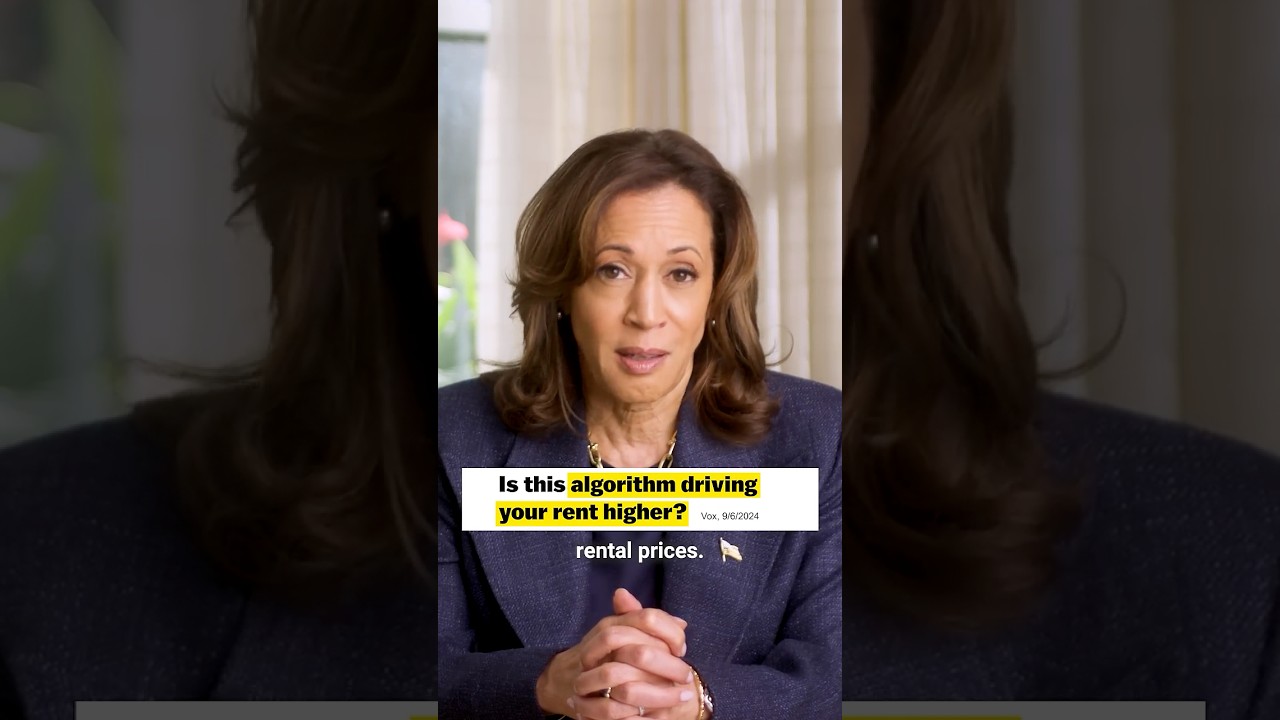 to boost housing supply and lower rents. Democratic governors from Colorado’s Jared Polis to Maryland’s Wes Moore have embraced reforms to lift constraints on homebuilding. On the right, President Trump has issued an executive order focused on reducing energy costs. Secretary of the Interior Doug Burgum has previously called for zoning reform and infrastructure investment to boost the economic health of cities, and Secretary of Energy Chris Wright has argued for the removal of burdensome regulations on nuclear power. There is also cross-partisan interest in improving science policy, from newly nominated NIH director Jay Bhattacharya’s calls for a focus on reproducibility and funding high impact research, to the launch of the new Technology, Innovation, and Partnerships directorate at the NSF during the Biden administration.
For Open Philanthropy as an institution, the timing is also right. Learning from the recent success of our Lead Exposure Action Fund (LEAF), which doubled the total amount of philanthropic funding toward lead exposure reduction in low-income countries, we are increasingly exploring pooled funding models. We talked with a number of like-minded donors who suggested potential appetite for a pooled fund like this, and ultimately received commitments for over $60 million so far from other funders. We’re grateful to Good Ventures, Patrick Collison, and our other donors in this fund for their support, and we’re always excited to hear from other funders who might be interested in collaboration opportunities.
While we think this nascent momentum is promising and suggests that further progress could be tractable, we also want to be up front that political winds can shift rapidly — that’s certainly been our experience with other policy causes in which we’ve worked. That’s part of why we’re making a three-year commitment: we think that is long enough to see some initial signs of progress but short enough to update fairly quickly.
Conclusion
The launch of the $120 million Abundance & Growth Fund represents a significant expansion of Open Philanthropy’s work to foster prosperity and remove barriers to human flourishing. By building on our existing work in housing policy reform and innovation policy, expanding our support of the broader movement, and exploring new areas like permitting reform, we aim to help create a future of greater abundance for all.
We’re grateful to our co-funders for their trust and collaboration, and we’re excited to be able to expand our support for the crucial work our grantees in this area are doing. Our impact depends on the talent of our team, so we encourage you to check out the job description for the leader of the Fund and apply yourself or recommend someone who you think would be a strong candidate.
---
---
6 26
- Forbes
One Of The World's Biggest Nonprofits Is Changing Its Name ... - Forbes
Nov 19, 2025Facebook cofounder Dustin Moskovitz and his wife Cari Tuna founded Open Philanthropy to identify charities that would create the biggest impact per dollar. Now, they're changing its name and ...

goodventures.org
Home - Good Ventures
Good Ventures is a philanthropic foundation created by Cari Tuna and Dustin Moskovitz. Our goal is to take the fullest possible advantage of the opportunity we have to help others.

coefficientgiving.org
https://coefficientgiving.org › about-us
About Us | Coefficient Giving
Read more about our approach here. If you're interested in exploring how we can help maximize the impact of your philanthropy, get in touch at partnerwithus@coefficientgiving.org.

AP News
Cari Tuna's organization Open Philanthropy to advise other major donors ...
For San Francisco-based billionaire Cari Tuna, the most important decision a philanthropist can make is deciding what cause to support. Starting Tuesday, the organization she helped found will offer help to other major donors making those choices. Tuna, 40, and her husband, Dustin Moskovitz, 41, first seriously started in philanthropy in 2010, when Tuna quit her job as a journalist and set out ...

Inside Philanthropy
Coefficient Giving: what has and hasn't changed | Inside Philanthropy
Nov 24, 2025Open Philanthropy, primarily funded by Facebook cofounder Dustin Moskovitz and Cari Tuna, rebranded as both a grantmaker and philanthropic advisor.


lifestylesmagazine.com
$3.5 billion and counting: Dustin Moskovitz and Lifestyles Magazine ...
May 17, 2025Scaling Open Philanthropy: Under his direct involvement, Open Philanthropy could see expanded funding and a broader scope, driving innovative solutions to global challenges. Moskovitz and Tuna have donated approximately $3.5 billion through their philanthropic organizations, supporting
---