Prosser, DT hon
==
merri ok
janet p 180 ct
===
2024
mADISON — The Wisconsin law library will no longer bear the name of former state Supreme Court Justice David Prosser and will instead be named in honor of Lavinia Goodell, Wisconsin's first woman lawyer, the liberal majority of the state Supreme Court announced Wednesday.
The change comes just a little more than seven years after the library was named for Prosser, who retired from the court in July 2016, and two days after Democratic Gov. Tony Evers proclaimed June 17 "Wisconsin Women Lawyers Day."
The move sparked ire among conservatives, including among the chief of staff to a top Republican lawmaker overseeing the Senate's judiciary committee who called the court's liberal majority a derogatory term for women in reaction to Prosser's removal.
Goodell was admitted by the Rock County Circuit Court to practice law in Wisconsin on June 17, 1874. One year later, she was barred from representing her client in an appeal to the state's high court. Goodell then drafted legislation to guarantee the right for women to practice law in Wisconsin, which was signed into law by Gov. Harrison Ludington in 1877.
Following the law's enactment, she became the first woman to brief a case for consideration by the state Supreme Court in 1879, and argued and won her first case shortly before her death in 1880.
"Naming the State Law Library in Lavinia Goodell's honor is an opportunity to recognize her legacy and inspire the next generation of women in Wisconsin," Justice Ann Walsh Bradley, the court's longest-serving justice, said in a statement.
There was no apparent opposition within the court to honoring Goodell, but there was not unanimous support among the court's justices for removing Prosser's name from the law library.
"There are many ways to honor Lavinia Goodell, which is entirely appropriate, without dishonoring a lifelong public servant like Justice David Prosser," Chief Justice Annette Kingsland Ziegler told the Milwaukee Journal Sentinel on Wednesday.
In the most recent edition of the State Bar of Wisconsin's official publication, "Wisconsin Lawyer," Ziegler wrote a column recognizing Goodell's achievements.
"Goodell’s pioneering spirit and her refusal to let anyone stand in the way of her goal paved the way for thousands of Wisconsin women to enter the legal profession and become not just lawyers but also judges and even justices of the Wisconsin Supreme Court," Ziegler wrote. "I wonder what Goodell would say if she knew that six of the seven seats on the court that initially denied her admission in 1876 are now occupied by women. I suspect she would be both stunned and rightfully proud."
Prosser, who spent nearly 18 years on the high court — including some of its most turbulent — told the Journal Sentinel on Wednesday that he didn't hear about the proposed change until it had already been decided. He also stressed that he had no objection to the court honoring Goodell.
"I was a person, for 18 years, who probably used the library … as much as anyone, and more than a lot of people," Prosser said, adding that he has continued to support the library financially since his retirement.
When the library was named for Prosser, then-Chief Justice Patience Roggensack said, "no justice has been more dedicated to the research that happens in the law library than Justice Prosser."
The naming of the library for Prosser came just before his retirement in 2016 after a tumultuous tenure on the court that included heated exchanges with Walsh Bradley, who was one of the justices who made the decision to remove his name from the library this week.
In 2011, Walsh Bradley asked Prosser to seek therapy to manage his anger after he put his hands around her neck during one tense incident. He declined to do so.
Bradley told the Journal Sentinel in 2011 that Prosser put his hands around her neck in what she called a "chokehold" during an argument in justices' chambers over when to release a divided decision on then-Gov. Scott Walker's controversial law curbing collective bargaining rights.
Prosser said before the library was named for him in 2016 he had expected it would be named in honor of former Chief Justice Shirley Abrahamson. The Wisconsin Historical Society Library Reading Room was named for Abrahamson in 2022. Prosser said he would be "absolutely against" having that title removed if an effort were made to do so.
"I don't think there's ever been a Supreme Court justice — maybe Shirley Abrahamson came a close second — that spent so much time (in the law library)," former Republican Gov. Tommy Thompson, who appointed Prosser to the court in 1998, told the Journal Sentinel. "That's why they thought it was so fitting when he left the court to name the law library after him, because he used it so extensively. … That was his second home."
Thompson, the state's longest-serving governor, pegged the current court as "the most partisan, ideologically left justices that Wisconsin's ever had."
The removal of Prosser's name from the library comes nearly a year after the court's ideological majority shifted from conservative to liberal for the first time in years with the election of Justice Janet Protasiewicz.
Scott Kelly, chief of staff for state Sen. Van Wanggaard, the Republican chairman of the Senate Committee on Judiciary and Public Safety, called the four women who comprise the court's liberal majority a disparaging term for women.
"Unbelievable. What partisan, petty bitches the liberal Supreme Court Justices are," Kelly said in a post on the social media platform X.
The liberal justices on the court, who are all women, declined to comment on Kelly's post. Wanggaard did not immediately respond on Thursday to a voicemail from the Journal Sentinel.
Brian Nemoir, Prosser's 2011 campaign manager, said "petty and vindictive politics reflect poorly on those trusted to serve as the highest ranking arbiters of our state’s legal system."
"Actions, with the unforeseen upside of further amplifying the grace and dignity of Justice Prosser, who deserves to be mentioned among our state’s finest public servants," he told the Journal Sentinel.
The Wisconsin State Library was established by the same congressional act that created the Territory of Wisconsin in 1836. Its name was changed to the Wisconsin State Law Library in 1977, and it moved to its current location in the Risser Justice Center in downtown Madison in 2002.
"Lavinia Goodell was a pioneer for Wisconsin women and the legal profession," said Justice Jill Karofsky in a statement. "She never backed down from this critical fight, which paved the way for so many women in our state who have proudly served as lawyers, judges, and justices."
When people enter the library, Protasiewicz said in a statement, "they need to know they are somewhere named after a leader who inspired others to do good and do what is right."
*Rachel Hale of the Milwaukee Journal Sentinel contributed to this report.
*Jessie Opoien can be reached at jessie.opoien@jrn.com.
wiki 7 24
....Prosser received media attention in 2010 following verbal altercations with the chief justice of the Wisconsin Supreme Court, and also in June 2011 when allegations were made of a physical altercation between Prosser and fellow associate justice Ann Walsh Bradley that occurred in connection with the union-curbing bill.[4] A special prosecutor investigated but declined to press criminal charges.[5]
An ethics action against Prosser was recommended by the Wisconsin Judicial Commission,[6] however, after three other justices recused themselves from the matter, no further action was taken.[7] Prosser returned to the spotlight in September 2023, when he emerged as an advisor to Wisconsin Assembly speaker Robin Vos in his attempts to find a rationale to impeach the newest Wisconsin Supreme Court justice, Janet Protasiewicz.[8]
...
Controversies
Decision not to prosecute abuse case
In 1978, while serving as District Attorney of Outagamie County, Prosser declined to prosecute a Catholic priest accused of sexual abuse by two brothers (ages 12 and 14), who said the priest had touched their chests and unsuccessfully attempted to touch lower.[28] Prosser later explained he did not file charges because the case was weak; it involved relatively new sexual assault laws that were untested at the time, and he did not think he could win a jury trial.[29][30] He said he had assumed the priest, John Patrick Feeney, would be reassigned as a result of his discussion with Feeney's bishop.[31] The priest was not removed from duties which allowed him contact with children, and he went on to abuse other children before being sent to prison on a 15-year sentence in 2004.[28][32] The prosecutor who ultimately and successfully prosecuted the case in the early 2000s said that when Prosser had the case in the 1970s, he was lacking sufficient information: "We were able to gather a wealth of information that far exceeded what Prosser had," he said, adding, "It's not fair to second-guess him now."[32] When interviewed in 2011 one of the victims said that in 1978 he and his brother had not communicated detailed information about the abuse to the authorities, and that when the case came to trial in 2002, Prosser helped in the prosecution.[29][33]
During Prosser's 2011 run for re-election to the Wisconsin Supreme Court, the incident was revived in a political ad by a pro-union organization[34] which claimed that Prosser did not investigate the abuse allegations and participated in a coverup.[35] The ad was ultimately rated "Mostly False" by the fact-checking website, PolitiFact.com, which concluded that the ad omitted critical facts and created false impressions.[35] One of the abuse victims, who had been critical of Prosser's decision not to prosecute, criticized the ad as "offensive, inaccurate and out of context."[36] Prosser asked his opponent, Kloppenburg, to call for the removal of the ad—she replied that the First Amendment gave the group the right to run such ads.[37]
Assembly staffers used for campaigning
In 2006, Prosser testified on behalf of Wisconsin State Representative Scott Jensen who was being tried on three felony counts of misconduct in office because his legislative staffers also performed campaign activity on his behalf. Prosser stated that during seven years of his own tenure in the Wisconsin Assembly, he had used his taxpayer-funded staff for campaigning—the same crime Jensen was eventually convicted of.[38][39] Prosser was not charged, and defended the actions saying, "it was a different era and public expectations were quite different". However critics described this as illegal activity, and the Appleton Post Crescent, Prosser's hometown paper, found Prosser's admissions sufficient reason to endorse Prosser's opponent in the 2011 election, saying Prosser fell short of having the "unimpeachable integrity" required of a high court judge because he had admittedly "condoned illegal activity" while serving as an elected official.[40]
Altercations with other justices
During a closed-door debate between the justices on February 10, 2010, Prosser called Chief Justice Shirley Abrahamson "a total bitch" and threatened to "destroy her".[41] A review of emails by the Milwaukee Journal Sentinel indicated that "justices on both sides described the court as dysfunctional, and Prosser and others suggested bringing in a third party for help".[41] The 2010 conflict on the court was also criticized as having a potential for lowering court productivity and distracting the focus of the justices.[42] Prosser admitted he overreacted, but justified his statements, saying he had been goaded, bullied and abused by two other justices for a long time,[41] and that the fights were caused by liberal members of the court "ganging up" on him and attempting to create a "foul atmosphere".[43] He also said the March 2011 revelations of the year-old altercation were an attempt to hurt his bid for re-election.[41][43] When interviewed in March 2011, Justice Ann Walsh Bradley acknowledged Prosser had had outbursts over the years, but said there had not been one of significant magnitude since February 2010. She also commented that, "he is a good man - but you cannot accurately say he has a steady, even temperament."[41]
Conflicting media reports on June 25, 2011 indicated that Prosser had gotten into an altercation with Bradley on June 13, 2011 in her office, which allegedly became physical.[44][45][46][47][48] The dispute occurred during a discussion in Bradley's office with four other Justices present, before the court issued its June 13, 2011 split decision to uphold the law limiting collective bargaining rights for most Wisconsin state public employees.[45] In one report, witnesses alleged that after Bradley told Prosser to leave her office, Prosser grabbed Bradley around the neck in what was described as a chokehold. Prosser claimed that Bradley charged Prosser with her fist raised, and that in attempting to block her, he made contact with her neck. Capitol Police Chief Charles Tubbs was notified of the incident, and met with the entire Supreme Court. Investigations into the matter were opened by the Wisconsin Judicial Commission and the Dane County Sheriff's office.[49] After initially saying he would refrain from comment until a proper investigation was completed,[3] Prosser denied he choked Bradley saying, "claims made to the media will be proven false." Bradley then made a public statement saying that Prosser, "put his hands around my neck in anger in a chokehold", as she was asking him to leave her office.[44][45][46][47][48]
The Dane County Sheriff's office gave its findings to county District Attorney Ismael Ozanne, who referred the matter to special prosecutor Patricia Barrett; Barrett ultimately ruled in late August 2011 that the circumstances and evidence reviewed did not support the filing of criminal charges.[5] On March 16, 2012, the Wisconsin Judicial Commission filed an ethics complaint against Prosser, "recommending that the court discipline him for alleged misconduct",[6][50] however, three conservative members of the court recused themselves from the matter, with the result that no quorum existed, and no decision could be made.[7]
Failure to recuse during "John Doe" probe of Scott Walker[\(https://en.wikipedia.org/w/index.php?title=David_Prosser_Jr.&action=edit§ion=12 "Edit section: Failure to recuse during "John Doe" probe of Scott Walker")]
Leaked files obtained by the Guardian revealed that a network of dark money groups spent $3.5 million to pay for TV and radio ads backing the judge during his 2011 campaign.[51][52] According to these leaked emails "The push was seen as vital, the documents disclose, as a means of retaining the rightwing majority of the court and thereby preserving the anti-union measures introduced by Walker. 'If we lose [Justice Prosser], the Walker agenda is toast,' one ally writes in an email sent around to the governor’s chief of staff and several conservative lobbyists."[52] In 2015, a John Doe probe into Scott Walker's funding sources during the 2012 recall campaign against him involved the same set groups that funded Prosser's 2011 campaign.[52] Despite the obvious possible conflicts of interest, Prosser refused to recuse himself, ultimately casting the deciding vote to terminate the probe.[52] Prosser told the Guardian that four years had passed since his re-election before he joined the decision to close the John Doe investigation, over which time any potential conflict of interest had faded.[52]
Advising Republican leadership regarding impeachment
In fall 2023, Prosser was included in a special panel to advise Wisconsin Assembly speaker Robin Vos on the question of impeaching the newest Wisconsin Supreme Court justice, Janet Protasiewicz. This followed several weeks of acrimony as Vos threatened impeachment to prevent the justice from participating in pending redistricting cases. Prosser's opinion on the matter became known through an October 6 letter to the speaker, which read:[53][54]
Section 1 of Article VII states that before the trial of impeachment, "the members of the court [Senate] shall take an oath or affirmation truly and impartially to try impeachment according to evidence." In my view, there is no assurance that two-thirds of the present "court" would be convinced that they are bound "impartially" by the "evidence" to vote for impeachment. Once again, the "evidence" has to persuade members of the court... and a large percentage of the public... that impeachment is legitimate. Impeachment that appears to be solely partisan will likely backfire.
Even if a Supreme Court Justice were impeached and convicted, the governor would promptly name a successor who might be more problematic.
The Constitution also provides that "no judicial officer shall exercise his [or her] office, after he [or she] shall be impeached, until his [or her] acquittal." To impeach a justice solely to delay a case or cases will be viewed as unreasonable partisan politics.
To sum up my views, there should be no effort to impeach Justice Protasiewicz on anything we know now. Impeachment is so serious, severe, and rare that it should not be considered unless the subject has committed a crime, or the subject has committed indisputable "corrupt conduct" while "in office."
2011 re-election campaign
Main article: Wisconsin Supreme Court election, 2011
Prosser faced JoAnne Kloppenburg, a long-time but little-known Wisconsin assistant attorney general, in both the February 5, 2011, spring primary, and the April 5 run-off election.
Primary election
In December 2010, Prosser's campaign director expressed strong support for governor-elect Walker, saying Prosser's "personal ideology more closely mirrors" Walker's, and that a win by Prosser would result in, "protecting the conservative judicial majority and acting as a common sense complement to both the new administration and Legislature."[55] He later disavowed the statements and claimed he had not seen the release.[56] Prosser's campaign manager also said that, "This election is about a 4-3 commonsense conservative majority vs. a 3-4 liberal majority, and nothing more."[57][58]
In a survey of attorneys conducted by the Milwaukee Bar Association that was published February 2011, Prosser received more votes saying he was "qualified" than any of his opponents; besting Kloppenburg by a margin of 296 to 112.[59] He was endorsed in the Milwaukee Journal Sentinel, and the Sun Prairie Star.[60] He won the primary handily, receiving 231,000 votes to second-place finisher Kloppenburg's 105,000 votes; a 30% margin.
General election
In the general election of April 5, 2011, Prosser again faced Kloppenburg. The contest received considerable attention due to the 2011 Wisconsin protests of Walker's budget repair bill and limitations on public employee bargaining rights; issues which would likely soon come before the Wisconsin Supreme Court. Kloppenburg supporters attempted to tie Prosser to the policies of Republican governor Scott Walker, and his March 2011 law limiting most of Wisconsin's public employees' collective bargaining rights. The non-partisan race for the court seat was also characterized as a proxy battle or referendum on the administration of Governor Walker and other Republican officials.[2][61][62] Both candidates stated their unhappiness regarding the increased partisan aspect of the race,[63][64] with Prosser claiming that if he was defeated, it would mean the end of judicial independence.[65]
On March 31, Prosser's campaign co-chair, former Democratic governor Patrick Lucey, resigned from the campaign and endorsed Kloppenburg, saying it appeared that Prosser had lost his impartiality, and was showing "a disturbing distemper and lack of civility that does not bode well for the High Court".[66]
The Wausau Daily Herald reversed its primary election endorsement, and urged its readers to vote against Prosser in the general, describing him as "an intemperate figure given to partisan rhetoric".[67] Citing the earlier statement of Prosser's campaign director that the election is about maintaining a conservative majority on the court, The Capital Times endorsed Kloppenburg.[68] Prosser was endorsed by the Sun Prairie Star, The Milwaukee Journal-Sentinel, and former Alaska governor Sarah Palin (via Twitter), among others for the general election.[69]
State officials predicted a voter turnout of around 20 percent, a typical level of turnout for an April election.[70] However, voter interest and turnout were unusually high with nearly 1.5 million votes cast.[71]
Result
The day after the election, Kloppenburg was thought to be ahead by a razor-thin margin of 204-votes, leading her to prematurely declare victory.[72][73] Late in the afternoon of April 7, Waukesha County Clerk Kathy Nickolaus announced that the preliminary vote totals she had given to the Associated Press on April 6 did not include 14,315 votes from Brookfield, her county's second largest city and one of the most Republican. The announcement changed the unofficial total, giving Prosser a lead of over 7,000 votes which likely would not be changed by a recount.[74] Other, much smaller errors in the preliminary count were found in other counties favoring both candidates.[75] A final vote canvass of all the counties in Wisconsin gave Prosser an official lead of 7,316 votes on April 15.[76] Kloppenburg did request a recount at taxpayer expense (costing as much as $500,000)[77] and Prosser was eventually declared the winner by 7,006 votes.[78]
New York Times analyst Nate Silver declared on April 8 that Nickolaus' error pointed to incompetence, not conspiracy.[79] However, Democrats called on Nickolaus to resign, citing her previous employment under Prosser in the mid-1990s as a member of the assembly caucus[76] and questions about her procedures and counts in prior elections.[80] State election officials announced an investigation of possible voting irregularities going back to 2006.[81]
===
ggl7 24
David Prosser Jr.
Former Speaker of the Wisconsin State Assembly
Wisconsin Court System - Justice David T. Prosser, Jr.
Wisconsin Court System (.gov)
https://www.wicourts.gov › supreme › justices › retired
david prosser wisconsin supreme court from www.wicourts.gov
Feb 13, 2022 — Justice David T. Prosser Jr. was appointed to the Supreme Court by Gov. Tommy G. Thompson in 1998, elected to a 10-year term in 2001 and ...
David Prosser Jr.
Wikipedia
https://en.wikipedia.org › wiki › David_Prosser_Jr
david prosser wisconsin supreme court from en.wikipedia.org
(born December 24, 1942) is an American jurist and politician who served as Speaker of the Wisconsin State Assembly from 1995 to 1996, and as a justice of the ...
Early life and education · Career · Controversies · 2011 re-election campaign
Wisconsin Supreme Court takes David Prosser's name off ...
Milwaukee Journal Sentinel
https://www.jsonline.com › news › politics › 2024/06/19
david prosser wisconsin supreme court from www.jsonline.com
Jun 19, 2024 — MADISON — The Wisconsin law library will no longer bear the name of former state Supreme Court Justice David Prosser and will instead be ...
Former Wisconsin Supreme Court justice refuses to ...
AP News
https://apnews.com › article › wisconsin-supreme-court-...
david prosser wisconsin supreme court from apnews.com
Sep 29, 2023 — Former Justice David Prosser called a lawsuit alleging violations of the state open meetings law “frivolous,” Friday, Sept. 29, 2023saying ...
Editorial: David Prosser is stepping down under a cloud of ...
The Cap Times
https://captimes.com › opinion › editorial-david-prosser...
david prosser wisconsin supreme court from captimes.com
May 18, 2016 — There is no sadder story in Wisconsin politics than that of David Prosser, the embattled state Supreme Court justice who plans to resign ...
Wisconsin Supreme Court renames law library for state's ...
Wisconsin Examiner
https://wisconsinexaminer.com › Briefs
david prosser wisconsin supreme court from wisconsinexaminer.com
Jun 20, 2024 — The Wisconsin law library will be named after Lavinia Goodell, the state's first female lawyer, replacing former Justice David Prosser.
Wisconsin Judicial Commission v. David T. Prosser, Jr.
Justia Law
https://law.justia.com › cases › wisconsin › supreme-court
No. 2012AP566-J 2 subject of the complaint.1 Justice Prosser has made essentially the same request of each of his six colleagues on the supreme court. In State ...
Impeachment review panel includes David Prosser, a ...
PBS Wisconsin
https://pbswisconsin.org › news-item › impeachment-re...
david prosser wisconsin supreme court from pbswisconsin.org
Sep 15, 2023 — David Prosser is one of three former Wisconsin Supreme Court justices tapped by Republican Assembly Speaker Robin Vos to look at criteria for ...
Wisconsin Supreme Court takes Prosser's name off library
Kenosha News
https://kenoshanews.com › news › government-politics
david prosser wisconsin supreme court from kenoshanews.com
Jun 20, 2024 — Former conservative state Supreme Court Justice David Prosser's name will soon be removed from the Wisconsin State Law Library after the ...
Wisconsin Supreme Court to rename State Law Library ...
WPR
https://www.wpr.org › news › wisconsin-supreme-court-t...
david prosser wisconsin supreme court from www.wpr.org
Jun 19, 2024 — The court's announcement did not mention that the State Law Library is currently named after former conservative Justice David T. Prosser Jr.
john doe:
Protecting Walker's agenda
The John Doe files obtained by the Guardian give clues as to why the prosecutors have raised doubts about impartiality in the state courts. They suggest that two of the conservative judges on Wisconsin's top court who voted to halt the John Doe investigation may have themselves been intimately connected to the same campaigning network of rightwing politicians, lobbyists and major donors that the prosecutors were investigating.
JUDGE DAVID PROSSER
WISCONSIN SUPREME COURT
Take David Prosser. He was one of the four conservative judges who approved the July 2015 ruling that terminated the John Doe investigation, sacked Schmitz from his position as special prosecutor and ordered the destruction of all the documents that had been collected (later that order was softened a little to a demand that the prosecutors hand in all the documents to the court which would keep them secret under seal).
At precisely the same time as the six Republican senators were embroiled in their recall election, Prosser was in his own electoral fight for survival. He was up for re-election in April 2011 and facing a tough challenge from JoAnne Kloppenburg, then Wisconsin's assistant attorney general. The Prosser election and the recall election were intertwined in that Kloppenburg was attempting to turn her battle against Prosser into a referendum on Governor Walker'santi-union legislation, Act 10.
Among the leaked John Doe files that the Wisconsin supreme court ordered to be suppressed are documents that underline how anxious Walker's circle were about the threat, as they saw it, to the court's conservative majority. In an email dated 14 December 2010, WCfG's director Eric O'Keefe says he's been in touch with Diane Hendricks, the owner of a roofing company who Forbes describes as America's richest self-made woman with a personal fortune of $5bn. Hendricks is a well-known funder of rightwing causes and individuals, among them Scott Walker himself who she was to go on to support with $500,000 in 2012 for his own recall election.
Judge David Prosser faced a tough re-election battle to remain on the seven-justice Wisconsin Supreme Court. Photograph: M.P. King, State Journal/AP
Hendricks has also popped up as part of the Donald Trump presidential campaign. Trump recently added her to his inner team of economic advisers, having come under fire for only appointing men.
“I have traded emails with diane hendricks,” O'Keefe says in the email. “She is concerned about the state s. Ct.”
Hendricks was right to be concerned about the state supreme court. Were Prosser to lose the vote, the consequences for Walker and his entire rightwing union-bashing agenda would have been devastating. The four-to-three, conservative-to-liberal, balance of the state's top court would have been reversed, allowing progressive groups to overturn the reforms through legal challenges.
The correspondence reveals how Walker's network of associates vowed to go to work to keep Prosser in his job, and thus preserve (or “maintain”) the court's conservative upper hand. “It would be good for [Hendricks] to talk with us or have her see our plan,”writes RJ Johnson, the then “general consultant” to Governor Walker's campaign committee. He says that WCfG “is leading the coalition to maintain the court. Thus far I have raised 450kand am looking to raise an additional 409k.”
DIANE HENDRICKS
DONOR
Johnson name-checks other sources of big money donations that he intends to tap. Leo Leonard of the conservative legal group the Federalist Society was looking for an extra $200,000, he says, and there were hopes for a further $1m from the US Chamber of Commerce.
He wasn't bragging. As election day approached, money from rightwing lobby groups and corporations began to pour into Wisconsin, unseen by the public, as the message got out that Prosser's salvation was a necessary step to safeguarding Walker's radical rightwing reforms and Act 10.
An email from March 2011, just two months after Walker took office as governor and a month before Prosser was tested at the polls, makes the point. It's from Matt Seaholm, state director of Americans For Prosperity (AFP), the Tea Party-affiliated group founded and funded by the billionaire rightwing Koch brothers.
By now the anxiety surrounding the fate of the Wisconsin supreme court judge, David Prosser, is growing more intense. “This could stop everything that Walker is trying to accomplish and [the unions] know it. Goes without saying, that would be a bad thing,” Seaholm says, writing to Tim Phillips, AFP's national president.
By 20 March, two weeks before the election, worry is distilling into panic. Brian Fraley of the Wisconsin-based conservative think-tank the MacIver Institute, shoots an impassioned plea for help to what he calls his “group” of like-minded lobbying groups and individuals, forwarded to Walker's chief of staff and other top advisers in Madison.
“David Prosser is in trouble,” Fraley begins. “And if we lose him, the Walker agenda is toast, as could be the Senate GOP majority and any successes creating a new redistricted map. That's not hyperbole.”
By the end of the bitter campaign, some $3.5m was spent by outside lobby groups channeling undisclosed corporate money to support Prosser's re-election – more than eight times the $400,000 the judge was allowed to spend himself. That included $1.5m from WCfG and its offshoot Citizens for a Strong America, and $2m fromWisconsin Manufacturers & Commerce (WMC), all of it in unaccountable “dark money”.
It worked. Prosser was re-elected, with a squeaky-tight margin of just 7,000 votes and after a fraught recount. The following month, Walker boasted to the Republican kingmaker, Karl Rove, “Club for Growth–Wisconsin was the key to retaining Justice Prosser.
Act 10 was safe.
Both of the two outside groups that channeled the recall election money (WCfG and WMC) are named as “movants” of the John Doe criminal investigation into alleged campaign finance violations that was shut down under the court ruling that Prosser, having won re-election in no small part with their help, joined. Yet when it was suggested to Prosser and a second conservative judge on the court, Justice Michael Gableman, that they should recuse themselves from deliberations in the case, they both refused.
In their petition to the US supreme court, the prosecutors challenge that refusal, arguing that “the special prosecutor did not receive a fair and impartial hearing”. The petitioners go on to discuss Prosser in detail, but the passage is so heavily redacted that their argument is obscured. They do say at one point, quoting constitutional law, that “No jurist 'can be a judge in his own case or be permitted to try cases where he has an interest in the outcome'.”
Prosser declined to step aside citing a rule change that had been suggested and partially written by WMC itself.The change removed the obligation of supreme court judges in Wisconsin to recuse themselves in cases involving groups that had helped them secure their own elections.
Kurt Bauer, WMC's president and CEO, declined to comment on the John Doe proceedings. But he stressed that the organization's “grassroots lobbying activities are conducted carefully within both the letter and the spirit of the state law. WMC strongly disputes any allegations of wrongdoing and will vigorously defend itself against such allegations.”
Bauer added that WMC was an independent group that was not controlled by any candidate or candidate’s campaign.“WMC will not allow itself to be silenced from commenting about public officials and public policy. WMC has long been a proponent of the First Amendment and has a history of fighting to protect its ability to publicly express its views. WMC maintains that commitment to protecting its right to express a point of view on public policy, public officials and candidates for office as well as protecting the confidentiality of its donors.”
In a telephone interview with the Guardian, Prosser, who retired from the state supreme court in July, said that in his view sufficient time had passed between his re-election in 2011 and the judgment in the John Doe case in 2015 for any potential conflict of interest to fade. “If this had been a year after the contributions I think I would have had to withdraw, but it was four years. There was no expectation on the part of recipient or givers that the contributions were designed to effect litigation, and so the contributions raised no questions whatsoever.”
Prosser said that at the time of his re-election he was facing hostile TV ads that falsely tried to link him to Walker's contentious anti-union legislation Act 10, while he himself was unable directly to solicit large amounts of campaign contributions under new strict fundraising limits imposed by an earlier Democratic-controlled legislature.“I certainly expected Wisconsin Manufacturers & Commerce sooner or later to put some money into my campaign. Of course I was going to hope that somebody would come in and defend me because I was unable to defend myself.”
But the judge stressed that the only spending involved came from "third parties in which no one on my campaign knew they were coming, didn't ask for them, and frankly if they hadn't come I would have been blown out of the water by false advertising”.
Last year Prosser issued a 12-page justification of his refusal to recuse himself from the John Doe case. In it, he made reference to an email from an “Unnamed Petitioner” that discussed raising money for a campaign “to maintain the Court”. The judge said the comment was “little more than evidence of the fact that some targets of the investigation ... engaged in expenditures that, under all the circumstances, were very valuable to my campaign.”
Just two weeks before writing that sentence, Judge Prosser had approved the court ruling that ordered the destruction of the John Doe files, among which was to be found the very same email to which he referred. The Guardian now publishes that full email for the first time, and as a result the identity of the anonymous “Unnamed Petitioner” who vowed to “maintain the Court” can be revealed: RJ Johnson, “general consultant” to the governor of Wisconsin, Scott Walker.
Left: An estimated 70-100,000 demonstrators rallied outside the Wisconsin capitol building in February 2011 to protest a bill restricting collective bargaining rights. Right: A petition to recall the governor launched in November of that year. Photograph: Scott Olson/Getty, Chicago Tribune/MCT/Getty
Why it matters
So why should we care about today's fiendishly complicated ways of funding elections? After all, isn't it a cornerstone of American democracy that everybody should be able to express themselves, under the first amendment right of free speech, after which the American people gets to have the final say at the ballot box?
One area of possible concern raised by the John Doe files chimes with the anger and disgruntlement of voters that Donald Trump and Bernie Sanders have so powerfully articulated in the presidential race. If money channels are set up in secret to allow corporations and the super-wealthy to inject vast amounts of undisclosed cash into political races, the level playing field can be distorted to the benefit of corporate-friendly candidates and to the disadvantage of those representing ordinary voters.
By the end of Scott Walker's recall election, some $81m overallwas spent on the battle – equivalent to $23 for every registered voter in the state. The governor and other Republican groups and committees invested $58.7m, while his Democratic rival and supporters were only able to muster less than half that amount, $21.9m.
“The sheer increased volume of corporate money that has been brought into elections in recent years may go more on one side than the other,” explained Richard Briffault, a professor specialising in campaign finance law at Columbia law school. “Corporations tend to lean more Republican.”
==
===
The Templetons: John “Jack” Templeton Jr. and his wife, Josephine, of Pennsylvania, gave $50,000 apiece to Wisconsin Justice Prosser’s recount effort this year. Jack, an evangelical Christian, has donated more than $1 million to Republicans, according to state and federal records. He heads the John Templeton Foundation, an organization whose critics—including prominent scientists—say it aims to apply scientific legitimacy to matters of faith. The foundation was started by Jack’s late father, Sir John the mutual fund billionaire, and in 2009 reportedly had $1.7 billion in assets.
===
==
ktm:
2010 aspen/koch 1.6$m ~ dems incumbent state reps, got 80% incl Feingold
WI flipped
Justice Prosser 2.7M$ kochs, broke tie to uphold walker kill collective bargaining. 68
afp 1.5M$ on ads alone to beat recall; bus in ppl10 m total; printed absentee ballots w/ wrong date 68
cut 800m from schools, stopped min wage up, added work req
for food stamps (lost 30k ppl) voter ID...
==
walker/ john doe suit:
10/14
A federal appellate court has shut down Judge Rudolph Randa's decision halting the criminal probe into Wisconsin Governor Scott Walker and allied groups, rejecting Randa's interpretation of campaign finance law and declaring the investigation best resolved by state courts.
The investigation remains halted by a state court decision from January, and the probe's future now rests with Wisconsin appellate courts. However, some justices on the Wisconsin Supreme Court could have a conflict of interest: the four-justice Republican majority was elected by millions in spending from the same groups under investigation in the coordination probe, calling into question whether they can be impartial.
"Imprudent," "Unnecessary" Ruling Reversed on Federalism Grounds
Wednesday's decision from the 7th Circuit Court of Appeals ordered Judge Randa to throw out the federal lawsuit filed by Wisconsin Club for Growth and its director Eric O'Keefe, declaring that Randa never should have taken the case in the first place. The unanimous decision was authored by Judge Frank Easterbrook, a Ronald Reagan appointee and prominent conservative jurist.
Judge Easterbrook, writing for the three-judge panel, held that Randa's May 6 ruling halting the investigation was "imprudent," "unnecessary," and "an abuse of discretion."Randa regularly attended judicial junkets funded by the Koch and Bradley foundations, financial interests tied to the groups under investigation, the Center for Media and Democracy discovered earlier this year.
Randa acted improperly when he interfered with an ongoing state criminal investigation, being conducted under state law, and overseen by state courts, Easterbrook wrote. Randa ran afoul of the federal Anti-Injunction Act barring federal courts from enjoining state proceedings, as well as judicial principles of federalism and comity, the 7th Circuit panel held.
“State courts are free to conduct their own litigation, without ongoing supervision by federal judges, let alone threats by federal judges to hold state judges in contempt,” Easterbrook wrote.
Randa's Holding on Campaign Finance Overturned
Perhaps the most closely-watched aspect of the case was how the 7th Circuit would treat Randa's far-out rulingon regulation of money in politics.
Prosecutors had been investigating whether Walker and his campaign were part of what they called a "criminal scheme" to evade Wisconsin disclosure requirements and contribution limits, by coordinating activities with nonprofit groups like WiCFG (which accept secret, unlimited donations) during the 2011 and 2012 recall elections. WiCFG and the Walker campaign argued that any coordination only involved electoral "issue ads" that stop short of telling viewers to vote for or against a candidate, which they claimed are beyond the reach of Wisconsin law.
In his May 6 decision, Judge Randa sided with WiCFG's arguments, holding not only that "issue ad" coordination does not violate state law, but that it is protected First Amendment activity.
Randa's ruling gave ammunition to Walker and his supporters in the state. Walker declared that Randa's ruling showed that "there is nothing wrong with what we did." Allies of Governor Walker, like Wisconsin Institute for Law & Liberty director Rick Esenberg, argued thatthe 1999 Wisconsin court of appeals decision in Wisconsin Coalition for Voter Participation and a 2008 Government Accountability Board advisory opinion -- which both stated that "issue ads" coordinated with candidates would be counted as campaign contributions, subject to disclosure and contribution limits -- had been rendered unenforceable by the U.S. Supreme Court and the 7th Circuit.
Easterbrook solidly rejected those claims.
"Until the district court’s opinion in this case, neither a state nor a federal court had held that Wisconsin’s (or any other state’s) regulation of coordinated fundraising and issue advocacy violates the First Amendment," Easterbrook wrote, with a nod towards the Wisconsin Coalition for Voter Participation precedent.
Because of this, the appellate court rejected Randa's assertion that the bipartisan group of prosecutors acted in "bad faith," and pursued the investigation only as a means or harassment and retaliation. Prosecutors are entitled to immunity for enforcing a legitimate (and constitutional) interpretation of Wisconsin law, Easterbrook wrote.
"No opinion issued by the Supreme Court, or by any court of appeals, establishes . . . that the First Amendment forbids regulation of coordination between campaign committees and issue-advocacy groups—let alone that the First Amendment forbids even an inquiry into that topic."
As the Center for Media and Democracy explained in a *Milwaukee Journal Sentinel* editorial, even if Walker and WiCFG thought that campaign finance law was evolving on regulation of "issue ads" or coordination, this did not mean they could ignore prevailing interpretations of state law. Easterbrook echoed this sentiment.
"Although the Court’s views about the proper limits of campaign finance regulation continue to change," he wrote, "as the Supreme Court’s doctrine stands it is not possible to treat as 'bad faith' a criminal investigation that reflects Buckley’s interpretation of the First Amendment," referencing the landmark campaign finance decision Buckley v. Valeo.
Walker Circumventing Campaign Finance Laws?
Easterbrook noted that rules against coordination are a constitutional means of preventing circumvention of campaign finance laws (a point that CMD has repeatedly emphasized.)
"If campaigns tell potential contributors to divert money to nominally independent groups that have agreed to do the campaigns’ bidding, these contribution limits become porous, and the requirement that politicians’ campaign committees disclose the donors and amounts becomes useless," Easterbrook wrote.
This statement has particular relevance to the Walker investigation. Documents released late last month showed the governor soliciting funds for WiCFG from out-of-state millionaires, billionaires, and corporations, with the promise that donations to WiCFG "are not disclosed," and not subject to contribution limits, according to a set of fundraising talking points prepared for Walker.
The 7th Circuit acknowledged that the "Supreme Court has yet to determine what 'coordination' means," and did not take a position on whether WiCFG and Walker broke state law, declaring that this is an issue best resolved at the state level.
This isn't the first time that the 7th Circuit reversed Randa in a politically-charged case.
In 2006, Randa oversaw the wrongful conviction of state purchasing supervisor Georgia Thompson for allegedly steering state travel contracts towards a firm linked with Wisconsin's then-Governor Jim Doyle, a Democrat. The conviction came just before the gubernatorial elections, and Republicans spent $4 million on ads tying Thompson's "corruption" to Doyle, who was reelected. Within hours after the 7th Circuit heard Thompson's appeal in 2007, they immediately ordered her release, with Judge Diane Wood calling the evidence used to convict her "beyond thin."
The U.S. Attorney who prosecuted Thompson, Steven Biskupic, is now Walker's campaign attorney, and his wife is Randa's judicial assistant.
Conflict of Interest at Wisconsin Supreme Court
The future of the investigation now rests with Wisconsin courts -- where things will really get interesting.
The probe currently remains halted at the state level, after a state court judge quashed subpoenas issued to WiCFG and the Walker campaign in January. However, that same judge then stayed his own order, acknowledging long-standing Wisconsin precedent on coordinated issue advocacy and calling the prosecutors’ theory an “arguable interpretation” of the statutes.
The Wisconsin Court of Appeals was then asked to resolve the dispute between dueling interpretations of Wisconsin campaign finance law; they have been sitting on the case for seven months. A separate petition was filed with the Wisconsin Supreme Court asking that they take the case directly, since it will eventually come before those seven justices, but they have not acted on the petition.
Four of the seven members of the Wisconsin Supreme Court have a potential conflict of interest in hearing the case. At least two of the groups under investigation in the probe, Wisconsin Club for Growth and Wisconsin Manufacturers & Commerce, played a key role in electing the four justices in the conservative majority, in most cases spending more than the candidates themselves.
In every single one of the elections for the court's four Republican justices -- Justices David Prosser, Annette Ziegler, Michael Gableman, and Patience Roggensack -- spending by WiCFG, its surrogates, and WMC amounted to almost all of the independent support for the candidate.Together, the two groups have spent $7.88 million since 2007 helping elect the court's four-justice conservative majority, and have been among the top spenders in judicial elections.
According to data from the Wisconsin Democracy Campaign, WiCFG spent at least $1,615,860 on the last four Supreme Court races, and groups it funds has spent $836,000 more. WMC has spent at least $5.43 million electing the court's conservative majority. In three out of the four Supreme Court races since 2007 where WMC has been active, it has spent more than the candidate it supported.
Any ruling by the Wisconsin Supreme Court would directly affect the same groups that helped put four of the justices on the bench.
Although the Wisconsin Supreme Court has grown notorious for its lax recusal practices, the level of spending by the groups in this case -- and their direct stake in the outcome -- could demand recusal under the U.S. Constitution, following the 2009 U.S. Supreme Court decision in Caperton v. Massey. In that case, the U.S. Supreme Court held that a West Virginia Supreme Court justice should have recused himself from a decision involving a major campaign contributor, when the election was decided by less than 50,000 votes and the donor had a disproportionate influence on the election's outcome.
"This could be a landmark case for applying the Caperton standards," Matthew Menendez, counsel at the Brennan Center for Justice, told the Center for Media and Democracy earlier this year.
Groups Under Investigation Had Significant and Disproportionate Influence on Supreme Court Elections
In 2011, Justice Prosser won reelection by just 7,000 votes. WMC, the powerful state chapter of the U.S. Chamber of Commerce, spent around $1 million helping reelect Prosser. A new front group, Citizens for a Strong America, came out of nowhere and spent $836,000 backing Prosser and attacking his opponent; it was entirely funded by Wisconsin Club for Growth that year. Wisconsin Club for Growth itself spent $415,860 supporting Prosser. Prosser's campaign spent only $700,000. Together those groups spent three times as much combined as the Prosser campaign.
Justice Gableman won his 2008 election by around 20,000 votes. WMC spent $1.76 million getting Gableman elected. Wisconsin Club for Growth spent over $500,000 to elect Gableman. Another phony issue ad group, Coalition for America's Families, which received funding from Wisconsin Club for Growth and shared a board member, spent $480,000 supporting Gableman that year. The Gableman campaign spent only $411,000 -- meaning that WMC alone spent four times as much as the justice's own campaign.
:{In 2007:(style="background-color:#ffff66;"):}:, WMC spent an eye-popping $2.2 million to put Justice Ziegler on the court. Wisconsin Club for Growth added $400,000. Together they nearly doubled the $1.4 million spent by the Ziegler campaign.
In last year's Supreme Court race, WMC spent $470,000 supporting Justice Roggensack, and Wisconsin Club for Growth spent $300,000, together outspending the justice's own campaign.
A justice who was not a beneficiary of WCFG or Citizens for a Strong America spending, Justice Ann Walsh Bradley, :{recused}::{ herself}: in a separate challenge to the John Doe in March, on grounds that her son practices with one of the attorneys in the case.
Justice Bradley's letter announcing the recusal, though, appeared to be a subtle call to other justices to join her: despite Bradley's reasons for recusing herself having nothing to do with election spending, she quoted from Caperton v. Massey, writing, "The inquiry [requiring recusal] centers on the contribution's relative size in comparison to the total amount of money contributed to the campaign, the total amount spent in the election, and the apparent effect such contribution had on the outcome of the election."
“This court has been subject to extensive criticism for its recusal rules and practices,” Bradley wrote. “Weak recusal rules and lapses in recusal practices undermine the public trust and confidence in a fair and impartial judiciary."
The justices have not yet stated whether they will take the case.
===
David T. Prosser, Jr. is a Justice on the Wisconsin Supreme Court.
Prosser was appointed to the Supreme Court by Governor **Tommy G. Thompson** in 1998. He was elected to a 10-year term in 2001 and reelected in 2011 after a contentious campaign.
:{
Contents
2011 Reelection Campaign
Prosser faced JoAnne Kloppenburg, a relatively unknown Wisconsin assistant attorney general, in both the February 5, 2011 spring primary, and the April 5 run-off election. Wisconsin Supreme Court races are typically an easy win for the incumbent, but Kloppenburg's campaign was elevated by massive protests in response to Wisconsin Governor Scott Walker's controversial collective bargaining bill. For many voters, the officially non-partisan race turned into a referendum on Governor Walker and his bill. [1]
Walker, Prosser and Impartiality
In December 2010 (two months before Governor Walker would introduce his collective bargaining plan), Prosser's campaign director expressed strong support for governor-elect Walker, saying Prosser's "personal ideology more closely mirrors" Walker's, and that a win by Prosser would result in, "protecting the conservative judicial majority and acting as a common sense compliment to both the new administration and Legislature." [2] Prosserlater disavowed the statementsand claimed he had not seen the release. [3] Prosser's campaign manager also said that, "This election is about a 4-3 commonsense conservative majority vs. a 3-4 liberal majority, and nothing more." [4]
Prosser later claimed that if he was defeated, it would mean the end of judicial independence. [5]
Apr 5, 2011 General Election
On March 31, a week before election day, Prosser's campaign co-chair, former Democratic governor Patrick Lucey, resigned from the campaign and endorsed Kloppenburg, saying it appeared that Prosser had lost his impartiality, and was showing "a disturbing distemper and lack of civility that does not bode well for the High Court". [6]
The Wausau Daily Herald reversed its primary election endorsement, and urged its readers to vote against Prosser in the general, describing him as "an intemperate figure given to partisan rhetoric". [7] Prosser was endorsed by the Sun Prairie Star, The Milwaukee Journal-Sentinel, and former Alaska governor Sarah Palin (via Twitter), among others for the general election. [8]
Nearly 1.5 million votes were cast on election day, exceeding expectations. [9] Kloppenburg was initially thought to be ahead by a razor-thin margin of 204-votes, leading her to declare victory. [9] The next day, Waukesha County Clerk Kathy Nickolaus, a Republican, announced that the preliminary vote totals she had given to the Associated Press on April 6 did not include 14,315 votes from Brookfield, her county's second largest city and one of the most Republican. The announcement changed the unofficial total, giving Prosser a lead of over 7,000 votes. [10]
Nickolaus was criticized for incompetency and mistakes in this and previous elections, and some saw a conspiracy because Nickolaus was a Republican in the most Republican district in the state, and had worked under Prosser when he was in the assembly. [11] Nate Silver of the New York Times looked at the numbers and announced the erroneous vote counts pointed to "incompetence, not conspiracy." [12]
Controversies
Collective Bargaining Decision
Justice Prosser joined the majority of Wisconsin Supreme Court justices in the 4-3 Ozanne v. Fitzgerald decision upholding Governor Walker's collective bargaining law. The majority vacated Judge Maryann Sumi's lower court decision striking down the collective bargaining bill on grounds its passage violated state open meetings laws.
Prosser wrote a lengthy concurrence that was criticized by dissenting justices and others for creating new facts not already in the court's record, and not supported by the public record. The case came to the Wisconsin Supreme Court not as an appeal of Judge Sumi's May 26 lower court decision striking down the collective bargaining bill, but as a review of her March 18 temporary order, where she halted the law's implementation before both sides had finished presenting their cases, and before the relevant factual record had been developed. Under these conditions, the Court had limited evidence upon which it could base its decision. [13]
For weeks, the court sat on the case, staying publicly silent about whether it would accept it, and listening only to preliminary arguments on whether the court should take the case. Assembly Speaker Jeff Fitzgerald forced a deadline on the court in June when he announced the legislature would pass the collective bargaining provisions as a budget amendment if the Justices did not act by Tuesday, June 14. Over the apparent objections of the court's three-person liberal minority, the four-person conservative majority decided to comply with Fitzgerald's deadline and issue an opinion without the benefit of a complete factual record or an opportunity to hold hearings.[13]
Political ad regarding 1970s priest abuse case
In March 2011, the Greater Wisconsin Committee started running a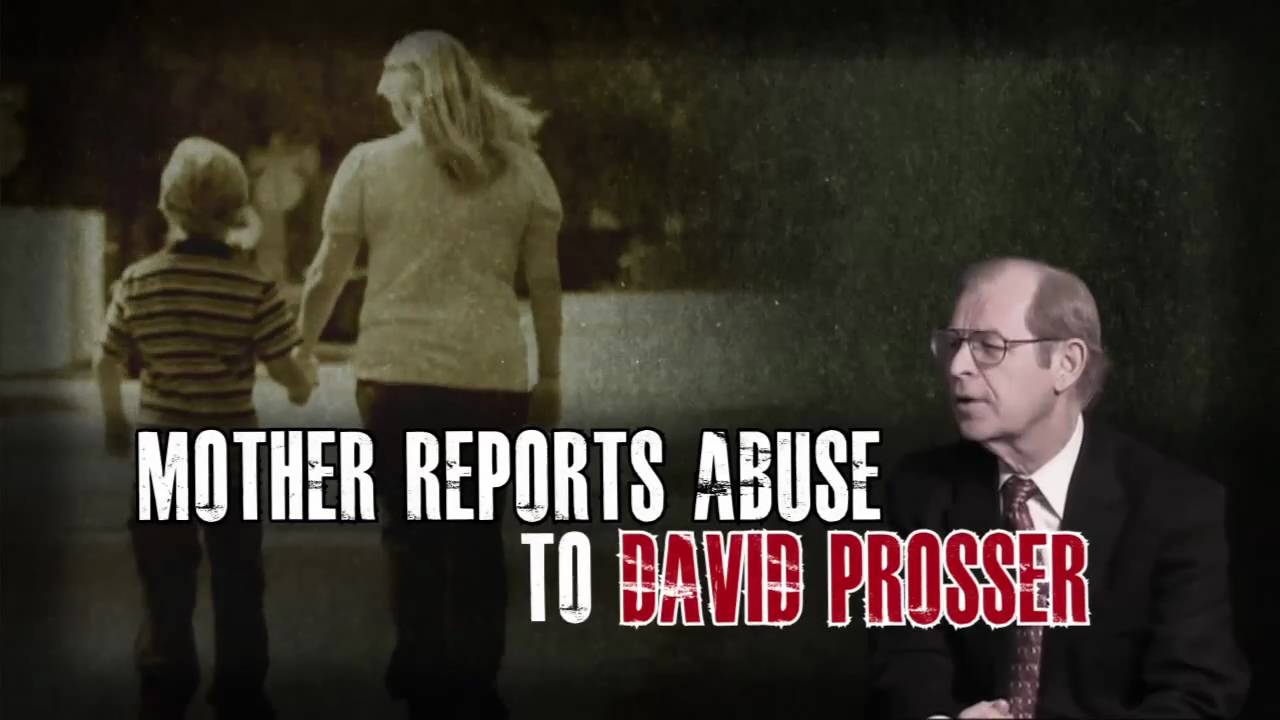 recalling a case of sexual abuse by a priest against Wisconsin children in the 1970s. The ad accused Justice Prosser of failing to prosecute Father John Patrick Feeney in the late 1970s for sexually abusing brothers Todd and Troy Merryfield and of trying to prevent a scandal for the Catholic Church and the priest, who was related to a famous singer on the Lawrence Welk Show. In 2004, Feeney was convicted for assaulting the Merryfields. The ad criticizes Justice Prosser's decision not to pursue charges against Feeney when Prosser was a county District Attorney. Troy Merryfield, has previously complained about Prosser's failure to act but called the ad "offensive, inaccurate and out of context" and asked the group to remove the ad from the airwaves.[14][15][16]
Justice Prosser Calls WI Supreme Court Chief Justice "a total bitch"
While arguing over the question of whether another justice should be recused from hearing a particular criminal case, Justice Prosser exploded behind closed doors and called Wisconsin Chief Justice Shirley Abrahamson a "total bitch" and threatened to “destroy” her. The in-fighting came about in February 2011 according to interviews and e-mails between justices. Emails show that rivalry and discord among justices on the state's Supreme Court, problems that justices on both sides described the court as dysfunctional. Prosser suggested bringing in a third party for help; other other justices suggested that a third party would not be able to address what they described as Prosser's "tantrums.".[17][18] Prosser told the Milwaukee Journal Sentinel that the problems on the court were the fault of the Chief Justice Shirley Abrahamson, whom he said goaded her into calling her that pejorative term and the threats.
Alleged Strangling Incident
In June, 2011, Justice Prosser's colleague on the bench, Wisconsin Supreme Court Justice Ann Walsh Bradley, accused Prosser of choking her during a confrontation while the justices were discussing the merits of a lawsuit challenging Wisconsin Governor Scott Walker's contentious law stripping public workers of their collective bargainingrights. Six out of the seven justices observed the altercation. [19] The incident earned Justice Prosser the nickname, the "Madison Strangler."[20]
On March 16, 2012, the Wisconsin Judicial Commission filed a complaint against Justice Prosser over these allegations stating in part that "[t]he Commission has found probable cause to believe that Justice Prosser willfully violated" three sections of the Wisconsin Code of Judicial Conduct.[21] The full complaint is available here: Wisconsin Judicial Commission v. The Honorable David T. Prosser, Jr..
The WI Supreme Court is the only governing body that can make a final ruling on this issue. Additionally, the commission's special prosecutor, Franklyn Gimbel, said the justices (except Prosser and Bradley) must rule on the case even though 4 of the 5 remaining justices witnessed the incident.[21] However, Justices Roggensack, Gableman, and Ziegler subsequently recused themselves from the case. [22] [23] This caused the case to stall indefinitely due to lack of quorum (there were only 3 justices left to sit in on the case but 4 is required to establish quorum). [23] [24]
In a February 13, 2013 memorandum, Justice Bradley responded to Justice Prosser's Motion requesting she recuse herself from the misconduct case against him. [25] In addition to granting the request for recusal (as expected), she used the memo to express continued concerns over her safety, to speak about the court's dysfunction, and to publicly criticize some fellow Justices for their denial of said dysfunction, in particular, Justice Patience ("Pat") Roggensack who is up for reelection in 2013. [26] In her memo, Bradley claimed to be responding to continued public statements made by Roggensack in which Roggensack discounted the court's dysfunction calling it "just a bunch of gossip at its worst" and stated that the court was "doing just fine." [27][28] Bradley's memo instead claimed that she and the Chief Justice, Shirley Abrahamson, had requested additional security even before this incident due to concerns over Justice Prosser's erratic and abusive behavior. [26] [29]
The memo has been criticized by some as a political stunt due to its release just before the supreme court primary in which Roggensack ran for reelection. [30]
Biography
Justice Prosser was born in Chicago, Illinois, and raised in Appleton, Wisconsin. He received his bachelor's degree from DePauw University in 1965 and his law degree from the University of Wsiconsin Law School in 1968.
Prior to joining the Court, Justice Prosser served on the Wisconsin Tax Appeals Commission where he conducted hearings and issued decisions on disputes related to taxation in Wisconsin.
Following an 18-year career in the Wisconsin Legislature, Prosser was appointed to the Wisconsin Tax Appeals Commission. During his time in the Legislature, he served six years as Assembly minority leader and two years as Assembly speaker.
Before being elected to the state Assembly, Justice Prosser served as Outagamie County District Attorney
.
He also worked in Washington, D.C., in the Nixon Administration for Deputy Attorney General Richard Kleindeinst in the Office of Criminal Justice for the DAG. He wrote testimony for Kleindeinst that was praised by Assistant Attorney General William Rehnquist, who was subsequently appointed to the Supreme Court by President Nixon. Kleindeinst eventually became Attorney General and then worked on Nixon's reelection campaign; he resigned shortly after the director of the FBI resigned as charges were leveled about interference in the Watergate investigation. Kleindeinst was later convicted for perjury for his testimony during his nomination hearing, regarding the decision to settle the ITT antitrust case, after which the company gave over a half million dollars to the effort to re-elect the president.
Prosser has not publicly detailed his work at the Justice Department with Kleindeinst and former Attorney General John Mitchell, who was also convicted, or John Dean, who resigned as White House Counsel and had previously worked in the Office of Criminal Justice. It is not clear what projects Prosser worked or speeches and testimony he wrote for the top leadership of the Nixon Justice Department during alms the entire first term of that administration. During that period, Rehnquist and other leaders were examining how to use criminal law and martial law to disrupt American protests against military operations in SouthEast Asia;
the Justice Department was considering charges against Daniel Ellsberg and the New York Times for the publication of the Pentagon Papers; the Department was defending the Nixon Administration in its assertion of a national security exception to the Fourth Amendments criminal wiretap provisions; and the administration was considering how to deal with violence surrounding school integration. It is not clear what, if any role, Prosser played in any discussion of these matters in his work in the senior management offices of the Nixon Justice Department. It is also not clear when he left the Department. It appears his tenure in the leadership offices extended past the Saturday Night Massacre in which RobertBork fired the independent prosecutor investigating Watergate for requesting the tapes from the Nixon White House, and several political appointees resigned rather than fire the investigator.
Sometime in 1973, Prosser became an advisor to U.S. Rep. Harold Froehlich (R-Wisconsin), a member of the House Judiciary Committee during the Watergate impeachment inquiry. Froelich voted for two of the three impeachment counts against Nixon (related to the Watergate break-in and spying on opponents) but not for the count related to Nixon's refusal to comply with a subpoena to the White House, which had claimed unlimited executive power to refuse to cooperate. It is not clear what Prosser's views were of the impeachment counts against the President he formerly served for.
Prosser was reelected in 2011 to a ten-year term. [31]
Contact
:{Justice David T. Prosser
Office of Justices, Wisconsin Supreme Court
16 East State Capitol
P.O. Box 1688
Madison, WI 53701-1688
(608) 266-1882
}:
References
- :{Jump up:(style="top:-99999px;clip:rect(1px 1px 1px 1px);overflow:hidden;position:absolute !important;padding:0px !important;border:0px !important;height:1px !important;width:1px !important"):}:↑ Steven Elbow, "Enraged by Walker, activists put Kloppenburg's Supreme Court campaign on their shoulders", The Capital Times (Madison.com), Mar 23, 2011.
- :{Jump up:(style="top:-99999px;clip:rect(1px 1px 1px 1px);overflow:hidden;position:absolute !important;padding:0px !important;border:0px !important;height:1px !important;width:1px !important"):}:↑ Patrick Marley, "First dust-up emerges in race for Supreme Court", Milwaukee Journal Sentinel, Dec. 9, 2010.
- :{Jump up:(style="top:-99999px;clip:rect(1px 1px 1px 1px);overflow:hidden;position:absolute !important;padding:0px !important;border:0px !important;height:1px !important;width:1px !important"):}:↑ Associated Press, Kloppenburg, Prosser Spar Over Impartiality, WTMJ 4, Mar 22, 2011.
- :{Jump up:(style="top:-99999px;clip:rect(1px 1px 1px 1px);overflow:hidden;position:absolute !important;padding:0px !important;border:0px !important;height:1px !important;width:1px !important"):}:↑ PolitiFact Wisconsin, Kloppenburg says Wisconsin Supreme Court Justice Prosser "has prejudged matters that are likely to come before the court"", Politifact.com, Mar 7, 2011.
- :{Jump up:(style="top:-99999px;clip:rect(1px 1px 1px 1px);overflow:hidden;position:absolute !important;padding:0px !important;border:0px !important;height:1px !important;width:1px !important"):}:↑ JR Ross, Prosser says his defeat would destroy judicial independence, Kloppenburg knocks him as partisan". WisPolitics.
- :{Jump up:(style="top:-99999px;clip:rect(1px 1px 1px 1px);overflow:hidden;position:absolute !important;padding:0px !important;border:0px !important;height:1px !important;width:1px !important"):}:↑ "Former Gov. Lucey Leaves Prosser's Campaign, Endorses Kloppenburg", Channel3000.com, Apr 1, 2011.
- :{Jump up:(style="top:-99999px;clip:rect(1px 1px 1px 1px);overflow:hidden;position:absolute !important;padding:0px !important;border:0px !important;height:1px !important;width:1px !important"):}:↑ Wausau Daily Herald, "We endorse ... For state Supreme Court: JoAnne Kloppenburg", Mar 24, 2011.
- :{Jump up:(style="top:-99999px;clip:rect(1px 1px 1px 1px);overflow:hidden;position:absolute !important;padding:0px !important;border:0px !important;height:1px !important;width:1px !important"):}:↑ "Palin endorses Prosser in Wis. Supreme Court race". Wisconsin Law Journal. 2001-04-01
- ↑ ^Jump ^up to:9.0 9.1 Todd Richmond (AP) Wis. Voters Send Governor Strong, Angry Message, Today Show online, Apr. 7, 2011.
- :{Jump up:(style="top:-99999px;clip:rect(1px 1px 1px 1px);overflow:hidden;position:absolute !important;padding:0px !important;border:0px !important;height:1px !important;width:1px !important"):}:↑ Patrick Marley, Larry Sandler and Mike Johnson, Prosser wins recount in Wisconsin Supreme Court race, Journal-Sentinel, May 20, 2011.
- :{Jump up:(style="top:-99999px;clip:rect(1px 1px 1px 1px);overflow:hidden;position:absolute !important;padding:0px !important;border:0px !important;height:1px !important;width:1px !important"):}:↑ Associated Press, Canvass Shows Conservative Incumbent Wins Wisconsin Supreme Court Race Fox News, Apr 15, 2011.
- :{Jump up:(style="top:-99999px;clip:rect(1px 1px 1px 1px);overflow:hidden;position:absolute !important;padding:0px !important;border:0px !important;height:1px !important;width:1px !important"):}:↑ Nate Silver (2011-04-08). "Vote-Counting Error In Wisconsin Points to Incompetence, Not Conspiracy". The New York Times.
- ↑ ^Jump ^up to:13.0 13.1 Brendan Fischer, Prosser and Process, PRWatch.org, Aug 30, 2011.
- :{Jump up:(style="top:-99999px;clip:rect(1px 1px 1px 1px);overflow:hidden;position:absolute !important;padding:0px !important;border:0px !important;height:1px !important;width:1px !important"):}:↑ State of Wisconsin Court of Appeals State of Wisconsin, Plaintiff-Respondent v. John Patrick Feeney, Defendant-Appellant, Court filing, December 20, 2005
- :{Jump up:(style="top:-99999px;clip:rect(1px 1px 1px 1px);overflow:hidden;position:absolute !important;padding:0px !important;border:0px !important;height:1px !important;width:1px !important"):}:↑ Sharif Durhams Abuse victim criticizes ad against Prosser, Milwaukee Journal-Sentinel, March 25, 2011
- :{Jump up:(style="top:-99999px;clip:rect(1px 1px 1px 1px);overflow:hidden;position:absolute !important;padding:0px !important;border:0px !important;height:1px !important;width:1px !important"):}:↑ Greater Wisconsin Committee, YouTube, Political ad, accessed March 25, 2011
- :{Jump up:(style="top:-99999px;clip:rect(1px 1px 1px 1px);overflow:hidden;position:absolute !important;padding:0px !important;border:0px !important;height:1px !important;width:1px !important"):}:↑ Patrick Marley Supreme Court tensions boil over; Prosser says he was goaded into insulting chief justiceMilwaukee Journal-Sentinel, March 19, 2011
- :{Jump up:(style="top:-99999px;clip:rect(1px 1px 1px 1px);overflow:hidden;position:absolute !important;padding:0px !important;border:0px !important;height:1px !important;width:1px !important"):}:↑ Dan Slater SUMMARY JUDGMENTS: Our daily legal-news aggregator for March 21, 2011: Judicial Insults, Westlaw News and Insights/National Litigation, March 21, 2011
- :{Jump up:(style="top:-99999px;clip:rect(1px 1px 1px 1px);overflow:hidden;position:absolute !important;padding:0px !important;border:0px !important;height:1px !important;width:1px !important"):}:↑ Todd Richmond, No choking charges for Wis. Supreme Court justice, Associated Press, August 25, 2011.
- :{Jump up:(style="top:-99999px;clip:rect(1px 1px 1px 1px);overflow:hidden;position:absolute !important;padding:0px !important;border:0px !important;height:1px !important;width:1px !important"):}:↑ Joel McNally The Madison Strangler, Express Milwaukee, June 29, 2011.
- ↑ ^Jump ^up to:21.0 21.1 Patrick Marley, Ethics violations filed against Prosser, Milwaukee Journal Sentinel, March 16, 2012.
- :{Jump up:(style="top:-99999px;clip:rect(1px 1px 1px 1px);overflow:hidden;position:absolute !important;padding:0px !important;border:0px !important;height:1px !important;width:1px !important"):}:↑ Patrick Marley, Justice Roggensack recuses herself from Prosser case: Ethics case needs 4 justices to hold hearing, Milwaukee Journal Sentinel, May 1, 2010.
- ↑ ^Jump ^up to:23.0 23.1 Bruce Vielmetti, Gableman recuses himself in Prosser ethics case: Not enough justices left to decide issue, Milwaukee Journal Sentinel, August 10, 2012.
- :{Jump up:(style="top:-99999px;clip:rect(1px 1px 1px 1px);overflow:hidden;position:absolute !important;padding:0px !important;border:0px !important;height:1px !important;width:1px !important"):}:↑ Patrick Marley, Supreme Court Justice David Prosser's case appears stuck in neutral, Milwaukee Journal Sentinel, February 14, 2013.
- :{Jump up:(style="top:-99999px;clip:rect(1px 1px 1px 1px);overflow:hidden;position:absolute !important;padding:0px !important;border:0px !important;height:1px !important;width:1px !important"):}:↑ Dee J. Hall, Supreme Court justice: Security plan made with police in case colleague had 'tantrum',Wisconsin State Journal, February 14, 2013.
- ↑ ^Jump ^up to:26.0 26.1 Patrick Marley, Justice Bradley got more security before Prosser incident; safety concerns remain,Milwaukee Journal Sentinel, February 13, 2013.
- :{Jump up:(style="top:-99999px;clip:rect(1px 1px 1px 1px);overflow:hidden;position:absolute !important;padding:0px !important;border:0px !important;height:1px !important;width:1px !important"):}:↑ Patrick Marley, Roggensack: High court getting along, despite contentious reputation, Milwaukee Journal Sentinel, December 28, 2012.
- :{Jump up:(style="top:-99999px;clip:rect(1px 1px 1px 1px);overflow:hidden;position:absolute !important;padding:0px !important;border:0px !important;height:1px !important;width:1px !important"):}:↑ Bruce Vielmetti, Wisconsin Supreme Court candidates mix it up during first joint forum, Milwaukee Journal Sentinel, February 7, 2013.
- :{Jump up:(style="top:-99999px;clip:rect(1px 1px 1px 1px);overflow:hidden;position:absolute !important;padding:0px !important;border:0px !important;height:1px !important;width:1px !important"):}:↑ Eric Lach, Justice Details ‘History Of Abusive Behavior’ At Wisconsin Supreme Court, Talking Points Memo, February 13, 2013.
- :{Jump up:(style="top:-99999px;clip:rect(1px 1px 1px 1px);overflow:hidden;position:absolute !important;padding:0px !important;border:0px !important;height:1px !important;width:1px !important"):}:↑ Christian Schneider, A hit job on a respected justice near election day, Milwaukee Journal Sentinel, February 15, 2013.
- :{Jump up:(style="top:-99999px;clip:rect(1px 1px 1px 1px);overflow:hidden;position:absolute !important;padding:0px !important;border:0px !important;height:1px !important;width:1px !important"):}:↑ Wisconsin Court System Supreme Court Judges - Justice David T. Prosser Jr. State government web site, accessed March 25, 2011
===
Justice Prosser and a narrow majority of the Wisconsin Supreme Court enjoined the state from enforcing rules to require key disclosures by groups like CSA running so-called "issue" ads to influence elections.
===
2011 close:
The Journal-Sentinel also reports that "Prosser attorney Jim Troupis has already said the incumbent's campaign would have hundreds of volunteers, including some flying in from around the country, to monitor the recounts." Prosser had initially hired the D.C. lawyer who represented George W. Bush during the infamous 2000 Florida recount that made "W" president, but has apparently replaced him with Troupis, the go-to election lawyer for Wisconsin Republicans. In the past year Troupis has represented Americans for Prosperity in a challenge to fair election rules, legislative Republicans in redistricting efforts, and Club for Growth in a case to compel Senate Democrats back into the state. (See OneWisconsinNow's 2009 Troupis bio here). He also sits on the Board of Directors of the right-wing, Koch-connected think tank MacIver Institute.
:{
}:
--
Prosser has hired Ben Ginsberg, a Washington-D.C. attorney who played a prominent role in the 2000 Bush-Gore presidential recount effort in Florida. He was also part of the team that represented Coleman in his recount effort. Prosser has also retained Madison attorney Jim Troupis, and Dan Kelly, who is based in Milwaukee.
:{===
}:
by Laura Steigerwald [1] — March 12, 2013 - 10:00am
- Topics: Campaign Finance [2]
 Share this [3]
Ever since Governor Scott Walker imposed his anti-union legislation on Wisconsin, the state has become exceptionally polarized. This polarization is reflected in the current race for Supreme Court. Once again Wisconsin is seeing massive spending from outside groups in a race that is officially nonpartisan.
The 2011 Supreme Court race between incumbent Justice David Prosser [4] -- who was formerly a GOP lawmaker in the state -- and challenger JoAnne Kloppenburg became a referendum on Walker's controversial Act 10, with record-breaking spending [5] by groups like the Koch-linked Citizens for a Strong America, the powerful Wisconsin Manufacturers & Commerce, the Wisconsin chapter of Club for Growth, and the union-backed Greater Wisconsin Committee. Prosser ultimately won in a narrow victory after the last-minute discovery of uncounted votes in heavily Republican Waukesha County.
Club for Growth is the Big Spender in Wisconsin Supreme Court Race
:{
}:
:{
}:
:{
}:
:{
}:
:{
}:
:{
}:
:{
}:
Now, another member of the court's 4-3 right-wing majority, Justice Patience "Pat" Roggensack, is up for re-election. Roggensack is being aided by the same outside groups that aided Walker in advancing some of his most controversial proposals. The far-right independent expenditure group Wisconsin Club for Growth spent an eye-popping $300,000 on television ads supporting Roggensack [6] during the primary. Club for Growth was responsible for more than 75% of the nearly $400,000 in TV spending in the primary race, and more than 80% of the total ad spots, according to TNS Media Intelligence/CMAG estimates released by the Brennan Center for Justice and Justice at Stake.
In addition, Roggensack is being handed big checks by some [7] of the [8] same [9] wealthy donors that gave to Governor Walker in his recall campaign [10], such as Beloit billionaire Diane Hendricks and David Uihlein, Jr., as well as [8] a variety of PACs and local Republican Party chapters.
Her opponent, Marquette Law Professor Edward Fallone, has been endorsed by a host of progressive organizations [11], but lags well behind in fundraising. If Fallone took the majority the court could do a virtual 180 on some of the state's most contentious issues [12]. But, the race thus far has focused on the issue of mending a court that is as dysfunctional and divided as Wisconsin politics.
Fall Out From Physical Altercation Still Debated
A few months after the nail-biter of a judicial election in 2011 [13], an already-divided court became even more so when the Court's four-justice majority rushed to issue a decision [14] upholding Walker's Act 10 (by striking down a lower court decision that had invalidated it on procedural grounds). As the justices had a heated debate about the ruling privately in chambers, recently-reelected Justice Prosser put his hands around Justice Ann Walsh Bradley's neck in a manner she described as "choking." Six out of the seven justices witnessed the physical altercation.
The nonpartisan Wisconsin Judicial Commission filed an ethics complaint [15] against Justice Prosser over the incident, but because the Wisconsin Supreme Court is the only governing body that can make a final ruling on this issue, the matter is stalled as the Court cannot reach a quorum [16]. Prosser asked every member of the court to recuse themselves from the case; Roggensack was the first to do so [17], followed by two other justices [18], dampening any hopes of a resolution.
Further division within the court is evidenced by a February 13, 2013 memo [19] from Justice Bradley where she expresses continued concerns over her safety. The memo, where she too recuses herself from deliberations over the choking incident, discusses the court's dysfunction, and singles out Justice Roggensack for denying it.
Roggensack had made a series of public statements [20] where she discounted the court's internal conflicts by calling it "just a bunch of gossip" and that the court was "doing just fine." Bradley's memo refutes these statements by detailing how she and Chief Justice Shirley Abrahamson had been forced to lock their doors and request additional security [21] from the Capitol Police even before the choking incident, due to concerns over what she describes as Justice Prosser's "history of abusive behavior."
Roggensack, for her part, has urged her colleagues [22] to join her in signing a joint apology letter [23] to the citizens of Wisconsin regarding the incident between Prosser and Bradley, which purports to be [24] an alternative to the ethics case finding a resolution. Her opponent Fallone has criticized the letter [25], as well as her decision to recuse herself from the case, stating "[i]t is obvious that her unnecessary recusal in the case continues to be an obstacle to the resolution of the matter."
New Recusal Rules Allow Justices to Hear Cases Brought by Campaign Contributors
The ethics case against Justice Prosser is not the only recusal issue in this election [26].
Prior to 2010, a justice who received campaign contributions from (or benefitted from independent expenditures by) an individual or entity involved in a proceeding would be expected to recuse from their case. In 2010, the four-justice majority issued new rules stating that these facts alone would not require recusal. Fallone has claimed Roggensack "bears a large part of responsibility for pushing through" the rule change, which he has deemed the "Roggensack Rule." [27] In a release, Fallone says it "allows interest groups with cases before the court to make campaign contributions to justices."
With campaign contributions in Wisconsin Supreme Court races reaching new highs, these looser recusal rules are likely to have an impact on future cases and the public's perception of a fair and impartial justice system.
Roggensack has also been criticized for her refusal to recuse herself in cases where her impartiality might have been compromised in other ways. The Wisconsin Center for Investigative Journalism reported that Roggensack ruled in a case [28] involving an attorney who once represented her, after recusing herself the first time around. There was also controversy surrounding a criminal case in which she denied the defendant's motion to recuse herself [29] which was requested because she ruled on the co-defendant's case at the appellate level.
Many other controversial cases are almost certain to find themselves before the Wisconsin Supreme Court, including voter ID (which has been blocked by two lower courts), Act 10, and the newly-passed mining bill [30]. Other challenges may also come to the Court as the legislature considers new proposals to restrict voting and expand voucher schools. With the ideological balance of the court up for grabs, the stakes are high for the April 2, 2013 election.
---
Brendan Fischer contributed to this article.
:{Center for Media and Democracy • 520 University Avenue, Suite 260 • Madison, Wisconsin 53703
Phone: 608-260-9713 • Fax: 608-260-9714}:
---
Source URL: http://www.prwatch.org/news/2013/03/12015/another-wi-supreme-court-election-battle-dominated-outside-spending
:{Links:
[1] http://www.prwatch.org/users/35311/laura-steigerwald
[2] http://www.prwatch.org/topics/campaign-finance
[3] http://www.addtoany.com/share_save?linkurl=http%3A%2F%2Fwww.prwatch.org%2Fnews%2F2013%2F03%2F12015%2Fanother-wi-supreme-court-election-battle-dominated-outside-spending&linkname=Another%20WI%20Supreme%20Court%20Election%20Battle%20Dominated%20By%20Outside%20Spending
[4] [http://www.sourcewatch.org/index.php/David_Prosser
[5] http://www.brennancenter.org/press-release/final-numbers-special-interest-spending-near-36-million-wisconsin
[6] http://www.brennancenter.org/analysis/buying-time-wisconsin-judicial-election-2013
[7] http://wisdc.org/index.php?filter=+Search+&from=--&to=--&contributor_name=hendricks%2C+diane&name=Roggensack%2C+Pat&module=wisdc.websiteforms&cmd=searchadvanced
[8] http://wisdc.org/index.php?from=--&to=--&filter=+Search+&name=Roggensack%2C+Pat&pac_name=&interest=&amount_from=&amount_to=&module=wisdc.websiteforms&cmd=searchadvancedpac
[9] http://wisdc.org/index.php?filter=+Search+&from=2012-01-&to=2013-03-&contributor_name=uihlein&name=Roggensack%2C+Pat&module=wisdc.websiteforms&cmd=searchadvanced
[10] http://www.wisdc.org/pr072512.php#tbl3
[11] http://expressmilwaukee.com/article-20588-endorsement:-ed-fallone-for-wisconsin-supreme-court.html
[12] http://www.jsonline.com/news/statepolitics/wisconsin-supreme-court-race-could-shape-several-key-rulings-fp8bp7k-186645621.html
[13] http://www.prwatch.org/news/2011/04/10669/wisconsin-supreme-court-recount-begins
[14] http://www.prwatch.org/news/2011/08/10998/choking-dissent-report-prosser-and-process
[15] http://www.wicourts.gov/courts/committees/judicialcommission/complaintprosser.pdf
[16] http://www.jsonline.com/news/statepolitics/judicial-panel-told-prosser-ethics-prosecutor-to-put-case-in-neutral-v48pjrd-191306381.html
[17] http://www.jsonline.com/news/statepolitics/justice-roggensack-recuses-herself-from-prosser-case-hk58bah-149736255.html
[18] http://www.jsonline.com/news/wisconsin/gableman-recuses-himself-in-prosser-ethics-case-r96esa5-165774656.html
[19] http://www.sourcewatch.org/images/2/2f/Bradley_Memo.pdf
[20] http://www.jsonline.com/news/statepolitics/roggensack-files-signatures-for-supreme-court-reelection-e886ceo-185058361.html
[21] http://host.madison.com/wsj/news/local/govt-and-politics/supreme-court-justice-security-plan-made-with-police-in-case/article_9db5beaa-7616-11e2-95c6-0019bb2963f4.html
[22] http://www.jsonline.com/news/statepolitics/after-incident-between-colleagues-roggensack-offered-joint-letter-of-apology-to-citizens-d491g76-195338631.html
[23] http://media.jsonline.com/documents/208275078628.pdf
[24] http://news.wpr.org/post/supreme-court-infighting-recurring-issue-roggensack-fallone-race
[25] http://www.wispolitics.com/index.Iml?Article=291581
[26] http://www.wisconsinwatch.org/2013/03/05/recusal-an-issue-in-high-court-race/
[27] http://www.wispolitics.com/index.iml?Article=291191
[28] http://www.wisconsinwatch.org/2012/03/10/roggensack-decided-case-involving-her-own-lawyer/
[29] http://www.jsonline.com/blogs/news/81240212.html
[30] http://www.thedailypage.com/daily/article.php?article=38982}:
:{===
}:
Strangling Dissent: David Prosser Accused of Attacking Fellow Justice
Submitted by Mary Bottari on June 27, 2011 - 1:02pm
David ProsserThe Wisconsin Center for Investigative Journalism and Wisconsin Public Radio broke the latest blockbuster from Wisconsin. The story alleges that recently-elected Wisconsin Supreme Court Justice David Prosser grabbed fellow Justice, Ann Walsh Bradley, in a chokehold earlier this month. The incident took place on June 13, the day before as the Justices issued their split ruling on Wisconsin's controversial collective bargaining bill. Bradley released a statement late Saturday to the Milwaukee Journal Sentinel confirming the incident. Prosser's defense? An unnamed source said that Bradley had charged Prosser with fists raised and somehow her neck fell into his hands. Bradley responded by saying, "You can try to spin those facts and try to make it sound like I ran up to him and threw my neck into his hands, but that's only spin." According to news reports, Bradley was asking Prosser to leave her office after he made disparaging remarks about the Chief Justice. In March, theJournal Sentinelreported that Prosser had called Chief Justice Shirley Abrahamson a "total bitch," threatening to "destroy her."
The story dropped like a bombshell into a hotly contested Supreme Court race that was widely considered a referendum on the governor's anti-union policies. Prosser was declared the victor after a recount and investigation into the discovery of 7,300 misplaced votes in Waukesha County. The latest incident involving Prosser's abusive behavior has been brought to the attention of the Wisconsin Judicial Commission and the Capitol Police. While calls for Prosser resignation rolled in, FOX News anchor and Wisconsinite Greta Van Susteren had a unique take on Prosser's behavior. She called upon the Chief Justice Abrahamson to step aside for not keeping control in her court.
:{===
}:
backed by club for growth
:{
}:
The Wisconsin Supreme Court election of 2011 took place on Tuesday, April 5, 2011. Unlike past elections for the Wisconsin Supreme Court, the race between 12-year incumbent David Prosser, Jr. and challenger Assistant Attorney General JoAnne
Another WI Supreme Court Election Battle Dominated By Outside Spending
by Laura Steigerwald [1] — March 12, 2013 - 10:00am
- Topics: Campaign Finance [2]
Share this [3]
Ever since Governor Scott Walker imposed his anti-union legislation on Wisconsin, the state has become exceptionally polarized. This polarization is reflected in the current race for Supreme Court. Once again Wisconsin is seeing massive spending from outside groups in a race that is officially nonpartisan.
The 2011 Supreme Court race between incumbent Justice David Prosser [4] -- who was formerly a GOP lawmaker in the state -- and challenger JoAnne Kloppenburg became a referendum on Walker's controversial Act 10, with record-breaking spending [5] by groups like the Koch-linked Citizens for a Strong America, the powerful Wisconsin Manufacturers & Commerce, the Wisconsin chapter of Club for Growth, and the union-backed Greater Wisconsin Committee. Prosser ultimately won in a narrow victory after the last-minute discovery of uncounted votes in heavily Republican Waukesha County.
===
see links in version below
Club for Growth is the Big Spender in Wisconsin Supreme Court Race
Now, another member of the court's 4-3 right-wing majority, Justice Patience "Pat" Roggensack, is up for re-election. Roggensack is being aided by the same outside groups that aided Walker in advancing some of his most controversial proposals. The far-right independent expenditure group Wisconsin Club for Growth spent an eye-popping $300,000 on television ads supporting Roggensack [6] during the primary. Club for Growth was responsible for more than 75% of the nearly $400,000 in TV spending in the primary race, and more than 80% of the total ad spots, according to TNS Media Intelligence/CMAG estimates released by the Brennan Center for Justice and Justice at Stake.
In addition, Roggensack is being handed big checks by some [7] of the [8] same [9] wealthy donors that gave to Governor Walker in his recall campaign [10], such as Beloit billionaire Diane Hendricks and David Uihlein, Jr., as well as [8] a variety of PACs and local Republican Party chapters.
Her opponent, Marquette Law Professor Edward Fallone, has been endorsed by a host of progressive organizations [11], but lags well behind in fundraising. If Fallone took the majority the court could do a virtual 180 on some of the state's most contentious issues [12]. But, the race thus far has focused on the issue of mending a court that is as dysfunctional and divided as Wisconsin politics.
Fall Out From Physical Altercation Still Debated
A few months after the nail-biter of a judicial election in 2011 [13], an already-divided court became even more so when the Court's four-justice majority rushed to issue a decision [14] upholding Walker's Act 10 (by striking down a lower court decision that had invalidated it on procedural grounds). As the justices had a heated debate about the ruling privately in chambers, recently-reelected Justice Prosser put his hands around Justice Ann Walsh Bradley's neck in a manner she described as "choking." Six out of the seven justices witnessed the physical altercation.
The nonpartisan Wisconsin Judicial Commission filed an ethics complaint [15] against Justice Prosser over the incident, but because the Wisconsin Supreme Court is the only governing body that can make a final ruling on this issue, the matter is stalled as the Court cannot reach a quorum [16]. Prosser asked every member of the court to recuse themselves from the case; Roggensack was the first to do so [17], followed by two other justices [18], dampening any hopes of a resolution.
Further division within the court is evidenced by a February 13, 2013 memo [19] from Justice Bradley where she expresses continued concerns over her safety. The memo, where she too recuses herself from deliberations over the choking incident, discusses the court's dysfunction, and singles out Justice Roggensack for denying it.
Roggensack had made a series of public statements [20] where she discounted the court's internal conflicts by calling it "just a bunch of gossip" and that the court was "doing just fine." Bradley's memo refutes these statements by detailing how she and Chief Justice Shirley Abrahamson had been forced to lock their doors and request additional security [21] from the Capitol Police even before the choking incident, due to concerns over what she describes as Justice Prosser's "history of abusive behavior."
Roggensack, for her part, has urged her colleagues [22] to join her in signing a joint apology letter [23] to the citizens of Wisconsin regarding the incident between Prosser and Bradley, which purports to be [24] an alternative to the ethics case finding a resolution. Her opponent Fallone has criticized the letter [25], as well as her decision to recuse herself from the case, stating "[i]t is obvious that her unnecessary recusal in the case continues to be an obstacle to the resolution of the matter."
New Recusal Rules Allow Justices to Hear Cases Brought by Campaign Contributors
The ethics case against Justice Prosser is not the only recusal issue in this election [26].
Prior to 2010, a justice who received campaign contributions from (or benefitted from independent expenditures by) an individual or entity involved in a proceeding would be expected to recuse from their case. In 2010, the four-justice majority issued new rules stating that these facts alone would not require recusal. Fallone has claimed Roggensack "bears a large part of responsibility for pushing through" the rule change, which he has deemed the "Roggensack Rule." [27] In a release, Fallone says it "allows interest groups with cases before the court to make campaign contributions to justices."
With campaign contributions in Wisconsin Supreme Court races reaching new highs, these looser recusal rules are likely to have an impact on future cases and the public's perception of a fair and impartial justice system.
Roggensack has also been criticized for her refusal to recuse herself in cases where her impartiality might have been compromised in other ways. The Wisconsin Center for Investigative Journalism reported that Roggensack ruled in a case [28] involving an attorney who once represented her, after recusing herself the first time around. There was also controversy surrounding a criminal case in which she denied the defendant's motion to recuse herself [29] which was requested because she ruled on the co-defendant's case at the appellate level.
Many other controversial cases are almost certain to find themselves before the Wisconsin Supreme Court, including voter ID (which has been blocked by two lower courts), Act 10, and the newly-passed mining bill [30]. Other challenges may also come to the Court as the legislature considers new proposals to restrict voting and expand voucher schools. With the ideological balance of the court up for grabs, the stakes are high for the April 2, 2013 election.
Brendan Fischer contributed to this article.
Center for Media and Democracy • 520 University Avenue, Suite 260 • Madison, Wisconsin 53703
Phone: 608-260-9713 • Fax: 608-260-9714
Source URL: http://www.prwatch.org/news/2013/03/12015/another-wi-supreme-court-election-battle-dominated-outside-spending
Links:
[1] http://www.prwatch.org/users/35311/laura-steigerwald
[2] http://www.prwatch.org/topics/campaign-finance
[3] http://www.addtoany.com/share_save?linkurl=http%3A%2F%2Fwww.prwatch.org%2Fnews%2F2013%2F03%2F12015%2Fanother-wi-supreme-court-election-battle-dominated-outside-spending&linkname=Another%20WI%20Supreme%20Court%20Election%20Battle%20Dominated%20By%20Outside%20Spending
[4] [http://www.sourcewatch.org/index.php/David_Prosser
[5] http://www.brennancenter.org/press-release/final-numbers-special-interest-spending-near-36-million-wisconsin
[6] http://www.brennancenter.org/analysis/buying-time-wisconsin-judicial-election-2013
[7] http://wisdc.org/index.php?filter=+Search+&from=--&to=--&contributor_name=hendricks%2C+diane&name=Roggensack%2C+Pat&module=wisdc.websiteforms&cmd=searchadvanced
[8] http://wisdc.org/index.php?from=--&to=--&filter=+Search+&name=Roggensack%2C+Pat&pac_name=&interest=&amount_from=&amount_to=&module=wisdc.websiteforms&cmd=searchadvancedpac
[9] http://wisdc.org/index.php?filter=+Search+&from=2012-01-&to=2013-03-&contributor_name=uihlein&name=Roggensack%2C+Pat&module=wisdc.websiteforms&cmd=searchadvanced
[10] http://www.wisdc.org/pr072512.php#tbl3
[11] http://expressmilwaukee.com/article-20588-endorsement:-ed-fallone-for-wisconsin-supreme-court.html
[12] http://www.jsonline.com/news/statepolitics/wisconsin-supreme-court-race-could-shape-several-key-rulings-fp8bp7k-186645621.html
[13] http://www.prwatch.org/news/2011/04/10669/wisconsin-supreme-court-recount-begins
[14] http://www.prwatch.org/news/2011/08/10998/choking-dissent-report-prosser-and-process
[15] http://www.wicourts.gov/courts/committees/judicialcommission/complaintprosser.pdf
[16] http://www.jsonline.com/news/statepolitics/judicial-panel-told-prosser-ethics-prosecutor-to-put-case-in-neutral-v48pjrd-191306381.html
[17] http://www.jsonline.com/news/statepolitics/justice-roggensack-recuses-herself-from-prosser-case-hk58bah-149736255.html
[18] http://www.jsonline.com/news/wisconsin/gableman-recuses-himself-in-prosser-ethics-case-r96esa5-165774656.html
[19] http://www.sourcewatch.org/images/2/2f/Bradley_Memo.pdf
[20] http://www.jsonline.com/news/statepolitics/roggensack-files-signatures-for-supreme-court-reelection-e886ceo-185058361.html
[21] http://host.madison.com/wsj/news/local/govt-and-politics/supreme-court-justice-security-plan-made-with-police-in-case/article_9db5beaa-7616-11e2-95c6-0019bb2963f4.html
[22] http://www.jsonline.com/news/statepolitics/after-incident-between-colleagues-roggensack-offered-joint-letter-of-apology-to-citizens-d491g76-195338631.html
[23] http://media.jsonline.com/documents/208275078628.pdf
[24] http://news.wpr.org/post/supreme-court-infighting-recurring-issue-roggensack-fallone-race
[25] http://www.wispolitics.com/index.Iml?Article=291581
[26] http://www.wisconsinwatch.org/2013/03/05/recusal-an-issue-in-high-court-race/
[27] http://www.wispolitics.com/index.iml?Article=291191
[28] http://www.wisconsinwatch.org/2012/03/10/roggensack-decided-case-involving-her-own-lawyer/
[29] http://www.jsonline.com/blogs/news/81240212.html
[30] http://www.thedailypage.com/daily/article.php?article=38982
===
Strangling Dissent: David Prosser Accused of Attacking Fellow Justice
Submitted by Mary Bottari on June 27, 2011 - 1:02pm
right wing
Wisconsin Protests
David Prosser
The Wisconsin Center for Investigative Journalism and Wisconsin Public Radio broke the latest blockbuster from Wisconsin. The story alleges that recently-elected Wisconsin Supreme Court Justice David Prosser grabbed fellow Justice, Ann Walsh Bradley, in a chokehold earlier this month. The incident took place on June 13, the day before as the Justices issued their split ruling on Wisconsin's controversial collective bargaining bill. Bradley released a statement late Saturday to the Milwaukee Journal Sentinel confirming the incident. Prosser's defense? An unnamed source said that Bradley had charged Prosser with fists raised and somehow her neck fell into his hands. Bradley responded by saying, "You can try to spin those facts and try to make it sound like I ran up to him and threw my neck into his hands, but that's only spin." According to news reports, Bradley was asking Prosser to leave her office after he made disparaging remarks about the Chief Justice. In March, the Journal Sentinel reported that Prosser had called Chief Justice Shirley Abrahamson a "total bitch," threatening to "destroy her." The story dropped like a bombshell into a hotly contested Supreme Court race that was widely considered a referendum on the governor's anti-union policies. Prosser was declared the victor after a recount and investigation into the discovery of 7,300 misplaced votes in Waukesha County. The latest incident involving Prosser's abusive behavior has been brought to the attention of the Wisconsin Judicial Commission and the Capitol Police. While calls for Prosser resignation rolled in, FOX News anchor and Wisconsinite Greta Van Susteren had a unique take on Prosser's behavior. She called upon the Chief Justice Abrahamson to step aside for not keeping control in her court.
===
http://www.sourcewatch.org/index.php/David_T._Prosser,_Jr.
---
backed by club for growth
The Wisconsin Supreme Court election of 2011 took place on Tuesday, April 5, 2011. Unlike past elections for the Wisconsin Supreme Court, the race between 12-year incumbent David Prosser, Jr. and challenger Assistant Attorney General JoAnne Kloppenburg gained significant nationwide publicity as it was widely seen as a referendum on Governor Scott Walker's proposed budget reforms in Wisconsin, and a part of the 2011 Wisconsin protests.[1][2][3][4][5][6][7][8][9]
Contents
1 Campaign
1.1 Primary election
1.2 General election
2 Results
2.1 County results
3 See also
4 References
Campaign
===
LINKS:
Club for Growth is the Big Spender in Wisconsin Supreme Court Race
Now, another member of the court's 4-3 right-wing majority, Justice Patience "Pat" Roggensack, is up for re-election. Roggensack is being aided by the same outside groups that aided Walker in advancing some of his most controversial proposals. The far-right independent expenditure group Wisconsin Club for Growth spent an eye-popping $300,000 on television ads supporting Roggensack [6] during the primary. Club for Growth was responsible for more than 75% of the nearly $400,000 in TV spending in the primary race, and more than 80% of the total ad spots, according to TNS Media Intelligence/CMAG estimates released by the Brennan Center for Justice and Justice at Stake.
In addition, Roggensack is being handed big checks by some [7] of the [8] same [9] wealthy donors that gave to Governor Walker in his recall campaign [10], such as Beloit billionaire Diane Hendricks and David Uihlein, Jr., as well as [8] a variety of PACs and local Republican Party chapters.
Her opponent, Marquette Law Professor Edward Fallone, has been endorsed by a host of progressive organizations [11], but lags well behind in fundraising. If Fallone took the majority the court could do a virtual 180 on some of the state's most contentious issues [12]. But, the race thus far has focused on the issue of mending a court that is as dysfunctional and divided as Wisconsin politics.
Fall Out From Physical Altercation Still Debated
A few months after the nail-biter of a judicial election in 2011 [13], an already-divided court became even more so when the Court's four-justice majority rushed to issue a decision [14] upholding Walker's Act 10 (by striking down a lower court decision that had invalidated it on procedural grounds). As the justices had a heated debate about the ruling privately in chambers, recently-reelected Justice Prosser put his hands around Justice Ann Walsh Bradley's neck in a manner she described as "choking." Six out of the seven justices witnessed the physical altercation.
The nonpartisan Wisconsin Judicial Commission filed an ethics complaint [15] against Justice Prosser over the incident, but because the Wisconsin Supreme Court is the only governing body that can make a final ruling on this issue, the matter is stalled as the Court cannot reach a quorum [16]. Prosser asked every member of the court to recuse themselves from the case; Roggensack was the first to do so [17], followed by two other justices [18], dampening any hopes of a resolution.
Further division within the court is evidenced by a February 13, 2013 memo [19] from Justice Bradley where she expresses continued concerns over her safety. The memo, where she too recuses herself from deliberations over the choking incident, discusses the court's dysfunction, and singles out Justice Roggensack for denying it.
Roggensack had made a series of public statements [20] where she discounted the court's internal conflicts by calling it "just a bunch of gossip" and that the court was "doing just fine." Bradley's memo refutes these statements by detailing how she and Chief Justice Shirley Abrahamson had been forced to lock their doors and request additional security [21] from the Capitol Police even before the choking incident, due to concerns over what she describes as Justice Prosser's "history of abusive behavior."
Roggensack, for her part, has urged her colleagues [22] to join her in signing a joint apology letter [23] to the citizens of Wisconsin regarding the incident between Prosser and Bradley, which purports to be [24] an alternative to the ethics case finding a resolution. Her opponent Fallone has criticized the letter [25], as well as her decision to recuse herself from the case, stating "[i]t is obvious that her unnecessary recusal in the case continues to be an obstacle to the resolution of the matter."
New Recusal Rules Allow Justices to Hear Cases Brought by Campaign Contributors
The ethics case against Justice Prosser is not the only recusal issue in this election [26].
Prior to 2010, a justice who received campaign contributions from (or benefitted from independent expenditures by) an individual or entity involved in a proceeding would be expected to recuse from their case. In 2010, the four-justice majority issued new rules stating that these facts alone would not require recusal. Fallone has claimed Roggensack "bears a large part of responsibility for pushing through" the rule change, which he has deemed the "Roggensack Rule." [27] In a release, Fallone says it "allows interest groups with cases before the court to make campaign contributions to justices."
With campaign contributions in Wisconsin Supreme Court races reaching new highs, these looser recusal rules are likely to have an impact on future cases and the public's perception of a fair and impartial justice system.
Roggensack has also been criticized for her refusal to recuse herself in cases where her impartiality might have been compromised in other ways. The Wisconsin Center for Investigative Journalism reported that Roggensack ruled in a case [28] involving an attorney who once represented her, after recusing herself the first time around. There was also controversy surrounding a criminal case in which she denied the defendant's motion to recuse herself [29] which was requested because she ruled on the co-defendant's case at the appellate level.
Many other controversial cases are almost certain to find themselves before the Wisconsin Supreme Court, including voter ID (which has been blocked by two lower courts), Act 10, and the newly-passed mining bill [30]. Other challenges may also come to the Court as the legislature considers new proposals to restrict voting and expand voucher schools. With the ideological balance of the court up for grabs, the stakes are high for the April 2, 2013 election.
---
Brendan Fischer contributed to this article.
:{Center for Media and Democracy • 520 University Avenue, Suite 260 • Madison, Wisconsin 53703
Phone: 608-260-9713 • Fax: 608-260-9714}:
---
Source URL: http://www.prwatch.org/news/2013/03/12015/another-wi-supreme-court-election-battle-dominated-outside-spending
:{Links:
[1] http://www.prwatch.org/users/35311/laura-steigerwald
[2] http://www.prwatch.org/topics/campaign-finance
[3] http://www.addtoany.com/share_save?linkurl=http%3A%2F%2Fwww.prwatch.org%2Fnews%2F2013%2F03%2F12015%2Fanother-wi-supreme-court-election-battle-dominated-outside-spending&linkname=Another%20WI%20Supreme%20Court%20Election%20Battle%20Dominated%20By%20Outside%20Spending
[4] [http://www.sourcewatch.org/index.php/David_Prosser
[5] http://www.brennancenter.org/press-release/final-numbers-special-interest-spending-near-36-million-wisconsin
[6] http://www.brennancenter.org/analysis/buying-time-wisconsin-judicial-election-2013
[7] http://wisdc.org/index.php?filter=+Search+&from=--&to=--&contributor_name=hendricks%2C+diane&name=Roggensack%2C+Pat&module=wisdc.websiteforms&cmd=searchadvanced
[8] http://wisdc.org/index.php?from=--&to=--&filter=+Search+&name=Roggensack%2C+Pat&pac_name=&interest=&amount_from=&amount_to=&module=wisdc.websiteforms&cmd=searchadvancedpac
[9] http://wisdc.org/index.php?filter=+Search+&from=2012-01-&to=2013-03-&contributor_name=uihlein&name=Roggensack%2C+Pat&module=wisdc.websiteforms&cmd=searchadvanced
[10] http://www.wisdc.org/pr072512.php#tbl3
[11] http://expressmilwaukee.com/article-20588-endorsement:-ed-fallone-for-wisconsin-supreme-court.html
[12] http://www.jsonline.com/news/statepolitics/wisconsin-supreme-court-race-could-shape-several-key-rulings-fp8bp7k-186645621.html
[13] http://www.prwatch.org/news/2011/04/10669/wisconsin-supreme-court-recount-begins
[14] http://www.prwatch.org/news/2011/08/10998/choking-dissent-report-prosser-and-process
[15] http://www.wicourts.gov/courts/committees/judicialcommission/complaintprosser.pdf
[16] http://www.jsonline.com/news/statepolitics/judicial-panel-told-prosser-ethics-prosecutor-to-put-case-in-neutral-v48pjrd-191306381.html
[17] http://www.jsonline.com/news/statepolitics/justice-roggensack-recuses-herself-from-prosser-case-hk58bah-149736255.html
[18] http://www.jsonline.com/news/wisconsin/gableman-recuses-himself-in-prosser-ethics-case-r96esa5-165774656.html
[19] http://www.sourcewatch.org/images/2/2f/Bradley_Memo.pdf
[20] http://www.jsonline.com/news/statepolitics/roggensack-files-signatures-for-supreme-court-reelection-e886ceo-185058361.html
[21] http://host.madison.com/wsj/news/local/govt-and-politics/supreme-court-justice-security-plan-made-with-police-in-case/article_9db5beaa-7616-11e2-95c6-0019bb2963f4.html
[22] http://www.jsonline.com/news/statepolitics/after-incident-between-colleagues-roggensack-offered-joint-letter-of-apology-to-citizens-d491g76-195338631.html
[23] http://media.jsonline.com/documents/208275078628.pdf
[24] http://news.wpr.org/post/supreme-court-infighting-recurring-issue-roggensack-fallone-race
[25] http://www.wispolitics.com/index.Iml?Article=291581
[26] http://www.wisconsinwatch.org/2013/03/05/recusal-an-issue-in-high-court-race/
[27] http://www.wispolitics.com/index.iml?Article=291191
[28] http://www.wisconsinwatch.org/2012/03/10/roggensack-decided-case-involving-her-own-lawyer/
[29] http://www.jsonline.com/blogs/news/81240212.html
[30] http://www.thedailypage.com/daily/article.php?article=38982}:
:{===
}:
Strangling Dissent: David Prosser Accused of Attacking Fellow Justice
Submitted by Mary Bottari on June 27, 2011 - 1:02pm
David ProsserThe Wisconsin Center for Investigative Journalism and Wisconsin Public Radio broke the latest blockbuster from Wisconsin. The story alleges that recently-elected Wisconsin Supreme Court Justice David Prosser grabbed fellow Justice, Ann Walsh Bradley, in a chokehold earlier this month. The incident took place on June 13, the day before as the Justices issued their split ruling on Wisconsin's controversial collective bargaining bill. Bradley released a statement late Saturday to the Milwaukee Journal Sentinel confirming the incident. Prosser's defense? An unnamed source said that Bradley had charged Prosser with fists raised and somehow her neck fell into his hands. Bradley responded by saying, "You can try to spin those facts and try to make it sound like I ran up to him and threw my neck into his hands, but that's only spin." According to news reports, Bradley was asking Prosser to leave her office after he made disparaging remarks about the Chief Justice. In March, theJournal Sentinelreported that Prosser had called Chief Justice Shirley Abrahamson a "total bitch," threatening to "destroy her." The story dropped like a bombshell into a hotly contested Supreme Court race that was widely considered a referendum on the governor's anti-union policies. Prosser was declared the victor after a recount and investigation into the discovery of 7,300 misplaced votes in Waukesha County. The latest incident involving Prosser's abusive behavior has been brought to the attention of the Wisconsin Judicial Commission and the Capitol Police. While calls for Prosser resignation rolled in, FOX News anchor and Wisconsinite Greta Van Susteren had a unique take on Prosser's behavior. She called upon the Chief Justice Abrahamson to step aside for not keeping control in her court.
===
http://www.sourcewatch.org/index.php/David_T._Prosser,_Jr.
:{---
}:
backed by club for growth
:{
}:
The Wisconsin Supreme Court election of 2011 took place on Tuesday, April 5, 2011. Unlike past elections for the Wisconsin Supreme Court, the race between 12-year incumbent David Prosser, Jr. and challenger Assistant Attorney General JoAnne Kloppenburg gained significant nationwide publicity as it was widely seen as a referendum on Governor Scott Walker's proposed budget reforms in Wisconsin, and a part of the 2011 Wisconsin protests.[1][2][3][4][5][6][7][8][9]
Contents |