wisc supreme ct
---
keeps being pivotal eg 2025 mebbe good winkler did not get DNC
RECUSE ON MUSK BUYING VOTES. JUDGE DUGAN ARRESTED
poster for bad state scotus (started w. Rove B43 texas?]
no merri
2016 recount stopped by fed ct
see janet Prot big win 180 ~ voter supprression
see john doe fuckery; dirty tricks and dark koch $ failed retaliation eric o'keefe
Wisconsin (22,177). Trump won those states by 0.8 percentage points, respectively
voter suppress 3-5
see Gableman
see abrahamson and rottensack (ret)
---
TFGuy leo and Musk 5 25
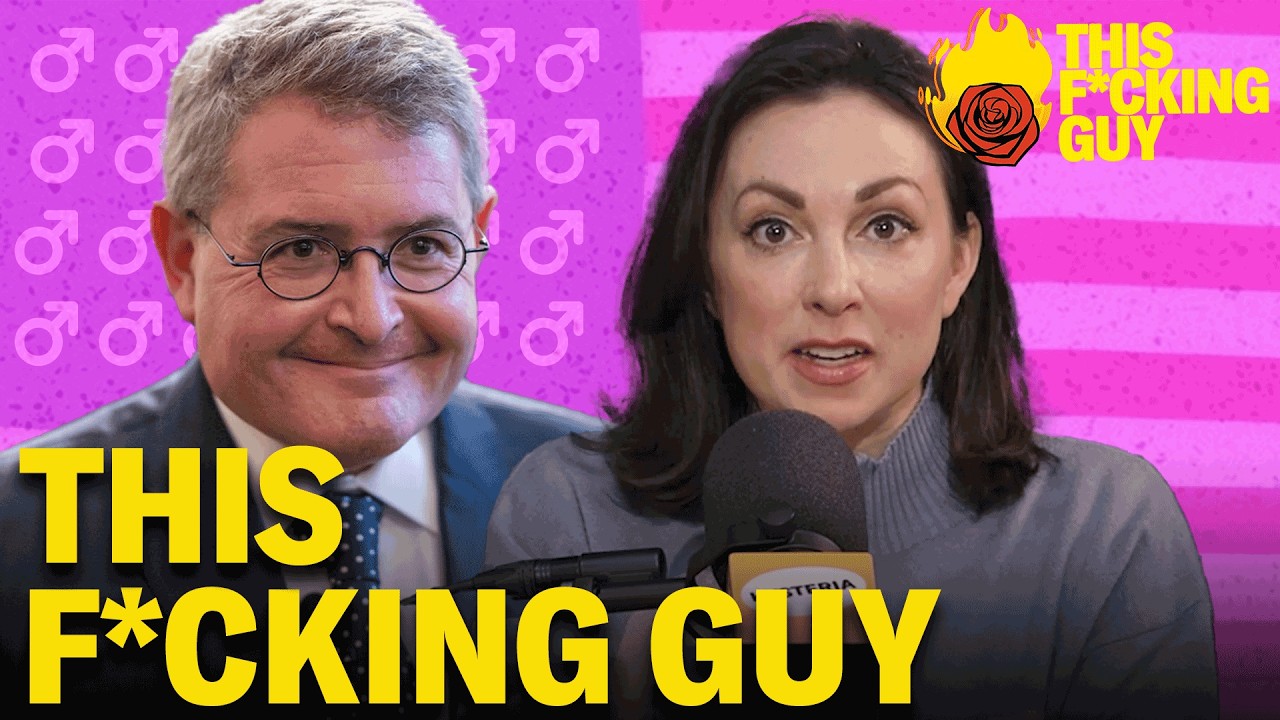
In our 20th (!!) episode of This F*cking Guy, Erin and Alyssa take a look at a guy who may not be a household name but has played a leading role in creating the current hellscape of American politics. His name is Leonard Leo and as one of the leading architects of Donald Trump's Project 2025 he has been a key player in securing the conservative majority on the Supreme Court and drowning our elections in dark money. Join us for a deep dive into his efforts to impose a right-wing Christian agenda onto all of America and how he is now setting his sights on the entertainment and tech industries. CHAPTER Intr
 Early Lif
 DC Internship and The Federalist Societ
 The Judicial Confirmation Networ
 “The Honest Elections Project
 Leonard’s Judges and Their Luxury Gift
 Dark Money and Trump’s Judge
 Ad Brea
 Leonard’s Lavish Lifestyl
 CRC Advisors and “$1.6 Billion is a cross
 Cafeteria Catholicis
 Moves into Influencing the Entertainment Industr
 Electoral Failure
 Rating Leonard Leo
SOURCEShttps://www.propublica.org/article/we... https://www.ebsco.com/research-starte... https://www.washingtonpost.com/nation... https://www.rollingstone.com/politics... https://jacobin.com/2023/07/leonard-l... https://www.propublica.org/article/da...https://www.nytimes.com/2024/05/28/ma... https://www.washingtonexaminer.com/in...https://www.washingtonpost.com/invest...https://www.washingtonpost.com/invest...https://www.propublica.org/article/sa...https://www.axios.com/2020/01/07/leon...https://www.washingtonexaminer.com/tr...https://www.judiciary.senate.gov/pres...https://www.theguardian.com/law/2024/...https://www.politico.com/news/2023/09...https://www.motherjones.com/politics/...https://slate.com/news-and-politics/2...https://www.motherjones.com/politics/...https://jacobin.com/2024/08/leonard-l...https://www.nytimes.com/2024/05/28/ma...https://www.politico.com/news/2023/11...https://www.levernews.com/tag/leonard...https://www.levernews.com/how-dark-mo...https://www.levernews.com/how-a-secre...https://www.propublica.org/article/le...https://jacobin.com/2024/11/dark-mone...https://www.propublica.org/article/cl...https://www.propublica.org/article/le...https://maplightarchive.org/story/new...https://www.propublica.org/article/da...https://www.citizensforethics.org/rep...Political commentator and comedy writer Erin Ryan and former White House Deputy Chief of Staff Alyssa Mastromonaco are joined by a bicoastal squad of funny, opinionated women to talk through everything from reproductive rights to romcoms. They break down the political news of the week, plus the topics, trends, and cultural stories that affect women’s lives. New episodes drop every Thursday. Get in touch: hysteria@crooked.com.

---
===
AN SLATE 11 25
Elections have consequences, and on Tuesday, Slate reports the liberal majority Wisconsin Supreme Court took a major step in striking down the state’s Republican gerrymandered map that disenfranchises Democratic voters.
The majority appointed a pair of three-judge panels to decide whether the map violates the state constitution and if the judiciary must impose a fairer substitute,” reports Slate's Mark Joseph Stern. But their decision drew dissent from the court’s conservative members, who used to hold a majority before frustrated Wisconsin voters installed a new liberal justice in a special election earlier this year.
Conservative Justice Annette Kingsland Ziegler — now in the minority — argued that the use of a more balanced map would violate the U.S. Constitution. She cited a 2022 Supreme Court decision, Moore v. Harper, for the proposition that state courts’ role in congressional redistricting is “exceedingly limited.”
“There is just one problem,” said Stern. “Moore said no such thing. That quotation appears nowhere in the ruling. To the contrary, Moore held the opposite, concluding that state courts canplay a legitimate, meaningful role in congressional redistricting.”
Wisconsin’s congressional map has long been in the crosshairs of voting rights advocates, who pushed a grassroots campaign against billionaire Elon Musk’s attempt to buy a conservative majority in the Wisconsin Supreme Court special election earlier this year.
Musk landed a ‘blowout’ loss, however, and Democrats took the court majority by a 4-3 lead with the win of liberal judicial candidate Susan Crawford.
“The state’s electorate is split almost evenly between Republicans and Democrats. Yet in 2024, it elected six Republicans and just two Democrats to the House of Representatives,” said Stern. “This 6–2 split is a product of a notorious gerrymander that Republicans drew after the 2010 census.”
Wisconsin’s new hard-fought, 4–3 liberal majority in the high court has already struck down the state’s legislativemap, which was an egregious Republican gerrymander. Now two groups of plaintiffs are targeting the equally Republican-biased congressional map.
“If their lawsuit prevails, Democrats could gain up to three seats in the House of Representatives,” said Stern.
“It is not clear how Ziegler’s misquotation wound up in the published opinion of a Wisconsin Supreme Court justice. By Wednesday morning, the court had withdrawn the opinion from its website and replaced it with a partial correction — without publicly acknowledging the mistake,” said Stern. “Yet this new version doubles down on the first draft’s underlying error: It continues to assert that SCOTUS severely restricted state courts’ oversight of congressional redistricting, offering a patently inaccurate summary of Moore’s holding. To justify her hostility toward judicial redistricting, Ziegler resorted to a make-believe version of the law.”
“Mistakes happen,” Stern continued. “But when they do, judges are supposed to fix them, not recast them into a doctrine that doesn’t exist.”
---
---
AN 9 26SN
A formal recommendation of punishment for Michael Gableman, whose career rise and fall set him apart in Wisconsin legal and political history, signals the end of a case that has been humiliating for the former state Supreme Court justice and the court itself.
In a report issued Friday, a referee in a state Office of Lawyer Regulation case against Gableman found that Gableman committed 10 lawyer misconduct violations in his probe of the 2020 presidential election in Wisconsin.
The partisan probe was authorized at the behest of then-citizen Donald Trump, who lost that election to Joe Biden.
The referee, Milwaukee attorney James Winiarski, recommended that the state Supreme Court suspend Gableman’s law license for three years.
Gableman and the Office of Lawyer Regulation, seeking to settle the case, had stipulated to the three-year suspension.
“A high level of discipline is needed to protect the public, the courts and the legal system from repetition” of Gableman’s conduct, by him or other attorneys, the referee wrote.
Former state Supreme Court Justice Janine Geske, who was appointed to the court by Republican Gov. Tommy Thompson, said before the report was issued that Gableman’s behavior in the investigation “was so outrageous and damaging to the image of the Supreme Court.
“But he has been on the outskirts or around ethical violations his whole Supreme Court career.”
Gableman worked for first Trump administration
Gableman, 58, a Waukesha County resident who has largely receded from public view, could not be immediately reached for comment.
The conservative Gableman, a former small-county judge with close ties to the Republican Party, made history by defeating an incumbent justice in the 2008 election. He served one 10-year term before his career began to unravel.
As Wisconsin Watch detailed in April, Gableman attended the 2016 Republican National Convention, in possible violation of the state judicial code, and had to be escorted out of two gatherings there after causing disturbances. After deciding not to seek reelection in 2018, he worked for the first Trump administration before leading the election investigation, a probe that found no fraud but cost taxpayers $2.8 million — four times the budgeted amount.
Gableman now finds himself facing punishment from the very court he served on.
Winiarski has practiced law for more than 40 years and has previously served as referee in lawyer discipline cases. He invoiced the Supreme Court $8,208 for nearly 109 hours on the case at $75.51 per hour. He recommended Gableman be responsible for all costs associated with the disciplinary matter.
The suspension recommendation essentially codifies a stipulation Gableman made in April with the Office of Lawyer Regulation in which he stated he could not successfully mount a legal defense against the misconduct allegations.
The liberal-majority Supreme Court, which began its current session in September, must still approve the punishment.
Geske, who was a justice from 1993 to 1998, said the suspension would be fair punishment in part because Gableman’s conduct in the investigation, including threatening to jail elected officials, helped solidify the public perception that Wisconsin judges have become partisan actors.
“I think people wonder what’s happening in the court and what’s happening with the individual justices,” she said. “So I think he did great harm to the court in engaging in that behavior.”
The Office of Lawyer Regulation case against Gableman alleged that during the election investigation, Gableman violated 10 counts of Supreme Court rules of professional conduct for attorneys. He was accused of making false statements about a judge, an opposing attorney, and two mayors; making false statements to the Office of Lawyer Regulation; disobeying a court order; and violating the state open-records law and confidentiality rules.
A call for tougher penalties for misconduct
University of Wisconsin-Madison political science professor Howard Schweber, who is affiliated with UW’s law school, said a three-year license suspension verges on lenient because of the seriousness of the misconduct and because Gableman was acting in a public capacity, not as a private attorney.
Wausau attorney Dean Dietrich, a former Wisconsin Bar Association president and expert on lawyers’ professional responsibility, said “it is unfortunate” that a former justice is facing a law license suspension, but that “the actions of one person do not reflect the actions of others.”
Judicial offices in Wisconsin technically are nonpartisan, but state Supreme Court races have drawn heavy participation and money from the Republican and Democratic parties.
Marquette University law professor Chad Oldfather, author of a recent book on the importance of selecting judges with good character, said a three-year suspension would be typical for the type of misconduct alleged against Gableman.
“Ultimately, we want people of the highest character in judicial roles,” Oldfather said. “Somehow we have to find a way to get the legal profession and the broader culture to buy into that as the top priority, which seems like an awfully heavy lift these days.”
There are also calls for tougher action on lawyer misconduct.
Madison lawyer Jeffrey Mandell, head of a law firm that filed a misconduct complaint against Gableman with the Office of Lawyer Regulation, noted that Gableman previously was investigated for ethics violations involving an ad he ran in his Supreme Court campaign and for hearing cases while a justice that involved a law firm that gave him free legal services.
Gableman was not sanctioned in those cases.
Mandell said the state needs to act more quickly and more decisively on lawyer misconduct. He noted Wisconsin lawyers are not subject to permanent disbarment. Those who receive the most severe punishment, a five-year license revocation, can petition after five years to get their license back.
The vast majority of states allow disbarred attorneys to apply for license reinstatement.
“Some conduct is simply beyond the pale, deserving of a permanent ban from the public trust of legal practice,” Mandell said. “It’s past time for Wisconsin to recognize this.”
*Votebeat is a nonprofit news organization covering local election integrity and voting access. Sign up for their newsletters here.
===
AN 4 25
Smart, progressive women pose a serious threat to MAGA supremacy. Just ask Elon Musk, who wasted millions of dollars in Wisconsin trying to win a seat on the state Supreme Court for MAGA candidate Brad Schimel, only to watch Susan Crawford clean Schimel’s clock.
From his first presidential campaign against Hillary Clinton in 2016, “Lock her up!” has been Donald Trump’s battle cry. Restoring the greatness of a white, male-dominated America apparently requires menacing displays of dominance over women in positions of authority. Who can forget Trump acting like a stalker, invading Clinton’s personal space and looming behind her during a 2016 debate?
On Friday, a few weeks after MAGA lost its bid to disempower the progressive female majority on the Wisconsin Supreme Court, the Trump administration sent federal agents to arrest Hannah Dugan at the Milwaukee County Courthouse. Trump’s attorney general and the man he chose to lead the FBI gleefully posted pictures of Dugan’s “perp walk” in handcuffs, crowing about this unprecedented assault on the dignity and authority of a judge and the sovereignty of local courts.
On Tuesday, the Wisconsin Supreme Court suspended Dugan. “In order to uphold the public’s confidence in the courts of this state during the pendency of the criminal proceeding against Judge Dugan, we conclude, on our own motion, that it is in the public interest that she be temporarily relieved of her official duties,” the state’s highest court said in a two-page letter ordering Judge Dugan “temporarily prohibited from exercising the powers of a circuit court judge.”
It’s a perplexing decision. It didn’t arise from any complaint; the Court acted on its own. And Dugan had already been relieved of her duties while she focuses on her defense by the chief judge in Milwaukee, who assigned her calendar to other judges to cover.
Worse, the suspension gives the impression that the federal charges against Dugan are indeed serious. But that impression is not supported by the only evidence the government has produced.
The justification for Dugan’s arrest, laid out in a federal criminal complaint, is that she impeded federal law enforcement agents when she objected to ICE disrupting her court’s proceedings and ushered the man they came to arrest out a side door. The defendant, Eduardo Flores-Ruiz, who was appearing before Dugan on a misdemeanor battery charge unrelated to his immigration status, exited into the public hallway where the agents were waiting for him. Then they followed him outside and made their arrest — unimpeded.
Fox News claimed Dugan concealed Flores-Ruiz in a jury room. But that assertion is contradicted by the sworn testimony in the government’s own criminal complaint.
The complaint features breathlessly sexist descriptions of Dugan appearing “visibly angry” and “walking quickly,” as if that were evidence of wrongdoing. But any actual wrongdoing is hard to pinpoint.
“Whatever you think of the actual conduct the complaint alleges,” says Dean Strang, a law professor at Loyola University Chicago School of Law and a long-time Wisconsin criminal defense lawyer, “there is a real question about whether there’s even arguably any federal crime here.”
The government’s behavior, meanwhile, is “extraordinarily atypical,” for a nonviolent, nondrug charge involving someone who is not a flight risk, says Strang.
The handcuffs, the public arrest at Dugan’s workplace, the media circus — none of it was normal, or justified. Then Trump’s Attorney General Pam Bondi and FBI Director Kash Patel began posting pictures of Dugan in handcuffs on social media to brag about it.
“So what is it they are trying to do?” asks Strang. His conclusion: “Humiliate and terrify, not just her but every other judge in the country.”
The bigger issue here, beyond an unprecedented, public display of dominance and intimidation by the Trump administration, is that, in turning federal law enforcement into an arm of his personal, vengeance-themed reality show, Trump is running roughshod over the constitutional principle of federalism, which respects the sovereignty of the states, the integrity of the courts and public safety. Scaring defendants, witnesses and victims away from making court appearances makes it harder to administer justice and makes all of us less safe.
But you’d never know that to listen to Republican state officials, who are championing federal agents barging into courts, schools and churches, forgetting everything they ever said about local control and states’ rights. In a letter released Tuesday, Assembly Republicans led by Speaker Robin Vos sent a letter to Gov. Tony Evers, declaring “our caucus believes it is imperative that our laws reflect the need for local law enforcement to comply with these efforts.”
Republicans accuse Evers of issuing guidance to state officials that impedes federal ICE raids.
“Unfortunately, recent events in Milwaukee have underscored the importance for our state to legislate and enforce compliance with federal immigration law,” their letter declares, citing Dugan’s arrest.
The Republicans demand that Evers rescind guidance telling state agencies that they need not answer questions, hand over files, or allow ICE to enter non-public areas without a warrant.
Capitulating to an administration that has admitted to deporting U.S. citizens and defied court orders to effect the return of a man it admits was mistakenly sent to a Salvadoran prison is a terrible idea. Big law firms that agreed to drop clients and offer free legal work to appease the Trump administration have eroded trust in the law. Authoritarian undermining of our legal system is a grave danger.
The least the most timid among us can do is insist that the federal government follow the law before caving in. That’s what Dugan did, when she asked if the agents who came to her courtroom to arrest Flores-Ruiz had a judicial warrant. They did not. Nor do they have proof that Dugan herself broke any laws.
The last thing we need right now is more capitulation to MAGA bullying. Stand strong.
GET THE MORNING HEADLINES. SUBSCRIBE
Wisconsin Examiner is part of States Newsroom, a nonprofit news network supported by grants and a coalition of donors as a 501c(3) public charity. Wisconsin Examiner maintains editorial independence. Contact Editor Ruth Conniff for questions: info@wisconsinexaminer.com.
an 3 25 see wisc 3 anno
Fresh from spending nearly $300 million to influence the 2024 elections, the richest person in the world has set his sights squarely on Wisconsin. Elon Musk is apparently not content with taking a chainsaw to the lives of thousands of hard-working federal employees engaged in providing health care to rural American children and veterans, with slashing Medicaid for millions of our most vulnerable citizens, with cutting projects seeking desperately needed cures for cancer, Ebola and other deadly diseases and with eviscerating foreign assistance that thousands of people all over the world rely on for survival. Musk is now also carpet bombing Wisconsin with millions of dollars for negative ads and cash infusions to influence the outcome of the upcoming April 1 election to fill an open seat on the Wisconsin Supreme Court.
After 30 years of distinguished service, the Court’s most senior justice, Ann Walsh Bradley announced her retirement last year. Now, with the fast-approaching election to determine her successor in just a matter of days, voters will decide the ideological composition of the majority on the court and therefore the future direction of Wisconsin and quite possibly the nation.
In January, when Musk announced he was invading our state, he falsely proclaimed on Twitter: “Very important to vote Republican for the Wisconsin Supreme Court to prevent voting fraud.” He’s wrong on all counts. In the first place, candidates for the Wisconsin Supreme Court don’t run for election with party labels. Our judicial elections are nonpartisan – at least they are supposed to be. Secondly, voting fraud does not occur in our state because we have long had strong safeguards in place to prevent it. Voting fraud is a complete and total non-issue in Wisconsin and a distraction from real and serious attacks on democracy such as ongoing voter suppression proposals and laws that already make it more difficult to vote here than previously.
But the unelected Musk, whose craving for national attention and power rivals that of his partner Donald Trump, has a direct financial interest in a matter that could end up before the state’s high court. Wisconsin is one of nearly half the states in the nation that prohibit auto manufacturers from being able to directly sell their vehicles to the public because it would provide those manufacturers with a competitive advantage over independent dealers. Musk’s car company, Tesla, has sought and been refused an exemption to the law by state courts, most recently in December. A sympathetic Wisconsin Supreme Court influenced by Musk’s heavy spending in the current election – already well over $12 million and rising — is in his crosshairs as well as enhanced overall political influence and power beyond our state.
In a campaign that is already the most expensive judicial election anywhere in the nation in U.S. history, Musk may end up as the single largest campaign spender through his “Building America’s Future” Super PAC and other avenues to influence the outcome in Wisconsin with his limitless out-of-state millions. How much will he spend? No one knows. But it is very important that Wisconsinites know that Musk has quickly emerged as the single most dominant source of campaign cash and political influence in this election and in our state.
It will be up to Wisconsinites to decide if they approve or not of this unelected richest person in the world buying control of our highest court while at the same time continuing his unprecedented destruction of so many vital national services and safeguards Wisconsinites depend on.
The voters of Wisconsin can prevail over Musk and his millions by turning out in force – by returning their absentee ballots in time to be counted, or by showing up and voting early in person or at their polling place on the first day of April – Election Day. At the ballot box, each of us still has more voice and control over our destiny than even the richest person in the world who can’t vote here and who knows and cares little or nothing about Wisconsin other than as a place for him to sell more Teslas and ruin more lives.
On the evening of March 6 Musk’s multimillion dollar Space X Starship exploded in the skies over the coast of Florida shortly after it was launched. Thank goodness no lives were lost but it was nonetheless a spectacular failure. The April 1 Wisconsin Supreme Court election could be another spectacular failure for Musk and his gargantuan bankroll. It is entirely in the hands of Wisconsin voters to decide.
GET THE MORNING HEADLINES. SUBSCRIBE
Wisconsin Examiner is part of States Newsroom, a nonprofit news network supported by grants and a coalition of donors as a 501c(3) public charity. Wisconsin Examiner maintains editorial independence. Contact Editor Ruth Conniff for questions: info@wisconsinexaminer.com.
---
AN 2 25
A political action group tied to Elon Musk that has sought to influence Wisconsin’s high stakes Supreme Court election canceled a social media ad this week after it featured the wrong person.
The ad by the group Building America’s Future attempted to attack Dane County Judge Susan Crawford, the liberal candidate in the race. However the ad featured a photo of a different Susan Crawford. Instead of showing the judge, the ad, which attacked Crawford’s record on crime, featured former Harvard Law School Professor Susan P. Crawford.
Derrick Honeyman, a spokesperson for Crawford’s campaign, said in a statement the ad was a “fraud.”
“Maybe an audit is needed of the staff at Musk’s shady far-right group,” Honeyman said. “Wisconsinites shouldn’t trust a single thing from these guys.”
First reported by the Milwaukee Journal-Sentinel, the ad ran for four days and cost $3,000.
Building America’s Future has promised to spend more than $1.5 million on airing anti-Crawford ads in a number of television markets across the state. Another Musk-associated PAC has invested $1 million in canvassing and field operations in support of the conservative candidate, Waukesha County Judge Brad Schimel.
Musk’s support of Schimel comes as Tesla has sued the state of Wisconsin over a law that prevents car manufacturers from owning dealerships in the state.
The Supreme Court race will determine the ideological swing of the body. The race between Crawford and Schimel could break spending records for a Wisconsin judicial campaign after 2023’s race set the previous record at about $50 million.
Both candidates have been supported by contributions from billionaires. Crawford has received help from George Soros and Illinois Gov. J.B. Pritzker while Schimel received donations from Illinois billionaire Liz Uihlein, Beloit billionaire Diane Hendricks and outside help from Musk.
GET THE MORNING HEADLINES. SUBSCRIBE
Wisconsin Examiner is part of States Newsroom, a nonprofit news network supported by grants and a coalition of donors as a 501c(3) public charity. Wisconsin Examiner maintains editorial independence. Contact Editor Ruth Conniff for questions: info@wisconsinexaminer.com.
===
===
AN 2 25
Elon Musk is weighing in on a consequential state election, Politico reported Wednesday. A group that Musk funded in the past has poured at least $1.5 million into the Supreme Court race in Wisconsin, and he is posting about the race on social media. The group, Building America’s Future, is set to run ads later this week.
The spending is “a sign that even as Musk races to overhaul Washington, his influence extends beyond it,” write Politico’s Jessica Piper and Liz Crampton.
“Very important to vote Republican for the Wisconsin Supreme Court to prevent voting fraud!” Musk posted on his website, X, last month. This was in reference to the court’s ruling to allow drop boxes for absentee ballots in the 2024 election.
READ MORE:The right comes for one of its own on the issue of 'family values'
The race is between Democrat-backed Susan Crawford and GOP-backed Brad Schimel, although it is ultimately a nonpartisan election. The results will decide whether the majority of the Wisconsin Supreme Court is conservative or liberal.
“The high-stakes Wisconsin bellwether race will be the biggest test yet for both parties — and for Musk, who spent millions of dollars to help Trump win the election and is now looking to influence politics in the states,” Piper and Crampton write.
“It feels like a very clear sign that he knows what we know, which is that this is the most important election of the new Trump era,” said Yasmin Radjy, executive director of Swing Left, a progressive group.
“Susan Crawford has nationalized this race on her own, but we can’t control what happens outside of our campaign,” Schimel campaign spokesperson Jacob Fischer told Politico.
READ MORE:'Off-the-charts bonkers': Trump draws brutal mockery for suing Brazilian judge
Musk gave to Building America’s Future in 2022, according to the Wall Street Journal.
“Last year, the group was a major backer of several Republican-aligned super PACs, including two groups — Duty for America and Future Coalition PAC — that aimed to boost Trump with minority voters. It also helped fund a third super PAC, Stand For Us PAC, that spent in down-ballot Republican primaries,” Piper and Crampton write.
The Wisconsin race is important because Democrats in the state legislature drew new maps, so the makeup of the state Supreme Court could influence upcoming 2026 elections in the U.S. House.
In a statement, the Crawford campaign called Schimel “extreme.”
READ MORE:'Constrained by the Constitution': Why some Trump orders are no more than 'glorified press releases'
“In D.C., Elon Musk has taken control of Americans’ private financial information and cut funding for hungry kids. Now, Musk is trying to buy off Brad Schimel and take over control of the Wisconsin Supreme Court so that Schimel can rubber-stamp an extreme agenda of banning abortion and cozying up to corporations,” they said.
But Schimel, a former attorney general, suggested he will not be influenced.
"Ultimately, the only answer to (the outside spending) is that the individual running for office — and frankly, this applies to all offices for the judicial or legislative or executive branch — you can't be for sale," Schimel said at a forum Tuesday. "People want to support you. It should be they're supporting you because they like the things that you stand for, not because they're buying some result."
---
---
Wisconsin Supreme Court justices question enforcing 1849 law as an abortion ban
11 24 AN
---
an 7 24
'Voters won big': Wisconsin Supreme Court restores ballot drop boxes
:{---}
an 12 23
no lnx
republican Scott Walker went down in history as one of the most anti-union governors in Wisconsin history. Act 10, aggressively pushed by Walker through the Wisconsin State Legislature, attacked collective bargaining for public-sector unions and required public workers to pay more for health care.
Act 10's critics challenged Act 10 in the courts. But in 2014, the Wisconsin Supreme Court, in a 5-2 vote, upheld the law as constitutional.
Since then, there has been a major change in the state's highest judicial body. Liberal Janet Protasiewicz, in April, enjoyed a double-digit victory in a Wisconsin Supreme Court race — giving liberals a majority.
In an article published on December 5, The Nation's John Nichols reports that Act 10's future may be in jeopardy given the Wisconsin High Court's new makeup.
"With the April 2023 election win by Justice Janet Protasiewicz," Nichols explains, "the (Wisconsin Supreme) Court now has a 4-3 majority that could well be inclined to reconsider the constitutionality of Act 10. And they will likely get a chance to do so."
Nichols elaborates, "Last week, a coalition of unions, including several affiliates of the Wisconsin Education Association Council, AFSCME, and the Teamsters, as well as SEIU Wisconsin and the Teaching Assistants Association (TAA/AFT) — which represents graduate student workers on the University of Wisconsin-Madison campus and is the oldest graduate students union in the world — filed a lawsuit demanding that Act 10 be struck down."
In an official statement, union members cited "low pay, staffing shortages and worsening working conditions" as some of their reasons for filing their anti-Act 10 lawsuit.
READ MORE: Wisconsin court case could end 'virtually impenetrable' GOP 'near-supermajorities' in state legislature
The Nation's full report is available at this link.
One thing Gableman, Wait and Chief Justice Ziegler all have in common is that they supported Trump’s challenge to the 2020 election results in Wisconsin. Had a lone conservative on the court, Brian Hagedorn, not voted with the liberal minority, Trump’s challenge would have been upheld.
https://www.alternet.org/how-lawless-maga-republicans-are-trying-to-overthrow-democracy/
10 23
GOP leader backs down from impeachment threat against Wisconsin Supreme Court justice - Alternet.org
an 8 23 no lnx
these are not normal times. Still, as Will Bunch observed in a powerful column for the Philadelphia Inquirer, out of force of habit, laziness or just plain denial, a lot of journalists continue to treat the Republican presidential contest as if it were a regular political event instead of the lawless authoritarian movement it really is.
The Republican party has been hijacked by Donald Trump. His enablers here in Wisconsin are part of a destructive cabal that is undermining democratic institutions and the rule of law.
That’s the context around Wisconsin Supreme Court Chief Justice Annette Ziegler’s denunciation of the “rogue lawlessness” of the new liberal court majority for daring to set procedural rules.
Ziegler’s claim that the court’s 4-3 liberal majority has staged a “coup” and conducted an “illegal experiment” by choosing a new administrator of state courts and changing some procedural rules is demonstrably false. In a calm, clear email response grounded in reality and the Wisconsin Constitution, Justice Rebecca Dallet explains why Ziegler is wrong.
:{
}:
The Wisconsin Constitution clearly states that a four-person quorum of justices constitutes a majority for the conduct of the court’s business, including setting internal operating procedures. The chief justice exercises “administrative authority pursuant to procedures adopted by the supreme court.”
:{
}:
Ziegler doesn’t have a leg to stand on.
From one angle, this looks like a tempest in a teapot. Dueling late-August memos about internal court procedures don’t generally rise to the level of headline news.
But the battle for control of the Wisconsin Supreme Court by a right-wing minority that lost its power in the recent spring election is part of a bigger plot by MAGA Republicans to flout the will of the voters and entrench minority rule
Take this week’s seemingly unrelated AP story about the right-wing groups preparing to gut the federal government if they succeed in getting Trump reelected. Project 25, funded by the Heritage Foundation and fueled by former Trump administration officials, “is essentially a government-in-waiting for the former president’s second term,” AP reports. The idea is to “gut the ‘administrative state’ from within, by ousting federal employees they believe are standing in the way of the president’s agenda and replacing them with like-minded officials more eager to fulfill a new executive’s approach to governing.”
The Project 25 handbook includes a suggested purge of tens of thousands of federal employees, replacing civil service jobs with patronage positions, stopping the FBI from working to curb the spread of misinformation and stepped-up prosecution of anyone who helps provide abortion pills by mail. It’s scary stuff.
Anti-government rhetoric has been a Republican staple for decades. But the willingness to spread lies, destroy democratic institutions and subvert elections to hold onto power is something new.
Assembly Speaker Robin Vos has threatened to launch impeachment proceedings against Justice Janet Protasieiwicz unless she recuses herself from a challenge to the Republicans’ gerrymandered voting maps. By stating the truth during her campaign that the current maps are “rigged” to give Republicans a disproportionate legislative majority — an observable fact with which a federal court, a majority of Wisconsin voters and even Vos himself have agreed — Protasiewicz opens herself up to “corruption” charges if she doesn’t disqualify herself, Vos says.
The impeachment threat, like the caterwauling by the Chief Justice, is absurd. The judicial branch, as a coequal branch of government, has its own recusal rules. Those rules do not require justices to recuse themselves from cases because of remarks they made during a campaign. If the Legislature intervenes and impeaches a justice who follows the rules, it violates the separation of powers among the branches of government. But the emboldened right-wing majority in the Assembly might give it a try anyway, as The Washington Post reports, in order to set up a process by which the Republicans can block a gerrymandering lawsuit that could diminish their power. The point would not be to convict Protasiewicz of anything, just to gum up the workings of the Court long enough to slow down a challenge to the gerrymandered map.
A successful impeachment vote in the Assembly would force a justice to stop hearing or weighing in on cases until the Senate holds a vote on removal from office. Given the Senate’s track record of delaying confirmation hearings for Democratic Gov. Tony Evers’ nominees, it’s easy to foresee the foot-dragging that would ensue, at least until the 2024 election is over.
Stop calling them ‘conservatives’
On the same day the dueling memos between the new Wisconsin Supreme Court majority and the power-grabbing right-wing minority came out, the Senate held a public hearing on whether or not Wisconsin Elections Commission Administrator Meagan Wolfe should be allowed to continue in her job. The hearing went forward against the advice of legislative attorneys and Wisconsin Attorney General Josh Kaul,who have held that the Senate does not have the power to remove Wolfe. It featured MAGA cult members Michael Gableman, who was fired as head of the Legislature’s bumbling “investigation” of the 2020 election, and Racine County election conspiracy theorist Harry Wait, who is facing criminal charges for making fraudulent absentee ballot requests.
One thing Gableman, Wait andChief Justice Ziegler all have in common is that they supported Trump’s challenge to the 2020 election results in Wisconsin. Had a lone conservative on the court, Brian Hagedorn, not voted with the liberal minority, Trump’s challenge would have been upheld.
Ziegler joined team MAGA — and very nearly made the Wisconsin Supreme Court the only forum in the nation to allow Trump’s spurious challenge to the election results to move forward.
Let’s stop calling these people “conservatives.” The Republican Party has devolved into a cult of personality, working to install a strongman in the White House who has been charged with 91 felonies and who could easily be convicted and sentenced before the 2024 Republican convention in Milwaukee. It’s a real possibility that Trump could deliver his acceptance speech for the Republican nomination from prison.
Wisconsin is going to play a key role in the next election, and defending democracy and justice in this state is going to be critical to preventing our country’s slide authoritarianism.
To protect the elected majority on the state’s highest court, theoretically, Protasiewicz could seek an injunction against the Legislature and prevent them from impeaching her in violation of her free speech rights.
In 2002 the U.S. Supreme Court held in Republican Party of Minnesota v. White that the First Amendment protects the rights of candidates for judicial election to announce their views on disputed legal and political issues. The opinion written by conservative Justice Antonin Scalia,
Time is of the essence, though. That lawsuit would have to be filed promptly to head off the Legislature’s impeachment delaying tactic.
Another possibility is that Protasiewicz, if impeached by the Assembly, could resign. Then Democratic Gov. Evers could appoint another justice to take her place. Evers could choose someone like former Democratic Rep. Chris Taylor or progressive Judge Everett Mitchell. The new appointee would finish out Protasiewicz’s term, which runs until 2027. Protasiewicz could then run against MAGA Justice Rebecca Bradely in 2026. Given the outcome of recent Wisconsin Supreme Court races, it seems likely she’s win again.
Meanwhile, the Wisconsin Department of Justice should file charges against Wisconsin’s fake electors – one of whom, Robert Spindell, is still serving on the state elections commission.
The only way to defeat the sheer chutzpah of the right-wing attack on democracy is by fighting back just as aggressively. Our future depends on it.
an 8 23
Alarm grows over Wisconsin GOP's Supreme Court impeachment threats
Jake JohnsonandCommon Dreams August 31, 2023
Wisconsin Democrats are urging the U.S. public to pay close attention to the Republican Party's maneuvering in the key battleground state, where GOP lawmakers are floating impeachment proceedings against a recently elected liberal Supreme Court justice if she doesn't recuse herself from cases related to the state's gerrymandered legislative maps.
"We've been sounding the alarm bells on the dangerous threats from Republicans to impeach justices who don't follow their orders. And yesterday, they doubled down," Wisconsin Senate Democrats wrote in a social media post on Wednesday after state Assembly Speaker Robin Vos (R-63) left open the possibility of an impeachment push against Wisconsin Supreme Court Justice Janet Protasiewicz.
Speaking to reporters on Tuesday, Vos suggested that Protasiewicz has "pre-judged" a potential case challenging the legality of Wisconsin's legislative maps. If Protasiewicz doesn't recuse, Vos said that would be "a pretty clear violation" and indicated impeachment proceedings would be on the table.
Wisconsin Republicans have the simple Assembly majority needed to impeach and the two-thirds Senate majority needed to convict. State Republicans are also currently attempting to remove Wisconsin's nonpartisan head of elections.
"This is crazy," Wisconsin Senate Democrats wrote Wednesday. "The entire country should know what's happening here in Wisconsin. Spread this far and wide."
In a statement, Senate Minority Leader Melissa Agard (D-16) said that "considering impeachment mere weeks after Justice Protasiewicz has been sworn in is utterly absurd."
"Legislative Republicans will jump over any hurdle to usurp the will of the majority," said Agard.
Earlier this month, a day after Protasiewicz was sworn in, voting rights organizations filed a legal challenge urging the Wisconsin Supreme Court to toss out the state's maps, which the groups argue have entrenched an unfair electoral advantage for Republicans and allowed them to cling to power in the Legislature for more than a decade.
:{
}:
A second legal challenge against the maps was filed days later.
Protasiewicz's victory over right-wing former Wisconsin Supreme Court Justice Dan Kelly in April wrested control of the state's high court from conservatives for the first time in 15 years.
During her campaign, Protasiewicz described Wisconsin's legislative maps as "rigged" and "unfair," an assessment that is widely shared by legal experts and voting rights campaigners. Protasiewicz did not say how she would rule should the Wisconsin Supreme Court take up a gerrymandering case.
Vos and other Wisconsin Republicans nevertheless seized upon Protasiewicz's comments as evidence that she has already decided how she would rule and should therefore recuse from any redistricting cases. Last week, Wisconsin Senate Republicans filed a motion demanding Protasiewicz's recusal from challenges to the constitutionality of the state's maps, which are so warped that they've been described as "Swiss cheese."
In response to the Republican motion, law firms that are suing over the state's maps argued that Republicans are pushing for Protasiewicz's recusal because they are "unhappy" with her election victory, "which they could not prevent through gerrymandering."
Wisconsin Republicans "now seek to nullify the election and pick their judges," the firms added. "Respondents' arguments in support of recusal are without merit, and this motion should be denied."
https://www.alternet.org/wisconsin-supreme-court-judge-wikipedia/
no lnx an 8 23
Right-wing Wisconsin Supreme Court judge’s edits to Wikipedia page may be 'conflict of interest': watchdog
Maya Boddie August 15, 2023
Wisconsin Supreme Court Justice Rebecca Bradley recently logged into her personal Wikipedia page and made a few edits, Milwaukee Journal Sentinel watchdog columnist Daniel Bice reports.
According to the report, @arizonasunblock on Twitter last week wrote, "Conservative Wisconsin Supreme Court justice @JudgeBradleyWI is currently engaging in an edit war on her Wikipedia page under an anonymous username that she also uses in her personal email. You cannot make this stuff up."
Bice discovered the Twitter user was correct, with the username "rlgbjd," standing for "Rebecca Lynn Grassl Bradley, J.D."
The columnist writes:
In her email to the Journal Sentinel, Bradley said she had to make these changes because members of the media aren't doing their job.
"Clearly, the media has made no effort to report honestly so public officials have no choice but to correct the record for them,'" Bradley said.
:{
}:
"I hope this clears up the great Wikipedia issue facing our state and allows you to focus on the constitutional crisis created by my colleagues," she concluded, referring to actions taken by the new liberal majority on the court.
POLL: Should Trump be allowed to hold office again?
"Republicans have become the party of book banning, but as always, Rebecca Bradley goes one step further and wants to erase the Internet," Scot Ross, former executive director of the progressive group One Wisconsin Now told the news outlet.
Bice writes:
:{
}:
According to her Wikipedia page, in May 2020, Bradley "compared the state's stay-at-home orders to the internment of Japanese-Americans during World War II," a case known as Korematsu v. the United States.
Here is what Bradley actually said, according to video of the teleconference of the May 5, 2020, oral arguments:
I'll direct your attention to another time in history, the Korematsu decision, where the court said the need for action was great and time was short and that justified, and I'm quoting, "assembling together and placing under guard all those of Japanese ancestry in assembly centers" during World War II.
:{
}:
Could the secretary (of the Wisconsin Department of Health Services), under this broad delegation of legislative power, or legislative-like power, order people out of their homes into centers where they are properly socially distanced in order to combat the pandemic? . . . The point of my question is, what are the limits, constitutional or statutory? There have to be some, don't there, counsel?
Bradley replaced the words from her original oral argument, writing, "Although headlines may sensationalize the invocation of cases such as Korematsu, the point of citing them is not to draw comparisons between the circumstances of people horrifically interned by their government during a war and those of people subjected to isolation orders during a pandemic. We mention cases like Korematsu in order to test the limits of government authority, to remind the state that urging courts to approve the exercise of extraordinary power during times of emergency may lead to extraordinary abuses of its citizens."
According to Bice, the judge made two additional changes, including editing "the description of her majority opinion in the 2021 redistricting case aimed at setting new political boundary lines in the state," and amending "a summary of her 2022 decision outlawing the use of drop boxes to cast absentee ballots in Wisconsin."
READ MORE: Wisconsin Republicans threaten to impeach newly elected Democratic State Supreme Court justice: report
The columnist notes Bradley received backlash from a Wikipedia editor who says the judge may have generated a conflict of interest.
Wikipedia informed Bradley, "Editors with a conflict of interest may be unduly influenced by their connection to the topic," noting the website's guidelines, "which suggested users 'avoid editing or creating articles about yourself, your family, friends, colleagues, company, organization, clients, or competitors.'"
READ MORE: Liberal victory in Wisconsin Supreme Court race is a 'five-alarm warning to Republicans': WSJ editorial board
Daniel Bice's full column is available at this link.
FROM YOUR SITE ARTICLES
How the odd and wonderful people of this small Wisconsin town are slapping Republicans back into reality ›
'Consequential': Wisconsin Supreme Court 'flips to liberal control' for first time in 15 years ›
Wisconsin GOP threatens to impeach liberal justice: 'What authoritarianism looks like' ›
RELATED ARTICLES AROUND THE WEB
Republicans look for veto-proof Wisconsin Legislature majorities in ... ›
Wisconsin GOP May Push Out State's Top Election Official ... ›
'Numbers Nobody Has Ever Seen': How the GOP Lost Wisconsin ... ›
kelly spew bile ~ concession
hooraytho most $ ever 3x senate, state rep vow to impeach
https://www.alternet.org/liberal-victory-in-wisconsin-supreme-court-race-is-a-five-alarm-warning-to-republicans-wsj-editorial-board/
an 4 23 won by 10 pts
no lnx
after winning the supermajority in Wisconsin's senate Tuesday, Republicans are already vying to impeach newly elected Democratic State Supreme Court Justice Janet Protasiewicz from the seat that she won Tuesday, April 4, NBC reports.
Per NBC, with this new power, the GOP senators "will have the ability to pursue removal proceedings of certain elected officials if the Assembly votes to impeach them."
State Republican Rep. Dan Knodl won the special election over Democratic attorney Jodi Habush Sinykin, according to NBC, which gives the GOP "even more power in that branch of the Wisconsin State Legislature."
READ MORE: Republicans win supermajority with Wisconsin Senate victory
Referring to the state senate's ability to impeach officials, Knodl told WISN-TV, "If there are some that are out there that are corrupt, that are failing at their tasks, then we have the opportunity to hold them accountable."
Knodl added, "Janet Protasiewicz is a Circuit Court judge right now in Milwaukee, and she has failed," noting he "would consider it" if his colleagues wanted to impeach her.
NBC reports:
Under the Wisconsin Constitution, the state Assembly can impeach with a simple majority 'all civil officers of this state for corrupt conduct in office, or for crimes and misdemeanors.' The Wisconsin Supreme Court has previously ruled that those civil officers include the governor, lieutenant governor and judges.
According to WISN-TV,Knodl doesn't believe impeachment "should be a Supreme Court decision."
READ MORE: Wisconsin judge slams far-right state supreme court candidate as 'unfit to serve' in a scathing op-ed
The Wisconsin GOP has heavily criticized Protasiewicz for supporting abortion rights, and for slamming her Republican opponent, "extremist" Dan Kelly, who she said was "vehemently anti-abortion and would, if elected to the Wisconsin Supreme Court, help enforce a pre-Civil War abortion ban that goes back to 1849."
NBC reports, "it remains unclear whether Knodl" would impeach the Democratic judge from her current "position on the Milwaukee Circuit Court, or whether he would also consider impeaching her" from her Supreme Court seat.
READ MORE: Abortion rights enjoy a double-digit victory in contentious Wisconsin Supreme Court race
NBC's full report is available at this link. WISN-TV'S report is here.
FROM YOUR SITE ARTICLES
Judge who aided Trump’s efforts to overturn 2020 election moves forward after Wisconsin Supreme Court primary ›
'A big deal': Wisconsin’s upcoming Supreme Court race could 'determine the fate' of the state ›
How a Wisconsin Supreme Court race previews the abortion battles that lie ahead in 2024: conservative ›
RELATED ARTICLES AROUND THE WEB
Republicans' best hope for Wisconsin Senate is a Trump critic ... ›
Republican election tactics no surprise to Wisconsin's Black voters ›
Wisconsin Supreme Court race breaks records : NPR ›
an 1 23
An upcoming Wisconsin Supreme Court race in April could determine the future of politics in the swing state, Politico reports.
Following conservative Justice Patience Roggensack's stepping down, her available seat leaves room for the court to not only tip to majority Democrat for the next two years, but also determine the future for important issues like abortion rights, voting rights and redistricting.
The Court will likely hear a case that challenges Wisconsin’s abortion ban “in the near future”, according to Politico. To make matters more complicated for the court, Republican Justice Brian Hagedorn has been known to side with the liberal justices on past cases.
Chair of the Wisconsin Democratic Party, Ben Wikler, has called the critical race “the most important election that nobody’s ever heard of.” He said, “It has implications that will affect national politics for years to come, really at every level of government.”
But first, before a new justice is determined, voters will cast their ballots in a February primary election. Potential candidates include former Wisconsin Supreme Court Justice Daniel Kelly, a Republican, Judge Jennifer Dorow of Waukesha County, who became known for how she handled the 2021 Waukesha Christmas parade attack, also a Republican and Democratic Judges Everett Mitchell of Dane County and Janet Protasiewicz of Milwaukee County.
Because the race is so crucial to the future of some of the most important social issues today, many advocacy groups, both Republican and Democrat leaning, are expected to spend millions of dollars on ads for their preferred candidate.
Conservative group Fair Courts America, which is financially supported by businessman and billionaire Richard Uihlein, has pledged “millions of dollars” to Judge Kelly’s campaign. And Stephen Billy, the Vice President of State Affairs at the anti-abortion group Susan B. Anthony Pro-Life America, confirmed the group will also contribute to the race “to make sure that Wisconsin doesn’t end up with a fabricated right to abortion decided by activist judges.”
On the other side of the political aisle, Planned Parenthood is planning to drop “six figures” on the race, in addition to coordinating voter education campaigns.
Aside from partisan groups and individuals, there are also those who are choosing to remain "neutral," such as Wisconsin’s Democratic Governor Tony Evers. Although he hasn't stated his partisan position, he called the race “huge.” He said, “The Supreme Court has leaned conservative on almost all of the issues. So yes, this is a big deal.”
The National Democratic Redistricting Committee (NDRC) is also staying neutral in the primary, but is in the process of ramping up their political efforts. Chair of the organization, former attorney general Eric Holder, has plans to travel to Wisconsin for the general election, according to Politico.
As the race quickly approaches, the state’s Republican Party is paying close attention to Democrats.
READ MORE:**Anti-abortion Republicans have 'learned nothing' from their midterms disappointments: columnist**
Mark Jefferson, executive director of the Wisconsin Republican Party said, “It is becoming clear the Democrats want to use the Supreme Court as a vehicle to circumvent legislators who actually make policy decisions.” He continued, “If the liberals pick up another seat, they will have a rock-solid majority that never deviates from liberal activism.”
Gracie Skogman, with anti-abortion organization Wisconsin Right to Life, said when it comes to ensuring their base is ready for the race, “there’s a long way to go.”
She asserted, “The unfortunate news is the majority of voters that we have interacted with are not aware of the stakes of the election, the candidates who are on the ballot, the views of the candidate, or the tie between our current pro-life statutes and the results of the election.”
READ MORE: **How abortion rights and redistricting are firing up state supreme court races in 2022**
https://www.alternet.org/2022/07/donald-trump-boasts-path-reinstatement/
Wisconsin State Supreme Court on Friday ruled 4-3 that drop boxes for absentee ballots were illegal and declared that President Joe Biden's victory over former President Donald Trump in the 2020 election was illegitimate.
Biden won the popular vote in the Badger State and was thusly awarded its 10 Electoral College votes.
The decision "has critical implications in the 2024 presidential race, in which Wisconsin will again be among a handful of battleground states,"noted the Associated Press.
READ MORE: [Boris Johnson couldn’t escape accountability – unlike Donald Trump: journalists
Tony Evers, Wisconsin's incumbent Democratic governor who is seeking reelection, condemned the court's transparently partisan opinion.
“Politicians should not be able to abuse their power to prevent eligible voters from casting their ballots or cheat by changing the rules just because they didn’t like the outcome of the last election,” he said. “Today’s decision is another in a long line of Wisconsin Republicans’ successes to make it harder for Wisconsinites to exercise their right to vote, to undermine our free, fair and secure elections, and to threaten our democracy.”
Justice Rebecca Bradley, who sided with the majority, asserted that the court was acting to prevent fraud, which she baselessly claimed had impacted the results of past contests – including the race in 2020.
“Thousands of votes have been cast via this unlawful method, thereby directly harming the Wisconsin voters,” Bradley wrote. “The illegality of these drop boxes weakens the people’s faith that the election produced an outcome reflective of their will. The Wisconsin voters, and all lawful voters, are injured when the institution charged with administering Wisconsin elections does not follow the law, leaving the results in question.”
READ MORE: [Right-winger wants January 6th hearings nixed 'out of respect' for Donald Trump 'mourning' Shinzo Abe shackleford]
Trump's attorney Christian Bobb expanded on this false narrative and went so far as to proclaim that the outcome of the 2020 election could be reversed.
"Joe Biden cheated, so they could either withdraw their electors or they could actually decide to award Trump electors, although I would anticipate they would just withdraw the electors," she said on the Right Side Broadcasting Network. "If that happens from three different states, three different resolutions go into Congress – and I'm sorry I'm sort of summarizing this, it's a complicated issue – but it would have to go into the US Congress whether they want to accept the resolutions, whether they want to act on them or not. So it's a complex issue that needs to be handled complexly by different state legislatures and the US Congress."
Bobb then suggested that if "many many elected officials" sign on, Team Trump's dream of overturning the 2020 election can be realized.
Bobb's hot take on RSBM motivated Trump on Saturday to boast on his Truth Social app that he will be president again if the GOP retakes Congress.
"The Wisconsin Supreme Court has just declared the 'Unlock' Boxes, or Ballot 'Stuffing' Boxes, to be ILLEGAL. Everybody knows what went on with the $417,000,000 that littleMark Zuckerberg 'INVESTED' in the corrupt 2020 Presidential Election, and that doesn’t even include the big Wisconsin Nursing Home Scandal where close to 100% of the residents voted (always is MUCH lower number). It’s now up to Robin Vosto do what everybody knows must be done. We need FAIR and HONEST Elections in our Country," Trump rambled.
"Other States are looking at, and studying, the amazing Wisconsin Supreme Court decision declaring Ballot Boxes ILLEGAL, and that decision includes the 2020 Presidential Election," he continued. "Speaker Robin Vos has a decision to make! Does Wisconsin RECLAIM the Electors, turn over the Election to the actual winner (by a lot!), or sit back and do nothing as our Country continues to go to HELL? Brave American Patriots already have a Resolution on the Floor!"
There is no mechanism in the Constitution that provides a framework for nullifying a duly completed and certified election, let alone installing a loser back into power. Even if Republicans retake control of the House of Representatives and the Senate in the November midterms, impeaching and removing Biden and Vice President Kamala Harris (requiring 67 Senators to agree) would hand the presidency to whomever the House Speaker is at that time. In theory, that person could tap Trump to be their veep and immediately resign, but the Senate would first have to approve of Trump's nomination.
Granted, Republicans could indeed drum up some cockamamy scheme to petition the right-wing United States Supreme Court to consider its position to oust Biden in exchange for Trump, in a manner similar to the North Carolina "independent legislature theory" case that the Court has agreed to hear in the fall session. Notably, the courts have so far thrown out Trump's challenges to the 2020 election, including his invocations of executive privilege to prevent evidence of his coup from surfacing.
READ MORE: Why Donald Trump may not 'need a mob' to steal the 2024 election: columnist
Nevertheless, one must contemplate the possibilities, no matter how implausible they seem. Is what Trump wants impossible? No. Is it far-fetched? Quite, although it is, without question, on par with this current timeline.
an 7 22 they're baaaackkkk!
comn dr no twt
julia c
political observers on Friday were alarmed by a Wisconsin Supreme Court ruling restricting the use of drop boxes for absentee election ballots—not just because the decision will make it harder for many residents to vote, but also because the high court's right-wing majority openly embraced in its ruling former President Donald Trump's lies about the 2020 election.
In the 4-3 decision, the court's conservative justices argued that the use of ballot drop boxes is unlawful because the boxes are not explicitly mentioned in the state's laws, which allow for absentee ballots to be returned to a municipal clerk.
The return of a ballot "does not mean nor has it been historically understood to mean delivery to an unattended ballot drop box," wrote Justice Rebecca Bradley in the majority opinion.
Bradley continued that the state's longtime use of hundreds of drop boxes "directly" harmed Wisconsin voters in 2020, when President Joe Biden won the state by about 20,000 votes, beating former President Donald Trump.
Trump and his allies took aim at the drop boxes after the election, saying their use is not explicitly allowed under state law and filing a number of lawsuits.
Bradley suggested that anyone who used a drop box for an absentee ballot did not qualify as a "lawful" voter and said their method of voting "weakens the people's faith that the election produced an outcome reflective of their will."
"The Wisconsin voters, and all lawful voters, are injured when the institution charged with administering Wisconsin elections does not follow the law, leaving the results in question," shewrote, adding that "throughout history, tyrants have claimed electoral victory via elections conducted in violation of governing law" and comparing Biden's win to that of North Korean dictator Kim Jong-un.
Slate journalist Mark Joseph Stern called the language used in Bradley's opinion "outrageously irresponsible."
With the ruling, said journalist John Nichols, the right-wing majority "is not acting as a court. It's a political cabal with a partisan agenda."
The Wisconsin Democrats called the ruling "a slap in the face to democracy itself" and warned that the absence of ballot drop boxes that many voters have used for years will "impact people with disabilities, seniors, people living in rural communities, people with limited means, few transport options, and inflexible work schedules, who are disproportionately young people and people of color."
"For decades throughout Wisconsin, municipal clerks have used drop boxes to collect documents like tax returns, municipal bills—and absentee ballots," said Ben Wikler, chair of the state Democratic Party. "It's always been safe, secure, and convenient. Drop box use expanded dramatically in 2020, in red and blue areas alike."
"But then after the GOP lost Wisconsin in 2020, the GOP decided that the issue wasn't that they couldn't convince voters to support them—it was that people who didn't support them were able to vote," he added.
The three justices who dissented in the ruling denounced Bradley's claims of rampant illegal voting in 2020 as "nonsense."
"There is no evidence at all in this record that the use of drop boxes fosters voter fraud of any kind," they wrote. "None... But concerns about drop boxes alone don't fuel the fire questioning election integrity. Rather, the kindling is primarily provided by voter suppression efforts and the constant drumbeat of unsubstantiated rhetoric in opinions like this one, not actual voter fraud."
The court's right-wing justices also ruled in November that a new redistricting plan should make the least amount of changes possible to maps drawn by the Republican-led Legislature in 2011, ensuring a map that will favor GOP majorities in Wisconsin for at least another decade.
Former state Supreme Court Justice Michael Gableman is also overseeing an investigation into the 2020 election and has suggested that state lawmakers should try to decertify the results.
Friday's ruling came "from what might be the most rogue and vehemently anti-democratic state court in the nation," saidDaniel Nichanian, editor-in-chief of Bolts.
an 2 22
no lnx twt
John Eastman wrote another 'election subversion memo' — this time for Wisconsin: report
Alex Henderson February 08, 2022
Throughout much of U.S. history, the types of things that Republican attorney and Donald Trump ally John C. Eastman did following the 2020 presidential election would have been unthinkable. Eastman wrote an infamous memo in which he laid out a plan for overturning the election results and keeping now-President Joe Biden, who legitimately won the election, out of the White House.
Now, according to Rolling Stone’s Washington, D.C bureau chief, Andy Kroll, Eastman is arguing for decertifying the election results in Wisconsin. And one of the far-right MAGA Republicans who is very much in favor of that is Wisconsin State Rep. Timothy Ramthun.
In an article published by Rolling Stone on February 6, Kroll reports, “Nowhere is this crusade to subvert the 2020 election result more on display than in Wisconsin. Even though Republicans there do not control all the levers of power — thegovernor, Tony Evers, is a Democrat— they have launched a multi-front effort to cast doubt on the 2020 election, intimidate local officials, and, in Ramthun’s case, throw out the state’s presidential-election result.”
Kroll notes that Ramthun is not universally loved by Republicans in Wisconsin.
“In Wisconsin, as in other states, the energy in the conservative movement burns hottest among those voters who believe the Republican-controlled Legislature should empower people like Ramthun and throw out Biden’s 2020 victory,” Kroll explains. “Moderate Republicans have responded by ostracizing Ramthun or blasting their party’s descent into a post-fact cult of conspiracy theorists.”
But Ramthun, according to Kroll, has an ally in Eastman.
“Ramthun…. received an eight-page analysis from John Eastman, the same lawyer who wrote the infamous memos arguing for how (Vice President Mike) Pence could overturn the election result on January 6, 2021,” Kroll writes. “Eastman’s memo for Ramthun, dated December 30, 2021, argues that if there was ‘acknowledged illegality’ in an election, then the result of that election was rendered null and the State Legislature had the power to pick the electors ‘as it sees fit.’”
Kroll interviewed Evers for his article, and the Democratic Wisconsin governor lamented that MAGA Republicans in his state have been tireless in their assault on voting rights.
Evers told Kroll, “This is an all-hands-on-deck moment here. If I weren’t able to veto bills without the Republicans overriding my veto, we’d be Georgia right now. We’d be Texas. We’d be Arizona.”
Kroll warns that the MAGA campaign against voting rights in Wisconsin will only grow worse if Evers isn’t reelected in the 2022 midterms.
“The threat to democracy in Wisconsin isn’t coming from a lawless election commission, hacked voting machines, or illegal ballots coming out of nursing homes,” Kroll writes. “It comes from a political party that united around suspicions and lies, and sought to bend reality to its will. Wisconsin is more than a laboratory for new policies and bold ideas; it’s a trial for whether democracy can survive at all.”
Coronavirus Criminals and Pandemic Profiteers
:{
Accountability for Those Who Caused the Crisis
by John Nichols
}:
furious denunciation of America’s coronavirus criminals
Hundreds of thousands of deaths were caused not by the vicissitudes of nature but by the callous and opportunistic decisions of powerful people, as revealed here by John Nichols.
On March 10, 2020, president Donald Trump told a nation worried about a novel coronavirus, “We’re prepared, and we’re doing a great job with it. And it will go away. Just stay calm. It will go away.” It has since been estimated that had Trump simply taken the same steps as other G7 countries, 40 percent fewer Americans would have died.
And it was not just the president. His inner circle, including Mike Pence and Jared Kushner, downplayed the crisis and mishandled the response. Cabinet members such as Betsy DeVos and Mike Pompeo undermined public safety at home and abroad to advance their agendas. Senators Ron Johnson and Mitch McConnell, governors Kristi Noem and Andrew Cuomo, judges such as Wisconsin Supreme Court justice Rebecca Bradley all promulgated public policies that led to suffering and death. Meanwhile, profiteer Pfizer (and anti-government propagandists such as Grover Norquist) fed at the public trough, while the billionaire Jeff Bezos added pandemic profits to a grotesquely bloated fortune.
John Nichols closes with a call for a version of the Pecora Commission, which took aim at what Franklin Delano Roosevelt called the “speculation, reckless banking, class antagonism, and profiteering” that stoked the Depression. There must be accountability.
omg
https://wisconsinexaminer.com/2021/08/23/conservative-think-tank-end-wisconsin-elections-commission/
looks legit
conservative think tank — run by a former staffer for then-Senate Majority Leader Scott Fitzgerald and connected to former Gov. Scott Walker — has called for abolishing the Wisconsin Elections Commission (WEC) and moving the administration of state elections to the elected secretary of state.
The think tank, the Institute for Reforming Government, called for the change to state election law in a news release Monday morning.
“It is time to abolish WEC and implement good government accountability when it comes to Wisconsin’s elections and work to restore confidence among Wisconsin residents,” Chris Reader, executive vice president of IRG, said in a statement. “When unelected bureaucrats oversee Wisconsin’s elections it can lead to the erosion of faith and confidence in our electoral system. Thirty-three other states have elected officials overseeing the election process, providing a good measure of accountability by empowering people across ideological spectrums to provide a check on who manages elections. This is a good government measure that will benefit all Wisconsinites.”
The think tank’s president is CJ Szafir, who previously worked on Fitzgerald’s staff and served as the executive vice president for the right wing legal outfit, the Wisconsin Institute for Law & Liberty. Walker is named on the think tank’s website as its former national honorary chairman.
According to the think tank’s most recently available :{tax records:(style="box-sizing:border-box"):}:, it paid Walker’s consulting firm, the Walker Group, more than $164,000 in 2019.
The call comes as Republicans continue an effort to delegitimize state election administration in the wake of the 2020 presidential election and former President Donald Trump’s false claims that the election was stolen.
This weekend, Assembly Speaker Robin Vos (R-Rochester) :{met with Trump:(style="box-sizing:border-box"):}:to discuss an ongoing investigation into the election led by formerSupreme Court Justice Michael Gableman. Gableman recently traveled to South Dakota for a conspiracy theory-laden convention, run by MyPillow CEO Mike Lindell, where lies were spread about the 2020 election.
Gableman was joined by a state lawmaker and Robert Spindell, a member of the Elections Commission who has frequently spread conspiracy theories about last year’s election as well.
The conservative group’s call to disband the Wisconsin Elections Commission — made up of six members, three appointed by Democrats and three by Republicans — comes just six years after Republicans themselves created the commission. Rep. Janel Brandtjen (R-Menomonee Falls), who chairs the Assembly Campaigns and Elections Commission, has continued an effort to hold a “forensic audit” of the 2020 election — similar to the widely derided audit held in Arizona.
Fitzgerald, now a member of Congress, and Walker were behind the creation of the WEC in 2015 after they disbanded the Government Accountability Board (GAB) over some similar complaints to the present complaints about the WEC. The GAB was made up of members appointed by a panel of appellate judges and was responsible for administration of the state’s election, ethics and campaign finance laws.
Republicans disbanded the GAB after it began investigating Walker for violations of campaign finance laws through so-called John Doe investigations.
GOP leaders, including Assembly Speaker Robin Vos, :{directly cited:(style="box-sizing:border-box"):}: those investigations as the reason for the disbanding of the GAB and the creation of two new commissions to take its place — the Wisconsin Elections Commission and Wisconsin Ethics Commission.
:{
The legislation that created the WEC was introduced by then-Rep. Dean Knudson (R-Hudson). Knudson is now a member of the WEC and its former chair.
The current Wisconsin secretary of state is Democrat Doug La Follette. The office is largely responsible for maintaining government records, as Republicans took nearly all of the other responsibilities — and most of the staff — away from the office they now want to run elections under Walker, moving La Follette to a storage room in the Capitol basement. In 2015, a different right wing think tank, the MacIver Institute, called for :{abolishing the position:(style="box-sizing:border-box"):}:.
The Institute for Reforming Government did not respond to a request for comment.
}:
no lnx
The organized takeover of Wisconsin courts
How big money has eroded a core democratic institution
Ruth Conniff
RUTH CONNIFF
JULY 29, 2021
It barely rated a mention in the news when, on June 28, the Wisconsin Supreme Court issued an order relieving Court of Appeals Chief Judge Lisa Neubauer of her leadership duties.
Neubauer ran for the Supreme Court in 2019 with the support of Democrats and progressives, in an election won by a razor-thin margin by conservative Justice Brian Hagedorn.
The bland-sounding order ending her tenure as chief judge made it seem as though, since Neubauer’s second term had expired, after six years of service, replacing her was a routine matter. The new chief judge, William Brash, will start on August 1, the Court announced.
:{
}:
But, in an email objecting to Neubauer’s removal, Justices Ann Walsh Bradley, Rebecca Frank Dallet and Jill Karofsky pointed out that “never before has this court limited the number of terms that can be served as Chief Judge of the Court of Appeals.”
Nuebauer’s predecessor served eight years as chief, and each of the two chief judges before him served nine years, the justices added in their email. They also objected to “the timing and lack of process employed by a majority of this court in the appointment process” and said they had not had an opportunity to weigh in.
“It sort of smells like retribution, doesn’t it?” says a source close to the Court.
For the general public, it wasn’t a very big story. Most people didn’t even know there is such a thing as an appeals court chief judge. It’s not a particularly powerful position; the chief mainly deals with handling the court’s budget and other administrative matters.
It's not how we want democratic institutions to work. It’s a little Banana Republic-y.
– Attorney Jeffrey Mandell
But from the point of view of some legal experts, Neubauer’s removal was a bad sign — part of an insidious pattern of politicization of Wisconsin’s courts.
Lawyers and other judges describe Neubauer as hardworking, courteous and an effective and efficient chief judge. Her removal raises questions about the way the courts are run, says Jeffrey Mandell, a Wisconsin attorney and founder of the progressive firm Law Forward. Mandell has never appeared before Neubauer or her appointed successor, Brash, and says he has no reason to doubt that Brash will do a good job as chief judge. Still, he says, “It does start to look less like a policy decision and more like some sort of personal issue, which is not how we want democratic institutions to work. It’s a little Banana Republic-y.”
Mandell sees Neubauer’s demotion as part of a pattern of lack of transparency that includes the court’s failure to set clear rules of recusal when justices have conflicts of interest, and its move to stop holding public meetings on administrative matters, including ethics and recusal, shrouding the court’s business in secrecy.
Banana Republic-y is also a good description of Justice Rebecca Bradley, who compared Gov. Tony Evers’ stay-at-home order during the pandemic to the internment of Japanese Americans in World War II. She also recently diagnosed her colleagues with “‘hoplophobia’ — i.e. an irrational fear of guns,” after they sanctioned a Winnebago Co. judge who pulled a loaded Glock pistol out from under his robes during a court hearing.
How did we get here?
The court has never resolved — or recovered from — the embarrassing 2011 incident in which then-Justice David Prosser was accused of trying to choke his colleague Ann Walsh Bradley in her office during a dispute about Wisconsin’s epic battle over collective bargaining rights. That sordid affair came to symbolize the decline of our state’s democratic institutions.
But the erosion of the Wisconsin Supreme Court’s reputation goes back at least to 2008, when Michael Gableman defeated Wisconsin’s first African American supreme court justice, Luis Butler, in a campaign that made national news for its sheer ugliness— Gableman ran misleading Willie Horton-style ads against Butler — and for the flood of out-of-state money that poured into the race. Outside groups spent $4.8 million — a record that was not broken until this year.
:{
}:
The ideological makeup of the court flipped to a 4-3 conservative majority when Gableman, who had the backing ofrightwing and pro-corporate groups, replaced Butler.
Gableman refused to recuse himself from cases involving his campaign contributors and helped usher in an era of ethical laxness on the court. He and his colleagues worked to undermine the late, distinguished Chief Justice Shirley Abrahamson, who was pushed out as chief, her tenure ended prematurely by a referendum put forward by Republicans that allowed the justices to elect their own chief instead of appointing the chief based on seniority. Conservatives on the court chose Patience Roggensack as their new chief.
Nobody is seeing the urgency because it’s a lot of small potatoes stuff. But it still adds up to a larger, disturbing picture.
– Retired Dane County Judge Richard Niess
A few years later, the same justices chose toname the state law library after Prosser(who once made the news when he called Abrahamson a “bitch” and said he would “destroy” her) — not the late Abrahamson, who, unlike Prosser, was considered for the U.S. Supreme Court and widely regarded as one of the country’s great legal minds.
“A lot of it is inside baseball,” retired Dane County Circuit Court Judge Richard Niess says of the way the current court conducts its business. “Nobody is seeing the urgency because it’s a lot of small potatoes stuff. But it still adds up to a larger, disturbing picture.”
That larger picture is a push to remake Wisconsin courts by moneyed interests. Former Republican Gov. Scott Walker helped that effort along when he appointed three Supreme Court justices who were members of the Federalist Society — Daniel Kelly, Rebecca Bradley and Brian Hagedorn. The Federalist Society is arguably the most powerful legal organization in the country, made up of conservative and libertarian lawyers and formed in the early 1980s to fight “liberal orthodoxy,” and, according to its homepage, dedicated to “reordering priorities within the legal system to place a premium on individual liberty, traditional values, and the rule of law.” The group has chapters of law school students, faculty and practicing lawyers around the country and deep ties to the U.S. Supreme Court. It is also part of a nationwide network aiming to create more conservative, pro-corporate courts that has poured money into Wisconsin. “All of this is the national scene writ on a smaller stage,” says Niess.
In 2016, Craig Mastantuono, president of the American Constitution Society for Law and Policy’s Milwaukee chapter, told the Wisconsin State Journal that the Federalist Society is engaged in “an organized takeover” of state and federal judiciaries. The effect, he said, is that big business and the wealthy will benefit from decision making in the courts.
Controversy around the Federalist Society’s influence in Wisconsin erupted in 2018, when Brian Hagedorn, then still an the appeals court judge, sent an email to judges around the state encouraging them to attend a Federalist Society conference and indicating that mileage and meals would be reimbursed by the state as well as offering continuing legal education credits to lawyers who attended.
Fifteen Wisconsin judges wrote to Hagedorn and the state’s judicial education committee in protest. Niess was among them.
Niess also sees Chief Justice Patience Roggesack’s pilot program in Dane County to create a separate, business court as part of a dangerous rightward drift.“Special business interests now collaborate with our Chief Justice to hand pick those judges they want to decide their cases,” he wrote in an email to local lawyers. “The Dane County Circuit Court will now be required to implement a two-tiered system of justice; one for the privileged few and one for the rest of us.”
Mandell takes a more sympathetic view of the concept of the business court, saying he understands the logic for his business clients of separating forums for different types of lawsuits. Still, he agrees with Niess about a general erosion of democracy in Wisconsin courts.
The power of a shadowy network of rightwing groups working against the public interest is evident in the coordinated effort to undermine public health orders during the pandemic by taking cases against them to the Supreme Court.
AJL is actively working to track and support right-wing legal challenges to upend COVID-19 health restrictions, fight workers’ rights to unionize, and coordinate legal strategies
– Center for Media and Democracy
Earlier this year, the Center for Media and Democracy reported on a new rightwing legal center called American Juris Linkthat is “actively working to track and support right-wing legal challenges to upend COVID-19 health restrictions, fight workers’ rights to unionize, and coordinate legal strategies”
The group was “incubated by the State Policy Network” — a network of rightwing think tanks in all 50 states — CMD reported. Its founder and president, Carrie Ann Donnell, is the director of the Federalist Society’s pro-bono center.
The Wisconsin-based Bradley Foundation provided American Juris Link with $100,000 in start-up funds in 2020, and CMD identified the Wisconsin Institute for Law & Liberty (WILL) among the recipients of the group’s assistance.
Not only does the Bradley-financed Wisconsin Institute for Law & Liberty continually file lawsuits seeking to champion rightwing interests in the courts, a parallel effort, funded by the same group of allies that supports WILL, is transforming those courts into a friendlier forum for such lawsuits.
The tool for transforming the courts is money. As the Wisconsin Democracy Campaign’s former director Mike McCabe pointed out back in 2008, after the Gableman race opened the floodgates to cash in state court races, buying state supreme court seats is a relative bargain, compared with congressional races. And much of the business that concerns corporations, including environmental regulations and labor protections, happens at the state level.
Thus, the Republican State Leadership Committee poured more than $1.2 million into last-minute ads to help Hagedorn beat Neubauer by less than 1% of the vote in 2019. The Republican State Leadership Committee also spent heavily to help elect Rebecca Bradley.
“Wisconsin is not the only state where RSLC is flexing its multi-million-dollar muscle to place corporate-friendly or right-wing judges on state courts in order to advance its funders’ interest,” CMD’s Lisa Graves writes, reeling off spending on court races in Arkansas, West Virginia, Ohio, Illinois, Michigan, Missouri, Montana, North Carolina, Ohio, Pennsylvania and Tennessee.
Predictably, in recent years the influx of outside money has been making Wisconsin judicial races more and more expensive, according to data collected by the Wisconsin Democracy Campaign. Candidates and outside special interest groups spent a record-shattering $10 million in the last Wisconsin Supreme Court race in April 2020, the Democracy Campaign reported.
And it has become an arms race, with money pouring in on both sides.
Top outside spenders in the latest Supreme Court race were A Better Wisconsin Together Political fund, which spent $1.87 million, mostly on ads supporting Karofsky, Wisconsin Manufacturers and Commerce, which spent $1.1 million to help Walker appointee Daniel Kelly (mostly with anti-Karofsky ads), the Republican State Leadership Committee, which spent $897,499 on Kelly, and Americans for Prosperity, which spent $479,463 on Kelly.
Karofsky, who won, set an all-time record for spending by an individual candidate at $2.7 million. And there is no end in sight.
“The 2023 election is absolutely critical,” says Neiss. “A lot of outstate money will come in on both sides.”
As a judge, I was not at liberty to freely comment on these disturbing trends without the potential for retribution from the Court
– Retired Dane County Judge Richard Niess
Niess says he became frustrated and decided to retire, in part, due to the “increasing threats to the integrity and independence of the Supreme Court by overt and covert right wing influence over its legal decisions and operating procedures.”
“The mounting secrecy surrounding the Court’s operating procedures, the sneaky imposition of the unnecessary business court on Dane County by the chief justice, and the clandestine manner in which the highly respected Judge Neubauer was summarily sacked as chief judge, are just three examples,” he says.
Outside group spending in Wisconsin Supreme Court races
2003: Ed Brunner vs. Pat Roggensack $27,200
2007: Linda Clifford vs. Annette Ziegler $3.1 million
:{
}:
2008: Louis Butler vs. Michael Gableman $4.8 million
:{
}:
2009: Shirley Abrahamson vs. Randy Kschnick $577,000
:{
}:
2011 David Prosser vs. JoAnne Kloppenburg $4.5 million
2013 Pat Roggensack vs. Ed Fallone $1.2 million
2015: Ann Walsh Bradley vs. James P. Daley $171,000
2016: Rebecca Bradley vs. Janne Kloppenburg $3.43 million
2018 Rebecca Dallet vs. Michael Screnock $2.8 million
2019: Brian Hagedorn vs. Lisa Neubauer $4.5 million
:{
}:
2020: Jill Karofsky vs. Daniel Kelly $5 million
source: Wisconsin Democracy Campaign
Niess also had a run-in with the Wisconsin Supreme Court in 2014 when the Court ordered him to dismiss a challenge to the voter ID law by the League of Women Voters. He refused, instead recusing himself, writing that he believed following the court’s order would violate his oath to uphold the state constitution. He then was threatened with sanction in an unsuccessful complaint before the state Judicial Commission.
“As a judge, I was not at liberty to freely comment on these disturbing trends without the potential for retribution from the Court,” he says.
To Wisconsin attorney Dean Strang, the biggest loss to Wisconsin courts as they become increasingly politicized is not so much ideological as it is a more general decline of integrity.
“The consistent media fallacy in discussing the Wisconsin Supreme Court is that there is a liberal minority on it. There is not,” he says. “There is a conservative, often retrenching, majority. And then there is a moderate, pragmatic minority.”
Conservatives and reactionary populists have shifted the ideological spectrum so far to the right that mere moderation now is mistaken as a leftist threat
– Attorney Dean Strang
After Abrahamson, “the court no longer has any liberal voice at all,” he says.
He sees the media shorthand, citing “liberal” and “conservative” justices, as part of a broader, dispiriting trend. “Conservatives and reactionary populists have shifted the ideological spectrum so far to the right that mere moderation now is mistaken as a leftist threat,” he says.
The proxy partisan warfare in court races has also endangered intellectual honesty and the unbiased assessment of the facts — hallmarks of a good appellate judges, Strang adds.
That’s not to say that he agrees withdoctrine of “originalism” promoted by the Federalist Society, which he describes as “the claim that judging is like archaeology: that judges simply dig carefully through books until they ‘find’ the law, as if it were some buried shard of ancient pottery.”
Instead, a good judge is like an architect, he says, constrained by the text of the law and by precedent the same way an architect is constrained by the laws of physics and engineering, and using the facts of a case“as the site for a construction of law that features the highest ideals that our constitution and legal culture profess.”
Instead, our current judicial system seems to be moving in the opposite direction, digging for money, eyes on the ground.
ggl grab 921
The organized takeover of Wisconsin courts - Wisconsin ...https://wisconsinexaminer.com › 2021/07/29 › the-orga...
Jul 29, 2021 — Gableman refused to recuse himself from cases involving his campaign ... The Federalist Society is arguably the most powerful legal ...
In March, Wisconsin-based businessman and Republican donor Jeré Fabick filed a lawsuit against election officials in his state, taking the case directly to the Wisconsin Supreme Court. And on April 9, Justice Brian Hagedorn — who was supported by Republicans in 2019 — sided with the Court's more liberal justices when he showed skepticism over letting the lawsuit move forward.
However, Milwaukee Sentinel Journal reporter Patrick Marley notes, "The lawsuit is in an early stage, and Hagedorn could wind up agreeing with the other conservatives on the merits of the case."
Marley points out that Fabick "sued election officials to try to prevent them from using ballot drop boxes and filling in the addresses of witnesses on absentee ballot envelopes if they were missing" and also "sought to limit who can return absentee ballots to clerks on behalf of voters."
Ordinarily, an election-related complaint in Fabick's state would begin with the Wisconsin Elections Commission. But under Wisconsin law, cases can be filed directly with the Wisconsin Supreme Court rather than with a lower court — and its up to the justices to decide whether they want to hear the case or demand that it first be filed with a circuit court.
Marley, however, observes that in Wisconsin, "Another law says any challenge to election matters must start with a complaint before the bipartisan Elections Commission. The losing side can appeal the Commission's decisions to court."
The more liberal Wisconsin Supreme Court justices who joined Hagedorn in his April 9 ruling on Fabick's lawsuit were Justice Ann Walsh Bradley, Justice Rebecca Dallet and Justice Jill Karofsky, while the dissenters were Chief Justice Patience Roggensack, Justice Rebecca Bradley and Justice Annette Ziegler.
FROM YOUR SITE ARTICLES
- There's a surprising ending to the Supreme Court's most ... ›
- These four states' Supreme Court elections are key for stopping ... ›
- Justice Ginsburg sends out dire warning about the new Supreme ... ›
RELATED ARTICLES AROUND THE WEB
- Wisconsin Supreme Court rejects Trump election lawsuit | PBS ... ›
- Wisconsin Supreme Court blocks Republican-backed purge of voter ... ›
- Wisconsin Supreme Court tosses Trump election lawsuit ›
April 7, 2020, liberal Jill Karofsky defeated conservative incumbent Daniel Kelly as Justice of the Wisconsin Supreme Court. The election was controversially held during the coronavirus pandemic, forcing many voters to vote by mail, wait in long lines for hours, or not participate at all.
Appeals from: Wisconsin Court of Appeals; Wi...
Appeals to: Supreme Court of the United States
Wisconsin Supreme Court - Wikipedia
==
wapo amy g
...the decision comes after the Wisconsin Elections Commission declined Aug. 20 to put presidential contender Howie Hawkins and his Green Party running mate, Angela Walker, on the Nov. 3 ballot because their signature petitions featured two different addresses for Walker.
State election officials had argued that the campaign failed to fix the discrepancy according to state requirements. A reversal of that decision would have triggered a scramble across the state among election officials, who would have had to order new ballots — and find the money to pay for them — while facing imminent state and federal deadlines to send them to voters. Now cities and towns can get back to work mailing out ballots to the more than 1 million Wisconsin voters who have requested them.
In its 4-to-3 ruling, with one conservative voting with the majority, the court said that upending the election was one reason they denied the Green Party’s appeal.
“Even if we would ultimately determine that the petitioners’ claims are meritorious, given their delay in asserting their rights, we would be unable to provide meaningful relief without completely upsetting the election,” the opinion states.
nyt
The Wisconsin Supreme Court ruled on Monday that the Green Party’s presidential candidate will not appear on the state’s presidential ballot, a decision that came as a sigh of relief to election officials who had worried that a wholesale reprinting of thousands of ballots could bring chaos to an already stressed electoral system.
The decision against the candidate, Howie Hawkins, also could provide a small but potentially significant lift to Joseph R. Biden Jr., whose Democratic allies had expressed concern that the presence of a third-party progressive candidate on the ballot could siphon votes away from Mr. Biden and help President Trump.
Both the Biden and Trump campaigns view a path to victory through Wisconsin, which Mr. Trump carried by less than 23,000 votes in 2016.
Days before the start of mail voting, the court ruled that Mr. Hawkins and his running mate, Angela Walker, had waited too long to appeal a decision from the Wisconsin Elections Commission that denied their placement on the ballot, giving the court no recourse.
“Given their delay in asserting their rights, we would be unable to provide meaningful relief without completely upsetting the election,” the court ruled.
The Wisconsin Elections Commission had denied the request on Aug. 20 because of a discrepancy in Ms. Walker’s address on petitions, and it took the Green Party candidates two weeks to file a request for review with the court. The request was filed on Sept. 3.
The court did not rule on the merits of the Green Party case, but concluded that the candidates’ delay in a situation with “very short deadlines” made it impossible to grant the motion without causing “confusion and undue damage to both the Wisconsin electors who want to vote and the other candidates in all the various races on the general election ballot.”
In an interview on Sunday, Mr. Hawkins said his campaign had been working to find a lawyer to take its case to the State Supreme Court and had reached out to a number of progressive lawyers before finally finding a firm that would take the case, acknowledging that the firm was a conservative one whose representation was being financed by an unnamed conservative benefactor.
More than a million Wisconsin voters have already requested absentee ballots, and the prospect of an enormous reprinting would have affected every county and municipal election official in the state....
wi scotus, roger coup
https://www.alternet.org/2020/09/the-gop-is-staging-chaos-on-the-way-to-a-coup/
d a wamo
Two news stories story that almost speak for themselves without the need for commentary.
First, the 4-3 conservative majority on the Wisconsin Supreme Court has made a bizarre, nonsensical ruling that will throw Wisconsin’s entire election into disarray for no good reason.
Then the Wisconsin Supreme Court stepped in. On Thursday afternoon, by a 4–3 vote divided along partisan lines, the court issued a strange, cryptic order that could throw the election into chaos. The conservative majority directed the Wisconsin Elections Commission to turn over a massive amount of information it did not actually have. These justices then halted the mailing of more absentee ballots while they consider nullifying every ballot that has been printed or mailed and forcing the state to start over. Their stunning eleventh-hour intervention could force election officials into an impossible position: either comply with the court’s order or violate both state and federal law.
Essentially, the Green Party failed to submit proper documents in Wisconsin. They refused to state reasons, or to seek redress in a timely manner. Then they asked the state at the last minute to place the Green Party on the ballot, anyway, despite the fact that hundreds of thousands of ballots had already gone out to voters.
A responsible court would have rejected this challenge for two reasons: Hawkins and Walker waited an unreasonably long time to bring it, and it has no plausible legal basis.But instead of dismissing the case, the infamously irresponsible court ordered the commission to reveal who has requested absentee ballots, who has been mailed a ballot already, and when these ballots were mailed. It also demanded to know who requested the ballots to be printed, implying the existence of some conspiracy to rush them out. In the meantime, the conservative majority effectively shut down the state’s election machinery, suspending the printing of more absentee ballots. Its order suggests that four justices are seriously considering a decision in favor of the Green Party.Such a ruling would compel the state to throw out every existing ballot and begin the entire, grueling, monthslong process anew.
There is no plausible rationale for the decision, and no way to implement it in a manner that won’t throw the election into chaos. The Wisconsin Supreme Court was made very well aware of this, and the conservative Koch-purchased majority choose this course of action, anyway. Nor was the cynical Green Party acting alone:
Hawkins suggested in an interview that Trump supporters had helped the Green Party ticket with its legal claim before the state Supreme Court. The party’s petition was filed by attorneys from the Milwaukee-based von Briesen & Roper law firm, which has a history of representing Wisconsin Republicans.
“You get help where you can find it,” Hawkins told The Washington Post when asked whether Republicans had financed the legal action. “They have their reasons and we have ours.”
If the presidential election is at all close, everything may hinge on the outcome in Wisconsin. And if Wisconsin is beset by legal challenges from thousands of voters casting legally received ballots prior to a court order demanding that different ballots be sent, even if those ballots go out later than the legally mandated deadline, you have a recipe for a chaos of litigation that will ultimately only be resolved by Justice Roberts of the Supreme Court.
Meanwhile, Donald Trump’s pardoned felonious close advisor and Russia-Wikileaks conduit Roger Stone just told Alex Jones that Trump should seize total power in a coup should he lose the election:
Roger Stone is making baseless accusations of widespread voter fraud in the 2020 presidential election and is urging Donald Trump to consider several draconian measures to stay in power, including having federal authorities seize ballots in Nevada, having FBI agents and Republican state officials “physically” block voting under the pretext of preventing voter fraud, using martial law or the Insurrection Act to carry out widespread arrests, and nationalizing state police forces.
We know that Trump listens to Stone as the closest person he still has in his orbit to his beloved Roy Cohn, and cares enough about him to have sprung him out of jail. And he’s recommending this course of action:
Beyond Nevada, Stone recommended that Trump consider several actions to retain his power. Stone recommended that Trump appoint former Rep. Bob Barr (R-GA) as a special counsel “with the specific task of forming an Election Day operation using the FBI, federal marshals, and Republican state officials across the country to be prepared to file legal objections and if necessary to physically stand in the way of criminal activity.”
Stone also urged Trump to consider declaring “martial law” or invoking the Insurrection Act and then using his powers to arrest Facebook CEO Mark Zuckerberg, Apple CEO Tim Cook, “the Clintons” and “anybody else who can be proven to be involved in illegal activity.”
Even if Trump doesn’t actively take any of these measures–and there is a great deal of evidence that he might–right-wing groups may well take some of these matters into their own hands.
The context for all of this upheaval is that conservatives know they have lost the argument and the culture. The nation’s greatest problems, from police racism to inequality to climate change to the pandemic itself, simply do not lend themselves to conservative “solutions.” Conservatism itself would have to change to adapt to the moment, and it is unwilling to do so.
Meanwhile, the Right is losing the culture wars, evangelicals are declining as a percentage of the population, and older social conservatives are aging out of the electorate, replaced by young progressives. White supremacists know that whites are declining as a percentage of the population, Black Lives Matter is broadly popular, and the country is also slowly coming to grips with some of the consequences of toxic masculinity. Universal healthcare, taxing the rich and even previously radical solutions like an income floor funded by taxes on Wall Street speculation are increasingly mainstream.
And finally, they know that the consequence of McConnell’s brinksmanship and Trump’s norm destruction is that Democrats are increasingly unafraid to actually wield power and govern in a way that finally maximizes majoritarian power: eliminating the filibuster, adding states to the union, bypassing the Electoral College, changing the composition and size of the courts, enacting broad voter rights and gerrymandering reforms, and much else. If they do, the conservative movement as it currently exists may not be able to hold national power again–not because the Democrats staged a coup, but rather because they simply undercut the apartheid structures that prevented the voice of the majority from being heard and implemented into law.
The conservative response to all this is to create as much chaos as possible, with a view toward seizing power in a coup–thereby short-circuiting the consequences of failing to secure the legitimacy of popular will.
The Republican Party has become the Chaos Party. And it will take all citizen hands on deck to resist them, overwhelm them at the ballot box, and move the country forward in a stable and more progressive direction.
==
==
A conservative Christian running for Wisconsin Supreme Court just said he thinks homosexuality equates to ‘bestiality’
==
huge win, trump stumped for B hack
https://slate.com/news-and-politics/2020/04/jill-karofsky-wisconsin-supreme-court.html
Jill Karofsky, a liberal judge running for the Wisconsin Supreme Court, has defeated Daniel Kelly, the conservative incumbent, according to results from the April 7 election that were released Monday afternoon. Karofsky’s victory narrows the court’s conservative bloc to a 4–3 majority, putting progressives in striking distance of flipping the powerful court. It may also force Republicans to reconsider their position on absentee voting during the coronavirus pandemic. Wisconsin Republicans sought to exploit COVID-19 to suppress Democratic votes, forcing citizens to risk their health to stand in line for hours at a handful of polling places or surrender their right to vote. Donald Trump and his allies appeared to be eyeing a similar strategy for November. But in Wisconsin, at least, that strategy seems to have backfired.
==
wisconsin judges who forced election to go on during pandemic all voted absentee themselves
Laura Clawson / Daily Kos April 15, 2020
Four Wisconsin state Supreme Court justices blocked Gov. Tony Evers’ effort to delay the April 7 election—and all four protected themselves by voting absentee. In fact, all seven justices voted absent
==
==
4/20 election pushed tho pandemic cf prev voter suppress; state scotus 5-2 one of worst guys (appt?) by walker vs smart dem woman
==
https://www.alternet.org/2020/04/why-judges-will-likely-play-a-crucial-role-deciding-how-2020-elections-are-run-during-the-pandemic/
why judges will likely play a crucial role deciding how 2020 elections are run during the pandemic
Steven Rosenfeld / Independent Media InstituteApril 3, 2020
no lnx
Why judges will likely play a crucial role deciding how 2020 elections are run during the pandemic
Written by Steven Rosenfeld / Independent Media Institute April 3, 2020
The jaw-dropping conclusion of a federal court hearing on April 1 about Wisconsin’s statewide elections on April 7 was no April Fools’ joke. U.S. District Judge William Conley said the state’s Democratic governor and Republican-led legislature had failed to put their citizenry’s health first by not postponing the statewide election in a pandemic.
“There’s a hurricane coming!” Conley fumed from the bench, interrupting Douglas M. Poland, a lawyer representing the Wisconsin Alliance for Retired Americans, League of Women Voters of Wisconsin and four citizens who sued the state. “You can’t even give me a case where a federal judge stopped a state from stupidly holding an election when most of the voters were not going to go to the polls because there’s a hurricane coming!”
“You expect the state of Wisconsin to realize that this is a hurricane and for them to stop it for public health reasons,” Conley continued. “But you don’t get to go to a federal judge and say it is contingent on voting rights, so you get to stop a statewide election. The reason you can’t cite me a case is because it’s not appropriate. I’m sorry that that’s what the situation is. But this is a public health crisis that the state legislature and the governor have refused to accept as severe enough to stop this statewide election.”
It is not very often that a federal judge slams a state’s executive and legislative branches from the bench before issuing a ruling. But below theheadline-grabbing pronouncement are equally serious concerns that will resurface in federal and state courts between now and the 2020 general election. Those concerns are how far can a court go—federal or state—to change the means and rules of voting.
Wisconsin was the only state of 11 slated to hold statewide elections in April that did not change its plans. That decision, in part due to Republican legislators wanting to boost the GOP’s odds of winning a state Supreme Court race, sparked three lawsuits. One sought to postpone the election. A second sought to ensure that all absentee ballots that were postmarked by April 7, but arrived in the mail days later, would be counted. The third sought to suspend a state law requiring all absentee voters to have a witness sign their ballot.
Judge Conley’s eruption from the bench concerned Wisconsin political leadership’s irresponsibility for not postponing an election in an unforeseen public health crisis, where the first wave of coronavirus cases is cresting on Election Day and its aftermath—where more than 1.1 million paper absentee ballots have to be authenticated, duplicates removed and counted.
But the other two lawsuits before the court are more relevant for the rest of the 2020 election cycle, as the issues they raise dig into the fine print of policies that state legislatures have adopted and voting procedures that government election bureaucracies subsequently have issued concerning voters and voting by mail.
“What is emerging is a hodgepodge of rules and procedures that will almost guarantee different levels of voter participation depending upon how easy states make it to vote by mail,” said Chris Sautter, an election attorney specializing in recounts and an adjunct professor of government at American University.
Wisconsin’s next election, which is poised to become 2020’s latest problem-plagued exercise, ironically comes in a state that has a reputation for well-run elections. It was the only state of three in 2016 to complete a presidential recount. In 2018, only 6 percent of its 3.44 million registered voters cast absentee ballots. On April 7, nearly six times that volume may vote by absentee ballot. Two of the lawsuits before Judge Conley concerned state policies and rules: what technicalities must be followed for those absentee ballots to count.
During the April 1 hearing, Judge Conley pointedly asked the attorneys representing national and state Democratic Party organizations, voting rights groups, senior citizens and Wisconsin voters what he could do to fix concrete problems that were emerging now—as opposed to speculation about what would implode on Election Day. If problems arose, Conley said he would deal with those issues then. For example, could he issue an order to people who could not find a witness, such as seniors living alone, to have their ballot count? Could he extend the day by which mail-in ballots would still be accepted and be counted, as local officials were still mailing them out and postal delivery was known to be slow?
This posture—respecting a state legislature’s laws and state election bureaucracy’s rules—is the heart of federalism and required by the U.S. Constitution, the judge said from the bench, as he rejected arguments to postpone the April 7 election but struggled to identify remedies that he could order to facilitate voting.
Why these frames matter in 2020 is that there is a spectrum of unevenlaws and rules that currently surround absentee voters, voting by mail and counting those ballots in state after state. These include: how registered voters are notified about voting by mail—or not; how voters apply to vote absentee; ID requirements to get a mail-in ballot; whether additional affidavits or witnesses are required to submit an absentee ballot; whether helping someone to fill out and return a ballot is a crime; whether the state will pay for the postage to return ballots; what voter signatures on file with the state are used to verify or reject the signatures on ballot envelopes; the signature verification standards used; when absentee ballots must be received to count; how long local boards have to do all the processing; and more.
Many of these issues are the subject of pending and possible litigation in state after state, where judges—not legislatures—will decide how 2020’s elections are run during a pandemic. Why not legislatures? Because most 2020 legislative sessions have been suspended, postponed or adjourned due to the pandemic, according to the National Conference of State Legislatures.
Meanwhile, what has emerged are varying and evolving responses. Lawyers for Democratic Party organizations and voting rights groups are seeking the most sweeping changes to boost participation. Some state election regulators and some governors are taking steps to open up the process, but generally are not going as far as Democrats and voting rights activists would like. And Republicans—especially in states where they hold legislative majorities, like Wisconsin—have been rejecting those efforts, leaving newly identified barriers in place.
The politics behind these decisions and actions are clear. Voting by mail tends to have a higher turnout among middle- and upper-income voters, which favors the GOP. Lower-income people and students often have less reliable and accessible mailboxes. Thus Democrats are seeking to expand participation and remove any barriers. This reality was affirmed by President Trump criticizing the election reforms in the House’s latest relief bill on Fox News on March 31, when he said, “The things they had in there were crazy. They had levels of voting, that if you ever agreed to it you’d never have a Republican elected in this country again.”
Where this landscape comes full circle in Judge Conley’s courtroom is the federal judge is looking for narrow remedies that he can order to cure problems that have presented themselves. This is the same framework that U.S. District Court Judge Mark Walker used in November 2018, when Florida was conducting three simultaneous statewide recounts. Walker ordered the state to let voters fix problematic signatures on ballot envelopes so their vote would count.
Meanwhile, voting rights lawyers kept presenting the latest developments to Conley, such as more than 100 Wisconsin municipalities lacking enough poll workers to open polling places (a minimum of three are required) on April 7. (Democratic Governor Tony Evers will deploy National Guard members.) Or reports that 1,100 absentee ballot requests by seniors in Madison could not be processed because the county clerk did not have the voters’ IDs in their files.
“This is Republican voter suppression in action,” tweeted Marc Elias, a voting rights lawyer who is the lead attorney on two-dozen lawsuits filed by the Democratic Party and allies across the country, referring to the voter ID issue. “This is exactly why we are suing WI [Wisconsin] to extend the deadline for counting those ballots,” he said, in an April 1tweet, referring to the litigation before Judge Conley.
Outside Wisconsin
Judge Conley signaled from the bench that he would not postpone Wisconsin’s April 7 statewide election but would issue orders as evidence of concrete problems and remedies was proposed. On April 2, he issued an order that kept the election but extended the ballot return deadline from April 7 to April 13. He also suspended the witness requirement, saying that voters could include a note with their returned ballots that they could not get a witness.
Elsewhere in the country, it is possible to see the spectrum of conflicting issues and responses that concern absentee voting, some of which have already sparked lawsuits and some of which are likely to end up in state or federal court.
For example, in the 15 states where Elias has sued on behalf of Democrats, two of them—Louisiana and Michigan—have existing laws where first-time voters cannot use absentee ballots and are required to vote in person at a polling place.
On March 27, Michigan’s Democratic Governor Gretchen Whitmer signed an executive order “to provide absentee ballots directly to new registrants” and told local election officials to pay for the postage on ballot return envelopes. Her order, however, did not address issues in suits that Elias filed earlier this year, such as seeking uniform standards for reviewing signatures on absentee ballot envelopes or nullifying a 1950s law that criminalizes helping others with absentee ballots.
Louisiana election officials did not respond when asked about their latest updates in absentee voting rules after they postponed their April 4 primary until June 20.
Among the states targeted by Democratic Party suits are four others (in addition to Wisconsin) where witnesses or notaries must sign absentee ballot envelopes. Those states are Alabama, Louisiana, Mississippi and North Carolina.
In North Carolina, a political standoff is developing over whether absentee voting should be accompanied by technicalities such as the witness requirement, which could deter voters. On March 26, the executive director of the North Carolina State Board of Elections (BOE) sent a detailed letter to Democratic Gov. Roy Cooper and Republican legislative leadership with more than a dozen recommendations to make absentee voting easier—including reducing or eliminating the witness requirement, establishing an online portal to request absentee ballots and the state paying for the return postage. (The memo did not address a 2019 law criminalizing individuals and organizations from helping voters fill out absentee ballots, which Elias has sued to overturn.)
The North Carolina state board also announced it was expanding online tools for voters to update their registration information. But Patrick Gannon, the board’s spokesman, said that only the state’s General Assembly and governor had the authority to change most of the absentee voting rules. On April 1, the state’s top Republican lawmaker opposed the BOE director’s suggestions, saying, “Some progressive, liberal Democratic groups would like to roll that back and put us where we were. I’m afraid that’s where the election director would take us with her proposals.”
There are similar controversies simmering in Georgia, where Secretary of State Brad Raffensperger, a Republican, is sending absentee ballot request forms to 6.9 million “active voters” for the upcoming May 19 presidential primary. That move drew praise from the Democratic Party of Georgia, which still added that the state should do more and pay for return postage. Other advocates criticized Raffensperger because the state’s voter rolls also have “inactive voters,” which means that not every eligible voter would be notified.
However, Raffensperger’s steps went too far for some Georgia Republicans. David Ralson, Speaker of the Georgia House, on April 1 told an interviewer, “This [potential precedent] will be extremely devastating to Republicans and conservatives in Georgia … This will certainly drive up turnout.” A day later, on April 2, Raffensperger issued a press release, “Fighting Fake News in Georgia,” which said, “the Secretary of State is only sending ballot request forms to active voters in Georgia for the upcoming May election only… The Secretary of State is not implementing statewide mail-in voting.”
These political fights and their details are a harbinger of what is to come later in 2020 as the pandemic unfolds and government officials react. Whether absentee voting will be made easier is a political decision that will unfurl state by state.
Very few states are following the example of New Mexico Secretary of State Maggie Toulouse Oliver, a Democrat, who wants “to conduct an all-mail 2020 Primary Election” in June, where “an absentee ballot will be mailed to every eligible major party voter in the state,” as a March 31 release said. But Toulouse Oliver must first get the permission of New Mexico’s Supreme Court to do so. New Mexico’s 2020 legislative session has been suspended.
Thus, it will be up to the judiciary more so than legislators, and possibly more than governors, to referee the means and rules for voting in 2020 in the pandemic. In a sense, the courtroom fights over voting in 2020 have barely begun.
“We continue to look at all aspects of state voting laws to ensure every eligible voter has an opportunity to vote and have their vote counted accurately,” Elias said. “I expect to have to file additional lawsuits in the coming weeks and months to protect the right to vote.”
This article was produced by Voting Booth, a project of the Independent Media Institute.
Steven Rosenfeld is the editor and chief correspondent of Voting Booth, a project of the Independent Media Institute. He has reported for National Public Radio, Marketplace, and Christian Science Monitor Radio, as well as a wide range of progressive publications including Salon, AlterNet, the American Prospect, and many others.
==
https://www.alternet.org/2020/01/how-right-wing-groups-use-old-law-and-imperfect-data-to-purge-voters-from-statewide-rolls/
no lnx
How right-wing groups use old law and imperfect data to purge voters from statewide rolls
Written by Steven Rosenfeld / Independent Media Institute January 21, 2020
Wisconsin has become early 2020’s Exhibit A for political fights surrounding the updating of statewide voter lists, where escalating court battles over conflicting law, procedures and underlying data could lead to removing thousands of legal but infrequent voters.
The fray’s epicenter is a series of rulings by a county judge against Wisconsin’s bipartisan but deadlocked state election board, which has refused to immediately delete 209,000 voter registrations in a swing state with 3.3 million voters. The conflict may preview legal battles coming to other states. California, Pennsylvania, North Carolina, Colorado and Virginia have all received letters from Judicial Watch, a right-wing group, threatening to file suits like the complaint from the Wisconsin Institute for Law and Liberty (WILL) against the Wisconsin Elections Commission (WEC).
WILL’s lawsuit, where two of its three plaintiffs are donors to state Republican campaigns, seeks the immediate removal of 209,000 infrequent voters who were flagged for the WEC by an interstate data consortium run by top election officials. In March 2019, the WEC’s staff recommended taking 12 to 24 months to vet those voters because in 2018 after using the consortium’s analytics, 24,270 inactive but registered voters—or 7 percent of those flagged and delisted—showed up to vote, as a memo from the WEC explained. (Those voters could re-register under a same-day registration law after showing the correct documentation.)
The affected voters, whose numbers were slightly larger than Donald Trump’s 22,748-vote margin over Hillary Clinton in Wisconsin in 2016, were mostly traced to quirks in the state’s driver’s license database where addresses were extracted and used to verify a voter’s status. The bipartisan WEC initially decided to postpone removing the 209,000 voters, but has since split on party lines. (An appeals court has stayed the lower court’s purge order, and the state chapter of the League of Women Voters has filed a federal lawsuit to stop it.)
But Wisconsin is not the only state wrestling with voter analytics. In Georgia, the process used last fall to remove 300,000-plus old registrations (out of 7.4 million statewide) led to 22,000 voters being reinstated in December. The reversal came after Secretary of State Brad Raffensperger moved up the date up for Georgia’s data query by six months, restoring the inactive voters’ status. In Iowa, election officials pressed pause after finding a 100,000-person database that may have incorrectly listed former felons, who cannot vote until they reapply and regain that right.
Thus, in early 2020, there is an emerging trend of the potential disqualification of thousands of infrequent voters in swing states. While partisan claims surrounding these developments often dominate their news coverage, this trend is driven by a confluence of conflicting laws, regulatory precedents and imperfect voter data.
“The voter registration process and the list maintenance process have become incredibly polarizing,” said Matthew Weil, the Elections Project director at Washington’s Bipartisan Policy Center. “Any removal from the [statewide voter] list is now considered by some to be a purge. And any perceived deadweight is considered ripe for fraud. Neither one of those views is right. There should be reasons to remove people. And there are reasons why we don’t want to remove people too quickly also.”
“Part of the problem here is we are using antiquated, outmoded systems,” said Barbara Arnwine, who from 1989 to 2015 ran the nation’s largest Election Day legal hotline and has since founded the Transformative Justice Coalition. “And it [mass removals] is not required under the NVRA [the National Voter Registration Act of 1993]. But even for those states that chose to do it, they are purposely engaging in a process that is fundamentally outdated and ineffective—and has the predictable consequence of removing valid voters from registration lists.”
Weil and Arnwine both said that the NVRA, which was crafted for an era when people used paper registration forms and postcard mail to contact voters, needed updating. But such modernization was not part of House-passed H.R. 1, an election reform package now stuck in the Senate. Thus, today’s partisan litigants who see advantages in using old and sometimes conflicting state and federal laws, their accompanying bureaucratic procedures and imperfect government data, will likely continue to unfold in 2020 to help their political allies.
“Dirty voting rolls can mean dirty elections and Judicial Watch will insist, in court if necessary, that states follow federal law to clean up their voting rolls,” Judicial Watch President Tom Fitton said in its January 2 statement threatening more list maintenance suits. “Judicial Watch found major voting list issues in California, Pennsylvania, North Carolina, Virginia, and Colorado.”
Ground Zero: Wisconsin
Self-appointed voting list vigilantes are not new. But Wisconsin, which had 2016’s second-closest presidential election margin and has seen some of the past decade’s most bitter fights over voting rules, has not seen a voting list fight for many years. Nor does the state have a history of voter fraud. Instead, its election administration has been seen as a model led by a bipartisan panel that valued civic participation.
Part of that legacy led the state to join an interstate consortium—the Electronic Registration Information Center (ERIC)—that draws on several state and federal government databases to help officials update their statewide voter rolls, and to identify and then contact eligible but unregistered voters. (Disclosure: Voting Booth’s reporter was part of the Pew Center on the States team that designed ERIC.) More than half the states now use ERIC.
Soon after Wisconsin joined ERIC, its state election board found a unique but deepening problem. Unlike all but one other state in the consortium, Wisconsin’s Division of Motor Vehicles never offered a voter registration option to residents getting a driver’s license. That is because when theNVRA—or so-called Motor Voter law—was passed in 1993 (and primarily required the drivers’ agencies to offer registration), it exempted states with Election Day registration. Wisconsin was a same-day state. Its reward for good behavior had come back to haunt it.
The NVRA also had other provisions and timelines for updating voter rolls, which become bloated after people move or die. The bottom line in 2020 is that people who have not voted since the 2012 presidential election could be removed if they have had no subsequent contact with election officials. The law envisions that contact as responding to postcard mailings—which many people ignore—or showing up and voting.
In 2017, when Wisconsin’s election board sent various public databases to ERIC for data mining, or using redundant records to update the voter files, it ran into an unexpected problem. Because the state DMV did not manage addresses for voter registration purposes, its files did not have some voters’ actual home addresses. (Voter registration must have actual addresses for voters to get a correct ballot.)
“In these situations, the voters may have provided an address in their transaction with the DMV that was different from their voting address, even though DMV asked for their residential address on their forms,” the March 2019 WEC memo said. “These voters were likely unaware that the information provided to the DMV would affect their voter registration status.”
The reason for the incongruity has nothing to do with elections. It was because people who had registered cars for others—such as a family member who lives elsewhere—used their addresses to avoid paying a county car tax. That tax-evading move was what was behind most of the voters who were removed in 2017 but showed up to vote in 2018, said Kevin Kennedy, the former director of Wisconsin’s Government Accountability Board (which preceded the WEC) and who worked in Wisconsin elections for nearly four decades. The ERIC algorithms used to verify the voter rolls could not tie the same address to that individual. Being exempt from the NVRA’s requirement to register voters at its DMVs hid this address snafu.
Instead, Wisconsin had an older state law on its books for voter list maintenance. That law required removing voters “upon receipt of reliable information” within a month. That deadline and ERIC’s list of 209,000 infrequent voters (most of whom had moved or died) was cited in the Wisconsin Institute for Law and Liberty suit. In suburban Ozaukee County north of Milwaukee, a GOP stronghold, Circuit Court Judge Paul Malloy cited that state law as he repeatedly ordered the mass purge to proceed. Malloy has since held the WEC in contempt for not acting, including issuing penalties and additional fines for its three Democratic members. (An appeals court stayed his rulings.)
WILL’s argument is typical of right-wing lawsuits targeting voter registration lists. It alleges that various vague harms that “impair” or “threaten… the legal rights and privileges” of its plaintiffs. On the other side of this partisan lens are voting rights activists who say that no list maintenance process can ever be error-free, and cite errors made by ERIC in Wisconsin and Maryland. (ERIC’s defenders say these problems come with managing any large and fluid list, and note that ERIC has helped to identify and to register more than 5 million new voters nationally.)
Broad Swipes, Local Remedies
But all of these arguments and details—which come from a conflicting mix of laws, bureaucracy and porous data—obscure some bigger points, said Justin Levitt, a professor of constitutional law at Loyola Law School and former staff attorney with the U.S. Department of Justice’s Voting Section.
“There are only a few states where nonvoting is still used to trigger the NVRA removal procedure, and they tend to be [citing] legacy laws from decades ago when ham-handed approaches to list maintenance were more common,” he said. “The vast majority of states only start the NVRA process when there’s some affirmative evidence of ineligibility, which is a little more like using a scalpel rather than a chainsaw to do surgery.”
In other words, activist right-wing law groups are targeting an imperfect landscape surrounding the way voter rolls are updated. And the most likely impact—should they prevail in court—could be disrupting or discrediting the 2020 voting process in swing states. But it is hard to estimate the magnitude of their impact apart from noting thousands of voters could be affected in states with close elections.
“We don’t have great data on how many of the registrations at issue in these battles correspond to voters who are still eligible,” said Levitt, who added that the remedy for voters was checking their registration status two months before Election Day. “Purges unquestionably affect voters. But this is an area where voters have more control than other aspects of election administration.”
Kevin Kennedy noted that any incorrectly purged Wisconsin voter could re-register on Election Day, when people have to present proof of residency and a photo ID. While unsuspecting voters might not have all those documents with them, he said that the state does accept emailed bills as proof of one’s addresses.
“If anything, it’s actually gotten better because you can do it electronically,” said Kennedy. “You can show your electronic bills. [But] they are not always the best for students, because sometimes their bills are at their parents’ house.”
Stepping back, the former state election director said the fray over voter rolls was a sign of how hard-fought 2020’s election cycle would likely be in his state.
“In Wisconsin in 2020, the big thing besides the voter purge issue will be a voter turnout issue,” Kennedy said. “The Democrats are saying they need to mobilize voters. They can look back to last April and see they were clearly out-mobilized in the state Supreme Court race. It was supposed to be a non-partisan race, but clearly had partisan motivations going on there. You’re not going to see Republicans sit back. They will redouble their efforts.”
Steven Rosenfeld is the editor and chief correspondent of Voting Booth, a project of the Independent Media Institute. He has reported for National Public Radio, Marketplace, and Christian Science Monitor Radio, as well as a wide range of progressive publications including Salon, AlterNet, the American Prospect, and many others.
This article was produced by Voting Booth, a project of the Independent Media Institute.
==
==
Wisconsin: A trio of rulings from three separate Wisconsin courts on Monday and Tuesday has resulted, for now, in a halt to a conservative group’s effort to require the state to remove 209,000 voter registrations from the rolls.
On Monday, a lower court judge, who had previously ordered the purge to go forward, held Democratic election officials in contempt for not proceeding with the removal. These officials, who’d asked the judge, Daniel Malloy, to issue a stay while they appeal, pointed out that Malloy’s order had not specified a deadline by which they were obligated to act.
Later that same day, the state Supreme Court declined to expedite an appeal requested by the plaintiff, a conservative organization called the Wisconsin Institute for Law and Liberty. WILL had hoped that the Supreme Court, which is dominated by right-wing jurists, would give it a friendly reception, one but conservative justice who’s up for re-election this year recused himself and another sided with the court’s two liberals in declining to fast-track the case. That resulted in a 3-3 tie, meaning the plaintiff’s request was rejected.
Finally, on Tuesday, the state’s intermediate Court of Appeals stayed Malloy’s decisions: both his order directing the purge to proceed and his contempt ruling. That amounted to a victory for voting rights advocates, who, if they cannot halt the purge, at least want to delay it until after November’s elections.
The win is only temporary, though: The state Supreme Court’s refusal to expedite the case does not guarantee that the court will stop the purge if the case eventually reaches them. A separate federal lawsuit opposing the purge remains ongoing.
https://www.alternet.org/2019/06/wisconsin-supreme-court-reinstates-laws-to-seriously-limit-democratic-power/
poster child for state scotus capture?
poster child for state scotus capture?
no lnx
Striking a blow to Democrats, the Wisconsin Supreme Court has reinstated legislation that was passed by Republicans in late 2018 in order to limit Democratic power in that state.
2018 was a disappointing year for Republicans in Wisconsin. Democratic Sen. Tammy Baldwin was reelected by 11% (defeating Republican Leah Vukmir), Democrat Josh Kaul became state attorney general (narrowly defeating GOP incumbent Brad Schimel) and Republican Gov. Scott Walker was voted out of office when Democrat Tony Evers won the gubernatorial race.
But during Wisconsin’s lame-duck session in late 2018, Republicans in the state legislature passed a series of laws that were blatantly designed to weaken Democratic power in that state come 2019. Much of that legislation had been blocked by lower courts, but the Wisconsin Supreme Court reinstated most of it on Tuesday, June 11.
There were a few exceptions, however. The Wisconsin Supreme Court didn’t vote to reinstate a law that would limit early voting in Wisconsin; that law is still on hold.
In December, the lame-duck laws passed by Republicans in Wisconsin’s state legislature were widely criticized by Democrats as a blatant power grab meant to reject the will of Wisconsin voters and make it more difficult for Evers and Kaul to govern after they took office. But in March, Circuit Judge Richard G. Niess blocked all of the lame-duck laws Wisconsin Republicans had passed in December. Wisconsin Republicans, as expected, appealed, and the Wisconsin Supreme Court’s ruling rejects most of Niess’ decision.
One of the things some of the lame-duck legislation was designed to do was prevent Evers and Kaul from withdrawing Wisconsin from Texas v. Azar — a multi-state GOP lawsuit that calls for the Affordable Care Act of 2010, a.k.a. Obamacare, to be struck down as unconstitutional. In 2018, both Evers and Kaul campaigned on upholding the ACA and removing Wisconsin from Texas v. Azar. And during the lame-duck session, Wisconsin Republicans passed laws prohibiting the governor from withdrawing from lawsuits without the state legislature’s permission — such as Texas v. Azar, for example — or the state attorney general from settling lawsuits without the state legislature’s approval.
Although Wisconsin has historically been a blue state, Republicans gained a lot of ground in Wisconsin when Democrat Barack Obama was president — and the GOP, in 2019, still controls both houses of the state legislature.
==
==
==
WISCONSIN
Supreme Court puts Republicans back on PSC
Jeffrey Tomich, E&E News reporter
Published: Thursday, May 2, 2019
Ellen Nowak is back on the job as a Wisconsin utility regulator after the state Supreme Court overturned Democratic Gov. Tony Evers' decision to rescind her appointment to the Public Service Commission.
WI IS A SWING STATE 2016 RECALL QUASHED?
Koch Network and Christian Right Celebrate Apparent Hagedorn Victory in Wisconsin Supreme Court Race
By David Armiak — Right-wing Judge Brian Hagedorn leads Judge Lisa Neubauer by less than half a percent.
4/19
The Koch brothers’ astroturf operation, Americans for Prosperity (AFP), and Wisconsin Family Action (WFA) are exuberant over Brian Hagedorn‘s apparent razor-thin victory over Lisa Neubauer on Tuesday for a seat on the Wisconsin Supreme Court.
Hagedorn is winning by less than 6,000 votes, or less than a half a percent, the Associated Press is reporting. If the margin holds, Wisconsin law allows for a recount, but Neubauer would have to foot the bill.
Hagedorn has declared victory in the race, but Neubauer has not conceded and is considering a recount. The eventual winner will replace longtime Supreme Court Justice Shirley Abrahamson who announced her retirement last year.
If the Kochs’ Hagedorn is elected, the Wisconsin Supreme Court will move one seat further to the right with a 5-2 majority.
Kochs, Christian Right Rejoice
Hagedorn’s biggest supporter in terms of money was the Republican State Leadership Committee (RSLC), which took out $1.3 million in TV and digital ads. The RSLC funnels millions in corporate money into state campaigns, and counts tobacco companies, the US Chamber of Commerce, the Judicial Crisis Network, pharmaceutical giants, and Koch Industries among its top funders.
But it was the Kochs and the Christian Right group Wisconsin Family Action who are credited with Hagedorn coming out on top. AFP spent over $200,000 on canvassing efforts and mailings. According to its State Director, Eric Bott, AFP talked to more than 750,000 voters and sent out over 1.5 million targeted mailings in the seven weeks up to the election.
“There’s no question our engagement made a huge difference,” Bott said.
WFA spent more than $25,000 on mailings and brochures for Hagedorn as well. WFA thanked AFP for its efforts and extended “a hearty congratulations and thanks to Brian and his family for their hard work and steadfast commitment to staying the course despite the unjust attacks on their personal lives and their religious beliefs,” in a press release following the election.
One Wisconsin Now revealed that Hagedorn founded a school that prohibits anyone working there from being in a same-sex relationship and could expel students who identify as LGBTQ.
The *Milwaukee Journal Sentinel* also exposed an old blog Hagedorn wrote from 2005 where he addressed his “fellow soldiers in the culture wars,” stating that “the idea that homosexual behavior is different than bestiality as a constitutional matter is unjustifiable.”
Following the revelations of his hateful stance towards the LGBT community, the Wisconsin Realtors Association revoked its endorsement of Hagedorn saying, “The real estate related issues that served as the basis for our endorsement have been overshadowed by other, non-real estate related issues — issues with which we do not want to be associated and that directly conflict with the principles of our organization and the values of our members.”
The U.S. Chamber of Commerce, which often funnels money to right-wing candidates through the Wisconsin Manufacturers and Commerce, followed suit, according to the Journal Sentinel.
Hagedorn and other influential right-wing leaders in the state, such as Wisconsin Institute for Law and Liberty’s Rick Esenberg, framed the anti-LGBT Hagedorn revelations as attacks on “religious tolerance.” Esenberg, who donated to Hagedorn, regularly brings cases in front of the Wisconsin Supreme Court.
WFA riled its base to support Hagedorn, claiming he had been “viciously and unjustly attacked,” and warning of dire results if he lost the election and liberals won the next 2020 Supreme Court election. If that happens, there will be a “deluge of cases…against faith-based adoption agencies, cases against Christian florists and photographers,” said WFA President Julaine Appling. “You could probably kiss aspects of voter ID, or concealed carry, or right-to-work, or portions of Act 10 goodbye.”
Two hours prior to polls closing, WFA attempted to motivate Twitter followers by adding that Neubauer was endorsed by “pro-abortion” Planned Parenthood and “pro-LGBT” Human Rights Council.
WFA has been active in pushing a Christian Right agenda in the state for years, as the Center for Media and Democracy (CMD) reported last year in *Conquering the Courts: The Religious Right’s Fight to Rig the Rules and Undermine Judicial Independence*. WFA is an affiliate of the Family Policy Alliance, a national network of 40 groups in 38 states that spends millions to influence state legislation and elect socially conservative candidates.
In 2006, WFA partnered with Family Research Institute of Wisconsin and Focus on the Family to spend heavily on a media campaign for a constitutional amendment to ban gay marriage. The amendment passed but was overturned in 2014 when the Seventh Circuit Court of Appeals declared the marriage ban unconstitutional.
In 2008, WFA and Wisconsin Right to Life worked together to unseat Louis Butler on the Supreme Court, which resulted in the election of Michael Gableman.
WFA also played a big role in former Governor Scott Walker’s dark money operation in 2011 and 2012, channeling $1.2 million in cash from Wisconsin Club for Growth and Citizens for a Strong America into recall elections.
http://urbanmilwaukee.com/2015/04/16/murphys-law-shirley-abrahamson-against-the-world/
ref
http://archive.jsonline.com/news/statepolitics/some-wisconsin-supreme-court-justices-urging-senators-to-support-amendment-b99157985z1-234909801.html/
4/15 huffpo
Walker’s Dark Money Allies Orchestrate Coup of the Courts
Two court cases next week — one being heard in open court, another being considered in silence behind closed doors — will decide the future of Wisconsin campaign finance law, the independence of the Wisconsin judiciary, and will impact the future of presidential candidate Scott Walker.
The stakes could not be higher, but the converging cases have garnered little national attention.
Walker Criminal Probe to Be “Heard” in Silence
The Wisconsin Supreme Court is slated to take up the “John Doe” criminal investigation of alleged coordination between Friends of Scott Walker and “independent” groups during the tumultuous 2011-2012 recall elections.
The Center for Media and Democracy (CMD) has detailed the bipartisan state investigation into the Walker campaign and the secretive big money groups that bankrolled his 2012 recall victory. Wisconsin Club for Growth (WiCFG), headed by Walker campaign manager R.J. Johnson and the “third Koch Brother” Eric O’Keefe, spent at least $9.1 million on Wisconsin’s unprecedented recall elections, and funneled almost $10 million more to other politically-active groups, including Wisconsin Manufacturers and Commerce. Yet, WiCFG, which enjoys tax free status, told the IRS that it spent $0 in political activity during that period.
Prosecutors allege that Walker secretly raised millions for WiCFG from out-of-state donors like Donald Trump and Paul Singer, and allegedly coordinated with WiCFG in order to evade Wisconsin’s donor disclosure laws.Talking points prepared for the governor advised him to “stress that donations to WiCFG are not disclosed,” and to tell donors “that you can accept corporate contributions and it is not reported.”
These dark money schemes left voters completely in the dark about who was truly influencing elections in the state, CMD argued in the *Milwaukee Journal Sentinel.* Wisconsinites never knew that aFlorida-based mining company lobbying for a massive open pit mine in Wisconsin secretly gave $700,000 to WiCFG,nor did they know that John Menard gave $1.5 million to the group, and in turn received at least $1.8 million in tax credits from Walker’s job development agency.
The investigation has been halted by a passel of lawyers hired by the groups under investigation and its fate now rests with Wisconsin’s Supreme Court.
In an unprecedented move, the court’s right-wing majority decided not to hear oral arguments in order to protect the defendants against leaks, over the strong objections of the Chief Justice.
While WiCFG leader Eric O’Keefe is constantly “partisan witch hunt” to the Wall Street Journaland even likened the investigation to being raped, the fact is that the chief prosecutor is the case is Francis Schmitz, a well-respected Republican anti-terrorism prosecutor who received the “U.S. Attorney General’s Award for Distinguished Service” from Michael Mukasey’s Justice Department in 2007. Schmitz even admitted to voting for Walker in the recall election.
Schmitz and his team took note that four of the right-wing justices were elected to office with huge expenditures by the very big money groups under investigation. He has demanded that these justices recusethemselves from the case, but the request has been ignored.
In “hearing” the John Doe, the Wisconsin Supreme Court will consider not only the future of the investigation and the fate of Walker, but also the future of Wisconsin campaign finance law, and whether candidates (including the justices themselves, when they are up for reelection) will be able to coordinate with dark money groups whose job it is raise and spend unlimited dollars from powerful special interests.
Wisconsin’s Common Cause director Jay Heck explained:
What is at stake here is the independence of the Wisconsin judiciary. The Wisconsin Supreme Court was once considered the model for the nation in terms of its impartiality and independence. That history could be wiped out by a single decision by this court to open up the doors to coordination with outside groups and effectively render campaign contribution limits meaningless.
Walker and Dark Money Allies Orchestrate Coup of the Courts
In a related case, Walker’s big money allies are busily engineering a coup of the courts tostrip the independent Chief Justice, Shirley Abrahamson, of her title and authority.[succeeded, she resigned]
Wisconsin elects Supreme Court Justices for 10 year terms. For 126 years under the Wisconsin’s Constitution, the title of Chief Justice has been given to the longest serving member, but sticking to that plan would leave critical thinkers in charge for decades to come. Abrahamson was reelected as Chief to a 10 year term in 2009 with 60% of the vote. After Abrahamson, Justice Anne Walsh Bradley, who has fought to keep partisan politics out of the courts, would be next in line.
As CMD previously reportedthe threat of having a Chief who was not under their thumb was simply too much for Team Walker and his dark money allies. The GOP controlled legislature urged on by WMC and the Koch-funded Americans for Prosperity backed a Constitutional Amendment to get rid of the Chief and rushed to get it on the low-turn out spring ballot.
As veteran Milwaukee journalist Bruce Murphy put it:
Proponents of the measure have said it’s about displacing seniority with democracy, but declined to make it effective in 2019, when Abrahamson’s term ends, leaving no doubt this was a get-Shirley amendment.” And let’s not forget the unseemly, undisclosed lobbying by other justices hoping to be Chief, including Pat “Patience” Roggensack.
To orchestrate a constitutional coup a phony “vote yes” group was formed by Rogensack’s former campaign manager and WMC piled on the cash in a $600,000 ad blitz saying it was all about “democracy.”In the final weekend before election day, the liberal Greater Milwaukee Committee fielded an extra $200,000 in ads, but it was too late to make a difference.
Perhaps if the WMC ads had explained that they were unseating the chief and purchasing the best court money could buy, the result may have been different. But it was no surprise when, as the *Capital Times*explained: “They secured a narrow53 percent to 47 percent victory in a low-turnout election; barely 10 percent of Wisconsin’s voting-age population supported the deliberately confusing amendment.” Court observers tracking the “We Hate Shirley”amendment assumed that she would soon lose her title and her authority.
But the feisty 81-year old Chief Justice is not taking the dark money onslaught lying down. She filed a federal lawsuit (documents here) brought by one of the nation’s most respected constitutional lawyers, Robert Peck of the Center for Constitutional Litigation,arguing that changing the rules concerning how a Chief is selected in the middle of her term violates the Equal Protection and Due Process rights of the chief herself and the voters who elected her under the U.S. Constitution.
While WMC lobbyists and right-wing politicians are fuming at this audacious move, respected constitutional scholar David Schwartz, Professor of Law at the University of Wisconsin had a different view.
Chief Judge Abrahamson’s decision to file a suit in federal court is a “sensible and appropriate way” to resolve a complicated question of how to interpret the new Wisconsin amendment which was silent on when it should take effect. “Changing the rules in the middle of the game violates fundamental fairness that is guaranteed by the Due Process Clause. It would violate both her rights and the rights of voters who elected her in the expectation that she would be Chief Justice,” Schwartz tells CMD. “Note that the Chief Justice’s suit challenges only the retroactive application of the law, and does not question the right of the people of Wisconsin to restructure its court system in general, or to change the rules for selecting a chief justice at the next vacancy of that position.”
In addition, Schwartz explained that “by suing in federal court, Chief Justice Abrahamson seeks a resolution by neutral judges who have no personal stake in the outcome of the case. Since the Wisconsin Supreme Court justices have a personal stake in the case, it would be problematic for them to try resolve the question themselves.”
Walker to Anoint Lawyers in the Abrahamson Challenge?
But the dark money men at the WiCFG are also not backing down. WiCFG director Eric O’Keefe is apparently so awash in money that he has teams of both state and federal attorneys “building a court they can bend to their will,” as judicial watcher Nan Aron from the Alliance for Justice put it.
Last year, O’Keefe hired federal lawyer **David Rivkin** to unleash a swarm of frivolous lawsuits related to the campaign finance probe. Rivkin, last spotted defending Bush’s torture memo in the New York Times, filed suit in federal court to try blocking the investigation. O’Keefe had someinitial success with a far-right judge who regularly attended Koch judicial junkets,but he was eventually slapped down by famed conservative jurist Frank Easterbrook on the 7th Circuit.
But O’Keefe, who funded infamous hatchet man James O’Keefe the year he took down a Republican State Senator standing in Walker’s way, is not done.
Last week, Rivkin went after the Chief Justice herself in a federal suit. In a bizarre twist, Rivkin’s suit cited newspaper articles describing an incident when Justice Prosser called the Chief “a bitch” and threatened to “destroy her” and another article when Prosser nearly choked Justice Bradley to somehow make the case that it was Abrahamson and not Prosser who was out of control. (He missed Prosser’s latest ethical stumble.)
Rivkin purported to represent Wisconsin voters who backed the constitutional amendment. But Milwaukee reporter Bruce Murphy quickly spotted the usual cast of characters, deeply tied to both Scott Walker and Eric O’Keefe. Eric O’Keefe is on the CRG [CFG?]Board, says Murphy. In 2014, Rivkin helped CRG file another lawsuit in U.S. District Court challenging the legality of state laws banning coordination between political candidates and dark money groups. CRG was last in the news working with the David Koch’s Americans for Prosperity group to stop — horrors! — a proposed trolley system in Milwaukee.
But Rivkin’s gambit to intervene in the Abrahamson case was wisely rebuffed by the federal judge James Peterson.
And in the latest odd twist to the caseMilwaukee Journal Sentinelreported that counsel for the Supreme Court justices named in the Chief’s suit will be appointed by none other than Governor Scott Walker.
Abrahamson and her attorney should protest. While Walker might think he runs the courts, he doesn’t yet. If private counsel is needed by any judge it is the policy of the state courts that the Director of the State Courts appoint outside counsel, not the governor.
wiki
Wisconsin Supreme Court is the highest appellate courtin Wisconsin. The Supreme Court has jurisdiction over original actions, appeals from lower courts, and regulation or administration of the practice of law in Wisconsin.[1]
Contents
[hide]
- :{1:(style="display:table-cell;padding-left:0px;padding-right:0.5em"):}::{Location:(style="display:table-cell"):}:
- :{2:(style="display:table-cell;padding-left:0px;padding-right:0.5em"):}::{Justices:(style="display:table-cell"):}:
- :{2.1:(style="display:table-cell;padding-left:0px;padding-right:0.5em"):}::{Current justices:(style="display:table-cell"):}:
- :{2.2:(style="display:table-cell;padding-left:0px;padding-right:0.5em"):}::{Justice-elect:(style="display:table-cell"):}:
- :{2.3:(style="display:table-cell;padding-left:0px;padding-right:0.5em"):}::{Former justices:(style="display:table-cell"):}:
- :{3:(style="display:table-cell;padding-left:0px;padding-right:0.5em"):}::{Controversies:(style="display:table-cell"):}:
- :{3.1:(style="display:table-cell;padding-left:0px;padding-right:0.5em"):}::{Recusal:(style="display:table-cell"):}:
- :{3.2:(style="display:table-cell;padding-left:0px;padding-right:0.5em"):}::{Confrontation:(style="display:table-cell"):}:
- :{3.3:(style="display:table-cell;padding-left:0px;padding-right:0.5em"):}::{Campaign expense:(style="display:table-cell"):}:
- :{4:(style="display:table-cell;padding-left:0px;padding-right:0.5em"):}::{2018 election:(style="display:table-cell"):}:
- :{5:(style="display:table-cell;padding-left:0px;padding-right:0.5em"):}::{See also:(style="display:table-cell"):}:
- :{6:(style="display:table-cell;padding-left:0px;padding-right:0.5em"):}::{Footnotes:(style="display:table-cell"):}:
- :{7:(style="display:table-cell;padding-left:0px;padding-right:0.5em"):}::{Further reading:(style="display:table-cell"):}:
- :{8:(style="display:table-cell;padding-left:0px;padding-right:0.5em"):}::{External links:(style="display:table-cell"):}:
Location:{:(style="margin-right:0.25em"):}:[edit:{]}:
Interior of the Supreme Court room

The Wisconsin Supreme Court normally sits in its main hearing room in the East Wing of theWisconsin State Capitolbuilding in Madison, Wisconsin. Since 1993, the court has also travelled, once or twice a year, to another part of the state to hear several cases as part of its "Justice on Wheels" program. The purpose of this program is to give the people of Wisconsin a better opportunity to understand the operations of the state supreme court and the court system.[2]
Justices:{:(style="margin-right:0.25em"):}:[edit:{]}:
The court is composed of seven justices who are elected in statewide, non-partisan elections. Each justice is elected for a ten-year term. Importantly, only one justice may be elected in any year. This avoids the sudden shifts in jurisprudence commonly seen in other state supreme courts, where the court composition can be radically shifted if two or three justices are simultaneously targeted for an electoral challenge based on their views on issues like the death penalty. In the event of a vacancy on the court, the governor has the power to appoint an individual to the vacancy, but that justice must then stand for election in the first year in which no other justice's term expires.
After passage of a referendum on April 7, 2015, the chief justice of the court will be elected for a term of 2 years by the vote of a majority of the justices then serving on the court, although the justice so elected may decline the appointment. Previous to the change, the justice with the longest continuous service on the court served as the chief justice. Opponents of the referendum called it an attempt to remove longtime Chief Justice Shirley Abrahamson, a member of the court's liberal minority, while supporters called it an effort to promote democracy on the court.
Current justices
| Associate 5 | Associate 3 | Associate 1 | Chief Justice | Associate 2 | Associate 4 | Associate 6 | |
|---|---|---|---|---|---|---|---|
| Name | Rebecca Bradley | Annette Ziegler | Shirley Abrahamson | Patience D. Roggensack | Ann Walsh Bradley | Michael Gableman | Daniel Kelly |
| Years on court | 2 | 10 | 41 | 14 | 22 | 9 | 1 |
| Assumed office | 10/12/2015 | 8/1/2007 | 8/1/1976 | 8/1/2003 | 8/1/1995 | 8/1/2008 | 8/1/2016 |
| Age | 46 | 54 | 84 | 78 | 67 | 51 | 53 |
| Law School | Wisconsin | Marquette | Indiana | Wisconsin | Wisconsin | Hamline | Regent |
| Term Ends | 7/31/2026 | 7/31/2027 | 7/31/2019 | 7/31/2023 | 7/31/2025 | 7/31/2018 | 7/31/2021 |
| Appointed or Elected | Appointed by | Elected | Appointed by | Elected | Elected | Elected | Appointed by |
| Succeeded | N. Patrick Crooks | Jon P. Wilcox | Horace W. Wilkie | William A. Bablitch | Nathan Heffernan | Louis B. Butler | David Prosser Jr. |
- Note: The Justices are listed as they sit on the court from the dais.
- ↑: Subsequently elected in their own right.
Justice-elect:{:(style="margin-right:0.25em"):}:[edit:{]}:
| Name | First elected | Term begins | Age | Alma Mater |
|---|---|---|---|---|
| Rebecca Dallet | 2018 | August 1, 2018 | 48-49 | Case Western Reserve |
Former justices:{:(style="margin-right:0.25em"):}:[edit:{]}:
Main article: List of Wisconsin Supreme Court Justices
Controversies
Recusal
In 2009, the United States Supreme Court decided Caperton v. A.T. Massey Coal Co., holding 5-4 that a campaign expenditure of over $3 million by a corporate litigant to influence the election of a judge to the court that would hear its case, although legal, was an "extreme fact" that created a "probability of bias", thus requiring the judge to be recused from hearing the case.[3]
Wisconsin had adopted a limit of $1,000 for campaign contributions to judges, but it was unclear when mandatory recusal was required.[4] The League of Women Voters petitioned the Court to require a judge to recuse himself or herself from a proceeding if the judge had received any campaign contributions from a party or entity involved in it.[4] Instead, during its 2009-2010 term and by a 4-3 vote, the Court adopted a rule that recusal is not required based solely on any endorsement or receipt of a lawful campaign contribution from a party or entity involved in the proceeding, and that a judge does not need to seek recusal where it would be based solely on a party in the case sponsoring an independent expenditure or issue advocacy communication in favor of the judge.
Voting in favor of the new rule were Prosser, Gableman, Roggensack, and Ziegler. Voting against were Abrahamson, Crooks, and A. Bradley. In the opinion of Justice Roggensack, "when a judge is disqualified from participation, the votes of all who voted to elect that judge are cancelled for all issues presented by that case. Accordingly, recusal rules . . . must be narrowly tailored to meet a compelling state interest." In dissenting, Justice A. Bradley called the decision "a dramatic change to our judicial code of ethics" and took issue with the majority's decision to adopt a rule "proposed by special interest groups."[4]
Confrontation
On June 13, 2011, a confrontation between Justices David Prosser, Jr. and Ann Walsh Bradley occurred in Bradley's chambers. Prosser, Bradley, and the other justices (except N. Patrick Crooks) were discussing the following day's decision that would overturn a ruling blocking the Wisconsin collective bargaining law. Witnesses stated that the incident happened after Prosser had stated that he'd lost all confidence in the leadership of Chief Justice Shirley Abrahamson.[5] Bradley later accused Prosser of putting her in a chokehold.[5] Prosser denied the allegations and asked for "a proper review of the matter and the facts surrounding it".[5] The incident was investigated by the Dane County Sheriff's Office. Witnesses to the incident disagreed about what had happened[5] and neither Prosser nor Bradley was charged by a special prosecutor.[6] Ethics charges brought against Prosser based on Bradley's allegations were never adjudicated due to the lack of a quorum on the Court after recusals.[7]
Campaign expense:{:(style="margin-right:0.25em"):}:[edit:{]}:
Although elections to the Wisconsin Supreme Court are nonpartisan, campaigns for the seats sometimes generate partisan fervor.As a result, elections have become expensive; over $4.3 million was spent in the 2016 race.[8]
2018 election
Michael Gableman did not seek re-election in 2018.[9] Two county judges, Rebecca Dallet and Michael Screnock, ran for the open seat.[10][11]Dallet was elected on April 3.[12]
See also:{:(style="margin-right:0.25em"):}:[edit:{]}:
Footnotes:{:(style="margin-right:0.25em"):}:[edit:{]}:
- :{Jump up:(style="user-select:none;top:-99999px;clip:rect(1px, 1px, 1px, 1px);overflow:hidden;position:absolute !important;padding:0px !important;border:0px !important;height:1px !important;width:1px !important"):}:^ See Wis. Const. Art. VII § 4 cl. 3, available at http://www.legis.state.wi.us/rsb/unannotated_wisconst.pdf.
- :{Jump up:(style="user-select:none;top:-99999px;clip:rect(1px, 1px, 1px, 1px);overflow:hidden;position:absolute !important;padding:0px !important;border:0px !important;height:1px !important;width:1px !important"):}:^ Justice on Wheels. Wisconsin Court System. Accessed February 20, 2018.
- :{Jump up:(style="user-select:none;top:-99999px;clip:rect(1px, 1px, 1px, 1px);overflow:hidden;position:absolute !important;padding:0px !important;border:0px !important;height:1px !important;width:1px !important"):}:^ *Caperton v. A.T. Massey Coal Co.*, 556 U.S. 868 (2009).
- ^ :{Jump up to::(style="user-select:none;top:-99999px;clip:rect(1px, 1px, 1px, 1px);overflow:hidden;position:absolute !important;padding:0px !important;border:0px !important;height:1px !important;width:1px !important"):}:^a b(https://en.wikipedia.org/wiki/Wisconsin_Supreme_Court#cite_ref-lwv_4-1) c(https://en.wikipedia.org/wiki/Wisconsin_Supreme_Court#cite_ref-lwv_4-2) wisciviljusticecouncil.org; accessed January 28, 2014.
- ^ :{Jump up to::(style="user-select:none;top:-99999px;clip:rect(1px, 1px, 1px, 1px);overflow:hidden;position:absolute !important;padding:0px !important;border:0px !important;height:1px !important;width:1px !important"):}:^a b(https://en.wikipedia.org/wiki/Wisconsin_Supreme_Court#cite_ref-mjs_5-1) c(https://en.wikipedia.org/wiki/Wisconsin_Supreme_Court#cite_ref-mjs_5-2) d(https://en.wikipedia.org/wiki/Wisconsin_Supreme_Court#cite_ref-mjs_5-3) Crocker Stevenson, Cary Spivak, and Patrick Marley (June 25, 2011). "Justices' feud gets physical". Milwaukee Journal Sentinel. Retrieved November 19, 2016.
- :{Jump up:(style="user-select:none;top:-99999px;clip:rect(1px, 1px, 1px, 1px);overflow:hidden;position:absolute !important;padding:0px !important;border:0px !important;height:1px !important;width:1px !important"):}:^ Neither Prosser nor Bradley charged, Milwaukee Journal Sentinel. Accessed January 28, 2014.
- :{Jump up:(style="user-select:none;top:-99999px;clip:rect(1px, 1px, 1px, 1px);overflow:hidden;position:absolute !important;padding:0px !important;border:0px !important;height:1px !important;width:1px !important"):}:^ Bruce Vielmetti (10 August 2012). "Gableman joins recusals in Prosser discipline case; court now short of quorum". Milwaukee Journal Sentinel. Retrieved 19 November 2016.
- :{Jump up:(style="user-select:none;top:-99999px;clip:rect(1px, 1px, 1px, 1px);overflow:hidden;position:absolute !important;padding:0px !important;border:0px !important;height:1px !important;width:1px !important"):}:^ "Spending in Wisconsin Supreme Court Race Totals More Than $4.3 Million". Brennan Center for Justice. April 6, 2016. Retrieved December 20, 2017.
- :{Jump up:(style="user-select:none;top:-99999px;clip:rect(1px, 1px, 1px, 1px);overflow:hidden;position:absolute !important;padding:0px !important;border:0px !important;height:1px !important;width:1px !important"):}:^ Bauer, Scott (June 15, 2017). "State Supreme Court Justice Gableman Not Seeking Re-Election". Newsweek. Associated Press. Retrieved December 20, 2017.
- :{Jump up:(style="user-select:none;top:-99999px;clip:rect(1px, 1px, 1px, 1px);overflow:hidden;position:absolute !important;padding:0px !important;border:0px !important;height:1px !important;width:1px !important"):}:^ Marley, Patrick (October 30, 2017). "Big differences separate candidates running for Wisconsin Supreme Court". Milwaukee Journal Sentinel. Retrieved December 20, 2017.
- :{Jump up:(style="user-select:none;top:-99999px;clip:rect(1px, 1px, 1px, 1px);overflow:hidden;position:absolute !important;padding:0px !important;border:0px !important;height:1px !important;width:1px !important"):}:^ http://host.madison.com/wsj/news/local/govt-and-politics/michael-screnock-and-rebecca-dallet-advance-in-supreme-court-race/article_b3deca06-14a7-5bf7-8e87-1dc60e39c168.html
- :{Jump up:(style="user-select:none;top:-99999px;clip:rect(1px, 1px, 1px, 1px);overflow:hidden;position:absolute !important;padding:0px !important;border:0px !important;height:1px !important;width:1px !important"):}:^ Davey, Monica (April 3, 2018). "Liberal Judge Wins Wisconsin Supreme Court Seat, Buoying Democrats". New York Times. Associated Press. Retrieved April 4, 2018.
Further reading:{:(style="margin-right:0.25em"):}:[edit:{]}:
- Joseph A. Ranney, Wisconsin and the Shaping of American Law. Madison, WI: University of Wisconsin Press, 2017.