Bolivia
:{===
see evo moreles
---
emerg --> state of exception? 6 26
cia evalgelical
18 minutes, 10 seconds
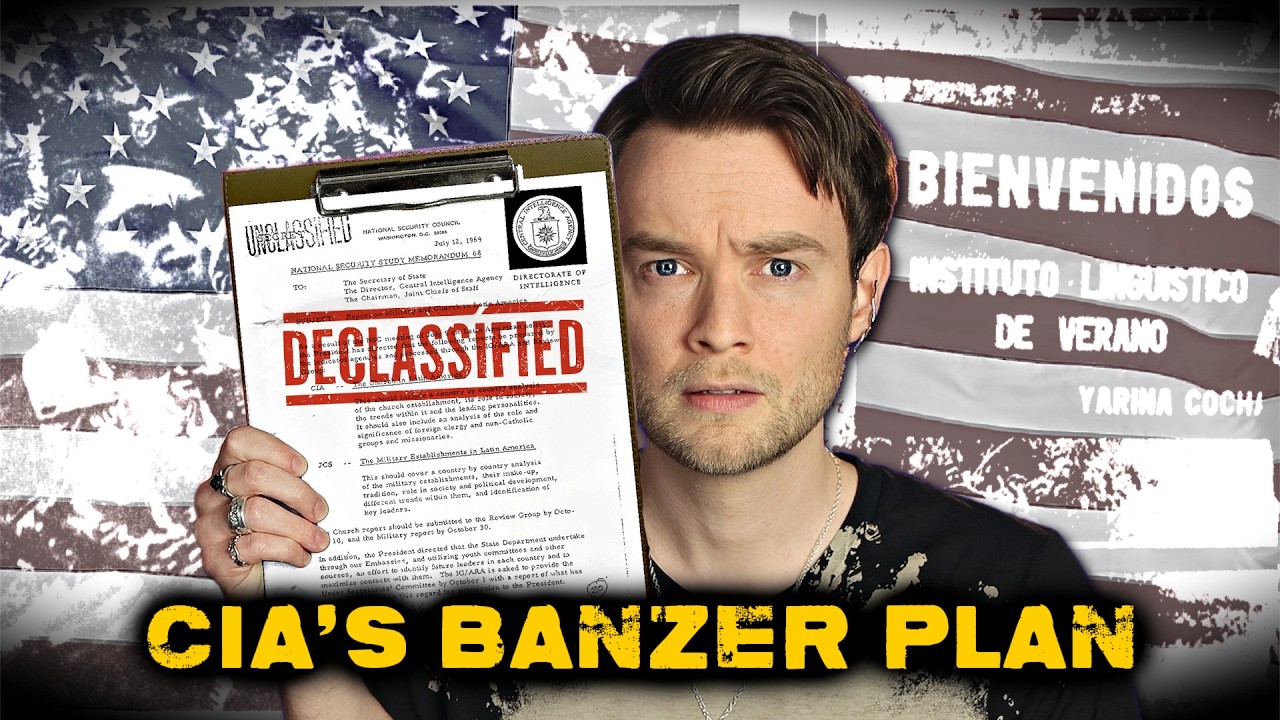
1975, not long after Nixon's ruminations about Catholicism, Bolivia's Hugo Banzer, with advice from his Nazi
18:17
18 minutes, 17 seconds
security chief, Klaus Barbie urged his interior ministry to draw up a plan against liberation theology. Para worked
18:25
18 minutes, 25 seconds
closely with the CIA to draw up what would be known as the Banzer plan, which was a direct attack on liberation
18:32
18 minutes, 32 seconds
theology. Bolivian intelligence joined by the CIA and by the intelligence services of 10 other Latin American countries began to compile dossas on
18:41
18 minutes, 41 seconds
liberation theologists to plant communist literature in churches to shut down any progressive church publication and to arrest and expel foreign priests
18:50
18 minutes, 50 seconds
and nuns who believed in liberation theology. Things are about to get even heavier somehow in this video. So,
18:58
18 minutes, 58 seconds
content warning for a discussion of genocide and torture, like even a little bit more explicitly than we've already
19:04
19 minutes, 4 seconds
discussed. Uh, Eric, let's find a time stamp where people can skip to um after
19:13
19 minutes, 13 seconds
that specific discussion is over. Under Brazil's military dictatorship, which the US financially supported at an
---
18:03
18 minutes, 3 seconds
Latin America. Progressive Catholics faced serious persecution alongside the people with which they organized. In
18:10
18 minutes, 10 seconds
1975, not long after Nixon's ruminations about Catholicism, Bolivia's Hugo Banzer, with advice from his Nazi
18:17
18 minutes, 17 seconds
security chief, Klaus Barbie urged his interior ministry to draw up a plan against liberation theology. Para worked
18:25
18 minutes, 25 seconds
closely with the CIA to draw up what would be known as the Banzer plan, which was a direct attack on liberation
18:32
18 minutes, 32 seconds
theology. Bolivian intelligence joined by the CIA and by the intelligence services of 10 other Latin American countries began to compile dossas on
18:41
18 minutes, 41 seconds
liberation theologists to plant communist literature in churches to shut down any progressive church publication and to arrest and expel foreign priests
Hugo Banzer[a] Suárez (Spanish pronunciation: [ˈuɣo ˈβanseɾ ˈswaɾes]; 10 May 1926 – 5 May 2002) was a Bolivian politician and military officer who served as the 51st president of Bolivia. He held the Bolivian presidency twice: from 1971 to 1978 as a military dictator; and then again from 1997 to 2001, as a democratically elected president.
Banzer rose to power via a coup d'état against socialist president Juan José Torres and repressed labor leaders, clergymen, indigenous people, and students during his 1971–1978 dictatorship. Several thousand Bolivians were either forced to seek asylum in foreign countries, arrested, tortured, or killed during this period, known as the Banzerato.
After Banzer's removal via a coup led by Juan Pereda, he remained an influential figure in Bolivian politics and would run for election to the presidency via the ballot box on several occasions, eventually succeeding in 1997 via a narrow plurality of 22.26% of the popular vote. During Banzer's constitutional term, he extended presidential term limits from four years to five and presided over the Cochabamba Water War, declaring a state of siege in 2000 that suspended several civil liberties and led to violent clashes between demonstrators and law enforcement.[1] After being diagnosed with lung cancer, Banzer resigned in 2001 and was succeeded by Vice President Jorge Quiroga.
...
Human rights groups claim that during Banzer's 1971–1978 tenure (known as the Banzerato) several thousand Bolivians sought asylum in foreign countries, 3,000 political opponents were arrested, 200 were killed, and many more were tortured. In the basement of the Ministry of the Interior or "the horror chambers" around 2,000 political prisoners were held and tortured during the 1971–1978 military rule.[12] Many others simply disappeared.[13] Among the victims of the regime were Colonel Andrés Selich, Banzer's first Minister of the Interior and co-conspirator in the August 1971 coup. Selich was accused of plotting to overthrow Banzer and died of blows sustained while in custody. Two other leaders with sufficient stature to potentially eclipse the dictator were murdered under suspicious circumstances while in exile: General Joanquin Zenteno Anaya and former president Juan José Torres, both in 1976. Klaus Barbie, former head of the Gestapo de Lyon, was integrated into the special services in order to "renew" repression techniques and received Bolivian nationality. During the Banzer government, drug trafficking experienced an unprecedented expansion that lasted until the 1980s.
Much of the stability achieved by the Banzerato was sustained by the constant flow of easy credit from abroad, which was often used on mammoth "white elephant" projects of dubious usefulness but which nonetheless impressed certain sectors of the population. The loans would soon raise Bolivia's external debt to record levels, but proved useful in the manipulation of political patronage. In 1975, Banzer restored diplomatic relations with Chile, broken since 1962, with an eye toward obtaining an access to the Pacific Ocean, denied to Bolivia since the loss of its maritime coast in the 19th century War of the Pacific. The Chilean dictator Augusto Pinochet offered a narrow outlet just north of the port of Arica, on the border with Peru, on lands that had previously belonged to that country. According to the terms of the treaty that handed that territory to Chile, Peru had to agree to any proposal of transferring that land to a third party. Peru refused to accept the Pinochet proposal and instead created its own counter-proposal, which declared Arica and its waters an area of joint-sovereignty between the three nations. Chile refused this proposal and talks with Bolivia ended. Diplomatic relations were once again frozen in 1978.
Venezuela
:{Despite American conservatives’ } :{ as the latest example of socialism run amok, the extreme human tragedy there is an }:exception:{ to socialist policies, not the rule: Elsewhere in South America, socialists have held power in both stable and unstable countries with both large and small economies, and ruin did not follow -- in fact, }::{several of them have thrived, including Bolivia, which, like Venezuela, also nationalized the country’s top industry under an authoritarian president.}:
- DeAngelis claimed that millennials support socialism only because they haven’t “seen it play out over time” and referenced Venezuela as one of the “extreme examples.”
- DeAngelis: “Why do we need to speculate what socialism would look like when we can actually just look around the world at examples. … Let’s start with Venezuela.”
- Catsimatidis: “We are fighting for the soul of America. … And to people that love socialism, you know what I said? ‘I’d buy you a one-way ticket to Venezuela. Enjoy it!’”
- Duppler: “Venezuela’s a perfect example” of “how socialism generally plays o...
2012 docu 49 min Spanish with English subtitles
A Documentary Film by Muireann de Barra & Aisling Crudden
:{
}:
suez?
https://www.youtube.com/watch?v=LAR8eVqwUpw
https://www.water-alternatives.org/index.php/cwd/item/107-a-world-without-water
cf movie even the rain
2002 realplayer Moyers NOW
https://www.pbs.org/frontlineworld/stories/bolivia/thestory.html
Cochabamba is a town of 800,000 situated high in the Andes Mountains of Bolivia. Two years ago, a popular protest there turned into a deadly riot. The army battled civilians in the streets on and off for three months, hundreds were arrested, a seventeen year-old boy was shot and killed, the government of Bolivia nearly collapsed. The issue was water.
The spark was privatization. A private consortium, dominated by the Bechtel Corporation of San Francisco, had taken over Cochabamba's water system and raised water rates. Protestors blamed Bechtel for trying to "lease the rain."
New Yorkerwriter William Finnegan traveled to Cochabamba to learn about the water war and to see what lessons could be drawn about privatization, globalization and the growing anger in Latin America over economic inequality.
Bolivia is the poorest country in South America. 70% of its people live below the poverty line. Nearly one child in ten dies before the age of five. The Bolivian economy, never strong, was wrecked by hyperinflation in the 1980s.
Desperate for relief, Bolivia has been faithfully following the dictates of the international lending community for the past fifteen years -- selling its airline, railroads, mines and electric company to private -- usually foreign-controlled -- companies. The economic shock therapy tamed inflation but led to severe recession and massive unemployment.
In the 1990s, Bolivia, under pressure from the United States, eradicated its most lucrative export - coca - the leaf that is used for cocaine.
"Drugs, illegal as they may be, they were 3% of the GDP, 18% of exports," Luis Quiroga, Bolivia's vice president during the water war, tells Finnegan. "Bad as it was, damaging as it was, if you look at it from a purely business standpoint...It [the drug trade] was Milton Friedman heaven: all privately run, no taxation, no regulation and in essence -- if you want to look at it cynically -- duty free access to markets," observes Quiroga, who is now Bolivia's president.
Politicians like Quiroga fully supported the eradication of coca, but the loss of drug money made the country even more dependent on international financial institutions like the World Bank. The Bank advised the country to continue selling its remaining assets, including water.
Cochabamba put its water system up for auction in 1999. Only one bidder showed up. The company, called Aguas del Tunari, a division of the large American construction firm Bechtel, promised to expand water service. In exchange the contract guaranteed the company a 15-17% profit.
Two months after taking over the water system, Aguas del Tunari raised the water rates. People, resentful and angry, took to the streets in protest. One of their leaders was Oscar Olivera, a long-time union activist. He and others tapped into the anger many Bolivians feel about their country's long history of political corruption and foreign domination.
"Everyone was protesting, everyone," journalist Luis Bredow tells Finnegan. "I've never seen anything like it in Bolivia. Housewives were throwing stones at the police. It really was a revolt."
Although a major American corporation was at the center of the conflict, not a single U.S. newspaper had a reporter on the scene. But news of the uprising was reaching a worldwide audience through the Internet, thanks to Jim Shultz, an American activist living in Cochabamba. Shultz shows Finnegan how he organized an e-mail campaign to pressure Bechtel to leave town.
The company finally withdrew and the uprising subsided.
But did anyone really win the water war?
Aguas del Tunari filed suit against the Bolivian government asking for $25 million in compensation. The case is being heard in Washington D.C., in an arbitration court run by the World Bank.
The water warriors who ousted Bechtel took control of the water system, vowing to run it as a human right, not as a commodity. But without new investment, they have been unable to improve or expand service.
Neither the government, nor the World Bank appears willing to help them.
leasing the rain
the world is running out of fresh water, and the fight to control it has begun.
In this "Letter from Bolivia" New Yorker correspondent William Finnegan describes the intersection of global freshwater shortages and efforts to privatize utilities in third world countries. After hearing news of the Cochabamba water revolts, Finnegan traveled to Bolivia "to find out how the global water business looks from ground."

In April of 2000, in the central plaza of the beautiful old Andean city of Cochabamba, Bolivia, the body of VÌctor Hugo Daza lay on a makeshift bier. Daza, a seventeen-year-old student, had been shot in the face by the Army during protests sparked by an increase in local water rates. These protests had been growing for months, and unrest had also erupted in other parts of the country. The national government had just declared martial law. In Cochabamba, a city of eight hundred thousand, the third largest in Bolivia, a good part of the population was now in the streets, battling police and soldiers in what people had started calling la guerra del agua-the Water War. Peasants from the nearby countryside manned barricades, sealing off all roads to the city. The protesters had captured the central plaza, where thousands milled around a tiled fountain and the catafalque of VÌctor Daza. Some of their leaders had been arrested and taken to a remote prison in the Amazon; others were in hiding.
The chief demand of the water warriors, as they were called, was the removal of a private, foreign-led consortium that had taken over Cochabamba's water system. For the Bolivian government, breaking with the consortium-which was dominated by the United States-based Bechtel Corporation-was unthinkable, politically and financially. Bolivia had signed a lucrative, long-term contract. Renouncing it would be a blow to the confidence of foreign investors in a region where national governments and economies depend on such confidence for their survival. (Argentina's recent bankruptcy was caused in large part by a loss of credibility with international bankers.) The rebellion in Cochabamba was setting off loud alarms, particularly among the major corporations in the global water business. This business has been booming in recent years-Enron was a big player, before its collapse-largely because of the worldwide drive to privatize public utilities.
For opponents of privatization, who believe that access to clean water is a human right, the Cochabamba Water War became an event of surpassing interest. There are many signs that other poor communities, especially in Third World cities, may start refusing to accept deals that put a foreign corporation's hand on the neighborhood pump or the household tap. Indeed, water auctions may turn out to test the limits of the global privatization gold rush. And while the number of populists opposing water privatization seems effectively inexhaustible-the leaders of the Cochabamba rebellion included peasant farmers and an unassuming former shoemaker named ²scar Olivera-the same cannot be said of the world's water supply. There was a great deal more than local water rates riding on the outcome of this strange, passionate clash in Bolivia.
The world is running out of fresh water. There's water everywhere, of course, but less than three per cent of it is fresh, and most of that is locked up in polar ice caps and glaciers, unrecoverable for practical purposes. Lakes, rivers, marshes, aquifers, and atmospheric vapor make up less than one per cent of the earth's total water, and people are already using more than half of the accessible runoff. Water demand, on the other hand, has been growing rapidly-it tripled worldwide between 1950 and 1990-and water use in many areas already exceeds nature's ability to recharge supplies. By 2025, the demand for water around the world is expected to exceed supply by fifty-six per cent.
Some of the resource depletion is visible from outer space. The Aral Sea, in central Asia, was until recently the world's fourth-largest lake. Then Soviet planners dammed and diverted its source waters for cotton irrigation. The Aral has since lost half its area and three-fourths of its volume. Its once great fisheries have vanished; all twenty-four species native to the lake are believed to be extinct. The local climate has changed, and dust storms now plague the region.
Aquifer depletion, though less visible, is an even more serious problem. There is sixty times as much fresh water stored underground as in lakes and rivers aboveground. And yet parts of northern China, to take one example, are approaching groundwater bankruptcy. Beijing's water table has dropped more than a hundred feet in the past forty years. In the United States, the Ogallala Aquifer, which reaches from Texas to South Dakota and is indispensable to farming on the Great Plains, is being drained eight times faster than it can naturally recharge. In vast areas of India, Mexico, the Middle East, and California's Central Valley the story is the same.
Meanwhile, more than a billion people have no access to clean drinking water, and nearly three billion live without basic sanitation. Five million people die each year from waterborne diseases such as cholera, typhoid, and dysentery. This enormous, slow-motion public-health emergency is, in large measure, a result of rapid, chaotic urbanization in the nations of the Global South. Traditional water sources have been polluted, destroyed, overtaxed, or abandoned.
Annual rainfall is not always a measure of water wealth. Poland, for instance, gets plenty of rain, but its lakes, rivers, and groundwater are so polluted that it has as little usable water as Bahrain. Arid regions with the means to pay (Southern California, the Persian Gulf States) already pipe water in from wetter areas. New technologies are being hurriedly developed: huge fabric bags holding millions of gallons of fresh water are being hauled by barges across the Mediterranean, and there are businessmen in Alaska who believe that the state's earnings from fresh water will eventually dwarf its earnings from oil.
For strategic planners at some of the world's largest corporations, the global freshwater shortage coincides opportunely with privatization. According to Johan Bastin, of the European Bank for Reconstruction and Development, "Water is the last infrastructure frontier for private investors." In the past fifteen years, municipal and regional water systems have been steadily coming onto the international market. Two French corporations, Vivendi Environment and Suez, lead the industry: Vivendi runs eight thousand systems in a hundred countries; Suez has operations in a hundred and thirty countries. The biggest American player, Bechtel, whose directors include former Secretary of State George P. Shultz, has always been notable for its political connections. The United States is itself a field for direct foreign investment in water. Suez is running Atlanta's water system, and Vivendi recently bought U.S. Filter, a national water-services group, for more than six billion dollars.
But the main push is in the Global South, where, over the past twenty years, the World Bank and the International Monetary Fund have effectively taken control of the economies of scores of nations that are heavily in debt. The Bank and the I.M.F. have been requiring these countries to accept "structural adjustment," which includes opening markets to foreign firms and privatizing state enterprises, including utilities. The Bank once had a quite different approach to public works: it was an enthusiastic financier of monumental projects, and would typically lend the money to build large dams. Many of the dams were spectacular failures, delivering few, if any, benefits (except to politicians and construction firms) while displacing millions of people and leaving behind environmental destruction and public debts. The Bank is now getting out of the dam business and into water privatization. It often works closely with the conglomerates, helping them to acquire the water assets of debtor nations.
The idea behind privatization is to bring market discipline and efficiency to bear on a crucial and frequently corrupt sector. Supporters argue that only private capital-which means, in practice, multinational corporations-can afford to expand water and sanitation networks sufficiently to reach the underserved poor. Since corporations are in business to make money, they often increase water rates. But, in theory, higher water rates can also help to promote conservation. Indeed, privatization advocates say, any valuable commodity-and this includes health care and education-that is provided free eventually gets taken for granted and wasted. According to this argument, turning water into a tradable commodity may even be the only practical way to avoid worldwide shortages and environmental disasters. Public subsidies for essential services such as water may sound like humane policy, but in the real world subsidies benefit the powerful, because they have the resources to manipulate them.
In Cochabamba, which has a chronic water shortage, this unintended consequence was grotesquely clear. Most of the poorest neighborhoods were not hooked up to the network, so state subsidies to the water utility went mainly to industries and middle-class neighborhoods; the poor paid far more for water of dubious purity from trucks and handcarts. In the World Bank's view, it was a city that was crying out for water privatization.
I went to Villa San Miguel, a ramshackle settlement on an arid hillside a couple of miles south of Cochabamba, to find out how the global water business looks from the ground. ...
===
==
https://theintercept.com/2021/05/04/bolivia-coup-trump-mit-evo-morales/
JUSTICE DEPARTMENT trial attorney repeatedly contacted Massachusetts Institute of Technology researchers asking, eventually under threat of subpoena, about research they had conducted on the 2019 Bolivian presidential election, according to emails obtained by The Intercept. Sent between October 2020 and January 2021, the emails point to the existence of the Justice Department inquiry and add new evidence to support Bolivian allegations that the United States was implicated in its 2019 coup.
The emails reveal the Justice Department’s involvement in the Bolivian coup regime’s criminal investigation into alleged voter fraud, which has not previously been reported. The inquiry targeted a pair of respected MIT researchers about their work for the Center for Economic and Policy Research, in which they broadly refuted suspicions that Bolivia’s socialist party had rigged the election.
The short-lived coup regime reached power following a clear script: In the weeks leading up to the Bolivian presidential election in October 2019, the opposition pumped endless propaganda through social media and television networks, warning that incumbent President Evo Morales would exploit widespread fraud to win reelection. Morales had become the first Indigenous president elected in Bolivia in 2005, at the head of his party Movement Toward Socialism, or MAS, and by 2019, he was running for his fourth term. He faced intense opposition, often framed in explicitly racist terms, from a Frankenstein coalition of right-wing Bolivians of European descent and supporters of former President Carlos Mesa, once a member of Bolivia’s left revolutionary party who had become hostile to Morales’s social democratic government.
Buen Vivir: The Rights of Nature in Bolivia and Ecuador ...
www.rapidtransition.org › stories › the-rights-of-nature...
1.
===https://www.alternet.org/2020/12/trump-coup-2649595275/IMIIn recent weeks, Donald Trump has been ridiculed, slathered with contempt, and repeatedly branded a "liar," as well as an existential threat to democracy in the United States, by the biggest media outlets in the country. This is in response to his attempts to reverse the results of the U.S. presidential election, and claiming—without evidence—that it was stolen. He still clings to these allegations, but he will be leaving the White House on January 20.
But just over a year ago, a similar effort was launched in Bolivia, and it actually prevailed. The country's democratically elected president, Evo Morales, was toppled three weeks after the October 20 vote, before his term was finished. He left the country after the military "asked" him to resign.
The similarities are remarkable. Leaders of the Bolivian opposition indicated before the votes were counted, as Trump did, that they would not accept the result if they lost. Like Trump, they had no evidence for their allegations of fraud when the votes were counted. And as with Trump, the falseness of their charges was obvious from day one.
Some readers may question the relevance of the comparison with a developing country whose democratic institutions have a shorter history, and are in important ways weaker than those in the U.S. government. But the Bolivian right would not have succeeded, where Trump has failed, if not for another important difference: the Bolivian right had powerful help from outside the country in pulling off their coup.
Not surprisingly some of this help came from the Trump administration, which stated the day after the coup that "Morales's departure preserves democracy and paves the way for the Bolivian people to have their voices heard."
Even more important help came from the Organization of American States (OAS), which, not coincidentally, gets 60 percent of its funding from the United States. The OAS also currently has a leader, Luis Almagro, who at the time of Bolivia's election needed the support of Trump and his allied right-wing governments in the Americas in order to be reelected as the head of the organization. The OAS issued a statement the day after the election, expressing "deep concern and surprise at the drastic and hard-to-explain change in the trend of the preliminary results."
This allegation turned out to be "false," as the New York Times would later report; but as the Times noted, this false allegation "changed the South American nation's history." It changed history because it served as the political foundation for the military coup on November 10, 2019.
Another similarity: remember when Trump and his Republican allies were saying that the Democrats were "stealing" the election here because the later, mostly mail-in votes were coming in overwhelmingly from Democrats? Of course this was false; the truth was simply that more Democrats than Republicans were voting by mail.
The OAS allegation in Bolivia was the same: for various reasons—including geography—votes in the pro-Morales areas came in later than those for the opposing candidates. This was obvious from the day after the election by simply looking at the areas where the earlier and later votes were coming from; the data was all on the web. That's why 133 economists and statisticians from various countries—the majority from the United States—signed a letter demanding that the OAS retract its false statements.
That's why four members of the U.S. Congress asked the OAS if they ever considered the possibility—which amazingly was not mentioned in three more OAS reports—that the later-reporting precincts were politically different from the earlier ones.
It's been a year, and the OAS still hasn't answered.
In October, the de facto government, which took power after last year's coup, held elections, after postponing them twice. Luis Arce, Evo Morales's economy minister for 13 years, won by a margin of more than 26 percentage points.
But the people killed by the post-coup government, including at least 22 people killed in two massacres committed by security forces, cannot be brought back to life. The victims were all Indigenous.
Like the effort of Trump in the United States—as seen in the recent Republican attempt to throw out hundreds of thousands of votes from Detroit, Michigan, where nearly 80 percent of residents are Black—the assault on democracy in Bolivia is also tied to systemic racism.
Evo Morales is the first Indigenous president in a country with the largest percent of Indigenous population in the Americas, who have overwhelmingly supported him and his party; the leaders of the coup are infused with white supremacists and seek to restore the dominance of the mostly white elite who ruled the country before Morales was first elected in 2005.
U.S. Representatives Jan Schakowsky and Jesus "Chuy" Garcia, both of Chicago, have called for Congress to investigate the role of the OAS in Bolivia following the 2019 election.
This is vitally important, because the coup, and the violence and political repression that followed, might never have happened without the OAS's pivotal role. Perhaps most importantly, the OAS had an enormous impact on the international and domestic media, with many journalists mistakenly believing that the OAS Electoral Observation Mission was impartial, and that therefore their allegations were true.
But the Bolivian coup is not the first time that the OAS has abused its authority as an electoral observer, in order to support a U.S.-backed effort to topple a democratically elected government. This happened in Haiti between 2000 and 2004. And also in Haiti, the OAS did something in 2011 that perhaps no election observers had ever done: they reversed the results of a first-round presidential election, without even a recount or a statistical analysis.
The OAS and its leadership must be held accountable, or these crimes will keep happening.
Mark Weisbrot is co-director of the Center for Economic and Policy Research in Washington, D.C. He is the author of Failed: What the "Experts" Got Wrong About the Global Economy (Oxford University Press, 2015).
This article was produced in partnership by the Center for Economic and Policy Research and Economy for All, a project of the Independent Media Institute.
FROM YOUR SITE ARTICLES
- Trump's coup attempt is very real — but there are several gaping ... ›
- Trump's purge at the Pentagon is increasing fears of a coup-in ... ›
- Four chilling signs Trump's attempted coup is escalating - Alternet.org ›
RELATED ARTICLES AROUND THE WEB
- Coup or no coup, Trump sets dangerous precedents - The ... ›
- Trump's Coup Attempt Isn't Over | The New Yorker ›
- Trump Floats Coup Plan So Wild Even Giuliani Is Terrified ›
- Is Trump Trying to Stage a Coup? - The Atlantic ›
:{===:(style="background-color:#ffffff;"):}:
:{well, it's official libtard fuckwit [boy kings? // GoT?]:(style="background-color:#ffffff;"):}:
:{ :(style="background-color:#ffffff;"):}:
https://www.alternet.org/2020/07/we-will-coup-whoever-we-want-elon-musk-and-the-overthrow-of-democracy-in-bolivia/
On July 24, 2020, Tesla’s Elon Musk wrote on Twitter that a second U.S. “government stimulus package is not in the best interests of the people.” Someone responded to Musk soon after, “You know what wasn’t in the best interest of people? The U.S. government organizing a coup against Evo Morales in Bolivia so you could obtain the lithium there.” Musk then wrote: “We will coup whoever we want! Deal with it.”
Musk refers here to the coup against President Evo Morales Ayma, who was removed illegally from his office in November 2019. Morales had just won an election for a term that was to have begun in January 2020. Even if there was a challenge against that election, Morales’ term should rightfully have continued through November and December of 2019. Instead, the Bolivian military, at the behest of Bolivia’s far right and the United States government, threatened Morales; Morales went into exile in Mexico and is now in Argentina.
At that time, the “evidence” of fraud was offered by the far right and by a “preliminary report” by the Organization of American States; only after Morales was removed from office was there grudging acknowledgment by the liberal media that there was in fact no evidence of fraud. It was too late for Bolivia, which has been condemned to a dangerous government that has suspended democracy in the country.
Lithium Coup
Over his 14 years in office, Morales fought to use the wealth of Bolivia for the Bolivian people, who saw—after centuries of oppression—remarkable advances in their basic needs. Literacy rates rose and hunger rates dropped. The use of Bolivia’s wealth to advance the interests of the people rather than North American multinational corporations was an abomination to the U.S. embassy in La Paz, which had egged on the worst elements of the military and the far right to overthrow the government. This is just what happened in November 2019.
Musk’s admission, however intemperate, is at least honest. His company Tesla has long wanted access at a low price to the large lithium deposits in Bolivia; lithium is a key ingredient for batteries. Earlier this year, Musk and his company revealed that they wanted to build a Tesla factory in Brazil, which would be supplied by lithium from Bolivia; when we wrote about that we called our report “Elon Musk Is Acting Like a Neo-Conquistador for South America’s Lithium.” Everything we wrote there is condensed in his new tweet: the arrogance toward the political life of other countries, and the greed toward resources that people like Musk think are their entitlement.
Musk went on to delete his tweet. He then said, “we get our lithium from Australia”; this will not settle the issue, since eyebrows are being raised in Australia regarding the environmental damage from lithium mining.
Suspension of Democracy
After Morales was removed, an insignificant far-right politician named Jeanine Áñez set aside the constitutional process and seized power. She showed the character of her politics when she signed a presidential decree on November 15, 2019, that gave the military the right to do whatever it wanted; even her allies found this to be too far and repealed it on November 28.
Arrests and intimidation of activists from the Movement for Socialism (MAS)—the party of Morales—began in November 2019 and still continue. On July 7, 2020, seven U.S. senators published a statement that said, “We are increasingly concerned by the growing number of human rights violations and curtailments of civil liberties by the interim government of Bolivia.” “Without a change in course by the interim government,” the senators wrote, “we fear that basic civil rights in Bolivia will be further eroded and the legitimacy of the crucial upcoming elections will be put at risk.”
There’s no need to worry about that, since the government of Áñez seems unwilling to hold an election. By all polls, Áñez looks likely to be defeated in the general elections. A recent poll by El Centro Estratégico Latinoamericano de Geopolítica (CELAG) says that Áñez will get a mere 13.3 percent, far behind the Movement for Socialism’s Luis Arce (41.9 percent) and the center right’s Carlos Mesa (26.8 percent). The election was supposed to have taken place in May, but it was rescheduled for September 6; it has now been postponed once more, this time to October 18. Bolivia would not have had an elected government for an entire year.
Luis Arce of MAS recently told Oliver Vargas, “We face persecution, we face surveillance… we are facing a very difficult campaign.” But, he said, “we are sure that we will win these elections.” If elections are permitted.
The CELAG study shows that 9 out of 10 Bolivians have seen their incomes decline due to the coronavirus recession. Because of this—and of the attack by this government on the MAS—65.2 percent of Bolivians have a negative appraisal of Áñez. It is important to note that due to the positive policies of Morales’ MAS, there is widespread support for a socialist orientation; 64.1 percent of Bolivians support taxes against the rich, and Bolivians in general support the resource socialism of the MAS and Morales.
CoronaShock and Bolivia
The government of Áñez has been utterly incompetent regarding the coronavirus. The number of confirmed cases of COVID-19 in this country of 11 million people is 66,456; since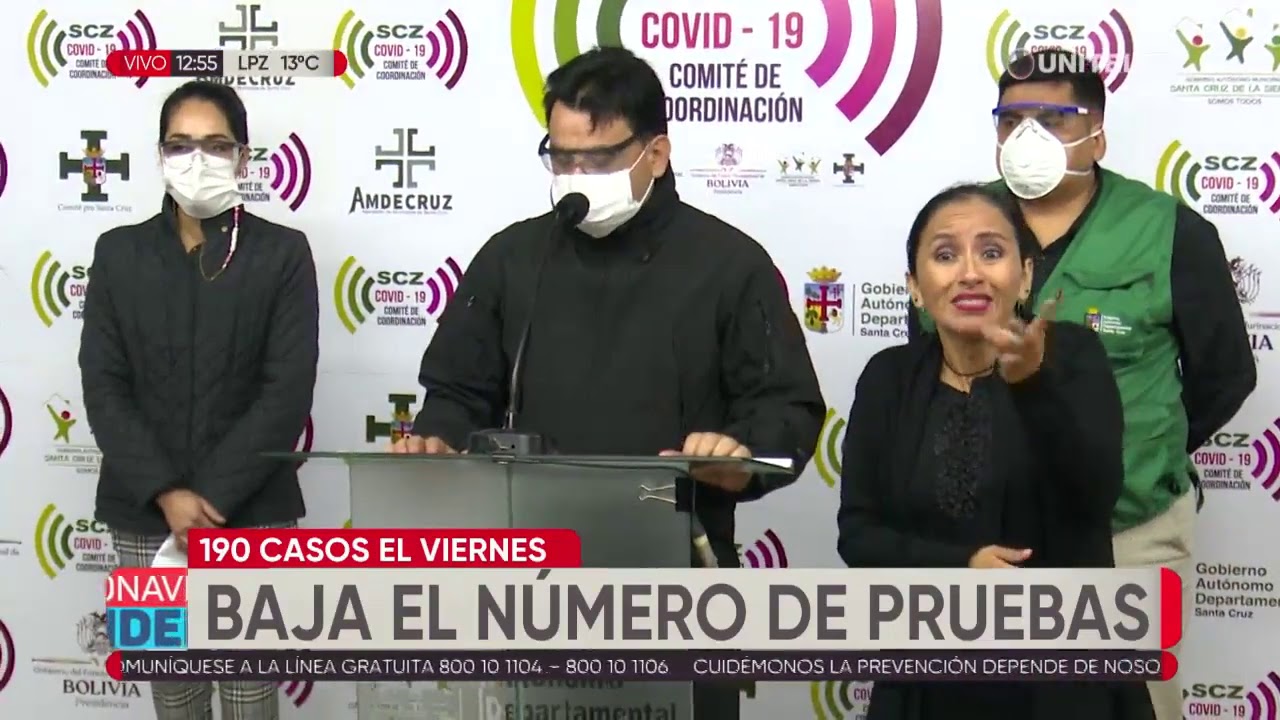 is low, the number is likely much higher.
Musk returns to our story. Earlier this year, on March 31, Bolivia’s Foreign Minister Karen Longaric wrote an obsequious letter to Musk asking him about the “offer of cooperation posted by you regarding ventilators ready to be dispatched to countries where they are needed the most.” Longaric said, “If it is not possible to send it to Bolivia, we can arrange its receipt in Miami, FL. and transport them from there as quickly as possible.” No such ventilators came.
Instead, the government bought ventilators from a Spanish supplier for $27,000 for each of the 170 devices; Bolivian producers had said they could supply ventilators for $1,000 per unit. The health minister in the Áñez government—Marcelo Navajas—was arrested for this scandal.
Morales
Evo Morales read Musk’s tweet about the coup in Bolivia and responded: “Elon Musk, the owner of the largest electric car company, says about the coup in Bolivia: ‘We will coup whoever we want.’ Another proof that the coup was about Bolivian lithium; at the cost of two massacres. We will always defend our resources!”
The reference to the massacres is important. In November, from Mexico City, Morales watched as the government of Áñez let loose the dogs of war against the people of Bolivia from Cochabamba to El Alto. “They are killing my brothers and sisters,” Morales said at a press conference. “This is the kind of thing the old military dictatorships used to do.” It is the toxic character of the government of Áñez, backed fully by the U.S. government and Elon Musk.
Protests across Bolivia began on July 27 for the restoration of democracy.
Vijay Prashad is an Indian historian, editor, and journalist. He is a writing fellow and chief correspondent at Globetrotter, a project of the Independent Media Institute. He is the chief editor of LeftWord Books and the director of Tricontinental: Institute for Social Research. He has written more than 20 books, including The Darker Nations and The Poorer Nations. His latest book is Washington Bullets, with an introduction by Evo Morales Ayma.
Alejandro Bejarano is a Bolivian musician, documentarian, and social media manager. In 2016, he received the Medal of Honor for Cultural Merit of the Plurinational Legislative Assembly of Bolivia.
This article was produced by :{Globetrotter:(style="box-sizing:border-box;outline:none;margin:0px;padding:0px"):}:, a project of the Independent Media Institute.
==
==
https://www.alternet.org/2020/02/bolivia-coup-was-based-on-false-claims-of-election-fraud/
no lnx
Bolivia coup was based on false claims of election fraud
Written by Eoin Higgins / Common Dreams February 28, 2020
A new study released by a pair of MIT researchers Thursday reveals that, contrary to claims from the U.S.-backed Organization of American States, there was no fraud in Bolivia’s Oct. 20, 2019 elections — an accusation used by the OAS and others as a pretext for supporting the coup in the country that deposed President Evo Morales and replaced him with an unelected right-wing government.
“Good lord,” tweeted MSNBC journalist Chris Hayes. “Given the fact the entire Morales government was toppled over accusations of election fraud, the OAS has a lot to answer for.”
The Intercept’s Jon Schwarz took a similar approach to the findings and the OAS’ conclusions.
Jon Schwarz
@schwarz
In a surprising development, it appears that the same political forces and media that have lied about absolutely everything about Latin America for the past 100 years were lying again https://www.washingtonpost.com/politics/2020/02/26/bolivia-dismissed-its-october-elections-fraudulent-our-research-found-no-reason-suspect-fraud/ …
Analysis | Bolivia dismissed its October elections as fraudulent. Our research found no reason to...
Bolivians will hold a new election in May — without ousted President Evo Morales.
washingtonpost.com
593
9:01 AM - Feb 27, 2020
Twitter Ads info and privacy
248 people are talking about this
MIT researchers John Curiel and Jack R. Williams reviewed the OAS report on the election for the Washington Post and found that the “election irregularities” cited by the group were based on “problematic” statistical claims. The OAS report rested its claim on the assumption that these so-called irregularities gave Morales a boost in numbers that raised his results over 10% higher than any other candidate, precluding a runoff election.
The researchers say they requested a response from the OAS about their findings, but received no reply.
Curiel and Williams’ study was commissioned by the Center for Economic and Policy Research (CEPR). The group’s co-director, Mark Weisbrot, said in a statement that the OAS has a lot of explaining to do after facilitating the coup through faulty information.
“The OAS greatly misled the media and the public about what happened in Bolivia’s elections, and helped to foster a great deal of mistrust in the electoral process and the results,” said Weisbrot.
The orgnaization’s report bolstered the accusations of fraud in the Nov. 10 OAS report that precipitated the coup and the institution of hard-right legislator Jeanine Añez as president. The ensuing unrest and threats against he and his family, as Common Dreams reported at the time, forced Morales to flee the country for Mexico.
According to Curiel and Williams, the data used by OAS doesn’t line up with the organization’s conclusion:
Our results were straightforward. There does not seem to be a statistically significant difference in the margin before and after the halt of the preliminary vote. Instead, it is highly likely that Morales surpassed the 10-percentage-point margin in the first round. …
There is not any statistical evidence of fraud that we can find — the trends in the preliminary count, the lack of any big jump in support for Morales after the halt, and the size of Morales’ margin all appear legitimate. All in all, the OAS’ statistical analysis and conclusions would appear deeply flawed.
CEPR’s Weisbrot declared the researchers’ findings troubling and questioned the OAS’ credibility.
“This important analysis from MIT election researchers is the latest to show that the OAS’ statements were without basis, and that simple arithmetic shows that there is no evidence that fraud or irregularities affected the preliminary results, or the official results ? the ones that actually matter,” Weisbrot said. “The OAS needs to explain why it made these statements and why anyone should trust it when it comes to elections.”
“So much for that Bolivian election fraud,” tweeted the Intercept’s Ryan Grim.
The OAS is set to monitor new national elections in Bolivia set for May 3. Morales, still in exile, has effectively been barred from running.
Williams told Common Dreams that his and Curiel’s findings cast doubt on the organization’s impartiality and ability to act as a neutral arbiter.
“The OAS’s report has basic methodological and statistical errors that make it difficult to see the OAS as an impartial election observer,” said Williams. “The fact that they did not respond to researchers asking about their report on Bolivia seems to suggest they know this.”
National Nurses United director of communications Charles Idelson said on Twitter that the findings throw cold water on an attack line deployed by right-wing opponents of Sen. Bernie Sanders’ 2020 campaign for the Democratic presidential nomination, who have used his statement at Tuesday’s debate that the U.S. meddles in other countries against him.
“The fraudulent right wing military coup in Bolivia was carried out with Trump administration support,” said Idelson, “but some apparently still pretend the U.S. never overthrows governments of other countries.”
Curiel and Williams also point to the role in the media for uncritically regurgitating OAS claims on face value as the coup against Morales’ Movimiento al Socialismo (MAS-IPSP) party was underway.
“The media has largely reported the allegations of fraud as fact,” the researchers write. “And many commentators have justified the coup as a response to electoral fraud by MAS-IPSP.”
Utah-based progressive activist Tom Taylor called for accountability on the part of the media.
“Our news outlets took what known liars like John Bolton said about Morales at face value,” said Taylor. “Zero critical thinking. The journalists were old enough to remember when we were lied into the Iraq War.”
“There’s no other way to put it,” Taylor added. “Our media supported a coup.”
==
==
new
https://www.alternet.org/2020/02/they-are-afraid-of-democracy-bolivias-evo-morales-protests-as-tribunal-blocks-his-senate-run/
no lnx
‘They are afraid of democracy’: Bolivia’s Evo Morales protests as tribunal blocks his Senate run
Written by Jake Johnson / Common Dreams February 21, 2020
Former Bolivian President Evo Morales on Friday accused the country’s Supreme Electoral Tribunal of being “afraid of democracy” after the seven-member body late Thursday barred Morales from running for Senate on the grounds that he did not meet residency requirements.
Morales, who is currently living in Argentina after being ousted in a military coup last November, said during a press conference in Buenos Aires on Friday that the tribunal’s decision was “illegal and unconstitutional” and alleged the U.S. government was involved in the ruling.
In a tweet Thursday night, Morales called the decision a “blow to democracy.”
“The members of the TSE know I meet the requirements to be a candidate,” added Morales, Bolivia’s first indigenous president. The former president claimed that the ultimate goal of the current right-wing government of Jeanine Áñez is to ban the Movement for Socialism (MAS), Morales’ left-wing political party.
In December, the Áñez government issued an arrest warrant against Morales, accusing the former president of “terrorism and sedition.”
Ben Norton
@BenjaminNorton
Bolivia's only elected president, Evo Morales, characterized his ban from running as a Senate candidate as an assault on democracy. "They are afraid of democracy," he said in a presser in Buenos Aires. He accused the Electoral Court of submitting to the dictatorship and US gov't. https://twitter.com/FreddyteleSUR/status/1230862972270018562 …
Freddy Morales
@FreddyteleSUR
Evo Morales calificó su inhabilitación como candidato al Senado, como un atentado a la democracia. "Tienen miedo a la democracia", dijo en rueda de prensa en Buenos Aires. Acusó al Tribunal Electoral de someterse a la "dictadura" y al gobierno de los EE.UU.
Bolivian elections are set for May 3, the first contest since the November coup that deposed Morales and paved the way for Áñez to declare herself interim president. Bolivian lawmakers in November approved a measure calling for the new elections and barring Morales from participating.
Áñez announced last month that her name will be on the presidential ballot in May after previously suggesting it would be improper for her to run.
A poll by Ciesmori released earlier this week found that Luis Arce, the MAS presidential candidate, is leading the presidential field with 31.6 percent support. Former Bolivian President Carlos Mesa polled in second place with 17% support and Áñez ranked third with 16% support.
The ouster of Morales in November was followed by massive military and police repression of indigenous Bolivians, who took to the streets among others to voice opposition to the right-wing government. Days after declaring herself interim president on Nov. 12, Áñez issued a decree shielding military and law enforcement from prosecution for gunning down demonstrators.
Earlier this week, Morales tweeted that in just three months in power the Áñez government has “destroyed” the economic and social welfare policies he put in place during his nearly 14 years as president.
“This situation hurts us a lot,” Morales said. “They want to get rid of all our social programs and privatize them.”
==
==
DN tag
https://www.democracynow.org/topics/bolivia
==
https://www.counterpunch.org/2020/01/24/what-the-right-wing-in-latin-america-means-by-democracy-is-violence/
ctrpunch no lnx
jaNUARY 24, 2020
What the Right Wing in Latin America Means by Democracy Is Violence
by VIJAY PRASHAD
It was a curious exchange. Frustrated by the attacks on his party—the Movement for Socialism (MAS)—former president of Bolivia Evo Morales made an audio recording in which he called upon his supporters to form militias. Maximilian Heath of Reuters went to Argentina to speak with Morales about this leaked recording; Morales said, “In Bolivia, if the armed forces are shooting the people, killing the people, the people have the right to organize their security.”
Morales’ anxiousness is rooted in fact. The Inter-American Commission on Human Rights—a body of the pro-U.S. Organization of American States—reported in December 2019 that there have been a series of massacres conducted by the armed forces of the current interim government in Bolivia. The use of the word “massacre” in this report is significant; these were not clashes or conflicts, but the targeted murder of civilians who supported MAS and Morales.
The interim president of Bolivia, Jeanine Áñez Chávez, has made inflammatory statements about the indigenous support base of MAS and Morales. She has frequently spoken of them with derision, even saying that she dreams of a Bolivia without “satanic indigenous rites” and that “the city is not for the Indians.” Áñez signed Supreme Decree no. 4078 that exempted the military from any criminal responsibility for its use of force; she wants to ban MAS, and her interior minister has filed a warrant for the arrest of Morales. This is a rapid and disturbing attack on the political fabric of Bolivia.
Apology
Morales’ statement about militias came merely as a way to say that he worried about the repression and violence occasioned by the interim government and the military, now immune from prosecution. U.S. President Donald Trump’s main envoy to Latin America—Mauricio Claver-Carone (who organized the bankrupting $57 billion loan to Argentina when he was the U.S. director at the International Monetary Fund)—went to Bolivia and attacked Morales. Morales, Claver-Carone said, is fomenting insurrection from Argentina. This is a bizarre statement.
Morales was re-elected in 2014. There was not a whiff of impropriety in that election. He had a mandate to remain in office until January 2020. Even if there was a problem in the 2019 election, he should have remained in office until this month. But he was removed by a U.S.-backed military coup. That coup is not the insurrection that worries Claver-Carone. What worries him is that Morales is concerned about his supporters who are being intimidated and killed. It was not the coup, but Morales’ statement of anguish that became the scandal. Morales then apologized for his statement.
Elections
Bolivia will face an election on May 3. The Movement for Socialism Party nominated Luis Arce Catacora, Bolivia’s former minister for the economy, as its presidential candidate, and David Choquehuanca, Bolivia’s former foreign minister, as its vice-presidential candidate. MAS has been deeply bruised. More than 100 government officials from the MAS party are either in detention or face criminal charges, while a handful are in the Mexican embassy in La Paz (they have been denied safe passage to the airport).
The anti-coup uprising in Chapare province led the interior minister Arturo Murillo to make a statement that he would perhaps disenfranchise the entire province if the rebellion continues (the rebels burned down a hotel that he owns). Supporters of MAS and its party workers are afraid to leave their homes, let alone campaign in the election. Morales’ statement came as a mirror of their own anxiousness.
No one imagines that there is going to be a “fair election.” The Trump administration has said it will send a USAID team to Bolivia to monitor the situation, and then to resume U.S. aid to the country; the U.S. will also monitor the elections. Between the U.S. monitors and Supreme Decree no. 4078, the conditions for a fair election simply do not apply.
And not many outside the region seem to have any problem with this attack against democracy.
‘Staggering Number’
On January 14, the UN’s human rights body released a brief statement on the killings of human rights activists in Colombia. The UN said that a “staggering number of human rights defenders” were killed last year in Colombia; by the UN’s count, between 107 and 120 activists were murdered. In 2018, 115 human rights defenders were killed, and in the first two weeks of January of this year, 10 human rights defenders have already been murdered. Most of them are from left-wing people’s organizations.
The UN numbers are conservative. For 2018, the Center for Research and Popular Education Peace Program, based in Colombia, documented 1,151 death threats, 648 assassinations, and 304 cases of physical injuries. But the UN’s trendline is correct. Of the murders last year, 98 percent took place in very poor rural areas. The killers, the UN suggests, are “criminal groups and armed groups linked to illicit economies in areas vacated by the FARC-EP.” In other words, right-wing paramilitary groups and their affiliated drug gangs have taken advantage of the peace treaty signed by the Left to terrorize the countryside.
In the Tricontinental: Institute for Social Research dossier on Colombia (December 2019), the argument is made that the Colombian oligarchy does not want to move toward peace because this would shift the needle of Colombian politics toward the people’s movements and the Left. The continuation of the war—now as assassination and intimidation—favors the oligarchy. They prefer this violence to democratic politics.
These targeted murders and this targeted intimidation is only one part of the problem in Latin America. The other is that this region—with its outrageous social inequality—experiences violence at extreme levels. While Latin America is home to only 8 percent of the world’s population, 33 percent of all homicides occur in the region. This includes high violence against young men, and it includes the highest rates of femicide in the world. None of the right-wing governments are interested in addressing this fundamental problem for the hemisphere.
What the government of Iván Duque is doing in Colombia is what the interim government of Jeanine Áñez is doing in Bolivia—both are using extreme state violence against trade unionists and peasant organizers, against socialist leaders and indigenous leaders. This extreme violence undermines the possibility of democracy and allows the oligarchy to be re-elected in polling booths where the Left not dare enter.
Héroes del Ñancahuazú
In 2016, Evo Morales inaugurated the General Juan José Torres Anti-Imperialist Command School in the town of Warnes. General Juan José Torres was the socialist president of Bolivia in 1970-71. He was overthrown in a coup by the Bolivian general favored by the CIA, Hugo Bánzer. Bánzer had closely worked with the Nazi leader Klaus Barbie to set up the CIA-run Operation Condor to search out and kill any and every communist in the hemisphere. They killed Torres in 1976. The combination of the CIA, Nazis, and the oligarchies of the region is not something from the past: Brazil’s culture secretary—Roberto Alvim—recently plagiarized a speech from the Nazi Joseph Goebbels.
The interim government’s interim Defense Minister Luis Fernando López said that his government has renamed the Anti-Imperialist school. “We are not anti-anything,” he said, as if his government is not anti-Morales, anti-MAS, and anti-communist. The school has been renamed Héroes del Ñancahuazú.
In 1967, Che Guevara and his National Liberation Army of Bolivia operated near the Ñancahuazú River in Bolivia’s southeast. The government of General René Barrientos Ortuño, the CIA agent Félix Rodríguez, and the Nazi Klaus Barbie ran the operation to destroy Guevara’s campaign. They named their operation the Ñancahuazú Campaign. The Anti-Imperialist School in Bolivia now honors the men—led by a CIA agent and a Nazi—who killed Che Guevara. It sends a message to the Che Guevaras of today: We will get you. This is the democracy of the oligarchy in Latin America today.
This article was produced by Globetrotter, a project of the Independent Media Institute.
==
dn 120
Bolivia’s Movement for Socialism Candidate Luis Arce Returns to Bolivia
==
Bolivia Issues Arrest Warrant for Evo Morales
===
DEC 09, 2019
Evo Morales Travels to Cuba for Medical Appointment
===
Bolivia after Morales: An ‘ungovernable country’ with a power vacuum
Marten W. Brienen, Oklahoma State University
Evo Morales is at least the ninth Bolivian president to by forced out of office by a mass uprising. But even in exile he remains by far the most popular politician in the country.
==
1219 dn
==
Elise Swain
Bolivian Soldiers Tear Gas Funeral Procession for Slain Protesters
==
https://www.alternet.org/2019/11/old-religious-tensions-re-surge-in-bolivia-after-ouster-of-longtime-indigenous-president/
no lnx many
Old religious tensions re-surge in Bolivia after ouster of longtime indigenous president
Evo Morales, Wikipedia
Written by Matthew Peter Casey, The Conversation November 21, 2019
Days after the powerful Bolivian leader Evo Morales was forced to resign as president after allegations of election fraud, Bolivia’s new interim president made her first public appearance.
Climbing to the balcony of the Presidential Palace in La Paz, Jeanine Áñez – formerly a senator representing Bolivia’s weak political opposition – grabbed a Bible.
“This Bible is very important to us. Our strength is God,” said the 52-year-old politician from the lowlands province of Beni, holding the modern, pink-covered book up for the cameras. “Power is God.”
Invoking a Christian god as the source of political power, while commonplace in many countries, is a radical departure in Bolivia after Morales’ 14-year tenure.
Morales, a native Bolivian of Aymara indigenous descent, was the South American country’s first indigenous leader since independence from Spanish colonial rule in 1825. Indigenous people and symbols – like the multicolored Wiphala flag that represents the many Andean indigenous groups, and the Andean cross, or chakana – filled the halls of power in Bolivia during his three terms.
Indigenous religiosity
Bolivia, a mountainous country north of Argentina, is 41% indigenous, according to the 2012 census. Most of the rest of Bolivia’s 11 million people consider themselves to be mixed race, though analysts say that self-reported census data tends to undercount the indigenous population.
Religion does not map neatly onto ethnic divisions in Bolivia. Only around 4% of Bolivians claim to practice indigenous religions. The majority – about 75% – are Catholic, and 18% belong to evangelical or other Protestant denominations.
However, as my ongoing research shows, religion, ethnicity and culture are tightly woven together in the Andes region. In Bolivia, as elsewhere in Latin America, indigenous people may belong to Christian churches and also observe native religious practices.
Since independence, Bolivian political leaders have promoted the country’s Hispanic and Catholic heritage, not in addition to its indigenous history but to the exclusion of it. In the 20th century, indigenous people who revolted against their economic and social marginalization were brutally repressed.
Throughout the Cold War, Bolivian Fascist party members pushed for a Catholic republic modeled on Francisco Franco’s Spain. Generations of Catholic school students were taught Christian nationalism from their Spanish Jesuit teachers.
Morales, a former coca farmer, recognized indigeneity as the heart of Bolivian nationhood.
Under Morales’ leadership, Bolivia’s name was changed to the Plurinational State of Bolivia in 2009, and the law now recognizes 36 indigenous languages and ethnicities. Morales also protected the right of indigenous communities to practice their religion. August became the Month of Pachamama, the Andean mother earth – 30 days of ancestral celebrations kicked off by the ritual sacrifice of llamas and other animals on the banks of Lake Titicaca.
Morales also built a new government building designed to acknowledge the country’s indigenous heritage. The 29-story Casa Grande del Pueblo – “Big House of the People” – blends hyper modern design with indigenous artistic flourishes. The interior decor is inspired by the ceremonial ruins of the pre-Inca civilization of Tiahuanaco, located 40 miles east of La Paz.
Distancing Bolivia from Catholicism
Morales, who has taken asylum in Mexico since resigning as president, also worked to separate church from state in Bolivia. Bolivia’s new constitution, written in 2009, formally ended the Catholic Church’s designation as the protected religion of the state.
Morales is Catholic. But he is openly critical of the Catholic Church, which supported the Spanish colonization of Latin America in the 16th century and, throughout the 20th century, aided Fascist party organizing.
In 2015, he famously gave Pope Francis a hammer and sickle crucifix designed by the Bolivian priest Luis Espinal before his assassination in 1980 – a symbol of Liberation Theology, a progressive Latin American strand of Catholicism that challenged dictatorships and championed the cause of the poor during the 1970s and 1980s.
Morales’ secular agenda was met with criticism from conservative Christian groups. Some viewed the reforms as fomenting “paganism.” Others said he promoted atheistic socialism.
A Christian nationalist revival
The interim administration in Bolivia has ties to the conservative Christian groups that were highly critical of Morales throughout his administration.
As senator, interim President Áñez made openly anti-indigenous statements. In a 2013 tweet, now deleted, she referred to native Aymara celebrating their new year with ancestral rituals as “satanic.”
And just five days before her innaugeration, Áñez mocked a group of indigenous Quechua men on Twitter because they were dressed in ritual vestments with modern shoes and blue jeans, writing, “Original Peoples???”
Her rise to power has reignited some of the anti-indigenous sentiment that was so dominant in Bolivia before Morales’ administration. Since Morales’ ouster, there are reports of Wiphalas flags being torn down and burned. Police officers and military members were filmed cutting the indigenous flag from their uniforms.
“Bolivia for Christ, Pachamama will never again enter this palace,” said the protest leader Luis Fernando Camacho, an Áñez ally, kneeling before the Bible on the Bolivian flag at the government palace on Nov. 10.
Indigenous Bolivians fearful
Indigenous Bolivians are concerned about the direction their country is headed under Áñez, though she may only be in power for a few months until new elections are called.
In the days since Morales left office, masses of Morales supporters have marched in from the countryside to convene in Bolivian cities, where they’re calling for the end to the interim government.
Many say they fear repression from the military under the interim government. They worry that the political violence that has gripped Bolivia since its Oct. 20 election will turn into a racialized, religious violence targeting indigenous people.
“All of us who have Indian-looking faces are signaled as part of Morales’ party, especially indigenous women,” the feminist activist Adriana Guzmán said to the news outlet Telesur news after Morales’ removal.
With dozens dead and more than 700 injured in military opperations ordered by Áñez “to re-establish order,” the political situation remains volatile.
Get the best of The Conversation, every weekend. Sign up for our weekly newsletter.
Matthew Peter Casey, Clinical Assistant Professor of History, Arizona State University.
==
evangelicals burning houses?
Bolivia Finally Gives Evangelicals the Same Rights as Cath ...
https://www.christianitytoday.com › news › april › bolivia-gives-evangelic...
1.
Celebrating new religious freedom law, Bolivian evangelicals ...
https://religionnews.com › 2019/07/29 › celebrating-new-religious-freedo...
1.
https://theconversation.com/bolivia-in-crisis-how-evo-morales-was-forced-out-126859
evo Morales has left Bolivia on a plane for Mexico, a day after he resigned as president.
Morales and his vice-president, Álvaro García Linera, stood down from office on November 10, following a suggestion by the head of the military, Williams Kaliman.
Met with jubilation and despair by different sectors of Bolivian society, the resignations were the culmination of weeks of unrest following presidential and parliamentary elections on October 20. Morales initially appeared to have won in the first round, but the whole process was overshadowed by accusations of electoral fraud and the spectre of military intervention.
Nothing at the moment is black and white. The events represent both a military coup d’état and a moment of mass protest that unseated the government.
For and against Morales
The social base of Morales’s political party, Movement Towards Socialism (MAS), are the peasant organisations of the Andean highlands altiplano and the semi-tropical valleys of Cochabamba, alongside a group of unions and federations which represent peasants and rural proletarian labourers. They have an organic relationship with the MAS and as such will all turn out to vote for and defend it on the streets.
This hard core of social support is complemented by those who work in sectors that have benefited from the politics of the MAS. These include swaths of the informal petty commodity producers and hidden wage labourers found in the popular economy, miners employed by both the state and cooperatives, and sections of the lower middle and professional classes who feel Morales has reduced the stigma they confront in their day-to-day lives. These groups, as I examined in my own PhD research, felt excluded and unrepresented within the liberal parliamentary democracy before the election of Morales in 2006.
The opposition to Morales is also comprised of multiple different – and contradictory – currents. First, there is a group concerned with the abstract notion of representative democracy, comprised of the urban middle-classes and university students. This is probably the largest opposition group and is found in all nine departmental capitals.
The second are indigenous groups which do not share the developmental agenda of the MAS government, and are in the pathways of extractive or large-scale infrastructure projects. The most visible of this opposition has come from the lowland indigenous groups, particularly those in the Isiboro Sécure National Park and Indigenous Territory and groups in the Chaco regions affected by hydrocarbon extraction. Others include groups in the Madidi national park opposing the megadams Bala and Chapete and the ayllus, socio-territorial units of Aymara indigenous communities, of North Potosí.
Increasingly powerful regional opposition groups are also concerned with the distribution of power and resources within the country. The indigenous opposition to Morales in the city of Potosí can be categorised as part of this group, as can the civic committees of the departments of Beni, Pando, Santa Cruz and Tarija.
[Opponents of Evo Morales celebrate his resignation in La Paz on November 10. cop?]
Coup d'état?
Time accelerated in the period following presidential and parliamentary elections in Bolivia on October 20, with a decade’s worth of political events unfolding in the space of a couple of weeks, reorienting the political terrain. Yet time has also slowed down, with observers from afar looking on as if at a car crash in slow motion.
That Morales and García Linera stood down at the behest of the military is no surprise, and the possibility of a coup became increasingly likely in the days of protests and civic strikes between election day and November 10.
But the story of a coup d’état is by no means the whole story – and the ability of the three opposition groups to construct a multitude of popular forces powerful enough to direct the political currents in this moment has been astounding. In the wake of the election, the city of Santa Cruz was shut down for weeks by a general strike – the longest in the city’s history – while the streets of La Paz, Oruro, Potosí and Cochabamba were also barricaded.
The disorganised masses who congregated and burnt down vote counting stations in Oruro, Potosí, Santa Cruz and Tarija following the suspension of the quick count broadcast on the night of October 20, coalesced into a movement strong enough to coordinate and sustain political activity against the MAS government.
During Morales’s final days in office, they were joined by social groups once supportive of the MAS, including the Bolivian Workers’ Central. In this sense, the resignation of Morales and García Linera follows weeks of massive social protest.
Probably the most remarkable dynamic in this sped-up unfurling of history is the emergence of Luis Fernando Camacho, head of the Pro Santa Cruz Committee, from the backwaters of regional, right-wing politics in Santa Cruz to a political figure on the national scene. The arrival of the evangelical right to Bolivian politics – first in the form of presidential candidate Chi Hyun Chung and now in the figure of Camacho – has been a long time coming, but is nothing to celebrate.
Camacho, who speaks of bringing the bible to Bolivian politics, has been one of the more prominent figures calling for military intervention. The far-right currents in the opposition movements have created the conditions that allowed more extreme opposition groups to burn down the houses of several prominent MAS allies during the night of November 9.
These acts of violence, coupled with the initial findings of an audit of the election by the Organisation of American States of the elections, led Morales to call for new elections, overseen by a reconstituted Supreme Electoral Tribunal. But by the day of Morales’s resignation the demands of many protesters had surpassed the call for new elections and now only Morales’s exit would do.
Power vacuum
[A handout photo from the Mexican foreign ministry of Evo Morales on a plane to Mexico. EPA
In the wake of the resignations, both Carlos Mesa, Morales’s main electoral opponent and Camacho demanded new elections without the participation of Morales. The urban support base of the MAS took to the streets in violent protest.
The preliminary report from the OAS audit into electoral fraud – whose methodology has been questioned by some experts – stated that even though there were numerous voting irregularities, it’s highly probable that Morales would have captured the largest share of the vote anyway.
Without Morales on the ballot paper in a future election, a large section of the electorate will not be able to vote for their candidate. This is a situation that some will call justice, given the way Morales skirted around the constitutional term limits, but that will leave a large, mainly rural, indigenous section of the population disenfranchised. Such frustration will lead to further violence if left unresolved.
The resignation of Morales and García Linera has now left a power vacuum. The deputy head of the senate, Jeanine Anez, is likely to step into the breach as interim president, but the route to new elections under a reconstituted Supreme Electoral Tribunal remains far from clear.
In 1983, Bolivian social theorist René Zavaleta Mercado noted the inability of Bolivian democracy to represent its sociedad abigarrada – its motley society. In 2019, the route forward appears to be the exclusion of a large proportion of Bolivians. The wiphala, the square banner that has long been a symbol of indigenous peoples and resistance, has been torn from government buildings and unceremoniously burnt.
If Camacho’s proclamation that “Pachamama (indigenous people) will never return to the palace. Bolivia is Christ” is anything to go by, Bolivian democracy remains incapable of managing the country’s motley society.
:{
}:
==
===
https://www.democracynow.org/2019/11/13/bolivia_evo_morales_coup_debate
In Bolivia, right-wing Senator Jeanine Áñez declared herself president Tuesday night despite a lack of quorum in Congress, amid a deepening political crisis in the country. Evo Morales, Bolivia’s first indigenous president, left the country Monday after being granted asylum in Mexico. Morales announced his resignation Sunday shortly after the Bolivian military took to the airwaves to call for his departure. His Movement Toward Socialism party is refusing to recognize Áñez as president, calling her claim illegal and decrying Evo Morales’s resignation over the weekend as a military coup. Last month, Morales was re-elected for a fourth term in a race his opponents claimed was marred by fraud. He ran for a fourth term after contesting a referendum upholding term limits. On Tuesday, the Organization of American States held an emergency meeting in Washington, where U.S. Ambassador Carlos Trujillo read a statement from President Donald Trump applauding Evo Morales’s resignation and warning it should “send a strong signal” to Venezuela and Nicaragua. Mexico, Uruguay, Nicaragua and the president-elect of Argentina have all denounced Morales’s departure as a coup. Morales’s departure has sparked demonstrations and clashes across Bolivia. We host a debate on the political crisis in Bolivia with Pablo Solón, former ambassador to the United Nations under President Evo Morales until 2011, and Kevin Young, assistant professor of history at the University of Massachusetts at Amherst and the author of “Blood of the Earth: Resource Nationalism, Revolution, and Empire in Bolivia.”
==
1119 morales 1st indig leader out in mil coup
NOV 11, 2019
“This Is a Military Coup”: Bolivian President Evo Morales Resigns After Army Calls for His Ouster
==
christian parenti uprising: morales ppl said we need 10 yrs to get power, happenened in one; reverse neo-libr, stand tough on climate tho US pulled millions in aid;
==
stratfor burton
http://upsidedownworld.org/main/news-briefs-archives-68/3479-wikileaks-stratfor-vp-states-washington-would-have-assassinated-presidents-of-bolivia-and-venezuela-in-past-years
| Written by Cyril Mychalejko |
|---|
| Monday, 27 February 2012 16:19 |
According to internal company emails published by WikiLeaks, Austin-based intelligence firm Stratfor's Vice President stated that in the past Washington would have assassinated the Presidents of Bolivia and Venezuela. “Back in the day, we would have been planning his (and Chavez's) helicopter 'accident,'” wrote VP Fred Burton,a former deputy chief of the State Department's counter terrorism division, in an email regarding Bolivian President Evo Morales. “Guess I'm getting old.” Stratfor provides intelligence for corporations such as Coca-Cola, Bhopal's Dow Chemical Co., Lockheed Martin, Northrop Grumman, Raytheon, as well as to US government agencies. Their analysts are cited in major media outlets around the globe. In the same email thread regarding a State Department source's “take on [Bolivian President Evo] Morales,” Stratfor operative Korena Zucha calls Morales a “4th grade educated, narco-trafficking, murderous thug” whose actions are protected by the “left-leaning MSM [Mainstream] media.” “His rhetoric is anti-US and anti-Capitalism, so he is the darling to the ultra-left and self-hating US citizens (Danny Glover, Sean Penn, Oliver Stone, etc.)...his 'Mother Earth' Summit [aka, vehement anti-US, anti-Capitalism (specifically targeting Coca Cola), anti-UN, pro-coca (sic cocaine) and narco-trafficking platform that was embraced by 22,000 anti-US, left-wing anarchists in attendance].” |
==
7 Fascist Regimes Enthusiastically Supported by America
By Alex Henderson [1] / AlterNet [2]
February 4, 2015
President Barack Obama inspired a great deal of debate when, in December, he asserted that it was time for the United States to begin to normalize relations with Cuba and start loosening the embargo that has been in effect since the early 1960s. And many hard-right Republicans and neocons, from Texas’ Ted Cruz and Florida’s Marco Rubio in the U.S. Senate to House Speaker John Boehner, have beenvehemently critical [3] of Obama’s stand. Boehner has insisted that “relations with the Castro regime should not be revisited, let alone normalized [4], until the Cuban people enjoy freedom,” and Cruz has maintained that because Fidel and Raul Castro are “brutal dictators,” the embargo must remain. But given the United States’ long history of supporting one fascist dictatorship after another in Latin America, the embargo of Cuba has been the height of hypocrisy on the U.S.’ part. While it’s true that Amnesty International has often been critical of the Castro regime over the years, many of the other Latin American dictatorships that Amnesty International has criticized have been U.S. allies—and Cuba has hardly had the market cornered on human rights abuses in Latin America.
Below are seven of the worst fascist regimes in Latin America that the U.S. enthusiastically supported.
1. Chile: Gen. Augusto Pinochet’s Military Junta, 1973-1990
In 1970, socialist Salvador Allende was democratically elected president of Chile as the leader of the Unidad Popular (a coalition of leftist parties). Allende had been in office for three years when far-right forces in the Chilean military staged an armed insurrection with the help and encouragement of the Central Intelligence Agency (CIA) and the Richard Nixon Administration (Allende, who evidently committed suicide by shooting himself, was found dead in the presidential palace in Santiago on September 11, 1973). A U.S.-backed military dictatorship under Gen. Augusto Pinochet (a fascist greatly influenced by Spain’s Gen. Francisco Franco and Italy’s Benito “Il Duce” Mussolini) came to power, and thousands of Allende supporters were killed and tortured during Pinochet’s reign of terror. Not until 1990, after 17 years of fascist rule [5], was democracy restored in Chile.
2. Guatemala’s Military Dictatorships
For decades, the U.S. supported harsh military dictatorships in Guatemala, and its reasons for doing so can be summed up in three words: United Fruit Company. The UFC, a huge American corporation, made considerable profits from fruit plantations in various Latin American countries, including Guatemala—and when Guatemalan President Jacobo Árbenz (who won by a landslide in Guatemala’s 1951 election) pushed a program of agrarian reform, the UFC lost some of the uncultivated land it had in that country. Árbenz was popular among indigenous Mayans but very unpopular with the UFC, which lobbied the U.S. government to remove him from power. The UFC got its way: in a coup orchestrated by the U.S. State Department and the CIA, Árbenz’ democratically elected government was overthrown in 1954 and replaced by the repressive military dictatorship of Col. Carlos Castillo Armas. And the U.S.-backed military regimes that followed Armas’ assassination in 1957 proved to be even worse. Tens of thousands of Guatemalans were slaughtered by fascist military forces and far-right death squads [6] in the 1960s, 1970s and 1980s.
The CIA/State Department-orchestrated overthrow of Árbenz in 1954 might have been great for UFC profits, but it led to considerable bloodshed in Guatemala.
3. Nicaragua: The Somoza Dynasty, 1930s-1979
The fascist regimes of Mussolini in Italy and Franco in Spain became the blueprint for a long list of fascist dictators in Latin America, from Juan María Bordaberry in Uruguay to Tuburcio Andino in Honduras to Fulgencio Batista (another U.S. ally) in Cuba. And the Mussolini/Franco model of governing was also a major influence on the Somoza dynasty, which ruled Nicaragua with an iron fist for decades and did so with the blessing of the U.S. government. Torture was the norm under the Somozas.
In the late 1920s and early 1930s, revolutionary Augusto Sandino led a rebellion against U.S. military occupation of Nicaragua; Sandino’s assassination by Nicaraguan National Guard forces under Gen. Anastasio Somoza, Sr. in 1934 was followed by the long-lastingrule of the Somoza family [7]—which, in 1979, was overthrown by the Sandino-influenced Frente Sandinista de Liberación Nacional (FSLN) or Sandinista National Liberation Front . The Somozas were close allies of the U.S., and although so-called “free elections” were held in Nicaragua during the Somoza years, the reality is that the Somozas operated a U.S.-backed military dictatorship [8] with little in the way of checks and balances.
After coming to power in 1979, the FSLN went from being an armed insurgent movement to being an actual political party and have since competed with other parties in Nicaraguan elections. The Sandinistas were detested by the Ronald Reagan Administration and the CIA, who aggressively supported the Contras (a rightist coalition that included remnants of the Somoza regime) in their efforts to overthrow the new government. Reagan often denounced Sandinista President Daniel Ortega as heavy-handed and dictatorial, which was truly ironic in light of the cozy relationship the U.S. had with the Somozas for many years.
4. El Salvador’s Military Dictatorship: 1979-1992
Like its neighbor Guatemala, El Salvador has a very painful history—and one of the most painful parts is the civil war that lasted from 1979-1992. During those 13 years, a U.S.-supported military junta wasn’t shy about using death squads and torture [9] in its efforts against the leftist guerillas of el Frente Farabundo Martí para la Liberación Nacional or FMLN. The same American politicians who insisted on maintaining a boycott of Cuba had no problem with supporting the Salvadoran junta, which did not except U.S. citizens from its brutality: on December 2, 1980, three American nuns (Dorothy Kazel, Maura Clarke and Ita Ford) and American lay missionary Jean Donovan were kidnapped and killed by one of the death squads while doing charitable work in El Salvador. Donovan had, in March 1980, attended the funeral of Archbishop Óscar Romero, a Catholic priest who was assassinated after being critical of the junta—and to the death squad’s members, that alone made all of the women enemies. But despite the killings of Romero, Donovan, Clarke, Kazel, Ford and countless others, U.S. support for the junta continued under presidents Ronald Reagan and George H.W. Bush, Sr. And by the time a ceasefire was declared in 1992 (when the FMLN became a legal political party), thousands of Salvadorans had been killed and/or tortured.
5. Argentina: The Dirty War, 1976-1983
The military junta that ruled Argentina from 1976-1983 was infamous for its human rights abuses: an estimated 30,000 people were killed. And one U.S. politician who was on very friendly terms with the junta, according to declassified U.S. State Department documents, was Henry Kissinger [10] (secretary of state during the administrations of Nixon and Gerald Ford). Meeting with Argentina’s foreign minister, Admiral César Augusto Guzzetti, in 1976, Kissinger assured him that he could count on U.S. support [11]. Kissinger obviously knew what type of brutality the junta was capable of, but he didn’t care: like so many other U.S. politicians during the Cold Way, he had no problem with butchers in Latin America as long as they were staunchly anti-communist.
6. Bolivia: The Hugo Banzer Dictatorship, 1971-1977
When the policies of Bolivia’s socialist president, Juan José Torres, angered the Nixon Administration in the early 1970s, the U.S. helped to overthrow him and install the fascist military dictatorship of Gen. Hugo Banzer. The Banzer regime lasted until 1977, and during Banzer’s rule, torture and false imprisonment [12] were common. Torres fled Bolivia after the coup and settled in Argentina, where he became one of the early casualties of the Dirty War: in June 1976, Torres was kidnapped and killed by one of the Argentinean junta’s death squads.
Torres’ killing was part of Operation Condor, an unholy alliance of fascist forces and military juntas whose stated goal was to eradicate any type of Marxism in South America. Pinochet, Guzzetti, Banzer, Bordaberry and Paraguayan dictator Alfredo Stroessner were all participants in the program, which the CIA enthusiastically promoted.
7. Paraguay: The AlfredoStroessner Regime, 1954-1989
Gen. Alfredo Stroessner, who was in power from 1954-1989, was a strident anti-communist—and that was enough for the U.S., which pumped millions of dollars into his regime in the 1950s and 1960s and had a close relationship with the Paraguayan military for many years. Torture, kidnappings and other human rights abuses were common under the Stroessner regime, which authorized Pastor Milciades Coronel (who oversaw Stroessner’s secret police) to commit numerous atrocities. In 1975, Stroessner even listened on the phone while Miguel Soler, head of the Paraguayan Communist Party, was being dismembered with a chainsaw [13] by Coronel’s policía secreta.
Alex Henderson's work has appeared in the L.A. Weekly, Billboard, Spin, Creem, the Pasadena Weekly and many other publications. Follow him on Twitter @alexvhenderson.
Report typos and corrections to 'corrections@alternet.org'. [14]
[15]
Source URL: http://www.alternet.org/world/7-fascist-regimes-enthusiastically-supported-america
Links:
[1] http://www.alternet.org/authors/alex-henderson
[2] http://alternet.org
[3] http://dailysignal.com/2015/01/26/ted-cruz-marco-rubio-surround-rand-paul-opposing-obamas-cuba-policy/
[4] http://www.huffingtonpost.com/2014/12/17/marco-rubio-cuba-obama_n_6342348.html
[5] http://news.bbc.co.uk/2/hi/americas/674313.stm
[6] http://www.huffingtonpost.com/2013/05/10/efrain-rios-montt-convicted_n_3256070.html
[7] http://www.pri.org/stories/2011-11-09/new-somoza-nicaragua
[8] http://www.historiansagainstwar.org/resources/torture/grossman.html
[9] http://www.nytimes.com/1998/04/03/world/4-salvadorans-say-they-killed-us-nuns-on-orders-of-military.html
[10] http://www.motherjones.com/mojo/2014/01/new-memo-kissinger-gave-green-light-argentina-dirty-war
[11] http://www.theguardian.com/world/2003/dec/06/argentina.usa
[12] http://www.theguardian.com/news/2002/may/06/guardianobituaries.bolivia
[13] http://www.anphoblacht.com/contents/18450
[14] mailto:corrections@alternet.org?Subject=Typo on 7 Fascist Regimes Enthusiastically Supported by America
[15] http://www.alternet.org/
[16] http://www.alternet.org/%2Bnew_src%2B