gt RECESSION 2 bak
---
220 main node current
MERRI OK
includes teeing up the next one thru deregulation and loss of info/transparency
see also GREAT RECESSION node
see also TARP/subprime, also foreclosure
fannie freddie
see taibbi
bak 1219
---
---
aha not pm:
brexit and trump WOULD NOT HAVE HAPPENED BUT FOR GT RECSSION, JUST AS WEIMER COLLAPSE --> HITLER WW2 the men who stole the world prime/11 23 wolfe?
---
allison ayn matt vadum ctr-narr clinton CRA and acorn caused gt recession, not greed
---
TURNING PT --> PSEIDO POPULISM
BIG PIX 4 26 PSEUDO POPULISM
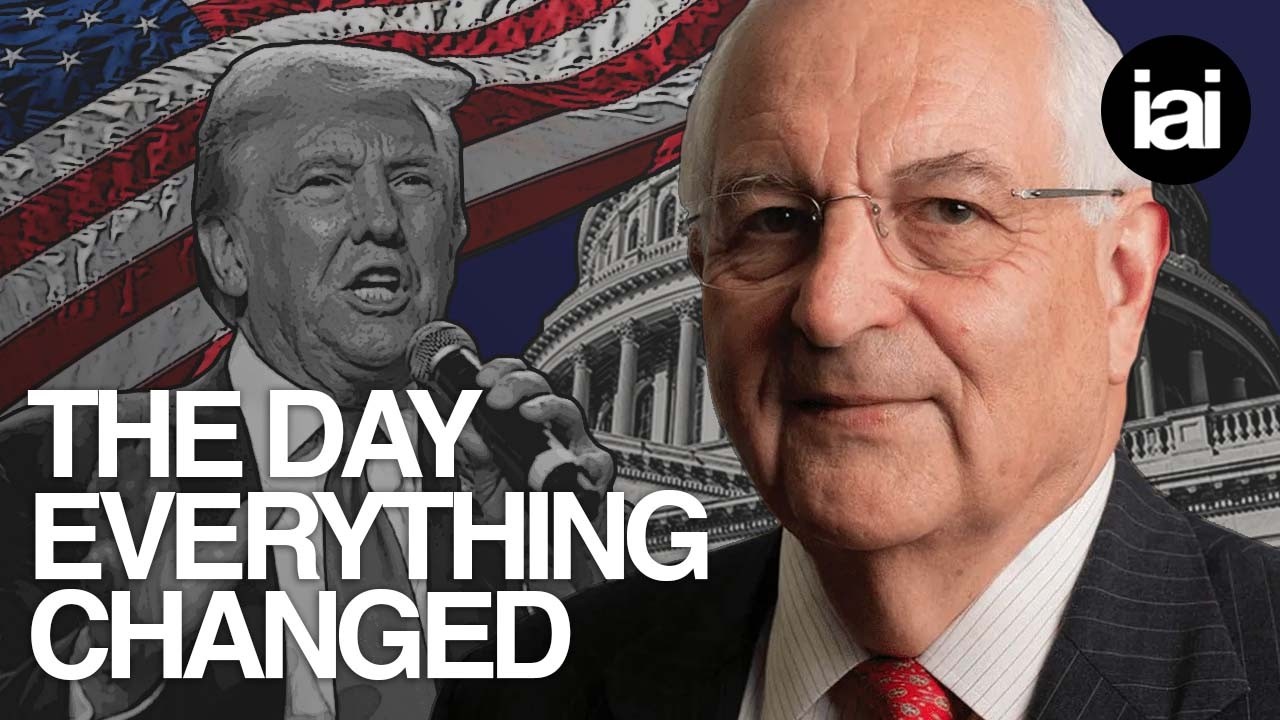
Why the Right swapped economics for culture wars | Martin Wolf

The Institute of Art and Ideas
15,427 views Apr 7, 2026 #capitalism #trump #politics
Martin Wolf analyses the rise of far right, populist parties, and their origins in the ruins left behind by neoliberalism. Was the 2008 financial crisis the defining moment of the postmodern era? With a free trial, you can watch the full talk NOW at https://iai.tv/video/democratic-capit...Capitalism as we know it is in crisis. Slow growth, inflation and widening inequality makes for a worrying potion. But how do we fix this? Join chief economics commentator of the FT, Martin Wolf, as he offers his cure for this crisis. Hosted by Sergei Guriev, Provost of Science Po.
---
---
desmog 520
In the UK, pro-Trump commentator James Delingpolewrote on the same website that Moore’s documentary was the “most powerful, brutally honest and important documentary of his career”.
He said it “clearly shows that renewable energy is damaging to the landscape and to wildlife and does NOT reduce the use of fossil fuels”. He suggested it could help Trump win the upcoming US election because it “undermines the entire basis of the Green New Deal” advocated by some Democrats. Elsewhere, Delingpole has called Moore his “new hero” and praised the film for “causing greenie heads to explode”.
Breitbart News, whose UK branch Delingpole edits, was co-founded by Steve Bannon, former White House Chief Strategist for Donald Trump, and board member of scandal-hit political consultancy Cambridge Analytica. Breitbart and Cambridge Analytica were both financially backed by long-standing funders of climate science denial, the Mercer Family.
Matt Ridley, an author and former chairman of the Northern Rock bank, whose collapse precipitated the 2008 financial crash in the UK, has also applauded Planet of the Humans for being “extremely critical of the green renewable energy industry, saying it’s just as industrial as the fossil fuel industry, in fact it’s dependent on it”.
Speaking in a webinar organised by the British Conservation Alliance, a student network that describes itself as the “home of conservative climate solutions”, Ridley, who has a coal mine on his family estate, said you “simply cannot run a modern economy on wind or solar because there just isn’t enough space for putting up the panels or the windmills. And there isn’t enough resources.”
‘Renewable energy is a profit-driven scam and the environmental movement is corrupt’
These groups and individuals have also used the film to promote the narrative that renewable energy is a scam, backed by crony capitalists colluding with environmentalists.
In his blog about the film, theCompetitive Enterprise Institute’s Myron Ebellcalled it a “stunning evisceration of so-called green energy and the people profiting from it”
==
hamm and kelcy etp in bakken (tho might want to bleed out wildcat indep smaller?)
cf antonia juhaz bakken bailout? oil -40$ bakken, 200b$ debt;in 2008 oil 150$, many poor cty could not afford, helped trigger Gt Recession?
==
==
richard w 3/18/20 10 am; 4 main types of debt credit cardetc a recrd high, // to deficit? and corp debt?!
==
https://www.alternet.org/2020/03/how-trump-has-made-it-harder-for-the-u-s-to-weather-a-recession/
no lnx
How Trump has made it harder for the US to weather a recession
President Donald J. Trump listens as Assistant to the President for Economic Policy Larry Kudlow speaks at a press conference during the 50th Annual World Economic Forum meeting Wednesday, Jan. 22, 2020, at the Davos Congress Centre in Davos, Switzerland. (Official White House Photo by Shealah Craighead)]
Written by Cody Fenwick March 17, 2020
As the coronavirus send the United States and the entire global economy hurtling toward recession, President Donald Trump and his defenders have claimed the administration’s policies have left the United States better prepared for the downturn. But in reality, the president’s effects on the course of the economy thus far have been greatly exaggerated, and many of his policies have actually put Americans at greater risk in the event of financial catastrophe.
To understand why Trump’s policies have put us at risk, you have to appreciate the best possible policy response to a recession: automatic stabilizers.
Many automatic stabilizers are actually very familiar to most people. The category includes, for example, SNAP (commonly called food stamps) and unemployment insurance.
These policies are critically important because as a recession worsens, they automatically start ramping up. As more people lose their jobs, more people go on unemployment, and the program starts paying out more money. When more people on short on cash and need help buying for food — a common occurrence in a recession — they apply for and get SNAP to feed their families. The government starts doing exactly what it should do in a recession: spending public money to make up for the private shortfall in spending.
The best policies are “automatic” in the sense that lawmakers don’t have to change the law in a recession for the programs to spend more money; they respond to the need, and if there’s more need, the programs spend more money.
This is a great way to fight a recession because it provides support to the people who are hurt worst by the downturn. That’s good for humanitarian reasons, but also in crudely economic terms because it means the money the government is almost guaranteed to be spent back into the economy. If you give money to people who are doing OK in a recession, they might just try to save it for later. Since recessions are defined by a reduction in economic activity, policies that can efficiently promote economic activity will help soften the blow and speed the recovery. And since these policies ramp up automatically, there’s less uncertainty about how much support there will be, which can help reassure businesses and investors that the recession won’t be as severe as it might otherwise be. And you can skip entirely the interminable debates and political gamesmanship endemic to the U.S. Congress.
But because of the anti-government and anti-welfare ideology that still poisons the GOP and conservative movement, under the Trump administration, many automatic stabilizers have been significantly weakened.
For example, in December 2019, the Department of Agriculture Secretary Sonny Purdue announced a plan that could kick almost 700,000 people off the rolls of SNAP. It imposes stricter work requirements on the program, which makes it harder for adults who don’t have jobs to get support. Purdue framed this as an effort to fight back against “dependency” on government:
“We need to encourage people by giving them a helping hand but not allowing it to become an indefinitely giving hand,” said Secretary Perdue. “Now, in the midst of the strongest economy in a generation, we need everyone who can work, to work. This rule lays the groundwork for the expectation that able-bodied Americans re-enter the workforce where there are currently more job openings than people to fill them.”
The administration has worked in other ways, too, to limit access to the program. Even in good economic times, these kinds of rules can impose large burdens on people who, for whatever reason, struggle to get or keep a job and need help buying food. If a recession hits, these restrictive measures are even worse. As recently as last week, BuzzFeed reported that the administration had considered delaying the implementation of the rule but had decided to push forward. On Monday, a federal judge halted the change, as Chicago Tribune reported:
“Especially now, as a global pandemic poses widespread health risks, guaranteeing that government officials at both the federal and state levels have flexibility to address the nutritional needs of residents and ensure their well-being through programs like SNAP, is essential,” wrote Chief Judge Beryl Howell of the U.S. District Court for the District of Columbia.
…
Howell halted the rule’s implementation until the court makes a final decision on its legality, saying it will likely be deemed “arbitrary and capricious” because it didn’t appear to consider the hundreds of thousands of submitted comments that raised concerns. The USDA had estimated 1.1 million people would be newly subject to the work rules and nearly 700,000 people nationwide were likely to lose food assistance as a result of the change. Some 36 million Americans are enrolled in SNAP.
But as the Tribune pointed out, tens of thousands have already been kicked off the rolls of SNAP because of similar federal rules under the Trump administration.
The problem goes far beyond SNAP. Catherine Rampell at the Washington Post reported that under Trump — as well as before him — states and the federal government have weakened other policies that could serve as automatic stabilizers:
Elsewhere, the administration has been demanding states add additional paperwork requirements for enrollment in both Medicaid and the Children’s Health Insurance Program, causing eligible families to lose coverage.
The administration also recently announced a proposal to convert part of Medicaid to block grants. This would mean states would get a capped annual amount of federal dollars for the program. It would also limit states’ ability to expand enrollment during a downturn.
Then finally there’s the unemployment insurance program, yet another policy designed to serve as a safety net both for individual families and the macroeconomy as a whole. In theory, it allows jobless people to keep paying bills and patronizing local businesses.
…
This problem clearly pre-dates Trump. Even so, his administration has since encouraged states to add more bureaucratic hurdles — including by doing more widespread drug testing as a condition of benefit receipt. This appears to be a solution in search of a problem, based on the handful of states that have experimented with similar programs before. It’s also expensive, and it slows down benefit receipt.
And it’s not just public health insurance that has been diminished under Trump. After his extensive efforts to undermine Obamacare, the uninsured rate began rising under his administration after consistently falling under his predecessor. This, too, will impose greater burdens on Americans in a recession — especially a recession driven by a public health threat.
Rampell also noted that Larry Kudlow, director of the National Economic Council under Trump, had touted the benefits of automatic stabilizers in the face of a recession without acknowledging how significantly they had been diminished.
Now, it does appear as if Congress and the administration are prepared to move forward with some non-automatic stabilizers to fight the coming recession. This could potentially be stimulus spending in the form of direct cash to families, which would likely be the best option. But many argue that Democrats — who generally favor such policies — should only agree to go along with such a plan if Republicans agree to make the policy automatic. That way, if a recession happens under the next Democratic president, the same beneficial counter-cyclical measures could ramp up without Congress needing to act. Because as Republicans proved in 2009, if a Democrat is in the White House, the GOP is much less willing to spend money to benefit the American people.
==
https://www.alternet.org/2020/03/the-fed-will-have-to-do-a-lot-more-than-cut-rates-to-zero-to-stop-wall-streets-coronavirus-panic/
==
NB aha: fire/banks have been hosing up foreclosures (recall that house appreciation only real source of wealth/battery/buffer since wages flat 30 yrs, AA ppl predatory/redlined) MNUCHIN, 500k homeless, often medical bills? CDS on debt again?
no lnx
Vulture capitalists are picking us dry: Why consumer debt buyers are on the rise
The great recession laid waste to the U.S. economy. Now debt collectors are feasting on the carrion
JIM HIGHTOWER
MARCH 22,2015
Good news, people: The "boom" is back! Yes, good times are here again, thanks to an economic boom that's being generated by (of all things) bad times.
As you might know from your own experiences, tens of millions of Americans have been hit hard, knocked down and held down in recent years by the collapse of jobs and wages. This calamity has led to a second blow for millions of the same families, who find themselves suddenly buried in piles of overdue bills for credit card charges, student loans and other consumer debt.
But the good news is that there's a bright silver lining in that dark financial cloud. Only, it's not for the indebted families, but for a booming breed of finance hucksters known as consumer debt buyers. Believe it or not, in the warped world of high finance,"There's gold in them thar hills" of bad debt, and where there's gold, there are diggers.
Whenever a corporation issues a statement declaring that it's committed to "treating consumers fairly and with respect," chances are, it's not.
After all, why say such a thing, when actually practicing it would make a statement unnecessary? Indeed, with names like Encore Capital Group and Sherman Financial, these miners of human misery buy bales of these unpaid bills from banks and other lenders, paying pennies on the dollar. Then they unleash packs of their hard-nosed, aggressive collectors on the families. If they still can't extract payment, the corporate debt profiteers turn to their meanest dog: The courts.
Debt firms routinely file thousands of lawsuits a day against financially devastated Americans. They know that most debtors can't understand the legal gibberish filed against them, can't afford a lawyer, can't take time off to go to a court hearing and can't mount an effective defense against the corporate lawyers. So, some 95 percent of these lawsuits produce default judgments against hapless borrowers -- meaning debt buyers can then confiscate the wages of borrowers or freeze their bank accounts.
This boom in vulture capitalism is disgusting -- but, worse, it's subsidized by us taxpayers! We pay for the judicial system -- the judges, courtrooms and endless rounds of hearings. Predatory debt corporations have perverted our so-called justice system into their own subsidiary for squeezing profits out of destitute debtors.
This is why New York Attorney General Eric Schneiderman has started going after these for-profit corporate debt collectors.He found that Encore, based in San Diego, filed nearly 240,000 lawsuits against debtors in a recent four-year period, using the courts as its private collection arm. Problem is, Encore's bulk filing of lawsuits against the hard-pressed borrowers are rife with errors, out-of-date payment data, fabricated credit card statements, etc. With debt buyers scooping up millions of overdue bills each year from lenders, tons of them are missing original loan documents, payment histories and other proof of debt.
Debt predators, however, scoot around this lack of facts by simply having their employees sign affidavits asserting that the level of money owed is accurate. Judges, overwhelmed by the unending flood of lawsuits filed by Encore et al, have accepted those affidavits as true, thus ruling in favor of the corporations. But Schneiderman found that -- Surprise! -- affidavits were simply being rubber-stamped by company employees, with no effort to ensure the truth of the information. An employee of one large debt-buyer testified that his corporation ran an assembly-line scheme in which he signed about 2,000 affidavits a day.
This is no minor scam -- 1 in 7 adults in the U.S. is under pursuit by debt collectors. It's hard enough for struggling families to claw their way out from under the economic crash without having lying, cheating predator corporations twist the court system to pick their pockets and shut off their hope of recovery.
JIM HIGHTOWER
Jim Hightower's most recent book is "Let's Stop Beating Around the Bush." He produces a monthly newsletter, The Hightower Lowdown, and a syndicated daily radio commentary.
---
==
desmog 320
could the climate crisis precipitate a financial crash akin to or even greater than the one in 2008? With markets currently in turmoil due to the coronavirus pandemic, experts testified Thursday that there is high risk for an even larger economic crisis absent urgent climate policy.
---
putin up for 36 yr term, into 80's, ast female cosmo also in 80's?
==
---
saudis targeting russian, frackers collateral damage!?
NB DESMOG TRACKING IMPENDING fracking BANKRUPTCY? KEPT AFLOAT BY BANKS? hamm co lost 1/2
aha ish // disaster cap'l, never waste a crisis to dustoff wishlist
Will an oil tycoon who donated $500,000 to support Trump’s re-election get bailed out by his administration?
https://www.alternet.org/2020/03/will-an-oil-tycoon-who-donated-500000-to-support-trumps-re-election-get-bailed-out-by-his-administration
no lnx
Will an oil tycoon who donated $500,000 to support Trump’s re-election get bailed out by his administration?
Written by Igor Derysh / Salon March 12, 2020
With oil prices plunging during the coronavirus outbreak, the Trump administration is weighing a federal bailout for oil and natural gas companies, according to a new report.
President Donald Trump has repeatedly touted a fracking boom under his administration, but oil and gas companies have seen profits drop amid an oil price war between Russia and Saudi Arabia.
“Alarmed” by the prospect that some of these companies, many of which are already in debt, [see desmog]could go out of business, White House officials have pushed for a federal bailout in the form of low-interest government loans, The Washington Post reported.
Among those pushing for the bailout is Harold Hamm, a billionaire Trump adviser who owns Continental Resources, an energy companywhich lost half of its market value Monday.
Hamm told The Post that although he had not made “direct” contact with the president, he advised the administration to consider “any action that the administration might take to protect and preserve American interests at this time from being unfairly disadvantaged.”
Hamm has given more than $500,000 to support Trump’s re-election effort since 2017, the government watchdog group Citizens for Ethics and Responsibility in Washington noted.
Some Trump advisers told The Post that the administration was eyeing “targeted assistance” for the companies. Though under consideration, another official warned that “political blowback over the idea may eventually lead campaign advisers and others in [the] administration to talk Trump out of it.”
Chris Rupkey, the chief economist at MUFG Union Bank, told the outlet that he expects significant political backlash.
“It’s difficult when governments selectively target individual industries,” he said. “And there’s going to be pushback on it, because it’s political and may be tied to the administration’s contacts and the people it knows.”
Cornell University professor Robert Hockett, who has advised Sen. Bernie Sanders, I-Vt., and Sen. Elizabeth Warren, D-Mass., on economic policy, added that it was ridiculous to look out for big fracking companies while millions need relief.
“We are in the midst of a crisis where people are literally having to skip work and may miss paychecks or face medical debt,” he said. “The idea you would look to help out shale companies now is like something out of a satire or a bad movie. It’s absurd.”
Trump also said that he was looking at bailing out airlines, cruise lines and the hospitality industryTuesday, as they reel from the impact of COVID-19, the disease spread by the novel coronavirus. But the bailout proposals have received public pushback from Republicans.
==
nb george gilder eternal 1st ad on yahoo mail alternet subscription; always offer tip on hot stock or how to profit from the coming collapse? rich guy who knows all;
---
how the coronavirus could trigger a recession
by Michael Walden, North Carolina State University Fears are growing…
==
https://www.alternet.org/2020/02/researcher-warns-a-recession-the-likes-of-which-weve-never-seen-before-could-be-on-its-way/
no lnx
Researcher warns: A recession ‘the likes of which we’ve never seen before’ could be on its way
Written by Igor Derysh / Salon February 24, 2020
American companies are ignoring the risks of climate change at their own peril, according to a researcher warning that extreme weather caused by the climate crisis could result in a devastating economic recession.
Financial markets are failing to account for the risks that increasingly frequent and worsening floods, droughts, and other extreme weather events pose to the economy, according to an article published in the journal Nature Energy this week.
“If the market doesn’t do a better job of accounting for climate, we could have a recession—the likes of which we’ve never seen before,” said study author Paul Griffin, an accounting professor at the UC Davis Graduate School of Management.
Griffin said in the article that his years of research concluded that “unpriced risk” was the “main cause” of the 2007-08 Great Recession and companies are once again failing to assess the damage extreme weather events can wreak on their business.
“Right now, energy companies shoulder much of that risk. The market needs to better assess risk, and factor a risk of extreme weather into securities prices,” he said. “Without better knowledge of this risk, the average energy investor can only hope that the next extreme event will not trigger a sudden correction to the market values of energy firms.”
Soaring temperatures, like those now seen annually in Europe and parts of the United States, aren’t just dangerous to human life, he argued. They also hurt the farming and agriculture industry all over the world and slow economic growth. They also sometimes cause massive power outages that affect a huge variety of industries, like when PG&E shut down energy delivery across much of California last year in an attempt to reduce fire risk. The company also filed for bankruptcy after it was blamed for causing the wildfires in 2018. Extreme weather also disrupts transportation and water delivery, hurting not just those industries but countless others that rely on workers being able to get to work and drink clean water.
“Despite these obvious risks, investors and asset managers have been conspicuously slow to connect physical climate risk to company market valuations,” Griffin wrote. “Loss of property is what grabs all the headlines, but how are businesses coping? Threats to businesses could disrupt the entire economic system.”
Griffin also warned that energy companies are particularly vulnerable in areas where their operations are threatened by rising sea levels. Oil refineries in California and the Gulf Coast are especially at risk of being inundated by severe floods, storms, and wildfires.
The insurance industry would also grow overwhelmed by the cost of claims from extreme weather events and may not cover such risks, the article said, not to mention “litigation, sanctions and even loss of business from the property destroyed.”
“Extreme heat events can create uncertain and longer duration power outages, threaten critical infrastructure, exacerbate energy supply and demand imbalances, and trigger significant legal liability for energy firms,” he wrote. “Despite these obvious risks, investors and asset managers have been conspicuously slow to connect physical climate risk from extreme weather events to company market valuations.”
Griffin acknowledged that the risks are extremely difficult to predict, despite his dire warnings.
“While proprietary climate risk models my help some firms and organizations better understand future conditions attributable to climate change, extreme weather risk is still highly problematic from a risk estimation standpoint,” he wrote. “This is because with climate change, the patterns of the past are no guide to the future, whether it be one year, five years or 20 years out. Investors may also normalize extreme weather impacts over time, discounting their future importance.”
Financial institutions are increasingly worried about this trend as well. A report issued by an organization of the world’s central banks earlier this year similarly warned that financial institutions lack the tools to deal with what could be a devastating economic challenge.
“Think the subprime crisis in 2008 was bad? Imagine a real estate crisis caused by rising sea levels and coastal flooding that renders thousands of square miles of land uninhabitable or useless for farming,” wrote The New York Times’ Jack Ewing in his summary of the report. “By some estimates, global gross domestic product could plunge by nearly a quarter by the end of the century because of the effects of climate change. Central banks have enough trouble dealing with mild recessions, and would not be powerful enough to combat an economic downturn of that scale.”
“In the worst-case scenario, central banks may have to intervene as climate rescuers of last resort or as some sort of collective insurer for climate damages,” the report warned.
An earlier study published in Science in 2017 attempted to quantify the economic impact posed by the effects of climate change. That study warned that the US economy may shrink by up to 3 percent, and certain regions may be hit even harder without significant intervention. Many regions could see gross domestic product (GDP) decline by more than 10 percent, and Florida’s worst-hit areas could see GDP losses up to 28 percent, according to the study.
That research relied on the United States meeting its goals in the 2015 Paris Agreement, but that seems unlikely now that President Donald Trump withdrew from the pact and repeatedly gutted Obama-era policies intended to combat climate change.
“Is there climate change? Yeah. Will it go back like this, I mean will it change back? Probably,” Trump told Axios in 2018, despite extensive research from his own administration arguing that certainly will not be the case. The last decade was the hottest on record, according to NASA and NOAA, and it is only getting worse.
Trump said that his decision to pull out of the Paris Accord would improve the economy and vowed to negotiate a deal with terms that are “fair to the United States, its businesses, its workers, its people, its taxpayers,” though he has made no efforts to do so since.
Despite Trump’s claims, the country’s largest companies quickly sounded the alarm that the move would hurt, not help, the economy.
“By strengthening global action over time,” said a letter from leading US companies like Google, Apple, Facebook, Microsoft, Adobe, Morgan Stanley, Gap, Intel, and Hewlett Packard, “the agreement will reduce future climate impacts, including damage to business facilities and operations, declining agricultural productivity and water supplies, and disruption of global supply chains.”
Igor Derysh is a staff writer at Salon. His work has also appeared in the Los Angeles Times, Chicago Tribune, Boston Herald and Baltimore Sun.
==
https://www.alternet.org/2020/02/researcher-warns-a-recession-the-likes-of-which-weve-never-seen-before-could-be-on-its-way
aha: recessions are periodic, fed no suffic buffer? trump keeps money free to goose stock mkt so can boast 401k; blew up fed deficit, houshold debt and student debt high; authoritaian growing everywhere, what effect of worldwide recession again? Greece?
==
---
https://www.alternet.org/2020/02/financial-writer-explains-why-trumps-proposed-federal-budget-would-be-an-economic-calamity-possibly-pushing-the-us-to-the-brink-of-a-recession/
no lnx
Financial writer explains why Trump’s proposed federal budget would be an ‘economic calamity’ — possibly pushing the US to ‘the brink of a recession’
Written by Alex Henderson February 20, 2020
Whoever the Democratic Party ends up nominating for the 2020 presidential election — whether it’s Sen. Bernie Sanders of Vermont, former New York City Mayor Mike Bloomberg or someone else — President Donald Trump will no doubt be campaigning aggressively on the state of the U.S. economy, claiming that a second Trump term would be synonymous with prosperity and economic growth. But liberal/progressive writer Michael Linden, in a February 20 op-ed for CNN Business’ website, offers a long list of reasons why he believes that the federal budget Trump is proposing would be an “economic calamity.”
Trump’s proposed budget, according to Linden, is “full of outdated ideas that would instantly weaken the economy and undermine our ability to grow and prosper over time.” For example, Linden notes, Trump “proposes massive immediate cuts to the kinds of public services, protections and health care that help propel short-term economic growth by supporting demand for goods and services.”
“Just last quarter,” Linden observes, “the government was contributing the most to GDP than at any other point since the end of the Great Recession. President Trump’s budget would reverse that, withdrawing critical support at a time when growth has already slowed. The cuts are so deep, so massive and so poorly targeted that they could be large enough to even push us to the brink of a recession.”
The CNN Business contributor goes on to point out that “overall economic activity grew by only 2.1% over the last year. Well, Trump’s budget includes roughly $958 billion in total cuts in the first four years. That amounts to about 1% shaved off of total gross domestic product right there.”
Deep cuts to social programs, Linden emphasizes, don’t promote economic growth — they harm it.
“Programs like Medicaid, food stamps and tax credits for low-income families tend to permeate throughout local economies most effectively, and those are exactly the resources that President Trump’s budget envisions cutting to the tune of about $335 billion in the next four years,” Linden explains. “These cuts could reduce overall economic activity by another .3% to .4%. Put it all together, and Trump’s plan would slash the overall economic growth rate down to well under 1% over the next few years — putting us right on the edge of outright economic contraction.”
One of the things liberal presidents of the past understood — including President Franklin Delano Roosevelt in the 1930s and 1940s and President Lyndon B. Johnson in the 1960s — is that when the American middle class prospers and has more money to spend, that money goes into the U.S. economy. 2020 presidential hopefuls Sanders and Sen. Elizabeth Warren clearly understand those principles of New Deal and Great Society economics.
Trump’s proposed federal budget, Linden contends, fails to recognize the vital role that “workers and consumers” play in the economy.
“Workers and consumers are what drive growth and prosperity,” Linden asserts. “When workers have the support and investment they need to do their best work, they innovate, create and do more with less time and fewer resources. When consumers have money in their pockets, they drive demand for goods and services and induce businesses to invest in the future…. Trump’s budget slashes at those very foundations: education, health care, research and development.”
==
---
https://www.alternet.org/2020/02/extreme-weather-could-spark-an-economic-recession-the-likes-of-which-weve-never-seen-before/
no lnx
Extreme weather could spark an economic crisis the ‘likes of which we’ve never seen before’
Written by Jake Johnson / Common Dreams February 18, 2020
New research published Monday warns that extreme weather driven by the climate crisis could bring about an economic recession “the likes of which we’ve never seen before” if markets don’t do a better job assessing climate risks.
Paul Griffin, an accounting professor at the University of California, Davis Graduate School of Management, wrote in a paper for Nature Energy that financial markets have not sufficiently accounted for the major economic risks posed by the global climate crisis, even as extreme weather—from destructive hurricanes to prolonged drought—wreaks havoc across the globe.
“Unpriced risk was the main cause of the Great Recession in 2007-2008,” Griffin wrote. “Right now, energy companies shoulder much of that risk. The market needs to better assess risk, and factor a risk of extreme weather into securities prices… Without better knowledge of this risk, the average energy investor can only hope that the next extreme event will not trigger a sudden correction to the market values of energy firms.”
Griffin continued:
This past summer, the United States and Europe experienced record-breaking heat. Now linked reliably to climate change, excessive high temperature is among the deadliest of weather extremes. Not only can it disrupt agriculture, harm human health, and stunt economic growth, it can also overwhelm—and temporarily shut down—large parts of a state’s or a nation’s energy system, as in the case of the Pacific Gas and Electric Company (PG&E) in California.
Extreme heat events can create uncertain and longer duration power outages, threaten critical infrastructure, exacerbate energy supply and demand imbalances, and trigger significant legal liability for energy firms. Newer reports of an increase in the frequency and severity of extreme weather events, moreover, amplify those risks for energy firms.
Despite these obvious risks, investors and asset managers have been conspicuously slow to connect physical climate risk from extreme weather events to company market valuations.
Griffin is not the first financial expert to raise alarm about the potentially calamitous economic impacts of the climate crisis—which would come in addition to the emergency’s incalculable effects on humans, animals, plants, insects, and the planet as a whole.
The Switzerland-based Bank for International Settlements warned in a 115-page report (pdf) last month that the “increase in the frequency and intensity of extreme weather events could trigger non-linear and irreversible financial losses.”
“Climate change poses unprecedented challenges to human societies,” the report stated, “and our community of central banks and supervisors cannot consider itself immune to the risks ahead of us.”
---
---
trump fired janet y b/c she did not fit central casting
==
https://www.nbcnews.com/business/economy/what-happens-fed-chair-jerome-powell-if-trump-gets-re-n1134796
220
Martha C. White
If President Donald Trump wins re-election in November, he could throw the economy into disarray with an assault on the Federal Reserve as he seeks to remake the central bank in his own image — and compliant with his whims.
"If Trump wins the election, he'll believe he has a mandate to fire" Federal Reserve Chairman Jerome Powell, said Mitchell Goldberg, president of ClientFirst Strategy.
Trump has threatened to dismiss Powell — whom he tapped in 2017 to head the Fed — but Powell has responded by saying that he believes he cannot be fired without cause and that he will not resign. Firing or demoting Powell would be legally fraught, and some suggest that Trump might not want to risk losing an almost inevitable court fight if he tried to fire Powell before his term as chairman is up in 2022.
"It would be very unpopular and difficult to fight in the courts, firing Powell. I think he would lean towards letting him finish out his term and pushing forward someone he has designated on the board to run it, with the hopes that he, as president, would have more influence on Fed policy going forward," said Danielle DiMartino Booth, CEO and chief strategist of Quill Intelligence.
Some suggest that Trump loyalist Judy Shelton could be a chairwoman-in-waiting. Shelton, a former Trump campaign adviser and outspoken critic of the Fed, is scheduled to meet with the Senate Banking Committee on Thursday.
Shelton has stirred concern by questioning the need for the Fed's independence, a stance that would align her with Trump but put her at odds with mainstream economists.
"It is encouraging to see that some members of the Senate are voicing skepticism about Judy Shelton," said Kenneth Kuttner, an economics professor at Williams College in Williamstown, Massachusetts. "That's slightly reassuring."
Kuttner characterized central bank independence as a critical firewall that lets policymakers focus on economic rather than political goals.
"The Fed is the one bright spot ... thank goodness. It's structurally very independent," he said.
The policymaking Federal Reserve Board of Governors is a seven-member body; two seats are vacant. Trump has appointed four of the current five members, including Powell.
Kuttner pointed to previous attempts by Trump to install loyalists with little background in economics or monetary policy. Nominees Stephen Moore and Herman Cain withdrew their names from consideration once Senate approval looked unlikely.
"I think the problem goes beyond just the rift with Powell," Kuttner said.
Trump's goal for a more compliant Fed is both clear and very, very risky, experts say, given the president's often-stated desire for interest rates at — or even below — zero percent.
"I think that Trump's dream would be to get somebody to impose negative interest rates in this country," DiMartino Booth said, calling such a move a "step into the abyss."
Negative interest rates in Japan and some Eurozone countries have contributed to economic stagnation and have left policymakers with no clear path to return to normal.
"Where we've seen negative interest rates before, I can't point to one example where it's actually worked," said Mitchell Goldberg, president of ClientFirst Strategy.
"Trump's dream would be to get somebody to impose negative interest rates in this country," said one analyst. But negative interest rates abroad have contributed to economic stagnation.
"For one thing, it would absolutely hurt all kinds of lending — business lending, consumer lending. Banks need to make money by making loans, and if there's no access to credit, companies can't borrow today for the future," Goldberg said.
Negative interest rates also are terrible for ordinary people, said Karen Shaw Petrou, managing partner of the consulting firm Federal Financial Analytics.
"I think negative interest rates are just about the worst things we could do for economic inequality, because they destroy savings, threaten retirements and evaporate pensions," Petrou said. "And if the economy is in a recession, which is blighting what Trump thinks of as his legacy, I think the results are far less predictable."
Goldberg said: "People will act based on what's in their best interest now, not in the long-term best interest of the U.S. economy."
"It could take a few years for poor policy decisions to be felt, but once they are felt, they could last for years, and then it's even harder to get things back on track," he said.
---
==
https://www.alternet.org/2020/02/as-household-debt-hits-14-trillion-economists-say-fed-solution-for-next-recession-is-insufficient/
---
---
https://www.alternet.org/2020/02/big-banks-ticking-time-bomb-could-cause-the-next-recession/
no lnx
Big banks’ ticking time bomb could cause the next recession
Written by Maureen Nevin Duffy / DC Report February 12, 2020
The art of hiding multi-trillions of dollars of debt has found an eager accomplice, the businessman who once proudly proclaimed, “I love debt”: Donald J. Trump.
The King of Debt is now in control of an obscure federal watchdog agency intended to prevent derivatives—complicate financial instruments that billionaire businessman Warren Buffett once described as “Weapons of Mass Destruction”—from causing the Great Recession of 2008. Intended is the keyword. The agency, the Commodity Futures Trading Commission (CFTC), was hog-tied by big money interests long before the first whiff of bank failure could drift from Wall Street’s canyons.
This December, Trump’s hand-picked CFTC members marked a decade of financial recovery by voting 3-2 in favor of leaving a giant hole in the regulatory framework known as Dodd-Frank. The vote leaves the Big Four—Too Big to Fail—U.S. banks free to slip the riskiest of their debt-deferring derivative trades through that defensive wall at will. And, this sleight of hand pushes an unsuspecting public onto the firing line of another possible multi-trillion-dollar U.S. taxpayer bailout.
As in the 2008 meltdown, the weapon of choice for manipulating and moving piles of bank-owned debt around the world is a type of derivative called a “swap.” A swap can be as simple as a contract between two parties or a contingency laden nightmare, such as a “naked” credit default swap (CDS) for trading unfunded payment obligations, some of which are used as “insurance” guarantees. That guarantee is what banks can continue now to switch on and off at will.
The Usual Suspects
Instead of home mortgages, this time consumer debt holds our fate. Outstanding balances keep ballooning for car and tuition loans and credit cards—greatly enlarged by exotic trading on the debt itself. During 2016, banks opened 110 million new credit card accounts about 50% more than in 2010. Citigroup, JPMorgan Chase, Bank of America and Wells Fargo reported a combined loss of $12.5 billion from credit card loans in 2017. In June that same year, the Federal Reserve valued outstanding credit card loans at $1.02 trillion. Yet banks continue to shower subprime borrowers with fresh lines of credit.
Despite the efforts of a severely hobbled CFTC, the swaps markets continue to grow and without the depth of transparency promised. Consider that the four big U.S. bank holding company swaps dealers: Citibank, JPMorgan Chase, Goldman Sachs and Bank of America handle close to 90% of U.S. swaps trades, representing a combined notional value of $300 trillion, while consumers stagger under debt and defaults mount higher than pre-2008. The big picture reveals “a financial infrastructure that mimics the failed financial engineering created in the mortgage markets leading up to the 2008 financial crash,” says Professor Michael Greenberger, former deputy to the Clinton-era CFTC Chair Brooksley Born.
‘Dark Swaps’
Greenberger, a former director of the Division of Trading and Markets, and current law school professor at the University of Maryland Carey School of Law, contends that “dealers have engineered a way to evade Dodd-Frank, by helping banks transfer trillions of dollars in liability in risky unfunded trading, by turning the regulations off at will.” The world’s debt burden is being “financialized,” he says, as were mortgages in 2007. The tool this time is “dark swaps”‘ sold by the banks’ foreign subsidiaries, into increasingly complex instruments. These are the very exposures from which the CFTC and Dodd-Frank were charged with protecting us.
“The CFTC is totally controlled by Trump,” Greenberger tells DCReport.org. Until another administration takes office the only recourse may be a state by state solution. Greenberger means the state attorneys general, “since the president can’t fire them,” he says. Short of that, since a chain of attempts to plug the loophole have been tried, undermined or overturned, Greenberger’s last hope is the new administration, whose CFTC board could vote to close the loophole and spare the world another multi-trillion meltdown the U.S. taxpayer will suffer to pay.
---
---
https://www.alternet.org/2019/12/paul-krugman-harsh-austerity-measures-left-many-lasting-scars-in-the-2010s-and-the-political-damage-was-enormous/
gt recession austerity
==
==
https://www.alternet.org/2019/12/by-any-means-of-fraud-necessary-wall-street-apologists-continue-to-blame-the-poor-and-people-of-color-for-the-great-recession/
no lnx
‘By any means of fraud necessary’: Wall Street apologists continue to blame the poor and people of color for the Great Recession
Written by Alex Henderson December 17, 2019
Eleven years have passed since the economic meltdown of September 2008, which accelerated the Great Recession and marked the worst economic downturn since the 1929 crash and the Great Depression of the 1930s. This month, theFederal Reserve Bank of Philadelphia released a working paper titled “Owner-Occupied Fraud and Mortgage Fraud” — and as journalists Malaika Jabali and Ryan Grim see it, the paper effectively tries to let Wall Street off the hook for the 2008 downturn and falsely blames lower income borrowers.
“The new study zeroes in on what its authors call ‘fraudulent investors’: people who got mortgages for investment homes in which they never intended to live, despite claiming that they would,” Jabali and Grim note. And such victim-blaming, they argue, is “similar to faulting hoodwinked students for taking out massive loans from fraudulent for-profit colleges.”
Jabali and Grim observe that blaming the poor and people of color for the Great Recession is nothing new. In a 2009 report, former Texas Rep. Jeb Hensarling” (a Republican) insisted that homeowners facing foreclosures “simply made bad choices” and “overestimated their readiness for homeownership.”
Hensarling’s report, according to Jabali and Grim, reflected a belief that “law enforcement and regulatory response should focus on the borrowers, not the lenders on Wall Street or their brokers.” And that type of thinking, they assert, is alive and well in the new working paper by the Federal Reserve Bank of Philadelphia.
“The working paper, which comes with a disclosure saying it doesn’t represent the opinion of the Philadelphia Fed, complements other research indicating that the ‘subprime mortgage crisis’ is a myth,” Jabali and Grim explain. “But it doesn’t go all the way to citing the role of Wall Street, which is convenient for politicians and regulators uninterested in policing those banks.”
Jabali and Grim, however, make a distinction between overtly racially motivated Republican analysis of the economic downturn and the “more sophisticated academic response” in the financial world.
“While the conservative response to the crisis was to blame black and brown homeowners, the more sophisticated academic response extends the blame more broadly to other borrowers,” Jabali and Grim observe. “The new paper, authored by Ronel Elul, Aaron Payne and Sebastian Tilson, studied the pervasiveness of what it called owner-occupancy fraud — that is, borrowers who applied for home purchase loans as owner-occupants despite no evidence of them subsequently occupying the home.”
Jabali and Grim conclude their Intercept article by stressing that attacking recipients of subprime loans while letting Wall Street and large banks off the hook is quite disingenuous and misleading.
“While recognizing that these subprime borrowers were not the crisis’ primary drivers, recent studies like those published by Philadelphia’s Fed nevertheless blame borrowers and not the actors who created the conditions and set the terms for such transactions,” Jabali and Grim write. “Wall Street banks — whose insatiable demand for loan products it could slice up, securitize, slap a AAA rating on, and sell to pension funds — had created an industry of brokers ready to produce that supply by any means of fraud necessary.”
---
1119
invert yield curve; homewreckers book 8 mil foreclosures; big % llc shell corps; // CDO; R wolff says banks can't deal with hit 1/2 of Gt Recession , get loans to cover loans; mnuchin etc wilbur recalled gov't baillout after S&L; mnu sez put 1.x billion but pain nothing for indybank and then got subsidies to foreclose?! // get car for free, put some bucks in then pocket total profit 11/8/19
==
==
new
aaron glantz homewreckers
---
==
new
steve mnu piad 0 for indy bank, and gov't guar lose no money, sold to buddy in same blg (bunch of pluto-crats
extensive interview: https://kpfa.org/episode/letters-and-politics-october-23-2019/
https://kpfa.org/episode/upfront-october-21-2019/
aaron glantz homewreckers
---
---
https://www.alternet.org/2019/07/why-elizabeth-warren-thinks-the-warning-lights-are-flashing-and-a-new-financial-crisis-is-looming/
[bunch of other art'l i ignored on predictor curve last few weeks' OTOH i have been tracking weaken dodd-f and cfpb for a while]
no lnx twt
Why Elizabeth Warren thinks the ‘warning lights are flashing’ and a new financial crisis is looming
Written by Andrea Germanos / Common Dreams July 23, 2019
“Warning lights are flashing,” Sen. Elizabeth Warren wrote Monday, predicting an economic crisis within two years unless federal regulators and Congress take swift action.
The Democratic presidential contender outlined the reasons for her concerns and plans to address them in a Medium post entitled “The Coming Economic Crash—And How to Stop It.”
Team Warren
?
@TeamWarren
.@ewarren warned us about the 2008 crisis years before it hit. Now she's seeing serious warning signs again—and she's calling for action. Read, share, and join the fight: https://medium.com/@teamwarren/the-coming-economic-crash-and-how-to-stop-it-355703da148b …
The Coming Economic Crash?—?And How to Stop It - Team Warren - Medium
By Elizabeth Warren
medium.com
As she did in the years leading up to the 2008 economic crisis, Warren now sees “a lot to worry about again.” According to the Massachusetts Democrat, there are “a number of serious shocks on the horizon that could cause our economy’s shaky foundation to crumble.”
“The country’s economic foundation is fragile. A single shock could bring it all down,” she wrote. “And the Trump administration’s reckless behavior is increasing the odds of just such a shock.”
Among the potential triggers she laid out is thelevel of household debt.Warren referenced recent data showing that household debt is now $869 billion higher than the $12.68 trillion peak it hit in 2008.
To remedy that, she cued up several of her already-released plans, including raising the minimum wage to $15 an hour, canceling most student loan debts, offering free public higher education, and making child care affordable.
She also called on federal regulators to swiftly address the potential shock that lies in leveraged corporate lending.“Leveraged lending—lending to companies that are already seriously in debt—has jumped by 40 percent since Trump took office, spreading ‘systemic risk’ throughout our financial system,” wrote Warren.
Federal regulators, she wrote, should “enforce leveraged lending guidance that is intended to stop banks from issuing these risky loans in the first place.”
Warren also cited the current manufacturing recessions—a problem she said could be flipped by enacting her Green Manufacturing Plan.
Inoculating the economy from “potential shocks” also will happen by “strengthening critical American industries, instead of undercutting American companies” and eliminating the debt ceiling, she wrote.
A crisis could be averted, wrote Warren, “if we take bold action now to address the underlying problems in the economy.”
Warren’s new plan rollout came the same day as Democracy for America’s latest straw poll showed her closing in on Bernie Sanders’s lead among the progressive group. The Vermont senator notched just over 32 percent to Warren’s roughly 26 percent, both well ahead of third place Kamala Harris’s 12 percent. The group’s previous survey in April showed Sanders as the frontrunner and with a 30-point lead over Warren.
---
==
2 big fails uncorrected led to djt: gt recess and gulf war w
...curry salon
After the Iraq war, British Prime Minister Gordon Brown appointed a commission to investigate how exactly his country stumbled into such a tragic fiasco.The Chilcot Report (for Lord John Chilcot, who led the commission) was an account of political bungling and deception as thorough and damning as the Pentagon Papers. Its 2016 release made former Prime Minister Tony Blair, chief accomplice to George W. Bush in that disastrous undertaking, into a social leper. Unlike Robert Mueller, Chilcot had an absolute right to interview any witness and compel production of any document he felt he needed; nearly all his interviews were done in public, and he delivered his report direct to the people of the United Kingdom.
The war was hatched in America by ideologues bent on exporting democracy via bribery and force of arms. In the eyes of many, it surpasses Vietnam as the worst foreign policy blunder in our nation’s history. In a speech to the nation summarizing the case for it, Bush leaned heavily on the only possible rationale for an unprovoked attack on a sovereign nation:
Intelligence gathered by this and other governments leaves no doubt that the Iraq regime continues to possess and conceal some of the most lethal weapons ever devised.
For months, his vice president and national security adviser peddled “evidence” of nuclear and chemical weapons. Before his speech, Bush was told by experts at the Department of Energy that the evidence was false, but he kept the news to himself. To this day it remains unproven who was lying, and who was only lied to.
The Congressional Budget Office says the war cost the U.S. $2 trillion. Nobel Prize-winning economist Joe Stiglitz puts it at $3 trillion. Nearly 4,500 U.S. military personnel died there, and tens of thousands more suffered disabling physical and psychic wounds. Iraqi casualties remain in dispute — as Gen. Tommy Franks informed reporters, “We don’t do body counts” — but estimates range from 180,000 to more than a million deaths. The UN High Commissioner for Refugees counted 3.7 million refugees. Americans think the war’s over. Last month, it took 166 Iraqi lives.
In 2009, as Gordon Brown was launching the Chilcot Inquiry, Barack Obama was being pressured to take a similar look back at how America was lured or lied into war. Obama took a different tack. Rather than appoint a commission with plenipotentiary powers, he did nothing. Aides said he thought retracing Bush’s path to war would make it hard to forge bipartisan alliances with Republicans.
Similar concerns colored his take on the other huge crisis he inherited, the 2008 Wall Street meltdown that leveled the global economy. No one knows its true cost, only that the number exceeds most human minds’ ability to conceptualize. A Government Accountability Office study put the U.S. cost at $22 trillion.
Social and political costs were even higher. Post-meltdown austerity measures, following ondecades of stagnant wages just as millions of Middle East refugees flooded Europe, rocking center-left coalitions that had ruled the West since World War II. Far-right political parties the old order was too polite to label fascist began to metastasize. Britain got Brexit. America got Trump.[NOTE CONFLUENCE OF 2 FAILS]
When the crisis broke, Obama was running for president. His closing stump speech was a litany of vows to curb corruption; above all, to punish Wall Street fraud. His administration never brought a case. Three years later, he went on “60 Minutes” to explain that the worst behavior wasn’t actually illegal. Given his dazzling intellect and access to wise counsel, one assumes he knew that what he said wasn’t true.
Privately, Obama revealed his thinking. He worried that prosecutions would hurt banks. He worried he’d lose personal support in the business community. (A major culprit, Goldman Sachs, was also his biggest donor.) And he worried he’d lose business backing vital to building bipartisan coalitions in Congress.
Lying was as much a cause of the Great Recession as it was of the Iraq war. Loan originators lied about applicants’ creditworthiness. Investment bankers lied about the toxicity of mortgage portfolios. Standard and Poor’s and Moody’s and Fitch all lied. So did Obama and most of Congress, which meant major reforms, excepting only Elizabeth Warren’s Consumer Financial Protection Bureau, were designed to curb “irrational exuberance,” not the immorality at the root of what befell us.
Instead of going to prison, bankers got bailed out, while homeowners got betrayed. Like the meltdown itself, the government’s response helped incite a populist revolt. Obama and Clinton Democrats were deaf to it, but Trump’s final 2016 TV ad began “Our movement is about replacing a failed and corrupt political establishment.” In the last week, it replaced nearly every other ad he had up in the industrial Midwest.
These failures — to investigate the origins of the Iraq war and the Great Recession and punish the culprits — were not anomalies. After 9/11, no one had the stomach to hold George W. Bush to account for ignoring intelligence reports on his desk, so the bipartisanship crowd invented a structural failure and wasted years rearranging intelligence and homeland security bureaucracies, resulted in a new Cabinet-level post, the Director of National Intelligence, who lacks the authority to direct anyone to do anything.
It happened after the 2000 election: Media barons set out to fix the exit polls, Congress set out to rid the world of hanging chads via nifty paperless ballots and the Democratic Party set out to rid the world of Ralph Nader.Thus, a pioneering GOP foray into voter suppression went nearly unremarked. Despite butterfly ballots, staged riots, a chief election official doing double duty as a Bush campaign chair and a Supreme Court concocting phony equal protection claims to rob Al Gore of real due process, Bush was clothed in legitimacy, leaving millions of Americans to conclude that the system was indeed rigged.
I doubt we’d be saddled with Trump had we not come to resemble him: way too materialistic, more than a bit narcissistic, unfocused, unlettered, infantile, even amoral. Our responses to these crises suggest that we also share a high tolerance for lying, a limited capacity for self-examination and an unspoken belief that the rich and powerful are above the law. Which brings us to the latest in our recent line of failures to look either evil or ourselves in the eye, the Mueller Report....
==
==
hmmn booktv 619
Joseph Sternberg, "The Theft of a Decade"Joseph Sternberg argued that the mishandling of the 2008 economic crisis…
---
https://www.alternet.org/2019/05/why-the-untamed-finance-industry-is-almost-certain-to-bring-us-to-the-brink-of-crisis-again/
Judging from the public conversation we’re having as we head into the early stages of the 2020 presidential election, bankers no longer appear to be public enemy number one. Big tech appears to have that title. Still, let’s not forget that the actions of several large financial institutions in the run-up to 2008 were largely responsible for catastrophic job losses of millions of households, the repossession of their houses, the destruction of their retirement savings, the collapse of a multitude of businesses, an ongoing stranglehold into myriad forms of debt, and a relentless lobbying machine that exonerates it from any kind of oversight with real teeth.
The legislative response to this fiasco, the Dodd-Frank Act, is being undermined every which way, and wasn’t all that strong to start with. It was passed in order “to ‘promote financial stability,’ ‘lift our economy,’ and ‘end too big to fail,’” argued financial observer Tyler O’Neil, “and the bill has achieved none of those goals.” In fact, it created a host of perverse incentives that have likely made our problems a whole lot worse. Financial reform might be yesterday’s news, but we are inching closer to another economic crisis, in which the “old news” might very well become new and relevant again.
:{:{}:
Why is that? For one thing, Dodd-Frank did not structurally alter the banking system (in contrast to the aftermath of the Great Depression via Glass-Steagall). The big “too big to fail” (TBTF) banks got bigger. And by bigger, we’re talking about a sizable ownership stake over 60 percent of GDP.
:{:{}:
One prominent example is the newly established Consumer Financial Protection Bureau (CFPB—an Elizabeth Warren proposal that actually initially proved to be one of the few effective reforms introduced by the new banking legislation). The CFPB has been largely gutted by “acting” head, Mick Mulvaney. Likewise, the oversight provisions for big banks have been watered down by the appropriately named Crapo Bill, and Dodd-Frank’s detailed rule-making injunctions have largely been left to the discretion of bank-friendly executive agencies, such as the Federal Reserve, Office of the Comptroller of the Currency (OCC), and Securities and Exchange Commission (SEC), all of which have historically shown themselves to be prone to regulatory capture.
Even one of Dodd’s contributing architects, Lawrence Summers, in a piece co-authored with Harvard Ph.D. candidate Natasha Sarin, found no evidence “that markets… regard banks as substantially safer today than they were in the pre-crisis period.” Many of the same practices that led to the collapse of the financial system in 2008 are as prevalent today as they were in 2007. These include the revival of some of the most toxic products that contributed to the last crash, such as the synthetic collateralized debt obligation (CDO) and the related collateralized loan obligation (CLO), along with an ongoing regulatory culture that still expresses itself in policy preferences that favor industry interests over those of ordinary citizens.
Given the Democrats’ renewed enthusiasm for antitrust (at least as it applies to big tech), the question is whether “break ’em up” to foster greater competition is the way to go with banks, or whether a more “function-centric” approach to regulation makes more sense going forward. On big tech, I’ve written before that size per se may not be the best benchmark to establish optimal regulation. The same might be true for banks.
Simply mandating a breakup in the sector, married to “free market” competition and other market-based reforms, is unlikely to do the trick (that criticism applies as much to GOPers as it does to Democrats). As professors Marc Lavoie and Mario Seccareccia have observed, “greater competition could be a good thing in industries producing, say, ‘widgets,’ since the lower the price that could potentially ensue as a result of lower profits and greater productivity that would be impacted by the competition would have positive welfare benefits for the community at large.” But Lavoie and Seccareccia also recognize that banking is not only about profit for profit’s sake or competitive free markets; therefore, “applying these principles of competition to the banking sector, where there exists tremendous externalities, could be disastrous.”
One of those “externalities” arises from the fact that the banking sector has a unique social dimension that in many respects does not readily lend itself to all of the dictates of a competitive free market system. There is a reason why our government made a conscious policy decision after the Great Depression to guarantee the liabilities of the banking system via the Federal Deposit Insurance Corporation (FDIC). It was to protect the integrity of the payments system, the lifeblood of an economy, as well as the businesses and consumers who relied on the provision of credit provided by the banks.
A controlled oligopoly that disincentivizes banks from embracing risky speculation is one way to go (it works reasonably well in Canada, for example) because it focuses the regulatory thrust on function and outcome, rather than size alone. However, the U.S. banks are much bigger in asset size. “Too big to fail” (TBTF) is relevant here because Dodd-Frank has done nothing to stop the banks from getting bigger, even though they pursue many of the same reckless policies that caused their banks to blow up in the last cycle. In fact, the implicit TBTF safety net has virtually guaranteed that bankers would continue to take on excessive “tail risk” (i.e., too high a risk of ruin), argues Professor Edward Kane.
It is in that sense that size matters: much as the costs of a massive environmental cleanup increase in proportion to size, so too are the social and economic externalities much higher when associated with a big bank. But at the core, it is function married to TBTF that creates the root problem; simply using antitrust to foster competition is unhelpful if all such competition does is to drive banks, regardless of size, to embrace increasingly reckless activities that augment their respective bottom lines, and do so in a way that ultimately compromises the integrity of the payments system. There are some things banks should not be allowed to do, period.
So what’s the right approach: do high levels of concentration in the banking sector promote greater financial instability, or is it a question of function? In truth, they are interrelated, but function matters more.
Ask any neutral observer today whether Goldman Sachs or the Japan Post Bank (the world’s biggest deposit holder) poses a greater threat to financial stability and virtually all will agree that it is the former. That is because systemic risk is largely engendered via function, and “interconnectedness,” rather than asset size. In contrast to Goldman Sachs (or virtually any large American commercial or investment bank), the range of activities of the Japan Post Bank is limited to a fairly mundane roster of traditional banking functions—it is primarily a savings institution. As its Wikipedia page notes, “its only loan products are overdraft lines secured by time deposits and Japanese government bonds on deposit with the bank.” This makes it highly stable, despite its massive size.
Nobody is realistically suggesting that we restrict our banks’ functionality to the degree of the Japan Post Bank. We can’t turn back the clock that far. But the Japan Post Bank example is an important illustration that a simplistic focus on size isn’t enough.
The corollary also applies: a group of relatively small institutions that act in a correlated fashion can be just as dangerous to the payments system as one large entity if the underlying activity in which they engage collectively is unsafe. Lehman Brothers’ activities were being replicated elsewhere (the “interconnectedness” problem), by others. Had it just been one small bank, the problem could have been better contained. Again, function supersedes size in terms of regulatory priority.
By the same token, it’s too pat a conclusion to argue that the collapse of a small institution such as Lehman Brothers somehow absolves the big banks. The root cause of Lehman’s failure was that it was a relatively small institution struggling to compete with the TBTF banks, whose massive balance sheets gave them a built-in advantage over the smaller competitor. Working to match the returns of the bigger banks, Lehman’s smaller balance sheet forced management to undertake further riskier activities (as well deploying dangerous levels of leverage). The resultant toxicity of their balance sheet made Lehman unsalvageable, leading the government to let it go bust.
“Let it go bust” is harder to do with a bigger bank. The externalities can be catastrophic. At the same time, the public instinctively understands the benefits of the implicit TBTF backstop accorded to big banks and hence continues to “vote” with its deposits. Which is to say that banking customers have increasingly migrated to these very same behemoth institutions precisely because the government has repeatedly shown that it will not let them go under (in contrast to smaller institutions like Lehman). America’s three largest banks by assets—JPMorgan Chase, Bank of America, and Wells Fargo—“have added more than $2.4 trillion in domestic deposits over the past 10 years, a 180% increase,” according to an analysis of the regulatory data conducted by the Wall Street Journal in 2018. (In the case of Wells Fargo, this ongoing deposit growth is truly incredible, given that the bank has seen its already low reputation decline further, in light of the scandals that have recently been uncovered.)
The same WSJ report goes on to note that this deposit growth represents “an increase from 20% of the country’s total deposit base in 2007 to 32%, an amount [that] exceeds what the top eight banks had in such deposits combined in 2007.” Add Citi to this group, and you have four banks holding almost half of America’s total deposit base.
The WSJ article also points out that “45% of new checking accounts were opened at the three national banks, even though those lenders had only 24% of U.S. branches… [whereas] regional and community banks… had 76% of branches but got only 48% of new accounts.” That matters because “new checking customers, who tend to be younger, are valuable to banks because they often provide more business later on by, for instance, taking out a mortgage or opening a brokerage account.”
Rapid, unchecked business expansion, combined with regulatory laxity and TBTF bailouts, has therefore given banks an enormous incentive to get as big as possible. Dodd-Frank hasn’t changed that. In fact, a working paper commissioned by the Federal Reserve Bank of Philadelphia by authors Elijah Brewer III and Julapa Jagtiani has furnished multiple examples of banks paying significant premiums to ensure that they would be over the asset sizes commonly viewed as the requisite thresholds to become too big to fail.
But TBTF is even worse than that, because in many cases, it can actually sustain the lifespan of an otherwise insolvent bank, what Professor Ed Kane calls “zombie” banks: “Insolvent Living-Dead firms whose creditors would force them into bankruptcy were it not for various governments’ implicit TBTF guarantees” (Deutsche Bank is one example that immediately springs to mind). That matters because if you’re a bank CEO and you know that in reality your bank is already insolvent, what’s the disincentive from continuing to speculate with the bank’s balance sheet? TBTF enhances reckless moral hazard.
Although banks consistently lobby the government when an attack is made on their “profit-making activities,” the focus of those lobbying efforts obviously shifts to bailouts, the minute they are about to blow up. All of a sudden “government-led socialism” doesn’t seem so pernicious. It is not unreasonable to restrict the banks’ activities, especially when deposit-taking institutions are in a position unique to virtually any other business. The government underwrites their main liabilities—i.e., their deposit base—via the FDIC. No other business is afforded this level of protection.
Likewise, regulation has become increasingly complex and cumbersome in direct proportion to the complexity of the activities undertaken by the banks themselves. That’s often used as an excuse to minimize regulation, when in fact it should provoke a different response: namely, restricting the range of systemically dangerous activities/financial innovations, so that the regulation accordingly can be simplified, and easier to enforce. (Parenthetically, a function-centric approach is better here than simply focusing on boosting capital buffers, which many bank reformers have advocated. To be sure, capital buffers do constitute an important insurance policy for a bank in the event of a financial calamity, but regulation optimally should tackle the activities that give rise to the need for the “insurance policy” in the first place.)
If banks persist in undertaking a proscribed activity via regulatory arbitrage, or some other form of legerdemain, the challenge for policy makers/regulators is to contain the resultant fallout so that it does not endanger the financial system as a whole (as well as jailing the offending bankers so that “too big to fail” doesn’t morph into “too big to jail,” as clearly occurred in the 2008 crisis aftermath). At a bare minimum, the goal should be, as Keynes argued in Chapter 12 of the*General Theory*, for finance to act as a handmaiden of industry (or productive “enterprise”) rather than the other way around, since the latter condition results in an overly financialized system that is dominated by largely unfettered rentier speculative activity.
Unfortunately, Keynes’ aspirations remain unfulfilled. Banks dominate industry and work in ways that derogate from broader public purpose. The tolerance of TBTF doctrine illustrates that we don’t yet have the political will to curb the speculative activities of the large deposit-taking institutions (again, another byproduct of their size, as it gives the banks more lobbying muscle to resist such changes). But if we don’t come to grips with this problem, there will inevitably be another crisis. In fact, it’s almost certainly too late to avoid that eventuality. But at a minimum, let’s hope we do better when the next banking crisis hits, as it surely will, much as night follows day.
Marshall Auerback is a market analyst and commentator.
This article was produced by Economy for All, a project of the Independent Media Institute.
}:}:
==
==
https://www.alternet.org/wall-streets-corruption-runs-deeper-you-can-fathom
[quite long]
Of the myriad policy decisions that have brought us to our current precipice, from the signing of the North Atlantic Free Trade Agreement (NAFTA) to the invasion of Iraq and the gerrymandering of House districts across the country, few have proven as consequential as the demise of Glass-Steagall. Signed into law as the U.S.A. Banking Act of 1933, the legislation had been crucial to safeguarding the financial industry in the wake of the Great Depression. But with its repeal in 1999, the barriers separating commercial and investment banking collapsed, creating the preconditions for an economic crisis from whose shadow we have yet to emerge.
Carmen Segarra might have predicted as much. As an employee at the Federal Reserve in 2011, three years after the dissolution of Lehman Brothers, she witnessed the results of this deregulation firsthand. In her new book, “Noncompliant: A Lone Whistleblower Exposes the Giants of Wall Street,”she chronicles the recklessness of institutions like Goldman Sachs and the stunning lengths the United States government went to to accommodate them, even as they authored one of the worst crashes in our nation’s history.
“They didn’t want to hear what I had to say,” she tells Robert Scheer in the latest installment of “Scheer Intelligence.” “And so I think what we have in terms of this story is really not just a failure of the banks and the regulators, but also a failure of our prosecutors. I mean, a lot of the statutes that could be used—criminal statutes, even, that could be used to hold these executives accountable are not being used, and they have not expired; we could have prosecutors holding these people accountable.”
Segarra also explains why she decided to blow the whistle on the Fed, and what she ultimately hopes to accomplish by telling her story. “I don’t like to let the bad guys win,” she says. “I’d rather go down swinging. So for me, I saw it as an opportunity to do my civic duty and rebuild my life. … I was very lucky to be blessed by so many people who I shared the story to, especially lawyers who were so concerned about what I was reporting, who thought that the Federal Reserve was above this, who thought that the government would not fail us after the financial crisis, and who were livid.”
“Noncompliant” explores one of the darkest chapters in modern American history, but with a crook and unabashed narcissist occupying the Oval Office, its lessons are proving remarkably timely. “We live in a culture where we reward bad behavior, we worship bad behavior, and it’s something that needs to stop,” she cautions. “Changing the regulatory culture on [a] U.S. governmental level is something that’s going to take a decade, maybe two. And we need to start now, before things get worse.”
Listen to Segarra’s interview with Scheer or read a transcript of their conversation below:
Robert Scheer:Hi, I’m Robert Scheer, and this is another edition of “Scheer Intelligence,” where the intelligence comes from my guests. Today, Carmen Segarra. She’s written a book, just came out, called “Noncompliant: A Lone Whistleblower Exposes the Giants of Wall Street.” And boy, did she ever. Perhaps you remember this case; it was in 2011, two, three years into the Great Recession. There was a lot of pressure from Congress that these banks be regulated in a more serious way. As a result, Carmen Segarra, someone of considerable education, was brought in. And she was assigned to do a survey of Goldman Sachs, to go over to Goldman Sachs. And I just want to preface this, people have to understand that not only is the Federal Reserve an incredibly—the most important economic institution in the United States, but the New York Federal Reserve plays a special role being in New York. And they are basically entrusted with regulating the banks, and they are the institution that most definitely failed in that task, and helped bring about the Great Recession. Would you agree with that assessment?
Carmen Segarra:Yes, I would agree with that assessment. When I joined the Federal Reserve, as you pointed out, I was hired from outside the regulatory world, but within the legal and compliance banking world, to help fix its problems. And I was well aware of the problems that existed. And scoping the problems itself was relatively easy; I mean, within days of arriving, I had participated in meetings where you had Goldman Sachs executives, you know, lying, doublespeaking, and misrepresenting to regulatory agencies without fear of repercussions. And where I saw Federal Reserve regulators actively working to suppress and expunge from the record evidence of wrongdoing that could be used by regulatory agencies, prosecutors, and even the Federal Reserve itself to hold Goldman Sachs accountable. The question was, when I arrived, you know, are these problems fixable? And, spoiler alert: I don’t think so.
RS:Well, your book really is a compelling read on, really, what one could consider the dark culture of finance capital. Most of us know very little about it; we think it’s boring, it’s detailed and so forth. And I was thinking of another woman observer of great education and experience, who first tipped me off as a journalist when I was trying to cover the stuff about banking deregulation and so forth, and when Clinton was president and they did the basic financial deregulation. A woman named Brooksley Born, who was head of the Commodity Futures Trading Commission, and she had your kind of background, you know; a leading lawyer with the banks, and so forth. Understood this a lot better than most of the men who were powerful, including Treasury Secretary Robert Rubin; Lawrence Summers, who took over from him and went on to be the head of Harvard; Alan Greenspan–none of them really understood these collateralized debt obligations, credit default swaps; she did. She blew the whistle on it, and they basically destroyed her. She was forced out of the Clinton administration, and what have you. Did you know about Brooksley Born’s work when you got into this? Do you have any sense? I mean, this was really sort of the first major whistleblower, and she was, as you have been, basically pushed aside.
CS:Yes. I definitely knew about her. And you know, I have to say that I was, you know, just taking that historical perspective, which I think is an important point of view through which we should approach this topic. I mean, I remember when I was in law school, I was one of the very first graduating classes to graduate into a post-Glass-Steagall world. From a 50,000-foot level, I think people have a better understanding of what that means, in the sense, you know, you have all of a sudden the securities and the banking products can get together. But from a practical standpoint, from a ground-zero level, where I was at, that essentially meant two things. From a professional standpoint, we studied and were aware of the fact that there were a bunch of people on one side of the aisle, the investment products side–you know, the collateralized debt obligations that you mentioned. And then there were people who were on the banking side; we’re talking, you know, for purposes of argument, credit cards and debit cards. And that these people, they may have known about their products, but they were highly specialized; they only knew about the one or two things that they touched, and they certainly didn’t know about them and how they interacted together. And one of the things that I remember studying were not just the cases of whistleblowers, but also discussing amongst our classmates, you know, what the impact would be of all of a sudden having a class or a series of classes, graduating from law school, with people who are focusing on banking and compliance, like I was, and who are having to understand both of these products and sort of how they interact together. And what, sort of visualizing what our work life would be like, in terms of reporting to people that had an incomplete understanding of how the banking world worked. So, yes, I was definitely aware; I understood perfectly where she was coming from. And she was very much a cautionary tale for the rest of us who are lawyers. In terms of, if you find yourself in these difficult situations, you sort of game out what potentially can happen. And I certainly took it into consideration when I was gaming out whether or not to whistleblow.
RS:Well, before you get to the whistleblowing stage, I think you’re being too kind to what I personally think are people who should be considered as, or at least charged and examined often with what is criminal behavior. Because ignorance is really not a good defense; when they were called before congressional committees, these knowledgeable people admitted they really didn’t understand collateralized debt obligations and credit default swaps. And for people who are not that familiar, you mentioned Glass-Steagall. And what Glass-Steagall was, was one of the, really maybe the most important response of Franklin Delano Roosevelt’s democratic administration to the Great Depression. And how did this terrible depression happen, how were the banks so irresponsible. And they decided the key thing was to separate investment banks from commercial bank; investment banks could be high-rollers, private money, you know what you’re doing, you have knowledge; and commercial banks where you’re basically protecting the assets of ordinary people, they’re not knowledgeable, they’re trusting your expertise. And eliminating Glass-Steagall eliminated this wall between the two kinds of banking. And the company that you went to observe, Goldman Sachs, was an investment bank. And by the working of that law, they should have been allowed to go belly-up when it turned out they had a lot of these dubious credit default swaps and collateralized debt obligations. To people who don’t know, a credit default swap was a phony insurance policy pretending to cover these things, but really there’s nothing backing it up. And somehow, in order to save them, they were allowed to announce they could do commercial banking. One could argue, in some ways, the barrier was lifted to help–Citigroup was of course the other one–Citibank. And these are two banks that the government stepped in to help and create this monster. Is it not the case?
CS:Yeah, that’s absolutely the case. But there’s a couple of things that we need to keep in mind. I mean, I think that we’re all sort of educated enough to know that, you know, where there’s a will, there’s a way. And so if a system can be corrupted, people that are allowed to grab hold of power will corrupt it–insofar and only for so long as we allow those people to have the ability and the power to corrupt it. So ultimately, talking about more or less rules, or different rules, is productive only to a point. Because ultimately what we’re talking about here is the haphazard, slap on the wrist, failure to truly enforce the rules and regulations equitably across the system. And that creates the imbalances that you see, for example, in Goldman Sachs, and that you see in the system in general. One of the things that happened as a result of Glass-Steagall coming down was that a lot of the investment bankers were allowed to take over the commercial banks. And those investment bankers knew nothing about banking, and Goldman is a great example of that. I mean, when I arrived three years in after the financial crisis, what was one of the things that was very shocking to me was going into meeting after meeting with Goldman senior management and hearing them lie, doublespeak, and most shockingly of all, insist that they didn’t have to comply with the law. And that is a problem. Because a bank that doesn’t believe, or management at a bank that doesn’t believe they have to comply with the law–you bet they are not supervising their employees correctly, and they’re not incentivizing employees correctly in terms of how to do their job. So their behavior is injecting enormous risk into the system.
RS:Why should they think they should comply with the law when they got the law written and they could get it rewritten? I mean, after all, the treasury secretary, who pushed in the Clinton administration, right, to get rid of this restraint of Glass-Steagall and allow companies like Goldman Sachs to cross that line, was Robert Rubin. And he had been a top executive at Goldman Sachs. In fact, people used to refer to it as Government Sachs, that they had people all over the government, and it was a revolving door. And I want to point out that what you did, which was really unique–you had the guts to record these conversations. When you finally got to have your say before Congress, you could be backed up because you had the record. And tell us about that record. The conversations you recorded are absolutely chilling in describing an atmosphere of cynicism; you know, corruption; contempt, actually, for the political process and for restraint and regulation.
CS:Yeah. And I would sort of add that part of what the book sort of points out is that I didn’t really get my say. I mean, Congress did hold a hearing, but they did not invite me to testify. They didn’t want to hear what I had to say. And so I think what we have in terms of this story is really not just a failure of the banks and the regulators, but also a failure of our prosecutors. I mean, a lot of the statutes that could be used–criminal statutes, even, that could be used to hold these executives accountable are not being used, and they have not expired; we could have prosecutors holding these people accountable. We could have trial lawyers filing cases and holding these people accountable. Yet we can’t count on them to do it; we can’t count on the judiciary to do anything about it. I mean, when you read about what happened in my case in the book, it’s tragic, you know? It’s unbelievable.
RS:Tell us about that. Because you had a judge who was actually deep into this system who threw your case out.
...
---
==
https://www.alternet.org/economy/one-global-finances-biggest-doctors-warns-world-economy-about-get-very-sick
When Claudio Borio speaks, the big bankers and investors, the economics profession, and senior policymakers listen quite carefully—even if his sentiments don’t reach the shores of the popular media. Borio, the chief economist for the Bank for International Settlements (BIS), the central bankers’ central bank, recently remarked on the fragility of the global economy, and suggested that we were on the verge of a significant relapsesimilar to the global crash experienced 10 years ago. Among the parallels he perceives: the proliferation of “collateralized loan obligations (CLOs), which are ‘close cousins’ of the infamous instruments known as collateralized debt obligations, or CDOs, and securities backed by residential mortgages,” the prevalence of which helped to crater the credit system in 2008.
Mindful as central bankers have been about the ready availability of liquidity, they have (as I have written before) omitted to “proactively... [charging] private market participants variable risk premiums commensurate with the risk of the underlying activity they are undertaking when providing credit.” Furthermore, Borio implies that the monetary and fiscal authorities expended excessive efforts toward restoring the status quo ante, instead of directing policy toward broader job creation and income generation, which would place the economy on sounder footing when the next downturn inevitably comes. Finally, the BIS’s chief economist also publicly mooted whether additional “medicine” of the kind that we used last time will be in sufficient supply to respond adequately when the next crisis emerges.
So is Dr. Borio correct in both his diagnosis and concomitant concern about the lack of readily available cures for the prevailing illness? And are there any key omissions in his analysis that could help to mitigate the inevitable relapse that he forecasts?
Borio has a good track record in terms of forecasting economic crises.As early as 2006, he was presciently warning about the risks to the economic upturn posed “by the unwinding of financial imbalances that occasionally build up over the longer expansion phases of the economy,” in marked contrast to most experts at that time, who often sounded Pollyannaish in comparison.
To be sure, there are ample grounds for Borio’s caution. He correctly observes the revival of many of the speculative instruments that created so many problems back in 2008, even as policy officials continued to “administer... ‘powerful medicine’ to counter the effects of the crisis, with ‘unusually and persistently low interest rates.’” Paradoxically, the cure was almost as bad as the disease, given how aggressive monetary ease helped bring these instruments back from near death.
There is no question that in a world dominated by high and persistent levels of debt (particularly private debt), low interest rates helped to reduce the crushing burden for borrowers. But to extend the medical analogy, using interest rates to cure a global debt deflation is akin to using a sledgehammer during surgery, rather than a scalpel. There are diffuse outcomes for the cure. For every borrower aided by lower rates, there are savers (pensioners, et al) who have been adversely impacted by the prevailing low interest rate structure. Savers secure less income from minimal interest rates on their assets. Recall that when the government runs deficits, it is a large net payer of interest on its outstanding debt.
There are also supply-side issues: Low interest rates actually exacerbate prevailing deflationary trends, because the corresponding reduction in the cost of capital reduces the threshold to turn a profit, which in turn can induce greater supply and production. In addition, under a low interest rate environment, the cost of holding inventory is very low, which may mitigate the possibility of supply bottlenecks, but also potentially creates oversupply.
Raising or lowering interest rates to affect demand is therefore less effective than fiscal spending. Government spending directly targets demand deficiencies, and net injections of government stimulus into an economy can override the impact of interest rate manipulation.
No less an authority than former Federal Reserve Chairman Ben Bernanke has indirectly confirmed this claim.In a paper dated from 2000, then-Professor Bernanke made the claim that, in a deflationary environment (which he was discussing at that time in the context of Japan), monetary policy could be effective to the degree that it retained “fiscal components.” He fretted that as interest rates plunged close to zero in the face of rising deflationary pressures, any income derived via the interest rate channel would be dissipated. That is why he advocated having the monetary and fiscal authorities working closely in harness to ensure that deflation was beaten.
Which raises the question that Borio doesn’t really answer directly: If central banks continue to wean their respective economies off low interest rates, is it inevitable that the economy will suffer a relapse? Surely, government spending and taxation decisions (which are among the first policy levers used to deal with recessions) could offset this impact, because they more directly affect demand and, if deployed aggressively enough, can offset any negative impact derived as central banks raise rates. This would imply that Claudio Borio’s implicit concerns about the withdrawal of the “low interest rate medicine” would in and of themselves overstate the problem with said interest rates rise (as they are today).
The more germane consideration that goes to the heart of Borio’s concerns (i.e., that we have run out of policy space) is how best to address a future economic relapse. Being a central banker, it is understandable that Borio places emphasis on monetary policy. But is fiscal policy subject to the same kinds of limits? Have governments have run out of fiscal policy options as a result of the measures undertaken in 2008 and the corresponding rise in public debt levels (as much private debt was “socialized”—i.e., taken on the balance sheets of governments to pay for bailouts and the like)?
Again, let us refer back to Ben Bernanke. In a now famous 2002 speech before the National Economists Club, he argued the following:
“Under a fiat (that is, paper) money system, a government (in practice, the central bank in cooperation with other agencies) should always be able to generate increased nominal spending and inflation, even when the short-term nominal interest rate is at zero. ... The U.S. government has a technology, called a printing press (or, today, its electronic equivalent), that allows it to produce as many U.S. dollars as it wishes at essentially no cost.”
This statement has often been misinterpreted as implying that deficits don’t matter, and Bernanke himself was often savaged for his advocacy of “helicopter money.” But his NEC speech simply states the obvious: namely that in the absence of some sort of external constraint (whether a gold standard, or borrowing in a foreign currency), a government with a free-floating fiat currency always has the financial capacity to spend. However, it does face real resourceconstraints, which can render its activities inflationary—for example, if, as Professor Randy Wray has argued, “the economy runs up against a full employment constraint, but government stubbornly keeps spending more.” Although, as Wray notes, “The last time the US approached such a situation was in the over-full employment economy of WWII. Rather than bidding for resources against the private sector, the government adopted price controls, rationing, and patriotic savings. In that way, it kept inflation low, ran the budget deficit up to 25% of GDP, and stuffed banks and households full of safe sovereign debt.”
The point is that any policy limits that would impede our ability to respond to Borio’s feared economic relapse are largely political in nature. A necessary foundation of economic stabilization policy means that policymakers must be ready, willing and able to employ policy buffers that are large enough to do the job, and not simply operate with some preconceived notion of “financial sustainability.” At the same time, can policymakers undertake aggressive fiscal measures without re-igniting yet another bubble in the most puffed-up dimension of the economy— the figure-eight of CLOs/CDOs issued, sold and traded and the corresponding insurance products sold against them? And can they find a way to slowly let that air out of the bag without creating a full-blown discontinuity?
Beyond that, a genuinely effective policy is one that not only boosts spending if and when the economy collapses, but also expediently improves the income and employment condition of those at the very bottom of the income distribution. Historically, this hasn’t been done well. As Professor Pavlina Tcherneva has illustrated, “Only during the 1950-53 expansion did the bottom 90% capture all of the average income growth in the economy. Since then, the top 10% of households have been capturing greater and greater share of the income growth and, in the first two expansions of the 21st century, they have captured all of the income growth.”
Tcherneva’s analysis explains why the fiscal initiatives undertaken by Bush, Obama and Trump administrations, respectively, have been comparatively muted in terms of impacting the broadest swaths of the U.S. economy. Aside from the obvious morality question, growing inequality generally causes an economy to work at less than optimal efficiency, which makes sense intuitively in that it becomes increasingly difficult to grow an economy rapidly if the bulk of the gains are increasingly funneled to a smaller and smaller number of people (especially if they have the highest savings propensities).
In addition to the inefficiencies brought about by growing inequality, fiscal policy has tended to be biased toward “trickle-down economics” in which the benefits of government spending/taxation decisions “trickle down” to the population as a means of stimulating employment and income gains, as opposed to focusing directly on programs that cover “labor gaps” through direct employment programs such as the Job Guarantee (JG). The virtue of the JG, as the economist Hyman Minsky argued, is that “instead of the demand for low wage workers trickling down from the demand for the high wage workers, [policy orientation] should result in increments of demand for present high wage workers ‘bubbling up’ from the demand for low wage workers.” This can be better achieved via the JG, than, say, tax cuts.
Above all else, we need to avoid monetary machinations and central bank overreach, which simply move to restore the economy to an unsustainable status quo ante. Policymakers must also embrace fiscal initiatives that reorient policy away from demand-side trickle-down measures and toward a bottom-up approach that is based on employment and reducing inequality. Absent these considerations, Claudio Borio’s concerns will be validated: The economy’s recovery will be uneven, and the convalescence, such that it is, will be lengthy, intermittent, and maintaining many of the same pathologies that our economy displays today.
This article was produced by the Independent Media Institute.
---
https://www.alternet.org/wrong-lesson-we-learned-enron-led-directly-2008-crash
benke HNN
Recently Jeffrey Skilling, the former CEO the infamous Texas energy company Enron, was quietly released from prison and placed into a halfway house. To some, the news might offer a satisfying conclusion to the Enron story. The details of the company’s 2001 collapse, involving a massive accounting fraud, were so outlandish that Skilling’s prison term seemed as if justice had been served. After all, many Enron employees lost their retirements when the company went under. The problems with Enron, though, are bigger than the few people who went to jail as a result. The company’s collapse was ultimately enabled by a number of business trends that developed during the late twentieth century and which are still with us today. Indeed, Enron was a warning sign about the dangers of the very financial derivatives that threatened the entire global economy ten years ago.
Skilling’s time at Enron reveals how the influence of Wall Street transformed U.S. business at the end of the twentieth century. In the late 1990s, Enron was celebrated in the business press for pioneering a new style of business. This success was largely attributed to Skilling, who had first come into contact with Enron when he was a consultant for McKinsey. As part of his work for the Texas energy company Skilling created a new business model for the natural gas pipeline company through the creative application of financial derivatives. At the time, the gas industry was in desperate need of a new approach to business. In the mid-1980s, natural gas deregulation ushered in sweeping changes for the industry. While in the past there had been strict rules that determined both the price of gas and how companies could operate, after deregulation, any company could contract with a pipeline to transport natural gas and, significantly, gas prices were no longer set by regulators. For gas pipeline companies such as Enron, this meant finding entirely new ways to operate. Skilling helped solve this problem by drawing inspiration from the innovations taking place on Wall Street. By offering a range of different derivatives deals, Enron’s customers were able to secure gas supplies at fixed and predictable prices. This, of course, was welcome news to industrial buyers of natural gas.
Skilling’s early work for Enron was enormously successful. Now at Enron fulltime and convinced that this business model could be applied to a range of different industries, Skilling pushed the company into areas beyond natural gas. Offering a comparison to the art world, Skilling told interviewers for a business school case study that Enron’s “paint” and “brush stroke” were now being applied to a larger “canvas.” Indeed, that Enron had just introduced financial derivatives related to changes in the weather reveals just how big that “canvas” was that Skilling had in mind. The influence of Wall Street could also be felt inside the company. Skilling changed job titles inside the company to match those found inside large investment banks. As a glowing Fortune magazine feature noted, the new job titles implied that each employee was “part of a portfolio” which would allow Enron’s leadership to tinker with employee assignments just as bankers did with stocks and bonds. With Enron, the financialization of the American economy seemed to have reached its pinnacle.
Ironically, Skilling’s early success with adopting banking practices also contained the seeds of Enron’s eventual ruin. Despite his belief that his business strategy could be applied to many different industries, Enron had trouble repeating its early success with derivatives. However, through the combination of complicated derivatives deals (often with strange names like “Nighthawk” and “Osprey”) and “mark-to-market” accounting – a method that was typically used for banking - Enron was able to hide losses on many of these new businesses. When the company did finally unravel at the end of 2001, there was widespread public outrage.
Enron’s bankruptcy, then the largest in American history, meant a swift reversal of Skilling’s public image. No longer seen as a business visionary, Enron’s CEO now seemed to be nothing more than a con man. On Capitol Hill, an impulse towards reform followed Enron’s failure. Sarbanes-Oxley, the major piece of legislation that emerged from the Enron scandal, focused more on accounting transparency than systemic change. Michael Oxley, the late congressman who coauthored the law, worried that the Enron scandal sent the message that “somehow the game is rigged against the average investor” and that the government needed to act in order to “restore confidence in the markets.” When President Bush signed Sarbanes-Oxley into law, Washington largely declared the affair over. Prison sentences for many, including Skilling, were handed down over the next several years. This spectacle of handcuffed executives, as some have ruefully noted, was missing after the 2008 crash.
However, neither congressional action nor criminal prosecution slowed the financialization of the American economy. On the contrary, the lack of any widespread economic disruption after Enron’s failure provided some with a false sense of comfort. While doing business with the doomed company, New York investment banks had taken out credit default swaps in case the company collapsed. To at least some policymakers, it seemed as though these new derivatives had worked. In particular, Alan Greenspan argued that Enron’s collapse was proof that “the combination of deregulation and innovation in the financial sector” had created a more fundamentally sound and secure economy. There was no need, in his estimation, to regulate credit default swaps because banks had been free to develop flexible strategies for managing risk.
Greenspan’s conclusion is one of the more tragic ironies of Enron’s history. Indeed, the next scandal brought about by financial derivatives would have much bigger consequences. That a post-Enron crisis caused by financial derivatives threatened the entire global economy should be a stern warning that have we did not learn the broader lessons of the Houston company’s collapse. Stopping the next crisis will require more than punishing bad actors. Rather, what we need now is a sustained conversation about the power and influence finance has over much of the economy.
==
==
Nobody covered the Wall Street collapse, bailout, and corrupt resurgence better than Rolling Stone's Matt Taibbi, from giving Goldman Sachs its unforgettable epithet to covering the hearings on the bailouts to documenting the foreclosure mills, to deep dives into the sweetheart dealsthe banks got; to the revolving door between finance regulators and the finance sector to the rise of Occupy; to the consolidation of financial primacy after the collapse; to the double-standard for criminal justice revealed by the collapse; to the frauds that surfaced after the crash; to the tiny bright spots where bankers were brought to justice; all capped by an incandescent, outstanding book about the crisis and the systematic racial and economic justice it revealed.
Tomorrow is the tenth anniversary of the collapse of 2008, and in the intervening decade, Big Finance has gotten bigger, bankers' bonuses have gotten larger, and we are barreling toward another debt crisis that will make 2008 look like a kid's birthday party.
Writing in Rolling Stone, Taibbi lays out the decade's sordid history: the way that Obama's malpractice gave the banks more power, made the rich much richer, paved the way for a donor class that owns politics so thoroughly that they were able to buy themselves trillions in tax-breaks (with more to come).
No one makes this subject more accessible than Taibbi. We are still reaping 2008's whirlwind. Read this today, think about it tomorrow, then register to vote and do something about it. If you've got $20 to spare (or better yet, $200), back the kinds of candidates who will do something about it.
If Trump has you outraged, read this. It is his secret origin story, the sordid tale of how the country came to vote for a man so manifestly incompetent: because rich people spent what it took to convince racists to elect him.
An argument is frequently put forth that the government made a huge profit on the bailouts. This is an impossible stance to counter. It’s like trying to quantify how plaid something is.
Sure, in an environment in which the chief bailout recipients were allowed virtually limitless access to free capital; affirmatively non-prosecuted for severe regulatory violations (like rigging electricity prices or laundering money for drug cartels); repeatedly saved from crippling litigation by sweetheart settlements; and allowed to get financially well again overnight by feasting on direct cash injections, richly priced government-backed mortgages and other monster subsidies like the Quantitative Easing (QE) program… yes, in that universe, the bailout “earned” a profit. But for whom?
The real effect of the deal made that weekend has been a radical transformation of the economy. Previously, small banks traditionally enjoyed a lending advantage because of their on-the-ground relationships with local businesses. But the effective merger of the state with giant, too-big-to-fail banks has tilted the advantage far in the other direction.
Big banks post-2008 could now borrow much more cheaply than smaller ones, because lenders no longer worried about them going out of business. Some studies describe this “implicit guarantee” as a subsidy worth billions a year.
In 2012, Bloomberg put the number at $83 billion for just the top 10 banks. Fast-forward to last year. How much of the record $171.3 billion in profits earned by banks in 2017 was owed to the implicit guarantee?
Matt Taibbi on the 10-Year Anniversary of the Crash [Matt Taibbi/Rolling Stone]
BANK-STATE MERGER / BANKSTERS / BUSINESS / DEBT / ECONOMICS / FACE HUGGING VAMPIRE SQUID / FINANCE / GRAEBER / OCCUPY / PARTY LIKE ITS 2008 / PIKETTI / SUBPRIME / TAIBBI / THANKS OBAMA
==
ref no lnx many
SEPTEMBER 13, 2018 2:08PM ET
Ten Years After the Crash, We’ve Learned Nothing
The great financial catastrophe of our times is still badly misunderstood, and led to grotesque consequences, including the election of Donald Trump
By MATT TAIBBI
NEW YORK - SEPTEMBER 16:
Ten years ago, on Saturday, September 13th, 2008, the world was about to end.
The New York Federal Reserve was a zoo. Imagine NASA headquarters on the day a giant asteroid careens into the atmosphere. That was the New York Fed: all hands on deck, peak human panic.
The crowd included future Treasury Secretary Timothy Geithner, then-Treasury Secretary (and former Goldman Sachs CEO) Hank Paulson, the representatives of multiple regulatory offices, and the CEOs of virtually every major bank in New York, each toting armies of bean counters and bankers.
The asteroid metaphor fit. In the twin collapses of top-five investment bank Lehman Brothers and insurance giant AIG, Wall Street saw a civilization-imperiling ball of debt hurtling its way.
The legend of that meeting, as immortalized in hagiographic reconstructions like Andrew Ross Sorkin’s Too Big to Fail, is that the tough-minded bank honchos found a way to scrape up just enough cash to steer the debt-comet off course.
In Too Big To Fail, the “superstar” chief of Goldman, Lloyd Blankfein, along with “smart” Jamie Dimon of Chase, “fighter” John Mack of Morgan Stanley, and other titans brokered the deal of deals, just in time to stave off a Mad Max scenario for us all.
The plan included a federal bailout of incompetent AIG, along with key mergers – Bank of America buying Merrill, Barclays swallowing the sinking hull of Lehman, etc.
With respect to the fine actors in the film, the legend is bull.
There are more accurate chronicles of the crisis period, including the just-released Financial Exposure by Elise Bean of the Senate Permanent Subcommittee on Investigations, probably the most aggressive crew of financial detectives who sifted through the rubble over the past 10 years. Bean’s account of what went on at banks like Goldman, HSBC, UBS and Washington Mutual is terrifying to read even now.
But history is written by the victors, and the banks that blew up the economy are somehow still winning the narrative. Persistent propaganda about what happened 10 years ago not only continues to warp news coverage, but contributed to a wide array of political consequences, including the election of Donald Trump.
The most persistent myths about 2008:
Myth#1: The crash was an accident
In the early days of the crash, reporters were told the crisis particulars were probably too complex for news audiences. But metaphors would do. And the operating metaphor for 2008 was a “thousand-year flood,” a rare and inexplicable accident – something that just sort of happened.
It was even implied that the meltdown was due in part to irrational panic, “hysteria,” a fear of fear itself. When Lehman Brothers failed, the theory held, investors overreacted by freezing all lending, causing more disruptions and more losses. The economy was basically healthy, but fear had caused it to founder on a lack of confidence.
In Too Big to Fail, William Hurt plays Treasury Secretary Paulson as a saddened, wearied Atlas. He quips, early in the mess: “This is a confidence game,” and if Lehman Brothers failed, “all the other banks are gonna drop like dominoes.”
Poor Cynthia Nixon, who plays Treasury spokesperson Michele Davis, is heard responding, “Congress won’t move until we’ve already hit the iceberg.”
The film flashes to Lehman’s Dick “The Gorilla“ Fuld (played by James Woods in kinetic perma-jerk mode), who contrasts their fears with his overconfident weather report:
“Real estate always comes back,” he snorts, smugly fixing his tux. “I’ve seen this before. CEOs panic and they sell out cheap… The street’s running around with its hair on fire, but the storm always passes.”
This colorful language – dominoes, a confidence game, an “iceberg,” a “storm” – artfully disguised reality. This wasn’t weather coming at them, but the consequences of years of untrammeled criminal fraud.
Banks like Lehman had lent billions to fly-by-night mortgage mills like Countrywide and New Century. Those firms in turn sent hordes of loan hustlers into lower-income neighborhoods offering magical deals to anyone who could “fog a mirror,” as former Countrywide executive Michael Winston once put it to me. The targets were frequently minorities and the elderly.
Tales of mortgage swindlers guzzling Red Bulls and handing out easy loans in all directions began showing up in news reports as early as 2005. “It was like a boiler room,” one agent told the Los Angeles Times. “You produce, you make a lot of money… There’s no real compassion or understanding of the position they’re putting their customers in.”
These mortgage mills dispensed with due diligence, rarely bothering to verify incomes, identification, even citizenship. The loans were designed to have short, fragile lives, like fruit flies. They had to stay viable just long enough to be sent back to Wall Street and resold to secondary buyers, who took the losses.
It was a classic Ponzi scheme. So long as new loans were created and sold faster than the old ones failed, the subprime market made everyone rich. But the minute the market started to swing back the other way, everyone knew they would all crash to earth, Wile E. Coyote-style.
Paulson knew as well as anyone. Treasury and the other regulators received ample warning. Take the Office of Thrift Supervision (OTS), a regulatory arm of Treasury that happened to oversee two of the worst basket-cases, Washington Mutual and AIG. According to Bean, the OTS observed and ignored more than 500 deficiencies in mortgage practices just at WaMu in the years before the crash.
Even the FBI – not exactly an on-the-ball financial regulator, certainly not to the degree that Treasury or the Fed is expected to be – had warned as far back as 2004 that so-called “liar’s loans” were “epidemic” and would cause a “financial crisis” if not addressed.
CNN told the public of the FBI warning of a “next S&L crisis,” going so far as to identify the top 10 “hot spots’ for mortgage fraud” in: Georgia, South Carolina, Florida, Michigan, Illinois, Missouri, California, Nevada, Utah and Colorado.
All places that would later be rocked by mass foreclosures.
It took longer to get a car wash than a home loan in those days. I had one mortgage broker in Florida tell me he used to look for customers on the way home from work at night, at the beer cooler at his neighborhood 7-Eleven. His pitch was, “Hey, buddy, you like where you’re living?”
The end of this party was no confidence game. This was gravity: what went way up, coming way down.
The captain of the Titanic ignored one day’s worth of iceberg warnings and went down in history as an all-time schmuck for it. History commends him only for the honorable act of going down with his ship.
The titans of Wall Street ignored at least four years of warnings, escaped richer than ever, and in the end were lauded as heroes by the likes of Sorkin.
Myth #2: The crash was caused by greedy homeowners
Too Big To Fail shows Fuld on a rant:
“People act like we’re crack dealers,” Fuld (James Woods) gripes. “Nobody put a gun to anybody’s head and said, ‘Hey, nimrod, buy a house you can’t afford. And you know what? While you’re at it, put a line of credit on that baby and buy yourself a boat.”
This argument is the Wall Street equivalent of Reagan’s famous Cadillac-driving “welfare queen” spiel, which today is universally recognized as asinine race rhetoric.
Were there masses of people pre-2008 buying houses they couldn’t afford? Hell yes. Were some of them speculators or “flippers” who were trying to game the bubble for profit? Sure.
Most weren’t like that – most were ordinary working people, or, worse, elderly folks encouraged to refinance and use their houses as ATMs– but there were some flippers in there, sure.
People pointing the finger at homeowners are asking the wrong questions. The right question is, why didn’t the Fulds of the world care if those “nimrods” couldn’t afford their loans?
The answer is, the game had nothing to do with whether or not the homeowner could pay. The homeowner was not the real mark. The real suckers were institutional customers like pensions, hedge funds and insurance companies, who invested in these mortgages.
If you had a retirement fund and woke up one day in 2009 to see you’d lost 30 percent of your life savings, you were the mark. Ordinary Americans had their remaining cash in houses and retirement plans, and the subprime scheme was designed to suck the value out of both places, into the coffers of a few giant banks.
A blizzard of post-2008 lawsuits involving pension funds testifies to this. One State Street fund lost 28 percent of its value. Plaintiffs like the Iowa Public Employees’ Union or an Electrical Workers’ Union in Illinois or even the Zuni Native American tribe in Arizona and New Mexico all lost millions because of mortgage investments.
Bean’s report makes it clear that when Senate investigators started to look through the records, they found that not only the companies themselves, but even their regulators saw the entire outlines of this con from the start.
“Other materials showed OTS supervisors downplaying the risk,” she writes, “highlighting bank profits and the speed with which banks sold the high-risk loans to Wall Street.”
In other words, nobody cared if the loans were shoddy. They were selling like hotcakes, generating lots of cash. Party on!
To this day, you’ll find people pushing the line that the crash was caused because Congress “forced everybody to go and give mortgages to people who were on the cusp.”
But nobody pushed banks to do anything. Homeowners were necessary parts of the scam. They were the straw in the Rumpelstiltskin scheme. If the Countrywides of the world had been worried about borrowers’ ability to pay, they would have, you know, checked.
It was a hot-potato game. Get a name on a piece of paper, then toss the loan from buyer to buyer until you found someone unsophisticated enough to take it.
All that brainpower in the New York Fed 10 years ago was searching for new takers for hot potatoes. They got the taxpayer to buy a lot, and got the Fed to buy more. They even used Fannie and Freddie as a backdoor bailout mechanism, buying up still more toxic assets. The banks themselves were the only ones who refused to take losses.
Myth #3: The bailouts were about saving capitalism
The deal those bankers cooked up was to save the banks from capitalism.
Losers must be allowed to lose. It’s the first and most important regulatory mechanism in a market economy.
But by 2008, the banks had simply grown too big and interconnected to allow normal market processes to take place.
These firms almost certainly would have died without help. In 2011, the Financial Crisis Inquiry Commission released a report quoting then-Fed chief Ben Bernanke as saying this about that fateful week in September 2008:
“Out of maybe the 13, 13 of the most important financial institutions in the United States, 12 were at risk of failure within a period of a week or two…”
Again, the legend is that the banks at the Fed that weekend were the healthy ones, saving us from the contagion of AIG and Lehman. This legend has been reinforced by constant propaganda about the banks being “forced” to accept bailouts like the TARP.
It’s a lie. Paulson and the other regulators repeatedly intervened to prevent the natural demises of these firms.
It wasn’t just small market-stopping moves, like when they banned short-selling to protect corrupt companies from smaller gamblers who’d wagered on their failure. Or the deal made on September 19th, 2008, when two companies that were not commercial banks, Goldman Sachs and Morgan Stanley, were given emergency commercial bank charters on a Sunday night, allowing the two plummeting giants access to lifesaving Fed cash the next morning.
The public to this day has no understanding of the scale of the intervention.
To put it in perspective, the War on Terror has cost America about $5.6 trillion since 9/11, or about $32 million an hour.
The bailouts probably dwarf that effort. Most studies suggest it was a world-war-level mobilization of cash, a generation of savings used to plug a single hole.
The Special Inspector General of the TARP put the gross government outlay at $4.6 trillion, with over $16 trillion in guarantees. Bloomberg concluded the rescue expenditure was $12.8 trillion. Fortune (which saluted the investment as hugely profitable for America in the end) put the number at $14 trillion. The Levy Institute at Bard College did probably the most extensive study, and put the number at $29 trillion.
An argument is frequently put forth that the government made a huge profit on the bailouts. This is an impossible stance to counter. It’s like trying to quantify how plaid something is.
Sure, in an environment in which the chief bailout recipients were allowed virtually limitless access to free capital; affirmatively non-prosecuted for severe regulatory violations (like rigging electricity prices or laundering money for drug cartels); repeatedly saved from crippling litigation by sweetheart settlements; and allowed to get financially well again overnight by feasting on direct cash injections, richly priced government-backed mortgages and other monster subsidies like the Quantitative Easing (QE) program… yes, in that universe, the bailout “earned” a profit. But for whom?
(l-r) U S Secretary of the Treasury Henry Paulson Federal Reserve Chairman Ben Bernanke and Securities and Exchange Commission Chairman Christopher Cox Prepare to Testify On the Federal Economic Bailout Plan Before the Senate Banking Committee On Capitol Hill in Washington Dc Usa On 23 September 2008 the Bush Administration and Congressional Democrats Are Arguing Over the Terms of a 700 Billion Dollar Government Bailout Plan to Rescue Financial InstitutionsUsa Senate Economy - Sep 2008
]pix
The real effect of the deal made that weekend has been a radical transformation of the economy.Previously, small banks traditionally enjoyed a lending advantage because of their on-the-ground relationships with local businesses. But the effective merger of the state with giant, too-big-to-fail banks has tilted the advantage far in the other direction.
Big banks post-2008 could now borrow much more cheaply than smaller ones, because lenders no longer worried about them going out of business. Some studies describe this “implicit guarantee” as a subsidy worth billions a year.
In 2012, Bloomberg put the number at $83 billion for just the top 10 banks. Fast-forward to last year. How much of the record $171.3 billion in profits earned by banks in 2017 was owed to the implicit guarantee?
The bank-state merger brokered 10 years ago this week socialized the risks of the financial sector, and essentially converted Wall Street into a vehicle for annually privatizing a big chunk of America’s GDP into the hands of a few executives. The same people who were minutes from being (deservedly) destitute 10 years ago are now a permanent aristocracy.
Just look at the numbers. The average finance-sector salary last year was over $375,000, or five times the rate of the rest of the private sector. While the rest of the economy mostly ran in place, just the average Wall Street bonus grew 17 percent in 2017, to $184,220, or about three times the median income for an American household.
The companies enjoy a vast smorgasbord of seen and unseen subsidies, even earning interest on their reserve capital (a trillion-dollar perk the Fed gave them after the crash, essentially paying banks to be banks). Most of the biggest banks pay little to no tax, a serious problem Trump has made worse.
The “merger” committed the governments of Europe and America to unwavering overt and covert support of the finance sector. Scandals of worsening gravity kept popping up after 2008 – from the flash crash to LIBOR to HSBC’s $850 million drug money-laundering fiasco – and regulators kept quietly making them go away. Just like actual aristocrats, employees of these firms do not go to jail, even for serious crimes they admit committing.
The crisis response dramatically accelerated two huge problems. First, we made Too Big To Fail worse by making the companies even bigger and more dangerous, through the supposedly ingenious litany of state-aided mergers arranged 10 years ago this weekend. Wells Fargo is bigger, Chase is bigger, Bank of America is way bigger. In the next crisis, letting losers lose will be even more unimaginable.
Secondly, an already-serious economic inequality issue became formalized. The people responsible for the crisis weren’t just saved, but made beneficiaries of another decade of massive unearned profits. Thanks to zero-interest-rate lending and QE and other subsidies, they are making more money than ever, in the new failure-proof profession known as banking with a government guarantee.
One market analyst this week described the business model of too big to fail banks in the post-bailout era as being like Brewster’s Millions:
“People at Goldman and JPM,” he says, “many of them do not understand the real reason they’ve been making money hand over fist the last nine or 10 years. If you were running one of these places you would have to really try – like every day – to fuck it up. It would have to be your sole mission when you got up in the morning. Like, ‘I’m off to go fuck things up.’”
Restoring compensation levels was one of the first and most urgent priorities of the bailout. Bonuses on the street were back to normal within six months. Goldman, which needed billions in public funds, paid an astonishing $16.9 billion in compensation just a year after the crash, a company record.
Outside Manhattan, the pain was just starting. In 2008, 861,664 families lost their homes, and homeowners lost a breathtaking $3.3 trillion in home equity (coincidentally, this was the TARP inspector’s estimate for the entire net outlay of the bailout). By 2011, a full 11.6 million homeowners were underwater on their homes.
Out there, in foreclosure – er, flyover – country, the only way out of the crisis was a big hit. You either foreclosed and lost your credit rating forever, or you sold your home, usually the chief investment in your life, at a gigantic loss. But a major principle of the bailout is that the banks never had to take any losses at all. Not one cent.
In the Fed’s bailout facilities, which were specifically designed to absorb the bad loans infecting the economy, the state bought toxic inventory at par, i.e. at full price. Regulators, in other words, didn’t even make the banks take a discount for loans on their books that were a) worthless, and b) may have been created in furtherance of a criminal scheme.
Not only did the state cough up $173 billion to pay AIG’s counterparties in September 2008 – paying full price on billions’ worth of AIG swaps to Goldman and the other gambling banks – but the news later emerged that “rescued,” post-bailout AIG paid $450 million in bonuses to the employees of AIGFP, the tiny swaps unit that had nearly destroyed the universe with its insane mismanagement and greed.
In other words, everyone in the upper echelon of the finance community got Paid In Full in the bailout, even the exact people who screwed up the worst. But outside Manhattan? It was like Warren Buffet’s partner Charlie Munger sneered: People should just “suck it in and cope.”
The biggest victims in this miserable story turned out to be poor, nonwhite, and elderly. One of the main things the financial press missed in its countless crash post-mortems is that the subprime scam was significantly about race. In its particulars, it was really just a rehash of ancient race crimes like “contract selling,” a predatory white-on-black home loan scam from the Jim Crow days that often involved no money down, but severely punitive rates.
The housing rush similarly involved no-money-down “100%” mortgage deals, often given by rich banks to poor minorities. The most infamous example was probably Wells Fargo’s efforts to push toxic “ghetto loans” on “mud people” in Maryland.
The housing bubble devastated black and Latino homeowners, disproportionately to white counterparts. The James Woods/Dick Fuld remark about crack dealing wasn’t far off. Subprime blighted minority neighborhoods with similar speed and ferocity. Debt was the crack of the early 21st century. And we bailed out the dealers.
For years since, pundits have been scratching their heads over the rise of “populism,” wondering why the public refuses to accept seemingly obvious economic plans like austerity. The money’s gone. Don’t they understand that belts need to be tightened?
One of the head-scratchers was bailout architect Ben Bernanke, who in 2015 had the stones to publish a memoir called The Courage to Act (his protégé Geithner’s self-congratulatory tome was called Stress Test).
Despairing at what the Times described as the “messy maw of democracy,” Bernanke asked: Why did the public keep embracing the bombast of politicians like audit-the-Fed advocates Bernie Sanders and Ron Paul (who only wanted to know where all those trillions went), when it could just be trusting the “orderly, thoughtful decision-making” of the bailout architects?
After being similarly confused by a lack of public enthusiasm for his renomination, Bernanke decided to accept the advice of an unnamed senator, who essentially told him that sometimes, you just have to “throw some red meat to the knuckle-draggers.”
It was only after the public elected Donald Trump that Bernanke had an insight. He realized suddenly that “growth is not enough” (translation: the rich getting richer for eight straight years did not please voters).
Economists, he now said, may actually have a “responsibility” to address inequities in the economy, which he conceded might have been caused by a “proclivity toward top-down, rather than bottom-up, policies.”
Imagine how dense you’d have to be to need 10 years, and the election of Donald Trump, to realize this.
These are the people who got Trump elected. Popular media myths may insist otherwise, but people in charge have to be this clueless and arrogant in order for “Anyone but…” to have real ballot appeal.
“Anyone but” is what we got, and will get again, until someone gets serious about undoing the damage caused by that awful deal made 10 years ago this weekend.
Want more Rolling Stone?
==
---
https://www.alternet.org/news-amp-politics/trump-economy-path-another-financial-crisis-and-its-likely-be-even-worse-time
Path for Another Financial Crisis — And It's Likely to Be Even Worse This Time
Ten years after Lehman Brothers’ collapse, the Wall Street casino is running amok.
By Lynn Parramore / Institute for New Economic Thinking
In summer’s end, the U.S. economy looks to be sizzling. Unemployment is low. Growth is higher than expected. Consumer confidence is soaring and Wall Street just set a record bull run.
“We are crushing it,” Trump’s economic advisor Larry Kudlow recently boasted.
The euphoria feels a bit like… just before the crash of 2007-8. Does that worry you? It should.
Hold onto your 401(k)s, because the Wall Street casino that nearly tanked the global economy ten years ago is up and running amok again.
But what about the much-touted safeguards in place today? It’s true that in 2010, the Dodd–Frank Wall Street Reform and Consumer Protection Act was passed to ensure that taxpayers would never again be on the hook to bailout of big financial institutions.
Alas, according to Michael Greenberger, a law professor at the University of Maryland and one the key voices to raise alarms a decade ago, you can’t trust that promise. In new research for the Institute for New Economic Thinking, hewarns that bankers are wriggling right out of Dodd-Frank’s rules.
If something goes wrong it could be even worse than last time. So we need to clearly see the game that’s being played.
A Boom That Went Bust
First, let’s recap what happened last time to knock millions out of their jobs and homes and send peoples’ savings down the tube.
The late nineties real estate boom made people think, wow! Housing prices are going to keep going up. Let’s get a mortgage! Banks got excited and created investment vehicles to sell loans bundled together as Collateralized Debt Obligations (CDOs), which promised higher returns to investors. Credit ratings agencies gave the CDOs high ratings and investors snapped them up.
CDOs became so hot that banks wanted to make more of them, so they started giving mortgage loans to just about anybody, even if they were broke. More than a few became famous as “Ninja” loans — no income, no job (see Thomas Herndon’s recent discussion of that fraud-fueled nightmare).
Banks said no problem: housing prices will keep rising, so people can just refinance their homes to pay off the loans. They sold these dodgy bundled mortgages to investors, and the credit ratings agencies cheered them, too, because banks paid them.
A few people said, wait; maybe the value of these CDOs will collapse if people default on the underlying mortgages. They wanted to insure the CDOs in case that happened—even though they had made none of the underlying loans! Banks and other financial institutions at first thought these people were stupid, but they were happy to sell them insurance for a hefty fee, using a financial product called a “naked” credit default swap.
The naked credit default swap is a problem. Picking out sets of mortgages that you have no financial relationship to and betting that they won’t be paid off is like seeing a sick neighbor who you think is going to die and taking out insurance on their life. For centuries insurance law said no, you can’t insure risk that is not your own.
If you take out insurance on mortgages you don’t own, you sure as heck don’t want the debtor getting out of debt, through bankruptcy for example, do you? No way: then you don’t get your insurance pay out. Incentives get very shady.
But the banks and big financial institutions, including insurance companies like AIG, sold the naked credit default swaps anyway, saying they weren’t really insurance. Which was nonsense.
By federal statute, transactions on all this stuff were unregulated and undisclosed, so nobody had a clue how much they were worth and who had them. Investors kept on betting trillions that people would fail to pay off their mortgages even though they didn’t own them. Some of these actual home mortgages were bet on as many as nine times!
Then everything spun out of control. Too many houses got built that people couldn’t afford and prices started coming down. Folks started to default, so CDO values collapsed, too, and banks like Goldman Sachs bought “insurance” on the very products they sold to investors. That’s kind of like selling cars and betting they will blow up as you drive home.
Greenberger points out that if we had just had regular defaults on mortgages, without all the crazy side bets, we would have had economic problems, sure, but nothing like a Great Recession.
Instead, banks ended up with heaps of bad loans they couldn’t sell. Everybody who had taken out “insurance” on CDOs demanded their money, but nobody could pay.
The rest is history. Lehman Brothers imploded. The Federal Reserve bailed out AIG so that it could pay off at full value the naked credit default swaps of big banks. Taxpayers shelled out trillions—first a $7 billion bailout package, then trillions more in the form of a special Federal Reserve magic called quantitative easing, to keep the banks afloat. The guys who ran the firms that made this disaster got gold-plated bonuses and retirement packages.
History Repeating Itself?
So here we are in 2018. Jerome Powell, the Chairman of the Federal Reserve, says the economy is wonderful and we won’t have too-big-to-fail banks anymore. Everybody can relax and trust the financial system.
Now, Dodd-Frank did do some good things. The riskiest stuff—like naked credit default swaps—was supposed to be overseen, principally by the Commodity Futures Trading Commission (CFTC), and the markets were meant to become more transparent. When you trade credit default swaps, somebody — a clearing facility — has to be between you and the other party to the swap to guarantee that the underlying obligation is paid off. Exchanges were created to make these transactions transparent.
Both clearing facilities and exchanges would hit the alarm bell if a company like AIG started to lose a lot of money on swaps. The government would also be told who is making all the bets. If a firm didn’t have the money to cover the bets, then the clearing facility would close out the transaction before losses started to pile up.
So we’re all good, right? Wrong, says Greenberger.
The banks may have turned away from the business of insuring bundles of mortgages, but now they’re bundling and betting other kinds of debt, like credit card debt, student loans, auto loans, corporate loans — you name it. It’s the same casino games: they make asset-backed securities which turn into CDOs, then come the “naked” credit default swaps, and so on. Once again, people who are not making the loans are betting that those loans won’t be paid off.
And guess what? While everybody was relaxing, the banks figured out a way to do their swaps deals outside of the jurisdiction of Dodd-Frank. They snuck the risky business overseas where the U.S. regulators can’t watch them.
One thing they didn’t move overseas: the risk to you.
The shady scheme went down like this: In 2013, the CFTC put out guidelines about how Dodd-Frank would apply to swaps executed outside the U.S. The CFTC said that “guaranteed” foreign subsidiaries to U.S. bank holding companies that traded swaps were subject to Dodd-Frank regulation. Since the standard swaps agreement for over two decades included a guarantee that the U.S. bank would back the deal if things went south for a foreign subsidiary, there was no reason to worry if risky swaps were traded by that subsidiary. Everybody understood if you were the counterparty to one of these deals, you counted on the bank to stand behind the foreign subsidiary.
So far, so good. Except for the matter of a tiny footnote.
Deep in the fine print of hundreds of footnotes in the CFTC guidelines, the major swaps dealer trade association found a little item saying that in a contract, you could, if you really wanted to, choose not to guarantee deals made in a foreign subsidiary. If you did not guarantee them, then Dodd-Frank would not apply.
The swaps dealers association pounced. They said to their members, like Bank of America and Citigroup: Let’s do it! Just put a note in the contract that you won’t stand behind the subsidiary if it fails. We’ll move as many swaps as we want to our newly “deguaranteed” foreign offices so we can forget all about Dodd-Frank. Under cover of darkness, without notifying the CFTC, they got rolling. The banks got so cocky that some swaps dealers just started doing their deals in New York and then, after they were done, “assigning” them to foreign subsidiaries. Presto! No more pesky regulation.
Some customers wanting to buy swaps complained that this was too risky. But then they said to themselves, wait: if the foreign subsidiary fails and Goldman or JP Morgan won’t cover the loss, does it really matter? After all, we know from 2008 that big banks get big bailouts from U.S. taxpayers if they fail. (Ed Kane, a finance professor at Boston College, has warned about this implicit guarantee, which actually inflates bank stocks and supports prices of their bonds). So the customers shrugged and kept on betting with these foreign subsidiaries.
Greenberger explains that the CFTC caught up to the shenanigans in 2016 and made proposals to stop them. The four biggest banks, JP Morgan Chase, Goldman Sachs, Citigroup, and Bank of America, which do 90% of all the swaps deals in the U.S., argued that it’s really not a problem because if the trades get assigned to London or Frankfurt, for example, the European Union (EU) has lots of regulations to make sure everything is safe and sound.
To this, Greenberger says, “Who are they kidding? Just look at the EU. Deutsche Bank is hanging on by its fingernails. Many Italian banks are failing. Turkey is in terrible trouble. The financial markets in those countries are teetering, and we’re going to rely on them to regulate this stuff?”
There’s another catch: U.S. regulators can’t get information on these “foreign” deals, so nobody knows the full extent of the trading. But you can think in terms of many trillions of dollars. Basically, we’re right back to a non-transparent market with boatloads of money sloshing around everywhere. Just like last time.
The CFTC regulators told the banks that their “deguarantee” argument was baloney and vowed to stipulate that Dodd-Frank applied to these deals. Then Trump got elected.
“Deregulation” is one of Trump’s favorites words, so closing this loophole now is about as likely as a bank CEO going to jail. Not happening.
Consider this: Right now, American students are amassing huge piles of debt. If students stop paying off their loans, there will be a lot of defaults. Actually, it’s already starting to happen. On Wall Street, people have been betting on these defaults and buying naked credit default swaps to guarantee that they will be paid if the students can’t pay.
By the way, wonder why it’s so hard to get out of student debt once you’ve got it? Because the Wall Street casino guys with the naked credit default swaps want their insurance money, that’s why.
Casino games are also rolling with credit card debt. Same thing with auto loans. Corporate-debt, too. We’re talking trillions of dollars in defaults. Sound familiar?
If this continues, what happens to the credit defaults swaps that have been assigned to an office in Frankfurt? Who pays if the foreign subsidiary goes under? Not the citizens of Germany, says Greenberger. You can be sure of that.
This hasn’t happened yet, but there was a red flag back in 2012. The London Whale scandal, which reared its ugly head when a trader at a London subsidiary of JP Morgan lost $6 billion in a swaps deal, came after Dodd-Frank passed, but before it went into effect (and before the loophole was discovered). The bank had enough in cash reserves to take that enormous hit, but most banks would not. JP Morgan CEO Jamie Dimon called it a “tempest in a teapot.” Others were not convinced: Forbesmagazine put out an article about it called, “How Jamie Dimon and JPMorgan Chase Endanger the Public Safety.”
(By the way, JP Morgan and other big banks, along with bank-friendly regulators, have been arguing that they should be able to keep less money on reserve).
Greenberger notes that the London Whale was the result of trading by just one guy. If you had ten of these, the banks probably wouldn’t be able to pay off their obligations and the counterparties wouldn’t be able to pay off theirs, either.
It’s 2007 all over again.
Greenberger says that if big financial firms fail because they can’t pay each other off, it’s not going to be a recession, but more like the Great Depression. A worldwide economic meltdown with everybody trying to get their money out of the banks and institutions failing everywhere you turn. The only way to stop it would be to bail the banks out.
But American taxpayers hate that idea. Greenberger doesn’t believe they’d go for it. Even if the Federal Reserve stepped in to do some behind-the-scenes magic like quantitative easing instead of an upfront bailout that Congress would have to approve, he thinks that the public would still mobilize to fight it.
“Besides that,” he notes, “I think we can subjectively say that Trump’s federal regulators are not as skilled as those who handled the last crisis. So it’s going to be total havoc.”
Political Chaos on the Horizon
It would be hard to exaggerate just what a political crisis this would be. The Tea Party, you’ll recall, emerged as a response to anger at the bank bailouts. Bitterness over the injustice of what happened in 2008 may well be a key reason why Trump is president.
“Everybody else went through trauma, except the big banks,” Greenberger observes. “Dick Fuld of Lehman has got houses all over the world, sitting pretty. The head of Merrill Lynch got a golden multi-million dollar parachute. The rest of us were losing jobs or flipping hamburgers at McDonald’s. If something goes wrong again and there’s wind that these four big banks are somehow going to be rescued in spite of their recklessness, there will be political hell to pay for that.”
Remember, another systematic bank failure leaves two ugly possibilities: a bailout or a depression, with perhaps a third of the country out of work.
Faced with this choice, the public might be even more enraged than last time. Trust would break down completely. If you sit down and start thinking about that, you begin to get very, very worried.
A Way Out?
There’s one avenue of relief, says Greenberger. Not an easy one, but a possibility.
State attorneys general have a statutory right to bring actions in federal district court on behalf of their citizens to enforce Dodd-Frank. Because the banks are clearly evading the law, he says it’s an open and shut case: “The law says that if these transactions could imperil the US economy, Dodd-Frank applies wherever they take place.”
The trouble is finding attorneys general with the will to fight. Greenberger says that unfortunately, many of them, while otherwise first rate, just don’t understand the swaps market. “They tremble and panic over the idea that they might have to bring a lawsuit concerning swaps,” he says.
The Democratic Party, he reminds us, is pretty much split between those who are sympathetic to the banks (and enjoy taking political contributions from them) and those who want to fight this stuff out. It’s far from certain that the second group will be heeded.
Trump assures Americans that there’s only smooth sailing ahead. Everybody will be employed and banks will no longer be dangerous. The economy is “the greatest ever,” he claims.
...
==
https://www.alternet.org/watch-your-wallets-next-crash-coming
September 15 will mark the tenth anniversary of the collapse of Lehman Brothers and near meltdown of Wall Street, followed by the Great Recession.
Since hitting bottom in 2009, the economy has grown steadily, the stock market has soared, and corporate profits have ballooned.
But most Americans are still living in the shadow of the Great Recession. More have jobs, to be sure. But they haven’t seen any rise in their wages, adjusted for inflation.
Many are worse off due to the escalating costs of housing, healthcare, and education. And the value of whatever assets they own is less than in 2007.
Last year, about 40 percent of American families struggled to meet at least one basic need – food, health care, housing or utilities, according to an Urban Institute survey.
All of which suggests we’re careening toward the same sort of crash we had in 2008, and possibly as bad as 1929.
Clear away the financial rubble from those two former crashes and you’d see they both followed upon widening imbalances between the capacity of most people to buy, and what they as workers could produce. Each of these imbalances finally tipped the economy over.
The same imbalance has been growing again. The richest 1 percent of Americans now takes home about 20 percentof total income, and owns over 40 percent of the nation’s wealth.
These are close to the peaks of 1928 and 2007.
The U.S. economy crashes when it becomes too top heavy because the economy depends on consumer spending to keep it going, yet the rich don’t spend nearly as much of their income as the middle class and the poor.
For a time, the middle class and poor can keep the economy going nonetheless by borrowing. But, as in 1929 and 2008, debt bubbles eventually burst.
We’re getting dangerously close. By the first quarter of this year, household debt was at an all-time high of $13.2 trillion.
Almost 80 percent of Americans are now living paycheck to paycheck. In a recent Federal Reserve survey, 40 percent of Americans said they wouldn’t be able to pay their bills if faced with a $400 emergency.
They’ve managed their debts because interest rates have remained low. But the days of low rates are coming to an end.
The underlying problem isn’t that Americans have been living beyond their means. It’s that their means haven’t been keeping up with the growing economy. Most gains have gone to the top.
It was similar in the years leading up to the crash of 2008. Between 1983 and 2007, household debt soared while most economic gains went to the top. Had the majority of households taken home a larger share, they wouldn’t have needed to go so deeply into debt.
Similarly, between 1913 and 1928, the ratio of personal debt to the total national economy nearly doubled. As Mariner Eccles, chairman of the Federal Reserve Board from 1934 to 1948, explained: “As in a poker game where the chips were concentrated in fewer and fewer hands, the other fellows could stay in the game only by borrowing.”
Eventually there were “no more poker chips to be loaned on credit,” Eccles said, and “when … credit ran out, the game stopped.”
After the 1929 crash, the government invented new ways to boost wages – Social Security, unemployment insurance, overtime pay, a minimum wage, the requirement that employers bargain with labor unions, and, finally, a full-employment program called World War II.
After the 2008 crash, the government bailed out the banks and pumped enough money into the economy to contain the slide. But apart from the Affordable Care Act, nothing was done to address the underlying problem of stagnant wages.
Trump and his Republican enablers are now reversing regulations put in place to stop Wall Street’s excessively risky lending.
But Trump’s real contributions to the next crash are his sabotage of the Affordable Care Act, rollback of overtime pay, burdens on labor organizing, tax reductions for corporations and the wealthy but not for most workers, cuts in programs for the poor, and proposed cuts in Medicare and Medicaid – all of which put more stress on the paychecks of most Americans.
Ten years after Lehman Brothers collapsed, it’s important to understand that the real root of the Great Recession wasn’t a banking crisis. It was the growing imbalance between consumer spending and total output – brought on by stagnant wages and widening inequality.
That imbalance is back. Watch your wallets.
==
boom bust boom
---
naomi prins book tv 818
JULY 31, 2018
Collusion
Former Wall Street executive Nomi Prinsoffered her thoughts on the power and influence of the world’s central bankers.
https://www.c-span.org/video/?448598-2/collusion
---
https://www.alternet.org/end-really-near-heres-play-play-coming-economic-collapse-predicted-5-economists
Since June, 2009, the pit of one of the biggest recessions in American history, the U.S. economy has been growing, slowly but steadily. That’s just over nine years of uninterrupted growth. If the good times roll for another year — and most economists expect they will — this expansionary period will go down as the longest ever in American history, surpassing the 120-month-long period during the ‘90s tech boom. But don’t be so quick to pop bubbly and send the confetti raining down. There’s precedence for unprecedented growth: It always ends. The economy, of course, moves in cycles.
And no matter how you slice it, it would seem there’s only so much more climbing before a fall. But what will set off a downturn? How bad will it be? And when will it actually happen? To answer these questions and more,Salon consulted with five economists, three of whom (Peter Schiff, Steve Keen and Dean Baker) predicted the 2008 financial crisis before it hit.
Dean Baker is a Senior Economist with expertise in housing and consumer prices
What Will Happen: A recession caused by the Fed over-reacting to a temporary uptick in the inflation rate.
READ MORE: the id of Trump the economics of place and our empty national soul
How this will transpire: There are two ways we get recessions. The first and more common is that the Fed raises interest rates too much (ostensibly because of concerns about inflation) and throws the economy into recession. The other is a bubble burst. The latter happened in 2001 with the stock bubble bursting and the 2008-09 recession with the housing bubble.
I don't see a bubble bursting recession on the horizon because I don't see any bubbles large enough to sink the economy when they burst. (We have bubbles, like Bitcoin and Tesla stock, but nothing terrible will happen to the economy when they burst.).
This leaves the Fed. I think [Chairman of the Federal Reserve Jerome] Powell has been cautious with his rate hikes and will likely continue to be. Nonetheless, inflation data is erratic and it is virtually inevitable that we will see some periods of higher inflation in the not too distant future. This should in principle not be too severe.
When: Let me cast a vote for 2020.
What government should do: The best way to deal with a downturn is to have good automatic stabilizers in place.These are items like unemployment insurance and other transfer programs that automatically increase when we go into a recession and people lose their jobs. Unfortunately, we have been going the other way, with many states cutting back unemployment insurance and other benefits.
David Blanchflower is a Dartmouth Labor Economist with an expertise in wages and unemployment
What will happen: [Predicting a future recession] is pretty darn hard to work out. It depends on what the signals are, and it depends what people do. In a way, the financial market shock that was coming [in 2008] shouldn't have been a surprise. We saw it in 1929. Keynes warned about the long, dragging conditions of semi-slump. And we've seen the slow recovery driven by the fiscal authorities go into austerity, keeping fiscal policy too tight.
The worry might well be that this is a shallow turn, but if the policymakers fight like ferrets in a sack, that might make things worse. Bernanke was asked [with regards to the 2008 recession], "What would unemployment have been if the US hadn't acted?" It went to 10 percent, and he said it would've been 25 percent if the Fed hadn't acted. So the issue is not so much what do I think it'll look like. It's, what's the response of the policymakers to the downturn? Do they make it work? Do they dampen it? Do they see it before it's coming? My suspicion is it's probably going to be a relatively shallow [dip], but it's probably going to be made worse by the fact that the policymakers will look like blinded lunatics.
Why: I think the arguments you have to make are that this is now the second longest recovery ever. I think by next spring it will be the longest ever. Recoveries generally don't die of old age. They die because of misplaced actions by the Fed and rising oil prices. Obviously, the stimulus that was put in place in the U.S. at the late stage of a recovery has given a boost. And then the Fed are cranking it back. The other thing is that there's a lot of evidence that the U.K. and Europe and elsewhere — that these economies are slowing.
How this will transpire: My work suggests, in a series of recent papers and various contributions that I've made, that particularly Western economies are a very long way from full employment. And the number is likely in the mid-twos, not in the mid-fours. So the actions by the Central Bank, in the U.S. especially, but also this week in the U.K., to raise rates are mistakes. There is no wage pressure, there is no inflation, there's no basis in the data to do that. And that's what generates recessions.
The reality is the central banks will miss the turning point. So that's likely the problem. The turning point is hard to forecast.Basically everyone missed it [in 2008]. So I think the reasons to raise rates by the Fed are completely incoherent. But I understand that they're trying to counter the impact of the fiscal stimulus. But there is no inflation, so why are you raising rates? Obviously the GDP [Gross Domestic Product] numbers are pretty positive, but there's very little data to suggest that you should raise rates. Raising rates will slow the economy, and that's what will put it into recession.
The other elephant in the room is the trade wars in places where we're seeing tariffs being put on. That's clearly an issue — in steel and commodities and elsewhere. But the places where you see tariffs being put on are going to have an impact. The obvious thing is: What is the Fed going to do as these commodity prices rise? We see Harley Davidson prices rise and we see car prices, tin cans, Coke, everything. What's going to happen in these sectors? Sectors exposed to the tariffs look like the obvious place we're going to see concern. Manufacturing is going to have an impact because of the rise in input prices.
When: I don't think that recovery can continue forever, and I would put the prospect of a recession in the next two years at about two thirds.
Wildcards: [A trade war] raises levels of uncertainty — for investors, for firms. And then it generates the rise in prices. And it's like if you raise the price of steel, we're seeing that steel companies are not allowing variations where people can buy foreign steel. So that raises the price of steel, and that raises the prices of cars and other things. And then companies decide, "Well, screw it. We're going to go produce outside the U.S."
So that has an impact on prices, on output, on jobs. So is this something that's long-lasting or not? Is Trump just playing this as a game or is it truly an expansion of protectionism? We don't exactly know, but none of it looks good. It's like Brexit. My thing with Brexit is the only thing to worry about is how bad it'll be. It'll be some degree of bad; there is zero prospect that anything positive will come in economic terms.
What government should be doing: The first thing you'd want to make sure is that you have a congress that knows what it's doing. We look back at 2008 and the craziness that went on about whether you should rescue banks and so on. So that'll be the first thing. Prepare to step in and rescue banks and put in a fiscal stimulus. But also the congress has to prepare itself for the possibility of two things which it hasn't done.
It has to basically allow the possibility that the Fed could go negative, as the Bank of Japan has done and the Swiss Central Bank and others have done. And second, it's going to have to think about whether the Fed is going to be able to buy things other than stuff insured by N.B.S.'s and treasuries, remembering that other central banks that they're competing with are buying corporate bonds each year and other stuff.
What government shouldn’t be doing: Trump is taking a swipe at the independence of the Central Bank, and that's causing issues as well. The independence of the Central Bank is kind of crucial. Regarding it as an enemy is a big issue. The question is: What are the voting members of the bank going to do? Are they going to just say, "We're going to do our own thing and stand against you"? Ultimately in the [2008] recession what had to happen was the Central Bank and the Treasury Secretary and the President had to work together.
If you look back, George Bush essentially had to work with Ben Bernanke and Timothy Geithner and [former Treasury Secretary] Henry Paulson. So the prospect of this [administration and the Fed] actually working together looks worrisome. I actually think Trump is right that the Fed should not be raising rates. But still, you want them all on the same page.
Steve Keen is a Professor of Economics at Kingston University with a focus on analyzing capitalism as a monetary system
What will happen: I expect a boom before a slump, and a pretty messy economic performance overall. And I expect a small downturn rather than a 2008 crash.
Why: The countries that I think can’t avoid a crisis — Canada and Australia — aren’t a huge part of the global economy. China is the biggest economy facing a credit crunch, but its huge level of government spending is already softening the blow. Other countries in line for a credit crunch — South Korea, perhaps Singapore, Belgium, Norway, Sweden and a few others — have large trade surpluses, which can counter the effect of a credit slowdown.
But it will mean a fall in export demand for the countries like the U.S. and U.K. that had a crisis in 2008, so overall I think it will lead to a reduced global economic growth rate. But nothing to compare to the impact of 2007/08.
How this will transpire: Trump’s tax cuts, even though they’re going to the wrong people to stimulate the economy strongly (the rich don’t spend anywhere near as much of any change in their incomes as the poor), will still stimulate it a bit. So there’s a boost from government spending.
Credit, which is the most volatile source of demand, is running at about 6 percent of GDP now. That’s way below the peak before the 2008 crisis (15 percent of GDP), but it’s solidly positive. It was substantially negative during the 2008 recession, which is why the recession was so deep and prolonged.
Employment still hasn’t returned to pre-crisis levels, but it is steadily rising and at some point workers are going to be scarce. Only after we reach that point will wages rise, since workers have no bargaining power these days. But when we do [reach that point], employers will bid up wages and that could give a short, sharp spike to inflation.
Trump’s tariffs won’t add anything like as much inflation as mainstream economists warn, because only about 10 percent of any increase is actually passed on. But there will be an impact on inflation from them.
The Federal Reserve will likely respond to rising inflation by putting up interest rates, without being aware of the danger that this might cut demand from credit substantially (they don’t think that credit has any impact on aggregate demand). But they will, since debt servicing costs will hit very high levels since private debt is still over 150 percent of GDP and rising. This fall in credit demand in response to rising interest rates is what I think will trigger the next recession.
When: This will all take time to play out, but I think we could quite possibly have a recession in 2020, which Trump could quite legitimately blame on the Federal Reserve.
Steven Kyle is an Associate Economics Professor at Cornell University
What will happen: A normal sequence of events would be interest rates go up, they pull back on investments, inventories start piling up, then we start to have a downturn. The economy always has inertia in whichever direction it's going, so once you start a downturn it starts to feed on itself to some extent. At which point, the Federal Reserve will reverse course and start dropping interest rates again.
But we better hope that we don't get to that point at least for a little while, because right now the Federal Reserve doesn't have very far to drop interest rates before they run out of anywhere to go, because we're not that far above zero right now. So the Fed’s capacity to counteract it is limited by how many interest rate cuts they can do.
Disastrous downturns are often the result of implosions in financial markets, and it's not obvious that that's cooking right now. There are no signs of that.
Why: On the labor market, we've seen unemployment now at 4 percent [it dipped to 3.9 percent in July]. It was as low as 3.8 percent, and it's sort of been bouncing around at that level. There was a day years ago when that would've been considered way overheated for the economy. It's not right now. We don't see wage inflation picking up, so it is somewhat of a puzzle for economists: How much slack is there in the labor market? Having said that, at 4 percent unemployment, we've got to be somewhere near full employment, not far anyway.
Another big thing is that the Federal Reserve is very much in the mode of raising interest rates. They are raising it by a quarter of a point each time. They're on course to do at least four of those this year. And they are also in a guessing game, figuring out how fast to go, when to stop, so on and so forth. But the more they raise them, the more likely it is that eventually we will reach the peak and tip over into a downturn.
Another area where I'm starting to see mixed signals now is the housing market. We all know that's what crashed us back in '08 and '09 . . . And I've got to say, there's no reason to think that it's not somewhat strong right now. Usually, residential housing construction is the leading indicator, and then commercial real estate follows that by a year and 18 months. And we haven't really seen a downturn, but we're starting to see signs from some markets that houses are sitting on the market longer than they used to. The frenzied “buy it as soon as you see it” mode is not happening like it used to in some places.
But, on the other hand, the fact that we didn't have any building going on for quite a few years, or at some normal level, after the recession hit means it's unlikely there'll be a backlog. So you could flip a coin. But the fact that we're seeing any mixed signals at all is a change from what we've been seeing for the last, I don't know, four or five years.
When: I hope to god we have a downturn when Donald Trump goes up for reelection. The political models say that rate of change is highly correlated to throwing out an incumbent. Not that I hope for people to lose jobs, but I sure do hope for all our sake's we get rid of that guy.
Certainly we're not going to see a turnaround this year. It's possible next year. And it gets more likely thereafter.
The normal “turnarounds” are caused by the Federal Reserve raising interest rates, or the usual inventory story of inventory building up. And we're not seeing that to any great degree yet. That's why I'm saying not this year, possibly next year, and becoming more likely after that.
Wildcards: Everything I said is all the stuff that's predictable — it's in the data. The other thing is things that come out of left field. And who knows what the hell that might be? I will say this: The markets don't like uncertainty. And Mr. Trump is an uncertainty generator on a daily basis. Let me take off my obvious partisan leanings for a minute. Trump's own advisers will tell you they're sometimes puzzled at what policy is, and they don't know what he's thinking.
In '08 and '09 at the moment the crisis hit, George Bush and [Henry] Paulson as Treasury Secretary and Ben Bernanke in charge of the Federal Reserve, they all did exactly what they had to do. And there were a variety of choices, depending on whether you were a Democrat or a Republican. But that it needed to be attacked was never in doubt; they did [that]. They acted quickly.
But I have my doubts about the people in the White House now. Would they even recognize that something needed to be done? Would they know what it was? I'm not worried about the Fed. Jerome Powell is a smart guy and a steady person as far as anyone can tell. But [Secretary of Treasury] Steven Mnuchin? I don't have confidence in that guy.
And [Director of the National Economic Council] Larry Kudlow, he's almost a cartoon of an economist. And Trump doesn't know anything about anything as far as I can tell. So if quick action were needed, would they do it? I don't have confidence. And I bet nobody else does either, including our various trading partners.
Today we have Mr. Trump threatening government shutdowns. That's a scary thing. The man doesn't seem to understand that that's a very bad thing. And we've had this before. It causes all kinds of disruptions and costs that are entirely avoidable. So even just talking about is another risk that we don't need to have.
And then, as tariffs stand right now, we're talking about relatively small potatoes compared to the economy — we've targeted a few things, [our trading partners have] targeted a few things in retaliation. But if it mushrooms beyond that, it could be a very bad thing.
What government shouldn’t be doing: Well, what we shouldn't have done is have a massive stimulus when we're on an upswing, as they just did with the massive tax cut bill earlier this year. This was not the time to do that. The time to do a stimulus is when you're sinking and the economy needs it. I and many other economists were almost screaming for like five years after '09 that we needed a stimulus and we should do it in something productive like fixing our roads, our bridges, our ports, our airports.
Peter Schiff is an economist, financial broker/dealer, author, frequent guest on national news, and host of the Peter Schiff Show podcast.
What Will Happen: I think we're bound for something a lot worse than a recession. We're going to continue what we began in 2008.
Why: [The 2008 meltdown] was interrupted by the Fed and the government — by the bailouts and the stimulus and all that. But those programs did not solve the problems that created the crisis. They actually compounded the problems. The tradeoff was they were able to postpone some of the consequences of the problems to a later date. And that's where we're headed, to that later date.
The reason that we had a crisis is that the Federal Reserve had kept interest rates too low for too long leading up to the financial crisis of '08. The result of that was a misallocation of resources, an over-investment in housing, not enough savings, not enough capital investment, too large trade deficits. We just inflated this bubble.
And when the market tried to correct all that and we had a recession, we didn’t allow the correction process to complete itself, which would've been a bigger decline in real estate prices and stock prices, a lot more bankruptcies, and a lot more resources freed up to move to where they needed to be, meaning away from housing, away from banking, into capital spending, into manufacturing, into real goods production and things like that; it would’ve meant Americans really rebuilding their savings and not buying stuff with credit cards and making due with their old cars instead of taking out loans to buy more expensive newer cars, and more people going to trade school instead of borrowing money to get philosophy degrees.
A lot of these bubbles were facilitated by the Fed slashing rates to zero percent and propping up a lot of institutions that should've failed. We should've allowed Fay and Freddie to go bankrupt completely, not just go under government control; they should've been completely eliminated from the marketplace.
We should've returned to a free market in housing, meaning that people buy houses that they can afford, not based on a government guarantee where the government enables people to buy houses they can't afford. So a lot of changes for the good would've taken place, but for the stimulus and the bailouts and everything that we did to try and blow air back in the bubble.
How this will transpire: If you go back in time, I'm surprised at the length of time that we were able to buy. I'm surprised we've made it this far. But that's not a good thing. The longer we delay, the bigger the problems become. And so, what we're going to go through economically is going to be far worse as far as being painful to endure for the people than it would've been had it happened five years ago or three years ago or whatever.
And the longer we succeed in delaying it, the worse it gets. Because it can't be delayed indefinitely. It can be delayed, but nobody can really say for how long. One thing that is sure is the longer we delay, the worse it's going to be.
I think the attention is going to focus back to the US again. I think the U.S. is in worse shape than Europe. I think we're in worse shape than Japan, not that Europe and Japan are not in trouble, they are. But I just think we're in more trouble. As inflation really starts to overwhelm the world — right now, the central bankers are still acting as if we're around 2 percent, when I'm sure we're much more than that — but at some point all these official inflation measures are going to be reading 3 percent, 4 percent, 5 percent.
And the central banks around the world are going to have to raise interest rates. And that's when there's really a disaster, because we can't afford the higher interest rates. We can barely afford the higher interest rates we have now, and we're at 2 percent. I mean, look what's happening with the housing market, look what's happening with the auto market. Despite all this hoopla about a booming U.S. economy, all the signs are pointing to a recession around the corner anyway. And that's with interest rates still at ridiculously low levels. We're not even close to normal.
Wildcards: There are a lot of bubbles. The bond market is a bubble. The stock market, housing market. the whole U.S. economy, really, is one gigantic bubble. Ironically, the trigger could end up being our own actions. I mean, the trade war could end up doing it. One of the things that's been keeping the bubble going is China's willingness to supply us with consumer goods at a low cost and lend us the money to buy it.
The massive trade deficits with China are one of the reasons that we've been able to kick the can down the road. So to the extent that we actually forced the Chinese to do what they should've done a long time ago, we can accelerate the collapse, which in the long run I suppose is going to be good, although politically it could be a disaster. That's what I'm really worried about, because if we have this massive crash while Trump is president, he ain't going to be president in 2021, and it's probably going to be a socialist, and he's probably going to have a socialist congress. So we could do a lot of damage.
What government should be doing: The United States should be doing a lot of things differently, but we're not going to. What we should be doing is instead of waiting for the crisis to be pushed on us by factors beyond our control, we ought to take control of it ourselves, like a controlled burn instead of a forest fire. So we should be slashing government spending now; we should be allowing the Fed to allow interest rates to find a real level, which is much, much higher than they are now; and then we're going to have to deal with the bankruptcies.
We're going to have to deal with a decline in the stock market, the bond market. We're going to have to deal with a lot of defaults, [and] a lot of debtors are going to go broke. It's going to be a painful process even if we bring it on ourselves. But if we wait for the crisis to happen on its own because it's imposed on us by the world, it's just going to be worse.
What government shouldn’t be doing: When I wrotemy book predicting the 2008 financial crisis, I also wrote that the government would react to that crisis by doing the wrong thing, that they would cut rates and print a lot of money. And I thought that they were going to try and reflate the bubbles in housing and the stock market. I did not believe that they would succeed. I thought their attempt to reflate the bubble would fail, because I thought a dollar crisis would prevent it. But that never happened. A lot of things happened to keep the dollar going up. And so, instead of just attempting to reflate the bubbles, they actually succeeded. They actually were able to blow an even bigger bubble than the one that popped in '08.
Now the economy is more screwed up than ever before. So the correction is going to be much worse. And this time, there's just no way that they can try to reflate the bubble. It's going to be impossible. The dollar will just be completely destroyed if the Fed goes for QE4 a fourth round of [quantitative easing]. If they take rates down to zero again and then launch QE4, that's it. Now, I do think that that's what they're going to do, so it's going to be a real mess. So we could do a lot of damage.
It's very ironic, hearing "We're going to punish China. We're going to get China." [Laughs.] You talk about biting the hand that feeds you. The trade deficits are a huge problem. I've been warning about it for years, but they're really the consequence of the problem. The problem is that our economy is producing these trade deficits.
The problem is that we're accumulating massive debt to our trading partners. But the reality is we can't pay our trading partners back, so they're the suckers. Because we're just going to default or inflate and give them worthless money. But when we give them worthless money, that means that our money is worthless too. If the dollar crashes and you have hyperinflation, the U.S. will suffer far more than our creditors, who ended up getting screwed on what they loaned us.
==
AN 818
Here's a story that illustrates how the regime's priorities are playing out in the real world.
According to *Capital& Main,*the regime's "immigration crackdown appears to be crowding out other law enforcement priorities, according to a new analysis of Justice Department data."
A study released Monday by Syracuse University researchers showed that federal immigration prosecutions in June comprised 94 percent of all cases in the five U.S. Attorney districts along the southwest border. The spike in immigration prosecutions comes only a few months after Justice Department data showed that the Trump administration has overseen a 20-year low in white-collar criminal prosecutions.
So they're punishing brown people who are just trying to earn a living, and letting the criminals in tailored suits run amok. And the sad truth is that many working-class Trump supporters would probably approve.
*****
The Trump administration moved on Wednesday to shrink a government agency tasked with identifying looming financial risks, notifying around 40 staff members they would be laid off, according to a person familiar with the change.
The Office of Financial Research "provides a critical function by gathering data on areas such as banking, lending and trading from the country's complex web of federal and state regulators to provide a bird's-eye view of system-wide risks," and is "one of several financial regulators being overhauled under President Donald Trump, including the Financial Stability Oversight Council, also housed within the Treasury, and the Consumer Financial Protection Bureau."
*****
==
https://bigthink.com/brandon-weber/economists-second-longest-economic-boom-in-u-s-history-ends-in-2020-with-a-recession
60 private-sector economists were recently surveyed by the Wall Street Journal, and their prediction is somewhat dire. 59% of them say the economic expansion that began in 2009 after the Great Recession of 2008 took the wind out of the world’s economic sails will end in 2020. Another 22% pegged the year 2021. What lies beyond that is probably another recession, the depths of which will likely become apparent as things progress — or, rather, regress.
“The current economic expansion is getting long in the tooth by historical standards, and more late-cycle signs are emerging,” said Scott Anderson, chief economist at Bank of the West, who was among those economists predicting a 2020 recession.

62% of the survey respondents indicated an overheating economy tied with the tightening of the Federal Reserve interest rates as reasons things will get worse.
It’s worth noting that these kinds of things are very hard to predict, so a grain of salt is warranted. However, with a total of 81% of economists surveyed by the WSJ predicting that things will hit the fan by 2021, it seems likely that it’s coming.
The current “boom” is second only to the 1990 information technology economic bubble that lasted nearly 10 years and coincided almost exactly with the years Bill Clinton was President.
 Interestingly, the same survey revealed that those same economists do not think the "tax breaks passed by Congress have anything to do with the current economic expansion.
That same expansion has left many people underemployed and earning less than before the Great Recession of 2008, as well as losing health insuranceand retirement savings, which could mean when the next bust happens, poor and working-class people will be in much worse shape than ever. And that, coupled with the elimination of some social safety nets across many states in the U. S., means the future might be pretty bleak, indeed.
At least, for those without a pile of money to rely on.
---
https://www.amazon.com/Half-Has-Never-Been-Told/dp/0465049664
needed credit, financializtion of cotton, got creative w/ bonds (slave mortgages 2-3x 1830's, traded worldwide)--> gt recession 2007
https://kpfa.org/episode/letters-and-politics-august-9-2018/
"carefully calibrated torture" eval basic capacity, quota met or whipped (spreadsheet ledger most common doc] // amazon warehouse?
ggl talk
https://www.youtube.com/watch?v=Cw6lFyy8jIk
---
==
tip pt/ brk pt: dems failed to deal w/, sold out to wall st? dodd frank anemic?
white middle class has not recovered economically or psychologically; RW media blames poor for poverty:
---
https://www.alternet.org/news-amp-politics/why-are-poor-whites-more-depressed-and-pessimistic-poor-african-americans
AN alex anderson
Carol Graham appeared on Charles Ellison’s “Reality Check” program on WURD AM/FM (a liberal/progressive African-American talk radio station in Philadelphia) and discussed theemotional differences between poor blacks and poor whites. It was a fascinating conservation: according to Graham’s research, poor African-Americans in the United States are, on the whole, more optimistic than poor whites—who Graham described to Ellison as being much more likely to fall into despair. As worried as the African-American community is by the Trump Administration and its horrible policies, Graham finds poor whites to be in a much worse state emotionally and are decidedly more pessimistic.
WURD callers, mostly African-Americans living in Philadelphia, offered different views on Graham’s findings. Some asserted that formerly middle-class whites who fell into poverty during the Great Recession were ill-equipped, emotionally, to handle the types of economic struggles African-Americans have been facing all these years. But another explanation for Graham’s findings is that poor whites—whether they became the neo-poor during the Great Recession or were poor long before that—are much more likely to have been thoroughly indoctrinated into right-wing Republican ideology, especially in Republican-dominated areas of the U.S. And as a result, they feel a certain self-hatred and blame themselves for their economic misfortunes in a way that poor African-Americans don’t. Poor whites (especially the ones based in rural areas or small towns) and poor African-Americans often live in very different worlds—and everything from the media outlets they embrace to the churches they attend to the music they listen to is likely to affect whether they view the poor as morally deficient or as people who have been seriously screwed over.
As much as right-wingers like to whine about the mainstream media having a liberal bias—which, for the most part, it doesn’t—the fact is that right-wing media is vast, from Fox News to white AM talk radio to Breitbart, Townhall, the Weekly Standard and countless other high-traffic wingnut websites. And theright-wing media has invested considerable time and energy in teaching that the poor are useless freeloaders living off the sweat, hard work and innovation of the rich (who Rush Limbaugh calls “the achievers”). Rural whites who have been bombarded with decades of poor-bashing from Fox News and white talk radio are bound to take that message to heart and view themselves as moral failures if they are not doing well financially. The overall message at an African-American talk radio station like WURD is totally different from what one hears on Limbaugh’s show. From the local programming that dominates the station to the Rev. Al Sharpton’s syndicated program, “Keeping It Real,” Donald Trump’s presidency and the Republican Party are painted in a consistently negative light on WURD—and the poor are not painted as parasites or leeches by any means, but as people who have been screwed over by crony capitalism and a rigged game. While WURD callers often sound angry and frustrated over the political climate in the Trump era, the anger doesn’t sound like self-hatred or self-blame. Sharpton and Ellison will encourage education, self-improvement and job training, but in a way that uplifts rather demonizes or belittles the poor.
Christianity comes in wildly different forms in the U.S., where white fundamentalist megachurches often have a very different view of economics than African Methodist Episcopal (AME) denominations. The Christian Right, white megachurches and fundamentalist Pentecostals typically embrace the so-called “prosperity gospel,” which teaches that the rich are blessed with affluence because of their moral superiority and that the poor are poor because of their immoral, sinful ways. But in black AME churches, one often hears that it is a Christian’s duty to feed the poor and help the homeless—and one is more likely to hear Jesus Christ quoted as saying, “It is easier for a camel to fit through the eye of a needle than for a rich person to enter the kingdom of heaven.”
In AME churches, the burden of proof is usually on the rich rather than the poor. So, if an African-American in an AME congregation graduated from the University of Pennsylvania’s medical school or law school and has a six-figure income, that’s all well and good—but they’re still encouraged to roll up their sleeves and do some volunteer work in a homeless shelter because that’s their duty as a Christian. The prosperity gospel is viewed as wrong-headed and unchristian in many black AME congregations.
Liberal AME pastors view Jesus Christ as an advocate for the poor and the downtrodden. To right-wing white megachurches, Jesus hates the poor and spits in their faces.
Musicis another way in which poor whites and poor blacks can receive radically different messages. The fact that Kanye West said some favorable things about President Trump earlier this year was controversial in the hip-hop community, where Immortal Technique, Public Enemy, Ice-T, KRS-1, Paris, N.W.A, Ice Cube and countless other rappers have been known for their left-of-center views. But modern country-rock is full of right-wing activists who think former Alaska Gov. Sarah Palin represents “the real America.” The Dixie Chicks became pariahs in the country music community after Natalie Maines criticized President George W. Bush and the Iraq War in 2003; Maines found out the hard way that being openly liberal can seriously damage one’s career in country music.
The message poor blacks are receiving is that poverty is the result of injustice and the failures of crony capitalism. The message many poor whites are receiving is that if you’re poor, you’re a loser and a parasite. Of course, Jay-Z, Chance the Rapper and other hip-hop stars attract racially diverse audiences and have plenty of white fans. And as many liberals and progressives as there have been in hip-hop, conservative rappers are not nonexistent. But on the whole, the poor receive a lot more emotional support in hip-hop than they do in modern country music. And even though hip-hop has plenty of imagery of bling and Benzes while modern country music likes to portray itself as music of the common man, hip-hop—at the end of the day—tends to view the poor in a much more compassionate and favorable light.
With so many poor whites being demonized whether they’re turning on Fox News, going to a megachurch or hearing their favorite country-rock stars urging them to vote Republican and support President Trump’s agenda, it’s no wonder that so many of them have fallen into despair, hopelessness and self-hatred.
==
---
10 yr annivrsary npr marketplace some take 10-20 year to catch up? never do? 60-100K?
---
https://www.alternet.org/deadbeat-millennial-who-really-blame-when-30-something-still-lives-home
... interview Bernie Sanders' campaign manager Jeff Weaver about his book "How Bernie Won," a text that sheds some light on what American liberals actually believe. Specifically, the book argues that modern American liberalism is really an attempt to return to the political ideals embodied in President Franklin Roosevelt's 1944 State of the Union address. The section excerpted below is colloquially referred to as the "Second Bill of Rights" and argues not that people should be able to live off others, but rather that anyone who is willing to work should be able to find a job and support himself or herself off of their labor.
It is our duty now to begin to lay the plans and determine the strategy for the winning of a lasting peace and the establishment of an American standard of living higher than ever before known. We cannot be content, no matter how high that general standard of living may be, if some fraction of our people — whether it be one-third or one-fifth or one-tenth — is ill-fed, ill-clothed, ill-housed, and insecure.
As our nation has grown in size and stature, however — as our industrial economy expanded — these political rights proved inadequate to assure us equality in the pursuit of happiness.This Republic had its beginning, and grew to its present strength, under the protection of certain inalienable political rights — among them the right of free speech, free press, free worship, trial by jury, freedom from unreasonable searches and seizures. They were our rights to life and liberty.
We have come to a clear realization of the fact that true individual freedom cannot exist without economic security and independence. "Necessitous men are not free men." People who are hungry and out of a job are the stuff of which dictatorships are made.
In our day these economic truths have become accepted as self-evident. We have accepted, so to speak, a second Bill of Rights under which a new basis of security and prosperity can be established for all — regardless of station, race, or creed.
Among these are:
- The right to a useful and remunerative job in the industries or shops or farms or mines of the nation;
- The right to earn enough to provide adequate food and clothing and recreation;
- The right of every farmer to raise and sell his products at a return which will give him and his family a decent living;
- The right of every businessman, large and small, to trade in an atmosphere of freedom from unfair competition and domination by monopolies at home or abroad;
- The right of every family to a decent home;
- The right to adequate medical care and the opportunity to achieve and enjoy good health;
- The right to adequate protection from the economic fears of old age, sickness, accident, and unemployment;
- The right to a good education.
All of these rights spell security. And after this war is won we must be prepared to move forward, in the implementation of these rights, to new goals of human happiness and well-being.
America's own rightful place in the world depends in large part upon how fully these and similar rights have been carried into practice for our citizens.
The mischaracterization of millennials at play with the coverage of Rotondo is equally problematic.
While liberals are no more likely than other people to be moochers, millennials are indeed much more likely than previous generations to continue living with their parents when they're still in the 25-to-35 age range. As of 2016, 15 percent of millennials within that group still lived in their parents' homes, by far the highest that number has been in more than 50 years. It's why the term "The Boomerang Generation" has become a thing.
For this, we can thank the Great Recession.
As a study by the Federal Reserve Bank of St. Louis pointed out earlier this year, Americans born during the 1980s were uniquely vulnerable when the Great Recession began in the late-2000s and have consequently faced unique hardships in coming to their own as adults. People who were in their late 20s or early 30s in 2016 were the only age group that continued to lose financial ground after the recession ended.
"This represents a missed opportunity because asset appreciation is unlikely to be as rapid in the near future as it was during the recent period," the study pointed out. Another section near the end of the report deserves to be quoted in full:
Families whose heads were born in the 1980s are different. They generally were too young to be homeowners during the housing bubble; in fact, only 19 percent of 1980s families were homeowners in 2007. Even by 2016, fewer than 45 percent of 1980s families were homeowners. The predominant type of debt they owe is non-mortgage debt, including student loans, auto loans and credit card debt. Because none of these types of debt finance assets that have appreciated rapidly during the last few years—such as stocks and real estate—they have received no leveraged wealth boost like that enjoyed by older cohorts. The 1980s cohort was unique in falling even further behind its wealth benchmark between 2010 and 2016. Given the prospect of lower asset returns in the future than in the recent past, 1980s families face a formidable challenge in building wealth rapidly enough to reach benchmark levels set by earlier generations.
Despite these economic facts, people who were lucky enough to not come of age during the nadir of the Great Recession still continue to heap unrealistic economic expectations on millennials born in the 1980s.
Earlier this month, MarketWatch became a target of ridicule when it wrote that by the age of 35, millennials should have twice their current salary saved up. This may have been the norm during the Baby Boomer era or for members of Generation X, but for millions of Americans who entered the economy in 2008 or the years immediately thereafter, the notion that this would be feasible is downright ludicrous.
...
---
==
rental bubble?
3/18
https://www.nytimes.com/2017/08/10/business/dealbook/starwood-waypoint-merger-blackstone.html
ACE report 2013? securitization // housing bust kpfa 3/22/18
big is sacramento mkt, bought fannie foreclose, know where dev will be
==
==
nomi prins
GS hiding student debt, a la CDO: So despite its tapering talk, the Fed’s balance sheet is down a mere $10 billion (an equivalent of a rounding error) this year. Its book of assets remains at $4.41 trillion, a figure equivalent to 23 percent of U.S. GDP. Incoming Fed Chair Powell is more likely to keep supplying cheap money than withdrawing it from the markets in the instance of any wobbles.
What does that mean? Financially speaking, 2018 will be a precarious year of more bubbles inflated by cheap money, followed by a leakage that will begin with the bond or debt markets. The GOP tax cuts won’t technically kick in monetarily for corporations until after the year is over in 2019, but the anticipation of extra funds will fuel more buybacks. This will help to provide cover for any rate hikes the Fed implements, because it provides corporations the ability to boost their own share prices further.
Meanwhile, the Treasury Department, Federal Reserve and other smaller regulatory authorities in Washington will push forgreater deregulation of the financial systems and banking industry on any level possible. If there is another financial crisis in 2018 or later, it will be worse than the last one because the system remains fundamentally unreformed, banks remain too big to fail and the Fed and other central banks continue to control the flow of funds to these banks (and through to the markets) by maintaining a cheap cost of funds.
Politically, no one in any position of power will do anything to fix any of this.
==
==
bs "rockstar" cartoon
http://www.smh.com.au/business/cbd/the-world-according-to-yanis-20160516-govxg4.html
The world according to former Greek finance minister Yanis Varoufakis
gt rec root of alt rt
==
http://content.time.com/time/specials/packages/article/0,28804,1877351_1877350_1877330,00.html
25 to blame:
As chairman of the Senate Banking Committee from 1995 through 2000, Gramm was Washington's most prominent and outspoken champion of financial deregulation. He played a leading role in writing and pushing through Congress the 1999 repeal of the Depression-era Glass-Steagall Act, which separated commercial banks from Wall Street. He also inserted a key provision into the 2000 Commodity Futures Modernization Act that exempted over-the-counter derivatives like credit-default swaps from regulation by the Commodity Futures Trading Commission. Credit-default swaps took down AIG, which has cost the U.S. $150 billion thus far.
==
http://www.alternet.org/economy/lehman-brothers-anniversary
---
...The reason it’s important to understand this is that the people most responsible for what happened don’t want you to. Take Alan Greenspan, who as chairman of the Federal Reserve during the bubble’s heyday possessed the most economic power of any single human being on earth, and could have punctured it with one strong speech.
In 2010, when Greenspan claimed on Bloomberg TV that “everybody missed it, academia, the Federal Reserve, all regulators,” he was specifically asked about the people featured in the book version of The Big Shortwho saw it all coming. Greenspan answered: “You have to ask yourself why would they make that judgment. The problem that you’re raising is a statistical illusion. … If you took 1,000 people and you split them into two and you had them toss coins against each other, when you get down to the last two guys, tell them that they don’t know how to toss coins.”
The second part of what Greenspan said was completely true — that is, correctly calling the timing of a bubble’s collapse is largely luck, and it’s unlikely anyone in The Big Short will be able to do it again as well with anything else.
But for Greenspan, that was also completely irrelevant. As Fed chair, he didn’t need to know precisely when the bubble would deflate, something that was essentially impossible. He only needed to know that it existed, something that could be figured out by anyone with a subscription to *The Economist*.
And this is funny: After Greenspan “missed” the housing bubble and caused the greatest economic catastrophe since the Great Depression, he was hired by John Paulson, a hedge fund manager who personally made over $3 billion off of it. As an additional demonstration of Paulson’s gratitude, he also took a tiny fraction of his winnings and endowed the Alan Greenspan Chair in Economics at New York University. Ha ha.
That said, there certainly were people who genuinely had no idea what was going on. In 2005 I interviewed Greg Mankiw, a schmancy Harvard professor who had just finished two years as chairman of George W. Bush’s Council of Economic Advisers. When I asked whether he believed we were in the middle of a housing bubble, he became extremely agitated by the idea that mere humans could believe they knew more than the all-seeing market.
• The people who shorted the housing market weren’t the good guys
The Big Short does a great job depicting the mixed motives of the characters played by Steve Carell and Christian Bale (and its other stars, Ryan Gosling and Brad Pitt), but it’s impossible not to root for them as they call bullshit on the entire financial industry. Moreover, in theory people who short markets perform a valuable function, making bubbles less likely by forcing prices of financial securities to stick tighter to their actual value.
But in practice, that’s only true in heavily regulated, publicly traded areas like the stock market. The characters of The Big Short were shorting housing via bespoke insurance from largely unregulated insurers like AIG Financial Products, which weren’t required to have enough money to pay out on any significant claims. Instead, AIG FP’s business model assumed that it would mostly just collect premiums. It was like a fire insurance company that was incredibly profitable as long as nothing ever burned down.
We know what happened to AIG when the fire began: Everyone who’d bought insurance from AIG FP showed up to collect their claims, making all of AIG instantly bankrupt — until the Treasury Department and the Fed joined forces to provide a $182 billion bailout. So all the money pocketed by the protagonists of The Big Short came ultimately from us. Without us, all their cleverly engineered credit default swaps would have been worth as much as a pile of Enron stock.
• For regular people, Wall Street’s nonsense was largely an irrelevant sideshow
First Wall Street exploded in late 2008 like a . Then everybody you know was laid off and hasn’t been able to find anything that pays as well since. So it certainly seems logical that the first thing caused the second — and that as maddening as the Wall Street bailout was, if things were this bad with it, without it there would have been a second Great Depression.
Except our own great recession actually began in late 2007. And the people telling us Wall Street’s collapse caused the whole economy to fall apart are the same ones who used to tell us that you could never go wrong by investing in real estate. Maybe it would behoove us, like it did the subjects ofThe Big Short, to look more closely at their story.
Dean Baker, mentioned above, probably got more right about the housing bubble and its effect on the real economy than anyone else. He makes a strong case that what mattered to ordinary people was simply that the housing bubble deflated, not the intricacies of how bankers inflated it in the first place and subsequently destroyed themselves.
As Baker explains it, our economic catastrophe was straightforward: At its peak, the housing bubble added $1.2-1.4 trillion in annual private sector demand to the economy, or around 10 percent of GDP. Part of this was extra homes being built employing extra construction workers, and part was that homeowners believed they were richer than they were and hence were more willing to spend money.
There was no easy way for the private sector to replace that demand,whether Wall Street had gotten a well-designed bailout that punished wrongdoers and cut banks down to size, the horribly designed bailout that we did get, or no bailout at all. (Moreover, the high-pressure sales job on the bailout relied on claims that without it we’d all be murdered by something called the commercial paper market. Even Treasury officials from that period have admitted that was almost certainly a fairytale.)
But there was a solution available: The federal government just had to spend a gigantic amount of money to replace that $1.2-1.4 trillion in annual demand. But Obama was never willing to ask Congress for enough, and Congress might never have provided it even if he had. Instead we got $300 billion of stimulus in 2009 and 2010, and then dribbles afterward. It shouldn’t be any surprise that everyone under 30 is still living in their parents’ spare bedroom.
This is the true cost of the housing bubble and Wall Street’s looting of our country. You often hear that the financial crisis destroyed, say, $14 trillion in housing and stock market wealth. This is wrong. By itself, the financial crisis destroyed little wealth. The $8 trillion in extra housing bubble “wealth” never existed in the first place; the crisis simply revealed that reality. And the stock market recovered fairly quickly, because that wealth was (mostly) real.
The actual price we’ve paid is that the U.S. economy has been operating far under capacity for eight years. The total value of the goods and services we could have produced but have not is over $7 trillion. That’s more than enough — about $90,000 for every family of four in the country — and as long as the economy remains depressed, it will keep accumulating, along with millions of broken lives.
Thus the real criminals are exactly who you think they are: Wall Street, plus the Republicans and Democrats who execute their orders. But the biggest crime they committed isn’t their spectacularly creative financial fraud. It’s been their absolute refusal afterward to allow us to use our own government to fix the disaster they created.
...
https://theintercept.com/2015/12/14/go-see-the-big-short-right-now-and-then-read-this/
==
==
omg
Former GOP Sen. Phil Gramm: “It Was an Outrage” That “Exploited” AT&T CEO Got Only $75 Million at Retirement
Jon Schwarz
July 29 2015, 9:44 a.m.
Phil Gramm, a former three-term Republican senator from Texas who once ran the Senate Banking Committee, told the House Financial Services Committee yesterday that “it was an outrage” that his friend Edward Whitacre, the CEO of AT&T, only got “$75 million” when he retired in 2007.
“If there’s ever been an exploited worker” it was Whitacre, said Gramm, testifying on the fifth anniversary of passage of the Dodd-Frank financial reform bill. Gramm appeared genuinely aggrieved by Whitacre’s shabby treatment and literally pounded the table while speaking.
Whitacre actually received a retirement package totaling $158 million.
Gramm attributed public anger at CEOs like Whitacre to “the one form of bigotry that is still allowed in America,” which is “bigotry against the successful.”
This is a clearly a long-standing belief of Gramm’s, who said almost the same thing, word for word, in 2001.
Gramm was co-chair of John McCain’s 2008 presidential campaign and McCain’s top economic adviser until he was forced to resign after calling the U.S. “a nation of whiners.”
Transcript:
GRAMM: It’s the one form of bigotry that is still allowed in America, and that’s bigotry against the successful … My friend Ed Whitacre at AT&T, if there’s ever been an exploited worker, even though they made a big deal about him getting $75 million when he retired, the man added billions of dollars of value, he was exploited, it was an outrage!
https://theintercept.com/2015/07/29/former-gop-sen-phil-gramm-outrage-att-ceo-got/
==
25 People to Blame for the Financial Crisis
The good intentions, bad managers and greed behind the meltdown
- Angelo Mozilo
- Phil Gramm
- Alan Greenspan
- Chris Cox
- American Consumers
- Hank Paulson
- Joe Cassano
- Ian McCarthy
- Frank Raines
- Kathleen Corbet
- Dick Fuld
- Marion and Herb Sandler
- Bill Clinton
- George W. Bush
- Stan O'Neal
- Wen Jiabao
- David Lereah
- John Devaney
- Bernie Madoff
- Lew Ranieri
- Burton Jablin
- Fred Goodwin
- Sandy Weill
- David Oddsson
- Jimmy Cayne
http://content.time.com/time/specials/packages/completelist/0,29569,1877351,00.html
==
http://www.latimes.com/business/hiltzik/la-fi-hiltzik-cruz-gramm-20160321-snap-htmlstory.html
march 2016
Phil Gramm, with wife Wendy at his side, announces his retirement from the Senate in the wake of the 2001 Enron collapse, which cost the couple a reported $600,000
Ted Cruz just named Phil Gramm his economic advisor. Here's Gramm's economic legacy.
If it's true that a man can be judged by the company he keeps, what are we to make of the appointment of former Sen. Phil Gramm as economic advisor to the presidential campaign of Ted Cruz?
The short answer is that they're cut very much from the same economic cloth, which makes sense if one is advising the other. Here's a longer answer.
Cruz made the appointment Friday, when he collected Gramm's endorsement of his quest for the presidency. He cited Gramm's role as an opponent of the healthcare reform measures proposed in the 1990s by President Bill Clinton, as well as Gramm's record as a professor of economics at Texas A&M University before becoming a U.S. representative in 1979 and moving up to the Senate in 1985. He retired from Congress in 2002.
This is a mental recession....We've become a nation of whiners.
Ex-Sen. Phil Gramm (R-Texas) in 2008, just before the crash of Lehman Bros.
The distinguishing feature of Gramm's career in public service is hostility to regulation in almost every form. "Gramm, with his Southerner's mistrust of big government, believes that markets, left to their own devices, eventually will find the most efficient way of bringing together buyers and sellers," wrote former Securities and Exchange Chairman Arthur Levitt in his memoir, "Take on the Street." "'Unless the waters are crimson with the blood of investors,' he exclaimed in one meeting, with a finger in my chest, 'I don't want you embarking on any regulatory flights of fancy.'"
Gramm left a long record as a dedicated financial deregulator on Capitol Hill, with much of his effort aimed at freeing up trading in derivatives. That's why he's often identified as one of the godfathers of the 2008 financial crisis, which was spurred in part by banks' imprudent trading and investing in these extremely complex financial instruments.
Gramm's previous stint as a presidential campaign advisor ended inauspiciously. That was in 2008, when he served as co-chairman of John McCain's presidential run.
Gramm's most notable moment in that position came on July 10, 2008, when he dismissed the developing economic crisis as "a mental recession" in an interview -- and video -- released by the conservative Washington Times. "We've never been more dominant," he said. "We've never had more natural advantages than we have today. We've sort of become a nation of whiners." McCain immediately disavowed the remarks, and a few days later Gramm stepped down as his campaign co-chairman.
Phil Gramm puts foot in mouth in this video of a July 10, 2008, interview. Two months later, almost to the day, Lehman Bros. failed and nearly took the U.S. economy with it.
Gramm's remarks bristle with irony. In the first place, his sunny outlook then contrasts sharply with the frighteningly gloomy depiction of America's condition today that is a core feature of the Cruz campaign. That's even more striking, given that Gramm's reassuring assessment came just as the economic crisis was heating up. The investment bank Bear Stearns had failed just three months before, and the collapse of Lehman Bros,. which set off the crisis in earnest, would occur two months almost to the day after the interview was published -- not a terrific testament to Gramm's economic perspicacity.
Gramm played a key role in legislation that expanded the influence of the Commodity Futures Trading Commission over the objections and at the expense of the Securities and Exchange Commission when his wife, Wendy Lee Gramm, was the CFTC chair, a position she held from 1988 to 1993. Toward the end of her tenure, the agency exempted Enron's energy-swap derivatives from regulation. According to the watchdog group Public Citizen, her husband was one of the leading recipients of Enron campaign contributions in Congress, having collected nearly $100,000 since 1989. Five weeks after leaving the CFTC, Public Citizen reported, she joined the board of Enron, which paid her between $915,000 and $1.85 million in compensation from 1993 to 2001, when the company collapsed.
Enron was a beneficiary of measures Phil Gramm pushed at the Senate, where he served as chairman of the Senate Banking Committee in 1999-2001. The most important such measure was the Commodity Futures Modernization Act of 2000, which ensured that over-the-counter, or OTC, financial derivatives would remain almost entirely unregulated and which was signed into law by President Bill Clinton in December 2000, just before he left the White House.
The instruments' potential for disaster was well understood by some regulators, notably Brooksley Born, who had been appointed CFTC chair in 1996 by Clinton. Born produced a recommendation to bring the instruments under her agency's oversight, but it was shot down by SEC Chairman Arthur Levitt, Treasury Secretary Robert Rubin, and Federal Reserve Chairman Alan Greenspan.
Gramm, among others in Congress, was determined to make sure no regulation was possible. With Sen. Richard Lugar (R-Ind.) and Rep. Thomas Ewing (R-Ill.), he introduced the CFMA. It sailed through the House and then ran into a roadblock in the Senate: Phil Gramm, who demanded that its deregulatory provisions be strengthened. The bill stalled but resurfaced after the 2000 presidential election -- this time bearing what became known as the "Enron loophole," which effectively exempted Enron's energy trading from regulation.
Thanks to the 2000 act, according to 2010 congressional testimony by Michael Greenberger of the University of Maryland law school, the "multi-trillion-dollar OTC derivatives market was removed from almost all pertinent federal and state enforcement to which trading markets had been subject since the New Deal.... In effect, almost no law applied to this market."
What was the harvest? "It is now almost universally accepted," Greenberger said, that the unregulated derivatives market "helped foment a mortgage crisis, then a credit crisis, and finally a 'once-in-a-century' systemic financial crisis."
In op-ed columns for the Wall Street Journal and other public statements, Gramm has condemned the Dodd-Frank Act for producing a "failed recovery" in banking and advocated giving every American "the right to decide not to participate in Obamacare," which of course would destroy the Affordable Care Act. These positions show Gramm's intellectual compatibility with Cruz, and there's nothing particularly wrong or illegal about them. Though it's hard to avoid thinking that many investors might hope that government would step in as their protector well before their blood is running in the waters.
==
http://www.motherjones.com/politics/2008/05/foreclosure-phil
Who
ho's to blame for the biggest financial catastrophe of our time? There are plenty of culprits, but one candidate for lead perp is former Sen. Phil Gramm. Eight years ago, as part of a decades-long anti-regulatory crusade, Gramm pulled a sly legislative maneuver that greased the way to the multibillion-dollar subprime meltdown. Yet has Gramm been banished from the corridors of power? Reviled as the villain who bankrupted Middle America? Hardly. Now a well-paid executive at a Swiss bank, Gramm cochairs Sen. John McCain's presidential campaign and advises the Republican candidate on economic matters. He's been mentioned as a possible Treasury secretary should McCain win. That's right: A guy who helped screw up the global financial system could end up in charge of US economic policy. Talk about a market failure.
Gramm's long been a handmaiden to Big Finance. In the 1990s, as chairman of the Senate banking committee, he routinely turned down Securities and Exchange Commission chairman Arthur Levitt's requests for more money to police Wall Street; during this period, the sec's workload shot up 80 percent, but its staff grew only 20 percent. Gramm also opposed an sec rule that would have prohibited accounting firms from getting too close to the companies they audited—at one point, according to Levitt's memoir, he warned the sec chairman that if the commission adopted the rule, its funding would be cut. And in 1999, Gramm pushed through a historic banking deregulation bill that decimated Depression-era firewalls between commercial banks, investment banks, insurance companies, and securities firms—setting off a wave of merger mania.
But Gramm's most cunning coup on behalf of his friends in the financial services industry—friends who gave him millions over his 24-year congressional career—came on December 15, 2000. It was an especially tense time in Washington. Only two days earlier, the Supreme Court had issued its decision on Bush v. Gore. President Bill Clinton and the Republican-controlled Congress were locked in a budget showdown. It was the perfect moment for a wily senator to game the system. As Congress and the White House were hurriedly hammering out a $384-billion omnibus spending bill, Gramm slipped in a 262-page measure called the Commodity Futures Modernization Act. Written with the help of financial industry lobbyists and cosponsored by Senator Richard Lugar (R-Ind.), the chairman of the agriculture committee, the measure had been considered dead—even by Gramm. Few lawmakers had either the opportunity or inclination to read the version of the bill Gramm inserted. "Nobody in either chamber had any knowledge of what was going on or what was in it," says a congressional aide familiar with the bill's history.
It's not exactly like Gramm hid his handiwork—far from it. The balding and bespectacled Texan strode onto the Senate floor to hail the act's inclusion into the must-pass budget package. But only an expert, or a lobbyist, could have followed what Gramm was saying. The act, he declared, would ensure that neither the sec nor the Commodity Futures Trading Commission (cftc) got into the business of regulating newfangled financial products called swaps—and would thus "protect financial institutions from overregulation" and "position our financial services industries to be world leaders into the new century."
Subprime 1-2-3
Don't understand credit default swaps? Don't worry—neither does Congress. Herewith, a step-by-step outline of the subprime risk betting game. —Casey Miner
Subprime borrower: Has a few overdue credit card bills; goes to a storefront lender owned by major bank; takes out a $100,000 home-equity loan at 11 percent interest
Lending bank: Assuming housing prices will only go up, and that investors will want to buy mortgage loan packages, makes as many subprime loans as it can
Investment bank: Packages subprime mortgages into bundles called collateralized debt obligations, or cdos, then sells those cdos to eager investors. Goes to insurer to get protection for those investors, thus passing the default risk to the insurer through a "credit default swap."
Insurer: Thinking that default risk is low, agrees to cover more money than it can pay out, in exchange for a premium
Rating agency: On basis of original quality of loans and insurance policy they are "wrapped" in, issues a rating signaling certain slices of the cdo are low risk (aaa), medium risk (bbb), or high risk (ccc)
Investor: Borrows more money from investment bank to load up on cdo slices; makes money from interest payments made to the "pool" of loans. No one loses—as long as no one tries to cash in on the insurance.
It didn't quite work out that way. For starters, the legislation contained a provision—lobbied for by Enron, a generous contributor to Gramm—that exempted energy trading from regulatory oversight, allowing Enron to run rampant, wreck the California electricity market, and cost consumers billions before it collapsed. (For Gramm, Enron was a family affair. Eight years earlier, his wife, Wendy Gramm, as cftc chairwoman, had pushed through a rule excluding Enron's energy futures contracts from government oversight. Wendy later joined the Houston-based company's board, and in the following years her Enron salary and stock income brought between $915,000 and $1.8 million into the Gramm household.)
But the Enron loophole was small potatoes compared to the devastation that unregulated swaps would unleash. Credit default swaps are essentially insurance policies covering the losses on securities in the event of a default. Financial institutions buy them to protect themselves if an investment they hold goes south. It's like bookies trading bets, with banks and hedge funds gambling on whether an investment (say, a pile of subprime mortgages bundled into a security) will succeed or fail. Because of the swap-related provisions of Gramm's bill—which were supported by Fed chairman Alan Greenspan and Treasury secretary Larry Summers—a $62 trillion market (nearly four times the size of the entire US stock market) remained utterly unregulated, meaning no one made sure the banks and hedge funds had the assets to cover the losses they guaranteed.
In essence, Wall Street's biggest players (which, thanks to Gramm's earlier banking deregulation efforts, now incorporated everything from your checking account to your pension fund) ran a secret casino. "Tens of trillions of dollars of transactions were done in the dark," says University of San Diego law professor Frank Partnoy, an expert on financial markets and derivatives. "No one had a picture of where the risks were flowing." Betting on the risk of any given transaction became more important—and more lucrative—than the transactions themselves, Partnoy notes: "So there was more betting on the riskiest subprime mortgages than there were actual mortgages." Banks and hedge funds, notes Michael Greenberger, who directed the cftc's division of trading and markets in the late 1990s, "were betting the subprimes would pay off and they would not need the capital to support their bets."
These unregulated swaps have been at "the heart of the subprime meltdown," says Greenberger. "I happen to think Gramm did not know what he was doing. I don't think a member in Congress had read the 262-page bill or had thought of the cataclysm it would cause." In 1998, Greenberger's division at the cftc proposed applying regulations to the burgeoning derivatives market. But, he says, "all hell broke loose. The lobbyists for major commercial banks and investment banks and hedge funds went wild. They all wanted to be trading without the government looking over their shoulder."
Now, belatedly, the feds are swooping in—but not to regulate the industry, only to bail it out, as they did in engineering the March takeover of investment banking giant Bear Stearns by JPMorgan Chase, fearing the firm's collapse could trigger a dominoes-like crash of the entire credit derivatives market.
No one in Washington apologizes for anything, so it's no surprise that Gramm has failed to issue any mea culpa. Post-Enron, says Greenberger, the senator even called him to say, "You're going around saying this was my fault—and it's not my fault. I didn't intend this."
Whether or not Gramm had bothered to ponder the potential downsides of his commodities legislation, having helped set off an industry free-for-all, he reaped the rewards. In 2003, he left the Senate to take a highly lucrative job at ubs, Switzerland's largest bank, which had been able to acquire investment house PaineWebber due to his banking deregulation bill. He would soon be lobbying Congress, the Fed, and the Treasury Department for ubs on banking and mortgage matters. There was a moment of poetic justice when ubs became one of the subprime crisis' top losers, writing down $37 billion as of this spring—an amount equal to its previous four years of profits combined. In a report explaining how it had managed to mess up so grandly, ubs noted that two-thirds of its losses were the fault of collateralized debt obligations—securities backed largely by subprime instruments—and that credit default swaps had been "key to the growth" of its out-of-control cdo business. (Gramm declined to comment for this article.)
Gramm's record as a reckless deregulator has not affected his rating as a Republican economic expert. Sen. John McCain has relied on him for policy advice, especially, according to the campaign, on housing matters. The two have been buddies ever since they served together in the House in the 1980s; in 1996, McCain chaired Gramm's flop of a presidential campaign. (Gramm spent $21 million and earned only 10 delegates during the gop primaries.) In 2005, McCain told a Wall Street Journal columnist that Gramm was his economic guru. Two years later, Gramm wrote a piece for the Journal extolling McCain as a modern-day Abraham Lincoln, and he's hailed McCain's love of tax cuts and free trade. Media accounts have identified Gramm as a contender for the top slot at the Treasury Department if McCain reaches the White House. "If McCain gets in," frets Lynn Turner, a former chief sec accountant, "we'll have more of the same deregulatory mess. I like John McCain, but given what I know about Phil Gramm, I wouldn't vote for McCain."
As a thriving bank exec and presidential adviser, Gramm has defied a prime economic principle: Bad products are driven out of the market. In John McCain, he has gained an important customer, so his stock has gone up in value. And there's no telling when the Gramm bubble will burst.
==
aei bs bio 8/16
An economist by training, Senator Phil Gramm has had a long and distinguished career in public service, academia and the private sector. Before joining AEI, Sen. Gramm was the vice chairman of UBS Investment Bank, where he provided strategic economic, political and policy advice to important corporate and institutional clients. He served in the U.S. Congress representing Texas for more than two decades, first as the 6th congressional district representative to the U.S. House of Representatives, then later as senator. His legislative record includes landmark bills like the Gramm-Latta Budget – which reduced federal spending, rebuilt national defense and mandated the Reagan tax cut – and the Gramm-Rudman Act, which placed the first binding constraints on federal spending. As chairman of the Senate Banking Committee, Sen. Gramm steered legislation modernizing banking, insurance and securities laws. The Gramm-Leach-Bliley Act amended the 70-year-old Glass-Steagall Act, allowing banks, security companies and insurance companies to affiliate through a financial services holding company. Sen. Gramm taught economics at Texas A&M University for 12 years before becoming a member of Congress. He has published numerous articles and books on subjects ranging from private property, monetary theory and policy to the economics of mineral extraction. As a visiting scholar at AEI, he will be working on a comprehensive plan to fix the U.S. economy through reform of the tax code and entitlement programs such as Social Security and Medicare.
Experience
- Senior Partner, US Policy Metrics, 2012 – present
- Vice Chairman, UBS Investment Bank, 2002-2011
- Senator, Texas, U.S. Senate, 1985-2002
- Representative, Texas 6th Congressional District, U.S. House of Representatives, 1979-1985
- Professor of Economics, Texas A&M University, 1967-1978
Education
Ph.D., economics, University of Georgia
B.A., economics, University of Georgia
==
Heist: Who Stole the American Dream? reveals how American corporations orchestrated the dismantling of middle-class prosperity through rampant deregulation, the outsourcing of jobs, and tax policies favoring businesses and the wealthy. The collapse of the U.S. economy is the result of conscious choices made over thirty five years by a small group: leaders of corporations and their elected allies, and the biggest lobbying interest in Washington, the U.S. Chamber of Commerce. To these individuals, the collapse is not a catastrophe, but rather the planned outcome of their long, patient work. For the rest of the country, it is merely the biggest heist in American history.
==
Paul Krugman on the Movie that Big Money Doesn't Want You to See
Why learn the lessons of history when you can just rewrite it.
By Janet Allon / AlterNet December 18, 2015
Paul Krugman has not quite become a film critic, but he does give “The Big Short," the new movie about the financial crisis of 2008, a thumbs up in Friday's column. His over-arching point is that some powerful interests want to spin the history of the crisis into something it was not, namely a problem of too much government regulation, when in fact the opposite is the case. And they are doing their best to make sure that "we don’t remember what happened, or that we remember it wrong."
That brings Krugman to the "new movie the enemies of financial regulation really, really don’t want you to see:"
“The Big Short” is based on the Michael Lewis book of the same name, one of the few real best-sellers to emerge from the financial crisis. I saw an early screening, and I think it does a terrific job of making Wall Street skulduggery entertaining, of exploiting the inherent black humor of how it went down.
The film achieves this feat mainly by personalizing the tale, focusing not on abstractions but on colorful individuals who saw the rot in the system and tried to make money off that realization. Of course, this still requires explaining what it was all about. Yet even the necessary expository set pieces work amazingly well. For example, we learn how dubious loans were repackaged into supposedly safe “collateralized debt obligations” via a segment in which the chef Anthony Bourdain explains how last week’s fish can be disguised as seafood stew.
Krugman does not go too far down the path of film critic; his message is that the movie gets the basic underlying story right:
I could quibble over a few points: The group of people who recognized that we were experiencing the mother of all housing bubbles, and that this posed big dangers to the real economy, was bigger than the film might lead you to believe. It even included a few (cough) mainstream economists. But it is true that many influential, seemingly authoritative players, from Alan Greenspan on down, insisted not only that there was no bubble but that no bubble was even possible.
And the bubble whose existence they denied really was inflated largely via opaque financial schemes that in many cases amounted to outright fraud — and it is an outrage that basically nobody ended up being punished for those sins aside from innocent bystanders, namely the millions of workers who lost their jobs and the millions of families that lost their homes.
The story is not one that the rich and powerful want disseminated, and they are doing everything in their power to spread the Big Lie that too much government was to blame because it pushed too many loans on the poor. This despite that view being thoroughly debunked, according to Krugman.
Murdoch-owned papers are going after the movie big-time, but their agenda is obvious."The attackers obviously worry that the film is entertaining enough that it will expose a large audience to the truth," Krugman writes. "Let’s hope that their fears are justified."
==
http://www.ritholtz.com/blog/2011/11/examining-the-big-lie-how-the-facts-of-the-economic-crisis-stack-up/
==
Financial crisis and the bailout
Role in the crisis
In 1975, the SEC’s trading and markets division ruled that investment banks must maintain a debt-to-net capital ratio of less than 12 to 1. In 2004, following extensive lobbying by the investment banks, the SEC under chairman Christopher Cox authorized five investment banks to develop their own net capital requirements. This enabled investment banks to push borrowing ratios to as high as 40 to 1.[4] These five investment banks were Goldman Sachs, Morgan Stanley, Lehman Brothers, Bear Stearns, and Merrill Lynch. This very high debt-to-reserves helped lead to the financial crisis of 2008 by weakening the ability of these institutions to recover from losses incurred when the risky CDO and CDS bets failed.[5][6]
Lee A. Pickard, who had been Director of the SEC’s Division of Market Regulation when the 1975 12-1 rule was ordered, said of the change, "The SEC modification in 2004 is the primary reason for all of the losses that have occurred."[7]
==
The Women Who Were Right About the Economy
bigthink
Who could have saved us from the global financial crisis? In a word, women. The release of the Federal Reserve’s transcripts of policymaking meetings up to 2007 has shed new light on the machinations inside the central bank as the Great Recession dawned. One member of the Board of Governors cast in a positive light is Janet Yellen, the vice-chair, who saw the potential for trouble in the shadow banking system. She isn’t the only woman who might have done a better job than the man who outranked her:
Brooksley Born. The former chair of the Commodities Futures Trading Commission warned that the Commodities Futures Modernization Act of 2000 could lead to excesses in the derivatives markets. The act eliminated most monitoring and regulation of the over-the-counter derivatives market where the subprime loan crisis exploded. But Born was overruled by Larry Summers, the Treasury secretary, and President Bill Clinton signed it into law.
Alice Rivlin. As vice-chair of the Board of Governors and a possible successor to Alan Greenspan as chair, her resignation in 1999, just as the Fed began to raise interest rates for the first time in four years, came as a surprise. Her view of monetary policy the late 1990s suggests she correctly perceived the global economy as more fragile than Greenspan did; the markets’ crash in 2000 soon forced him to reverse course. She latercriticized Greenspan for endorsing the 2001 Bush tax cuts, which ended up casting the nation into deep deficits.
Sheila Bair. She chaired the Federal Deposit Insurance Corporation before, during, and after the financial crisis. A strong believer in aiding consumers more and big banks less, she dissented from Treasury Secretary Timothy Geithner’s view that bailing out big banks – some of which she said didn’t need the help – was the best way to get the economy back on its feet. She argued for more accountability, but she lost; the big banks got their money, with few strings attached.
Christina Romer. The first chair of President Barak Obama’s Council of Economic Advisers wanted a much bigger stimulus package than the one he eventually proposed to Congress in 2009 - $1.8 trillion rather than about $900 billion. But before Obama even saw the plan, Summers, who was director of the National Economic Council, persuaded her to water it down to $1.2 trillion. The shortcomings of the initial package led Obama to pursue additional stimulus, an effort largely stymied by the Republicans in the Congress.
Would we be better off today if these women had held the top jobs in economic policy rather than the men who steamrolled them? There’s no way to know for sure, but my guess is that, in at least a few cases, the answer is yes.
---
krugman
....e Federal Reserve and other central banks realized that supporting the financial system took priority over conventional notions of monetary prudence. The Obama administration and its counterparts realized that in a slumping economy budget deficits were helpful, not harmful. And the money-printing and borrowing worked: A repeat of the Great Depression, which seemed all too possible at the time, was avoided.
But it didn't last. Around 2010, things took a fateful turn when "the policy elite on both sides of the Atlantic decided to stop worrying about unemployment and start worrying about budget deficits instead."
People espousing this approach were perceived as "Very Serious People.," despite any lack of analysis or evidence. Meanwhile, economists like Krugman, who pointed out the folly of "deficit fetishism" and the fact that it would deepen the recession were painted as irresponsible.
The so-called spendthrifts were vindicated by events. Krugman:
More than four and a half years have passed since Alan Simpson and Erskine Bowles warned of a fiscal crisis within two years; U.S. borrowing costs remain at historic lows. Meanwhile, the austerity policies that were put into place in 2010 and after had exactly the depressing effects textbook economics predicted; the confidence fairy never did put in an appearance.
But Krugman is hardly celebrating, because it now appears that austerity policies have wreaked more damage than even he predicted, the kind of damage that is harder to recover from, a crippling of long-term growth. Krugman again:
The idea that policies that depress the economy in the short run also inflict lasting damage is generally referred to as “hysteresis.” It’s an idea with an impressive pedigree: The case for hysteresis was made in a well-known 1986 paper by Olivier Blanchard, who later became the chief economist at the International Monetary Fund, and Lawrence Summers, who served as a top official in both the Clinton and the Obama administrations. But I think everyone was hesitant to apply the idea to the Great Recession, for fear of seeming excessively alarmist.
At this point, however, the evidence practically screams hysteresis. Even countries that seem to have largely recovered from the crisis, like the United States, are far poorer than precrisis projections suggested they would be at this point. And a new paper by Mr. Summers and Antonio Fatás, in addition to supporting other economists’ conclusion that the crisis seems to have done enormous long-run damage, shows that the downgrading of nations’ long-run prospects is strongly correlated with the amount of austerity they imposed.
Catastrophic austerity has pretty much eaten its own tail, undermining future tax receipts and possibly leading to bigger government debt. Oh, the dumb irony of it all.
Not that any of these lessons are likely to be learned, Krugman concludes ruefully.
1015 altrnet
---
TOO BIG TO FAIL:
salon...
Although Federal Reserve officials have said all of that money was repaid, critics of the Fed have said the Fed’s loans were detrimental to the U.S. economy because they encouraged mega-banks to grow even larger and more reckless. Reich has warned that because those banks have grown even bigger than they were half a decade ago, future bailouts could be even more costly. According to Reich: “The danger of an even bigger cost in coming years continues to grow….In fact, now that they know for sure they’ll be bailed out, Wall Street banks—and those who lend to them or invest in them—have every incentive to take even bigger risks.”
Below are six too-big-to-fail banks that should have been reined in back in 2008, yet continue to pose a major threat to the U.S. economy.
1. Bank of America
Originally Bank of Italy, BofA has been around since 1904. And a company that had about 100 branches in 1926 now has more than 5,300. BofA played Russian roulette with the economy prior to the 2008 crash, robo-signing countless mortgages on expensive homes for low-income people it knew wouldn’t be able to handle them. After the U.S. economy went into cardiac arrest in September 2008, BofA received $45 billion in bailout money. But instead of being reined in, the company was allowed to continue growing.
BofA presently controls a whopping 17% of all home mortgages in the U.S. (almost one in five) and at least 12% of U.S. bank deposits. BofA’s total assets, according to the Comptroller of the Currency (OCC) in Washington, DC, now total $1.4 trillion. The mega-bank’s exposure to derivatives now exceeds $50 trillion (in finance, a derivative is a type of financial contract whose value is derived from an underlying financial instrument). In a scathing article he wrote for Rolling Stone in 2012, journalist Matt Taibbi asserted that with BofA, “the FDIC, and by extension you and me, is now on the hook for as much as $55 trillion in potential losses.”
2. Goldman Sachs
In April 2012, Bloomberg Businessweek’s website posted a chart showing how much the U.S.’ five largest banks—JP Morgan Chase, Bank of America, Wells Fargo, Goldman Sachs and Citigroup—had grown in terms of the country’s GDP (gross domestic product). In 2006, the five of them together, according to Businessweek, comprised 43% of the country’s GDP; in 2011 they comprised 56% of American GDP. Goldman Sachs, the smallest of that “big five,” is a veteran of the financial world and was founded in 1869 by financier Marcus Goldman and his son-in-law Samuel Sachs. But Goldman Sachs is not only much larger than it was during the 19th century, it is much larger than it was in 2008, when it received $10 billion in bailout money.
For all of 2007, Goldman Sachs reported net revenues of $46 billion. But Goldman Sachs’ commercial bank unit now oversees about $113 billion (according to the OCC), while its exposure to derivatives (which tycoon Warren Buffet famously describes as “financial weapons of mass destruction”) now exceeds $44 trillion(according to Business Insider). Taibbi has accurately characterized Goldman Sachs as “a company that in a pure, free capitalist system would definitely have been bust in 2008 had it not leeched parasitically off the taxpayer.”
3. JPMorgan Chase
JPMorgan Chase is a name that didn’t exist prior to 2000, when J.P. Morgan & Co. (founded in 1871) merged with Chase Manhattan Bank (which had been formed in 1955, when Chase National Bank merged with the Manhattan Company, an institution that started in 1799). In 2011, JPMorgan Chase surpassed BofA as the U.S.’ largest financial institution. JPMorgan Chase has been a major recipient of corporate welfare: the company received $25 billion in bailout money in October 2008, and in 2012, Bloomberg News estimated that JPMorgan Chase had been receiving government subsidies worth about $14 billion a year (a figure partially based on research by the International Monetary Fund). JPMorgan Chase now has $2.4 trillion in assets (according to its own website), which is 12% of the size of England’s economy. If a behemoth of that size runs into problems, the results could be disastrous not only for the U.S., but around the world.
JPMorgan Chase was inundated with bad publicity last year. In October 2013, the mega-bank was the subject of a probe by the Commodity Futures Trading Commission (CFTC) and agreed to pay a $100 million fine for recklessly distorting prices during a series of London trades. Less than a month earlier, the Securities and Exchange Commission accused JPMorgan traders of fraudulently overvaluing investments and concealing hundreds of millions of dollars in trading losses; JPMorgan Chase agreed to pay a $200 million fine. Between probes by the SEC, the Federal Reserve, the U.K. Financial Conduct Authority and the Office of the Comptroller of the Currency, JPMorgan Chase faced $920 million in penalties in September 2013. But despite all those fines, JPMorgan Chase’s board recently voted to give CEO Jamie Dimon a 74% pay raise.
4. Wells Fargo
When CoreStates Bank (previously Philadelphia National Bank) merged with First Union Bank in 1998, many CoreStates customers in and around Philadelphia (where CoreStates had its headquarters) were apprehensive about becoming part of the much larger mega-bank that resulted from the merger. It was the largest merger in commercial banking that had taken place in the U.S. up to that point, but ironically, many of those CoreStates customers—assuming they didn’t take their money elsewhere—eventually became part of a much larger mega-bank than the one created in 1998. First Union merged with Wachovia Bank in 2001, and when Wachovia suffered major problems in 2008, Wells Fargo acquired it.
Wells Fargo was already gigantic during the 2008 crash, when it should have been broken up into at least 20 or 25 smaller banks as Michael Moore and others have recommended. But instead, Wells Fargo received $25 billion in bailout money and kept growing. Wachovia was a huge acquisition for Wells Fargo, and other acquisitions followed (including Merlin Securities and the Rock Creek Group in 2012). The Los Angeles Times has reported that Wells Fargo went from having $609 billion in assets before 2008 to $1.4 trillion in assets in late 2013 (its exposure to derivatives, according to Business Insider, is over $3 trillion). If Wells Fargo received $25 billion in bailout money not long before its acquisition of Wachovia, one can only imagine how much more expensive a bailout for Wells Fargo would be now.
5. Citigroup
One of the cardinal rules of free enterprise is that capitalism works best when there is a great deal of competition, but the banking field has become increasingly anti-competition. In 2011, BofA announced it would begin charging a new $5-per-month fee for using debit cards, and the outcry was so vehement the bank ended up backing down from that idea. BofA apologists argued that if consumers didn’t like the fee, they could simply bank elsewhere. But as Lynn Stuart Parramore pointed out in 2011, the problem with that argument is that consumers have fewer and fewer options when it comes to banking. The more mega-banks are allowed to swallow up everything in sight and minimize the competition, the fewer options there are for consumers—and the more mega-banks can get away with abusing their customers. Parramore noted that in the 1930s, an important element of the New Deal was protecting smaller banks and making sure they could remain competitive, but that hasn’t happened in the current economic crisis.
In the banking field, there has been a lot less competition and a lot more consolidation since the crash of 2008. More than 1,400 banks have disappeared in the last five years: roughly 485 of them failed, while others merged with other banks. As the number of small banks has plummeted, Citigroup has continued its expansion. The name Citigroup came about in 1998, when Citicorp merged with Travelers Group. Citigroup, like other mega-banks, ran into trouble in 2008 thanks, in part, to its heavy exposure to subprime mortgages. Citigroup ended up receiving $45 billion in bailout money. Initially, Citigroup “only” received $25 billion, but the company was in such bad shape that two months later another $20 billion was added. Instead of being reduced in size, however, Citigroup’s too-big-to-fail status grew. Citigroup’s total assets now exceed $1.3 trillion, and its exposure to derivatives is roughly $58 trillion.
6. Morgan Stanley
In 1999, many American politicians, both Republicans and Democrats, forgot the lessons of the Great Depression when they supported the disastrous repeal of the Glass-Steagall Act of 1933, which mandated the separation of commercial and investment banking and was designed to prevent a repeat of the crash of 1929. Glass-Steagall served the U.S. well for many years: although there some tough recessions along the way (including the early 1980s and early 1990s), none were as catastrophic or cut as deep as the meltdown of September 2008.
A Wall Street giant that came about as a direct result of Glass-Steagall was Morgan Stanley, which was founded by Henry S. Morgan (J.P. Morgan’s grandson), Harold Stanley and others in 1935 during President Franklin Delano Roosevelt’s first term. Thanks to Glass-Steagall, J.P. Morgan & Co. could no longer be involved in both commercial and investment banking—it had to pick one or the another—and when J.P. Morgan & Co. chose commercial banking, a new and separate company called Morgan Stanley was created for investment banking. But with the repeal of Glass-Steagall 64 years later, Morgan Stanley was no longer bound by the rules that had caused it to come into existence in the first place. Along with other Wall Street giants, Morgan Stanley was bailed out in 2008 (when it received $10 billion in TARP money). The too-big-to-fail status of Morgan Stanley (which acquired Smith Barney in 2009) has continued, and its net assets climbed to $832 billion in 2013. Morgan Stanley’s exposure to derivatives is around $1.7 trillion.
In 2011, the Federal Reserve Bank of Dallas released its annual report, titled “Choosing the Road to Prosperity: Why We Must End Too Big to Fail Now.” Richard W. Fisher, president of the Dallas Fed, called for a drastic downsizing of the megabanks and argued that not doing so would eventually result in more taxpayer-funded bailouts.
Fisher isn’t alone in that assertion. But reforming the U.S.’ dysfunctional banking system will take a lot of work. The Glass-Steagall Act needs to be reinstated and vigorously enforced with a strict separation of commercial and investment banking. Mega-banks in their present size should cease to exist, resulting in an abundance of smaller, more manageable regional and local banks—and the number of bank mergers needs to be seriously limited. But given the enormous power banking lobbyists exert on Capitol Hill, accomplishing those things will be difficult. As long as the mega-banks are allowed to continue growing, the U.S. economy will continue to be imperiled.
==
2007
Housing crisis deepens. Banks and hedge funds that invested big in subprime mortgages are left with worthless assets as foreclosures rise. The damage reaches the top echelons of Wall Street:
Feb. 27: Mortgage giant Freddie Mac says it will no longer buy the most risky subprime loans.
April 2: Subprime mortgage lender New Century Financial files for bankruptcy-court protection.
July 31: Investment bank Bear Stearns liquidates two hedge funds that invested in risky securities backed by subprime mortgage loans.
Aug. 6: American Home Mortgage Investment, which specializes in adjustable-rate mortgages, files for bankruptcy protection.
Aug. 16: Fitch Ratings cuts the credit rating of giant mortgage lender Countrywide Financial to its third-lowest investment-grade rating.
2008
The U.S. economy is in recession. The crisis in subprime mortgages infects the credit markets.
Jan. 11: Bank of America, the biggest U.S. bank by market value, agrees to buy Countrywide Financial for about $4 billion.
March 16: The Federal Reserve agrees to guarantee $30 billion of Bear Stearns' assets in connection with the government-sponsored sale of the investment bank to JPMorgan Chase.
Bear Stearns
Wall Street investment bank Bear Stearns became one of the early casualties of the financial crisis when federal regulators engineered its sale to JPMorgan Chase in March 2008.(Photo: Don Emmert, AFP/Getty Images)
July 11: Federal regulators seize IndyMac Federal Bank after it becomes the largest regulated thrift to fail.
September:
7: Mortgage giants Fannie Mae and Freddie Mac are taken over by the government.
15: Bank of America agrees to purchase Merrill Lynch for $50 billion.
15: Lehman Brothers files for bankruptcy-court protection.
Britain Lehman Brothers Auction
Investment bank Lehman Brothers filed for bankruptcy on Sept. 15, 2008, setting off turmoil in financial markets worldwide.(Photo: Kirsty Wigglesworth, AP)
16: American International Group, the world's largest insurer, accepts an $85 billion federal bailout that gives the government a 79.9% stake in the company.
21: Goldman Sachs and Morgan Stanley, the last two independent investment banks, will become bank holding companies subject to greater regulation by the Federal Reserve.
25: Federal regulators close Washington Mutual Bank and its branches and assets are sold to JPMorgan Chase in the biggest U.S. bank failure in history.
29: Congress rejects a $700 billion Wall Street financial rescue package, known as the Troubled Asset Relief Program or TARP, sending the Dow Jones industrial average down 778 points, its single-worst point drop ever.
Oct. 3: Congress passes a revised version of TARP and President Bush signs it. Wells Fargo & Co., the biggest U.S. bank on the West Coast, agrees to buy Wachovia for about $14.8 billion.
Nov. 18: Ford, General Motors and Chrysler executives testify before Congress, requesting federal loans from TARP.
Nov. 23: The Treasury Department, Federal Reserve and Federal Deposit Insurance Corp. agree to rescue Citigroup with a package of guarantees, funding access and capital. Citigroup will issue preferred shares to the Treasury and FDIC in exchange for protection against losses on a $306 billion pool of commercial and residential securities it holds.
Dec. 19: The U.S. Treasury authorizes loans of up to $13.4 billion for General Motors and $4.0 billion for Chrysler from TARP.
==
The Securities and Exchange Commission appears to be concluding its investigation of Magnetar, a hedge fund that played a pivotal role in the disastrous mortgage bond market that helped fuel the financial crisis. Citing anonymous sources, the Wall Street Journal reportedthis morning that SEC staff had decided not to recommend filing civil charges against the Illinois-based hedge fund.
The SEC declined to comment to ProPublica. Magnetar did not respond to requests for comment.
As we detailed in 2010, Magnetar worked with investment banks to build mortgage-backed securities called collateralized debt obligations – CDOs – that the hedge fund also bet against.
Magnetar would buy the riskiest part of the CDO, which gave it influence in picking which bonds would be included in the CDO. In turn, the hedge fund pushed bonds that would make the investment more likely to fail.
Magnetar has always denied that it had a strategy of betting against the deals it helped created. The hedge fund says it was “market neutral,” meaning it designed a deal where it would profit whether housing rose or fell.
In less than two years Magnetar helped create more than $40 billion worth of CDOs.
What made Magnetar an elusive candidate for enforcement action is that it never marketed these CDOs to outside investors. All it did was convince banks to construct the CDOs, for which the banks received millions in fees. The banks in turn sold the CDOs to investors who were not aware that a hedge fund was betting against deals it had helped create.
To date, most of the SEC’s enforcement over CDOs has focused primarily on banks. It appears those cases have still not concluded. In a recent securities filing, Bank of America revealed that it is still under investigation by the SEC over a CDO, created by Merrill Lynch, which Bank of America purchased in 2009.
As we have previously noted, Magnetar had a particularly active role in the creation of that CDO, called Norma. The hedge fund invested less than $50 million in Norma. Magnetar also placed a $600 million bet against the deal. Norma was initially worth $1.5 billion but collapsed, costing investors hundreds of millions of dollars. Magnetar has never disclosed what it made from the deal.
---
http://www.tomdispatch.com/post/175731/tomgram%3A_laura_gottesdiener%2C_the_backyard_shock_doctrine/foreclosure 10 mil ppl DN
http://www.democracynow.org/2013/8/6/a_dream_foreclosed_as_obama_touts
http://www.democracynow.org/2013/8/6/california_city_threatens_to_use_eminent
---
crier patr acts
GOLDMAN est 1869, gave us head of nyse, wrod banks pres advisors
rubin and paulsson (old pals came up w/ bailout plan? helped eg AIG 89
fdr; if pvt power > gov = fascism
abe; $ power preys, denounces as pubic enemy any that question or throw light on actions.
1982 dereg of S&L, RR said most imp finance regs in 50 years, a jackpot; 7 yrs later collaped 95
volker objected, citi VP said SEC and rating agencies wd check (SEC lost power ,B2 HAD TO GO TO KINKOS, and co's captive)
THEN GREENSPAN TOOK OVER (AyN Rand FAN, INVIs HAND --> "VIRTUE OF SELFISHNESS" 96
oct 26 2008 recent [but then 180?]
phil gramm (enron) 1999 finance mod act; linked banks and insurance to wall st. 1998 citi said wanted to buy travelers ins. ignired rules, paid 300M in lobbying, r cmfa, also has enron loophole to exepmt from oversift ed to exclude derivs from regs
gramm head of sen bank comm, slipped amend on deriv? into big appropriation bill; wefe, ex head of comodity Fut exge, joaned enron bd to head AUDIT commit
dereg --> consol --> up prices
brooksley born attacked for questions (cf pbs, summers spanked her?) The Warning frontline
Buffet reminded us that it was derivatives that brought down enron
at GS, Hpaulson betting aginast own mortages, joined b2 sec chair to call off cops on derivs
by june 06 world otc deriv had grown by 72 trillion is last 6 mos 104 (more than total in 1999 when dereg'd)
by 08 collapse , 600TRillion, 80% speculative w/ no backing (90K$ for everyone on earth) 104 by mr 2010 back to same level?!
pundits spin was crasj b/c of Community Reinvenstment Act and ACORN (santelli rant said so, and still did in 2010 --> TP) 105
cra set up in 70's ~ redlining; Fed said cra had nothiong to do w/ crash (only 6% of loans were [subprme?] and performed like other loans.
gov't help for morts goes back to Hoover in 20's) by 2004 fannie lost 1/2 mkt to wall st; countrywide sold more loans to fannie than anyone, and ceo threatened to bial unless coop. bear st, goldman and lehman bypassing Fannie.
variable rate mort blessed by greensp in 80's, so F&Fred bought lower qual mort (not subprime) in las vegas burbs, not urban 107
other countries w/o gov't morts had housing bubble too, so not to blame
wall st invest banks used to be VC, but now just trader, so mostly a hedge fund 110.
RR had = taxes on wages and cap gains, but higher rate on cap gains the mosre incentive to invest for tax purposes; big eco growth in 50's yet upper twx rate 60% (91 for ike)
techno/mfg --> service --> [financil] debt- based economy; cure for crises is to shop
fbi called it's a wonderful life subversive
US CoC gets $ from dubai, russia, india and chine [sup ct guy said no at st of un? re cit united]