Ridley, Matt
Matt Ridley
ridleym216
==-=-
Disarming Climate Change Denial Tropes (Featuring Peter Hadfield aka Potholer54)
Disarming Climate Change Denial Tropes (Featuring Peter Hadfield aka Potholer54)
Apr 7, 2026
We've covered climate change denial in one video before, which was very thorough, but for a pressing issue like this, one topic is never enough. To help us disarm some common talking points put forth by climate change deniers is Peter Hadfield, better known as Potholer54. He's a geologist and science journalist who has covered this topic extensively, so let's get some pearls of wisdom from him on how to combat this fallacious rhetoric! Check out Peter's channel for tons of pseudoscience debunking:  / @potholer54 Peter's video on the top ten climate change myths: • Top 10 climate change myths My video debunking Matt Ridley: • Matt Ridley is Lying to You About Climate ... My video debunking COVID lab leak propaganda: • COVID Origins: Debunking the Grift, Pseudo... Watch my other debunks/debates/discussions: http://bit.ly/ProfDaveDebunk
-=-=
omg covid delingpole zinc grift
https://www.desmog.co.uk/2020/08/10/how-uk-climate-science-deniers-turned-their-attention-coronavirus-covid-19
no pix twt
on December 31, 2019 many of us were reflecting on the past year and thinking about what opportunities lay ahead. Few were paying close attention to early reports ofunexplained cases of pneumonia thousands of miles away in Wuhan, the large capital city of China’s Hubei Province.
But less than three months later, on March 23, Boris Johnson was ordering anational lockdown to try and stop that virus, by then known worldwide as COVID-19, from raging across the UK. This came 52 days after the chief medical officer of England hadconfirmed the nation’s first two cases.
The coronavirus crisis once again saw the UK divided — between those putting their trust in public health experts and their recommendations, and those quick to question the science on which the government claimed to base its decisions for controlling the pandemic. For those who have watched the decades-long efforts to slow climate action, this was a familiar phenomenon. And the coronavirus pandemic seemed to give fresh ammunition to some familiar faces.
A close look at commentary on both COVID-19 and climate change reveals significant crossover between unqualified voices casting doubt on experts recommending action.
Why?
“There’s nothing mysterious about this,” says Stephan Lewandowsky, a professor of cognitive science, who studies the persistence of misinformation in society at the University of Bristol.
“I think COVID is just climate change on steroids in a particle accelerator,” he says. “The same forces are happening: You have the inevitability of a virus which is the same as the inevitability of the physics. And opposing that you have politics which motivates some people to deny the inevitables and instead resort to bizarre claims.”
Find out more about the crossover between COVID and climate science denial in DeSmog's special series
'No need to panic’
Commentators with a history of casting doubt on established climate science first turned their attention to COVID in the days just after Chinese authorities ordered the 11 million residents of Wuhan, a city the size of London, intolockdown.
On January 24,Ross Clark, a columnist for The Spectator who has lamented“hysteria” around COVID-19, said there was “no need to panic about coronavirus” despitewarnings from leading epidemiologists about the potential spread of the outbreak.
On January 29, British economistRoger Bate similarlyargued on the website of theAmerican Enterprise Institute (AEI), a climate science denying free-market lobby group, that news reports around COVID-19 were unnecessarily sparking a major political reaction.
“A contagion will happen at some point, and it’s important we recognize it and react. Unless the coronavirus mutates into something far more dangerous, this isn’t it,” he wrote[spectator pix]
the idea that governments and the media were overreacting to the coronavirus threat was echoed by libertarian online magazine:{Spiked:(style="background-color:#ffff66;"):}:,which has takenfunding from notorious backers of climate science denial theKoch family, and hasincluded Bate and other AEI scholars among its contributors. It published an article as early as January 30 saying there was“mass hysteria in the newsrooms” around COVID.
By mid-February, the World Health Organization had declared that the threat of COVID-19 spreading across the world was“high” — yet a relaxed attitude continued to prevail among some commentators.
On February 19, centre-right blog ConservativeHome published an article by**Daniel Hannan**, a columnist and former Tory MEP,claiming that COVID-19 was unlikely to be as lethal as the common flu.
Hannan, a leading figure in the UK’s campaign to leave the EU, haslinks to various American lobby groups that have spread misinformation on climate change including theCato Institute and theHeritage Foundation. He encouraged ConservativeHome readers to “cheer up” and discouraged “panic” over the virus. That message was taken up by Clark in anotherSpectator article, arguing that “coronavirus hysteria” was “the latest phenomenon to fulfil our weird and growing appetite for doom"
[pix]
clark told DeSmog he stood by his analysis but acknowledged: “Clearly, COVID-19 took off more than I, or virtually anybody imagined it would at that stage.”
“There is a very broad range of opinions among virologists, epidemiologists and others who might be regarded as expert in this field,” he said, “so the idea that I am at odds with some mythical consensus of expert opinion is false.”
“I have been around long enough to know there is no such thing as scientific consensus on either issue [climate change or COVID], nor indeed on any matter where evidence is still emerging and open to wide interpretation,” he added.
Even after the World Health Organizationdeclared the contagion to be a pandemic in early March, commentators who have long cast doubt on warnings issued by climate scientists continued to deny that COVID-19 was a major threat.
Mail on Sunday columnistPeter Hitchensclaimed that Britain was infected by a “bad case of madness,” arguing that restrictions were bein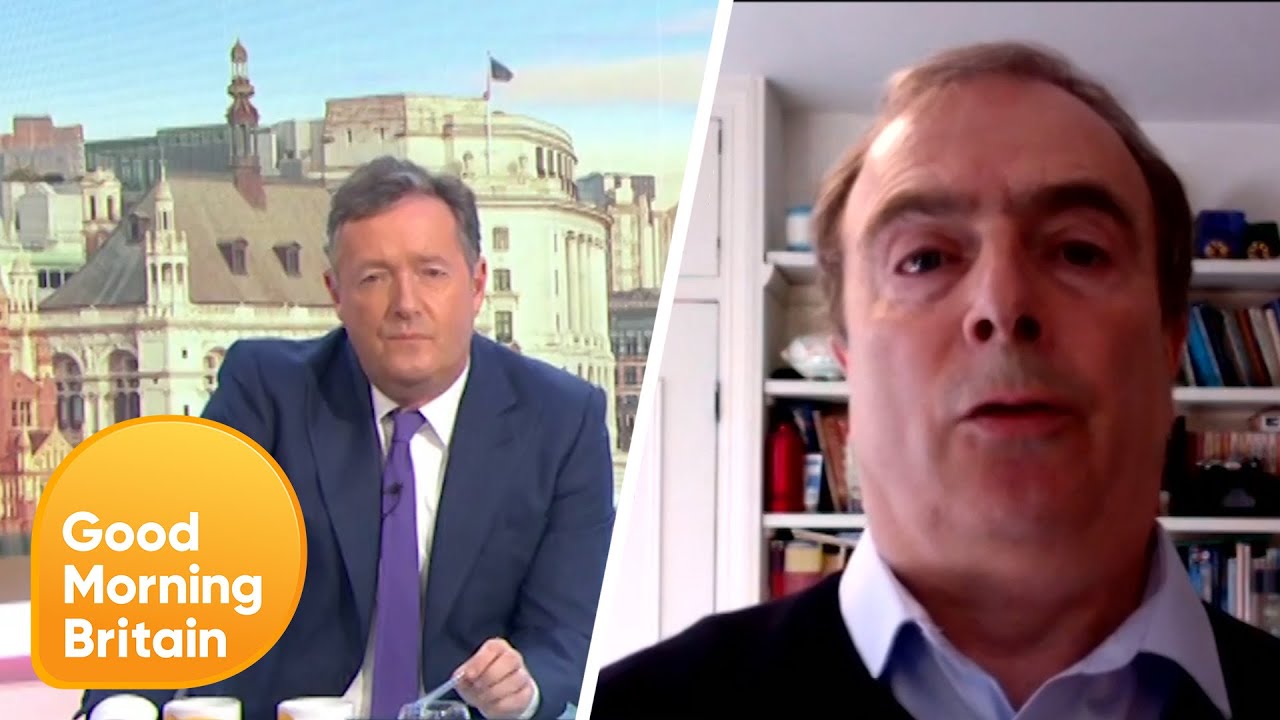 and “unreason.”
The language was familiar: Hitchens has previouslyrejected science showing human activity is responsible for global warming, and labeled measures to tackle climate change such as environmental taxes asa “sort of madness.”
For Lewandowsky, this “hysteria” narrative is part of a wider phenomenon of undermining expertise across the board, from Brexit, to climate change, and now COVID-19.
Lewandowsky points out that this also extends to many on the fringes of the political debate, such as controversial commentatorKatie Hopkins, who had over a million Twitter followers before the platform banned her, and has said the public were being“played” by the government for being asked to wear face masks. Or Brexit Party leaderNigel Farage, who described a police visit to his home as “lunacy” after he apparently broke lockdown rules.
Both have also cast doubt on the reality an of climate change.
“They’re quite explicit about saying that one person’s fact is another person’s lie, because that then enables them to avoid accountability,” Lewandowsky argues.
Miracle cures and conspiracy theories
These commentators’ contributions to the debate haven’t been without consequence. Some have spread conspiracy theories that have had real-world impact, while others have admitted to ignoring official safety guidelines, putting the public at risk of catching the disease.
ColumnistJames Delingpolewrote in a March 28article for the Spectator Australia titled ‘Wu Flu Notes’ that he had gone about his daily business despite having symptoms that align with coronavirus and that it was possible he had “infected lots of graduates.”
Some days later, Delingpole posted a tweet claiming a “high-powered zinc formula” had helped him recover from the illness without the need to go into intensive care – despite little being known about whether any such formula can be a cure for the virus.
He went on to write, “what I’d like more than anything is for this stuff to be available on the open market for everyone. But to mass produce it my friend needs ££££. If I crowdfunded it who’d be interested?” He concluded his request by asking for “potential big money backers."
[twt]
delingpole’s zinc promotion was comparable to comments made by US conspiracy theoristAlex Jones, who, a few weeks prior, hadreceived a cease-and-desist letter from a top New York attorney based on claims he had marketed and sold fraudulent COVID-19 treatments on his conspiracy website. US President Donald Trump was also widely criticised for suggesting that disinfectant taken internally could be a treatment for the virus.
Theories about miracle cures can take hold partly as a result of personal politics, Lewandowsky argues. Under lockdown, “you’re asked to stay at home and to look after other people by not doing what you’d like to do, and that is very challenging if you’re a believer in personal freedom and autonomy,” he says.
The same can be said of the motivations for spreading misinformation on climate change: “A lot of climate denial is very high-pitched, frenetic, emotional, angry, toxic – and that’s all triggered because people’s identity is at stake.”
The desire to reach for conspiracy theories may also stem from a need to feel that individuals still retain some control, says Evita March, a senior lecturer of psychology at Federation University Australia. “Conspiracy theories offer the believer some comfort in that there is still behavioural predictability,” she says.
And there were plenty of conspiracy theories flying around, pushed by long-time climate science deniers.
Piers Corbyn, brother of former Labour Party leader Jeremy Corbyn, was quick to promote the idea that coronavirus was thefault of politically liberal billionaires, and that it was related to the**Chinese-developed 5G mobile network**.
The latter conspiracy, alsopromoted by Infowars’ Jones, had significant real-world consequences. Over the Easter weekend it wasreported that 20 phone masts had been subject to arson attacks. According to Mobile UK, the trade association for four mobile network operators, an estimated 50 masts had beentargeted by April 15
[bbc pix]
david Lawrence, a researcher at campaign group Hope Not Hate, told DeSmog that theories around 5G have existed for a number of years, so “the stage was already set.” ”When the global COVID-19 outbreak occurred, there was both a susceptibility to be exploited and a ready-made explanation to hand,” he said.
“In some ways this is similar to climate change,” said Lawrence, “in that people who work in industries that would be negatively affected by efforts to reduce carbon emissions might be more likely to find reasons to reject the scientific consensus.”
Such conspiracy theories become popular — whether in relation to climate change or COVID-19 — because they are a means of “simplifying and attributing blame,” particularly during a time when “people feel that they have lost control over their lives,” says Lewandowsky.
“Some will seek comfort in the idea that there are bad people out there causing the pandemic because, for some, knowing there are bad people responsible for terrible things is more comforting than to assume that these things are uncontrollable,” he says. “It allows people to direct anger at someone.”
Distrusting modellers
Many commentators directed their fire at a familiar foe — scientific models.
On April 1, the same day the United Nations announced thepostponement of the annual UN climate change conference, two prominent UK climate science deniersargued in The Wall Street Journal that the pandemic had “dramatically demonstrated the limits of scientific modelling to predict the future.”
Benny Peiser andAndrew Montford, the Director and Deputy Director of the UK’s principal climate science denial campaign group the**Global Warming Policy Foundation (GWPF)**, criticised policymakers for using academic research that was subject to a “lack of quality control.” “In normal times this doesn’t matter much, but it’s different when studies find their way into the policy world,” they wrote.
They did not mention that the GWPF’s own approach to ‘peer-review’, which undercover reporters in 2015 showed operated on the basis of sending reports to its members of its own advisory council. The model has been described by UK charity Sense About Science, whose Advisory Council included GWPF advisor Matt Ridley, as “a way of trying to give scientific credibility to certain claims in the hope that a non-scientific audience will not know the difference.”
Eight days later, Breitbart’s Delingpole similarly criticised scientific modelling,dismissing research from the University of Washington forecasting more than150,000 deaths from the disease across the US as “operating in the realms of purest fantasy.” Whether on climate change or the pandemic, “we have no idea whether or not we can trust” scientific experts and their modelling, Delingpole argued[pix BB]
clark takes a similar view, telling DeSmog: “on both COVID-19 and climate change there are a lot of people who seem to favour the results of modelling over real-world observation.” Those who want action “will latch on to any model” that suits their ends, he claimed, and will “decide that is 'the science', that it is fact, beyond all challenge.”
Anarticle in Spiked likewise argued in April that “worst-case scenario thinking” and “doomsday forecasts” from models had clouded political judgement, referencing the obesity crisis, swine flu, and climate change.
This process of regularly casting doubt on models represents the “weaponisation of the scientific method,” says Imran Ahmed, founder of the Centre for Countering Digital Hate. “Those sorts of sly tactics that have been used by these groups have amounted to an entire culture of how they spread information, spread ideas, and build audiences for their groups.”
“It’s expressed through philosophical strands which are anti-expert, faux-populist and conspiracies” and can include the “incel movement, climate denial, vaccine denial, identity-based hate,” he argues.
“As new facts emerge and as the understanding of the scientific movement changes,” says Ahmed, “these actors look back at previous consensuses and say, ‘see, they were lying back then.’”
Attacking environmentalists
As well as attacking coronavirus experts on their response recommendations, many commentators who oppose climate action also attacked those looking further ahead by putting forward proposals to ensure recovery plans were consistent with governments’ environmental pledges.
For months, commentators who regularly question the veracity of mainstream climate science denounced environmental activists for supposedly distracting the world with climate change amid the threat of pandemics.
On March 12, Telegraph columnistSherelle Jacobsargued that university funding should be redirected away from climate change research and towards “the scientifically uncontested problem of pandemics.” The day after, when the UK was effectively put under a national lockdown, Dutch climate science denial groupCLINTEL published anopen letter titled “Fight virus not carbon.”
Greenpeace,The Climate Group, and many other environmental organisations believe that the government should include environmental policies in coronavirus economic recovery measures to “build back better,” particularly as the country seeks to position itself as a climate leader ahead of hosting the UN climate talks in November 2021.
Some commentators spun this argument to imply that the environmental movement was happy that the virus has spread.
On March 22, former Top Gear presenterJeremy Clarksonclaimed in the Sunday Times that “greens just can’t stop smiling” because COVID-19 was “their idea of a wet dream.” Spiked contributor Ross Clark echoed this position in a response to DeSmog’s questions, saying that “there is a strand of opinion on the left which wants these crises — climate change and COVID — to be as big as possible because they see it as a way of undermining capitalism, and other aspects of our lives, and reforming society in their own dream vision.”
On March 25, a couple of days after Clarkson’s polemic appeared, Spiked editor Brendan O’Neill similarly argued that the pandemic was “a glimpse of the dystopia greens want us to live in.”
“The truth is that if the COVID-19 crisis has shown us anything, it is how awful it would be to live in the kind of world greens dream about. Right now, courtesy of a horrible new virus, our societies look not dissimilar to the kind of societies Greta Thunberg, Extinction Rebellion, green parties and others have long been agitating for,” he wrote.
[pix] o’Neill reiterated this position when contacted by DeSmog, saying both the “green movement” and the reaction toCOVIDrepresented “privileged Westerners taking political decisions and actions” to the detriment of some of society’s most vulnerable. “Progressives should be questioning the impact of the reaction toCOVID-19 on working people and poor people,” he said.
In June, 57 charitieswrote to Prime Minister Boris Johnson asking him to put the creation of jobs in low-carbon sectors at the forefront of his economic recovery plans. They also asked the government to cancel the debts of developing countries struggling with both the impacts of the pandemic and the climate crisis.
Delingpole later wrote in acolumn for Breitbart saying environmentalists were celebrating the lockdown as a blueprint for a “new world order.” The GWPF took this argument one step further,publishing an image of a crying woman with the text, “net zero, like lockdown but permanent” — a reference to the UK government’s plans to slash the country’s emissions.
As these pieces were appearing, a Twitter account claiming to represent the climate protest group Extinction Rebellion (XR) in the East Midlandsposted an image of an XR-branded sticker on a lamppost with the words, “corona is the cure, humans are the disease.”
Official XR accounts were quick to condemn the tweet andsaid that they were not affiliated with the newly created account, which has since been deleted. But various outlets and commentators used the tweet to condemn the protest group.
Gaia Fawkes, the environmental section of political blog Guido Fawkes,suggested the post showed that XR was “in favour of extinction,” though it acknowledged coordinators of the organisation had “distanced themselves” from the supposed splinter group. A spokesperson for the site told DeSmog it stood by its reporting despite well-publicised doubts over the authenticity of the East Midlands organisation, stating it was “unaware of any publicly available list of ‘official’ [XR] groups at the time.”
The GWPF likewise claimed the Twitter account’s “anti-human sentiment” was “widely shared” among environmentalists,rejecting claims that the East Midlands account was fake.
Author and Guardian columnist George Monbiot suggests that while it is predominantly money that is behind climate science denial or tobacco industry lobbying, “with COVID-19, the motive definitely varies,” but the outcome is essentially the same.
“There are a lot of very well-paid people who are very professional and they’re using the expertise that they’ve gathered in other areas of dispute about scientific facts and the policies arising from them, and applying those directly to the pandemic,” he argues.
“Take their power seriously, but don’t take any of their arguments at face value,” Monbiot concludes. “It’s not worth trying to deconstruct the nonsense they come out with.”
Political impact
Unlike in theEU referendum or Trump’s presidential campaign, pushing anti-expert rhetoric may no longer be a winning strategy in the wake of COVID-19. Polling shows that despite worry about the pandemic and its impacts, the public still wants governments totackle climate change. And politicians attaching themselves to the anti-science bandwagon are now struggling in the polls.
For the Centre for Countering Digital Hate’s Ahmed, attacking the concept of expertise around COVID-19 is “the first truly great strategic mistake by those who espouse this radical world view.”
The US and UK are two of the countries hardest hit by the coronavirus pandemic, and both have leaders “who have been denying evidence and fact,” says Lewandowsky. “Johnson and Trump are creating a situation in which the very thought that we could establish a common truth is under attack,” he says. Both are regularly backed by commentators who also openly question the concept of expertise, whether on climate change or coronavirus.
But these positions have begun to hurt both leaders. Johnson has plummeted from a position of public popularity prior to the UK’s lockdown to anegative approval rating almost four months later. And the gap between the majority of Americans who disapprove of Trump’s leadership and those keeping faith with the president now sits ataround 15 percent, numbers that could see him lose November’s election.
That may reflect a wider shift in the public mindset, Lewandowsky argues: “My hope is that the COVID crisis has kind of given us a reset here, and there’s some evidence that people are beginning to say that we do need experts and data.”
==
==
https://www.desmogblog.com/2020/05/01/fossil-fuel-backed-climate-deniers-rush-promote-michael-moore-planet-of-humans
Climate science deniers and long-time opponents of renewable energy, many with ties to oil and gas companies, have seized on Michael Moore’s latest documentary to argue the case for continued fossil fuel dependence.
Planet of the Humans investigates the environmental footprint of renewable technologies such as wind, solar and biomass, and argues that the green movement has sold out to corporate interests. The documentary has been viewed over five million times on YouTube since its release last week to coincide with the 50th Anniversary of Earth Day.
But the film, produced by Moore and written and directed by his long-time collaborator Jeff Gibbs, has been widely criticised by energy and climate experts, who say it fails to provide context on the benefits of renewable energy and the negative impacts of fossil fuels, and is based on out-of-date information.
A group of environmentalists and climate scientists, including Professor of Atmospheric Science Michael Mann, who was this week elected to the National Academy of Sciences, has described the documentary as “shockingly misleading” and called for it to be withdrawn.
In contrast, the film has been heavily promoted in recent days by commentators known for their rejection of mainstream climate science and support for fossil fuels, including some with direct ties to the industry.
While the film’s anti-economic growth and population control message has not appealed to the free-market philosophies of many of these commentators, its criticism of renewables struck a chord, with the narratives used generally taking one of three forms.
‘Renewables are ineffective and more damaging than fossil fuels and nuclear’
The US-based libertarian Heartland Institute, which hosts “counter-summits” alongside UN climate conferences and has taken funding from fossil fuel interests including oil major ExxonMobil, was quick to host a podcast episode dedicated to Moore’s documentary.
One of the Heartland employees contributing to the podcast praised it for doing a “really good job of ticking off all the downsides” to renewables, which he claimed were the “least efficient way that you can try to generate electricity”.
Another said the “green weenies” could have “learned all of this stuff about the folly of wind and solar” by “coming to Heartland Institute conferences and reading our website”.
Myron Ebell, Director of Energy and Environment at the free-market Competitive Enterprise Institute and a regular speaker at Heartland conferences, has written a blog lauding the film. In the article, since reposted by the UK-based climate science denial campaign group the Global Warming Policy Foundation,Ebell claims the film “exposes” every type of green energy as “phony, useless, and inextricably dependent on fossil fuel production and large-scale hardrock mining”.
Both Heartland and the Competitive Enterprise Institute, which has similarly received funding from Exxon and the Koch family, owners of the largest privately owned oil company in the US, have sought to pressure Donald Trump into removing the United States from the Paris Agreement on climate change action.
Environmental commentator and nuclear enthusiast Michael Shellenberger also reacted positively to Moore’s film, tweeting that it proves “renewables are worse for environment than fossil fuels”.
... no lnx pix twt
Environmental commentator and nuclear enthusiast Michael Shellenberger also reacted positively to Moore’s film, tweeting that it proves “renewables are worse for environment than fossil fuels”.
In a column for Forbes, he argued that nuclear was the only answer to our energy needs, claiming solar panels require more materials to build and create more waste than nuclear plants. While solar panels can create a certain amount of potentially hazardous waste, around 80% of a panel is recyclable and solutions are being developed for the remaining materials.
Later interviewed by Sky News Australia’s Andrew Bolt,who has been criticised for repeatedly dismissing mainstream climate science, Shellenberger claimed most countries would need to use roughly 50% of their land to produce 100% renewable energy. Many studies have found the figure to be considerably lower.
The far-right news website Breitbart similarly claimed the documentary reveals that the solar and wind industries “pretend to be saving the planet from climate change while consuming more fossil fuels than they save”, despite research showing their carbon footprint to be many times lower.
In the UK, pro-Trump commentator James Delingpolewrote on the same website that Moore’s documentary was the “most powerful, brutally honest and important documentary of his career”.
He said it “clearly shows that renewable energy is damaging to the landscape and to wildlife and does NOT reduce the use of fossil fuels”. He suggested it could help Trump win the upcoming US election because it “undermines the entire basis of the Green New Deal” advocated by some Democrats. Elsewhere, Delingpole has called Moore his “new hero” and praised the film for “causing greenie heads to explode”.
Breitbart News, whose UK branch Delingpole edits, was co-founded by Steve Bannon, former White House Chief Strategist for Donald Trump, and board member of scandal-hit political consultancy Cambridge Analytica. Breitbart and Cambridge Analytica were both financially backed by long-standing funders of climate science denial, the Mercer Family.
Matt Ridley, an author and former chairman of the Northern Rock bank, whose collapse precipitated the 2008 financial crash in the UK, has also applauded Planet of the Humansfor being “extremely critical of the green renewable energy industry, saying it’s just as industrial as the fossil fuel industry, in fact it’s dependent on it”.
Speaking in a webinar organised by the British Conservation Alliance, a student network that describes itself as the “home of conservative climate solutions”, Ridley, who has a coal mine on his family estate, said you “simply cannot run a modern economy on wind or solar because there just isn’t enough space for putting up the panels or the windmills. And there isn’t enough resources.”
‘Renewable energy is a profit-driven scam and the environmental movement is corrupt’
These groups and individuals have also used the film to promote the narrative that renewable energy is a scam, backed by crony capitalists colluding with environmentalists.
In his blog about the film, theCompetitive Enterprise Institute’s Myron Ebellcalled it a “stunning evisceration of so-called green energy and the people profiting from it”.
Moore’s documentary was also the subject of an interview by the Canadian far-right news site Rebel News with Marc Morano, Communications Director of CFACT, a Washington-based free-market think tank that has claimed carbon dioxide is a “harmless trace essential gas in the atmosphere”.
Morano called Planet of the Humans an “amazing film” during the interview with host Ezra Levant, with the only downside being that Moore “believes in climate alarmism severely”.
Asked by Rebel News host Ezra Levant whether Moore produced the documentary because “he hated the fact these billionaires were tricking everyone”, Morano said the filmmaker “sees all the con that they’re doing and who’s profiting and who’s making money”. CFACT has taken funding from ExxonMobil and billionaire industrialists the Koch brothers.
A similar narrative was used by Robert Bradley Jr, founder of the Koch-fundedInstitute for Energy Research, when pre-release screenings of the documentary took place last summer.
In a blog post for a pro-fracking website Natural Gas Now, Bradley Jr described renewables as “mostly a hedge-fund scam”. The Pennsylvania-based Natural Gas Now is run by Tom Shepstone, a former employee ofEnergy in Depth, a PR campaign launched by the Independent Petroleum Association of America to promote fracking, with funding from oil majors including Shell, BP and Chevron.
In Australia, Sky News’ Andrew Bolthighlighted a scene from the documentary showing corporate executives awkwardly trying to explain where the energy for the electric vehicles they were promoting was coming from.
Bolt assured viewers he didn’t agree with many of the points the film makes, but nonetheless claimed “all this effort of green power, all this expense, is for next to nothing”, despite studies repeatedly finding that electric vehicles reduce emissions even in heavily coal-dependent power grids.
Another presenter on the same channel, Rowan Dean, similarly described renewables as a “hoax”.
In Canada, Terence Corcoran, comment editor for the Financial Post section of the Toronto-based National Post, said Moore’s film showed green energy was a “giant capitalist fraud” and should be the “hottest doc of the year”.
Corcoran has previously dismissed warnings about climate change from the UN and downplayed threats the Arctic, criticising the “sensational language in the media and elsewhere that implies the Arctic is heading into some kind of oblivion. A changing Canadian Arctic might even be good.”
In the UK, James Delingpole wrote on Breitbart that renewables were “a monstrous, dirty, ugly scam, orchestrated by a cynical few at the expense of the many”, while Andrew Montford, Deputy Director of the Global Warming Policy Foundation, tweeted that the documentary showed “the green movement is just a way to make a few dishonest capitalists very rich. Greens have been lying to everyone for 25 years”. The GWPF refuses to disclose its sources of funding, but has been revealed to be bankrolled by a number of wealthy donors, many of which financially supported the UK’s pro-Brexit campaign, including billionaire hedge fund manager Michael Hintze and currency trader Neil Record.
‘Environmentalists are now trying to cover up the truth’
Following the call from some environmentalists to have the film removed, opponents of climate action have since accused them of censorship.
The GWPF’s Montford tweeted in response: “You know the Michael Moore film is right about renewables because the greens are trying to have it taken down rather than arguing their case. Just as they always do”.
Another GWPF employee, Harry Wilkinson, Head of Policy at the organisation’s campaign wing, tweeted: “This is a classic. The Guardian endorse censoring a film exposing the environmental consequences of renewables, labelling it 'full of misinformation'. But fail to identify a single inaccurate fact in the documentary.”
The letter, organised by the director of the anti-fracking documentary Gasland, Josh Fox, and co-signed by climate scientist Michael Mann among others, said Moore’s film “trades in debunked fossil fuel industry talking points” and “ignores the last ten years of peer-reviewed renewable energy planning and policy”.
In the US, an article on the film in the Daily Caller, founded by Fox News host Tucker Carlson and majority funded by the Charles Koch Foundation, reported that climate activists had failed to “browbeat” the Films for Action website, which is hosting the documentary in addition to YouTube, into taking down the film. The article was reposted by the popular climate science denial blog, Watts Up With That?
Sky News Austrlia’s Chris Kenny also hinted that Australia’s public broadcaster ABC was deliberately burying the film, stating: “it seems the ABC has forgotten about Mike Moore and this film. Last I checked they hadn't reported on it at all. It seems to present too many inconvenient truths.”
The ABC was widely praised for its coverage of the Australian wildfires at the beginning of the 2020, while Rupert Murdoch’s News Corp, which owns Sky News Australia, was criticised for its “irresponsible” coverage of the fires. Murdoch’s son James said he was “disappointed” with the media company’s climate science denial and a News Corp employee resigned saying she could no longer work for an organisation that she claimed was running a “misinformation campaign” around the wildfires.
Criticism of the film
Dana Nuccitelli,Yale Climate Connections: “Michael Moore's 'Planet of the Humans' documentary peddles dangerous climate denial”
Ketan Joshi: “Planet of the humans: A reheated mess of lazy, old myths”
Leah C. Stokes, Vox: “Michael Moore produced a film about climate change that’s a gift to Big Oil”
Dan Gearino, Inside Climate News: “Inside Clean Energy: 6 Things Michael Moore’s ‘Planet of the Humans’ Gets Wrong”
Brian Kahn,Gizmodo: “Planet of the Humans Comes This Close to Actually Getting the Real Problem, Then Goes Full Ecofascism”
A Siegel, Get Energy Smart Now: “Planet of The Humans: An Annotated Collection“
==
Building Residents
TheGlobal Warming Policy Foundation (GWPF), founded by former Conservative Chancellor Lord Nigel Lawson. Several of GWPF's members and funders are affiliated with other groups located at 55 Tufton Street. [1], [3]
Civitas is an educational charity and publisher specializing in health, education, welfare, and economics. Sir Alan Rudge and Lord Nigel Vinson are both trustees – Rudge is an advisor at the GWPF while Vinson has funded the climate denial think-tank. The group has been criticised by Transparify for its “opaque” operations. [4], [5], [6], [3], [7]
TaxPayers’ Alliance is a pressure group and think tank formed in 2004 by Matthew Elliottto campaign for a low tax society. In 2016 the TaxPayers’ Alliance, along with U.S. climate science denying pressure groups the Competitive Enterprise Institute (CEI) and the Heritage Foundation, held a free trade event at the Conservative Party Conference. The group was, as of November 2015, a member of the Cooler Heads Coalition, a climate denial organization run by the CEI. The Taxpayers' Alliance belongs to an international coalition of anti-tax, free-market campaign groups called the World Taxpayers Associations. Other members include the Australian Taxpayers' Alliance, Americans for Tax Reform, the Austrian Economics Center and the Canadian Taxpayers' Federation. [8], [9], [10], [35]
Business for Britain is a pro-Brexit campaign group and was an occupant of 55 Tufton Street until October 2015. Matthew Elliott of the TaxPayers’ Alliance founded the group, Matt Ridley of the GWPF launched Business for Britain North East, and Lord Vinson acted as an advisor to the group. [11], [12],[13], [37]
Vote Leave was the official pro-Brexit campaign group. The group was originally a resident of 55 Tufton Street but moved to a bigger office several months before the referendum. Members included Nigel Lawson, Matthew Elliott, Graham Stringer (also a GWPF trustee),Matt Ridley, along with prominent Conservative Party politicians Andrea Leadsom, Boris Johnson and Michael Gove. GWPF and Tory donor Michael Hintze also donated to Vote Leave. [2], [14], [15], [16], [17], [18]
The European Foundation is a high-profile Eurosceptic think tank chaired by Conservative MP Bill Cash. The group published a report in 2009 around the time of the Copenhagen climate summit entitled “100 reasons why global warming is natural” which argues there is no proof that human influence has anything to do with climate change. Members of the group’s advisory board includeMatthew Elliott, Richard Smith, owner of 55 Tufton Street, the former UKIP MEP Roger Helmer, and Conservative MPs David Davis, Oliver Letwin, Bernard Jenkin, John Whittingdale, Graham Brady and Iain Duncan-Smith. Owen Paterson, former environment secretary and Chairman of UK2020, another organisation based at 55 Tufton Street, is also on the advisory board. [19], [20], [21], [22]
UK2020 is a right-wing think tank which has been called the British version of the American Tea Party and was set up by Owen Paterson in 2014. Among the policy recommendations the group calls for is “a robust, common sense energy policy that would encourage the market to choose affordable technologies to reduce emissions.” These technologies include shale gas and small modular nuclear reactors. Matt Ridley of the GWPFis a policy advisor for UK2020 and Tim Montgomerie, founder of the ConservativeHome website and a former senior fellow at the Legatum Institute, is their political adviser. [23], [24], [2], [36]
The New Culture Forum is a right wing think tank working to change cultural debates they believe are dominated by “the left”. According to the ConservativeHome blog, Matthew Elliott serves as an advisor at the forum, while Michael Gove, UK environment secretary, has spoken at its events. Its founder and director is Peter Whittle, former UKIP leader in the London Assembly and Culture and Communities Spokesperson for the party. [25], [26], [27]
==
https://littlesis.org/person/229006/Viscount_Matt_Ridley
Global Warming Policy Foundation A climate science denying think tank based in London
Vote Leave Vote Leave is the campaign for a Leave vote in the EU Referendum that will take place on the 23rd June 2016
Business for Britain UK campaign organisation calling for Britain to leave the EU
UK2020 UK right wing think tank
• Policy Advisor (Mar 1 '16→?)
The Times British daily newspaper
Memberships
Sense about Science Network that began as RCP, then Living Marxism, then Institute of Ideas
• Advisory council member and donor
Conservative Party UK Political Party
• Member
Services/Transactions
Banks Mining UK mining and energy company
• coal mining on Ridley's land
Family
Owen Paterson MP for North Shropshire
Professional Associates
Daniel Hannan British politician, Conservative MEP for South East England
• ally
Friends
Myron Ebell Director of energy and global warming policy, Competitive Enterprise Institute
• Speaking at Event with (Feb 1 '17) [+2]
Other Affiliations
National Center for Policy Analysis The National Center for Policy Analysis (NCPA) develops and promotes private alternatives to government regulation and control.
• Cites Ridley's Climate Science Denial ('13→?)
- www.senseaboutscience.org › About us ...
- The Times: Time to Look on the Bright...
- The Times: Matt Ridley
- UK2020 website
- DeSmog UK
- DeSmogUK_BanksMining
- Blue-Green Summit: How Conservatives ...
- House of Lords
- Business for Britain: North East
- DeSmog UK: Matt 'King Coal' Ridley
- DeSmogBlog Matt Ridley profile
- DeSmogBlog NCPA Profile
- Euractiv: Brexit campaign leadership ...
- Independent: Owen Paterson, his scept...
==
ExxonMobil’s former CEO is Rex Tillerson, who was until recently the US Secretary of State. He was appointed by Donald Trump, who Cambridge Analytica were influential in getting elected.
Big Coal
Cambridge Analytica also has ties to the world’s biggest coal company, Peabody Energy.
The link there is through Christian Patrick Teroerde, who was a director of SCL Elections - a subsidiary of Cambridge Analytica’s parent company, SCL Group.
Teroerde is also a director of Hanson Asset Management, which bought a major stake in Peabody in the 1990s, when it was the world’s largest coal company.
Peabody filed for bankruptcy in 2016 as coal prices crashed. Since Donald Trump got elected, Peabody has bounced back, big time.
Brexit and Climate Science Denial
Hanson Asset Management also links to DeSmog UK’s previous map that tied Cambridge Analytica to Brexit and climate science denial.
The company was built on the wealth of Lord James Hanson, who was a big Euro-sceptic. He founded the anti-EU campaign group Business for Sterling, whose Head of Research was Dominic Cummins.
Cummins went on to be the campaign director for the official Brexit campaign group, Vote Leave. One of the whistleblowers in the Guardian claimed Cambridge Analytica was working for Vote Leave via a youth campaign organisation called BeLeave and the company’s Canadian spin-off, Aggregate IQ.
Vote Leave was supported by two members of the Conservative party with climate science denial links: North Shropshire MPOwen Paterson and hereditary peer Matt Ridley. Both are well-known allies of the the UK’s most prominent climate science denial campaign group, the Global Warming Policy Foundation.
The Electoral Commission is currently investigating the unofficial Brexit campaign, Leave.EU, which Cambridge Analytica is also thought to have worked with, though the company denies this.
Leave.EU was bankrolled by climate science denier Arron Banks and was fronted by another climate science denier, former UKIP-leader Nigel Farage. Both were famously photographed in a golden elevator with Donald Trump.
Both Vote Leave and Leave.EU also have ties to the party currently propping up the government, the Democratic Unionist Party, through another Brexit campaign group - Grassroots Out. DUP MP and climate science denier Sammy Wilson was a key player in Grassroots Out.
Here’s an interactive map of how it all fits together:
==
busted
Matt Ridley: Two Op-Eds And One Essay.Matt Ridley frequently contributes toThe Wall Street Journal’s op-ed pagesabout climate change and sometimes discloses that his family leases land for coal mining in northern England. During the time period examined for this study, Ridley authored two climate-relatedJournalop-eds -- and one additional piece published for “The Saturday Essay” in theJournal’s Life section, where he asserted that fossil fuels “will save the world.” One Ridley op-ed co-authored with Benny Peiser, director of the U.K.-based climate denial organization Global Warming Policy Foundation, was titled “Your Complete Guide to the Climate Debate” and released shortly before the international climate talks in Paris.
Dozens of scientists criticized and debunked this op-ed on Climate Feedback, calling it a “very biased and misleading presentation of the science,” and adding that it contained “rampant cherry-picking, misleading statements, and flawed logic.” Climate Feedback assigned the op-ed an overall credibility score of “Low” to “Very Low.” A previousMedia Mattersanalysis found that between January 2011 and October 15, 2012 -- when Ridley was a columnist for theJournal-- he authored 18 columns about climate change in which he frequently distorted climate science and compared climate scientists to eugenicists because eugenicists "insist[ed] that its tenets were beyond reasonable challenge." In one 2012Journalcolumn, Ridley asserted that global warming will be a “net good” for the planet.
:{:(style="background-color:#ffffff;"):}:*Media Matters*:{,:(style="background-color:#ffffff;"):}:[Frequent Misinformers Spreadsheet:{,}:Climate Denial/Misinformation Spreadsheet:{,}:10/29/12:{,}:12/20/12:{;}:The Wall Street Journal:{,}:3/13/15:{; Climate Feedback,}:11/27/15:{]}:
http://energydesk.greenpeace.org/2015/12/08/exposed-academics-for-hire/
sting: GP
A Greenpeace undercover investigation has exposed how fossil fuel companies can secretly pay academics at leading American universities to write research that sows doubt about climate science and promotes the companies’ commercial interests.
Posing as representatives of oil and coal companies, reporters from Greenpeace UK asked academics from Princeton and Penn State to write papers promoting the benefits of CO2 and the use of coal in developing countries.
The professors agreed to write the reports and said they did not need to disclose the source of the funding.
Citing industry-funded documents – including testimony to state hearings and newspaper articles –Professor Frank Clemente of Penn State said: “In none of these cases is the sponsor identified. All my work is published as an independent scholar.”
Leading climate-sceptic academic, Professor William Happer, agreed to write a report for a Middle Eastern oil company on the benefits of CO2 and to allow the firm to keep the source of the funding secret.
Happer is due to appear this afternoon as a star witness in Senate hearings called by Republican Presidential candidate Ted Cruz.
In emails to reporters he also revealed Peabody Energy paid thousands of dollars for him to testify at a separate state hearing, with the money being paid to a climate-sceptic think tank.
https://twitter.com/intent/tweet?text=Exposed%3A%20Academics-for-hire%20agree%E2%80%A6%20http%3A%2F%2Fpic.twitter.com%2FvjkiPRrjzv%20http%3A%2F%2Fenergydesk.greenpeace.org%2F2015%2F12%2F08%2Fexposed-academics-for-hire%2F&via=energydesk
https://twitter.com/intent/tweet?text=Exposed%3A%20Academics-for-hire%20agree%E2%80%A6%20http%3A%2F%2Fpic.twitter.com%2FvjkiPRrjzv%20http%3A%2F%2Fenergydesk.greenpeace.org%2F2015%2F12%2F08%2Fexposed-academics-for-hire%2F&via=energydeskhttps://twitter.com/intent/tweet?text=Exposed%3A%20Academics-for-hire%20agree%E2%80%A6%20http%3A%2F%2Fpic.twitter.com%2FvjkiPRrjzv%20http%3A%2F%2Fenergydesk.greenpeace.org%2F2015%2F12%2F08%2Fexposed-academics-for-hire%2F&via=energydeskhttps://twitter.com/intent/tweet?text=Exposed%3A%20Academics-for-hire%20agree%E2%80%A6%20http%3A%2F%2Fpic.twitter.com%2FvjkiPRrjzv%20http%3A%2F%2Fenergydesk.greenpeace.org%2F2015%2F12%2F08%2Fexposed-academics-for-hire%2F&via=energydeskhttps://twitter.com/intent/tweet?text=Exposed%3A%20Academics-for-hire%20agree%E2%80%A6%20http%3A%2F%2Fpic.twitter.com%2FvjkiPRrjzv%20http%3A%2F%2Fenergydesk.greenpeace.org%2F2015%2F12%2F08%2Fexposed-academics-for-hire%2F&via=energydeskhttps://twitter.com/intent/tweet?text=Exposed%3A%20Academics-for-hire%20agree%E2%80%A6%20http%3A%2F%2Fpic.twitter.com%2FvjkiPRrjzv%20http%3A%2F%2Fenergydesk.greenpeace.org%2F2015%2F12%2F08%2Fexposed-academics-for-hire%2F&via=energydeskhttps://twitter.com/intent/tweet?text=Exposed%3A%20Academics-for-hire%20agree%E2%80%A6%20http%3A%2F%2Fpic.twitter.com%2FvjkiPRrjzv%20http%3A%2F%2Fenergydesk.greenpeace.org%2F2015%2F12%2F08%2Fexposed-academics-for-hire%2F&via=energydeskhttps://twitter.com/intent/tweet?text=Exposed%3A%20Academics-for-hire%20agree%E2%80%A6%20http%3A%2F%2Fpic.twitter.com%2FvjkiPRrjzv%20http%3A%2F%2Fenergydesk.greenpeace.org%2F2015%2F12%2F08%2Fexposed-academics-for-hire%2F&via=energydeskhttps://twitter.com/intent/tweet?text=Exposed%3A%20Academics-for-hire%20agree%E2%80%A6%20http%3A%2F%2Fpic.twitter.com%2FvjkiPRrjzv%20http%3A%2F%2Fenergydesk.greenpeace.org%2F2015%2F12%2F08%2Fexposed-academics-for-hire%2F&via=energydeskhttps://twitter.com/intent/tweet?text=Exposed%3A%20Academics-for-hire%20agree%E2%80%A6%20http%3A%2F%2Fpic.twitter.com%2FvjkiPRrjzv%20http%3A%2F%2Fenergydesk.greenpeace.org%2F2015%2F12%2F08%2Fexposed-academics-for-hire%2F&via=energydeskhttps://twitter.com/intent/tweet?text=Exposed%3A%20Academics-for-hire%20agree%E2%80%A6%20http%3A%2F%2Fpic.twitter.com%2FvjkiPRrjzv%20http%3A%2F%2Fenergydesk.greenpeace.org%2F2015%2F12%2F08%2Fexposed-academics-for-hire%2F&via=energydeskhttps://twitter.com/intent/tweet?text=Exposed%3A%20Academics-for-hire%20agree%E2%80%A6%20http%3A%2F%2Fpic.twitter.com%2FvjkiPRrjzv%20http%3A%2F%2Fenergydesk.greenpeace.org%2F2015%2F12%2F08%2Fexposed-academics-for-hire%2F&via=energydeskhttps://twitter.com/intent/tweet?text=Exposed%3A%20Academics-for-hire%20agree%E2%80%A6%20http%3A%2F%2Fpic.twitter.com%2FvjkiPRrjzv%20http%3A%2F%2Fenergydesk.greenpeace.org%2F2015%2F12%2F08%2Fexposed-academics-for-hire%2F&via=energydeskhttps://twitter.com/intent/tweet?text=Exposed%3A%20Academics-for-hire%20agree%E2%80%A6%20http%3A%2F%2Fpic.twitter.com%2FvjkiPRrjzv%20http%3A%2F%2Fenergydesk.greenpeace.org%2F2015%2F12%2F08%2Fexposed-academics-for-hire%2F&via=energydeskhttps://twitter.com/intent/tweet?text=Exposed%3A%20Academics-for-hire%20agree%E2%80%A6%20http%3A%2F%2Fpic.twitter.com%2FvjkiPRrjzv%20http%3A%2F%2Fenergydesk.greenpeace.org%2F2015%2F12%2F08%2Fexposed-academics-for-hire%2F&via=energydeskhttps://twitter.com/intent/tweet?text=Exposed%3A%20Academics-for-hire%20agree%E2%80%A6%20http%3A%2F%2Fpic.twitter.com%2FvjkiPRrjzv%20http%3A%2F%2Fenergydesk.greenpeace.org%2F2015%2F12%2F08%2Fexposed-academics-for-hire%2F&via=energydeskhttps://twitter.com/intent/tweet?text=Exposed%3A%20Academics-for-hire%20agree%E2%80%A6%20http%3A%2F%2Fpic.twitter.com%2FvjkiPRrjzv%20http%3A%2F%2Fenergydesk.greenpeace.org%2F2015%2F12%2F08%2Fexposed-academics-for-hire%2F&via=energydeskhttps://twitter.com/intent/tweet?text=Exposed%3A%20Academics-for-hire%20agree%E2%80%A6%20http%3A%2F%2Fpic.twitter.com%2FvjkiPRrjzv%20http%3A%2F%2Fenergydesk.greenpeace.org%2F2015%2F12%2F08%2Fexposed-academics-for-hire%2F&via=energydeskhttps://twitter.com/intent/tweet?text=Exposed%3A%20Academics-for-hire%20agree%E2%80%A6%20http%3A%2F%2Fpic.twitter.com%2FvjkiPRrjzv%20http%3A%2F%2Fenergydesk.greenpeace.org%2F2015%2F12%2F08%2Fexposed-academics-for-hire%2F&via=energydeskhttps://twitter.com/intent/tweet?text=Exposed%3A%20Academics-for-hire%20agree%E2%80%A6%20http%3A%2F%2Fpic.twitter.com%2FvjkiPRrjzv%20http%3A%2F%2Fenergydesk.greenpeace.org%2F2015%2F12%2F08%2Fexposed-academics-for-hire%2F&via=energydeskhttps://twitter.com/intent/tweet?text=Exposed%3A%20Academics-for-hire%20agree%E2%80%A6%20http%3A%2F%2Fpic.twitter.com%2FvjkiPRrjzv%20http%3A%2F%2Fenergydesk.greenpeace.org%2F2015%2F12%2F08%2Fexposed-academics-for-hire%2F&via=energydeskhttps://twitter.com/intent/tweet?text=Exposed%3A%20Academics-for-hire%20agree%E2%80%A6%20http%3A%2F%2Fpic.twitter.com%2FvjkiPRrjzv%20http%3A%2F%2Fenergydesk.greenpeace.org%2F2015%2F12%2F08%2Fexposed-academics-for-hire%2F&via=energydeskhttps://twitter.com/intent/tweet?text=Exposed%3A%20Academics-for-hire%20agree%E2%80%A6%20http%3A%2F%2Fpic.twitter.com%2FvjkiPRrjzv%20http%3A%2F%2Fenergydesk.greenpeace.org%2F2015%2F12%2F08%2Fexposed-academics-for-hire%2F&via=energydesk
https://www.facebook.com/sharer.php?u=http%3A%2F%2Fenergydesk.greenpeace.org%2F2015%2F12%2F08%2Fexposed-academics-for-hire%2F%3Fpicshare%3D7739
https://www.facebook.com/sharer.php?u=http%3A%2F%2Fenergydesk.greenpeace.org%2F2015%2F12%2F08%2Fexposed-academics-for-hire%2F%3Fpicshare%3D7739https://www.facebook.com/sharer.php?u=http%3A%2F%2Fenergydesk.greenpeace.org%2F2015%2F12%2F08%2Fexposed-academics-for-hire%2F%3Fpicshare%3D7739https://www.facebook.com/sharer.php?u=http%3A%2F%2Fenergydesk.greenpeace.org%2F2015%2F12%2F08%2Fexposed-academics-for-hire%2F%3Fpicshare%3D7739https://www.facebook.com/sharer.php?u=http%3A%2F%2Fenergydesk.greenpeace.org%2F2015%2F12%2F08%2Fexposed-academics-for-hire%2F%3Fpicshare%3D7739https://www.facebook.com/sharer.php?u=http%3A%2F%2Fenergydesk.greenpeace.org%2F2015%2F12%2F08%2Fexposed-academics-for-hire%2F%3Fpicshare%3D7739https://www.facebook.com/sharer.php?u=http%3A%2F%2Fenergydesk.greenpeace.org%2F2015%2F12%2F08%2Fexposed-academics-for-hire%2F%3Fpicshare%3D7739https://www.facebook.com/sharer.php?u=http%3A%2F%2Fenergydesk.greenpeace.org%2F2015%2F12%2F08%2Fexposed-academics-for-hire%2F%3Fpicshare%3D7739https://www.facebook.com/sharer.php?u=http%3A%2F%2Fenergydesk.greenpeace.org%2F2015%2F12%2F08%2Fexposed-academics-for-hire%2F%3Fpicshare%3D7739https://www.facebook.com/sharer.php?u=http%3A%2F%2Fenergydesk.greenpeace.org%2F2015%2F12%2F08%2Fexposed-academics-for-hire%2F%3Fpicshare%3D7739https://www.facebook.com/sharer.php?u=http%3A%2F%2Fenergydesk.greenpeace.org%2F2015%2F12%2F08%2Fexposed-academics-for-hire%2F%3Fpicshare%3D7739https://www.facebook.com/sharer.php?u=http%3A%2F%2Fenergydesk.greenpeace.org%2F2015%2F12%2F08%2Fexposed-academics-for-hire%2F%3Fpicshare%3D7739https://www.facebook.com/sharer.php?u=http%3A%2F%2Fenergydesk.greenpeace.org%2F2015%2F12%2F08%2Fexposed-academics-for-hire%2F%3Fpicshare%3D7739https://www.facebook.com/sharer.php?u=http%3A%2F%2Fenergydesk.greenpeace.org%2F2015%2F12%2F08%2Fexposed-academics-for-hire%2F%3Fpicshare%3D7739https://www.facebook.com/sharer.php?u=http%3A%2F%2Fenergydesk.greenpeace.org%2F2015%2F12%2F08%2Fexposed-academics-for-hire%2F%3Fpicshare%3D7739https://www.facebook.com/sharer.php?u=http%3A%2F%2Fenergydesk.greenpeace.org%2F2015%2F12%2F08%2Fexposed-academics-for-hire%2F%3Fpicshare%3D7739https://www.facebook.com/sharer.php?u=http%3A%2F%2Fenergydesk.greenpeace.org%2F2015%2F12%2F08%2Fexposed-academics-for-hire%2F%3Fpicshare%3D7739https://www.facebook.com/sharer.php?u=http%3A%2F%2Fenergydesk.greenpeace.org%2F2015%2F12%2F08%2Fexposed-academics-for-hire%2F%3Fpicshare%3D7739https://www.facebook.com/sharer.php?u=http%3A%2F%2Fenergydesk.greenpeace.org%2F2015%2F12%2F08%2Fexposed-academics-for-hire%2F%3Fpicshare%3D7739https://www.facebook.com/sharer.php?u=http%3A%2F%2Fenergydesk.greenpeace.org%2F2015%2F12%2F08%2Fexposed-academics-for-hire%2F%3Fpicshare%3D7739https://www.facebook.com/sharer.php?u=http%3A%2F%2Fenergydesk.greenpeace.org%2F2015%2F12%2F08%2Fexposed-academics-for-hire%2F%3Fpicshare%3D7739https://www.facebook.com/sharer.php?u=http%3A%2F%2Fenergydesk.greenpeace.org%2F2015%2F12%2F08%2Fexposed-academics-for-hire%2F%3Fpicshare%3D7739https://www.facebook.com/sharer.php?u=http%3A%2F%2Fenergydesk.greenpeace.org%2F2015%2F12%2F08%2Fexposed-academics-for-hire%2F%3Fpicshare%3D7739
https://www.facebook.com/sharer.php?u=http%3A%2F%2Fenergydesk.greenpeace.org%2F2015%2F12%2F08%2Fexposed-academics-for-hire%2F%3Fpicshare%3D7739
Read the emails with Professor Frank Clemente
Read the emails with Professor :{Happer and the Donors Trust:(style="background-color:#ffff66;"):}:
The investigation also found:
- US coal giant PeabodyEnergy also paid tens of thousands of dollars to an academic who produced coal-friendly research and provided testimony at state and federal climate hearings, the amount of which was never revealed.
- The Donors Trust, an organisation that has been described as the “dark money ATM”of the US conservative movement, confirmed in a taped conversation with an undercover reporter that it could anonymously channel money from a fictional Middle Eastern oil and gas company to US climate sceptic organisations.
- Princeton professor William Happer laid out details of an unofficial peer review process run by the Global Warming Policy Foundation, a UK climate sceptic think tank, and said he could ask to put an oil-funded report through a similar review process, after admitting that it would struggle to be published in an academic journal.
- A recent report by the GWPF that had been through the same unofficial peer review process, was promoted as “thoroughly peer-reviewed” by influential columnistMatt Ridley-:{a senior figure:(style="box-sizing:border-box"):}:in the organisation.
The findings echo the case of Willie Soon, who was the subject of an investigation published in theNew York Times earlier this year. The investigation revealed that Soon had accepted donations from fossil fuel companies and anonymous donors in return for producing climate-sceptic scientific papers. He described his studies as “deliverables” and failed to declare who paid for the research.
The revelations also follow a series of reports showing fossil fuel companies burying the truth about climate change, whilefunding flawed researchto cast doubt on the scientific consensus.
Academics for hire
Reporters approached the academics claiming to be representatives of unnamed fossil fuel companies – one, a Middle Eastern oil and gas exploration company, the other a coal mining firm based in Indonesia – looking to commission “independent” research.
“In none of these cases is the sponsor identified. All my work is published as an independent scholar.” – Professor Frank Clemente
The individuals approached have previously been linked to fossil fuel companies or climate sceptic organisations that have received fossil fuel funding.
Professor Frank Clemente, a sociologistfrom Penn State university, was asked if he could produce a report “to counter damaging research linking coal to premature deaths (in particular the World Health Organization’s figure that 3.7 million people die per year from fossil fuel pollution)”.
He said that this was within his skill set; that he could be quoted using his university job title; and that it would cost around $15,000 for an 8–10 page paper. He also explained that he charged$6,000 for writing a newspaper op-ed.
When asked whether he would need to declare where the money came from, Professor Clementesaid: “There is no requirement to declare source funding in the US.”
Clemente is a favourite of the coal industry and particularly Peabody Energy, which:{regularly uses his research:(style="box-sizing:border-box"):}:as evidence of the need for an expansion of coal power in developing countries.
https://twitter.com/intent/tweet?text=From%20Left%20to%20Right%20Dr%20Will%20Happer%20Dr%20Richard%20Lindzen%20%26%20Dr%20P%E2%80%A6%20http%3A%2F%2F%20http%3A%2F%2Fenergydesk.greenpeace.org%2F2015%2F12%2F08%2Fexposed-academics-for-hire%2F&via=energydesk
https://twitter.com/intent/tweet?text=From%20Left%20to%20Right%20Dr%20Will%20Happer%20Dr%20Richard%20Lindzen%20%26%20Dr%20P%E2%80%A6%20http%3A%2F%2F%20http%3A%2F%2Fenergydesk.greenpeace.org%2F2015%2F12%2F08%2Fexposed-academics-for-hire%2F&via=energydeskhttps://twitter.com/intent/tweet?text=From%20Left%20to%20Right%20Dr%20Will%20Happer%20Dr%20Richard%20Lindzen%20%26%20Dr%20P%E2%80%A6%20http%3A%2F%2F%20http%3A%2F%2Fenergydesk.greenpeace.org%2F2015%2F12%2F08%2Fexposed-academics-for-hire%2F&via=energydeskhttps://twitter.com/intent/tweet?text=From%20Left%20to%20Right%20Dr%20Will%20Happer%20Dr%20Richard%20Lindzen%20%26%20Dr%20P%E2%80%A6%20http%3A%2F%2F%20http%3A%2F%2Fenergydesk.greenpeace.org%2F2015%2F12%2F08%2Fexposed-academics-for-hire%2F&via=energydeskhttps://twitter.com/intent/tweet?text=From%20Left%20to%20Right%20Dr%20Will%20Happer%20Dr%20Richard%20Lindzen%20%26%20Dr%20P%E2%80%A6%20http%3A%2F%2F%20http%3A%2F%2Fenergydesk.greenpeace.org%2F2015%2F12%2F08%2Fexposed-academics-for-hire%2F&via=energydeskhttps://twitter.com/intent/tweet?text=From%20Left%20to%20Right%20Dr%20Will%20Happer%20Dr%20Richard%20Lindzen%20%26%20Dr%20P%E2%80%A6%20http%3A%2F%2F%20http%3A%2F%2Fenergydesk.greenpeace.org%2F2015%2F12%2F08%2Fexposed-academics-for-hire%2F&via=energydeskhttps://twitter.com/intent/tweet?text=From%20Left%20to%20Right%20Dr%20Will%20Happer%20Dr%20Richard%20Lindzen%20%26%20Dr%20P%E2%80%A6%20http%3A%2F%2F%20http%3A%2F%2Fenergydesk.greenpeace.org%2F2015%2F12%2F08%2Fexposed-academics-for-hire%2F&via=energydeskhttps://twitter.com/intent/tweet?text=From%20Left%20to%20Right%20Dr%20Will%20Happer%20Dr%20Richard%20Lindzen%20%26%20Dr%20P%E2%80%A6%20http%3A%2F%2F%20http%3A%2F%2Fenergydesk.greenpeace.org%2F2015%2F12%2F08%2Fexposed-academics-for-hire%2F&via=energydeskhttps://twitter.com/intent/tweet?text=From%20Left%20to%20Right%20Dr%20Will%20Happer%20Dr%20Richard%20Lindzen%20%26%20Dr%20P%E2%80%A6%20http%3A%2F%2F%20http%3A%2F%2Fenergydesk.greenpeace.org%2F2015%2F12%2F08%2Fexposed-academics-for-hire%2F&via=energydeskhttps://twitter.com/intent/tweet?text=From%20Left%20to%20Right%20Dr%20Will%20Happer%20Dr%20Richard%20Lindzen%20%26%20Dr%20P%E2%80%A6%20http%3A%2F%2F%20http%3A%2F%2Fenergydesk.greenpeace.org%2F2015%2F12%2F08%2Fexposed-academics-for-hire%2F&via=energydeskhttps://twitter.com/intent/tweet?text=From%20Left%20to%20Right%20Dr%20Will%20Happer%20Dr%20Richard%20Lindzen%20%26%20Dr%20P%E2%80%A6%20http%3A%2F%2F%20http%3A%2F%2Fenergydesk.greenpeace.org%2F2015%2F12%2F08%2Fexposed-academics-for-hire%2F&via=energydesk
https://www.facebook.com/sharer.php?u=http%3A%2F%2Fenergydesk.greenpeace.org%2F2015%2F12%2F08%2Fexposed-academics-for-hire%2F%3Fpicshare%3D7736
https://www.facebook.com/sharer.php?u=http%3A%2F%2Fenergydesk.greenpeace.org%2F2015%2F12%2F08%2Fexposed-academics-for-hire%2F%3Fpicshare%3D7736https://www.facebook.com/sharer.php?u=http%3A%2F%2Fenergydesk.greenpeace.org%2F2015%2F12%2F08%2Fexposed-academics-for-hire%2F%3Fpicshare%3D7736https://www.facebook.com/sharer.php?u=http%3A%2F%2Fenergydesk.greenpeace.org%2F2015%2F12%2F08%2Fexposed-academics-for-hire%2F%3Fpicshare%3D7736https://www.facebook.com/sharer.php?u=http%3A%2F%2Fenergydesk.greenpeace.org%2F2015%2F12%2F08%2Fexposed-academics-for-hire%2F%3Fpicshare%3D7736https://www.facebook.com/sharer.php?u=http%3A%2F%2Fenergydesk.greenpeace.org%2F2015%2F12%2F08%2Fexposed-academics-for-hire%2F%3Fpicshare%3D7736https://www.facebook.com/sharer.php?u=http%3A%2F%2Fenergydesk.greenpeace.org%2F2015%2F12%2F08%2Fexposed-academics-for-hire%2F%3Fpicshare%3D7736https://www.facebook.com/sharer.php?u=http%3A%2F%2Fenergydesk.greenpeace.org%2F2015%2F12%2F08%2Fexposed-academics-for-hire%2F%3Fpicshare%3D7736https://www.facebook.com/sharer.php?u=http%3A%2F%2Fenergydesk.greenpeace.org%2F2015%2F12%2F08%2Fexposed-academics-for-hire%2F%3Fpicshare%3D7736https://www.facebook.com/sharer.php?u=http%3A%2F%2Fenergydesk.greenpeace.org%2F2015%2F12%2F08%2Fexposed-academics-for-hire%2F%3Fpicshare%3D7736https://www.facebook.com/sharer.php?u=http%3A%2F%2Fenergydesk.greenpeace.org%2F2015%2F12%2F08%2Fexposed-academics-for-hire%2F%3Fpicshare%3D7736https://www.facebook.com/sharer.php?u=http%3A%2F%2Fenergydesk.greenpeace.org%2F2015%2F12%2F08%2Fexposed-academics-for-hire%2F%3Fpicshare%3D7736https://www.facebook.com/sharer.php?u=http%3A%2F%2Fenergydesk.greenpeace.org%2F2015%2F12%2F08%2Fexposed-academics-for-hire%2F%3Fpicshare%3D7736https://www.facebook.com/sharer.php?u=http%3A%2F%2Fenergydesk.greenpeace.org%2F2015%2F12%2F08%2Fexposed-academics-for-hire%2F%3Fpicshare%3D7736https://www.facebook.com/sharer.php?u=http%3A%2F%2Fenergydesk.greenpeace.org%2F2015%2F12%2F08%2Fexposed-academics-for-hire%2F%3Fpicshare%3D7736https://www.facebook.com/sharer.php?u=http%3A%2F%2Fenergydesk.greenpeace.org%2F2015%2F12%2F08%2Fexposed-academics-for-hire%2F%3Fpicshare%3D7736https://www.facebook.com/sharer.php?u=http%3A%2F%2Fenergydesk.greenpeace.org%2F2015%2F12%2F08%2Fexposed-academics-for-hire%2F%3Fpicshare%3D7736https://www.facebook.com/sharer.php?u=http%3A%2F%2Fenergydesk.greenpeace.org%2F2015%2F12%2F08%2Fexposed-academics-for-hire%2F%3Fpicshare%3D7736https://www.facebook.com/sharer.php?u=http%3A%2F%2Fenergydesk.greenpeace.org%2F2015%2F12%2F08%2Fexposed-academics-for-hire%2F%3Fpicshare%3D7736https://www.facebook.com/sharer.php?u=http%3A%2F%2Fenergydesk.greenpeace.org%2F2015%2F12%2F08%2Fexposed-academics-for-hire%2F%3Fpicshare%3D7736https://www.facebook.com/sharer.php?u=http%3A%2F%2Fenergydesk.greenpeace.org%2F2015%2F12%2F08%2Fexposed-academics-for-hire%2F%3Fpicshare%3D7736https://www.facebook.com/sharer.php?u=http%3A%2F%2Fenergydesk.greenpeace.org%2F2015%2F12%2F08%2Fexposed-academics-for-hire%2F%3Fpicshare%3D7736https://www.facebook.com/sharer.php?u=http%3A%2F%2Fenergydesk.greenpeace.org%2F2015%2F12%2F08%2Fexposed-academics-for-hire%2F%3Fpicshare%3D7736
https://www.facebook.com/sharer.php?u=http%3A%2F%2Fenergydesk.greenpeace.org%2F2015%2F12%2F08%2Fexposed-academics-for-hire%2F%3Fpicshare%3D7736
:{Following the report Clemente produced an:(style="box-sizing:border-box"):}::{op-ed:(style="box-sizing:border-box"):}:arguing against the coal divestment movement in universities, which was picked up by over 50 newspapers across the US. But as Clemente told undercover reporters: “In none of these cases is the sponsor identified. All my work is published as an independent scholar.”
Professor Clemente failed to respond to requests for comment.
Investigators also approached Professor William Happer of Princeton University, who is chairman of the climate sceptic:{George Marshall Institute:(style="box-sizing:border-box"):}:and a former Director of Energy Research at theUS Department of Energyunder the first President Bush where he “supervisedall of DOE’s work on climate change”.
Professor Happer, who is a physicist rather than a climatologist, told Greenpeace reporters that he would be willing to produce research promoting the benefits of carbon dioxide for $250 per hour. He asked that the money be paid to climate sceptic campaign group, the CO2 Coalition, of which he is a board member.
Happer described his work on carbon dioxide as a “labor of love”and said that while other pollutants produced by burning fossil fuels are a problem, in his opinion “More CO2 will benefit the world”, adding “The only way to limit CO2 would be to stop using fossil fuels, which I think would be a profoundly immoral and irrational policy.”
When reporters asked if it would be possible for the fossil fuel client’s role in commissioning the research to remain hidden, in order to give the work more credibility, Happer replied that: “If I write the paper alone, I don’t think there would be any problem stating that ‘the author received no financial compensation for this essay.’”
Happer also disclosed that Peabody Energy paid $8,000 in return for his testimony in a:{crucial:(style="box-sizing:border-box"):}::{Minnesota state hearing:(style="box-sizing:border-box"):}:on the impacts of carbon dioxide. This fee was also paid to the CO2 Coalition.
“I am trying get [sic] another mysterious client to donate funds to the CO2 Coalition instead of compensating me for my writing something for them.” – Professor Happer
The academics’ willingness to conceal the source of funding contrasts strongly with the ethics of journals such asScience, which states in its:{submission requirements:(style="box-sizing:border-box"):}:that research “should be accompanied by clear disclosures from all authors of their affiliations, funding sources, or financial holdings that might raise questions about possible sources of bias”.
Late last month Happer appeared at a:{climate sceptic summit:(style="box-sizing:border-box"):}:in Texas. There he defended CO2 production saying: “Our breath is not that different from a power plant.” He went on to say, “If plants could vote, they would vote for coal”.
Hiding the money trail
The investigation has also revealed a system by which oil and gas companies can anonymously fund US climate-sceptic scientists and organisations.
When asked to ensure that the commissioning of the report could not be traced back to the Middle East oil and gas company, Professor Happer contacted his fellow CO2 Coalition board member, Bill O’Keefe,explaining: “I am trying get [sic] another mysterious client to donate funds to the CO2 Coalition instead of compensating me for my writing something for them.”
O’Keefe, a former:{Exxon lobbyist:(style="box-sizing:border-box"):}:, suggested channelling it through the Donors Trust, a controversial organisation that has previously been called the“Dark Money ATM”of the US conservative movement.
The organisation has a long history of channellingfunding to US climate sceptics, including controversial professor Willie Soon, and some of the most influential organisations in the US conservative movement, including Americans for Prosperity, the Heartland Institute and the American Enterprise Institute.
When investigators asked Peter Lipsett of the Donors Trust if the Trust would accept money from an oil and gas company based in the Middle East, he said that, although the Trust would need the cash to come from a US bank account, “we can take it from a foreign body, it’s just we have to be extra cautious with that.”
He added that: “I’ll double check everything and make sure I’m wording things correctly after chatting with our CFO [Chief Financial Officer], but what he’s told me before is that the preference is to have it in US dollars, and the ideal preference is to have it originate from a US source, but the US dollars is the important bit”.
[sound file]
Peter Lipsett is:{director of growth strategies:(style="box-sizing:border-box"):}:at the Donors Trust and has worked in a senior position for Charles Koch, and before that Koch Industries for almost a decade. When contacted for on the record comment, Mr Lipsett said:
“We only accept donations in U.S. currency and drawn from U.S. banks. Donors Trust has never accepted secret donations from foreign donors. We have supported over 1,500 organizations representing the arts, medicine and science, public policy, education, religion, and civics. We are no more a “middle man” between donors and their causes than any other community or commercial donor-advised fund sponsoring organization”.
Mr O’Keefe said: “As a matter of personal policy, I do not respond to requests such as yours.”
Peer review
As well as exposing how fossil fuel companies are able to anonymously commission scientific research, Greenpeace can reveal details of a so-called “peer review” process being operated by the Global Warming Policy Foundation (GWPF), a UK climate sceptic think tank.
Sense About Science, a UK charitable trust,describes peer reviewas the process by which “scientists submit their research findings to a journal, which sends them out to be assessed for competence, significance and originality, by independent qualified experts who are researching and publishing work in the same field (peers).” The process usually involves varying degrees of anonymity.
“I would be glad to ask for a similar review for the first drafts of anything I write for your client. Unless we decide to submit the piece to a regular journal, with all the complications of delay, possibly quixotic editors and reviewers that is the best we can do, and I think it would be fine to call it a peer review.” – Professor Happer
Professor Happer, who sits on the GWPF’s:{Academic Advisory Council:(style="box-sizing:border-box"):}:, was asked by undercover reporters if he could put the industry funded report through the same peer review process as previous GWPF reports they claimed to have been “thoroughly peer reviewed”. Happer explained that this process hadconsisted ofmembers of the Advisory Council and other selected scientists reviewing the work, rather than presenting it to an academic journal.
He added: “I would be glad to ask for a similar review for the first drafts of anything I write for your client. Unless we decide to submit the piece to a regular journal, with all the complications of delay, possibly quixotic editors and reviewers that is the best we can do, and I think it would be fine to call it a peer review.”
GWPF’s “peer review” process was used for a recent GWPF report on the benefits of carbon dioxide. According to Dr Indur Goklany, the author of the report, he was initially encouraged to write it by the journalistMatt Ridley, who is also aGWPF academic advisor. That report was then promoted by Ridley, who claimed in his Times column that the paper had been“thoroughly peer reviewed”.
Sense About Science, which lists Ridley as a member of its Advisory Council, haswarned againstsuch review processes, saying: “sometimes organisations or individuals claim to have put their studies through peer review when, on inspection, they have only shown it to some colleagues. Such claims are usually made in the context of a campaign directed at the public or policy makers, as a way of trying to give scientific credibility to certain claims in the hope that a non-scientific audience will not know the difference.”
The organisation also says that: “reporters or advocates citing these sources as peer reviewed would show themselves to be biased or uninformed”.
Professor Happer claimed that the review of the paper was “more rigorous than the peer review for most journals”.But he also told undercover reporters that he believed most members of the Academic Advisory Council had been too busy to comment on the paper:
“I know that the entire scientific advisory board of the Global Warming Policy Foundation (GWPF) was asked to submit comments on the first draft. I am also sure that most were too busy to respond,” he said.
Professor Happer also noted that submitting a report on the benefits of carbon dioxide to a peer-reviewed scientific journal would be problematic.
“That might greatly delay publication and might require such major changes in response to referees and the journal editor that the article would no longer make the case that CO2 is a benefit, not a pollutant, as strongly as I would like, and presumably as strongly [as] your client would also like,” he said.
When asked about the review process behind Dr Goklany’s report, GWPF explained that the report had gone for review to other chosen scientists beyond just those in their Advisory Council and that: “the quality of Dr Goklany’s report is self-evident to any open-minded reader.”
Peabody Energy
The investigation raises further questions for coal giant Peabody Energy, which earlier this year wasinvestigated by**New York attorney general**Eric Schneidermanover accusations that theyviolated New York lawsprohibiting false and misleading conduct, in relation to misleading statements on the risks it could face from tightening climate change laws. Peabody have now agreed to change the way it reports the risks posed to investors by climate change.
Professors Clemente and Happer were both employed by Peabody to provide testimony favourable to the company in state and governmental hearings. The company paid $8,000 for Professor Happer to make the case on the social costs of carbon.
Other prominent climate sceptics who provided testimony in the Minnesota hearing on behalf of Peabodyincluded: Roy Spencer who told Greenpeace he was paid $4,000 by Peabody;Richard Tolwho said he was not paid and Richard Lindzen and Robert Mendelsohn who failed to reply to questions. Tol, Lindzen and Mendelsohn are all members of the GWPF Academic Advisory Council.
Both Penn State and Princeton University declined to comment.
The GWPF said: “Professor Happer made his scientific views clear from the outset, including the need to address pollution problems arising from fossil fuel consumption. Any insinuation against his integrity as a scientist is outrageous and is clearly refuted by the correspondence.
“Nor did Professor Happer offer to put a report “commissioned by a fossil fuel company” through the GWPF peer review process. This is a sheer fabrication by Greenpeace.
“The cack-handed attempt by Greenpeace to manufacture a scandal around Dr Goklany’s report, and to smear Professor Happer’s reputation, only points to the need for the Global Warming Policy Foundation to redouble its efforts to bring balanced, rigorous and apolitical research on climate and energy policyissues to the public’s attention, as counter to the misleading noise and activist rhetoric from groups like Greenpeace.”
Journalist and GWPF Academic Advisor, Matt Ridley, did not respond to requests for comment.
===
Man Who Broke Economy Says 'Trust Me Our Ecology Is Just Fine’
http://www.desmog.uk/2015/08/18/man-who-broke-economy-says-trust-me-our-ecology-just-fine
DeSmog UK epic history post explains how neoliberalism almost broke capitalism (and what this might tell us about free markets and the environment).
Matt Ridley, as chairman of Northern Rock, was the canary in the coal
mine when it came to the calamitous financial crisis of 2008 as he
presided over the first run on the bank in Britain since the
Victorian era.
He was made to answer for the 'reckless' policies of his bank and the
roulette-wheel gambling of his less senior colleagues in Parliament.
One man very clearly cannot be held responsible for an international
economic collapse.
But, Ridley’s philosophy of ‘lukewarm’ neoliberalism was tested to
absolute destruction in 2008 and the cost to millions of people around
the entire world was both enormous and avoidable.
And yet, he retains his faith in neoliberal economics – and this
remains the foundation of his climate ‘lukewarmism’. Where does this
faith come from? And who was to blame for the 2008 crisis?
A 'Free Market'
As previously noted by *DeSmog UK*, Friedrich von Hayek,
at the end of the Second World War, argued that creeping Socialism
would lead to Nazism and any state control of the economy, including
taxation, regulation and planning, would be disastrous. What was needed
instead was a 'free market'.
Hayek believed in a form of social Darwinism where the most
successful form of society will have come into existence through
competition with other cultures and economies.
People acted only in their own self-interests, but the money they
spent signalled where production should take place. This meant that
markets could find equilibrium and stability; they would be
self-correcting as successful businesses would boom and poor firms
would fold.
His ideas were championed by the Institute of Economic Affairs (IEA) in Britain and around the world by his own organisation, the Mont Pelerin Society (MPS). The most famous disciple of the MPS was Milton Friedman who would become known as the father of the Chicago School of free market economics.
Post War
The free market radicals remained on the margins, however, as the
regime of taxation, state ownership and price controls widely attributed
to Keynesian economics correlated with the 1960s post-war boom and the beginning of sexual intercourse, D. H. Lawrence and the Beatles.
The oil crisis of 1973, amid increasingly militant industrial action
including miners’ strikes, signalled the end of the Keynesian era, with Margaret Thatcher in 1979 and Ronald Regan in 1982 coming to power in using the state to impose the new free market order. The energy industry in Britain was sold almost overnight, taxes were slashed, and unions broken.
The promise made by Thatcher was a new era of shared prosperity.
Everyone would be better off. Everyone bought their houses and shares in
the new nationalised industries.
They bought into capitalism of the free market kind. Nigel Lawson, as chancellor, was “chief orchestrator” of the free market “revolution”. It was he who deregulated the banks and seeded the housing bubble.
Lawson almost immediately experienced Black Monday when his beloved market
turned on him and almost destroyed his career. He was forced to resign
as inflation ran out of control. He was branded the “bankrupt
chancellor”. The economy lurched until the miracle of the Internet and
the tech-industry boom.
Rational Expectations
Robert Skidelsky, author of Keynes: The Return of the Master,
explains that the fundamental change with neoliberalism – or New
Classical economics – was an assumption that people were rational and
everyone knew exactly the right price they should pay in the market.
“The New Classical economists developed the
rational expectations hypothesis to demonstrate the uselessness and
even harm of government interference with the market process,”
he argues.
Joseph Stiglitz, the Keynesian and former chief economist at the World Bank, takes up the story Freefall in his indispensable account of the recent crisis. He begins his account with the bursting of the http://dot.com bubble, which began in March 2000 and, in less than three years wiped 78 percent off the value of tech stock.
George W. Bush, he explains, used the crisis to drive home further
tax cuts, his “cure-all for any economic disease”. Alan Greenspan, the
free market chairman of the Federal Reserve in the United States, relied
on monetary policy and lowered interest rates to flood the money
markets with liquidity.
The move got the United States out of a crisis – but, rather than
stimulating the tech bubble, investment merely replaced the it with a
new housing bubble.
Iraq Oil
The economy was put under extraordinary strain because of the
invasion of Iraq in 2003. Oil prices spiralled from $32 a barrel to $137
a barrel in July 2008. “This meant that Americans were spending
$1.4billion per day to import oil (up from $292 million per day before
the war started) instead of spending the money at home.”
The markets were awash with cash, and the housing bubble appeared, to
free market economists and to those even more naive, to be an
everlasting stream of milk and honey. And the banks chose to devise
mortgages that would make them the most profits – not help homeowners or
indeed investors.
Aggressive sellers pushed mortgages onto unsuspecting American
families, charging high fees and being reckless as to whether they would
ever be able to pay. These were turned into complex financial products
by the banks, stamped by rating agencies and sold to investors – often
pension companies. “It was this involvement in mortgage securitisation
that proved lethal,” Stiglitz claims.
By 2007, the US had a deregulated market
drowning in liquidity, low interest rates, a housing bubble, subprime
lending, and an out-of-control financial sector. It was boom time. And
Ridley and his Northern Rock enjoyed huge growth by importing these
American practices. And then: bang.
“The only surprise about the economic
crisis of 2008 was that it came as a surprise to so many,” Stieglitz
argues. “The current crisis has uncovered fundamental flaws in the
capitalist system, or at least the peculiar version of capitalism that
[has] emerged…”
Lifetime Debt
The costs of the deregulated market are almost impossible to
understand. Millions of people around the world have lost their homes
while retaining a lifetime of debt; millions more have found themselves
out of work. The state-funded bailing out of the banks made austerity
and the huge cuts to public services the political order of the day.
Thatcher’s promise never came to pass. Her successor, David Cameron
as Tory Prime Minister, cut essential services during a doubling of the
national debt and still promises only austerity.
And Ridley? He stood down as chairman of Northern Rock,
a job he inherited from his father. But he kept his beautiful country
mansion in the family seat of Northumberland and relies, in part, on the
income from his own private open cast coal mine.
He failed to see the risk of global economic crisis - millions paid
the price. And he returned to his hobby of persuading the rest of us to
ignore the risks of climate change despite the warnings of thousands of
actual scientists around the world.
Next time in the DeSmog UK epic history series we meet an American presidential hopeful apparently willing to take on Koch and Big Oil.
==
http://www.greenpeace.org.uk/media/press-releases/exposed-academics-hire-agree-not-disclose-fossil-fuel-funding-20151208
EXPOSED: ACADEMICS-FOR-HIRE AGREE NOT TO DISCLOSE FOSSIL FUEL FUNDING
Last edited 8 December 2015 at 2:39pm
Leading climate sceptic who agreed to suggestion of secret Middle East oil cash is set to speak at Ted Cruz Senate hearing today
8 December, 2015
A Greenpeace undercover investigation has exposed how fossil fuel companies can secretly pay academics at leading American universities to write research that sows doubt about climate science and promotes the companies’ commercial interests.
Posing as representatives of oil and coal companies, reporters from Greenpeace UK asked academics from Princeton and Penn State to write papers promoting the benefits of CO2 and the use of coal in developing countries.
The Professors agreed to write the reports and said they did not need to disclose the source of the funding.
Citing industry-funded documents - including testimony to state hearings and newspaper articles - Professor Frank Clemente of Penn State said: “In none of these cases is the sponsor identified. All my work is published as an independent scholar.”
The leading climate-sceptic academic, Professor William Happer, agreed to write a report for a Middle Eastern oil company and to allow the firm to keep the source of the funding secret.
Happer is due to appear this afternoon as a star witness in US Senate hearings called by Republican Presidential candidate Ted Cruz.
In emails to reporters he also revealed Peabody energy paid thousands of dollars for him to testify at a separate state hearing, with the money going to a climate-sceptic think-tank.
The investigation also found:
- US coal giant Peabody Energy paid tens of thousands of dollars to an academic who produced coal-friendly research and provided testimony at state and federal climate hearings, the amount of which was never revealed.
- The Donors Trust, an organisation that has been described as the “dark money ATM” of the US conservative movement, confirmed in a taped conversation with an undercover reporter that it could anonymously channel money from a Middle Eastern oil and gas company to US climate sceptic organisations.
- Princeton professor William Happer laid out details of an unofficial peer review process run by the Global Warming Policy Foundation (GWPF), a UK climate sceptic think tank, and said he could ask to put an oil funded report through a similar review process after admitting that it would struggle to be published in an academic journal.
- A recent report by the GWPF that had been through the same unofficial review process, was promoted as “thoroughly peer-reviewed” by influential columnist Matt Ridley -a senior figure in the organisation.
The full story and all the documents have been published on*http://energydesk.greenpeace.org/*
The findings echo the case of Willie Soon, a prominent academic exposed in a New York Times investigation as having accepted donations from fossil fuel companies and anonymous donors in return for producing climate-sceptic scientific papers.
Reporters approached the academics claiming to be representatives of unnamed fossil fuel companies looking to commission ‘independent’ research.
Professor Frank Clemente, a sociologist from Penn State university, was asked if he could produce a report “to counter damaging research linking coal to premature deaths (in particular the WHO’s figure that 3.7 million people die per year from fossil fuel pollution)”. He said that this was within his skill set; that he could be quoted using his university job title; and that it would cost around $15,000 for an 8-10 page paper
Asked whether he would need to declare the source of the money, Professor Clemente said: “There is no requirement to declare source funding in the US.” He then shared examples of a testimony and an op-ed, explaining: “Note that in none of these cases is the sponsor identified. All my work is published as an independent scholar.”
Clemente also disclosed that for another report on “the Global Value of Coal” he was paid $50,000 by Peabody Energy - the sponsorship was mentioned in the small print of the paper, but the amount has not been disclosed until now.
The academics’ willingness to conceal the source of funding contrasts strongly with the ethics of journals such as Science, which states in its submission requirements that research “should be accompanied by clear disclosures from all authors of their affiliations, funding sources, or financial holdings that might raise questions about possible sources of bias”
The investigation has also revealed a system by which foreign oil and gas companies can anonymously fund US climate-sceptic scientists and organisations.
When asked to ensure that the commissioning of the report could not be traced back to the Middle East oil and gas company, Professor Happer contacted his fellow CO2 Coalition board member, Bill O’Keefe, a former Exxon lobbyist. He suggested channelling it through the Donors Trust, a controversial organisation that has previously been called the“Dark Money ATM” of the US conservative movement.
When investigators asked Peter Lipsett of the Donors Trust, if the Trust would accept money from an oil and gas company based in the Middle East, he replied that, although the Trust would like the cash to come from a US bank account, “we can take it from a foreign body, just we have to be extra cautious with that.”
Professor Happer, who sits on the GWPF’sAcademic Advisory Council, was also asked by undercover reporters if he could put the industry-funded report through the same peer review process as previous GWPF reports claimed to have been “thoroughly peer reviewed”. Happer explained that this process hadconsisted ofmembers of the Advisory Council and other selected scientists reviewing the work, rather than presenting it to an academic journal.
He added: “I would be glad to ask for a similar review for the first drafts of anything I write for your client. Unless we decide to submit the piece to a regular journal, with all the complications of delay, possibly quixotic editors and reviewers that is the best we can do, andI think it would be fine to call it a peer review.
GWPF’s “peer review” process was used for a recent GWPF report on the benefits of carbon dioxide. According toDr Indur Goklany, the author of the report, he was initially encouraged to write it by the journalist_{Matt Ridley, who}is{also a}_GWPF academic advisor.That report was then promoted by Ridley, who claimed in his Times column that the paper had been“thoroughly peer reviewed”.
Commenting on the investigation, Greenpeace UK executive director John Sauven said:
“This investigation exposes a network of academics-for-hire and a back channel that lets fossil fuel companies secretly influence the climate debate while keeping their fingerprints off. Our research reveals that professors at prestigious universities can be sponsored by foreign fossil fuel companies to write reports that sow doubt about climate change, and that those professors will keep that funding secret from the public. The question now is very simple. Down the years, how many scientific reports that sowed public doubt on climate change were actually funded by oil, coal and gas companies? This investigation shows how they do it, now we need to know when and where they did it. It’s time for the sceptics to come clean.”
He added:
“Lord Lawson’s Global Warming Policy Foundation (GWPF) has serious questions to answer. Does it condone a member of its academic council agreeing to be secretly sponsored to write a report by a group purporting to be from a Middle Eastern oil company? Have reports by senior figures in Lawson’s foundation been secretly paid for by the fossil fuel industry? Would they have agreed to Professor Happer’s suggestion that the ‘oil-funded’ report be put through a 'similar review' process to the GWPF's own ‘peer-review’ process? Does it accept that the foundation’s so-called ‘peer review’ process is flawed, given Professor Happer’s revelations about how it operated on an earlier report? And does the foundation stand by its academic advisor, Viscount Ridley, who described that earlier report as ‘thoroughly peer-reviewed’?”
ENDS
Article tagged as:Climate Deniers, Climate Skeptics, Investigation, Republican Party, Ted Cruz
==
===
==
3/15
Longtime climate contrarian and “coal baron” Matt Ridley returns to the Wall Street Journal to try to argue against data that show clean energy rapidly scaling up, and the science of climate change that links last year's record heat and widespread extreme weather with carbon pollution.
==
http://www.desmogblog.com/matt-ridley
Lord Matt Ridley, a card carrying member of Britain’s one percent, is responsible for one per cent of the entire country’s CO2.
Lord Ridley is a powerhouse of climate denial in Britain – and a leading contender for the title of Britain's biggest individual carbon polluter.
desmog history
hisDeSmog UKepic history post explains how neoliberalism almost broke capitalism (and what this might tell us about free markets and the environment).
Matt Ridley, as chairman of Northern Rock, was the canary in the coal mine when it came to the calamitous financial crisis of 2008 as he presided over the first run on the bank in Britain since the Victorian era.
He was made to answer for the 'reckless' policies of his bank and the roulette-wheel gambling of his less senior colleagues in Parliament. One man very clearly cannot be held responsible for an international economic collapse.
But, Ridley’s philosophy of ‘lukewarm’ neoliberalism was tested to absolute destruction in 2008 and the cost to millions of people around the entire world was both enormous and avoidable.
And yet, he retains his faith in neoliberal economics – and this remains the foundation of his climate ‘lukewarmism’. Where does this faith come from? And who was to blame for the 2008 crisis?
A 'Free Market'
As previously noted by *DeSmog UK*, Friedrich von Hayek, at the end of the Second World War, argued that creeping Socialism would lead to Nazism and any state control of the economy, including taxation, regulation and planning, would be disastrous. What was needed instead was a 'free market'.
Hayek believed in a form of social Darwinism where the most successful form of society will have come into existence through competition with other cultures and economies.
People acted only in their own self-interests, but the money they spent signalled where production should take place. This meant that markets could find equilibrium and stability; they would be self-correcting as successful businesses would boom and poor firms would fold.
His ideas were championed by the Institute of Economic Affairs (IEA) in Britain and around the world by his own organisation, the Mont Pelerin Society (MPS). The most famous disciple of the MPS was Milton Friedman who would become known as the father of the Chicago School of free market economics.
Post War
The free market radicals remained on the margins, however, as the regime of taxation, state ownership and price controls widely attributed to Keynesian economics correlated with the 1960s post-war boom and the beginning of sexual intercourse, D. H. Lawrence and the Beatles.
The oil crisis of 1973, amid increasingly militant industrial action including miners’ strikes, signalled the end of the Keynesian era, with Margaret Thatcher in 1979 and Ronald Regan in 1982 coming to power in using the state to impose the new free market order. The energy industry in Britain was sold almost overnight, taxes were slashed, and unions broken.
The promise made by Thatcher was a new era of shared prosperity. Everyone would be better off. Everyone bought their houses and shares in the new nationalised industries.
They bought into capitalism of the free market kind. Nigel Lawson, as chancellor, was “chief orchestrator” of the free market“revolution”. It was he who deregulated the banks and seeded the housing bubble.
Lawson almost immediately experienced Black Monday when his beloved market turned on him and almost destroyed his career. He was forced to resign as inflation ran out of control. He was branded the “bankrupt chancellor”. The economy lurched until the miracle of the Internet and the tech-industry boom.
Rational Expectations
Robert Skidelsky, author of Keynes: The Return of the Master, explains that the fundamental change with neoliberalism – or New Classical economics – was an assumption that people were rational and everyone knew exactly the right price they should pay in the market.
“The New Classical economists developed the rational expectations hypothesis to demonstrate the uselessness and even harm of government interference with the market process,” he argues.
Joseph Stiglitz, the Keynesian and former chief economist at the World Bank, takes up the story Freefall in his indispensable account of the recent crisis. He begins his account with the bursting of the dot.com bubble, which began in March 2000 and, in less than three years wiped 78 percent off the value of tech stock.
George W. Bush, he explains, used the crisis to drive home further tax cuts, his “cure-all for any economic disease”. Alan Greenspan, the free market chairman of the Federal Reserve in the United States, relied on monetary policy and lowered interest rates to flood the money markets with liquidity.
The move got the United States out of a crisis – but, rather than stimulating the tech bubble, investment merely replaced the it with a new housing bubble.
Iraq Oil
The economy was put under extraordinary strain because of the invasion of Iraq in 2003. Oil prices spiralled from $32 a barrel to $137 a barrel in July 2008. “This meant that Americans were spending $1.4billion per day to import oil (up from $292 million per day before the war started) instead of spending the money at home.”
The markets were awash with cash, and the housing bubble appeared, to free market economists and to those even more naive, to be an everlasting stream of milk and honey. And the banks chose to devise mortgages that would make them the most profits – not help homeowners or indeed investors.
Aggressive sellers pushed mortgages onto unsuspecting American families, charging high fees and being reckless as to whether they would ever be able to pay. These were turned into complex financial products by the banks, stamped by rating agencies and sold to investors – often pension companies. “It was this involvement in mortgage securitisation that proved lethal,” Stiglitz claims.
By 2007, the US had a deregulated market drowning in liquidity, low interest rates, a housing bubble, subprime lending, and an out-of-control financial sector. It was boom time. And Ridley and his Northern Rock enjoyed huge growth by importing these American practices. And then: bang.
“The only surprise about the economic crisis of 2008 was that it came as a surprise to so many,” Stieglitz argues. “The current crisis has uncovered fundamental flaws in the capitalist system, or at least the peculiar version of capitalism that [has] emerged…”
Lifetime Debt
The costs of the deregulated market are almost impossible to understand. Millions of people around the world have lost their homes while retaining a lifetime of debt; millions more have found themselves out of work. The state-funded bailing out of the banks made austerity and the huge cuts to public services the political order of the day.
Thatcher’s promise never came to pass. Her successor, David Cameron as Tory Prime Minister, cut essential services during a doubling of the national debt and still promises only austerity.
And Ridley? He stood down as chairman of Northern Rock, a job he inherited from his father. But he kept his beautiful country mansion in the family seat of Northumberland and relies, in part, on the income from his own private open cast coal mine.
He failed to see the risk of global economic crisis - millions paid the price. And he returned to his hobby of persuading the rest of us to ignore the risks of climate change despite the warnings of thousands of actual scientists around the world.
Next time in theDeSmog UKepic history series we meet an American presidential hopeful apparently willing to take on Koch and Big Oil.
==
desmog
Credentials
- BA (zoology), Oxford University
- D Phil (zoology, 1984), Oxford University
- DSc FRSL FMedSci
Background
Matthew White Ridley, more commonly known as Matt Ridley, is a British science writer/journalist and popular author. He has written several books on evolution and genetics including The Red Queen(1994) and Genome (1999) as well as books on economics including The Rational Optimist: How Prosperity Evolves (2010). Ridley has a regular column titled “Mind of Matter” at the Wall Street Journal where he has often voiced his skepticism on the threat of climate change. He has also written for The Daily Telegraph, Sunday Telegraph, the Times, The Guardian, New Scientist, New Statesman, Time, Newsweekand The New York Times.
Ridley is an advisor to theGlobal Warming Policy Foundation (GWPF), a group run by climate change skeptic Nigel Lawson. The GWPF is “deeply concernedabout the costs and other implications” of policies designed to mitigate man-made climate change. [2]
Matt Ridley is also a past chairman of Northern Rock, where he was responsible (according to parliament's Treasury select committee) for a “high-risk, reckless business strategy” which the group was able to pursue as the result of a “substantial failure of regulation” by the state. [3], [4]
Stance on Climate Change
“I am not a 'denier'. I fully accept that carbon dioxide is a greenhouse gas, the climate has been warming and that man is very likely to be at least partly responsible. […] you can accept all the basic tenets of greenhouse physics and still conclude that the threat of a dangerously large warming is so improbable as to be negligible, while the threat of real harm from climate-mitigation policies is already so high as to be worrying, that the cure is proving far worse than the disease is ever likely to be.” [5]
Key Quotes
“Ocean acidification looks suspiciously like a back-up plan by the environmental pressure groups in case the climate fails to warm: another try at condemning fossil fuels. […] Even if the world warms as much as the consensus expects, the net harm still looks small alongside the real harm now being done by preventable causes; and if it does warm this much, it will be because more people are rich enough to afford to do something about it.” [6]
“A cumulative change of less than 2°C by the end of this century will do no net harm. It will actually do net good […] rainfall will increase slightly, growing seasons will lengthen, Greenland's ice cap will melt only very slowly, and so on.” [7]
Key Deeds
September 25, 2014
Matt Ridley attends the “:{At the Crossroads; Energy :{&:(style="margin:0px;padding:0px"):}: Climate Policy Summit:(style="margin:0px;padding:0px"):}:” in Houston, Texas, hosted by the :{Texas Public Policy Foundation:(style="margin:0px;padding:0px"):}: and :{The Heritage Foundation:(style="margin:0px;padding:0px"):}:. Ridley presents the “Opening Luncheon & Keynote Address.” [27]
June 16, 2014
Matt Ridley is a guest speaker at an ideacity Conference in Calgary, Alberta with a lecture entitled, “A New Perspective on Climate Change.” Within it, Ridley contrasts Haiti's and the Dominican Republic's respective landscapes and suggests that Haiti has “pinched nature's lunch to provide [its] energy,” through its dependence on wood for charcoal production, leading to “ecological devastation” due to reliance on renewable energy. Simultaneously, he states, the Dominican Republic imports fossil fuels so people “will not go out into the forest and cut down trees to burn”: [26]
7:35-8:24 “Haiti is brown; the Dominican Republic is green. Why? Because Haiti depends on wood—on charcoal—for nearly all of its energy. It uses charcoal not just in cooking but also in industry. And as a result, it’s almost completely deforested. It’s relying on renewable energy almost entirely and the result is ecological devastation, compared with the Dominican Republic. The Dominican Republic imports fossil fuels to use and actually subsidizes the use of propane as a cooking fuel so that people will not go out into the forest and cut down trees to burn. So let’s not forget that it’s quite a good idea to get energy out of a small hole in the ground, so we don’t have to pinch nature’s lunch to provide our energy.”
Later on in his lecture, he cites work from Craig Idso, and says that “the world is actually getting greener … because of carbon dioxide in the air”: [26]
12:36-13:30 “The world is actually getting greener. I mean that quite literally. There are satellites measuring the greenness of the planet. The data is called the Normalized Difference Vegetation Index, and there are several teams analyzing this and they are all agreeing that they are picking up a steady increase in the greenness of the planet. It’s showing up in different parts of the world, but it’s showing up in the Amazon, its showing up in the Sahel region of Africa particularly, and its going at the rate of about 2-3% per decade … Why is this happening? Well, it’s happening because of carbon dioxide in the air…”
In his closing remarks, Ridley accepts that the industry is culpable for rising carbon dioxide levels, but he does not accept is that “climate change is going to turn fast and dangerous … or that renewable energy is the cheap and safe solution to that problem”: [26]
16:14-17:02 “Carbon dioxide levels are rising—that is our fault—it is industry that’s doing that. Carbon dioxide is a greenhouse gas, there’s no question about that. The climate has been warming, and I accept all of that. But what I don’t accept is that it is certain that climate change is going to turn fast and dangerous in the future or that renewable energy is the cheap and safe solution to that problem. Instead I think that global warming is slow and mild and renewable energy is proving to be expensive and damaging to the environment as well as the economy. In other words, the cure may be worse than the disease; we may be taking chemotherapy for a cold.”
September 21, 2012
In a *Wall Street Journal*piece, Matt Ridley suggests that a growth of Antarctic sea ice is a reason to doubt the existence of global warming: [8]
“Antarctic sea ice shows no sign of summer retreat, and the current winter's peak extent is well above average. The sea-dominated Southern Hemisphere is certainly warming more slowly than the land-dominated Northern Hemisphere, but it has still been warming. If warming is supposed to be “global,” shouldn't sea ice retreat at both ends of the world?” he said.
The Associated Press spoke to expertsin the area who described how scientists have “long predicted that Antarctica would not respond as quickly to global warming as other places.” AP reported that “Mark Serreze, director of the snow and ice data center, says computer models have long predicted that Antarctica would not respond as quickly to global warming as other places. Since 1960, the Arctic has warmed the most of the world's regions, and Antarctica has warmed the least, according to NASA data.” [9]
September, 2012
Matt Ridley has compared climate scientists as eugenicists because he contends that both have insisted their “tenets were beyond reasonable challenge.” He believes that climate science has more confirmation bias than other sciences because of ” a monopoly focus on a single hypothesis.” Science writer Chris Mooney who has written extensively about confirmation bias and climate science science told Media Matters for America that Ridley's argument relies on the premise that there is a “unique reason not to trust” climate scientists, yet there is no reason to think “they're acting differently than other scientists.” [10]
In an article on “the perils of confirmation bias,”published for the Global Warming Policy Foundation (a group firmly opposed to policies that counteract climate change), Ridley suggests that “governments should fund groups that intend to explore alternative hypotheses about the likely future of climate as well as those that explore the dangerous man-made climate change prediction.” He concludes that “Only then will that theory be properly tested.” [11]
Ridley also compares climate science to a “cult,” pointing to scientists who hold the theory that global warming may worsen malaria by increasing the range of mosquitos. He has previously compared those who accept climate change to conspiracy theoristsin an article at the Wall Street Journal. [13]
He also compared predicting climate changes to predicting the weather (the :{IPCC:(style="margin:0px;padding:0px"):}: has previously explained that comparing climate science to meteorology is invalid):
“Climate scientists and their media champions equate such scepticism with scepticism about, say, the theory of evolution. Yet evolution is an explanation of facts; dangerous man-made climate change is a prediction about the future. Theories about the future are always less reliable than theories about the past. I can have confidence that the reports that it rained last Tuesday are true, while doubting the forecast that it will rain next Tuesday.”
August 17, 2012
Matt Ridley wrote a cover story for Wired magazine titled “Apocalypse Not: Here’s Why You Shouldn’t Worry About End Times.” Ridley asserts that “the net positive feedbacks from water vapor in the atmosphere [is] low, so that we face only 1 to 2 degrees Celsius of warming this century.” A number of climate change skeptics including Anthony Watts praised the article.[14]
This is one of a number of “misleading and inaccurate claims” according to *Skeptical Science*. According to environmental scientist Dana Nuccitelli, the “literature consistently shows” that water vapor has a strong positive feedback and amplifies warming. [15]
January 7, 2012
Matt Ridley published a Wall Street Journal article that, according to some sources, misrepresented the issue of ocean acidification. Lisa Suatoni, a scientist at the Natural Resources Defense Council found that Ridley's article “confuse[d]” the effects of short-term natural variation in pH with the effects of longer-term changes and “misstate[d]” the effect of higher acidity on marine species overall.
According to Suatoni, “The result [of Ridley's article] is an exercise in obfuscation. As a scientist working on these issues for the past five years, I was struck by several gaping holes (and inaccuracies) in his piece – taking liberty to manipulate facts in order to misrepresent them.” [16]
When scientists reviewed a section of Ridley's bookon the same issue, they found that it contained “misconceptions,” “cherry-picked evidence,” and “unsupported” claims. That was from an excerpt of just 3 pages of The Rational Optimist: How prosperity evolvesregarding coral reefs and ocean acidification.
August 6, 2011
In a Wall Street Journal column, Ridley claimed that “97% of the carbon dioxide entering the atmosphere each year is from nature,” and that cutting man-made carbon emissions could “hinder us, in adapting to” a volcanic eruption:
“The possibility of another [volcanic eruption like] Katla or Laki reminds us of the need to prepare for dangerous climate change of the natural as well as the man-made variety. Abrupt climate change has been a sporadic feature of history since long before the industrial revolution, mostly in the form of cooling caused by volcanoes.”
Scott Mandia, professor of Physical Sciences, wrote the following in a letter to Media Matters:
To argue that we need to keep drastically warming the world for generations in order to “protect” us from temporary volcanic cooling is about as silly an argument I have ever heard. Recall the massive Mt. Pinatubo volcano in 1991 that caused about 0.5C cooling for a few years? Where are we now? Obviously much warmer than we were in 1991 and Pinatubo is a distant memory. […] Ridley also repeats the very misleading meme that nature emits more CO2 than humans. He fails to tell his readers that nature also absorbs about the same CO2 that it emits. [10]
April 5, 2011
Matt Ridley compared climate change, sea level rise and Arctic ice melt to just a “nosebleed.” Ridley's “tourniquet theory” is as follows:
“if you are bleeding to death from a severed limb, then a tourniquet may save your life, but if you have a nosebleed, then a tourniquet round your neck will do more harm than good. This metaphor can be applied to all sorts of scares and their remedies, but it is climate change that I have in mind. Over the past few years it has gradually become clear to me that climate change is a nosebleed, not a severed limb, and that the remedies we are subsidising are tourniquets round the neck of the economy.”
His article, published in *The Times*, describes rising sea levels as a “slight nosebleed” (i.e., insignificant): [17]
“Sea level is rising more slowly than expected, and the rise is slowing down rather than speeding up. Sea level rise is the greatest potential threat to civilization posed by climate change because so many of us live near the coast. Yet, at a foot a century and slowing, it is a slight nosebleed. So are most of the other symptoms of climate change, such as Arctic sea ice retreat, in terms of their impact. The rate of increase of temperature (0.6C in 50 years) is not on track to do net harm (which most experts say is 2C) by the end of this century.”
He goes on to quote fellow climate change skeptic Indur Goklanywith reference to biofuel production, stating that, “policies to stimulate biofuel production, in part to reduce the alleged impacts of global warming on public health, particularly in developing countries, may actually have increased death and disease globally.”
*The Carbon Brief*****examines Ridley's claims especially with regard to sea level rise, which Ridley dismisses as a minor issue. The Carbon Brief notes that “Ridley does not however consider any other research in this area. Other research on this subject disagrees with its conclusion - a fact illustrated by comments made by oceanographer and climate scientist John Church. Church, who is writing the chapter on sea level rise for the IPCC's 2013 update, told Australia's biannual climate science conference just earlier this week that sea levels are rising at the upper end of projections by the IPCC - meaning a rise of 60-80cm by 2100.”[18]
On the issue of Arctic ice, research published earlier this year suggested ice sheet loss has accelerated over the last 18 years. The Carbon Briefalso notes that Ridley gives no supporting scientific literature regarding his statements on Arctic sea ice.
May, 2010
Matt Ridley published his book, the Rational Optimist. According to an article in New Scientist, “Reading Ridley's book, you find that polar bears are adapting as the Arctic ice vanishes, that the predictions of the Intergovernmental Panel on Climate Change are highly improbable, and that global warming will bring the bounty of extra rainfall just where the world's population needs it most.” [6]
New Scientist sent a sample of Ridley's book(pages 339-341), a section on coral reefs that suggests “Local threats are far more immediate than climate change,” to a group of senior climate researchers. These researchers responded with a number of criticisms of the science behind Ridley's assertions. The following are some examples:[19]
“Matt appears to have ignored the majority of papers carrying out a realistic change in future ocean chemistry and picked a single 2008 study by Herfort et al (Journal of Phycology, vol 44, p 91) that is:
- irrelevant to the chemical nature of “ocean acidification” in the future (the study was looking at physiological mechanisms and was not designed to address future ocean acidification conditions);
- associated with almost no pH change;
- impossible to occur in the future, and probably has not existed in the ocean for 600 million years.” –Professor Andy Ridgewell.
“Many studies - some of them more than three decades old - show that increasingCO2 has physiological effects on animals beyond those observed on skeletons. […] Many uncertainties surround the effects of continuing pH decline on marine animals, but what we do know is not cause for complacency. Rather it is a call for experiments that can shed light on the issue. Suggesting that environmental concerns are like Y2K doesn't strike me as a useful alternative.” – Andrew Knoll, Harvard Fisher Professor of Natural History and Professor of Earth and Planetary Sciences at Harvard University.
“The man does not understand the differences in ocean carbonate chemistry controls on short and long timescales, and he compares apples and eggs.” – Jelle Bijma, professor at the Alfred Wegener Institute for Polar and Marine Research, Bremerhaven, Germany.
“I think it is extremely unfortunate that Matt Ridley has missed many of the important points and concepts. In my view, he has also cherry-picked evidence to form opinions which are unsupported by the bulk of scientific evidence and understanding. This is demonstrated by the fact that he completely ignores the mainstream scientific literature. In my view, it is also clear that he has a very poor understanding of the core issues.” Ove Hoegh-Guldberg, Professor of Marine Studies and Director of the Global Change Institute, University of Queensland, Australia.
Matt Ridley responded, saying that “After reading their critiques, I stand even more firmly behind my conclusion that the threats to coral reefs from both man-made warming and ocean acidification are unlikely to be severe, rapid or urgent.”
There have also been critiques of others sections of Ridley's book. One by The Guardian's George Monbiot discusses Ridley's claimthat “11 of 13 populations” of polar bears are “growing or steady.” Recent research by the International Union for Conservation of Nature (:{IUCN:(style="margin:0px;padding:0px"):}:) Polar Bear Specialist Group, 8 populations are declining, 3 are stable, 1 is increasing, and there is insufficient data to assess the other 7 subpopulations. [20]
According to Monbiot who quotes Howard Friel, “Ridley chose to ignore the most credible studies, while relying instead on: '(a) a source that doesn't mention polar bears, (b) an oil–industry funded source, and (c) a non–peer reviewed lecture at an undisclosed location in an undisclosed month and year'.” [3]
October 31, 2011
Ridley gave the Angus Millar Lecture at the Royal Society of the Arts in Edinburgh on the subject of “Scientific Heresy.” Ridley claims that he can see “confirmation bias everywhere in the climate debate.” He also claims that “apart from the hockey stick, there is no evidence that climate is changing dangerously or faster than in the past, when it changed naturally. It was warmer in the Middle Ages and medieval climate change in Greenland was much faster.” [21], [22]
According to Ridley, the hockey stick graph was “utterly debunked by the work of Steve McIntyre and Ross McKitrick.” Steve McIntyre is a mining industry executive with an education background in economics, philosophy and mathematics, while Ross McKitrick is an Economist.
Affiliations
- **Global Warming Policy Foundation (:{GWPF:(style="margin:0px;padding:0px"):}:)**—Member, Academic Advisory Council. [23]
- **Sense about Science** —Member, Advisory Council. [24]
- **Reform (:{UK:(style="margin:0px;padding:0px"):}: Think Tank)**— Former member, Advisory Council.
- Northern Investors— Past Director (1994 - 2007).
- Northern 2 VCT — Past director (1999-2008).
- Lycetts — Past director (1994-2003).
- Northern Rock— Past director (1994-2007).
Source:http://www.desmogblog.com/matt-ridley#s12[12]
Publications
According to a search of Google Scholar, Matt Ridley has not published any peer-reviewed articles in the area of climate.
Matt Ridley's books include:
- Warts and All; Penguin, 1989
- The Red Queen; Penguin, 1993
- Down to Earth;Institute of Economic Affairs, 1995
- Down to Earth II; Institute of Economic Affairs, 1996
- The Origins of Virtue; Penguin, 1996
- The future of disease; Weidenfeld and Nicolson, 1997
- Genome; 4th Estate, 1999
- Best American Science Writing (editor); Harper Collins 2002
- Nature via Nurture; Harper Collins, 2003
- Francis Crick; Harper Collins, 2006
Resources
- “Biography,” rationaloptimist.com. Accessed January 19, 2013.
- “:{GWPF:(style="margin:0px;padding:0px"):}: Launched Today!”, The Global Warming Policy Foundation, November 23, 2009. Archived January 4, 2012.
- “Matt Ridley's Rational Optimist is telling the rich what they want to hear,” The Guardian, June 18, 2010.
- Select Committee on Treasury Fifth Report: Summary, September 2007. Retrieved from parliament.uk.
- “Thank you, Matt Ridley,” Watts Up With That, November 1, 2011.
- “Matt Ridley: Optimism without limits,” New Scientist, June 10, 2010.
- “Matt Ridley: Cooling Down the Fears of Climate Change,” The Wall Street Journal, December 18, 2012.
- “What Arctic Foxes Know About Global Warming,” The Wall Street Journal, September 21, 2012.
- “:{EXPERTS:(style="margin:0px;padding:0px"):}:: :{GLOBAL:(style="margin:0px;padding:0px"):}: :{WARMING:(style="margin:0px;padding:0px"):}: :{MEANS:(style="margin:0px;padding:0px"):}: :{MORE:(style="margin:0px;padding:0px"):}: :{ANTARCTIC:(style="margin:0px;padding:0px"):}: :{ICE:(style="margin:0px;padding:0px"):}:,” Associated Press, October 10, 2012.
- “Meet The Wall Street Journal Columnist Dismissing Science,” Media Matters for America, October 29, 2012.
- Matt Ridley.”:{THE:(style="margin:0px;padding:0px"):}: :{PERILS:(style="margin:0px;padding:0px"):}: :{OF:(style="margin:0px;padding:0px"):}: :{CONFIRMATION:(style="margin:0px;padding:0px"):}: :{BIAS:(style="margin:0px;padding:0px"):}:” (:{PDF:(style="margin:0px;padding:0px"):}:), The Global Warming Policy Foundation, Briefing Paper No 5.
- “Matt Ridley's :{C.V.:(style="margin:0px;padding:0px"):}:”, mattridley.co.uk. Archived May 22, 2009.
- “Maybe We're All Conspiracy Theorists,” The Wall Street Journal, September 10, 2011.
- Matt Ridley. “Apocalypse Not: Here’s Why You Shouldn’t Worry About End Times,” Wired, August 17, 2012.
- “Matt Ridley - Wired for Lukewarm Catastrophe,” Skeptical Science, August 29, 2012.
- “Can we keep discussions about ocean acidification honest?”, Natural Resources Defense Council Staff Blog, January 12, 2012.
- “The Tourniquet Theory,” The Rational Optimist (blog). Archived January 2, 2012.
- “Matt Ridley's climate science based on weak foundations,” The Carbon Brief, April 7, 2011.
- “Experts review a section of Matt Ridley's book,” New Scientist, June 10, 2010.
- Dynamic population information tool, IUCN/SSC PBSG. Accessed January, 2013.
- “Matt Ridley's Rousing Defense of Climate Change Skepticism,”Hit & Run (Reason Foundation blog), November 4, 2011.
- “Angus Millar Lecture 2011 - Scientific Heresy” (event description), Royal Soceity for the encouragement of Arts, Manufactures and Commerce.
- “:{ACADEMIC:(style="margin:0px;padding:0px"):}: :{ADVISORY:(style="margin:0px;padding:0px"):}: :{COUNCIL:(style="margin:0px;padding:0px"):}:,” The Global Warming Policy Foundation. Accessed January 19, 2013.
- “Advisory council,” Sense about Science. Accessed January 19, 2013.
- “Matt Ridley,” Sourcewatch Profile.
- Matt Ridley. “A New Perspective on Climate Change,” ideacity Conference, June 16, 2014. Archived July 8, 2014.
- Matt Ridley. “Speakers,” At the Crossroads; Energy & Climate Policy Summit, Texas Public Policy Foundation, The Heritage Foundation, September 25/26, 2014.
Tags:
==
Correcting Ridley's climate errors in the Wall Street Journal
Posted on September 16, 2013 by Climate Science Watch
A recent error-filled opinion piece by Matt Ridley in the Wall Street Journal was so egregious in making unsubstantiated claims that readers deserve a correction. In anticipation of the forthcoming IPCC climate science assessment report, contrarians and denialists appear to be … Continue reading →
Posted in Global Warming Denial Machine| 10 Comments
In WSJ, Ridley presents medley of long-debunked climate claims
Posted on September 14, 2013 by Climate Science Watch
In the Wall Street Journal, Matt Ridley has made yet another attempt to convince the public that global warming won’t be that bad. The facts just don’t align with Ridley’s portrayal.
Posted in Global Warming Denial Machine| 7 Comments
Science writer Matt Ridley frequently uses his Wall Street Journal column to dismiss the threat of climate change and argue that climate scientists should not be trusted. Ridley has suggested that "the threat of a dangerously large warming is so improbable as to be negligible" and has compared climate scientists to eugenicists. The Journal does not disclose that Ridley is an unpaid advisor to the Global Warming Policy Foundation, which was founded by the chairman of a company that represents several major oil companies.
The Wall Street Journal editorial page has also cast doubt on climate change, calling it a "fad-scare" and claiming that the science is "disputable." In January 2012, the Journal published an op-ed by 16 scientists and engineers -- most of which do not conduct climate research -- to muddle the science and undermine action on climate change, yet reportedly rejected a climate change essay by 255 members of the National Academy of Sciences.
Media matters:
Matt Ridley, a science writer and the author of The Rational Optimist, frequently uses his Wall Street Journal column to dismiss the threat of climate change and argue that climate scientists should not be trusted. But experts say that Ridley, who is an advisor to the right-wing Global Warming Policy Foundation, is misleading readers about climate science.
WSJ Columnist Matt Ridley Distrusts Climate Scientists
Ridley Often Disputes Climate Science In His Regular JournalColumn.Since 2011, Matt Ridley has written about climate science and policies to reduce carbon emissions 18 times in his column at The Wall Street Journal, excluding articles on energy that did not explicitly discuss climate policy. At least seven of these articles, as detailed below, contained distortions of the science. Ridley has also distorted climate science in his work for the Global Warming Policy Foundation, a right-wing group that opposes actions to address climate change, and writing for other publications. [Factiva search, 10/15/12]
Ridley Compared Climate Scientists To Eugenicists.Matt Ridley compared climate science to eugenics in part because eugenicists "insist[ed] that its tenets were beyond reasonable challenge." Ridley argued that due to the scientific consensus on manmade global warming, climate science is subject to more "confirmation bias," and suggested that it is more like a "cult" than a scientific discipline. From Ridley's pamphlet for The Global Warming Policy Foundation, including an excerpt from a Wall Street Journal column by Ridley:
[T]here are many examples of scientific orthodoxies that brooked little dissent in their heyday and yet were often wrong, such as behaviourism and Freudianism.In one case, the parallel with climate science is uncomfortably close. In the first half of the twentieth century, eugenics was a theory about future danger, based on prediction, demanding short-term pain for long-term gain and insisting that its tenets were beyond reasonable challenge.
[...]
When a discipline defers to a single authority, and demands adherence to a set of beliefs, then it becomes a cult.
[...]
[T]he way to combat confirmation bias - the tendency to behave like a defence attorney rather than a judge when assessing a theory in science - is to avoid monopoly. So long as there are competing scientific centres, some will prick the bubbles of theory reinforcement in which other scientists live.
For constructive critics, this is the problem with modern climate science. They do not think it is a conspiracy theory, but a monopoly that clings to one hypothesis (that carbon dioxide will cause dangerous global warming) and brooks less and less dissent. Again and again, climate sceptics are told they should respect the consensus, an admonition wholly against the tradition of science. The Global Warming Policy Foundation, [October 2012]
Ridley Compared People Who Accept Climate Science To Conspiracy Theorists. In a September 2011 Wall Street Journal article, Ridley said that writer Michael Shermer's guide to diagnosing a conspiracy theorist who is wrong "describes many who strive to blame most climate change on man-made carbon dioxide emissions," as well as those who deny global warming (a false equivalence as one side has peddled conspiracy theories, while Ridley cites no examples of climate activists doing so):
Here is Mr. [Michael] Shermer's final diagnostic of a wrong conspiracy theory: "The conspiracy theorist defends the conspiracy theory tenaciously to the point of refusing to consider alternative explanations for the events in question, rejecting all disconfirming evidence for his theory and blatantly seeking only confirmatory evidence to support what he has already determined to be the truth."
This describes many of those who strive to blame most climate change on man-made carbon dioxide emissions. Of course, they reply that it also describes those who strive to blame most climate change on the sun.
That's how belief systems work: On both sides, there is huge belief, buttressed by confirmation bias, and equally huge belief that the belief and the conspiracy are all on the other side. Rick Perry, Al Gore -- each thinks the other is a mad conspiracy theorist who will not let the facts get in the way of prejudices. Maybe both are right. *The Wall Street Journal*, [9/10/11]
Science Writer Chris Mooney: Ridley's Argument Is "Quite Predictable" And Unconvincing.Chris Mooney, a science writer who has written extensively about confirmation bias and climate science, noted that Ridley's argument relies on the premise that there is a "unique reason not to trust" climate scientists, yet there is no reason to think "they're acting differently than other scientists." Mooney said that while Ridley is correct that any one scientist is subject to confirmation bias, there is "no reason to think climate scientists are more susceptible or that the scientific process doesn't work here." He explained that Ridley, who identifies as a libertarian, has views that are "quite predictable -- we always see this with highly intelligent libertarians." He added that it was "disappointing" that Ridley, who Mooney said is normally a good science writer, would try to dismiss one area of science. Mooney stated, "I don't you think you get to pick and choose" which bodies of science are legitimate. [Phone conversation, 10/15/12]
Climate "Skeptics" Often Cherry-Pick Evidence To Maintain Their Worldview.John Cook of SkepticalScience wrote about how the concept of confirmation bias, which Ridley was referring to, applies to those who reject the science of climate change:
A growing body of research has found that when a person's worldview is threatened by scientific evidence, they interpret the science in a biased manner. One issue where this influence is strongest is climate change.
For supporters of an unregulated free market, regulating polluting industries to reduce global warming is so unpalatable that they are far more likely to reject that climate change is happening.
The mechanism by which ideology such as this influences our scientific views is confirmation bias. We place greater weight on evidence that confirms our beliefs, while ignoring or resisting conflicting evidence. This can be a challenge when confronted with a convergence of evidence and a scientific consensus, but confirmation bias is up to the task. Let's look at some examples.
The most common manifestation of confirmation bias is cherry picking, where one carefully selects a small piece of data that paints a friendly picture and overlooks any inconvenient evidence.
[...]
So what happens when 97 out of 100 of climate scientists agree that humans are causing global warming?
Those who reject the scientific consensus lavish their attention on the 3% minority, magnifying their significance and turning a blind eye to the 97% of scientific experts. The Conversation, [9/6/12]
Attempts To Explain Recent Warming Without Significant Greenhouse Gas Contribution Have Failed.As Mike Brotherton, a professor of astrophysics, noted in a blog post responding to Ridley's columns, climate scientists have one incentive to go against the tide -- they would likely become quite famous if they were able to overturn manmade global warming. However, competing hypotheses have repeatedly failed to explain the warming over the last century. For instance, climate contrarians often point to changes in solar activity and cosmic rays to explain away manmade global warming. But as the New Scientist explained, cosmic rays "cannot explain global warming":
Changes in the number of cosmic rays hitting the atmosphere due to changes in solar activity cannot explain global warming, as average cosmic ray intensities have been increasing since 1985 even as the world has warmed - the opposite of what should happen if cosmic rays produce climate-cooling clouds.
Thus, as the evidence mounts, rejecting climate science becomes more and more in line with outright denial than skepticism. MikeBrotherton.com, [8/8/12] *Media Matters*, [8/31/11]
NRC: Significant Manmade Global Warming Has Been "So Thoroughly Examined And Tested" That There Is A "Vanishingly Small" Likelihood It Would Be Overturned.From a comprehensive study of climate change by the National Research Council:
From a philosophical perspective, science never proves anything--in the manner that mathematics or other formal logical systems prove things--because science is fundamentally based on observations. Any scientific theory is thus, in principle, subject to being refined or overturned by new observations. In practical terms, however, scientific uncertainties are not all the same. Some scientific conclusions or theories have been so thoroughly examined and tested, and supported by so many independent observations and results, that their likelihood of subsequently being found to be wrong is vanishingly small. Such conclusions and theories are then regarded as settled facts. This is the case for the conclusions that the Earth system is warming and that much of this warming is very likely due to human activities. In other cases, particularly for matters that are at the leading edge of active research, uncertainties may be substantial and important. In these cases, care must be taken not to draw stronger conclusions than warranted by the available evidence. National Research Council, [2010, via Professor Scott Mandia]
Matt Ridley Downplays Evidence Of Climate Change Threat
Ridley Suggested "The Threat Of A Dangerously Large Warming Is So Improbable As To Be Negligible."Ridley reportedly denies that he is a "climate skeptic," and instead calls himself a "lukewarmer." In a speech last year, Ridley suggested that "the threat of a dangerously large warming is so improbable as to be negligible":
I am not a 'denier'. I fully accept that carbon dioxide is a greenhouse gas, the climate has been warming and that man is very likely to be at least partly responsible.
[...]
The problem is that you can accept all the basic tenets of greenhouse physics and still conclude that the threat of a dangerously large warming is so improbable as to be negligible, while the threat of real harm from climate-mitigation policies is already so high as to be worrying, that the cure is proving far worse than the disease is ever likely to be. Or as I put it once, we may be putting a tourniquet round our necks to stop a nosebleed. Speech by Matt Ridley, [10/31/11, via Watts Up With That?] The New Scientist, [6/10/10]
Ridley Incorrectly Contended Antarctic Sea Ice Growth Casts Doubt On Global Warming.In a Wall Street Journal column on Arctic sea ice retreat last month, Ridley contended that Antarctic sea ice growth casts doubt on global warming:
There's also the puzzling fact that Antarctic sea ice shows no sign of summer retreat, and the current winter's peak extent is well above average. The sea-dominated Southern Hemisphere is certainly warming more slowly than the land-dominated Northern Hemisphere, but it has still been warming. If warming is supposed to be "global," shouldn't sea ice retreat at both ends of the world? *The Wall Street Journal*, [9/21/12, emphasis added]
But The Associated Press spoke to experts who explained that scientists have "long predicted that Antarctica would not respond as quickly to global warming as other places":
The Arctic ice responds more directly to warmth. In the Antarctic, the main driver is wind, [Ted] Maksym and other scientists say. Changes in the strength and motion of winds are now pushing the ice farther north, extending its reach.
Those changes in wind are tied in a complicated way to climate change from greenhouse gases, Maksym and [Ted] Scambos say. Climate change has created essentially a wall of wind that keeps cool weather bottled up in Antarctica, NASA's Abdalati says.
[...]
Mark Serreze, director of the snow and ice data center, says computer models have long predicted that Antarctica would not respond as quickly to global warming as other places. Since 1960, the Arctic has warmed the most of the world's regions, and Antarctica has warmed the least, according to NASA data.
And the slight rise in Antarctic sea ice cannot be compared to the record breaking Arctic sea ice decline: daily sea ice extent for the Arctic is well outside of two standard deviations from the 1997-2000 average, while the Antarctic daily sea ice extent is only slightly outside of this range for 2012, as illustrated in these charts from the National Snow and Ice Data Center:


The Associated Press, [10/10/12] Media Matters, [9/21/12]
Ridley Misrepresented Ocean Acidification In His WSJ Column.A Media Matters study of Wall Street Journal coverage from January 2011 to June 2012 found that the paper only mentioned ocean acidification, which poses a serious threat to ocean life and is caused by the same carbon dioxide emissions that contribute to global warming, three times. All three mentions were in columns that downplayed the threat. The most information that Wall Street Journal readers got about ocean acidification during that time was a column by Ridley dedicated to distorting and cherry-picking the science on ocean acidification. That article "confuse[d]" the effects of short-term natural variation in pH with the effects of longer-term changes and "misstate[d]" the effect of higher acidity on marine species overall, according to Lisa Suatoni, a scientist at the Natural Resources Defense Council.
And experts said the section of Ridley's book on ocean acidification, which mirrored his column at times, contained "misconceptions," "cherry-picked evidence," and "unsupported" claims. Professor Ove Hoegh-Guldberg noted that Ridley claimed that ocean life can simply adapt to the changes, for example stating that some coral reefs grow in warm areas of the ocean, but he overlooked that the rapidity of the changes in the ocean's chemistry is what poses a threat to ocean life. Andy Ridgwell echoed this point, noting that Ridley cited one period in the past as "an example of successful adaptation to temperature rise" but that adaptation occurred over the course of "about 4000 to 5000 years. In the future, we are looking at a few degrees in a hundred years - perhaps 50 times faster." Ridgwell added that a large body of scientific literature shows "increasing acidification leading to decreased calcification" in organisms such as corals that use carbonate to build their skeletons, but Ridley cherry-picked one study that examined a hypothetical scenario rather than the observed and projected changes. *Media Matters*, [6/28/12] Natural Resources Defense Council, [1/12/12] New Scientist, [6/10/10] *Wall Street Journal*, [1/7/12]
Ridley Invalidly Compared Predicting The Climate To Predicting The Weather.Ridley compared predictions about the climate to predictions about the weather in a pamphlet for the Global Warming Policy Foundation:
Climate scientists and their media champions equate such scepticism with scepticism about, say, the theory of evolution. Yet evolution is an explanation of facts; dangerous man-made climate change is a prediction about the future. Theories about the future are always less reliable than theories about the past. I can have confidence that the reports that it rained last Tuesday are true, while doubting the forecast that it will rain next Tuesday. The Global Warming Policy Foundation, [October 2012]
But as the Intergovernmental Panel on Climate Change explained, comparing climate science to meteorology is invalid:
[L]ong-term variations brought about by changes in the composition of the atmosphere are much more predictable than individual weather events. As an example, while we cannot predict the outcome of a single coin toss or roll of the dice, we can predict the statistical behaviour of a large number of such trials. *Media Matters*, [8/31/11]
And science writer Chris Mooney said that despite Ridley's dismissal of comparing climate science to evolution science, "some aspects of climate research are fundamental in the same sense as evolution." [Phone conversation, 10/15/12]
Ridley Falsely Claimed Most Polar Bear Populations Are Growing.According to The Guardian's George Monbiot, Ridley claimed in his book, The Rational Optimist, that "11 of 13 populations" of polar bears are "growing or steady." In fact, there are 19 subpopulations of polar bears, and according to the most comprehensive research by the International Union for Conservation of Nature (IUCN) Polar Bear Specialist Group, 8 are declining, 3 are stable, 1 is increasing, and there is insufficient data to assess the other 7 subpopulations, as can be seen by this map created by the group:

Ridley Downplayed Sea Level Rise And Arctic Ice Melt To Claim Global Warming Is Just A "Nosebleed."Ridley repeatedly compares global warming to a "nosebleed." In a column for the British paper The Times,Ridley claimed that one area that will only experience a "nosebleed" type impact is Arctic sea ice retreat. But as The Carbon Brief has noted, Arctic sea ice loss "leads to further regional warming." Ridley also cited a paper that concluded that sea-level rise is "occurring more slowly than expected," according to The Carbon Brief. But Ridley cherry-picked a paper that runs counter to the majority of other recent research, and a review found that "Most recent developments indicate that sea level is currently rising, slightly faster since the early 1990s than during the previous decades." The Carbon Brief, [4/7/11]
Ridley Claimed Climate Sensitivity Is Low In Contrast To The Body Of Scientific Literature.SkepticalScience noted many "misleading and inaccurate claims" in an article that Ridley wrote in WIRED, including his suggestion that he "suspect[s] that the net positive feedbacks from water vapor in the atmosphere [is] low, so that we face only 1 to 2 degrees Celsius of warming this century." But SkepticalScience writer and environmental scientist Dana Nuccitelli explained that the "literature consistently shows" that water vapor has a strong positive feedback, amplifying warming. She added:
Ridley suggests that "lukewarmers" also think we only face 1-2°C warming this century, but under what emissions scenario does this belief apply? For example, if we reach an atmospheric CO2 level of 900 ppm by 2100 (which is entirely plausible if we follow Ridley's advice and don't worry about global warming or take action to mitigate it), a resulting 2°C warming over the next century (2.8°C since pre-industrial times) would correspond to a climate sensitivity of only about 1.6°C for doubled CO2.
Do "lukewarmers" really believe that climate sensitivity cannot be higher than 1.6°C when the body of scientific literature puts the likely range between 2°C and 4.5°C for doubled CO2[?] SkepticalScience, [8/29/12]
Ridley Misled On Natural Carbon Emissions.In an August 6, 2011 Wall Street Journal column, Ridley misleadingly said that "97% of the carbon dioxide entering the atmosphere each year is from nature" in order to argue that cutting carbon emissions might "hinder us, in adapting to" a volcanic eruption:
The possibility of another [volcanic eruption like] Katla or Laki reminds us of the need to prepare for dangerous climate change of the natural as well as the man-made variety. Abrupt climate change has been a sporadic feature of history since long before the industrial revolution, mostly in the form of cooling caused by volcanoes.
[...]
[A]lthough it is a myth that volcanoes produce more carbon dioxide than fossil fuels do, the natural world far outpaces our cars and factories. Roughly 97% of the carbon dioxide entering the atmosphere each year is from nature, not human activity.
Savage lurches in the global climate will happen one day, whether by manmade warming or volcanic cooling. Cutting carbon emissions might mitigate the former, but it will not help us, and may even hinder us, in adapting to the next Katla or Laki. *The Wall Street Journal*, [8/6/11]
Scott Mandia, a professor of Physical Sciences, wrote in an email to Media Matters that it is "silly" to argue that we should "keep drastically warming the world" to avoid "temporary volcanic cooling":
To argue that we need to keep drastically warming the world for generations in order to "protect" us from temporary volcanic cooling is about as silly an argument I have ever heard. Recall the massive Mt. Pinatubo volcano in 1991 that caused about 0.5C cooling for a few years? Where are we now? Obviously much warmer than we were in 1991 and Pinatubo is a distant memory.
Ridley also repeats the very misleading meme that nature emits more CO2 than humans. He fails to tell his readers that nature also absorbs about the same CO2 that it emits. Consider this analogy: There are two massive gorillas on a see-saw. One is CO2 entering the air from nature and the other is CO2 removed from the air by nature. Both very large but are in balance. Now humans hand one gorilla a small dog. See-saw now tips and one can say that ALL of the tipping was due to that human-caused doggy.
This chart from SkepticalScience illustrates how that natural balance is upset by manmade carbon emissions:

Email exchange, 10/25/12, via [Climate Science Rapid Response Team]Skeptical Science, [6/26/10]
Ridley Advises The Global Warming Policy Foundation
The Journal Does Not Disclose That Ridley is An Advisor To The Global Warming Policy Foundation.The biography accompanying Ridley's weekly column for the Weekend Review does not disclose that he is a member of the "Academic Advisory Council" at The Global Warming Policy Foundation (GWPF) when he writes about climate and energy issues in his column. The Foundation recently "gratefully acknowledge[d] the permission to reprint" three columns that Ridley had written for The Wall Street Journal. The only time the Journal has mentioned Ridley's ties to the GWPF was in quoting his work for the Foundation in the "Notable & Quotable" section, according to a Factiva search. The Global Warming Policy Foundation, [October 2012] *The Wall Street Journal*, [9/21/12] *The Wall Street Journal*, [3/7/12 and 5/5/11]
JournalEditor: Ridley "Has Never Received Money From The Global Warming Policy Foundation." When asked by Media Matters reporter Joe Strupp why the Journal has not disclosed Ridley's connection to the Global Warming Policy Foundation, the editor of the Weekend Review, Gary Rosen, responded:
Matt has never received any money from the Global Warming Policy Foundation or donated to them. He told me that he doesn't necessarily agree with all their views but likes what they do to challenge what he considers misguided energy and climate policy in the UK. [Email exchange, 10/17/12]
GWPF Founder Is Chairman Of A Company That Represents Oil Companies.Lord Lawson, who founded The Global Warming Policy Foundation, is the Chairman of Central Europe Trust Ltd. While Lawson claimed in 2009 that the company has not had "any oil company clients for many years now," its website still lists several oil companies as clients. From The Carbon Brief:
It is not clear who funds the foundation.
[...]
[Founder] Lord Lawson is chairman of Central Europe Trust Ltd, which on its website states it represents clients including BP Amoco, Texaco and Royal Dutch/Shell Group. This prompted Lord Prescott to say in Parliament of the foundation: "From what I can see of it, it is not so much a thinktank as a petrol tank." Lawson has said that there are no links between the foundation and his chairmanship. In a letter responding to Lord Prescott, then Deputy Prime Minister, dated November 2009, he states: "[CET Ltd] has not, in fact, had any oil company clients for many years now, and at the present time its only involvement in the energy sector is a small interest in wind and other renewables." The Carbon Brief, accessed [10/10/12]
The Global Warming Policy Foundation's Academic Advisory Council also includes Ian Pilmer, who is the director of seven mining companies. SourceWatch, accessed [10/10/12]
GWPF Pushed Debunked Claim That Scientists Were Found "Fudging" Data In "Climategate."The Guardian reported:
The foundation has been a vocal critic of climate scientists and climate policies since it launched on the eve of the Copenhagen climate summit in December 2009. Lawson's statement in the accounts says such timing was "deliberate", but that it was "entirely fortuitous" that it coincided with the unauthorised release of thousands of emails from climate scientists working at the University of East Anglia's Climatic Research Unit.
The foundation called for a public inquiry into the contents of the emails and Lawson later criticised climate scientists for "fudging" data when he gave testified before the science and technology select committee at a parliamentary inquiry last March. The scientists denied the accusation and a parliamentary inquiry later concluded that there was no evidence to challenge the "scientific consensus" that global warming is induced by human activities. It did, however, scold the university for not tackling a "culture of withholding information". *The Guardian*, [1/20/11]
GWPF Pushes Misleading Claims On Climate Science.The Carbon Brief noted that The Global Warming Policy Foundation uses a temperature graph on their website that obscures the upward temperature trend:
A graphic used on the website at the launch of the foundation was criticized for showing an inaccurate temperature in 2003. Although now corrected, the graphic still present on the website shows a decline in temperature from 2001 to 2008; misrepresenting the overall trend in rising temperatures by cherry-picking just a few years of data to create a negative trend. The first decade in this century was in fact the warmest decade in the instrumental record, containing six of the hottest years on record. The Carbon Brief, accessed [10/10/12]
Here is the chart that the Global Warming Policy Foundation uses:

The Global Warming Policy Foundation, accessed [10/10/12]
Here is a chart from Skeptical Science showing why using this short-term trend is misleading:

The Carbon Brief further noted that the organization cherry-picked studies that were not clearly peer-reviewed and whose authors had ties to ExxonMobil:
The list of '900+' papers linked to by the Global Warming Policy Foundation as supporting climate scepticism included more articles published in Energy and Environment than any other journal.
We reported last week that nine out of the top 10 authors listed by the GWPF were linked to ExxonMobil. We also discovered that prominent scientists featured on the list didn't agree that their work supported skepticism about anthropogenic global warming - and had unsuccessfully asked for their work to be removed from similar lists in the past.
We used the same data analysis tools to examine where the papers on the list were published. The most cited journal by a clear margin was Energy and Environment, which provided 131 papers to the list - almost 15 percent of the total.
Energy and Environment's editor Sonja-Boehmer Christiansen has said that she is "following [her] political agenda" in editing the journal, which is co-edited by Benny Peiser, director of the Global Warming Policy Foundation.
Christiansen noted in evidence submitted to the UK Parliament that E&E has been characterised as " a journal of choice for climate skeptics," also stating: "If this [is] so, it happened by default as other publication opportunities were closed to them..."
It is unclear whether E&E is peer-reviewed. The Carbon Brief, [4/21/11]
>
- Posted in
- Network/Outlet
- Person
http://thinkprogress.org/climate/2012/12/20/1365671/error-riddled-matt-ridley-piece-lowballs-global-warming-discredits-wall-street-journal-world-faces-10f-warming/
Error-Riddled Matt Ridley Piece Lowballs Climate Change, Discredits Wall Street Journal. World Faces 10°F Warming.
By Joe Romm on Dec 20, 2012 at 5:31 pm
Leading Scientists Debunk Ridley Piece, Even Climatologist Cited By Ridley Says He “Is Just Plain Wrong About Future Warming”
Memo to media, deniers: “Climate sensitivity” is NOT the same as projected future warming!
Projected warming even with (an unlikely) low climate sensitivity of between 1.5°C and 2.0°C from Michael Schlesinger et al 2012. A WSJ op-ed that cites this work absurdly concludes “Evidence points to a further rise of just 1°C by 2100.” Not even close — one of the key math errors in the piece.

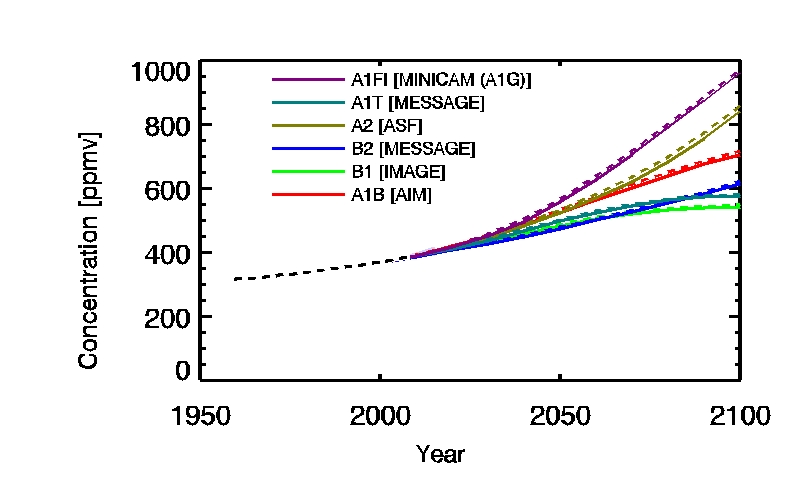
Every major projection of future warming makes clear that if we keep listening to the falsehoods of the anti-science crowd and keep taking no serious action to reduce carbon pollution we face catastrophic 9°F to 11°F [5°C to 6°C] warming over most of the U.S. (see literature review here).
The Wall Street Journal, however, has published a piece, “Cooling Down the Fears of Climate Change,” that (falsely) asserts observations suggest global warming will be so low as to “be benificial.” This risible piece by Matt Ridley is so riddled with basic math and science errors it raises the question of how the Journal can possibly maintain its reputation as a credible source of news and financial analysis.
Ridley and the Journal apparently don’t know the difference between water vapor and clouds. They don’t understand the basic concept of climate sensitivity. And they can’t do simple math. Naturally, the climate deniers have embraced this nonsense and spread it across the internet.
UPDATE: Ridley has made an even more self-defaming response at Bishop Hill’s blog and WattsUpWithDisinformation. He doesn’t actually refute any of my points– just repeats his mistakes. His piece proves once and for all that Ridley doesn’t know the first thing about climate science or the IPCC. As but the most astounding example, in my debunking below I explicitly quote the IPCC’s draft Fifth Assessment (AR5) — “the new IPCC draft report, upon which Ridley makes all his claims” — which summarizes the recent literature on clouds this way: “The net radiative feedback due to all cloud types is likely positive.” Ridley then absurdly asserts “He gives no backing for this dogmatic conclusion.” Seriously. It’s like he never read my piece — or the AR5! And he apparently thinks you can’t read either! I must say it is shocking that Bishop Hill would print such an easily falsifiable claim. It is not shocking Watts would.
I wasn’t going to waste time with the umpteenth debunking of the Wall Street Journal‘s nonsense — especially a piece written by someone whose “family leases land for coal mining”! But one of Ridley’s many basic mistakes is often seen in the media — the confusion of the “climate sensitivity” (to a doubling of CO2 levels to 560 parts per million) with projected warming (from actual greenhouse gas levels projected for this century plus carbon cycle feedbacks). That confusion needs clearing up (again).
First, though, let me start by quoting some of the country’s leading climate experts in an excellent debunking piece by Media Matters, “WSJ’s Climate ‘Dynamite’ Is A Dud“:
[A]s John Abraham, an IPCC reviewer and the director of the Climate Science Rapid Response Team, put it to Media Matters: the column “has such elementary errors in it that [it] casts doubt on the author’s understanding of any aspects of climate change.”
… Boston University’s Robert Kaufmann, lead author of a 2011 sulfur emissions study [wrote]:
I know of no evidence that would suggest that the temperature effect of sulfur emissions are small. This conclusion is totally at odds with my peer reviewed publication in the area, which indicate that sulfur emissions have a significant effect on temperature.
With regard to the feedback effect of water vapor: Kevin Trenberth, a scientist with the National Center for Atmospheric Research, told Media Matters in an email: “water vapor effects are well established as an amplifier (strong positive feedback).” Abraham further noted that Ridley has apparently confused water vapor with clouds, whose effects are not as well understood. He said, “it is very clear water vapor … is an amplifying effect. It is a very strong warmer for the climate” and challenged Ridley to name the anonymous scientist who gave him his information.
With regard to the rate of ocean heat absorption:Trenberth wrote: “On the contrary there is now very good evidence that a LOT of heat is going into the deep ocean in unprecedented ways, which completely undermines this sort of argument. OHC [Ocean Heat Content] keeps increasing at a fairly steady rate, just as sea level keeps going up.”
A good discussion of the latest science on ocean heat content can be found here.
To expand on what Abraham said, it is head-exploding and self-discrediting for Ridley and the Wall Street Journal to print this for millions to read:
And then, as one Nobel Prize-winning physicist with a senior role in combating climate change admitted to me the other day: “We don’t even know the sign” of water vapor’s effect—in other words, whether it speeds up or slows down a warming of the atmosphere.
Climate models are known to poorly simulate clouds, and given clouds’ very strong effect on the climate system—some types cooling the Earth either by shading it or by transporting heat up and cold down in thunderstorms, and others warming the Earth by blocking outgoing radiation—it remains highly plausible that there is no net positive feedback from water vapor.
An unnamed physicist? Seriously, WSJ? What’s next. “A guy I met in an underground parking lot”?
If Ridley did in fact talk to a Nobel prize-winning physicist then that person almost certainly did not make the mistake Ridley did and confuse “water vapor’s effect” — where we most certainly know the sign (it speeds up warming) — with cloud’s effect (where there is a tad more uncertainty). Yet even in that case, the new IPCC draft report, upon which Ridley makes all his claims finds:
Various feedbacks associated with water vapour can now be quantified, and together they are assessed to be very likely positive and therefore to amplify climate changes. The net radiative feedback due to all cloud types is likely positive.
UPDATE: Ridley wrote this transparent falsehood at Bishop Hill’s blog: