Maria Vasquez Jimenez 17
merri ok
---
2014 REPORT
California Farmworkers Championed by César Chávez Are Now Threatened by Extreme Heat and Drought
National Landmarks at Risk: How Rising Seas, Floods, and Wildfires Are Threatening the United States’ Most Cherished Historic Sites, May. 1, 2014, pp. 44-46 (3 pages)
https://www.jstor.org/stable/resrep00036.21
...California passed the most stringent heat-safety regula-
tions in the nation in 2005, requiring farmers to provide their
employees with adequate water, shade, and rest breaks. How-
ever, with field worker deaths continuing in the succeeding
years, the UFW claimed the laws are often violated and the
state does not provide adequate enforcement.
In one particularly tragic case that raised questions about
the effectiveness of the laws, Maria Isabel Vasquez Jimenez,
17 years old and two months pregnant, died from heat ex-
haustion she suffered while working in a grape vineyard near
Stockton on a blisteringly hot day in 2008. By the time she
was taken to the hospital, Jimenez’s body temperature topped
108 degrees. Her coworkers reported to state officials that the
nearest water cooler was a 10-minute walk away, and they
were not allowed long enough breaks to get a drink.
High summer temperatures in California also threaten
the health of the agricultural industry itself. And when
drought conditions prevail, crop yields may fall and quality
may be compromised even further.
Recent data indicate that prolonged periods of drought in
California—expected with climate change—are on the rise.
Californians have spent nearly half of the years since 2000 in
dry and critically dry conditions, a marked increase over the
previous century.
The state is now in one of its worst droughts since record
keeping began, as 2013 had the least amount of rainfall on re-
cord. In March 2014, more than 90 percent of California was
suffering from at least a “severe drought,” 72 percent was ex-
periencing at least an “extreme drought” and 22 percent—in-
cluding a wide swath of the San Joaquin Valley—was in an
“exceptional drought,” according to the U.S. Drought Monitor.
Prolonged drought threatens to cripple California’s agri-
cultural industry, which currently uses 80 percent of the
state’s available water resources. In early 2014, federal and
state officials notified some farmers that they would not re-
ceive any deliveries of irrigation water.
As a consequence,
some farmers may be forced to leave their fields fallow. That
could mean thousands of lost jobs for seasonal farmworkers
and higher prices and fewer choices for consumers.
A drought in 2009 caused $340 million in revenue losses
in the San Joaquin Valley, when 285,000 acres were left idle
and nearly 10,000 jobs were lost. This year, the situation
could be even worse. Farm organizations are projecting that
up to 800,000 acres of the California farm belt will remain
unplanted in 2014, with crops such as tomatoes, broccoli, let-
tuce, melons, and corn particularly hard hit.
“We’re in a dire situation that we’ve never been in be-
fore,” said Paul Wenger, president of the California Farm Bu-
reau Federation.
In early 2014, normally the height of the rainy season, the
fields were parched around the Chávez National Monument,
located at the southern end of California’s 450-mile-long
Central Valley—the state’s top-producing agricultural region.
While it is often called “the nation’s salad bowl” for the array
of fruits and vegetables grown in its fertile soil, this region
also is home to some of California’s most disadvantaged com-
munities, and poor air quality is a persistent problem.
The monument was created on a property known as
Nuestra Señora Reina de la Paz, which includes the UFW
headquarters and the Chávez family home—already on the
National Register of Historic Places. It was here that César
Chávez advocated for the passage of California’s Agricultural
Labor Relations Act of 1975, the first law in the nation to rec-
ognize farmworkers’ collective bargaining rights. The union
he helped create—the country’s first permanent agricultural
union—grew into a national voice for the poor and
disenfranchised.
To create greater public awareness of Chávez’s achieve-...
---
WIKI
The Bronco Wine Company is a vintner that produces wine under many brands, such as Amusant Bubbly and Ballett Vineyards,[1] and is based in Ceres, California. It is the fourth largest producer of wine in the United States.[citation ^needed][2] Bronco Wine Co has an estimated 10,000 employees globally. There are two companies in the Bronco Wine Co. corporate family.
Fred and Joe Franzia attended Santa Clara University and picked their school symbol for the company. Bronco is a contraction of Brothers and Cousin, after the three founders.
History
CEO Fred Franzia – nephew of wine legend Ernest Gallo – started Bronco Wine in 1973 with his brother Joseph and his cousin, John Franzia, after the Franzia winery business was purchased by Coca-Cola.[3] The Franzia brand was later purchased by the Wine Group, a privately-held bulk wine producer based in San Francisco (the source of the "bag-in-box" wines that bear the Franzia name but which have no connection to either the Franzia family or to Bronco).
In 1995, Bronco Wine Company purchased the brand name Charles Shaw from a bankrupt company for US$27,000 and used it for a line of very inexpensive wines, introduced in 2002 and priced at $1.99 per bottle. The wines became nicknamed "Two-Buck Chuck" and were sold exclusively through Trader Joe's stores.[4]
In August 2013, Bronco Wine Company entered into a marketing campaign for its Allure Moscato wine products in partnership with Hip Hop artist Warren G and Brand Elite, LLC.[5]
THE Wine Group is an American alcoholic beverage company founded in 1981, and based in Livermore, California.
Products
It produces wine brands including Franzia, Cupcake Vineyards, Benziger Family Winery, Chloe Wine Collection, 7 Deadly Wines, Imagery Estate Winery, Concannon Vineyard, and Almaden Vineyards. As of 2008, the company was the world's third-largest wine producer.[1] As of 2018, the company became the second-largest U.S. wine company, producing 53 million cases annually[2]
List of notable brands
- Franzia
- Cupcake Vineyards
- Chloe Wine Collection
- 7 Deadly Wines
- Benziger Family Winery
- Imagery Estate Winery
- Tribute Wines
- Mogen David (makers of MD 20/20)
- Almaden Vineyards
- Concannon Vineyard
- Hope Tree[3]
Controversy
In March 2021, The Wine Group was found to have breached multiple spam and telemarketing laws in Australia[4]
Franzia is a brand of wine produced by The Wine Group, known for its box wines sold in 3 and 5-liter cartons.[1] Franzia wines, throughout their history, were known as affordable table wines, popular in the 1960s and 1970s as "jug wine", and now as "box wine". The Wine Group is the third largest wine company in the world, behind Constellation Brands and the E&J Gallo Winery. The Franzia brand today has no business relationship with Fred Franzia of the Bronco Wine Company, known for its low-cost Charles Shaw wines. The Franzia family sold the brand to Coca-Cola in 1973 when Fred Franzia was in his early adult years; and it was sold to The Wine Group in 1981.
Teresa Franzia (born Teresa Carrara, 1879–1949) founded the Franzia Wine Company in 1906. Teresa's daughter, Amelia Franzia Gallo, was the wife of winemaker Ernest Gallo. Teresa loaned Ernest the money to start his company.[2]
History
The brand was originally named after the Franzia family, who began growing grapes in California in 1892 and making wine in 1933 after the repeal of prohibition,[3][4] later operating as the Franzia Brothers Winery, a Central Valley winery in Ripon, California.[5] In 1973, Coca-Cola agreed to acquire the Franzia Brothers Winery for stock valued at about $49.3 million.[6]
As part of the acquisition, the Franzias were prohibited from using their name in future winemaking businesses—The Franzia Brand, prominent on the boxed wines, is today unconnected to the family, who have subsequently opened a business called the Bronco Wine Company.[7]
In 1981, the Coca-Cola Company agreed to sell the wine business of the Coca-Cola Bottling Company of New York (which included the Franzia Brothers Winery alongside the Mogen David Wine Corporation and Tribuno Wines Inc.), in a management buyout involving the top-level managers of the bottler's wine business and the First Boston Corporation. ^[8]
Joe Cortez
*Courier staff writer
:{Updated: Sep 14, 2022,
Published: Sep 14, 2022,
Fred Franzia, the Central California vintner who gained notoriety as the creator of “Two Buck Chuck” wine, died Tuesday at his home in Denair. He was 79.
Nearly 50 years ago, in 1973, then 30-year-old Franzia, along with his brother Joseph and cousin John, founded Bronco Wine Company outside of Ceres — named for the mascot of his alma mater, Santa Clara University — and built it into a powerhouse that featured vineyards, production facilities and bottling plants throughout the state.
According to Impact Databank, Bronco Wine Co. is the 13th largest wine marketer in the nation, with 2021 volume of 3.4 million cases sold.
The company released this statement Tuesday: “Bronco wine company is truly saddened by the passing of its founder and CEO Fred T. Franzia. The family asks that you respect their privacy in their time of mourning and advises that there will be a more formal announcement forthcoming.”
As first reported by Wine Industry Insight, an email was sent out to employees Tuesday morning, notifying them of the founder’s passing. In it, Franzia’s daughter Renata shared a quote from her father: “We are fighting a good fight and at the end, we all have an expiration date.”
Fred Thomas Franzia was born on May 24, 1943, in Stanislaus County, and was a member of winemaking’s first family. He was a nephew by marriage of Ernest Gallo, one of the founders of E.&J. Gallo Winery, the largest wine company on earth.
After he graduated San Jose’s Bellarmine Prep in 1961, he attended Santa Clara University. From there, he went to work for the family business, Franzia Brothers Winery.
The same year he co-founded Bronco Winery, his family sold Franzia Brothers Winery to Coca-Cola (later to be acquired by the Wine Group). He was not affiliated with Franzia Wines.
Many wines were distributed under Franzia’s flag, but the most famous was Charles Shaw, known colloquially as “Two Buck Chuck,” because of its $1.99 price point.
Franzia purchased the label in the 1990s for $27,000 after Shaw, a Stanford MBA, went bankrupt. Franzia famously told CNN Money: “We buy wineries from guys from Stanford who go bankrupt. Some real dumb - - - - s from there.”
A lifelong antagonist of the wine elite, he told the New Yorker magazine, after sales of sales of Two Buck Chuck hit 400 million bottles: “Take that and shove it, Napa.”
Franzia’s business ventures were not without controversy.
In 1994, Franzia pleaded guilty to conspiracy to commit fraud by falsely labeling grapes. Bronco Wine Company paid a $2.5 million fine, according to reports, while Franzia personally had to pay $500,000, resign his seat on the board of directors, and step down as president the company for five years. He became the chief financial officer instead.
“It didn’t matter,” he told the New Yorker. “The chairs didn’t move.”
Franzia is survived by his children, Renata, Roma, Joseph, Joe, Carlo and Giovanna, siblings Joseph, Joellen and Catherine and 14 grandchildren.
---
GOV WENT TO LODI
NO LNX
Two charged in wrongful death of Lodi farmworker agree to plea deal
By Fernando Gallo
News-Sentinel Staff Writer Jan 20, 2011 Updated Mar 10, 2011
The two defendants charged in the wrongful death of a Lodi farmworker who died of heat exposure in 2008 agreed to a tentative plea deal Thursday in which both will avoid jail time.
Maria De Los Angeles Colunga, who owned the labor contractor that 17-year-old victim Maria Isabel Jimenez Vasquez worked for, will plead guilty to a misdemeanor for failing to provide shade to workers in the heat, according to county Deputy District Attorney Lester Fleming. Elias Armenta, Colunga's brother who served as her safety director at Merced Farm Labor, will plead guilty to a felony for a violation of safety standards that led to the death of an employee, Fleming said.
Colunga will serve 40 hours of community service and pay a $370 fine, while Armenta will serve 480 hours and pay a $1,000 fine, Fleming said. Both will also receive probation.
"It's about as good as we were going to get," Fleming said. "It's unlikely that we'd have gotten any significant jail time (with a trial) because there wasn't any malice."
Woodbridge attorney Randy Thomas, who represented both defendants, called the deal "outstanding."
"The DA's office has been reasonable in reaching a resolution that's fair to all parties," he said. "My clients can live with the results, and they are remorseful that somebody lost their life."
Thomas also said Armenta could petition to have his felony reduced to a misdemeanor upon completion of probation.
Fleming said the deal was unprecedented, because no one has ever received a felony conviction for a heat-related safety death.
"I don't even know if there are any misdemeanor (convictions)," he said. "We're very happy to show that you can get a felony conclusion."
Thomas said new heat-safety regulations have been enforced as a direct result of the Vasquez case.
"Back then (in 2008), growers and vineyard owners and labor contractors weren't putting up shade," Thomas said. "It's only as a result of this case that it got enforced."
The heat safety rules enacted on an emergency basis in 2005 were intended to protect the hundreds of thousands of seasonal workers who pick crops in the height of summer. California workplace safety officials voted last year to modify the rules in an attempt to strengthen and clarify protections for people who work outside.
Vasquez, who was two months pregnant, collapsed while working in 90-plus degree heat in a Farmington vineyard on May 14, 2008. She was eventually sent to Lodi Memorial Hospital, where it was determined that she had suffered a miscarriage. Vasquez died at the hospital two days later. The San Joaquin County Coroner's Office determined the cause of death was heat stroke.
Merced Farm Labor was fined more than $262,000 after the incident, and was shut down by the state in June 2008. Colunga, Armenta and a Merced Farm Labor supervisor, Raul Martinez, were all charged with involuntary manslaughter by the San Joaquin County District Attorney's office in May 2009. Martinez fled the charges, and has not been seen since.
The plea deal will not be finalized until after a probation report is submitted, Fleming said.
Contact reporter Fernando Gallo at fernando@lodinews.com.
The Associated Press contributed to this report.
---
OCT 2011 PDF PUBLIC CITIZEN
NO NAT’L OSHA STDS
(To read the petition, visit www. citizen.org/petition-to-osha-for-a-heatstandard-2011
) Underscoring the need for a standard, the petition documented the toll that working under extreme heat has taken on workers in recent decades and how little OSHA has done over its 40-year history to protect them from these dangerous conditions.
Millions of workers at risk, hundreds dead and tens of thousands seriously injured
Estimates made over 25 years ago put the number of workers at risk for suffering heat-related health consequences at 5 to 10 million, but this figure is almost certainly higher now, given the increase in the size of the workforce since that time. According to statistics provided by the federal government, the risk is quite real. Over the past 20 years, at least 523 U.S. workers have died and more than 43,000 have suffered heat-related injuries serious enough to result in at least one day away from work. However, because many worker injuries and deaths go unreported and many serious injuries are not counted
...
:{Workers suffer with little to no federal protection In 1972, the National Institute for Occupational Safety and Health (NIOSH, the federal research agency on worker health) undertook the first extensive study of heat exposure and its effects on workers. Based on its findings, NIOSH then recommended that OSHA adopt a comprehensive heat standard. In response, OSHA appointed an advisory committee to give recommendations on an appropriate heat standard. The committee essentially agreed with NIOSH and recommended in 1973 that OSHA enact a standard consistent with NIOSH’s findings.
Despite the scientific evidence in favor of a standard, OSHA ignored both the committee’s advice and additional recommendations provided by NIOSH in 1986. To this day, almost 40 years after the first detailed criteria for a heat standard were issued, OSHA has failed to even begin considering a heat standard that, according to NIOSH, would “prevent or greatly reduce the risk of adverse health effects to exposed workers.” As a result, at least hundreds of workers have lost their lives and tens of thousands more have been seriously injured due to entirely preventable heat-induced illnesses. In the absence of a specific standard, when OSHA does address dangerously hot conditions for workers, it relies primarily on its indirect authority under the General Duty Clause of the Occupational Safety and Health Act of 1970, which created the agency}:
...
:{:{However, as OSHA director David Michaels noted several years before becoming OSHA administrator, the agency rarely exercises this authority and does so only in cases of egregious employer negligence. Indeed, over its 40-year history, OSHA has conducted a total of just 112 inspections under the General Duty Clause in which citations were issued for violations of safe heat exposure practices, and 13 of those citations were later dismissed.}:
That’s fewer than three inspections per year for an agency responsible for overseeing 7 million work sites nationally. In addition, penalties imposed under the clause are so small (an average of just $2,000 per violation) that many employers simply factor them into the cost of doing business, rather than safeguard their workers. These inconsequential fines extend even to cases involving worker deaths, such as Maria’s. Of (at least) 523 heat-related fatalities that have occurred over the past 20 years, OSHA has conducted only 35 inspections resulting in a citation. The average fine handed down was a paltry $2,500. By contrast, the maximum allowable fine for serious offenses such as these is $7,000.
Three states and the military are well ahead of OSHA
While OSHA has dragged its feet, three states — California, Washington and Minnesota — and the military have already enacted heat standards that, while deficient, go a long way toward protecting their workers from extreme heat conditions.
:{:{The standards require employers to perform such duties as providing drinking water, shade and rest breaks, in addition to training employees on the hazards of heat stress. California’s and Washington’s standards apply to outdoor workers, while Minnesota’s applies only to those working indoors, such as steel or foundry workers. The military’s guidelines include a rigorous work-rest cycle that sets limits on physical activity in hot weather through mandatory resT}:
breaks, in addition to strict instructions on maintaining hydration and a protocol to gradually acclimatize new recruits to hot conditions. California’s law, more than any other, has served as a focal point for worker activists and experts on heat stress. Five years ago, in response to a spike in heat-related worker deaths, California enacted the first law in the country protecting outdoor workers from excessive heat exposure. Since that time, however, the state has been criticized for failing to adequately enforce its standard, as it has issued even smaller fines, on average, than OSHA for violations of its standard and inspected only a tiny fraction of workplaces each year. Maria Jimenez died in 2008, two years after the standard was passed, one of multiple deaths to have occurred with the new law in place.
The United Farm Workers, the largest farmworker union in the country, has sued the state for neglecting to use its full authority under the standard to protect workers. Nevertheless, even California’s deficient enforcement record puts OSHA to shame.
In the five years since California enacted its standard, this single state has conducted 138 times more inspections resulting in a citation for unsafe heat exposure practices than OSHA has for the entire country. In fact, in the first half of 2011 alone, California conducted more of these inspections (195) than OSHA, with no standard, has completed in almost 40 years.
OSHA must act now Public Citizen and our co-petitioners call on OSHA to implement a permanent heat standard, one much stronger than those existing in the three states mentioned and the military and one applicable to all indoor and outdoor workers. The core of the standard would include a heat stress threshold, or exposure limit, above which workers would not be allowed to work. This threshold has already been developed and refined over many years
...
---
WAPO NO LNX
Protecting California’s farmworkers as temperatures climb
FIREBAUGH, Calif. – Heat rises in waves from a vast melon orchard at Del Bosque Farms in San Joaquin Valley, where dozens of farmworkers are harvesting cantaloupes. Temperatures will top 100 degrees Fahrenheit before this July workday is done.
“This heat is no joke,” said Rigoberto Robla Garcia, loading boxes of melons on a pallet. Garcia wears a wide-brimmed straw hat over a baseball cap and a long-sleeved, purple sweatshirt.
“You have to keep yourself covered and drink a lot of water to protect yourself,” he said. “People can pass away from this heat, you know?”
Indeed, California’s long, hot summers can be deadly for people who make their living laboring in the sun. The state’s Mediterranean climate is great for the 400 different types of commodities grown here, but hard on the humans who harvest them.
And climate change is making matters worse, said Marc Schenker, a professor of public health sciences and medicine at the University of California, Davis, and director of the Western Center for Agricultural Health and Safety. Exposure to pesticides was the number one health issue for farmworkers when Schenker founded the agricultural safety center 30 years ago, but heat exposure is now the primary concern.
Farmworkers taking mandatory hydration break in a shade trailer at Del Bosque Farms in Firebaugh, Calif. Photo Credit: Joe Proudman
“It’s been years since an agricultural worker has died from pesticide exposure,” Schenker said from his office in Davis. “Agrochemicals have become less of a health problem because they are used more efficiently now, and many of the most hazardous agents have been banned. But temperatures are getting hotter and more extreme, and that puts people doing hard labor outdoors particularly at risk.”
Preventable deaths
California passed the nation’s most stringent heat laws in 2005 after four farmworkers died from heat exposure in the field. The laws say growers must provide workers adequate water, shade and rest breaks. But over the following three years, heat stress still killed six farmworkers, including 17-year-old Maria Isabel Vasquez Jimenez, who collapsed in 2008 while working in a Central Valley vineyard in 95-degree heat. She was two months pregnant.
Jimenez’s death sparked public outcry and generated new awareness of the plight of the mostly Latino immigrants who harvest our food, as they face their own health and food insecurity issues. California’s Division of Occupational Safety and Health (Cal-OSHA) ramped up field inspections, adopted more stringent heat-stress standards and expanded employer training.
“From 2014 to 2016, two farmworkers died from heat exposure,” said Paola Laverde, a media representative for Cal-OSHA. “No farmworker heat-stress fatalities have been recorded this year.”
(Left image) Farmworker entering the shade trailer at Del Bosque Farms in Firebaugh, Calif. (Right image) UC Davis education and outreach specialist Teresa Andrews talking with farmworkers about hydration at Del Bosque Farms in Firebaugh, Calif. Photo Credit: Joe Proudman
“Statistics aren’t a perfect indicator because sometimes heat stress is an indirect cause of death,” Schenker said. “But I will say that California has the most progressive heat-stress prevention standards in the country, and that helps.”
Measuring physiological risks
The Western Center for Agricultural Health and Safety recently completed the California Heat Illness Prevention Study, which measured—for the first time—the physiological effects of doing inland valley field work in the hot sun.
“Prior to this, what we knew about the risks of heat exposure was based on tests with military personnel and firefighters,” said Diane Mitchell, a staff research associate with the center who worked with Schenker on the groundbreaking study. “Farm labor is a much different activity; it involves lower-level intensity for much longer periods of time.”
The team measured hundreds of workers on dozens of farms over three years. Researchers are still crunching numbers, but one thing is clear: when temperatures climb above 98.6 degrees Fahrenheit, your body needs help cooling down.
“At that point, your body can no longer regulate itself,” Mitchell said. “You need to rest, drink water and take a break from the sun.”
(Left image) Farmworker tossing a melon onto harvesting trailer at Del Bosque Farms in Firebaugh, Calif. (Right image) Dr. Marc B. Schenker, professor of public health sciences and medicine at the University of California, Davis, and director of the Western Center for Agricultural Health and Safety. Photo Credit: Joe Proudman
Water, rest and shade are the central tenets of the Cal-OSHA standards, which UC Davis scientists helped design. The laws require employers to provide at least one quart of fresh water per worker per hour, and encourage them to drink it. They must provide enough shade for the entire crew and a mandatory break every four hours.
When temperatures reach 95 degrees Fahrenheit, supervisors and workers are trained to be extra vigilant for symptoms of heat stress like dizziness, nausea, headache and confusion.
Cultural challenges
Do social behaviors and cultural norms play a role in farmworker safety? Yes, according to focus groups the agriculture safety center consulted as part of the team’s heat-illness study. Schenker and his colleagues are now addressing those cultural myths—such as the false notion that cold water can harm the body in hot temperatures.
“We also discovered gender differences we can incorporate into our training,” Mitchell said. “We learned that women, in general, were more aware of their bodies’ early symptoms of heat exposure than men.”
Back at Del Bosque Farms in Firebaugh, Rigoberto Garcia said more of his fellow workers are making a point to drink water. Garcia is 25 years old and has been working in the fields since he was 17. In the last few years, he has seen more of an emphasis on water, rest and shade among his supervisors.
Still, Garcia says many workers don’t make water a priority.
“Why? I don’t know, honestly,” he said. “Probably pride. They’re trying to prove something. The job’s gotta get done somehow.”
Humans versus sun
The reasons for California’s rising temperatures aren’t necessarily agreed upon by the state’s farmers, but they all concur that harvesting California’s specialty crops is hard, sweaty labor and farmworkers need protection.
“Heat stress is a very dangerous thing,” said Joe Del Bosque, who farms almonds, asparagus and cherries, along with the melons workers are harvesting today. “Especially for people who are starting to work on the first day of July. It’s hot. If they haven’t been working in the field, it can be quite dangerous. Once they’re acclimated and if they have been trained properly from the beginning to prevent heat illness, they can work safely.”
Joe L. Del Bosque, Jr., president, Del Bosque Farms. Photo Credit: Joe Proudman
Del Bosque applauds the regulatory push for farmworker heat-stress safety.
“There have been a lot of changes—some of them required by law, some of them voluntary—but all of them meant to create a safer workplace for our people,” he said.
Schenker said it will take a group effort to protect farmworkers in California’s rising heat. He is encouraged by the increase in labor-friendly farming methods like night-harvesting in vineyards. Schenker retires as center director later this year, and will continue to advocate for farmworker safety.
“The people growing our food are not expendable,” Schenker said. “They are an integral part of the fabric of the community.”
Speaking of work, these 800 acres of melons are not going to pick themselves. Garcia adjusts his hat, drops to his haunches and plucks a fresh melon from the vine.
Learn more about climate science at the University of California, Davis.
Author: Diane Nelson
Video Producers: John Mounier, Joe Proudman and Tim McConville
---
JUN 2008
A 17-year-old Mexican farmworker who collapsed last month in a field east of Stockton and died two days later was the victim of heat stroke, the San Joaquin County Coroner's office said Wednesday. Maria Isabel Vasquez Jimenez collapsed on May 14 after working in a vineyard in the Farmington area for more than nine hours, without shade or sufficient water breaks, witnesses say. After her death on May 16, doctors discovered she was two months pregnant, which she may not have known, according to family. She had been working in temperatures that rose above 95 degrees. The young woman, an undocumented immigrant, died of "visceral multi-organ hyperthermic injury" due to job-related heat and sun stroke, the coroner's report states. }:
TOP VIDEOS Top Videos 00:16 01:30 Annual Peace and UnityMarch honors Martin LutherKing Jr. in Merced
Vasquez Jimenez's death has sparked outcry about employers who fail to enforce safety regulations in agriculture, including strict laws to avoid heat stress. Last Thursday, state labor officials shut down Vasquez Jimenez's employer, Merced Farm Labor contractors, after labor inspectors concluded the company had continued to violate heat-stress prevention rules after the young woman's death. Inspectors also said the contractor had falsely claimed on a license renewal last September it had no outstanding unpaid fines.
The company had been fined - but never paid - penalties for failing to have a required written heat-stress prevention plan and training for employees in 2006. When Vasquez Jimenez collapsed, she was tying grape vines in a vineyard owned by Farmington-based West Coast Grape Farming, Inc. The company supplies grapes to the Bronco Wine Co. With the assistance of the United Farm Workers Union, the girl's family plan to file a wrongful death lawsuit on Wednesday against Merced Farm Labor contractor and West Coast Grape Farming, Inc.}:
brett-scallan MKT 2023
2016- NOW [Steve BilleySteve Billey · 3rdThird degree connection
National Sales Manager at Bronco Wine CompanyNational Sales Manager at Bronco Wine Company](https://www.linkedin.com/in/steve-billey-3632947?miniProfileUrn=urn%3Ali%3Afs_miniProfile%3AACoAAAFJffsB4udTFxoK2cRPoXo0rgppMZxMx6M)

[Lisa CollinsLisa Collins · 3rdThird degree connection
Sales Rep at Bronco Wine Co.Sales Rep at Bronco Wine Co.](https://www.linkedin.com/in/lisa-collins-1040375?miniProfileUrn=urn%3Ali%3Afs_miniProfile%3AACoAAADk8tQB0DeNsAPpOvl_HA2WvcFr39epZG8)
[Mark Lee EllisMark Lee Ellis · 3rdThird degree connection
Sales Manager at Bronco Wine CompanySales Manager at Bronco Wine Company](https://www.linkedin.com/in/mark-lee-ellis-434ab3b3?miniProfileUrn=urn%3Ali%3Afs_miniProfile%3AACoAABgweagBGTtmcjWdTKAwz4gqb2Nq6_kQVe8)
Read more at: https://www.mercedsunstar.com/site-services/social-media/article3237753.html#storylink=cpy
---
MARC GROSSMAN UFW
70 KIA 17 AGRIC 29 VIOLATION, 22 SHADE MAX TEMP
{April 24, 2009, / Source: The Associated Press}:
Three officials at a now-defunct farm labor contractor were charged Thursday with involuntary manslaughter in the death of a pregnant teenager who collapsed from heat stroke after working in a sweltering vineyard last year.
San Joaquin County District Attorney James Willett announced the charges in the death of 17-year-old Maria Vasquez Jimenez, who authorities say died May 14 because she lacked access to shade and water as she pruned grapevines for more than nine hours in nearly triple-digit heat.
Maria De Los Angeles Colunga, the former owner of Merced Farm Labor; Elias Armenta, the former safety director; and Raul Martinez, a former supervisor, also were charged with one felony and five misdemeanor violations of the state labor code.
The company's civil attorney, Jim Gumberg, said the charges were "very unfortunate." A criminal attorney for the three did not immediately return calls seeking comment.
Gov. Arnold Schwarzenegger applauded the charges, saying: "Worker safety from heat illness must and will be protected in California." The state in 2005 implemented the country's first heat-illness standard, requiring that farms and contractors give workers water and breaks, have shade available and have emergency plans in place.
Vasquez Jimenez was born in Mexico's Sierra Madre range and migrated to California's Central Valley last year to look for work and live with her fiance.
The couple found jobs pruning grapes in a Stockton-area vineyard owned by West Coast Grape Farming Inc., which had a contract with Merced Farm Labor for its work force.
After she collapsed, her fiance, Florentino Bautista, said Vasquez Jimenez's supervisor recommended she rest in a hot van and be revived with rubbing alcohol before Bautista could take her to a medical clinic, almost two hours later. Doctors later realized she was two months pregnant.
Relatives said she was making $8 per hour that day on a 9.5-hour shift — more than four hours over the state limit for minors working during business days.
Family hopes for safer labor conditions
On Thursday, Vasquez Jimenez's aunt said she hoped the charges would encourage safer labor conditions on farms.
---
Chronology on heat death of Maria Isabel Vasquez Jimenez – UFW
2011
Chronology on heat death of Maria Isabel Vasquez Jimenez
1980s Cal-OSHA, the state work safety agency, is directed to issue heat regulations to prevent heat illness deaths in the fields after several farm workers die from heat-related causes.
2005 Following a drive by the United Farm Workers, Gov. Schwarzenegger signs the first heat regulation in the nation after five farm workers die from the heat in less than a year.
2006 Merced Farm Labor Contractors, which harvests for a subsidiary of Franzia Wines, COCA COLA? ny? ]is fined by Cal-OSHA for violating the heat regulations. The company never pays it. Cal-OSHA never tries to collect the fine or follows up to ensure compliance with heat rules.
May 14, 2008 Maria Isabel Vasquez Jimenez, 17, collapses after laboring more than nine hours without accessible shade or water. She dies two days later. Management never calls 911 and tells Maria Isabel’s fiancé to lie about the events.
May 28, 2008 Gov. Schwarzenegger attends Maria Isabel funeral in Lodi and vows to protect farm workers from heat death and illnesses.
June-August 2008 Five more farm workers die from heat illness in California.
May 30-June 4, 2008 A “March for Fallen Farm Workers” with Maria Isabel’s family is led by the UFW from Lodi to the state Capitol in Sacramento.
June 13, 2008 Cal-OSHA revokes Merced Farm Labor Contractors’ business license. The Franzia Wines subsidiary hires a new farm labor contractor to employ the same work force.
June, 2008 Maria Isabel’s uncle, Doroteo Jimenez, who worked for the same contracting firm earlier used by Franzia’s subsidiary, visits the Capitol to meet with the Governor’s Office. The new contractor for the Franzia subsidiary fires Jimenez for participating in the meeting.
July 4, 2008 Merced Farm Labor Contractors’ business license is temporarily reinstated.
September 2008 Four months after Maria Isabel died, Assistant San Joaquin County District
Attorney Fleming is assigned the case.
2009 The UFW, Public Counsel, the ACLU and the law firm of Munger, Tolles, and Olson sue the state for failing to enforce its own heat regulations.
January 2011 The San Joaquin County District Attorney’s office announces a plea deal without jail time for the criminal defendants from the now-defunct labor contracting firm who caused Maria Isabel’s death. Maria Isabel’s family is not informed of the proposed plea bargain. Superior Court Judge Michael Garrigan schedules a hearing on the plea deal for March 9, 2011.
---
Pregnant teen's heat-related death impacted CA farm-worker rights
kcra vid 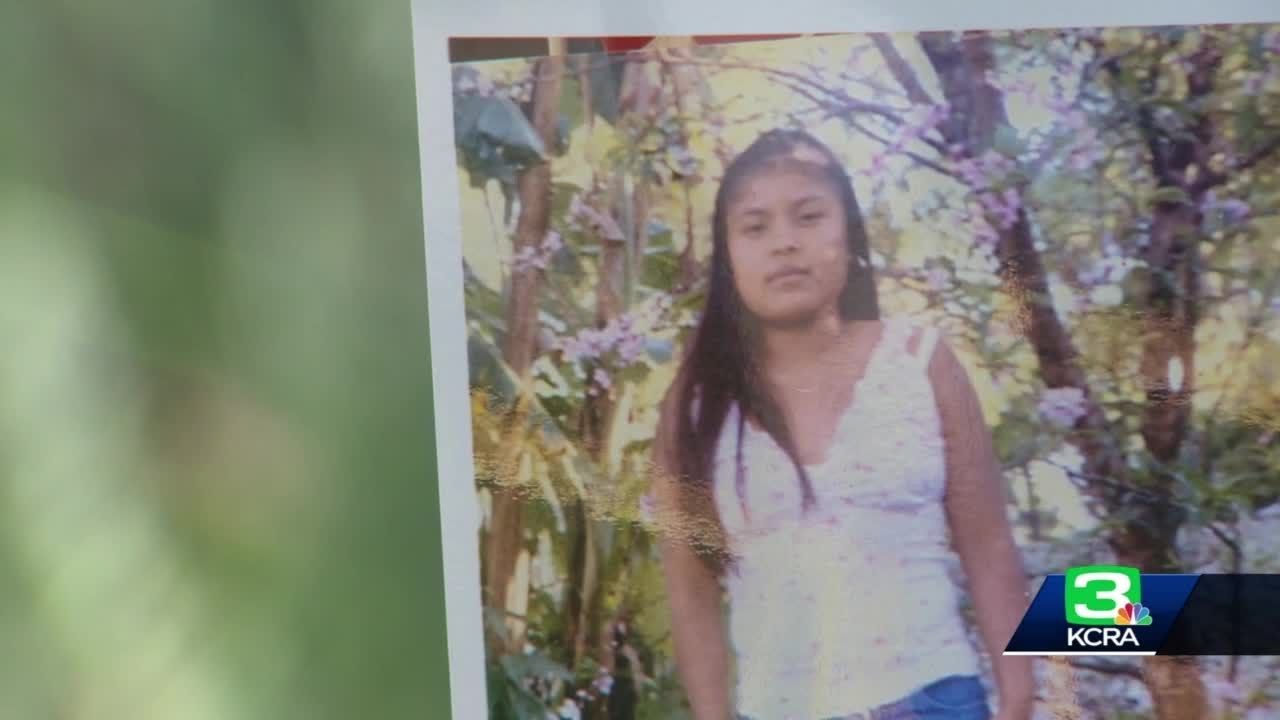
María was 17 years old and pregnant when she had a heat stroke and collapsed while working in the fields of Northern California in 2008.
Her uncle, Doroteo Jiménez, told KCRA 3 that she had recently moved to the United States from Oaxaca, México, and was on her second day at work when tragedy struck the family.
It's now been 14 years since Maria's death. Her body was returned to Mexico when she died, but a cross remains on the side of a busy road in Farmington as a memorial to all of those who lost their lives working in the fields.
The cross reads: "María collapsed from a heat stroke and no water access. This is in her name and of those others who have lost their lives at work. We demand justice and respect; no more abuse to workers and to future generations. May she rest in peace and may God give her glory."
Her death sparked outrage across the state and her uncle Doroteo, a farm worker himself, demanded action.
That same year, eight heat-related worker deaths were recorded in the state, according to numbers provided to KCRA 3 by Cal/OSHA.
On May 28, 2008, then-Gov. Arnold Schwarzenegger attended María's funeral in Lodi where he vowed to protect farm workers from heat-related deaths and illnesses.
From May 30 to June 4, 2008, her family led the "March for Fallen Farm Workers" with the United Farm Workers from Lodi to the state Capitol in Sacramento.
Doroteo said that he personally spoke with Cal/OSHA and they assured him that they had 200 workers inspecting fields throughout California, but he said that in all the years he'd been working as a farm worker, he'd never seen anyone from Cal/OSHA out there.
"There weren't any protections for us. The law has now been enforced and people know their rights whether they're dealing with heat or sexual harassment," he said.
Guadalupe Jiménez, who is also still working in the fields, recalls her experience prior to the laws protecting farm workers' rights.
"I used to work in the fields in the '90s and I saw people fainting due to the heat and they wouldn't carry them out… you would work until your body would give out," Guadalupe said.
Guadalupe had met María only a few days prior to her death. She said that when she went to visit María at the hospital, she was unrecognizable.
Heat-related illnesses in California agriculture jobs peaked at 20 back in 2019, and they dipped back down to seven in the past two years.
"Her life was worth a lot and she lost it needlessly. But there's some measure of comfort to know that her sacrifice helped create change that saved countless lives that prevented countless illnesses," said Marc Grossman with Farm Workers United, adding that while it was an unfortunate death, it's one of the reasons why protections and rights for agriculture workers have expanded and strengthened.
Since 2007 there have been 882 heat-related worker illnesses in California. The agriculture industry has recorded the most at 200.
Since 2005, there have also been 70 heat-related worker deaths, roughly 25% of those have happened among agriculture workers.
But Cal/OSHA acknowledges that underreporting is an issue because the state relies on companies to report the injuries and deaths themselves.
"We get about 50 heat-related illnesses a year that are reported to us and our medical unit confirms as heat-related illness, but I've seen other estimates by the Bureau of Labor Statistics of about 480 heat-related illnesses a year, and I've seen a study that looked at workers compensation data in California that showed up to 1,000 heat-related illnesses here in California," said David Hornung, who’s the heat and agriculture program coordinator for Cal/OSHA.
Hornung added that the rights are in place for anyone regardless of their immigration status.
But farm workers like Doroteo and Guadalupe Jiménez said that many employers still try to intimidate them.
"I think the most important part is knowing our rights," Doroteo said.
Since Maria's death, Cal/OSHA's regulations have been strengthened twice, once in 2010 and a second time in 2015.
Hornung says that they're increasing "heat sweeps" across the state, with more than 140 high heat inspections this year; about one-and-a-half times what Cal/OSHA has done in previous years.
So far this year, Cal/OSHA has issued 29 violations for the rule that requires companies to provide water and 22 violations for the rule that requires access to shade.
Guadalupe says she feels safe knowing that once temperatures reach a certain high, they're able to go home.
"They [WHO?] give us some lessons on dealing with heat-related illness so that we can know what to do in case it happens to us."
In 2021, one heat-related death was reported in California. Grossman attributes largely to the advocacy made after María's death, "In the end, María Isavel's life — it mattered."
Cal/OSHA says they've been doing labor rights caravans throughout the state to inform farm workers about their rights in Spanish, English, Mixteco, and other languages are spoken by Indigenous farm workers like Purépecha and Zapotec.
Farm workers can file confidential complaints by calling 833-579-0927 and visiting their Heat Illness Prevention resource page.
---