nz libtrd preppers
SEE APOC 3
see thiel 2 notes on top
Peter Thiel's Master Plan to Destroy the World (And Escape It)
Peter Thiel's Master Plan to Destroy the World (And Escape It)
Jun 23, 2026
Some of the richest people in the world are preparing for something. They’re buying land. Building bunkers. Securing access to remote, stable countries. And one place keeps coming up. Aotearoa, New Zealand. Peter Thiel was one of the first to get in - securing himself citizenship… somehow. Since then, there’s been a steady flow of billionaires quietly making their way in. Buying land. Building infrastructure. Planning ahead. So what is it about New Zealand that makes it look like somewhere worth escaping to? And why do the people in charge seem so convinced we need to prepare for the end?
...
0:47
47 seconds
In 1995, a 28-year-old Peter Teal takes his first trip to New Zealand. [music] At this point, he's basically nobody. He hasn't started a single company yet.
0:58
58 seconds
He's just a man on a holiday. And [music] then he sees Queenstown, a bougie, absurdly beautiful town in the
1:05
1 minute, 5 seconds
South Island. Mountains, [music] rivers, Lord of the Rings scenery. It's the kind of place that genuinely doesn't feel real. There are some mountains
1:14
1 minute, 14 seconds
there called the Remarkables because they're remarkable mountains. [music] Peter Teal falls in love with the area.
1:22
1 minute, 22 seconds
He vows to come back. Over the next couple of decades, he becomes one of the most powerful people on earth and also
1:29
1 minute, 29 seconds
frankly a [music] total freak. He co-founds PayPal. He founds Palunteer, you know, the company widely criticized
1:36
1 minute, 36 seconds
for enabling mass surveillance. He becomes a Trump supporter, a hardcore libertarian, a man who goes on speaking
1:43
1 minute, 43 seconds
to us, talking about the Antichrist, questioning whether women voting was a mistake, and saying really normal,
1:50
1 minute, 50 seconds
chill, casual things like, "I no longer believe that freedom and democracy are compatible." He's also worth around $30 billion.
2:01
2 minutes, 1 second
And in 2011, after spending only 12 days on New Zealand soil, he is granted
2:08
2 minutes, 8 seconds
citizenship. The drama is that nobody knew about it until 2017.
2:15
2 minutes, 15 seconds
Normally, becoming a New Zealand citizen means living here as a permanent resident for at least 1,350
2:22
2 minutes, 22 seconds
days over the previous 5 years. But the New Zealand government at the time granted Peter citizenship anyway, citing
2:29
2 minutes, 29 seconds
his exceptional circumstances and the expectation that he would promote the country globally while also connecting
2:37
2 minutes, 37 seconds
New Zealand startups with Silicon Valley. As far as I can tell, he has done neither of those things. Documents
2:44
2 minutes, 44 seconds
released under the Official Information Act show that Peter first actually applied for an investor visa in 2003, but the application was abandoned as
2:53
2 minutes, 53 seconds
incomplete. He tried again in 2005. This time he submitted everything. A mugsh shot, tax returns, even details of
3:01
3 minutes, 1 second
reckless driving convictions alongside a list of his assets. But again, he didn't quite qualify. So he found a workaround.
3:11
3 minutes, 11 seconds
He set aside a million dollars not to build anything, not not to invest in a company, just to sit in a New Zealand
3:18
3 minutes, 18 seconds
bank account. Peter Teal didn't get into New Zealand through the system. He was simply waved through it. In 2011, in a
3:26
3 minutes, 26 seconds
private ceremony in Santa Monica, Peter Teal becomes a New Zealand citizen. Billionaire bugout plans.
3:35
3 minutes, 35 seconds
The answer might just be this. They want somewhere to hide from the apocalypse.
3:40
3 minutes, 40 seconds
you know, the one that they are helping to create. Alador and New Zealand has quietly become kind of a safe haven for the ultra rich. We're physically remote,
3:49
3 minutes, 49 seconds
politically stable most of the time, and generally stay out of wars. Our air is clean, the landscape is beautiful, and the overall vibe is pretty damn good.
3:58
3 minutes, 58 seconds
And also, inflation and cost of living crisis don't hit rich people the way they do everyone else. They don't care about the supermarket duopoly. They're
4:06
4 minutes, 6 seconds
all shopping at Farro. That's only funny for New Zealanders. In 2016, Sam Olman, the chat GPT guy, told the New Yorker
4:14
4 minutes, 14 seconds
that he had a doomsday pact with Peter Teal if the world face a catastrophic collapse like a synthetic virus outbreak or rogue AI or a nuclear armed resource
4:23
4 minutes, 23 seconds
war, all of which would kind of low-key be their fault. They would get on a private jet and head to Peter's property here in New Zealand. LinkedIn founder
4:32
4 minutes, 32 seconds
Reed Hoffman, a former PayPal colleague of Teals, said that saying you're buying a house in New Zealand is a kind of wink wink, say no more. Just, oh, you're
4:40
4 minutes, 40 seconds
prepping for the apocalypse like the rest of us are. It's no secret that billionaires have been building apocalypse bunkers in Queenstown. What
4:47
4 minutes, 47 seconds
once sounded like a conspiracy doesn't anymore. In 2015, Peter came into possession of a 477 acre former sheep
4:56
4 minutes, 56 seconds
station near Queenstown. Now, normally foreigners trying to buy land here in Alteor have to go through a strict government approval process via the
5:04
5 minutes, 4 seconds
overseas investment office. You can't just get off the plane and buy a house.
5:08
5 minutes, 8 seconds
But Peter Teal didn't have to because he was already a citizen. Oh, like a loophole.
5:18
5 minutes, 18 seconds
Got it. The land itself cost around $15 million and for a few years it just kind of sat there. Eventually, Peter Teal
5:25
5 minutes, 25 seconds
tried to develop it. His company, Second Star, applied to build a substantial lakeside lodge. The plans, designed by the same people who worked on the Tokyo
5:34
5 minutes, 34 seconds
Olympic Stadium, by the way, included an accommodation pod for Peter, extensive landscaping, water features, and a
5:42
5 minutes, 42 seconds
meditation space. And like, in my humble opinion, a lot of things that were giving bunker to me, like suspiciously bunker vibes. The site is classified as
5:51
5 minutes, 51 seconds
an outstanding natural landscape which places strict limits on development and the proposal was eventually rejected. W
6:00
6 minutes
council handling of the application ran into tens of thousands of dollars by the way like which local rate payers had to
6:06
6 minutes, 6 seconds
pay for. Yay. Interestingly, in 2020, Queenstown Lakes District Council said it didn't have any resource consent
6:14
6 minutes, 14 seconds
applications for bunkers or any similar projects. Eight other South Island councils said the same thing, but at the
6:22
6 minutes, 22 seconds
same time, according to American bunker company Rising S, the structures are here. General manager Gary Lynch said
6:30
6 minutes, 30 seconds
they had sold dozens of bunkers to New Zealand and that they were all over the place, mainly for Silicone Valley
6:37
6 minutes, 37 seconds
clients. When asked whether they got permission from local councils to install them, he replied, "We're supposed to. Yes." Oh, supposed to.
6:46
6 minutes, 46 seconds
Okay, it's not exactly confidence inspiring. Damn. I also feel like I should mention that Rising Air settled with the families of three people who
6:54
6 minutes, 54 seconds
filed wrongful death lawsuits against them last year. I don't know, it just felt relevant. Just felt like you should know. Gary was also vague about how and where the bunkers were shipped and
7:03
7 minutes, 3 seconds
admitted that the media attention had made it incredibly hard to keep using the same methods he had used before to get shelters into New Zealand, which isn't a very comforting sentence.
7:15
7 minutes, 15 seconds
Customs New Zealand at the time said it had done a thorough search of its online records but could find no dealings with Rising S. Honestly, I feel like that
7:24
7 minutes, 24 seconds
makes it worse somehow. Like how are they getting these bunkers in and how did we not know about it? Another bunker company because yes, there's actually
7:33
7 minutes, 33 seconds
multiple California-based Vivos claimed it had installed a 300 person bunker in New Zealand. Founder Robert Vino would
7:41
7 minutes, 41 seconds
not say where only that inquiries from New Zealand are up significantly as they are from the rest of the world.
7:48
7 minutes, 48 seconds
Everybody wants a bunker. And for security reasons, we cannot comment on any Vivos bunkers in New Zealand. Then
7:57
7 minutes, 57 seconds
like last year, the New Zealand Herald confirmed the existence of yet another bunker here in Aladora. This one made by
8:04
8 minutes, 4 seconds
US company called Strategically Armored and Fortified Environments. Founder Albert Corby said the one client/f
8:11
8 minutes, 11 seconds
family group in New Zealand that safe worked with had an underground shelter as their primary focus and they were interested in New Zealand because of its
8:20
8 minutes, 20 seconds
natural beauty, isolation and other security related considerations which I cannot share. He would not say where it
8:27
8 minutes, 27 seconds
is or how much it costs, but their shelters start at $1 million. And let me tell you, these shelters are not built equal. Some of them look scary and [ __ ]
8:36
8 minutes, 36 seconds
Some of them look really nice. I checked the current consent applications with the Queenstown Lakes District Council and there's nothing that clearly points
8:43
8 minutes, 43 seconds
to bunker style builds. Even though according to New Zealand Herald, demand has doubled in the country since the start of the Iran war. But at the same
...
9:39
9 minutes, 39 seconds
Like I said, it didn't stop with Peter Teal. In 2021, Larry Paige, the former CEO of Alphabet, the company that owns
9:47
9 minutes, 47 seconds
Google and one of the richest men in the world, quietly secured New Zealand residency. It was through a controversial pathway designed
9:55
9 minutes, 55 seconds
specifically for people like him. The investor plus visa. On paper, it's very simple. You invest $10 million over
10:03
10 minutes, 3 seconds
three years. You meet the criteria and you're in. You're a New Zealander now.
10:06
10 minutes, 6 seconds
Congratulations. You have to watch all of the Lord of the Rings. But what made Larry Paige's case controversial wasn't just the money. It was again how little
10:15
10 minutes, 15 seconds
time he had actually spent in the country before being approved. The visa only required 44 days in New Zealand
10:24
10 minutes, 24 seconds
over 3 years. And even that threshold had not been met at the time that residency was granted. Larry also
10:31
10 minutes, 31 seconds
entered New Zealand during strict COVID border closures at a time when many New Zealanders themselves were struggling to get home. His entry was granted under
10:40
10 minutes, 40 seconds
medical exemption for his child and immigration New Zealand maintained that everything was done within the rules. Legally, nothing was like fully broken.
---
an DN 5 25
An alliance between the far right and Silicon Valley oligarchs has given rise to a form of “end times fascism,” says journalist Naomi Klein, who details in a recent essay co-authored with Astra Taylor how many wealthy elites are preparing for the end of the world even as they contribute to growing inequality, political instability and the climate crisis. Klein says that while billionaires dream of escaping to bunkered enclaves or even to space, President Donald Trump and other right-wing leaders are turning their countries into militarized fortress states to keep out immigrants from abroad and ramp up authoritarian control domestically.
“There’s always an apocalyptic quality to fascism, but fascism of the 1930s and ’40s had a horizon” for a utopian future, says Klein. Today, by contrast, “we’re up against people who are actively betting against the future — not just actively betting against it, but fueling the fires that are burning this world.”
AMY GOODMAN: This is Democracy Now!, democracynow.org, The War and Peace Report. I’m Amy Goodman.
We spend the rest of the hour with award-winning journalist and author Naomi Klein. She has a major new piece out, co-authored with Astra Taylor, for The Guardian newspaper. It’s headlined “The rise of end times fascism.” It looks at the apocalyptic fervor of the far right.
In it, they write, quote, “[T]he most powerful people in the world are preparing for the end of the world, an end they themselves are frenetically accelerating. That is not so far away from the more mass-market vision of fortressed nations that has gripped the [hard] right globally, from Italy to Israel, Australia to the United States: in a time of ceaseless peril, openly supremacist movements in these countries are positioning their relatively wealthy states as armed bunkers,” Naomi Klein writes.
She is also professor of climate justice at the University of British Columbia, founding co-director of the UBC Centre for Climate Justice. Her latest book, Doppelganger: A Trip into the Mirror World.
Naomi, welcome back to Democracy Now! It’s great to have you with us. If you can start off by talking about your piece and what exactly you mean by talking about the end times, fascism?
NAOMI KLEIN: Well, it’s very good to be with you, Amy.
This isn’t the most cheerful piece I’ve ever written, with Astra Taylor, a very close collaborator, founder of the Debt Collective. And we were trying to kind of map what is similar and what is different about the type of far-right politics that we’re seeing today. And I should say, the piece is not only grim. It also looks at what this can mean for a response to this particular form of fascism, because we can’t fight it if we don’t understand it. So, I think a lot of very good scholarship attempting to understand authoritarianism today, whether it’s Trump or figures like Duterte or Modi, have looked at similarities between these far-right figures and, say, Mussolini or Hitler, and have taken a kind of a checklist approach of looking at what is similar to the past, right? And I think there’s a lot of value in that. But the risk of it is that it doesn’t look at what is new and what is particular to our time.
Fascism always is an attempt by the right to resolve a crisis of its own era. Right? So, in the 1930s, they were attempting to resolve, you know, in Germany, the humiliations of the First World War, the impacts of the Great Depression, and to propose a unity in the face of that for the in-group. But our moment is different, and one of the things that makes it different — I mean, if you think about fascism in the 1930s, this is before the atomic bomb. It’s before they understood climate change. And we are in a moment where our elites, whether they admit it or not, do understand that our economic model — and I’ve written books about this and talked about it with you in the past — is at war with life on Earth, right? And they are barreling down this road of more and more extraction of fossil fuels, of all kinds of — you know, basically, anything they can extract from this Earth and turn into energy and money, particularly now with AI, which is a energy and resource hog — water, LNG, critical minerals, all of it.}:
So, we’re trying to understand how this is informing the kind of fascism that we’re seeing, and also we’re trying to understand what unites this kind of strange Frankenstein coalition that Trump represents, where he’s bringing together these — you know, the richest people in the world who have ever existed with many working-class people, so what binds the vision, right?
:{:{And what we cope with in this piece, or what we propose in this piece, is that they all have given up on this world. Like, they all have bought into a kind of apocalyptic fever — right? — whether it’s Elon Musk and Jeff Bezos and their investments in outer space and sort of writing off this planet, whether AI, which is willing to sacrifice this animate world in order to build an artificial world, or whether it’s the more populist MAGA vision of the fortress nation-state — right? — which is thinking, “OK, we know more and more people are going to be coming. }:
We know that disaster is on the horizon.” I’ve listened to a lot of Steve Bannon for — you know, when I was writing Doppelganger, and it’s all very survivalist, right? You know, all of the commercials, pretty much, are selling, you know, gold, because the economy is going to collapse, you know, ready-to-eat meals for 90 days, because you never know what’s going to happen. So, it sees the nation and the in-group as being inside the bunker, and then it’s exiling the out-group to all of these lawless territories that you’ve been covering on the show. So, it’s not the same vision, but what it shares is this apocalyptic fever.}:
And then, of course, all of it is following a similar structure, like narrative structure, to the biblical Rapture. And, of course, you have people who believe in that within the Trump coalition, who are, you know, Christian Zionists, like Mike Huckabee and Pete Hegseth, who believe that the actual end times is coming, and they think it’s all going to go down in Israel. And all of the horror that you report on so well and so committedly on the show, these are all good signs if you believe in the Rapture, right? Because it means that the end is coming, and the faithful are going to be lifted up to a golden city in the sky. So, you know, what we’re looking at is like the religious version of that story, the the fundamentalist religious version of that story, where you literally believe you’re going to be saved and taken up to heaven, but also the secular vision, where your wealth protects you, or your citizenship protects you, and you get your own version of that golden, bunkered city.
:{:{AMY GOODMAN: You mentioned Gaza, and you just came from the Jewish Voice for Peace conference in Baltimore, where several thousand people gathered from around the country. Our latest headline, the Israeli military calling up tens of thousands of reservists as Israel’s security cabinet unanimously approved plans this weekend to expand its assault on Gaza, where Israel has already killed over 52,000 Palestinians — and that’s by far an undercount — in the last 18, 19 months. Israel has killed more than 2,400 Palestinians just since it shattered the ceasefire in March. This comes as Israel’s devastating blockade in food aid has entered its third month. Palestinian health officials say 57 Palestinians have already starved to death.}:
According to UNICEF, more than 9,000 children have been admitted for treatment for acute malnutrition so far this year. And aid groups, like Norwegian Refugee Council, blasting a new Israeli proposal to take control in distribution and put U.S. security contractors in charge. If you can talk, as you so often do, about what’s happening in Gaza and the West Bank and what the centrality of Israel in President Trump and the current U.S. government — although it was also the past, President Biden’s worldview and approach to foreign policy?}:
NAOMI KLEIN: So, I don’t think there is a single answer to understanding what the driving forces are. And this is what we’re trying to get at, is that there’s a kind of an overlap of these different apocalyptic worldviews. Some of them are religious, and some of them are secular, right? So, I think that people who subscribe to this, like, literalist version of the Rapture believe that all of this is good news, in the sense that, according to the story that they believe in, that the Israelites have to return to Greater Israel. Those are the preconditions for the return of the Messiah. They have to rebuild the Third Temple. So you have this convergence of interests between the religious extremists and the Netanyahu government, who are absolutely committed to rebuilding the Third Temple. They really want to do it. They want to destroy Al-Aqsa. This is why so much attention is focused on it.
But then, you know, does Trump believe that? I don’t think Trump believes that. I mean, what he views for Gaza is he sees resources. He sees money. He sees a private, you know, resort.
AMY GOODMAN: Resort.
NAOMI KLEIN: Exactly. But this is something I’ve been saying from the beginning. I think the interests have been fairly consistent in terms of what the end goal is, which is a depopulation of Gaza, pushing Palestinians out, whether through death or whether through forced exile, whether through ethnic cleansing. And under the Biden administration, there was a denial that that was what was going on. And under the Trump administration, it’s all out in the open. So, you know, this is what is going on.
Now, what the reason for that is, I think, differs. But this is what — part of what we’re getting at in the piece, Astra and I, is that there is a confluence of interests in terms of what Israel represents. Some of the supporters of the Trump administration in the tech industry are talking about wanting freedom cities, for instance, these privatized, corporate cities. And they talk about this as tech Zionism. They have a lot of admiration for the idea that Israel was created, they say, you know, from a book, Theodor Herzl’s books. And they said, “Well, why can’t we start our own country, our own private countries? Why do we have to — you know, why do we have to abide by the rules of the nation-state?”
So, I think part of the support for Israel isn’t just our classic understandings either of Jewish Zionism or Christian Zionism, although that’s absolutely going on. It’s also this idea of a very technologically advanced startup country, right? Israel has marketed itself that way. And a lot of these tech companies want to do that in San Francisco. They want to push everybody out who doesn’t agree with them, who’s poor, who have more needs, and create their kind of corporate, privatized utopia. So, you know, I’m not saying this is a coherent agenda. I’m saying that there’s a lot of overlapping stories that follow a similar structure and share similar goals, if that makes sense.
AMY GOODMAN: I mean, yes, I mean, the overall issue, obviously, is hard to make sense of.
NAOMI KLEIN: Mm-hmm, yeah.
AMY GOODMAN: And most Trump’s supporters are neither wealthy nor are they Christian Zionists. So, why are they backing this whole approach?
NAOMI KLEIN: Well, it’s not clear the extent to which they actively back it, but I think that they see a kinship in the ethnostate — right? — because a lot of Trump supporters are becoming increasingly Christian nationalist about the United States. And this has been carefully fostered by figures like Steve Bannon. And so, when they look at Israel, they see a country that is openly an ethnostate that is fortressing itself in a sea of its enemies, you know, and they want to do something similar. And they’re sharing technologies. They’re sharing, you know, legal precedents, tools. So, there’s a — you know, there’s a kinship. And, you know, we’re seeing this now with India with its attacks on Kashmir, following us, you know, using similar techniques that, you know, Israel has used in Gaza. So, there is a kind of a solidarity of the ethnostates. And they are sharing — you know, they’re even trading trinkets of golden pagers and swapping chainsaws. You know, this is something that we — I think, you know, when you’re inside the crucible of it here in the United States under Trump, it’s hard to see the extent to which this is an international project on the right, and they are influencing one another.
AMY GOODMAN: And what does unite them, you know, this whole fortress mentality, is this hatred of immigrants. You have —
NAOMI KLEIN: Yeah.
AMY GOODMAN: — President Trump just saying he doesn’t even know — he’s not a lawyer, so he doesn’t know if he has to uphold the Constitution, he said.
NAOMI KLEIN: Right. I mean, this is what I’m trying to get at about the awareness that we are in an age of consequences, that when you don’t act in the face of the climate crisis for decades, when scientists have been warning you, that more and more of the world becomes uninhabitable, and, lo and behold, people move to try to find safety in the face of wars, in the face of economic deprivation and in the face of ecological disasters.
And so, that fortressing of the nation-state — and this is what I think, you know, Israel’s come to represent, just as a very small nation that is extremely fortressed — right? — whether it’s with the high-tech walls, the Iron Dome. Trump says now, “I want not an Iron Dome, but a golden dome.” Right? That —
AMY GOODMAN: Here.
NAOMI KLEIN: Here. That all of this is, whether it’s stated explicitly or not —
AMY GOODMAN: And a military parade that’ll cost tens of millions —
NAOMI KLEIN: Yeah.
AMY GOODMAN: — of dollars, even as he slices and dices the government, on his birthday, in June.
NAOMI KLEIN: Right. So the pattern is protecting the in-group and exiling and cleansing the out-groups. Right? And so, that, I think, is — you know, if there is support among the MAGA base for Israel, it’s less out of a love for Israel than more out of an identification, like they are doing what we want to do here.
AMY GOODMAN: You write many things in your piece, and I just want to go to one of them. You say — in talking about Musk’s apocalyptic vision, you talk about, and also detailing the end times fascism, this whole issue of the rise of the city state, the corporate city state. I think this is a new concept for many. They’re not going to know what you’re talking about.
NAOMI KLEIN: Yeah.
AMY GOODMAN: In southern Texas, Starbase, just this group of people, who are mainly workers at SpaceX, have just voted to make a city right there?
NAOMI KLEIN: Mm-hmm, yeah. And we’ve had sort of — I mean, the idea of a company town is not entirely new, right? And Disney had Celebration, Florida, and there are lineages to this, right? Colonial lineages to this. You know, I live in Canada, which started as the Hudson’s Bay Company, right? So it was a company before it was a country. So there is some precedent for this.
But I think what this is — I’ve been following this out of the corner of my eye, Amy, because this is where libertarians have been going for a while. There was an — Peter Thiel has been obsessed with this idea. It’s increasingly being called exit, so exiting the nation and just starting your own country, where you can set your own tax level, you can make your own regulations.
AMY GOODMAN: Or not.
NAOMI KLEIN: Or not. And countries — and these little corporate countries will compete with one another to try to attract capital, right? So, in a way, it’s an extension of the free trade zone — right? — where this is, in a way, like a denationalized country within a country. But Trump started to float this in 2023, the idea that he would create 10 freedom cities, on the campaign trail. I don’t think his base much knew what he was talking about. But now you have all these lobbyists who fully intend to take him up on it. And we’re starting to see the beginning of this with this SpaceX city.
AMY GOODMAN: So, you also write about El Salvador’s Terrorism Confinement Center, the notorious prison, CECOT, where so many hundreds of people have been sent from the United States, and at the same time, in the last 24 hours, President Trump saying he wants to reopen the notorious Alcatraz —
NAOMI KLEIN: Yeah.
AMY GOODMAN: — an island in San Francisco. If you can talk about the prison as a model for what Trump wants to put forward, and particularly in relation, as we see motivating so much, to immigrants?
NAOMI KLEIN: Well, this is an incredibly bleak vision. So, repression is always a huge part of any kind of fascist project, right? You need to contain the out-group. You need to disappear the out-group. So this part of it is not new. But I think what is so worrying to me is that Trump was elected promising all kinds of things to his base, right? He promised to eliminate inflation. He promised to bring these great jobs home. He’s not delivering on any of that. So the sadistic part of his project is really all he has to offer, right?
I think one of the most chilling things I’ve ever seen in the United States was Trump sharing that video at his hundred-day rally of just pure sadism, of just looking at prisoners, as entertainment, being shaved, being shackled, being paraded. And he’s not delivering on the price of eggs. And he’s not delivering on the jobs, by the way, because he’s throwing all in— he’s going all in on AI. So the jobs that are coming back seem to be mainly for robots. It’s not actually for his base. And so, this scales up the need for the sadism and these spectacles, right? And I think that that’s what something like Alcatraz represents. He’s a TV producer, first and foremost, right? He’s producing spectacles. And the less he has to offer economically, tangibly, materially, the more he leans on the sadism.
AMY GOODMAN: You write, “The governing ideology of the far right … has become a monstrous, supremacist survivalism. … Our task is to build a movement strong enough to stop them.” What would that movement look like, or what do you see is being formed right now?
NAOMI KLEIN: You know, what we’re doing in this piece by laying out the bleakness of the vision — and when I say “bleakness,” you know, I think it’s beyond something we’ve seen before, because there’s always an apocalyptic quality to fascism, but fascism of the 1930s and '40s had a horizon. Like, after the apocalypse, people were being promised a future, a pastoral, peaceful little piece of land where they could live out their lives, you know? Even though Trump talks about a golden age, there really isn't a future that the base believes in, you know? And this is what I’ve learned by consuming far too much MAGA media, Amy. They envision a future of endless war, right? And this is why they’re bunkering down. This is why they’re buying ready-to-eat meals to last. This is why they’re buying gold and crypto. They think the whole thing is going down. So —
AMY GOODMAN: And why Elon Musk is trying to have so many children, at least 14 at this point. But he’s actually explicitly texted it, saying, “We’ve got to do this much faster,” as he proposed to one of the women he has children with, saying, “We’ve got to start using surrogates.”
NAOMI KLEIN: So, they don’t believe in the future, is the bottom line. And that is — you know, I think I’ve been in a lot of progressive spaces in recent months where we’ve talked about building these very broad coalitions, including with people who we don’t entirely disagree with. I’ve never encountered a potential coalition more broad than the idea of: How about if we believe in this world? How about if we believe in the future? Because we’re up against people who are actively betting against the future, right? Not just actively betting against it —
AMY GOODMAN: Twenty seconds.
NAOMI KLEIN: — but fueling the fires that are burning this world, actively fueling it. So, I think that if we have the courage, really, to look at the bleakness of what they believe in, which is an apocalyptic future, then we have our work cut out for us of being the people who actually believe in this realm, in this world, in the beauty of creation and of each other.
AMY GOODMAN: Naomi Klein, I want to thank you for being with us, award-winning journalist, author, columnist. We’ll link to your piece with Astra Taylor, “The rise of end times fascism.” I’m Amy Goodman. This is Democracy Now!
NOW READ:Trump’s clown car cabinet is driving off a cliff
---
---
AN GUK 4 25
Naomi Klein and Astra Taylor tell The Guardian that corporate city-states are back in fashion thanks to Trump politics indulging tax-hating millionaires and billionaires to start their own high-tech fiefdoms.
A “glorified gated communit[ies]” like Próspera on a Honduran island and Elon Musk’s distant proposal of “a handful of people and robots eke[ing] out survival on two barren orbs (a radically depleted Earth and a terraformed Mars) appear to be catching on with ultra-wealthy members of the Trump circle.
End-time communities were on the rise in 2023, when a campaigning Donald Trump promised to hold a contest that would lead to the creation of 10 “freedom cities” on federal lands. And since election, “would-be country starters have been on a lobbying blitz, determined to turn Trump’s pledge into reality.” Próspera Chief of Staff Trey Goff called the new energy in DC “absolutely electric, and legislation “paving the way for a bevy of corporate city-states” complete by the end of the year, Klein writes.
READ MORE: 'And everybody cried': Trump hijacks Oval Office meeting to claim 'highest mark' on cognitive test
It’s a fantasy word evolved from the “doom-prepping” movement of the first Trump administration, only now fueled by ultra-wealthy “religious end-timers.” It also hastens the degradation of the only world humanity realistically has, Klein and Taylor say.
“Indeed, in a strange twist on the Old Testament tale, Musk and his fellow tech billionaires, having arrogated god-like powers to themselves, aren’t content to just build the arks. They appear to be doing their best to cause the flood. Today’s right-wing leaders and their rich allies are not just taking advantage of catastrophes, shock-doctrine and disaster-capitalism style, but simultaneously provoking and planning for them,” says Klein, a Canadian author.
There is no second planet to occupy, however, and reducing humanity to a tiny dome on a distant island or mountain peak requires a commitment to letting a huge swathe of humanity die. So, how do you break the apocalyptic fever?
“… We help each other face the depth of the depravity that has gripped the hard right in all of our countries,” Klein writes. “We must first understand … [that] we are up against an ideology that has given up not only on the premise and promise of liberal democracy but on the livability of our shared world – on its beauty, on its people, on our children, on other species. The forces we are up against have made peace with mass death. They are treasonous to this world and its human and non-human inhabitants.”
READ MORE:'Screw up royally': How 'ignorant' Trump has 'broken the cardinal rule in American politics'
Second, Klein advises countering “their apocalyptic narratives with a far better story about how to survive the hard times ahead without leaving anyone behind. A story capable of draining end times fascism of its gothic power and galvanizing a movement ready to put it all on the line for our collective survival. A story not of end times, but of better times; not of separation and supremacy, but of interdependence and belonging; not of escaping, but staying put and staying faithful to the troubled earthly reality in which we are enmeshed and bound.”
Read the full Guardian article at this link.
REF
The movement for corporate city states cannot believe its good luck. For years, it has been pushing the extreme notion that wealthy, tax-averse people should up and start their own high-tech fiefdoms, whether new countries on artificial islands in international waters (“seasteading”) or pro-business “freedom cities” such as Próspera, a glorified gated community combined with a wild west med spa on a Honduran island.
Yet despite backing from the heavy-hitter venture capitalists Peter Thiel and Marc Andreessen, their extreme libertarian dreams kept bogging down: it turns out most self-respecting rich people don’t actually want to live on floating oil rigs, even if it means lower taxes, and while Próspera might be nice for a holiday and some body “upgrades”, its extra-national status is currently beingchallenged in court.
Now, all of a sudden, this once-fringe network of corporate secessionists finds itself knocking on open doors at the dead center of global power.
The first sign that fortunes were shifting came in 2023, when a campaigning Donald Trump, seemingly out of nowhere, promised to hold a contest that would lead to the creation of 10 “freedom cities” on federal lands. The trial balloon barely registered at the time, lost in the daily deluge of outrageous claims. Since the new administration took office, however, would-be country starters have been on a lobbying blitz, determined to turn Trump’s pledge into reality.
“The energy in DC is absolutely electric,” Trey Goff, the chief of staff of Próspera, recently enthused after a trip to Capitol Hill. Legislation paving the way for a bevy of corporate city-states should be complete by the end of the year, he claims.
Inspired by the political philosopher Albert Hirschman, figures including Goff, Thiel and the investor and writer Balaji Srinivasan have been championing what they call “exit” – the principle that those with means have the right to walk away from the obligations of citizenship, especially taxes and burdensome regulation. Retooling and rebranding the old ambitions and privileges of empires, they dream of splintering governments and carving up the world into hyper-capitalist, democracy-free havens under the sole control of the supremely wealthy, protected by private mercenaries, serviced by AI robots and financed by cryptocurrencies.
Peter Thiel in Tokyo in 2019. Photograph: Kiyoshi Ota/Bloomberg via Getty Images
One might assume that it is contradictory for Trump, elected on a flag-waving “America first” platform, to lend credence to this vision of sovereign territories ruled over by billionaire god-kings. And much has been made of the colorful flame wars between the Maga mouth-piece Steve Bannon, a proud nationalist and populist, and the Trump-allied billionaires he has attacked as “technofeudalists” who “don’t give a flying fuck about the human being” – let alone the nation state. And conflicts inside Trump’s awkward, jerry-rigged coalition certainly exist, most recently reaching a boiling point over tariffs. Still, the underlying visions might not be as incompatible as they first appear.
The startup country contingent is clearly foreseeing a future marked by shocks, scarcity and collapse. Their high-tech private domains are essentially fortressed escape pods, designed for the select few to take advantage of every possible luxury and opportunity for human optimization, giving them and their children an edge in an increasingly barbarous future. To put it bluntly, the most powerful people in the world are preparing for the end of the world, an end they themselves are frenetically accelerating.
That is not so far away from the more mass-market vision of fortressed nations that has gripped the hard right globally, from Italy to Israel, Australia to the United States: in a time of ceaseless peril, openly supremacist movements in these countries are positioning their relatively wealthy states as armed bunkers. These bunkers are brutal in their determination to expel and imprison unwanted humans (even if that requires indefinite confinement in extra-national penal colonies from Manus Island to Guantánamo Bay) and equally ruthless in their willingness to violently claim the land and resources (water, energy, critical minerals) they deem necessary to weather the coming shocks.
Though it builds on enduring rightwing tendencies ... we simply have not faced such a powerful apocalyptic strain in government before
Interestingly, at a time when previously secular Silicon Valley elites are suddenly finding Jesus, it is noteworthy that both of these visions – the priority-pass corporate state and the mass-market bunker nation – share a great deal in common with the Christian fundamentalist interpretation of the biblical Rapture, when the faithful will supposedly be lifted up to a golden city in heaven, while the damned are left to endure an apocalyptic final battle down here on earth.
If we are to meet our critical moment in history, we need to reckon with the reality that we are not up against adversaries we have seen before. We are up against end times fascism.
Reflecting on his childhood under Mussolini, the novelist and philosopher Umberto Eco observed in a celebrated essay that fascism typically has an “Armageddon complex” – a fixation on vanquishing enemies in a grand final battle. But European fascism of the 1930s and 1940s also had a horizon: a vision for a future golden age after the bloodbath that, for its in-group, would be peaceful, pastoral and purified. Not today.
Alive to our era of genuine existential danger – from climate breakdown to nuclear war to sky-rocketing inequality and unregulated AI – but financially and ideologically committed to deepening those threats, contemporary far-right movements lack any credible vision for a hopeful future. The average voter is offered only remixes of a bygone past, alongside the sadistic pleasures of dominance over an ever-expanding assemblage of dehumanized others.
And so we have the Trump administration’s dedication to releasing its steady stream of real and AI-generated propaganda designed solely for these pornographic purposes. Footage of shackled immigrants being loaded on to deportation flights, set to the sounds of clanking chains and locking cuffs, which the official White House X account labeled “ASMR”, a reference to audio designed to calm the nervous system. Or the same account sharing news of the detention of Mahmoud Khalil, a US permanent resident who was active in Columbia University’s pro-Palestinian encampment, with the gloating words: “SHALOM, MAHMOUD.” Or any number of homeland security secretary Kristi Noem’s sadism-chic photo ops (atop a horse at the US-Mexican border, in front of a crowded prison cell in El Salvador, slinging a machine gun while arresting immigrants in Arizona …).
Kristi Noem speaks during a tour of an El Salvador prison in March. Photograph: Alex Brandon/AP
The governing ideology of the far right in our age of escalating disasters has become a monstrous, supremacist survivalism.
It is terrifying in its wickedness, yes. But it also opens up powerful possibilities for resistance. To bet against the future on this scale – to bank on your bunker – is to betray, on the most basic level, our duties to one another, to the children we love, and to every other life form with whom we share a planetary home. This is a belief system that is genocidal at its core and treasonous to the wonder and beauty of this world. We are convinced that the more people understand the extent to which the right has succumbed to the Armageddon complex, the more they will be willing to fight back, realizing that absolutely everything is now on the line.
Our opponents know full well that we are entering an age of emergency, but have responded by embracing lethal yet self-serving delusions. Having bought into various apartheid fantasies of bunkered safety, they are choosing to let the Earth burn. Our task is to build a wide and deep movement, as spiritual as it is political, strong enough to stop these unhinged traitors. A movement rooted in a steadfast commitment to one another, across our many differences and divides, and to this miraculous, singular planet.
Not so long ago, it was primarily religious fundamentalists who greeted signs of apocalypse with gleeful excitement about the long-awaited Rapture. Trump has handed critical posts to people who subscribe to that fiery orthodoxy, including several Christian Zionists who see Israel’s use of annihilatory violence to expand its territorial footprint not as illegal atrocities but as felicitous evidence that the Holy Land is getting closer to the conditions under which the Messiah will return, and the faithful will get their celestial kingdom.
Mike Huckabee, Trump’s newly confirmed ambassador to Israel, has strong ties to Christian Zionism, as does Pete Hegseth, his secretary of defense. Noem and Russell Vought, the Project 2025 architect who now leads the office of budget and management, are both staunch advocates for Christian nationalism. Even Thiel, who is gay and notorious for his party lifestyle, has been heard musing about the arrival of the antichrist of late (spoiler: he thinks it’s Greta Thunberg, more on that soon).
But you don’t need to be a biblical literalist, or even religious, to be an end times fascist. Today, plenty of powerful secular people have embraced a vision of the future that follows a nearly identical script, one in which the world as we know it collapses under its weight and a chosen few survive and thrive in various kinds of arks, bunkers and gated “freedom cities”. In a 2019 paper titled Left Behind: Future Fetishists, Prepping and the Abandonment of Earth, the communication scholars Sarah T Roberts and Mél Hogan described the longing for a secular Rapture: “In the accelerationist imaginary, the future is not about harm reduction, limits or restoration; rather it is a politics driving toward an endgame.”
Mike Huckabee touring Jewish settlements in East Jerusalem in 2008. Photograph: David Silverman/Getty Images
Elon Musk, who dramatically grew his fortune alongside Thiel at PayPal, embodies this implosive ethos. This is a person who looks up at the wonders of the night sky and apparently sees only opportunities to fill that inky unknown with his own space junk. Though he burnished his reputation warning about the dangers of the climate crisis and AI, he and his so-called “department of government efficiency” (Doge) henchmen now spend their days escalating those same risks (and many others) by slashing not only environmental regulations but entire regulatory agencies, with the apparent end goal of replacing federal workers with chatbots.
Who needs a functioning nation state when outer space – now reportedly Musk’s singular obsession – beckons? For Musk, Mars has become a secular ark, which he claims is key to the survival of human civilization, perhaps via uploaded consciousnesses to an artificial general intelligence. Kim Stanley Robinson, the author of the sci-fi Mars Trilogy that appears to have partially inspired Musk, is blunt about the dangers of the billionaire’s fantasies about colonizing Mars. It is, he says, “just a moral hazard that creates the illusion we can wreck Earth and still be okay. It’s totally not true.”
Much like religious end-timers who long to escape the corporeal realm, Musk’s drive for humanity to become “multiplanetary” is made possible by his inability to appreciate the multispecies splendor of our only home. Evidently uninterested in the vast bounty that surrounds him, or in ensuring Earth can continue buzzing with diversity, he instead deploys his vast fortune to bring about a future that would see a handful of people and robots eke out survival on two barren orbs (a radically depleted Earth and a terraformed Mars). Indeed, in a strange twist on the Old Testament tale, Musk and his fellow tech billionaires, having arrogated god-like powers to themselves, aren’t content to just build the arks. They appear to be doing their best to cause the flood. Today’s rightwing leaders and their rich allies are not just taking advantage of catastrophes, shock-doctrine and disaster-capitalism style, but simultaneously provoking and planning for them.
What of the Maga base, though? Not all are sufficiently faithful to earnestly believe in the Rapture, and most certainly don’t have the cash to buy a spot in a “freedom city” let alone on a rocket ship. Fear not. End times fascism offers the promise of many more affordable arks and bunkers, these ones well within reach for lower-level foot soldiers.
Listen to Steve Bannon’s daily podcast – which bills itself as Maga’s premier media outlet – and you will be barraged with a singular message: the world is going to hell, the infidels are breaching the barricades, and a final battle is coming. Be prepared. The prepper message becomes particularly pronounced when Bannon switches to hawking his advertisers’ products. Buy Birch Gold, Bannon tells his audience, because the over-leveraged US economy is going to crash and you can’t trust the banks. Stock up on ready-to-eat meals from My Patriot Supply. Sharpen your target practice using a laser-guided at-home system. The last thing you would want to do is depend on the government during a disaster, he reminds listeners (left unsaid: especially now that the Doge boys are selling off the government for parts).
End times fascism is a darkly festive fatalism – a final refuge for those who find it easier to celebrate destruction than imagine living without supremacy
Bannon doesn’t only urge his audience to make their own bunkers, of course. He also advances a vision of the United States as a bunker in its own right, one in which Ice agents stalk the streets, workplaces and campuses, disappearing those deemed enemies of US policy and interests. The bunkered nation lies at the heart of the Maga agenda, and of end times fascism. Inside its logic, the first job is to harden national borders and expunge all enemies, foreign and domestic. This ugly work is now well under way, with the Trump administration, enabled by the supreme court, having invoked the Alien Enemies Act to deport hundreds of Venezuelan immigrants to Cecot, the now infamous mega-prison in El Salvador. The facility, which shaves prisoners heads and packs up to 100 people into a single cell, stacked with bare bunks, operates under the civil liberties-destroying “state of exception” first declared over three years ago by the country’s crypto-loving, Christian Zionist prime minister, Nayib Bukele.
Bukele has offered to provide the same fee-for-service system for US citizens the administration would like to drop into a judicial black hole. “I love that,” Trump said recently, when asked about the proposal. No wonder: Cecot is the sick if logical corollary of the “freedom city” fantasy – a zone where everything is for sale and due process does not apply. We should expect much more of this sadism. In a chillingly candid statement, the acting Ice director, Todd Lyons, told the 2025 Border Security Expo that he wanted to see a more “business”-oriented approach to these deportations, “like [Amazon] Prime, but with human beings”.
If policing the boundaries of the bunkered nation is end times fascism’s job one, equally important is job two: for the US government to lay claim to whatever resources its protected citizens might need to get through the tough times ahead. Maybe it’s Panama’s canal. Or Greenland’s fast-melting shipping routes. Or Ukraine’s critical minerals. Or Canada’s fresh water. We should think of this less as old-school imperialism than super-sized prepping, at the level of the national state. Gone are the old colonial fig leaves of spreading democracy or God’s word – when Trump covetously scans the globe, he is stockpiling for civilizational collapse.
This bunker mentality also helps explain JD Vance’s controversial forays into Catholic theology. The vice-president, who owes his political career in no small part to the largess of the premier prepper Thiel, explained to Fox News that, according to the medieval Christian concept of ordo amoris (translated both as “order of love” and “order of charity”), love is not owed to those outside the bunker: “You love your family, and then you love your neighbor, and then you love your community, and then you love your fellow citizens in your own country. And then after that, you can focus and prioritize the rest of the world.” (Or not, as the Trump administration’s foreign policy would indicate.) In other words, we owe nothing to anyone outside our bunker.
Though it builds on enduring rightwing tendencies – justifying hateful exclusions is hardly new under the ethno-nationalist sun – we simply have not faced such a powerful apocalyptic strain in government before. The “end of history” swagger of the post-cold war era is rapidly being supplanted by a conviction we are in the actual end of times. Doge may wrap itself in the banner of economic “efficiency”, and Musk’s underlings may evoke memories of the young, US-trained “Chicago Boys” who designed the economic shock therapy for Augusto Pinochet’s dictatorial regime, but this is not simply the old marriage of neoliberalism and neoconservatism. It’s a new, money-worshiping millenarian mashup that says we need to smash the bureaucracy and replace humans with chatbots in order to cut “waste, fraud and abuse” – and, also, because the bureaucracy is where the Trump-resisting demons hide. This is where the tech bros merge with the TheoBros, a real group of hyper-patriarchal Christian supremacists with ties to Hegseth and others in the Trump administration.
Steve Bannon advances a vision of the United States as a bunker in its own right. Photograph: Chip Somodevilla/Getty Images
As fascism always does, today’s Armageddon complex crosses class lines, bonding billionaires to the Maga base. Thanks to decades of deepening economic stresses, alongside ceaseless and skillful messaging pitting workers against one another, a great many people understandably feel unable to protect themselves from the disintegration that surrounds them (no matter how many months of ready-to-eat meals they buy). But there are emotional compensations on offer: you can cheer the end of affirmative action and DEI, glorify mass deportation, enjoy the denial of gender-affirming care to trans people, villainize educators and health workers who think they know better than you, and applaud the demise of economic and environmental regulations as a way to own the libs. End times fascism is a darkly festive fatalism – a final refuge for those who find it easier to celebrate destruction than imagine living without supremacy.
It’s also a self-reinforcing downward spiral: Trump’s furious attacks on every structure designed to protect the public from diseases, dangerous foods and disasters – even to tell the public when disasters are headed their way – strengthen the case for prepperism at both the high and low ends, all while creating myriad new opportunities for privatization and profiteering by the oligarchs powering this rapid-fire unmaking of the social and regulatory state.
At the dawn of Trump’s first term, the New Yorker investigated a phenomenon that it described as “doomsday prep for the super-rich”. Back then, it was already clear that in Silicon Valley and on Wall Street, the more serious high-end survivalists were hedging against climate disruption and social collapse by buying space in custom-built underground bunkers and building escape homes on high ground in places like Hawaii (where Mark Zuckerberg has downplayed his 5,000 sq ft underground pad as a “little shelter”) and New Zealand (where Thiel purchased nearly 500 acres but found his plan to build a luxury survivalist compound rejected by local authorities in 2022 for being an eyesore).
This millenarianism is bound up with a suite of other Silicon Valley intellectual fads, all premised on an end-times-inflected belief that our planet is headed towards a cataclysm and it’s time to make some hard choices about which parts of humanity can be saved. Transhumanism is one such ideology, encompassing everything from minor human-machine “enhancements” to the quest to upload human intelligence into a still illusory artificial general intelligence. There is also effective altruism and longtermism, both of which skip over redistributive approaches to helping those in need in the here and now in favor of a cost-benefit approach to doing the most good in the long term.
Though they can appear benign at first glance, these ideas are shot through with dangerous racial, ableist and gender biases about which parts of humanity are worth enhancing and saving – and which could be sacrificed for the supposed good of the whole. They also share a marked lack of interest in urgently addressing the underlying drivers of collapse – a responsible and rational goal that a growing cohort of figures now actively shun. Instead of effective altruism the Mar-a-Lago regular Andreessen and others have embraced “effective accelerationism”, or the “deliberate propulsion of technological development” without guardrails.
Meanwhile, even darker philosophies are finding a wider audience, like the neoreactionary pro-monarchy rants of the coder Curtis Yarvin (another one of Thiel’s intellectual touchstones), or the “pro-natalism” movement’s obsession with dramatically increasing the number of “western” babies (a Musk fixation), as well as the exit guru Srinivasan’s vision of a “tech zionist” San Francisco where corporate loyalists and police join forces to politically cleanse the city of liberals to make way for their networked apartheid state.
Marc Andreessen and Balaji Srinivasan speak during a panel discussion about bitcoin in San Francisco in 2014. Photograph: Paul Chinn/San Francisco Chronicle via Getty Images
As the AI scholars Timnit Gebru and Émile P Torres have written, though the methods may be new, this “bundle” of ideological fads “are direct descendants of first-wave eugenics”, which also saw a small subset of humanity making decisions about which parts of the whole were worth continuing and which needed to be phased out, cleared out, or terminated. Until recently, few paid attention. Much like Próspera, where members can already experiment with human-machine mergers such as having their Tesla keys into their hands, these intellectual fads seemed to be the marginal hobby horses of a few Bay Area dilettantes with money and caution to burn. No longer.
Three recent material developments have accelerated end times fascism’s apocalyptic appeal. The first is the climate crisis. While some high-profile figures might still publicly deny or minimize the threat, global elites, whose ocean-front properties and datacenters are intensely vulnerable to rising temperatures and sea levels, are well-versed in the ramifying perils of an ever-heating world. The second is Covid-19: epidemiological models had long predicted the possibility of a pandemic devastating our globally networked world; the actual arrival of one was taken by many powerful people as a sign that we have officially arrived at what US military analysts forecasted as “the Age of Consequences”. No more predictions, it’s going down. The third factor is the rapid advancement and adoption of AI, a set of technologies that have long been associated with sci-fi terrors about machines turning on their makers with ruthless efficiency – fears expressed most forcefully by the same people who are developing these technologies. All of these existential crises are layered on top of escalating tensions between nuclear-armed powers.
None of this should be written off as paranoia. Many of us feel the imminence of breakdown so acutely that we cope by entertaining ourselves with various versions of life in a post-apocalyptic bunker, streaming Apple’s Silo or Hulu’s Paradise. As the UK analyst and editor Richard Seymour reminds us in his recent book, Disaster Nationalism: “The apocalypse is no mere fantasy. We are living in it, after all, from deadly viruses to soil erosion, from economic crisis to geopolitical chaos.”
The forces we are up against have made peace with mass death. They are treasonous to this world and its human and non-human inhabitants
Trump 2.0’s economic project is a Frankenstein’s monster of the industries driving all of these threats – fossil fuels, weapons and resource-ravenous cryptocurrency and AI. Everyone involved in these sectors knows that there is no way to build the artificial mirror world that AI promises to construct without sacrificing this world – these technologies consume too much energy, too many critical minerals, and too much water for the two to coexist in any kind of equilibrium. This month, the former Google executive Eric Schmidt admitted as much, Congress that AI’s “profound” energy needs are projected to triple in the next few years, with much of it coming from fossil fuels, because nuclear can’t come online fast enough. This planet-incinerating level of consumption is necessary, he explained, to enable an intelligence “higher” than humanity, a digital god rising from the ashes of our relinquished world.
And they are worried – just not about the actual threats they are unleashing. What keeps the leaders of these entangled industries up at night is the prospect of a civilizational wake-up call – of serious, internationally coordinated government efforts to rein in their rogue sectors before it’s too late. From the perspective of their ever-expanding bottom lines, the apocalypse is not collapse; it’s regulation.
The fact that their profits are predicated on planetary devastation helps explain why do-gooder discourse among the powerful is giving way to open expressions of disdain for the idea that we owe each other anything by right of our shared humanity. Silicon Valley is done with altruism, effective or otherwise. Meta’s Mark Zuckerberg pines for a culture that celebrates “aggression”. Alex Karp, Thiel’s business partner at the surveillance firm Palantir Technologies,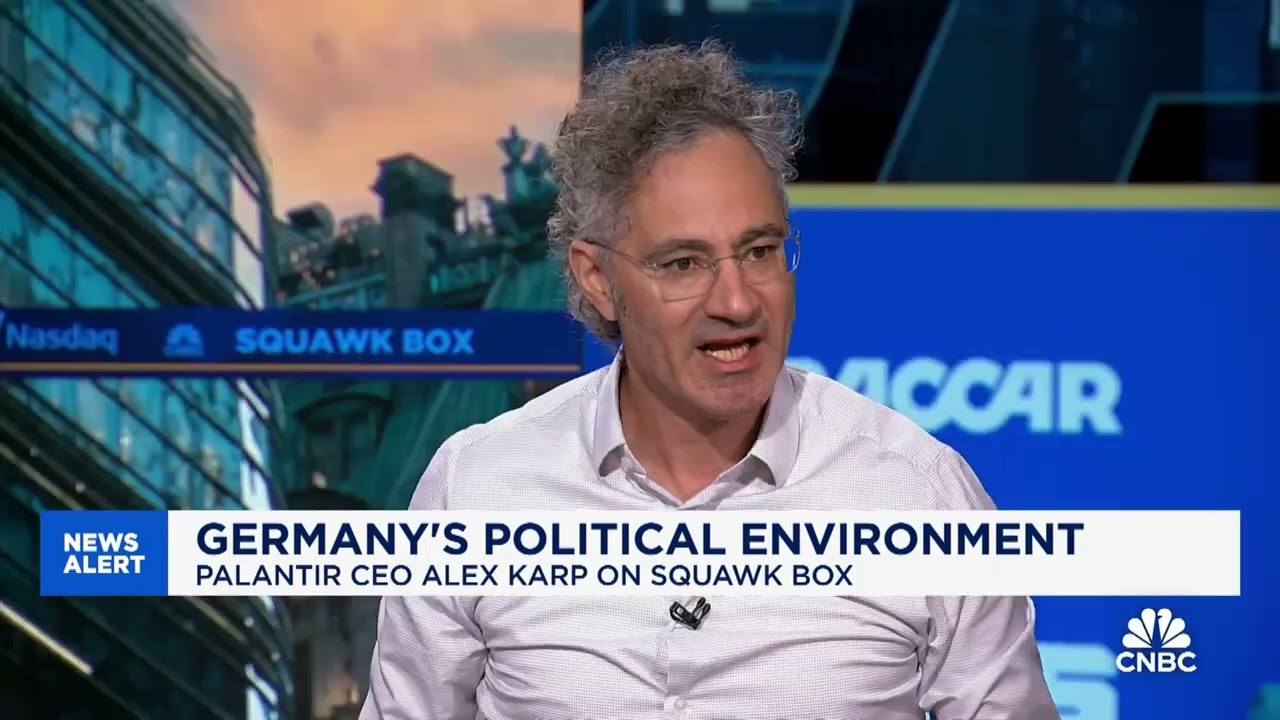 the “losing” “self-flagellation” of those who question American superiority and the benefits of autonomous weapons systems (and, by association, the lucrative military contracts that have made Karp’s vast fortune). Musk informs Joe Rogan that empathy is “the fundamental weakness of western civilization” and he vents, after failing to purchase a supreme court election in Wisconsin: “It increasingly appears that humanity is a biological bootloader for digital superintelligence.” Meaning we humans are nothing but grist for Grok, the AI service he owns. (He did tell us he was “dark Maga” – and he’s not the only one.)
In arid and climate-stressed Spain, one of the groups calling for a moratorium on new datacenters calls itself Tu Nube Seca Mi Río – Spanish for “your cloud is drying my river”. The name is fitting, and not just for Spain.
An unspeakably dismal choice is being made before our eyes and without our consent: machines over humans, inanimate over animate, profits over all else. With stunning speed, the big tech megalomaniacs have quietly rolled back their net-zero pledges and lined up by Trump’s side, hellbent on sacrificing this world’s real and precious resources and creativity at the altar of a vampiric, virtual realm. This is the last great heist, and they are getting ready to ride out the storms they themselves are summoning – and they will try to defame and destroy anyone who gets in their way.
Consider Vance’s recent European sojourn, where the vice-president harangued world leaders for “handwringing about safety” in relation to job-destroying AI while demanding Nazi and fascist speech go uncurtailed online. At one point he made a telling aside, expecting a laugh that never came: “If American democracy can survive 10 years of Greta Thunberg’s scolding, you guys can survive a few months of Elon Musk.”
JD Vance speaks at the Munich Security Conference in February. Photograph: dts News Agency Germany/REX/Shutterstock
His comment echoed those made by his equally humorless patron Thiel. In recent interviews focused on the theological underpinnings of his far-right politics, the Christian billionaire has repeatedly compared the indefatigable young climate activist to the antichrist – a figure he warns was prophesied to come bearing a misleading message of “peace and safety”. “If Greta gets everyone on the planet to ride a bicycle, maybe that’s a way to solve climate change, but it has sort of this quality of going from the frying pan into the fire,” Thiel intoned.
Why Thunberg, why now? In part, it’s clearly the apocalyptic fear of regulation eating into their super-profits: accordingto Thiel, the science-based climate action Thunberg and others demand could only be enforced by a “totalitarian state”, which he claims is more dire a threat than climate breakdown (most distressingly, the taxes under such conditions would be “quite high”). There may also be something else about Thunberg that frightens them: her steadfast commitment to this planet and the many life forms who call it home – not to simulations of this world generated by AI, or to a hierarchy of those deserving of life and those who are not, nor to any of the various extra-planetary escape fantasies the end times fascists are selling.
She is committed to staying, while the end times fascists have, at least in their imaginings, already left this realm, ensconced in their opulent shelters or transcended to the digital ether, or to Mars.
Shortly after Trump’s re-election, one of us had the opportunity to Anohni, one of the few musicians who have attempted to make art that wraps its arms around the death drive that has gripped our world. Asked about what connects the willingness of powerful people to let the planet burn and the drive to deny bodily autonomy to women and to trans people like her, she responded by drawing on her Irish Catholic upbringing: it’s “a very long-held myth that we are enacting and embodying. This is the culmination of their Rapture. This is their escape from the voluptuous cycle of creation. This is their escape from Mother.”
How do we break this apocalyptic fever? First, we help each other face the depth of the depravity that has gripped the hard right in all of our countries. To move forward with focus, we must first understand this simple fact: we are up against an ideology that has given up not only on the premise and promise of liberal democracy but on the livability of our shared world – on its beauty, on its people, on our children, on other species. The forces we are up against have made peace with mass death. They are treasonous to this world and its human and non-human inhabitants.
Second, we counter their apocalyptic narratives with a far better story about how to survive the hard times ahead without leaving anyone behind. A story capable of draining end times fascism of its gothic power and galvanizing a movement ready to put it all on the line for our collective survival. A story not of end times, but of better times; not of separation and supremacy, but of interdependence and belonging; not of escaping, but staying put and staying faithful to the troubled earthly reality in which we are enmeshed and bound.
This basic sentiment, of course, is not new. It is central to Indigenous cosmologies, and it lies at the heart of animism. Go back far enough and every culture and faith has its own tradition of respecting the sanctity of here, and not searching for Zion in an elusive ever-distant promised land. In eastern Europe, before the fascist and Stalinist annihilations, the Jewish socialist Labor Bund organized around the yiddish concept of Doikayt, or “hereness”. Molly Crabapple, who has written a forthcoming book about this neglected history, defines Doikayt as the right to “fight for freedom and safety in the places where they lived, in defiance of everyone who wanted them dead” – and rather than be forced to flee to safety in Palestine or the United States. Perhaps what is needed is a modern-day universalization of that concept: a commitment to the right to the “hereness” of this particular ailing planet, to these frail bodies, to the right to live in dignity wherever on the planet we are, even when the inevitable shocks forces us to move. “Hereness” can be portable, free of nationalism, rooted in solidarity, respectful of indigenous rights and unbounded by borders.
Anti-Trump protesters march against the administration in New York in January. Photograph: Julius Constantine Motal/The Guardian
That future would require its own apocalypse, its own world-ending and revelation, though of a very different sort. Because as the scholar of policing Robyn Maynard has observed: “In order to make earthly planetary survival possible, some versions of this world need to end.”
We have reached a choice point, not about whether we are facing apocalypse but what form it will take. The activist sisters Adrienne Maree and Autumn Brown touched on this recently on their aptly named podcast, How to Survive the End of the World. In this moment, when end times fascism is waging war on every front, new alliances are essential. But instead of asking: “Do we all share the same worldview?” Adrienne urges us to ask: “Is your heart beating and do you plan to live? Then come this way and we will figure out the rest on the other side.”
To have a hope of combating the end times fascists, with their ever-constricting and asphyxiating concentric circles of “ordered love”, we will need to build an unruly open-hearted movement of the Earth-loving faithful: faithful to this planet, its people, its creatures and to the possibility of a livable future for us all. Faithful to here. Or, to quote Anohni again, this time referring to the goddess in which she now places her faith: “Have you stopped to consider that this might have been her best idea?”
---
---
https://www.alternet.org/2020/05/the-most-horrifying-aspects-of-capitalism-to-the-ultra-rich-the-coronavirus-pandemic-is-a-trial-run-for-apocalypse/
coronavirus pandemic is a present-day dystopia. Unfortunately, it is not the stuff of a science fiction novel set in the near future or an alternate reality. If not stopped, this pandemic threatens to become a new type of normal, one where the pain and misery are chronic, and therefore gradually seen as acceptable. The damage is ongoing, and will only get worse with time.
This pandemic has already killed more than 70,000 people in the United States. A million or more are infected. The Trump administration — in what may well be an intentional undercount — now reportedly projects that by June 1 at least 3,000 people will die of COVID-19 every day.
The economic devastation has also been significant: At least 20 percent of Americans are out of work. Trillions of dollars in wealth and income have also been destroyed. The harm caused by this catastrophe will be intergenerational in ways not yet understood or imagined.
But for some people the coronavirus pandemic is a type of utopian dream. Many right-wing Christians see the combination of the pandemic and President Trump as good things. Why? Because in their mythology these events are harbingers of the apocalyptic “end times,” a titanic battle between good and evil during which true Christians who are “saved” will be raptured away to paradise. Writing at Rolling Stone, Bob Moser describes the power of this deranged fantasy over the Trump administration:
While the media typically just uses the euphemism “Christian” to describe such beliefs, these folks are Christian nationalists, who view the second coming of Christ as an event in which America will play a leading role, thanks to its founding as a “Christian” nation and its Judeo-Christian principles. They’re also known as Rapture Christians, thanks to their conviction that before things start to get really ugly on the earth, with God-sent wars and plagues far worse than COVID-19, they’ll be wafted up to heaven en masse, to live in eternal peace, bliss, and moral superiority while everyone else — including lesser Christians — suffers years’ worth of unspeakably gruesome torments prior to the final, earth-destroying battle between Warrior Jesus and Satan at Armageddon, and the Final Judgment in which Jews and others who refuse to convert are condemned to eternal torture in hell…. Now, their pagan king is leading us through an actual Biblical-sized plague — with the guidance of End-Time Christians.
As a class, the gangster capitalist plutocrats view the coronavirus pandemic as another opportunity to make money from human misery and expand their power over America and the world.
Many neo-fascists and other members of the Global Right are “accelerationists” who want to bring about the destruction of multiracial democracy in North America and Europe so that they can rebuild Western society as a white-only or white-dominated autocracy. Nonwhite people, Jews, Muslims and other “undesirables” will be killed, enslaved or exiled through an apocalyptic “race war.”
Mark O’Connell is the author of the new book “Notes From an Apocalypse: A Personal Journey to the End of the World and Back.” His essays and other writing have been featured in the New York Times Magazine and the Guardian.
In our conversation, O’Connell reflects on the strangeness of publishing a book about the end of the world just as the world is confronting the coronavirus pandemic. He explains how disasters are an opportunity for right-wing extremists, as well as plutocrats and oligarchs, to advance their antisocial agenda — and how such people plan to survive the apocalypse. O’Connell also argues that this pandemic may provide an opportunity for the best of humanity to assert itself, rather than devolving into barbarism as many doomsday preppers, survivalists, one-percenters and others have both predicted and, perhaps, hoped.
Given the coronavirus pandemic, your new book is either very well-timed or very horribly timed.
I suppose that it is both. But I can’t really decide. I was being interviewed recently and I was asked if “Notes From an Apocalypse” is prophetic. The book is actually the exact opposite. The timing is sheer coincidence. The prospect of a pandemic coinciding with the launch of my book seemed so far-fetched. Who could have predicted it? There is a great deal of dramatic irony around the timing for my book in a moment people are talking about nothing other than how apocalyptic everything feels.
Moreover, the prospect that the coronavirus pandemic could just become part of how children normally experience reality is quite sobering for me. I hope that these children, when they are adults, do not look back on this moment with the coronavirus as that singular event where everything went to hell. I hope they remember it as some type of weird, strange interlude that we all had to live through.
The apocalypse is never the end of the world. It is an idea that people reach for and use as a way to make sense of incomprehensible and challenging times. The apocalypse is a way to manage uncertainty and chaos and sudden change. Those are the times when the idea of the apocalypse rears its head, and I think this moment with the pandemic is definitely one of those moments.
In making sense of this moment, it’s very important to highlight how one person’s dystopia or apocalypse is another’s utopia and dream. Some people have been waiting for a disaster such as the coronavirus pandemic, in order to remake the world.
One of the things that has kept me going throughout this uniquely horrible experience is the idea that things are going to change in society because of this, and that those changes might be beneficial for a large number of people. The truths that are revealed by a global catastrophe cannot be easily ignored. The catastrophe shines a light on how societies are fundamentally structured. There will be those people who want to create positive change and there will be bad actors who are using the pandemic to advance a less hopeful and more negative vision of the future and society.
One of the scariest things about the coronavirus pandemic is that there are people, right now, for whom this disaster is an opportunity.
The coronavirus and its destruction strike me as a metaphor for Trumpism. You live in Britain. Is the coronavirus viewed as a metaphor for Brexit in the U.K. and Europe more broadly?
In terms of metaphor, for some time here in the United Kingdom and Europe everything seemed to present itself as a stand-in for Brexit. But I do not see the coronavirus as a metaphor for anything. Yes, there are ways in which it absolutely reveals so much about the way we live in the West and elsewhere at this moment in history. But how can the coronavirus pandemic be a metaphor for something else when it is the dominant subject of conversation — really the only thing that most people are talking about?
You are correct to say that the virus itself, in a U.S. context, is a huge society-wide problem. But the virus is not the central, fundamental core problem in your country. The problem is the radical inequalities in your society, the insane approach to health care, Trumpism and other issues which make the coronavirus’ impact much worse in your country than in most others.
In philosopher Fredric Jameson’s book “Archaeologies of the Future,” he argues that science fiction may focus on the future, but in fact all writing about the future is really an exploration of the present. How do you negotiate that tension?
In a way both of my books have been about “the future.” “To Be a Machine” is about people who are obsessed with a fantasy version of the future. “Notes From an Apocalypse” is also about some version of the future. But I am not interested in making predictions about what life will be like in the future, or thinking about various permutations of technology or politics, or how are we going to live in the year 2065 or what have you. That topic is not interesting to me.
I am interested in the present and the near past. For me the future is really a way to think through the complexities of the present. The ways that we imagine the future always have as much to do with the past as they do with anything else. The future is not a real thing. It is just an idea.
In terms of the way crises present a type of opportunity for some people, how are plutocrats and mega-rich individuals like Peter Thiel preparing for the apocalypse?
For me,Peter Thiel almost operates as a metaphor, a way for me to invest all of my anxieties and loathing about the extreme manifestations of capitalism. In that way, Peter Thiel is a kind of gift that just keeps on giving. A good portion of my first book, “To Be a Machine,” focuses on Peter Thiel’s quest for eternal life and the various companies he’s investing in as a way of accomplishing that goal.
In my new book, Thiel is a metaphor for the most horrifying aspects of capitalism, the moral void at the heart of the whole ideology and system. The way that he imagines surviving the collapse of civilization is extremely interesting insofar as it’s a way of thinking about how, in the present, with late-stage capitalism there is an increasing drift away from any kind of investment in democracy. What Thiel represents is the idea of the future as belonging to a very small number of extremely intelligent, far-sighted, radically self-interested individuals.
One of the responses to the coronavirus pandemic and economic collapse here in the United States has been the suggestion by Donald Trump and his followers that elderly and vulnerable people should be willing to die for “the economy.” It’s almost a form of human sacrifice.
Civilizations fall. And they fall quite suddenly. In fact, some of the most elaborate and sophisticated former civilizations practiced some type of human sacrifice as central to their culture. A classic example would be the Aztecs. They were convinced that human sacrifice was necessary for the continuation of their way of life. Such cultures genuinely believed that they had to kill to appease the gods and to ensure a good harvest or some other type of prosperity.
Now, it just so happens that they were wrong. Modern society has convinced its subjects that we have moved beyond such behavior. Human sacrifice seems too barbaric to us at present. But in reality, our own modern civilizations are based on human sacrifice in various forms.
The rich are building luxury bunkers to survive the “end of days” and to ensure their social and political power in the future. What does that reveal about Western society and culture?
Those bunkers are a classic, overblown, extreme metaphor for capitalism in the present, not in some imagined future. The rich are building luxury survival bunkers with private cinemas, DNA vaults, wine cellars and other lavish ways of surviving the end of the world. As the saying goes, “It is easier to imagine the end of the world than the end of capitalism.”
What do these luxury bunkers reveal about how the global one percent and other oligarchs imagine society? Do they simply reject the obligations and responsibilities that human beings should have to one another?Whether it is doomsday preppers who are stockpiling guns and freeze-drying food, or billionaires buying chunks of the South Island in New Zealand, the approach is to look after yourself first and survive at the cost of other people, or survive outside of the context of other people. In all these cases it is civilization as both an idea and structure that is considered a very fragile thing. From their point of view, society is a weak construct, a very thin layer of societal norms which hangs over an abyss of chaos and violence.
The preppers, as with the very rich who are building these luxury bunkers, have a sense that people are going to quickly revert to some type of animalistic savagery once a severe enough crisis comes along. This idea animates so many of these right-wing apocalyptic thinkers. It is capitalism to the extreme. The heavily fortified, luxurious bunker is just a logical conclusion of the gated community and of capitalism itself.
But such a conclusion is also wrong. During the pandemic, from what I have been seeing, people have mostly been pulling together. Community and society are much more resilient than we have been led to believe. That is something which is not accounted for in the worldview of the apocalyptic people, the preppers and so on. For them, this is not what is supposed to happen. They believed that the pandemic was supposed to create a state of mass civil unrest.
==
---
https://www.huffpost.com/entry/peter-thiel-new-zealand-bunker-coronavirus_n_5e6f9ac9c5b6dda30fce44ba
no lnx
HuffPost
Which Tech Bro Is Fleeing Coronavirus On This 'Lord Of The Rings' Plane?
CORONAVIRUS 03/16/2020
Which Tech Bro Is Fleeing Coronavirus On This ‘Lord Of The Rings’ Plane?
An investigation.
By Molly Redden
Napster founder Sean Parker and venture capitalist Peter Thiel.
ILLUSTRATION: REBECCA ZISSER/HUFFPOST; PHOTOS: GETTY
Napster founder Sean Parker and venture capitalist Peter Thiel.
Two handy things to know, when you’re reporting on an ultraweathy individual, is whether that person owns a private jet, and where that jet has been. So last year, when an editor assigned me to report on tech billionaire and major right-wing donor Peter Thiel, I set out to find his plane.
Strange! I know. But there was a point to the exercise, and it wasn’t to figure out where the elites of Silicon Valley go on vacation. Thiel is worth an estimated $2.3 billion. He has deeply held political beliefs — he is a major skeptic of multicultural democracy and a supporter of President Donald Trump — and a vast fortune he accrued by founding PayPal and investing in Facebook. He has few obligations to disclose how he spends his money to realize his political vision. Over the years, reporters have discovered him using shell companies and other clandestine means to finance a dystopian facial recognition company, spread scientifically dubious ideas and influence political races. The true extent of his influence remains unknown.
Tracing Thiel’s clout, in other words, is extremely difficult. The uber-rich have endless tools to maintain such secrecy. They channel their billions with the invisibility of deep ocean currents through offshore accounts and dark money groups, leaving the public with little ability to divine how they are shaping governance, policy, public opinion and life in general for the rest of us.
But even the 1% has to deal with the DMV. (Maybe. Who knows.) And anyone who owns a plane has to register that aircraft with the Federal Aviation Administration. If you know a plane’s tail number — the unique identifier the FAA assigns to every United States aircraft — you can plug it into various databases and watch the plane soar around the globe in real time. In the past, reporters have used that information to identify which masters of the universe attended a secretive Koch brothers summit, and to crack open the CIA’s terrorist rendition program. Watching the flight path of Thiel’s plane might allow me to divine which donor summits he attends, or which politicians borrow or ride his plane and generally benefit from his patronage.
In a time of global crisis — say, when a deadly coronavirus is sweeping the planet at pandemic speeds — I might even be able to see where Thiel takes cover.
That is, after all, exactly what the richest of the rich are doing. As COVID-19 spreads around the world, they’re swapping their villas for yachts and chartering private jets to avoid catching the contagion from the general public. They are arranging private, VIP medical care, and a New York heiress is reportedly retreating into a “medical bunker” she built for these exact circumstances. Thiel doesn’t have a bunker, exactly, but he does have a multimillion-dollar estate in New Zealand, the preferred doomsday destination for the world’s wealthiest individuals. Friends of Thiel’s have said they plan to escape there with him when society finally collapses.
I don’t know if he’s en route. But I’m pretty positive Thiel owns a jet. And I’m somewhat confident I may have found it. That jet took off Thursday night from Los Angeles International Airport en route to the Hawaiian Island of Lanai, before it was diverted to the nearby island of Maui. On Friday, the jet reached Lanai. On Monday afternoon, it’s scheduled to return to Los Angeles.
Is he shuttling friends to safety?
Did Peter Thiel just make the first leg of his escape?
A Plane, A Plan
There’s no reporting that proves Thiel even owns a private jet, but the evidence is highly suggestive. In 2016, The New Yorker reported that Sam Altman, the president of the tech incubator Y-Combinator, has a doomsday plan that involves a remote secure location, Thiel and a plane: “If the pandemic does come, Altman’s backup plan is to fly with his friend Peter Thiel, the billionaire venture capitalist, to Thiel’s house in New Zealand.”
Prepping for the end of civilization in one’s own luxury bunker has become quite trendy among the rich, especially among billionaires from Silicon Valley — who, for some reason, have a particular flair for imagining an apocalyptic near-future. Beautiful, remote New Zealand is especially attractive to prepper Americans because the primary language is English.
Is this the first leg of Peter Thiel’s escape?
Thiel acquired New Zealand citizenship under eyebrow-raising circumstances in 2011 (he did not meet its general residency requirements, but he sure gave New Zealand charities a lot of money) and owns a $4.8 million estate there with a newly constructed panic room. For Thiel, there is the added charm that New Zealand is where Peter Jackson filmed “The Lord of The Rings.” Thiel loves “The Lord of the Rings.” He’s given several of his companies cheeky names inspired by J.R.R. Tolkien’s novels: Valar Ventures, Mithril Capital. Palantir Technologies, his spooky data analytics firm of which the CIA is a client, is named after a set of sinister seeing-stones.
Altman’s plan to rely on Thiel to fly and house him in a time of global crisis suggests that the jet they plan to use is Thiel’s. But here’s a more straightforward argument: If you were worth an estimated $2.3 billion, wouldn’t you own a private jet?
A Code Name
The FAA’s database of private aircraft contains tens of thousands of registrations. The primary ways to search for a specific plane are by looking up the plane’s serial number, its registrant (i.e. the person or company who owns the plane), or its tail number, also known as the N-number.
But searching the registry for Thiel’s name and those of his companies didn’t yield any promising results.
Another journalist, who has more experience covering the rich and powerful, told me that if Thiel owned a jet, it was likely registered to a shell company set up specifically for the purpose of keeping his plane’s information private. My search would be “confounded,” this person said, unless I came across the name of said shell company, or if one of Thiel’s dumber friends had posted a selfie with the plane’s tail number in view.
Both seemed unlikely. Thiel is notoriously privacy-obsessed. After the website Gawker outed him to the general public in 2007, Thiel went on a secret annihilation campaign and bankrolled the Hulk Hogan lawsuit that bankrupted Gawker in 2016.
I was crestfallen. And then I wasn’t. Like a clap of thunder, I realized I knew exactly what Thiel would name his private jet holding company. I opened up a fresh browser tab and searched “lord of the rings eagles.”
I’ve never read Tolkien’s novels. But even I know that there are mythical giant eagles that rescue the main characters, Talmudic debates about why Frodo couldn’t just ride the eagles to Mount Doom, and, given the immense volume of Tolkien lore needed to sustain these debates, names for the eagles.
According to Wikipedia, the eagle Gwaihir rescued Frodo and Sam from Mount Doom after the Battle of the Black Gate. But, and I mean no offense to the war hero, “Gwaihir” doesn’t exactly roll off the tongue. By contrast, Wikipedia tells me “The Lord of Eagles in the First Age, said in The Silmarillion to be the ‘mightiest of all birds that have ever been,’ with a wingspan of thirty fathoms (54.9 meters, or 180 feet) and a beak of gold,” was named Thorondor.
I typed “Thorondor” into the FAA registry. One result was for a company that registered a four-seat Cessna in Tennessee. The other was for Thorondor LLC, which holds the registration for a top-of-the-line Gulfstream G550 business jet.
Thorondor LLC’s address is listed as care of Apercen Partners, a law firm that performs tax planning and compliance services for venture capitalists, hedge funders, entrepreneurs and “high net-worth individual clients” in Palo Alto, California, the heart of Silicon Valley.
Reader, I gasped.
A Twist
For weeks after my discovery, I watched as Thorondor rocketed around the globe, and I began to log the places it had flown in the past.
As tracking planes goes, this wasn’t easy. There are several websites where one can look up a plane’s flight history using the tail number, but all of these returned some version of the same message when I looked up Thorondor’s tail number: “This aircraft is not available for public tracking per request from the owner/operator.” Classic Thiel.
In a few online forums of plane enthusiasts, however, plane watchers (and they are legion) had logged the unique call sign associated with Thorondor’s tail number. Whoever had blocked the tail number on these websites had failed or forgotten to block the call sign, which became my window into Thorondor’s world.
Thorondor flew to the exact destinations one would expect Thiel’s plane to fly. It took constant trips between San Francisco, the tech capital of the nation, and Los Angeles, where Thiel moved in 2018. The plane took occasional jaunts to executive airports near Washington, D.C., and New York City. And several times a year, it flew from California to New Zealand, usually by way of Hawaii. In the course of my reporting, I discovered that Apercen Partners or its attorneys were also the registrants for several Thiel-linked nonprofits.
Thorondor. The Lord of Eagles in the First Age, said in The Silmarillion to be the “mightiest of all birds that have ever been,” with a wingspan of thirty fathoms and a beak of gold.
Wikipedia
And yet there were times when Thorondor wasn’t where it should have been. On a Friday in August, when Thiel appeared live on “Fox & Friends” in New York, the plane appears to have flown from Los Angeles to Fiji. In September, when Thiel and Ann Coulter hosted a political fundraiser in Thiel’s Park Avenue apartment, the plane was apparently parked in California.
Could it be that the plane I was shadowing belonged to another Silicon Valley billionaire — one with highly similar tastes in travel, fantasy novels and money managers?
It seemed unlikely. Thiel’s is such a unique mind. He relishes in the subversiveness of being one of Silicon Valley’s most outspoken conservatives, as when he declared that his move to Los Angeles was a bid to escape San Francisco’s liberal monoculture. He is also a great admirer of René Girard, a French philosopher who posits that all human behavior is based on imitation. Knowing this gives you a leg up on those who don’t. “You might not be able to escape imitation entirely,” Thiel has said, “but if you’re sensitive to the way it drives us then you’re already ahead of most.”
Yet no sooner did I entertain this thought — that Thiel is not so different from his fellow tech titans — than I came up with alternative theories of who owns Thorondor. Chief among them is Napster founder Sean Parker. Parker (Justin Timberlake played him in “The Social Network”) has patronized Apercen Partners to administer his main philanthropic foundation, public records show. He’s owned homes in San Francisco and Los Angeles and has business investments and relationships in New Zealand, including an investment with “The Lord of the Rings” director Peter Jackson.
This brings us to Parker’s 2013 wedding. For his nuptials, Parker spent $4.5 million transforming parts of Big Sur into a wooded fantasyland. He hired “Lord of the Rings” costume designer Ngila Dickson to style the wedding party and his guests, and he offered actor Ian McKellen a reported $1.5 million to officiate the wedding dressed as Gandalf. McKellen declined, saying, “Gandalf doesn’t do weddings.” Parker later paid a settlement of $2.5 million for what the California Coastal Commission claimed was potential destruction to old-growth redwood forest from all the digging, bulldozing and building of fake ruins. (The bride wore Elie Saab.)
Now there’s a guy who would name his private jet holding company Thorondor LLC.
I reached out to Apercen Partners to ask who owned the jet. The firm didn’t respond. I reached out to a representative for Thiel to ask if the jet was his, and got no response. I reached out to a representative for Parker with the same question and got no response.
I discovered that the jet once flew to a secret conservative confab held by the American Enterprise Institute on an island resort in Georgia. Very Thiel-y! But I searched in vain for a comprehensive copy of that year’s guest list, and along the way, I learned that Parker had been a guest in a previous year. I saw flights that placed Parker and the plane on different sides of the country, based on Parker’s public appearances. I dug up the incorporation documents for Thorondor LLC in Delaware — no additional clues. I toyed with the idea of staking out Teterboro, the preferred executive airport of greater New York, until a plane-watching enthusiast advised me that the only public viewing spot is highly monitored by the police.
At the end of all that, I have no idea who owns this very distinctive plane. What I do know is that theirs is a lucky lifestyle, one of frequent trips between beautiful destinations and carefree access to transpacific travel, even at a time of global pandemonium.
I wish them all the best.
==
==
omg no lnx
https://yyy.theguardian.com/news/2018/feb/15/why-silicon-valley-billionaires-are-prepping-for-the-apocalypse-in-new-zealand
The long read
Why Silicon Valley billionaires are prepping for the apocalypse in New Zealand
How an extreme libertarian tract predicting the collapse of liberal democracies – written by Jacob Rees-Mogg’s father – inspired the likes of Peter Thiel to buy up property across the Pacific
by Mark O'Connell
The long read
Why Silicon Valley billionaires are prepping for the apocalypse in New Zealand
Photograph: Johan Lolos/Rex/Shutterstock
How an extreme libertarian tract predicting the collapse of liberal democracies – written by Jacob Rees-Mogg’s father – inspired the likes of Peter Thiel to buy up property across the Pacific
by Mark O'Connell
Thu 15 Feb 2018 01.01 EST Last modified on Tue 18 Dec 2018 06.56 EST
If you’re interested in the end of the world, you’re interested in New Zealand. If you’re interested in how our current cultural anxieties – climate catastrophe, decline of transatlantic political orders, resurgent nuclear terror – manifest themselves in apocalyptic visions, you’re interested in the place occupied by this distant archipelago of apparent peace and stability against the roiling unease of the day.
If you’re interested in the end of the world, you would have been interested, soon after Donald Trump’s election as US president, to read a New York Times headline stating that Peter Thiel, the billionaire venture capitalist who co-founded PayPal and was an early investor in Facebook, considered New Zealand to be “the Future”. Because if you are in any serious way concerned about the future, you’re also concerned about Thiel, a canary in capitalism’s coal mine who also happens to have profited lavishly from his stake in the mining concern itself.
Thiel is in one sense a caricature of outsized villainy: he was the only major Silicon Valley figure to put his weight behind the Trump presidential campaign; he vengefully bankrupted a website because he didn’t like how they wrote about him; he is known for his public musings about the incompatibility of freedom and democracy, and for expressing interest – as though enthusiastically pursuing the clunkiest possible metaphor for capitalism at its most vampiric – in a therapy involving transfusions of blood from young people as a potential means of reversing the ageing process. But in another, deeper sense, he is pure symbol: less a person than a shell company for a diversified portfolio of anxieties about the future, a human emblem of the moral vortex at the centre of the market.
It was in 2011 that Thiel declared he’d found “no other country that aligns more with my view of the future than New Zealand”. The claim was made as part of an application for citizenship; the application was swiftly granted, though it remained a secret for a further six years. In 2016, Sam Altman, one of Silicon Valley’s most influential entrepreneurs, revealed to the New Yorker that he had an arrangement with Thiel whereby in the eventuality of some kind of systemic collapse scenario – synthetic virus breakout, rampaging AI, resource war between nuclear-armed states, so forth – they both get on a private jet and fly to a property Thiel owns in New Zealand. (The plan from this point, you’d have to assume, was to sit out the collapse of civilisation before re-emerging to provide seed-funding for, say, the insect-based protein sludge market.)
In the immediate wake of that Altman revelation, Matt Nippert, a reporter for the New Zealand Herald, began looking into the question of how exactly Thiel had come into possession of this apocalypse retreat, a 477-acre former sheep station in the South Island – the larger, more sparsely populated of the country’s two major landmasses. Foreigners looking to purchase significant amounts of New Zealand land typically have to pass through a stringent government vetting process. In Thiel’s case, Nippert learned, no such process had been necessary, because he was already a citizen of New Zealand, despite having spent no more than 12 days in the country up to that point, and having not been seen in the place since. He didn’t even need to travel to New Zealand to have his citizenship conferred, it turned out: the deal was sealed in a private ceremony at a consulate handily located in Santa Monica.
Peter Thiel
‘Less a person than a shell company for a diversified portfolio of anxieties about the future’ … Peter Thiel. Photograph: VCG/Getty
When Nippert broke the story, there was a major public scandal over the question of whether a foreign billionaire should be able to effectively purchase citizenship. As part of his application, Thiel had agreed to invest in New Zealand tech startups, and had implied that he would use his new status as a naturalised Kiwi to promote the country’s business interests abroad. But the focus internationally was on why Thiel might have wanted to own a chunk of New Zealand roughly the size of lower Manhattan in the first place. And the overwhelming suspicion was that he was looking for a rampart to which he could retreat in the event of outright civilisational collapse.
Because this is the role that New Zealand now plays in our unfurling cultural fever dream: an island haven amid a rising tide of apocalyptic unease. According to the country’s Department of Internal Affairs, in the two days following the 2016 election the number of Americans who visited its website to enquire about the process of gaining New Zealand citizenship increased by a factor of 14 compared to the same days in the previous month. In particular, New Zealand has come to be seen as a bolthole of choice for Silicon Valley’s tech elite.
In the immediate aftermath of Trump’s election, the theme of American plutocrats preparing for the apocalypse was impossible to avoid. The week after the inauguration, the New Yorker ran another piece about the super-rich who were making preparations for a grand civilisational crackup; speaking of New Zealand as a “favored refuge in the event of a cataclysm”, billionaire LinkedIn founder Reid Hoffman, a former colleague of Thiel’s at PayPal, claimed that “saying you’re ‘buying a house in New Zealand’ is kind of a wink, wink, say no more”.
Everyone is always saying these days that it’s easier to imagine the end of the world than the end of capitalism. Everyone is always saying it, in my view, because it’s obviously true. The perception, paranoid or otherwise, that billionaires are preparing for a coming civilisational collapse seems a literal manifestation of this axiom. Those who are saved, in the end, will be those who can afford the premium of salvation. And New Zealand, the furthest place from anywhere, is in this narrative a kind of new Ararat: a place of shelter from the coming flood.
Early last summer, just as my interests in the topics of civilisational collapse and Peter Thiel were beginning to converge into a single obsession, I received out of the blue an email from a New Zealand art critic named Anthony Byrt. If I wanted to understand the extreme ideology that underpinned Thiel’s attraction to New Zealand, he insisted, I needed to understand an obscure libertarian manifesto called The Sovereign Individual: How to Survive and Thrive During the Collapse of the Welfare State. It was published in 1997, and in recent years something of a minor cult has grown up around it in the tech world, largely as a result of Thiel’s citing it as the book he is most influenced by. (Other prominent boosters include Netscape founder and venture capitalist Marc Andreessen, and Balaji Srinivasan, the entrepreneur best known for advocating Silicon Valley’s complete secession from the US to form its own corporate city-state.)
The Sovereign Individual’s co-authors are James Dale Davidson, a private investor who specialises in advising the rich on how to profit from economic catastrophe, and the late William Rees-Mogg, long-serving editor of the Times. (One other notable aspect of Lord Rees-Mogg’s varied legacy is his own son, the Conservative MP Jacob Rees-Mogg – a hastily sketched caricature of an Old Etonian, who is as beloved of Britain’s ultra-reactionary pro-Brexit right as he is loathed by the left.)
The Sovereign Individual book cover
I was intrigued by Byrt’s description of the book as a kind of master key to the relationship between New Zealand and the techno-libertarians of Silicon Valley. Reluctant to enrich Davidson or the Rees-Mogg estate any further, I bought a used edition online, the musty pages of which were here and there smeared with the desiccated snot of whatever nose-picking libertarian preceded me.
It presents a bleak vista of a post-democratic future. Amid a thicket of analogies to the medieval collapse of feudal power structures, the book also managed, a decade before the invention of bitcoin, to make some impressively accurate predictions about the advent of online economies and cryptocurrencies.
The book’s 400-odd pages of near-hysterical orotundity can roughly be broken down into the following sequence of propositions:
1) The democratic nation-state basically operates like a criminal cartel, forcing honest citizens to surrender large portions of their wealth to pay for stuff like roads and hospitals and schools.
2) The rise of the internet, and the advent of cryptocurrencies, will make it impossible for governments to intervene in private transactions and to tax incomes, thereby liberating individuals from the political protection racket of democracy.
3) The state will consequently become obsolete as a political entity.
4) Out of this wreckage will emerge a new global dispensation, in which a “cognitive elite” will rise to power and influence, as a class of sovereign individuals “commanding vastly greater resources” who will no longer be subject to the power of nation-states and will redesign governments to suit their ends.
The Sovereign Individual is, in the most literal of senses, an apocalyptic text. Davidson and Rees-Mogg present an explicitly millenarian vision of the near future: the collapse of old orders, the rising of a new world. Liberal democracies will die out, and be replaced by loose confederations of corporate city-states. Western civilisation in its current form, they insist, will end with the millennium. “The new Sovereign Individual,” they write, “will operate like the gods of myth in the same physical environment as the ordinary, subject citizen, but in a separate realm politically.” It’s impossible to overstate the darkness and extremity of the book’s predictions of capitalism’s future; to read it is to be continually reminded that the dystopia of your darkest insomniac imaginings is almost always someone else’s dream of a new utopian dawn.
Davidson and Rees-Mogg identified New Zealand as an ideal location for this new class of sovereign individuals, as a “domicile of choice for wealth creation in the Information Age”. Byrt, who drew my attention to these passages, had even turned up evidence of a property deal in the mid-1990s in which a giant sheep station at the southern tip of the North Island was purchased by a conglomerate whose major shareholders included Davidson and Rees-Mogg. Also in on the deal was one Roger Douglas, the former Labour finance minister who had presided over a radical restructuring of New Zealand economy along neoliberal lines in the 1980s. (This period of so-called “Rogernomics”, Byrt told me – the selling off of state assets, slashing of welfare, deregulation of financial markets – created the political conditions that had made the country such an attractive prospect for wealthy Americans.)
Thiel’s interest in New Zealand was certainly fuelled by his JRR Tolkien obsession: this was a man who had named at least five of his companies in reference to The Lord of the Rings, and fantasised as a teenager about playing chess against a robot that could discuss the books. It was a matter, too, of the country’s abundance of clean water and the convenience of overnight flights from California. But it was also inseparable from a particular strand of apocalyptic techno-capitalism. To read The Sovereign Individual was to see this ideology laid bare: these people, the self-appointed “cognitive elite”, were content to see the unravelling of the world as long as they could carry on creating wealth in the end times.
New Zealand as Middle-earth in The Lord of the Rings: Fellowship of the Ring.
Facebook Twitter Pinterest New Zealand as Middle-earth in The Lord of the Rings: Fellowship of the Ring. Photograph: Everett/Rex
I was struck by how strange and disquieting it must have been for a New Zealander to see their own country refracted through this strange apocalyptic lens. There was certainly an ambient awareness that the tech world elite had developed an odd interest in the country as an ideal end-times bolthole; it would have been difficult, at any rate, to ignore the recent cascade of articles about Thiel acquiring citizenship, and the apocalyptic implications of same. But there seemed to have been basically zero discussion of the frankly alarming ideological dimension of it all.
It was just this ideological dimension, as it happened, that was the focus of a project Byrt himself had recently got involved in, a new exhibition by the artist Simon Denny. Denny, a significant figure in the international art scene, was originally from Auckland, but has lived for some years in Berlin. Byrt described him as both “kind of a genius” and “the poster-boy for post-internet art, whatever that is”; he characterised his own role in the project with Denny as an amalgamation of researcher, journalist and “investigative philosopher, following the trail of ideas and ideologies”.
The exhibition was called The Founder’s Paradox, a name that came from the title of one of the chapters in Thiel’s 2014 book, Zero to One: Notes on Startups, or How to Build the Future. Together with the long and intricately detailed catalogue essay Byrt was writing to accompany it, the show was a reckoning with the future that Silicon Valley techno-libertarians like Thiel wanted to build, and with New Zealand’s place in that future.
These were questions I too was eager to reckon with. Which is to say that I myself was interested – helplessly, morbidly – in the end of the world, and that I was therefore interested in New Zealand. And so I decided to go there, to see for myself the land that Thiel had apparently set aside for the collapse of civilisation: a place that would become for me a kind of labyrinth, and whose owner I was already beginning to mythologise as the monster at its centre.
Within about an hour of arriving in Auckland, I was as close to catatonic from fatigue as made no difference, and staring into the maw of a volcano. I was standing next to Byrt, who’d picked me up from the airport and, in a gesture I would come to understand as quintessentially Kiwi, dragged me directly up the side of a volcano. This particular volcano, Mount Eden, was a fairly domesticated specimen, around which was spread one of the more affluent suburbs of Auckland – the only city in the world, I learned, built on a technically still-active volcanic field.
I was a little out of breath from the climb and, having just emerged in the southern hemisphere from a Dublin November, sweating liberally in the relative heat of the early summer morning. I was also experiencing near-psychotropic levels of jetlag. I must have looked a bit off, because Byrt – a bearded, hoodied and baseball-capped man in his late 30s – offered a cheerful apology for playing the volcano card so early in the proceedings.
“I probably should have eased you into it, mate” he chuckled. “But I thought it’d be good to get a view of the city before breakfast.”
The view of Auckland and its surrounding islands was indeed ravishing – though in retrospect, it was no more ravishing than any of the countless other views I would wind up getting ravished by over the next 10 days. That, famously, is the whole point of New Zealand: if you don’t like getting ravished by views, you have no business in the place; to travel there is to give implicit consent to being hustled left, right and centre into states of aesthetic rapture.
A view of Auckland New Zealand from Mount Eden.
A view of Auckland from Mount Eden. Photograph: Alamy
“Plus I’ve been in the country mere minutes,” I said, “and I’ve already got a perfect visual metaphor for the fragility of civilisation in the bag.”
I was referring here to the pleasingly surreal spectacle of a volcanic crater overlaid with a surface of neatly manicured grass. (I jotted this observation down in my notebook, feeling as I did so a smug infusion of virtue about getting some literary non-fiction squared away before even dropping my bags off at the hotel. “Volcano with lawn over it,” I scrawled. “Visual manifestation of thematic motif: Civ as thin membrane stretched over chaos.”)
I remarked on the strangeness of all these Silicon Valley geniuses supposedly apocalypse-proofing themselves by buying up land down here right on the Pacific Ring of Fire, the horseshoe curve of geological fault lines that stretches upward from the western flank of the Americas, back down along the eastern coasts of Russia and Japan and on into the South Pacific.
“Yeah,” said Byrt, “but some of them are buying farms and sheep stations pretty far inland. Tsunamis aren’t going to be a big issue there. And what they’re after is space, and clean water. Two things we’ve got a lot of down here.”
The following day, I went to the gallery in downtown Auckland to take a look at The Founder’s Paradox. Denny, a neat and droll man in his mid-30s, talked me through the conceptual framework. It was structured around games – in theory playable, but in practice encountered as sculptures – representing two different kinds of political vision for New Zealand’s future. The bright and airy ground floor space was filled with tactile, bodily game-sculptures, riffs on Jenga and Operation and Twister. These works, incorporating collaborative and spontaneous ideas of play, were informed by a recent book called The New Zealand Project by a young leftwing thinker named Max Harris, which explored a humane, collectivist politics influenced by Maori beliefs about society.
Down in the low-ceilinged, dungeon-like basement was a set of sculptures based around an entirely different understanding of play, more rule-bound and cerebral. These were based on the kind of strategy-based role-playing games particularly beloved of Silicon Valley tech types, and representing a Thielian vision of the country’s future. The psychological effect of this spatial dimension of the show was immediate: upstairs, you could breathe, you could see things clearly, whereas to walk downstairs was to feel oppressed by low ceilings, by an absence of natural light, by the darkness of the geek-apocalypticism captured in Denny’s elaborate sculptures.
This was a world Denny himself knew intimately. And what was strangest and most unnerving about his art was the sense that he was allowing us to see this world not from the outside in, but from the inside out. Over beers in Byrt’s kitchen the previous night, Denny had told me about a dinner party he had been to in San Francisco earlier that year, at the home of a techie acquaintance, where he had been seated next to Curtis Yarvin, founder of the Thiel-funded computing platform Urbit. As anyone who takes an unhealthy interest in the weirder recesses of the online far-right is aware, Yarvin is more widely known as the blogger Mencius Moldbug, the intellectual progenitor of Neoreaction, an antidemocratic movement that advocates for a kind of white-nationalist oligarchic neofeudalism – rule by and for a self-proclaimed cognitive elite – and which has found a small but influential constituency in Silicon Valley. It was clear that Denny was deeply unsettled by Yarvin’s brand of nerd autocracy, but equally clear that breaking bread with him was in itself no great discomfort.
The Founder’s Paradox, a board game by artist Simon Denny]
‘A Thielian vision of the country’s future’ … The Founder’s Paradox,a board game by artist Simon Denny. Photograph: Simon Denny/Michael Lett Gallery]
Beneath all the intricacy and detail of its world-building, The Founder’s Paradox was clearly animated by an uneasy fascination with the utopian future imagined by the techno-libertarians of Silicon Valley, and with New Zealand’s role in that future. The exhibition’s centrepiece was a tabletop strategy game called Founders, which drew heavily on the aesthetic – as well as the explicitly colonialist language and objectives – of Settlers of Catan, a cult multiplayer strategy board game. The aim of Founders, clarified by the accompanying text and by the piece’s lurid illustrations, was not simply to evade the apocalypse, but to prosper from it. First you acquired land in New Zealand, with its rich resources and clean air, away from the chaos and ecological devastation gripping the rest of the world. Next you moved on to seasteading, the libertarian ideal of constructing manmade islands in international waters; on these floating utopian micro-states, wealthy tech innovators would be free to go about their business without interference from democratic governments. (Thiel was an early investor in, and advocate of, the seasteading movement, though his interest has waned in recent years.) Then you mined the moon for its ore and other resources, before moving on to colonise Mars. This last level of the game reflected the current preferred futurist fantasy, most famously advanced by Thiel’s former PayPal colleague Elon Musk, with his dream of fleeing a dying planet Earth for privately owned colonies on Mars.
The influence of the Sovereign Individual, and of Byrt’s obsession with it, was all over the show. It was a detailed mapping of a possible future, in all its highly sophisticated barbarism. It was a utopian dream that appeared, in all its garish detail and specificity, as the nightmare vision of a world to come.
Thiel himself had spoken publicly of New Zealand as a “utopia”, during the period in 2011 when he was manoeuvring for citizenship, investing in various local startups under a venture capital fund called Valar Ventures. (I hardly need to tell you that Valar is another Tolkien reference.) This was a man with a particular understanding of what a utopia might look like, who did not believe, after all, in the compatibility of freedom and democracy. In a Vanity Fair article about his role as adviser to Trump’s campaign, a friend was quoted as saying that “Thiel has said to me directly and repeatedly that he wanted to have his own country”, adding that he had even gone so far as to price up the prospect at somewhere around $100bn.
The Kiwis I spoke with were uncomfortably aware of what Thiel’s interest in their country represented, of how it seemed to figure more generally in the frontier fantasies of American libertarians. Max Harris – the author of The New Zealand Project, the book that informed the game-sculptures on the upper level of The Founder’s Paradox – pointed out that, for much of its history, the country tended to be viewed as a kind of political Petri dish (it was, for instance, the first nation to recognise women’s right to vote), and that this “perhaps makes Silicon Valley types think it’s a kind of blank canvas to splash ideas on”.
Donald Trump and Peter Thiel at Trump Tower in December 2016.
Facebook Twitter Pinterest Donald Trump and Peter Thiel at Trump Tower in December 2016. Photograph: Bloomberg/Getty]
When we met in her office at the Auckland University of Technology, the legal scholar Khylee Quince insisted that any invocation of New Zealand as a utopia was a “giant red flag”, particularly to Maori like herself. “That is the language of emptiness and isolation that was always used about New Zealand during colonial times,” she said. And it was always, she stressed, a narrative that erased the presence of those who were already here: her own Maori ancestors. The first major colonial encounter for Maori in the 19th century was not with representatives of the British crown, she pointed out, but with private enterprise.
The New Zealand Company was a private firm founded by a convicted English child kidnapper named Edward Gibbon Wakefield, with the aim of attracting wealthy investors with an abundant supply of inexpensive labour – migrant workers who could not themselves afford to buy land in the new colony, but who would travel there in the hope of eventually saving enough wages to buy in. The company embarked on a series of expeditions in the 1820s and 30s; it was only when the firm started drawing up plans to formally colonise New Zealand, and to set up a government of its own devising, that the British colonial office advised the crown to take steps to establish a formal colony. In the utopian fantasies of techno-libertarians like Thiel, Quince saw an echo of that period of her country’s history.“Business,” she said, “got here first.”
Given her Maori heritage, Quince was particularly attuned to the colonial resonances of the more recent language around New Zealand as both an apocalyptic retreat and a utopian space for American wealth and ingenuity.
“I find it incredibly offensive,” she said. “Thiel got citizenship after spending 12 days in this country, and I don’t know if he’s even aware that Maori exist. We as indigenous people have a very strong sense of intergenerational identity and collectivity. Whereas these people, who are sort of the contemporary iteration of the coloniser, are coming from an ideology of rampant individualism, rampant capitalism.”
Quince’s view was by no means the norm. New Zealanders tend to be more flattered than troubled by the interest of Silicon Valley tech gurus in their country. It’s received by and large as a signal that the tyranny of distance – the extreme antipodean remoteness that has shaped the country’s sense of itself since colonial times – has finally been toppled by the liberating forces of technology and economic globalisation.
“It’s very appealing,” the political scientist Peter Skilling told me, “these entrepreneurs saying nice things about us. We’re like a cat having its tummy rubbed. If Silicon Valley types are welcomed here, it’s not because we’re particularly susceptible to libertarian ideas; it’s because we are complacent and naive.”
Among the leftwing Kiwis I spoke with, there had been a kindling of cautious optimism, sparked by the recent surprise election of a new Labour-led coalition government, under the leadership of the 37-year-old Jacinda Ardern, whose youth and apparent idealism suggested a move away from neoliberal orthodoxy. During the election, foreign ownership of land had been a major talking point, though it focused less on the wealthy apocalypse-preppers of Silicon Valley than the perception that overseas property speculators were driving up the cost of houses in Auckland. The incoming government had committed to tightening regulations around land purchases by foreign investors. This was largely the doing of Winston Peters, a nationalist of Maori descent whose New Zealand First party held the balance of power, and was strongly in favour of tightening regulations of foreign ownership. When I read that Ardern had named Peters as her deputy prime minister, I was surprised to recognise the name – from, of all places, The Sovereign Individual, where Davidson and Rees-Mogg had singled him out for weirdly personal abuse as an arch-enemy of the rising cognitive elite, referring to him as a “reactionary loser” and “demagogue” who would “gladly thwart the prospects for long-term prosperity just to prevent individuals from declaring their independence of politics”.
Jacinda Ardern, prime minister of New Zealand.
Jacinda Ardern, prime minister of New Zealand. Photograph: Phil Walter/Getty Images]
During my time in New Zealand, Ardern was everywhere: in the papers, on television, in every other conversation. On our way to Queenstown in the South Island, to see for ourselves the site of Thiel’s apocalyptic bolthole, Byrt and I were in the security line at Auckland airport when a woman of about our age, smartly dressed and accompanied by a cluster of serious-looking men, glanced in our direction as she was conveyed quickly along the express lane. She was talking on her phone, but looked towards us and waved at Byrt, smiling broadly in happy recognition.
“Who was that?” I asked.
“Jacinda,” he said.
“You know her?”
“We know quite a lot of the same people. We met for a drink a couple of times back when she was Labour’s arts spokesperson.”
“Really?”
“Well yeah,” he laughed, “there’s only so many of us.”
“The endgame for Thiel is essentially The Sovereign Individual,” said Byrt. He was driving the rental car, allowing me to fully devote my resources to the ongoing cultivation of aesthetic rapture (mountains, lakes, so forth). “And the bottom line for me,” he said, “is that I don’t want my son to grow up in that future.”
We were on our way to see for ourselves the part of New Zealand, on the shore of Lake Wanaka in the South Island, that Thiel had bought for purposes of post-collapse survival. We talked about the trip as though it were a gesture of protest, but it felt like a kind of perverse pilgrimage. The term “psychogeography” was cautiously invoked, and with only the lightest of ironic inflections.
“The thing about Thiel is he’s the monster at the heart of the labyrinth,” said Byrt.
“He’s the white whale,” I suggested, getting into the literary spirit of the enterprise.
Byrt’s obsession with Thiel occupied a kind of Melvillean register, yearned toward a mythic scale. It coloured his perception of reality. He admitted, for instance, to a strange aesthetic pathology whereby he encountered, in the alpine grandeur of the South Island, not the sublime beauty of his own home country, but rather what he imagined Thiel seeing in the place: Middle-earth. Thiel’s Tolkien fixation was itself a fixation for Byrt: together with the extreme libertarianism of The Sovereign Individual, he was convinced that it lay beneath Thiel’s continued interest in New Zealand.
Matt Nippert, the New Zealand Herald journalist who had broken the citizenship story earlier that year, told me he was certain that Thiel had bought the property for apocalypse-contingency purposes. In his citizenship application, he had pledged his commitment to devote “a significant amount of time and resourcesto the peopleand businesses of New Zealand”. But none of this had amounted to much, Nippert said, and he was convinced it had only ever been a feint to get him in the door as a citizen.
In a cafe in Queenstown, about an hour’s drive from Thiel’s estate, Byrt and I met a man to whom a wealthy acquaintance of Byrt’s had introduced us. A well known and well connected professional in Queenstown, he agreed to speak anonymously for fear of making himself unpopular among local business leaders and friends in the tourism trade. He had been concerned for a while now about the effects on the area of wealthy foreigners buying up huge tracts of land. (“Once you start pissing in the hand basin, where are you gonna wash your face?” as he put to me, in what I assumed was a purely rhetorical formulation.) He told us of one wealthy American of his acquaintance, “pretty left-of-centre”, who had bought land down here to allay his apocalyptic fears in the immediate aftermath of Trump’s election. Another couple he knew of, a pair of bitcoin billionaires, had bought a large lakeside estate on which they were constructing a gigantic bunker.
This was the first I’d heard since coming here of an actual bunker being built. From the point of view of the modern apocalypticist, the whole appeal of the country – its remoteness and stability, its abundant clean water, its vast and lovely reaches of unpeopled land – was that it was itself a kind of reinforced geopolitical shelter, way down there at the bottom of the world.
The people I spoke to in the property business were keen to portray New Zealand as a kind of utopian sanctuary, but to give as little oxygen as possible to the related narrative around the country as an apocalyptic bolthole for the international elite. Over coffee at his golf club near Queenstown, Terry Spice, a London-born luxury property specialist who had recently sold a large estate abutting the Thiel property on Lake Wanaka, said he felt Thiel had highlighted internationally that the country was “a safe haven, and a legacy asset”. He himself had sold land to one very wealthy American client who had called him on the night of the presidential election. “This guy couldn’t believe what was happening. He wanted to secure something right away.” But on the whole, he insisted, this kind of apocalyptically motivated buyer represented a vanishingly small proportion of the market.
Showing me around the high-end beachfront properties he represented about an hour or so north of Auckland, another luxury property specialist named Jim Rohrstaff – a Californian transplant who specialised in selling to the international market – likewise told me that although quite a few of his major clients were Silicon Valley types, the end of the world tended not to be a particular factor in their purchasing decisions.
“Look,” he said, “it might be one strand in terms of what’s motivating them to buy here. But in my experience it’s never been the overriding reason. It’s much more of a positive thing. What they see when they come here is utopia.”
In one sense, I knew what he meant by this. He meant excellent wine. He meant world-class golf. He meant agreeable climate, endless white sand beaches that scarcely aroused the suspicion of the existence of other human beings. But having lately spoken to Khylee Quince about the historical resonances of the concept of utopia, I wondered what else he might mean, and whether he intended to mean it or not.
In Queenstown, before we set out to find the former sheep station Thiel had bought, we went to look for the house he owned in the town itself. This place, we speculated, must have been purchased as a kind of apocalyptic pied-a-terre: somewhere he could base himself, maybe, while whatever construction he had planned for the sheep station was underway. Nippert had given us the address; we found it easily enough, not far from the centre of town, and recognised it right away from one of the paintings in The Founder’s Paradox. It was the sort of house a Bond villain might build if for some reason he’d been forced to move to the suburbs.It looked modestly ostentatious, if such a thing was possible; the front of the building was one giant window, gazing out blankly over the town and the lake below. There was some construction going on in the place. I wandered up the drive and asked the builders if they knew who their client was. “No idea, mate,” they said. They were just doing some renovation on contract. There’d been a fire in the place a while back, apparently. Nothing sinister, just wiring.
The next day, we made our way to Lake Wanaka, where the larger rural property was located. We rented bikes in the town, and followed the trail around the southern shore of the lake. It got rockier and more mountainous the further we pursued it, and by the time we knew for certain we were on Thiel’s property, I was so hot and exhausted that all I could think to do was plunge into the lake to cool off. I asked Anthony whether he thought the water was safe to drink, and he said he was sure of it, given that its purity and its plenty was a major reason a billionaire hedging against the collapse of civilisation would want to buy land there in the first place. I swam out further into what I had come to think of as Thiel’s apocalypse lake and, submerging my face, I drank so deeply that Anthony joked he could see the water level plunging downward by degrees. In truth, I drank well beyond the point of quenching any literal thirst; in a way that felt absurd and juvenile, and also weirdly and sincerely satisfying, I was drinking apocalypse water, symbolically reclaiming it for the 99%. If in that moment I could have drained Lake Wanaka just to fuck up Thiel’s end-of-the-world contingency plan, I might well have done so.
I suggested I might take a rock, a piece of the place to bring home and keep on my desk, but Byrt warned me that to do so would be a transgression of the Maori understanding of the land’s communal sacredness. We scrabbled up the stony flank of a hill and sat for a while looking out over the calm surface of the lake to the distant snowy peaks, and over the green and undulating fields unfurling into the western distance, all of it the legal possession of a man who had designs on owning a country, who believed that freedom was incompatible with democracy.
Later, we made our way to the far side of the property, bordering the road, where we saw the only actual structure on the entire property: a hay barn. It is the opinion of this reporter that Thiel himself had no hand in its construction.
“There you have it,” said Byrt. “Eyeball evidence that Thiel is stockpiling hay for the collapse of civilisation.” I wish to state categorically that we did not steal so much as a single straw from that barn.
We had made it to the centre of the labyrinth, but it was elsewhere in the end that the monster materialised. In early December, a couple of weeks after I’d left the country, Max Harris, the young Kiwi author whose book Denny and Byrt had used as a counterpoint to Thiel’s ideas, was home for Christmas, and went along to the gallery to see the exhibition.
Down in the basement, in the central chamber – with its low ceilings, its iron vault door, its Führerbunkerishly oppressive vibe – Harris encountered, staring intently downward into the glass case containing the Founders game, a man in shorts and a blue polo shirt, surrounded by a group of younger men, likewise polo-shirted. The older man was doughier and less healthy-looking than he appeared in photographs, Harris told me, but he had little doubt as to his identity.
Harris, who was aware that Peter Thiel had not been seen in New Zealand since 2011, asked the man whether he was who he thought he was; the man smirked and, without raising his eyes from the board game toward Harris, replied that a lot of people had been asking him just that question. Harris asked the man what he thought of the exhibition, and the man paused a long time before saying that it was “actually a work of phenomenal detail”. He asked Harris if he knew the artist, and Harris said that he did, that he himself was in a fact a writer whose work had formed part of the conceptual framework for the show. Of the sheer improbability of these two men– one for whom New Zealand was a means of shoring up his wealth and power in a coming civilisational collapse, one for whom it was home, a source of hope for a more equal and democratic society – just happening to cross paths at an art exhibition loosely structured around the binary opposition of their political views no mention was made, and they went their separate ways.
Thiel left his contact details with the gallery, suggesting that Denny get in touch. He did, and Thiel responded quickly; he’d been intrigued by what he had seen, but claimed to be a little disturbed by how dark his cyber-libertarianism appeared when refracted through the lens of The Founder’s Paradox. In any case, the conversation continued, and they made arrangements to meet on Denny’s next trip to the US.
Coders of the world, unite: can Silicon Valley workers curb the power of Big Tech?
Read more
Denny was eager to keep talking, if only because he was determined to reach a deeper understanding of Thiel’s vision of the future. Byrt, the more straightforwardly political in his antagonism toward Thiel and what he represented, was bewildered by this unexpected turn of events, though strangely thrilled by it, too. For my part, this came as a disorienting rug-pull ending – partly because the monster had materialised, and he was therefore no longer merely a human emblem of the moral vortex at the centre of capitalism, but also an actual human, goofily got up in polo shirt and shorts, sweating in the heat, traipsing along to an art gallery to indulge his human curiosity about what the art world thought of his notoriously weird and extreme politics. A sovereign individual in the same physical environment as us ordinary subject citizens. But it also deepened the mystery of what Thiel had planned for New Zealand, for the future.
There was one mystery that did get solved, though not by me: the admittedly frivolous enigma of what sort of renovations those builders were working on at the apocalyptic pied-a-terre in Queenstown. Nippert, in a recent New Zealand Herald article, had published the architect’s plans for the place. Thiel was making some alterations to the master bedroom. He was putting in a panic room.