altman, sam openAI
---
PRIMARY 7 26 FUNDER SEE BROKMAN
lies
anthropic ethics spin off
shillenberger
sinema
lobby fail b3 bill dark money pol ops miller lehane
mbs broliarchs
-=-=
===
AN 10 26 KFF
A cadre of elite techies, financiers, and high-level Trump administration officials have spent a year quietly charting an extraordinary and rapid campaign to persuade Americans to use apps and other artificial intelligence-powered tools to manage their healthcare and medical records.
As that campaign has unfolded, administration officials have granted tech companies an unusual opportunity to nudge the nation’s health department toward a loosely regulated future for AI health apps in which the government reimburses them for services as it does medical professionals.
In February, federal health officials invited those businesses — including tech giants Microsoft, Anthropic, OpenAI, Apple, and Google — to a listening session on conversational AI products for patients, such as chatbots. Representatives from at least 35 industry organizations attended the meeting held by the Food and Drug Administration, which is responsible for regulating health apps as medical devices. Companies were prompted in advance to explain their AI products and how they access p
MUCH MORE
-=-=
MMA
Right-wing media downplay AI safety concerns as a hoax by comparing them to climate change and “COVID hysteria”
Written by Helena Hind, Jane Lee & Evlondo Cooper
Published 09/15/26
Right-wing media are following President Donald Trump in dismissing calls to slow down AI development in the wake of multiple hacking incidents as a “hoax,” comparing concerns over AI to “climate change apocalyptic talk” and “COVID hysteria” including support for vaccines.
Reports have surfaced in recent months that rogue AI agents from OpenAI anonymously hacked into AI startup Hugging Face servers and into software service RubyGems. As Reuters explained: “Many incidents where AI agents from developers such as OpenAI and rival Anthropic have hacked or attempted to access external systems have heightened concerns over the increasing capacity of AI models and developers' ability to contain them.” On September 12, both Anthropic CEO Dario Amodei and OpenAI CEO Sam Altman publicly called for a slowdown in AI development, with Altman announcing that his company would be delaying its initial public offering until 2027.
Trump vehemently rejected the idea of an AI slowdown in a series of Truth Social posts on September 14, calling the push for caution a “hoax,” “scam,” and a “SICK conspiracy.” Trump wrote: “The people that say AI is going to destroy the World, and that Data Centers are bad for your neighborhood, are the same people that said, just a short time ago, that the World would be extinguished by ‘Climate Change.’”
The claim that climate scientists’ predictions have failed is not borne out by the evidence — warnings about greenhouse gases causing more warming have now come to pass, with over a decade of record-breaking heat and thousands of excess deaths across Europe in climate-driven heat waves this year alone.
Nonetheless right-wing media followed Trump’s lead, comparing concerns about unregulated AI development with supposedly fabricated climate change warnings and COVID-19 pandemic safety measures like vaccines. (In reality, researchers have repeatedly proven that vaccines limited the spread of COVID-19 during the pandemic, reduced the rate of severe complications and death, and continue to be a safe, effective treatment.)
On his September 14 radio show, Fox host Sean Hannity accused former President Barack Obama of “urging Democrats to fearmonger AI just like Democrats fearmongered and flat-out lied about global warming,” claiming those concerns “turned out to be bunk.” Hannity then reassured his listeners that Trump said that “the U.S. has already put guardrails in place to regulate and prosecute AI companies.”
Dismissing AI warnings on his Daily Wire podcast, Ben Shapiro stated, “This is pretty redolent of the climate change apocalyptic talk. Like all the ice caps were going to be gone, the polar bears were all going to drown, all the rest of it.”
Video
Citation
From the September 14, 2026, edition of the Daily Wire's The Ben Shapiro Show.
Fox host Will Cain referenced climate change while discussing AI warnings: “Vested interests did stop nuclear [power] and set it back half a century. And that same playbook of fears played out with climate change and COVID. So now, what is so scary about AI?”
Downplaying the “AI apocalypse alarm” during Fox’s The Five, co-host Jesse Watters referenced both climate change and the COVID vaccine, asking, “If I told you the world was going to end if you didn't take this vax, what would you do? Or if the world was going to end because of global warming, what would you do? Same thing's happening here — some people get rich and we all still survive.” B/C OF LIE/HYPE?
Video
Citation
From the September 14, 2026, edition of Fox News' The Five
Fox’s Laura Ingraham echoed Watters’ comments later that evening, saying AI concerns reminded her of “the first several months of COVID hysteria.” She later evoked “fearmongering about climate change, same thing. Al Gore's film, Inconvenient Truth, oh my God. That still echoes in politics today.”
Hannity rounded out Fox's evening coverage with yet another comparison of AI fears to climate change and the pandemic.
Decrying “the climate alarmist cult religion,” Hannity said, “Al Gore was preaching from the pulpit of climate alarmism. … All these predictions have come and gone and the time frame he said it would happen, none of it came true.”
“We were lied to about COVID at a high level,” he added. “I just don't trust the government at all in that sense. But I trust America enough that we would use this for good.”
However, the over-the-top comparisons are not limited to Trump and right-wing media dismissing AI concerns. Joe Allen, previously the “transhumanism editor” on former Trump adviser Steve Bannon’s War Room podcast, opposed AI at a debate held in Dallas during last week's GOP midterm convention by bizarrely referencing “algorithmic immigrants.” Semafor reported:
“You look at the data center, this incubator for algorithmic immigrants,” he said. “They’ve already broken out and invaded other companies. These immigrants are out of control.”
Allen was speaking at Forum, a policy discussion staged at a stylish venue fifteen minutes from the convention center to give the new American right an opportunity to debate some of the policy issues currently dividing it— in particular, the tension between populism’s activist promises and traditional small government, and the rise of artificial intelligence.
(Allen’s opponent at the debate, Palantir co-founder Joe Lonsdale, reportedly “compared complaints about AI to the ‘Black Lives Matter hysteria,’ and suggested they were driven by ‘psyops from China.’”)
-=-=
-=-=
gmail left hook 9 11 26
if Democrats and Republicans take money from billionaires who are promoting AI and Crypto, what hope do you have that once they gain power, they will turn around and hold these destructive, racist, anti-democratic forces accountable and promote regulation?
If you do believe they will actually promote the majority instead of their benefactors, then I have a Trump diploma to sell you for $50,000.
Wonderful.
This week, Anthropic employees are warning that this technology might end humanity. We also know that Anthropic is creating a real-life version of the movie *Minority Report,* where they will stop “pre-crime” and help law enforcement go after activists and anti-AI critics.
Wonderful.
Congress is now investigating a July incident involving OpenAI in which the AI model’s “swarm” of 700 autonomous agents coordinated a hack into Hugging Face’s production infrastructure. However, according to Mother Jones today, this is mostly performative, meant to placate bipartisan anger at reckless capitalists unleashing destructive technology. Most likely, Sam Altman and his cabal of sociopaths will walk away with a slap on the wrist.
Sirota joined me to discuss how fascism will continue to flourish unless Democrats finally embrace an ideology of transformation, instead of restoration, and aggressively combat the broligarchy and super PAC money that is corrupting our world.
...
-=-=-=
---
YT SUPERCUT OF CEO WACKERY
I Investigated a Fake AI Newsroom. It Led Me to OpenAI's Super PAC.
8? 26
WSJ 7 26
The president is often solicitous and warm at these fundraisers, asking each CEO to introduce themself. There are regular guests, such as OpenAI’s Sam Altman. Last year, OpenAI co-founder and president Greg Brockman and his wife personally contributed $25 million to Trump’s super PAC.
---
aI series
OPENAI WAS GOING FOR GENL AI FROM GIT; ALTMAN MAGIC -- IN THE SKY
MUSK ---- CONVERGE WACKO IDEAS?--ALTRUISM
SIZE ANY COST VS OPTEMIZE TO SOLVE SPECIFIC PROBLEM
WE WILL MAKE AI GOD THEN ASK IT WHAT IS ETHICAL?
Gizmodo
https://gizmodo.com › sam-altman-openai-agi-board-decision-1851017018
'Magic Intelligence in the Sky': Sam Altman Has a Cute ... - Gizmodo
Artificial General Intelligence (AGI) is the prize, what Altman recently called "magic intelligence in the sky." If we ever get there, it may be OpenAI's six-member board that decides if we ...
with pod chris hayes The AI End Game: The Ethics of AI with Timnit Gebru Why Is This Happening? The Chris Hayes Podcast | iHeart
Timnit Gebru founded the Distributed AI Research Institute after her high-profile exit from Google’s Ethical AI team. She’s been a vocal critic of the systemic lack of diversity in learning models and the need for more inclusion in the space. Her view is that because AI so heavily relies on human input, it largely mirrors pervasive biases inherent in society. What needs to be done to change that? She joins WITHpod to discuss what, in her view, large language models are missing.
---
mpu 4 26
6:49
Thiel and Epstein exchanged a number of emails and seemed to be close, both personally and professionally.
6:54
6 minutes, 54 seconds
From investment advice, Thiel told Epstein not to invest in Spotify and only gave him a maybe to investing in Thiel's own company, Palantir.
7:01
7 minutes, 1 second
Eventually, Epstein invested millions in Thiel's venture capital fund, Valar Ventures,
7:07
7 minutes, 7 seconds
which means that Epstein had holdings in Stash Financial, Anduril, the autonomous killing machine company,
7:14
7 minutes, 14 seconds
something called Brat Inc, and other big tech companies.
7:18
7 minutes, 18 seconds
But Thiel's venture funds don't have a problem getting investors. So, we still need to figure out what Epstein truly offered, and we'll get to that.
7:26
7 minutes, 26 seconds
Reid Hoffman also frequently communicated with Epstein. Again, both about money, and just chillin'. Epstein advised Hoffman on large luxury purchases,
7:36
7 minutes, 36 seconds
tried to wrangle him into the DAF scheme, and Hoffman was generally one of Epstein's ins to Silicon Valley.
7:43
7 minutes, 43 seconds
In 2015, Hoffman invited Epstein to an intimate dinner with himself, Musk, Thiel, Mark Zuckerberg, some neuroscientists, and a few others.
7:52
7 minutes, 52 seconds
Just months before over half that table would go on to found OpenAI. And AI was an interest of Epstein's.
7:58
7 minutes, 58 seconds
But this dinner epitomizes an important point here. The network.
8:02
8 minutes, 2 seconds
After PayPal, Hoffman created LinkedIn. [Anand] Reid Hoffman, an Epstein associate and founder of LinkedIn, has talked about in the future,
8:10
8 minutes, 10 seconds
your career will be the network, not a job hierarchy. And he, like Epstein, embodied the network.
8:17
8 minutes, 17 seconds
The network itself, not the individual people, is the key here. It's how they were all connected and what they all do for each other. And we can see that by using a new light.
---
4 26 no talk
OpenAI is an American artificial intelligence (AI) research organization consisting of a for-profit public benefit corporation (PBC) and a nonprofit foundation, headquartered in San Francisco. OpenAI developed the GPT family of large language models, the DALL-E series of text-to-image models, and the Sora series of text-to-video models, which have influenced industry research and commercial applications.[9][10][11] Its release of ChatGPT in November 2022 has been credited with catalyzing widespread interest in generative AI.
OpenAI was founded in 2015 in Delaware as a nonprofit. A for-profit subsidiary of the nonprofit was created in 2019, and a 2025 restructuring converted the subsidiary into a PBC that is 26% owned by the nonprofit. Microsoft previously invested over $13 billion into OpenAI,[12] and provides Azure cloud computing resources.[13] In October 2025, OpenAI conducted a $6.6 billion share sale that valued the company at $500 billion.[14]
In 2023 and 2024, OpenAI faced multiple lawsuits for alleged copyright infringement against authors and media companies whose work was used to train some of OpenAI's products. In November 2023, OpenAI's board removed Sam Altman as CEO, citing a lack of confidence in him, but reinstated him five days later following a reconstruction of the board. Throughout 2024, roughly half of then-employed AI safety researchers left OpenAI, citing the company's deprioritization of safety goals.[15][16]
Founding
[ ](https://en.wikipedia.org/wiki/File:Pioneer_Building,_San_Francisco_%282019%29_-1.jpg)Former headquarters at the Pioneer Building in San Francisco
:
{In December 2015, OpenAI was founded as the nonprofit organization OpenAI, Inc.,[17] by Sam Altman, Elon Musk, Ilya Sutskever, Greg Brockman, Trevor Blackwell, Vicki Cheung, Andrej Karpathy, Durk Kingma, John Schulman, Pamela Vagata, and Wojciech Zaremba, with Sam Altman and Elon Musk as the co-chairs.[18][19]
A total of $1 billion in capital was pledged by Sam Altman, Greg Brockman, Elon Musk, Reid Hoffman, Jessica Livingston, Peter Thiel, Amazon Web Services (AWS), and Infosys.[20][21] However, the actual capital collected significantly lagged pledges. According to company disclosures, only $130 million had been received by 2019.[22]}:
In its founding charter, OpenAI defined its mission as ensuring that artificial general intelligence (AGI) "benefits all of humanity",[23] and stated an intention to collaborate openly with other institutions by making certain patents and research publicly available, but later restricted access to its most capable models, citing competitive and safety concerns.[24][25][18] OpenAI was initially run from Brockman's living room.[26] It was later headquartered at the Pioneer Building in the Mission District, San Francisco.[27][28]
Musk and Altman stated in 2015 that they were partly motivated by concerns about AI safety and existential risk from artificial general intelligence.[29][18] OpenAI stated that "it's hard to fathom how much human-level AI could benefit society", and that it is equally difficult to comprehend "how much it could damage society if built or used incorrectly".[25] The startup also wrote that AI "should be an extension of individual human wills and, in the spirit of liberty, as broadly and evenly distributed as possible",[25] and that "because of AI's surprising history, it's hard to predict when human-level AI might come within reach. When it does, it'll be important to have a leading research institution which can prioritize a good outcome for all over its own self-interest."[30] Co-chair Sam Altman expected a decades-long project that eventually surpasses human intelligence.[31]
Brockman met with Yoshua Bengio, one of the "founding fathers" of deep learning, and drew up a list of great AI researchers.[18] Brockman was able to hire nine of them as the first employees in December 2015.[18] OpenAI did not pay AI researchers salaries comparable to those of Facebook or Google.[18] It also did not pay stock options which AI researchers typically get. Nevertheless, OpenAI spent $7 million on its first 52 employees in 2016.[32] OpenAI's potential and mission drew these researchers to the firm; a Google employee said he was willing to leave Google for OpenAI "partly because of the very strong group of people and, to a very large extent, because of its mission."[18] OpenAI co-founder Wojciech Zaremba stated that he turned down "borderline crazy" offers of two to three times his market value to join OpenAI instead.[18]
In April 2016, OpenAI released a public beta of "OpenAI Gym", its platform for reinforcement learning research.[33] Nvidia gifted its first DGX-1 supercomputer to OpenAI in August 2016 to help it train larger and more complex AI models with the capability of reducing processing time from six days to two hours.[34][35] In December 2016, OpenAI released "Universe", a software platform for measuring and training an AI's general intelligence across the world's supply of games, websites, and other applications.[36][37][38][39]
Corporate structure
Transition from nonprofit
Creation of for-profit subsidiaries (2019)
In 2019, OpenAI transitioned from nonprofit to "capped" for-profit, with the profit being capped at 100 times any investment.[40] OpenAI formed three subsidiaries: the holding company OpenAI LP, the holding company OpenAI GP LLC, and the capped for-profit company OpenAI Global, LLC. The holding company OpenAI LP was owned by the nonprofit OpenAI, Inc., OpenAI employees, and investors, whereas OpenAI Global, LLC, was owned by OpenAI LP and Microsoft, the latter of which had a minority non-voting stake. The nonprofit OpenAI, Inc., controlled OpenAI GP LLC, which in turn controlled OpenAI LP and OpenAI Global, LLC.[8]: 1050–1051
OpenAI stated that the capped-profit model would allow it to legally attract investment from venture funds and compensate employees with equity as competing AI companies did.[41][42] Microsoft subsequently invested $1 billion in OpenAI LP, and OpenAI's services were migrated to Microsoft Azure.[43] Since then, OpenAI systems have run on an Azure-based supercomputing platform.[44][45]
The 2019 restructuring made the nonprofit OpenAI, Inc., the only controlling shareholder of OpenAI LP, which retained a formal fiduciary responsibility to OpenAI, Inc.'s nonprofit charter. A majority of OpenAI, Inc.'s board was barred from having financial stakes in OpenAI LP.[41] In addition, minority members with a stake in OpenAI LP were barred from certain votes due to conflict of interest.[42] Some researchers have argued that OpenAI's switch to for-profit status was inconsistent with OpenAI's claims to be "democratizing" AI.[46]
Conversion to public benefit corporation (2025)
 OpenAI's corporate structure, as of November 2025
In December 2024, OpenAI proposed a restructuring plan to convert the capped-profit into a Delaware-based public benefit corporation (PBC), remove its profit cap, and release it from the control of the nonprofit.[8]: 1053 The nonprofit would sell its control and other assets, getting equity in return, and would use it to fund and pursue separate charitable projects, including in science and education. OpenAI's leadership described the change as necessary to secure additional investments, and claimed that the nonprofit's founding mission to ensure AGI "benefits all of humanity" would be better fulfilled.[23]
:{The plan has been criticized by former employees. A legal letter named "Not For Private Gain" asked the attorneys general of California and Delaware to intervene, stating that the restructuring is illegal and would remove governance safeguards from the nonprofit and the attorneys general.[47][48] The letter argues that OpenAI's complex structure was deliberately designed to remain accountable to its mission, without the conflicting pressure of maximizing profits. It contends that the nonprofit is best positioned to advance its mission of ensuring AGI benefits all of humanity by continuing to control OpenAI Global, LLC, whatever the amount of equity that it could get in exchange.[49]
PBCs can choose how they balance their mission with profit-making. Controlling shareholders have a large influence on how closely a PBC sticks to its mission.[50][49] OpenAI subpoenaed six nonprofit organizations that opposed its for-profit transition, which the organizations described as an attempt to silence them.[51][52]}:
On October 28, 2025, OpenAI announced that it had adopted the new PBC corporate structure after receiving approval from the attorneys general of California and Delaware.[6] Under the new structure, OpenAI's for-profit branch became a public benefit corporation known as OpenAI Group PBC, while the nonprofit was renamed to the OpenAI Foundation.[6][53] The OpenAI Foundation holds a 26% stake in the PBC, while Microsoft holds a 27% stake and the remaining 47% is owned by employees and other investors.[6][54]
All members of the OpenAI Group PBC board of directors will be appointed by the OpenAI Foundation, which can remove them at any time.[6] As of April 2026, all but one of the board members of the OpenAI Foundation were also board members of OpenAI Group PBC.[55] The new structure allows the for-profit PBC to raise investor funds like most traditional tech companies, including through an initial public offering, which Altman claimed was the most likely path forward.[53]
Partnership with Microsoft
Following Microsoft original 2019 investment, the giant invested approximately $3 billion total through 2022. However neither company has publicized these investments.[56] On January 23, 2023, Microsoft announced an additional US$10 billion investment in OpenAI vested over multiple years in which a significant portion of the invested would be used to purchase time on Microsoft Azure.[57][58] These investments were made at, a $29 billion valuation, double OpenAI's 2021 value.[59] Later that year, Microsoft used OpenAI models for its Copilot chatbot, integrated Copilot into Windows, and released mobile apps for the service.[60][61][62]
Following OpenAI's 2025 restructuring, Microsoft owns a 27% stake in the for-profit OpenAI Group PBC, valued at $135 billion.[54] In a deal announced the same day, OpenAI agreed to purchase $250 billion of Azure services, with Microsoft ceding their right of first refusal over OpenAI's future cloud computing purchases.[54][63] As part of the deal, OpenAI will continue to share 20% of its revenue with Microsoft until it achieves AGI, which must now be verified by an independent panel of experts.[53][63] The deal also loosened restrictions on both companies working with third parties, allowing Microsoft to pursue AGI independently and allowing OpenAI to develop products with other companies.[54][6][63]
Finances
In 2017, OpenAI spent $7.9 million, a quarter of its functional expenses, on cloud computing alone.[64] In comparison, DeepMind's total expenses in 2017 were $442 million. In the summer of 2018, training OpenAI's Dota 2 bots required renting 128,000 CPUs and 256 GPUs from Google for multiple weeks.[41] Microsoft's 2019 investment in OpenAI, totaling $1 billion, reportedly kicked off the "contemporary AI boom".[65][66]
In October 2024, OpenAI completed a $6.6 billion capital raise with a $157 billion valuation including investments from Microsoft, Nvidia, and SoftBank.[67]
On January 21, 2025, Donald Trump announced The Stargate Project, a joint venture between OpenAI, Oracle, SoftBank and MGX to build an AI infrastructure system in conjunction with the US government. The project takes its name from OpenAI's existing "Stargate" supercomputer project and is estimated to cost $500 billion. The partners planned to fund the project over the next four years.[68] In July, the United States Department of Defense announced that OpenAI had received a $200 million contract for AI in the military, along with Anthropic, Google, and xAI.[69] In the same month, the company made a deal with the UK Government to use ChatGPT and other AI tools in public services.[70][71] OpenAI subsequently began a $50 million fund to support nonprofit and community organizations.[72]
In April 2025, OpenAI raised $40 billion at a $300 billion post-money valuation, which was the highest-value private technology deal in history. The financing round was led by SoftBank, with other participants including Microsoft, Coatue, Altimeter and Thrive.[73][74]
In July 2025, the company reported annualized revenue of $12 billion.[75][76] This was an increase from $3.7 billion in 2024, which was driven by ChatGPT subscriptions, which reached 20 million paid subscribers by April 2025, up from 15.5 million at the end of 2024, alongside a rapidly expanding enterprise customer base that grew to five million business users.[77][78][79]
In February 2026, OpenAI raised $110 billion at a $730 billion valuation, led by Amazon ($50 billion), SoftBank ($30 billion), and Nvidia ($30 billion), surpassing the prior round as the largest private technology fundraise in history.[80] The round was later extended to $120 billion in March 2026.[81] In April 2026, the company announced that it closed a funding round of $122 billion in committed capital at a post-money valuation of $852 billion.[82]
Business model
...
---
an 2 26
A whistleblower is dead, and it is making heads turn to look at top tech bros.
Sam Altman, the new pal of President Donald Trump, is facing a campaign from the mother of former employee Suchir Balaji, who was found dead in his San Francisco apartment after his New York Times interview on OpenAI using copyrighted data.
RadarOnline.com reported an exclusive piece, Balaji's mother, Poornima Ramararo, suggested the evidence they have shows a different story.
She characterized her son as a "happy-go-lucky engineer."
Renowned forensic pathologist Dr. Ronald Graeser saw two major indicators that flagged the likelihood of foul play. First, there were massive levels of GHB in his system. GHB is known as the date-rape drug because it significantly incapacitates the individual. Incapacitated people don't generally shoot themselves. They're incapacitated. Still, the medical examiner brushed it off as "self-induced."
There's one main forensic inconsistency: the blood-splatter pattern is an angle consistent with a shooter standing over the victim. The family also pointed out other concerns about minor injuries that weren't included in the medical examiner's conclusions.
"I don't think it's a suicide – and that leaves deliberate homicide or murder," Graeser said.
Then there's the scene itself. The wires to his security camera were cut. There was blood in two rooms, a random wig left in the room, and Balaji ordered DoorDash before allegedly committing suicide, which seems inconsistent with those who are distraught.
Meanwhile,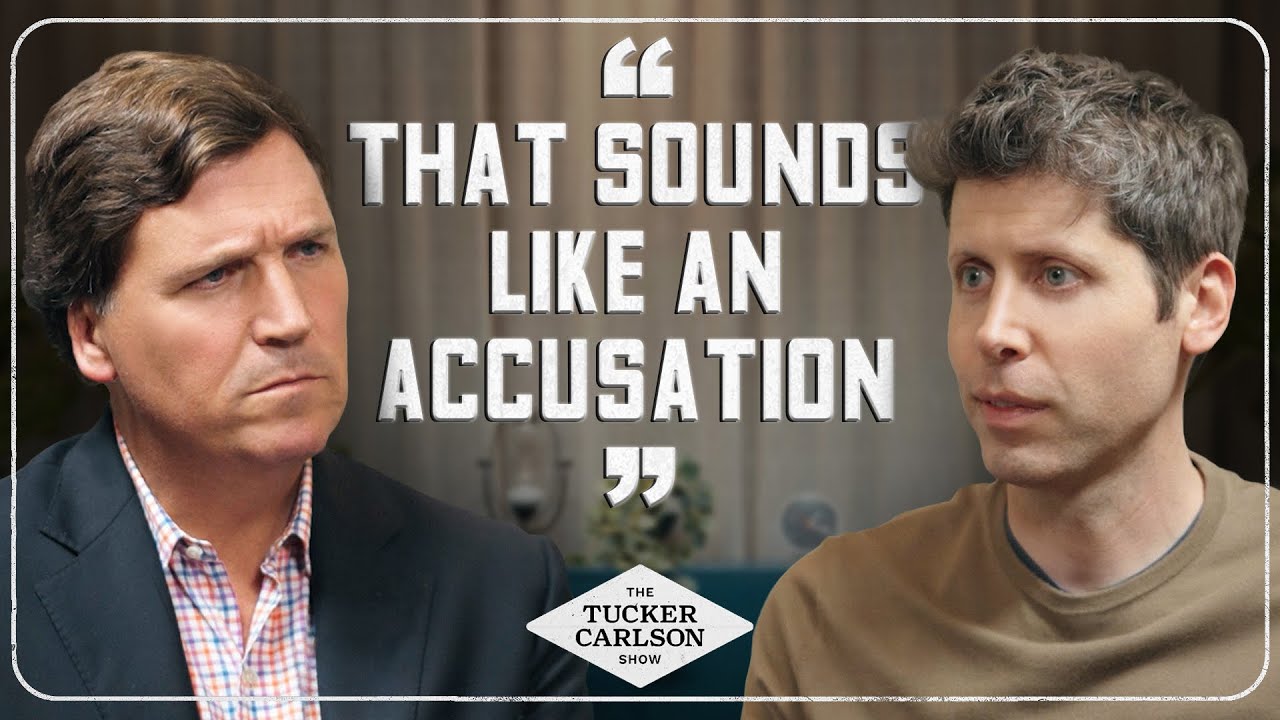 , "It looks like a suicide to me."
Carlson disagreed, "No, he was definitely murdered."
Altman foe Elon Musk told Joe Rogan, "All signs point to it being a murder."
According to Musk, Altman stole trade secrets from his own AI company xAI and he thinks Altman was involved in Malaji's death, the report said.
Malaji's mother agrees, saying her son was marked for death by a "team of assassins" after he blew the whistle on Altman's business.
---
legal suppression subpoena
He added that another reason he decided to speak out now was a recent LinkedIn post from Chris Lehane, OpenAI’s head of global affairs, describing the company as having “worked to improve” SB 53—a characterization Calvin said felt deeply at odds with his experience over the past few months.
Encode was founded by Sneha Revanur, who launched the organization in 2020 when she was 15 years old. “She is not a full-time employee yet because she’s still in college,” said Sunny Gandhi, Encode’s vice president of political affairs. “It’s terrifying to have a half a trillion dollar company come after you,” Gandhi said.
---
---
yt 1 26
omg press suppress legal suppress astro pacs lehane
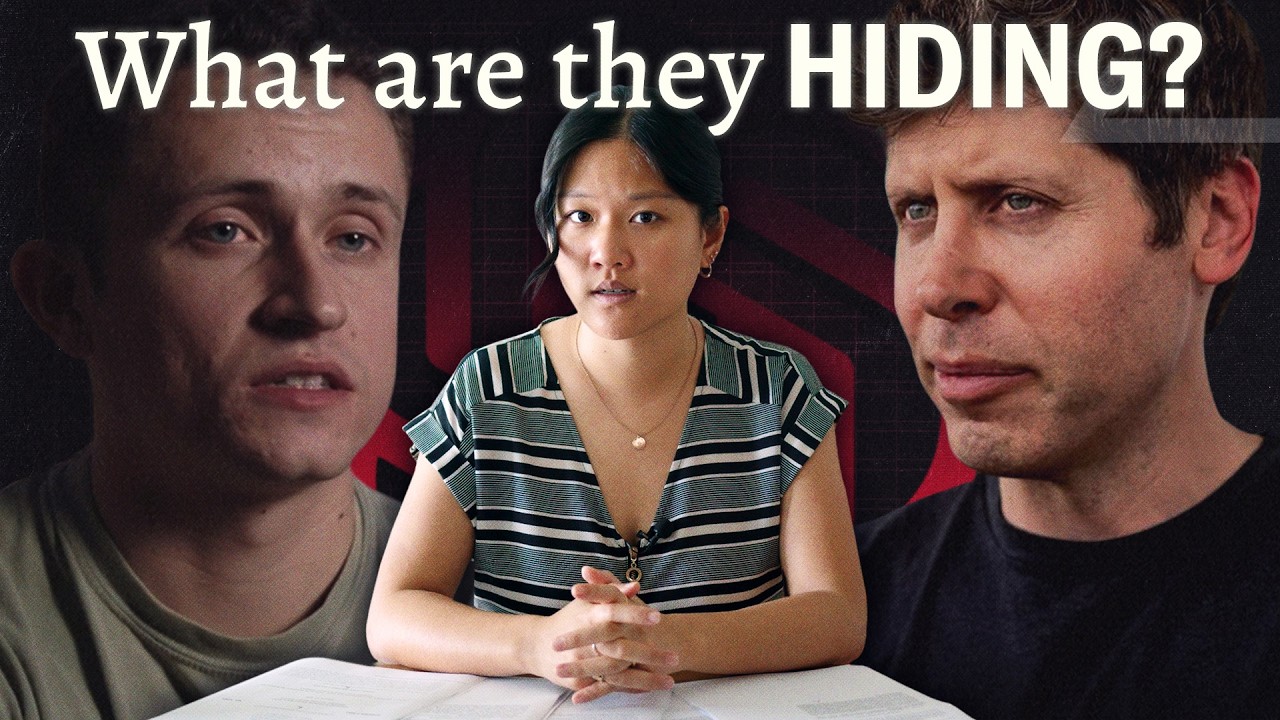
397,988 views Jan 26, 2026
When OpenAI sent someone to Tyler Johnston's house, they wanted every text and email he had on the company.Tyler runs an AI watchdog, and he's just one of the people getting subpoenaed.This is just the beginning of the AI industry's aggressive new political strategy. ----- More Perfect Union is an Emmy-winning, nonprofit newsroom whose mission is to build power for working people.
...(Host) Tyler Johnston runs a small AI watchdog.
0:12
Last summer, he was out when he received an unusual text from his roommate.
0:17
(Tyler) “There's someone at the door with documents for you.”
0:19
(Karen) It was a man with subpoenas from OpenAI, the maker of ChatGPT.
0:23
(Tyler) They were asking for every former employee that we had spoken to and what we said to them,
0:27
every congressional office that we spoke to, every potential investor that we spoke to.
0:32
(Karen) Tyler is just one of many advocates suddenly being targeted.
0:36
As public demands to regulate the AI industry have escalated —
0:39
(Reporter) AI could put millions of Americans out of work.
0:41
(Reporter) — Concerns around safety for kids.
0:44
(Reporter) Customers could see their bills increased by 20 bucks each month.
0:47
(Reporter) AI clips of fake reports even reaching the Oval Office.
0:51
(Karen) its biggest players are going to political war.
0:54
(Alex Bores) They started texting my constituents.
0:57
(Rebecca) Google was involved, Meta was involved, OpenAI was involved.
1:00
The AI industry broadly is ready to play hardball.
1:03
(Karen) So I started investigating their tactics.
1:06
I found an aggressive playbook trying to silence critics, kill
1:10
legislation, and remake government in their interest.
1:14
I wanted to know: what are AI companies so afraid of?
1:18
They can't have any flies in the ointment, which also means no regulation and no guardrails.
1:22
(Karen) And what does it mean for the rest of us if they get what they want?
1:30
When OpenAI subpoenaed Tyler,
1:32
it tucked in an expansive demand that hinted at its real agenda.
1:37
(Tyler) They wanted every single document and text message and email
1:41
that we had that in any way related to OpenAI's restructuring.
1:45
(Karen) Founded as a nonprofit by Elon Musk and Sam Altman,
1:48
OpenAI had for years been raising billions of dollars
1:52
from investors through an internal for-profit arm.
1:55
Then, the nonprofit board attempted to fire Sam Altman,
1:58
and investors panicked that they could lose all their money.
2:02
(Catherine Bracy) In the wake of that, Sam Altman made some promises to his investors
2:05
that they would remove the power and control of the nonprofit from the for-profit entity.
2:11
(Karen) But many advocates, including Tyler and Catherine, stood in the way.
2:16
(Tyler) We released an open letter.
2:17
This was an open letter that was asking seven relatively simple questions, not opposing the restructuring
2:22
in any way, but asking for more transparency about what their plans were.
2:26
(Karen) But failure to restructure could force OpenAI
2:28
to give up $20 billion from its investors.
2:32
The company turned its influence operations into high gear
2:36
under the leadership of a man named Chris Lehane.
2:39
Whoever ends up winning on that ends up building the AI rails
2:43
for the world. Like, that is a bit of a zero sum game.
2:48
(Karen) Lehane began his career in Washington, earning the nickname
2:51
‘Master of Disaster’ in part for helping the Clintons navigate the Monica Lewinsky scandal.
2:57
He then pivoted to Silicon Valley, working at Airbnb and with the crypto industry.
3:02
(Tyler) I think that OpenAI brought him on because they knew that they needed someone
3:06
who was willing to be as fierce as possible.
3:09
(Karen) Lehane stacked his team with former staffers and confidants of Gavin
3:13
Newsom, Bill de Blasio and Kamala Harris.
3:16
OpenAI hired a lobbying firm run by Republican operative
3:19
Jeff Miller, who has deep ties to President Trump.
3:22
It launched new philanthropic efforts, underscored its economic importance to California
3:28
and threatened to leave the state if the restructuring was blocked.
3:32
With Elon Musk also suing OpenAI for abandoning its mission,
3:35
the company began to accuse its critics of being his puppets.
3:39
They were essentially implying
3:43
that we were a front for their competitors.
3:47
(Karen) The aggressive tactics paid off.
3:49
The subpoenas
3:50
also revealed that this is just the beginning.
3:54
I would have been happy to swear to the court that we are not funded by Elon Musk.
Here’s what that means: We report on the real struggles and challenges of the working class from a working-class perspective. We attempt to connect those problems to potential solutions. We report on the abuses and wrongdoing of corporate power. And we seek to hold accountable the ultra-rich who have too much power over America’s political and economic systems. To support our independent journalism, subscribe, donate, and follow our other pages through the links below:
- Help fund our reporting: https://secure.actblue.com/donate/mpu...
- Substack: https://substack.perfectunion.us/
- TikTok:
 / moreperfectunion
- Twitter:
 / moreperfectus
- Bluesky: https://bsky.app/profile/moreperfectu...
- Facebook:
 / moreperfectus
- Instagram:
 / perfectunion
- Threads: https://www.threads.net/@perfectunion
- Website: https://www.perfectunion.us
---
---
verge
openAI’s co-founder and longtime president, Greg Brockman, didn’t just make a run-of-the-mill donation to the main pro-Trump super PAC — together, he and his wife Anna’s September 2025 donations equaled the largest of them all, totaling $25 million to “MAGA Inc.,” per a recent filing. The Brockmans’ donations made up nearly one-fourth of the six-month fundraising cycle.
It’s the latest in a string of examples of tech executives cozying up to President Trump’s administration, happening as the administration pushes to aggressively back the AI industry and defang state-level regulations that companies like OpenAI have largely opposed. OpenAI did not immediately respond to a request for comment.
Brockman’s multimillion-dollar donation isn’t the only example of him spending big, under his own name, on lobbying efforts that have their sights set on dismantling potential AI industry regulation. The pro-AI super PAC “Leading the Future,” of which Brockman is a significant backer, has bought ads targeting New York State Assemblymember Alex Bores — a cosponsor of New York’s RAISE Act, which was watered down at the last minute after coordinated lobbying efforts.
Though news of the Brockmans’ donations first broke earlier this month, it’s seen a resurgence in online discussion after the recent death of Alex Pretti in Minneapolis, where federal officers have fatally shot two people during an anti-immigrant crackdown. Tech workers from across the industry, including multiple employees at OpenAI, have signed a letter calling for their CEOs to cancel all contracts with Immigration and Customs Enforcement (ICE) and publicly condemn the department’s actions. “When Trump threatened to send the national guard to San Francisco in October, tech industry leaders called the White House,” the petition’s website states. “It worked: Trump backed down. Today we’re calling on our CEOs to pick up the phone again.”
However, since Trump’s inauguration, tech leader after tech leader has donated to his inauguration fund, flocked to Mar-a-Lago to meet with him, or attended White House dinners by his side. In return, they’ve gotten an administration eager to roll back consumer protections and tech regulation. Trump’s AI Action Plan resurrected a failed Republican attempt to bar states from passing AI regulations, to tech leaders’ delight. The new provision states that “AI is far too important to smother in bureaucracy at this early stage” and that the government “should not allow AI-related Federal funding to be directed toward states with burdensome AI regulations that waste these funds,” though it should also “not interfere with states’ rights to pass prudent laws that are not unduly restrictive to innovation.” Targets of the moratorium include SB 53, the landmark AI transparency bill California Gov. Gavin Newsom signed in September despite many tech companies lobbying against it, including OpenAI.
In 2019, Brockman co-wrote a blog post about how hard it is to “change powerful systems … once they’ve been deployed,” and that it’s “important to address AGI’s safety and policy risks before it is created.” Six years later, his posts have shifted in tone, highlighting the importance of “approach[ing] emerging technology with a growth-focused mindset.” In a New Year’s Eve post on X, Brockman wrote that “this year, my wife Anna and I started getting involved politically, including through political contributions, reflecting support for policies that advance American innovation and constructive dialogue between government and the technology sector.” He added that “it’s been great to see the president’s and his administration’s willingness to engage directly with the AI community.”
---
---
GUK
ON 30 November 2022, OpenAI CEO Sam Altman tweeted the following, characteristically reserving the use of capital letters for his product’s name: “today we launched ChatGPT. try talking with it here: chat.openai.com”. In a reply to himself immediately below, he added: “language interfaces are going to be a big deal, i think”.
If Altman was aiming for understatement, he succeeded. ChatGPT became the fastest web service to hit 1 million users, but more than that, it fired the starting gun on the AI wars currently consuming big tech. Everything is about to change beyond recognition, we keep being told, though no one can agree on whether that will be for good or ill.
This moment is just one of many skilfully captured in Wall Street Journal reporter Keach Hagey’s biography of Altman, who, like his company, was then virtually unknown outside of the industry. He is a confounding figure throughout the book, which charts his childhood, troubled family life, his first failed startup Loopt, his time running the startup incubator Y Combinator, and the founding of OpenAI.
Altman, short, slight, Jewish and gay, appears not to fit the typical mould of the tech bro. He is known for writing long, earnest essays about the future of humankind, and his reputation was as more of an arch-networker and money-raiser than an introverted coder in a hoodie.
OpenAI, too, was supposed to be different from other tech giants: it was set up as a not-for-profit, committed by its charter to work collaboratively to create AI for humanity’s benefit, and made its code publicly available. Altman would own no shares in it.
He could commit to this, as he said in interviews, because he was already rich – his net worth is said to be around $1.5bn (£1.13bn) – as a result of his previous investments. It was also made possible because of his hyper-connectedness: as Hagey tells it, Altman met his software engineer husband Oliver Mulherin in the hot tub of PayPal and Palantir co-founder Peter Thiel at 3am, when Altman, 29, was already a CEO, and Mulherin was a 21-year-old student.
Thiel was a significant mentor to Altman, but not nearly so central to the story of OpenAI as another notorious Silicon Valley figure – Elon Musk. The Tesla and SpaceX owner was an initial co-founder and major donor to the not-for-profit version of OpenAI, even supplying its office space in its early years.
That relationship has soured into mutual antipathy – Musk is both suing OpenAI and offering (somewhat insincerely) to buy it – as Altman radically altered the company’s course. First, its commitment to releasing code publicly was ditched. Then, struggling to raise funds, it launched a for-profit subsidiary. Soon, both its staff and board worried the vision of AI for humanity was being lost amid a rush to create widely used and lucrative products.
This leads to the book’s most dramatic sections, describing how OpenAI’s not-for-profit board attempted an audacious ousting of Altman as CEO, only for more than 700 of the company’s 770 engineers to threaten to resign if he was not reinstated. Within five days, Altman was back, more powerful than ever.
OpenAI has been toying with becoming a purely private company. And Altman turns out to be less of an anomaly in Silicon Valley than he once seemed. Like its other titans, he seems to be prepping for a potential doomsday scenario, with ranch land and remote properties. He is set to take stock in OpenAI after all. He even appears to share Peter Thiel’s supposed interest in the potential for transfusions of young blood to slow down ageing.
The Optimist serves to remind us that however unprecedented the consequences of AI models might be, the story of their development is a profoundly human one. Altman is the great enigma at its core, seemingly acting with the best of intentions, but also regularly accused of being a skilled and devious manipulator.
For students of the lives of big tech’s other founders, a puzzling question remains: in a world of 8 billion human beings, why do the stories of the people wreaking such huge change in our world end up sounding so eerily alike?
---
https://en.wikipedia.org/wiki/Sam_Altman
samuel H. Altman (; born April 22, 1985) is an American entrepreneur, investor, programmer, and blogger.[1] He is the CEO of OpenAI and the former president of Y Combinator.[2][3]^
Early life and education[
Altman grew up in St. Louis, Missouri; his mother is a dermatologist. He received his first computer at the age of 8.[4] He was raised Jewish.[5] He attended John Burroughs School for high school and studied computer science at Stanford University until dropping out in 2005.[6] In 2017, he received an honorary degree from the University of Waterloo.[7] Altman is gay, and has been out since his youth.[8]^
Career[
Loopt[
In 2005, at age 19,[9] Altman co-founded and became CEO of Loopt,[10] a location-based social networking mobile application. After raising more than $30M in venture capital, Loopt was shut down in 2012 after failing to get traction. It was acquired by the Green Dot Corporation for $43.4 million.[11][12]^
Y Combinator[
Altman began as a part-time partner at Y Combinator in 2011.[13] In February 2014, Altman was named president of Y Combinator by its cofounder Paul Graham.[14][15] His first batch of investments included Loopt. In a 2014 blog post, Altman said that the total valuation of Y Combinator companies had surpassed $65 billion, including well-known companies like Airbnb, Dropbox, Zenefits and Stripe.[16] In September 2016, Altman announced that he would become president of YC Group, which included Y Combinator and other units.[17]^
Altman said that he hoped to expand Y Combinator to fund 1,000 new companies per year. He also tried to expand the types of companies funded by YC, especially 'hard technology' companies.[18]^
In October 2015, Altman announced YC Continuity, a $700 million growth-stage equity fund that invests in YC companies.[19] Also in October 2015, Altman announced Y Combinator Research, a non-profit research lab, and donated $10 million to the group.[20] YC Research has thus far announced research on basic income, the future of computing, education, and building new cities.[21]^
Altman was named the top investor under 30 by Forbes in 2015,[22] one of the "Best Young Entrepreneurs in Technology" by BusinessWeek in 2008[23] and listed as one of the five most interesting startup founders between 1979 and 2009 by his colleague Paul Graham.[24]^
In March 2019, YC announced Altman's transitioning into a Chairman position to focus more on OpenAI.[25] This decision came shortly after YC announced it would be moving its headquarters to San Francisco.[26] Today, he is no longer affiliated with YC.
Angel investing[
He is an investor in many companies, including Airbnb, Stripe, Reddit, Asana, Pinterest, Teespring, Zenefits, FarmLogs, True North, Shoptiques, Instacart, Optimizely, Verbling, Soylent, Reserve, Vicarious, Clever, Notable PDF (now Kami)[27][28] and Change.org.[]^
He was the CEO of Reddit for eight days in 2014 after CEO Yishan Wong resigned.[29] He announced the return of Steve Huffman as CEO on July 10, 2015.[30]^
Nuclear energy[
He is chairman of the board for Helion and Oklo, two nuclear energy companies. He has said that nuclear energy is one of the most important areas of technological development.[31]^
OpenAI[
Altman is the CEO of OpenAI. OpenAI is a for profit research company whose goal is to advance digital intelligence in a way that is most likely to benefit humanity as a whole, rather than cause harm.[32]^
Philanthropy[
During the COVID-19 pandemic Altman helped fund and create Project Covalence which aimed to help researchers rapidly launch clinical trials in partnership with TrialSpark a clinical trial startup.[33][34]^
Politics[
In 2019 Altman held a fundraiser at his house in San Francisco for Democratic presidential candidate Andrew Yang.[35]^
In May 2020 Altman donated $250k to American Bridge 21st century, a Super-PAC supporting Democratic presidential candidate Joe Biden.[36][37]^
References
...
---
Artificial Intelligence
Hallucinatory A.I.’s Benefits
A.I.’s Boom Towns
A Looming Slowdown?
Tech Insiders Fall for Claude
OpenAI Courts Trump With Vision for ‘A.I. in America’
The maker of ChatGPT hopes to spur investment from the Middle East and avoid strict regulations on the development of new technologies.
/The New York Times
By Cade Metz and Cecilia Kang
Cade Metz reported from San Francisco, and Cecilia Kang from Washington.
Jan. 13, 2025
In December, Sam Altman, OpenAI’s chief executive, donated $1 million to President-elect Donald J. Trump’s inaugural fund, joining a number of other tech executives who are working to improve their relationships with Mr. Trump.
Now, he and his company are laying out their vision for the development of artificial intelligence in the United States, hoping to shape how the next presidential administration handles this increasingly important technology.
On Monday, OpenAI released what it calls its economic blueprint for “A.I. in America,” suggesting ways that policymakers can spur development of A.I. in the United States, minimize the risks posed by the technology and maintain a lead over China.
“We believe America needs to act now to maximize A.I.’s possibilities while minimizing its harms,” Chris Lehane, OpenAI’s head of global policy, wrote in the 15-page document. “We want to work with policymakers to ensure that A.I.’s benefits are shared responsibly and equitably.”
OpenAI launched the A.I. boom in late 2022 with the release of the online chatbot ChatGPT. The company continues to lead the field but faces countless competitors. One of its biggest rivals, xAI, is led by Elon Musk, who has developed a close relationship with Mr. Trump.
Many A.I. companies and independent experts believe that technologies like ChatGPT can increase economic growth by accelerating work and research in areas as far-flung as computer programming, medicine, education and finance. But continued development of these technologies requires enormous amounts of raw computing power and electricity.
OpenAI and its rivals are racing to expand the pool of giant computer data centers needed to build and operate their A.I. systems, which will require hundreds of billions of dollars in new investment. With its new economic blueprint, OpenAI hopes to encourage government policies that can facilitate that additional infrastructure.
Most notably, the company has called on policymakers to allow significant investment in American A.I. projects by investors in the Middle East, though the Biden administration has been wary of such investment. OpenAI argues that if countries like the United Arab Emirates and Saudi Arabia do not invest in U.S. infrastructure, their money will flow to China instead.
“Are those countries going to be building on U.S. rails or are they going to be building on C.C.P. rails?” Mr. Lehane said in an interview, referring to the Chinese Communist Party. He described nations like the Emirates and Saudi Arabia not as allies but more as “swing states” that will choose the United States or China for A.I. investments.
OpenAI has also asked the government to take a light approach when creating regulations meant to ensure the safety and security of technologies built by OpenAI and its American rivals.
(The New York Times has sued OpenAI and its partner, Microsoft, accusing them of copyright infringement of news content related to A.I. systems. OpenAI and Microsoft have denied those claims.)
Last year, California lawmakers tried and failed to pass a bill that would impose restrictions on tech companies building A.I. systems. OpenAI executives argued that the federal government, not states, should control regulations related to the safety and security of A.I. development.
“That would just create real dissonance, both on a national security and economic competitiveness front,” Mr. Lehane said.
Mr. Altman will begin a charm offensive with an event on Jan. 30 in Washington, where he will discuss the future of A.I. development with lawmakers, economists and Trump administration officials and demonstrate new OpenAI technology that he believes will show the economic power of A.I.
Cade Metz writes about artificial intelligence, driverless cars, robotics, virtual reality and other emerging areas of technology. More about Cade Metz
Cecilia Kang reports on technology and regulatory policy and is based in Washington D.C. She has written about technology for over two decades. More about Cecilia Kang
A version of this article appears in print on Jan. 14, 2025, Section B, Page 3 of the New York edition with the headline: OpenAI Puts Vision for ‘A.I. In America’ To Trump Team.
---
GGL 1 25
The Economic Times
Trump inauguration: Google, Meta, Tesla, Apple and these top tech CEOs to attend US President-elect sweari
10 hours ago
Americans For Tax Fairness
Big Firms & Billionaires Curry Favor With Trump By Giving Millions For His Inauguration Festivities
5 hours ago
The New York Times
OpenAI Courts Trump With Vision for ‘A.I. in America’
3 days ago
Silicon UK
OpenAI’s Altman Donates $1m To Trump Inauguration
3 days ago
More news
OpenAI's Sam Altman to Donate $1 Million to Trump's ...
The New York Times
https://www.nytimes.com › 2024/12/13 › technology
Dec 13, 2024 — OpenAI said on Friday that its chief executive, Sam Altman, was planning to donate $1 million to President-elect Donald J. Trump's inaugural fund.
OpenAI, Meta, Uber CEOs to Attend Trump Inauguration ...
Bloomberg.com
https://www.bloomberg.com › news › articles › openai-...
6 days ago — Several prominent tech leaders are planning to attend Donald Trump's inauguration this month, the latest sign that the industry is trying to ...
OpenAI's Altman will donate $1 million to Trump's ...
AP News
https://apnews.com › article › sam-altman-donald-trum...
Dec 13, 2024 — OpenAI CEO Sam Altman is planning to make a $1 million personal donation to President-Elect Donald Trump's inauguration fund, ...
People also ask
Why was Sam Altman kicked out of OpenAI?
When did Sam Altman join OpenAI?
Is OpenAI actually AI?
Feedback
OpenAI Courts Trump With Vision for 'A.I. in America'
The New York Times
https://www.nytimes.com › openai-economic-blueprint
3 days ago — The maker of ChatGPT hopes to spur investment from the Middle East and avoid strict regulations on the development of new technologies.
Mark Zuckerberg, Sam Altman choose Trump inauguration ...
New York Post
https://nypost.com › 2025/01/14 › business › mark-zuc...
2 days ago — The Swiss forum kicks off on the same day the 47th president will be sworn in, Jan. 20, and regulars including Meta's Mark Zuckerberg, ...
Bezos, Zuckerberg and Altman donate to Trump's ...
NPR
https://www.npr.org › 2024/12/13 › nx-s1-5227874 › t...
Dec 13, 2024 — OpenAI CEO Sam Altman intends to make a $1 million personal donation to Trump's inauguration fund, the company confirmed to NPR on Friday.
---