seastead libtrd paradise
---
2ND 5 25 TRUMP FREEDOM CITIES, INCL LAND BASED
no merri
see PROSPERA NETWORK STATE
SEE NZ LIBTARD PREP
starbase musk texas?
PATRI FRIEDMAN
GHISELLE MAXWELL BEN BLACK EPSTEIN
-=-=
ca forever
gil bk hired gavin and kamala pol op; 2024 prop?
andrew isker xian
...
gil bk
a lightly repackaged version of Yarvin’s “patchwork” idea for replacing democracies with corporate-controlled governments. All of this had deep roots in decades of extreme libertarian and accelerationist thinking, and other tech figures had already begun to float similar trial balloons.
In May 2013, Google cofounder Larry Page suggested carving out part of the world as a zone where tech companies could operate without regulations. “There are many exciting things you could do that are illegal or not allowed by regulation… but maybe we can set aside part of the world,” he said during a question-and-answer session at a Google conference.
(In a 2009 TED Talk, Stanford economist Paul Romer suggested the creation of “charter cities”—experimental urban zones in developing countries—as a way to stimulate economic growth and alleviate poverty. Critics called it “colonialism” and Yarvin called Romer a “plagiarist.”) Just a few days before Srinivasan’s speech, Marc Andreessen had predicted an explosion of new countries in the twenty-first century.
---
1997 BK SOV IND
E. Glen Weyl and Jaron Lanier criticized in 2022 its predictions about Fujimori's self-coup, cocaine traffic in the United States, bankrupt Canada, right-wing coups, cryptocurrencies and income redistribution. They point the processes predicted by the book are not unavoidable and point to Thiel, Sebastian Kurz and Jacob Rees-Mogg helping accelerate the power of the state to provoke a reaction enabling its collapse.[13]
---
- Wikipedia
https://en.wikipedia.org › wiki › OpenGov
OpenGov - Wikipedia
OpenGov, which is headquartered in San Francisco, [3] was founded in 2012 by Nate Levine, Dakin Sloss, Joe Lonsdale, and Zachary Bookman in response to the 2008 financial crisis. [4] The company's founders and several advisors met while working with California Common Sense, a non-profit non-partisan organization, which advocates for open data and open government principles. The group founded ...

The Cicero Institute
https://ciceroinstitute.org › people › joe-lonsdale
Joe Lonsdale - Cicero Institute
Joe Lonsdale is an American entrepreneur and technology investor; he founded Palantir, Addepar, OpenGov and other companies, and is a Partner at 8VC, his venture capital firm. Along with friends and colleagues, he is building the Cicero Institute to help policymakers and entrepreneurs work together on
---
mpu 6 26 mpu
Peter Thiel's Plan To Replace Democracy (And Profit Off What Comes Next)
milton grandson 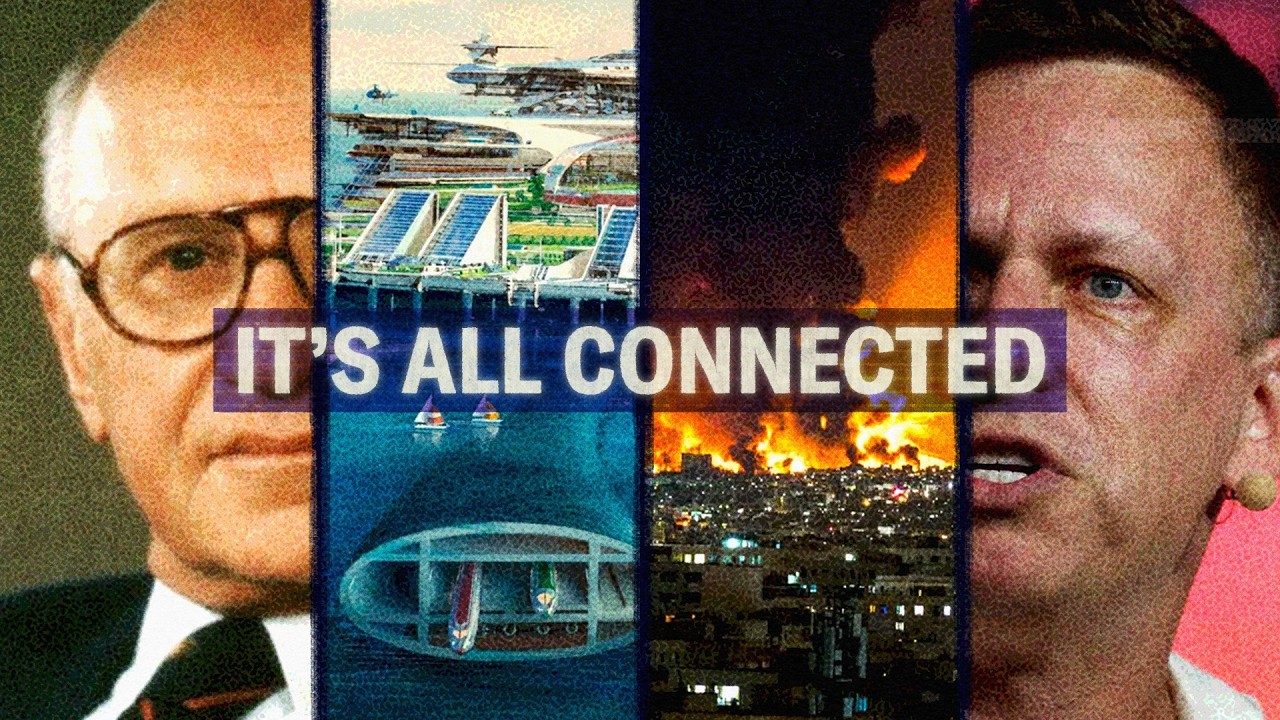
lonsdale
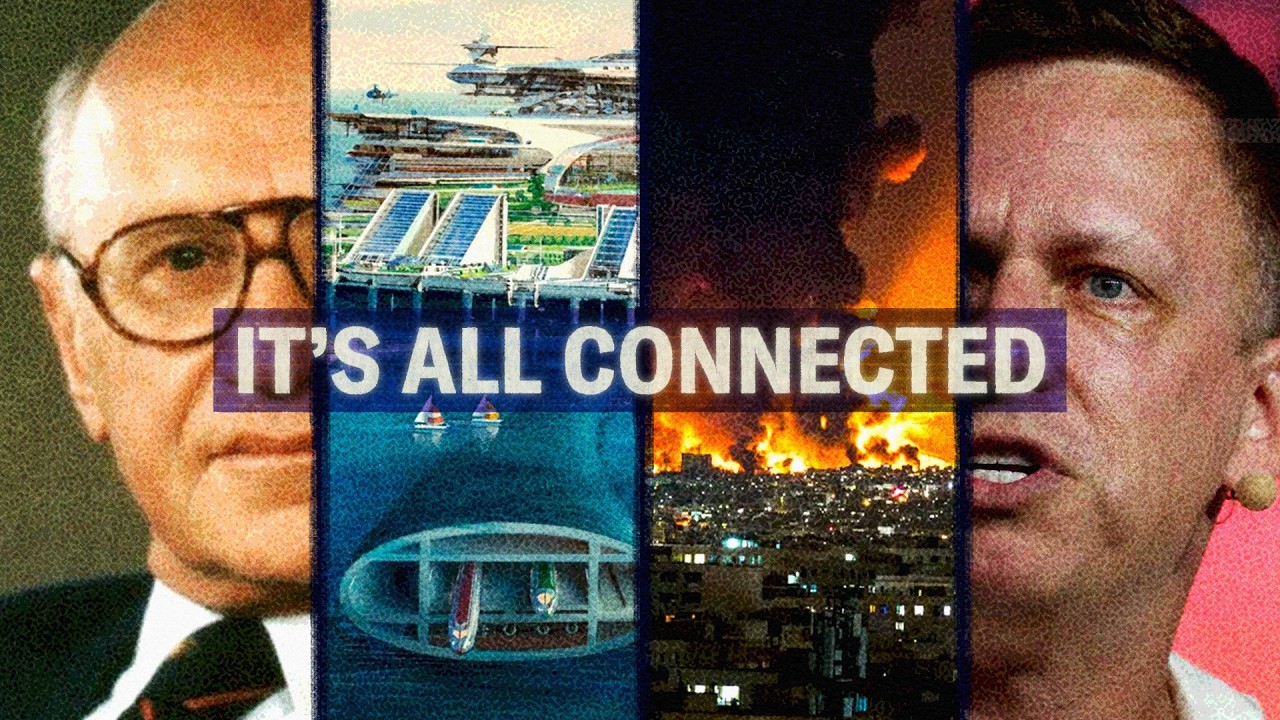
gil duran: 9
In 1997, there was a book that came out called “The Sovereign Individual.”
3:03
It argued that in the 21st century, two technologies would result basically in the overthrow of democracy
3:11
and the demise of nations like the United States.
3:14
Cyber currency, which we would call crypto today.
3:17
And the other one was advanced automation that would create a world without jobs,
3:21
and that wealthy individuals who were savvy investors could profit from this coming doom
3:27
and prepare for it by making the right investments.
3:30
This book had a major impact on Peter Thiel.
3:33
And of course, it influenced the people Thiel was paying.
3:37
Joe Lansdale got to work.
3:39
He started a nonprofit, California Common Sense , allegedly dedicated to transparency and government
3:44
spending, so that voters could make a difference if they found things they were unhappy with.
3:48
On the surface, that sounds great, but two founders of that nonprofit started a for-profit:
3:53
OpenGOV.
3:54
OpenGOV is a software service for government agencies to manage data.
3:57
The idea of replacing democratic processes in the hands of all of us
GHIS MAXWELL!
4:29
But the think tanks would herald a few successful versions of their privatization plan.
4:34
Like Sandy Springs, Georgia, famously the first city in America
4:38
to privatize nearly all government services.
4:41
It was the darling of the libertarian press.
4:43
Everything for-profit, nothing public.
4:46
And a consulting firm making a little cash off the taxpayers at every juncture.
4:49
Those extra taxes for corporate profit started adding up, though.
4:54
Eventually, Sandy Springs unprivatized
4:56
saving taxpayers millions of dollars a year.
4:59
There were also nascent communities focused on Christian values
5:03
that the network state media heralds.
5:05
Battle Ground, Washington,
5:06
where a data center billionaire is buying up all the property to own the town,
5:11
the mayor is on his payroll,
5:12
and Highland Rim, a series of developments in Appalachia
5:16
run by the investment firm New Founding.
5:18
And that's not even including the California Forever Project,
5:21
a proposed tech city in Solano County
5:24
funded by Marc Andreessen, Reid Hoffman, Sam Altman and other billionaires.
5:29
But what if this was never really about these little mini governments?
5:33
Here's Peter Thiel saying the quiet part out loud in 2010.
5:37
[Thiel] Technology is this incredible alternative to politics.
...
7:13
You could pass laws, know, Cicero's in 15 states, we're getting dozens of laws passed.
7:17
And then we're going to teach people that and go to the national level.
7:20
[Gil] Riling people up is definitely part of their game plan.
7:22
That's what we saw in the San Francisco recalls.
7:24
San Francisco had a spike in crime during the pandemic,
7:28
but so did almost every big city in the United States.
7:30
Only in San Francisco,
7:32
which has extremely low crime rates compared to most cities in red states,
7:37
did they create this massive panic using social media and doom influencers
7:43
to convince everybody that everything was worse than it ever been.
7:47
And as Lonsdale got into nonprofits and think tanks,
7:49
Patri Friedman – remember him?
7:51
Milton Friedman's grandson?
7:53
Started his own VC firm with backing from Peter Thiel
7:56
called Pronomos Capital, existing entirely for investing in privatized governments.
8:01
In Honduras, Pronomos invested in the first government
8:04
run entirely by a for-profit corporation: Prospera.
8:08
[Gil] Prospera is this little enclave on the island of Roatan in Honduras
8:13
That claims to be its own little charter city
8:16
that was funded by American venture capitalists and has been touted
8:20
as the flagship project of the network state movement.
...
lonsdale
8:24
But the real flagship project is something bigger:
8:27
the entire United States government.
8:30
It shows in policy.
8:32
Remember the whole thing about taking over Greenland?
8:35
That idea emerged and was celebrated by the people we've been talking about.
8:38
I think having a frontier is very healthy.
8:40
I think part of America being great is that it's is growing and creating more wealth for everyone.
8:44
If the people in Greenland want to be part of us, if we can use those resources
8:48
better and make sure Russia and China don't get advantages in the Arctic.
8:51
The Freedom City as a name didn't really gain momentum,
8:54
but the idea is there, and the influence in the administration is clear.
8:58
Joe Lansdale helped staff up the Trump administration
9:01
and just recently accompanied administration officials to the Philippines
9:04
to christen a new regulatory zone.
9:07
Just last week, we signed a historic deal with the Philippines, 4000 acres
9:11
right next to Subic Bay, where we're going to build a
9:14
first-of-its-kind, AI-native industrial park.
9:17
I was there for a day in the Philippines with everyone.
9:20
They’re, they’re excited, what you guys are doing.
9:22
That sounds a lot like a startup city....
9:37
that this stuff could travel to the White House.
9:42
[Gil] In September 2024, there was a conference at Fort Mason
9:46
in San Francisco called Reboot 2024,
9:49
and its website announced that we are now in a new reality.
9:53
And that Silicon Valley was waking up and about to become this powerful force in politics.
9:58
And the guest speaker was Kevin Roberts of the Heritage Foundation
10:02
who was the guy who had shepherded Project 2025.
10:05
So here you had tech VCs in San Francisco...
kishner
10:20
for maritime prosperity zones,
10:23
districts on American soil with fewer regulations
10:26
for corporations to build ships and reinvigorate the industrial base.
10:30
Then there's the New American Industrial Alliance,
10:33
a tech industry interest group pushing for unrestricted data center growth.
10:37
They were listed as co-sponsors of the Blueprint for America,
10:41
lobbying for prosperity zones on American soil.
10:44
A plan to sell federal and public land to private companies
10:48
to build low regulation, low tax havens for progress.
10:52
Their co-sponsor on the Blueprint was the company behind Prospera in Honduras,
10:56
whose lobbying disclosures show they spent hundreds of thousands of dollars
11:00
pushing for prosperity zones.
11:02
But they also spent big on begging the American government for handouts of your money.
11:08
They've lobbied on refunding the US International Development Financial Corporation,
11:12
a government organization run by Epstein associate Ben Black
11:15
that uses tax dollars to invest in American companies abroad.
11:20
That's privatized foreign aid.
11:22
And they might finally get their way.
11:24
Black went to Honduras and promised investment in real estate and technology there,
11:28
including an investment in La Ceiba, which is slated to be absorbed by Prospera.
11:34
But it's more than just government handouts.
11:37
It's war crimes.
11:38
So we did a master plan.
11:39
And we've developed ways to redevelop Gaza.
11:41
Gaza is President Trump's and saying has amazing potential.
11:44
And this is for the people of Gaza.
11:45
We've developed it into zones.
11:47
[Gil] It was sort of insane to see it all come together in this way.
...11:55
there's always the idea of a new city that they're proposing.
11:59
And it's not clear why we need these new cities.
12:01
You know, Gaza should be rebuilt for for the Palestinians.
12:05
But these guys see it as an opportunity to take the land.
12:09
And so that shows you the degree to which this thinking is starting to imbue everything that they do.
12:15
[Sean] Look at how the people in this fringe movement
12:18
reacted to other invasions.
12:20
In 2019, Mark Lutter, leader of a Peter Thiel funded new city think tank, said that
12:25
overthrowing the Venezuelan government would be an opportunity for these projects.
12:30
And when the invasion did happen, Lutter suggested America
12:33
establish a Florida or Texas style government there.
12:36
He cites America paying for a wholesale development plan after regime change.
12:41
Which is exactly what we're doing in Iran today,
12:44
to the tune of $300 billion.
12:47
Palmer Luckey, Lonsdale and Thiel associate, and founder of AI defense contractor Anduril,
12:52
pictured here in cosplay,
12:54
suggested a privatized city on Guantanamo Bay in Cuba,
12:57
which President Trump also threatened with invasion.
13:01
Again, nobody wants this.
13:02
They know that.
13:03
That's why they hate populism.
13:05
That's why they hate democratic representation
13:07
despite all of this being couched in freedom.
13:10
What they're asking for is to exit entirely from any government structure.
13:14
But that's just not how it works,
13:16
especially when most of these guys are government contractors, and are still wanting
13:20
to have the benefits of our society without having the responsibilities of our society.
13:26
These are people who don't like being told “no.”
13:28
They're angry at the pushback against data centers, that we don't want AI to take over everything,
gil
13:33
that no one supports annihilating a civilization to replace it with one they can profit from.
13:38
People need to understand that the billionaires have become radicalized against democracy,
13:42
and they're in the process of using everything they have to try to destroy it.
13:45
And that's the battle of our moment.
13:47
That's the battle of our time.
...
13:49
It's not too late to push back.
13:51
Public response to data centers works.
13:53
Many of the governance as a service startups are starting their work
13:56
in towns and states where you can still have a voice to stop them.
14:01
The billionaire class wants to turn your home into their playland,
14:05
completely change how everything is run to funnel more wealth to themselves,
14:09
create chaos,
14:11
and then when everything is all f*cked up,
14:13
walk away with their winnings to their own private enclaves,
14:16
all under the guise of fixing a broken government.
14:20
A government that they broke.
14:21
And yeah, sure, the government is broken,
14:24
but it's not because of democracy or lack of corporate privatization.
14:28
It's because of corporate power.
14:30
We need more democracy and less corporate control.
---
---
LONG
All The President's Criminals - YouTube
Is this how Pardons work now?
HONDURAS GIL DURAN STONE AT MAL CRISH SOCIALISM AND SAVE FREEDOM CITY PROSPERA TECH BROS
The Bitchuation Room (with Francesca Fiorentini)
242K subscribers
15,571 views Dec 28, 2025
In his first year in office of his second term, Trump has pardoned a whopping 2,000 criminals who have committed all kinds of horrible acts and are still menaces to society. We’re talking Jan 6 rioters who have abused children, killed people while driving drunk, and threatened other federal workers. Mind you, these are crimes they committed AFTER being pardoned! Surely they can expect new pardons for these crimes any day now, right?
---

The New Republic
https://newrepublic.com › article › 183971 › jd-vance-weird-terrifying-techno-authoritarian-ideas
Where J.D. Vance Gets His Weird, Terrifying Techno-Authoritarian Ideas
Jul 22, 2024Gil Duran is a San Francisco journalist who previously served as editorial page editor of The Sacramento Bee and The San Francisco Examiner.
Share feedback about this site

The Verge
Why tech billionaires want a dictatorship | The Verge
TodayWhy tech billionaires want a 'corporate dictatorship' Guest host Jon Fortt and The Nerd Reich author Gil Duran discuss dark enlightenment and the rise of tech authoritarianism.
---
NERD REICH?
What Is Silicon Valley's 'Nerd Reich,' and Is It Taking Over the US Government? | KQED
Sixty percent of surveyed American adults said they had an unfavorable view of Elon Musk — the billionaire Tesla CEO, who has been intimately involved with the federal government for months through his leadership of the unofficial Department of Government Efficiency.
Since the inauguration of President Donald Trump, Musk’s DOGE has slashed large swaths of federal jobs and cut funding to programs as varied as the U.S. Agency for International Development to energy-saving initiatives for low-income families. And this March poll of 1,000 people by the Marquette Law School is just one indicator that some Americans are tired of wealthy tech figures being involved in the nation’s politics.
“We’re learning a big lesson here, which is that we can have democracy or we can have billionaires, but we can’t have both,” San Francisco journalist Gil Duran said.
KQED Forum’s Mina Kim spoke to Duran, who formerly worked for California politicians like Jerry Brown and Kamala Harris, about the “Silicon Valley tech billionaire politics” that are the focus of hisnewsletter, The Nerd Reich — and what he thinks tech elites might want next.
*This interview has been edited for brevity and clarity.
Before DOGE, there was RAGE
Gil Duran: Curtis Yarvin is a San Francisco software programmer who, in the early 2000s, started blogging under the name “Mencius Moldbug.” And in his blog posts — very internet troll stuff — he laid out these ideas for replacing democracy with tech-controlled dictatorships.
He specifically focused on San Francisco, which he said in his corporate tech dictatorship would be renamed “Frisk Corp.” In Frisk Corp, you would have to swipe in with RFIDchips and be under total surveillance, and give up all of your freedom in exchange for security.

The Broligarchy Pt 1: Chronicles of the PayPal Mafia
The important thing to understand about Curtis Yarvin is that he became a favorite thinker of Peter Thiel, the PayPal Mafia billionairewho founded Palantir and got even richer off of government surveillance. Some people call him Peter Thiel’s house philosopher.
In 2012, [Yarvin] gave a speech in which he said that the government needed to be reformed with something he called RAGE — Retire All Government Employees. And that entailed taking over the federal government, purging the bureaucracy of anybody who’s a Democrat or who believes in democracy, and replacing all federal employees with people who would answer to a CEO-dictator-type of person. Very much mirroring what Elon Musk is doing with DOGE at this current time.
If it weren’t for these billionaires, [Yarvin would] be just an anonymous internet troll. The whole reason this has gone national is because of JD Vance. [And] to understand JD Vance, you have to understand that he is largely a creation of Peter Thiel. At every step of JD’s career, Peter Thiel has been there, funding him.

Predicting the ‘cognitive elite’
Yarvin is largely deriving his ideas from other places.
To really understand this, you have to go back to a 1997 book called The Sovereign Individual, which basically was one of these dark, apocalyptic-style books, and it predicted that in the 21st century, the information age would undermine the existing economy and existing nation-states. Thatthe Information Agewould kill lots of jobs and result in a lot of violence and chaos, and also lead to the rise of a so-called “cognitive elite”: people who are able to become wealthy off of technology and don’t need traditional jobs to survive.
It would be their mission to escape from existing countries using something called cyber currency — basically crypto, which would allow them to evade taxation and evade government authority, and create their own nations that they would rule over in this post-democracy order brought about by the information age.
These ideas sound crazy when you first hear them. They sounded very unhinged to me, and I didn’t pay attention to them at first.
However, you have to understand that these are very wealthy men with very strange and scary ideas. And they seriously believe in them.
[
The GOP vs. the ‘broligarchs’?
I think Trump has, for the most, part right now, been bought off. Trump’s in it for the money — and these guys have plenty of it.
He may not have the ideology, but as long as Elon and these guys are going to spend billions of dollars and create all of these business opportunities for his family, I think he’s all in.
There is a problem, though, because this is becoming very unpopular very quickly. The polls are diving. Elon Musk is becoming one of the most despised men in the country. He’s threatening Social Security. He’s firing veterans. You’ve got Republicans showing up to town halls to yell at their absentee representatives in early 2025.
This is a political disaster in many ways, so I think there will be some political tension between the Republican establishment and these “tech-broligarchs” — because they’re breaking all the rules of politics and don’t really seem to care about the future. And in politics, you’ve really got to care about the next election and the election after. That’s the name of the game.
Silicon Valley’s ‘right wing strain’
I compare it to: this tech authoritarianism is the parasite and MAGA is the host.
[Tech leaders] saw an opportunity, right? It’s a very opportunistic play — and an opportunity to go as far as they can with a candidate who has been able to openly violate the law, and not pay any political consequence for it.
How J.D. Vance Went from Never Trumper to MAGA Warrior
This is not an ideology where the world is a better place for the majority of people. It’s a place where the world is a place for tech billionaires. You don’t make the world a better place by getting rid of Social Security, which is crucial to the survival of millions of Americans.
Malcolm Harris’s [book]*Palo Alto* talks about the right-wing strain through Silicon Valley. There was this idea during the nineties and part of the eighties and 2000s that tech was kind of fun: was going to make our life cool, all these nice products, connecting us, allowing us to buy stuff online.
And for a long time, it seemed nonthreatening. Remember, Google had the “Don’t be evil” slogan and they were kind of paddling around in their Crocs, building playgrounds for their employees and bespoke lunches and free kombucha on tap. There was the harmless vibe that seemed to be from Silicon Valley.
But I think there has always been a certain anti-government lean to a lot of the Silicon Valley movement — this idea that “we’re going to create structures outside of government.” The idea of getting out of authoritarian society, evading bad governments in the future: there were times when these ideas seemed like something people on the left could be into.
However, what’s happened is: these guys became super rich. And as they’ve become super super superrich, they’ve gone far, far, far to the right — and they’re pulling others now with them.
‘Freedom cities’ and governance by tech
All the way back in 2013, [Balaji Srinivasan, chief technology officer of cryptocurrency exchange Coinbase] gave a speech at Y Combinatorin which he basically called for Silicon Valley to secede from the United States and to go start their own country and take all of their wealth and all of the brain power.
He continue[d] to develop these ideas over the next decade, and in 2022, released a book called The Network State — how to start a new country. This book lays out all the reasons why American democracy is an outdated system and why it needs to be replaced by new tech forms of governance. And there are two ways to do that: one is to leave the country by a territory and create your own sovereign state or city. You can do that within a country or by leaving a country. And the other way is to take over existing governments and convert them into tech-controlled governments.
This Tech-Backed Company Tried to Disrupt California’s Housing Crisis. It Couldn’t
My interest in this ideology started with SF politics — this effort by tech bros to take over City Hall, but also by the California Forever Project.
It wasn’t until I read a book by a historian named Quinn Slobodian called, Crack Up Capitalism: Market Radicals and the Dream of a World Without Democracy, that I understood the idea there … for wealthy people to find a way to exit society and create their own sort of utopian countries that they control.
In 2024, Trump had a plan for something he calls the so-called “freedom cities,” which are these 10 new charter cities that would be built on federal land all around the United States. The newspapers have mentioned that Trump plans to “build freedom cities,” but no one has explained what that means: where the idea comes from or why we need them.
I think the “freedom cities” are really anti-freedom cities — a very Orwellian name for what would essentially be a corporate-controlled city.

How does this all end?
A lot of people stayed home [and didn’t vote in the 2024 election.] And I think this is going to wake [Americans] up to the fact that you can’t stay home. We have to realize that there is a group of people who are avidly working against the public good and against the welfare and well-being of the majority.
I don’t think these [tech] guys have fully thought this out. I don’t think they realize — having been in politics myself — what it’s gonna feel like when you see that the majority of people are against you. I do think this ends with tens of millions of Americans taking to the streets on a regular basis to stand against what is an increasingly authoritarian regime in Washington. And I think that it also ends with a bunch of billionaires getting on planes to Moscow at midnight.
I think it’s important to understand it, to learn about it, and to tell others about it … Word of mouth is very important. People listen to their peers, to their friends, to their family members. That’s where a lot of people get their main political knowledge from.
---
---}:
an DN 5 25
An alliance between the far right and Silicon Valley oligarchs has given rise to a form of “end times fascism,” says journalist Naomi Klein, who details in a recent essay co-authored with Astra Taylor how many wealthy elites are preparing for the end of the world even as they contribute to growing inequality, political instability and the climate crisis. Klein says that while billionaires dream of escaping to bunkered enclaves or even to space, President Donald Trump and other right-wing leaders are turning their countries into militarized fortress states to keep out immigrants from abroad and ramp up authoritarian control domestically.
“There’s always an apocalyptic quality to fascism, but fascism of the 1930s and ’40s had a horizon” for a utopian future, says Klein. Today, by contrast, “we’re up against people who are actively betting against the future — not just actively betting against it, but fueling the fires that are burning this world.”
AMY GOODMAN: This is Democracy Now!, democracynow.org, The War and Peace Report. I’m Amy Goodman.
We spend the rest of the hour with award-winning journalist and author Naomi Klein. She has a major new piece out, co-authored with Astra Taylor, for The Guardian newspaper. It’s headlined “The rise of end times fascism.” It looks at the apocalyptic fervor of the far right.
In it, they write, quote, “[T]he most powerful people in the world are preparing for the end of the world, an end they themselves are frenetically accelerating. That is not so far away from the more mass-market vision of fortressed nations that has gripped the [hard] right globally, from Italy to Israel, Australia to the United States: in a time of ceaseless peril, openly supremacist movements in these countries are positioning their relatively wealthy states as armed bunkers,” Naomi Klein writes.
She is also professor of climate justice at the University of British Columbia, founding co-director of the UBC Centre for Climate Justice. Her latest book, Doppelganger: A Trip into the Mirror World.
Naomi, welcome back to Democracy Now! It’s great to have you with us. If you can start off by talking about your piece and what exactly you mean by talking about the end times, fascism?
NAOMI KLEIN: Well, it’s very good to be with you, Amy.
This isn’t the most cheerful piece I’ve ever written, with Astra Taylor, a very close collaborator, founder of the Debt Collective. And we were trying to kind of map what is similar and what is different about the type of far-right politics that we’re seeing today. And I should say, the piece is not only grim. It also looks at what this can mean for a response to this particular form of fascism, because we can’t fight it if we don’t understand it. So, I think a lot of very good scholarship attempting to understand authoritarianism today, whether it’s Trump or figures like Duterte or Modi, have looked at similarities between these far-right figures and, say, Mussolini or Hitler, and have taken a kind of a checklist approach of looking at what is similar to the past, right? And I think there’s a lot of value in that. But the risk of it is that it doesn’t look at what is new and what is particular to our time.
Fascism always is an attempt by the right to resolve a crisis of its own era. Right? So, in the 1930s, they were attempting to resolve, you know, in Germany, the humiliations of the First World War, the impacts of the Great Depression, and to propose a unity in the face of that for the in-group. But our moment is different, and one of the things that makes it different — I mean, if you think about fascism in the 1930s, this is before the atomic bomb. It’s before they understood climate change. And we are in a moment where our elites, whether they admit it or not, do understand that our economic model — and I’ve written books about this and talked about it with you in the past — is at war with life on Earth, right? And they are barreling down this road of more and more extraction of fossil fuels, of all kinds of — you know, basically, anything they can extract from this Earth and turn into energy and money, particularly now with AI, which is a energy and resource hog — water, LNG, critical minerals, all of it.}:
So, we’re trying to understand how this is informing the kind of fascism that we’re seeing, and also we’re trying to understand what unites this kind of strange Frankenstein coalition that Trump represents, where he’s bringing together these — you know, the richest people in the world who have ever existed with many working-class people, so what binds the vision, right?
:{:{And what we cope with in this piece, or what we propose in this piece, is that they all have given up on this world. Like, they all have bought into a kind of apocalyptic fever — right? — whether it’s Elon Musk and Jeff Bezos and their investments in outer space and sort of writing off this planet, whether AI, which is willing to sacrifice this animate world in order to build an artificial world, or whether it’s the more populist MAGA vision of the fortress nation-state — right? — which is thinking, “OK, we know more and more people are going to be coming. }:
We know that disaster is on the horizon.” I’ve listened to a lot of Steve Bannon for — you know, when I was writing Doppelganger, and it’s all very survivalist, right? You know, all of the commercials, pretty much, are selling, you know, gold, because the economy is going to collapse, you know, ready-to-eat meals for 90 days, because you never know what’s going to happen. So, it sees the nation and the in-group as being inside the bunker, and then it’s exiling the out-group to all of these lawless territories that you’ve been covering on the show. So, it’s not the same vision, but what it shares is this apocalyptic fever.}:
And then, of course, all of it is following a similar structure, like narrative structure, to the biblical Rapture. And, of course, you have people who believe in that within the Trump coalition, who are, you know, Christian Zionists, like Mike Huckabee and Pete Hegseth, who believe that the actual end times is coming, and they think it’s all going to go down in Israel. And all of the horror that you report on so well and so committedly on the show, these are all good signs if you believe in the Rapture, right? Because it means that the end is coming, and the faithful are going to be lifted up to a golden city in the sky. So, you know, what we’re looking at is like the religious version of that story, the the fundamentalist religious version of that story, where you literally believe you’re going to be saved and taken up to heaven, but also the secular vision, where your wealth protects you, or your citizenship protects you, and you get your own version of that golden, bunkered city.
:{:{AMY GOODMAN: You mentioned Gaza, and you just came from the Jewish Voice for Peace conference in Baltimore, where several thousand people gathered from around the country. Our latest headline, the Israeli military calling up tens of thousands of reservists as Israel’s security cabinet unanimously approved plans this weekend to expand its assault on Gaza, where Israel has already killed over 52,000 Palestinians — and that’s by far an undercount — in the last 18, 19 months. Israel has killed more than 2,400 Palestinians just since it shattered the ceasefire in March. This comes as Israel’s devastating blockade in food aid has entered its third month. Palestinian health officials say 57 Palestinians have already starved to death.}:
According to UNICEF, more than 9,000 children have been admitted for treatment for acute malnutrition so far this year. And aid groups, like Norwegian Refugee Council, blasting a new Israeli proposal to take control in distribution and put U.S. security contractors in charge. If you can talk, as you so often do, about what’s happening in Gaza and the West Bank and what the centrality of Israel in President Trump and the current U.S. government — although it was also the past, President Biden’s worldview and approach to foreign policy?}:
NAOMI KLEIN: So, I don’t think there is a single answer to understanding what the driving forces are. And this is what we’re trying to get at, is that there’s a kind of an overlap of these different apocalyptic worldviews. Some of them are religious, and some of them are secular, right? So, I think that people who subscribe to this, like, literalist version of the Rapture believe that all of this is good news, in the sense that, according to the story that they believe in, that the Israelites have to return to Greater Israel. Those are the preconditions for the return of the Messiah. They have to rebuild the Third Temple. So you have this convergence of interests between the religious extremists and the Netanyahu government, who are absolutely committed to rebuilding the Third Temple. They really want to do it. They want to destroy Al-Aqsa. This is why so much attention is focused on it.
But then, you know, does Trump believe that? I don’t think Trump believes that. I mean, what he views for Gaza is he sees resources. He sees money. He sees a private, you know, resort.
AMY GOODMAN: Resort.
NAOMI KLEIN: Exactly. But this is something I’ve been saying from the beginning. I think the interests have been fairly consistent in terms of what the end goal is, which is a depopulation of Gaza, pushing Palestinians out, whether through death or whether through forced exile, whether through ethnic cleansing. And under the Biden administration, there was a denial that that was what was going on. And under the Trump administration, it’s all out in the open. So, you know, this is what is going on.
Now, what the reason for that is, I think, differs. But this is what — part of what we’re getting at in the piece, Astra and I, is that there is a confluence of interests in terms of what Israel represents. Some of the supporters of the Trump administration in the tech industry are talking about wanting freedom cities, for instance, these privatized, corporate cities. And they talk about this as tech Zionism. They have a lot of admiration for the idea that Israel was created, they say, you know, from a book, Theodor Herzl’s books. And they said, “Well, why can’t we start our own country, our own private countries? Why do we have to — you know, why do we have to abide by the rules of the nation-state?”
So, I think part of the support for Israel isn’t just our classic understandings either of Jewish Zionism or Christian Zionism, although that’s absolutely going on. It’s also this idea of a very technologically advanced startup country, right? Israel has marketed itself that way. And a lot of these tech companies want to do that in San Francisco. They want to push everybody out who doesn’t agree with them, who’s poor, who have more needs, and create their kind of corporate, privatized utopia. So, you know, I’m not saying this is a coherent agenda. I’m saying that there’s a lot of overlapping stories that follow a similar structure and share similar goals, if that makes sense.
AMY GOODMAN: I mean, yes, I mean, the overall issue, obviously, is hard to make sense of.
NAOMI KLEIN: Mm-hmm, yeah.
AMY GOODMAN: And most Trump’s supporters are neither wealthy nor are they Christian Zionists. So, why are they backing this whole approach?
NAOMI KLEIN: Well, it’s not clear the extent to which they actively back it, but I think that they see a kinship in the ethnostate — right? — because a lot of Trump supporters are becoming increasingly Christian nationalist about the United States. And this has been carefully fostered by figures like Steve Bannon. And so, when they look at Israel, they see a country that is openly an ethnostate that is fortressing itself in a sea of its enemies, you know, and they want to do something similar. And they’re sharing technologies. They’re sharing, you know, legal precedents, tools. So, there’s a — you know, there’s a kinship. And, you know, we’re seeing this now with India with its attacks on Kashmir, following us, you know, using similar techniques that, you know, Israel has used in Gaza. So, there is a kind of a solidarity of the ethnostates. And they are sharing — you know, they’re even trading trinkets of golden pagers and swapping chainsaws. You know, this is something that we — I think, you know, when you’re inside the crucible of it here in the United States under Trump, it’s hard to see the extent to which this is an international project on the right, and they are influencing one another.
AMY GOODMAN: And what does unite them, you know, this whole fortress mentality, is this hatred of immigrants. You have —
NAOMI KLEIN: Yeah.
AMY GOODMAN: — President Trump just saying he doesn’t even know — he’s not a lawyer, so he doesn’t know if he has to uphold the Constitution, he said.
NAOMI KLEIN: Right. I mean, this is what I’m trying to get at about the awareness that we are in an age of consequences, that when you don’t act in the face of the climate crisis for decades, when scientists have been warning you, that more and more of the world becomes uninhabitable, and, lo and behold, people move to try to find safety in the face of wars, in the face of economic deprivation and in the face of ecological disasters.
And so, that fortressing of the nation-state — and this is what I think, you know, Israel’s come to represent, just as a very small nation that is extremely fortressed — right? — whether it’s with the high-tech walls, the Iron Dome. Trump says now, “I want not an Iron Dome, but a golden dome.” Right? That —
AMY GOODMAN: Here.
NAOMI KLEIN: Here. That all of this is, whether it’s stated explicitly or not —
AMY GOODMAN: And a military parade that’ll cost tens of millions —
NAOMI KLEIN: Yeah.
AMY GOODMAN: — of dollars, even as he slices and dices the government, on his birthday, in June.
NAOMI KLEIN: Right. So the pattern is protecting the in-group and exiling and cleansing the out-groups. Right? And so, that, I think, is — you know, if there is support among the MAGA base for Israel, it’s less out of a love for Israel than more out of an identification, like they are doing what we want to do here.
AMY GOODMAN: You write many things in your piece, and I just want to go to one of them. You say — in talking about Musk’s apocalyptic vision, you talk about, and also detailing the end times fascism, this whole issue of the rise of the city state, the corporate city state. I think this is a new concept for many. They’re not going to know what you’re talking about.
NAOMI KLEIN: Yeah.
AMY GOODMAN: In southern Texas, Starbase, just this group of people, who are mainly workers at SpaceX, have just voted to make a city right there?
NAOMI KLEIN: Mm-hmm, yeah. And we’ve had sort of — I mean, the idea of a company town is not entirely new, right? And Disney had Celebration, Florida, and there are lineages to this, right? Colonial lineages to this. You know, I live in Canada, which started as the Hudson’s Bay Company, right? So it was a company before it was a country. So there is some precedent for this.
But I think what this is — I’ve been following this out of the corner of my eye, Amy, because this is where libertarians have been going for a while. There was an — Peter Thiel has been obsessed with this idea. It’s increasingly being called exit, so exiting the nation and just starting your own country, where you can set your own tax level, you can make your own regulations.
AMY GOODMAN: Or not.
NAOMI KLEIN: Or not. And countries — and these little corporate countries will compete with one another to try to attract capital, right? So, in a way, it’s an extension of the free trade zone — right? — where this is, in a way, like a denationalized country within a country. But Trump started to float this in 2023, the idea that he would create 10 freedom cities, on the campaign trail. I don’t think his base much knew what he was talking about. But now you have all these lobbyists who fully intend to take him up on it. And we’re starting to see the beginning of this with this SpaceX city.
AMY GOODMAN: So, you also write about El Salvador’s Terrorism Confinement Center, the notorious prison, CECOT, where so many hundreds of people have been sent from the United States, and at the same time, in the last 24 hours, President Trump saying he wants to reopen the notorious Alcatraz —
NAOMI KLEIN: Yeah.
AMY GOODMAN: — an island in San Francisco. If you can talk about the prison as a model for what Trump wants to put forward, and particularly in relation, as we see motivating so much, to immigrants?
NAOMI KLEIN: Well, this is an incredibly bleak vision. So, repression is always a huge part of any kind of fascist project, right? You need to contain the out-group. You need to disappear the out-group. So this part of it is not new. But I think what is so worrying to me is that Trump was elected promising all kinds of things to his base, right? He promised to eliminate inflation. He promised to bring these great jobs home. He’s not delivering on any of that. So the sadistic part of his project is really all he has to offer, right?
I think one of the most chilling things I’ve ever seen in the United States was Trump sharing that video at his hundred-day rally of just pure sadism, of just looking at prisoners, as entertainment, being shaved, being shackled, being paraded. And he’s not delivering on the price of eggs. And he’s not delivering on the jobs, by the way, because he’s throwing all in— he’s going all in on AI. So the jobs that are coming back seem to be mainly for robots. It’s not actually for his base. And so, this scales up the need for the sadism and these spectacles, right? And I think that that’s what something like Alcatraz represents. He’s a TV producer, first and foremost, right? He’s producing spectacles. And the less he has to offer economically, tangibly, materially, the more he leans on the sadism.
AMY GOODMAN: You write, “The governing ideology of the far right … has become a monstrous, supremacist survivalism. … Our task is to build a movement strong enough to stop them.” What would that movement look like, or what do you see is being formed right now?
NAOMI KLEIN: You know, what we’re doing in this piece by laying out the bleakness of the vision — and when I say “bleakness,” you know, I think it’s beyond something we’ve seen before, because there’s always an apocalyptic quality to fascism, but fascism of the 1930s and '40s had a horizon. Like, after the apocalypse, people were being promised a future, a pastoral, peaceful little piece of land where they could live out their lives, you know? Even though Trump talks about a golden age, there really isn't a future that the base believes in, you know? And this is what I’ve learned by consuming far too much MAGA media, Amy. They envision a future of endless war, right? And this is why they’re bunkering down. This is why they’re buying ready-to-eat meals to last. This is why they’re buying gold and crypto. They think the whole thing is going down. So —
AMY GOODMAN: And why Elon Musk is trying to have so many children, at least 14 at this point. But he’s actually explicitly texted it, saying, “We’ve got to do this much faster,” as he proposed to one of the women he has children with, saying, “We’ve got to start using surrogates.”
NAOMI KLEIN: So, they don’t believe in the future, is the bottom line. And that is — you know, I think I’ve been in a lot of progressive spaces in recent months where we’ve talked about building these very broad coalitions, including with people who we don’t entirely disagree with. I’ve never encountered a potential coalition more broad than the idea of: How about if we believe in this world? How about if we believe in the future? Because we’re up against people who are actively betting against the future, right? Not just actively betting against it —
AMY GOODMAN: Twenty seconds.
NAOMI KLEIN: — but fueling the fires that are burning this world, actively fueling it. So, I think that if we have the courage, really, to look at the bleakness of what they believe in, which is an apocalyptic future, then we have our work cut out for us of being the people who actually believe in this realm, in this world, in the beauty of creation and of each other.
AMY GOODMAN: Naomi Klein, I want to thank you for being with us, award-winning journalist, author, columnist. We’ll link to your piece with Astra Taylor, “The rise of end times fascism.” I’m Amy Goodman. This is Democracy Now!
NOW READ:Trump’s clown car cabinet is driving off a cliff
---
REF
The movement for corporate city states cannot believe its good luck. For years, it has been pushing the extreme notion that wealthy, tax-averse people should up and start their own high-tech fiefdoms, whether new countries on artificial islands in international waters (“seasteading”) or pro-business “freedom cities” such as Próspera, a glorified gated community combined with a wild west med spa on a Honduran island.
Yet despite backing from the heavy-hitter venture capitalists Peter Thiel and Marc Andreessen, their extreme libertarian dreams kept bogging down: it turns out most self-respecting rich people don’t actually want to live on floating oil rigs, even if it means lower taxes, and while Próspera might be nice for a holiday and some body “upgrades”, its extra-national status is currently beingchallenged in court.
Now, all of a sudden, this once-fringe network of corporate secessionists finds itself knocking on open doors at the dead center of global power.
The first sign that fortunes were shifting came in 2023, when a campaigning Donald Trump, seemingly out of nowhere, promised to hold a contest that would lead to the creation of 10 “freedom cities” on federal lands. The trial balloon barely registered at the time, lost in the daily deluge of outrageous claims. Since the new administration took office, however, would-be country starters have been on a lobbying blitz, determined to turn Trump’s pledge into reality.
“The energy in DC is absolutely electric,” Trey Goff, the chief of staff of Próspera, recently enthused after a trip to Capitol Hill. Legislation paving the way for a bevy of corporate city-states should be complete by the end of the year, he claims.
Inspired by the political philosopher Albert Hirschman, figures including Goff, Thiel and the investor and writer Balaji Srinivasan have been championing what they call “exit” – the principle that those with means have the right to walk away from the obligations of citizenship, especially taxes and burdensome regulation. Retooling and rebranding the old ambitions and privileges of empires, they dream of splintering governments and carving up the world into hyper-capitalist, democracy-free havens under the sole control of the supremely wealthy, protected by private mercenaries, serviced by AI robots and financed by cryptocurrencies.
Peter Thiel in Tokyo in 2019. Photograph: Kiyoshi Ota/Bloomberg via Getty Images
One might assume that it is contradictory for Trump, elected on a flag-waving “America first” platform, to lend credence to this vision of sovereign territories ruled over by billionaire god-kings. And much has been made of the colorful flame wars between the Maga mouth-piece Steve Bannon, a proud nationalist and populist, and the Trump-allied billionaires he has attacked as “technofeudalists” who “don’t give a flying fuck about the human being” – let alone the nation state. And conflicts inside Trump’s awkward, jerry-rigged coalition certainly exist, most recently reaching a boiling point over tariffs. Still, the underlying visions might not be as incompatible as they first appear.
The startup country contingent is clearly foreseeing a future marked by shocks, scarcity and collapse. Their high-tech private domains are essentially fortressed escape pods, designed for the select few to take advantage of every possible luxury and opportunity for human optimization, giving them and their children an edge in an increasingly barbarous future. To put it bluntly, the most powerful people in the world are preparing for the end of the world, an end they themselves are frenetically accelerating.
That is not so far away from the more mass-market vision of fortressed nations that has gripped the hard right globally, from Italy to Israel, Australia to the United States: in a time of ceaseless peril, openly supremacist movements in these countries are positioning their relatively wealthy states as armed bunkers. These bunkers are brutal in their determination to expel and imprison unwanted humans (even if that requires indefinite confinement in extra-national penal colonies from Manus Island to Guantánamo Bay) and equally ruthless in their willingness to violently claim the land and resources (water, energy, critical minerals) they deem necessary to weather the coming shocks.
Though it builds on enduring rightwing tendencies ... we simply have not faced such a powerful apocalyptic strain in government before
Interestingly, at a time when previously secular Silicon Valley elites are suddenly finding Jesus, it is noteworthy that both of these visions – the priority-pass corporate state and the mass-market bunker nation – share a great deal in common with the Christian fundamentalist interpretation of the biblical Rapture, when the faithful will supposedly be lifted up to a golden city in heaven, while the damned are left to endure an apocalyptic final battle down here on earth.
If we are to meet our critical moment in history, we need to reckon with the reality that we are not up against adversaries we have seen before. We are up against end times fascism.
Reflecting on his childhood under Mussolini, the novelist and philosopher Umberto Eco observed in a celebrated essay that fascism typically has an “Armageddon complex” – a fixation on vanquishing enemies in a grand final battle. But European fascism of the 1930s and 1940s also had a horizon: a vision for a future golden age after the bloodbath that, for its in-group, would be peaceful, pastoral and purified. Not today.
Alive to our era of genuine existential danger – from climate breakdown to nuclear war to sky-rocketing inequality and unregulated AI – but financially and ideologically committed to deepening those threats, contemporary far-right movements lack any credible vision for a hopeful future. The average voter is offered only remixes of a bygone past, alongside the sadistic pleasures of dominance over an ever-expanding assemblage of dehumanized others.
And so we have the Trump administration’s dedication to releasing its steady stream of real and AI-generated propaganda designed solely for these pornographic purposes. Footage of shackled immigrants being loaded on to deportation flights, set to the sounds of clanking chains and locking cuffs, which the official White House X account labeled “ASMR”, a reference to audio designed to calm the nervous system. Or the same account sharing news of the detention of Mahmoud Khalil, a US permanent resident who was active in Columbia University’s pro-Palestinian encampment, with the gloating words: “SHALOM, MAHMOUD.” Or any number of homeland security secretary Kristi Noem’s sadism-chic photo ops (atop a horse at the US-Mexican border, in front of a crowded prison cell in El Salvador, slinging a machine gun while arresting immigrants in Arizona …).
Kristi Noem speaks during a tour of an El Salvador prison in March. Photograph: Alex Brandon/AP
The governing ideology of the far right in our age of escalating disasters has become a monstrous, supremacist survivalism.
It is terrifying in its wickedness, yes. But it also opens up powerful possibilities for resistance. To bet against the future on this scale – to bank on your bunker – is to betray, on the most basic level, our duties to one another, to the children we love, and to every other life form with whom we share a planetary home. This is a belief system that is genocidal at its core and treasonous to the wonder and beauty of this world. We are convinced that the more people understand the extent to which the right has succumbed to the Armageddon complex, the more they will be willing to fight back, realizing that absolutely everything is now on the line.
Our opponents know full well that we are entering an age of emergency, but have responded by embracing lethal yet self-serving delusions. Having bought into various apartheid fantasies of bunkered safety, they are choosing to let the Earth burn. Our task is to build a wide and deep movement, as spiritual as it is political, strong enough to stop these unhinged traitors. A movement rooted in a steadfast commitment to one another, across our many differences and divides, and to this miraculous, singular planet.
Not so long ago, it was primarily religious fundamentalists who greeted signs of apocalypse with gleeful excitement about the long-awaited Rapture. Trump has handed critical posts to people who subscribe to that fiery orthodoxy, including several Christian Zionists who see Israel’s use of annihilatory violence to expand its territorial footprint not as illegal atrocities but as felicitous evidence that the Holy Land is getting closer to the conditions under which the Messiah will return, and the faithful will get their celestial kingdom.
Mike Huckabee, Trump’s newly confirmed ambassador to Israel, has strong ties to Christian Zionism, as does Pete Hegseth, his secretary of defense. Noem and Russell Vought, the Project 2025 architect who now leads the office of budget and management, are both staunch advocates for Christian nationalism. Even Thiel, who is gay and notorious for his party lifestyle, has been heard musing about the arrival of the antichrist of late (spoiler: he thinks it’s Greta Thunberg, more on that soon).
But you don’t need to be a biblical literalist, or even religious, to be an end times fascist. Today, plenty of powerful secular people have embraced a vision of the future that follows a nearly identical script, one in which the world as we know it collapses under its weight and a chosen few survive and thrive in various kinds of arks, bunkers and gated “freedom cities”. In a 2019 paper titled Left Behind: Future Fetishists, Prepping and the Abandonment of Earth, the communication scholars Sarah T Roberts and Mél Hogan described the longing for a secular Rapture: “In the accelerationist imaginary, the future is not about harm reduction, limits or restoration; rather it is a politics driving toward an endgame.”
Mike Huckabee touring Jewish settlements in East Jerusalem in 2008. Photograph: David Silverman/Getty Images
Elon Musk, who dramatically grew his fortune alongside Thiel at PayPal, embodies this implosive ethos. This is a person who looks up at the wonders of the night sky and apparently sees only opportunities to fill that inky unknown with his own space junk. Though he burnished his reputation warning about the dangers of the climate crisis and AI, he and his so-called “department of government efficiency” (Doge) henchmen now spend their days escalating those same risks (and many others) by slashing not only environmental regulations but entire regulatory agencies, with the apparent end goal of replacing federal workers with chatbots.
Who needs a functioning nation state when outer space – now reportedly Musk’s singular obsession – beckons? For Musk, Mars has become a secular ark, which he claims is key to the survival of human civilization, perhaps via uploaded consciousnesses to an artificial general intelligence. Kim Stanley Robinson, the author of the sci-fi Mars Trilogy that appears to have partially inspired Musk, is blunt about the dangers of the billionaire’s fantasies about colonizing Mars. It is, he says, “just a moral hazard that creates the illusion we can wreck Earth and still be okay. It’s totally not true.”
Much like religious end-timers who long to escape the corporeal realm, Musk’s drive for humanity to become “multiplanetary” is made possible by his inability to appreciate the multispecies splendor of our only home. Evidently uninterested in the vast bounty that surrounds him, or in ensuring Earth can continue buzzing with diversity, he instead deploys his vast fortune to bring about a future that would see a handful of people and robots eke out survival on two barren orbs (a radically depleted Earth and a terraformed Mars). Indeed, in a strange twist on the Old Testament tale, Musk and his fellow tech billionaires, having arrogated god-like powers to themselves, aren’t content to just build the arks. They appear to be doing their best to cause the flood. Today’s rightwing leaders and their rich allies are not just taking advantage of catastrophes, shock-doctrine and disaster-capitalism style, but simultaneously provoking and planning for them.
What of the Maga base, though? Not all are sufficiently faithful to earnestly believe in the Rapture, and most certainly don’t have the cash to buy a spot in a “freedom city” let alone on a rocket ship. Fear not. End times fascism offers the promise of many more affordable arks and bunkers, these ones well within reach for lower-level foot soldiers.
Listen to Steve Bannon’s daily podcast – which bills itself as Maga’s premier media outlet – and you will be barraged with a singular message: the world is going to hell, the infidels are breaching the barricades, and a final battle is coming. Be prepared. The prepper message becomes particularly pronounced when Bannon switches to hawking his advertisers’ products. Buy Birch Gold, Bannon tells his audience, because the over-leveraged US economy is going to crash and you can’t trust the banks. Stock up on ready-to-eat meals from My Patriot Supply. Sharpen your target practice using a laser-guided at-home system. The last thing you would want to do is depend on the government during a disaster, he reminds listeners (left unsaid: especially now that the Doge boys are selling off the government for parts).
End times fascism is a darkly festive fatalism – a final refuge for those who find it easier to celebrate destruction than imagine living without supremacy
Bannon doesn’t only urge his audience to make their own bunkers, of course. He also advances a vision of the United States as a bunker in its own right, one in which Ice agents stalk the streets, workplaces and campuses, disappearing those deemed enemies of US policy and interests. The bunkered nation lies at the heart of the Maga agenda, and of end times fascism. Inside its logic, the first job is to harden national borders and expunge all enemies, foreign and domestic. This ugly work is now well under way, with the Trump administration, enabled by the supreme court, having invoked the Alien Enemies Act to deport hundreds of Venezuelan immigrants to Cecot, the now infamous mega-prison in El Salvador. The facility, which shaves prisoners heads and packs up to 100 people into a single cell, stacked with bare bunks, operates under the civil liberties-destroying “state of exception” first declared over three years ago by the country’s crypto-loving, Christian Zionist prime minister, Nayib Bukele.
Bukele has offered to provide the same fee-for-service system for US citizens the administration would like to drop into a judicial black hole. “I love that,” Trump said recently, when asked about the proposal. No wonder: Cecot is the sick if logical corollary of the “freedom city” fantasy – a zone where everything is for sale and due process does not apply. We should expect much more of this sadism. In a chillingly candid statement, the acting Ice director, Todd Lyons, told the 2025 Border Security Expo that he wanted to see a more “business”-oriented approach to these deportations, “like [Amazon] Prime, but with human beings”.
If policing the boundaries of the bunkered nation is end times fascism’s job one, equally important is job two: for the US government to lay claim to whatever resources its protected citizens might need to get through the tough times ahead. Maybe it’s Panama’s canal. Or Greenland’s fast-melting shipping routes. Or Ukraine’s critical minerals. Or Canada’s fresh water. We should think of this less as old-school imperialism than super-sized prepping, at the level of the national state. Gone are the old colonial fig leaves of spreading democracy or God’s word – when Trump covetously scans the globe, he is stockpiling for civilizational collapse.
This bunker mentality also helps explain JD Vance’s controversial forays into Catholic theology. The vice-president, who owes his political career in no small part to the largess of the premier prepper Thiel, explained to Fox News that, according to the medieval Christian concept of ordo amoris (translated both as “order of love” and “order of charity”), love is not owed to those outside the bunker: “You love your family, and then you love your neighbor, and then you love your community, and then you love your fellow citizens in your own country. And then after that, you can focus and prioritize the rest of the world.” (Or not, as the Trump administration’s foreign policy would indicate.) In other words, we owe nothing to anyone outside our bunker.
Though it builds on enduring rightwing tendencies – justifying hateful exclusions is hardly new under the ethno-nationalist sun – we simply have not faced such a powerful apocalyptic strain in government before. The “end of history” swagger of the post-cold war era is rapidly being supplanted by a conviction we are in the actual end of times. Doge may wrap itself in the banner of economic “efficiency”, and Musk’s underlings may evoke memories of the young, US-trained “Chicago Boys” who designed the economic shock therapy for Augusto Pinochet’s dictatorial regime, but this is not simply the old marriage of neoliberalism and neoconservatism. It’s a new, money-worshiping millenarian mashup that says we need to smash the bureaucracy and replace humans with chatbots in order to cut “waste, fraud and abuse” – and, also, because the bureaucracy is where the Trump-resisting demons hide. This is where the tech bros merge with the TheoBros, a real group of hyper-patriarchal Christian supremacists with ties to Hegseth and others in the Trump administration.
Steve Bannon advances a vision of the United States as a bunker in its own right. Photograph: Chip Somodevilla/Getty Images
As fascism always does, today’s Armageddon complex crosses class lines, bonding billionaires to the Maga base. Thanks to decades of deepening economic stresses, alongside ceaseless and skillful messaging pitting workers against one another, a great many people understandably feel unable to protect themselves from the disintegration that surrounds them (no matter how many months of ready-to-eat meals they buy). But there are emotional compensations on offer: you can cheer the end of affirmative action and DEI, glorify mass deportation, enjoy the denial of gender-affirming care to trans people, villainize educators and health workers who think they know better than you, and applaud the demise of economic and environmental regulations as a way to own the libs. End times fascism is a darkly festive fatalism – a final refuge for those who find it easier to celebrate destruction than imagine living without supremacy.
It’s also a self-reinforcing downward spiral: Trump’s furious attacks on every structure designed to protect the public from diseases, dangerous foods and disasters – even to tell the public when disasters are headed their way – strengthen the case for prepperism at both the high and low ends, all while creating myriad new opportunities for privatization and profiteering by the oligarchs powering this rapid-fire unmaking of the social and regulatory state.
At the dawn of Trump’s first term, the New Yorker investigated a phenomenon that it described as “doomsday prep for the super-rich”. Back then, it was already clear that in Silicon Valley and on Wall Street, the more serious high-end survivalists were hedging against climate disruption and social collapse by buying space in custom-built underground bunkers and building escape homes on high ground in places like Hawaii (where Mark Zuckerberg has downplayed his 5,000 sq ft underground pad as a “little shelter”) and New Zealand (where Thiel purchased nearly 500 acres but found his plan to build a luxury survivalist compound rejected by local authorities in 2022 for being an eyesore).
This millenarianism is bound up with a suite of other Silicon Valley intellectual fads, all premised on an end-times-inflected belief that our planet is headed towards a cataclysm and it’s time to make some hard choices about which parts of humanity can be saved. Transhumanism is one such ideology, encompassing everything from minor human-machine “enhancements” to the quest to upload human intelligence into a still illusory artificial general intelligence. There is also effective altruism and longtermism, both of which skip over redistributive approaches to helping those in need in the here and now in favor of a cost-benefit approach to doing the most good in the long term.
Though they can appear benign at first glance, these ideas are shot through with dangerous racial, ableist and gender biases about which parts of humanity are worth enhancing and saving – and which could be sacrificed for the supposed good of the whole. They also share a marked lack of interest in urgently addressing the underlying drivers of collapse – a responsible and rational goal that a growing cohort of figures now actively shun. Instead of effective altruism the Mar-a-Lago regular Andreessen and others have embraced “effective accelerationism”, or the “deliberate propulsion of technological development” without guardrails.
Meanwhile, even darker philosophies are finding a wider audience, like the neoreactionary pro-monarchy rants of the coder Curtis Yarvin (another one of Thiel’s intellectual touchstones), or the “pro-natalism” movement’s obsession with dramatically increasing the number of “western” babies (a Musk fixation), as well as the exit guru Srinivasan’s vision of a “tech zionist” San Francisco where corporate loyalists and police join forces to politically cleanse the city of liberals to make way for their networked apartheid state.
Marc Andreessen and Balaji Srinivasan speak during a panel discussion about bitcoin in San Francisco in 2014. Photograph: Paul Chinn/San Francisco Chronicle via Getty Images
As the AI scholars Timnit Gebru and Émile P Torres have written, though the methods may be new, this “bundle” of ideological fads “are direct descendants of first-wave eugenics”, which also saw a small subset of humanity making decisions about which parts of the whole were worth continuing and which needed to be phased out, cleared out, or terminated. Until recently, few paid attention. Much like Próspera, where members can already experiment with human-machine mergers such as having their Tesla keys into their hands, these intellectual fads seemed to be the marginal hobby horses of a few Bay Area dilettantes with money and caution to burn. No longer.
Three recent material developments have accelerated end times fascism’s apocalyptic appeal. The first is the climate crisis. While some high-profile figures might still publicly deny or minimize the threat, global elites, whose ocean-front properties and datacenters are intensely vulnerable to rising temperatures and sea levels, are well-versed in the ramifying perils of an ever-heating world. The second is Covid-19: epidemiological models had long predicted the possibility of a pandemic devastating our globally networked world; the actual arrival of one was taken by many powerful people as a sign that we have officially arrived at what US military analysts forecasted as “the Age of Consequences”. No more predictions, it’s going down. The third factor is the rapid advancement and adoption of AI, a set of technologies that have long been associated with sci-fi terrors about machines turning on their makers with ruthless efficiency – fears expressed most forcefully by the same people who are developing these technologies. All of these existential crises are layered on top of escalating tensions between nuclear-armed powers.
None of this should be written off as paranoia. Many of us feel the imminence of breakdown so acutely that we cope by entertaining ourselves with various versions of life in a post-apocalyptic bunker, streaming Apple’s Silo or Hulu’s Paradise. As the UK analyst and editor Richard Seymour reminds us in his recent book, Disaster Nationalism: “The apocalypse is no mere fantasy. We are living in it, after all, from deadly viruses to soil erosion, from economic crisis to geopolitical chaos.”
The forces we are up against have made peace with mass death. They are treasonous to this world and its human and non-human inhabitants
Trump 2.0’s economic project is a Frankenstein’s monster of the industries driving all of these threats – fossil fuels, weapons and resource-ravenous cryptocurrency and AI. Everyone involved in these sectors knows that there is no way to build the artificial mirror world that AI promises to construct without sacrificing this world – these technologies consume too much energy, too many critical minerals, and too much water for the two to coexist in any kind of equilibrium. This month, the former Google executive Eric Schmidt admitted as much, Congress that AI’s “profound” energy needs are projected to triple in the next few years, with much of it coming from fossil fuels, because nuclear can’t come online fast enough. This planet-incinerating level of consumption is necessary, he explained, to enable an intelligence “higher” than humanity, a digital god rising from the ashes of our relinquished world.
And they are worried – just not about the actual threats they are unleashing. What keeps the leaders of these entangled industries up at night is the prospect of a civilizational wake-up call – of serious, internationally coordinated government efforts to rein in their rogue sectors before it’s too late. From the perspective of their ever-expanding bottom lines, the apocalypse is not collapse; it’s regulation.
The fact that their profits are predicated on planetary devastation helps explain why do-gooder discourse among the powerful is giving way to open expressions of disdain for the idea that we owe each other anything by right of our shared humanity. Silicon Valley is done with altruism, effective or otherwise. Meta’s Mark Zuckerberg pines for a culture that celebrates “aggression”. Alex Karp, Thiel’s business partner at the surveillance firm Palantir Technologies, the “losing” “self-flagellation” of those who question American superiority and the benefits of autonomous weapons systems (and, by association, the lucrative military contracts that have made Karp’s vast fortune). Musk informs Joe Rogan that empathy is “the fundamental weakness of western civilization” and he vents, after failing to purchase a supreme court election in Wisconsin: “It increasingly appears that humanity is a biological bootloader for digital superintelligence.” Meaning we humans are nothing but grist for Grok, the AI service he owns. (He did tell us he was “dark Maga” – and he’s not the only one.)
In arid and climate-stressed Spain, one of the groups calling for a moratorium on new datacenters calls itself Tu Nube Seca Mi Río – Spanish for “your cloud is drying my river”. The name is fitting, and not just for Spain.
An unspeakably dismal choice is being made before our eyes and without our consent: machines over humans, inanimate over animate, profits over all else. With stunning speed, the big tech megalomaniacs have quietly rolled back their net-zero pledges and lined up by Trump’s side, hellbent on sacrificing this world’s real and precious resources and creativity at the altar of a vampiric, virtual realm. This is the last great heist, and they are getting ready to ride out the storms they themselves are summoning – and they will try to defame and destroy anyone who gets in their way.
Consider Vance’s recent European sojourn, where the vice-president harangued world leaders for “handwringing about safety” in relation to job-destroying AI while demanding Nazi and fascist speech go uncurtailed online. At one point he made a telling aside, expecting a laugh that never came: “If American democracy can survive 10 years of Greta Thunberg’s scolding, you guys can survive a few months of Elon Musk.”
JD Vance speaks at the Munich Security Conference in February. Photograph: dts News Agency Germany/REX/Shutterstock
His comment echoed those made by his equally humorless patron Thiel. In recent interviews focused on the theological underpinnings of his far-right politics, the Christian billionaire has repeatedly compared the indefatigable young climate activist to the antichrist – a figure he warns was prophesied to come bearing a misleading message of “peace and safety”. “If Greta gets everyone on the planet to ride a bicycle, maybe that’s a way to solve climate change, but it has sort of this quality of going from the frying pan into the fire,” Thiel intoned.
Why Thunberg, why now? In part, it’s clearly the apocalyptic fear of regulation eating into their super-profits: accordingto Thiel, the science-based climate action Thunberg and others demand could only be enforced by a “totalitarian state”, which he claims is more dire a threat than climate breakdown (most distressingly, the taxes under such conditions would be “quite high”). There may also be something else about Thunberg that frightens them: her steadfast commitment to this planet and the many life forms who call it home – not to simulations of this world generated by AI, or to a hierarchy of those deserving of life and those who are not, nor to any of the various extra-planetary escape fantasies the end times fascists are selling.
She is committed to staying, while the end times fascists have, at least in their imaginings, already left this realm, ensconced in their opulent shelters or transcended to the digital ether, or to Mars.
Shortly after Trump’s re-election, one of us had the opportunity to Anohni, one of the few musicians who have attempted to make art that wraps its arms around the death drive that has gripped our world. Asked about what connects the willingness of powerful people to let the planet burn and the drive to deny bodily autonomy to women and to trans people like her, she responded by drawing on her Irish Catholic upbringing: it’s “a very long-held myth that we are enacting and embodying. This is the culmination of their Rapture. This is their escape from the voluptuous cycle of creation. This is their escape from Mother.”
How do we break this apocalyptic fever? First, we help each other face the depth of the depravity that has gripped the hard right in all of our countries. To move forward with focus, we must first understand this simple fact: we are up against an ideology that has given up not only on the premise and promise of liberal democracy but on the livability of our shared world – on its beauty, on its people, on our children, on other species. The forces we are up against have made peace with mass death. They are treasonous to this world and its human and non-human inhabitants.
Second, we counter their apocalyptic narratives with a far better story about how to survive the hard times ahead without leaving anyone behind. A story capable of draining end times fascism of its gothic power and galvanizing a movement ready to put it all on the line for our collective survival. A story not of end times, but of better times; not of separation and supremacy, but of interdependence and belonging; not of escaping, but staying put and staying faithful to the troubled earthly reality in which we are enmeshed and bound.
This basic sentiment, of course, is not new. It is central to Indigenous cosmologies, and it lies at the heart of animism. Go back far enough and every culture and faith has its own tradition of respecting the sanctity of here, and not searching for Zion in an elusive ever-distant promised land. In eastern Europe, before the fascist and Stalinist annihilations, the Jewish socialist Labor Bund organized around the yiddish concept of Doikayt, or “hereness”. Molly Crabapple, who has written a forthcoming book about this neglected history, defines Doikayt as the right to “fight for freedom and safety in the places where they lived, in defiance of everyone who wanted them dead” – and rather than be forced to flee to safety in Palestine or the United States. Perhaps what is needed is a modern-day universalization of that concept: a commitment to the right to the “hereness” of this particular ailing planet, to these frail bodies, to the right to live in dignity wherever on the planet we are, even when the inevitable shocks forces us to move. “Hereness” can be portable, free of nationalism, rooted in solidarity, respectful of indigenous rights and unbounded by borders.
Anti-Trump protesters march against the administration in New York in January. Photograph: Julius Constantine Motal/The Guardian
That future would require its own apocalypse, its own world-ending and revelation, though of a very different sort. Because as the scholar of policing Robyn Maynard has observed: “In order to make earthly planetary survival possible, some versions of this world need to end.”
We have reached a choice point, not about whether we are facing apocalypse but what form it will take. The activist sisters Adrienne Maree and Autumn Brown touched on this recently on their aptly named podcast, How to Survive the End of the World. In this moment, when end times fascism is waging war on every front, new alliances are essential. But instead of asking: “Do we all share the same worldview?” Adrienne urges us to ask: “Is your heart beating and do you plan to live? Then come this way and we will figure out the rest on the other side.”
To have a hope of combating the end times fascists, with their ever-constricting and asphyxiating concentric circles of “ordered love”, we will need to build an unruly open-hearted movement of the Earth-loving faithful: faithful to this planet, its people, its creatures and to the possibility of a livable future for us all. Faithful to here. Or, to quote Anohni again, this time referring to the goddess in which she now places her faith: “Have you stopped to consider that this might have been her best idea?”
gizmodo
a billionaire-backed push to develop libertarian enclaves in Central America is being imported back to the United States, where its proponents want to lay the groundwork for their own privately run, corporately governed cities.
A new lobbying group, dubbed the Freedom Cities Coalition, wants to convince President Trump and Congress to authorize the creation of new special development zones within the U.S. These zones would allow wealthy investors to write their own laws and set up their own governance structures which would be corporately controlled and wouldn’t involve a traditional bureaucracy. The new zones could also serve as a testbed for weird new technologies without the need for government oversight.
Read More
Wired recently reported that the Coalition was drafting congressional legislation that would allow it to establish a network of its new “cities.” One of the chief motivations for the creation of these communities is so that new “scientific” and technological development initiatives can be carried out without the need for regulatory oversight. The outlet writes:
According to interviews and presentations viewed by WIRED, the goal of these cities would be to have places where anti-aging clinical trials, nuclear reactor startups, and building construction can proceed without having to get prior approval from agencies like the Food and Drug Administration, the Nuclear Regulatory Commission, and the Environmental Protection Agency.
The Freedom Cities Coalition is a project of NeWay Capital, a company that has been centrally involved in the development of Prospera, a private, “free market,” crypto-friendly enclave in Honduras. Prospera was made possible by a special regulatory setup, dubbed a special economic zone (or ZEDE), that was established in the country in 2013 in the wake of a U.S.-backed coup. ZEDEs allow for private actors to essentially move into geographically partitioned areas and write their own regulatory and judicial rules.
Prospera is also part of something called the “Network State,” an anarcho-capitalist ideological movement, backed by tech-billionaires, that seeks to create privately run cities with native cryptocurrencies.
Wired reports on the efforts of the Freedom Cities Coalition to encourage President Trump and Congress to enshrine their project into federal law. Currently, the lobbyists are pursuing a number of different strategies to get some kind of law authorizing the cities’ development on the books:
Trey Goff, the chief of staff of the startup nation known as Próspera, tells WIRED that he and other Próspera representatives working under an advocacy group called the Freedom Cities Coalition have been meeting with the Trump administration about the idea in recent weeks. He claims the administration has been very receptive.
On its website, the Freedom Coalition claims that while “other nations are creating new centers of innovation, America’s regulatory environment is holding back progress.” The site continues:
“Freedom Cities are America’s boldest solution to unleash our nation’s full potential. By creating zones of regulatory clarity and economic dynamism, these specially designated areas strip away decades of bureaucratic buildup while maintaining essential protections, allowing entrepreneurs and builders to move at the speed of human ingenuity rather than the pace of paperwork.”
Where will America’s new “Freedom Cities” be built? It seems quite possible that the Network Staters want to build them in our national parks. On its website, the Freedom City Coalition notes that 28 percent of U.S. land is “federally owned and ready for innovative development.” It doesn’t specify what kind of federal land is “ready” for this “innovation,” but most of the government land that isn’t used for farming and energy development is used for wildlife conservation.
It’s also worth noting that, in a video released during the presidential campaign, Trump openly spoke about using protected federal lands to build “Freedom Cities.” “Past generations of Americans pursued big dreams and daring projects that once seemed absolutely impossible,” Trump said in the video. “They pushed across an unsettled continent and built new cities in the wild frontier.”
Trump then called for the use of protected federal lands to develop ten new urban metropolises. These developments, he said, would “re-open the frontier, reignite American imagination, and give hundreds of thousands of young people and other people a new shot at home ownership and, in fact, the American dream.”
ggl 10 25
Próspera

Wikipedia
https://en.wikipedia.org › wiki › Próspera](https://en.wikipedia.org/wiki/Pr%C3%B3spera)
Próspera, officially known as Próspera ZEDE, is a charter city on the island of Roatán, Honduras. It is one of three Zones for Employment and Economic ...
[### Tech Billionaires Launch Fund to Create New Libertarian ...

VICE
https://www.vice.com › article › tech-billionaires-launc...](https://www.vice.com/en/article/tech-billionaires-launch-fund-to-create-new-libertarian-societies-balaji/)
Dec 14, 2023 — A new investment fund backed by Silicon Valley billionaires launched on Thursday with the goal of developing new libertarian societies dubbed “Network States.”
[### Charter Cities Attempting to Create a Libertarian Paradise

Naked Capitalism
https://www.nakedcapitalism.com › 2025/09 › charter-cit...](https://www.nakedcapitalism.com/2025/09/charter-cities-attempting-to-create-a-libertarian-paradise.html)
Sep 4, 2025 — Libertarians are engaging in colonialism 2.0 by setting up self-governing enclaves in poor countries.
[### Tech Execs Are Pushing Trump to Build 'Freedom Cities ...

Gizmodo
https://gizmodo.com › tech-execs-are-pushing-trump-to...](https://gizmodo.com/tech-execs-are-pushing-trump-to-build-freedom-cities-run-by-corporations-2000574510)
Mar 11, 2025 — A pro-corporate libertarian movement is attempting to take over the U.S., with Trump's help.
[### Prospera, the eccentric private libertarian enclave in ...

Le Monde.fr
https://www.lemonde.fr › World › Americas](https://www.lemonde.fr/en/international/article/2024/08/16/prospera-the-eccentric-libertarian-and-fully-private-enclave-in-honduras_6716845_4.html)
Aug 16, 2024 — It is an enclave city designed by libertarians, convinced that only the prospect of economic gain can guarantee good management.
[### A private libertarian city in Honduras

YouTube · ReasonTV
231.7K+ views · 2 years ago](https://www.youtube.com/watch?v=TwiE1dxGYNY)
26:45
Próspera Inc. is creating a voluntary free market mini-state inside one of Latin America's poorest nations. ----- "Próspera is the first ...
Missing: network | Show results with: network
[### Libertarian Municipalism: Networked Cities as Resilient ...

resilience.org
https://www.resilience.org › Kevin Carson](https://www.resilience.org/stories/2018-02-09/libertarian-municipalism-networked-cities-as-resilient-platforms-for-post-capitalist-transition/)
Feb 9, 2018 — As Michel Bauwens puts it, the commons paradigm replaces the traditional Social Democratic paradigm in which value is created in the “private” ( ...
[### Peter Thiel-Linked Praxis Wants to Build the "Next Great City"

InsideHook
https://www.insidehook.com › Internet](https://www.insidehook.com/internet/peter-thiel-praxis-next-great-city-greenland)
Feb 6, 2025 — Funded to the tune of $525 million, Praxis aims to “revitalize Western Civilization” through a techno-libertarian city upon a hill.
People also ask
Are libertarians right or left leaning?
Who is behind the Freedom Cities project?
What is the billionaire city in Honduras?
Who is the owner of Próspera Honduras?
Feedback
[### A libertarian 'startup city' in Honduras faces its biggest hurdle

Rest of World
https://restofworld.org › Innovation](https://restofworld.org/2021/honduran-islanders-push-back-libertarian-startup/)
Oct 5, 2021 — Próspera was supposed to be a privatized, Silicon Valley-funded paradise — but it's a hard sell for the neighbors.
mentions some dr charlie? who will have to set up offshore "LIBERTY SHIPS" canada?!
pacific Research Institute president Sally Pipes made the argument against Medicare for all. She was interviewed by Rep. Buddy Carter (R-GA).
https://www.c-span.org/video/?468191-1/after-words-sally-pipes
booktv canadian trash faser inst 220
true UK bot #5 on 5 yr cancer, but all counties improving in all acts (but do US stats include ppl who don't have health care? UK has better stats?)
she does not mention cda?
Sep 11, 2019 - In the latter two cancers, the UK had the lowest survival rates over five years, at 62.1% and 7.9%. The UK was also last in lung cancer (14.7%), in which Canada did best (21.7%), and stomach cancer (20.8%). Ovarian cancer survival was highest in Norway (46.2%) and lowest in Ireland (36%).
https://www.bbc.com/news/health-49661516
==
==
Joe Quirk, "Seasteading"Joe Quirk, president of the Seasteading Institute, talked about his book…
libtards like to call commie fails, but
https://rationalwiki.org/wiki/Libertarian_paradise
Libertarian paradise or Libertarian utopia is sometimes used as a form of loaded language when it is used to refer to a political entity that libertarians themselves have not embraced. At other times, it is used accurately to refer sarcastically to libertarian experiments in reality-gone-wrong.
:{
}:
- :{1:(style="display:table-cell;padding-left:0px;padding-right:0.5em"):}::{Loaded language:(style="display:table-cell"):}:
- :{2:(style="display:table-cell;padding-left:0px;padding-right:0.5em"):}::{Reality-gone-wrong:(style="display:table-cell"):}:
- :{2.1:(style="display:table-cell;padding-left:0px;padding-right:0.5em"):}::{Colorado Springs:(style="display:table-cell"):}:
- :{2.2:(style="display:table-cell;padding-left:0px;padding-right:0.5em"):}::{Galt's Gulch:(style="display:table-cell"):}:
- :{2.3:(style="display:table-cell;padding-left:0px;padding-right:0.5em"):}::{Honduras:(style="display:table-cell"):}:
- :{2.4:(style="display:table-cell;padding-left:0px;padding-right:0.5em"):}::{Phoenix Foundation:(style="display:table-cell"):}:
- :{2.4.1:(style="display:table-cell;padding-left:0px;padding-right:0.5em"):}::{Republic of Minerva:(style="display:table-cell"):}:
- :{2.4.2:(style="display:table-cell;padding-left:0px;padding-right:0.5em"):}::{Bahamas:(style="display:table-cell"):}:
- :{2.4.3:(style="display:table-cell;padding-left:0px;padding-right:0.5em"):}::{Vanuatu:(style="display:table-cell"):}:
- :{2.5:(style="display:table-cell;padding-left:0px;padding-right:0.5em"):}::{Silk Road:(style="display:table-cell"):}:
- :{2.6:(style="display:table-cell;padding-left:0px;padding-right:0.5em"):}::{Von Ormy:(style="display:table-cell"):}:
- :{3:(style="display:table-cell;padding-left:0px;padding-right:0.5em"):}::{Other realities:(style="display:table-cell"):}:
- :{4:(style="display:table-cell;padding-left:0px;padding-right:0.5em"):}::{Hypothetical:(style="display:table-cell"):}:
- :{4.1:(style="display:table-cell;padding-left:0px;padding-right:0.5em"):}::{"Bitcoinistan":(style="display:table-cell"):}:
- :{4.2:(style="display:table-cell;padding-left:0px;padding-right:0.5em"):}::{Liberland:(style="display:table-cell"):}:
- :{4.3:(style="display:table-cell;padding-left:0px;padding-right:0.5em"):}::{Seasteading:(style="display:table-cell"):}:
- :{5:(style="display:table-cell;padding-left:0px;padding-right:0.5em"):}::{See also:(style="display:table-cell"):}:
- :{6:(style="display:table-cell;padding-left:0px;padding-right:0.5em"):}::{External links:(style="display:table-cell"):}:
- :{7:(style="display:table-cell;padding-left:0px;padding-right:0.5em"):}::{Notes:(style="display:table-cell"):}:
- :{8:(style="display:table-cell;padding-left:0px;padding-right:0.5em"):}::{References:(style="display:table-cell"):}:
Loaded language
"annieli", writing for the Daily Kos, claimed that Somalia is a libertarian paradise. The evidence presented was that Somalia is a minimal state, citing the Cato Institute ("Libertarianism is the view that each person has the right to live his life in any way he chooses so long as he respects the equal rights of others."). The negative effects presented were: civil war and widespread violent conflict resolution.[1]
Somalia is basically a failed state, not a minimal state. J. Andrew Zalucky has written that Somalia-as-libertarian-paradise is "not even a straw man argument".[2] Zalucky notes the rather un-libertarian aspects of Somalia: enforcement of a state religion and the centralized authoritarianism that preceded the civil war.[2]
Reality-gone-wrong
Colorado Springs
The Libertarian Party was founded in Colorado Springs, Colorado; it is also the home of Focus on the Family, and is notoriously anti-tax.[3] Though not explicitly libertarian in nature, Colorado Springs' response to an economic downturn of the Great Recession, and concomitant reduction in sales tax, was to vehemently oppose any increase in property taxes. In response, the city drastically reduced government expenditures. The city turned off ⅓ of street lights, locked public restrooms, and slashed public bus services.[3] The city cut funding to police, the fire department, trash pickup, and to city parks, including closure of swimming pools.[3] The city then began charging $125 to have a street light turned back on.[3] The city privatized a lot of services, but it was never determined whether privatization saved any money.[3]
| “”[A lot of the people in Colorado Springs] don't care if privatizing actually saves the government money, so long as the government is doing less. City councilwoman Jan Martin says she hears this all the time. That it's become a matter of faith in the city that private is better. |
|---|
| —Robert Smith[3] |
According to a city council member at the time, a lot of citizens didn't care what privatization cost; they just wanted less government.[3] This was to the point that people would rather pay $300 to turn on street lights in their own neighborhood rather than collectively restore all government services for everyone for $200.[3] This is hatred of government bordering on class war.
Eventually the recession ended, sales tax revenue increased, and city services resumed.[4]
Lessons learned:
- There's a cost to saving money. Turning off street lights saved $1.25 million but copper thieves stole $5 million worth of wire (no electrocution worries, fewer police).[4]
- Perpetual chaos is exhausting; most people involved with the privatization experiment are glad that it's over. During the experiment, a dysfunctional city government was voted in and led by Steve Bach, a self-described Trump-like businessman.[4]
- Open bidding is a good thing; one of the benefits to come out of the experiment was an open bidding for the city's hospital, which netted the city a lot of money.[4]
- Roads were not privatized, whereas public transport was slashed, showing just how hypocritical people can be.
Galt's Gulch
See the main article on this topic: Galt's Gulch Chile
Galt's Gulch, Chile was created on 11,000 acres of arid land in Chile by three libertarians. It was named after the fictional locale in Ayn Rand's Atlas Shrugged. Subdivisions were marketed and sold to fellow libertarians in 2013-2014. It was later found that the subdivisions did not include water rights, which is an enormous problem for arid lands. Compounding the water problem, houses had not been finished and contractors' bills had not been paid and they refused to perform further work. And in a final stroke of genius, the ownership of the gulch was accidentally transferred to someone who was not a founder. The mess has resulted in multiple lawsuits, which is particularly ironic because libertarians are usually loath to use governmental court systems.
Honduras
Edwin Lyngar, a former libertarian, and Mike LaSusa have claimed that post-2009 Honduras (and specifically the city of San Pedro Sula) is a libertarian paradise.[5][6] The evidence presented was: no speed limit signs on cross-country trip, unnecessary vehicle license plates, traffic stops replaced by military checkpoints, privatization of road repair by ad hoc work crews, and "charter cities" (Zonas de Empleo y Desarrollo Económico, a.k.a. ZEDE or tax-free zones).[5] San Pedro Sula is one of these tax-free zones.[7] The negative effects presented were: heavy militarization both government and private, protected enclaves for the middle class and rich, extreme income inequality, and very high levels of violence.[5][6] In 2013, San Pedro Sula was considered the most violent city in the world.[8] The continued violence in San Pedro Sula has resulted in the city being an epicenter of refugee migration to the US.[9][10]
Robert P. Murphy of the Fraser Institute, writing for the Ludwig von Mises Institute, wrote that he had never heard of a "libertarian claiming that Honduras [was] a paradise, or an experiment in the philosophy."[11]
Murphy is essentially claiming loaded language on the part of Lyngar and LaSusa; however, Murphy is being duplicitous because libertarians were involved in the 2009 coup d'état against Honduran pro-socialist president Manuel Zelaya.[12]:44-47[13] Porfirio Lobo, who succeeded Zelaya, was responsible for implementing ZEDEs in Honduras.[12] The ZEDEs were designed after the libertarian concept of "free cities", which are tax-free zones and have special legal systems that are largely independent from the rest of the country.[12]:48-50[14] For example, Jeff Berwick, a libertarian and one of the three Galt's Gulch founders, tried and failed to set up a free trade zone in Honduras in 2014.[15]
Phoenix Foundation
The Phoenix Foundation is the serial offender of libertarian paradises. The Phoenix Foundation was so named in 1975, but variously named incarnations have existed since 1968.[16] The Phoenix Foundation was formed by three gold bug libertarians: Nevada-based real estate millionaire Michael J. Oliver (née Moses Olitsky),[17]:108 his friend James Murt KcKeever, and investment advisor Harry D. Schultz.[16] Oliver is a Jewish Holocaust survivor from Lithuania who wrote a nation-building manifesto in 1968.[18][17]:108-109 With the publication of his book, Oliver launched the New Country Project in 1968, and began searching for places to create a libertarian utopia.[17]:109 By 1970, Oliver had investigated Turks and Caicos Islands, the Bahamas, Curaçao, Surinam, French Guyana, Honduras, Costa Rica, and New Caledonia.[17]:110 In the case the Bahamas and Vanuatu (below), the Foundation's actions had a distinct air of colonialism, since the actions took place at around the time of independence and since anti-independence colonists were involved.[16]
In September 1971, Oliver and his supporters (called the Ocean Life Research Foundation or Caribbean-Pacific Enterprises) invested in a joint venture to purchase land for subdivision on Santa Maria and Gaua Islands in the New Hebrides, but by November, the British-French Condominium which was the colonial overseer of New Hebrides virtually prohibited subdivision, and made residency by foreigners more difficult.[17]:110-111
Republic of Minerva
Satellite view of the Minerva reefs

Also in 1971, a representative of Oliver's attempted to have an audience with the King of Tonga regarding Oliver's intention to appropriate submerged reefs, known as the Minerva reefs that were[19] After this setback in the New Hebrides, Oliver and his supporters proclaimed the "Republic of Minerva" over the submerged Minerva reefs (located south of Tonga and Fiji) on January 19, 1972.[17]:111 It was also claimed that Oliver's group had dumped a barge or or barges of sand from Australia on the reef, so as to create an island from the sea.[19] The declaration drew the attention of Tonga, and later Fiji. On June 15, 1972, the King of Tonga declared sovereignty over the Minerva reefs.[19] A delegation from Tonga shortly thereafter visited Minerva to enforce the Tonga sovereignty.[19] Tonga's sovereignty was recognized in September 1972 by the South Pacific Forum, which includes all Pacific Island nations as either members or observers. In 2005, Fiji had declared that they did not recognize Tonga's claim to Minerva, but by that time Oliver's group had long since given up on claiming it.
Bahamas
Bahamas in cream color with the North Abaco in red

In June 1971, the Prime Minister of the Bahamas announced an agenda for independence from Britain.[20] Many people from the Abaco islands objected to independence and formed a committee to oppose it.[20] In 1972, the pro-independence party won a decisive 60% of the vote overall, but in North Abaco the vote was razor thin and in South Abaco the anti-independence part won by a wide margin.[20] The British government however had indicated that independence for the Bahamas was an all-or-nothing deal.[20] The Bahamas declared independence on July 10, 1973. In August 1973, two residents of Abaco, Chuck Hall and Bert Williams, formed the Abaco Independence Movement (AIM); shortly before independence they had contacted Oliver who had agreed to finance AIM.[21] Besides independence, the goals of AIM included elimination of Crown (government) lands, creating an "Abaco World Trade Zone", and basically setting up an independent libertarian nation.[21] Though AIM's campaign was stated to be "self-determination through legal and peaceful political action",[21] there were some sinister non-Bahamian characters who were associated with AIM, including the arms merchant/mercenary Mitchell WerBell.[16][21] By 1975, AIM had changed its name to the Abaco Home Rule Movement (AHRM).[16] The 1977 elections were a disappointment for AHRM; the movement eventually died.[16]
Vanuatu
Proposed flag of the Republic of Vemerana

The Phoenix Foundation refocused on the New Hebrides archipelago in March 1979 since independence from the UK-France colonial condominium was imminent.[16] The Foundation invited Jimmy Stevens (a.k.a., Jimmy Steven), the leader of the Nagriamel Movement, who was from Espiritu Santo Island (a.k.a. Santo).[16] The Foundation had the aim of having Santo become separate from New Hebrides as a libertarian paradise with Stevens as its leader.[16] The Nagriamel Movement badly lost the 1979 elections to the national unity Vanua'aku Pati. Stevens declared the Republic of Vemerana in June 1980, and New Hebrides became the independent nation of Vanuatu on July 30, 1980.[16] The Foundation had spent more that US$250,000 in weapons, transport and radio equipment to Steven's secessionist Nagriamel movement.[16] Nagriamel supporters kidnapped the district commissioner of Santo, forced 2000 government supporters to leave the island, and ransacked businesses and houses.[16] The colonial troops that were stationed there did not act to quell the violence, and eventually Walter Lini, the first prime minister, requested troops from Papua New Guinea to suppress the rebellion.[16][22] The rebellion was dubbed "The Coconut War" and resulted in a few casualties and the death of one of Stevens' sons.[22]
Before he became a US Representative, Dana Rohrabacher visited Vanuatu during the rebellion and was likely connected to the Phoenix Foundation in some way.[23]
Silk Road

| “”I have been scammed more than twice now by assholes who say they’re legit when I say I want to purchase stolen credit cards. I want to do tons of business but I DO NOT want to be scammed. I wish there were people who were honest crooks. If anyone could help me out that would be awesome! I just want to buy one at first so I know the seller is legit and honest. |
|---|
| —An anonymous darknet user[24] |
Silk Road was an onlinedarknet black market that was best known for illegal drug commerce, but also other legal and illegal goods and activities. Silk Road was launched in 2011 by "Dread Pirate Roberts", who was later revealed by the FBI to be the libertarian Ross William Ulbricht when he was arrested in 2013, and later sentenced to life in prison in 2015 on charges of drug trafficking, money laundering and conspiracy.[25] Silk Road was based on Bitcoin currency and Tor to anonymize both currency transactions and communications.[26]The anonymity brought a problem, in so far as it became difficult to tell whom to trust, and that's where Ulbricht came in as an intermediary who could generally establish trust between seller and buyer.[24] The rules of Silk Road required that sellers immediately erase the mailing address of the buyer after a sale was completed; however there was not and could not be any mechanism to enforce this.[24] This was a key structural flaw in Silk Road, which forced to Ulbricht to betray his own ideals:
| “”Now, my goals have shifted. I want to use economic theory as a means to abolish the use of coercion and aggression amongst mankind. Just as slavery has been abolished most everywhere, I believe violence, coercion and all forms of force by one person over another can come to an end. |
|---|
| —Ross Ulbricht[25] |
Since sellers could, and did in fact, keep the addresses of their buyers, they could and did use this information to blackmail Ulbricht. Ulbricht paid two blackmailers to murder two people who tried to blackmail him, though it is not known if this resulted in murders and he was not convicted on charges of murder.[24] Ulbricht also had to pay bribes to halt denial-of-service attacks.[24] The fate of Silk Road seemed to answer in the negative a fundamental libertarian question of whether free markets can exist without the threat of force.[24]
Von Ormy
The sign of the two-headed city government

In 2006, residents of Von Ormy,Texas (population of about 1000) feared that they would be annexed by the nearby and rapidly expanding city of San Antonio.[27] There was opposition to incorporating as a town because a lot of people in rural Texas hate government.[27] As a compromise, Martinez de Vara, a libertarian and a local law student, proposed instead incorporation as a "liberty city", a low-tax, minimal government form of incorporation in Texas that is popular among the Tea Party.[27] The town incorporated in 2008 with the motto "The Freest Little City in Texas".[27]
de Vara became mayor in 2008, promising to bring in new businesses, and progressively lower property taxes every year.[27] A major problem was that Von Ormy lacked a sewage system and businesses were reluctant to come there without one. The San Antonio Water System told them a sewer connection would cost between $4-5 million, but the town only had $500,000 it could spare.[27] The city administrator recommended floating a bond, but liberty cities are not supposed to take on debt.[27] An oil boom in Texas increased sales tax revenue from existing businesses, and the property tax revenue was decreased from 2009 through 2014.[27] In 2014 the oil boom began to end and sales taxes began to dry up. At that point 3 of the 5 city council members decided that decreasing the property tax every year was foolish, and they formed a shadow city government, but were eventually arrested for allegedly violating the Texas Open Meetings Act.[27] Von Ormy was descending into chaos and de Vara stepped down as mayor, replaced by councilor Trina Reyes. In 2015, Von Ormy was spending $20,000-$30,000/month on legal fees due to the arrests.[27]
de Vara suggested that Von Ormy change from a Type A to a Type C municipality in order to eliminate the chaos.[27] Voters narrowly supported the change, but it didn't eliminate the chaos.[27] By 2016, the police department was forced to shut down after the Texas Commission on Law Enforcement pulled its accreditation due to its inability to meet basic standards from a combination of lack of funds and an unqualified police chief.[27][28] The volunteer fire department also collapsed due to lack of funds.[27] When a volunteer fire department fails for lack of funds, you know you've got problems.
Lessons that could be learned:
- There's a cost to saving money.
- Constant chaos is exhausting.
Other realities
| “”Why are there no libertarian countries? If libertarians are correct in claiming that they understand how best to organize a modern society, how is it that not a single country in the world in the early twenty-first century is organized along libertarian lines? |
|---|
| —Michael Lind[29] |
There have been countries based around many different systems of social and economic organization: capitalism, communism, socialism, autocracy, theocracy, autarky and monarchy, but not on libertarianism. Libertarianism as a concept has been around as a concept since the early 20th century, but its roots date back much earlier going back to at least John Locke in the 1600s. Libertarians like some aspects of some governments, but they seem to be hard-pressed to point to a country that has both a high level of economic liberty and social liberty that they could even call an approximation. The best that has been done are rankings on economic freedom only by The Fraser Institute and the Heritage Foundation.
- The Fraser Institute ranked countries on economic freedom-only scale of 10. The top 5 countries in 2016 were: Hong Kong (9.03), Singapore (8.71), New Zealand (8.35), Switzerland (8.25), Canada (7.98).[30] The median score is about 7.0, and most economically-developed countries are ranked not that different from Canada.[30]:8-9
- The Heritage Foundation, though not libertarian, ranked the top countries similarly on an economic freedom-only scale. The top 5 countries in 2017 were: Hong Kong (89.8%), Singapore (88.6%), New Zealand (83.7%), Switzerland (81.5%), Australia (81.0%), a near match.[31]
A problem with these rankings is that the countries that appear on the top tend to be exceptional because of geopolitics more than because of policy. Some of the countries are able to maintain small-ish governments because of special circumstances: Hong Kong as a demilitarised gateway for investment to and operations in China, Singapore as a state capitalist regional entrepôt, Switzerland's historical neutrality, and mostly small populations.[29] Notably, the rankings did not consider some anti-libertarian aspects:
- Hong Kong is ultimately controlled by a one-party state with poor scores on democracy and corruption. Hong Kong was ranked number 1 for "crony capitalism" in 2014.[32]
- Singapore is a "benevolent" state capitalist dictatorship in which 85% of housing is supplied by the government and state-owned enterprises (SOEs) produce 22% of GNP (international average 10% GNP). It deliberately portrays itself as a free-trade paradise so its SOEs, such as Singapore Airlines, won't be avoided by Chicago school-educated foreigner investors who would assume that they were inefficient or corrupt if they knew who owned them.[33] Singapore was ranked number 5 in the world for crony capitalism.[32] Singapore does not have press freedom (ranked 151 of 180 countries in 2017).[34] Singapore enforces a death penalty for drug traffickers.[35]
- Canada has publicly-funded near-universal healthcare.
- Australia and Switzerland have publicly-funded universal healthcare.
Kowloon Walled City
[ ](https://rationalwiki.org/wiki/File:KWC_-_Playground.jpg)
View of one edge of the Walled City from a playground in 1993

**Kowloon Walled City (KWC), a.k.a. The City of Darkness, has been called a libertarian experiment or**anarchy,[36][37] but rarely paradise. Anonymous posters placed within the city shortly before its destruction did however proclaim that it "was built with 'blood and sweat', and while to outsiders it might be a cancer', to those living there it was 'heaven'."[38]:209 It stands though as a good caution for the need for planning, but planning in itself doesn't make a paradise (see above).[39]
KWC had a long an inauspicious start in 1277 CE as a minor imperial fort of the Song Dynasty, existing with little notice until Britain colonized Hong Kong Island in 1841.[39] By 1847, China installed walls around the fort for the first time as a counter to British expansion. The walls were ineffective in that regard, as the British eventually expanded throughout Kowloon Peninsula with the exception of the fort.[39] Initially, KWC had direct access to the sea, but eventually land reclamation made KWC a landlocked exclave.[39] The Chinese and the British signed an 1898 treaty regarding the British occupation of the New Territories, but the Chinese did not want to give up KWC under any circumstances, and the treaty had ambiguous language with regard to KWC. KWC was known as a place for vices (initially gambling from 1890 until near the time of its demise).[39] During World War II, Japan removed the walls to expand the nearby Kai Tak Airport.[39] After the war, neither the returning British colonial government nor the new communist government of China wished to change the status quo for KWC, with neither power exercising much influence over KWC.[39] On the few occasions when the Hong Kong government attempted to exercise control over KWC, the threat of raising the issue to diplomatic incident was often enough for Hong Kong to back down.[39] What resulted from this situation was a largely ungoverned microstate within Hong Kong.
An alleyway in the City of Darkness: 'heaven' to some?

:{Some of the characteristics of KWC as it existed after the war until the :(style="background-color:#ffff66;"):}:1984 treaty on relinquishment of Hong Kong to China did indeed resemble either libertarianism or anarchy. KWC was noted for no taxes, no government regulation, and minimal government intervention. It was known for gambling, illicit drugs (opium and heroin), prostitution, organized crime (triads), no zoning or building regulations (with widespread use of asbestos[38]:199,211), no electricity in the earlier years, no organized waste or sewage disposal, difficulty accessing clean water(municipal water was only piped as far as the edge of the KWC), unregulated industries (including food production, dentistry and medicine with only rudimentary hygiene).[38][note 1] Filth, rats and cockroaches were widespread in KWC, but despite this, KWC was a major supplier for some food items to Hong Kong (fish balls especially, which were regarded as being the tastiest).[38] Building heights eventually reached about 14 stories and were only limited in height by the proximity to airplanes arriving and departing at the nearby airport.[38] A mutual aid organization (Kaifong association) developed, which also recorded property transactions and assured the terms of the contracts.[38] Hong Kong-supplied electricity was only installed after a major fire occurred from jerry-rigged electric wiring that was illegally tapped into municipal power. Despite all this, people thrived in KWC, had a sense of community, and even considered KWC safer than other parts of Hong Kong.[38] The Hong Kong police had made occasional incursions into KWC, and the Supreme Court had asserted its jurisdiction based on a 1959 murder case, but full jurisdiction only began after the 1984 treaty.[39]
Hypothetical
"Bitcoinistan"
| “”If Bitcoin was a country — Bitcoinistan? — it would be like Somalia. |
|---|
| —Jim Edwards[40] |
About 44% of crypto-currency's users self-identify as libertarian or anarcho-capitalist.[41] Jim Edwards pondered what a libertarian paradise would be like based on the realities of bitcoin, it would be "characterized by radical instability, chaos, the rise of a boss-class of criminals who assassinate people they don't like, and a mass handover of wealth to a minority even smaller than the 1% that currently lauds it in the United States."[40] Specifically:
- There is little if any reason for ordinary people to use the currency, but very compelling reasons for criminals to use it.[42]
- Despite one of Bitcoin's main claims to intrinsic value being security, there is quite a lot of theft of Bitcoins, including a $100+ million theft of Bitcoins from "Sheep Marketplace", an illegal online drug sales web site.[43] There have also been some notable accidental losses of Bitcoins, including one man who lost $6.5 million in a landfill.[44]
- The owner of Silk Road was accused of trying to hire hitmen with Bitcoins to kill people who stole from him.[45]
- Bitcoin is a notoriously unstable currency.[40]
- As of 2013, 47 individuals owned one-third of all Bitcoins, and 927 people owned one-half of all Bitcoins.[46]
Liberland

Liberland is amicronation along the disputed border region between Croatia and Serbia. Curiously a sub-region of about 7 km2 named Gornja Siga was claimed by neither Croatia nor Serbia. A Czech Rothbardian[47] libertarian named Vít Jedlička decided to try to claim the land and create a micronation in 2015.[48] There are currently no residents of Liberland and no international recognition. Croatia has a policy of preventing anyone from entering Gornja Siga, and both Croatia and Serbia are staunchly against Liberland's existence.[49] Legal experts in both Serbia and Croatia reject Jedlička's claim.[50] Egypt has reported scams relating to emigration into Liberland.[51] Since Gornja Siga is low-lying land adjacent to the Danube River, it is on the floodplain and Liberland could get wiped out without proper planning.
Liberland is hardly the first attempt of non-state actors to seize control of unoccupied or unclaimed land (i.e., terra nullius).[52] The fundamental problem with doing this is that under international law, only states can assert sovereignty over land, and the state must do so by occupying the space over a period of at least several years, and it must be recognized by neighboring countries.[53]
Seasteading

See the main article on this topic:Seasteading
Several attempts have been made by libertarians to create micronations on artificial islands: Sealand (a former WWII anti-aircraft platform in the North Sea), Republic of Minerva (an artificial island constructed on top of a submerged reef in the South Pacific), Rose Island (a platform in the Mediterranean), and Operation Atlantis (a ship anchored off of the Bahamas). None of them were successful, but libertarians are still pushing the idea.[54][55]
See also
- Utopia
- The Citadel — another hypothetical paradise
- Free State Project — a move-to-New Hampshire movement for libertarians
- Operation Red Dog — a KKK attempt to take over the island nation of Dominica
External links
- See the Wikipedia article on Liberland.
- Liberland.org
- Govt to cede sovereignty in cryptocurrency gamble — a proposed cryptocurrency enclave in Finschhafen, Papua New Guinea that would cede sovereignty to Ledger Atlas
Not
es