Am Chemistry Council
SEE ACC 2 CHEM
See also chemical companies ACC
see also plastics
SEE CHEM2 DJT, tag chem4
==
==
1st responders killed in fertilizer plant fire
https://www.huffingtonpost.com/art-levine/dick-cheneys-dangerous-so_b_40695.html
While Vice-President Cheney has been pursuing a war in Iraq that has led to an increase in terrorism worldwide, his son-in-law, Philip Perry, until very recently the general counsel of DHS, has been working behind the scenes to make it easy for those terrorists to hit chemical facilities at home. The upshot, to put it bluntly: more Americans have died in war and are at risk of terrorism because of this family’s efforts.
The Washington Monthly reports today in its online edition — and in the magazine early next week — on the critical role Phil Perry has played in recent years in derailing meaningful and tough chemical security oversight on behalf of the chemical industry. My article, backed with research assistance by the Nation Institute, is called, “Dick Cheney’s Dangerous Son-In-Law.”As reported in hearings yesterday, he’s also played a key role in thwarting oversight investigationsinto alleged abuses at DHS.
...
For the chemical industry, which has always had a chilly relationship with the EPA, Perry has been a consistent, quiet friend. “Phil Perry was never the EPA’s biggest fan,” says former EPA administrator Christine Todd Whitman, recounting the relationship. “I think there was a predisposition on his part that we were trying to overreach.” she says [ referring to his blocking of EPA’s efforts in 2002 and 2003 to regulate the security of the chemical facilities it monitors under the Clean Air Act.] Indeed, like many Republican hardliners, for whom the EPA represents all that is wrong with government regulation, Perry has sought to limit the role of the EPA, not expand it. He’s been successful....
==
==
ref
https://www.nytimes.com/2018/06/07/us/politics/epa-toxic-chemicals.html?rref=collection%2Fsectioncollection%2Fclimate
https://www.nytimes.com/2018/06/07/us/politics/epa-toxic-chemicals.html?rref=collection%2Fsectioncollection%2Fclimate
[The American Chemistry Council said in a statement last week that the E.P.A.’s approach met “the requirements of the law,” adding that it wanted the risk assessments to be “protective and practical.”]
Trump administration, after heavy lobbying by the chemical industry, is scaling back the way the federal government determines health and safety risks associated with the most dangerous chemicals on the market, documents from the Environmental Protection Agency show.
Under a law passed by Congress during the final year of the Obama administration, the E.P.A. was required for the first time to evaluate hundreds of potentially toxic chemicals and determine if they should face new restrictions, or even be removed from the market. The chemicals include many in everyday use, such as dry-cleaning solvents, paint strippers and substances used in health and beauty products like shampoos and cosmetics.
But as it moves forward reviewing the first batch of 10 chemicals, the E.P.A. has in most cases decided to exclude from its calculations any potential exposure caused by the substances’ presence in the air, the ground or water, according to more than 1,500 pages of documents released last week by the agency.
Instead, the agency will focus on possible harm caused by direct contact with a chemical in the workplace or elsewhere. The approach means that the improper disposal of chemicals — leading to the contamination of drinking water, for instance — will often not be a factor in deciding whether to restrict or ban them.
THE APPROACH IS A BIG VICTORY FOR THE CHEMICAL INDUSTRY, WHICH HAS REPEATEDLY PRESSED THE E.P.A. TO NARROW THE SCOPE OF ITS RISK EVALUATIONS. NANCY B. BECK, THE TRUMP ADMINISTRATION’S APPOINTEE TO HELP OVERSEE THE E.P.A.’S TOXIC CHEMICAL UNIT, PREVIOUSLY WORKED AS AN EXECUTIVE AT THE AMERICAN CHEMISTRY COUNCIL, ONE OF THE INDUSTRY’S MAIN LOBBYING GROUPS.
A spokesman for the E.P.A. said that the Clean Air Act, the Clean Water Act and other laws already provided the agency with the authority to regulate chemicals found in the air, rivers and drinking water, so there was no need to revisit them under the 2016 law, which updated the Toxic Substances Control Act of 1976.
The agency can “better protect human health and the environment by focusing on those pathways that are likely to represent the greatest areas of concern to E.P.A.,” said the spokesman, Jahan Wilcox.
Image
Nancy B. Beck, who oversees the E.P.A.’s toxic chemical unit, previously worked at one of the industry’s main lobbying groups.
CreditU.S. Senate Committee Channel
But three former agency officials, including a former supervisor of the toxic chemical program, said that the E.P.A.’s approach would result in a flawed analysis of the threat presented by chemicals.
“It is ridiculous,” said Wendy Cleland-Hamnett, who retired last year after nearly four decades at the E.P.A., where she ran the toxic chemical unit during her last year. “You can’t determine if there is an unreasonable risk without doing a comprehensive risk evaluation.”
Senator Tom Udall, Democrat of New Mexico, and Representative Frank Pallone Jr., Democrat of New Jersey, who played leading roles in passing the 2016 law, said the E.P.A. was ignoring its directive for a comprehensive analysis of risks.
“Congress worked hard in bipartisan fashion to reform our nation’s broken chemical safety laws, but Pruitt’s E.P.A. is failing to put the new law to use as intended,” Mr. Udall said in a statement referring to Scott Pruitt, the E.P.A. administrator.
A spokesman for Senator John Barrasso, Republican of Wyoming, who is chairman of the Senate committee that oversees the agency, declined to comment.
Cumulatively, the approach being taken for the 10 chemicals means the E.P.A.’s risk analysis will not take into account an estimated 68 million pounds a year of emissions, according to an analysis by the Environmental Defense Fund, based on agency data.
Dr. Beck declined requests for comment. She had pushed the E.P.A. during the Obama administration to narrow the scope of the risk evaluations, in a fashion similar to the approach under her watch.
Also helping oversee the risk evaluation effort is Erik Baptist, a former senior lawyer at the American Petroleum Institute, another big player in the chemical industry.
Under the approach, the E.P.A. will examine what harm can be caused, for example, to anyone directly exposed to perchloroethylene — a dry-cleaning solvent and metal degreaser designated by the E.P.A. as a likely carcinogen — during manufacturing or when using it in dry cleaning, carpet cleaning or handling certain ink-removal products.
But the agency will not focus on exposures that occur from traces of the chemical found in drinking water in 44 states as a result of improper disposal over decades, the E.P.A. documents say. The decision conflicts with a risk assessment plan detailed by the agency a year ago, which included drinking water. And the change came after the American Chemistry Council argued in February last year that “the E.P.A. has discretion to select the conditions of use that it will consider.”
The agency will also not consider the hazards of perchloroethylene discharged into streams or lakes, landfills or the air from dry-cleaning stores or manufacturing or processing plants, the documents say.
The documents contain similar conclusions about nine of the 10 chemicals under review. One of these is 1,4-dioxane, which can be found in small amounts in antifreeze, deodorants, shampoos and cosmetics and is considered “likely to be carcinogenic to humans.” Another is trichloroethylene, which is used to make a refrigerant chemical and remove grease from metal parts and is associated with cancers of the liver, kidneys and blood.
Other changes identified in the E.P.A. documents narrow the definitions of certain chemicals, including asbestos. Some asbestos-like fibers will not be included in the risk assessments, one agency staff member said, nor will the 8.8 million pounds a year of asbestos deposited in hazardous landfills or the 13.1 million pounds discarded in routine dump sites.
The most likely outcome of the changes will be that the agency finds lower levels of risks associated with many chemicals, and as a result, imposes fewer new restrictions or prohibitions, several current and former agency officials said.
“They don’t want to open Pandora’s box by looking comprehensively at the risk, as they may prove to be significant and then they have to deal with it,” said Robert M. Sussman, a former chemical industry lawyer and E.P.A. official who now works as a consultant to Safer Chemicals, Healthy Families, an advocacy group.
Despite the changes, the E.P.A. is still expected to ban the use of methylene chloride as a paint stripper soon — an action first proposed at the end of the Obama administration. The chemical, one of the 10 under review, is a popular ingredient used in dozens of products sold at home improvement stores nationwide, and has been blamed in dozens of deaths.
A collection of more than a dozen groups — representing environmental, public-health and labor organizations — are suing the E.P.A. to challenge earlier changes in the toxic chemical evaluation program. The case is before the United States Court of Appeals for the Ninth Circuit in San Francisco.
===
==
7/17 new tool:
http://www.exposedbycmd.org/2017/07/26/poison-papers-expose-decades-collusion-industry-regulators-hazardous-pesticides-chemicals
Contact: Dr. Jonathan Latham, jrlatham@bioscienceresource.org, Carol Van Strum, cvstrum@gmail.com, Mary Bottari, mary.bottari@gmail.com.
WATCHDOG GROUPS DIGITIZE AND RELEASE 20,000 DOCUMENTS FOR PUBLIC REVIEW
The Bioscience Resource Project and the Center for Media and Democracy today are releasing a trove of rediscovered and newly digitized chemical industry and regulatory agency documents stretching back to the 1920s. The documents are available at PoisonPapers.org.
Together, the papers show that both industry and regulators understood the extraordinary toxicity of many chemical products and worked together to conceal this information from the public and the press. These papers will transform our understanding of the hazards posed by certain chemicals on the market and the fraudulence of some of the regulatory processes relied upon to protect human health and the environment.
“These documents represent a tremendous trove of previously hidden or lost evidence on chemical regulatory activity and chemical safety. What is most striking about these documents is their heavy focus on the activities of regulators. Time and time again regulators went to the extreme lengths of setting up secret committees, deceiving the media and the public, and covering up evidence of human exposure and human harm. These secret activities extended and increased human exposure to chemicals they knew to be toxic,” said Dr. Jonathan Latham, Executive Director of the Bioscience Resource Project.
The Poison Papers are a compilation of over 20,000 documents obtained from federal agencies and chemical manufacturers via open records requests and public interest litigation. They include scientific studies and summaries of studies, internal memos and reports, meeting minutes, strategic discussions, and sworn testimonies.
The majority of these documents have been scanned and digitized for the first time and represent nearly three tons of material. The regulatory agency sources of these documents include: the EPA, the USDA Forest Service, the FDA, the Veterans Administration, and the Department of Defense. Chemical manufacturers referenced in the documents include: Dow, Monsanto, DuPont, and Union Carbide, as well as many smaller manufacturers and the commercial testing companies who worked for them.
The Poison Papers catalogue the secret concerns of industry and regulators over the hazards of pesticides and other chemicals and their efforts to conceal those concerns.
Most of the Poison Papers were collected by author and activist Carol Van Strum.
“In total, the stark truth revealed by these 50 years of documents is that the entire pesticide industry could not exist without lies, coverups, rampant fraud, and government enablers,” said Van Strum, who authored the 1983 book “Bitter Fog: Herbicides and Human Rights.”
Corporate concealment is not a new story. What is novel in the Poison Papers is the abundant evidence that EPA and other regulators were often knowing participants or even primary instigators of these cover-ups. These regulators failed to inform the public of the hazards of dioxins and other chemicals; of evidence of fraudulent independent testing; and of widespread human exposure. The papers thus reveal, in the often-incriminating words of the participants themselves, an elaborate universe of deception and deceit surrounding many pesticides and synthetic chemicals.
The chemicals most often discussed in the documents include dioxins, herbicides and pesticides (such as 2,4-D, Dicamba, Permethrin, Atrazine, and Agent Orange) and PCBs. Some of these chemicals are among the most toxic and persistent ever manufactured. Except for PCBs, almost every chemical discussed in the Poison Papers is still manufactured and sold today, either as products or as product contaminants.
“The Poison Papers will be a tremendous resource for researchers, the media, and everyday Americans worried about many of the chemicals used on farm fields and in common consumer products,” said Mary Bottari of the Center for Media and Democracy.
EXPLORE: Some of the 20,000+ documents in this repository have surfaced over the years. Many have never been seen online or publicly written about. The Poison Papers therefore offer a unique opportunity for researchers, the public and the media to discover much more about what was known about chemical toxicity, when, and by whom.
ACCESS: You can access the papers at PoisonPapers.org. Important instructions on how best to search these old documents are also available here and on the website.
Poison Papers Reveal:
Secrecy — They disclose EPA meeting minutes of a secret high-level dioxins working group that admitted dioxins are extraordinarily poisonous chemicals. Internal minutes contradict the agency’s longstanding refusal to regulate dioxins or set legal limits.
Collusion — They demonstrate EPA collusion with the pulp and paper industry to “suppress, modify, or delay” the results of the congressionally-mandated National Dioxin Study, which found high levels of dioxins in everyday products, such as baby diapers and coffee filters, as well as pulp and paper mill effluents.
Deception — They provide important new data on the infamous Industrial Bio-Test (IBT) scandal. By the late 1970s, it was known that more than 800 safety studies performed by IBT on 140 chemicals produced by 38 chemical manufacturers were nonexistent, fraudulent, or invalid. The Poison Papers, however, show that EPA and its Canadian counterpart, the Health Protection Branch (HPB), colluded with pesticide manufacturers, to keep invalidly registered products on the market and covered up massive problems with many IBT tests.
Cover-up — The papers also show that EPA staff had evidence that this IBT scandal involved more independent testing companies and more products than ever officially acknowledged.
Concealment —Show that EPA concealed and falsely its own studies finding high levels of dioxin – 2,3,7,8-TCDD – in environmental samples and human breast milk following routine use of 2,4-D and 2,4,5-T (Agent Orange) by the federal Forest Service and Bureau of Land Management.
Intent — Show that Monsanto chief medical officer George Roush admitted under oath to knowing that Monsanto studies into the health effects of dioxins on workers were written up untruthfully for the scientific literature such as to obscure health effects. These fraudulent studies were heavily relied upon by EPA to avoid regulating dioxins. They also were relied upon to defend manufacturers in lawsuits brought by veterans claiming damages from exposure to Agent Orange.
Links to the above documents and more can be found on the website here.
The mission of The Bioscience Resource Projectis to provide the highest quality scientific information and analysis to enable a healthy food system and a healthy world. The Bioscience Resource Project is an educational nonprofit based in Ithaca New York, USA. It is the publisher of Independent Science News.
==
http://www.alternet.org/environment/plastic-bag-lobby
When the tiny, picturesque community of Bisbee, Arizona, decided to ban single-use plastic bags in 2014, leaders in the plastics industry worried Bisbee had sparked a trend. Other Arizona cities—Kingman, Flagstaff, Tempe—were considering similar restrictions; soon, the bag makers feared, the whole state would fall. So they did what corporate lobbyists do in a reliably conservative state: They persuaded legislators and the governor to declare bans like Bisbee’s illegal.
Next door in deep blue California, where more than 150 local jurisdictions have already banned the bags, defending the market sector of the single-use plastic bag has proved altogether more complicated. Sixty percent of polled Californians say they support a plastic bag ban; rescinding the existing bans would be impossible. So instead the industry put its muscle into holding off a statewide ban.
For a while, it succeeded. Assemblymember Julia Brownley authored a billin 2010 that would have outlawed single-use carryout bags of any material; it failed in the Senate after the Virginia-based American Chemistry Council worked hard to defeat it. But in 2014, State Senators Alex Padilla, Kevin de León and Ricardo Lara collaborated on a less restrictive law, one that would ban most plastic bags but allow grocery stores to charge 10 cents for each paper replacement. It earned the support of the California Grocers Association, and eventually the United Food and Commercial Workers union. It allows for the continued use of thicker plastic bags that will last for 125 uses or more and directs $2 million in loans to job creation in the recycled and reusable grocery bag industry. In August of that year, the bill made it all the way to the governor’s desk.
So the bag lobby pursued its last available option. Before 2014 was out, the plastics lobby had collected enough signatures to place the plastic-bag ban, Senate Bill 270, on hold and put it to a referendum on the November 8, 2016 ballot.
“Our contention is that it’s a special-interest giveaway to grocers in the state,” says Jon Berrier, spokesman for the American Progressive Bag Alliance, a consortium of mostly out-of-state plastic-bag manufacturers and an offshoot of the American Chemistry Council.“It bans a 100-percent recyclable product produced in America with American labor, that according to the U.S. Environmental Protection Agency accounts for only 0.3 percent of the waste stream.
“The idea that you’re going to reduce waste or litter banning plastic retail bags,” he says, “is simply false. Sacramento special-interest politics threw data and science out the window.”
Berrier is right that plastic bags account for only a small percentage of our garbage. (The vast majority of it is paper, yard trimmings and food.) But single-use plastic retail bags are a singularly pernicious kind of trash. Easily airborne, they float away from conscientious neatnik and litterbug alike, to find their way into mountain streams, storm drain culverts, ocean gyres and, eventually, the gullets of marine animals from cetaceans to sea birds. Sea turtles mistake them for jellyfish and suffer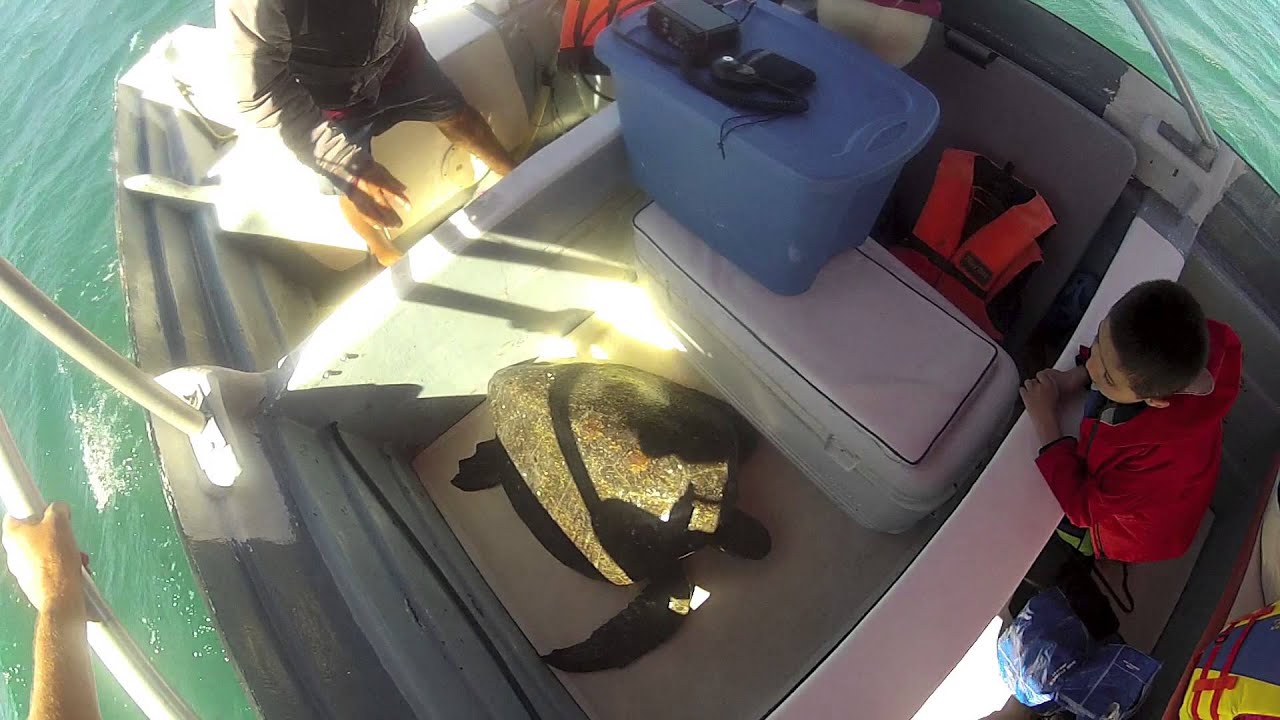 ; pelicans spear through them and strangle. On a recent paddle down the Los Angeles River, I saw white plastic bags clinging to the trees; my fellow kayakers playfully dubbed them “grocery-bag flowers.”
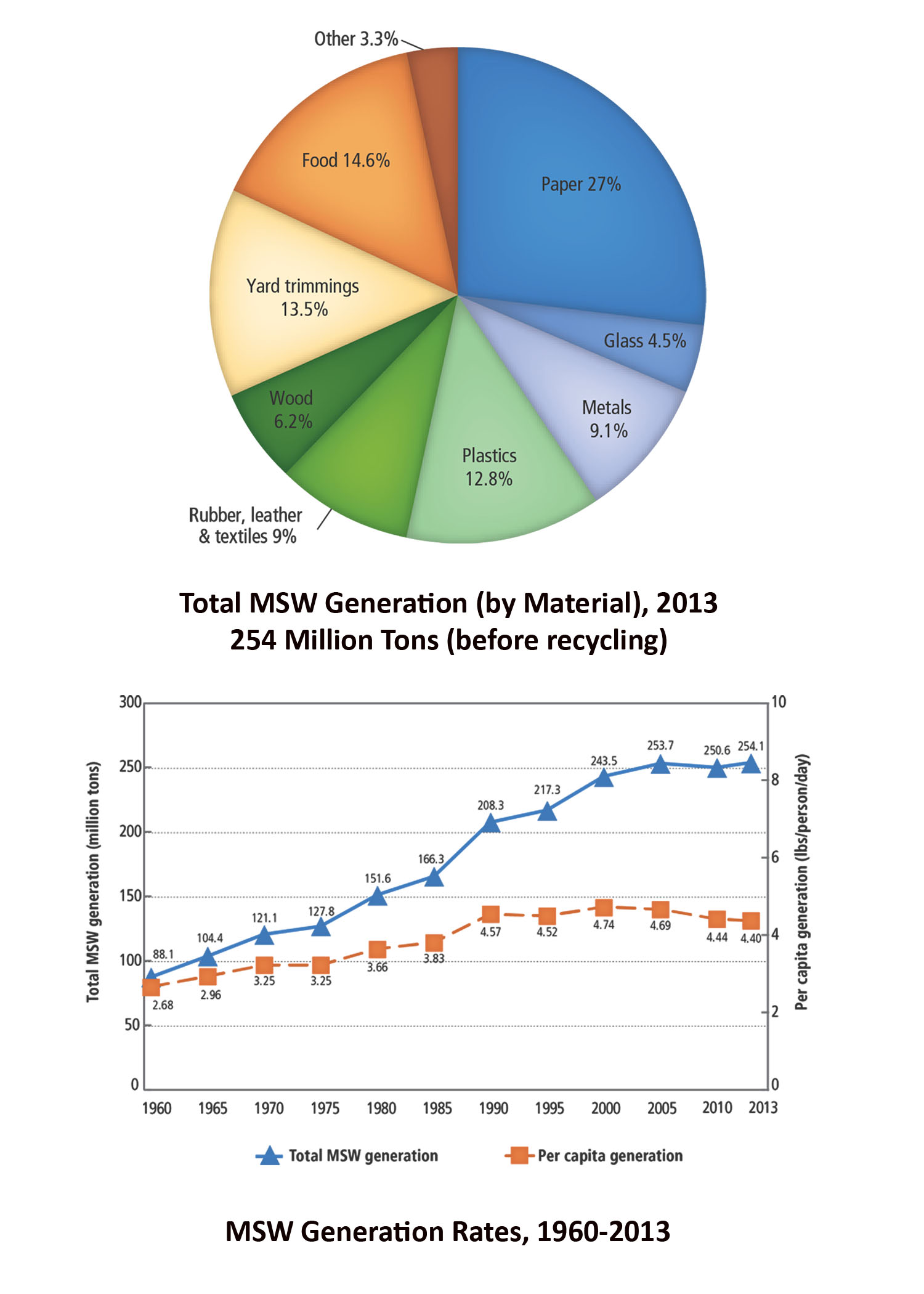
Plastic bags can be recycled at special, dedicated facilities, but you can’t just toss them into a blue bin. Sent to ordinary processing centers, they clog up sorting screens and have to be cut out with hook knives and saws. They don’t degrade, but disintegrate, turning ocean and freshwater into a diluted chemical soup.
But they are also big business, earning their manufacturers $100 million to $150 million every year in California alone. The short list of generous contributors to the No on 67 campaign contains only one in-state individual or company, Durabag of Tustin, California, which contributed a mere $50,000 early on. The rest of the donors list consists of out-of-state companies whose futures depend on the persistence of their industry: Advance Polybag of Sugar Land, Texas ($946,833); Formosa Plastics of Livingston, New Jersey ($1,148,441); Hilex Plastics of Hartsville, South Carolina ($2,783,739); Superbag of Houston, Texas ($1,238,188).
It has already been money well spent, and not just because a victory in the nation’s bellwether state could set a trend, while a loss could spread bag bans like a virus. As the San Francisco Chroniclereported, simply by delaying Padilla’s bill for 18 months, the industry has bagged $15 million in profit.
Steve Maviglio, a spokesperson for the Yes on 67 campaign that supports the ban, says that the plastics lobby’s concern over the predicted job losses rings hollow, considering that almost no single-use plastic bags are made in California. The thicker plastic bags allowed in Padilla’s law will, on the other hand, add to the state’s manufacturing economy, adding several hundred jobs. The plastic industry’s claim of 2,000 jobs lost “is incredible and nonsense,” Maviglio says.
The plastics lobby could, however, win this one—not least because the wording of the referendum on the ballot is confusing. “It’s not intuitive that we need to vote ‘Yes’ for the law to go into effect,” says Diz Swift, a member of the League of Women Voters in Berkeley. “People might say, ‘Oh, no, I don’t want the law vetoed, I want it to go into effect,’ and mistakenly vote ‘No.’” (To be clear, a “No” vote on Proposition 67 will overturn the bag ban; a “Yes” will uphold it.)
Even more confusing is that the plastic bag alliance has put another proposition on the ballot – Proposition 65 – that would direct the 10-cent bag fee toward a special wildlife conservation fund. Berrier says the measure came out of the bag alliance’s research. “Only 25 percent of the people we asked had any idea where that 10 cent bag fee would go,” he says. “A lot of people thought it was going to the environment, or to local government.” When they find out it’s going back to the grocers, he says, “They’re outraged. They want it to go to an environmental purpose.”
To Swift, however, putting Proposition 65 on the ballot above Proposition 67 is a blatant attempt to skew the vote. Only the most sophisticated and well-informed voters will understand what it all means. “The money goes into a fund that sounds really good,” she says. “It’s for drought mitigation, clean drinking water, regional parks, litter removal and habitat restoration. But it requires creating a bureaucracy that doesn’t really help.”
Maviglio is more blunt. “We call 65 the Screw the Grocers Initiative,” he says flatly. “They’re trying to send a message to grocers in other states who would hop aboard a statewide ban.” Single-use bags cost grocers anywhere from six to 16 cents per bag, “and that doesn’t include delivery and stocking,” Maviglio claims. “There’s no windfall there.”
If that’s not persuasive enough, he asks voters to consider the source. Prohibitions against plastic bags have been carried by the most grassroots of efforts—community organizations, moms, local environmental groups. The Arizona ban on plastic-bag bans, he says, comes straight out of the American Legislative Exchange Council, a think tank that assists corporations in state lawmaking, with an emphasis on preempting local control.
“The plastics industry has no regard for the environment,” Maviglio says. “It would be hypocritical of them to put something on the ballot to help wildlife.”
To be fair, Berrier doesn’t argue that helping wildlife is the point: The goal of Prop 65, he says, is only to highlight where the bag-fee money goes after grocers collect it.
“The language is very plain and simple,” he insists, “and it will have its intended effect.”
==
==
http://www.ecowatch.com/whistleblower-lawsuit-chemical-companies-2005784783.html
...
BASF Corporation, Bayer Material Science LLC, Dow Chemical Company and Huntsman International LLC have been named in a False Claims Act (FCA) lawsuit:{ brought by New York law firm Kasowitz, Benson, Torres & Friedman LLP on behalf of the U.S. government.
}:
EcoWatch learned that the recently unsealed whistleblower lawsuit was served on the chemical companies on Wednesday. The lawsuit was originally filed under seal in federal court in Northern California.
Kasowitz brought this action on behalf of itself and the federal government to recover more than $90 billion in damages and penalties under the FCA, which imposes penalties for concealing obligations to the government.
According to a copy of the lawsuit seen by EcoWatch, "Each of these companies is separately liable to the United States Government for billions of dollars in civil reporting penalties, which continue to accumulate by tens of thousands of dollars daily, and for billions of dollars in similarly increasing breach of contract damages." ...
==
flame retardent lies, lobbying
http://www.chicagotribune.com/news/watchdog/flames/ct-met-flames-science-20120509,0,4469205,print.story
However many of these important measures are in trouble in the U.S. California’s landmark legislation is now officially on hold,
gma padilla
http://www.latimes.com/local/political/la-me-pc-california-plastic-bag-ban-20150223-story.html
with a referendum to repeal the ban added to the ballot for November 2016. Florida and Arizona have both already passed bills making the banning ofplastic bags illegal. Powerful and large special interest lobbying groups are behind these “ban bans” as well as litigation aimed at already existing bans. Outside interests are funding these efforts to dissuade and dismantle local level legislation. Primary among them is the ProgressiveBag Affiliates, funded by the largest plastic bag manufacturers in the country and the American Chemistry Council.
On March 26, the Georgia House defeated Senate Bill 139, legislation prohibiting cities and towns from restricting plastic bags and other single-use items. Right up to the vote, this was a heated issue with both sides trying to garner support. I testified in opposition to the bill because I am passionate about instilling the values of reusing and recycling, as well as supporting legislation that makes good common sense. This bill did not.
==
http://www.dailykos.com/story/2015/03/18/1371650/-Chemical-lobby-set-to-gut-U-S-toxic-chemical-regulations#
3/15
Chemical lobbyist exposed as author of new bill to regulate industry (link to video segment):
Rachel Maddow reports on the discovery that a draft of a new law to make much-needed updates to regulations on the chemical industry was authored by the American Chemistry Council, the leading trade organization and lobbyist for the chemical industry
The last time U.S. toxic chemical regulations were updated was 39 years ago. Since then many states have opted to enact stricter safety standards than those Federal standards of the past to keep pace with newer chemicals and innovations developed over the years as well as the latest methods to evaluate toxic chemical hazards more accurately. These state standards are now in jeopardy as new Federal regulations are in the making that would cap and essentially override safer more complete laws in some states. California is one of those states. There are many more.
A reporter from the San Francisco Chronicle discovered that a Microsoft Word draft of the new Federal regulations soon on its way to congress was authored by the American Chemistry Council. The Lobbying firm has denied they wrote the Bill. Further investigation by IT experts proved that denial to be untrue.
In recent days, a draft of the bill — considered the product of more than two years of negotiation and collaboration between Sen. David Vitter, R-La., Sen. Tom Udall, D-N.M., and both chemical industry and environmental groups — was circulated by Udall’s office ahead of the hearing. The draft bill, obtained by Hearst Newspapers, is in the form of a Microsoft Word document. Rudimentary digital forensics — going to “advanced properties” in Word — shows the “company” of origin to be the American Chemistry Council.
Senator Barbara Boxer weighed in:
Call me old-fashioned, but a bill to protect the public from harmful chemicals should not be written by chemical industry lobbyists. The voices of our families must not be drowned out by the very industry whose documented harmful impacts must be addressed, or the whole exercise is a sham,” Sen. Barbara Boxer, D-Calif., said Monday.
Boxer, who chaired the committee when the Democrats held the majority, and Sen. Edward Markey, D-Mass., have introduced an alternative version of the bill with much more stringent regulatory provisions.
Ken Cook, president of the Environmental Working Group, who will testify against the bill at Wednesday’s hearing had this to say:
“We’re apparently at the point in the minds of some people in the Congress that laws intended to regulate polluters are now written by the polluters themselves,”
Indeed. I'm glad some people are doing their jobs. And thank you Senator Ed Markey and others on top of this for showing how it's done.
P.S. this story is a day or so old, but it is so important that I thought it worth repeating.
- H/T to kfunk937 for posting this petition link: Don't Abolish State Protections Against Toxic Chemicals
Media Matters / By Denise Robbins [1]
Media Tout Pro-Fracking Report, Fail to Mention it Was Funded By the Gas Industry
September 5, 2013 |
Multiple mainstream media outlets have covered a new report touting the economic benefits from hydraulic fracturing ("fracking") without disclosing the report's industry funding.
The recently released study [2], titled "America's New Energy Future: The Unconventional Oil & Gas Revolution and the US Economy," received widespread media attention on Thursday. The report, conducted by consulting group IHS CERA, was commissioned by multiple fossil fuel organizations that stand to benefit from growth in the oil and gas industry. According to the report [3], the increase in unconventional oil and natural gas extraction has added an average of $1,200 in discretionary income to each US household in 2012, and now supports 1.2 million jobs -- projected to increase to 3.3 million by 2020. These figures are much larger [3] than the findings of many previous economic studies.
However, multiple major news outlets, including Reuters [4], CNBC [5], Forbes.com [6], and the Los Angeles Times [7], covered the new report with no mention of its financial ties to the industry. The research was monetarily supported [8]by America's Natural Gas Alliance, the American Petroleum Institute, the American Chemistry Council, the Natural Gas Supply Association, and others who stand to gain economically from an unregulated[9] increase in fracking. Kyle Isakower, vice president of regulatory policy at the American Petroleum Institute -- the largest trade association for the oil and gas industry -- lauded [10] the new report, saying "[f]or an organization like the American Petroleum Institute, being able to cite the findings and reputation of IHS goes a long way toward making its point to government officials." According to Steve Forde [10], vice president of policy and communication at the Marcellus Shale Coalition (an industry trade group), economic impact studies such as this are "an important advocacy tool" for industry development.
Bloomberg [11], which did disclose the report's industry ties, reported that the IHS report didn't take potential environmental impacts from extracting unconventional oil and gas through drilling and fracking, such as groundwater contamination [12] and strains on water resources [13], into account.
See more stories tagged with:
fracking [14]
Source URL: http://www.alternet.org/environment/media-tout-pro-fracking-report-fail-mention-it-was-funded-gas-industry
The American Chemistry Council (ACC) is a top trade association representing North American chemical manufacturers. ACC represents represents nearly 150 companies and has a $100 million budget. The group spent more than $2 million on lobbying in 2003.
ACC merged with the American Plastics Council in 2002. Formerly know as the Manufacturing Chemists' Association, then later renamed as the Chemical Manufacturers Association, ACC adopted its current name at its June 2000 membership meeting.
Against regulating greenhouse gas emissions
In April 2009, ACC protested the Environmental Protection Agency's finding that greenhouse gas (GHG) emissions endangered public health and could be regulated under the Clean Air Act. "We believe that the Clean Air Act is not well-suited to address greenhouse gas emissions from stationary sources. Given the national implications of carbon dioxide regulation by EPA and the interdependent nature of climate and energy issues, climate policy should be discussed and developed in Congress in tandem with energy policy," said ACC President Cal Dooley. [1]
Battling the precautionary principle
In November 2003, the Environmental Working Group released a leaked memo drafted by Tim Shestek, a lobbyist with the ACC. The memo outlined the key features of a campaign proposal from Nichols-Dezenhall to counter growing support for the precautionary principle in California, which it argued could create a national trend.
Fighting over gas
According to a June 1, 2004 article in The Hill, the organization has been facing an internal struggle between the interests of its members, particularily over the increased price of natural gas.
ACC member companies that primarily manufacture plastics or chemicals use natural gas for heating and electricy and were upset with ACC weak lobbying position on natural gas prices. But ACC also has integrated oil and gas companies as members who benefit from high natural gas prices.
Kids on pesticides
In October 2004, ACC gave the Environmental Protection Agency $2 million to help fund a study exploring the impact of pesticides and household chemicals on young children.[1]
Messaging and PR
Greg Lebedev left his position as president and CEO of ACC on June 1, 2004. The Hill reports, "[L]obbyists who spoke on condition of anonymity said the group's governing board effectively pushed Lebedev out, in part because members thought he had not moved swiftly enough to cut costs or develop a coherent association message."
In 2003, Lebedev had proposed a PR campaign for ACC to boost the industry's image. Initially pushing for a $60 million campaign, the effort is reported to have been scaled back to $20 million after complaints about the project's value.
In the fall of 2005, the ACC launched "an integrated public education campaign to raise the chemical industry's image and reputation," called "essential2." ACC hired Ogilvy Public Relations Worldwide, APCO Worldwide and Ogilvy & Mather for the campaign, which is expected to cost $35 million over two years.
Part of the "essential2" campaign is a new website, americanchemistry.com. In a press release, Ogilvy & Mather's David Fowler said essential2 would be a "360(degree) communication effort," including "press, television, public relations, online and employee communications." [2]
In the same release, ACC President and CEO Jack N. Gerard was quoted as saying, "'essential2' makes a powerful statement about how connected we all are and how central chemistry is to the health and growth of our nation. For example, the chemistry industry is America's leading exporter, accounting for 10 percent of all U.S. exports, and we generate more than half a trillion dollars for the U.S. economy each year." [3]
While promoting the chemical industry as vital to the economic health of the nation the ACC simultaneously lobbied against the Toxics Release Inventory (TRI), a public right-to-know program. Under TRI, the U.S. Environmental Protection Agency annually reports on what industries release into the air, water and land. The ACC "has urged less frequent reporting since 1999." ACC's Michael Walls said, "Just because we're used to doing something doesn't mean we should accept the inherent high costs or burden of doing it." The Bush administration supports changing the TRI so that fewer releases are reported, less frequently. EPA officials say they will "likely spend another year weighing the pros and cons" of the proposed changes, after the public comment period ends on December 5. According to federal records, the EPA "previously solicited comments from industry groups." [4]
Inserting positive wording about plastic bags into California schoolbooks
The American Chemistry Council (ACC), a lobbying group representing plastic bag manufacturers, successfully convinced the California Department of Education to rewrite its environmental textbooks and teachers' guides to include positive statements about plastic grocery bags. ACC wrote a letter to education department officials that said in part, "To counteract what is perceived as an exclusively negative positioning of plastic bag issues, we recommend adding a section here entitled 'Benefits of Plastic Shopping Bags.'" The state's final document was, in fact, edited to contain a new section titled "Advantages of Plastic Shopping Bags." The title and some of the newly-inserted textbook language were lifted almost verbatim from letters written by the ACC. A private consultant hired by California school officials inserted a question into an environmental workbook quiz asking students to list some advantages of plastic bags. The correct answer to the question (which is worth five points) is: "Plastic bags are very convenient to use. They take less energy to manufacture than paper bags, cost less to transport and can be reused." The changes were made in 2009, and coincided with ACC's nationwide PR and lobbying push to beat back efforts across the U.S. to enact laws and ordinances banning plastic grocery bags. The changes in the environmental curriculum were discovered by the investigative reporting team California Watch, a project of the Center for Investigative Reporting.[2][3][4]
ACC programs
ACC affiliates
- American Solvents Council
- Chlorine Chemistry Council
- CIIT Centers for Health Research
- European Chemical Industry Council or CEFIC
- Hydrogen Fluoride Panel
- International Council of Chemical Associations
- Phosphate Forum of the Americas
- Phthalates.org
- Synthetic Organic Chemical Manufacturers Association
Personnel
- Calvin M. Dooley, president and CEO; a former Democratic Congressman and Grocery Manufacturers Association president hired to replace former ACC head Jack N. Gerard, who left ACC to lead the American Petroleum Institute [5] [6]
- Robert Flagg, lobbyist. "The American Chemistry Council, a massive group with a budget of $100 million, has been hampered by internal tensions after a recent merger and disagreements over what the industry should do about high natural-gas prices. But Flagg remains 'one of the unsung heroes' among industry lobbyists, one colleague says," writes The Hill.[5]
- Tim Shestek, lobbyist
Contact information
American Chemistry Council
1300 Wilson Boulevard
Arlington, VA 22209
Phone: 703-741-5000
Fax: 703-741-6000
Web: www.americanchemistry.com
Articles and resources
Related SourceWatch articles
- Alliance for Energy and Economic Growth
- BPAFacts.org
- Bisphenol-A Website
- American Chemical Society
- Chemical Companies, Lobbyists and Agribusiness
- Cosmetic, Toiletry, and Fragrance Association
- The Chemical Industry Institute of Toxicology
- E. Bruce Harrison
- Jack N. Gerard
- Junk science
- Louisville Charter for Safer Chemicals
- Precautionary principle
- Sound science
References
- ↑ Nick Snow, "EPA issues proposed endangerment finding on GHGs," Oil & Gas Journal, April 20, 2009.
- ↑ Susanne Rust Plastics industry edited California's environmental textbook, San Jose Mercury News, August 19, 2011
- ↑ Chris Roberts Lobbyists Write Plastic Bags into Textbooks, NBC Bay Area, August 21, 2011
- ↑ Susanne Rust State taking harder look at plastic bag curriculum San Francisco Chronicle, August 24, 2011
- ↑ Glenn Hess, "Cal Dooley Selected To Lead ACC: Former congressman will become president of chemical industry group," Chemical & Engineering News, July 10, 2008.
- ↑ Jim Snyder, "Dooley to head American Chemistry Council," The Hill, July 9, 2008.
External resources
- The Chemical Industry Archives is a keyword searchable archive of 37,000 pages of internal U.S. chemical industry documents - including the Chemical Manufacturers Association - obtained from legal actions and Freedom of Information requests. The archive is a project of the non-government research group Environmental Working Group.
External articles
- American Chemistry Council, Environmental Working Group, January 10, 2001.
- Environmental Working Group, Chemical Industry's Secret Plan To Attack California's Anti-Toxics Trend, Press Release, November 2003.
- Jim Snyder, "High natural-gas prices create some bad chemistry for group," The Hill, June 1, 2004.
- Juliet Eilperin, "Chemical Industry Funds Aid EPA Study," Washington Post, October 26, 2004.
- "Lobby League #35: The Chemical Industry," The Hill, April 20, 2005.
- American Chemistry Council news release, "American Chemistry Council Unveils New Public Education Campaign; American Chemistry Council Highlights How Chemistry Is essential2 life," Business Wire, September 22, 2005.
- Beth Herskovits, "Chemical Industry Aims to Boost Image," PR Week, September 26, 2005, p. 1.
- Tom Henry, "Annual polluter reports may end; U.S. EPA considering cutback to reduce costs to industry", ToledoBlade.com, November 14, 2005.
- "Court Declines Pollution Case," Associated Press, January 14, 2008.
- "Chemical industry needs nuclear," World Nuclear News, May 22, 2008.
- Glenn Hess, "ACC's Gerard Moves On: Chemical industry leader accepts top job at API," Chemical & Engineering News, June 9, 2008.
- Jennifer Muir, "Industry fights effort to ban chemical in baby products: State official, scientist criticize a chemical-industry backed campaign to keep potentially dangerous baby products on the market," Orange County Register (California), August 9, 2008.
Categories: Nuclear PR | United States | Industry lobby groups | Chemical industry | Industry-funded organizations | Organizations
http://www.sourcewatch.org/index.php?title=American_Chemistry_Council
Chemical Industry Uses Wallet To Block Tighter Regulations, Environmental Advocates Say
Posted: 10/25/2012 6:57 pm EDT Updated: 10/25/2012 7:51 pm EDT
In an effort to block a ballot measure in California that would require the labeling of genetically modified foods, shape a Senate race in Ohio with potential repercussions for fracking, and influence a host of House contests key to toxic chemical reform -- the chemical industry has been busy wielding its wallet, say environmental advocates.
New numbers support that assertion: Tens of millions of dollars continue to feed industry friendly causes and candidates this election season, with federal campaign contributions and lobbying expenditures by the chemical industry more than doubling since 2000.
"The more the truth has gotten out about the chemical regulatory system not working; the more the science has shed light on the consequences for American families as they bear the burden of problems linked to environmental exposures such as learning disabilities, childhood cancer and breast cancer; I think the more it has increased demands for change," said Andy Igrejas, national campaign director for the nonprofit Safer Chemicals, Healthy Families.
"And industry has ramped up its spending to block such a change," he added.
The chemical and agro-chemical industries have generally argued that stiffer regulations would be overly burdensome to companies and costly to the country. Anne Kolton of the American Chemistry Council, a lobbying group for the chemical industry, said the ACC is "proud" of its efforts to "highlight the good work being done in Washington to grow the economy and create jobs."
Monsanto and other agro-chemical companies have invested more than $20 million -- on top of the food industry's nearly equivalent contribution -- for ads opposing Proposition 37, a California measure that would require labeling of genetically modified foods, or GMOs. Proponents of the bill have raised less than $8 million.
Meanwhile, chemical interests have spent some $375 million since 2005 to help elect and try to influence federal leaders, specifically in regards to a pending overhaul of the Toxic Substances Control Act of 1976 (TSCA), according to a report released this week by Common Cause, a nonprofit, nonpartisan citizen's lobbying organization.
"It's been 36 years since they passed TSCA, and people are showing how it really fails to protect people," said James Browning, Common Cause's regional director for state operations and a principal author of the report. "Public health advocates are starting to win the fight, they have so much evidence on their side. Industry is realizing it needs to start spending more to stop it."
In July, the Safe Chemicals Act passed out of the Senate:{ Environment and Public Works:(style="background-color:#ffff66;"):}: Committee. First introduced by Sen. Frank Lautenberg (D-N.J.) in 2005, the act would replace the TSCA and essentially reverse the burden of proof on chemical safety. In other words, chemicals would be required to be tested and proven safe before they are placed on store shelves -- something that it not the case today. The bill is now awaiting a vote from the full Senate.
The ACC, whose member companies' spending was included in the Common Cause report, has said it is committed to working on a bipartisan bill, but has also expressed concerns with the Safe Chemicals Act.
"As one of America's most significant manufacturing industries, we have a significant interest in seeing good policies enacted that will encourage economic growth and job creation including a balanced approach to regulation, a strong domestic energy policy and sound tax and trade policies, and we believe it is important to support leaders in Congress who share those priorities," Kolton said.
Overall, Common Cause found that chemical industry contributions in the current election cycle have gone predominantly to Republicans: 78 percent compared to 22 percent for Democrats. President Barack Obama received $217,283, for example, compared to Republican presidential candidate Mitt Romney's $704,337.
The report, titled "Toxic Spending," also highlights how the Supreme Court's 2010 Citizens United decision opened up a new "avenue of influence" for the chemical industry in the form of so-called Super PACs. Chemical interests have given $23 million to these groups in the current elections, according to the study.
Browning noted that actual spending numbers are likely even higher due to incomplete tracking of ad spending and a surge of undisclosed contributions from nonprofit organizations.
This year, chemical interests are targeting a few key races, Browning said, including a heated Senate battle in Ohio. Josh Mandel, the Republican contender, ranks third among recipients of chemical industry campaign contributions, and has expressed plans to open up more land to natural gas drilling. Calls and emails to Mandel's campaign office seeking comment were not returned.
"Clearly, they see Ohio as pivotal and that race as pivotal," Browning said.
A Common Cause report from last year found people on Rep. Fred Upton's (R-Mich.) House Energy & Commerce Committee who voted for the so-called Haliburton loophole -- which essentially exempts the natural gas industry from the Safe Drinking Water Act -- received more than six times as much money from oil and gas companies as people who voted against it.
"There's a long history of industry throwing weight around and with it being successful," Browning added....