ACC 2 CHEM
SEE 2 OLDER
SEE API CHEV EXXON CONOCO
age of trump 5/18
foreign corp donors
at least 3 ACC in trump admin eg sepa
PESTICIDE GLYPHO DICAMBA
see forever pfoa/s
---
SEE MAHA
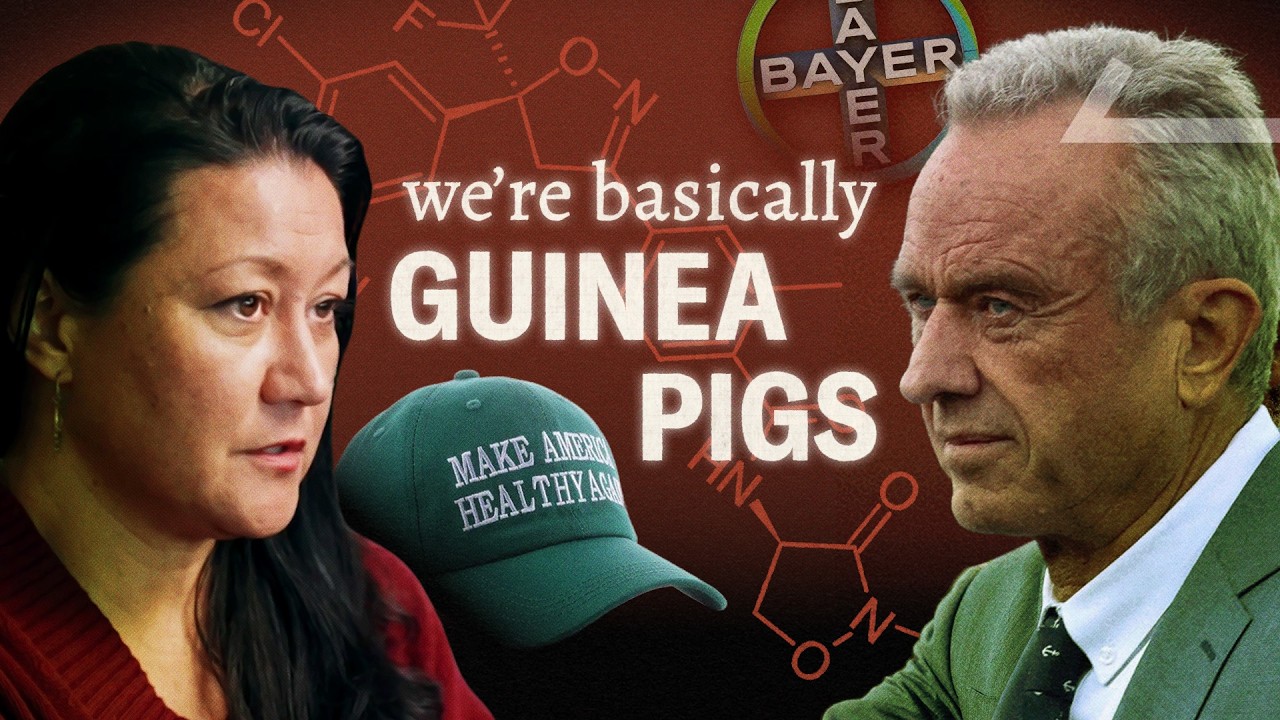
We Uncovered A Conspiracy To Poison Your Food
Fundraiser
More Perfect Union
3.31M subscribers
527,745 views Mar 20, 2026
Four former chemical lobbyists control America’s pesticide regulations, letting pesticide companies pump the country full of toxins. For every 1 meeting with an environmental group, the EPA met 25x with corporate interests. We revealed the corporate lobby poisoning America:
---
CU 10 yr report:
Some of the biggest dark money players over the last decade are funded by major corporations. In some cases, they take cash from foreign companies, raising the question of whether the influx of dark money was at least partially backed by foreign money. Foreign nationals and foreign-owned corporations are barred from spending in U.S. elections.
The U.S. Chamber of Commerce, for example, receives member dues from corporations it represents, including foreign-based companies. The conservative group says it does not use foreign money to fund election-related messages. The Chamber has spent $143 million on elections since the 2010 cycle, making it the top dark money spender post-Citizens United.
The National Rifle Association's 501(c)(4) arm, which has spent $59 million boosting Republicans since Citizens United, has taken big checks from affiliates of foreign-owned gun manufacturers such as Germany's SIG Sauer and Italy's Beretta. The American Chemistry Council, another politically active trade association, has several foreign companies among its members.
an 12 24
the Biden administration's Environmental Protection Agency on Monday announced a permanent ban on a pair of carcinogenic chemicals widely used in U.S. industries, including dry cleaning services and automative work.
According to the Washington Post:
The announcement includes the complete ban of trichloroethylene—also known as TCE—a substance found in common consumer and manufacturing products including degreasing agents, furniture care and auto repair products. In addition, the agency banned all consumer uses and many commercial uses of Perc—also known as tetrachloroethylene and PCE — an industrial solvent long used in applications such as dry cleaning and auto repair.
Jonathan Kalmuss-Katz, a senior attorney at Earthjustice, applauded the move but suggested to the Post that it should have come sooner.
"Both of these chemicals have caused too much harm for too long, despite the existence of safer alternatives," Kalmuss-Katz.
The EPA's decision, reports the New York Times, was "long sought by environmental and health advocates, even as they braced for what could be a wave of deregulation by the incoming Trump administration."
The Timesreports:
TCE is known to cause liver cancer, kidney cancer and non-Hodgkin’s lymphoma, and to damage the nervous and immune systems. It has been found in drinking water nationwide and was the subject of a 1995 book that became a movie, “A Civil Action,” starring John Travolta. The E.P.A. is banning all uses of the chemical under the Toxic Substances Control Act, which was overhauled in 2016 to give the agency greater authority to regulate harmful chemicals.
Though deemed "less harmful" than TCE, the Times notes how Perc has been shown to "cause liver, kidney, brain and testicular cancer," and can also damage the functioning of kidneys, the liver, and people's immune systems.
Environmentalists celebrated last year when Biden's EPA proposed the ban on TCE, as Common Dreamsreported.
Responding to the news at the time, Scott Faber, senior vice president for government affairs at the Environmental Working Group (EWG), said the EPA, by putting the ban on the table, was "once again putting the health of workers and consumers first."
While President-elect Donald Trump ran on a having an environmental agenda that would foster the "cleanest air" and the "cleanest water," the late approval of EPA's ban on TCE and Perc in Biden's term means the rule will be subject to the Congressional Review Act (CRA), meaning the Republican-control Senate could reverse the measure.
In his remarks to the Times, Kalmuss-Katz of Earthjustice said that if Trump and Senate Republicans try to roll back the ban, they will be certain to "encounter serious opposition from communities across the country that have been devastated by TCE, in both blue and red states."
===
https://www.desmog.com/2023/01/19/fossil-fuel-groups-spent-millions-on-social-media-ads-spreading-climate-disinformation-during-cop27/
fossil fuel-linked groups spent around $4 million on Facebook and Instagram ads that spread false climate claims over the COP27 summit, a new report says.}:
The physical presence of more than 600 fossil fuel lobbyists overshadowed the November conference in Sharm El-Sheikh, Egypt, as world leaders, NGOs and activists gathered in a bid to accelerate global efforts to confront the climate crisis.
Analysis out today shows oil and gas interests were also busy online. Climate Action Against Disinformation (CAAD) – the coalition behind the second “Deny, Deceive, Delay” report – has documented how PR companies, front groups and oil majors were actively spreading disinformation in the weeks leading up to and during the summit.
Researchers with the coalition’s COP27 Intelligence Unit identified over 3,700 ads sharing false claims on Facebook and Instagram, platforms owned by Meta. They also found a rise in content related to outright climate-science denial by ‘anti-woke’ pundits on Twitter, who pushed #ClimateScam and lines such as ‘climate is a hoax’.
Jennie King, head of climate research and response at the non-profit Institute for Strategic Dialogue (ISD) think tank, which led the Intelligence Unit, said the events of 2022 had “turbocharged a global ecosystem of disinformation”.
“Russia’s war in Ukraine and its impact on energy supply chains have renewed anti-climate attacks globally, as vested interests falsely attribute blame for these events to the “cult of Net Zero,” King explained.
“Our report shows Big Oil continues to invest millions in digital advertising to launder their image as ‘climate champions’, while also promoting the necessity of fossil fuels.”
The coalition’s findings come nearly two years after a report by the UN’s climate science body, which found for the first time that “vested interests” were delaying efforts to tackle climate change.
The Intergovernmental Panel on Climate Change (IPCC) found that actors representing “vested economic and political interests” had eroded support for climate policy by generating “rhetoric and misinformation that undermines science and disregards risk and urgency”.
Climate Denial ‘Comeback’
Big Oil companies Shell, Chevron and Exxon all ran ads in the run-up to the summit, but the majority were posted by PR and fossil fuel front groups.
The 850 organisations surveyed spent between $3-4 million on nearly 3,800 adverts on Facebook and Instagram between September 1 and November 23, the report found. Adverts promoted fossil fuels as affordable and reliable, and justified their ongoing use with arguments around energy independence.
Energy Citizens – a PR and lobby group for the largest trade association for the oil and gas industry the American Petroleum Institute – ran more daily ads than all the other pages combined, the analysis found. The ad campaign advocated for U.S. production of fossil gas and oil, citing nationalist arguments around ‘energy security’.
The analysis found that a number of U.S. based pages ended their ad campaigns after mid-term elections on November 8. However, the research found disinformation ramped up with ad campaigns fromthree industry PR groups: America’s Plastic Makers, funded by the American Chemistry Council, which describes itself as ‘the leading association representing the $553-billion U.S. chemicals industry’, and fossil fuel front groups Affordable Energy for New Jersey and Natural Allies for a Clean Energy Future.
In addition, the Saudi Green Initiative had at least 13 live adverts around the summit, just as Saudi Arabia’s delegation was accused of pursuing a ‘strategy to keep the world hooked on oil.’
The findings come as Sultan Ahmed Jaber was announced as the new President for COP28, making the Dubai summit next year the first to be led by a current oil executive.
Ben Dennes, a researcher at the University of Exeter who specialises in environmental communication online, said the $4 million figure was just the “tip of the iceberg”.
The Meta ad library used in the analysis was a “black box”, with only ads deemed by Meta to relate to ‘social issues, elections or politics’ fully accessible.
There is “unclear and subjective guidance on what this means”, Dennes told DeSmog, adding that researchers were also unable to analyse Google Ads in the study as the service does not permit searches for misinformation and greenwashing content.
It was therefore possible that “certain greenwashing and misinformation content has slipped through the net”, Dennes said.
Culture Warriors Co-opt Climate
Alongside analysis of industry-linked advertising, researchers also documented climate disinformation on Twitter over a four week period from the end of October.
‘Anti-woke’ pundits and conspiracy theorists gained the most traction, the report found, and “often collaborate with a well-funded network of think tanks and pundits.”
Climate denial tropes such as ‘climate actors are alarmist’ and ‘climate change is a hoax’ also featured. Some posts targeted the “loss and damage” fund, established in Sharm-el-Sheikh to provide financial assistance to vulnerable nations most impacted by the climate crisis.
Researchers also found that the hashtag #ClimateScam spiked on Twitter with 362,000 mentions between July and December, raising concerns over a failure to prevent disinformation on the platform. The original content came from a non-verified account, but was then adopted by a number of verified account holders – including U.S. pundit Tom Fitton, a climate denier with two million followers.
The CAAD coalition is advocating for immediate steps to be taken by tech companies to stem the flow of climate delayism and “junk science”. It is also calling on governments and multilateral bodies to implement a “unified definition” of climate mis-and disinformation within UN key institutions.
“This research shows that climate disinformation isn’t going away and, in fact, it’s getting worse.
During COP, Twitter’s search engine pushed #ClimateScam as a top result without any justification for the data behind it,” said Erika Seiber, climate disinformation spokesperson at Friends of the Earth U.S.
“Until governments hold social media and ad companies accountable, and companies hold professional disinformers accountable, crucial conversations around the climate crisis are going to be put in jeopardy.”
Meta and Twitter were contacted for comment.
no lnx
wASHINGTON, April 28 (Reuters) - California's attorney general announced on Thursday he issued a subpoena to ExxonMobil (XOM.N) for information on its role in causing the global plastic waste crisis.
The subpoena is part of a broader investigation led by California Attorney General Rob Bonta into the fossil fuel and petrochemical industries' role in "causing and exacerbating the global plastics pollution crisis."
"For more than half a century, the plastics industry has engaged in an aggressive campaign to deceive the public, perpetuating a myth that recycling can solve the plastics crisis. The truth is: The vast majority of plastic cannot be recycled," Bonta said in a statement.
The investigation will resemble ones launched by several state attorneys general into the role that fossil fuel companies played in causing and exacerbating climate change, which focused on what the industry knew decades ago and how companies misled the public about their role.
In this investigation, the attorney general will focus on the "half-century campaign of deception and the ongoing harm caused to the State of California" by companies that produce plastics, a petroleum-based product, and how they perpetuate "myths around recycling". Exxon is the first company to receive a subpoena, but officials said they will also target other companies in the industry.
A spokesperson for Exxon was not immediately available to comment.
Matthew Kastner, a spokesperson for the American Chemistry Council, which represents the plastics and petrochemical industry, said in response to the investigation that "America’s plastic makers are committed to a more sustainable future and have proposed comprehensive and bold actions at the state, federal, and international levels."
More than 90% of plastic waste globally ends up in landfills or is incinerated, according to a landmark study in Science Advances. The U.S. recycling rate has never gone higher than 9%, according to the Environmental Protection Agency.
There is growing momentum to tamp down plastic production as a way to address plastic waste. The UN in February outlined the blueprint of a future treaty that could seek restrictions on production. read more
Bonta said that the petrochemical industry has been aware for decades that recycling was infeasible at scale, even as plastic production skyrocketed and has pushed back against state, local and national efforts to issue plastic bans and other measures.
The industry has promoted "advanced recycling" - a method of burning plastic to convert it into fuel or other products - as a solution to the plastic waste crisis but a Reuters investigation showed that the leading projects have had little to no success.
Carroll Muffett, president of the Center for International Environmental Law, said the investigation is significant.
"Companies like Exxon have been instrumental in persuading the public we can recycle our way out of the plastic crisis even when evidence suggestions they know it is not the case," he said, adding that states bear the brunt of costs associated with plastic waste cleanup.
California has passed several bills in the last few years aimed at curbing plastic waste and attempting to crack down on deceptive recycling claims.
Last December, the California Statewide Commission on Recycling Markets and Curbside Recycling asked Bonta to crack down on what it claims is illegal labeling that is undermining the state’s efforts to tackle plastic pollution. read more
Reporting by Valerie Volcovici Editing by Diane Craft
trump epa dunlap koch pos wheeler, wehrum etc
ACC Urges EPA To Weigh New Formaldehyde Data For Risk Assessment
March 20, 2017
The American Chemistry Council (ACC) is urging EPA to consider what it calls new "game changing" research on formaldehyde's potential to cause leukemia before the agency finalizes a long-running assessment of the common chemical's public health risks, raising concerns that the agency has stopped considering the new data before the analysis is completed. EPA has spent the past six years reworking a draft Integrated Risk Information System (IRIS) assessment of formaldehyde after a 2011 National Academy of Sciences (NAS) report...[SCHNARE ex epa cred?
wheeler on exit in bloomberg fluff sez proud of interagency coop and workflows, but got bought pest hacks to greenlight pfas, then got OMB vought to fasttrack it?!
https://theintercept.com/2020/01/12/cancer-trump-administration-epa-carcinogens-regulations/
the war on the war on cancer
no pix no lnx many no graf
Sharon Lerner
January 12 2020,
WHEN ANGELA RAMIREZ was 38, she felt a slight pain in her chest. At first she thought she had pulled a muscle, but when it didn’t go away, Ramirez went to her doctor, who diagnosed her with stage 2 breast cancer. A mother of three and a parent educator in a local public school in Lake County, Illinois, Ramirez had to undergo a double mastectomy, chemotherapy, radiation, and five follow-up surgeries.
Eight years since the diagnosis, her family is still recovering. Because of complications, Ramirez is awaiting several more reconstructive surgeries. Her daughter Ada, now 15, was recently diagnosed with PTSD, in part, Ramirez thinks, because she spent much of her childhood worrying that her mother wouldn’t survive. And her husband is working 80 hours a week to cover medical expenses and lost income. “Cancer changes your whole life,” she said recently.
Ramirez used to think of her ordeal as random bad luck — an inexplicable series of genetic mutations that just happened to derail her life. But that changed in 2018, after she learned that she both lived and worked near two facilities that were emitting a cancer-causing chemical called ethylene oxide.
Two years earlier, the Environmental Protection Agency released an assessment of ethylene oxide performed by a small division of the agency known as IRIS, which crunched numbers showing that exposure to ethylene oxide caused elevated rates of tumors in the brain, lungs, uterus, and lymph systems. The technical report from IRIS, which stands for the Integrated Risk Information System, changed the classification of ethylene oxide, an odorless gas used to make other chemicals and sterilize medical equipment, from probably carcinogenic to plainly carcinogenic to humans. Based in part on several studies showing that female workers exposed to ethylene oxide had higher breast cancer rates, the report calculated a safety threshold that was 30 times more sensitive than previous estimates. Combined with agency data about local emissions, the new threshold allowed the EPA Office of Air and Radiation to identify the census tracts where residents were at increased risk of cancer from breathing ethylene oxide.
As Ramirez could plainly see on the EPA’s interactive map, the cancer risk was elevated both where she lived and, even more extremely, at the office where she worked for several years before her diagnosis, which was less than a mile from one factory that emitted the carcinogenic gas and less than three miles from another. The news was like a missing puzzle piece. “I had always found it kind of strange that I was the only one in my family who ever had cancer,” said Ramirez, who had moved to the suburbs from Chicago in 2005 in part because she wanted to be closer to nature.
Ramirez still suffers from chronic back pain and weakness. But the realization that her cancer may have resulted from emissions from the local factories has caused a different kind of suffering. “Every time I open the windows I think about it now,” she said. “I’m so angry. My kids at 2nd and 3rd grade shouldn’t have had to wonder whether their mother was going to die.”
Angela Ramirez's neighborhood is seen in this photo. The neighborhood in Waukegan, Ill., is located in a census tract that is at high risk for cancer. Jan. 2, 2020. Pat Nabong for The Intercept.Construction at Medline's facility in Waukegan, Ill. is underway on Jan. 2, 2020. In May 2019, Medline submitted a proposal to build new equipment that would control air pollution, after they came under fire for emitting ethylene oxide, a gas linked to cancer. Pat Nabong for The Intercept.]
Left/Top: The Ramirez's neighborhood in Waukegan, Ill., is part of a census tract that is at high risk for cancer. Right/Bottom: Construction at Medline's facility in Waukegan, Ill. is underway on Jan. 2, 2020. In May 2019, Medline submitted a proposal to build new equipment that would control air pollution, after they came under fire for emitting ethylene oxide.Photos: Pat Nabong for The Intercept]
The chemical industry also reacted strongly to the reports on ethylene oxide. In September 2018, after the National Air Toxics Assessment pinpointed the areas affected by the chemical, the American Chemistry Council, or ACC, a trade group that represents U.S. chemical manufacturers, asked IRIS to change its assessment of ethylene oxide. Dow Chemical, the biggest producer of ethylene oxide in the country and the second biggest in the world, also disputed the EPA’s assessment.
Now, political appointees at the EPA are engaged in what appears to be an end-run around the agency’s own science. While IRIS, which is staffed by career scientists, hasn’t officially backed away from its 2016 report, theTrump EPA recently announced that it would not be calling for the level of pollution reductions IRIS laid out during the previous administration, leaving people around the country more vulnerable to the known carcinogen. And that’s only one of the changes made under the Trump administration that promise to weaken protections for Americans’ health, many of which were intended specifically to stave off cancers.
Virtually no sector of the EPA’s work has escaped reversals that will cause disease and death among the U.S. population. The agency scrapped the Clean Power Plan and a rule to improve fuel efficiency standards for cars, depriving the public of not just the climate benefits but also the improvements to air quality and health both would have brought. The EPA rejected its own science in deciding not to ban chlorpyrifos, a pesticide linked to autism and other neurodevelopmental problems in children. Dozens of other EPA rollbacks — including the gutting of the Clean Water Act, the undermining of guidelines on emissions of methane from landfills, the loosening of restrictions on toxic air pollution from industrial facilities, the disbanding of a panel on air pollution — will have dire health consequences, as will the dramatic reduction in the enforcement of environmental laws.
The erosion of these protections may leave Americans at greater risk of all kinds of health effects, including fertility issues, birth defects, and neurodevelopmental problems — all of which have been linked to chemical exposure. But among the most devastating of Trump’s legacies will be an increase in cancers.
Trump’s Cancer Gang
With the election of Donald Trump, a small and previously marginalized group of toxics apologists suddenly and unexpectedly took control over health and environmental regulations in the United States. Considered too fringe, too craven, and too fact-averse for mainstream politics, this closely connected group had long been dismissed for taking the idea of environmental deregulation well past the point of absurdity. Under Trump, the EPA has begun executing some of these extremists’ schemes to undercut the federal government’s ability to protect the public from life-threatening toxic chemicals.
Way back in 1996, a lawyer named Christopher Horner working for R.J. Reynolds Tobacco Company came up with an ambitious plan to fight back against scientific studies linking cancer to secondhand smoke. Such studies, he realized, were based on the private health data of thousands of individuals. And without that data, scientists would be unable to prove a connection between cigarette smoke and cancer. Imagine if the government required that the data used for regulations be public. If that were the case, none of the crucial private health information used by scientists would be usable. Problem solved!
Horner, who worked at the firm then called Bracewell & Giuliani, recognized that the approach had “global applicability to industry” beyond tobacco and could make it nearly impossible to regulate a wide variety of cancer-causing chemicals and pollution. Within a few years, a group funded by the Koch brothers tried to use the strategy to undermine the Clean Air Act, demanding that researchers produce their data so a pivotal study could be repeated.
That attempt to destroy air pollution protections ultimately failed, and the idea hovered on the sidelines until 2014, when a few Republican House members introduced the “Secret Science Act.” Because most members of Congress recognized the gambit as a bald attempt to subvert science — then-Sen. Barbara Boxer called it “insane,” Sen. Bernie Sanders dismissed it as “laughable” — the bill didn’t come close to becoming law that year or the next, when it was introduced again. Even in mid-2016, the only support for the idea came from the fringe.
But with the election of Donald Trump later that year, the prospects of the “secret science” scheme — and others hatched over the years to help free industry of what it saw as profit-hampering regulations — suddenly became deadly serious. Trump, who had already been dismissive of science, named Horner and others interested in undermining environmental protections to his EPA transition team and then staffed the agency with political appointees who used to work for the industries they would be regulating. In April 2018, then-EPA administrator Scott Pruitt proposed a rule based on the “secret science” plan, and Horner’s wildest dreams of dismantling environmental and health regulations were set to become reality.
Andrew Wheeler, administrator of the U.S. Environmental Protection Agency (EPA), speaks to members of the media after signing the Affordable Clean Energy Rule at EPA headquarters in Washington, D.C., U.S., on Wednesday, June 19, 2019. President Donald Trump is scaling back sweeping Obama-era curbs on greenhouse gas emissions from power plants burning coal, his biggest step yet to fulfill his campaign promise to stop a "war" on the fossil fuel. Photographer: Al Drago/Bloomberg via Getty ImagesEPA administrator Andrew Wheeler, center, speaks to members of the media at EPA headquarters in Washington, D.C., on June 19, 2019. Photo: Al Drago/Bloomberg via Getty Images]
The war on cancer was meant to help banish a disease that by 1970 had become the second-leading cause of death in the United States. The Environmental Protection Agency, created that year, was part of the government’s assault on the rising tide of cancer cases. For some contaminants, such as asbestos and chemicals used in dye-making, the link to cancer was already clear. Scientists were beginning to understand that even tiny amounts of certain chemicals could alter cells, setting off a series of mutations that grow into cancerous tumors. The hope was that the agency could counter increasing cancer rates by limiting environmental exposures.
Yet 50 years after the federal government took up arms against cancer, the disease is still the second-leading cause of death. Even though cigarette smoking, the leading cause of cancer in the 1970s, has declined sharply, the American cancer rate has actually gone up over the past 40 years. Among children, who are particularly vulnerable to environmental exposures, the cancer rate has risen dramatically, increasing nearly 50 percent since 1975.
During that time, environmental exposures have been mounting. More than 140,000 chemicals and pesticides have been introduced since 1950. Even though the vast majority have not been evaluated for safety, 5,000 of them are made in such great quantities practically everyone is exposed to them. Yet most of the government spending on cancer has remained focused on treating the disease rather than preventing cancer by limiting exposure to carcinogens, such as pesticides and other environmental contaminants.
graf:
Left/Top: Federal political contributions by members of the American Chemistry Council, including parent companies and individual employees, 2008 - 2019. Compiled for The Intercept by MapLight. Right/Bottom: Federal political lobbying expenditures by members of the American Chemistry Council, including parent companies and individual employees, 2008 - 2019. Compiled for The Intercept by MapLight.Graphics: Soohee Cho/The Intercept
Since the first major law that attempted to regulate toxic chemicals passed in 1976, chemical companies have spent billions of dollars on lobbying. The member companies of the American Chemistry Council have spent more than $1.4 billion on lobbying and $77.8 million on political contributions since 2008, according to an analysis by MapLight for this story. The ACC by itself has spent $103 million on lobbying. Though staggering, these numbers are a small fraction of the trillions generated by chemical sales over that same period.
Throughout its 50-year existence, the EPA has faced the daunting task of regulating industries that are far better resourced than the agency. But the effort to rein in powerful companies, which has been met with varying degrees of success under previous administrations, has been largely abandoned under Trump. The EPA, now headed by a former coal lobbyist and run by other former lobbyists, executives, and lawyers from polluting industries, has set about undoing health protections, some of which were specifically designed to prevent cancer.
Trump, who recently tried to take credit for a 2017 dip in cancer mortality rates and announced that he would be “curing childhood cancer very shortly,” at a rally in Cincinnati last August, presumably isn’t interested in actively causing disease and death. But his eagerness to please the polluting chemical and fossil fuel industries that support him comes at the expense of American lives.
A Mess in Texas
For ethylene oxide, the chemical that Ramirez was exposed to, the road to deregulation passes through Texas. It was there, in the summer of 2018, that regulators led by state toxicologist Michael Honeycutt began working with the producers of ethylene oxide on their own standard for the chemical.
Honeycutt, who has overseen chemical assessment for the Texas Commission on Environmental Quality since 1996, is known for his extremely industry-friendly approach to chemicals. Until this administration, Honeycutt made his name fighting the EPA, challenging the limits the agency tried to place on emissions of chemicals, particularly those released by the oil and gas industry. He has argued that particulate air pollution, which causes lung cancer and other diseases, can help people live longer. And working with his longtime colleague and fellow toxicologist Michael Dourson, Honeycutt loosened state protections on dozens of chemicals — rollbacks that were encouraged and welcomed by chemical manufacturers. Now, under Trump, Honeycutt’s Texas agency has essentially become a shadow EPA and he has assumed a national role in cancer policy.
The assessment of ethylene oxide that Honeycutt oversaw and the TCEQ released last year no doubt pleased the companies that make the chemical — not least because it appears to have been written by them. In June 2018, before issuing a new safety limit for ethylene oxide, Honeycutt and members of the TCEQ’s toxicology staff met in Austin with Joanna Klapacz, a toxicologist from Dow; Bill Gulledge, a senior director at the American Chemistry Council; and three scientists from Exponent, a consulting company paid by the ACC to help fend off regulation of the chemical, among them two toxicologists named Abby Li and M. Jane Teta. Representatives of Shell, BASF, and Balchem, which together with Dow released more than 200,000 pounds of ethylene oxide over the previous six years, joined the conversation by phone, according to emails of TCEQ staff released in response to a FOIA from the Sierra Club.
Dr. Mike Honeycutt is an Air Toxicologist for the Texas Commission on Environmental Quality, the world's second largest environmental agency. RALPH BARRERA/ AMERICAN-STATESMANTexas state toxicologist Michael Honeycutt. Photo: Ralph Barrera/Austin American-Statesman]
At the meeting, a presentation from the American Chemistry Council recommended adopting estimates of safety thresholds from a paper written by Ciriaco Valdez-Flores, a Texas-based consultant who received funding from both the ACC and the Ethylene Oxide Sterilization Association. The TCEQ had considered — and rejected — the paper in an assessment of ethylene oxide it released less than two years earlier because, it said, Valdez-Flores hadn’t captured all the cancer risk from ethylene oxide. Although an EPA summary of the 2016 IRIS report on ethylene oxide characterized its confidence in the breast cancer data as “particularly high,” and noted that the breast cancer component “is based on over 200 incident cases for which the investigators also had information on other potential breast cancer risk factors,” the Valdez-Flores paper didn’t include the breast cancer studies in its evaluation. And in a presentation to the group, Teta also argued against the inclusion of the breast cancer data.
Gulledge, who manages the ACC’s panel on ethylene oxide, emailed TCEQ toxicologist Jessica Myers after the meeting and offered to draft the assessment of the chemical for the state agency. “Thank you for hosting us this week,” Gulledge wrote. “We are working on several ‘white papers’ on the risk assessment modeling and our alternative approach that should be ready in the next month or so with the goal to have a draft risk assessment manuscript ready shortly thereafter.”
Asked about the email, Tom Flanagin, director of product communications for the American Chemistry Council, denied that the group drafted the risk assessment for the TCEQ. “Mr. Gulledge is referring to a separate, independent effort … for publication in a peer reviewed journal. TCEQ acted independently in preparing their risk assessment.” Flanagin did not explain why Gulledge would be communicating with TCEQ about a purportedly separate, independent effort. Ryan Vise, director of external relations for the TCEQ, also denied that the ACC drafted or edited the state agency’s assessment. Exponent did not respond to requests for comment.
Yet the proposed ethylene oxide standard that TCEQ released this summer included many of the elements that the ACC and its scientific consultants recommended at the Texas meeting. The state agency omitted the breast cancer studies and adopted the paper by Valdez-Flores as its key study, just as the industry scientists had recommended.
And minutes from a meeting of the Ethylene Oxide Sterilization Association held the next month also indicate that the chemical industry, led by Teta and Li, who were both at the Texas meeting, drafted the state’s assessment of the chemical. According to the minutes, first reported by the Chicago Tribune, the assessment, which would provide an alternative to the IRIS ethylene oxide value, was funded and led by the industry groups. “Jane Teta and Abby Li (Exponent) will be leading” the recasting of the assessment to the industry’s liking, the minutes explained, and “TCEQ has indicated its receptiveness to considering an alternative to the IRIS value.”
The result of this collaboration between the ethylene oxide industry and Texas was a proposed standard that was 3,500 times weaker than the IRIS threshold. The Texas number was also 50 times less protective than the standard the state had released only two years earlier. While Texas offered no scientific reason for weakening its 2017 standard, regulatory developments can help explain the oddly timed reassessment: the EPA’s recognition of ethylene oxide as a carcinogen in 2018 had led to public pressure on companies that emit the gas, which had in turn led to the industry group to ask the TCEQ to issue an alternate standard.
Just as the ACC has done, the Texas agency also attempted to justify its new number by arguing that IRIS’s calculations couldn’t be correct because the body produces some ethylene oxide on its own — an idea dismissed by scientists who are not supported by the ethylene oxide industry.
“They make a big deal of endogenous exposure and say that’s why EPA numbers can’t be meaningful,” said Jennifer Jinot, a toxicologist who worked for EPA for 26 years, 12 of which she spent working on the IRIS assessment of ethylene oxide. Jinot described the TCEQ’s focus on purportedly natural levels of the chemical as “disingenuous” and said it was just one of several tricks the state agency used to make the chemical appear safer than it actually is.
“Texas has done something completely unreasonable,” said Jinot. “They’re just low-balling the whole thing.”
In an emailed response to questions, Dow spokesperson Ashley Mendoza acknowledged that Joanna Klapacz attended the 2018 meeting at TCEQ, but noted that “she was not part of the technical presentation.” The email also said that “Dow has continued to improve our [ethylene oxide] emission reduction as part of our own sustainability goals. As science advances, our ongoing collaboration with other manufacturers and multiple agencies continues to ensure maximum human safety while delivering products consumers want and need.”
The TCEQ responded to questions for this piece with an email saying that its assessment of ethylene oxide was “on the side of the best available science.” The email also said that the more protective ethylene oxide standard, which the state agency issued in March 2017, was never intended to be permanent, but instead was “to be used until a thorough multi-year systematic review and dose-response assessment could be conducted under the extensive TCEQ toxicity factor guidelines.”
The proposed safety level could have a dramatic effect on people in Texas, where at least 27 facilities emit more than 48 tons of ethylene oxide every year. At one of these facilities, a Huntsman Petrochemical Plant in Conroe Texas, the EPA estimated the cancer risk due to the release of ethylene oxide and other chemicals to be 3,000 in a million, according to a risk assessment report the agency released in December. Nationwide, the average risk of cancer from air pollution is 32 in a million.
The Texas standard could also weaken protections for people far beyond Texas, since states often consider one another’s regulations when issuing their own. “It could mess with the legal landscape globally,” said Tracey Woodruff, a professor of obstetrics and gynecology at the University of California, San Francisco school of medicine who studies how chemical exposures affect health. “Even if other states don’t adopt Texas’ levels, they tend to average them.”
Scenes from Freeport, Texas on Wednesday, December 18th, 2019. Todd Spoth for The Intercept.Dow Chemical’s plant can be seen just beyond homes in Freeport, Texas, on Dec. 18, 2019. Photo: Todd Spoth for The Intercept]
While Honeycutt was once one of EPA’s main opponents, the Trump administration is now relying on his agency’s industry-biased assessment of ethylene oxide to guide the federal government’s approach to the carcinogen.IRIS spent years calculating its safety threshold for ethylene oxide and noted in its 2016 report that scientists have been studying the chemical’s “DNA-damaging properties” since the 1940s. Yet in early November, the EPA indicated it would not be calling for the reduction of emissions as much as the IRIS report would suggest is necessary. Instead, the EPA’s proposed rule, which it is required to finalize by March, calculated risk levels that were six to nine times weaker than those issued in 2016. An explanatory document released by EPA cited the Texas estimate as well as the request for correction from the American Chemistry Council and attributed its decision to change its safety level to “uncertainties” in the science.
The people who will be affected by the weakening of ethylene oxide protections are disproportionately poor and nonwhite, as the EPA’s own analysis shows. While the U.S. population overall is 12 percent African American, the areas with elevated cancer risks due to ethylene oxide are 21 percent African American, according to the document the agency released in November. Latinos are also at greater risk of exposure, making up 18 percent of the U.S. population and 31 percent of those living in areas with elevated cancer risk due to the chemical.
Those demographics aren’t unusual. While black and Latino people produce less pollution, people of color have a higher burden of pollution and are more likely to live near industrial facilities. Penny Dryden, who grew up near several polluting plants in the Rosegate section of Wilmington, Delaware, was for years unaware of the disparity. Dryden, 62, has had cancer three times. The first, breast cancer, was diagnosed when she was just 19. But this seemed to be a fact of life in her mostly African American neighborhood. Many of her friends and relatives as well as both of her parents had cancer.
In 2018, a facility near Dryden’s home that makes chemicals used in antifreeze and some processed foods released so much ethylene oxide into the air that the nearby Delaware Bridge had to be temporarily shut down. That was a temporary inconvenience to commuters, but for people who live within a three-mile radius of the plant — 52 percent of whom are people of color, and 31 percent of whom are below the poverty level — the chemical poses an ongoing health threat.
Although the cancers have taken a toll, Dryden still considers herself lucky. “Lots of people here have died of it, whole families, so many of my friends,” said Dryden, who has come to recognize and fight against the extra burden of both pollution and disease that are clustered in several communities of color in Delaware. And while she has no experience living in a pollution-free area, she feels certain the people making decisions that affect pollution levels around the country have no idea how it feels to live with polluted air. “The people in D.C. don’t go into communities like ours,” said Dryden. “They probably have never heard of Rosegate.”
For people like Dryden and Ramirez, who live near the facilities around the country — more than 100 — that emit the carcinogenic gas, the weakening of the ethylene oxide standard will result in even greater risks of cancer. “By undermining the way risk assessments are done, Texas has allowed these plants to put out more pollution because it’ll look like it’s safe when it’s not,” said Woodruff, the reproductive health professor. “They’re resetting the bar to allow more pollution going out into the world.”
Children will also disproportionately bear the burden of this additional pollution. As the EPA has pointed out, children may also be especially vulnerable to the mutagenic effects of ethylene oxide — as they are for other carcinogens. Simon Strong came to recognize kids’ particular vulnerability after his son, Oliver, died suddenly in June 2015. An exuberant 12-year-old who played saxophone and tended goal for his soccer team, Oliver was diagnosed with leukemia a week after he complained of his first symptom: a headache. He died just 36 hours later, leaving his parents bereft and filled with questions.
Oliver-1578521871Oliver Strong. Photo: Courtesy of Simon Strong]
“We were there with his oncologist in floods of tears, and I said, ‘What caused this?’ and she just burst out, ‘It’s the environment,’” Strong remembered recently. He had no idea what she meant and had never thought much about cancer before Oliver’s illness. But after his son’s death, Strong, a reporter turned investigator, began researching the causes of pediatric cancer. He read with dismay about the alarming numbers of soccer players, particularly goalies, who have developed cancer; about the connection between cancer and Roundup, a weed killer he had used liberally in the family’s backyard in Florida; and about several pediatric cancer clusters in his home state.
The problem, as he learned, was also worsening. While pediatric cancer rates were increasing overall, there had been a particularly large jump in the number of cases in infants and children under 5. Yet the government seemed to be doing little to understand what was causing these cancers or to prevent them.
So Strong launched a project along with the Baylor College of Medicine to collect information about the environmental exposures of children with cancer from their families. It’s work he wishes the federal government was doing. But as Strong’s urgency about the problem was growing, the Trump administration was going in the opposite direction, unraveling the little work that was being done on the issue.
Indeed, in May, the EPA decided to pull its funding for a network of centers that had researched the effects of various substances, including chemicals, on children. One of those research hubs, the Center for Integrative Research on Childhood Leukemia and the Environment at Berkeley, had found that exposure to pesticides, traffic emissions, tobacco smoke, and solvents are associated with childhood leukemia, the most common children’s cancer. Staff there were continuing to research the environmental causes of the disease and to educate parents and physicians, according to the physician and epidemiologist who directs the center, Catherine Metayer. “There is still so much work to do,” said Metayer. But the center lost the $1.5 million per year it had been receiving from the EPA and the National Institute of Environmental Health Sciences. Barring intervention from Congress, the last of its federal money will be spent by this summer. “After that, our work will have to stop,” she said.
Known Killers
The closure of the pediatric environmental health centers is only one of many backward steps we’ve taken in our decades-long battle against cancer and cancer-causing exposures. The first major one came after the EPA attempted to use the Toxic Substances Control Act to ban asbestos in 1989. The ban was exactly what the EPA and the chemicals law were created to do: protect Americans from a substance that had been known for decades to cause cancer. But after the agency began the process, asbestos mining and manufacturing companies sued. A court struck down most of the government’s ban in 1991 and, since then, the agency has been wary of taking on regulatory battles it might not win. As a result, the EPA has not regulated a single chemical under the law in the almost 30 years after the 1991 ruling.
So, while 67 countries have already banned asbestos, we’re still importing it. And last year, the Trump EPA decided — against the advice of its own scientists — to continue to allow its use.
In a statement, an EPA spokesperson wrote that the agency “along with our state partners, is covering ALL bases under our legal authority to protect people’s health from asbestos exposure.” The spokesperson went on to explain an April 2019 rule that allows the agency to restrict or prohibit the use of products containing asbestos. But she declined to say why the EPA had chosen not to ban the substance altogether, as its own scientists and attorneys had recommended.
While the continued use of asbestos has deadly consequences, causing an estimated 39,000 deaths in the U.S. each year, it is just one of the chemicals the Trump administration is now in a position to greenlight. In 2016, Congress tried to improve our abysmal record on chemicals by fixing the broken Toxic Substances Control Act. The update of the law aimed to bring about greater protections by requiring the EPA to identify and restrict the most dangerous substances.But under Trump, the opposite is happening— and the opportunity to fix chemical regulation, 40 years in the making, has instead turned into another massive step backward. The assessment process, begun in the Obama era, is being carried out by an administration that is friendlier to the chemical industry than any other administration in history.
“There is no daylight between this EPA and what the big chemical companies want,” said Daniel Rosenberg, director of the federal toxics program for the Natural Resources Defense Council, or NRDC. “Whatever the term is for government by corporation, that’s what we’ve been living under for three years.” Lots of small decisions are involved in implementing the new law, including the choice of which chemicals to assess, what sources of information about them to use, and how to quantify the risks they pose. “And these details are all essentially being worked out by companies like Dow and DuPont and Chemours,” said Rosenberg. “It’s the worst-case scenario.”
Asbestos is now one of 10 compounds the EPA began assessing in 2016 under the new law. In August, the EPA announced that it was considering assessing an additional 20 chemicals and added another five in September. How these chemicals are assessed will affect Americans’ exposure levels and ultimately their risks for a range of health outcomes.
Scenes from Freeport, Texas on Wednesday, December 18th, 2019.Todd Spoth for The Intercept.Dow Chemical’s Freeport plant is the largest chemical production facility in the western hemisphere. Photo: Todd Spoth for The Intercept]
Having the Trump administration at the helm during a once-in-a-generation reassessment of toxic pollutants is especially disastrous for the effort to protect Americans from cancer. Of the 35 chemicals the EPA is now scrutinizing under the updated TSCA, 19 are widely considered by researchers to be carcinogenic. While only a tiny exposure can set off disease, more than 135 million pounds of these carcinogens were released in this country between 2014 and 2018, according to the most recent data from the EPA. And how dangerous they are found to be may ultimately impact federal and state limits on their use.
Obama administration officials were scrupulous when they began the assessment process back in 2016. “They clearly said we have to look at all the ways people are exposed because if we ignore even a single pathway, that can result in the difference between acceptable and unacceptable risk,” said Eve Gartner, an attorney who directs the toxics program at Earthjustice. But when Trump appointees came in to replace them at the EPA, that changed. Nancy Beck, who had been trying to convince the EPA to narrow the range of exposures it considered in chemical assessments when she was director of regulatory policy for the American Chemistry Council, joined the EPA in April 2017 and remade the rule exactly as industry wanted it.
Just as the environmental advocates feared, the first of the assessments under Beck’s rule, which were released over the past several months and will likely be finalized within the coming year, have minimized the risks posed by chemicals. “We’re seeing massive exclusions of known pathways for exposure,” said Gartner. “EPA is finding that chemicals that are universally understood to present massive risk are fine.”
Environmental groups, including Earthjustice, NRDC, and the Environmental Defense Fund, sued the EPA, arguing that the agency was wrong to rule out certain pathways of chemical exposures. In November, a federal appeals court agreed with them. If the ruling stands, EPA will be forced to consider exposures to chemicals through uses that have been phased out, which will affect the assessment of asbestos, for example, andPFOA, an industrial contaminant found in drinking water, even though the chemical is no longer used in the U.S.
Excluding consideration of certain exposures is just one of the ways industry insiders at the EPA appear to be underestimating the harms of toxic substances. “The specifics vary from one chemical to another, but by ignoring certain evidence, EPA uses the risk assessment process to put its thumb on the scales and come out with a result that is weaker and less health protective than it would otherwise be,” said Richard Denison, lead senior scientist at the Environmental Defense Fund. “Each time we see one of these assessments, there are ways in which the science has been played with.”
Denison pointed to the EPA’s recent handling of a likely carcinogen called 1,4-dioxane, which is used to make other chemicals and forms spontaneously in some shampoos, cosmetics, and cleaning products. In 2013, IRIS set a safety threshold for the chemical based, in part, on studies showing that female mice exposed to it developed cancerous tumors in their livers. Yet when the EPA released its draft risk assessment of 1,4-dioxane under the new TSCA law in June, “they conveniently omitted those tumors,” said Denison. “They removed the most sensitive endpoint and as a result came up with five-fold less protective risk value.”
Another dishonest technique the EPA has used to deem chemicals safe is to change safety thresholds when chemicals don’t meet them. Although the 1963 Clean Air Act mandated that the lifetime cancer risk to an average individual should be no greater than 1 in a million, since 2008 the agency has used a much less protective risk standard for carcinogens in the air: 1 in 10,000. NRDC sued in an effort to get the EPA under George W. Bush to stick with the more protective number, but a three-judge panel that included Brett Kavanaugh ruled against the environmental group in 2008. “They gutted the law and set the course for the next two decades,” said John Walke, the NRDC attorney who argued the case. When testifying before the Senate Judiciary Committee in 2018, Kavanaugh lied about the case, describing it as one in which he’d ruled for environmentalists.
Although previous administrations have used the 1-in-a-million standard when evaluating the safety of toxic chemicals, the Trump administration recently began using the 1-in-10,000 standard, Denison said. In several recent reports issued under the updated chemicals law, including a draft assessment of the deadly paint stripper methylene chloride, the EPA inexplicably used this lower bar for determining when a cancer rate for workers is unacceptable. “It looks to me like some scientists were doing the number-crunching, and somebody came up and said, ‘Yikes, look at all this risk. How do we make it go away?’” said Denison.
The EPA insists that it “is following the legal process in TSCA, which ensures that our risk evaluations are transparent and include a robust review of the available science,” according to an emailed statement from an EPA spokesperson. The statement also said, “The draft risk evaluations released so far represent the agency’s preliminary conclusions on these chemicals. EPA goes beyond what TSCA requires by peer reviewing the risk evaluations it releases in order to increase public transparency in the risk evaluation process and receive expert feedback on the science that underlies the risk determinations. If EPA’s final risk evaluations find there are unreasonable risks associated with these chemicals, the agency will propose actions to address those risks within the timeframe required by TSCA.”
Scenes from Freeport, Texas on Wednesday, December 18th, 2019.Todd Spoth for The Intercept.Dow’s Freeport facility released more than 200 air pollutants in 2017 and has violated its permits in every quarter of the past three years, making it a high-priority violator of the Clean Air Act. Photo: Todd Spoth for The Intercept]
A Polluter’s Paradise
There may be no better place to see the consequences of the unraveling of chemical regulation than in Texas.Home to roughly two-thirds of the nation’s petrochemical industry and a fast-growing number of factories that make plastic and its feedstocks, Texas is a hub for the production of carcinogenic compounds as well as a leader in the movement to weaken regulations of them. For years, Texas has been a polluter’s paradise. As the oil, gas, and petrochemical industries have exploded throughout the state, the TCEQ’s Honeycutt has presided over an easing of restrictions on their emissions even as his staff has been reduced.
With 1.7 million new cases estimated for 2019 in the United States, cancer is a particular problem in Freeport, Texas.Rates of Hodgkin lymphoma are elevated in this small town on the Gulf Coast, as are cancers of the liver and bile duct, lung, stomach, and nasal cavity and middle ear, according to a report that the Texas Department of State Health Services quietly released in 2018.
The report makes no mention of pollution as a possible cause of the elevated number of cancer cases, yet Freeport is home to the largest chemical production facility in the western hemisphere: 12,800 acres of holding tanks, machinery, canals, deep-water ports, and pipelines, owned by Dow. Alongside it are chemical production facilities owned by other companies, including BASF, Shintech, Huntsman, and the Olin Corporation, the largest chlor-alkali producer in the world, which bought part of its Freeport manufacturing site from Dow in 2015.
Dow’s Freeport plant produces more than 40 billion pounds of chemicals and other products, including the components of much of the world’s plastics. In the process, the plant emits hundreds of toxic chemicals. The facility released more than 200 air pollutants in 2017 and has violated its permits in every quarter of the past three years, making it a high-priority violator of the Clean Air Act. Between 2015 and 2018, the complex emitted more than 3 million pounds of unpermitted air pollution on top of what it was allowed to release, according to a report by the Environmental Integrity Project.
Cancer-2-08-1578686568On-site manufacturing releases of 18 of the 19 carcinogens currently being reviewed by the EPA under the revised 2016 Toxic Substances Control Act. All data drawn from the EPA’s Toxics Release Inventory, 2014 – 2018, as reported by manufacturers. Locations include facilities within 50 miles. Data does not include releases at waste disposal/recycling facilities or on-site underground injection wells. Graphic: Soohee Cho/The Intercept]
Among the pollutants being released by Dow in Freeport are 11 carcinogens that are now being assessed or considered for assessment by the EPA under the new toxic chemicals law, according to EPA data. Of those chemicals, five have been shown to increase levels of the very cancers that are elevated in Freeport. Over the past five years, the Dow plant released more than 221,000 pounds of these five chemicals, including 1,2-dichloropropane, which causes bile duct cancer and is a probable cause of cancer of the nasal cavity and inner ear; 1,3-butadiene, which has been shown to increase rates of stomach cancers (and was recently released in an explosion at another chemical plant on the Texas coast); 1,1,2-trichloroethane and 1,1-dichloroethane, both of which have been linked to liver cancer in mice; and 1,2-dichloroethane, a probable carcinogen that has been linked to stomach, liver, and lung cancers.
But initial reports that the EPA recently released on the chemicals it’s investigating omit information that the agency has in its own databases about where and in what quantities these chemicals are produced, which companies make them, and how they’re used. As a result, most people in Freeport — and other polluted communities — do not realize that the industrial facilities near them are releasing dangerous amounts of these carcinogens. Also, because they omit this critical information, the assessments themselves may not reflect the true dangers posed by these substances.
Dow has done little to address the prevalence of cancer in the area, though the company did sponsor a “Sparkles and Spurs” fundraiser in 2018 to help buy a CT scanner for the CHI St. Luke’s Health cancer center in Brazosport, Texas, which is just a 15-minute drive from the Dow Chemical plant. Some residents call it the “Dow Cancer Center” because it was built on land donated by the giant chemical company. The evening of food, fun, and “foot stompin’” country music helped the center purchase the CT scanner, which the hospital is still using to diagnose new cancer cases.
Although they are more likely to get certain cancers, residents of Freeport — where the median household income is less than $37,000 a year — may have a difficult time getting care at the local hospital. “The Dow cancer center won’t take indigent patients,” said Melanie Oldham, a Freeport resident and physical therapist who said that she has worked with hundreds of clients in the area who have had cancer. “People who don’t have good insurance end up having to drive back and forth to either Galveston or to MD Anderson, which is an hour away.” Many of them are workers at the Dow plant, according to Oldham. “These are great jobs until you’re 50 or so,” she said. “That’s when a lot of my patients develop cancer.”
Physical therapist, Melanie Oldham, in her Freeport, Texas home, Wednesday, December 18th, 2019.Todd Spoth for The Intercept.Physical therapist Melanie Oldham at her home in Freeport, Texas, on Dec. 18, 2019. Photo: Todd Spoth for The Intercept]
Oldham pushed for years to get the state to conduct the cancer incidence study it released in 2018. The results confirmed her hunch that cancer rates in Freeport continued to exceed state and national rates. But the vindication brought no relief. “Dow could prevent a lot of these cancers,” said Oldham, “but instead it’s ‘Let’s put money into the local cancer center.’ It’s all about PR for them.”
The CHI St. Luke’s Health-Brazosport Hospital emailed a statement in response to inquiries from The Intercept saying, “CHI St. Luke’s Health is committed to serving all in our community including the poor and vulnerable. We have a consistent stewardship policy across our division that outlines our process for caring for underserved and vulnerable patients who can’t afford healthcare services.”
The Texas Department of State Health Services said it has not investigated the environmental causes of the increased number of cancer cases in Freeport. “Our protocol is to continue to monitor the situation and re-evaluate as more data becomes available,” department spokesperson Chris Van Deusen wrote in an email to The Intercept. In a separate email, Van Deusen wrote that the health department could not provide any earlier reports on cancer rates in Freeport because it doesn’t retain them after four years.
For Clarence Thompson, cancer came as no surprise. Many of the people he worked with at the Dow plant in Freeport have already died of the disease. Thompson, who was employed by a company that contracted with Dow, did pipe-fitting, welding, and machine operation at the Texas plant for more than 25 years and worked there when a cluster of brain cancer cases was identified among workers. Back then Thompson was in near constant motion, according to Eve Thompson, his wife of 43 years. “Even when he’d come in from work, he’d keep working, mow the yard, or tinker with something,” she recently recalled. “I did not marry a lazy man.”
Clarence Thompson stands outside of his Brazoria, Texas home assisted by a walking stick, on Wednesday, December 18th, 2019.Todd Spoth for The Intercept.Clarence Thompson stands outside of his home in Brazoria, Texas, assisted by a walking stick, on Dec. 18, 2019. Photo: Todd Spoth for The Intercept]
The front yard of Clarence Thompson’s home in Brazoria, Texas, Wednesday, December 18th, 2019.Todd Spoth for The Intercept.Willie Leona Willow applies lotion to her father, Clarence Thompson’s face prior to going outside, at Clarence’s home in Brazoria, Texas, Wednesday, December 18th, 2019.Todd Spoth for The Intercept.
Left/Top: The front yard of the Thompson’s home in Brazoria. Right/Bottom: Thompson's daughter, Willie Leona Willow, applies lotion to her father's face prior to going outside.Photos: Todd Spoth for The Intercept]
At 68, Thompson still wants to work, but these days he can barely walk. He has trouble remembering things and difficulty eating, and suffers from near constant pain in his lower back. At first Thompson thought his symptoms were just part of growing older. But Eve suspected that something was wrong. And when she took him to a doctor in June, he was diagnosed with multiple myeloma, a cancer of the white blood cells. In the months since, Thompson, who is almost 6 feet tall, has lost 50 pounds and has been hospitalized with several life-threatening infections. Thompson said he was exposed to several carcinogens while working at the Dow plant, including ethylene oxide and asbestos, both of which have been linked to multiple myeloma.
Yet even as his vitality is draining away, Thompson worries about the dangers that chemicals from the plant may pose both to other workers and neighbors.
Residents of Freeport are not the only people living dangerously near facilities that emit the carcinogenic chemicals now under scrutiny from the EPA. An analysis performed for this story by Material Research, an environmental data analysis company, shows that the chemicals are being released in particularly large quantities in eight hubs for the production and disposal of plastic. Among the most polluted hotspots are industrial areas in Lake Charles and Baton Rouge, Louisiana; Port Arthur and Houston, Texas; El Dorado, Arkansas; and Louisville and Calvert City, Kentucky.
Many people living in these highly polluted communities don’t know what chemicals they’re breathing, let alone the dangers they present, according to Wilma Subra, an environmental consultant who has worked in all of these hotspots. “But when you go there and say these are the chemicals and these are their known human health impacts, people start saying Oh, I have that, I have that, and I have that,” said Subra. “Most of those facilities have been there two or three generations and people are able to tell you not just what cancers they have but what cancers their parents and aunts and uncles had.”
More Leukemia, Please
While some carcinogenic chemicals that have already gone through the IRIS process are getting a more forgiving assessment through TSCA, the EPA is also refusing to release one IRIS report — on formaldehyde — even as it performs a new assessment of the chemical. Formaldehyde, used in building materials, glue insulation, and fabric, has been widely recognized as a cause of leukemia. In 2018, IRIS’s assessment of the chemical, which was expected to confirm the link to the blood cancer, was ready for “imminent release,” as then-EPA administrator Scott Pruitt told the Senate.
Formaldehyde already accounts for more than half the nationwide cancer risk from air pollution. Because it’s so widespread — more than 93 million pounds have been released in the U.S. since 2014 — and because its safety threshold is now 30 years old and evidence of its carcinogenicity has mounted during that time, updating the number IRIS calculated would likely increase the official cancer risk in many places around the country and drive up the number of census tracts where the cancer rate is officially problematic. But in April, EPA administrator Andrew Wheeler announced that the agency would not be releasing the IRIS report on the chemical, which had been in the works for more than a decade.
The IRIS assessment was one of 11 the agency withheld from publication, according to a March report from the Government Accountability Office. (In its statement, the EPA described these reports as “reduced from the IRIS workflow.”) Wheeler said that the EPA would instead assess formaldehyde through the new toxic chemicals law, thus indefinitely delaying the bad news about formaldehyde and cancer.
It’s worth noting that the Trump appointee who now heads the EPA’s Office of Research Development where IRIS assessments are produced, David Dunlap, used to work for Koch Industries. Georgia-Pacific Chemicals, a subsidiary of Koch, is one of the country’s largest producers of formaldehyde. Before working for Koch, Dunlap handled regulation for the Chlorine Institute, a trade group to which Dow and Olin belong. Dunlap also served on the ACC’s formaldehyde panel, which has disputed the link between the chemical and leukemia. Nancy Beck, the political appointee at the EPA who rewrote the rule determining how the agency would assess chemicals, also worked for the ACC. And David Fischer, the person who replaced her at the agency after she left this summer, is an ACC alum as well, having spent a decade working there on the TSCA.
Honeycutt, who gave the keynote address at the ACC’s “premier” regulatory conference in 2018, also has strong ties to the trade group. Even though he remains in Texas, Honeycutt has had an outsized impact on chemical policy beyond the state and is in close touch with EPA staff. Before the TCEQ publicly released its ethylene oxide assessment, Honeycuttsent it to Anne Idsal, a former TCEQ employee who is now running the EPA’s Air Office, which is steering the agency’s policy on ethylene oxide. A Texan with close ties to the oil and gas industry, Idsal’s father owned the ranch where Dick Cheney shot a Texas attorney while hunting quail.
Honeycutt also emailed an explanation of the assessment to Erin Chancellor, another former TCEQ employee who now heads the EPA’s regional office in Texas, telling her to “hold it close.” Texas’s top toxicologist may have written about ethylene oxide to other EPA staff and industry representatives, but the Texas agency has refused to provide some documents in response to a Sierra Club public records request specifically asking for communications between TCEQ staff and a long list of interested parties, including the American Petroleum Institute, the American Fuel & Petrochemical Manufacturers, Chevron Phillips, Exxon Mobil, Formosa, Georgia-Pacific, and Dow/DuPont. In September, after the Sierra Club pushed to get the documents the TCEQ had withheld, the attorney general of Texas ruled in its favor. In response, the TCEQ took the unusual step of suing the attorney general rather than complying with the decision. That case is now pending.
Asked about Honeycutt’s emails to Idsal and Chancellor, the TCEQ’s spokesperson wrote in an email that “TCEQ routinely interacts and share information with EPA.” His email also said that the state attorney general didn’t rule on whether certain documents “fall within exceptions to disclosure under the Texas Public Information Act” and that the only way to get him to address the question was to sue.
Meanwhile, Honeycutt is also making changes that will affect how all cancer-causing chemicals are treated throughout the country. In 2017, then-EPA administrator Scott Pruitt named Honeycutt chair of the agency’s influential Science Advisory Board. The group is supposed to provide scientific advice to the administrator, but under Trump it has been stacked with industry apologists. This summer, Honeycutt, along with fellow advisory board members from Dow Chemical, Exxon Mobil, and the American Chemistry Council, quietly began proposing profound and lasting changes to the EPA’s cancer guidelines.
Throughout the EPA’s almost 50-year history, the agency has held that there is no safe level of a carcinogen. But Honeycutt and his colleagues on the advisory board have proposed reversing that assumption. “They want to flip it so there can be safe levels of cancer-causing chemicals,” said Jen Sass, a senior scientist at NRDC, who sees the move as a ruse for allowing companies to freely release pollutants. “Their presumption is that low levels of carcinogens aren’t harmful and might even be good for you. And industry wants to define low level as whatever level you’re exposed to.”
In an emailed response to questions about the cancer guidelines, a spokesperson for the agency wrote, “The EPA is currently considering the SAB member’s individual comments as well as those provided by the public as they consider next steps for this project.”
Because the nation’s cancer guidelines are rewritten very infrequently — the most recent version was published in 2005 — Sass fears that the new ones will have an enduring impact. “Guidances like this last for decades,” she said. “I don’t know how this could be undone later.”
[A white substance resembling steam billows out of Vantage's factory in Gurnee, Ill. on Jan. 2, 2020. Vantage is one of the factories in Lake County that emits ethylene oxide, a gas known to cause cancer. Pat Nabong for The Intercept.Steam billows out of Vantage’s factory in Gurnee, Ill., on Jan. 2, 2020. Vantage is one of the factories in Lake County that emits ethylene oxide. Photo: Pat Nabong for The Intercept]
Making America Sick Again
Other hard-to-reverse plans that could result in increased cancers rates throughout the country are also quietly moving ahead. On December 31, the deregulatory dream of tobacco industry attorney Christopher Horner took another step closer to becoming national policy. While Trump was preparing to ring in the new year at Mar-a-Lago with Rudy Giuliani, Honeycutt released an analysis of the proposed secret science rule — now rebranded “Strengthening Transparency in Regulatory Science” — on behalf of the EPA’s science advisory board.The EPA now has to answer several questions the board posed in that document. Once it is finalized, the rule will have to undergo a 60-day comment period. But after that, the once pie-in-the-sky scheme is likely to become the law of the land.
If and when it does get finalized and survives the legal challenges it will certainly face, the secret science rule will be even more crippling to health-based regulations than Horner first envisioned. His original idea was to require that studies used to make regulatory decisions be reproducible — which sounds fine in theory until you understand that they are often based on confidential private health data of thousands of individuals. And an earlier version of the EPA’s proposed rule called for placing these restrictions only on certain studies. But the EPA amended the proposal last year to require that all raw data and models underlying regulatory decisions be made available for reanalysis, with exceptions possible only on the administrator’s whim.
The requirement would mean that even science that was used to guide past regulations may be up for grabs. The EPA’s 2016 ethylene oxide assessment was partially based on breast cancer incidence data that contained confidential personal information, so under the proposed secret science rule that data could be ruled illegitimate. The rule could also undercut the utility of all the data that Simon Strong is collecting in honor of his son. Because that information will be collected in accordance with standard privacy protocols, it wouldn’t be considered in regulatory decision-making.
And the EPA could be prevented from basing any regulation on studies of cancer clusters like the one near the Dow plant in Freeport, Texas. “The way you show a cluster is to go to a community and enter their confidential health information and compare that to other areas,” said Andrew Rosenberg, director of the Center for Science and Democracy at the Union of Concerned Scientists, one of dozens of groups that oppose the proposed rule. “But you wouldn’t be able to release that raw data because it’s confidential.”
The rule could render other groundbreaking science useless for protecting public health, too, such as studies showing the link between air pollution and lung cancer, between smoking and various cancers, or between the industrial contaminant PFOA and testicular and kidney cancer. The change would mark a profound shift both for the U.S. government and for the American people. “It’s saying what’s important is no longer the public interest but the industrial interest,” said Rosenberg. “Cancer is the most obvious and feared sign of ignoring public interest. And this will lead to more cancer.”
https://theintercept.com/2020/09/29/epa-white-house-pfas-pfoa-pfos/
the CHEMICALS ARE linked to cancer, reproductive and developmental harm, liver problems, and immune dysfunction. They stay in the body for years — and persist in the environment indefinitely. And they’ve contaminated thousands of sites around the country, including hundreds where the military used firefighting foam laced with the chemicals. Yet somehow the industrial compounds PFOS and PFOA —part of a family of chemicals called PFAS — are not hazardous, according to the Trump administration.
Trump’s Environmental Protection Agency promised to designate the two chemicals as hazardous substances more than two years ago. And staff completed its work on the policy change in September of last year, according to agency insiders. But the proposed change to the law, which would help hold polluters liable for billions of dollars of costs of cleaning up the toxic chemicals, has stalled at the White House.
At a summit on the PFAS chemicals held on May 22,2018, EPA Administrator Scott Pruitt that the agency would designate PFOS and PFOA as “hazardous substances.” While seemingly a mere technical tweak, the change in the official categorization of the chemicals, which were used for nonstick coatings and in firefighting foam and have contaminated industrial areas and military sites, would help “to get accountability,” as Pruitt noted at the time.
“This administration hasn’t taken a single action to reduce the ongoing emissions of PFAS, to clean up legacy PFAS pollution or any take any meaningful action to require water utilities to take PFAS out of the drinking water,” said Scott Faber, senior vice president for government affairs at the Environmental Working Group. “The PFAS Action Plan was just a plan to plan.”Pruitt also said that the EPA would develop toxicity values for two other PFAS chemicals, GenX and PFBS, which were introduced as sustainable substitutes for PFOA and PFOS, respectively, but have since also been found to have contaminated water around the country and present many of the same healthdangers as the chemicals they replaced. The development of the GenX and PFBS values, a critical step toward regulating the chemicals, was already underway and “should be done by December of this year,” Pruitt said back in 2018.
While Pruitt resigned amid a swirl of ethical scandals three months after speaking at the summit, both commitments made it into the PFAS Action Plan, which the agency issued in February 2019 under the leadership of Pruitt’s successor, Andrew Wheeler. At the time of the plan’s release, the agency said that “EPA has already begun the regulatory development process for listing PFOA and PFOS as hazardous substances.” Wheeler described the 72-page document as “the most comprehensive cross-agency plan it has ever undertaken to address a chemical,” according to a CNNreport, which explained that action items were “expected to take months to implement."
yet almost two years later, the Trump administration has not finalized the hazardous substances designation for PFOA and PFOS, released the toxicity standards for the two chemicals, or taken several other steps promised in what it continues to tout as an aggressive plan to address PFAS pollution.
Asked about the delayed action on PFAS, a spokesperson for the EPA referred me to statements EPA administrator Wheeler made in a speech he delivered at theAmerican Enterprise Institute last week. “The PFAS family of chemicals have been around since at least the 1950s and no administration ever took them on,” Wheeler said to the audience at the right-wing think tank. “In 2019 EPA took the historic step of creating a PFAS Action Plan that uses all our program offices to deal with this emerging chemical of concern.”
While several policy promises remain unfulfilled, some of the work necessary to make those changes was completed long ago, according former EPA staff members.
Jim Woolford, who was director of the EPA’s superfund program from 2006 until retiring in April, said that he and his colleagues began work on the rule that would have designated PFOS and PFOA as hazardous substances in the late spring of 2019. “I can’t tell you how many hours my staff put into that,” said Woolford, who described several months of late nights during which his team pulled together scientific research that provided the justification for the hazard designation and coordinated with other offices within the EPA. After several rounds of edits, his team handed in their final draft of the proposed regulation in September 2019.
“Then it just sat there,” said Woolford.
Aggressive Delays
While the Trump EPA has openly expressed its derision for climate protections, the agency has fashioned itself as aggressively leading the fight for PFAS-polluted communities across the country. Yet even as the Trump administration is racing to finish some of its work in other areas, it is slow-walking promised changes to clean up PFAS contamination, according to environmental advocates.
The designation of PFAS as hazardous substances is a central focus of their criticism because it would be hugely consequential for polluted communities that have been unable to get polluters to pay to clean up the chemicals left behind from firefighting foam and industrial processes. If a chemical is deemed hazardous, its discovery automatically triggers an investigation and possible cleanup. Despite the fact that PFAS have been shown to persist indefinitely in nature and to cause multiple diseases, including cancer, PFAS still lack the designation, which gives agencies discretion over whether or not to clean them up. Critically, the hazardous substance designation would permit polluted communities to sue for cleanup costs.
In Oscoda, Michigan, near the Wurtsmith Air Force Base, PFOS-laden foam floats on lakes, and the fish are too contaminated to eat. Yet the Air Force has argued that, because the chemical isn’t officially a hazardous substance, “the federal government is immune” from a state law that would have required them to clean up the highly polluted base to the state’s legal standard.
“DOD will just not comply with it,” said Anthony Spaniola, an attorney and activist with Need Our Water in Oscoda. While Spaniola waits for the EPA to make good on its pledge to designate PFOA and PFOS as hazardous, he has been trying to devise other strategies to compel the military to clean up the pollution. “But even when the Air Force treats you like dirt, suing them is really difficult,” he said. “And every time we think we find a new legal avenue, it always leads back to the hazardous substances designation. We just can’t get past it.”
The military has pointed to the fact that PFAS aren’t yet officially hazardous in justifying their decisions not to clean up the chemicals in other recent cases. In New Mexico, the Air Force challenged a state permit that defined PFAS as hazardous substances last year. And the Air Force defended its decision not to clean up PFAS pollution that was beyond the boundaries of three bases in Georgia because the chemicals aren’t regulated.
Asked about the pollution in Michigan, New Mexico, and Georgia, Air Force spokesperson Mark Kinkade emailed a statement that said, in part, “The Air Force is part of the communities where we serve, and we share community concerns about this issue. The Air Force has aggressively tackled PFOS/PFOA contamination of drinking water, and will continue to take action to protect drinking water.”
While the statement acknowledged that the Air Force has already begun to address the releases of PFOS and PFOA “attributable to Air Force mission related activities,” it pointed out, “We are not yet in the part of the process when determinations are made concerning risk and the need for and standards to be used for cleanup. Consequently no decisions concerning cleanup have yet been made. We recognize people have many concerns about potential contamination, and we will continue to partner in good faith with local communities, state regulatory authorities, federal interagency partners, and Congress to address unacceptable risks posed by PFOS/PFOA.”
Kinkade’s statement also noted that “the Air Force looks to the Department of Defense to determine if the standards are to be used as potential cleanup levels.”
A statement from the Department of Defense in response to questions for this story said, “DoD has taken action to quickly address PFOS and PFOA in drinking water from DoD activities. No one is drinking water above the Environmental Protection Agency’s lifetime health advisory level where DoD is the purveyor of the water. DOD continues to work closely with the EPA and other partners to gain a better understanding of PFAS, including support for EPA establishing objective, science-based regulatory standards under the federal clean up law.”
Part of a filtration system designed to filter out PFAS from the drinking water supply in Horsham, Pa., on Aug. 22, 2019.
Photo: Bastiaan Slabbers/NurPhoto via Getty Images
The Navy has taken a similar tack in Horsham, Pennsylvania,where it halted the removal of contaminated soil from the former Naval Air Station Joint Reserve Base Willow Grove in June 2019. “There is no requirement to take the soil out,” Gregory Preston, director of the Navy’s Defense Base Closure and Realignment Commission’s Program Management Office East, said by way of explaining the decision. “There are no limits, there are no regulations.”
Two suits filed by families living near the same base in Pennsylvania whose water was contaminated by PFAS-containing firefighting foam were dismissed in January because the chemicals aren’t officially considered hazardous. The Navy pays when PFOA and PFOS are present in drinking water at levels above 70 parts per trillion — a nonbinding health advisory level the EPA set in 2016. But even though many experts feel that level is not low enough to protect health, the Navy and other branches of the military won’t pay for providing clean water when there is contamination that doesn’t meet that threshold. Some districts that do remove lower levels of the chemicals are often left shouldering the burden of those costs.
“In this community alone, the townships went out of pocket $15 million,” said Mark Cuker, an attorney who represented one of the families who sued the military over the contamination near the Pennsylvania base.
Dozens of private well owners also had contamination that fell below the federal cutoff. “If it were a hazardous substance, they could have forced the Navy to provide bottled water, pay for a filtration system on their well, or connect them to public water,” said Cuker. Instead, part of the cost of addressing the water contamination was covered by a $10 million grant from the state — a solution Cuker said let the Navy off the hook.
“Why are the Pennsylvania taxpayers having to subsidize the cleanup of pollution that the Navy put into our community?” he asked.
A spokesperson for the Navy referred The Intercept to the Department of Defense response.
Tens of Billions at Stake
The thousands of sites polluted by military and industrial activity will cost tens of billions of dollars to clean up, according to experts. And the massive liability at stake both for the military and the chemical manufacturers is likely at the root of the failure to designate PFOA and PFOS as hazardous substances, said the Environmental Working Group’s Faber.
“No one believes PFAS pollution is something that should remain in our soil and water,” said Faber. “The only dispute is over who should pay for it. Should it be the companies that knowingly and secretly contaminated our water and soil for decades? Or should it solely be the taxpayers?”
Meanwhile, residents of contaminated communities across the country have expressed feeling powerless over polluters, and the companies that stand to lose if the change is finalized have the administration’s ear, according to Faber. “I’m confident that many of the industries who helped create the PFAS contamination crisis are also big donors to the campaign to reelect Donald Trump,” he said.
Although corporations are barred from contributing to federal candidates’ campaigns, the idea of holding companies liable for pollution is clearly of great interest to many large and influential corporations.3M, DuPont, Chemours, and Daikin Industries were among the chemical manufacturers that lobbied on the PFAS Action Act, which was introduced in the House in 2019 and passed in January 2020. The bill calls for making PFOS and PFOA hazardous substances along with other steps to regulate the chemicals.
While there are questions about whether chemical manufacturers may dodge liability for PFAS pollution by using an exemption to the Superfund law for manufacturers of useful products, other companies are likely to find themselves on the hook for cleanup costs if PFOA and PFOS are deemed hazardous. Oil companies, which have used firefighting foam to put out fires at refineries and rigs, may also face costly suits. Royal Dutch Shell, Phillips 66, BP, Exxon Mobil, and the American Petroleum Institute were among dozens of companies and trade associations that lobbied on the bill.
The EPA hasn’t officially backed away from its plan for the hazardous designation, but in January, the White House weighed in against the PFAS Action Act, saying that it “would create considerable litigation risk, set problematic and unreasonable rulemaking timelines and precedents, and impose substantial, unwarranted costs on Federal, State, and local agencies and other key stakeholders in both the public and private sectors.”
Some of the resistance in taking steps to regulate PFAS comes from the Department of Defense, according to Betsy Southerland, who worked at the EPA for 30 years and most recently served as director of science and technology in the Office of Water. Southerland resigned in protest of industry influence over the agency in 2017. The Defense Department reacted badly to the EPA’s release of a drinking water health advisory for PFOA and PFOS in 2016, according to Southerland, who oversaw the work on the health advisory. “DOD knew they had all this contamination, so they were furious,” she said.
According to Southerland, those tensions influenced guidance for the cleanup of groundwater near contaminated sites, which the EPA committed to at the 2018 summit. Such guidance typically includes three numbers — two lower values to guide monitoring and standard cleanup as well as a third higher emergency threshold, which allows the EPA to immediately step in to protect people from dangerous drinking water. But the groundwater guidance the EPA released at the end of 2019 didn’t include the crucial number that would allow the agency to take emergency action.
“When I saw that,” Southerland said, “I thought: DOD won.”
Regulatory Foot-Dragging
While it has issued a provisional toxicity value for PFBS to be used at Superfund sites, the EPA has yet to finalize the assessments of PFBS and GenX, which it released in draft form and shared with the White House Office of Management and Budget in November 2018. The delay sets back the process of setting binding limits on the chemicals under the Safe Drinking Water and Clean Water Act, which are built on these toxicity values.
Emily Donovan, who lives in Wilmington, North Carolina, where drinking water is polluted with GenX, has been eagerly anticipating those numbers for years. While she has been waiting, scientists have identified four other PFAS compounds from the same local plant that have been found both in the local drinking water and in the blood of people who drink that water. While the EPA hasn’t finalized the GenX value, it has yet to even announce plans to assess the toxicity of these newer compounds, which has infuriated Donovan. “We are continually seeing our neighbors get sick and the EPA can’t even figure out if the four new compounds in our blood in North Carolina are harmful,” said Donovan, who dismissed the commitments made in the EPA’s action plan as “propaganda.”
Part of the two-year delay in finalizing the GenX and PFBS standards can be explained by additional scientific requirements the Trump administration has imposed on them, said Southerland.
Even though the draft values had undergone extensive peer review before they were issued in November 2018, the Trump administration sent them “back to the National Toxicology Program to make sure the studies were appropriate,” Southerland said. “They’re looking for opportunities where they can challenge the scientific underpinnings.”
The treatment of the draft assessments was in keeping with the Trump administration’s foot-dragging approach to the chemicals, according to Southerland. “It’s just been a struggle to get anything done on PFAS because [the Office of Management and Budget] always tries to see if there’s a way to challenge the science,” she said.
Asked about the delays, a spokesperson for OMB emailed the following statement: “Your question demonstrates your lack of understanding of the interagency review process. OMB facilitates interagency review. Nothing is being ‘held up’ and the Administration is executing on its PFAS plans across many more agencies than just EPA. Your view is also likely too narrow.”
The glacial pace at which the EPA is evaluating the toxicity of just these two chemicals bodes poorly for its ability to evaluate the more than 600 other PFAS compounds that are in active use, Southerland said. “At that rate, it’ll take us generations to do them all,” she said. “If that’s the aggressive PFAS action plan that Wheeler touts all the time, then, wow. That’s very disappointing.”
http://archive.jsonline.com/watchdog/watchdogreports/54195297.html
bpa fights back
by Meg Kissinger and Susanne Rust of the Journal Sentinel
Published on: 8/22/2009
Bill Carteaux paced the stage with the intensity of a general about to send troops into bloody battle.
He is at war against mounting momentum to ban bisphenol A,a key ingredient in hard, clear plastic products. Studies have linked BPA to breast cancer, testicular cancer, reproductive deformities and neurological defects.
Carteaux, president of the Society of the Plastics Industry, represents manufacturers of thousands of products made with BPA. Sales of that chemical now top $6 billion a year.
For decades, the chemical industry has been able to control the debate on whether BPA is harmful to human health. Now the Food and Drug Administration, which had relied on industry-financed studies to declare the chemical safe, is reconsidering its determination. The decision is expected by Nov. 30.
"We are under attack from all fronts," Carteaux told the audience at the group's annual meeting in June.
And with increasing urgency, the industry is pushing back - hard.
The industry has launched an unprecedented public relations blitz that uses many of the same tactics - and people - the tobacco industry used in its decades-long fight against regulation. This time, the industry's arsenal includes state-of-the-art technology. Their modern-day Trojan horses: blogs, Facebook, Twitter, Wikipediaand YouTube.
A four-month investigation by the Journal Sentinel reveals a highly calibrated campaign by plastics makers to fight federal regulation of BPA, downplay its risks and discredit anyone who characterizes the chemical as a health threat. The newspaper examined thousands of pages of Internal Revenue Service reports, disclosure forms and e-mails between government scientists and lobbyists as well as the industry's own public relations materials.
The documents offer a rare glimpse at the hardball politics of chemical regulation, where judgments about safety are made not necessarily on the merits of science but because of the clout of lobbyists working the system.
In May, the Journal Sentinel reported e-mails obtained from the FDA showed how federal regulators deferred in recent years to chemical industry lobbyists, allowing them effectively to write public policy on the chemical's safety.
The newly discovered documents show agency scientists have relied on chemical industry lobbyists to help draft public safety standards on BPA for much longer, more than a decade.
Details of meetings between federal regulators and chemical industry lobbyists are found in the archives of the Tobacco Institute, the lobby group of the tobacco industry. A court settlement in 1998 disbanded the institute and opened the records to the public.
Lobbyists for tobacco closely followed the government's assessment of BPA because of concerns that a ban on the chemical would affect cigarette filters and plastic packaging. The two industries share the same lobby firm, the Weinberg Group.
The Tobacco Institute documents show administrators from the FDA routinely turned to chemical industry scientists to establish the government's safety level for BPA. Government scientists relied on test results performed by industry scientists without independent confirmation.
A 1997 briefing by lawyers for plastics industry executives confirms how government regulators looked to industry scientists to determine how much BPA was safe in food packing. After discussions with government scientists on their conclusions,Jerome Heckman of the Washington, D.C., law firm Keller and Heckman wrote: "We believe FDA relied heavily on original data supplied by (the association)."
'Tipping point'
Carteaux, the industry official who spoke at the June convention, declined to be interviewed. But the urgency of his message is clear in the videotape of his presentation to association members.
"We are at the tipping point," Carteaux said. "Legislation and regulation threaten to fundamentally change our business model."
At another point, he noted: "We can't continue to fight back just at the reactive stage when things are emotionally charged. We have to take the offensive and react quicker."
New public relations materials show how the chemical industry is getting more aggressive about protecting its image as worries about chemicals in plastics mount - often in new and subtle ways.
Chemical makers and plastics industry executives are putting up their own versions of news clips on social media outlets such as YouTube, MySpace, Wikipedia, Twitter and blogs. Often, they are disguised as neutral, unbiased information and rarely reveal the source.
So what might look to consumers researching BPA on the Internet as independent information are often stories written by chemical industry public relations writers.
Allegiances are not always explained. The most impassioned defense of BPA on the blogs comes from Trevor Butterworth, editor of Statistical Assessment Service,also known as STATS. He regularly combs the Internet for stories about BPA and offers comments without revealing his ties to industry.
Butterworth explained his stealth public relations campaign in a 2006 article in Chemical Week magazine.
"Companies need to develop a public information policy that is proactive in educating the public and tackling the claims of activist groups in real time," Butterworth said. "Most of the companies are like a deer in the headlights, and traditional PR is useless in dealing with these problems."
In June, Butterworth authored a 27,000-word review of the media's coverage of BPA that is featured on plastics industry Web sites.
STATS claims to be independent and nonpartisan. But a review of its financial reports shows it is a branch of the Center for Media and Public Affairs. That group was paid by the tobacco industry to monitor news stories about the dangers of tobacco.
Media managers for the plastics industry also monitor the Internet for negative stories about chemicals, including BPA. They post their own version of the stories, significantly downplaying any potential danger and dismissing concerns about BPA safety as "e-rumors."
For instance, in April 2008, after Canada announced it was declaring BPA a toxin and moving to ban it from baby bottles, chemical makers launched their own Web site, www.factsonplastic.com. It features nine videos, all posted on YouTube and intended to debunk worries about BPA.
One video shows Liz Weiss, a registered dietitian, discussing how to microwave with plastic.
"If it says 'microwave safe' or 'microwavable,' feel confident that you can use that plastic wrap in the microwave," she says.
The Journal Sentinel reported last year that 10 products labeled "microwave safe" or marketed for children's use actually leached the chemical when heated. The label "microwave safe" is not a government designation or a guarantee the product does not contain BPA.
In the video, Weiss smiles into the camera and says of plastic containers: "You can make beautiful vegetables, high in nutrition."
What's more, her recipes are featured on a Web site, plasticsinfo.org, sponsored by the American Chemistry Council.
In another video, Sharon Kneiss, vice president of the organization's plastics division, criticizes a report that had aired on NBC-TV's "Today" show, advising parents to discontinue using certain plastic food containers.
"That report clearly confused and frightened the public, and they hurt the integrity of the products," she says.
Kneiss says the FDA declared the chemical to be safe for all use - but does not mention that this determination is under review or that another government group, the National Toxicology Program, found some concern for infants and fetuses exposed to BPA.
"Parents should be confident in that affirmation and that we are safely using these products," Kneiss says.
Industry image makers also plan to link to search engines such as Google and Yahoo, so their items will pop up when readers are searching the Internet for information about BPA, public relations materials show.
The group also plans to launch a Web site aimed at helping consumers, particularly young shoppers, find information about plastic products.
"It is a targeted sharpshooter approach as opposed to spray and pay," Tracy Cullen, senior vice president of marketing and communications for the plastics association, told Plastics News Reports, a trade publication.
$10 million campaign
Carteaux's group - the Society of the Plastics Industry - has launched a $10 million campaign to sell the benefits of plastic to people ages 18 to 28 who are the likeliest to be buying baby products in the next decade. The association has committed $400,000 to the effort and hopes to raise the rest in the next few years.
This is running in conjunction with efforts by the group's sister organization, the American Chemistry Council, which represents the chemical makers that supply the raw materials.
Notes obtained by the Journal Sentinel of a meeting last May by food packaging association executives and chemical industry lobbyists showed how desperately they are trying to downplay concerns about BPA's safety.
The newspaper reported they talked about how to find "the holy grail" - a pregnant woman to serve as spokeswoman for the industry. The plan called for the woman to talk about the benefits of BPA, presumably to undermine concerns about the chemical's damaging effects on fetuses and infants.
Industry executives also discussed scare tactics that they might use to discourage government bans of BPA, such as spreading word of infant formula shortages if the chemical were outlawed in food packaging.
That report led to an ongoing congressional investigation.
In that meeting, lobbyists talked about the importance of "befriending people who are able to manipulate the legislative process."
The Journal Sentinel also has found numerous examples of the plastics industry lobby exaggerating claims of BPA's safety and using outdated studies to support their position.
For instance, the industry's Web site - www.bisphenol-a.org- claims that "potential human exposure to BPA from polycarbonate plastic and epoxy resin food contact applications is minimal and poses no known risk to human health." That statement is based on a 1983 assessment.
The Web site, which is not labeled as being owned and operated by the chemical lobby group, makes no mention of hundreds of studies conducted since 1983 that linked the chemical to harm. In 2007, the Journal Sentinel reviewed 258 scientific studies of BPA and found that the overwhelming majority determined the chemical is harmful.
The chemical industry also typically overstates safety assessments in statements it sends out.
In early July, industry association lobbyists issued a press release about studies done by the Canadian government claiming that they proved BPA to be safe.
"The ACC applauds new data from Health Canada confirming the safety of BPA in bottled water, baby food and infant formula," said Steven Hentges, chief lobbyist for the American Chemical Council.
But Hentges failed to distinguish between these findings and earlier studies that found the concern about BPA is in polycarbonate bottles and in liquid formula stored in cans lined with BPA.
"Those are two very different things," said Philippe Laroche, media relations officer for Health Canada. This study was "not related to polycarbonate, for which we have a proposed ban," he said.
David Rosner, professor of public health and history at Columbia University, watched Carteaux's 52-minute June speech and saw striking similarities between the plastics and tobacco industries. Rosner is the author of several books on industry efforts to control government regulation, including "Deceit and Denial: the History of Industrial Pollution."
"If I hadn't studied how this industry has operated in the past, I would say I was shocked," Rosner said. "But this attempt to deflect and distort public opinion is par for the course. They will ultimately do virtually anything to protect their product, even attack the messengers."
He added: "We're watching a propaganda campaign in the making."
heated 320
it took Maine Governor Janet Mills 12 days since the first case of novel coronavirus hit to implement the type of restrictive social distancing policies scientists overwhelmingly recommend to halt disease spread, including the closure of nonessential businesses.
It took her only five days, however, to delay the state’s ban on single-use plastic bags, using a scientifically questionable theory that reusable bags pose an outsized risk of spreading COVID-19.
Since Mills’ March 17 order, reusable grocery bags in Maine have become taboo. City officials are now discouraging shopping from bringing them to the store, claiming they will threaten grocery story workers. “According to current research and understanding, COVID-19 can survive on various surfaces for hours and in some cases days,” Portland City Manager Jon Jennings said in a news release last week.
And though Mills was the first state governor in America to give credence to this theory, she hasn’t been the last. Over the weekend, New Hampshire Governor Chris Sununu outright prohibited shoppers from bringing reusable bags to stores. Massachusetts Governor Charlie Baker did the same on Wednesday. “From now on, reusable bags are prohibited and all regulations on plastic bag bans are lifted,” he said.
This, however, is likely just the beginning of the plastic industry’s war on reusable bags. Because as the pandemic has picked up steam in America, so too has the industry’s push for policy and culture shifts to encourage single-use plastics, and ban reusable alternatives. Their allies in the news media, oil and gas industry, and conservative think tank world are all quickly lining up behind them—and together, they’re putting pressure on the public and the federal government get on board.
Last week, the Plastics Industry Association asked the Department of Health and Human Services to make a national pronouncement supporting single-use plastics and advocating against reusable grocery bags, claiming they will worsen the pandemic. “Study after study after study have shown that reusable bags can carry viruses and bacteria, spread them throughout a grocery store, and live on surfaces for up to three days,” they claimed.
But those three studies don’t actually say what the industry claims. Taken together, they do not provide sufficient evidence that reusable grocery bags pose a greater threat to consumers during the COVID-19 pandemic than single-use plastic grocery bags.
Let’s go through them one by one.
1) The 10-year-old American Chemistry Council-funded study that looked at 84 reusable bags in two states and found no disease-causing bacteria
The first piece of research that the plastic industry says strongly suggests a correlation between reusable grocery bags and coronavirus spread was this 2010 study funded by the American Chemistry Council, an industry group which represents plastics interests. Conducted by researchers at the University of Arizona, it was published in the journal Food Protection Trends in 2011.
Analyzing just 84 reusable bags collected in California and Arizona, the studies authors concluded that “Large numbers of bacteria were found in almost all bags and coliform bacteria in half.” They did not, however, find any pathogenic bacteria or strains of E. Colithat actually make you sick. As Consumer Reports noted at the time, “They only found bacteria that don’t normally cause disease, but do cause disease in people with weakened immune systems.”
“A person eating an average bag of salad greens gets more exposure to these bacteria than if they had licked the insides of the dirtiest bag from this study,” Michael Hansen, a senior staff scientist at Consumers Union, said in the article. “These bacteria can be found lots of places, so no need to go overboard.”
The reason there was bacteria on the bags was because people didn’t wash them. If people washed the bags, the study said, 99.9 percent of all bacteria was destroyed.
2) The study that looked at 30 reusable bags and said essentially the same thing
The second study, published in the international journalFood Controlin 2019, found microbes capable of causing food-borne illness on the bags. This time, half the bags tested had coliform bacteria on them and some even had E. coli.
This makes sense, again, because the bags had a bunch of food in them, and were not washed or sanitized. As Johns Hopkins University infectious disease specialist told Bustle at the time, “Reusable shopping bags, like anything, can accumulate micoorganisms from the environment. Unless the bag is visibly soiled, most of the risk is not worth worrying about.”
Of course, this means coronavirus could be on your bag, because coronavirus can live on plastic surfaces for up to 3 days. But neither of these studies indicate that it has any greater risk of being on your reusable bag than, say, your money, your phone, or your hands, which also get a lot of use at the grocery story. Nor do they indicate that reusable bags made of plastic have a greater risk of holding the virus than single-use plastic bags, which could be infected with pathogens during transportation, manufacturing, or handling.
Cameron Wolfe, an associate professor of medicine in the division of infectious diseases at Duke University, told the Wall Street Journal something similar, when talking about how companies like Starbucks and Dunkin’ Donuts have stopped filling customers’ reusable cups out of fear of coronavirus. “It’s drawing a pretty long bow to believe this will be meaningfully impactful,” he said. “It’s an incredibly low likelihood that the cup would be the primary vehicle for transmission to occur.”
The article added: “Coronavirus can survive for a period outside the body and is transmitted through droplets like those generated by a cough or a sneeze. If a cup is infected, its owner probably is too, said Mr. Wolfe, making handing over cash and touching door handles potentially just as risky.
“You’d have a better impact if you told customers with active coughs not to come in, or to use hand sanitizer before approaching the coffee stand,” he said.”
3) The study that looked at one reusable bag that someone had literally vomited next to in a bathroom and then gave to a group of children.
Yeah, honestly, like I can’t even go there with this one. You can read about that study here.
Also, coronavirus is not a norovirus. It is literally not the same thing.
No evidence, no problem
There is certainly a chance that coronavirus could live on our reusable grocery bags if those bags come in contact with an infected person—particularly if those bags are made of plastic. A study published recently in the New England Journal of Medicine found that the novel coronavirus ismoststable on plastic surfaces.
But that also includes single-use plastic surfaces, said Aaron Bernstein, the director of Harvard T.H. Chan School of Public Health’s Center for Climate, Health and the Global Environment. “This suggests that relying on plastic bags may be the best way to ensure the virus persists in the environment and facilitates spread of the disease.”
Clearly, there is still a debate to be had over the efficacy of plastic bag policies for coronavirus—especially since plastic bag bans in themselves are attempts to address climate change and ocean pollution, two other pressing global crises. It would be foolish to prematurely stop an attempt to address two global crises without a baseline sort of consensus that it would even remotely help the other.
The right and its allies, however, appear to have made up their minds. Energy in Depth, a pro-oil-and-gas drilling industry front group formed by the American Petroleum Institute, wrote an article claiming coronavirus will spread without more single-use plastic bags. The New York Post and the Wall Street Journalhave written editorials in support of reversing bag bans. Independent Women’s Forum, a conservative anti-climate group, is taking out ads on Facebook claiming that plastic bag bans help spread the coronavirus infectio.
[graf twt]
it makes sense why so many right-leaning interest groups would come together on this issue. Before coronavirus, single-use plastic products were falling out of favor, as studies showed they were exacerbating climate change and destroying the ocean. Now, the industry is hoping COVID-19 will make everyone forget all that.
“As the coronavirus spreads across the country, single-use plastics will only become more vital,” Plastics Industry Association President Tony Radoszewski said in a statement last week. “We live longer, healthier, and better because of single-use plastics.”
Bernstein, however, is hoping that we remember something else. “In a crisis, we need science to guide us,” he said. “And that means science done by credible investigators who are supported by organizations without a vested financial interest in a specific outcome of their research.”
==
still no fed law, trump admin threat veto; mark ruffalo movie Dk waters
does not brk down in nature or ppl thus massive liability
FEBRUARY 15, 2020
Exposure
Environmental lawyer Robert Bilott chronicled his 20-year legal battle against DuPont.
https://www.c-span.org/video/?468718-10/exposure
pfos
CU 10 yr report:
Some of the biggest dark money players over the last decade are funded by major corporations. In some cases, they take cash from foreign companies, raising the question of whether the influx of dark money was at least partially backed by foreign money. Foreign nationals and foreign-owned corporations are barred from spending in U.S. elections.
The U.S. Chamber of Commerce, for example, receives member dues from corporations it represents, including foreign-based companies. The conservative group says it does not use foreign money to fund election-related messages. The Chamber has spent $143 million on elections since the 2010 cycle, making it the top dark money spender post-Citizens United.
The National Rifle Association's 501(c)(4) arm, which has spent $59 million boosting Republicans since Citizens United, has taken big checks from affiliates of foreign-owned gun manufacturers such as Germany's SIG Sauer and Italy's Beretta. The American Chemistry Council, another politically active trade association, has several foreign companies among its members.
Even contributions from legally formed companies may not be what they seem. CEO Andy Khawaja was indicted in December 2019 for allegedly routing $3.5 million to political committees in the form of personal donations and contributions from his payment processing company, Allied Wallet, as a straw donor for United Arab Emirates adviser George Nader.
Shell companies also provide opportunities for foreign intervention. Jho Low, a Malaysian financier accused of stealing billions from his home country, allegedly funneled more than $1 million to a pro-Obama super PAC through a shell company in 2012. Low was indicted in 2019 on an array of charges including campaign finance violations.
It is impossible to say how much foreign money goes to politically active nonprofits and trade associations, as these groups do not disclose information about their funding sources. Reported contributions from shell companies with little paper trail or public image leave voters with useless information.
The jumbled mismatch of campaign finance laws in the post-Citizens United era allows for unlimited sums of money to flow into U.S. elections, some disclosed and some not. The FEC and Congress have not closed the loopholes created by the ruling that enable dark money to flood the airwaves. Amid deep partisan divisions in Congress and a paralyzed FEC that can't even conduct meetings without action from the president, it appears highly unlikely that will change before the 2020 election or beyond.
OpenSecrets.org is the nation's premier website tracking the influence of money on U.S. politics, and how that money affects policy and citizens' lives.
==
==
https://www.europeanpressprize.com/article/monsanto-papers/
This piece by Stéphane Horel and Stéphane Foucart at Le Monde won the European Press Prize in the category Investigative Reporting in 2018. To see who's been nominated for the 2019 edition, click here.
In order to save glyphosate, the Monsanto corporation has undertaken an effort to destroy the
United Nations’ cancer agency by any means possible. Le Monde started the Monsanto papers, resulting in a dozen investigative articles exploring the many strategies used by Monsanto to interfere with science, influence the regulatory process and orchestrate PR campaigns to defend their products.
These two articles uncover how Monsanto actively tried to undermine the credibility of the International Agency for Research on Cancer.
The Monsanto Papers, Part 1
— Operation: Intoxication.
02/06/2017
“We have been attacked in the past, we have faced smear campaigns, but this time we are the target of an orchestrated campaign of an unseen scale and duration.”
Christopher Wild’s smile quickly faded. Through the window of the high rise where the International Agency for Research on Cancer (IARC) is headquartered, the rooftops of Lyon, France, spread out behind his tall figure.
Christopher Wild is the director of the agency so he weighed every word—speaking with a seriousness appropriate for the situation. For the past two years, a blazing onslaught has targeted the institution he is running: the credibility and integrity of IARC’s work are being challenged, its experts are being denigrated and harassed by lawyers, and its finances weakened.
Fornearly half a century IARC has been charged, under the auspices of the World Health Organization (WHO), to draw up an inventory of carcinogens. But now the venerable agency is beginning to waver under the assault. The hostilities were launched on a specific date: March 20, 2015. On that day, IARC announced the conclusions of its “Monograph 112“. The findings left the whole world stunned. Unlike the majority of regulatory agencies, IARC declared the most widely used pesticide on the planet to be genotoxic (it causes DNA damage), carcinogenic to animals, and a “probable carcinogen” for humans.
The pesticide is glyphosate, the main component of Roundup, the flagship product of one of the world’s most well-known companies: Monsanto. Glyphosate is also the Leviathan of the agrochemical industry. Used for more than 40 years, it is present in no less than 750 products marketed by about 100 companies in more than 130 countries.
Glyphosate, the bedrock of Monsanto
Between 1974, when it was placed on the market, and 2014, the use of glyphosate increased from 3,200 tons to 825,000 tons per year. A dramatic increase that is due to the massive adoption of seeds that are genetically modified to tolerate it – “Roundup Ready” seeds.
Of all the agrochemical companies that could be affected by measures to restrict or ban the product, there is one whose very survival is at stake. Monsanto, which developed glyphosate, has made the chemical the bedrock of its economic model. The company has built its fortune selling Roundup and the seeds that go with it.
So when IARC announced that glyphosate was “probably carcinogenic,” the American firm reacted with unprecedented brutality. In a company statement, it vilified IARC’s work as “junk science”— a selective “cherry-picking” of data, based on an “agenda driven bias,” all leading to a decision made after only “hours of discussion at a one-week meeting”
Never before had a corporation so crudely challenged the integrity of an agency under the aegis of the United Nations. The battle was launched—the one taking place in the open at least.
A year’s work to evaluate the pesticide
Because in its own offices Monsanto was dancing to a completely different tune. The company knew full well that IARC’s evaluation of glyphosate was carried out after a year of work by a group of experts, who then met for several days in Lyon to deliberate. IARC procedures require that the industries affected by the product under review have the right to attend this final meeting.
For the evaluation of glyphosate, Monsanto had sent an “observer,” the epidemiologist Tom Sorahan, a professor at the University of Birmingham (UK), whom the company sometimes employs as a consultant. The report he sent to his bosses on March 14, 2015, assured them that everything was done according to the rules.
“I found the Chair, sub-chairs and invited experts to be very friendly and prepared to respond to all comments I made,” wrote Mr Sorahan in an email sent to a Monsanto executive. The email appears in the “Monsanto Papers” —a collection of the company’s internal documents that a U.S. court started to make public in early 2017 as part of ongoing lawsuits.
“The meeting followed the IARC guidelines,” the observer added. “Dr Kurt Straif, Head of the IARC Monographs Programme, has an intimate knowledge of the IARC rules and insists these are followed.”
Counter-attack
The academic scientist, who has not responded to requests from Le Monde, seemed to be very embarrassed by the idea that his name might be associated with Monsanto’s response to the IARC decision: “I do not wish to be referenced in any document from your PA/PR people,” he wrote, though at the same time proposing that he would be “happy to assist in formulating statements that you may wish to make” in the inevitable counter-attack that the company was putting in place.
A few months later, the non-American scientists who had been members of the IARC panel on glyphosate all received the same letter. Sent by Monsanto’s law firm, Hollingsworth, the letter told them to hand over all the files related to their work on “Monograph 112.”
Drafts, comments, data tables … everything that had gone through the IARC computer system. “If you decline to provide the files,” the lawyers warned, “we request and instruct you to immediately take all reasonable steps in your power to preserve all such files intact pending formal discovery requests issued via a US Court.”
“I found your letter intimidating and noxious,” said one of the scientists in his reply dated November 4, 2016. “I find your approach reprehensive and lacking in common courtesy even by today’s standards.”
Pathologist Consolato Maria Sergi, a professor at the University of Alberta in Canada continued: “I consider your letter pernicious because it maliciously seeks to instill some anxiety and apprehension in an independent group of experts.”
Lettre de Hollingsworth à Consolato Maria Sergi by LeMonde.fr on Scribd
Intimidating maneuvers
U.S. members of the IARC working group are being subjected to even more “intimidating” measures. In the U.S., the Freedom of Information Act, or FOIA, allows every citizen—under certain conditions—to request access to documents produced by public bodies and their officials: memos, emails, internal reports, etc.
According to our information, since November 2015 the law firms Hollingsworth and Sidley Austin have filed five applications to the National Institutes of Health (NIH) alone where two of the group experts are employed.
Applications on other scientists have also been made to the California Environmental Protection Agency (CalEPA),Texas A&M University and Mississippi State University. Some of these institutions have even been subpoenaed by Monsanto lawyers as part of ongoing glyphosate litigations – and therefore obliged to hand over some of their internal documents.
Is the aim of these intimidating maneuvers to silence criticism? World-renowned scientists who are usually open to media requests did not respond to Le Monde’s requests—even for interviews off the record. Some did agree to speak but only from a private line outside office hours.
Members of the U.S. Congress do not need to use FOIA to be able to hold federal scientific institutions accountable. Republican Jason Chaffetz, former member of the House of Representatives and former chair of the House Oversight & Government Reform Committee, wrote to Francis Collins, the director of NIH, on September 26,
- IARC’s decisions have “generated much controversy and alarm,” he wrote. And despite its “record of controversy, retractions, and inconsistencies,” IARC receives “substantial taxpayer funding” from the NIH.
In fact, 1.2 million euros out of IARC’s 40 million euros annual budget comes from a NIH grant. For this reason Jason Chaffetz asked the NIH director for details and justifications of all NIH expenditure related to IARC.
Characters that are almost out of a John Le Carré novel
The same day, the Chaffetz letter was applauded by the American Chemistry Council (ACC). As the U.S. chemical industry’s powerful lobbying organization, of which Monsanto is a member, they “hope that it will shed light on the close and somewhat opaque relationship” between the IARC and American scientific institutions. The chemical lobby had found a valuable ally in Mr. Chaffetz. In March, the former congressman wrote to the head of another federal research organization – the National Institute of Environmental Health Sciences (NIEHS) – to ask her to account for the research that the institution has funded on the harmful effects of bisphenol A, a compound widely used in some plastics.
What better way to neutralize an institution than to cut off its funding? In the months following the publication of “Monograph 112,” CropLife International, the organization that defends the interests of pesticide and seed companies around the world, approached some representatives of the 25 member states of IARC’s governing council to complain about the quality of the agency’s work.
Known as “Participating States,” they contribute about 70 percent of IARC’s total budget. According to IARC, at least three of them—Canada, the Netherlands and Australia—were approached. None of them replied to Le Monde’s requests. Throughout 2016, characters who seemed to be almost out of a John Le Carré novel made their appearances in the glyphosate saga. In June, someone who presented himself as a journalist but did not announce or register himself as such attended the conference organized by IARC in Lyon for its fiftieth anniversary.
==
Trade group airs ads to boost five senators facing reelection
A trade group representing chemical companies will spend more than $150,000 on advertising during July in support of four Republican senators and one Democrat, all of whom face reelection in 2020.
The American Chemistry Council, which represents nearly 200 companies including DuPont, Chevron Phillips and ExxonMobil, is running TV and radio ads in Alaska, Delaware, Louisiana, Montana and South Dakota between July 8 and 21, according to Federal Communications Commission records accessed via OpenSecrets’ political ad database. Sens. Dan Sullivan (R-Alaska), Chris Coons (D-Del.), Bill Cassidy (R-La.), Steve Daines (R-Mont.) and Mike Rounds (R-S.D.) all face reelection next year.
The ads that mention Cassidy, Daines and Rounds praise the three senators for tax cuts. Sullivan receives recognition for ocean cleanup, while Coons is applauded for his sustainability efforts. All of the ads end by encouraging viewers to call their senators and thank them.
==
https://www.ecowatch.com/oil-refinery-jesse-marquez-explosion-2593339618.html
Regulatory ‘Burden’? A Mere $2,000 Would Have Saved This Man’s Neighborhood
By Meghana Kuppa
The exasperation was apparent in Jesse Marquez's voice recently as he testified at a public hearing in Washington DC, about a U.S. Environmental Protection Agency proposal to roll back a safety rule that would make the chemical industry more accountable for public health.
Marquez was 17 years old when he and his family witnessed a massive explosion right in front of their house in the LA community of Wilmington. The explosion occurred at the Fletcher Oil and Refining Co., located across the street in the city of Carson, California, where Marquez and his family were living at the time. Four oil tanks exploded, and one tank roof top flew 700 feet into the air, landing in the middle of the street intersection. All seven members of his family suffered from burns ranging from 1st degree to 3rd degree.
"The fire burned for a day and a half, and after two days, the police said it was okay to go back. We were so terrified, none of us wanted to go back to the house," said Marquez.
The refinery was eventually shut down by governmental regulatory agencies due to numerous continuing violations.
Déjà vu gripped Marquez in the spring of 2015, when he heard about an explosion at ExxonMobil's oil refinery in neighboring Torrance. The explosion occurred just a few miles down the road from the explosion he had lived through 46 years earlier. The blast narrowly missed a tank of highly toxic hydrofluoric acid, which if released, would have lethally gassed thousands of people.
Shaken by news of this new explosion and many others over the years, Marquez began researching steps the oil refinery could have taken to avert it. His research disclosed that if the refinery had spent just $2,000 on a gas leak detector, ExxonMobil could have found the gas leak that triggered its explosion and the explosion at the Fletcher Oil refinery in Carson could have also been prevented.
For years, Marquez has been advocating for stronger safety protections both in California and nationally. Recently, after the Trump EPA postponed a new final rule that would require ExxonMobil and other companies to take basic steps to prevent future chemical releases, Marquez and other members of communities affected by chemical disasters traveled to Washington to testify before EPA. (Editor's note: The EPA is accepting written comments from the public only until Aug. 23. Send in your comment today.)
At the hearing in June, Marquez and other community members urged the EPA not to roll back the 2017 Risk Management Program amendments (also known as the Chemical Disaster Rule), which would force chemical companies to evaluate and strengthen their safety practices and reduce harm from any disasters they fail to prevent.
Some of the protections the EPA wants to rescind or weaken would require chemical industries to do the following:
- Find safer alternatives to hazardous chemical processes and evaluate investing in worker training and safety before a disaster happens
- Conduct independent third-party audits every three years.
- Include root-cause analyses in all incident investigations.
- Investigate near misses, including cases like fires, explosions, accidental releases of listed chemicals, and overall strengthen important investigation requirements to ensure they happen and that there is a public meeting so communities receive a report soon after an incident occurs.
- Coordinate and share information with first-responders and engage in notification and response exercises and preparation before an emergency is in progress; and implement stronger community access to information, and many other such precautionary measures.
Even while Marquez and others are fighting the rollback, the Chemical Disaster Rule remains suspended under the current administration. After receiving petitions by oil, chemical and other companies, the agency has twice delayed the effective date of these life-saving protections, most recently until February 2019. Scientists, community groups, environmental and health groups represented by Earthjustice are suing to get the amendments back on track.
There have been at least 48 disasters, and counting, since the original effective date of the amendments. Communities and first responders across the country remain in danger as the EPA reconsiders the rule—and as hurricane season has begun, many facilities along the Gulf Coast are experiencing elevated risk, making action to implement these amendments even more urgent.
At the June EPA hearing in DC, Marquez—whose experiences in surviving a refinery explosion helped motivate him to found the Coalition For A Safe Environment, an environmental justice advocacy organization—testified about how industries keep fenceline communities in the dark when it comes to industry hazards. He spoke of incidents where patients were treated for typical asthma attacks, when they did not know they were actually suffering from exposure to a toxic chemical. The Risk Management Program amendments would require refineries and chemical manufacturers to make safety information more accessible to fence-line communities and hospitals.
"There is no acceptable trade secret when it comes to the lives of residents in bordering communities," Marquez said.
Marquez's advocacy work on the Risk Management Program amendments has opened his eyes to the ways politics and industry money can influence environmental regulation, he said. That's why he believes that organizations like the Coalition and Earthjustice play an important role in keeping the regulators honest.
"I've learned that they [the EPA] cannot be trusted; it requires the public to always be on guard," he said. "It's important to belong to community-based organizations who have other [bigger] networks…that way, we can assure that we are always being protected, the truth of how catastrophic incidents impact residents is known and the availability of low cost off-the-shelf safety products."
To read Marquez's full testimony or listen to audio from him and other community advocates from around the U.S. who made the journey to Washington DC, to urge the EPA not to weaken chemical disaster protections, click here.
RELATED ARTICLES AROUND THE WEB
- Southern California oil refineries ordered to monitor, publicize ... ›
- California's Oil Refineries ›
- Wildfires, Record Highs Scorch California ›
- Deadly Oil Spill Leaves Indonesian Bay 'Like a Gas Station' ›
==
omg change how rules ar made
swamp thing, inside the wire
https://www.ecowatch.com/epa-nancy-beck-chemical-safety-2389388927.html
By Melanie Benesh
The Trump administration just appointed a chemical industry bigwig to a high-level chemical safety position at the U.S. Environmental Protection Agency (EPA) as deputy assistant administrator of the Office of Chemical Safety and Pollution Prevention.
You read that right. Nancy Beck is coming to the EPA straight from the American Chemistry Council (ACC), the powerful lobby whose members include Dow Chemical, DuPont, Monsanto, ExxonMobil Chemical, Chevron Phillips Chemical and Bayer.Now she'll be making decisions as the deputy assistant administrator of the EPA department whose stated mission is to "protect you, your family, and the environment from potential risks from pesticides and toxic chemicals."
Here's three things to know about Nancy Beck:
1. She has helped craft the chemical industry's political agenda for years.
==
==
https://insideclimatenews.org/news/01052018/trump-epa-regulatory-capture-industry-influence-climate-pruitt-compared-reagan-gorsuch-journal-public-health