china india 3rd W first
see sino-phobia chicomm
see mckibben ~
BILL MCKIBB 2 25? 26
CHINA WILL OWN AUTO SECTOR WITH ev; 3 CITIES MAKE MORE CARS THAN FORD? BETTER ONES?
CO2 PEAKED YRS EARLY?
1 IN 5 SICK DIE FROM AIR POLUT? INDIA REALLY Bad air
CHINA BUILDS = 3 COAL PLANTS ON ALT ENERGY A DAY?!
---}:
---}:
AHA GORE IS ROOT OF ALARMISM
MMA
Fox cheers Trump’s repeal of the EPA endangerment finding — a move that could cost thousands of lives and billions of dollars in health care costs
Special ProgramsClimate & Energy
Written by Allison Fisher
Published 02/13/26
- On February 12, the Trump administration finalized repeal of the endangerment finding – the landmark legal determination that protected Americans by limiting greenhouse gases and carbon pollution from cars, power plants, and other industries. The Associated Press reported last year that the protections mandated by this finding were projected to “prevent an estimated 30,000 deaths and save $275 billion each year they are in effect.”
Ignoring these benefits, Fox News and Fox Businesses personalities celebrated the repeal while pushing climate denial talking points to bolster support for this huge rollback of pollution safeguards — including dismissing the overwhelming scientific evidence that underpins the endangerment finding, suggesting that cold weather in winter somehow disproves climate change, or outright calling climate science a “hoax.”
Environmental Protection Agency Administrator Lee Zeldin has referred to the endangerment finding as “the holy grail of the climate change religion,” while The New York Times reports that “dozens of conservative activists, lawyers, scientists and others had worked for years to prepare the case against the endangerment finding,” including a secretive campaign underwritten by The Heritage Foundation. As documented by Media Matters, this effort has also relied on a decades-long right-wing media campaign to undermine climate science.
- ## Pollution from the burning of fossil fuels is an unequivocal threat to human health and safety
- In 2009, the EPA’s endangerment finding established that greenhouse gases must be regulated because they “cause or contribute to air pollution that may reasonably be anticipated to endanger public health or welfare.” Lisa Jackson, the agency’s first Black administrator, formally “announced an endangerment finding on greenhouse gases, setting the stage for EPA action on climate change. Under her leadership, EPA issued clean air standards designed to reduce emissions from large facilities without burdening small businesses, and a clean cars program.” Environmental Protection Agency, accessed [7/30/25, accessed 7/30/25]
- The Trump administration’s proposed repeal of the endangerment finding, issued in July, was based on arguments made by a handpicked working group of climate contrarians. NBC News reported that “it’s not clear whether the final rule will rely on the same arguments or change its justifications in response to public comments,” while also pointing out that “a judge ruled last month that (Energy Secretary Chris) Wright and the Energy Department had violated transparency laws in the way it formed and operated the working group behind the report.” Media Matters, [7/31/25, 8/14/25; NBC News, 2/10/26]
- EPA regulations reducing greenhouse gases, based on the agency’s own assessment, were projected to “prevent an estimated 30,000 deaths and save $275 billion each year they are in effect.” AP further noted that “experts say the numbers are conservative and that even a partial dismantling of the rules would mean more pollutants such as smog, mercury and lead — and especially more tiny airborne particles that can lodge in lungs and cause health problems.” The Associated Press, [6/5/25]
- :{:{The Trump administration claims that repealing the endangerment finding will benefit the economy — including bringing down the cost of “light-duty cars, S.U.V.s and trucks” — are dubious. The New York Times reported the administration has declined to explain how it assessed the benefits of repealing the finding, with one expert noting, “‘It’s hard to find any math in their assessment that doesn’t seem, frankly, a little bit ridiculous.” On CNN News Central, correspondent Renee Marsh pointed out that by “the EPA’s own data” under the Clean Air Act, “between 1970 and 2023 combined emissions of six common pollutants dropped some 78% and that all happened while the U.S. economy continued to grow,” with a 321% increase in gross domestic product. }:
Marsh continued, “So it's not an either or — you don't have to pick dirty air in order to have a strong economy.” Later in the program, author and climate expert Porter Fox pointed out that “back when the endangerment finding was adopted in 2009, we were looking at a billion-dollar climate disaster roughly every month or so. Now it's every three weeks. So, you know, if Trump is going to claim that $1.3 trillion will be saved by easing these regulations, just do the math. In less than 10 years, we're already going into the red, and those billion-dollar disasters are getting more and more expensive and more and more frequent every year.” The New York Times, [2/12/26; CNN, CNN News Central, 2/12/26, 2/12/26]}:
- Video
Citation
From the February 12, 2026, edition of CNN News Central
- The scientific evidence supporting the endangerment finding has only strengthened since 2009. As reported by Stanford University, “evidence for climate change’s damaging impacts – such as food insecurity, mass migration, and health problems – has only grown since the finding was established.” Meanwhile, the Earth just experienced its hottest decade ever recorded, “the atmospheric concentration of carbon dioxide – as well as methane and nitrous oxide – are at the highest levels in the last 800,000 years,” and in the U.S. alone there were “two dozen billion-dollar weather and climate disasters in 2025, causing at least 276 fatalities and costing a total of $115 billion in damages.” Stanford Report, [9/19/25; AccuWeather, 3/19/25; ABC News, 1/8/26]
- ## Right-wing media personalities celebrated Trump’s ending of the endangerment finding and pushed climate denial talking points to justify scrapping regulation of greenhouse gas pollutants
- Fox Business host Stuart Varney celebrated news that the Trump administration would end the endangerment finding: “Wave goodbye to the Green New Deal — the energy policies of Obama and Biden are going, going, gone.” Varney said, “If you questioned that finding, the climate crowd called you a denier as if you were denying the Holocaust — the science is in, they said, the argument is over. Not so fast.” Fox Business, *Varney & Co.*, [2/10/26]
- Video
Citation
From the February 10, 2026, edition of Fox Business' Varney & Co.
- :{On Fox Business’The Evening Edit, the :{Federalist}:’s Brianna Lyman said: “All we’ve been doing for the past 15 years or so is saddling American consumers and businesses with these regulatory burdens that are expensive and ineffective in the grand scheme of things.” She claimed, “China is responsible for a third of the world's global emissions and a third of the world's greenhouse gas emissions. The United States on its own accounts for about 10% of CO2 emissions, 10% of greenhouse gases, which means 90% of these emissions are coming from other countries. So at the end of the day, no matter what we do here, it is ultimately negligible until countries like China, and India and Russia abide by the same set of standards that we are abiding by, and they don't.”
The argument that the U.S. shouldn’t act to regulate pollution because of the emissions output of other countries has been employed by climate deniers for more than a decade. It discounts the domestic benefits of climate action and the role of U.S. leadership in driving solutions, and also falsely suggests that other countries are not taking action. For example, according to a new analysis, China’s emissions fell by 1% in the last three months of 2025, and the drop “extends the ‘flat or falling’ trend in China’s CO2 emissions that began in March 2024 and has now lasted for nearly two years.” Fox Business, *The Evening Edit*, [2/10/26; Newsweek, 12/1/23; Carbon Brief, 12/2/26]}:
- The Bottom Linehost Dagen McDowell called the endangerment finding “an Obama-era rule — shocker — that has been used for years as the foundation to push its climate religion up our wazoo.” McDowell said: “Oh, this is so delicious — the Trump administration about to mark its most sweeping rollback yet. Get 'er done. An Obama-era rule — shocker — that has been used for years as the foundation to push its climate religion up our wazoo.” Fox Business, *The Bottom Line*, [2/10/26]
- Fox Business host and former Trump economic adviser Larry Kudlow: “The whole climate change crowd never proved their case” behind the endangerment finding. Kudlow said, “We can argue till we are blue in the face but I will say the whole climate change crowd never proved their case. Or let me put it to you this way. It never proved the existential risk, what I would call the extremist case. I’m not denying that there’s emissions in the air. The question is how much and how bad is it for your everyday health.” Fox Business, T*he Big Money Show*, [2/10/26]
- Video
Citation
From the February 11, 2026, edition of Fox Business' The Big Money Show
- In the same segment about President Donald Trump’s end to the endangerment finding, Fox Business host Jackie DeAngelis claimed: “There is no global warming here. Maybe the president is right.” She said, “This idea that the climate is changing — it was negative 8 degrees here on Sunday. There is no global warming here. Maybe the president is right that this is moving, this is the climate doing what it does and that it goes in cycles.” Fox Business, *The Big Money Show*, [2/10/26]
- Describing the endangerment finding as “a regulatory wet blanket on the economy,” Fox contributor Marc Thiessen said, “We've got to recognize climate change isn’t an existential crisis. It is a problem that can be managed. … AI will help us find lots of ways to adapt to a warming climate so we can live with it.”Thiessen: “First of all, the regulations were a regulatory wet blanket on the economy that’s now being taken off, which is good for Trump and good for Americans. … We've got to recognize climate change isn’t an existential crisis. It is a problem that can be managed. And the answer is adaptation. … Air conditioning is cheaper than heat. AI will help us find lots of ways to adapt to a warming climate so we can live with it. Because we can't destroy the free market economy in order to stop the planet from warming.” Fox News, *Special Report with Bret Baier,* [2/12/26]
- New York Post columnist Miranda Devine cheered Trump’s repeal of the endangerment finding as “the final nail in the coffin of the climate hoax that we’ve all been laboring under all around the world.” Devine: “Look, it’s absolutely huge. This is really the final nail in the coffin of the climate hoax that we’ve all been laboring under all around the world since at least 20 years ago when Al Gore brought out that piece of propaganda, that apocalyptic movie An Inconvenient Truth that scared, you know, a generation of kids to thinking that really planet would be all burned up by now. You know, their deadlines have kept on have come and gone and nothing has changed. So I think people are now waking up to the fact that it was a hoax.” Fox Business, *Kudlow*, [2/12/26]
- Video file
Video
Citation
From the February 12, 2026, edition of Fox Business' Kudlow
- Fox & Friendsco-host Brian Kilmeade said the rollback is “really going to be jet fuel for the economy,” adding, “You will be surprised about the impact because they can't back up the science when it comes to the new green mania.”Kilmeade: “It’s really going to be jet fuel for the economy. Cover of the New York Post, cars will cost $2,400 less. You will be surprised about the impact because they can't back up the science when it comes to the new green mania.” Fox News, *Fox & Friends*, [2/13/26]
//
08/14/25 2:26 PM EDT
07/31/25 12:45 PM EDT
- ### Right-wing media hyped a supposed “shovel” attack against ICE. Prosecutors just dropped the charges.
02/13/26
---
11 25 COP 30 BS FOX MORANO
EXPERT AND NEWSOM SAY TRUMP CEDES FUTURE TO CHINA
LE MONDE
Other countries, led by China and India, sought to reopen the debate on climate finance.
cop 28 note recycled BS: global elite
Marc Morano
Weekly update ⋅ December 8, 2023
Marc Morano: China is getting a pass | Fox News Video
Fox News
Climate Depot's Marc Morano discusses John Kerry's remarks at the U.N. COP28 climate conference in Dubai on 'The Ingraham Angle.'
ingraham, extra AC units kerry jetsetter india does not care what we think new plants permitted end global coal production, china 1/2 of production open 1 plant/wk; getting cty to cut back on naty gas lead the world in reducing emissions; greta will protest german plant but not in china; on x ingra how much does greta fam make?; li jets from mansion to mansion kite surfing ridiculous; 17m$ budget pvt jet potentate unelected; hillary says --- killing, studies show coal kills more? ej climate fund keep africa locked in poverty, then crush US decree global dictatorship vs trump 99 perent drop in 20 yrs? kery and hillary never fact checked; green reset summit; keruy not senate confirmed, how is that ok? US must take tougher approach on tech to China, says US House committee
:{===}
---
racist spin on india china BS mma 4 24
MATT WALSH (HOST): Most of the air and water pollution in the world comes from Asia. So, she says that climate change is not only a man-made problem, but a white man-made problem. Well, most of the air and water pollution on earth comes from Asia. In fact, we talked about it recently that one Asian country has 83 of the top 100 polluting cities — the cities that have the most pollution, one Asian country has 83 of those top 100 cities, and that's the country of India. So, you know, that's Asia. And then Africa is the second worst offender when it comes to water pollution specifically, which means that the people that are destroying the planet, the worst offenders at destroying the planet are non-whites.
A recent analysis showed that the United States is the largest historical emitter of carbon emissions by a wide margin. The Guardian reported in 2021:
The Carbon Brief analysis shows that about 85% of the cumulative emissions of the US and China are from fossil fuel burning, and 15% from deforestation, with the reverse true for Brazil and Indonesia.
...
The US has been the biggest cumulative polluter from 1850 all the way to the present day. Russia was the second biggest polluter until 2007, when its emissions were surpassed by China’s, whose emissions started rising rapidly from the 1970s. The UK was the third biggest emitter for a century, from 1870 until 1970, when it was overtaken by Brazil.
The Guardian also published this chart visualizing the data:
---
Walsh: “Native tribes were five thousand years behind the civilized world ... The fact that they were also high all the time perhaps should tell us something”
:{03/29/24
---
===
7 23
with the 2024 summer bringing everything from flooding in Vermont to heatwaves in Southern Europe and wildfires in Quebec, scientists and environmentalists are urging governments to cut back on fossil fuels.
But when 2024 GOP presidential hopeful and former South Carolina Gov. Nikki Haley made a July 24 appearance on right-wing Fox News, she doubled down on her pro-fossil fuels position and praised oil rigs as a form of patriotism.
Fox News host Stuart Varney asked Haley if her policy was "drill, baby, drill," and she responded, "I think that I was just on an oil rig in Texas. It's the most patriotic thing I've ever seen."
READ MORE:DeSantis brags his climate change plan is scrap Biden's
Varney asked Haley if her policy meets "the demands of climate change" and if "pumping more oil" would be a "climate plan."
The former South Carolina governor replied, "You know what would be a climate plan is to go after India and China, who are our biggest polluters. America does things right…. Well, the Paris Climate Agreement was not it. I can tell you we got out of it because while we were pushing all of our businesses and heavy regulations, China's plan was to deal with it in 10 years."
Haley continued, "I've negotiated with China; ten years never comes. India and China are our biggest polluters. If we really care about the environment, which I think we do, we need to start using the rest of the world to say, 'Hey, we've gotta start dealing with this. China, India, it's time for you to do your part.'"
Watch the video below or at this link.
hottest day ever, deflection variant 7 23
https://www.alternet.org/mccarthy-china-india-american-gas/
https://www.mediamatters.org/climate-deniers/right-wing-media-are-outraged-biden-spent-tenth-his-un-speech-climate-change
Right-wing media are expressing outrage that President Joe Biden mentioned climate change during his September 21 speech at the United Nations General Assembly.
Biden’s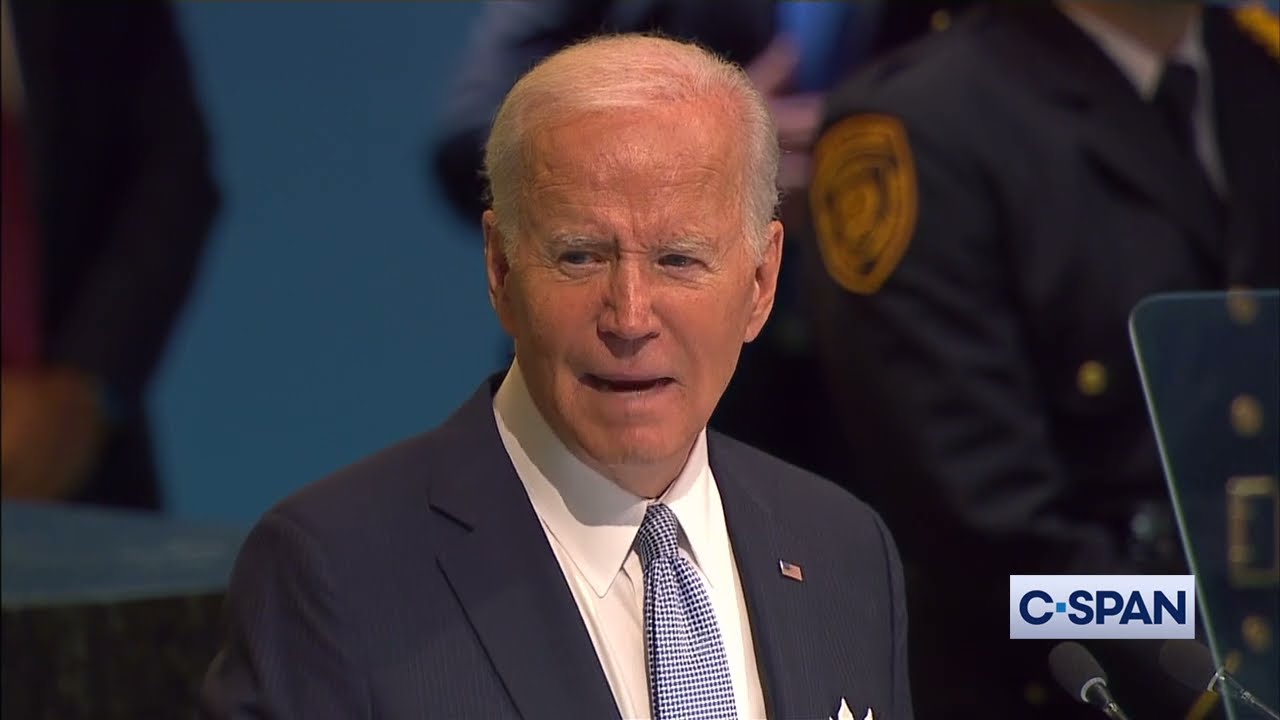 , which focused mainly on the Russian invasion of Ukraine, also included calls for global cooperation on important issues including food insecurity, human rights, and climate change. The climate part of his speech lasted roughly 3 minutes and included celebrating the passage of the Inflation Reduction Act. He also touched on recent climate disasters and the need for global emissions reductions, as well as promising billions of dollars in international climate finance.
Despite the relatively modest amount of time he spent on climate change, many in right-wing media were outraged that he even mentioned climate at all. Their comments included climate denial and falsehoods about the importance of climate change to the global community.
Right-wing media falsely claimed that the global population doesn’t care about climate change
Climate change is a serious concern around the world. For example, a January 2021 survey found that a majority of people around the globe want greater climate action. And a September 2021 Pew poll found that the world’s population increasingly views climate change as a personal threat. In August of this year, another Pew survey found that a “median of 75% across 19 countries in North America, Europe and the Asia-Pacific region label global climate change as a major threat.”
Additionally, people from the global south — those who have contributed the least to the climate crisis but disproportionately suffer its effects — are often some of the loudest voices for climate action. Around the same time that Biden gave his UN speech, indigenous peoples from around the world were protesting in New York for climate justice. The president of Kenya made climate change a key part of his UN speech, and the prime minister of Pakistan, a country that has seen over 30 million displaced due to climate-fueled monsoon flooding, thanked Biden for “highlighting the plight of the flood victims.”
Climate change and poverty, meanwhile, are inextricably linked, as are climate change and global hunger. These facts, however, were still not enough to convince right-wing commentators in the U.S. that climate change is a significant threat to the global population.
For example, on the September 22 edition of Newsmax’s Wake Up America, host Rob Finnerty stated that “there's 193 sovereign nations in that room right there. … And nobody cared about that part of the speech. They needed a lot more from the American president, with everything going on in the world right now, and they get climate change.”
On Fox News’ Fox & Friends, co-host Steve Doocy insinuated that people living in poverty don’t care about climate change, stating, “Suddenly he’s talking about climate change. And, you know, there are 675 million people living in poverty around the world. And for the president of the United States to be talking about climate change rather than trying to figure out a way to feed them.”
Doocy also entirely missed the fact that Biden did discuss food in his speech; he mentioned the term “food insecurity” 6 times, while also mentioning “feeding the world.”
The editorial board of the right-wing New York Post also claimed that the world's poor don’t care about climate change. They referred to climate change as part of a “laundry list of left-liberal shout-outs,” before writing that the speech focused “on climate change, which Biden claimed lists first among the ‘challenges that matter most to people’s lives.’ The planet’s 674 million people living in abject poverty don’t agree, Joe.”
Right-wing media also dipped into one of their favorite overused talking points when it comes to climate change: U.S. action is worthless because China is the biggest polluter
There were also criticisms claiming China does not care about climate change. Fox & Friends co-host Brian Kilmeaderemarked about Biden’s climate comments that “climate change is unbelievable. The fact is that China could not care less.” OnWake Up America,The Daily Caller’s Briana Lyman took this China criticism a step further, stating that if “you want to talk about climate change, then you need to talk about China because China is responsible for more than double the emissions of the United States. … I think it's a dereliction of duty when he doesn't tie China and climate change together.”
Kilmeade’s comments ignore the fact that China is by far the largest market for clean energy in the world, and that its pledge to become carbon neutral by 2060 came about a year before the U.S. passed major climate legislation. Yes, its coal plants (and emissions) are a huge problem, but to say that the country doesn’t care about climate change (especially when an unprecedented heat wave just hit the country) is absurd.
Regarding Lyman’s comments, Biden did mention that the United States “will work with every nation, including our competitors, to solve global problems like climate change.” Immediately after this, he referenced China and said the U.S. will not seek out conflict with them.
Lyman also touched on a longtime right-wing trope about climate change: that countries like China are the problem because they currently emit the most carbon, and because of this, it’s foolish to think that the U.S. should act on climate change. But the United States is the largest historical emitter; per capita emissions in the U.S. vastly outweigh those of China; and many of our products are manufactured in China.
Solely blaming China while absolving the U.S. for its own pollution problems and its outsized role in spreading climate denial does nothing for solving climate change in the long run.
Right-wing media also exaggerated the time Biden spent talking about climate change, and they threw in some good-old-fashioned climate denial
Three minutes out of 30 is arguably not enough time to devote to a problem that has led to a summer of destructive extreme weather across the globe. But it was still enough to annoy right-wing media figures.
Again on Wake Up America, host Rob Finnerty stated that “the president spent a lot of time talking about climate change during his speech. … This, of course, coming at a crucially important time. We’re seven months into the worst war in Europe that we've seen since World War II, and the president took the opportunity to campaign for Democrats and talk about climate change.” Additionally, on the September 21 edition of Kudlow, guest Steve Moore falsely claimed that “he spent half the time talking about climate change.”
Perhaps the worst reaction came from Newsmax host Eric Bolling, who went on a climate denial rant on the September 21 edition of **Eric Bolling The Balance**. He called climate change “another made-up crisis lurking just around the corner,” adding, “Never let a good crisis go to waste.” He then blamed Al Gore for supposedly inaccurate predictions about climate change and chastised former President Barack Obama for buying a house near the sea despite being concerned about rising sea levels.
The right-wing blow-up over Biden’s climate comments is not surprising. To these figures and outlets, any action on climate, big or small, is akin to a radical socialist takeover of the U.S. economy. In particular, the right has increased its climate denial and criticism of climate policies in recent months. As climate change worsens and global citizens come together to clamor for climate action, right-wing media will continue todouble down on denial and lies to protect their polluting interests.
Related
Fox News’ vicious response to the California heat wave is a harbinger of things to come
09/16/22
As a climate-fueled heat wave stresses California's electric grid, right-wing media are disingenuously attacking electric vehicles
09/02/22
The Inflation Reduction Act is not the Green New Deal no matter what Fox News says
08/19/22
3/22
standard BS excuse for US action is that more polluting, developing world puts out more ghg and will not cut back, thus it's pointless b/c emissions will go up whatever we do PLUS it will give them an economic advantage over US; reductionistic b/c it ignore the 100 year headstart we had (in both development and pollution, and they don't have the money to act aggressively b/c their ppl are poor/hungry; US largely abandoned green R&D that could save them (and we could still lead/sell to the world]
sparked by
Statements of Support
Heather Reams, Citizens for Responsible Energy Solutions (CRES) Executive Director: “CRES applauds US Rep. John Curtis (R-UT) and the 51 other House Republicans who today announced the creation of the Conservative Climate Caucus and looks forward to working with Members and staff on its agenda. The climate is changing and to address it, our country needs a commonsense approach that works by reducing energy prices, not energy choices;
shrinking our emissions, not our economy; and,
exporting American innovation, not American jobs. Despite what fringe activists and their Capitol Hill champions say, overregulatingAmerica will not lower emissions globally.This caucus understands that climate change is a global issue.Today, 85 percent of all greenhouse gas emissions occur outside of the United States – a share that will increase to 90 percent by the end of the next decade. This means that U.S. climate and energy policy must foster innovation and commercialization pathways that work forIndiana as well as for India. Achieving emissions-reduction solutions are possible with the leadership demonstrated by the creation this caucus today.”
Rich Powell, ClearPath Executive Director: “Republicans have real solutions for climate change – ones that are technologically realistic, economically feasible, and politically sustainable. Over the past decade, conservatives have institutionalized big, bold goals anchored by clean energy breakthroughs as the best approach to solving the climate challenge. Higher taxes and more regulations won’t solve it – and this Conservative Climate Caucus will continue advancing solutions that strengthen the American economy, and reduce global carbon emissions.”
===
7 22
United States Senate candidate Herschel Walker (R-Georgia) recently gave a speech at the Hall County Republican Party Independence Day Picnic in which he fired off a series of oversimplified claims about climate change.
"Get rid of the pipeline, get rid of the energy, starts your downfall, because we need energy for everything, do y'all know that?" Walker said. "And they would talk about the Green New Deal, you know climate change. I’m gonna help ya’ll with that real quickly, and I'm gonna do it in the Wrightsville way so you can understand what I'm saying."
Walker then suggested that foreign powers, rather than corporate polluters, are primarily responsible for poisoning American skies and waterways. While that does have some validity, it nonetheless dismisses the damage being done by domestic sources. To Walker's credit, however, it was a tiny break away from the GOP's broader stance that climate change is either grossly overblown or nonexistent.
READ MORE: 'Pathological liar' Herschel Walker is a 'campaign's worst nightmare': report
“We in America have some of the cleanest air, the cleanest water of anybody in the world,” Walker said to cheers from the crowd. "So what we're gonna do is we're gonna put from the Green New Deal millions or billions of dollars cleaning our good air up. So all of a sudden, China and India ain't put nothing in their – cleaning that situation up."
Walker added that "since we don’t control the air our good air decided to float over to China’s bad air so when China gets our good air, their bad air got to move. So it moves over to our good air space. Then now we got we to clean that back up."
Watch below via Mediaite:
aviva chomsky
https://www.alternet.org/2022/03/dark-side-of-american-exceptionalism/
... exceptional, but not in a good way]
Today, the situation has shifted — at least a bit. With approximately 4% of the world’s population, the United States still holds about 30% of its wealth, while its commitment to over-consumption and maintaining global dominance remains remarkably unshaken. To grasp that, all you have to do is consider the Biden White House’s recent Indo-Pacific Strategy policy brief, which begins in this telling way: “The United States is an Indo-Pacific power.” Indeed.
In 2022, the relationship between wealth, emissions, and climate catastrophe has become ever clearer. In the crucial years between 1990 and 2015, the global economy expanded from $47 trillion to $108 trillion. During that same period, global annual greenhouse-gas emissions grew by more than 60%. Mind you, 1990 was the year in which atmospheric levels of carbon dioxide (CO2) first surpassed what many scientists believed was the level of safety — 350 parts per million, or ppm. Yet in the 22 years since then, more CO2 and other greenhouse gases have been emitted into the atmosphere than in all of history prior to that date, as atmospheric CO2 careened past 400 ppm in 2016 with 420 ppm now fast approaching.
Inequality and Emissions
Growing global wealth is closely associated with growing emissions. But the wealth and responsibility for those emissions are not shared equally among the planet’s population. On an individual level, the wealthiest people on Earth consume — and emit — far more than their poorer counterparts. The richest 10% of the world’s population, or about 630 million people, were responsible for more than half of the increase in greenhouse-gas emissions over the last quarter-century.On a national level, rich countries are, of course, home to far more people with high levels of consumption, which means that the larger and wealthier the country, the greater its emissions.
In terms of per capita income, the United States ranks 13th in the world. But the countries above it on the list are mostly tiny, including some of the Persian Gulf states, Ireland, Luxembourg, Singapore, and Switzerland. So, despite their high per-capita emissions, their overall contribution isn’t that big. As the third-largest country on this planet, our soaring per-capita emissions have, on the other hand, had a devastating effect.
With a population of around 330 million, the United States today has less than a quarter of either China’s population of more than 1.4 billion or India’s, which is just under that figure. Four other countries — Brazil, Indonesia, Nigeria, and Pakistan — fall into the population range of 200 to 300 million, but their per-capita gross domestic products (GDPs) and their per-capita emissions are far below ours. In fact, the total U.S. GDP of more than $19 trillion far exceeds that of any other country, followed by China at $12 trillion and Japan at $5 trillion.
In sum, the United States is exceptional when it comes to both its size and wealth.I’m sure you won’t be surprised to learn then that, until 2006, it was also by far the world’s top CO2 emitter. After that, it was surpassed by a fast-developing China (though that country’s per capita emissions remain less than half of ours) and no other country’s greenhouse gas emissions come close to either of those two.
To fully understand different countries’ responsibilities, it’s necessary to go past yearly numbers and look at how much they’ve emitted over time, since the greenhouse gases we put in the atmosphere don’t disappear at the end of the year. Here again, one country stands out above all the others: theUnited States, whose cumulative emissions reached 416 billion tons by the end of 2020. China’s, which didn’t start rising rapidly until the 1980s, reached 235 billion tons in that year, while India trailed at 54 billion.
Having first hit 20 billion tons in 1910, U.S. cumulative emissions have only shot up ever since, while China’s didn’t hit that 20 billion mark until 1979. So the U.S. got a big head start and, cumulatively speaking, is still way ahead when it comes to taking down this planet.
The U.S. Climate Action Network (USCAN) argues that excessive emitters like the United States have already used up far more than their “fair share” of this planet’s carbon budget and so, in fact, owe a huge carbon debt to the rest of the world to make up for their outsized contribution to the problem of climate change over the past two centuries.Unfortunately, the 2015 Paris Agreement’s voluntary, non-enforceable, and nationally determined limits on emissions functionally let rich countries continue on their damaging ways.
In fact, nations should be held responsible for repaying their carbon debt. The world’s poorest people, who have contributed practically nothing to the problem, deserve access to a portion of the remaining budget and to the sort of aid that would enable them to develop alternative forms of energy to meet their basic needs.
Under the fair-share proposal, it’s not enough for the United States just to stop adding emissions. This country needs to repay the climate debt it’s already incurred. USCAN calculates that to pay back its fair share the United States must cut its emissions by 70% by 2030, while contributing the cash equivalent of another 125% of its current emissions every year through technical and financial support to energy-poor nations.
Bernie Sanders’s Green New Deal proposal adopted the concept of the “fair share.” True leadership in the global climate fight, Sanders has argued, means recognizing that “the United States has for over a century spewed carbon pollution emissions into the atmosphere in order to gain economic standing in the world. Therefore, we have an outsized obligation to help less industrialized nations meet their targets while improving quality of life.”
On this subject, however, his voice and others like it sadly remain far outside the all-too-right-wing mainstream. (And if you doubt that, just check Joe Manchin’s recent voting record).
Are We Making Progress Thanks to New Technologies?
In 2018, the U.N.’s Intergovernmental Panel on Climate Change (IPCC) issued a special report on our chances of limiting global warming to 1.5 degrees centigrade — the goal that the countries involved in the Paris Agreement, including the United States, accepted as their baseline for action. It concluded that, to have a 50% chance of staying below that temperature increase, our future collective emissions couldn’t exceed 480 gigatons (or 480 billion tons). That, in other words, was humanity’s remaining carbon budget.
Unfortunately, as of 2018, global emissions were exceeding 40 gigatons a year, which meant that even if they were flattened almost immediately (not exactly a likelihood), we would use up that budget in a mere dozen years or so. Worse yet, despite a Covid-induced decline in 2020, global emissions actually rebounded sharply in 2021.
Most scenarios for emission reductions, including those proposed by the IPCC, rely optimistically on new technologies to enable us to get there without making substantive changes in the global economy or in the excessive consumption of the world’s richest people and countries. Such technological advances, it’s hoped, would allow us to produce as much, or possibly more energy from renewable sources and even possibly begin removing CO2 from the atmosphere.
Unfortunately, there’s little evidence to support the likelihood of such progress, especially in the time we have left. No matter how much new technology we develop, there seems to be no completely “clean” form of energy. All of them — nuclear, wind, solar, hydropower, geothermal, biomass, and perhaps others still to be developed — rely on massive industrial operations to extract finite resources from the earth; factories to process them; facilities to create, store, and transmit energy; and, in the end, some form of waste (think batteries, solar panels, old electric cars, and so on). Every form of energy will have multiple dangerous environmental impacts. Meanwhile, as the use of alternative forms of energy production increases worldwide, it hasn’t yet reduced fossil-fuel use. Instead, it’s just added to our growing energy consumption.
It’s true that the world’s wealthiest countries have achieved some gains in decoupling economic growth from rising emissions. But much of this relatively minor decoupling is attributable to a shift from the use of coal to natural gas, along with the outsourcing of particularly dirty industries. Decoupling has, as yet, made no dent in global greenhouse gas emissions and seems unlikely to accelerate or even continue at a meaningful enough pace after these first and easiest steps have been taken. So almost all climate modeling, like that of the IPCC, suggests that new technologies to remove CO2 from the atmosphere will also be needed to counter rising emissions.
But negative emissions technologies are largely aspirational at this point. Instead of counting on what still to a significant extent remain technological fantasies, while the wealthy continue their profligacy, it’s time to shift our thinking more radically and focus, as I do in my new book Is Science Enough? Forty Critical Questions About Climate Justice, on how to reduce extraction, production, and consumption in far more socially just ways, so that we can indeed begin to live within our planet’s means. Call it “post-growth” or “degrowth” thinking.
Make no mistake: we can’t live without energy and we desperately do need to turn to alternatives to fossil fuels. But alternative energies are only going to be truly viable if we can also greatly reduce our energy needs, which means reconfiguring the global economy. If energy is a scarce and precious resource, then ways must be found to prioritize its use to meet the urgent needs of the world’s poor, rather than endlessly expanding the luxuries of the wealthiest among us. And that’s precisely what degrowth thinking is all about: scaling back the mindless pursuit of production, consumption, and profit in favor of “human wellbeing and ecological stability.”
Abandoning Exceptionalism
In April 2021, President Biden made a dramatic announcement, setting a new goal for U.S. greenhouse-gas emissions — to reduce them 50% from 2005 levels by 2030 and reach net-zero by 2050. Sounds pretty good, right?
But given that this country’s CO2 emissions had hit a high of 6.13 billion tons in 2005, that means by 2030 we’d still be emitting three billion tons of CO2 a year. Even if we could reach net-zero by 2050, our country alone would, by then, have used up one-quarter of the entire remaining carbon budget for the planet. And right now, given the state of the American political system, there’s neither a genuine plan nor an obvious way to reach Biden’s goal. If we stay on our current path — and don’t count on that if the Republicans take Congress in 2022 and the White House again in 2024 — we would barely achieve a 30% reduction by 2030.
At this point, there’s no guarantee we’ll stay on that path, no matter the political party in power. After all, consider just this:
- In 2010, about half of the new vehicles sold in the United States were cars and half were SUVs or trucks. By 2021, close to 80% were SUVs or trucks.
- In 2020, more than 900,000 new houses were built in this country, their median size, 2,261 square feet. Most of them had four or more bedrooms and 870,000 had central air conditioning.
- President Biden’s infrastructure bill, signed in November 2021, included $763 billion for new highways.
And let’s not even talk about the military-industrial-congressional complex and war. After all, the Department of Defense is the single largest institutional consumer of fossil fuels and emitter of CO2 in the world. Between its worldwide bases, promotion of the arms industry, and ongoing global wars, our military alone produces annual emissions greater than those of wealthy countries like Sweden and Denmark.
Meanwhile, in the run-up to the climate-change meeting in Glasgow, Scotland, in the fall of 2021, Special Presidential Envoy for Climate John Kerry insistedrepeatedly that the United States must work to bring China on board. Joe Biden too kept his attention focused on China. And indeed, given its greenhouse gas emissions and still-expanding use of coal, China does have a big role to play. But to the rest of the world, such an insistence on diverting attention from our own role in the climate crisis rings hollow indeed.
A 2021 study shows that almost all of the world’s remaining coal, not to speak of most of its gas and oil reserves, will need to stay in the ground if global warming is to be kept below 1.5 degrees centigrade. Back in 2018, another study found that even to meet a 2-degree centigrade goal, which it’s now all too clear would be catastrophic in climate-change terms, humanity would have to haltall new fossil-fuel-based infrastructure and immediately start decommissioning fossil-fuel-burning plants. Instead, such new facilities continue to be built in a relentless fashion globally. Unless the United States, which bears by far the greatest responsibility for our climate emergency, is ready to radically change course, how can it demand that others do so?
But to change course would mean to abandon exceptionalism.
Degrowth scholars argue that, rather than risking all of our futures on as-yet-unproven technologies in order to cling to economic growth, we should seek social and political solutions that would involve redistributing the planet’s wealth, its scarce resources, and its carbon budget in ways that prioritize basic needs and social wellbeing globally.
That, however, would require the United States to acknowledge the dark side of its exceptionalism and agree to relinquish it, something that, in March 2022, still seems highly unlikely.
==
Paris: (nrdc)
Meanwhile, coal jobs aren’t so much being transferred “out of America” as they are falling victim to market forces as renewable and natural gas prices decline. But supporting policies that promote an equitable transition—with community-led decision-making, a focus on equity, and retraining support—is an important means to helping communities leave the dirty energy economy behind them.
Finally, rather than giving China and India a pass to pollute, as Trump claimed, the pact represents the first time those two major developing economies have agreed to concrete and time-bound climate commitments. Both countries, which are already poised to lead the world in renewable energy, have made significant progress to meet their Paris goals.
:{:{Exxon Op-ed}:
}:Despite what divestment activists say, ExxonMobil is searching for climate solutions:{
}:Published in the Los Angeles Times (March 14, 2016)
Written by Suzanne McCarron, Exxon’s VP of Public and Government Affairs
ExxonMobil recognizes the risks posed by climate change. We believe that everyone — including oil and gas companies — should be engaged in meaningful action to reduce greenhouse gas emissions.
Based on recent media coverage of our company however, you could be forgiven if you found this surprising. A coordinated public relations campaign is under way against ExxonMobil, which is misleading the public by accusing us of hiding what we knew about climate change and working against climate science. Sadly, the Los Angeles Times is one of the leading publications to repeat these accusations, having published an op-ed article recently (among other pieces to have run in the paper) by a Rockefeller heir supporting the divestment campaign against ExxonMobil.
At ExxonMobil, we’re proud of our history of science and technology research, and this includes our work in addressing climate change. Since the 1970s, we have openly and publicly researched and discussed the risks of climate change, carbon life-cycle analysis and emissions reductions. Our work has resulted in nearly 150 publicly available papers, including more than 50 peer-reviewed publications. We have worked alongside other top scientists and participated in the United Nations Intergovernmental Panel on Climate Change since its inception in 1988, including serving as co-authors for the organization’s climate assessments. [NOTE NO NAMES? WHAT HAPPEED TO THOSE GUYS AND THEIR RESEARCH?] We continue to be active, public participants in the scientific community’s search for solutions.
The fact is, in the last decade, ExxonMobil has spent billions of dollars to research and develop new energy technologies, as well as find ways to reduce our greenhouse gas emissions and environmental footprint. We employ 2,200 PhD scientists and engineers, and more than 5,000 people at our global research and technology divisions. And we have joined with more than 80 universities around the world to research lower-emission technologies.
Let me share a few examples of ExxonMobil’s contributions to emissions reduction:
ExxonMobil, and our subsidiary XTO Energy, have been instrumental in the “shale revolution” that has enabled U.S. gas production to rise by close to 45% since 2005. Increased availability of natural gas,which emits up to 60% less carbon dioxide than coal when burned to generate electricity, is a big reason America’s greenhouse gas emissions have declined to levels not seen since the 1990s.
ExxonMobil scientists and engineers have pioneered nearly 300 patents for technologies that boost efficiency and cut emissions. We are actively researching solutions that could play a major role in emissions reduction in the decades to come, such as carbon capture and sequestration, and biofuels developed from advanced sources such as algae.
Advanced plastics made by ExxonMobil’s chemical company are promoting sustainability and reducing energy use. Auto parts built from strong-but-lightweight plastics made using oil and gas will help make cars 80% more fuel-efficient by 2040.
Given all of this, the recent accusations against ExxonMobil make no sense — that is, until you learn that the anti-ExxonMobil campaign, and the supposedly unbiased media reports it rests upon, is in fact funded by groups actively opposed to the use of oil and natural gas. Some of the leaders of this campaign believe the best way to address climate change is to divest oil and gas company shares or to engage in other gestures intended to demonize an industry helping people around the world enjoy access to modern energy sources and rising living standards.
ExxonMobil fundamentally disagrees with that vision.
Our vision is one in which technological innovations continue to improve people’s quality of life around the world while reducing climate change risks.
Government policies have an important role to play in addressing climate risks, provided those policies are effective and fair. Not all of them are. ExxonMobil spoke out against the Kyoto Protocol in the 1990s because, among other things, it would have exempted two-thirds of the world’s emitters. And we opposed ill-conceived cap-and-trade programs in the 2000s, some of which would have exempted coal.....