Salmon comm'l fish
---
this is for all commercial fisheries, including crab and shellfish
NO MERRI
see related
see hydro pwr dam
---
6 26
AI Overview
The Trump administration has prioritized deregulating commercial fishing and opening protected ocean areas to industry access. Key actions include reversing previous protections in marine monuments and dismantling extensive ocean-monitoring systems in the Pacific and Atlantic. [1,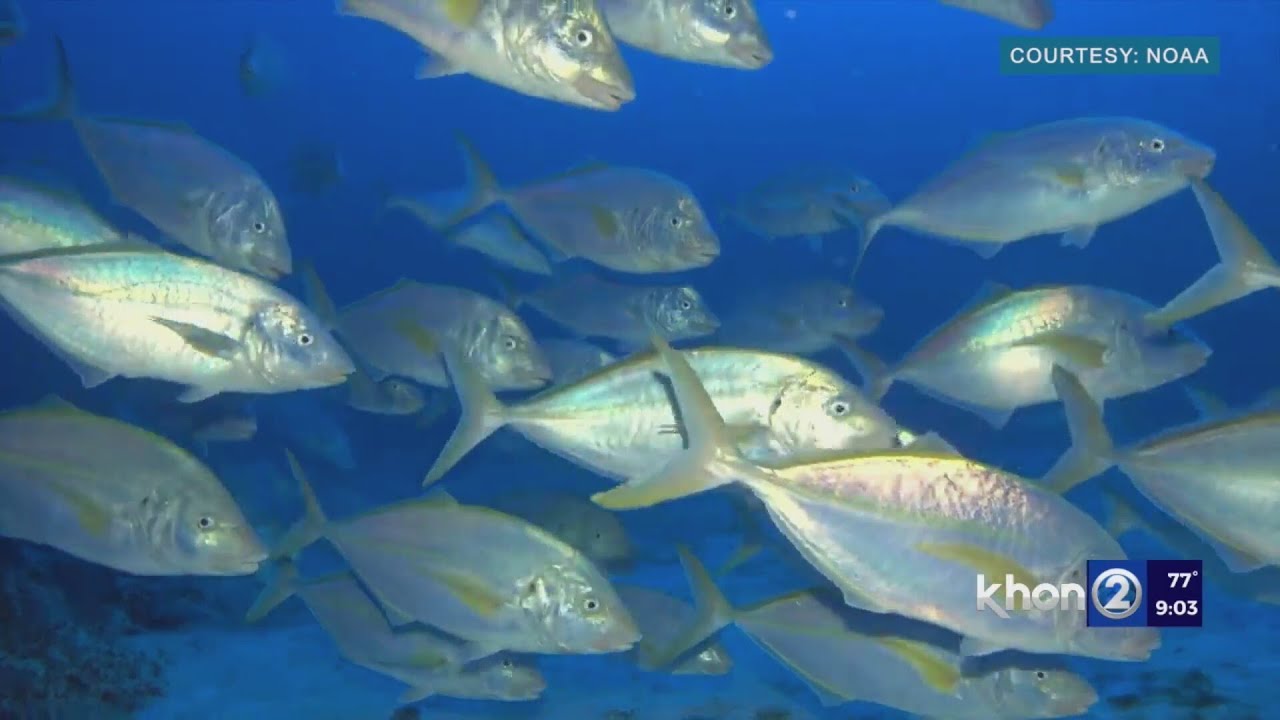 , 3,
 , 5]
Key Policy Actions
- Atlantic Monument Reopening: In February 2026, President Trump issued a proclamation revoking protections to allow commercial fishing in the 4,913-square-mile Northeast Canyons and Seamounts Marine National Monument off the New England coast. [1, 2]
- Pacific Monument Access: Through Executive Order 14276 and subsequent proclamations, the administration has moved to allow commercial fishing in the Pacific Remote Islands Marine National Monument and directed reviews for other protected Pacific sites. [1,, 3]
- Dismantling Ocean Sensors: The administration began removing hundreds of deep-sea scientific instruments, pulling more than 900 sensors from the Pacific and Atlantic oceans. This decades-long observation project was defunded over concerns about cost and the program's focus on climate research. ]
Industry and Environmental Responses
The administration's push to expand fishing access has met with polarized responses: [1]
- Supporters, including the National Oceanic and Atmospheric Administration (NOAA), argue that reducing regulatory burdens is necessary to restore American seafood competitiveness, align with "America First" policies, and support coastal economies. [1,]
- Environmental Advocates contend that lifting protections in these marine parks damages critical biodiversity hotspots and undoes decades of bipartisan conservation efforts. Several conservation groups have launched or threatened legal action in response to these proclamations. [1,, 3]
For a closer look at the concerns surrounding the rollback of protections in marine monuments:
2:36
[Trump opens Pacific marine sanctuary to commercial fishing


KHON2 News
YouTube · Apr 18, 2025](https://www.youtube.com/watch?v=GFteu-Dktf0)
For more context on how the administration's actions are affecting critical data networks:
5:54
[Trump administration dismantles ambitious ocean monitoring ...


PBS NewsHour
YouTube · Jun 3, 2026](https://www.youtube.com/watch?v=yTpETcRkwqI)


10 sites
- NOAA rescinds regulation prohibiting commercial fishing in Atlantic monument area | National Oceanic and Atmospheric Administration
Apr 3, 2026 — In April 2026, NOAA rescinded a regulation that prohibited commercial fishing within the monument's boundaries. This action was ne...

National Oceanic and Atmospheric Administration (.gov)
- Fact Sheet: President Donald J. Trump Unleashes American ...
Apr 17, 2025 — Trump Unleashes American Commercial Fishing in the Pacific. ... UNLEASHING OPPORTUNITY IN THE PACIFIC: Today, President Donald J. ...

The White House (.gov)
- Trump Administration Undermines Decades of Successful Ocean Conservation in Marine Parks
Apr 10, 2026 — However, recent policy shifts by the Trump Administration are downgrading these protections and re-exposing these biodiversity hot...

Marine Conservation Institute
Show all
---
Biden admin creates pathway with eco groups to shutter energy source serving millions of Americans
Legal agreement 'marks a new direction for the Pacific Northwest,' Biden's clean energy czar John Podesta said
 By
Published December 14, 2023
no lnx
the White House, in coordination with Native American tribes and environmental groups, announced actions Thursday that provide a pathway for breaching, or removing, four hydroelectric dams in Washington state to protect salmon.
As part of the announcement, the federal government entered into a legal agreement with the Pacific Northwest tribes and environmental organizations filed earlier in the day in the U.S. District Court for the District of Oregon. Under that agreement, the tribes and eco groups — which had sued the federal government in an effort to forcibly breach the dams — agreed to stay the litigation through 2028.
"President Biden understands that the Columbia River System is the lifeblood of the Pacific Northwest, and for the first time under his direction, federal agencies are putting all hands on deck to support regional and Tribal efforts to restore wild salmon in the region," White House Council on Environmental Quality (CEQ) Chair Brenda Mallory said in a statement.
Mallory said the agreement charts a new path to restore the river. Environmental activists, Democrats and tribes have argued that the four federally-managed dams, which are located on the lower Snake River winding through Idaho and Washington before feeding into the Columbia River and Pacific Ocean, have decimated salmon and steelhead populations by blocking natural migratory patterns.
HOUSE PANEL TO PROBE BIDEN ADMIN'S NEGOTIATIONS WITH ECO GROUPS TRYING TO TEAR DOWN KEY POWER SOURCE
Chair Brenda Mallory, Council on Environmental Quality, speaks at the Fight for Our Future: Rally for Climate, Care, Jobs & Justice in Lafayette Square near The White House on April 23, 2022 in Washington, DC. (Photo by Paul Morigi/Getty Images for Green New Deal Network)
"Today's historic agreement marks a new direction for the Pacific Northwest," added White House clean energy czar John Podesta. "Today, the Biden-Harris Administration and state and Tribal governments are agreeing to work together to protect salmon and other native fish, honor our obligations to Tribal nations, and recognize the important services the Columbia River System provides to the economy of the Pacific Northwest."
Democratic Govs. Tina Kotek of Oregon and Jay Inslee of Washington; several involved tribes, including the Confederated Tribes of the Umatilla; and environmental groups like Earthjustice, which represented plaintiffs in the case, all applauded the agreement as an unprecedented path forward.
MAJOR US POWER SOURCE FACING EXTINCTION THANKS TO RED TAPE, SPARKING CALLS FOR REFORM
The agreement includes $1 billion for wild fish restoration and a plan to develop new clean energy power operated by tribes. And it further establishes the so-called Columbia Basin Restoration Initiative, which includes a "comprehensive new roadmap" for salmon recovery involving a call to replace the energy, transportation, irrigation and recreation services provided by the lower Snake River dams, so they can be breached, according to Earthjustice.
The initiative explicitly recommends that dams are breached within two fish generations, or approximately eight years. While there isn't an explicit plan to breach the dams — an action that the White House has acknowledged would require congressional approval — the agreement does include commitments to begin replacing the services provided by the dams.
President Biden previously pledged to work with proponents of breaching the four lower Snake River dams to "bring healthy and abundant salmon runs back." (Getty Images)
"Congress — and Congress alone — can authorize removal of the dams on the lower Snake River. Bureaucrats, activist litigation, nor this administration’s radical agenda will determine the fate of any of the Northwest’s federal dams," Sen. Jim Risch, R-Idaho, said in a statement to Fox News Digital.
"This litigation effort was useless: It occurred behind closed doors, between two parties who wanted the same end result — to tear out our dams, and it completely excluded Idahoans who rely on the River System for its energy, transportation, agriculture and recreation benefits," he continued. "I will continue to fight any breaching efforts, and, at every turn, I will reject the Biden administration’s efforts to usurp Congressional authority."
BIDEN ADMIN PLAN TO RELEASE PREDATOR NEAR RURAL COMMUNITIES FACES WIDESPREAD OPPOSITION: 'A HUGE THREAT'
Risch, other Republican lawmakers, power industry groups and agriculture groups have all loudly objected to any plan involving the breaching of the dams, pointing to their clean energy output and vital services providing passage for barges traveling along the river.
The dams were constructed in the 1960s and 1970s by the U.S. Army Corps of Engineers primarily to ensure the Snake River was passable for such barge transportation. However, since then, the main benefit has been their reliable clean energy output. They still provide about 8% of the state's electricity, enough to serve millions of residents, and have a large total capacity of 3,000 megawatts.
A U.S. Army Corps of Engineers dam is shown in the Columbia River system in Washington state. (Marli Miller/UCG/Universal Images Group via Getty Images)
Removing the dams would also likely chip away at U.S. climate goals since their energy production would likely need to be replaced by fossil fuel alternatives. According to federal data, replacing hydropower generated by the dams with natural gas generation would increase carbon emissions by up to 2.6 million metric tons per year, the equivalent of 421,000 passenger cars.
In addition to the impacts on energy and climate ambitions, removing the four Snake River dams would harm agriculture exports. Aided by the dams, barges traveling along the Columbia River system carry about 60% of Washington's annual wheat exports and a staggering 40% of the nation's total wheat production.
CLICK HERE TO GET THE FOX NEWS APP
"Instead of working with all interests, the U.S. Government chose for months to hold secret negotiations and refused to share any details with us, let alone allow our participation," the executive directors of Northwest RiverPartners, the Public Power Council and the Pacific Northwest Waterways Association, which collectively represent power utilities, ports, agriculture companies and other businesses dependent on the dams, said last month.
"It is not surprising, then, that this proposal turns its back on over three million electricity customers as well as the farming, transportation, navigation and economic needs of the region," they continued. "By purposely excluding our respective organizations from the negotiations, literally millions of Northwest residents were deprived of fair representation in this process."
That statement came after lawmakers, led by Rep. Cathy McMorris Rodgers, R-Wash., wrote to President Biden, calling for him to reject any agreement involving the breaching of dams. The letter included a leaked mediation document that paved the way for Thursday's announcement.
Thomas Catenacci is a politics writer for Fox News Digital.
Conversation1.9K Comments
2 Viewing
Discussions are moderated. For more details, click here.
Sort by
Best
mrogers091
14 December, 2023
I live in this region. To be clear, these dams account for 8% of the electricity in our state and almost all the electricity in the counties on the rivers. There is no proposed replacement for that lost electricity other than vague references to alternative energy. The majority of people in this ar...
See more
Reply
171
2
Share
harless
14 December, 2023
If you're still voting for them you're still part of the problem.
Reply
135
1
Share
6 replies
broaton
14 December, 2023
You answered the question to your on problem, are you going to fix it or not?
Reply
31
Share
3 replies
Show 30 more replies
iNVA40
14 December, 2023
I grew up in the northwest. Reduced fish run numbers are more likely caused by protecting marine mammals who have learned to hang out near fish ladders to feast on salmon and steelhead. Dems would never believe that, however.
Reply
169
1
Share
mrogers091
14 December, 2023
I live in the affected region. The cause has been studied. It's mainly due to over fishing in international waters by the Russians and Chinese (mostly) and changing ocean conditions. Neither of which will be helped by removing the dams. Salmon runs are also down to historically low levels on the Ku...
See more
Reply
80
Share
5 replies
LaKorvo
14 December, 2023
Yes. I live about a mile from the Ballard Locks fish ladder in Seattle. During salmon runs, you can go watch the sea lions frolic amongst the fish as they gorge themselves.
Reply
47
1
Share
3 replies
Show 12 more replies
superk55
14 December, 2023
I remember how great things were in 2020 before the pandemic. The economy was booming, unemployment was low, and our country was respected on the global stage. I miss those days when the focus was on building a strong economy and creating jobs for Americans. It's sad to see how things have changed...
See more
Reply
221
3
Share
derangedliberals623
14 December, 2023
Just think all of that came to an end because millions of uneducated people could not handle mean tweets and criticism.
Reply
141
1
Share
9 replies
CHITTYB
14 December, 2023
That is what happens when Constitution hating pagans are in the White House.
Reply
36
Share
3 replies
Show 7 more replies
everythingisfine562
14 December, 2023
It's not about saving the earth from climate change, it's about bringing America to it knees to allow an outside country to conquer us.
If it's about the fish ladders being too steep, they could build a new fish ladder that are not as steep.
Guess they don't want water storage (lakes behind the dams...See more
Reply
215
5
Share
FIVE-0
14 December, 2023
Wait until the wheat grown in the region can’t be shipped. WA is the 5th largest producer of wheat in the nation and Idaho is there too.
Reply
58
Share
5 replies
Dm1217
14 December, 2023
It’s actually about bringing the US to its knees so it can institute TheGreat Reset, also known as Naziism Round 2.
Reply
100
Share
3 replies
Show 7 more replies
2315nyy
14 December, 2023
Why does it feel we are going backwards in our development with this administration in charge of things? We are doing away with hydroelectricity, gas powered vehicles, gas stoves, etc. We are going to be heating homes with wood stoves, cooking over fires and going to work in conestoga wagons at thi...
See more
Reply
116
Share
ktuncia545
14 December, 2023
Nope, they are outlawing gas chainsaws as of the 1st of the year and will work on extending the ban on wood stoves after that since most areas with any kind of city have already banned them. We will also not be traveling by wagon as horses are a source of "green house gases" and it's inhumane to us...
See more
Reply
38
Share
4 replies
bidenwasbought
14 December, 2023
because almost all progressive policies are really regressive
Reply
59
Share
2 replies
Show 5 more replies
xsnowflakes
14 December, 2023
So they actually have a non-polluting carbon neutral energy source that supplies millions of people and they are going to cut that off at the same time they are demanding a huge influx of electric vehicles.
Gee what could go wrong.
Reply
54
Share
IFlyJetsSir450
14 December, 2023
they will have you charging your electrics by peddling , and speaking of peddling how is Hunter making money these days ?
Reply
27
Share
2 replies
Bibbles
14 December, 2023
that natives could help out if they actually abided by catch and possession limits for salmon. but natives dont have to do that. They take whatever they want.
Washington should be forced to build replacement electrical systems. Rather than buy from other states.
Reply
54
Share
venturagirl
14 December, 2023
And what about the electricity Washington state sells downstream? That takes power away from other states.
Reply
6
Share
1 reply
bandman56
14 December, 2023
While I agree with your sentiment, you can't buy if noone is selling.
Reply
9
Share
hallowgabus
14 December, 2023
Just one little part of the larger impact of breaching the four Snake River Dams.
"WHEAT ON THE COLUMBIA SNAKE RIVER SYSTEM
The Columbia/Snake River System is the nation’s single largest wheat export gateway, transporting over 60% of all U.S. wheat to markets overseas. Eleven states export through ou...
See more
Reply
23
Share
harleyrider123
14 December, 2023
Joe Biden will drive the trucks like he did in the olden days.
Reply
14
Share
ohheck137
14 December, 2023
And we'll have to tell California that we can no longer sell power to them.
Reply
3
Share
justinthyme1786
14 December, 2023
The dams aren't the problem. Sea lions have been allowed to surge due to their protected status. Another problem is the explosive growth of people in the northwest. I live next to the Puyallup River and could likely cross it on the shoulders of fishermen without getting wet. It never used to be tha...
See more
Reply
17
Share
bigtony621
14 December, 2023
Caves for living and rocks for hunting will be highly sought after Biden’s done. Can’t use oil, coal or water for power, and the animal rights activists are after wind turbines for killing birds. I don’t see any outcome except a bad end
Reply
121
1
Share
---
Secret court agreement between Biden admin, environmental groups revealed
Secret court agreement between Biden admin, environmental groups revealed - Fox News
Fox News
'The Green Fraud' author Marc Morano joins 'Jesse Watters Primetime' to discuss the collapsing green industry. A group of House lawmakers representing ...
Secret court agreement between Biden admin, environmental groups revealed
vid
Marc Morano: Biden's green energy agenda is in complete collapse
'The Green Fraud' author Marc Morano joins 'Jesse Watters Primetime' to discuss the collapsing green industry.
A group of House lawmakers representing the Pacific Northwest made public a court-approved confidential mediation between the Biden administration and environmental groups pushing to remove four hydroelectric dams in Washington to protect salmon.
The document, which until now hasn't been made public, was drafted on Nov. 2 as part of an agreement in which activist groups agreed to pause their litigation against the federal government. The groups have argued in favor of breaching the four federally-managed dams amid declining salmon populations in the lower Snake River, which winds through Idaho and Washington before feeding into the Columbia River and then into the Pacific Ocean.
"It is imperative that our constituents, whose livelihoods depend on the Columbia River System, have a comprehensive understanding of this document’s contents so they can anticipate and prepare for the wide-ranging impacts that will inevitably be felt across the region should the commitments detailed in this document be realized," the lawmakers, led by Rep. Cathy McMorris Rodgers, R-Wash., wrote to President Biden on Wednesday.
"Additionally, as Members of Congress representing the Pacific Northwest and tasked with oversight of the Executive Branch, it is our duty to ensure any actions committed to as part of this agreement do not circumvent by any means the congressional authorization that would be required to execute certain proposed provisions, such as the removal of certain dams," they continued.
MAJOR US POWER SOURCE FACING EXTINCTION THANKS TO RED TAPE, SPARKING CALLS FOR REFORM
Rep. Cathy McMorris Rodgers, R-Wash., who chairs the Energy and Commerce Committee, led the letter to President Biden on Wednesday, revealing the confidential mediation. (AP Photo/Alex Brandon)
In the letter — which included the confidential mediation document the lawmakers recently obtained — Rodgers, who chairs the House Energy and Commerce Committee, and Reps. Dan Newhouse, R-Wash.; Cliff Bentz, R-Ore.; and Russ Fulcher, R-Idaho, asked a series of questions about the Biden administration's intentions with the agreement.
For example, the mediation states "the science is clear, and now so must be our path forward." The lawmakers questioned what exactly "the science" was and which scientific reports the federal government has used to come to its conclusions.
"We agree that business as usual — and the consequential disappearance of salmon and other native fish populations in the Columbia River Basin — is unacceptable," the mediation states. "And while there is still time to save these fish, there is no time to waste."
It further notes that Democratic Washington Gov. Jay Inslee and Sen. Patty Murray, D-Wash., released recommendations last year to quickly deploy green energy in the region to account for lost power were the four dams to be torn down. The document later notes the region must account for power to replace energy services currently provided by the dams.
In recent years, multiple government and private reports have determined that breaching the dams would have a dramatic negative impact on energy production, climate goals and transportation in Washington.

A U.S. Army Corps of Engineers dam is shown in the Columbia River system in Washington state. (Marli Miller/UCG/Universal Images Group via Getty Images)
The dams were constructed in the 1960s and 1970s by the U.S. Army Corps of Engineers primarily to ensure the Snake River was passable for barge transportation. However, since then, the main benefit has been their reliable clean energy output. They still provide about 8% of the state's electricity, enough to serve millions of residents, and have a large total capacity of 3,000 megawatts.
Removing the dams would also likely chip away at U.S. climate goals since their energy production would likely need to be replaced by fossil fuel alternatives. According to federal data, replacing hydropower generated by the dams with natural gas generation would increase carbon emissions by up to 2.6 million metric tons per year, the equivalent of 421,000 passenger cars.
INTERNAL DOCS SHOW BIDEN ADMIN WAIVED TAXPAYER SAFEGUARDS TO BOOST OFFSHORE WIND PROJECT
"Our organizations have repeatedly looked for ways to find common ground with the plaintiffs’ concerns during the mediation process, submitting numerous inputs, documents, and studies," said the executive directors of Northwest RiverPartners, the Public Power Council, and the Pacific Northwest Waterways Association, which collectively represent power utilities, ports, agriculture companies and other businesses dependent on the dams.
"Instead of working with all interests, the U.S. Government chose for months to hold secret negotiations and refused to share any details with us, let alone allow our participation," they continued. "It is not surprising, then, that this proposal turns its back on over three million electricity customers as well as the farming, transportation, navigation, and economic needs of the region. By purposely excluding our respective organizations from the negotiations, literally millions of Northwest residents were deprived of fair representation in this process."
According to Northwest RiverPartners, the mediation document goes "well beyond creating a roadmap for breaching the lower Snake River dams, establishing a plan that could demolish the capabilities of the entire Federal Columbia River Power System."
President Biden said in March he would work with proponents of breaching — Indigenous tribes; Sens. Patty Murray, D-Wash., and Maria Cantwell, D-Wash.; and Rep. Mike Simpson, R-Idaho — to "bring healthy and abundant salmon runs back" to the Columbia River system. (Jim Lo Scalzo/EPA/Bloomberg via Getty Images)
In addition to the impacts on energy and climate ambitions, industry groups have argued that removing the four Snake River dams would disrupt the economy and harm agriculture exports. The river system notably feeds the largest U.S. wheat export gateway.
Aided by the dams, barges traveling along the Columbia River system carry about 60% of Washington's annual wheat exports and a staggering 40% of the nation's total wheat production.
In a statement to Fox News Digital on Wednesday, Earthjustice, one of the plaintiffs involved in the case and mediation, said it couldn't comment on the documents made public earlier in the day.
"Unless we hear differently from the Federal Mediation and Conciliation Services, it remains against the rules for us to share anything in this DRAFT & CONFIDENTIAL document," Earthjustice spokesperson Elizabeth Manning said.
[get app]
"So no, we cannot comment on the agreement," she added. "Again, this is customary in mediation, and all parties to this litigation — including plaintiffs, defendants and all intervening parties — are bound by the same confidentiality rules."
According to court filings, the parties involved in the case may request a multiyear pause on litigation to allow for the implementation of the package as soon as Dec. 15.
The White House Council on Environmental Quality didn't respond to a request for comment.
Thomas Catenacci is a politics writer for Fox News Digital.
---
more heat dome, greece US midwest
jeff goodell bk kpfa 7/26/23 upfront river temp rise a few degrees leads to O2 loss
https://www.alternet.org/ocean-temps/
100 degree fla, coral bleach
https://www.alternet.org/weve-fallen-off-a-cliff/
no lnx twt an 7 23
'We’ve fallen off a cliff': Scientists warn Atlantic currents could collapse as early as 2025
Brett Wilkinsand Common DreamsJuly 26, 2023
"It is very plausible that we've fallen off a cliff already and don't know it," said one researcher.
The system of Atlantic Ocean currents that drive warm water from the tropics toward Europe is at risk of collapsing in the coming decades, an analysis of 150 years of temperature data published Tuesday concluded.
"The Atlantic Meridional Overturning Circulation (AMOC), which includes the Gulf Stream, is a major tipping element in the climate system and a future collapse would have severe impacts on the climate in the North Atlantic region," states the study, which was published in the scientific journal Nature Communications.
Although the analysis notes that "assessments by the Intergovernmental Panel on Climate Change (IPCC), based on the Climate Model Intercomparison Project (CMIP) model simulations suggest that a full collapse is unlikely within the 21st century," the study's authors "estimate a collapse of the AMOC to occur around mid-century under the current scenario of future emissions."
"We show that a transition of the AMOC is most likely to occur around 2025-2095," the paper states with "95% confidence."
University of Copenhagen professor Peter Ditlevsen, who led the study, told The Guardian: "I think we should be very worried. This would be a very, very large change. The AMOC has not been shut off for 12,000 years."
Bill McKibben, co-founder of the climate action group 350.org, tweeted that "Gulf Stream collapse used to be viewed as a far-off and remote possibility... Less so now."
Meteorologist and climate journalist Eric Holthaus called the study's findings "incredibly worrying."
The Washington Post reports:
The new study adds to a growing body of evidence that this crucial ocean system is in peril. Since 2004, observations from a network of ocean buoys [have shown] the AMOC getting weaker—though the limited time frame of that data set makes it hard to establish a trend. Scientists have also analyzed multiple "proxy" indicators of the current's strength, including microscopic organisms and tiny sediments from the seafloor, to show the system is in its weakest state in more than 1,000 years.
For thousands of years, the Gulf Stream has carried warm waters from the Gulf of Mexico northward along the eastern North American seaboard and across the Atlantic to Europe. As human-caused global heating melts the Greenland ice sheet, massive quantities of fresh water are released into the North Atlantic, cooling the AMOC—which delivers the bulk of the Gulf Stream's heat—toward a "tipping point" that could stop the current in its tracks.
According to The Guardian:
A collapse of AMOC would have disastrous consequences around the world, severely disrupting the rains that billions of people depend on for food in India, South America, and West Africa. It would increase storms and drop temperatures in Europe, and lead to a rising sea level on the eastern coast of North America. It would also further endanger the Amazon rainforest and Antarctic ice sheets.
"It is very plausible that we've fallen off a cliff already and don't know it," Hali Kilbourne, an associate research professor at the University of Maryland Center for Environmental Science, toldThe New York Times. "I fear, honestly, that by the time any of this is settled science, it's way too late to act."
Other studies—including one published in March and another in 2021—have also concluded that the AMOC is at risk of collapsing this century.
Meanwhile in the Southern Hemisphere, Antarctic currents that enrich 40% of Earth's deep oceans with oxygen and nutrients essential for marine life have slowed dangerously in recent decades and could also collapse by mid-century, an Australian study released in May showed.
FROM YOUR SITE ARTICLES
New evidence that an extraterrestrial collision 12,800 years ago triggered an abrupt climate change for Earth ›
What was the 'catastrophic implosion' of the Titan submersible? An expert explains ›
Atlantic Salmon Is Basically Extinct: You’re Eating a Genetically Eroded Version ›
RELATED ARTICLES AROUND THE WEB
A major Atlantic current is at a critical transition point | NOVA | PBS ›
Is Atlantic Ocean current near collapse? Could be sooner than ... ›
A Stagnant Jet Stream Is Fueling Intense Heat Worldwide. Could ... ›
an 822
A fledgling international effort to protect the world's oceans from further damage is "on the brink of failure," and the governments of wealthy countries are primarily to blame, Greenpeace International warned Thursday.
Diplomats gathered at the United Nations headquarters in New York City are nearing the end of the fifth and final round of negotiations on a much-needed pact to protect biodiversity in the "high seas"—a global commons comprising the two-thirds of the ocean that lie outside the jurisdiction of any single country and where legally binding regulations are virtually nonexistent.
Conservationists have long hoped that the ongoing summit—described by some as the "last chance" to forge a robust global ocean treaty—would lead to the establishment of "Marine Protected Areas" and rules mandating environmental assessments prior to deep-sea mining and other industrial activities.
But a handful of mostly rich countries—including the United States, Canada, and members of the so-called High Ambition Coalition on Biodiversity Beyond National Jurisdiction—have derailed progress made on the text byprioritizing "hypothetical future profits" that could bederived from extracting marine genetic resourcesover protecting aquatic species, according to Greenpeace.
"The oceans sustain all life on Earth, but the greed of a few countries means this round of talks for a U.N. ocean treaty are now set to fail," Laura Meller of Greenpeace's Protect the Oceans campaign said Thursday in a statement. "The High Ambition Coalition has utterly failed. They should be the No Ambition Coalition."
Members of the coalition have "obsessed over their hypothetical future profits, undermining all the other progress made at these talks," said Meller. "Unless ministers urgently pick up the phone today to their counterparts and hammer out a deal, this treaty process will fail."
The health of the world's oceans, which cover roughly 70% of the Earth and are indispensible to life on the planet, has been rapidly deteriorating as a result of unmitigated greenhouse gas emissions, surging plastic pollution, and overexploitation.
The high ambition coalition pledged earlier this year to finalize a treaty in 2022 that would protect 30% of the world's oceans by 2030, but the proposed text is "lowering its ambition by the minute," said Greenpeace.
"Less than two months ago I was in Lisbon, at the U.N. Ocean Conference, listening to these leaders promise they would deliver a strong global ocean treaty this year," said Meller. "Now we are in New York and the leaders are nowhere to be found. They've broken their promises."
"We are sad and angry," Meller continued. "Billions of people rely on healthy oceans, and world leaders have failed all of them."
"It now looks like protecting 30% of the world's oceans [by 2030] will be impossible," she added. "Scientists say this is the absolute minimum necessary to protect the oceans, and failure at these talks will jeopardize the livelihoods and food security of billions. We're beyond disappointed."
Greenpeace also accused rich nations of taking "an unfair and neocolonial approach by refusing to commit any finance for the benefit of all countries."
The refusal of the U.S., Canada, and others to provide funding "will stop a treaty from being agreed here," the group added. "With talks set to fail, countries must now take urgent action, show flexibility, and find compromise to deliver a strong treaty text" by Friday.
“Everything Is Destroyed”
Manchin’s advocacy for relaxing environmental regulations on the coal industry extends well beyond coal ash. In at least one instance, that advocacy was linked to the interests of the Edison Electric Institute, or EEI, an energy producer trade group tied directly to Manchin coal, as Sludge reported in July.
In 2012, Manchin was one of the loudestvoices opposing the Obama-era EPA rules limiting mercury and aerosolized acid emissions from power plants like Grant Town, which supplies power to an EEI member. “The EPA needs to be our ally, not our adversary, and work with states like West Virginia that can produce domestic resources to make this country less dependent on foreign energy and more secure as a nation,” Manchin wrote at the time.
In 2019, when the Trump EPA had set in motion a plan to scrap those very same emissions standards for coal-fired power plants, Manchin**changed his tune**, following the EEI’s lead in condemning the change. Joining a coalition of senators opposing the rule, he wrote that “Mercury is a deadly toxin that harms the development of fetuses and children. … It makes no sense to take any action that could lead to the weakening of mercury emission standards.”
As Bloomberg Law then reported, rolling back the environmental regulations could have knocked down the rates power stations could charge to consumers, because coal plants had factored the costs of expensive mercury scrubbing technology into their energy prices. But while mercury-scrubbing technology removes mercury, it also relies on another toxic chemical, bromide, to bind and remove the heavy metal. Bromide comes with its own health and environmental hazards.
“Because coal is the major source of mercury emissions in the world, every time you eat sushi and are exposed to mercury, that’s thanks to coal,” Vengosh explained. In order to reduce these mercury emissions, emitters began using bromide to bind mercury and keep it from aerosolizing. In doing so they began introducing a new dangerous chemical into the environment. “Waterways are becoming enriched in bromide, and when this water is treated with chlorination, that triggers the formation of a disinfection byproduct [haloacetic acids], and that goes straight into drinking water. So now we have a generation of toxic byproducts going straight into our veins.”
Grant Town drinking water was found to have levels of haloacetic acids exceeding EPA limits, and the city of Fairmont’s water department, the largest town abutting Farmington, has also seen spikes in the carcinogenic disinfection byproduct.
“The land is destroyed and the people who live around it,” Steele, the miner, said. “The water is destroyed. Everything is destroyed, and they do that because we allow them to do it. We are the ones who elect these politicians who are owned by coal whores. And they say for 80 years Democrats were in control, but true Democrats were never really in control. These guys were controlled by coal companies, and they just happened to have a D after their name.”...
"It's a climate catastrophe': Most of the salmon in California's 2nd largest river dead or dying
June 15, 2021
The Klamath flows from Oregon into Northern California. The second largest river in California is home to marine life like salmon and trout and has served as the life force for many communities around its more...
https://yyy.theguardian.com/environment/2020/jul/02/fish-species-survival-climate-warming-study
60% can not live where do now in 2100
==
==
house bill shark fin (indonesian slaves on china tuna boat]
https://ecowatch.us7.list-manage.com/track/click?u=214ab5fbb3f6015d74ffab4ec&id=9125a9fbec&e=c2e8fdabfa
320
==
Jim Hightower: Can ‘powerless nobodies’ fight the corporate powers?
Written by Jim Hightower December 21, 2019
The many sparkling bays along the Texas coastline of the Gulf of Mexico have long provided both a working-class living and a valued lifestyle for generations of shrimpers, oysterers and other fishing families. People and seafood, however, are not the only creatures here, for such wildlife as alligators and snakes also call many of these interconnected waterways home. Yet, by necessity and experience, the hardy people of the water have figured out how to share the bays so all creatures can get along.
But in the 1980s, a strange and invasive new critter entered Lavaca Bay, near the town of Port Comfort. Far from getting along, this species proceeded over the years to devour whole harvests of seafood, along with the livelihoods of local Gulf communities. This marauder was not some monster from the deep but a massive, 45,000-acre factory looming over Lavaca Bay. It is the Formosa Plastics Corporation, founded by the richest man in Taiwan.
As its name implies, Formosa is not here for seafood. It is the world’s second largest fabricator of polyvinyl chloride,the tiny, highly toxic pebbles and powders used to make the gabillions of plastic bags, pipes, bottles, etc. that are choking the Earth. For decades, the Formosa plant has cavalierly been dumping trillions of these poisonous pebbles and tons of the polyvinyl powders into its wastewater — which end up in Lavaca Bay.
That poisonous content then spreads to other bays, nearby waterways, the Gulf itself … and into the shrimp, oysters, fish and other creatures living there. The result has been species vanishing from these waters, creating economic and social devastation for families and port communities that rely on nature’s bounty.
Wait, isn’t this against the law? Of course, but petrochemical behemoths like Formosa have corrupted the law, turning Texas lawmakers and environmental regulators into their puppets. When leaders won’t lead, The People must, and that’s exactly what’s happening in this case. A defiant, determined former fourth-generation shrimper named Diane Wilson, along with a scrappy environmental coalition on the Texas Gulf Coast, have just won the largest citizen environmental lawsuit in U.S. history, forcing Formosa to stop its gross contamination of the bay, the local economy and the law.
It’s good to have a happy-ending story for the holidays — one that’s not sugar-plum sappy but genuinely uplifting.
It “feels like justice,” said Wilson in early December when a federal district judge OK’d a $50 million pollution settlement against Formosa Plastics Corporation. Judge Kenneth Hoyt, a Ronald Reagan appointee, had previously ruled that the Taiwan plastics conglomerate was a “serial offender” whose violations of America’s Clean Water Act were “extensive, historical, and repetitive.” How the case got there is as important as his ruling.
Wilson, the indefatigable local shrimper, had been trying for some 30 years to get state and national officials to stop Formosa from dumping poisonous plastic chemicals into the Lavaca Bay ecosystem. The corporation’s deliberate contamination was destroying seasonal seafood harvests upon which she and thousands of Gulf Coast fishing families relied. She was ignored by those in power and then ridiculed and then demonized. Yet this lady of the sea wouldn’t quit. She kept speaking out, mounted hunger strikes and even tried to sink her own beloved shrimp boat in the bay as a public protest.
Nothing. But then, backed by a volunteer network of regional environmentalists and a savvy group of nonprofit legal service lawyers, Wilson filed the private citizens lawsuit in July 2017 that came to trial this spring in Judge Hoyt’s courtroom, finally producing an overdue measure of justice. The $50 million settlement doesn’t go to Wilson or the other plaintiffs but to projects that will revitalize local marine ecosystems and create a shrimping and oyster cooperative for local families. It also will pay for citizen-group monitoring of Formosa’s compliance with the judge’s orders for “zero discharge” of its plastic pollutants.
Even more significant than the money that the Formosa settlement provides, this victory sets a major legal precedent to advance other citizen lawsuits against polluters, requiring that the polluters (not taxpayers) pay for their messes. Who needs Santa Clause when “We the People” can deliver such democratic gifts to ourselves? For information on the details and impact of this remarkable people’s victory, go to the Texas RioGrande Legal Aid website.
Populist author, public speaker and radio commentator Jim Hightower writes “The Hightower Lowdown,” a monthly newsletter chronicling the ongoing fights by America’s ordinary people against rule by plutocratic elites. Sign up at HightowerLowdown.org.
==
==
The climate crisis is hurting the New England fishing industry, claims a new report published Monday, with a decline of 16% in fishing jobs in the northeastern U.S. region from 1996 to 2017 and more instability ahead.
University of Delaware researcher Kimberly Oremus' paper, "Climate variability reduces employment in New England fisheries," was published in the Proceedings of the National Academy of Sciences.
"This is an important signal to incorporate into the fisheries management process," Oremus told Science X. "We need to figure out what climate is doing to fisheries in order to cope with it."
Oresmus found that the fishing industry is in trouble due to variations in ocean temperature. Of particular concern is the Gulf of Maine, an area of the ocean warming faster than nearly any other in the world.
"New England waters are among the fastest-warming in the world," said Oremus said. "Warmer-than-average sea-surface temperatures have been shown to impact the productivity of lobsters, sea scallops, groundfish and other fisheries important to the region, especially when they are most vulnerable, from spawning through their first year of life."
As The New Food Economy explained, the New England fish...ew 1219
https://yyy.theguardian.com/environment/2019/dec/07/oceans-losing-oxygen-at-unprecedented-rate-experts-warn
no lnx guk
Oceans losing oxygen at unprecedented rate, experts warn
Sharks, tuna, marlin and other large fish at risk from spread of ‘dead zones’, say scientists
Fiona Harvey in Madrid
Sat 7 Dec 2019 04.00 EST
All fish need dissolved oxygen, but biggest fish such as tuna (above) are particularly vulnerable because they need much more to survive. Photograph: Mark Conlin/Getty Images
Oxygen in the oceans is being lost at an unprecedented rate, with “dead zones” proliferating and hundreds more areas showing oxygen dangerously depleted, as a result of the climate emergency and intensive farming, experts have warned.
Sharks, tuna, marlin and other large fish species were at particular risk, scientists said, with many vital ecosystems in danger of collapse. Dead zones – where oxygen is effectively absent – have quadrupled in extent in the last half-century, and there are also at least 700 areas where oxygen is at dangerously low levels, up from 45 when research was undertaken in the 1960s.
The International Union for the Conservation of Nature presented the findings on Saturday at the UN climate conference in Madrid, where governments are halfway through tense negotiations aimed at tackling the climate crisis.
Grethel Aguilar, the acting director general of the IUCN, said the health of the oceans should be a key consideration for the talks. “As the warming ocean loses oxygen, the delicate balance of marine life is thrown into disarray,” she said. “The potentially dire effects on fisheries and vulnerable coastal communities mean that the decisions made at the conference are even more crucial.”
All fish need dissolved oxygen, but the biggest species are particularly vulnerable to depleted oxygen levels because they need much more to survive. Evidence shows that depleted levels are forcing them to move towards the surface and to shallow areas of sea, where they are more vulnerable to fishing.
Some ocean areas are naturally lower in oxygen than others, but these are even more susceptible to damage when their oxygen levels are depleted further, the report’s authors said. Species that can more easily tolerate low oxygen levels, such as jellyfish, some squid and marine microbes, can flourish at the expense of fish, upsetting the balance of ecosystems. The natural oceanic cycles of phosphorus and nitrogen are also at risk.
The world’s oceans are already being overfished, and assailed by a rising tide of plastic waste, as well as other pollutants. Seas are about 26% more acidic than in pre-industrial times because of absorbing the excess carbon dioxide in the atmosphere, according to the Intergovernmental Panel on Climate Change, with damaging impacts on shellfish in particular.
Low oxygen levels are also associated with global heating, because the warmer water holds less oxygen and the heating causes stratification, so there is less of the vital mixing of oxygen-rich and oxygen-poor layers. Oceans are expected to lose about 3-4% of their oxygen by the end of this century, but the impact will be much greater in the levels closest to the surface, where many species are concentrated, and in the mid to high latitudes.
Intensive farming also plays a major role. When excess artificial fertiliser from crops, or manure from the meat industry, runs off the land and into rivers and seas, it feeds algae which bloom and then cause oxygen depletion as they decompose.
The problem of dead zones has been known about for decades, but little has been done to tackle it. Farmers rarely bear the brunt of the damage, which mainly affects fishing fleets and coastal areas. Two years ago, the meat industry in the US was found to be responsible for a massive dead zone measuring more than 8,000 sq miles in the Gulf of Mexico.
This year’s UN climate conference, known as COP25, was originally billed as the “Blue COP”, with a spotlight on the oceans for the first time in the history of the negotiations. The focus was chosen because of the original location in Chile, a country with more than 4,000km of coastline and a strong reliance on the marine economy.
But the move to Madrid, forced by political unrest in Santiago, has meant many of the planned events have been curtailed. Scientists and activists gathered in landlocked Madrid are trying to highlight the issues by demonstrating how vital the seas are in protecting us from climate chaos – as they absorb so much of the excess carbon dioxide, and excess heat, in the atmosphere – and how much they are at risk from its impacts.
Protecting marine life could help the oceans to function better, soaking up more carbon and providing barriers against sea level rises and storm surges, in the form of coral reefs and mangrove swamps.
“A healthy ocean with abundant wildlife is capable of slowing the rate of climate breakdown substantially,” said Dr Monica Verbeek, the executive director of the group Seas at Risk. “To date, the most profound impact on the marine environment has come from fishing. Ending overfishing is a quick, deliverable action which will restore fish populations, create more resilient ocean ecosystems, decrease CO2 pollution and increase carbon capture, and deliver more profitable fisheries and thriving coastal communities.”
“Ending overfishing would strengthen the ocean, making it more capable of withstanding climate change and restoring marine ecosystems – and it can be done now,” explained Rashid Sumaila, professor and director of the fisheries economics research unit at the University of British Columbia. “The crisis in our fisheries and in our oceans and climate are not mutually exclusive problems to be addressed separately – it is imperative that we move forward with comprehensive solutions to address them.”
A study published at COP25 by Greenpeace International showed that restoring marine ecosystems could play a major role in tackling climate chaos.
==
guk 1119 ghost gear #1 src of plastic?
==
Climate Change Threatens the World’s Fisheries, Food Billions of People Rely On
BY GEORGINA GUSTIN
ICN 919
==
==
dereg nat 919
bad
- The Trump administration hid a scientific report showing that its “plan to send more water to San Joaquin Valley farmers would force critically endangered California salmon even closer to extinction, and starve a struggling population of West Coast killer whales,” reports the Sacramento Bee.
- Career scientists at the Environmental Protection Agency told their superiors “to ask for a new environmental review of the proposed Pebble mine,” which would locate a massive copper and gold mine in Alaska, upstream of one of the world’s biggest wild salmon runs. But they “were overridden by political staffers” seeking to get the project approved before the 2020 election, according to Greenwire, who then edited the recommendation out of documents sent to another federal agency.
==
Global Warming Is Pushing Pacific Salmon to the Brink, Federal Scientists Warn
:{BY: BOB BERWYN
The fish, critical to economies and the food chain, were already under pressure from human infrastructure. Climate change is turning up the heat. Read More}:
==
state of water book: salmon knew wd be gone when dam put in 80 yo; one res sediment up, jusr bypassed, but have to reveg to keep sed in place, salmon come back; one river disappears b/c dams, one runs backwards b/c water from another dumped in for farmers?!
The State of Water: Understanding California's Most ... - Amazon.com
https://www.amazon.com/State-Water-Understanding-Californias.../dp/159714469X
1.
The State of Water: Understanding California's Most ... - Heyday Books
https://heydaybooks.com/book/the-state-of-water/
1.
https://kpfa.org/episode/upfront-july-30-2019/ audio interview
- ===
==
ew 619
For Chinook salmon, the urge to return home and spawn isn't just strong — it's imperative. And for the first time in more than 65 years, at least 23 fish that migrated as juveniles from California's San Joaquin River and into the Pacific Ocean have heeded that call and returned as adults during the annual spring run.
https://insideclimatenews.org/news/24042019/climate-change-fish-local-extinction-marine-species-hit-harder-land-animals-study-nature
Sea creatures, especially those that live in shallower water near the coasts, are much more vulnerable to global warming than land animals, new research shows. The scientists found that local populations of marine animals are disappearing at double the rate of land-based species.
That's because marine animals like fish, crabs and lobster are already more likely to be living near the threshold of life-threatening temperatures, and because in the ocean, there are fewer places to hide from extreme heat, said Malin Pinsky, lead author of a new study published Wednesday in the journal Nature.
"These results are stunning, in part because the impacts of climate change on ocean life were virtually ignored just a decade ago," said Pinsky, an ocean researcher at Rutgers University. The study took a close look at cold-blooded marine species whose body temperatures are dependent on their surroundings.
Some fish can move poleward to cooler waters, but for others, those thermal refuges will be inaccessible because the cooler areas are too far away or because shallow water habitat along continental shelves is not continuous. That can affect people in developing countries that depend heavily on fish as a daily source of food.
Understanding which creatures are most at risk allows scientists and fisheries managers to better allocate resources for conservation, Pinsky said.
"We already know terrestrial species are highly vulnerable to climate change," he said, "and now we see that marine species are even more vulnerable."
Some Fish Already Reaching Thermal Limits
Locally caught fish are an important source of protein for about half the world's population, and the new study shows that some of those species near the equator are among the most vulnerable to global warming because they already live near the edge of their heat tolerance.
"We're heading into uncharted territories. We're already seeing species disappear from places they've been for generations and longer," Pinsky said.
For example, damselfish and cardinalfish, two small species that live on coral reefs, already live near their thermal limits and have started to disappear from some areas, which contributes to the overall decline of coral reef health.
Off the coast of North Carolina, summer flounder are another example, Pinsky said. They have moved so far to find cooler waters that it's had a big effect on fisheries, with boats having to travel more than 600 miles farther north to catch the species.
./...
==
bernhardt?
US Sues California, Says Water Policy Violates State Law - The New ...
https://www.nytimes.com/aponline/2019/03/28/us/ap-us-california-water-wars.html
16 hours ago - The federal government has sued California over water policies it says violate ... The lawsuit filed Thursday in Sacramento federal court seeks to block a plan ... salmon by increasing water in the Sacramento-San Joaquin River Delta. ... The U.S. Department of Justice said the plan was arbitrary and failed to ...
US Sues California, Says Water Policy Violates State Law
By The Associated Press
March 28, 2019
LOS ANGELES — The federal government sued California on Thursday over a water policy it said violates the state's environmental protection law.
The U.S. Department of Justice filed suit in Sacramento federal court to block a contentious plan approved in December to increase river flows in the San Joaquin River and three tributaries to help revive dwindling salmon populations.
It was part of a larger effort to protect the Sacramento-San Joaquin River Delta, which state officials called an "ecosystem in crisis." The delta supplies water for the majority of California's people and farms.
Once-thriving fish in the delta, which flows out to San Francisco Bay, have plunged from some 70,000 adult Chinook salmon returning to the San Joaquin basin in the fall of 1984 to just 10,000 in 2017.
Some environmental groups supported the plan, while other conservation groups and fishing groups said it fell short in providing enough water for habitat.
Farmers opposed to the plan because it would divert less water for irrigation protested last summer outside the state Capitol.
The U.S. lawsuit said the plan was arbitrary and the state failed to analyze impacts on the environment and would reduce water coming out of the New Melones reservoir for farms, businesses and hydroelectric operations.
The environmental analysis "hid the true impacts of their plan and could put substantial operational constraints on the Department of the Interior's ability to effectively operate the New Melones Dam, which plays a critical role in flood control, irrigation, and power generation in the Sacramento region," said Assistant Attorney General Jeffrey Bossert Clark said in a statement.
The federal government's lawsuit follows a suit filed last month in state court by the California Farm Bureau Federation to block the plan.
George Kostyrko, a spokesman for the water board, said the agency looks forward to defending the plan that involved years of analysis and public input.
The lawsuit was an unusual turn of events with the state of California as a defendant in a lawsuit with the federal government. The state's attorney general has sued the Trump administration more 47 times.
Attorney Doug Obegi of the Natural Resources Defense Council said it was ironic that the U.S. government was citing state law to sue California in federal court.
"The Trump administration has shown its flagrant disregard for state laws for some time, so it's not surprising in that regard," Obegi said. "I can't for the life of me see how a federal court lawsuit against a state agency for a claimed violation of state law doesn't get tossed out immediately for violating the U.S. Constitution."
The NRDC said the December decision was a step forward, but it wouldn't do enough to reach the goal to double the salmon population.
John McManus, president of the Golden Gate Salmon Association, said the plan approved in December had "re-balanced a badly out of balance water diversion scheme" and the suit was a "frivolous attempt to see more water diverted and more salmon industry jobs and families destroyed."
==
| Read More |
Climate Change Is Cutting Into the Global Fish Catch, and It's on Pace to Get Worse BY: PHIL MCKENNA Two new studies shows where fish populations have been hit hardest by climate change and how much future harm could be avoided if the Paris climate goals are met. |
Warning for Seafood Lovers: Climate Change Could Crash These Important Fisheries
==
:{BY: BOB BERWYN
Atlantic and polar cod face a double whammy as the planet warms: rising ocean temperatures and acidification could cut reproduction by nearly two-thirds, new research shows.}:
==
https://www.ecowatch.com/hurricanes-oysters-industry-gulf-coast-2618270457.html
urricanes, Water Wars Threaten New High-End Oyster Industry on Gulf Coast
By Daniel R. Petrolia and William C. Walton
For Cainnon Gregg, 2018 started out as a great year. After leaving his job as an installation artist to become a full-time oyster farmer in Wakulla County, Florida in 2017, Gregg began raising small oysters in baskets or bags suspended in the shallow, productive coastal waters of Apalachicola Bay.
Raising oysters "off-bottom" this way takes a lot of time and money, but has a big potential payoff. They are destined for the high-end raw bar market, where offerings are denoted by specific appellations, like "Salty Birds" (Cainnon's oysters), "Navy Coves" (from Alabama) and "Murder Points" (also from Alabama), and can retail for twice the price of oysters harvested from traditional on-bottom reefs.
When Hurricane Michael made landfall at Mexico Beach, Florida, on Oct. 10, it dealt a devastating blow to this nascent industry. Preliminary reports indicate significant damage and heavy crop losses. Raising oysters by any method is not an easy job, but if off-bottom farming can become established along the Gulf Coast, it could give the industry a much-needed boost, give consumers more choices, and provide a new stream of environmental benefits.
Premium Products
The U.S. produces multiple species of oysters, but historically the eastern oyster (Crassostrea virginica) has accounted for over 70 percent of total harvests. The Gulf Coast generally accounts for 80 percent of those, with production generating $1 billion in annual revenues.
Louisiana is the national leader in oyster production, with a handful of other states vying for second place, including Washington, South Carolina and Texas. However, when states are ranked by value per unit—that is, total value over total landings—states like Massachusetts, Maryland and Virginia dominate.
This is partly due to regional differences in how oysters are grown and marketed. Traditional harvesting of oyster reefs on the sea bottom still dominates in the Gulf region. These oysters are generally sold as a commodity, appearing on menus as simply "oysters" or "Gulf Coast oysters."
Elsewhere, most oysters come from off-bottom farming and tend to be marketed under the names of specific reefs, growers or appellations. Off-bottom oyster farming has been a major driver in the growth of marine aquaculture production nationally.
The Gulf's first commercial off-bottom farms started up in Alabama and Louisiana in 2010. Today more than 50 farms are operating in Florida, Alabama and Louisiana, with permits pending for others in Mississippi. Harvest data are limited, but in Alabama alone, eleven farms collectively reported nearly $2 million in sales in 2016. In recent years Alabama has ranked among the top five states in per-unit value.
Reasons to Diversify
Raising off-bottom oysters is good for more than oystermen's bottom lines. Oysters improve water clarity by filtering out phytoplankton, thereby removing nitrogen from the water column. They also provide forage grounds and habitat for fish and act as breakwaters, protecting nearby shorelines.
Off-bottom farms deliver the same types of benefits as traditional on-bottom reefs, although in slightly different ways and at different times, depending on local conditions and farming methods. In our view, raising oysters in multiple ways is beneficial because it avoids putting all of our eggs in one basket, so to speak, and makes the industry more resilient.
We come at this topic from different perspectives. Daniel Petrolia focuses on the economics of coastal resources and natural hazards. William Walton directs Auburn University's Marine Invertebrate Fisheries, Restoration and Aquaculture Lab. We have worked together since 2011 to better understand oyster habitats, evaluate market opportunities and identify and tackle challenges for the new industry. Disaster preparation and recovery clearly are top priorities.
We see off-bottom oyster farming as especially interesting economically, given its novelty on the Gulf Coast, the new market opportunities it affords growers and the diversity it brings to the Gulf Coast's oyster habitat "portfolio." It also offers new choices for people who like to eat Gulf Coast oysters.
Natural and Man-Made Disasters
Hurricanes and storms pose serious threats to the Gulf oyster industry. They can harm reefs by burying them in sediments or drastically altering water salinity.
Storm impacts tend to be highly localized. Prior to Hurricane Katrina in 2005, Mississippi was the fourth-largest oyster-producing state in the nation. Katrina slashed the state's output by 80 percent that year, and fishermen were unable to harvest oysters at all in 2006. Production recovered somewhat over the next several years, but Mississippi harvests have remained around one-tenth of pre-Katrina levels.
Louisiana, whose oyster reefs lie just west of where Katrina made landfall, saw just a 6 percent drop in production following Katrina. The impacts of the Deepwater Horizon disaster were shorter-lived, but Louisiana's 2010 harvest was cut in half due to precautionary closures during and after the spill. Oysters were also killed by releases of fresh water from the Mississippi River, which were conducted in an effort to keep oil out of coastal estuaries.
Storms are not the only threat. Florida and Georgia have been fighting for decades over allocating water from the Apalachicola River; when Georgia draws a high level of water, it reduces freshwater flow to Apalachicola Bay, which can lead to increases in oyster mortality from predation and disease. And harmful algal blooms, such as Florida's massive 2018 red tide outbreak, can close waters to harvesting.
Beyond direct impacts on oyster farms, Hurricane Michael damaged state laboratories that conduct water quality testing required to re-open waters to harvesting. Testing delays could lead to prolonged closures and even affect areas not hit by the storm. Michael also disrupted red tide sampling in several Panhandle counties. In Gulf and Escambia counties, red tide concentrations actually increased in late October.
Farmers will be looking for more oyster seed—the small oysters that they need to restock their bags and baskets. This could drive up demand and strain the industry's capacity. Unlike crop farmers on land, oyster farmers cannot buy subsidized insurance to help them with losses of oysters and gear, so those who suffered heavy damage will be challenged to rebuild their operations.

Hurricane Michael failed to break up the red tide outbreak along Florida's west coast.Florida Fish and Wildlife Conservation Commission
Not an Easy Business
As we write, oyster farmers in the Panhandle are still inspecting their farms for damage and seeing how their oysters fared. Some estimate that they may have lost 60 to 90 percent of their crops.
Oystermen have strategies for dealing with hurricanes, such as sinking baskets loaded with oysters to the bottom before the storm arrives. But they can only reduce risk, not eliminate it. The threat of rising sea levelsand more intense storms will force them to continue adapting and improving their strategies.
Earlier this year, Cainnon Gregg started selling "Salty Birds" to some of the finest oyster bars in the South. Two days after Hurricane Michael passed through, he was back on the water checking lines and making repairs. "There's nothing easy about any of this, and all you can do is get back out here and get back to work," he said. He could have been speaking for all Gulf oystermen.
==
mojo
why a New Fisheries Bill Is Being Dubbed the “Empty Oceans Act”
==
https://www.ecowatch.com/farmed-salmon-escape-into-the-wild-2594231035.html
==
==
Losing Wild Fish Would Be a Nuisance in Some Places, a Health Crisis in Others
By Amy McDermott
Local, wild seafood is essential for global health. Around the world, more than 3 billion people rely on fish as a substantial part of their diet. Nearby fisheries offer vitamins and minerals otherwise unavailable in poor coastal areas.
==
'Salmon People: The Risks of Genetically Engineered Fish for the Pacific Northwest' Film Premieres
In 2015, the FDA approved genetically engineered salmon, the first ever GE animal to be approved for human consumption anywhere in the world. The Muckleshoot Indian Tribe and the Affiliated Tribes of Northwest Indians called for sufficient consultation with Tribes to assess the environmental impact of GE salmon production, a legal requirement the FDA did not honor.
rogers schrader d
| Rep. Herrera Beutler, Jaime [R-WA-3]* | 06/29/2017 |
|---|---|
| Rep. Newhouse, Dan [R-WA-4]* | 06/29/2017 |
| Rep. Schrader, Kurt [D-OR-5]* | 06/29/2017 |
| Rep. Walden, Greg [R-OR-2]* | 06/29/2017 |
| Rep. Amodei, Mark E. [R-NV-2] | 10/26/2017 |
| Rep. Labrador, Raul R. [R-ID-1] | 12/21/2017 |
| Rep. Gianforte, Greg [R-MT-At Large] | 02/27/2018 |
| Rep. Gosar, Paul A. [R-AZ-4] | Rep. Gosar, Paul A. [R-AZ-4] |
https://www.ecowatch.com/salmon-dams-congress-2563523631.html
Alarming 'Salmon Extinction Act' Passes in U.S. House
A small group led by Republicans in Congress spearheaded a bill that passed in the U.S. House of Representatives on Wednesday. If the bill becomes law, it could lead to the eventual extinction of wild salmon in the Columbia and Snake rivers—iconic species in the Pacific Northwest that the federal government is required by law to protect.
House Resolution 3144 seeks to overturn multiple federal court decisions that protect endangered salmon and steelhead. It undermines bedrock environmental laws and forbids any action that might reduce power generation at Columbia and Snake River dams without an act of Congress—from spilling more water over damsin the spring to help endangered fish migrate, to studying the possibility of removing the four aging lower Snake River dams.
Further, it mandates that salmon populations be managed based on a 2014 federal plan that was rejected in two court decisions as being illegal, for not doing enough to save the fish from extinction.
"HR 3144 is a giant step backwards in our region's effort to restore salmon populations," said Todd True, an Earthjustice attorney who has been at the forefront of this issue for more than two decades. "The entire goal of the bill is to circumvent the law and the courts, because a few legislators want to put a narrow set of economic interests ahead of the broad support in our region for salmon restoration. They have inserted themselves into the process, without considering the true consequences—for the fish, our energy future, or the Northwest economy."
Rick Williams, a longtime independent conservation biologist and research associate at the College of Idaho, also described the bill as a "step backward," for forestalling any progress on a scientifically sound salmon management plan and attempting to restrict spill. "Studies are very clear that spill (up to the nitrogen gas saturation level) gets juvenile fish past hydro projects with decreased mortality and gets them to the estuary more quickly, in a timeframe that mimics their historical migration time," Williams explained. "This means higher survival rates and greater returns."
"The whole bill is based on false choices—on the premise that we have to choose between dams or salmon, when there are robust, affordable energy choices and we can have both," said Liz Hamilton, executive director of the Northwest Sportfishing Industry Association.
Joel Kawahara, a commercial salmon fisherman in Quilcene, Wash., is a board member of the Coastal Trollers Association and Alaska Trollers Association. "The bill's co-sponsors are pitting Northwest fishers and farmers against each other," Kawahara observed. "We're both food producers; our communities and our businesses are both important. We expect our elected officials to bring people together and work on solutions—such as the Klamath Basin Settlement and the recently formed Columbia Basin Partnership. But instead, we get this divisive bill that locks in failure and conflict. HR 3144 will have a devastating effect on salmon and our region's salmon-fishing sector."
...
==
https://www.ecowatch.com/salmon-water-dams-conservation-2555670156.html
Appeals Court Affirms Order to Spill More Water Over Dams to Help Salmon Survive
The Ninth U.S. Circuit Court of Appeals has sided with almost a dozen conservation and fishing organizations, the Nez Perce Tribe and the State of Oregon in their efforts to improve wild salmon and steelhead survival as the fish migrate to the Pacific Ocean.
Almost a year ago, in April 2017, U.S. District Judge Michael Simon ruled that federal dam managers on the Columbia and Snake Rivers have to meet higher spill requirements in the spring when baby salmon are migrating to the ocean—meaning they must allow more water to flow over the dams between April and mid-June, to help facilitate safe passage for young salmon.
The National Marine Fisheries Service (NMFS) appealed that ruling. On Monday, a three-judge Appeals Court panel rejected that appeal and affirmed the increased spill levels, saying that:
"The district court properly concluded that the listed species remain in a 'precarious' state, and that they will remain in such a state without further conservation efforts beyond those included in the 2014 BiOp.
. . .
Significant evidence from decades of studies show[s] that spill volumes higher than those proposed in the 2014 BiOp will lead to higher survival rates for outmigrating [juvenile salmon]."
The new spill operations will begin Tuesday at some dams on the Columbia and Snake Rivers, bringing much needed protections for baby salmon migrating down river now.
"After more than 20 years of federal failure, salmon are in desperate need of help now," said Todd True, Earthjustice attorney representing conservation, fishing and clean energy advocates in the case. "The measures the court upheld will give salmon a fighting chance while the federal government catches up to the scale and urgency of what the law requires to protect these fish from extinction."
"Today's decision is just the most recent of many court orders that try to ensure federal river-management agencies in the Columbia Basin protect and restore wild salmon," said Tom France, regional executive director of the National Wildlife Federation, the lead plaintiff in the case that prompted the NMFS appeal. "All these decisions have been clear—the status quo isn't working and the fish deserve better. The time is now for federal agencies to follow the law."
The ruling reinforces Judge Simon's order for increased 2018 spill levels, set to begin April 3 for dams on the Snake River and April 10 for dams on the Columbia River.
...
==
int'l coop works
https://www.alternet.org/environment/how-science-based-policy-and-international-cooperation-can-protect-marine-ecosystems-and
==
odd rare win?
https://www.ecowatch.com/trump-suspends-pebble-mine-2529694490.html
...The unexpected move from President Trump's pro-business administration was a blow to Pebble Limited Partnership, a subsidiary of Canadian mining company Northern Dynasty Minerals. The mine developer is proposing to extract one of the world's largest copper and gold deposits from the pristine watershed. Shares fell as much as 26 percent on Monday following the EPA's surprise decision.
The Obama EPA in 2014 proposed to block the project under the Clean Water Act but the plan was never finalized after a federal court put a hold on the process.
Last year, the EPA started a process to reverse the decision, and Pebble submitted its first permit application to build the mine last month. But the EPA received more than one million comments from interested stakeholders, most that were fiercely opposed to withdrawing the earlier proposed protections. More than 65 percent of Alaskans, 80 percent of Bristol Bay residents and Native communities, and 85 percent of commercial fishermen oppose the mine.
Joel Reynolds, the western director and senior attorney the Natural Resources Defense Council noted, "The Bristol Bay fishery is the economic and cultural heart and soul of the region, producing last summer alone some 60 million wild salmon. Every year it generates an estimated $1.5 billion in revenue, supporting some 14,000 jobs in a region that depends on that economic engine for its very survival. According to EPA's own comprehensive assessment of risk, the Pebble Mine's impact on the region could be 'catastrophic.'"
EPA administrator Scott Pruitt said Friday, "We have restored process, reviewed comments, and heard from a variety of stakeholders on whether to withdraw the proposed restrictions in the Bristol Bay watershed."
"Based on that review, it is my judgment at this time that any mining projects in the region likely pose a risk to the abundant natural resources that exist there. Until we know the full extent of that risk, those natural resources and world-class fisheries deserve the utmost protection."
...
==
https://ic.ucsc.edu/college8core/c8wiki/index.php/Overfishing#Articles_and_Reports
As Northwest Salmon Economy Teeters on Brink, Trump Gives It a Push 11/17.
... Pacific salmon found either side of two US-Canadian borders — one between Canada and the Lower 48, and the other between Canada and Alaska — represent a huge binational resource. And in the past, the governments of both countries had worked together to protect that shared fishery, signing a groundbreaking treaty in 1998 and creating the Pacific Salmon Commission, a bilateral management authority headquartered in Vancouver, to make sure both sides got what they needed and that the salmon did not disappear.
For 20 years the commission kept the peace between fishermen, people like Sampson working on both sides of the borders, trying to conserve a dwindling resource as the ocean grew ever more stressed.
But now, as representatives of both governments meet to renew the historic management and conservation treaty that had ended decades of “fishing wars,” there are signs that Washington is withdrawing from the responsible management role carved out under three administrations. The Trump administration’s 2018 budget (“A New Foundation for American Greatness”), if approved by Congress, will dramatically cut funding to NOAA, the National Oceanographic and Atmospheric Administration. Alongside the better-known cuts to climate change research, Trump wants to reduce allocations to NOAA’s National Marine Fisheries Service (NMFS), eliminating two programs specifically targeted to protect vital salmon habitat, including one expressly dedicated to curbing the salmon’s historic decline.
Though these proposed cuts, as with so much of Trump’s agenda, seem unlikely to be approved by Congress for now, the president’s budget is a worrying indicator of the administration’s priorities and intent. As Pacific salmon stocks risk collapse, the US president has called for fiscal austerity and a withdrawal of economic support to Northwest communities in a time of great need — the very real existential threat to salmon is also a threat to predators, both animal and human, who depend on the fish for survival.
..
New Agreement Offers Brighter Future for Pacific Bluefin Tuna 9/17.
Sardine Population Down 95% Since 2006, Fishery Shut Down for Third Consecutive Year Most Pacific sardines are exported and sold as bait for foreign fisheries or feed for penned bluefin tuna or canned overseas for human consumption. Left in the water, Pacific sardines are an important food fish for many dependent predators from whales, sea lions and Chinook salmon, to brown pelicans, common murres and least terns. "Over the last four years we've witnessed starved California sea lion pups washing up on beaches and brown pelicans failing to produce chicks because moms are unable to find enough forage fish" 4/17.
How an Army of Ocean Farmers Is Starting an Economic Revolution 4/16. but Fish Farms have problems too: EcoWatch 9/17.
A Deadly Kind of Fishing Net Was Banned Decades Ago, but It's Still Being Used—and Killing Countless Animals (disturbing images) Drift nets 3/16.
World's Biggest Sockeye Run Shut Down as Wild Pacific Salmon Fight for Survival 9/16.
Atlantic Salmon Is Basically Extinct: You’re Eating a Genetically Eroded Version 3/16.
...
==
Fish Farms
https://www.alternet.org/animal-rights/shocking-secret-salmon-farm-footage-reveals-horrifically-disfigured-and-unhealthy-fish
According to the CBC, hereditary chief George Quocksister Jr., from the Laich-Kwil-Tach Nation, has spent the past month traveling to salmon farms along the east coast of Vancouver Island documenting the horrific conditions.
Quocksister’s investigation caught the attention of biologist and marine activist Alexandra Morton. She told the CBC: "I've been at this for at least 25 years, very, very intensively, and I've never seen footage like this. I made the point in the film, this isn't one farm, it's all of them.”
The footage reveals blind, emaciated salmon swimming in their own feces. According to the video, a 17-year report discovered that sea lice from one of the fish farms had been killing young wild salmon.
See for yourself:
[vid]
When a net at a fish factory farm in Washington recently failed, thousands of nonnative Atlantic salmon got loose just off the state's northwestern San Juan Islands. Officials are concerned this could put wild populations at risk for disease as the sea lice from Quocksister’s investigation did.
Factory farms are filthy and overcrowded, making them the perfect breeding grounds for parasites. Last year an outbreak of sea lice stretched from Scandinavia to Chile. Now nearly half of Scotland’s salmon farms are infested with the parasite, which feeds on blood, skin, and slime.
But filth and infestations are just the beginning.
A study in the Journal of Experimental Biology found that salmon bred and raised at fish factory farms are forced to grow at such an accelerated rate that more than half go partially deaf. Another study found that many farmed salmon suffer from severe depression. Known as “drop outs,” depressed salmon float lifelessly.
After terrible lives at factory farms, many fish face gruesome deaths. Despite fishes’ capacity for pain, the seafood industry treats these innocent beings as mere objects.
A Mercy For Animals undercover investigation at a fish slaughter facility exposed fish being skinned alive. The fish thrashed and fought to escape the workers' knives. As they gasped for oxygen, workers ripped their skin off with pliers.
...
https://www.ecowatch.com/farmed-salmon-pacific-ocean-2476573629.html
==
https://www.ecowatch.com/salmon-farms-2459280965.html
http://www.alternet.org/food/fish-farming-so-filthy-salmon-are-getting-lice
==
FARMS
http://ecowatch.com/2016/05/18/chile-red-tide/
gmo salmon
==
6/15
===
tuna win
http://www.alternet.org/environment/worlds-largest-tuna-company-finally-commits-sustainable-fishing-and-worker-protection
dan b:
The disclosure of the hoarding of water by Westlands occurs as Governor Arnold Schwarzenegger, Senator Diane Feinstein and California Legislators, pressured by corporate agribusiness, are pushing for the construction of a peripheral canal to increase water exports to Westlands and southern California. A coalition of fishing groups, Delta family farmers, Indian Tribes and principled environmentalists is fighting the canal, an enormously costly government boondoggle that would result in pushing Central Valley salmon, Delta smelt, longfin smelt, striped bass, green sturgeon and other California Delta fish populations into the abyss of extinction.
On August 18, the California Legislature held a joint hearing of the Assembly Parks and Wildlife and Senate Resources and Water Committees to review a controversial package of five water bills that Jennings describes as a "road map" to the construction of the peripheral canal as Schwarzenegger, Westlands growers and the Latino Water Coalition held a rally pushing for a peripheral canal and more dams at the capitol. Canal opponents, including Barbara Barrigan-Parrilla, campaign director of Restore the Delta, Mark Franco, headman of the Winnemem Wintu Tribe, and Zeke Grader, executive director of the Pacific Coast Federation of Fishermen’s Associations, and others at the hearing spoke against the mad rush by the Legislature to push through a package that would result in the destruction of the Delta estuary and its fish.
"The peripheral canal is a big, stupid idea that doesn’t make any sense from a tribal environmental perspective,” Franco said during a rally at the Capitol on July 7. “Building a canal to save the Delta is like a doctor inserting an arterial bypass from your shoulder to your hand– it will cause your elbow to die just like taking water out of the Delta through a peripheral canal will cause the Delta to die.”
During a recent town hall meeting in Fresno featuring Interior Secretary Ken Salazar, the UFW’s Arturo Rodriguez was the only member of the meeting panel who didn’t call for the construction of the peripheral canal and more dams or overturning the biological opinions under the Endangered Species Act. In an interview with me, Rodriguez pointed out the contradiction between agribusiness asking for new water infrastructure when farmworkers are denied clean drinking water in the fields.
“We have no thoughts on the peripheral canal or dams at this time,” Rodriguez said. “We are looking at the plans and proposals to ensure that what is done takes into account the needs of farmworkers, including making sure that farmworkers have sufficient water to drink in the fields. This is about more than just ensuring water for agriculture – we want to sure that workers have good jobs with good wages and access to representation.”
==