Baldwin, Tammy Sen
===
target, koch fail, beat vukmir ALEC
she's not a vet, but supports them (ntbcw duckworth?)
got quite a lot of out of state $ anomaly tracker, but also against her 2018
https://www.alternet.org/2022/06/gas-prices/
In the wake of new federal data showing that U.S. inflation rose again in May after decelerating slightly the previous month, progressive lawmakers, economists, and union leaders on Friday tried to hammer home their argument that corporate profiteering is a major driver of the price hikes that are eroding workers' modest wage gains and heightening economic pain nationwide.
"While families are feeling the sting of soaring energy costs, oil and gas companies are cheering the nearly $100 billion in profits they've already made this year off families' pain at the pump," said Dr. Rakeen Mabud, chief economist at the Groundwork Collaborative.
"It's past time for Congress to pass an excess profits tax to stop the outrageous war profiteering by Big Oil," Mabud added, referring to the benefits the U.S. fossil fuel industry has reaped from Russia's assault on Ukraine.
The narrative that corporate greed is one of the key culprits behind inflation, which is now at a 40-year high, resonates greatly with the U.S. public, according to recent survey data. A poll conducted last month by Data for Progress showed that 71% of all U.S. voters blame corporate profit-seeking for rising inflation.
But despite the argument's popularity—and alignment with data showing that record-high corporate profits are a disproportionate contributor to inflation—the Biden administration has been increasingly hesitant to deploy it in recent months even as inflationary pressures persist and businesses' net incomes grow exponentially in some sectors.
During an event hosted by The New York Times on Thursday, Treasury Secretary Janet Yellen outright rejected the notion that corporate greed is to blame for inflation, saying, "Demand and supply is largely driving inflation."
Federal Reserve Chair Jerome Powell, meanwhile, has openly suggested that wage increases are part of the problem, telling reporters during a press conference last month that the country needs to "get wages down" in order to tackle inflation.
While progressive economists have acknowledged that a number of factors, from supply chain issues caused by the pandemic to the war in Ukraine, are pushing inflation to levels not seen in decades, they have nevertheless maintained that corporate profiteering is a significant culprit.
"Corporations are using inflation as an excuse to raise their prices, hurting workers and consumers while they enjoy record profits," Robert Reich, the former secretary of the U.S. Labor Department, wrote last month. "Prices are surging—but let's be clear: corporations are not raising prices simply because of the increasing costs of supplies and labor. They could easily absorb these higher costs, but instead they are passing them on to consumers and even raising prices higher than those cost increases."
Mary Kay Henry, president of the Service Employees International Union, echoed Reich on Friday.
"Make no mistake: the same corporations that are making record profits while busting workers' unions are raising prices on working families," Henry wrote on Twitter. "If our nation's leaders are serious about addressing inflation, they'll hold these big corporations accountable for their price gouging."
In recent weeks, as inflation numbers have remained stubbornly high and corporate executives have continued boasting about their profits, congressional Democrats have put forth several proposals aimed at combating price gouging and reining in excess profits via taxation.
Led by Rep. Ro Khanna (D-Calif.) in the House and Sen. Sheldon Whitehouse (D-R.I.), a group of Democrats and Sen. Bernie Sanders (I-Vt.) introduced legislation in March that would hit large and highly profitable oil companies with "a per-barrel tax equal to 50% of the difference between the current price of a barrel of oil and the pre-pandemic average price per barrel between 2015 and 2019."
While the White House has signaled it would be willing to support a windfall profits tax on Big Oil, Democrats' bill has not received a vote in the House or Senate.
Last month, Sens. Elizabeth Warren (D-Mass.) andTammy Baldwin (D-Wis.) along with Rep. Jan Schakowsky (D-Ill.) unveiled a measure that would empower federal regulators to crack down on corporate price gouging. Warren has specifically called out the meat industry for its pricing practices throughout the pandemic.
"Giant corporations are using inflation as a cover story to jack up prices and pad profits," Warren tweeted Friday. "Let's pass my bill to crack down on corporate price gouging. And let's pass our windfall profits tax on Big Oil, which includes rebate checks for Americans struggling with gas prices."
https://www.exposedbycmd.org/2018/11/14/how-tammy-baldwin-target-of-14-million-in-outside-spending-sent-the-koch-brothers-and-their-minions-packing
Senator Tammy Baldwin took to the stage for her victory speech on November 6th with Pat Benatar’s “Hit Me With Your Best Shot,” blasting.
Baldwin, the top target of early Koch Brothers attack ads, won big in the state of Wisconsin, crushing her opponent Republican State Senator Leah Vukmir by 11 points. She also garnered 150,000 votes more than Tony Evers, the Democratic nominee for governor who beat Scott Walker by 31,000 votes. This, in a state that had elected Walker three times and gave Trump the 23,000 votes he needed to capture Wisconsin and the White House.
By February, Baldwin had already been the target of $4.5 million in ads from just one Koch front group, Concerned Veterans of America, claiming she dropped the ball on the over-prescription of opioids at the Tomah veteran’s clinic, which resulted in the death of a U.S. Marine. The group ladled on another $1.5 million in July, claiming that she important committee meetings. Other ads by the Koch’s Americans for Prosperity and Freedom Partners groups attacked Baldwin over taxes and for “rigging the system against us.”
Baldwin used these early attacks to raise money to respond, and respond she did. The parents and wife of a veteran quickly came to her defense in an ad that effectively put an end to the issue, and Baldwin moved early to define her opponent as a servant of special interests.
Baldwin Ads Used Vukmir’s ALEC Ties to Define Her
Baldwin was the first candidate in a high-profile race that used the American Legislative Exchange Council (ALEC) to effectively frame her opponent as doing the bidding of corporate special interests. The ads capitalize on Leah Vukmir’s long association with the corporate bill mill, where she moved from treasurer to vice president to national chair by 2016. In 2017, she was given an “Iron Lady” award from ALEC, likening the ambitious Vukmir to GOP icon Margaret Thatcher.
The first Baldwin ad introduced ALEC as “a shadowy organization where lobbyists get legislators to introduce their pre-packaged bills. On their national board? Leah Vukmir…,” accompanied by a list of ALEC corporate funders including Pfizer, Exxon, and Koch Industries. Another ad asked “who is Leah Vukmir really?… a national leader of ALEC an organization funded by corporations to lobby state governments,” listing ALEC positions she has taken, including loosening safety standard at nursing homes.
The final ALEC ad highlighted the Center for Media and Democracy’s (CMD) 2013 open records lawsuit against Vukmir that first made headlines when a Vukmir staffer berated, chased, and pushed CMD’s process server to the ground. After claiming that she had no ALEC-related documents in her legislative or personal email, Vukmir ended up coughing up hundreds of emails from ALEC after CMD won its lawsuit.
“Leah Vukmir’s secret, dozens of emails she didn’t want anyone to see,” the ad begins, displaying redacted emails. “Vukmir was sued and forced to release them. She stuck taxpayers with $15,000 in legal bills. What was Vukmir hiding? Emails with lobbyists from ALEC — the shadowy corporate interest group. Instruction for Vukmir to block Medicaid expansion and help the insurance companies. It’s no secret Leah Vukmir’s not for us.” See the ad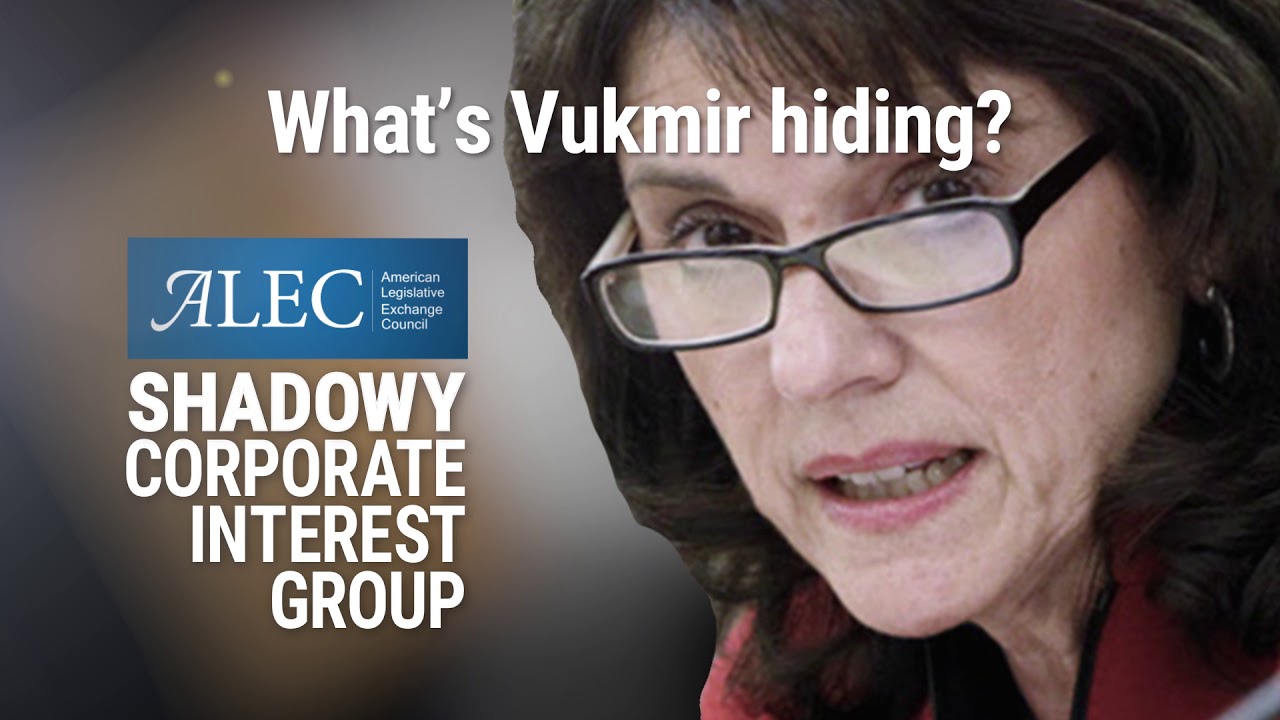 Interestingly, a right-wing dark money group used a very similar ad to attack Vukmir in the primary.
The previously undisclosed records from ALEC’s Spring 2013 meeting show a Florida-based lobbying group instructing Vukmir and other legislators to introduce a bill to thwart Medicaid expansion in the states. The lobbyist even wrote a script explaining the bill for legislators to parrot — contradicting ALEC’s claims to reporters that the organization is “legislator driven." [vid ad]
It was the most high-profile race to use ALEC effectively, helping to drive Vukmir’s negatives higher throughout the campaign. By election day, she was “the most unpopular politician in the state,” said Tom Russell, an advisor to the Democratic Governor’s Association.
“Research has shown that linking bills or candidates to ALEC tends to significantly decrease support for those bills or candidates, and Tammy Baldwin’s win, and the effectiveness of her ads tying Vukmir to ALEC provides real-world evidence that people respond negatively when they are informed of corporate influence on elected officials,'” said Sam Munger, Director of External Relations for the State Innovation Exchange, a group formed to counter ALEC’s influence in the states. “It helped Tammy make the case that, as her ads said, Vukmir was on the side of special interests and ‘not for us.'”
Courting Ticket Splitters Without Giving Up on Progressive Policies
Baldwin was especially effective at reaching out to the white working class and rural voters, key constituencies that gave Trump a winning margin in 2016. Baldwin flipped 17 of the rural counties that had voted for Trump.
According to Sarah Lloyd, a dairy farmer and the co-chair of the progressive group Our Wisconsin Revolution, Baldwin knew the people and knew the issues most important to rural voters. “Tammy’s office is excellent at constituent services; she knows farmers across the state and can speak fluently about the agricultural issues that are at the heart of Wisconsin’s rural communities.”
Remarkably, exit polls showed that 12 percent of Walker voters voted for Baldwin. This in a state where ticket splitting had been declared dead.
Baldwin has long courted ticket-splitters without giving up on progressive politics. When Baldwin was first elected to the Senate in 2012, she was out early on television with ads stressing themes of the working person, specifically blue collar men who were losing ground in a Wisconsin economy battered by unfair trade deals, a job killing recession, and then by a hostile governor working to put an end to good paying union jobs. She told voters that her opponent, former Governor Tommy Thompson, was “changed”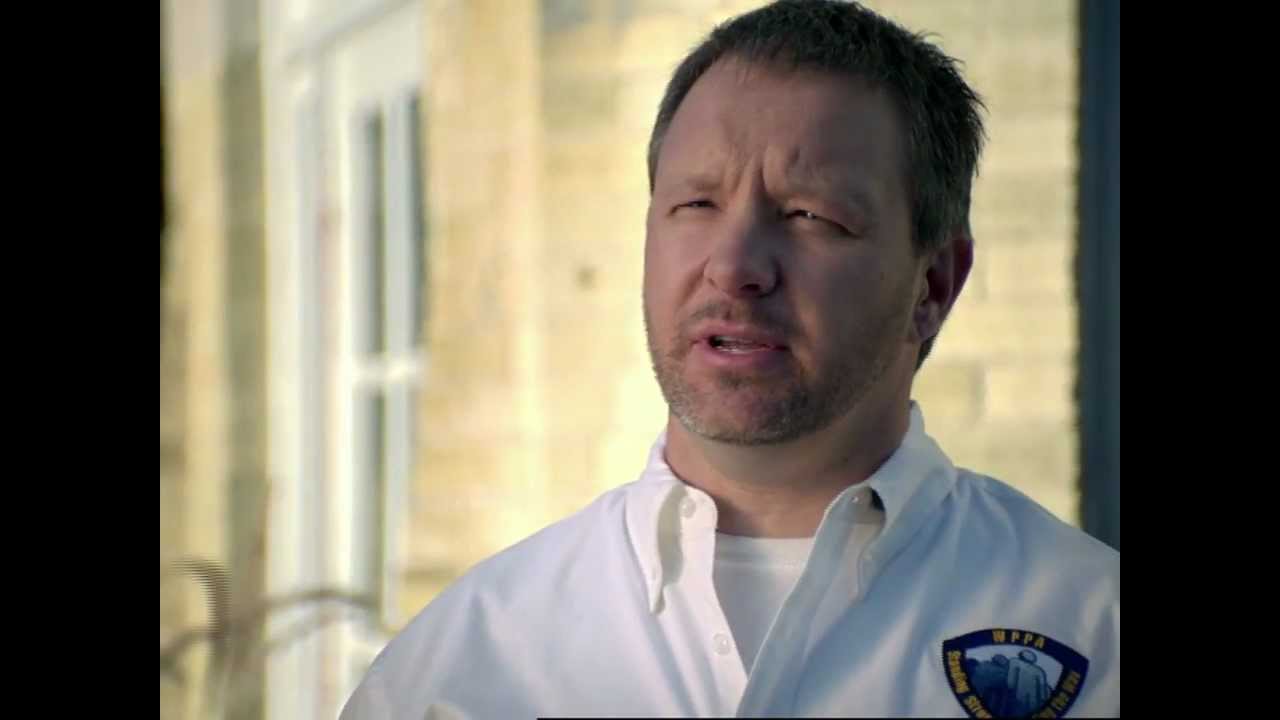 that focused on his lobbying for drug companies and insurance companies.
This cycle, she once again focused on themes and images sure to resonate with working and middle class families. One of Baldwin’s most important narratives featured the work she has done defending Wisconsin’s paper industry, which employs some 53,000 workers, against predatory businesses and unfair trade practices. She has a long track record on these issues both in the House and in the Senate, introducing “Buy America” legislation and challenging Trump to cross the aisle to support it.
“Senator Baldwin has been a consistent fair trade champion, standing up for her state’s workers even when it meant taking on a Democratic president and had led the fight to expand ‘Buy American’ policies so our tax dollars are reinvested to create jobs at home instead of being outsourced,” said Wisconsinite Lori Wallach, the director of Public Citizen’s Global Trade Watch group.
The fair trade theme helped other candidates in the Great Lake states including Sherrod Brown of Ohio, Debbie Stabenow of Michigan and Bob Casey of Pennsylvania. “The 2018 Democratic Senate candidates who won in states that Trump carried are all fair trade champions who fought against job-killing trade agreements, while those who lost supported the corporate-rigged deals,” said Wallach. Brown is now discussing a possible run for the White House.
Health Care Takes Center Stage
But the historical moment clearly benefited Baldwin. Across the country people from both parties told pollsters that health care was their number-one issue, not immigration or the other issues that Republicans attempted to elevate. Ninety-three percent of voters in a Marquette poll put coverage for preexisting conditions at the top of their list of priorities.
On the stump, Baldwin spoke for the first time about a childhood illness she had that made her uninsurable. “I had a serious childhood illness at age nine. It was similar to spinal meningitis … it put me in the hospital for three months,” she explained. “And despite the fact that I fully recovered, my grandparents who raised me were unable to get insurance at any price.”
“This was the perfect election for Tammy,” said Dr. Robert Kraig of Citizen Action Wisconsin, a public interest group that fights to expand health care coverage. “She went into public life because of health care and it has been a priority issue for her entire political career. She worked hard in the Senate to expand the Affordable Care Act, taking great pride in the amendment to allow young people to stay on their parents’ plans until they were 26, and she doesn’t shrink from Medicare for All. I saw her after the election and she was still thrilled about being about to go back to the Senate to work on the issue!”
:{
With her civility, Baldwin differentiated herself from Walker and Trump. “Walker was a polarizing figure right out of the gate in 2011,” said Barry Burden, a Professor in the University of Wisconsin’s Department of Political Science. ‘Since that time, Wisconsin residents have had clear opinions about him and those opinions have divided the state down the middle.”}:
“Baldwin has taken a different approach to governing,” Burden said. “Although she is an unapologetic progressive, she has not been bombastic or aggressive. In the lead up to 2018 she actually identified a couple of issues where she and President Trump might find common ground. She is a less familiar face than Walker, so as voters learned about her over the course of the campaign they saw a reasonable Senator who seemed to care a great deal about the well-being of Wisconsinites.”
Baldwin rarely mentioned Trump by name and did not cut a single ad talking about Trump.
“The contrast with the way Hillary Clinton campaigned in Wisconsin in 2016 is marked. Tammy ran on bread and butter policies — good wages, good health care — and she didn’t get sidetracked into spending a lot of time taking shots at Trump,” Munger said. “Her campaign and election results prove that when you run on progressive solutions, you can win.”
Making It Personal
But to many CMD interviewed, the key to her secret sauce was her “authenticity” and “genuine warmth” that convinced voters she was on their side. Rarely does an experienced politician run biographical ads deep into her political career and reveal details that the public never knew, but Baldwin did a number of these ads.
While many knew that Baldwin had been raised by her grandparents, the reason for this were never clear. In May, Baldwin revealed that that her mother had passed away after a life-long struggle with opioid addiction. Her ad portrays a child knocking on the front door, but there is no response because the mother is passed out in the house. “I had to grow up fast, very fast, so when I see the opioid crisis wrecking so many Wisconsin families all I can say is that I have been there,” Baldwin says in the affecting ad.
This warm, personal approach stood in stark contrast to the tone set by Leah Vukmir and her campaign.
 VUKMIR BILLBOARD OVER AN ADULT VIDEO STORE.
Former Americans for Prosperity Chief Executive Officer Luke Hilgemann and Chief Operating Office Sean Lansing joined Vukmir’s 2018 U.S. Senate campaign early as senior advisors. Right out of the box, Vukmir set a nasty tone, issuing an attack on May 9 claiming that Baldwin was on “Team Terrorist” and siding with 9/11 mastermind Khalid Sheikh Mohammed for not supporting Trump’s nominee for CIA Director, Gina Haspel. Senator Ron Johnson called it a mistake and the right-wing media outlet Right Wisconsin called the ad “an irresponsible campaign blunder,” but the low blows continued.
She tried to dub Baldwin “Princess Painkiller” and sent out a press release when Senator Elizabeth Warren visited the state entitled “Pocahontas campaigns with Tomah Tammy.” Vukmir’s SuperPAC slammed Baldwin for leading “liberal mobs” during the 2011 Act 10 protests, inadvertently showing video of Baldwin looking young and vibrant.
Vukmir embraced every controversial policy of the Trump administration. While Walker and Paul Ryan made a point to distinguish their campaign rhetoric from Trump’s, Vukmir reveled in Trumpism, pledging to help Trump “build the wall” during Trump’s final rally in the state at Moisinee in October and waving and smiling as the crowd chanted “lock her up,” two years after Clinton lost the election and after four Trump associates had pled guilty to charges from the Special Counsel.
“Vukmir was hindered by a difficult primary battle and her unwavering embrace of Trump,” noted Professor Burden.
The nasty tone undercut Vukmir’s paid ads, which attempted to cast her as a nurse and a mom who cared about Wisconsin families. Vukmir repeatedly claimed that she would “throw herself in front of a bus” to safeguard preexisting condition coverage for Wisconsin families, but her long record of votes on health care came back to haunt her.
Baldwin’s final devastating ad was a roll call of votes taken by the State Senator against expanding health care coverage: “Why would Leah Vukmir vote against hearing aids for children?” “Why? Why?” ask people in the ad repeatedly.
There is no doubt that historic trends in Wisconsin favor a senator in the opposite party of the party in the White House, and Baldwin benefited from a record-breaking turnout approaching 60 percent of voting-age adults (a 70-year high), but her campaign made few stumbles, concentrated on the concerns of working families, defined the candidate and her opponent early, and spoke to voters in rural and urban Wisconsin, providing a blueprint for 2020 candidates.
huffpo
Top ALEC Leader Has A U.S. Senate Seat In Her Sights
Leah Vukmir helped lead the business-friendly American Legislative Exchange Council of state legislators. Now she’s the Wisconsin GOP’s nominee for Senate.
Kevin Robillard
Sep 17, 2018,
Wisconsin GOP state Sen. Leah Vukmir, now her party's nominee against Democratic U.S. Sen. Tammy Baldwin, was once ALEC's national chairwoman.
Hundreds of Republican state legislators are already members of the American Legislative Exchange Council, a Koch network-backed conservative nonprofit that has played a major role in pushing laws restricting voting rights, rolling back regulations, pushing ‘Stand Your Ground’ laws, privatizing prisons and sabotaging Obamacare over the past decade.
But one of the group’s top leaders might soon reach a higher level: The U.S. Senate.
Wisconsin state Sen. Leah Vukmir, who is the GOP nominee to challenge Democratic Sen. Tammy Baldwin in November, isn’t running from her ties to ALEC ― as the group is known for short ― on the campaign trail. Her ties to the group run too deep: She’s been a member since 2004 and a board member since 2013. She also served as the group’s national chairwoman in 2016 and won an award for “legislator of the year” in 2009.
A HuffPost review of Vukmir’s legislative record since 2011 found she had introduced, co-sponsored or authored 24 different pieces of legislation that seem to draw directly from ALEC model policies. The bills allowed nursing homes to conceal records of neglect and abuse, barred labor requirements for public works projects, waded into wars over free speech on college campuses and required legislative approval to expand Medicaid under the Affordable Care Act.
And in return, Vukmir has collected about $40,000 worth of donations to her federal and state campaigns from ALEC or its corporate partners, including a $1,000 check from ALEC’s CEO in 2017.
“I’ve been involved in a national organization called ALEC ― American Legislative Exchange Council. I embrace it even though the left likes to call it a big Koch brothers conspiracy organization,” Vukmir said last year during a meeting with a group of College Republicans. At a meeting of the Kenosha County GOP a few months earlier, Vukmir described ALEC as “an organization that stands for everything I’ve ever campaigned on from day one when I campaigned to be a member of the State Assembly.”
Baldwin, the most progressive of the 10 Democrats representing states won by President Donald Trump in 2016, has a steady lead in the contest, according to political prognosticators and public polling. The Democratic Senatorial Campaign Committee and the National Republican Senatorial Committee have not spent any money in the contest, although groups backed by the Koch network have continued to target Baldwin.
ALEC, which is funded by a slew of major corporations like Pfizer, FedEx and T-Mobile, is best-known for bringing together major companies and Republican state legislators to write “model policies” for state legislatures to adopt. (The group claims to be bipartisan, but its known leadership is almost entirely members of the GOP.) But Vukmir’s ascendancy and her potential election would mark the latest display of how ties to ALEC can help GOP legislators advance their careers.
Baldwin’s allies are planning to make Vukmir’s ties to the nonprofit a central part of their fall campaign, and her campaign has already released two television ads on Vukmir’s ties to the group.
“Wisconsin’s U.S. Senate race is about who will put Wisconsin first, and Leah Vukmir has spent her past 16 years in Madison working for her corporate special interest backers and legislating ALEC’s agenda at the expense of Wisconsin families,” said Brad Bainum, a spokesman for the Wisconsin Democratic Party. “It’s clear that Leah Vukmir is not on Wisconsin’s side.”
Vukmir’s campaign responded by noting Baldwin has also taken donations from executives and companies with ties to ALEC.
“Sen. Baldwin has taken over $20,000 this election cycle from companies or employees with ties to ALEC,” said Jess Ward, Vukmir’s campaign manager. “This is what Wisconsinites hate about swampy Washington politicians like Sen. Baldwin.”
While ALEC has existed since the 1970s, liberal skepticism of the group peaked during the Obama era, as Republicans locked out of power on the federal level turned to the states. Democrats and progressives have blamed ALEC for things like the spread of laws cracking down on illegal immigration and strict voter identification requirements. Republicans including former EPA Administrator Scott Pruit, Arizona Reps. Debbie Lesko and Andy Biggs and Georgia Rep. Doug Collins were members of the group while serving in state legislatures.
==
After vicious GOP primary, ALEC's "Iron Lady" Leah Vukmir will take on #TammyBaldwin in the U.S. Senate Race in Wisconsin reports CMD's
==
see neg attack ad
...Stay tuned, this interesting race is likely to get a lot more interesting. Leah Vukmir won the GOP straw poll at the Republican state convention this weekend with 72 percent of the vote. This is after Vukmir began tweeting out photos of Baldwin and Khalid Sheikh Muhammad, the planner of the Sept. 11, 2001 attacks, calling them“Team Terrorist.” The crude move, allegedly protesting Baldwin’s silence on the Gina Haspel CIA nomination, was denounced as an “irresponsible campaign blunder” by far-right news outlets and “embarrassing” by Nicholson. Baldwin had been waiting to meet with Haspel, who had cancelled a scheduled meeting.
...
==
https://www.exposedbycmd.org/2018/05/14/unprecedented-outside-spending-floods-wisconsin-attack-us-senator-tammy-baldwin
2018 campaign cash is already flooding into races across the country. But nowhere is more awash in money than Wisconsin, where Tammy Baldwin’s U.S. Senate race has already seen more than twice the amount of the next closest contest.
The spending is “unprecedented” for a U.S. Senate campaign at this stage, says Andrew Mayersohn, a researcher for the Center for Responsive Politics.
As of April 23, 2018, more than $10 million had been spent by conservative groups buying ads opposing Baldwin or supporting one of her two main Republican rivals, management consultant Kevin Nicholson and longtime ALEC legislator and State Senator Leah Vukmir. In contrast, just over $1 million has been spent supporting Baldwin or attacking her opponents. The PACs and dark money “issue ad” groups trying to unseat Baldwin are connected to some of the most powerful right-wing donors in the country, including Richard Uihlein, Robert Mercer and the billionaire industrialist Koch brothers.
These billionaire backers of the far right are working hard to take down Tammy Baldwin, a pro-labor, pro-environment, pro-universal health care progressive. Below, the Center for Media and Democracy details some of the biggest spenders in the race.
RICHARD UIHLEIN’S AMERICA’S PAC AND RESTORATION PAC
The biggest outside spender in the Wisconsin senate race to date is industrial supply magnate Richard Uihlein, owner of the shipping supply firm Uihlein Corp. Uihlein single-handedly turned little-known veteran Kevin Nicholson into a major threat to Baldwin’s seat. Uihlein’s “Restoration PAC,” a federal Super PAC, has spent $541,374 against Baldwin and $2,502,268 supporting Nicholson. Uihlein has bankrolled Restoration PAC with $4,225,000 as of February 2018.
His “America’s PAC” has spent $2,621,565 supporting Nicholson, as well as $703,500 opposing Baldwin. Between September 2017 and February 2018, Uihlein has given America’s PAC $2.65 million.
But all that money doesn’t translate into common sense. In an embarrassing gaffe, America’s PAC sent a radio ad to 20 Wisconsin stations favorably comparing Nicholson with embattled Missouri Governor Eric Greitens. Greitens is facing a criminal trial for initiating an affair with his hairdresser by strapping her arms to exercise hoops, blindfolding her, stripping her and taking a photo to make sure that she wouldn’t tell anyone. What do Greitens and Nicholson have in common? Both are veterans and both were Democrats who are now running for office on the Republican line.
This isn’t the first time that America’s PAC ads have gone awry. In 2014, America’s PAC sponsored ads in Ohio, which observers such as the Black Commentator news site described as “highly obnoxious” for their attempt to portray Democrats as destroying African-American communities through support for pro-choice policies. In 2006, radio ads prepared by America’s PAC gave “the clear message that black voters need to join the Republican cause if they want to enjoy the same success as whites.”
America’s PAC is attacking Baldwin for the death of several veterans at a Veterans Administration (VA) hospital because she allegedly ignored a whistleblower’s warning about “overmedicated veterans.” Politifact rated this claim “False” and reported that the whistleblower’s warning could not be tied to the three deaths in question.
ROBERT MERCER BEHIND JOHN BOLTON SUPER PAC
The John Bolton Super PAC, run by the same John Bolton who is now the National Security Advisor of the United States, has spent $560,570 supporting Nicholson. The PAC plans to spend $1 million to help Nicholson defeat Vukmir in the primary.
The Super PAC has been largely funded by hedge fund manager Robert Mercer, one of the “blow it all up” billionaire backers behind Trump and one of the first investors in the controversial “psy-ops” organization Cambridge Analytica. Good governance groups Democracy 21 and Citizens for Ethics and Responsibility in Washington (CREW) filed a complaint against the John Bolton Super PAC in March 2018, claiming that the PAC’s work with Cambridge Analytica and SCL Industries violated election laws prohibiting foreign nationals from “directly or indirectly” participating in American political campaigns.
KOCH FRONT GROUP: CONCERNED VETERANS FOR AMERICA
The billionaire Koch brothers are the also donating heavily to an array of PACs attacking Baldwin. Concerned Veterans for America (CVA) is a Koch front group based in Arlington, Virginia. CVA purports to be a grassroots group of vets who want to reform the VA. But the phony front group is the only known “veterans” group pushing for the privatization of the of the VA, which provides comprehensive health care services to the nation’s nine million veterans. After being fired via Twitter in March, Trump’s Secretary of Veterans Affairs David Shulkin warned in an op-ed in the *New York Times* that the VA is entangled in a “brutal power struggle” over privatization.
As of March 8, 2018, CVA had spent $3.1 million against Baldwin, including ads on the same false claims made by America’s PAC that she was responsible for deaths at a VA hospital. In addition, CVA’s Executive Director Dan Caldwell flew to Wisconsin to participate as a panelist in the first GOP primary debate between Vukmir and Nicholson. The debate was sponsored by none other than the Kochs’ astroturf organization, Americans for Prosperity. The candidates predictably embraced every Koch policy as they vied for the billionaires’ endorsement and money, but the debate did allow Vukmir to savage Nicholson as a former Democrat.
KOCH’S FREEDOM PARTNERS
Freedom Partners is the Kochs’ non-profit 501(c)(6) dark money “trade group” funded by the Kochs and staffed with Koch operatives. As of April 28, 2018, Freedom Partners has spent more than $1.6 million on attack ads accusing Baldwin of “rigging the system” by voting for higher taxes (which paid for programs such as the Affordable Care Act).
After a seemingly grassroots Tea Party uprising against the 2010 Affordable Care Act, it was later revealed that the Kochs played a major role bankrolling the many right-wing groups involved. When asked about why the Kochs were campaigning against health care, Americans for Prosperity President Tim Phillips told the *New York Times* that the plan was to discredit the government (or as he put it, the “social welfare boondoggle”) in preparation for the fight over climate change.
Stay tuned, this interesting race is likely to get a lot more interesting. Leah Vukmir won the GOP straw poll at the Republican state convention this weekend with 72 percent of the vote. This is after Vukmir began tweeting out photos of Baldwin and Khalid Sheikh Muhammad, the planner of the Sept. 11, 2001 attacks, calling them “Team Terrorist.” The crude move, allegedly protesting Baldwin’s silence on the Gina Haspel CIA nomination, was denounced as an “irresponsible campaign blunder” by far-right news outlets and “embarrassing” by Nicholson. Baldwin had been waiting to meet with Haspel, who had cancelled a scheduled meeting.
but we're tracking the contests that are expected to be hottest in 2018, based on analysis by prominent pollsters. This page highlights the races that we expect to become more competitive - and possibly more expensive...
One block of races that is already attracting a large amount of attention (and money) are the ten Senate races featuring an incumbent Democrat seeing reelection in a state won in 2016 by President Donald Trump. Thus far, the incumbent Democrats are winning in the fundraising game, as we highlighted in our article published earlier this week, "Democrats take a chance on Trump states". However, a large amount of conservative outside spending is being focused on attacking these candidates, with Wisconsin's Tammy Baldwin seeing the most negative adsso far. Expect to hear more about these races as November gets closer...
https://www.opensecrets.org/news/2017/11/outside-spending-targets-wisconsin-sen-tammy-baldwin
Outside spending against Democratic incumbent Sen. Tammy Baldwin of Wisconsin has so far exceeded the combined outside spending against the other 21 Democratic Party senators up for reelection in 2018 by a factor of 5.
There has been $3.1 million in outside spending againstBaldwin, and about $532,000 against the other Democratic incumbents combined. (Another $6,214 has been spent against Vermont Sen. Bernie Sanders, who caucuses with Democrats).
Baldwin is one of 10 Senate Democrats running for reelection in states that President Donald Trump carried in 2016. Nearly all of the conservative-aligned outside spending has targeted Baldwin, however.
Baldwin has been a senator since 2013 and was formerly the representative for Wisconsin’s 2nd Congressional District.
Among Democratic senators in Trump-carried states, the next largest amount was about $47,000 targeting West Virginia Senator Joe Manchin. About $42,000 has been spent against Missouri Senator Claire McCaskill, according to FEC data.
“Outside spending” refers to political expenditures by groups or individuals not coordinated with candidates’ fundraising committees.
| Outside spending against Democratic senators in states Trump won in 2016 | Outside spending against Democratic senators in states Trump won in 2016 | Outside spending against Democratic senators in states Trump won in 2016 |
|---|---|---|
| State | Senator | Spending Against |
| Wisconsin | Tammy Baldwin | $3,065,342 |
| West Virginia | Joe Manchin | $46,801 |
| Missouri | Claire McCaskill | $42,416 |
| North Dakota | Heidi Heitkamp | $30,656 |
| Indiana | Joe Donnelly | $23,008 |
| Michigan | Debbie Stabenow | $9,377 |
| Ohio | Sherrod Brown | $9,013 |
| Pennsylvania | Bob Casey | $1,513 |
| Montana | Jon Tester | $1,056 |
| Florida | Bill Nelson | $0 |
| Total | $3,229,182 |
On the Republican side, outside spending against GOP Senate candidates is even higher.
In the 2018 cycle, about $4.7 million of the roughly $5.2 million – or around 90 percent – of outside spending against all Republican candidates for the Senatehas targeted Alabama’s Republican Senate candidate Roy Moore. All but about $295,000 of the $4.7 million targeted Moore before the Republican primary in September. Outside spending after the primary has come from two groups, The Advocacy Fund and Highway 31.
Among Republicans, the next highest total was the $28,000 targetingone of Baldwin’s Republican challengers, Kevin Nicholson, who has the supportof former White House chief strategist Steve Bannon.
Nicholson is a former Democrat who once workedfor the Democratic National Committee and even spoke at its 2000 convention.
Uline Inc, a Wisconsin-based shipping supply company owned by Illinois-based conservative donor Richard Uihlein, gave $3.5 million to the pro-Nicholson super PAC Solutions for Wisconsin. Uihlein’s investmentsalso include several resorts, spas and restaurants in the state.
Solutions for Wisconsin, in turn, has contributed $1.5 million to Americas PAC and Restoration PAC,which representthe second and third largest outside spenders opposing Baldwin. Uihlein also gave$250,000 directly to Americas PAC. He is the chief donor to a super PAC that has funded ads benefiting Moore as well, The Daily Beast reported.
Two advisors Nicholson is replacing on his campaign are takingpositions at Solutions for Wisconsin.
So far in the 2018 cycle, Uihlein has fundedroughly $6.1 million in outside spending, all of which went toward conservative groups.
The outside spending group that has spent the mostagainst Baldwin is Freedom Partners Chamber of Commerce, a politically active nonprofit that serves as the fundraising hub of the donor network spearheaded by billionaire industrialists David and Charles Koch.
Freedom Partners has spent around $1.7 million to defeat Baldwin, and as a 501(c)(6) trade association, it is not required to disclose its donors.
==
https://en.wikipedia.org/wiki/Tammy_Baldwin
Tammy Suzanne Green Baldwin (born February 11, 1962) is the junior United States Senator from Wisconsin and a member of the Democratic Party. She served three terms in the Wisconsin Assembly, representing the 78th district, and from 1999 to 2013 represented Wisconsin's 2nd congressional district in the United States House of Representatives.
Baldwin defeated her Republican opponent, former Wisconsin governor Tommy Thompson, in the 2012 U.S. Senate election. She is the first woman elected to represent Wisconsin in the U.S. Congress and the first openly gay U.S. Senator in history.[1]
- :{1:(style="display:table-cell;padding-left:0px;padding-right:0.5em"):}::{Early life, education, and early political career:(style="display:table-cell"):}:
- :{2:(style="display:table-cell;padding-left:0px;padding-right:0.5em"):}::{Wisconsin Assembly (1993–1999):(style="display:table-cell"):}:
- :{2.1:(style="display:table-cell;padding-left:0px;padding-right:0.5em"):}::{Elections:(style="display:table-cell"):}:
- :{2.2:(style="display:table-cell;padding-left:0px;padding-right:0.5em"):}::{Tenure:(style="display:table-cell"):}:
- :{2.3:(style="display:table-cell;padding-left:0px;padding-right:0.5em"):}::{Committee assignments:(style="display:table-cell"):}:
- :{3:(style="display:table-cell;padding-left:0px;padding-right:0.5em"):}::{U.S. House of Representatives (1999–2013):(style="display:table-cell"):}:
- :{4:(style="display:table-cell;padding-left:0px;padding-right:0.5em"):}::{U.S. Senate (2013–present):(style="display:table-cell"):}:
- :{4.1:(style="display:table-cell;padding-left:0px;padding-right:0.5em"):}::{2012 election:(style="display:table-cell"):}:
- :{4.2:(style="display:table-cell;padding-left:0px;padding-right:0.5em"):}::{2018 election:(style="display:table-cell"):}:
- :{4.3:(style="display:table-cell;padding-left:0px;padding-right:0.5em"):}::{Committee assignments:(style="display:table-cell"):}:
- :{5:(style="display:table-cell;padding-left:0px;padding-right:0.5em"):}::{Political positions:(style="display:table-cell"):}:
- :{5.1:(style="display:table-cell;padding-left:0px;padding-right:0.5em"):}::{Ideology:(style="display:table-cell"):}:
- :{5.2:(style="display:table-cell;padding-left:0px;padding-right:0.5em"):}::{Economy and jobs:(style="display:table-cell"):}:
- :{5.3:(style="display:table-cell;padding-left:0px;padding-right:0.5em"):}::{Government spending:(style="display:table-cell"):}:
- :{5.4:(style="display:table-cell;padding-left:0px;padding-right:0.5em"):}::{Terrorism:(style="display:table-cell"):}:
- :{5.5:(style="display:table-cell;padding-left:0px;padding-right:0.5em"):}::{Immigration:(style="display:table-cell"):}:
- :{5.6:(style="display:table-cell;padding-left:0px;padding-right:0.5em"):}::{Opposition to Iraq War:(style="display:table-cell"):}:
- :{5.7:(style="display:table-cell;padding-left:0px;padding-right:0.5em"):}::{Impeachment of Dick Cheney and Alberto Gonzales:(style="display:table-cell"):}:
- :{5.8:(style="display:table-cell;padding-left:0px;padding-right:0.5em"):}::{Health care:(style="display:table-cell"):}:
- :{5.9:(style="display:table-cell;padding-left:0px;padding-right:0.5em"):}::{Resolution on 9/11 victims:(style="display:table-cell"):}:
- :{5.10:(style="display:table-cell;padding-left:0px;padding-right:0.5em"):}::{ACORN:(style="display:table-cell"):}:
- :{5.11:(style="display:table-cell;padding-left:0px;padding-right:0.5em"):}::{2016 U.S. presidential election:(style="display:table-cell"):}:
- :{5.12:(style="display:table-cell;padding-left:0px;padding-right:0.5em"):}::{Handling of Veterans Affairs report:(style="display:table-cell"):}:
- :{6:(style="display:table-cell;padding-left:0px;padding-right:0.5em"):}::{Electoral history:(style="display:table-cell"):}:
- :{7:(style="display:table-cell;padding-left:0px;padding-right:0.5em"):}::{Personal life:(style="display:table-cell"):}:
- :{8:(style="display:table-cell;padding-left:0px;padding-right:0.5em"):}::{See also:(style="display:table-cell"):}:
- :{9:(style="display:table-cell;padding-left:0px;padding-right:0.5em"):}::{References:(style="display:table-cell"):}:
- :{10:(style="display:table-cell;padding-left:0px;padding-right:0.5em"):}::{External links:(style="display:table-cell"):}:
Early life, education, and early political career
Baldwin was born and grew up in Madison, Wisconsin, the daughter of Pamela (née Green) and Joseph Edward Baldwin. She was raised by her mother and her maternal grandparents.[2][3] Her maternal grandfather, biochemist David E. Green, was Jewish (the son of immigrants from Russia and Germany), and her maternal grandmother, who was Anglican, was English-born.[4] Baldwin's aunt is biochemist Rowena Green Matthews; through her maternal grandfather, Baldwin is a third cousin of comedian Andy Samberg.[5][6]
Baldwin graduated from Madison West High School in 1980 as the class valedictorian. She earned a B.A. degree from Smith College in 1984 and a J.D. degree from the University of Wisconsin Law School in 1989.[7] She was a lawyer in private practice from 1989 to 1992.[8]
Baldwin was first elected to political office in 1986 at the age of 24 when she was elected to the Dane County Board of Supervisors, a position she held until 1994.[9] She also served one year on the Madison City Council to fill a vacancy in the coterminous district.[10]
Wisconsin Assembly (1993–1999)
Elections
In 1992, Baldwin ran to represent Wisconsin's 78th Assembly District. She won the Democratic primary with 43% of the vote.[11] In the general election, Baldwin defeated Mary Kay Baum (Labor and Farm Party nominee) and Patricia Hevenor (Republican Party nominee) by a vote of 59%-23%-17%.[12] She was one of just six openly gay political candidates nationwide to win a general election in 1992.[13]
In 1994, Baldwin won reelection to a second term with 76% of the vote.[14] In 1996, she won reelection to a third term with 71% of the vote.[15]
Tenure
Baldwin was the first openly lesbian member of the Wisconsin Assembly and one of a very few openly gay politicians in the country at the time. In 1993, Baldwin said she was disappointed by Democratic President Bill Clinton's support of the military's "don't ask, don't tell" policy.[16] In early 1994, she proposed legalizing same-sex marriage in Wisconsin.[17][18] In 1995, she proposed domestic partnerships in Wisconsin.[19]
Baldwin opposes capital punishment in Wisconsin.[20]
Committee assignments
- Criminal Justice Committee[21]
- Education Committee (Chair)[22]
U.S. House of Representatives (1999–2013)
Baldwin presiding over the House while serving as Speaker Pro Tempore

Elections
In 1998, U.S. CongressmanScott Klug of the 2nd District, based in Madison, announced he would retire, prompting Baldwin to run for the seat. She won the Democratic primary with a plurality of 37% of the vote.[23] In the general election, she defeated Republican nominee Josephine Musser 53%-47%.[24]
Baldwin was the first woman elected to Congress from Wisconsin. She was also the first openly gay woman elected to the House of Representatives.[25]
In 2000, Baldwin won reelection to a second term, defeating Republican John Sharpless 51%-49%, a difference of 8,902 votes. While she lost eight of the district's nine counties, she carried the largest, Dane County, with 55 percent of the vote—enough to give her the victory.[26]
After the 2000 census, the 2nd District was made significantly more Democratic in redistricting. Baldwin won reelection to a third term in the newly redrawn 2nd District with 66% of the vote against Republican Ron Greer.[27] In 2004, she beat Dave Magnum 63%-37%.[28] She won a 2006 rematch against Magnum, again winning 63%-37%.[29] In 2008, she defeated Peter Theron 69%-31%,[30] and in 2010 she won a seventh term with 62% of the vote against Chad Lee.[31]
Committee assignments
U.S. Senate (2013–present)
2012 election
Main article: United States Senate election in Wisconsin, 2012
Baldwin and Thompson debating during the 2012 election

Baldwin ran as the Democratic nominee against Republican nomineeTommy Thompson, who had formerly been governor and Secretary of Health and Human Services. She announced her candidacy on September 6, 2011, in a video emailed to supporters.[32] She ran uncontested in the primary election,[33] and spoke at the 2012 Democratic National Convention about tax policy, campaign finance reform, and equality in the United States.[34]
She was endorsed by Democracy for America, and she received campaign funding from EMILY's List, the Gay & Lesbian Victory Fund, and LPAC.[35] Baldwin was endorsed by the editorial board of The Capital Times, who wrote that "Baldwin's fresh ideas on issues ranging from job creation to health care reform, along with her proven record of working across lines of partisanship and ideology, and her grace under pressure mark her as precisely the right choice to replace retiring U.S. Sen. Herb Kohl."[36]
Former Gov. Tommy Thompson claimed that her “far left approach leaves this country in jeopardy.”[37]
The candidates had three debates, on September 28,[38][39] October 18,[40] and October 26.[41] According to Baldwin's Federal Election Commission filings, she raised about $12 million, over $5 million more than her opponent.[42]
On November 6, 2012, Baldwin became the first openly gay candidate to be elected to the U.S. Senate. Because of her 14 years in the House of Representatives, under Senate rules she had the highest seniority in her entering class of senators.[43]
Baldwin was featured in Time's November 19, 2012 edition, in the Verbatim section, where she was quoted as saying "I didn't run to make history" on her historic election.[44] In a separate section, she was also mentioned as a new face to watch in the Senate.[45]
2018 election
Main article: United States Senate election in Wisconsin, 2018
Baldwin is running for reelection in 2018.[46]
Committee assignments
- Committee on Appropriations
- Subcommittee on Agriculture, Rural Development, Food and Drug Administration, and Related Agencies
- Subcommittee on Defense
- Subcommittee on Homeland Security
- Subcommittee on Labor, Health and Human Services, Education, and Related Agencies
- Subcommittee on Military Construction, Veterans Affairs, and Related Agencies
- Committee on Commerce, Science, and Transportation
- Subcommittee on Aviation Operations, Safety, and Security
- Subcommittee on Communications, Technology, Innovation, and the Internet
- Subcommittee on Oceans, Atmosphere, Fisheries, and Coast Guard
- Subcommittee on Space, Science, and Competitiveness
- Subcommittee on Surface Transportation and Merchant Marine Infrastructure, Safety, and Security
- Committee on Health, Education, Labor, and Pensions
Political positions
Ideology
In October 2012, Baldwin described herself as a proud progressive. "Fighting Bob La Follette stood up to fight the monopolies of the day and wanted people to have a stronger voice," she said. "We have the same powerful interests today who think they can write their own rules in Washington...I consider myself a progressive and a fighter who's not afraid to stand up to those interests."[47] No two U.S. Senators from the same state vote the same way less often than Baldwin and her Republican colleague Ron Johnson do.[48]
In 2003, Baldwin served on the advisory committee of the Progressive Majority, a political action committee dedicated to electing progressive candidates to public office.[49]
Baldwin is a member of the Congressional Progressive Caucus.[50] According to a 2011 National Journal survey, she was among the most liberal members of the House.[51] As of 2012, her voting record made her one of the most liberal members of Congress.[52][53][49][54]
Economy and jobs
In a September 2015 radio interview, Baldwin said that she, the Pope, and Donald Trump all supported repeal of the carried interest tax loophole. Politifact stated that there was no record of the Pope weighing in on this particular tax break.[55]
In 2016, the U.S. Chamber of Commerce gave Baldwin a 32% cumulative score on "key business votes."[56] The Wisconsin GOP noted that in the view of the Chamber of Commerce, Baldwin therefore had "the worst record of any red-state Senator when it comes to jobs," Joe Manchin, for example, having earned a score of 59% and Joe Donnelly a score of 65%. "Senator Baldwin," wrote the Wisconsin GOP, "hovers closer to Senator Elizabeth Warren, who's at 31%."[57]
In October 2017, CBS News reported that the Freedom Partners, a Koch-funded group, had "launched a $1.6 million television and digital ad campaign" targeting Baldwin for her "stance on taxes." The ads charged her with having "voted for five trillion dollars in more taxes" and with having "supported higher income taxes, sales taxes – even energy taxes." One ad stated: "If Tammy Baldwin opposes tax reform, it's proof that she opposes jobs."[58]
In October 2017, the editors of The Capital Times praised Baldwin and Bernie Sanders for their vocal opposition to a budget resolution that they believed would increase income inequality. Baldwin was described as "one of the budget's most ardent foes."[59]
In November 2017, Baldwin expressed opposition to the Trump tax-reform bill, the Tax Cuts and Jobs Act of 2017, saying that it was being drafted "behind closed doors" and charging that it was being "shoved through." In its place, she promoted a bill, the Stronger Way Act, that she and Cory Booker (D-NJ) co-sponsored.[60]
Government spending
The Wisconsin GOP claimed on October 11, 2017, that Baldwin had "voted in favor of higher taxes and fees more than 400 times since she arrived in Washington."[61][62]
Terrorism
In November 2013, Baldwin introduced a bill that would "bring greater government transparency, oversight and due process whenever authorities use information gathered for intelligence purposes to make domestic non-terrorism cases against Americans."[63]
Baldwin described the mass shooting in Orlando, Florida, in June 2016 as a "hate crime" and said "The question now for America is are we going to come together and stand united against hate, gun violence and terrorism?"[64] She later described it as a "hate crime."[65]
Immigration
In June 2013, Baldwin voted for S. 744, the Border Security, Economic Opportunity, and Immigration Modernization Act, which would have enabled undocumented immigrants to acquire legal residency status and, later, citizenship.[66]
She voted against Kate's Law in 2016.[67]
In 2017, immigration reduction advocacy group NumbersUSA gave Baldwin an overall grade of F, with a score of 11% on immigration bills. On the reduction of unnecessary worker visas, she scored a C; on the reduction of refugee and asylum fraud, and on the reduction of amnesty enticements, she scored F-.[68]
Opposition to Iraq War
Baldwin was a vocal critic of the Iraq War.[9][69] On October 10, 2002, she was among the 133 members of the House who voted against authorizing the invasion of Iraq. She warned there would be "postwar challenges," observing that "there is no history of democratic government in Iraq," that its "economy and infrastructure are in ruins after years of war and sanctions," and that rebuilding would take "a great deal of money."[70] In 2005, she joined the Out of Iraq Caucus.[71]
Impeachment of Dick Cheney and Alberto Gonzales
On August 1, 2007, Baldwin cosponsored H. Res. 333, a bill proposing articles of impeachment against Vice President Dick Cheney, and H Res. 589, a bill proposing the impeachment of Attorney General Alberto Gonzales. On January 20, 2008, Baldwin wrote in the Milwaukee Journal Sentinel that on December 14, 2007, "I joined with my colleagues on the House Judiciary Committee, Reps. Robert Wexler (D-Fla.) and Luis Gutierrez (D-Ill.), in urging Chairman Rep. John Conyers (D-Mich.) to conduct hearings on a resolution of impeachment now pending consideration in that committee." Although some constituents "say I have gone too far," others "argue I have not gone far enough" and feel "we are losing our democracy and that I should do more to hold the Bush administration accountable for its actions."[72]
...
==
Hindery Jr. remembers the call he got the night before he was to testify before Congress, in September of 2007, to close a tax loophole enjoyed by private equity investors. It was from Stephen Schwarzman, co-founder of the Blackstone Group, the largest private equity management firm in the U.S.
“His opening sentence was, ‘You’re a traitor,’” remembers Hindery, himself the founder of a private equity firm, and hence a member of the brotherhood of the loophole’s beneficiaries. Hindery reminded Schwarzman that he hadn’t yet testified; it might be too soon to judge. Schwarzman wasn’t having it.
“If you change my income tax rate, I just won’t do this work anymore,” Hindery remembers him saying.
“Then you’ll be worth only $4 billion, instead of $6 billion?” Hindery replied. “I think that’s okay.”
Actually, Schwarzman’s net worth, according to Forbes magazine, is currently closer to $10 billion, down from nearly $13 billion in 2015, when he was the 100th richest man in the world (his ranking declined this year to 113th). At least part of his success owes to a tricky part of the U.S. income tax code that Hindery has now testified against repeatedly, and before more than one legislative body. Called the “carried interest tax loophole,” it allows managers of certain funds to treat, for tax purposes, the bulk of their earnings not as remuneration for services rendered, but as long-term capital gains. The current tax rate on capital gains for earners in the higher-income tax brackets is 20 percent. The ordinary tax rate for the same ultra-wealthy class is 39.6 percent.
“It’s so unfair to the middle class,” Hindery tells Capital & Main. “You adopt a progressive tax system, and then people get to abuse it.” The tax break benefits only about 2,000 people in the country, “mostly men, concentrated in a handful of states,” he says. Hindery estimates the lower tax rate saves the combined lot of them $10 billion to $12 billion every year. With that kind of money, he says, “you could fix all the municipal water problems in this entire country. It’s just a fraud.”
Other estimates of the potential revenue gain from closing the loophole are lower; some run even higher. The Congressional Budget Office estimates that taxing carried interest at ordinary rates would net $18 billion over 10 years. Victor Fleischer, the law professor, now at the University of San Diego, who in 2006 published an influential paper on the carried interest tax, “Two and Twenty,” thinks even that might be low by a factor of eight. Fleischer continually revises his estimate of how much a standard tax on carried interest would generate over a decade, based on IRS income statistics. He wrote in an email that his current figure stands at $150 million.
Carried interest, or “carry,” gets its name from the days when medieval ship captains demanded a 20 percent profit on the goods they carried from Europe to Asia, to compensate them for risking life and bounty braving pirate-infested and storm-tossed seas. Though the metaphor has stuck, the risk to the modern fund manager isn’t nearly so extreme; in fact, it’s hardly a risk at all. Private equity firms make only miniscule contributions to their investment schemes; the rest they raise from “limited partners,” such as retirement funds and other fiduciaries. Those partners pay an annual management fee of two percent on the capital investment, and a 20 percent “carry” on any profits the investment brings in.
When the California Public Employees’ Retirement System (CalPERS), for instance, commits $500 million to a Blackstone Group-managed fund (as it has), Blackstone earns a $10 million annual fee, which is generally taxed at the regular rate. If that investment doubles in value, $100 million goes to the firm, and the remaining $400 million to CalPERS. The tax code treats that $100 million as a capital gain, subject to a 20 percent tax rate.
Hindery, founder of the private equity firm InterMedia, has long been an advocate of labor and economic policies that benefit the middle class. But he’s not the only one in his elite set arguing to alter the tax code to his own detriment. He belongs to a group called “Patriotic Millionaires,” led by Morris Pearl, until 2014 the managing director of the investment-management firm BlackRock. Berkshire Hathaway’s Warren Buffett actually complained that his 17.4 percent tax rate was too low. “My friends and I have been coddled long enough by a billionaire-friendly Congress,” he wrote. “It’s time for our government to get real about shared sacrifice.” It was the carried interest problem President Obama was referring to in the 2012 presidential campaign when he noted that the billionaire “Buffett pays a lower tax rate than his secretary.”
Schwarzman, who personally collected $88.3 million in carried interest last year, did not respond to Capital & Main’s request for comment, but a lobbyist connected with him, Wayne Berman, has argued that a carried interest tax hike would punish innovators, and drag down the entire economy. Schwarzman himself likened the push to extract more tax revenue from billionaires to Hitler’s 1939 invasion of Poland. He has since apologized.
Last summer, Senator Tammy Baldwin (D-WI) and Representative Sander Levin (D-MI), introduced identical bills in their respective bodies, both called the “Carried Interest Fairness Act of 2015.” Their combined efforts, both currently held up in committee, mark the second attempt Congress has made to address the issue since Fleischer’s research brought the issue to the Senate Finance Committee’s attention. (Fleischer’s paper, coincidentally, made the news around the same time Schwarzman allegedly threw himself a $5 million birthday party with Rod Stewart as headline entertainment).
Alec MacGillis has written in detail for the New Yorker about the saga of the legislation Levin first proposed, and its Senate counterpart by then-Senator Max Baucus (D-MT) and Senator Charles Grassley (R-IA). The bills have either been held up in committee, stalled in the Republican-dominated Senate, or run into cloaked resistance from Senate Democrats, including New York Senator Charles Schumer. Hindery traces it all back to one simple fact: “Campaign finance abuse,” from which the Democratic Party “is not immune.” Since 2007, private equity and investment firms have sunk anywhere from $8 million to $16 million into their lobbying efforts each year.
“You get what you pay for in this country,” he says.
Nevertheless, there might be more hope for Levin and Baldwin’s efforts this year, in part because of increasing voter awareness of the mechanisms of inequality. Vermont Senator Bernie Sanders in his presidential campaign vowed to pay for a jobs program for disadvantaged youth by closing the carried interest loophole; Senator Elizabeth Warren (D-MA) has included the billionaire tax break in her overall message about Wall Street reform.
Hillary Clinton, who did not sign on as a co-sponsor to the Baucus-Grassley bill as a Senator in 2007, now says that she would consider using executive authority over the Treasury Department to impose the full tax rate on fund managers’ earnings. Even Donald Trump has come out against the carried interest loophole. (But he alsowants to lower taxes so dramatically that the issue would be moot.)
If a national effort fails, Hindery tells Capital & Main, Patriotic Millionaires will take the matter to the states. The New York legislature already has a bill in the works to impose a surtax on people who benefit from the federal loophole. In California, where capital gains are already taxed as ordinary income, legislators may be considering a similar proposal. “No one disputes that thoughtful investment is good for the country,” Hindery says. “But if you don’t shut this door, I don’t know how you get the middle class in this country to ever trust Washington again.”
==
Koch-funded AFP Launches Attack on Tammy Baldwin as U.S. Senate Race Heats Up
by Harriet Rowan [1] — June 26, 2012 - 8:57am
- Topics: Corporations [2], Democracy [3]
The Koch-funded astroturf [4] group, Americans for Prosperity [5] (AFP), has launched a $3 million dollar ad buy in U.S. Senate races across the country, and is spending more than $400,000 on ads [6] attacking Rep. Tammy Baldwin (D-WI). Baldwin is running for the U.S. Senate seat vacated by retiring Democratic Senator Herb Kohl. As a non-profit organized under Section 501(c)(4) of the tax code, AFP is not required to disclose their spending or funding, but in this case AFP Wisconsin issued a press release [6] announcing the amount of its ad buy.
The AFP ad, called "A New Day," opens with an image from the historic labor protests in Madison in February of 2011. Apparently referencing Governor Scott Walker's victory in his June 5 recall election, the ad's narrator says, "After a year of struggle, Wisconsin has a message for politicians in Washington: stop the wasteful spending that's bankrupting our future, balance the budget, [and] protect hardworking taxpayers." The ad goes on to attack Baldwin for supporting Democratic Minority Leader Nancy Pelosi's agenda "93% of the time." Again apparently referencing Walker's victory (and hearkening back to Ronald Reagan's classic "Morning in America" ads), the ad says, "Its a new day in Wisconsin and Wisconsin is moving forward. Tell Tammy Baldwin, hard-working taxpayers can't afford more wasteful spending."
Baldwin is the uncontested Democratic candidate for Kohl's seat. Three seasoned politicians and one businessman are vying for the Republican nomination. Former Wisconsin Governor Tommy Thompson [7] is currently in the lead, [8] but he is being challenged by three more conservative Republicans: Wisconsin State Representative and Assembly Speaker Jeff Fitzgerald [9], former U.S. Representative Mark Neumann, and wealthy hedge fund manager Eric Hovde. The Republican primary is scheduled for August 14, 2012.
AFP's ad buy marks a new intensive phase of the election which has been drowned out by Wisconsin's June 5 recall elections. Also up on Wisconsin airwaves are new Baldwin [10], Thompson [11], and Hovde [12] campaign ads.
AFP spent more than $10 million [13] in Wisconsin related to the June 5 recalls, outspending the Democratic candidate Tom Barrett over 2:1. The early ad signals that AFP is once again planning on spending a lot of money to frame the issues in this race in a manner that benefits out-of-state monied interests.