VOODOO 3
ESTB 1 25
MERRI OK
SEE INEQUALITY
see tax dodge (just cut irs enforcement 4 25)
SEE TWO SANTA THOM
===
---
NO LNX
How the GOP has conned America for 40 years
:{Thom Hartmann December 29, 2025 | 0
The Washington Post published an article this week titled A Middle-Class Family’s Only Option: A $43,000 Health Insurance Premium about how the GOP’s refusal to extend ACA/Obamacare subsidies means that Stacy Newton’s family in Jackson Hole, Wyoming will have to pay $43,000 a year for health insurance if they want to stay covered.
If, however, the United States had an extra trillion dollars a year — the amount we’re now spending every year on interest payments against the GOP’s $38 trillion national debt — the Newtons would only pay a few hundred dollars a month and we could also have Universal Childcare & Pre-K, Paid Family & Medical Leave, Tuition-Free College, Affordable Housing & No More Homelessness, End Child Poverty & Hunger, and, as mentioned, Affordable Healthcare for all Americans.
Which raises the question: where did our $38 trillion dollar national debt — that’s costing us $1 trillion a year in interest — come from? After all, when Ronald Reagan came into office in 1981 we’d been paying down the debt from WWI and WWII to the point where the entire national debt was only $800 billion (less than $1 trillion).
So, where the hell did all this debt come from? Turns out, you could call it a conspiracy: there’s an amazing backstory to our national debt with the unique name “Two Santas.”
This conspiracy/strategy was developed by a Republican strategist named Jude Wanniski back in the 1970s, and he quite literally transformed America and the GOP with it.
Here’s how it works, laid it out in simple summary:
The Two Santas strategy dictates that when Republicans control the White House they must spend money like a drunken Santa and massively cut taxes on the rich, all to intentionally run up the US debt as far and as fast as possible.
They started this during the Reagan presidency when he dropped the top income tax rate on the morbidly rich from 74 percent down to 28 percent, and the GOP tripled down on it with four subsequent massive tax cuts for the rich during the presidencies of Bush, Trump I, and Trump II.
Massive tax cuts for the rich and uncontrolled spending during those four Republican presidencies produced three results:
They stimulated the economy with a sort of sugar high, making people think that the GOP can produce a good economy;
They raised the national debt dramatically (it’s at $38 trillion today, 100 percent of which tracks back to Reagan’s, Bush Jr.’s, and Trump’s massive tax cuts and Bush’s two illegal $5 trillion off-the-books wars);
They produced trillions in additional wealth for the richest families in America, who returned the favor by recycling billions into the campaign coffers of Republican candidates;
And they made people think that Republicans are the “tax-cut Santa Clauses.”
Then comes part two of the one-two punch: when a Democrat gains the White House, Republicans and GOP-friendly media must scream about the national debt as loudly and frantically as possible, freaking out about how “our children will have to pay for it!” and “we have to cut spending to solve this crisis!”
The “debt crisis,” that is, that they themselves created with their massive tax cuts and wild spending.
Do whatever it takes to force Democrats to kill their own social programs: shut down the government, crash the stock market, and even damage US credibility around the world if necessary.
This, Wanniski argued back in the day, would force the Democrats in power to cut their own social safety net programs and even dial back the crown jewel of the New Deal, Social Security, thus shooting their welfare-of-the-American-people Santa Claus right in the face.
And, sure enough, here we are with Trump again in the White House having already added $1 trillion to the national debt just this year, with another $5 trillion to come from this year’s tax cuts for the rich, the only significant legislation passed by the GOP Congress all year.
It’s a cynical political and media effort devised by Republicans in the 1970s, fine-tuned in the ’80s and ’90s, and since then meticulously followed by every GOP presidency since.
And, politically, it’s been a brilliantly effective strategy that was hatched by a man most Americans have never heard of: economist and GOP partisan Jude Wanniski.
Wanniski first proposed his Two Santa Clauses strategy in the Wall Street Journal in 1974, after Richard Nixon resigned in disgrace and the future of the Republican Party was so dim that books and articles were widely suggesting the GOP was about to go the way of the Whigs.
There was genuine despair across the GOP back then, particularly when incumbent President Jerry Ford couldn’t even beat an unknown peanut farmer from rural Georgia for the presidency.
Wanniski argued back then that Republicans weren’t losing so many elections just because of Nixon’s corruption, but mostly because the Democrats had been viewed since the New Deal of the 1930s as the “Santa Claus party.”
On the other hand, the GOP, he said, was widely seen as the “party of Scrooge” because they publicly opposed everything from Social Security and Medicare to unemployment insurance and food stamps.
The Democrats, he noted, had gotten to play Santa Claus for decades when they passed out Social Security and unemployment checks — both programs of FDR’s Democratic Socialist New Deal — as well as their “big government” socialist projects like roads, bridges, public schools, public hospitals, and highways that gave a healthy union paycheck to workers and made our country shine.
Even worse, back in that day, Democrats kept raising taxes on businesses and rich people to pay for all that “free stuff” and Democrats’ 91 percent top tax rates on the morbidly rich — from the 1930s up to Reagan’s era — didn’t have any negative effect at all on working people (wages were steadily going up until the Reagan Revolution, in fact).
It all added, Wanniski theorized, to the public perception that the Democrats were the true party of Santa Claus, using taxes on the rich to fund programs for the poor and the working class.
Americans loved the Democrats back then. And every time Republicans railed against these “socialist” programs, they lost elections.
Therefore, Wanniski concluded, the GOP had to become a Santa Claus party, too. But, because Republicans hated the idea of helping out working people, they had to come up with a new way to convince average voters that the GOP, too, had the Santa spirit. But what?
“Tax cuts!” said Wanniski.
To make this work, the Republicans would first have to turn the classical world of economics — which had operated on a simple demand-driven equation for seven thousand years — on its head.
(Everybody then understood that “demand” — aka “working-class wages” — drove economies because working people spent most of the money they earned in the marketplace, producing “demand” for factory-output goods and services. Consumer spending, in fact, accounts for roughly 70 percent of the entire US economy.)
To lay the groundwork to roll out Two Santa Clauses, in 1974 Wanniski invented a new phrase — “Supply-Side Economics” — and said the reason economies grew and became robust wasn’t because people had good union jobs and thus enough money to buy things but, instead, because businesses made extra/new things available for sale, thus tantalizing people to part with their money.
The more products (supply) there were in the stores, he argued, the faster the economy would grow. And the more money we gave rich people and their corporations (via tax cuts) the more stuff (supply) they’d generously produce for us to think about buying.
At a glance, this 1981 adoption of Wanniski’s Two Santas strategy by the Reagan Republicans to “cut taxes while increasing spending” seems irrational, cynical and counterproductive. It certainly defies classic understandings of economics. But when you consider Jude Wanniski’s playbook, it makes complete sense.
To help, economist Arthur Laffer took that equation a step farther with the famous “Laffer Curve” napkin scribble he shared with Reagan over lunch. Not only was supply-side a rational concept, Laffer suggested, but as taxes went down, revenue to the government would magically go up!
Neither concept made any sense — and time has proven both to be colossal idiocies — but, Wanniski argued, if think tanks, rightwing media, and Republican politicians could convince Americans to buy into it, they offered the GOP a way out of the wilderness.
Ronald Reagan was the first national Republican politician to fully embrace the Two Santa Clauses strategy, although it’s been followed by every Republican in federal office ever since and still is today.
Jumping in with both feet, Reagan told the American people straight-out that if he could cut taxes on rich people and businesses, those “job creators” (also a then-newly-invented Republican phrase) would use their extra money to “build new factories” and “increase wages” so all that new stuff “supplying” the economy would produce faster economic growth.
George HW Bush — like most Republicans in 1980 who hadn’t read Wanniski’s piece in the Wall Street Journal — was initially horrified. Reagan was proposing “Voodoo Economics,” said Bush in the primary campaign, and Wanniski's supply-side and Laffer’s tax-cut theories would throw the nation into debt while producing, Bush said, nothing to benefit average American voters.
But Wanniski had done his homework, selling “Voodoo” supply-side economics to the wealthy elders and influencers of the Republican Party, so when Reagan took Bush on as his VP suddenly even Bush “saw the light.”
Democrats, Wanniski told Bush, had been “Santa Clauses” since 1933 by giving people things. From union jobs to food stamps, new schools to Social Security, the American people loved the “toys” and “free stuff” the Democratic Santas brought them every year, as well as the growing economy the increasing union wages and social programs produced in middle class hands.
But Republicans could stimulate the economy by throwing trillions at defense contractors and other fat-cat donor industries, Jude’s pitch to Bush went: spending could actually increase without negative repercussions and that money would trickle down to workers from billionaires and corporate CEOs buying new yachts and building new factories and mansions with middle-class labor.
Plus, Republicans could be double Santa Clauses by cutting everybody’s taxes!
For working people the tax cuts would, of course, only be a small token — a few hundred dollars a year at the most — but Republicans would heavily market them to the media and in political advertising. And the tax cuts for the rich, which weren’t to be discussed in public, would amount to trillions of dollars, parts of which would be recycled back to the GOP as campaign contributions from the morbidly rich beneficiaries of those very tax cuts.
There was no way, Wanniski said, if Republicans stuck to his strategy for a generation or more, that the Democrats could ever win again.
Democrats would be forced into the role of Santa-killers if they acted responsibly by raising taxes, or, even better, they’d be machine-gunning Santa by cutting spending on their own social programs.
Either choice would cause Democrats to lose elections, and, if Republicans executed the strategy right, they could force Democrats to do both!
Reagan took the federal budget deficit from under a trillion dollars when he and Bush were elected in 1980 to almost three trillion by 1988, and back then a dollar could buy far more than it buys today.
They embraced Wanniski’s theory with such gusto that Presidents Reagan and George HW Bush ran up more debt in their twelve years than every president in history up until that time, from George Washington to Jimmy Carter, combined.
Surely this would both “starve the beast” (another phrase invented by Wanniski in 1976) of the American government and force the Democrats to make the politically suicidal move of becoming deficit hawks.
And that’s just how it turned out.
Bill Clinton, the first Democrat they blindsided with Two Santas, had run in 1992 on an FDR-like platform of a “New Covenant” with the American people that would strengthen the democratic socialist institutions of the New Deal and Great Society, re-empower labor, and institute a national single-payer health care system.
A few weeks before his inauguration, however, Wanniski-insiders Alan Greenspan, Larry Sommers, and Goldman Sachs co-chairman Robert Rubin famously sat Clinton down and told him the facts of life: Reagan and Bush had run up such a huge deficit that he was going to have to both raise taxes and cut the size of government programs for the working class and poor.
Clinton took their advice to heart, raised taxes, balanced the budget, and cut numerous social programs. He declared an “end to welfare as we know it” and, in his second inaugural address, an “end to the era of big government.”
Clinton shot Santa Claus, and the result was an explosion of Republican wins across the country as GOP politicians campaigned on a “Republican Santa” platform of supply-side tax cuts and pork-rich spending increases.
Democrats had controlled the House of Representatives in almost every single year since the Republican Great Depression of the 1930s, but with Speaker Newt Gingrich rigorously enforcing Wanniski’s Two Santa Clauses strategy, they finally took it over and held it in the middle of Clinton’s 1990s presidency.
State after state turned red, and the Republican Party rose to take over, in less than a decade, every single lever of power in the federal government, from the Supreme Court to the White House.
Looking at the wreckage of the Democratic Party all around Clinton in 1999, Wanniski wrote a gloating memo that said, in part:
“We of course should be indebted to Art Laffer for all time for his Curve... But as the primary political theoretician of the supply-side camp, I began arguing for the ‘Two Santa Claus Theory’ in 1974. If the Democrats are going to play Santa Claus by promoting more spending, the Republicans can never beat them by promoting less spending. They have to promise tax cuts...”
Ed Crane, then-president of the Koch-funded Libertarian CATO Institute, noted in a memo that year:
“When Jack Kemp, Newt Gingrich, Vin Weber, Connie Mack and the rest discovered Jude Wanniski and Art Laffer, they thought they’d died and gone to heaven. In supply-side economics they found a philosophy that gave them a free pass out of the debate over the proper role of government. ... That’s why you rarely, if ever, heard Kemp or Gingrich call for spending cuts, much less the elimination of programs and departments.”
Two Santa Clauses had fully seized the GOP mainstream, and hasn’t let go to this day.
Never again would Republicans worry about the debt or deficit when in office; and they knew well how to scream hysterically about the debt to the economically naïve national media as soon as Democrats again took power.
When Jude Wanniski died, George Gilder celebrated the Reagan/Bush adoption of his Two Santas “Voodoo Economics” scheme — then still considered irrational by mainstream economists — in a Wall Street Journal eulogy:
“Unbound by zero-sum economics, Jude forged the golden gift of a profound and passionate argument that the establishments of the mold must finally give way to the powers of the mind. ... He audaciously defied all the Buffetteers of the trade gap, the moldy figs of the Phillips Curve, the chic traders in money and principle, even the stultifying pillows of the Nobel Prize.”
Republicans got what they wanted from Wanniski’s work.
They held power for forty years, transferred over $50 trillion from working class families into the money bins of the top one percent, and cut organized labor's representation in the workplace from around a third of workers when Reagan came into office to around 6 percent of the non-governmental workforce today.
Think back to Reagan, who more than tripled the US debt from a mere $800 billion to $2.4 trillion in his eight years. That spending produced a massive stimulus to the economy, and the biggest non-wartime increase in America’s national debt in all of our history.
There was nary a peep from Republicans about that 218 percent increase in our debt in eight short years; they were just fine with it and to this day claim Reagan presided over a “great” economy.
When five corrupt Republicans on the Supreme Court gave the White House to George W. Bush in 2000, he instantly reverted to Wanniski’s “Two Santa” strategy and again nearly doubled the national debt, adding over two trillion in borrowed money to pay for his tax cut for billionaires, and tossing in two unfunded wars for good measure, which also added at least (long term) another $5 trillion.
Again, there was nary a peep about that debt from any high-profile in-the-know Republicans; in fact, Dick Cheney famously said, amplifying Wanniski’s strategy:
“Reagan proved deficits don't matter. We won the midterms. This is our due.”
Bush and Cheney’s tax cuts for the rich raised the debt by 86 percent to over $10 trillion (and additional trillions in war debt that wasn’t put on the books until Obama entered office, so it looked like it was his).
Then came Democratic President Barack Obama, and suddenly the GOP was hysterical about the debt again.
They — and the national media that amplified their message — were so good at it that they convinced a sitting Democratic president to propose a cut to Social Security (the “chained CPI”). Obama nearly shot the Democrats’ biggest Santa Claus, just like Wanniski predicted, until outrage from the Democratic base stopped him.
Next, Donald Trump raised our national debt by almost $7 trillion, but the GOP raised the debt ceiling without a peep every year for the first three years of his administration, and then suspended it altogether for 2020 (so, when Biden won, he had to justify raising the debt ceiling for two years’ worth of deficits, making it even more politically painful).
And now Republicans are once again spending like drunken sailors while doubling down on a fifth major round of tax cuts for billionaires since Reagan’s initial 1981 effort. After all, it worked against Clinton, Obama, and Biden and the media never caught on. Why wouldn’t they use it again?
In the meantime, though, interest has to be paid on the $38 trillion national debt Reagan, Bush, Bush, and Trump ran up, and the bill is now around a trillion a year, about the same as our entire Defense budget.
If Reagan had never adopted Wanniski’s Two Santas strategy, we could have a standard of living today much like the Scandinavian nations with just the trillion dollars a year we’re instead spending on interest payments.
Not to mention the trillions in surplus we’d have now if none of those tax cuts had happened, which could easily fully fund a national single-payer healthcare system.
Americans deserve to know how we’ve been manipulated and ripped off — and by whom — for the past 45 years.
Hopefully Democratic politicians and our media will, finally, call the GOP out on Wanniski’s Two Santas scam that’s been so enthusiastically adopted by Reagan, both Bush’s, and Trump.
---
===
AN COMMON DR 12 25
As workers face slowing wage growth, a worsening cost-of-living crisis, and rising unemployment, the chief executives of top corporate retailers in the United States are reaping huge gains from the tax cuts that US President Donald Trump and congressional Republicans extended over the summer.
An analysis released Friday by the progressive advocacy group Americans for Tax Fairness (ATF) estimates that the CEOs of Amazon, Best Buy, Costco, Home Depot, Lowe’s, Target, TJX, and Walmart have collectively saved close to $35 million on their individual tax returns in the seven years the Trump tax cuts have been in effect.
Thanks to the Trump-GOP tax law, which took effect in 2018, the companies examined in the analysis paid a tax rate of just 17.5% between 2018 and 2024—roughly half what they paid prior to the law’s enactment.
“While at the same time prices have soared for consumers and retail workers remain stuck in low-wage jobs, big-store CEOs and shareholders have reaped higher profits and lower taxes,” David Kass, ATF’s executive director, said in a statement. “If we want a system that alleviates economic stress on average Americans instead of exacerbating it during the holiday season, we need to raise taxes on corporations and the rich, invest in workers and families with expanded public services.”
Workers at the major retailers haven’t fared nearly as well. ATF noted that “the average worker at the eight stores was paid less than $32,000 in 2024.
“Amazon—the world’s largest retailer—refuses to even sit down with its employees who have formed a labor union for better pay, benefits, and working conditions,” the group observed. “If Lowe’s had used the nearly $50 billion it spent on stock buybacks over the seven-year period to instead raise employee wages, its workers would have each been paid almost $200,000 more.”
Across the US economy, workers are seeing wage growth stagnate amid elevated and still-rising prices, which are forcing many to skip meals and ration their medications to make ends meet.
The Labor Department said earlier this week that wage growth decelerated to 3.5% year over year—the slowest pace since before the Covid-19 pandemic. Unemployment, meanwhile, rose in November to the highest level in four years.
The ATF analysis came days after Trump delivered a lie-filled primetime speech defending his handling of the US economy as his approval ratings tanked, with American voters across party lines increasingly furious over the high costs of housing, groceries, healthcare, and other necessities.
During the speech, Trump vowed that Americans would soon “see the results of the largest tax cuts in American history.”
But the richest people in the country are set to reap disproportionate benefits from the tax cuts. As Bloomberg reported earlier this week, “Many filers—particularly those who could most use the financial boost—may soon be disappointed.”
“Wealthy taxpayers in high-tax states like California, New York, and New Jersey are the biggest winners,” the outlet noted.
---
===
AN 2 25
House Republicans advanced their budget plan out of committee Thursday night after a 12-hour markup session during which they rejected dozens of Democratic amendments, including proposed changes that would have protected Medicaid and federal nutrition benefits from the deep cuts the GOP hopes to impose to help finance trillions of dollars in tax breaks for the richest Americans.
The House Budget Committee advanced the Republican resolution, unveiled earlier this week, in a 21-16 vote along party lines. Prior to the vote, GOP members agreed to adopt an amendment offered by Rep. Lloyd Smucker (R-Pa.) that, according toPolitico, effectively caps "the cost of the tax cuts at $4 trillion, with a dollar-for-dollar increase in that ceiling if Republicans cut more spending, up to a total of $2 trillion in cuts."
Democrats on the panel offered more than 30 amendments to the budget resolution, all of which Republicans rejected.
"Each of our amendments was a direct effort to shield the American people from the reckless cuts embedded in this proposal, cuts that will hurt the most vulnerable while giving trillions of dollars of handouts to the ultra-rich," Rep. Brendan Boyle (D-Pa.), the top Democrat on the House Budget Committee, said in his closing remarks at Thursday's hearing. "We fought to protect Medicaid and Medicare, ensuring that seniors, low-income families, children, and people with disabilities don't see their healthcare stripped away."
"We proposed amendments to maintain funding for public education, ensuring that schools remain adequately resourced and that teachers don't bear the burden of budget shortfalls," Boyle continued. "And we stood up for veterans who risked their lives for this country and deserve more than empty rhetoric. They deserve fully funded healthcare, food assistance, and the benefits they earned through their service. Yet, despite the clear benefits of these proposals, Republicans oppose all of them."
"Instead of choosing to protect the American people," he added, "they chose to protect billionaires and corporations."
"This isn't government of, by, and for the people; it's government of, by, and for billionaires."
The Republican budget blueprint calls for more than a trillion dollars in cuts to Medicaid and the Supplemental Nutrition Assistance Program (SNAP), which provide healthcare and food aid to tens of millions of low-income Americans.
"These aren't just numbers," Sharon Parrott, president of the Center on Budget and Policy Priorities, stressed in response to the House GOP resolution. "The loss of Medicaid means, for example, a parent can't get cancer treatment, and a young adult can't get insulin to control their diabetes. Cuts to food assistance mean a parent skips meals so their children can eat or an older person who lost their job has no way to buy groceries."
In addition to advancing the GOP's far-right ideological project, such cuts would partly offset the costs of Republicans' proposed tax breaks—which would disproportionately benefit the wealthiest people in the country, including the billionaires in President Donald Trump's Cabinet.
"Republicans are cutting Medicaid and SNAP to pay for tax breaks for the richest 1% of Americans," the progressive advocacy group Americans for Tax Fairness wrote in a social media post on Thursday. "They are literally taking $1.1 TRILLION away from you, and giving it to the wealthiest people in the country."
Thursday's vote marks a first step toward passage of a sprawling, filibuster-proof budget reconciliation package that will include a slew of Republican priorities.
But the House GOP must resolve its differences with Senate Republicans, who are pushing for two bills instead of one. The Senate plan, which Republicans advanced out of committee earlier this week, also calls for major cuts to Medicaid and SNAP.
"This Republican budget opens the door to massive cuts for families," Sen. Jeff Merkley (D-Ore.), ranking member of the Senate Budget Committee, said Thursday. "Democrats on the committee offered amendment after amendment to protect healthcare, housing, and education—all of the foundations working families need to thrive—and Republicans blocked every single one of them, all to later divert those cuts into massive tax breaks for the richest Americans."
"This is the Great Betrayal," Merkley added. "Trump campaigned on protecting families, but President Trump and Senate Republicans are all about protecting their billionaire friends. This isn't government of, by, and for the people; it's government of, by, and for billionaires."
===
VOODOO TAX CUT
AN 2 25
A Washington Post columnist rebuked Republicans on Thursday night over their budget plans, which she said sounded like it was hatched by cold-hearted miser Ebenezer Scrooge.
Catherine Rampell, a vocal critic of President Donald Trump's economic plans, wrote Thursday that the GOP is eyeing taking food and health care away from the poor to subsidize tax cuts for the rich.
"That might sound like a stale, Scroogy stereotype. But it's not an exaggeration: It's laid out, in black and white, in GOP budget plans released this week," she said.
Republicans have sought for years to shrink government health programs and food supplements, she noted, and now they're "desperate to extend and expand" Trump's 2017 tax cuts. That means they're "especially motivated" this time around to "shred the safety net," as they have to find savings "somewhere," said Rampell.
Given the massive dollar amounts on Trump's economic agenda, his party now must fill a gaping budget hole.
"They claim they'll do it through a combination of fake math, nonbinding promises and shanking the poor," she chided. That includes what the writer called "ludicrous economic assumptions to paper over" the House's massive revenue losses in its budget plan, such as assuming productivity growth will, in the words of Manhattan Institute fellow Jessica Reidl, "magically nearly double" and then remain there forever.
The budget also includes a "wistful throwback" to the Reagan era "magic asterisk," she said, pointing to $3 trillion in "unspecified" savings government-wide.
Rampell called out three pieces specifically and decoded them: Forthcoming cuts by the Agricultural Committee — which oversees food stamps and farm supports — to the tune of $230 billion; looming cuts to Medicaid, included in materials distributed just last month by the GOP's budget committee chair; and planned cuts of $880 billion from the Energy and Commerce Committee, which oversees Medicaid and parts of Medicare.
" Trump has his enemies list, and lawmakers have theirs. The latter might just include your ability to feed your family," she concluded.
---
===
an 2 25
As U.S. President Donald Trump and congressional Republicans plot more tax cuts for the rich at the expense of working people, a progressive think tank on Tuesday put out a policy brief detailing how those cuts and price-hiking tariffs would deeply harm working families.
The Center on Budget and Policy Priorities brief is part of CBPP's "2025 Budget Stakes" series, which also includes documents on potential "painful cuts" for "vulnerable people" and the possible loss of health coverage, food aid, and rental assistance.
"High-income households and profitable corporations would grow even wealthier under Republican proposals for trillions of dollars in new or extended tax cuts," the new report states, "even as Republican proposals for trillions of dollars of cuts to health assistance, food assistance, and other programs would leave more children in poverty, more families without stable housing, and more people without health coverage."
"As a first step, Congress should let the 2017 tax cuts for households with high incomes expire on schedule."
"The major tax law that President Trump and a Republican-controlled Congress enacted in 2017 was heavily skewed to households with high incomes," the brief continues. "It was also expensive, costing $1.9 trillion over 10 years, according to the Congressional Budget Office's 2018 estimate. And it failed to deliver the economic gains its backers promised; studies found the benefits didn't 'trickle down' to most workers."
The current debate over taxes in Washington, D.C. is happening not only because Republicans now control the White House and both chambers of Congress, but also because key parts of the GOP's Tax Cuts and Jobs Act of 2017 expire at the end of this year.
The CBPP brief warns that extending the expiring provisions from what critics called the "GOP Tax Scam" would:
- Do relatively little for households with low or middle incomes;
- Add trillions in debt, much of it to benefit the wealthy;
- Worsen racial inequities; and
- Weaken the nation's ability to fulfill our commitments to seniors and meet national needs and challenges.
The document features a section on the Internal Revenue Service, which explains that "during the 2010s, steep budget cuts imperiled the IRS' ability to serve taxpayers and enforce the nation's tax laws. But funding from the 2022 Inflation Reduction Act is helping the IRS dramatically improve its customer service, operate the direct file mechanism so people can file their taxes directly with the IRS for free, and modernize and improve its tax enforcement efforts."
"Those efforts are already paying off in cracking down on tax cheats and ensuring that wealthy people pay more of the taxes they owe," the brief notes. "But Congress has already canceled some of the new enforcement funding, and Republican budget proposals call for repealing the rest."
Although Trump on Monday struck deals with the Canadian and Mexican governments to delay 25% tariffs on goods from the United States' neighboring nations, CBPP also sounded the alarm about Trump's campaign promises regarding the taxes.
"Research shows that the extra costs imposed by these tariffs are passed on to consumers; the tariffs announced February 1 would cost a typical middle-income household around $1,200 per year, according to one estimate," the brief states. "Tariffs can also provoke trade wars, which can harm domestic businesses."
The document argues that "instead of extending and expanding costly tax breaks for those who least need help, Congress should create a more equitable federal tax system that raises revenue sufficient to meet the nation's needs and requires wealthy households and corporations to pay their fair share."
"As a first step, Congress should let the 2017 tax cuts for households with high incomes expire on schedule," the brief says. "Congress also should expand the child tax credit, especially for the roughly 17 million children who don't receive the full credit today because their families' incomes are too low, and expand the earned income tax credit for workers not raising children in their home, who now receive little or nothing from the credit."
"In addition, Congress should scale back corporate tax breaks and reduce the special tax breaks enjoyed by very wealthy households that shield their considerable income from taxation," the report concludes. "And Congress should provide the IRS with the funding it needs to enforce the nation's tax laws and better ensure that wealthy people and corporations pay the taxes they legally owe."
an 1 25
One of the hallmarks of Donald Trump’s presidential campaign was a promise of sweeping tax cuts, for the rich, for working people and for companies alike.
Now congressional Republicans have the job of figuring out which of those cuts to propose into law. In order to pay for the cuts, they have started to eye some targets to raise money. Among them: cutting benefits for single mothers and poor people who rely on government health care.
The proposals are included in a menu of tax and spending cut options circulated this month by House Republicans. Whether or not Republicans enact any of the ideas remains to be seen. Some of the potential targets are popular tax breaks and cuts could be politically treacherous. And cutting taxes for the wealthy could risk damaging the populist image that Trump has cultivated.
For the ultrawealthy, the document floats eliminating the federal estate tax, at an estimated cost of $370 billion in revenue for the government over a decade. The tax, which charges a percentage of the value of a person’s fortune after they die, kicks in only for estates worth more than around $14 million.
Among those very few Americans who do get hit with the tax, nearly 30% of the tax is paid by the top 0.1% by income, according to estimates by the Tax Policy Center think tank. (Many ultra-wealthy people already largely avoid the tax. Over the years, lawyers and accountants have devised ways to pass fortunes to heirs tax free, often by using complex trust structures, as ProPublica has previously reported.)
Another proposal aims to slash the top tax rate paid by corporations by almost a third.
Trump promised such a cut during the campaign. But Vice President JD Vance came out against it before Trump picked him as his running mate. “We’re sort of in line with the OECD right now,” he said in an interview last year, referring to the Organization for Economic Cooperation and Development, a group of 38 wealthy developed nations. “I don’t think we need to be cutting the corporate tax rate further.”
In Trump’s first term, he brought the top corporate rate down from 35% to 21%, where it’s at now, taking the U.S. from a high rate compared to other OECD nations to about average. The proposed cut to 15% would make the United States’ rate among the lowest of such countries.
To pay for new tax cuts, the House Republicans’ proposal floats a series of potential overhauls of government programs. One major focus is possible cuts to Medicaid, the health care program for people with low incomes that is administered by the states. Medicaid expansion was a key tenet of the Affordable Care Act, passed under President Barack Obama. Many Republican governors initially chose not to take advantage of the new federal subsidies to expand the program. In the intervening years, several states reversed course, and the program has expanded the number of people enrolled in Medicaid by more than 20 million, as of last year.
The deep cuts to the program floated in the document include slashing reimbursements to the states. States would need to “raise new revenues or reduce Medicaid spending by eliminating coverage for some people, covering fewer services, and (or) cutting rates paid to physicians, hospitals, and nursing homes,” according to an analysis by KFF, a health policy organization.
Trump has been inconsistent in his position on Medicaid over the years. He sought to slash the program in his first term. But he has also made statements about protecting it over the years.
As recently as a 2023 campaign event, Trump promised that “we’re not going to play around with Medicare, Medicaid.” But it’s not clear whether the comment was a throwaway: While preserving Medicare, the program that covers health care for the elderly, has been a focus for Trump, maintaining Medicaid has not. The official GOP platform rolled out by Trump last year, for example, promised not to cut “one penny” from Medicare but was silent on Medicaid. In separate remarks during the campaign last year, Trump appeared to endorse cuts to "entitlements," after an interviewer asked about Medicare, Medicaid, and Social Security.
Other proposals would eliminate tax breaks for families with children.
Currently, parents can get a tax credit of up to $2,100 for child care expenses. The House Republican plan floats the elimination of that break. The cut is estimated to save $55 billion over a decade.
Vance, in particular, had promised economic policies that would lessen the load on parents. “It is the task of our government to make it easier for young moms and dads to afford to have kids,” he said last week. (He campaigned on a proposal to more than double the child tax credit.)
Another proposal in the list of options takes aim squarely at parents raising children on their own. The provision would eliminate the “head of household” filing status to collect almost $200 billion more in taxes over a decade from single parents and other adults caring for dependents on their own.
The “head of household” status was created in the 1950s under the rationale that single parents should have a lighter tax burden. Eliminating it would affect millions of Americans, largely women. (The after-tax pay of people with incomes between the 20th and 80th percentiles, those making between about $14,000 and $100,000, would fall by the highest percentage, according to an analysis by the Tax Foundation.)
Democrats have criticized the proposals as a gift to the wealthy at the expense of the working class. “Republicans are gearing up for a class war against everyday families in America,” Sen. Ron Wyden, D-Ore., said in a statement.
A White House spokesperson did not respond to questions about the specifics in the House GOP document but said in an email that “This is an active negotiation and process one that the President and his team are working productively with congress. His visit to the House Retreat [Monday] was a sign that he wants to prioritize unity and a good deal for American that achieves his campaign promises.”
A spokesperson for the House Budget Committee declined to answer specific questions but said “this is a menu of policy options for authorizing committees to consider as members navigate the reconciliation process.”
Some of the proposals would fulfill Trump’s campaign promises geared toward the working class.
The document includes a plan to eliminate income taxes (but maintain payroll taxes) on tips, at a cost of $106 billion over a decade. The proposal is one Trump touted while campaigning in Las Vegas to win support from the city’s huge contingent of service workers. Trump’s Democratic opponent, former Vice President Kamala Harris, later pledged to do the same. Economists have criticized the idea as one that unfairly benefits one group of working-class employees over others who get paid the same but work in other industries that don’t deal in tips.
Another Trump campaign promise included in the document is ending taxes on overtime pay, at a price of $750 billion over a decade. That proposal has also been criticized by tax experts as an inefficient way to provide relief for lower-paid workers who are eligible for overtime because they’re paid hourly and perform repetitive tasks. The provision, critics say, would invite gaming and further complicate tax reporting by creating new reporting requirements about the hours a taxpayer worked.
One of the biggest-ticket proposals to raise new revenue in the House Republicans’ document would hit a tax break cherished by upper-income Americans: eliminating the mortgage interest deduction. The document estimates $1 trillion in savings over 10 years by eliminating the break. Because of a complex interplay of different features of the tax code, an estimated 60% of the value of this deduction flows to Americans making over $200,000 per year, according to the Tax Foundation.
Eliminating the mortgage interest deduction would have an uneven geographic impact: analyseshave found the tax break is more valuable to Americans in Democratic-dominated states such as California, Massachusetts and New Jersey.
Pratheek Rebala contributed research.
Do you have any information about the tax proposals that we should know? Robert Faturechi can be reached by email at robert.faturechi@propublica.org and by Signal or WhatsApp at 213-271-7217. Justin Elliott can be reached by email at justin@propublica.org or by Signal or WhatsApp at 774-826-6240.
---
AN 1 25
The top Democrat on the Senate Finance Committee said Tuesday that President-elect Donald Trump's proposed creation of an "External Revenue Service" to collect tariff proceeds can't conceal his plans for a massive tax giveaway to the wealthy and large corporations.
"No amount of silly rebranding will hide the fact that Trump is planning a multitrillion-dollar tax hike on American families and small businesses to pay for another round of tax handouts to the rich," Sen. Ron Wyden (D-Ore.) said in a brief statement after Trump announced his proposal in a social media post.
The president-elect wrote that on the first day of his new term, he intends to create "the EXTERNAL REVENUE SERVICE to collect our Tariffs, Duties, and all Revenue that come from Foreign sources."
"We will begin charging those that make money off of us with Trade, and they will start paying, FINALLY, their fair share," Trump added. "January 20, 2025, will be the birth date of the External Revenue Service."
Only Congress can establish new executive branch agencies, so it's unclear how Trump's proposed External Revenue Service would be established. Currently, U.S. Customs and Border Protection collects tariff revenue.
Outside advisers to Trump anonymously toldThe Washington Post that the president-elect's plan "could involve renaming an existing office within the Treasury Department."
Trump and Republican lawmakers have pointed to tariff revenue—along with deep cuts to Medicaid, federal nutrition assistance, and other key programs—as a potential way to help offset the huge projected cost of their proposed extension of the 2017 tax cuts, parts of which are set to expire at the end of the year.
But the Institute on Taxation and Economic Policy (ITEP) noted in an analysis conducted shortly before the November election that the sweeping tariffs Trump has floated "would largely be passed onto consumers as increased prices." Those price increases "would more than offset" Trump's proposed tax cuts "for all income groups outside the richest 5%."
"If these proposals were in effect in 2026, the richest 1% would receive an average tax cut of about $36,300 and the next richest 4% would receive an average tax cut of about $7,200," ITEP found. "All other groups would see a tax increase, with the hike on the middle 20% at about $1,500 and the increase on the lowest-income 20% of Americans at about $800."
Trump's call for the creation of an "External Revenue Service" comes days after CNNreported that the president-elect is "considering declaring a national economic emergency to provide legal justification for a large swath of universal tariffs on allies and adversaries."
"The declaration would allow Trump to construct a new tariff program by using the International Economic Emergency Powers Act, known as 'IEEPA,' which unilaterally authorizes a president to manage imports during a national emergency," the outlet continued, citing unnamed sources. "Trump, one of the sources noted, has a fondness for the law, since it grants wide-ranging jurisdiction over how tariffs are implemented without strict requirements to prove the tariffs are needed on national security grounds."
The emergency declaration could come as soon as Inauguration Day, according to*Axios.
---
Republicans on the House's chief tax-writing committee made clear during a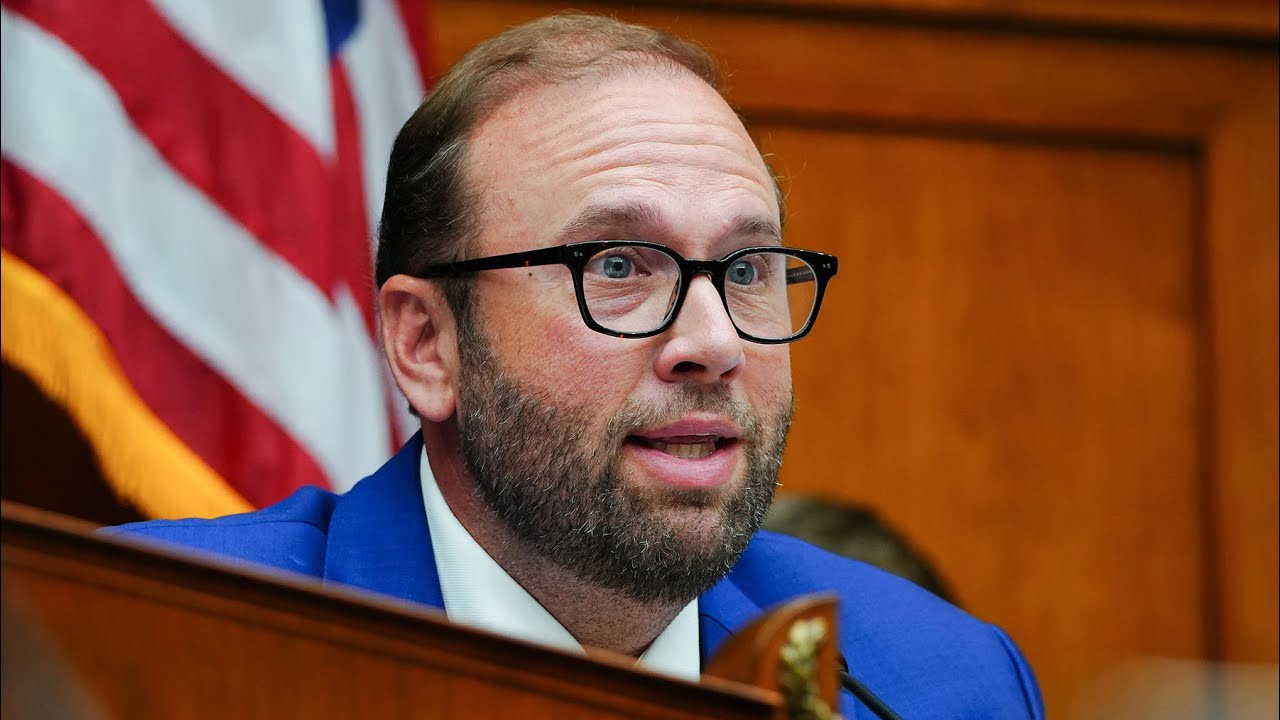 [VID]
Tuesday that their top priority is making permanent the massive giveaway to the rich that Donald Trump and the GOP pushed through in 2017.
Rep. Jason Smith (R-Mo.), chairman of the House Ways and Means Committee, said during his opening remarks at Tuesday's hearing that "we must make the Trump tax cuts permanent as soon as possible."
While most of the corporate tax breaks in the 2017 law were made permanent from the start, provisions impacting individuals—including the cut to the top marginal tax rate—are set to expire at the end of this year without congressional action. Trump and Republicans have also called for a further reduction of the statutory corporate tax rate.
"As of today, we have only 142 legislative days before taxes will go up for every single American if Congress fails to act," Smith declared Tuesday.
Smith characterized the 2017 tax cuts as a boon for ordinary Americans, but the law's benefits were heavily skewed to the wealthiest.
The same would be true of an extension of the individual tax cuts, which is expected to be part of a sprawling party-line reconciliation bill. The Institute on Taxation and Economic Policy noted in a recent analysis that "Trump's plan to make most of the temporary provisions of his 2017 tax law permanent would disproportionately benefit the richest Americans."
"No amount of misinformation can hide the truth: This massive new giveaway to the ultra-wealthy and giant corporations comes at the expense of working and middle-class Americans."
Rep. Richard Neal (D-Mass.), the top Democrat on the committee, said at Tuesday's hearing that "when Republicans inevitably tell you that the GOP tax scam gave everyone in America a tax break, remember this one contextualized fact: Extending the law gives people making over $1 million a year a $78,717 average tax cut—288 times higher than the $273 those earning under $50,000 would receive."
"Those millionaires won't feel the effects of cuts to Medicare or Medicaid, or higher premium costs, but America's working families sure will," Neal added, referring to the GOP's plan to slash key aid programs to help offset the enormous cost of extending the 2017 tax breaks.
Tuesday's committee hearing was overshadowed by the closely watched Senate questioning of Trump's nominee to lead the Pentagon, but it confirmed that Republicans intend to waste no time delivering another round of tax cuts to rich Americans who saw their wealth explode under the 2017 law.
"Last time Trump and the GOP held a trifecta, they moved fast to create new tax breaks rewarding wealthy corporations for moving jobs overseas and harming hard-working families across the country," David Kass, executive director of the progressive advocacy group Americans for Tax Fairness, said in a statement Tuesday. "Now, they're working to pass new tax breaks that will allow these same powerful corporations to evade paying their fair share and eliminate American jobs."
"The disastrous effects of the Trump tax scam are not theoretical—they're reality," Kass added. "It didn't raise wages for everyday people or protect our jobs and it certainly didn't pay for itself. Instead, it doubled billionaire wealth and added over $1.5 trillion to the deficit. No amount of misinformation can hide the truth: This massive new giveaway to the ultra-wealthy and giant corporations comes at the expense of working and middle-class Americans."
Trump and the GOP's aggressive push for a new round of tax cuts received a boost from the deep-pocketed Koch network, which is pumping tens of millions of dollars into a nationwide campaign to build support for a proposal that would predominately reward a small sliver of the U.S. population.
"If asked to choose between healthcare and food for low-income kids or tax cuts for giant corporations, Chairman Jason Smith and the Republicans on the Ways and Means Committee are proving that ten times out of ten, they'll choose the corporate giants," said Tony Carrk, executive director of the watchdog group Accountable.US. "American families are set up to lose because President-elect Trump and his congressional allies are eager to raise our costs in order to help their wealthy donor friends."
---