Maha 2
ESTB 2 25 26 TO REFLECT SPLIT / FAIL OF RFK2
MAHA Action President Tony Lyons SKYHORSE
aoc talks to
---
-=-=
mma
10/16/26
-=-=
10 26 gmail
article was produced in partnership with The Guardian.
Some of the biggest food and agriculture corporations in the U.S. are funding a campaign that pays social media influencers to combat elements of Robert F. Kennedy Jr.’s Make America Healthy Again platform, according to an investigation by the Guardian and Documented, an investigative watchdog and journalism project.
The ascension of RFK Jr. to secretary of health and human services has boosted his putative campaign to end chronic illness in the U.S., which he believes is primarily caused by processed foods and dyes, exposure to certain chemicals, and poor farming practices, along with an overuse of what he falsely claims are dangerous vaccines. The “MAHA” movement blends long-running mainstream concerns about food and farm safety with conspiracy theories about everything from medicine to milk. A MAHA “summit” in Washington this week will feature JD Vance and several members of Trump’s cabinet.
A KFF poll from May 2026 reveals that some MAHA themes resonate with a broad segment of U.S. adults. About four in 10 say they support the MAHA movement, while a majority of the public say there is not enough regulation of pesticides used in agriculture (64%) or of chemical food additives (75%).
Cross-partisan support in Washington on some of these issues poses a threat to the food industry’s bottom line — though the Trump administration has largely stopped short of enacting new regulations.
But several large corporations are fighting back. An effort by the Center for Food Integrity, an industry-funded nonprofit, tracks public sentiment around key issues central to MAHA and suggests ways that agricultural interests can counter those narratives by appealing to emotion or scientific reasoning.
They call it GAHA: Growing a Healthier America. Documents show the coordinated effort is tracking MAHA closely and researching ways to respond to the movement’s claims without alienating its supporters. They are focused on several key areas: seed oils, pesticides, high-fructose corn syrup, regenerative agriculture, organic farming, raw milk/dairy and “big ag,” internal documents obtained by the Guardian and Documented show.
-=-=
September 29, 2026 EpochTV Live
MAHA Summit 2026 Features VP Vance and Health Secretary Kennedy
 EpochTV Live
MAHA Summit 2026 is held on Sept. 29 in Washington, D.C., featuring Vice President JD Vance and Health and Human Services Secretary Robert F. Kennedy Jr.
Agenda:
9:00 to 9:10 a.m.: OPENING REMARKS (Brief Remarks)
- Alex Hardy, CEO, MAHA Holdings
- Finn Kennedy, board member, MAHA Holdings
- Tony Lyons, co-founder and president, MAHA Action
9:10 to 9:40 a.m.: PSYCHEDELIC MEDICINE, THE NEXT FRONTIER
- Rob Barrow, CEO, Definium Therapeutics
- Michael Halstead, CEO, Helus Pharma
- Kabir Nath, CEO, Compass Pathways
- Moderated by Matt Zorn, deputy general counsel, HHS
9:40 to 10:10 a.m.: DEMOCRATIZING CARE
- Patrick Carroll, chief medical officer, Hims & Hers
- Geoff Cook, CEO, Noom
- Matt Mazzeo, co-founder, Noho Labs
- Moderated by Evan Miller, founder and CEO, GameDay Men’s Health
10:10 to 10:40 a.m.: PREVENTION, EARLIER DETECTION, AND A NEW FUTURE FOR CANCER
- Eric Berg, founder and CEO, Dr. Berg Nutritionals
- Josh Ofman, CEO, GRAIL
- Moderated by Zach Lahn, regenerative farmer
10:40 to 11:10 a.m.: AFFORDABILITY FIRST
- Wyatt Decker, chief physician, value-based care, UnitedHealth
- Catherine Gaffigan, president, health solutions, Elevance
- Mike Tuffin, president and CEO, AHIP
- Moderated by Alec Aramanda, principal deputy director, CMS
11:10 to 11:40 a.m.: RECOVERY FIRST
- Ricky Bloomfield, chief medical officer, Oura
- Ana Montero, co-founder and CEO, Atlas
- Carlos Nunez, chief medical officer, ResMed
- Moderated by Sairam Parthasarathy, director, Center for Sleep, Circadian, and Neuroscience Research, University of Arizona
11:40 a.m. to 12:25 p.m.: LUNCH
12:25 to 12:55 p.m.: AI AND HEALTHCARE
- Virgílio “V” Bento, founder and CEO, Sword Health
- Syed Mohiuddin, head of healthcare, Anthropic
- Nick Perry, co-founder and CEO, Candid Health
- Moderated by Annie Lamont, co-founder, Oak HC/FT
12:55 to 1:25 p.m.: PREVENTION AT SCALE
- Eduardo Conrado, president and CEO, Ascension
- Warner Thomas, president and CEO, Sutter Health
- Eugene Woods, CEO, Advocate Health
- Moderated by Adam Boehler, managing partner, Rubicon Founders
1:25 to 1:55 p.m.: SECURING AMERICA’S FOOD SUPPLY AND ENVIRONMENTAL INNOVATION (Fireside Chat)
- David Friedberg, CEO, Ohalo Genetics
- Brooke Rollins, secretary, USDA
1:55 to 2:25 p.m.: REFORM AT CMS
- Chris Klomp, chief counselor, HHS
- Mehmet Oz, administrator, CMS
- Moderated by Russell Brand, comedian and broadcaster
2:25 to 2:55 p.m.: THE GREAT LONGEVITY DEBATE
- Alex Colville, co-founder and general partner, age1
- Bryan Johnson, founder, Blueprint
- Max Marchione, co-founder and CEO, Superpower
- Moderated by Aidan Dewar, co-founder and CEO, Nourish
2:55 to 3:25 p.m.: BUILDING THE AI HEALTH STACK
- Ed Baker, chief product officer, Whoop
- Maayan Cohen, co-founder and CEO, Hello Heart
- Felipe Millon, head of government go-to-market, OpenAI
- Moderated by Omar Lateef, president and CEO, Rush University System
3:25 to 3:55 p.m.: MODERNIZING MAHA REGULATION
- Kyle Diamantas, acting commissioner, FDA
- Calley Means, senior advisor at HHS
- Lee Zeldin, administrator, Environmental Protection Agency
- Moderated by Tony Lyons, co-founder and president, MAHA Action
3:55 to 4:25 p.m.: THE MAHA ATHLETE
- Michael Chandler, three-time Bellator champion, UFC
- Noah Syndergaard, former MLB All-Star pitcher
- Mike Tyson, undisputed heavyweight champion
- Moderated by Gary Brecka, founder, The Ultimate Human
4:25 to 4:55 p.m.: REAL FOOD AT SCALE
- Michael Boes, chief MAHA officer, Steak ’n Shake
- Scott Morris, senior vice president, private brands, Walmart U.S.
- Jonathan Neman, co-founder and CEO, Sweetgreen
- Moderated by Stefanie Spear, principal deputy chief of staff, HHS
4:55 to 5:00 p.m.: EXCITING ANNOUNCEMENT
- Cheryl Hines, actress and author
5:00 to 5:30 p.m.: IN CONVERSATION: VICE PRESIDENT JD VANCE AND SECRETARY KENNEDY (Fireside Chat)
- Vice President JD Vance
- Robert F. Kennedy Jr., secretary, HHS
-=-=
-=-=
MMA
MAHA Summit entrenches a divide between administration-aligned advocates and popular influencers
Some grassroots activists and popular influencers were notably absent from the event headlined by Robert F. Kennedy Jr. and JD Vance
Written by Alyssa Tirrell
Published 10/02/26
What does this week’s MAHA Summit tell us about the state of the movement?
Earlier this week, the MAHA Center hosted the second annual MAHA Summit, described by the organizers as a convention of “senior health leaders across technology, business, and government working to make Americans healthier.” The summit's apparent cooperation with industry figures and the Trump administration seemed to drive further an existing wedge within the MAHA coalition, putting administration-aligned advocates at odds with some grassroots activists and popular influencers. As one activist put it, “I don’t recognize this version of MAHA.”
The MAHA Center — the nonprofit arm of a triad of organizations, including MAHA Action and the MAHA PAC, all tied to Health and Human Services Secretary Robert F. Kennedy Jr. — describes MAHA as “a nationwide movement focused on reversing the chronic disease epidemic in America through advocacy, grassroots activism, and policy reform.”
Nonetheless, several prominent grassroots advocates and MAHA influencers were absent from the lineup — including Turning Point USA’s Alex Clark, Moms Across America’s Zen Honeycutt, and Kelly Ryerson, known online as Glyphosate Girl. Instead, the panels primarily featured Trump administration officials and industry representatives — from health tech, insurance, and agriculture — many of whom delivered sales or policy pitches.
In recent months, elected Republicans have faced backlash from MAHA advocates for apparently siding with industry interests on priorities like glyphosate and agricultural legislation. An invitation to participate in the summit could have been an olive branch to MAHA influencers — but if they received invites, it appears those influencers declined.
A panel on reform at the Centers for Medicare & Medicaid Services did feature podcaster Russell Brand as a moderator — a bizarre choice, not least because Brand has faced charges for numerous counts of rape and sexual assault. In his introductory remarks, Chief Executive Officer of MAHA Holdings Alex Hardy told the audience, “You'll hear from Russell Brand and Dr. [Mehmat] Oz. One's a heart surgeon, and one's a heart throb. We'll let you decide which is which.”
Some issues of recent MAHA activism featured lightly if at all during the panels. There were no dedicated panels for vaccine reform, glyphosate, and data centers — all of which have propelled MAHA advocacy in recent months and some of which would require a brush with industries that were represented among the summit’s speakers.
AI innovation was particularly emphasized throughout the summit, but the MAHA backlash against data centers was only mentioned in passing, when CMS Deputy Administrator Dan Brillman said, “The 58% that don’t use it, hate it. They hate data centers. We need more people using AI to better their health.” At the end of the event, RFK Jr. further promoted AI, telling the audience that it could “free us from medical tyranny” of experts.
Kelly Ryerson and Alex Clark also suggested that the MAHA Summit was not geared toward the women who made the movement a major political force. Ahead of the event, Ryerson told the Washington Examiner, “The MAHA Summit lineup does not reflect the issues that birthed the original MAHA movement and drove voters, especially women, to show up and vote for this coalition,” adding, “I don’t recognize this version of MAHA.” Similarly, NBC reported that Clark did not attend the summit. “Where are the original women who started the movement?” Clark asked.
Of the nearly 60 speakers who featured on the agenda, only 7 were women — one of whom was RFK Jr.’s wife Cheryl Hines, who appeared for just 5 minutes to announce future MAHA events.
Women have played a critical role in the movement — the introductory remarks of the event even paid lip service to “MAHA moms.” So it’s notable that the women of MAHA were largely excluded or chose not to participate in the summit. Their absence suggests that the MAHA coalition is now facing a familiar political question: Is compromise with prevailing power players a sign that the movement is succeeding or failing?
Is the summit just the tip of the iceberg?
The MAHA Summit highlighted an existing fracture in the foundation of the MAHA coalition. In recent months, MAHA Action and popular influencers have taken opposing lines on at least two issues related to the Trump administration.
One such example followed from the EPA announcement this past May that it would drop limits on some PFAS in drinking water. Ryerson, Clark, and MAHA activist Alexandra Muñoz expressed frustration with the move, while MAHA Action praised EPA efforts.
Before the rule was announced, Clark and Muñoz urged the EPA to change course. Clark wrote, “Don't weaken PFAS regulation!!!” and Muñoz posted, “Don't allow more PFAS in our drinking water!!!!”
In response to the change, Clark again expressed her frustration with the move, writing, “We are running one of the largest uncontrolled chemical experiments in human history from an alleged ‘MAHA EPA.’”
Ryerson seemed to agree with Clark and Muñoz, writing, “Yesterday, as predicted, the EPA announced they will be removing limits on certain PFAS in tap water.” Her post also included a quote she had given to The New York Times, strongly advising the EPA “not to move forward on deregulating PFAS if they want to win the November midterms.”
According to the New York Times, EPA Administrator Lee Zeldin “sought to counter that anger by appearing Monday with Robert F. Kennedy Jr., the health and human services secretary who spearheaded the MAHA movement, and announcing nearly $1 billion to help states address the contaminants in drinking water.”
MAHA Action backed Zeldin's spin, praising the administration's move. The account wrote, “The EPA is putting $1 billion toward cleaning PFAS from America’s drinking water. After decades of contamination, communities are finally getting help to confront the ‘forever chemicals’ poisoning their water.”
In a separate joint post with MAHA Action President Tony Lyons, MAHA Action wrote that Zeldin and the EPA were “declaring war on forever chemicals.”
A similar dynamic ensued following the announcement of Heidi Overton's nomination for FDA commissioner late last month. Again MAHA Action fell in line with the administration, while Clark, Ryerson, and Muñoz criticized the move.
MAHA Action and Lyons, along with the account MAHA Mommas, praised Overton's nomination, writing, “Secretary Kennedy has given his full endorsement of President Trump’s pick for the next FDA Commissioner, Dr. Heidi Overton.” The post added, “Kennedy is making clear that under Overton, the FDA will answer to science and the American people, not the status quo.”
Clark pushed back, writing, “This is who wrote the glyphosate executive order by the way,” seemingly referring to a February executive order aimed at boosting glyphosate production. Clark’s post was shared by Muñoz. (White House officials disputed the claim that Overton wrote the order, saying it was authored by Trump’s national security advisory team.)
Ryerson again seemed to agree with Clark and Muñoz, writing of the nomination, “Very sad day for MAHA."
The divide hasn’t escaped Lyons, it seems. Earlier this fall, he discussed the MAHA coalition’s role in driving GOP midterm results with Rumble’s Flyover Conservative, saying, “I think the strategy has to be to look at the coalition that worked in the fall of 2024, where we got a few million people to switch parties and to recognize that, like I said before, the party that they thought represented them really didn't.”
Lyons added, “On the more activist side of the MAHA movement — activists are never happy, they're not meant to be happy, the idea for activism is that you can always do better.”
//
MAHA advocates are rallying against GOP “traitors” who passed the farm bill
09/17/26
04/28/26
03/30/26
-=-=
-=-=
===
no lnx yahoo
The Baltimore Sun
MAHA Summit urges emphasis on early detection, preventive action in healthcare
Jonathan M. Pitts, Baltimore Sun
Tue, September 29, 2026
Add Yahoo as a preferred source to see more of our stories on Google.
Add Yahoo on Google
MAHA Summit urges emphasis on early detection, preventive action in healthcare
WASHINGTON — Alex Hardy spent seven years battling chronic sinus disease, undergoing five surgeries and taking 10 rounds of antibiotics. But the experience that ultimately drew him into the Make America Healthy Again movement, he told a Washington conference Tuesday, was what happened when he stopped looking to conventional medicine for an answer.
Hardy, CEO of MAHA Holdings, quit his technology job, moved to Costa Rica and changed his diet and lifestyle. Within three months, he said, his health dramatically improved.
"That experience radicalized me," Hardy told hundreds of attendees at the second annual MAHA Summit at the Waldorf Astoria hotel Tuesday. "I shouldn't have had to leave our country to get healthy."
Hardy's story offered a personal distillation of the philosophy underlying the daylong conference — that an American healthcare system built largely around treating illness after it develops should put far more emphasis on preventing chronic disease through nutrition, lifestyle and environmental changes.
The gathering brought some of the nation's most powerful health officials together with scientists, doctors, technology executives, food industry leaders, wellness entrepreneurs and athletes to explore topics ranging from the food Americans eat and the cost of healthcare to cancer detection, artificial intelligence, psychedelic medicine and environmental health.
Agriculture Secretary Brooke Rollins and EPA Administrator Lee Zeldin were among the senior administration officials who took part. Vice President JD Vance and Health and Human Services Secretary Robert F. Kennedy Jr. closed the program with what organizers called a "fireside chat" that began at 5 p.m.
The theme Hardy cited ran through many of the 17 panel discussions held on a stage in the Waldorf ballroom, where three giant video screens loomed behind participants, flashing titles such as "Psychedelic Medicine: The Next Frontier" and "Democratizing Care," to name two of the sessions. Images of sun-splashed mountains and healthy food played across the screens between sessions, interspersed with panels displaying the logos of Anthropic, Noom, UnitedHealth Group and other companies represented by the roster of speakers.
Josh Ofman, CEO of biotechnology company GRAIL, described one manifestation of that shift during a panel on early cancer detection. The company's flagship product, Galleri, is a blood test designed to detect signals associated with more than 50 types of cancer by analyzing patterns in DNA fragments circulating in the bloodstream.
"If you think about healthcare today and what's possible that wasn't just a few years ago, clearly we have to make a transition from a 'break-it-and-fix-it' system to one of prediction and early detection," Ofman said. "An enormous transition has to take place."
Speakers repeatedly addressed what they described as a need to break free of traditional systems of healthcare that cost too much — and diminish Americans' quality of life — by taking action only when an illness has taken hold and becomes evident, then treating it as a discrete crisis, when, in their view, finding ways of detecting illness and making less catastrophic adjustments ahead of time is a more affordable, less traumatic approach.
One element of the problem is access, said Wyatt Decker, UnitedHealth Group's chief physician for value-based care and innovation, who joined a morning discussion on how insurance systems can bring the costs of care down.
Decker said his company is pushing for innovations that would allow patients to get health-promoting care before the crises hit — a rarity in the current system.
"Chronic diseases account for 90% of [healthcare] expenses, and people haven't been able to get access to care when it's not a crisis," Decker said. "And that creates a system that is not only extremely expensive but that also creates a terrible experience."
UnitedHealth Group, he said, has been developing and sharing with patients the kind of data that will allow them a wider array of clinics and forms of treatment, some more expensive and some less, depending on the individual's health situation — a freedom that can be better tailored to individual needs and save money.
"There's no correlation between the cost of healthcare and the quality you're getting," he said. "One thing we're doing is saying, 'We'll use data and analytics to help members navigate their healthcare. If they want to go to a higher-cost environment, they can."
Such a change, he said, can save Americans up to 45% on their total cost of care.
Several panels explored how AI can contribute to creating greater choice, more patient freedom, and simply granting ordinary Americans more capacity to understand what ails them and what can be done about it.
The unconventional grouping in one afternoon panel captured an element many MAHA supporters advocate — a reaching-out across established silos and categories — when the British comedian Russell Brand moderated a discussion on how governmental departments can be reformed to serve patients better.
The panel included Dr. Mehmet Oz, an administrator of the Centers for Medicare & Medicaid Services, which under Oz has proposed expanding accountable value-based care, in which providers have financial incentives tied to patient outcomes and total costs rather than simply being paid for each service they perform.
Oz promoted advancing a culture in which all Americans are cared for from the beginning of life into old age and in which telehealth and changes in the insurance industry might ensure the same level of care for those in both rural and urban America and praised Congress for passing legislation that he said provided $50 billion for rural healthcare.
That, he said, was a sign of a MAHA-influenced system becoming more unified across regions and more fully democratized.
Brand brought levity to the proceedings and, after standing on the floor among attendees for a "group photo" led a chant of "Say MAHA!"
The audience roared, setting the tone for a conference that grew more energized later in the afternoon when Kennedy and Vance took the stage to sum up the day's events.
Dozens of media members flooded into the ballroom before the pair took their seats, and it didn't take long for Vance to add to the upbeat mood.
"I must be at the wrong summit. I thought we were going to be talking about weight loss and acid, not AI," Vance said, to laughter, in reference to the GLP1 drugs discussed at some of the day's panels and a morning discussion about the experimental use of psychedelics in treating PTSD and depression.
Then the pair turned to some of the day's core themes — the potential dangers of AI, the problem of widespread fraud in the Medicare system, and the need to keep the MAHA movement going long after the Trump administration ends.
Kennedy finished by thanking Vance and Trump, his boss, for the administration's support in advancing MAHA and waved to an upbeat departing crowd.
Have a news tip? Contact Jonathan M. Pitts at jonpitts@baltsun.com.
unserous
Scholars contest high-profile claim that Johns Hopkins founder owned slaves
May 31, 2026
"I absolutely believe Johns Hopkins jumped the gun on this," Papenfuse, a lecturer in the university's Advanced Academic Programs, said in an email to The Sun.
-=-=
mma
MAHA advocates are rallying against GOP “traitors” who passed the farm bill
Moms Across America founder Zen Honeycutt: “If the Republicans lose the midterm elections … this will be one of the reasons why”
Written by Alyssa Tirrell
Published 09/17/26
This week, the Senate Agriculture Committee passed the farm bill, a policy package that has repeatedly faced opposition from the “Make America Healthy Again” movement.
While the farm bill was being considered, MAHA advocates urged their followers to contact senators to vote “no,” arguing that the bill's language would fail to hold pesticide manufacturers accountable. Following the bill’s passage, advocates expressed frustration with Republican senators, highlighting tensions between a key faction of President Donald Trump's base and the broader GOP prior to the midterms.
This week: MAHA vs. the farm bill
As the Senate Agriculture Committee reconsidered the farm bill, MAHA advocates asked their followers to call senators and urge them not to pass a package that would delay pesticide reviews and cut funding for regenerative agriculture, a pesticide-free farming method.
Several major MAHA accounts, including Moms Across America, Kelly Ryerson (known online as Glyphosate Girl) and Courtney Swan, joined in a September 14 post on Instagram urging their followers to contact five Republican senators — Alabama’s Tommy Tuberville, Iowa’s Joni Ernst, Kansas’ Roger Marshall, North Dakota’s John Hoeven, and West Virginia’s Jim Justice — and tell them to vote “no” on the farm bill.
MAHA activist Alexandra Munoz shared the post and commented, “This bill must be stopped! Don’t let them deregulate pesticides more!” The post was further shared in an Instagram story by MAHA podcaster Alex Clark, and the MAHA Mom Coalition included the call to action in a series of posts critical of the bill.
Zen Honeycutt, founder of Moms Across America, posted a video Tuesday morning encouraging her audience to call their senators to vote “no” on the bill. In an additional video posted the following day, Honeycutt elaborated, “We just want to let them know we will be watching their vote.”
She added, “If the Republicans lose the midterm elections and they are voting — doing things like this, like voting party lines instead of listening to their constituents — this will be one of the reasons why."
On Wednesday, the farm bill passed the Senate Agriculture Committee in a vote along party lines. The stalemate was broken by Sen. Mitch McConnell (R-KY), who has been privately dealing with health issues since at least June and reportedly returned to the Senate in part to break the deadlock.
MAHA advocates responded by expressing frustration, particularly with Republican senators.
Vani Hari (known online as the Food Babe), Munoz, Ryerson, and Swan shared a post condemning the passage of the farm bill. Hari wrote, “What happened with the Farm Bill today is absolutely insulting to the American people. Congress had an opportunity to demand MORE accountability for the chemicals being sprayed on our food.” The caption included a “Traitor list” naming a dozen Republican senators.
Ryerson also separately posted an image of McConnell returning to the Senate with the caption, “Ailing Sen McConnell dragged in from medical leave to VOTE TO DEFUND REGEN AG and POSTPONE GLYPHOSATE REVIEW.”
In a new video, Honeycutt said, “We're very disappointed. I’m going to read the Republicans who voted for the farm bill, which is not what their constituents want.” She also claimed that McConnell “did not have the wherewithal, he was not in mental or physical fitness to be able to do that vote, that should absolutely not be allowed.”
She then read a list of Republican senators who voted to pass the bill, adding, “Folks, the Republicans need to hear from you.”
Recap: MAHA vs. glyphosate
This spring, the herbicide ingredient glyphosate became a particular rallying point for MAHA advocates as the Supreme Court prepared to hear a case that would shield Bayer, the manufacturer of the glyphosate-based Roundup, from liability. As CNBC reported, “The Environmental Protection Agency does not classify glyphosate as a carcinogen and does not require labels to disclose cancer risk, but the World Health Organization’s International Agency for Research on Cancer in 2015 said the chemical is ‘probably carcinogenic to humans.’”
The issue was further charged in March after the Trump administration, which had signed an executive order promoting glyphosate production in February, wrote an amicus brief to the Supreme Court in support of Bayer.
In response, MAHA advocates organized “The People vs. Poison” rally in D.C. on April 27. The protest prompted the House of Representatives to remove language from the farm bill that MAHA figures said would also have shielded pesticide manufacturers from liability. The bill passed the House without the pesticide protections just a few days later, and MAHA celebrated the win.
The victory was short-lived, however. In late June, the Supreme Court decided in favor of Bayer, finding that “that the company can't be sued in state courts because federal regulations have found a cancer link unlikely and do not require a warning label.”
Then, in early August, Senate Republicans voted down a Democrat-led amendment to the farm bill that would have allowed injured parties to file suit against pesticide companies. The legislation then stalled in committee, according to The Hill, thanks primarily to Democratic members who oppose a “provision in the bill that would require states to help cover the cost of Supplemental Nutrition Assistance Program (SNAP) funding.”
//
MAHA moms are taking on data centers
06/10/26
MAHA and wellness advocates sound the alarm after the primary defeat of Rep. Thomas Massie
05/21/26
MAHA is outraged over Supreme Court ruling that shields Monsanto owner Bayer from cancer liability
06/26/26
-=-=
FAIL MEASLES
8 26 YT
5 YRS AGO RFK TO PA SAID NO AUTISM, CHICKEN SOUP VIT A
2 KIA BABY SPLEEN BUT THAT IS STMP // COVID DIED W/ VS DIED OF BS
-=-=
MMA
On MAHA Media Hub, guest claims that if people “eat vitamin A foods, take daily cod liver oil, keep your kids well nourished, you will weather measles just fine”
MAHA Action President Tony Lyons: “We're trying to prevent a single measles death. So does that mean we should be willing to have autism rates that go from one in 10,000 to one in 30 or, you know, something like that?”
Written by Media Matters Staff
Published 08/27/26 1
Video
From the August 26, 2026, edition of MAHA Action's MAHA Media Hub, streamed on YouTube
BOB SEARS (GUEST): I know people are concerned about measles and — because there's been a clear comeback over the last couple years. And I like to just maybe make sure everyone understands why there's been a comeback and what you can do about it and why you can be educated about it, but you don't have to live in fear of measles.
So first of all, why the comeback? The main reason why is that the vaccine we use wears off too soon. It might protect kids, some kids from catching measles while they're young, but it wears off by the time you're a teenager, and most adults are walking around without measles immunity. So we can actually never really get rid of measles from our country because it's just it's — you know, it's trying to regain a foothold, and we might be seeing more cases because people don't trust the measles MMR vaccine as much anymore. So that might be why some of these communities are having measles outbreaks.
But the truth is it's not spreading because people are not vaccinating. It's because we can't eliminate this infection from our society. We just don't have a vaccine that gives you lifelong immunity, like catching the disease, that gives you lifelong immunity.
So do you need to fear measles? My feeling is no. If you look at the fatality rate in healthy kids who are well nourished and who get enough vitamin A in their diet, the fatality rate of measles is about one for every 93,000 children. That's a very low fatality rate. Now when you look at all children in our country, you know, well nourished, undernourished, the fatality rate might be about one in 10,000. That's a number we've known about for a very long time.
Why does the CDC say the fatality rate is one in 500 or one in 1,000? That's what the old CDC used to say to scare people. That's only hospitalized kids. Kids who show up in the ER very sick from measles or if you're hospitalized, the fatality rate could be about one in 1,000 of those cases. But for everybody, the good news is if you have a healthy child and you're getting vitamin A in your diet, the fatality rate is about one in 93,000. So that's what I tell people to do. Eat vitamin A foods, take daily cod liver oil, keep your kids well nourished, you will weather measles just fine.
I think people don't trust the vaccine anymore, Tony. The MMR vaccine, which protects, or "protects" against measles, it's one of the vaccines with the most possible side effects and some of the most severe side effects. People just don't trust it anymore. So parents are now raising their kids without that vaccine. And you know what? Measles might be here to stay. It might become more a part of our society. We can be on the lookout for it. Stay home if you have a fever and a cough and red eyes. And then if you get the rash, stay home, you know? Maybe you don't want to spread it to everyone in your school. Now we're back to COVID days, right?
But recognize it, stay home if you catch it, but don't fear it and be well nourished so you're ready for it. And most importantly, if you catch measles, take high dose vitamin A. The CDC has always been very clear that high dose vitamin A reduces the risk of your measles infection. It reduces complications. The measles page on my website tells you all of this information, tells you how much vitamin A to take daily as a prevention, how to high dose vitamin A if you catch measles, what that protocol is.
So you know what? Education is important, knowledge, not fear, and, you know, we'll get through this. And if we have to accept measles as a sort of a regular part of a society now moving forward, then we have to be ready for it.
TONY LYONS (MAHA ACTION PRESIDENT): Yeah. Bob, those are great, great points. I mean, you know, with most of these things in in the last, you know, 30, 40 years, we've always been fed just one side of the story. So we're trying to prevent a single measles death. So does that mean we should be willing to have autism rates that go from one in 10,000 to one in 30 or, you know, something like that?
Or should we be able — you know, should we be fighting certain things while ignoring other things, while watching every child in the country have, you know, some kind of allergy now, versus 20, 30 years ago, where you could have a whole school where there was virtually no children who had an allergy to anything or virtually — you know, practically no obesity, no childhood cancers. So all of these kinds of things, they're a part of this story, right?
SEARS: Exactly. And I think the old CDC focused way too heavily on disease prevention. If we could prevent an infection no matter what the cost to everyone in society, let's prevent it. Whereas I think wise people today, they look more at long term health, healthy living, healthy outcomes. And if we have to catch some infections along the way, yet live a healthier, longer, happier life while we're doing that, that's what I think is an important or more important aspect of health. And that's what I would love the CDC to focus on is long term well-being, not infection prevention.
LYONS: Right. Great, great, great points.
//
06/23/26
01/23/26
RFK Jr., measles, and the dangerous legacy of Fox News’ COVID-19 coverage
03/12/25
-=-=
-=-=
====
CNN
MAHA’s money man has built a political machine. Will it matter for midterms?
By
Sarah Owermohle
Feb 3, 2026
A sixth-generation farmer running for Iowa governor, Zach Lahn is the first MAHA-endorsed candidate of the 2026 election cycle.
Running on a platform that includes taking on “Big Agriculture” and “Big Pharma,” his visibility in a crowded field received a boost in publicity when he appeared in December on a popular weekly teleconference hosted by MAHA Action, a lobby group that has become the chief political arm of the movement.
Introducing Lahn, MAHA Action’s leader Tony Lyons declared: “This race is a national problem. It’s a national race, and it’s critical for the MAHA movement. And victory here will demonstrate that we can rebuild, you know, values that will make this country healthy.”
Over the first year of the Trump presidency, “Make America Healthy Again” advocates have issued a warning: Politicians ignore MAHA’s demands at their peril. The deep-pocketed financiers who fueled the movement’s rise have been building the machinery to take MAHA from grassroots outsiders to entrenched power players in Washington and around the country.
The most influential among these is Lyons, a long-time supporter of Health and Human Services Secretary Robert F. Kennedy Jr. who has poured millions into building the political movement, first as a backer of Kennedy’s 2024 presidential run, and now as one of the key architects of MAHA’s political influence.
“We need to fight, fight, fight, and we need to keep making progress,” Lyons, whose company Skyhorse has made a name publishing the works of controversial figures, including RFK Jr., said when he introduced Lahn. “Make no mistake, this is going to be this is a real battle, and it’s endless.”
There is a lot to boast about, Lyons and MAHA leaders say: A whittled-down childhood vaccine schedule, new dietary guidelines with a reversed food pyramid, and plans to remove food artificial dyes from foods.
But there is skepticism that the movement has the momentum — and coherence — to make a difference for the Republicans running with the backing of the MAHA label.
The Trump coalition of voters, including MAHA advocates, tends to include “folks who are otherwise not voting, or not as closely attached to the political process, until sufficiently aggrieved,” said Thomas Miller, a senior fellow on health policy at the conservative think tank American Enterprise Institute.
“That’s harder to do in a 2026 election” because of less voter turnout during midterms, he said.
A midterm election can be a particular problem when you are the party in power, noted Miller. “Unfortunately for the folks who are running on the Republican side, they’re the incumbents now, as opposed to the other folks who were being demonized before.”
Making MAHA a DC staple
The political arm of the MAHA movement has steadily built its influence in Washington and state capitals over the past year.
The scope and depth of its reach could be seen on a cold morning in Washington, DC, last November, when the line to get into what used to be the Trump International Hotel — now the gilded Waldorf Astoria — snaked around the block.
Attending the inaugural “Make America Healthy Again Summit” that day put on by Lyons were Vice President JD Vance; Ultimate Fighting Champion boss Dana White; comedian Russell Brand, who is fighting rape and sexual assault charges; longevity and alternative medicine-obsessed tech multimillionaire Bryan Johnson; and ex-NASCAR driver Danica Patrick.
Kennedy headlined the event, which featured a series of corporate-themed panels interspersed with pop-culture discussions and reflections on how to “Make American Biotechnology Accelerate.”
Health food advocates, tech entrepreneurs and lobbyists waited, at times, for more than an hour to get in.
A week earlier, a separate conference in Austin, Texas, drew a distinctly different MAHA crowd. That gathering, organized by the Children’s Health Defense, the anti-vaccine nonprofit Kennedy founded before he entered politics, featured another longtime Kennedy associate and donor Mark Gorton, founder of the software firm LimeWire who encouraged people “to be more boldly anti-vax.”
Lyons, Gorton and a cadre of long-time Kennedy backers have been with the health secretary since the beginning, helping to propel the otherwise grassroots-based MAHA movement with their power, influence and funds.
When Kennedy entered the presidential race as a dark horse candidate in 2024, Gorton and Lyons were early donors and organizers. Gorton, a vaccine skeptic and critic of Covid-19 shutdown measures, gave $1 million to the Kennedy war chest through American Values, a political action committee he co-founded with Lyons. American Values ultimately raised more than $50 million.
After Kennedy endorsed Trump and the Republican secured a second term, Lyons founded the MAHA Action PAC, which has launched six-figure ad campaigns touting Trump and Kennedy’s work, holds weekly virtual events for supporters, and curries high-profile endorsers such as those who graced the Waldorf Astoria event.
On the state level, MAHA Action has built a website tracking legislation they urge followers to support (tougher food labels, allowing raw milk sales, health care price transparency) and those they should write lawmakers to oppose (a California bill that would shift authority over vaccine recommendations from Kennedy’s reshaped federal advisory group to the state health department).
At the start of last year, when Lyons renamed American Values PAC to become MAHA-focused, the lobby had war chest of $7.7 million. It spent $3.8 million of those funds in the first half of the year, according to federal financial disclosures, much of which went to X Corp., the Elon Musk-owned successor to Twitter; Merit Stream Media, a platform owned by Dr. Phil, who has supported MAHA agenda points; and Gavin de Becker Associates, a security firm led by Kennedy’s longtime security adviser.
The PAC’s full-year financial disclosures are expected in February.
Much of the money so far has gone to online streaming, and streaming often. For the MAHA-aligned part of the Trump administration, this has created a platform for reaching the movement. Health officials regularly appear on MAHA video calls to tout wins on food and pharmaceuticals and remind voters to keep engaging.
“We as a group, this Make America Healthy Again movement, are in a position to basically determine the outcome of the midterms,” Robert Malone, a Kennedy-appointed vaccine adviser and an early pioneer of the messenger RNA technology eventually used in Covid-19 vaccines, said during a November MAHA Action call.
“The question is: will members of the House and the Senate recognize the importance of our movement, our agenda, our initiatives, the force of the interest in this, by key constituencies,” he said.
Does it translate to votes? And does it matter?
But as Kennedy and his cohort score wins in Washington, there is growing concern that vaccine policy changes could alienate average Americans ahead of the midterms.
Most voters have extreme confidence in the childhood vaccine schedule, according to Pew Research polling from November, before HHS narrowed the recommended vaccinations for most children.
December polling from Tony Fabrizio, longtime GOP strategist and 2024 pollster for Trump, show similar trends: More than 70% of voters say the benefits of common vaccinations outweigh the risks, including 6 in 10 MAHA voters, according to his polling firm FabrizioWard.
While the MAHA agenda — food policy, particularly — is widely popular across party lines, vaccine skepticism is not, including among MAHA voters, according to pollsters.
But it’s unclear if health issues such as food or chemical safety will weigh heavily on voters’ minds this year.
“Voters are sending a loud message that their biggest concern is the economy and prices,” said Doug Heye, a GOP strategist and former RNC communications director. “Other issues just have not been registering.”
Regardless of the movement’s sway in the midterms, the MAHA industrial complex is continuing to make product endorsements, sell supplements, and put out bestselling books.
While Skyhorse does not make its sales and profits public, it has touted being one of the fastest-growing independent publishers in the country, with more than 100 bestsellers to its name. Those same authors often appear in the weekly MAHA Action streaming installments.
Several of Skyhorse’s top sellers came from Kennedy, who stands to make millions more from the publishing house. The health secretary last year reported that he is owed between $2 million and $4 million for two upcoming books, “Unsettled Science” and “A Defense for Israel,” and made $450,000 from Skyhorse for consulting on book ideas and writing forewords for authors.
Kennedy is contracted for a third book with Skyhorse that he will not write or promote while serving in government, according to his financial disclosures. But his wife, Cheryl Hines, received a $600,000 advance for her November 2025 memoir, according to those documents.
Last month, Kennedy himself made a surprise appearance on a MAHA Action call, roughly an hour after standing with Trump in the Oval Office as the president signed a bill reintroducing whole milk in schools.
Following some remarks from Kennedy on the signing, Lyons told him:
“There are 7,000 influencers watching this show, and I just want you to know that they all love you, that millions of MAHA moms, you know, have your back, are fighting for you.”
“They recognize that you’ve risked everything to fight for them,” he said.
===
-=-=
an 8 26
At the core of Robert F. Kennedy Jr.'s rise as a political celebrity is the enduring American reverence for his family. Decades ago, during his career as an environmental advocate, that lingering aura inspired admiration and even hope.
Yet the longer Bobby Jr. remains in the corrupting orbit of this regime and its maximum leader, the more he has come to reflect the degraded values and morals of the Trump family rather than his own.
Flawed as the legendary Kennedys were, nobody has ever thought of Jack, Robert or Teddy as low-rent grifters seeking to scam the government or the public for personal gain. Quite the opposite, since they devoted their political careers to protecting the American people from crooks like Roy Cohn -- the Trump lawyer and moral mentor who was twice indicted when Robert F. Kennedy Sr. was attorney general.
On the current record, it is clear that RFK Jr. has long since abandoned the illustrious example of his forebears and embraced instead the grabbing-with-both-hands ethic of his new political family. During the past year alone, Bobby has abandoned all the environmental and public health principles that supposedly animated his career for the past 40 years, strictly to enrich and promote himself and his dear leader Donald Trump (a man his father and uncles assuredly would have scorned).
Consider just one of the many abuses of power perpetrated by Bobby for his own personal and political gain. As disclosed earlier this summer in The New York Times, he went out of his way to protect the distribution of Kratom, a highly toxic, mind-bending drug, mostly sold in gas stations and convenience marts, that has been linked to thousands of deaths. Exercising his authority as Health and Human Services secretary in the fall of 2025, he called the governor of Ohio in an effort to stop a state ban on the dangerous substance. Among the Kratom producers who benefited from this action -- the opposite of what any public health official should have done -- was a man formerly known as Jerry Cash, who had served time in prison for embezzlement and later changed his surname to Ross.
As Jerry Ross, the Kratom mogul poured $162,000 into the defunct RFK Jr. 2024 presidential committee after Trump named Bobby as health secretary. And several months later, after Food and Drug Administration granted additional favors to boost kratom, Ross wrote another million-dollar check to Kennedy's MAHA PAC.
Like Trump, Kennedy has profited from blatant conflicts of interest while refusing to divest himself of those deals and arrangements. He still stands to profit from his consulting contract with a Los Angeles personal injury law firm that is suing vaccine makers such as Merck. When he was confirmed, Sen. Elizabeth Warren and others objected, noting that at HHS he could use his power to increase his legal bonanza (which has brought him millions of dollars over the past few years).
And like Trump, Kennedy banks big money from his "patriotic" sloganeering, by personally licensing "Make American Healthy Again" as a brand - while he uses government resources to promote that brand. When Dr. Anthony Fauci came under fire in a Senate hearing in July, Kennedy used the opportunity to promote his scurrilous book attacking the former federal science official -- despite his previous pledge not to run that particular sleazy grift.
How much longer Kennedy will be able to exploit the naivete of the "MAHA Moms" who form his political base remains to be seen. Many of them have grown restive as he repeatedly sells out their ideals to back Trump's pay-for-play arrangements with pesticide producers, tobacco firms and other industries whose depredations he swore to fight. For the MAHA movement, a bitter realization is coming: They followed a leader named and packaged as a Kennedy, but underneath he was just another shoddy Trump.
-=-=
RWW
- Molly Olmstead @ Slate: The FDA Just Handed Looksmaxxers a Big, Strange Victory
RFK Jr.’s MAHA movement is finding plenty in common with the bros who are obsessed with peptides.
EG
Kelly Ryerson, another key actor in the Maha movement who has been lobbying US regulators and lawmakers for restrictions on glyphosate and other pesticides, said the move by Trump is an insult to those who have largely supported the administration because of promises that Maha issues would be taken seriously.
---
an 7 26 grist
On a 200-acre farm and cattle ranch in Bandera, Texas, Mollie Engelhart grows organic produce, sells raw milk, and writes a daily column about the power of regenerative agriculture. She’s a farmer and a Make America Healthy Again mom who doesn’t like being called a MAHA mom. She prefers to think of herself as “MAHA-aligned.”
In May, Engelhart opened her ranch to a couple hundred pro-MAHA politicians, activists, and leaders for a two-day MAHA farming retreat. Department of Health and Human Services Secretary Robert F. Kennedy Jr., was there. Engelhart’s brother, Ryland, is one of the more well-known figureheads of the movement.
*This story was originally published by Grist. Sign up for Grist's weekly newsletter here.
Her biggest issue with the MAHA label is what she considers the “blue team or red team” politicization of it. Like many MAHA-aligned supporters, she voted for President Donald Trump in the last election largely because of RFK Jr.’s endorsement and their joint promise to clean up America’s chemical-laden food system. Back then, she had faith Trump would make good on that promise. But in the last year and half, that faith has frayed.
“I think that one hundred percent the MAHA movement is very disappointed and disenchanted, and I am not the only one,” said Engelhart. “MAHA voters are homeless.”
MAHA’s disenchantment with the Trump administration has much to do with its open support of Bayer, the manufacturer of the popular pesticide Roundup, which just won a Supreme Court case over the claim that the company failed to adequately warn users about the cancer risk of its weedkiller. First, the administration urged the Supreme Court to take up the case. Then, in February, the president signed an executive order that classified glyphosate-based herbicides like Roundup key to national security and called for increased domestic production of the chemical. In March, it was reported that top officials at the Environmental Protection Agency met with Bayer CEO to discuss “litigation” issues. The following month, the administration sent a lawyer to argue on behalf of the chemical company in a Supreme Court hearing.
Tens of thousands of plaintiffs had sued Bayer, alleging that the active ingredient in Roundup has caused cancer and other health issues and that the company failed to follow state laws when it did not include a warning about cancer risk on its label. But now, the court’s ruling means that states cannot mandate more information on the product’s label than required by federal law, and any such claims against Bayer will have limited pathways of legal recourse.
Just hours after the decision was released, Trump signed an executive order framed as boosting regenerative agriculture and American farm resilience. (Broadly speaking, the term “regenerative agriculture” refers to farming methodologies that boost soil health and its potential for carbon capture, though there is no federal standard or definition like there is for “organic,” leaving it open to interpretation — and, in some cases, greenwashing.) The contradictions between the two actions have sparked a new barrage of criticisms from MAHA voters. “It does seem a little schizophrenic,” said Engelhart. “None of us can be a one-issue voter anymore…I don’t think that anybody is just going to blindly go and vote for one party or another,” she added.
That sentiment is already showing up in the data, though the picture is far from clear-cut. Polling results from last October found that roughly 74 percent of MAHA-supporters identified as Republicans, with 59 percent also identifying as Make America Great Again supporters — the president’s most loyal base. Meanwhile, a POLITICO poll conducted this spring revealed that 47 percent of self-identified MAHA respondents who voted for Trump believe the administration has not done enough to “Make America Healthy Again.” And a Kaiser Family Foundation poll found that 28 percent of MAHA voters somewhat or strongly disapprove of the way the administration is handling food and vaccine policy, which may affect turnout in the midterm elections that could decide control of Congress. Limiting pesticide use, however, remains one of the movement’s defining causes, with 94 percent of MAHA adherents in favor of reducing exposure to harmful chemicals.
South Dakota farmer Jonathan Lundgren was at the White House on the day that the Supreme Court ruling was announced. Days earlier, he’d been invited to the Rose Garden for a dinner recognizing farmers and was asked to join Trump in the Oval Office for the signing of the regenerative agriculture executive order. Lundgren raises bees, sheep, and poultry, and grows flowers and apples on a 50-acre regenerative farm in Estelline, South Dakota. Like Engelhart, he shirks the political implication of identifying as MAHA, but considers himself aligned with the pro-regenerative agriculture and anti-pesticide faction of the movement.
“They needed some farmer faces to kind of give the whole thing a spin,” he said. Lundgren called the executive order “meaningful,” though it’s not lost on him that it doesn’t introduce new funding or regulations.
Experts say it doesn’t do much at all. “It may sound great, but fundamentally, there’s nothing really new or substantive or meaningful in the EO that I can see that actually changes the equation for how the administration treats regenerative agriculture,” said Mike Lavender, policy director at the National Sustainable Agriculture Coalition.
Inside the Oval Office meeting, Lundgren watched on as Kennedy’s team swiftly mobilized to try to soften the MAHA backlash to the Supreme Court ruling with the president’s executive order, which culminated in an explosive argument between a Department of Health and Human Services official and a top farming lobbyist who was concerned that the order would imply that there are safety issues in the U.S. food supply. Lundgren himself stopped using Roundup about eight years ago when he noticed that agrochemicals were “causing more problems than they were solving” on his farm. But he can’t escape the downwind effects of nearby farms that spray it. Right now, he’s watching scores of bees slow down before outright dying, and his orchard’s leaves cup from herbicide drift. Then there’s the human toll.
“We’re sick this time of year, and it’s a direct result of all of these pesticides being applied. My family is sick. That ain’t right,” Lundgren told Grist. His daughter is grappling with asthma and allergy flare-ups while his farm staff battles recurring headaches and fatigue. “It’s so intense that we call it in my community ‘The Spray Flu.’”
He says these dual actions by the administration, as well as the EPA’s recent approval of yet another batch of pesticides that contain PFAS, often called “forever chemicals,” have changed how he plans to vote in the midterms.
“We’re in a weird state right now that has never really happened before, where food safety and the health of our children is weighing very heavily on American politics,” said Lundgren. “This is far broader than the farming community. I think that this is consumers; I think this is parents; I think this is society at-large.”
Others argue that, despite the administration’s recent pro-regenerative ag messaging, Trump’s track record of anti-climate and pro-chemical policies has not helped the movement to clean up the food system, but hindered it.
Kelly Ryerson, a leading MAHA mom and co-founder of the farming organization American Regeneration, agrees that, when taken together, the ruling and the order reveal a disconnect. “It’s inconsistent, to say the least,” said Ryerson. “If Trump is going to be doing things like the Supreme Court situation, it’s certainly not what anyone voted for…it’ll be really hard to come back from this now.”
For Ryerson, a registered independent who voted for Trump, the two actions have shifted how she plans to approach the midterms. “I don’t care if they’re a Republican or Democrat, I’m going to support the candidate that wants to decrease toxic exposures,” she said.
This article originally appeared in Grist at https://grist.org/food-and-agriculture/trump-tried-to-appease-mahas-fury-over-roundup-it-backfired/.
Grist is a nonprofit, independent media organization dedicated to reporting on climate change.
ref 12/25
how-trumps-big-ag-bailout-is-alienating-his-maha-base
At a White House roundtable last Monday, president Donald Trump, alongside Agriculture Secretary Brooke Rollins and a handful of other leaders in the government, announced a $12 billion farm aid program intended to offset the economic blowback that U.S. farmers have faced this year as a result of the president’s volatile trade policies.
But there’s a catch: only major commodity farming operations — such as those that grow corn, cotton, peanuts, rice, wheat, and soybeans — will be eligible for more than 92 percent of the money, which is scheduled to begin flowing in February. Just $1 billion of the bailout has been set aside for farmers who produce other crops; when those payments will be made available has not yet been announced.
The move is par for the course from the administration, which has allocated a near-record total of $40 billion in farm subsidies this year, with at least two-thirds of those payments having gone to commodity farms. But Trump’s latest billion-dollar bailout does much more than funnel even more cash into Big Ag, which accounts for a significant share of the roughly 10 percent of total greenhouse gas emissions released by agricultural activities nationwide. The corporate handout is also adding kindling to a feud brewing within factions of the right wing in American politics.
During the president’s 2024 re-election campaign, Trump and Robert F. Kennedy, Jr. both repeatedly promised to reign in the widespread use of dangerous pesticides and industry influence within the federal government. This messaging struck a chord with everyone from mom influencers to chiropractors and vaccine skeptics — all eager for an administration that would do away with all the corporate-fueled toxicity in the air we breathe, water we drink, and food we eat. Voters rallied around the need to clean it all up, and quickly.
After taking office, the administration changed course. Its new Environmental Protection Agency administrator Lee Zeldin has initiated a series of actions that have softened regulations on the chemical industry, including on products that have agricultural applications. In March, Zeldin promoted Nancy Beck to help lead the agency’s chemicals office. Beck previously worked as a lobbyist for the chemical industry, and as an EPA official during the first Trump administration, she fought against rigorous chemical regulations and became known for championing industry interests.
Read Next
2025: The year the US gave up on climate, and the world gave up on us
Over the course of the year, the agency has sought to approve five pesticides containing PFAS, or “forever chemicals,” for farm use on commodity crops such as canola, corn, soybeans, and wheat. Using a very narrow definition of PFAS, which excludes chemicals with single fluorinated carbons, the agency contends that these five pesticides are not technically “forever chemicals” — even though under the international intergovernmental definition, they are.
The EPA is mandated to assess the cumulative risks of all chemicals that are classified as PFAS, which persist in the environment for incredibly long times and have been linked to a variety of harmful human health conditions. So the agency’s narrowed definition may have grave implications and has alarmed environmentalists and public health experts alike. A Grist review of the Office of Chemical Safety and Pollution Prevention proposed assessment documents confirmed that the agency plans to forgo the certain compound risk assessments, which measure how the substances interact with other pesticides, in its review process for all five of the proposed pesticides. Two of those five chemicals, cyclobutrifluram and isocycloseram, have already been green-lit for use in agricultural production — and neither were tested using the cumulative risk approach.
In response to Grist’s request for comment, an EPA spokesperson denied that forgoing the cumulative risk assessments in the agency’s evaluation process is cause for concern. The spokesperson noted that Zeldin “corrected the record on the fake news from Democrats and their media allies” and underscored that the registrations of the five newly proposed pesticides are all in “full compliance” with federal law.
“The administrator made clear that protecting American families remains the top priority — ensuring that EVERY approved pesticide undergoes thorough gold-standard scientific safety evaluations and poses no health risks when used as directed, with NO exceptions. Period,” the spokesperson wrote in an email. “The Trump EPA has not approved any pesticides containing PFAS. This is basic chemistry. And it’s not just us saying this — in fact, it was the Biden EPA that officially ruled single fluorinated compounds are NOT PFAS or ‘forever chemicals.’”
While the EPA’s actions adhere to federal review mandates, a former staffer in the office of pesticide programs, who asked to remain anonymous, said that there is still cause for concern about whether the agency’s newfound priorities increase the risks posed to long-term environmental and human health. According to the former employee, Zeldin’s agency is streamlining new approval applications at the expense of reevaluating older pesticides that have been recently found to be linked to health complications but are still being widely commercially distributed. And if the EPA doesn’t conduct cumulative risk assessments on the proposed pesticides, the former staffer warned that the agency will have a limited understanding of how the chemicals might interact with ones that are already in use.
Other major pesticide-related changes at EPA this year include changes to how companies report PFAS chemical use, the alteration of endangered species protections to enable the use of some pesticides in agricultural applications, and the proposed reinstatement of pesticides, such as dicamba, that were previously vacated by different federal courts. Though it’s been used as a common weed killer for over half a century in the U.S., the chemical has become more widespread on soybean and cotton farms in the last decade, and has been linked to some cancers and ecosystem degradation.
Read Next
Trump’s latest USDA cuts undermine his plan to ‘Make America Healthy Again’
While many industry farm groups have voiced their support for the EPA’s approach to pesticide regulation, another bloc of the nation’s conservative movement finds it in direct contradiction with their interests: the Make America Healthy Again coalition.
In May, to much fanfare, a team led by Kennedy released the first MAHA report. But to the dismay of MAHA supporters anticipating a crackdown on pesticides, the document fell short of the campaign’s strong language. The following month, Zeldin hired another former lobbyist to a lead regulatory position. Kyle Kunkler, a former American Soybean Board lobbyist who fought pesticide restrictions, was brought in to take charge of pesticide policy — one of four prominent industry insiders hired by the EPA under Zeldin’s stewardship.
Then, the highly anticipated follow-up to the report, intended to lay out a strategy on how to accomplish its goals, was released in September. That document didn’t mention pesticides at all — a “gift to Big Ag” that fed the MAHA movement’s growing discontent.
The MAHA discord over Big Ag’s influence on policy was further heightened when, in November, the EPA started rapidly finalizing the approval of several of the newly proposed PFAS pesticides, pushing tensions to their breaking point. Behind the scenes, an effort by some congressional Republicans to limit corporate lawsuits on pesticides came just before the Trump administration urged the Supreme Court, earlier this month, to take up a pesticide manufacturer’s appeal in a landmark case that would block thousands of lawsuits brought by cancer patients who allege the weed killer Roundup is to blame.
“Obviously the people at EPA are entrenched in this industrial agricultural system in the beginning, right? Like, that’s pretty clear with what happened with dicamba,” said J.W. Glass, an EPA policy analyst at the conservation nonprofit Center for Biological Diversity. “What’s dicamba used primarily on? Modified soy. What’s atrazine primarily used on? Corn and soy. The issue is, when you even call into question pesticides that industrial agriculture is so reliant on, it provokes such a vicious response … It is almost like a golden goose that cannot be touched.”
But that hasn’t dampened the mounting frustrations from a bloc of the MAHA movement. Nearly three weeks ago, a group of MAHA leaders and activists launched a campaign to publicly urge Trump to fire Zeldin. “Rather than supporting your initiative to ‘Make America Healthy Again,’ which millions of Republicans and independents alike embraced, Administrator Zeldin has prioritized the interests of chemical corporations over the well-being of American families and children,” the group stated in the petition that’s racked up more than 8,000 signatures. “These chemicals, now being released into our food and water supplies, pose serious threats to both present and future generations.”
“I think there’s been a large misconception in the Republican Party, thinking that the constituents don’t really care about these issues,” Kelly Ryerson, one of the organizers of the petition, told Grist. “A key part” of the MAHA agenda, Ryerson continued, “is removing corporate interests from our regulators.”
“If anything, the EPA is significantly worse off in this administration than it was during the Biden administration,” she added. “And that is something that really frustrates tons and tons of voters that came along with this promise.”
The coalition’s ire, however, seems to be only aimed at Zeldin (who recently teased his own forthcoming MAHA agenda). Ryerson has nothing but praise for other leaders in the administration — Kennedy, Rollins, and the president himself. Last Wednesday, Kennedy and Rollins announced a pilot program that will direct $700 million toward supporting regenerative agriculture, which Ryerson cited as one example of the administration’s commitment to cleaning up the nation’s food system.
All the while, the administration’s support for industrial farms, which are the major users of toxic pesticides, has far outweighed its support for farms that practice more planet-friendly methods. Ryerson freely admits this; she said that factory farming “has dominated agriculture, and we all know it’s a really inconvenient fact, but we all know that it’s killed our soil.” Still, she said, the problem lies with the EPA.
“The MAHA movement,” Ryerson continued, “we would love to see a complete overhaul of our ag system that is just spending this ridiculously obscene amount of money on subsidies for products that aren’t even really food for us at all.”
And yet, Trump shows no signs of abandoning his billion-dollar farm bailout playbook — propping up the very pesticide-sustaining system that MAHA is rallying against.
an 7 26
Ahead of the pivotal 2026 midterm elections, Politico reports that a consistently red state is being pushed away from Republicans, all because of a longstanding environmental crisis resulting in cancer-causing water.
Once considered a swing state, in the last several election cycles, Iowa has emerged as a solid red state, breaking for President Donald Trump in all three of his races. Despite that trend, there remains a hope among Democrats, backed up by recent polling data, that they might be able to pull off wins in the state this November, given how toxic Trump and the Republican Party are becoming with voters. This is especially true in Iowa, where the president's economic agenda has caused major pains for the state's many farmers.
On top of all that, Politico on Sunday released a report revealing that a long-term ecological crisis is also triggering a "political reckoning" in the Hawkeye State, and it could end up being a disaster for Republicans.
Chris Jones, the Democratic nominee for Iowa's secretary of agriculture, told Politico that his "decade as a research engineer, monitoring the state’s rivers and streams," led him to pursue public office, to address the alarming things he discovered about the state's rivers and lakes. As the report explained, "Iowa’s lakes and ponds are often murky and fetid from algae blooms fed by fertilizer runoff, a byproduct of the state’s vast agricultural industry’s reliance on farming chemicals."
"Iowa has a long-simmering water problem that has finally begun to boil over — and it’s changing Iowa politics," Politico explained. "People are angry and worried about the quality of the state’s water, the health risks it poses and its increasingly undeniable tie to the state’s signature industry: agriculture."
It continued: "In recent years, Iowa’s cancer rate has climbed significantly above the U.S. average. It now stands as the nation’s second highest, and Iowa is one of only three states where the rate is rising. The situation has put a spotlight on nitrates, which are linked to a growing body of science to kidney, brain and ovarian cancer. Nitrates are a key component in the deluge of chemical pesticides and fertilizers used by the state’s farmers, some of which washes off farm fields and into waterways. A second culprit is glyphosate, the active ingredient in Roundup, the world’s most common weedkiller, which the International Agency for Research on Cancer declared 'probably carcinogenic' in 2015, an assessment rejected by the U.S. Environmental Protection Agency."
While candidates on both sides have long been wary of tackling issues stemming from Iowa's all-important farming industry, things are different this year. Voters are "steaming mad" about the impact these chemicals are having, and as a result, candidates from both parties have taken aim at the industry, and found success doing so. In a development that is "scrambling" the common understanding of Iowa's politics, "some of those winning candidates are Democrats."
"In the Republican primary for governor, a businessman, farmer and political operative named Zach Lahn shocked the political establishment by edging out Trump-endorsed Rep. Randy Feenstra for the nomination," Politico explained. "Lahn won, in part, by openly acknowledging the state’s water crisis and connecting the dots between agriculture and cancer. Lahn was also the first candidate for statewide office endorsed by MAHA Action, the main PAC supporting Robert F. Kennedy Jr.’s Make America Healthy Again movement. MAHA voters supported Kennedy and President Donald Trump in the 2024 presidential elections, but have since rebelled against some of their moves, especially the Trump administration’s open support for glyphosate."
It continued: "As for the Democrats, they have their best shot in a decade or more of winning statewide offices in November’s election. Democrat Josh Turek is neck-and-neck in recent polling with Republican Ashley Hinson in the open race for U.S. Senate. And Lahn’s Democratic opponent, Rob Sand, bested him by one percentage point, within the margin of error, in recent polling in the governor’s race."
---
Next Story
The EPA website got the basics of climate science right. Until last week.
---
---
07/01/26 MMA
---
MMA As MAHA activists fumed over the Supreme Court’s decision to shield Monsanto owner Bayer, right-wing cable news networks appeared to avoid the topic
Though the cancer liability case and the herbicide glyphosate have received significant attention from Trump supporters, Fox ignored it, and Newsmax barely discussed it
Written by Ilana Berger & Harrison Ray
Published 06/30/26
While MAHA decried the Supreme Court’s recent Monsanto Co. v. Durnell decision, Fox networks completely ignored the ruling, and Newsmax barely touched it, dedicating only 3 minutes of coverage to the decision.
The scant coverage on right-wing cable networks is notable given the immediate wave of backlash to the decision that came from the MAHA coalition, which Donald Trump successfully courted during the 2024 campaign cycle with promises that “we’re going to get toxic chemicals out of our environment, and we’re going to get them out of our food supply.” Prominent figures in the MAHA movement, which became a key component of Trump’s voting base, called the Supreme Court’s decision a “betrayal of the American people” and expressed outrage with the administration for orchestrating the outcome of the case.
- In a 7-2 June 25 decision, the justices “agreed to shield Monsanto from liability over its popular weed killer, Roundup, dealing a victory to the company's new owner as it struggles to resolve thousands of costly lawsuits from people who claim the key ingredient caused their cancer,” wrote NPR.
Media coverage framed the ruling as a victory for the agrochemical industry and the Trump administration, which carried out a multipronged effort to shield Monsanto-owner Bayer from accountability for the harms allegedly caused by its controversial product. President Donald Trump issued an executive order in February declaring glyphosate, the active ingredient in Roundup, critical to national security, and in March, U.S. Solicitor General D. John Sauer filed an amicus brief urging the Supreme Court to rule in favor of Bayer.
According to the environmental advocacy group EarthJustice, the Monsanto v. Durnell ruling could allow companies to “escape liability simply because the EPA approved their labels at some point in the past, even if the company concealed how harmful their pesticides were to people.”
Despite widespread condemnation from MAHA advocates, many of whom have supported Trump in the past, major right-wing news networks largely ignored the ruling. From June 25, 2026, when the U.S. Supreme Court released its Monsanto v. Durnell decision, through June 29, 2026, Fox Business Network and Fox News Channel both failed to mention the ruling even once. Meanwhile, Newsmax gave the ruling only about 3 minutes of coverage across 2 segments and 1 mention in a segment about a different court case.
In one segment on the June 25 episode of Bianca Across the Nation, host Bianca de la Garza noted that the case had received “a lot of attention" from the MAHA movement and questioned whether the decision would be “letting people who believe they were sick be blocked altogether from making claims?"
- Video file
Citation
From the June 25, 2026, edition of Newsmax's Bianca Across The Nation
- Following Trump’s February executive order and in the leadup to the case, some in right-wing media joined the chorus of voices criticizing Trump’s actions to protect glyphosate producers, going so far as to declare that he is “committing political suicide.” Turning Point USA-affiliated MAHA podcaster Alex Clark told The New York Times in April that MAHA voters “feel like the Republicans lied to them, and they’re not planning on voting.”
Some other media figures have defended Trump’s characterization of glyphosate as essential to the United States’ national security and food systems. Health and Human Services Secretary Robert F. Kennedy Jr., the figure at the helm of the so-called Make America Healthy Again movement, also defended the administration's actions around glyphosate in March on The Joe Rogan Experience.
Methodology}:
---
---
AN 6 26
---
---
MMA
MAHA ACTIVIST ZEN HONEYCUTT: TRUMP “HAS NOT DONE A SINGLE THING TO REDUCE OUR CHILDREN'S EXPOSURE TO PESTICIDES. IN FACT, HE'S MADE IT WORSE.”
:{07/07/26:(style="font-family:Merriweather"):}:
---
07/02/26 MMA
---
---
07/01/26 MMA
---
MMA As MAHA activists fumed over the Supreme Court’s decision to shield Monsanto owner Bayer, right-wing cable news networks appeared to avoid the topic
Though the cancer liability case and the herbicide glyphosate have received significant attention from Trump supporters, Fox ignored it, and Newsmax barely discussed it
Written by Ilana Berger & Harrison Ray
Published 06/30/26
While MAHA decried the Supreme Court’s recent Monsanto Co. v. Durnell decision, Fox networks completely ignored the ruling, and Newsmax barely touched it, dedicating only 3 minutes of coverage to the decision.
The scant coverage on right-wing cable networks is notable given the immediate wave of backlash to the decision that came from the MAHA coalition, which Donald Trump successfully courted during the 2024 campaign cycle with promises that “we’re going to get toxic chemicals out of our environment, and we’re going to get them out of our food supply.” Prominent figures in the MAHA movement, which became a key component of Trump’s voting base, called the Supreme Court’s decision a “betrayal of the American people” and expressed outrage with the administration for orchestrating the outcome of the case.
- In a 7-2 June 25 decision, the justices “agreed to shield Monsanto from liability over its popular weed killer, Roundup, dealing a victory to the company's new owner as it struggles to resolve thousands of costly lawsuits from people who claim the key ingredient caused their cancer,” wrote NPR.
Media coverage framed the ruling as a victory for the agrochemical industry and the Trump administration, which carried out a multipronged effort to shield Monsanto-owner Bayer from accountability for the harms allegedly caused by its controversial product. President Donald Trump issued an executive order in February declaring glyphosate, the active ingredient in Roundup, critical to national security, and in March, U.S. Solicitor General D. John Sauer filed an amicus brief urging the Supreme Court to rule in favor of Bayer.
According to the environmental advocacy group EarthJustice, the Monsanto v. Durnell ruling could allow companies to “escape liability simply because the EPA approved their labels at some point in the past, even if the company concealed how harmful their pesticides were to people.”
Despite widespread condemnation from MAHA advocates, many of whom have supported Trump in the past, major right-wing news networks largely ignored the ruling. From June 25, 2026, when the U.S. Supreme Court released its Monsanto v. Durnell decision, through June 29, 2026, Fox Business Network and Fox News Channel both failed to mention the ruling even once. Meanwhile, Newsmax gave the ruling only about 3 minutes of coverage across 2 segments and 1 mention in a segment about a different court case.
In one segment on the June 25 episode of Bianca Across the Nation, host Bianca de la Garza noted that the case had received “a lot of attention" from the MAHA movement and questioned whether the decision would be “letting people who believe they were sick be blocked altogether from making claims?"
- Video file
Citation
From the June 25, 2026, edition of Newsmax's Bianca Across The Nation
- Following Trump’s February executive order and in the leadup to the case, some in right-wing media joined the chorus of voices criticizing Trump’s actions to protect glyphosate producers, going so far as to declare that he is “committing political suicide.” Turning Point USA-affiliated MAHA podcaster Alex Clark told The New York Times in April that MAHA voters “feel like the Republicans lied to them, and they’re not planning on voting.”
Some other media figures have defended Trump’s characterization of glyphosate as essential to the United States’ national security and food systems. Health and Human Services Secretary Robert F. Kennedy Jr., the figure at the helm of the so-called Make America Healthy Again movement, also defended the administration's actions around glyphosate in March on The Joe Rogan Experience.
Methodology}:
---
---
AN 6 26
---
an 5 26
lake tahoe glypho cancelled?
---
mma
SHAWN RYAN CRITICIZES HHS SEC RFK JR OVER IMMUNITY FOR PESTICIDE COMPANIES: "HOW THE FUCK IS THAT MAKING AMERICA HEALTHY AGAIN?"
05/04/26
https://www.mediamatters.org/robert-f-kennedy-rfk-jr/shawn-ryan-criticizes-hhs-sec-rfk-jr-over-immunity-pesticide-companies-how)
---
---
an 4 26
This Monday, April 27, the U.S. Supreme Court is hearing oral arguments in Monsanto Company v. Durnell. At issue in the case, according to SCOTUSblog, is "whether the Federal Insecticide, Fungicide, and Rodenticide Act preempts a label-based failure-to-warn claim where" the Environmental Protection Agency (EPA) "has not required the warning."
The Monsanto in Monsanto Company v. Durnell is the Bayer-owned company Monsanto.
Carey Gillam, author of the 2018 book, "Whitewash: The Story of a Weed Killer, Cancer and the Corruption of Science," examines the case in an article published by The Guardian on April 27.
"The case centers on glyphosate, a weedkilling chemical used in the popular Roundup brand and numerous other herbicide products," Gillam explains. "The chemical has been scientifically linked to cancer in multiple studies, and was classified a probable human carcinogen by an arm of the World Health Organization in 2015. Monsanto, the company that introduced glyphosate to the world in the 1970s and is now a part of the German conglomerate Bayer, has spent the last decade fighting more than 100,000 lawsuits claiming it failed to warn customers of cancer risks."
Gillam continues, "While maintaining that its products don't cause cancer, Monsanto is asking the Supreme Court to rule that under the Federal Insecticide, Fungicide, and Rodenticide Act (FIFRA), it cannot be held liable for failing to warn of a cancer risk if the Environmental Protection Agency (EPA) has not found such a risk exists and not required such a warning. The EPA's position is that glyphosate is 'unlikely' to be carcinogenic."
Gillam notes that Bayer believes a ruling favorable to Monsanto in the case will put an end to the lawsuits, while Jim Jones — who served in the EPA under former President Barack Obama — filed an amicus brief against Monsanto.
Environmentalist Vani Hari agrees with Jones' position.
Hari told The Guardian, "The Trump administration should know that siding with Bayer over American families is a losing position. People expect leadership that puts their health first, not policies that protect corporations from being held responsible."
---
:{:{---}:
AN 5 26
A top spokesman for the Department of Health and Human Services is the latest Trump official to quit the administration in response to a new policy push that is poised to expose children to higher risks of lung disease and cancer.
On Wednesday, the New York Times reported that Rich Danker, the chief spokesman for HHS Secretary Robert F. Kennedy Jr., had submitted a letter to President Donald Trump announcing his resignation. He specifically cited the administration's recent pivot to supporting new rules that would "allow major tobacco companies to begin selling flavored vapes that appeal to children." Danker is the second high-profile departure this decision has caused, coming just one day after the resignation of Food and Drug Administration head Marty Makary.
In the letter, which the Times obtained a copy of, Danker took pains to stress that he was not directly blaming the president for this new vape policy, and praised him for supposedly having "twice restored our prosperity and national security against all odds," and citing various unnamed "senior HHS officials" as being behind it. Nevertheless, he "warned" Trump about the dangers to children that this new policy would create.
"Senior H.H.S. officials in the immediate office of the secretary have in recent months sought U.S. Food and Drug Administration marketing approval of e-cigarette flavors that would appeal to children and expose them to nicotine addiction, lung damage and higher risk of cancer," Danker wrote.
The new policy from HHS, posted last week, claimed that it will aim to "remove illicit e-cigarettes from the market," while allowing those that "already crossed hurdles toward agency approval" to be sold. Makary reportedly resigned after his attempts to overrule the flavored vapes policy were overruled. Despite Danker opting not to pin any blame on Trump, the Times reported that he "was personally involved advancing it."
"Mr. Danker’s resignation comes at a particularly fraught time for the Department of Health and Human Services," the Times explained. "With Dr. Makary’s resignation on Tuesday, the department now has three major vacancies. The positions of surgeon general and director of the Centers for Disease Control and Prevention are also unfilled. As the assistant secretary for public affairs for the Department of Health and Human Services, Mr. Danker was responsible for coordinating the department’s outward communications. He was in Los Angeles on Wednesday, where Mr. Kennedy is speaking at a conference on the possible link between diet and cancer."
The resignation is also the latest sign of the deteriorating relationship between Trump and Kennedy's "Make America Healthy Again" movement, which has been credited with helping him get reelected in 2024. Since returning to the White House, Trump has disappointed MAHA adherents with his lack of progress on implementing anti-vaccine policies that they favor, as well as his support for loosening regulations on pesticides. Sources within the administration are reportedly unconcerned about losing MAHA support, viewing their influence as insignificant.
---
---
SEE MAHA ZEN HONEYCUT
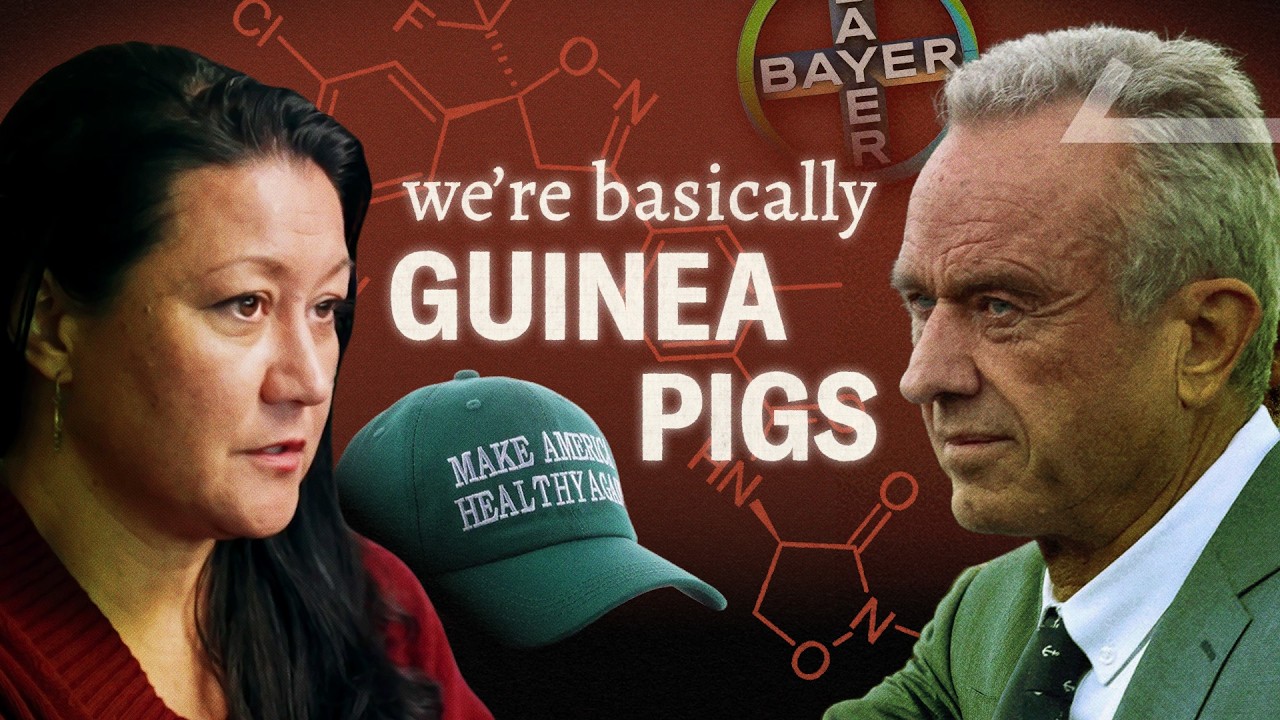
We Uncovered A Conspiracy To Poison Your Food
Fundraiser
More Perfect Union
3.31M subscribers
527,745 views Mar 20, 2026
Four former chemical lobbyists control America’s pesticide regulations, letting pesticide companies pump the country full of toxins. For every 1 meeting with an environmental group, the EPA met 25x with corporate interests. We revealed the corporate lobby poisoning America:
---
---
mma
Backlash from MAHA influencers and right-leaning podcasters over glyphosate is loud, but they still stop short of breaking with Trump
Despite calling the policy an “F-you to the MAHA movement,” influencers are maintaining alignment with Trump and RFK Jr.
Special ProgramsClimate & Energy
Written by Evlondo Cooper
Research contributions from Ilana Berger, Noah Dowe & Alex Kaplan
Published 03/30/26
Backlash from “Make America Healthy Again” influencers and right-leaning podcasters over the Trump administration’s February 18 executive order boosting domestic glyphosate production — the herbicide used in Roundup and widely identified by scientists as a carcinogen — has been loud and, at times, profane. But even when the policy is described as a betrayal, criticism is rarely directed at President Donald Trump or Health and Human Services Secretary Robert F. Kennedy Jr., instead being redirected in ways that preserve alignment with the administration.
During the March 23 episode of *The Shawn Ryan Show*, right-leaning podcast host Shawn Ryan expressed deep frustration with the executive order, saying, “Thank you, Trump. Thank you, RFK. Good fucking job. Way to fucking stick to your constituents.”
“Every fucking thing that came out of these guys' mouth is a fucking lie,” Ryan continued. “It makes me think, what is the fucking point of voting?”
He reiterated his frustration during the March 26 episode, questioning the administration's national security rationale for the order.
Ryan's anger stands out because he directly assigns responsibility to Trump and Kennedy for the administration's actions on glyphosate. But across the Make America Healthy Again movement, backlash to the order has largely followed a different pattern: Among right-leaning influencers and podcasters, criticism is severe, but responsibility is redirected away from Trump and Kennedy.
This dynamic isn’t new. MAHA influencers have repeatedly expressed outrage over the administration’s pesticide policy while failing to hold Trump or Kennedy accountable. Moms Across America founder Zen Honeycutt called the order “an egregious offense” and “a betrayal,” while adding that “Bobby is not in charge of Trump.” Food activist Vani Hari described “a level of anger and frustration like I’ve never witnessed before,” but noted, “Secretary Kennedy has done everything he said he’s going to do.” In February, podcaster Joe Rogan complained about glyphosate’s harms without directly referencing the administration's role in expanding its use.
The pattern became especially clear across multiple shows more recently. During the March 19 episode of *Critically Thinking with Dr. T and Dr. P*, Honeycutt said Trump’s glyphosate executive order “made me sick to my stomach,” called it “outrageous,” and said it was “an F-you to the MAHA movement.” But even as she condemned the policy, Honeycutt framed it as the product of pressure on Trump rather than a decision he owns. She pointed to chemical companies and people in his orbit, suggested he had been influenced or coerced, and ultimately returned to a message about consumer pressure and farmers choosing not to use glyphosate.
aha // DEEP STATE BS?
The same pattern reappeared on Rogan’s podcast that week. During the March 19 episode of *The Joe Rogan Experience*, Rogan acknowledged that “Trump passed an executive order” blocking efforts to restrict glyphosate use, but did not directly criticize him. Instead, he returned to familiar warnings about glyphosate, suggesting long-term exposure “can’t be good.”
During a March 20 appearance on *American Thought Leaders*, actor and MAHA supporter Rob Schneider criticized the administration’s move on glyphosate more directly. He said he was “very much angry” about the policy and accused the administration of giving Bayer protection for a “known cancer-causing agent.” But Schneider did not treat that anger as reason to break with Trump. Instead, he pointed to “captured agencies,” corporate influence, and a political system shaped by corporate power, while also describing himself as “a big fan of this administration.”
Across most of these examples, the criticism is severe, but responsibility is displaced, preserving alignment despite direct policy conflict. The policy can be described as dangerous — or even a “betrayal” — but the decision is attributed to external pressure, institutional capture, or surrounding actors rather than Trump himself.
The result is a movement willing to call the policy a betrayal without fully treating it as one
//
03/26/26 2:23 PM EDT
03/23/26 5:00 PM EDT
03/16/2
---
Joe Rogan gave RFK Jr. a platform to defend the administration’s embrace of glyphosate, but some other MAHA personalities aren’t letting it go so easily
MAHA-friendly Rogan previously emphasized the harms of glyphosate in the herbicide Roundup. A new interview with Robert F. Kennedy Jr. saw Rogan take a far more passive approach.
Special ProgramsClimate & Energy
Written by Ilana Berger
Published 03/16/26
In a February 27 interview with Health and Human Services Secretary Robert F. Kennedy Jr., podcaster Joe Rogan did not press the secretary on President Donald Trump’s recent executive order boosting the domestic production of the Roundup ingredient glyphosate, nor did he mention that the move, as well as other significant actions, angered MAHA influencers.
The White House’s executive order, which was announced on February 18, calls glyphosate a “cornerstone of this Nation’s agricultural productivity and rural economy.” Using the Defense Production Act, Trump is prioritizing production of glyphosate “over performance of any other contracts or orders” because he argues it is “central to American economic and national security."
For years, Kennedy was a strong opponent of glyphosate, much like the social media figures he was able to add to his coalition during his presidential campaign by promising to “Make America Healthy Again.” Prior to his appointment in the Trump administration, he was part of a legal team that won a lawsuit against Monsanto after “arguing that its Roundup weedkiller contributed to his client’s cancer."
Before this episode, Rogan had also spoken extensively about the harms of glyphosate. He has also praised the MAHA movement and platformed its leaders, and he’s been described as a “walking incubator for supplements" much like other MAHA figures who benefit tremendously from the $1.5 trillion global wellness market.
The executive order — and Kennedy’s support of it — has revealed some fractures in the MAHA-Trump alliance.
In a recent episode of Ask Dr. Drew, conservative host Drew Pinsky interviewed Hands Off My Food! author Dr. Sina McCullough, who has been featured in the MAHA Report newsletter. McCullough said that while she applauds Kennedy’s work, she’s worried that “the corruption, the loopholes that will always be there, the backdoor deals — that's government."
Pinksy echoed her frustration, saying, “The back room deals immediately causes me to wonder, how did we get red food dye back, why is red food dye back? Why is glyphosate back? What happened there? What’s going on?"
Zen Honeycutt, who founded the advocacy group Moms Across America, later told Pinsky that Trump is “sending a message to our legislators that he wants to prioritize glyphosate accessibility in America. … He wants to sort of protect glyphosate and its availability to the farmers, and this is extremely concerning to us.” In the interview, Honeycutt called the executive order “a betrayal."
Meanwhile, on MAHA Media Hub, MAHA Action President Tony Lyons said the Trump administration's support of Bayer in the Roundup lawsuit is a “mistake.”
While these figures are speaking out, Rogan stopped short of demanding accountability.
On his podcast, Rogan gave Kennedy an enormous platform to defend the executive order as a supposedly necessary response to “national security vulnerability” and claim that “we have addicted our farmers to these pesticides” who don't like using it.
:{Video
Citation
From the February 27, 2026, episode of The Joe Rogan Experience
Toward the end of the episode, Rogan asked Kennedy, “What was the recent ruling on glyphosate?"
Kennedy said that it was “not something I was particularly happy with — let me put it that way mildly" and highlighted his work getting “an $11 billion settlement with Monsanto." But he went on to defend the executive order, saying, “I also understand the president's point of view. The president didn't create this system. He's dealing with a problem that was created long before over the past 60 years."
Kennedy also argued that glyphosate is key to national security, because “if you got rid of it or if somebody else cut off our supply, it would destroy the American food system.”
The question came after Rogan claimed earlier in the podcast that he was “watching liberals, the people that are always worried about food ingredients, just dismissing all of this talk about preservatives and glyphosate.”
Some groups that are typically viewed as left-leaning on key issues and receive funding from progressive donors and foundations, such as the Center for Biological Diversity, the Natural Resources Defense Council, the Environmental Working Group, and Food & Water Watch, have long been critical of the herbicide. Their advocacy against glyphosate largely predates the MAHA movement.
In the interview, Kennedy also attempted to smooth over the different stances his Make America Healthy Again movement and the agriculture industry take on Roundup. He said that “we’ve got to transition off of glyphosate" and that “the farmers hate it."
“We all understand that this is a huge problem," Kennedy added, before highlighting a “billion-dollar commitment” made by Trump to support farming.
In reality, according to a statement from Modern Ag Alliance, numerous major farming groups including the American Farm Bureau Federation, the American Soybean Association, and the National Corn Growers Association have thanked Trump for the executive order.
The whole conversation stood in stark contrast to a 2023 interview Rogan did with Kennedy prior to his role in the Trump administration, when he himself was running for president. The podcaster asked about glyphosate, and Kennedy discussed the “many, many diseases that are linked to glyphosate exposure” and even suggested that glyphosate exposure may be “one of the reasons we had the highest death rate during COVID." He said that such “chronic disease … is bankrupting us."
:{Video
Citation
From the June 15, 2023, edition of The Joe Rogan Experience
Fast-forward to 2026, and Kennedy is deferring to Trump’s argument about Bayer, which acquired Monsanto in 2018. During the interview, Kennedy said that we do ultimately need to “transition” away from such chemicals but noted that Trump has said “we can't allow the company to go bankrupt."
At no point during the February 2026 interview did Rogan bring up Kennedy’s past campaign promise to put additional limitations on the pre-harvest use of glyphosate.
Rogan also did not mention the response to the executive order, which, as MAHA influencer Vani Hari put it, sparked “a level of anger and frustration like I’ve never seen before.” Hari, who is also known as The Food Babe, and the group Moms Across America have praised Rogan for discussing MAHA-related issues in the past.
This wasn’t the administration’s first slight against MAHA. In January, the Supreme Court agreed toreview a case that could result in limits on Bayer’s liability for failing to warn consumers about Roundup’s cancer risks on labels, and Trump’s Department of Justice filed a brief in support of Bayer.
Recent reporting has also revealed that “less than two weeks ahead of a request" from the Supreme Court for the Trump administration’s Department of Justice to weigh in on whether the court should hear Bayer’s case, Environmental Protection Agency Secretary Lee Zeldin met with Bayer’s CEO “to discuss ‘litigation’ issues — including ‘supreme court action’ over its glyphosate weed killer."
Influencer Kelly Ryerson, also known as Glyphosate Girl, highlighted the reporting on her Instagram page. “Many concerning discussion topics, but perhaps the most concerning is that Bayer planned to thank the EPA for their help updating the glyphosate web page (wonder how) and for working with MAHA," she wrote.
---
mma vid]
March 4, 2026, edition of MAHA Action's MAHA Media Hub, streamed on YouTube
TONY LYONS (MAHA ACTION PRESIDENT): Secretary Kennedy, as always, has our back. He has everyone's back and the administration is putting hundreds of millions of dollars towards digging us out of the glyphosate hole. But we have to remember that our voices transcend policies. We also have to remember that there are going to be setbacks, but that we have the opportunity to reverse 50 years of corruption in the next three years if we can stick together and stay focused. Secretary Kennedy said it best when he told the Austin audience, “I recognize that it would give me actual real power to make these kinds of changes, to push for these kinds of changes. For the last year, President Trump has let me go up against big pharma, big food, big insurance, big hospitals, and all of those other untouchables.” So we're moving forward, but these are very tough battles. And we, as the MAHA movement, won't ever give up.
Now we have to take the fight to the Supreme Court. Justices will soon hear arguments in Monsanto vs. Durnell. John Durnell is the man who developed non-Hodgkin's lymphoma after using Roundup for 20 years. And this has been true of so many others. And a jury of his peers found Monsanto liable.
So it's vital that we make our voices heard to the court. If Bayer Monsanto gets their way, state regulators will be prohibited from putting accurate warning labels on products like glyphosate, while people like John Durnell will effectively be prohibited from seeking justice before a jury in state courts, even when they face a terminal illness like he does. So MAHA can never support liability shields, not for pesticides, not for vaccines, and not for any other product. But we're always open to dialogue and debate to engaging with all stakeholders to get the job done and to come up with better answers.
So in this case, though, making matters worse, and more complicated, the Department of Justice filed a brief in support of Monsanto. But this is why MAHA is here. This is why we exist, to raise awareness when mistakes are made. And this is one such mistake. The brief does not match the long-held views of both Secretary Kennedy or President Trump. And our job then is to help this incredible administration not be swayed by the same corrupt forces that got us here in the first place. This is just going to be — it's going to be a constant battle, but one that I think that MAHA and the Trump administration can win together.
//
:{10/09/25
:{12/10/25
01/23/26
---}:
REF 2 GUK
Trump order seeks to protect weedkiller at center of barrage of lawsuits | Pesticides | The Guardian
Thu 19 Feb 2026
Trump has signed an executive order protecting production of glyphosate-based herbicides, such as Roundup, which some bodies and studies have linked to cancer and which are the subject of widespread US litigation.
The president’s move, which also seeks to provide “immunity” for makers of the herbicides, was strongly criticized by health and environmental advocates including some figures in the “Make America healthy again” (Maha) coalition.
The order also protects domestic production of phosphorus, which is used in making glyphosate and other agricultural chemicals, as well as a range of other products, including some in military defense.
Ensuring “robust domestic elemental phosphorus mining and United States-based production of glyphosate-based herbicides is central to American economic and national security”, the order states.
Bayer agrees to pay $7.25bn to settle Roundup weedkiller cancer lawsuits
Read more](https://www.theguardian.com/business/2026/feb/17/bayer-proposed-settlement-roundup-cancer-lawsuits)
The 18 February order cites authority under the Defense Production Act and instructs US Department of Agriculture secretary Brooke Rollins to issue orders and regulations as “may be necessary to implement this order”.
The White House said “the threat of reduced or ceased production” of phosphorous and glyphosate herbicides “gravely endangers national security and defense, which includes food-supply security”.
Neither the executive order nor the fact sheet the White House put out accompanying the order discloses that glyphosate-based herbicides have been linked to an array of cancers and other health problems in multiple independent research studies and by cancer experts of the World Health Organization (WHO).
The move by the White House comes as Roundup maker Bayer is facing tens of thousands of lawsuits alleging the company’s glyphosate herbicides cause cancer and the company failed to warn farmers and other users of the risks.
The company, which inherited the litigation when it bought Monsanto in 2018, has already paid out billions of dollars in settlements and jury verdicts and said this week it was proposing to pay $7.25bn in a class action settlement to try to head off future lawsuits.
Bayer has said that if it cannot find relief from the litigation, it may stop making glyphosate herbicides for the US agricultural market.
“This executive order reads like it was drafted in a chemical company boardroom,” said Vani Hari, a food activist, author and one of the grass roots leaders of the Maha coalition. “Calling it ‘national defense’ while expanding protections for toxic products is a dangerous misdirection. Real national security is protecting American families, farmers, and children.”
Kelly Ryerson, another key actor in the Maha movement who has been lobbying US regulators and lawmakers for restrictions on glyphosate and other pesticides, said the move by Trump is an insult to those who have largely supported the administration because of promises that Maha issues would be taken seriously.
Robert F Kennedy Jr, who was appointed by Trump as secretary of the US Department of Health and Human Services (HHS) and who heads a Maha commission set up by the White House, has a long history of criticizing glyphosate and its maker over the health harms tied to the herbicide. Both Trump and Kennedy had pledged to address health concerns about glyphosate and other pesticides.
“The President is making a mockery of the very voters who put his administration into office,” Ryerson said. “Expanding the production of glyphosate, a pesticide derided by the Maha movement, is a commitment to perpetuating the toxic, chemical food system that has created a sick and infertile American population.”
In response to questions about the executive order, Kennedy issued a statement saying that the order “puts America first where it matters most – our defense readiness and our food supply”.
Lori Ann Burd, environmental health program director at the Center for Biological Diversity, called the executive order “a sickening love letter from Trump to the largest pesticide companies in the world.
“It’s more proof that Trump doesn’t care at all about Americans’ health,” she said. “While he’s pandering to chemical companies the rest of the country, especially those who’ve been poisoned by pesticides, is rightfully asking ‘what about us?’”
Trump’s EPA reapproves contentious weedkiller dicamba for some GM crops
Read more](https://www.theguardian.com/us-news/2026/feb/08/epa-reapproves-contentious-weedkiller-dicamba)
Trump’s order contains a clause that “confers all immunity provided for in section 707 of the Act (50 U.S.C. 4557)” and states that “domestic producers of elemental phosphorus and glyphosate-based herbicides are required to comply with this order.” The act cited states that “no person shall be held liable” for “any act” resulting from compliance with an order issued pursuant to that law.
Bayer did not respond when asked how involved the company was in Trump’s executive order. But the company issued a statement saying: “President Trump’s Executive Order reinforces the critical need for US farmers to have access to essential, domestically produced crop protection tools such as glyphosate. We will comply with this order to produce glyphosate and elemental phosphorus.”
Bayer maintains that its glyphosate herbicides do not cause cancer and has been engaged in an array of tacticsto try to lift the litigation pressure, including pressing Congress for language in the farm billand other legislation that would restrict the ability of people to sue the company for failing to warn of cancer risks if the US Environmental Protection Agency (EPA) doesn’t require such warnings.
The company has already succeeded in getting laws protecting it from lawsuits passed in two states and is pressing for more state laws. It has also asked the US supreme court to rule in its favor on the issue of federal preemption of failure-to-warn lawsuits, and the high court has set a hearing for 27 April.
This story is co-published with the New Lede, a journalism project of the Environmental Working Group}:
---
For Immediate Release, August 15, 2025
MAHA Commission Succumbs to Pesticide Industry Pressure
*Draft Report Walks Back Administration’s Promises of Bold Action on Pesticides
WASHINGTON— A much-anticipated draft action plan from the Make America Healthy Again Commission eliminated any plans for action on pesticides. This report is the follow up to the commission’s May MAHA report, which included pesticides and specifically named both glyphosate and atrazine.
The threat of any new restrictions being placed on the use of dangerous pesticides spurred a massive and successful lobbying effort by the chemical industry and commodity growers’ groups, alongside their friends in Congress and the EPA, to force the commission to back off. Instead of action, the recommendations direct the EPA and Big Ag to work together to convince the public to have confidence in pesticide review processes, which are broadly criticized for scientific inadequacy and excessive industry influence. It also encourages research into new pesticide application technologies
“Despite the administration’s promises to MAHA and the reality that using a billion pounds of pesticides in the U.S. each year is a major threat to public health, pesticide interests again prevailed in protecting their profits,” said Lori Ann Burd, environmental health director at the Center for Biological Diversity. “Big Ag’s success in steamrolling the commission’s attempt to act on pesticides is a gut punch to everyone who genuinely believed we could finally make progress on protecting children’s health from these poisons.”
More than 300 million pounds of glyphosate and 70 million pounds of atrazine are used by U.S. farmers annually. Thousands of lawsuits have been filed by cancer victims who used Roundup, which contains glyphosate. Atrazine, a powerful endocrine disruptor that contaminates the drinking water of 40 million Americans, is so toxic it is banned in more than 60 countries.
The United States allows use of 85 pesticides that have been banned or are being phased out in the European Union, China or Brazil, according to a peer-reviewed study published by the academic journal Environmental Health. Over a quarter of all agricultural pesticide use in this country includes pesticides banned in the European Union.
“The MAHA Commission is insulting the intelligence of Americans. It’s outlandish to recommend solving our pesticide woes by having the EPA and Big Ag try to convince us that the deeply flawed pesticide regulatory process is working just fine,” said Burd. “While Big Ag won this battle, the powerful grassroots movement of millions of Americans who know that these chemicals are making us sick will continue fighting to protect their families from pesticides like glyphosate and atrazine.”
Some of the strongest resistance against action on pesticides appears to have come from the administration’s political appointees in the EPA’s chemical safety office. Widespread reporting has pointed a finger at Nancy Beck, a former executive with the American Chemistry Council who, after diligently serving pesticide interests in Trump’s first administration, has been brought back as principal deputy assistant administrator overseeing the EPA’s Office of Chemical Safety. Another American Chemistry Council veteran, Lynn Ann Dekleva, is also back at the EPA, serving as deputy assistant administrator for new chemicals.
More recently, the administration appointed well-known MAHA critic and American Soybean Association lobbyist Kyle Kunkler as deputy assistant administrator for pesticides at the EPA. Just one month after Kunkler’s arrival at the EPA, the agency proposed to reapprove over-the-top use of dicamba, a highly controversial pesticide that Kunkler lobbied for extensively in his former position.
Health and Human Services Secretary Robert F. Kennedy Jr. has repeatedly stated that many of the most-used pesticides in the United States are “extraordinarily toxic,” including and organophosphates. He has
that pesticides — many of which have scientifically well-documented links to cancer, infertility, obesity and developmental disorders — are significant contributors to chronic health problems faced by people across the nation.
Following his reelection Trump expressed his own concerns that the United States continues spending “billions and billions of dollars on pesticides,” compared to the European Union and yet has far worse health outcomes. He pledged that his administration would “ensure that everybody will be protected from harmful chemicals, pollutants, [and] pesticides.”
As part of that pledge, he nominated Kennedy as secretary of the Department of Health and Human Services with a mandate to “go wild on the food.” Trump stated that Kennedy is “looking into [pesticides] very seriously because maybe it's not necessary to use all of that.”
The Center for Biological Diversity is a national, nonprofit conservation organization with more than 1.8 million members and online activists dedicated to the protection of endangered species and wild places.
---
Outrage mounts as Republicans in Congress move to protect ...}:
Sep 27, 2025 — ... glyphosate-based Roundup herbicide and other weed killers can affect its research and product development and other “important...

The Guardian

- Press conference on bill to create near-immunity shield for all ...
Jan 21, 2026 — by state trying to pull the wool over lawmakaker. eyes today Tennessee is in the crosshairs. that's why we're here at least five s...
IT s been seven years since Germany’s Bayerbought US agrochemical giant Monsanto, inheriting not only the company’s vast portfolio of seeds and pesticide products, but also more than 100,000 lawsuits alleging Monsanto’s popular Roundup herbicide causes cancer. Bayer, which has so far paid out billions of dollars in settlements and jury verdicts to cancer victims, has been working – so far in vain – to put an end to the litigation and to block any future such cases.
Now Bayer appears closer than ever to success, as many Republican congressional leaders push for measures that would effectively block lawsuits against pesticide makers around the country.
A groupfounded by Bayer called the Modern Ag Alliance is the face of the legislative push, advocating for liability shields they say are necessary to allow companies to continue to sell chemicals that farmers use to kill weeds and bugs in their fields.
“Without legislative action, a potential catastrophe is on the horizon that could result in many farmers going out of business and food prices rising even further,”the alliance, which represents more than 100 agricultural organizations, including farmers who grow wheat, corn, soybeans and other key food crops, warns on its website.
[
Weedkiller ingredient widely used in US can damage organs and gut bacteria, research shows
Read more](https://www.theguardian.com/environment/2025/jul/06/weedkiller-diquat-organ-damage-study)
The alliance has been lobbying for thepassage of state laws blocking such lawsuits. They’ve succeeded thus far in two states – Georgia and North Dakota – and continue to lobby for such laws in all 50 states.
But the immediate battleground is in the halls of Congress, where a provision tucked into a congressional appropriations bill is outraging consumer advocates, including those affiliated with the influential Make American Healthy Again (Maha) movement. Similar protective language for pesticide makers is expected to be included in the new farm bill as well.
“The audacity of elected officials voting for legislation to fully strip our legal rights away when injured by chemicals is stunning,” said Kelly Ryerson, a leading Maha advocate who has been lobbying lawmakers and her 84,000 social media followers to oppose pesticide company protections. “Especially in this age of Maha when an unprecedented number of Americans are rallying against toxins in food and the environment.”
‘Important investments’
Bayer has made it clear that changing laws in its favor is a priority. The company states on its website that without “legislative certainty”, lawsuits over its glyphosate-based Roundup herbicide and other weed killers can affect its research and product development and other “important investments”.
The Environmental Protection Agency (EPA) should be the ultimate arbiter of product safety and what warnings should be required on product labels, Bayer says. The company also says if the EPA approves a product label, consumers should not be able to sue companies for failing to warn of perceived risks.
In a statement to the Guardian, Bayer said federal legislation is “needed to ensure that states and courts do not take a position or action regarding product labels at odds with congressional intent, federal law and established scientific research and federal authority”.
Bayer has already removed glyphosate, classified as “probably” carcinogenic to humans by World Health Organization cancer experts, from consumer herbicide products. And the company has threatened to stop selling it to farmers if the litigation is not brought to an end.
The company disputes, however, that the appropriations bill will provide that certainty, saying in its statement that the language doesn’t prevent lawsuits and asserting it does is a “distortion of reality”.
The relevant section of the House version of the appropriations bill – section 453 – does not mention litigation or pesticide company liability. Section 453 simply says that no funds can be used to “issue or adopt any guidance or any policy, take any regulatory action, or approve any labeling or change to such labeling” inconsistent with the conclusion of an EPA human health assessment.
But critics say the language effectively would impede states and local governments from warning about risks of pesticides even in the face of new scientific findings about health harms if such warnings are not consistent with outdated EPA assessments. The EPA itself would not be able to update warnings without finalizing a new assessment, the critics say.
Due to the limits on warnings, consumers would find it nearly impossible to sue pesticide makers for failing to warn them of health risks if the EPA assessments do not support such warnings.
The language is “by design sneaky and complicated and hard to explain”, said Daniel Hinkle, senior state affairs counsel for the American Association for Justice, who has been lobbying against the action.
“Nobody thinks that a giant chemical company should be able to lie about the risks of using their product and get away with it. It’s just making sure that people understand that is what is at stake,” Hinkle said.
‘Very worried’
Representative Chellie Pingree, a Democrat from Maine who tried but failed to overturn the language in a, said she is “very worried” about the “outrageous” efforts to protect pesticide companies from litigation.
“We’re talking about chemicals here that are already prone to health risks,” Pingree said. “And the chemical industry is trying to keep that information from consumers … and then to have immunity from being responsible if you get cancer from being in the presence of these chemicals.”
The language is not currently included in the short-term government spending package being debated ahead of a looming government shutdown that would occur at the end of the month in the absence of continued spending authorization.
But it is expected to see support in both House and Senate appropriations bill versions once the short-term budget is resolved. The new farm bill is also expected to include language limiting or preventing pesticide injury lawsuits, with strong signals from Glenn Thompson, chair of the House committee on agriculture, favoring such protections.
Previously, Thompson has weighed in on the side of Bayer amid its ongoing efforts to get the supreme court to weigh in on federal “preemption” over pesticide regulation.
The involvement and influence of the Maha movement, made up of voters from both parties, is adding a bipartisan element to what otherwise might be a highly partisan fight.
Max Lugavere, a health journalist, author and podcaster who posted a photo of a Maha-related visit to the White House to his 1.1 million Instagram followers, said pushing lawmakers is important, but “awareness among everyday people is the first domino”.
Citing “growing evidence linking pesticides to health risks”, Lugavere said: “Stripping away legal recourse in these cases wouldn’t just be wrong, it would be [a] tragedy.”
For California lawyer Brent Wisner, who helped lead the early Roundup litigation against Bayer, the efforts by lawmakers to protect the company against future litigation is un-American and potentially unconstitutional.
“I don’t care what party you are in, if you get poisoned by a pesticide manufacturer you want to be able to sue. You need to be able to sue,” he said. “Bayer is paying millions of dollars to get these laws passed because it’s cheaper than it is to pay people they’ve given cancer to.”
*This story is co-published with the New Lede, a journalism project of the Environmental Working Group
---
---
pesticide-use-and-cancer-risk-rise-together-across-americas-heartland
MANY PIX GFX NO LNX
Investigative / Enterprise:Health
Pesticide use and cancer risk rise together across America’s heartland
America’s farmers and farmworkers, their families and neighbors, are being diagnosed with cancer at rates higher than the national average. A growing body of research indicates that pesticides are partly to blame.
by Ben Felder, Investigate Midwest
February 18, 2026
Why you can trust Investigate Midwest
Lisa Lawler wasn’t surprised when diagnosed with breast cancer in 2025. Her mother had breast cancer and died in 2016. It seemed like cancer had become a common diagnosis for many of her neighbors and friends.
“With how many people seem to get cancer in our community, you just assume you will get it,” said Lawler, who lives in rural Hardin County, Iowa. “But no one really talks about what’s causing it.”
After 10 rounds of radiation and a surgery to remove the tumor, Lawler’s cancer was in remission. Last year, she took a test to determine if her cancer was likely genetic, meaning a high chance of recurrence, which could lead her to have her entire breast removed.
She was surprised by the results.
“The genetic test they ran for me was one that covered 81 genes that are typically related to breast cancer,” Lawler said. “After the test, they told me my cancer is likely not genetic, but likely environmental, based on these 81 genes.
“Your next thought is, then what’s in the environment that caused my cancer?”
Increasingly, pesticides are being blamed for rising cancer rates across America’s agricultural communities.
Hardin County, home to around 800 farms, has a pesticide use rate more than four times the national average and a cancer rate among the highest in the state.
Most of the 500 counties with the highest pesticide use per square mile are located in the Midwest. Sixty percent of those counties also had cancer rates higher than the national average of 460 cases per 100,000 people, according to an analysis of data from both the U.S. Geological Survey and the National Cancer Institute.
Last year, Investigate Midwest, in partnership with the University of Missouri, investigated the link between agrichemicals and cancer in Missouri, finding that many were rural communities that already lacked access to healthcare.
This story was produced as part of the Pulitzer Center’s StoryReach U.S. Fellowship.
Investigate Midwest expanded on that coverage by analyzing data across the country, along with interviewing more than 100 farmers, environmentalists, lawmakers and scientists as part of a partnership with the Pulitzer Center’s StoryReach U.S. Fellowship. The result was the picture of a nation at a crossroads in dealing with this public health crisis that has not just been ignored by state and federal health officials, but aided.
This story was also supported by the Fund for Investigative Journalism.
“Cancer is everywhere and it’s an experience that is unfortunately all too common,” said Kerri Johannsen, senior director of policy and programs at the Iowa Environmental Council, a Des Moines-based nonprofit that has been studying the state’s growing cancer rate.
Agrichemicals have helped America become a crop-producing power, increasing yields of commodity crops — such as corn and soybeans — used for food, fuel and animal feed.
Sprayed from airplanes, drones, tractors and handheld devices, these chemicals can drift through the air or run off into nearby rivers and streams.
And for decades, some farmers and pesticide users have developed neurological and respiratory issues. Thousands of lawsuits have alleged that pesticides and the companies that make them were to blame.
Kerri Johannsen, senior director of policy and programs at the Iowa Environmental Council
Pesticide manufacturers often rejected those claims while sometimes concealing research by their own employees that raised similar concerns. These companies — such as Bayer, Syngenta, Corteva and BASF — have also spent millions to lobby federal and state lawmakers for laws that would limit their legal liability and continue to allow them to sell agrichemicals.
“This is one of the most transparently reviewed products ever,” said Jessica Christiansen, the head of crop science communications for Bayer, speaking about her company’s production of Roundup, a glyphosate-based pesticide. “This product is so well studied … been on the market for over 50 years with thousands and thousands of studies. There is no linkage to cancer, there just isn’t.”
Under the Trump administration, the Environmental Protection Agency and U.S. Department of Agriculture have also hired dozens of former pesticide executives and lobbyists, some of whom have already pushed for deregulation of their industry. The Department of Health and Human Services has also altered its own reports to downplay the harm of pesticides.
Two states — North Dakota and Georgia — recently passed laws limiting their residents’ ability to sue pesticide companies, and at least a dozen other states will consider similar laws in the coming months.
“We’ve gotten to a point in the U.S. … where we’ve stopped treating pesticides as if they are dangerous tools,” said Rob Faux, who manages a small Iowa farm and has advocated against pesticide liability shield laws. “Instead, these companies tell these stories that these pesticides are completely safe and we are encouraged to use them anytime. We’ve been convinced that we must use them or we are not going to have enough food to eat.”
In Iowa, a state with heavy pesticide use — 53 million pounds last year — and the nation’s second-highest cancer rate, doctors and health officials have been sounding an alarm for years.
The state has become ground zero in the fight to limit the impact of pesticides on health and the environment. Farmers have gathered at the state Capitol to advocate for increased laws and funding to address the rising cancer rate. That advocacy likely helped defeat a bill last year that would have protected pesticide makers from some lawsuits.
I call myself a Republican, but this is not about politics; this is about money, about the almighty dollar.”
Bill Billings, a resident of Red Oak, Iowa, who was diagnosed with cancer in 2024
“I believe the groups wanting this (bill) to go through didn’t expect any substantial resistance, but there was enough resistance,” said Faux, who also works for the Pesticide Action and Agroecology Network, a nonprofit advocating for less agrichemical use.
The Iowa bill was strongly opposed by environmental and health organizations, which have traditionally been left-leaning. But there was also strong opposition from many conservative residents and farmers.
“I call myself a Republican, but this is not about politics; this is about money, about the almighty dollar,” said Bill Billings, a resident of Red Oak, Iowa, who was diagnosed with cancer in 2024.
Initially, doctors told Billings, then 61, he would likely be dead in a matter of months after discovering lymphoma in his lungs. A health enthusiast and hospital administrator, Billings had been a regular user of Roundup, the popular Bayer pesticide used on farms and residential properties.
“The cancer specialist said, very directly, (my) cancer is a result of being exposed to chemicals,” Billings said. “In my records, it literally says that I have cancer as a result of exposure to Roundup and agrochemicals.”
Billings was prescribed a five-drug regimen, along with chemotherapy. In September, he was declared cancer-free.
Last year, he hired a lawyer to file a lawsuit against Bayer.
“The irony is … Bayer Pharmaceuticals makes one of the drugs that treated my cancer,” Billings said. “It’s disturbing to find out you are in this financial circle — not only as a consumer, but as a patient.”
Bill Billings, his home, and surrounding neighborhood in Red Oak, Iowa, photographed Jan. 21, 2026. photos by Geoff Johnson, for Investigate Midwest
Research increasingly links pesticides to growing cancer risk
Cancer is a complex disease and can be caused by numerous environmental and genetic factors. Some links have been clear — such as smoking and lung cancer — while other forms can be impossible to trace back to an original cause.
But scientific research linking pesticides with certain types of cancers has been growing.
“Our findings show that the impact of pesticide use on cancer incidence may rival that of smoking,” scientists wrote in a 2024 study, which was published in Frontiers in Cancer Control and Society.
The study linked pesticides to prostate, lung, pancreas and colon cancers. Pesticides have also been associated with lymphoma and Parkinson’s disease, the study claimed.
Many doctors in agricultural communities say the link with pesticides is hard to deny.
“Iowa has a super high rate (of cancer) and when you look at all of our modifiable risk factors … tobacco, obesity, too many calories, highly processed foods, lack of physical activity, alcohol consumption, getting vaccinated for HPV, sun exposure, and so on, Iowa doesn’t really stand out dramatically at any of those,” said Dr. Richard Deming, medical director at MercyOne Cancer Center in Des Moines. “But one thing that distinguishes Iowa from other states is our environmental exposure to agricultural chemicals.”
Richard Deming, medical director at MercyOne Cancer Center in Des Moines
Deming and other health experts also point to Iowa’s high radon levels, a naturally occurring radioactive gas produced by uranium and radium.
The state also has high levels of fertilizer-derived nitrate in its water, which has been associated with increased cancer risk.
“But we use tons of ag chemicals that make it quite likely that the volume of these chemicals is contributing to what we’re seeing in Iowa in terms of the increased incidence of cancer,” Deming said.
A direct correlation can be difficult to determine, as cancer development times can range from months to decades. Overlaying cancer rates onto a map, however, highlights the nation’s top crop and vegetable growing regions, where pesticide use is highest.
The Midwestern states of Iowa, Illinois, Nebraska and Missouri — leading corn-growing states — had the highest rates, while rates were also high in California and Florida, high fruit-growing states.
Lawler, who developed breast cancer in Hardin County, grew up on her family’s 400-acre farm, where her father grew corn and used 2,4-D, a pesticide made by Dow Chemicals. She and her siblings moved out of state after high school, but Lawler returned in 2010.
Pesticides have become indispensable in farming, Lawler acknowledged, but she wishes more people would ask questions about the risks.
“We change products all the time when we learn about the health impacts,” Lawler said.
These family photos show Lisa Lawler with her mother and siblings over the years. Lawler was recently diagnosed with breast cancer; her mother later died after a cancer diagnosis. The family believes years of farm pesticide and herbicide exposure may have contributed. All photo provided by Lisa Lawler.
As lawsuits mount, Bayer pushes state laws to limit liability
In early 2022, Rodrigo Santos had just been promoted to the head of Bayer’s crop sciences division, a prestigious position within the German-based chemical company. But a global pandemic, climate change and a pending war in Ukraine were disrupting the global production and sale of crops — a direct hit to the company’s pesticide sales.
“The global food system is in crisis,” Santos wrote in a column for the World Economic Forum, going on to say that the world needed to grow more food without a significant increase in the amount of land devoted to crops.
But beyond the pandemic and war, another crisis presented an existential threat to one of the company’s top-selling products. Roundup, the glyphosate-based weed killer produced by Monsanto, which Bayer bought in 2018, had been blamed for causing cancer in thousands of lawsuits.
In 2019, a California jury ordered Bayer to pay $2 billion in one lawsuit (the amount was later reduced). Since then, more than 65,000 lawsuits have been filed against the company, according to Bayer, and the company has agreed to pay more than $12 billion in settlements.
Since purchasing Missouri-based Monsanto, Bayer’s stock price has dropped more than 90% over five years.
This investigation looks at the relationship between pesticide use and rising cancer rates across the heartland. It’s the first in a series and part of a larger reporting effort that takes time, data, and sustained work.
In recent years, Bayer executives, including Santos, openly discussed discontinuing glyphosate production. We are “evaluating all the alternatives that we have for the business,” Santos told investors last year when asked about a possible sale of its Roundup division.
But while Bayer publicly said it was reconsidering its glyphosate business, a review of lobbying disclosure statements, campaign finance records, state legislative records and other documents reveals the world’s largest pesticide company remains committed to expanding its sales.
Under the Federal Insecticide, Fungicide, and Rodenticide Act, the EPA regulates the warning labels on pesticide products. While state-level lawsuits have claimed that federal labeling is insufficient, pesticide companies, including Bayer, have argued that federal regulations should trump state laws.
Bayer, along with other corporate agriculture groups, has pushed for bills in more than a dozen states that would codify the view that federal labeling regulations are sufficient warning, effectively voiding state-level lawsuits.
Jessica Christiansen, head of crop science communications for Bayer
Christiansen, the head of crop science communications for Bayer, disputed that these laws will stop lawsuits and said courts have yet to begin interpreting those that have passed.
“Folks can still sue a company, and they should if there’s a problem,” Christiansen said. “But the litigation industry has a lot to lose with these (bills) that are out there.”
Founded by Bayer, the Modern Ag Alliance has lobbied for these bills and promoted opinion articles downplaying the health impacts of pesticides.
“If farmers lose access to crop protection products because of misguided ideological agendas, U.S. agriculture would be upended, potentially forcing many family farms to shut down and driving up food costs for every American,” said Elizabeth Burns-Thompson, executive director of the Modern Ag Alliance.
The Modern Ag Alliance has spent more than a quarter of a million dollars on state lobbying since 2024.
In Idaho, the organization spent one in four lobbyist dollars last year. In Iowa, Bayer has spent $209,750 on lobbying since 2023, double what the company spent in the previous decade.
Most of the bills came up short in 2025, but Georgia and North Dakota passed liability shields that will complicate local lawsuits.
Georgia’s Senate Bill 144, which took effect Jan. 1, received some bipartisan support but was mostly approved by the Republican majority and opposed by Democrats.
Similar bills have been filed in at least 10 states for this year’s legislative sessions.
In 2024, the Iowa bill was passed by the state Senate with a 30-to-19 vote. Ahead of a vote in the House last year, farmer and environmental groups lobbied against the bill.
The session ended without the House taking up a vote. The bill could return in 2026, but Faux, the Iowa farmer, said he also worries about it being “snuck into” another bill or budget agreement.
“I don’t think we can just assume this fight is over,” Faux said.
In other states, backlash seemed to stop liability shield bills before they got started.
Rep. Dell Kerbs, R-Oklahoma
In Oklahoma, Rep. Dell Kerbs, a Shawnee Republican, authored a pesticide liability shield bill he said was meant to end “frivolous” lawsuits against pesticide makers.
“What’s happened in our country is we have … judges that have decided they need to be in the labeling business,” Kerbs said when introducing his bill at a Feb. 11, 2025, hearing of the House agriculture committee.
State Rep. Ty Burns, another Republican, asked Kerbs why he chose to author the bill.
“I was first approached by Bayer,” Kerbs responded.
“But this is a labeling bill; it is not an immunity bill. It is just clarifying on EPA labeling regulations,” Kerbs added. “There is nothing that prevents a lawsuit from any single person. This is not giving a free pass to kill people. This simply is saying that a frivolous lawsuit to potentially pad the pocket of somebody who was not reading the label is not a justification to add that to a label through a state district court.”
But when Burns asked Kerbs about opposition to the bill, especially from many farmers, Kerbs denied receiving any complaints.
“That is hard to believe,” Burns told Kerbs, “because I have been bombarded.”
The bill was never presented to the House for a vote.
After early promises, MAHA walks back pesticide oversight
While liability shield laws have been largely advanced by Republican lawmakers, the push to further regulate pesticides has transcended partisan lines.
Both left-leaning environmental groups and conservative health movements, which have targeted agrichemicals and some vaccines, have called for reducing or eliminating the use of pesticides.
Health and Human Services Secretary Robert F. Kennedy, Jr. has been a longtime critic of pesticides. In a May 2025 report, his Make America Healthy Again commission linked pesticide overuse to children’s health issues, which drew praise from both political camps.
Health and Human Services Secretary Robert F. Kennedy Jr. makes remarks at an event announcing the MAHA (Make America Healthy Again) Commission on May 22, 2025, in the East Room of the White House. photo by Joyce N. Boghosian, The White House
George Kimbrell, co-executive director of the Center for Food Safety, which has advocated for stronger pesticide regulations, called the initial report a “baby step” forward and said he was encouraged after decades of inaction by the federal government.
“Going back my entire career, 20-plus years now of doing this work, it doesn’t matter if it’s a Democratic administration or a Republican administration, they have been beholden to and done the wishes of the pesticide industry,” Kimbrell told Investigate Midwest last year. “So, this is a unique moment where … there’s a chance that there could be some positive change in terms of responsible oversight for these toxins.”
Corporate agriculture groups heavily criticized the report, including the American Farm Bureau Federation and CropLife America, a national organization representing many large agrichemical companies, including Bayer, Corteva Agriscience and Syngenta.
Many of those groups and companies had been large financial backers of Trump. But Kennedy downplayed any concerns that the president would avoid taking a hard position against pesticide companies because of that support.
“I’ve met every president since my uncle was president, and I’ve never seen a president (like Trump), Democrat or Republican, that is willing to stand up to industry when it’s the right thing to do,” Kennedy said at a May 22, 2025, MAHA commission meeting as the president sat smiling to his right.
Three months later, Kennedy’s MAHA commission published its final report, which contained no calls to further regulate pesticides. In fact, it called for the federal government to work with large agrichemical companies to ensure public “awareness and confidence” in the EPA’s current pesticide regulations.
The U.S. Department of Health and Human Services did not respond to a request for comment from Kennedy.
MAHA-Report-The-White-House
Many of the groups that expressed optimism over the initial report were outraged over the change.
“This report is … a clear sign that Big Ag, Bayer, and the pesticide industry are firmly embedded in the White House,” said David Murphy, the founder of United We Eat and a former finance director for Kennedy’s presidential campaign.
The Trump administration has employed several pesticide executives, researchers and lobbyists at the EPA and the U.S. Department of Agriculture.
Kyle Kunker, who was a registered lobbyist for the American Soybean Association, an organization that has advocated for the legal liability shield laws at the state level, was hired last year to oversee pesticide policy at the EPA.
Three weeks later, the EPA recommended expanded use of dicamba-based herbicides, which federal courts had previously restricted. The EPA proposal was closely aligned with the position of the American Soybean Association.
In 2025, the EPA also hired Nancy Beck and Lynn Ann Dekleva, both of whom worked with the American Chemistry Council.
Last month, a coalition of MAHA supporters called for the removal of Lee Zeldin, administrator of the EPA.
Lee Zeldin, administrator of the Environmental Protection Agency, testifies during his Senate Environment and Public Works confirmation hearing on Jan. 16, 2025. photo by Tom Williams, CQ Roll Call via AP Images
Recent EPA decisions around pesticides “will inevitably lead to higher rates of chronic disease, greater medical costs, and tremendous strain on our healthcare system,” the group stated in a petition circulating online.
Several prominent MAHA influencers have joined the petition, posting anti-pesticide messages on social media under handles such as The Glyphosate Girl and the Food Babe. “The EPA is acting like the Everyone Poisoned Agency,” wrote Kelly Ryerson, on her Glyphosate Girl Instagram feed.
As the EPA advances pesticide use, the Trump administration has also asked the U.S. Supreme Court to rule that federal labeling laws invalidate state-level lawsuits.
“After careful scientific review and an assessment of hundreds of thousands of public comments, EPA has repeatedly determined that glyphosate is not likely to be carcinogenic in humans, and the agency has repeatedly approved Roundup labels that did not contain cancer warnings,” Trump’s solicitor general wrote in an amicus brief with the Supreme Court.
However, one of the studies the EPA has often cited in claiming pesticides are safe was recently retracted due to concerns about its authorship and potential conflicts of interest.
The report, published in 2000 by the scientific journal Regulatory Toxicology and Pharmacology, claimed Roundup “does not pose a health risk to humans.” The report has been the foundation for numerous other studies, court cases and policy decisions.
The journal retracted the study last year, noting that court cases had revealed that Monsanto employees had contributed to the study. “This lack of transparency raises serious ethical concerns regarding the independence and accountability of the authors of this article and the academic integrity of the carcinogenicity studies presented,” the retraction stated.
“This is just one example of how the current process of certifying these chemicals is broken in the U.S.,” said Colleen Fowle, water program director at the Iowa Environmental Council. “At the very least, we’re hoping that this (retraction) eliminates this specific research article from being cited in the future and concentrates more on independent peer-reviewed research as our basis to determine the safety of glyphosate.”
SOME LNX
“Our findings show that the impact of pesticide use on cancer incidence may rival that of smoking,” scientists wrote in a 2024 study, which was published in Frontiers in Cancer Control and Society.
Pesticide manufacturers often rejected those claims while sometimes concealing research by their own employees that raised similar concerns. These companies — such as Bayer, Syngenta, Corteva and BASF — have also spent millions to lobby federal and state lawmakers for laws that would limit their legal liability and continue to allow them to sell agrichemicals.
In 2019, a California jury ordered Bayer to pay $2 billion in one lawsuit (the amount was later reduced). Since then, more than 65,000 lawsuits have been filed against the company, according to Bayer, and the company has agreed to pay more than $12 billion in settlements.
The Modern Ag Alliance has spent more than a quarter of a million dollars on state lobbying since 2024.
In Idaho, the organization spent one in four lobbyist dollars last year. In Iowa, Bayer has spent $209,750 on lobbying since 2023, double what the company spent in the previous decade.
Most of the bills came up short in 2025, but Georgia and North Dakota passed liability shields that will complicate local lawsuits.
Georgia’s Senate Bill 144, which took effect Jan. 1, received some bipartisan support but was mostly approved by the Republican majority and opposed by Democrats.
Similar bills have been filed in at least 10 states for this year’s legislative sessions.
In 2024, the Iowa bill was passed by the state Senate with a 30-to-19 vote. Ahead of a vote in the House last year, farmer and environmental groups lobbied against the bill.
The session ended without the House taking up a vote. The bill could return in 2026, but Faux, the Iowa farmer, said he also worries about it being “snuck into” another bill or budget agreement.
“I don’t think we can just assume this fight is over,” Faux said.
Corporate agriculture groups heavily criticized the report, including the American Farm Bureau Federation and CropLife America, a national organization representing many large agrichemical companies, including Bayer, Corteva Agriscience and Syngenta.
WHOLE REPORT?
The report, published in 2000 by the scientific journal Regulatory Toxicology and Pharmacology, claimed Roundup “does not pose a health risk to humans.” The report has been the foundation for numerous other studies, court cases and policy decisions.
The journal retracted the study last year, noting that court cases had revealed that Monsanto employees had contributed tothe study. “This lack of transparency raises serious ethical concerns regarding the independence and accountability of the authors of this article and the academic integrity of the carcinogenicity studies presented,” the retraction stated.
---
---
GGL 2 26 GLYPHO
[### EPA Backs Industry, Defending Carcinogenic Herbicide ...

NRDC
https://www.nrdc.org › bio › nrdc › epa-backs-industry...](https://www.nrdc.org/bio/nrdc/epa-backs-industry-defending-carcinogenic-herbicide-glyphosate)
Apr 30, 2019 — EPA Backs Industry, Defending Carcinogenic Herbicide Glyphosate ... Yet Another Reason Nancy Beck Should Not Run Consumer Agency. May 12 ...Read more
[### EPA Official: MAHA Report Will 'Respect Regulatory ...

DTN Progressive Farmer
https://www.dtnpf.com › columns › article › 2025/08/06](https://www.dtnpf.com/agriculture/web/ag/columns/washington-insider/article/2025/08/06/epa-official-maha-report-will)
Aug 6, 2025 — "The science is still telling us that glyphosate is safe," Beck said, and EPA will continue to say that glyphosate is safe "until the weight of ...Read more
[### MAHA Commission Succumbs to Pesticide Industry Pressure

Center for Biological Diversity
https://biologicaldiversity.org › news › press-releases](https://biologicaldiversity.org/w/news/press-releases/maha-commission-succumbs-to-pesticide-industry-pressure-2025-08-15/)
Aug 15, 2025 — Widespread reporting has pointed a finger at Nancy Beck, a former executive with the American Chemistry Council who, after diligently ...Read more
[### Does Roundup Cause Cancer? What Experts Know So Far

Texas A&M University School of Public Health
https://public-health.tamu.edu › ... › blog](https://public-health.tamu.edu/degrees/mph/blog/does-roundup-cause-cancer.html)
EPA Deputy Assistant Administrator Nancy Beck has expressed a commitment to maintaining the agency's previous stance on glyphosate, explaining, "The science ...Read more
[### MAHA Report Will 'Respect' Glyphosate Safety, EPA Official ...

Farm Policy News
https://farmpolicynews.illinois.edu › 2025/08 › maha-rep...](https://farmpolicynews.illinois.edu/2025/08/maha-report-will-respect-glyphosate-safety-epa-official-says/)
Aug 7, 2025 — However, Nancy Beck, the EPA deputy administrator in the Office of Chemical Safety and Pollution Protection, noted that EPA Administrator ...Read more
[### Pesticide use and cancer risk rise together across ...

Investigate Midwest
https://investigatemidwest.org › 2026/02/18 › pesticide-...](https://investigatemidwest.org/2026/02/18/pesticide-use-and-cancer-risk-rise-together-across-americas-heartland/)
8 days ago — In 2025, the EPA also hired Nancy Beck and Lynn Ann Dekleva, both of whom worked with the American Chemistry Council. Last month, a ...Read more
[### From Industry to E.P.A.: Lobbyist Now Oversees Pesticide ...

The New York Times
https://www.nytimes.com › 2025/10/21 › climate › fro...](https://www.nytimes.com/2025/10/21/climate/from-industry-to-epa-lobbyist-now-oversees-pesticide-rules.html)
Oct 21, 2025 — Former corporate lobbyists or executives now in leadership roles at E.P.A. include Nancy Beck and Lynn Dekleva, both former directors at the ...Read more
[### FOIA records reveal EPA leaders frequent meetings with ...

The New Lede
https://www.thenewlede.org › epa-industry-influence](https://www.thenewlede.org/2025/09/epa-industry-influence/)
Sep 18, 2025 — Notably, the industry meetings involved former industry insiders who now are in top positions at the EPA: Nancy Beck ... glyphosate and atrazine.Read more
[### MAHA Wants Action on Pesticides. It's Not Going to Get It ...

WIRED
https://www.wired.com › Science › science](https://www.wired.com/story/the-epas-closeness-to-industry-stands-in-the-way-of-it-helping-maha/)
Sep 15, 2025 — ... Roundup, a weed killer whose main ingredient is glyphosate, caused his cancer. ... Nancy Beck, pushed behind the scenes to exclude pesticides from ...Read more
[### "In the Weeds" Glyphosate News Roundup: August 19, 2025

No-Till Farmer
https://www.no-tillfarmer.com › articles › 14524-in-the-...](https://www.no-tillfarmer.com/articles/14524-in-the-weeds-glyphosate-news-roundup-august-19-2025)
Aug 19, 2025 — “Beck, a political appointee with long experience in government and the private sector, said that she could not share the contents of the report ...Read more
---
politico
Greenwire
EPA to reassess most chemical regs, Trump appointee says
:{By Ellie Borst | 08/21/2025
Top chemical safety officer Nancy Beck said restrictions on dangerous existing chemicals should “mitigate unreasonable risk, not all risk.”
Nancy Beck
Nancy Beck is the principal deputy assistant administrator for EPA's Office of Chemical Safety and Pollution Prevention. Francis Chung/POLITICO
EPA’s highest ranking chemicals official signaled plans to reconsider most of the toxics control rules finalized under the Biden administration, after many of them were spared in the Trump administration’s first deregulatory blitz.
“To meet our statutory obligations and to make sure that we’re following the law, we’re going to have to take another look at pretty much all the actions that were finalized by the last administration,” said Nancy Beck, principal deputy assistant administrator in the Office of Chemical Safety and Pollution Prevention, during an American Home Furnishings Alliance conference Wednesday afternoon.
Beck’s sweeping comments aren’t entirely surprising but offer some assurance for chemical manufacturers questioning their need to comply with the Toxic Substances Control Act rules in legal limbo.
The Trump administration has already announced plans to revamp the risk evaluation framework rule — the foundational process that guides how EPA evaluates dangerous chemicals under TSCA. That framework underpins all of the Biden-era chemical regulations now under review. The Trump administration’s revised version is currently pending review from the Office of Management and Budget.....
no lnx
Trump Stocks E.P.A. With Oil, Gas and Chemical Lobbyists
Top political appointees are already at the E.P.A. preparing to erase the agency’s climate rules and pollution controls. Many of them have tried it before.
/The New York Times
By Lisa FriedmanHiroko Tabuchi and Coral Davenport
Jan. 25, 2025