Timnit Gebru TESREAL
-=-=
-=-=
10 26 RT LIVELIHOOD
...Timnit, congratulations on the Right Livelihood Award prize. And I’m wondering if we can move right into the content you’ve been most focused on. Your response to President Trump and the world’s wealthiest tech executives signing a voluntary set of safety standards for artificial intelligence this week? If you can talk about your response and what’s happening right now in California, the major meeting that you’re attending?
TIMNIT GEBRU: Well, so, you know, I have been warning that this kind of discussion about the fictional superintelligent machines that don’t exist and the so-called existential risks that they pose has been a ploy for regulatory capture. And I feel like when I saw this meeting announced, with self-policing and self-regulation and relying on the goodwill of these companies to self-regulate, and I — my first thought was that they got what they wanted. You know, this is what they wanted, instead of being held liable through existing laws....
TIMNIT GEBRU: Well, if you speak to any cybersecurity expert, they would tell you that whatever they had in place that they claim to have, the security practices, were laughable. For example, OpenAI was testing the capabilities of their models to find vulnerabilities and exploit them. That is what they trained these models to do, and they were testing the ability of these models to do what they were trained for. But the thing is, if you want to test this and you don’t want to hack other organizations, you should do it in what’s called an air-gapped environment, where there’s no internet access. And so, they did not have a properly air-gapped environment, and so the models ended up being able to have internet access. This is not models going rogue. This is gross incompetence and negligence by a particular company, which actually they could be held criminally liable for.
Lina Khan outlined a whole bunch of ways in which these companies can be currently held liable with current laws. And unfortunately, that’s not what we’re talking about, right? We’re acting like there is some kind of unprecedented thing that has been created for which we have to discuss what to do. But actually, if we did not take these companies’ words for what went wrong, we could have — we could use the legal mechanisms at our disposal to currently hold them accountable.
AMY GOODMAN: Timnit, can you talk about Senator Bernie Sanders’ effort to ban artificial superintelligence? In a recent piece, you described his bill as “well-meaning but ultimately misguided.” Explain.
TIMNIT GEBRU: I think that Bernie Sanders is really leading the left astray, and I’ve been extremely disappointed and, in fact, to be clear, shocked, absolutely shocked, by the kinds of people he’s been surrounding himself with and the kind of advice that he’s been getting.
One of the things that I think people do not realize is that the AI industry is using the exact same playbook from the tobacco and fossil fuel industry. So, for instance, Bernie Sanders has this alliance with Steve Bannon, is very closely working with the Future of Life Institute, which was co-founded by billionaire Jaan Tallinn, the same billionaire, Jaan Tallinn, who’s a leading investor in Anthropic Series A. He led Anthropic Series A. It’s also the same billionaire, Jaan Tallinn, who invests in — invested in a so-called auditing, third-party auditing, organization that claims to audit Anthropic’s models. So, this whole rogue models, you know, agents creating civilizations and all of that lingo came from this very pseudoscientific audit that is by an organization that claims to be a third party, but in fact isn’t, because you see it’s the same investors, the same staff, the same people. So, to the public, it seems like there’s a whole bunch of independent experts coming together, warning about these existential risks, but what is actually happening is regulatory capture. The same way I learned that British Petroleum came up with the term “carbon footprint,” — right? — instead of them being held accountable, now everybody’s conversation about the environment in 2004 got redirected to our individual responsibility and carbon footprint.
So, this is sort of what’s happening in this AI industry. So, instead of Bernie Sanders talking about, for instance, how can we have regulation to prevent the use of these faulty systems, what he’s doing is he’s helping them market their systems as superintelligent, in which case, in my opinion, the real existential risk is like what we saw with the U.S. military almost starting World War III because of the belief that these systems are infallible and actually superintelligent. What we need people to understand is that they are fallible, they’re not superintelligent. And we need to hold corporations liable for unleashing these kinds of error-prone models into the world.
NERMEEN SHAIKH: Timnit, could you talk about this idea of yours of stochastic parrots and how it applies to AI, and then respond to the fact that many have said now that that’s an outdated — that that research is outdated because AI has changed so much?...
---
aI series
WITH
OOPS 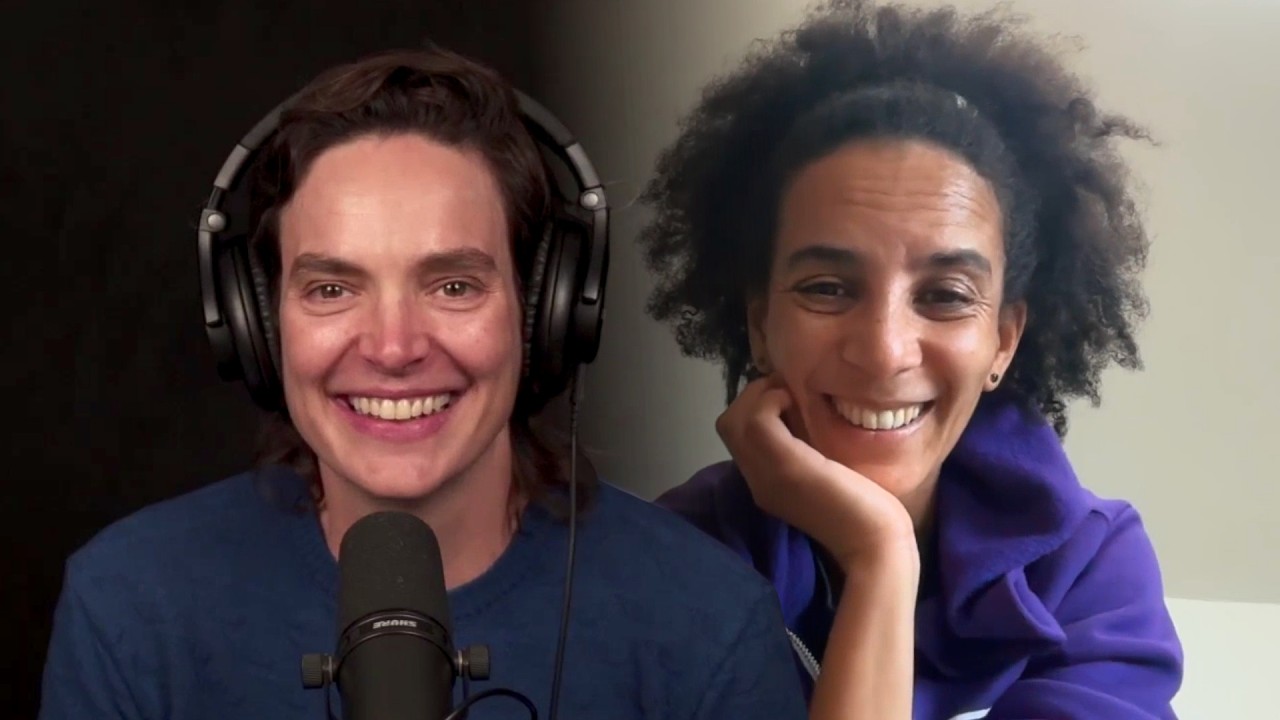
OPENAI WAS GOING FOR GENL AI FROM GIT; ALTMAN MAGIC -- IN THE SKY
MUSK ---- CONVERGE WACKO IDEAS?--ALTRUISM
SIZE ANY COST VS OPTEMIZE TO SOLVE SPECIFIC PROBLEM
WE WILL MAKE AI GOD THEN ASK IT WHAT IS ETHICAL?
50:50
If if there's a big if there's a big financial like basically they overshot and the finances of
50:55
this crumble, right? Yeah. Do you I mean I guess there's two ways I can think about obviously
51:01
there's a bunch of things. There's two things that could happen, right? Like one is you can see this as like okay maybe that was a dead end or um and we start getting hyped about something new,
51:11
whatever the next version of the metaverse is. or that all of that, you know, the sort
51:16
of necessity mother of invention thing, like all of those old values that people had around compute
51:21
power and efficiency and resource constraint and start to come back in to push this in new
51:29
and interesting ways. Which is to say like when you're not just sort of brute force hyperscaling,
51:34
um maybe there's another path that this takes that is interesting and innovative. uh without
51:41
that perhaps you know the the reason we're on this path is because I don't there's this bundle
51:47
of ideologies that my collaborator and I call the test grillil bundle I'm I'm not going to go you know it's the transhumanist and the effect of altruism long termist and all that and what they
51:57
did is they I was I've been advocating for task specific models as we discussed and they lamented
52:04
that the field had gone towards that direction and they really wanted to create what's called AGI,
52:10
which I believe is a machine god. I don't really know how else to explain it. I've never been interested in building a machine gun. And now, if you are building a machine god, of course,
you have to use all of the world's resources. Guess what? Because a machine god will just solve everything. Like, you'll build the thing that will solve climate change. But they they explicitly
52:31
say that, by the way. I mean, this is this is a view that this is not a caricature of the view. This is a view that Sam Alman once said Sam Alman said um that his revenue plan his profitability
52:41
plan for open AI was to build AGI and then ask the machine ask the model how to make money. Yeah. And
52:47
also Ilas Escover also said when people asked him about um you know uh how how do you bake ethics
52:54
into your work he said at some point the in the future the model will tell us what is more what is
52:59
ethical. So you know and m and Sam Alman called it Sam magic intelligence in the sky. Now in
53:05
this camp you have believers, true believers that they, you know, true believers um who want to live
53:11
forever and they think we can upload our minds and colonize the cosmos and stuff and then you have
53:17
people uh who I don't think are true believers but they use that narrative to excite other people.
53:23
Right? So the thing is on the one hand you're saying m you know we will build the machine
53:28
god that solves everything. Of course we have to use all of our resources. However, however,
53:35
uh we might accidentally build the machine devil instead. And so you don't want anybody else to
53:40
build the machine devil. You don't want China to build the machine devil. So you should make sure that we build the machine god. Like not, you know, the best uh thing. What is it? The the the
53:51
best thing to stop a guy with a gun, a bad guy with a gun is a good guy with a gun, right? So you a bad guy with a machine devil is to stop a good person with a machine gun. That's literally
54:03
their argument. So that's how they push they push this agenda. I I've to be honest I've seen how
54:09
propaganda works the best on this seeing how this whole thing played out because I saw these people for you know more than a decade pushing this and slowly making it into the mainstream because they
54:19
used to be left out of the room even within the field of AI. The whole AGI thing was not at all
54:24
um popular. And when um Elon Musk and all these people, Peter Thiel started talking
54:30
about how AI is summoning the devil and how we should worry more about AI than climate change,
54:35
people thought they were ridiculous, right? But now it's be it became mainstream. But now I don't
54:41
think this this line of uh uh conversation is really working out for them because investors
54:47
are asking about returns, right? And so now what like but that that's not when they go to investors
54:53
they're not talking about good guy with a machine god bad guy with a machine god. They're talking about how many people they're going to replace with their machine. They're not doing that right
55:02
like this good guy with machine god bad guy with machine god. That's for the public right that's to get us on board. where for the investors they but the thing is a lot of what's been working is
55:14
they just you know you see how many people are hidden like there's we work with people called AI impersonators I don't know if you've heard of what what they are AI impersonators are people who
55:23
imperson who pretend to be AI like they pretend to be chat bots so these all of these kind of
55:29
um Amazon's you know automatic checkout which turned out to be actually people watching you
55:35
all of these um people in the Philippines and uh Whimos like actually watching and stuff like that, right? So, what you're doing to a certain extent is obfuscating to a large extent actually the
---
GGL 6 26
AI Overview
Dr. Timnit Gebru coined the acronym TESCREAL (which includes Transhumanism, Effective Altruism, and Longtermism) to critique the dominant, utopian ideologies driving Silicon Valley tech elites like Elon Musk and Peter Thiel. [1, 2, 3]
The TESCREAL ideologies and their relationships to key tech figures include:
- The TESCREAL Bundle: A cluster of futurist, techno-utopian philosophies (Transhumanism, Extropianism, Singularitarianism, Cosmism, Rationalism, Effective Altruism, and Longtermism) that Dr. Gebru and philosopher Émile P. Torres detailed in their influential paper on The TESCREAL Bundle. [1, 2]
- The Critique of Eugenics: Gebru and Torres argue that these ideologies have deep historical roots in Anglo-American eugenics. They suggest that modern efforts to build Artificial General Intelligence (AGI) often serve as a cover to centralize power and justify potentially harmful technological risks to marginalized groups today. [1, 2, 3]
- Musk, Thiel, and Transhumanism: Tech billionaires like Elon Musk (through ventures like Neuralink) and Peter Thiel (who funds various life-extension and tech initiatives) embody many of these transhumanist and long-termist goals. [1, 2]
- Longtermism & Effective Altruism: Long-termists prioritize the distant future over present-day human suffering, which Gebru argues allows executives to bypass immediate global crises in favor of extreme, sci-fi goals like colonizing space or building digital simulations. [1, 2,
 ]
- Dr. Gebru's Alternative: Following her departure from Google, Dr. Gebru founded the Distributed AI Research Institute (DAIR). DAIR advocates for smaller, context-specific AI models that center human dignity and benefit local communities, countering the one-size-fits-all approach of TESCREAL-driven tech giants.
, 2, 3, 4, 5]
[### View of The TESCREAL bundle: Eugenics and the promise ...

FirstMonday.org
https://firstmonday.org › ojs › index.php › article › view](https://firstmonday.org/ojs/index.php/fm/article/view/13636/11599)
by T Gebru · 2024 · Cited by 336 — The stated goal of many organizations in the field of artificial intelligence (AI) is to develop artificial general intelligence (AGI), an imagined system ...Read more
Missing: grillil | Show results with: grillil
[### TESCREAL

Wikipedia
https://en.wikipedia.org › wiki › TESCREAL](https://en.wikipedia.org/wiki/TESCREAL)
TESCREAL is a neologism proposed by computer scientist Timnit Gebru and philosopher Émile P. Torres. An acronym, it stands for Transhumanism, Extropianism, ...Read more
Missing: test grillil
---}:
Gizmodo
https://gizmodo.com › sam-altman-openai-agi-board-decision-1851017018
'Magic Intelligence in the Sky': Sam Altman Has a Cute ... - Gizmodo
Artificial General Intelligence (AGI) is the prize, what Altman recently called "magic intelligence in the sky." If we ever get there, it may be OpenAI's six-member board that decides if we ...
with pod chris hayes The AI End Game: The Ethics of AI with Timnit Gebru Why Is This Happening? The Chris Hayes Podcast | iHeart
Timnit Gebru founded the Distributed AI Research Institute after her high-profile exit from Google’s Ethical AI team. She’s been a vocal critic of the systemic lack of diversity in learning models and the need for more inclusion in the space. Her view is that because AI so heavily relies on human input, it largely mirrors pervasive biases inherent in society. What needs to be done to change that? She joins WITHpod to discuss what, in her view, large language models are missing.
---
---
6 26 some talk afd
:{TESCREAL is a neologism proposed by computer scientist Timnit Gebru and philosopher Émile P. Torres. An acronym, it stands for Transhumanism, Extropianism, Singularitarianism, (modern) Cosmism, Rationalism (denoting the ideology of the rationalist community), Effective Altruism, and Longtermism.[1][2]
Gebru and Torres argue that these ideologies should be treated as an "interconnected and overlapping" group with shared origins.[1] They claim these constitute a movement that allows its proponents to use the threat of human extinction to justify expensive or detrimental projects and consider it pervasive in social and academic circles in Silicon Valley centered on artificial intelligence.[3] As such, the acronym is sometimes used to criticize a perceived belief system associated with Big Tech.[3][4][5]}:
Origin
Gebru and Torres proposed the term "TESCREAL" in 2023, first using it in a draft of a paper titled "The TESCREAL bundle: Eugenics and the promise of utopia through artificial general intelligence".[1][4] First Monday published the paper in April 2024, though Torres and Gebru popularized the term elsewhere[3] before the paper's publication. According to Gebru and Torres, transhumanism, extropianism, singularitarianism, (modern) cosmism, rationalism, effective altruism, and longtermism are a "bundle" of "interconnected and overlapping ideologies" that emerged from 20th-century eugenics, with shared progenitors.[1] They use the term "TESCREAList" to refer to people who in their judgment subscribe to, or appear to endorse, any or all of the ideologies captured in the acronym.[1][3]
Analysis
:{According to critics of these philosophies, TESCREAL describes overlapping movements endorsed by prominent people in the tech industry to provide intellectual backing to pursue and prioritize projects including artificial general intelligence (AGI), life extension, and space colonization.[1][4][6] Science fiction author Charles Stross, using the example of space colonization, argued that the ideologies allow billionaires to pursue massive personal projects driven by a right-wing interpretation of science fiction by arguing that not to pursue such projects poses an existential risk to society.[7]
Gebru and Torres write that, using the threat of extinction, TESCREALists can justify "attempts to build unscoped systems which are inherently unsafe".[1] Media scholar Ethan Zuckerman argues that by only considering goals that are valuable to the TESCREAL movement, futuristic projects with more immediate drawbacks, such as racial inequity, algorithmic bias, and environmental degradation, can be justified.[8]}:
Philosopher Yogi Hale Hendlin has argued that by both ignoring the human causes of societal problems and over-engineering solutions, TESCREALists ignore the context in which many problems arise.[9] Camille Sojit Pejcha wrote in Document Journal that TESCREAL is a tool for tech elites to concentrate power.[6] In The Washington Spectator, Dave Troy called TESCREAL an "ends justifies the means" movement that is antithetical to "democratic, inclusive, fair, patient, and just governance".[4] Gil Duran wrote that "TESCREAL", "authoritarian technocracy", and "techno-optimism" were phrases used in early 2024 to describe a new ideology emerging in the tech industry.[10]
Gebru, Torres, and others have likened TESCREAL to a secular religion due to its parallels to Christian theology and eschatology.[1][3][11][7][12] Writers in Current Affairs compared these philosophies and the ensuing techno-optimism to "any other monomaniacal faith... in which doubters are seen as enemies and beliefs are accepted without evidence". They argue pursuing TESCREAL would prevent an actual equitable shared[clarification ^needed] future.[13]
Artificial general intelligence
Much of the discourse about existential risk from AGI occurs among those whom Gebru and Torres identify as supporters of the TESCREAL ideologies.[8][14][15] TESCREALists are either considered "AI accelerationists", who consider AI the only way to pursue a utopian future where problems are solved, or "AI doomers", who consider AI likely to be unaligned to human survival and likely to cause human extinction.[8][12] Despite the risk, many doomers consider the development of AGI inevitable and argue that only by developing and aligning AGI first can existential risk be averted.[16][15]
Gebru has likened the conflict between accelerationists and doomers to a "secular religion selling AGI enabled utopia and apocalypse".[12] Torres and Gebru argue that both groups use hypothetical AI-driven apocalypses and utopian futures to justify unlimited research, development, and deregulation of technology. Torres and Gebru allege that by considering only far-reaching future consequences, creating hype for unproven technology, and fear-mongering, TESCREALists distract from the impacts of technology that may adversely affect society, disproportionately harm minorities through algorithmic bias, and have a detrimental impact on the environment.[5][11][15]
Pharmaceuticals
Neşe Devenot has used the TESCREAL acronym to refer to "global financial and tech elites" who promote new uses of psychedelic drugs as mental health treatments, not because they want to help people, but so that they can make money on the sale of these pharmaceuticals as part of a plan to increase inequality.[17]
Claimed bias against minorities
Gebru and Torres claim that TESCREAL ideologies directly originate from 20th-century eugenics[1] and that the bundle of ideologies advocates a new eugenics.[1][18] Others have similarly argued that the TESCREAL ideologies developed from earlier philosophies that were used to justify mass murder and genocide.[6][16] Some prominent figures who have contributed to TESCREAL ideologies have been alleged to be racist and sexist.[14][19][20]
Criticism and debate
Writing in Asterisk, a magazine related to effective altruism, Ozy Brennan criticized Gebru's and Torres's grouping of different philosophies as if they were a "monolithic" movement. Brennan argues Torres has misunderstood these different philosophies, and has taken philosophical thought experiments out of context.[21] Similarly, Oliver Habryka of LessWrong has criticized the concept, saying: "I've never in my life met a cosmist; apparently I'm great friends with them. Apparently, I'm like in cahoots [with them]."[22]
At Radio New Zealand, politics writer Danyl McLauchlan said that while some members of these groups want to engineer superhumans, others, like the effective altruists (who generally want to help the poor), are astounded to be lumped into a malevolent eugenics conspiracy.[23]
James Pethokoukis, of the American Enterprise Institute, disagrees with criticizing proponents of TESCREAL. He argues that the tech billionaires criticized in a Scientific American article for allegedly espousing TESCREAL have significantly advanced society.[24] In the blog for the technoprogressive Institute for Ethics and Emerging Technologies, Eli Sennesh and James Hughes have argued that TESCREAL is a left-wing conspiracy theory that groups disparate philosophies together without understanding their mutually exclusive tenets.[25]
According to philosopher of machine intelligence Seth Lazar at Australian National University, TESCREAL “is highly polemical, and ignores many other strands in the history of AI that do not meet that narrative.”[26] Torres replied that as far as "being polemical, I think that’s in the eye of the beholder".[26]
Alleged adherents
In 2023, venture capitalist Marc Andreessen published the "Techno-Optimist Manifesto", which Jag Bhalla and Nathan J. Robinson have called a "perfect example" of TESCREAL ideologies.[13] In it, he argues that more advanced artificial intelligence could save countless future potential lives, and that those working to slow or prevent its development should be condemned as murderers.[6][8]
Elon Musk has been described as sympathetic to some TESCREAL ideologies.[5][11][19][17] In August 2022, Musk tweeted that William MacAskill's longtermist book What We Owe the Future was a "close match for my philosophy".[27] Some writers believe Musk's Neuralink pursues TESCREAList goals.[5][28] Some AI experts have complained about the focus of Musk's XAI company on existential risk, arguing that it and other AI companies have ties to TESCREAL movements.[29][30] Dave Troy believes Musk's natalist views originate from TESCREAL ideals.[4]
It has also been suggested that Peter Thiel is sympathetic to TESCREAL ideas.[5][11][31] Benjamin Svetkey wrote in The Hollywood Reporter that Thiel and other Silicon Valley CEOs who supported Donald Trump's 2024 presidential campaign push for policies that would shut down "regulators whose outdated restrictions on things like human experimentation are slowing down progress toward a technotopian paradise".[31]
Sam Altman and much of the OpenAI board has been described as supporting TESCREAL movements, especially in the context of his attempted firing in 2023.[11][32][12] Gebru and Torres have urged Altman not to pursue TESCREAL ideals.[33] Lorraine Redaud writing in Charlie Hebdo described Altman and other Silicon Valley executives as supporting TESCREAL ideals.[11]
Self-identified transhumanists Nick Bostrom and Eliezer Yudkowsky, both influential in discussions of existential risk from AI,[20] have also been described as leaders of the TESCREAL movement.[5][14][20]
Sam Bankman-Fried, former CEO of the FTX cryptocurrency exchange, was a prominent and self-identified member of the effective altruist community.[34] According to The Guardian, since FTX's collapse, administrators of the bankruptcy estate have been trying to recoup about $5 million that they allege was transferred to a nonprofit to help secure the purchase of a historic hotel that has been rented out for conferences and workshops associated with longtermism, Rationalism, and effective altruism. Attendees at one such conference included a self-described "liberal eugenicist" and speakers whom The Guardian cited for having racist and misogynistic connections.[19]: 1
Torres and Gebru have said that Trump's 2024 presidential campaign and second presidency support TESCREAL ideals, especially due to his close collaboration with Musk.[31][35][36]
See also
References
The stated goal of many organizations in the field of artificial intelligence (AI) is to develop artificial general intelligence (AGI), an imagined system with more intelligence than anything we have ever seen. Without seriously questioning whether such a system can and should be built, researchers are working to create “safe AGI” that is “beneficial for all of humanity.” We argue that, unlike systems with specific applications which can be evaluated following standard engineering principles, undefined systems like “AGI” cannot be appropriately tested for safety. Why, then, is building AGI often framed as an unquestioned goal in the field of AI? In this paper, we argue that the normative framework that motivates much of this goal is rooted in the Anglo-American eugenics tradition of the twentieth century. As a result, many of the very same discriminatory attitudes that animated eugenicists in the past (e.g., racism, xenophobia, classism, ableism, and sexism) remain widespread within the movement to build AGI, resulting in systems that harm marginalized groups and centralize power, while using the language of “safety” and “benefiting humanity” to evade accountability. We conclude by urging researchers to work on defined tasks for which we can develop safety protocols, rather than attempting to build a presumably all-knowing system such as AGI.
---