Andreessen, Marc VC
===
SEE A16Z = TWO
DOGE COUP another patriot vol who does not need to be vetted
see bitcoin crypto dark money superpac
SEE AI DEREG LOBBY
see ABUNDANCE TECHNO-FASC
edgelord? thiel? PREPPER
see bari weiss uatx
BIGBALLZ
---
GGL 6 26
AI Overview
Argentine President Javier Milei and Silicon Valley venture capitalist Marc Andreessen are aligned in their shared enthusiasm for technological acceleration and free-market policies. Andreessen has publicly praised Milei’s economic reforms—often referred to as his "chainsaw revolution"—referring to him as a "Techno-Optimist". [1, 2, 3, 4, 5]
Key intersections between Andreessen’s philosophy and Milei's Argentina:
- The "Techno-Optimist" Connection: Andreessen, author of the Techno-Optimist Manifesto, found an ideological ally in Milei. In late 2024, Andreessen hosted a widely viewed conversation with Javier Milei to discuss his economic transformation of Argentina. [1, 2]
- Low-Regulation AI Hub: Both share the belief that AI will heavily drive human prosperity. Milei has specifically invited tech companies to bypass heavy Western regulations and use Argentina as a low-regulation AI hub.
 , 2, 4, 5]
- Foreign Tech Investment: Milei's government has actively courted leaders from Andreessen's Andreessen Horowitz portfolio, including OpenAI's Sam Altman, to secure large data center investments in the region. [1, 2]
To explore the critical reception of these tech-utopian ambitions in Latin America, you can read the analysis in The Ideas Letter. [1]
---
The Free Press
https://www.thefp.com › p › exclusive-daniel-penny-hired-at-andreessen-horowitz
EXCLUSIVE: Daniel Penny Gets Hired by Andreessen Horowitz
Feb 4, 2025Marc Andreessen and Ben Horowitz, the firm's founders, are among the high-profile Silicon Valley leaders who came out for Trump ahead of last November's election. "We believe in Daniel and are excited to have him as part of our team," said Ulevitch in the note. You can read our coverage of Daniel Penny's case here, here, and here.
---
bulwark 12 25
even w oos tuition affordable stae school? tuition, NSF paid to dev gui for browser; white greivance email rant ~ DEI BLM; wants to 86 nsf
---
---
proto a16
The Techno-Optimist Manifesto | Andreessen Horowitz
---
---
bought tiktok w ellison richest guy in world 9 25 barron?
---
University of Austin (UATX), a new school proclaiming its dedication to freedom of thought and discourse, is tightly intertwined with—and quickly racking up support from—a powerful and pointedly vocal group of venture capitalists.
The school has put down roots in the now hometown of Joe Lonsdale, the cofounder of Palantir who runs the multibillion-dollar Austin-based venture firm 8VC. Over a hot weekend at Lonsdale’s enormous 11-bedroom home on the west side of Austin, a group that included former New York Times opinion editor Bari Weiss, evolutionary biologist Heather Heying, and Harvard University professor Arthur Brooks hashed out what it would look like to set up a new university, explains Pano Kanelos, president of the University of Austin, in an interview with Fortune. Kanelos, whom Weiss enticed away from his role as president of St. John’s College, says he was drawn to the various personalities all converging over the importance of higher education.
“We just all agreed—I would say the spirit of it was there are a lot of things in the world [that] are broken now,” Kanelos says, using language notably synonymous with the slogan of 8VC, plastered on the homepage of the firm’s website: “The world is broken, let’s fix it.”
:{:{Even Netscape cofounder and venture capitalist Marc Andreessen is getting involved. While it is unclear whether he, like Lonsdale, has donated to the school, he will join Lonsdale as a lecturer for the university’s second rendition of its academic program called “Forbidden Courses”—named such because UATX argues the “current [political, social, and cultural] turbulence” prevents people from “encountering one another honestly and authentically,” according to the school’s prospectus. The free program taking place in June will delve into questions around science and religion, race, gender politics, and conservatism, among other things, and participants will be reading everything from books by Edmund Burke and Thomas Sowell to selections from the Book of Genesis. }:
Web3 startup Spindl CEO Antonio García Martínez and Guillermo Rauch, CEO of web development unicorn Vercel, an 8VC portfolio company, are on the roster as lecturers too. (Founders Fund vice president Mike Solana had been scheduled to lecture as well, though he has since pulled out because of a conflict, according to UATX. MaC Venture Capital’s Adrian Fenty and a16z’s Katherine Boyle are listed as speakers for another program, the university’s yearlong entrepreneurship and leadership Polaris fellowship, according to the UATX prospectus). The tech founders and venture capitalists will be joining people like economist Glenn Loury, teaching on racial inequality in America, and author Katie Roiphe, who is teaching how to write about sexual politics. Last year philosopher Kathleen Stock and economist Deirdre McCloskey debated gender and transgender issues in an hour-long session UATX later published on .}:
Financially, venture capitalists and tech CEOs are stepping up with cash. Kanelos estimated that approximately one-third of the school’s nearly $150 million in donations have come from individuals working within the venture capital or tech ecosystem. (He declined to name specific individuals who had donated, and a spokesperson later said the school wouldn’t confirm exact figures. Andreessen, Solana, Lonsdale, and Rauch didn’t respond to requests for comment regarding lectures. Weiss declined an interview.)
“We’ve had so many people actually reach out to us and say, Can we get involved? Can we do a seminar? Can we run a workshop?” Kanelos told Fortunefrom the university’s newly obtained campus space in Austin, located on the top floor of a building on Congress Avenue. “[Andreessen and Solana] were eager to [lecture] when presented with the opportunity.”
The new university has garnered an unusual degree of attention for a school that is still drafting an undergraduate program and is still waiting on the state of Texas for authorization to offer degrees and charge for courses before it can start the accreditation process. Part of the attention stems from the school’s initial key members, many of whom have stirred up criticism based on their critiques of cancel culture, “woke”-ness, and sometimes affirmative action or the DEI movement. In a Bloomberg piece about the launch of the university, board member Niall Ferguson wrote: “Academic freedom dies in wokeness.”
Some of the frustration comes from personal experience of those involved. Philosophy professor Kathleen Stock, for example, who is a faculty fellow at UATX, was accused of transphobia after publishing a book about gender identity and ended up resigning at the University of Sussex after experiencing harassment. (Stock and UATX reject these claims against her.)
Lonsdale himself had been banned from campus as well as teaching or mentoring students at Stanford University, based on an undisclosed relationship he had with a student he was mentoring in 2012 that eventually led to accusations of sexual assault and a lawsuit as detailed in a *New York Times Magazine* story. (Lonsdale vehemently denied the allegations, filed a countersuit for defamation, and published correspondence between the two of them that combated the claims; the parties settled at the end of 2015, and the Stanford bans have since been lifted.) When asked whether the allegations against Lonsdale had ever come up when forming the University of Austin, Kanelos described it as a “nonissue” and said that no one else has ever asked him about it. (Lonsdale didn’t respond to multiple requests for comment.)
Kanelos protests any notion that the university is intended to combat cancel culture, and goes so far as to say, “We’re not allowed to use the word woke…That’s just not who we are,” Kanelos says. “You don’t build a university to be against things. You build a university because you believe in things. We’re not here to cancel cancel culture: Why would you spend your time doing that? We’re here because we believe in and we have foundational principles: We believe in open inquiry. We believe in freedom of conscience. We believe in civil discourse.”
The school has had some of its early advisors step back, such as the University of Chicago chancellor and president emeritus Robert Zimmer, who parted ways with UATX shortly after its launch, noting that he disagreed with “a number of statements about higher education in general, largely quite critical” that the university made at the time. Psychologist Steven Pinker, another early advisory board member, resigned around the same time, though he didn’t elaborate other than to say on Twitter that it was a “mutual & amicable agreement,” that he wished the university well, and that he wouldn’t be commenting further (the university published a statement regarding these departures on its website). Heather Heying, a founding trustee of the institution, published a resignation letter from the board in December, noting that it was “better to separate myself from the University, than to have my name be attached to an institution that does not represent my scientific and pedagogical values.”
Kanelos says more than 5,000 academics have reached out, some of whom expressed interest of teaching at the university. At a year and a half, the school is more than halfway through its fundraising goal to raise $250 million and has more than 2,200 donors. Its first class of 27 Polaris fellows, part of its yearlong leadership and entrepreneurship program, will graduate next month. And it’s getting its campus ready for 2024, when it plans to enroll the first class into its four-year undergraduate program, which the university expects will cost students around $32,500 a year.
Kanelos says, despite the criticism, the overwhelming message he has received is that the vision of UATX is resonating. Clearly it’s resonating with at least some venture capitalists too.
About the Author
Jessica MathewsSenior Writer
Jessica Mathews is a senior writer for Fortune covering startups and the venture capital industry.
---
abundance network
### It Could Happen Here Weekly 199
September 12, 2025 • 193 mins
All of this week's episodes of It Could Happen Here put together in one large file.
- It Was Never About Crime feat. Prop
- Abundance, Or How To Sell Tech Fascism To Liberals
- ICE Partners with Israeli Phone Hacking Spyware
- Recognizing Palestine as a State: Meaningful Farce feat. Dana El Kurd
- Executive Disorder: White House Weekly #33
You can now listen to all Cool Zone Media shows, 100% ad-free through the Cooler Zone Media subscription, available exclusively on Apple Podcasts. So, open your Apple Podcasts app, search for “Cooler Zone Media” and subscribe today!
http://apple.co/coolerzone
Sources/Links:
Abundance, Or How To Sell Tech Fascism To Liberals
https://thebaffler.com/latest/whats-the-matter-with-abundance-harris?ref=newintermag.com}:
https://newintermag.com/abundance-big-techs-bid-for-the-democratic-party/#fn16}:
https://archive.vn/zgPJ8}:
https://therevolvingdoorproject.org/wp-content/uploads/2025/09/Abundance-Ecosystem-Report-Final.pdf}:
https://www.semafor.com/article/08/17/2025/with-the-argument-the-left-gets-a-new-publication
http://www.thinktankwatch.com/2022/01/washingtons-newest-think-tank-institute.html
https://www.vcinfodocs.com/venture-capital-extremism
https://therevolvingdoorproject.org/who-is-behind-the-growing-abundance-movement/
https://www.vcinfodocs.com/the-tech-fascist-axis
https://www.abundancedc.org/speakers
https://www.vcinfodocs.com/the-tech-fascist-axis
https://archive.vn/GKRmw#selection-377.0-377.19
https://www.theargumentmag.com/about
---
ggl 7 25
[### Crypto industry amasses colossal war chest for elections

Politico
https://www.politico.com › news › 2025/07/15 › crypto...](https://www.politico.com/news/2025/07/15/crypto-super-pacs-war-chest-key-house-votes-00452356)
1 day ago — Since the 2024 campaign ended, crypto firms have doubled down: The PAC network has raised $109 million since Election Day. The latest ...
A super PAC group funded by cryptocurrency companies will enter the upcoming midterm elections with more than $140 million in the bank, according to new fundraising data shared first with POLITICO — a mammoth sum that now looms large over an effort to pass industry-friendly legislation in the House this week.
The group, known as Fairshake, raised $52 million in the first half of 2025, piling onto an already huge sum of crypto campaign cash that could be wielded against lawmakers who oppose the industry’s Capitol Hill agenda — and boost the political fortunes of those who support it.
The PAC network’s fundraising highlights how top crypto firms are plowing ahead with a lobbying strategy that overtly uses political spending to get their way from Congress. The group includes three affiliated super PACs — Fairshake, Protect Progress and Defend American Jobs — that collectively spent $135 million supporting industry allies and taking down crypto critics in Congressional races across the country last year.
Spending by the group in the 2024 campaigns helped take down key roadblocks to the industry’s policy agenda, including former Senate Banking Chair Sherrod Brown, who lost his Ohio re-election campaign to Republican Bernie Moreno — a crypto enthusiast who benefited from more than $40 million of crypto PAC spending. The PACs also boosted industry supporters in dozens of other House and Senate races across the country, including the California Democratic Senate primary and hotly-contested House races in Alabama, Arizona and Virginia.
Since the 2024 campaign ended, crypto firms have doubled down: The PAC network has raised $109 million since Election Day. The latest fundraising haul comes as the House is preparing to take up landmark crypto legislation this week that would help legitimize digital assets as mainstream financial products and craft bespoke new rules governing the sector.
“Fairshake is stronger than ever as we remain focused on our mission of building lasting support for crypto and blockchain innovation,” said Josh Vlasto, spokesperson for the PAC group. “We are building an aggressive, targeted strategy for next year to ensure that pro-crypto voices are heard in key races across the country.”
The PAC is primarily funded by three companies: the venture capital giant Andreessen Horowitz, which invests heavily in digital asset startups, and the crypto firms Coinbase and Ripple.
Fairshake’s latest fundraising haul includes $25 million donated by Coinbase, the largest U.S. crypto exchange, along with previously announced contributions from Ripple Labs, Uniswap Labs, and the crypto entrepreneur Robert Leshner.
Coinbase’s chief policy officer, Faryar Shirzad, said in a statement that “crypto is already woven into America’s financial fabric,” and the company is “committed to fighting for the consumer protections and financial empowerment” that digital asset owners “deserve.”
The top Washington priority for the group’s top donors is a GOP-led crypto market structure bill expected to go to the House floor on Wednesday that seeks to create a first-ever crypto regulatory regime by divvying up oversight of digital assets between securities and commodities regulators.
Republicans leading the push for that bill are seeking to win over as many Democrats as they can ahead of the floor vote in order to show that the measure has political viability in the Senate, where bipartisan support is needed to clear a 60-vote threshold. A similar GOP-led proposal passed the House with 71 Democratic votes last year — as Fairshake was beginning to ramp up for the 2024 campaign — but concerns over the Trump family’s business entanglements in crypto may make matching that figure difficult this week.
Some Democrats are considering voting against the sweeping market structure measure but supporting a second, narrower crypto bill affecting so-called stablecoins that the House is expected to send to President Donald Trump’s desk on Thursday.
The crypto super PACs, though, have signaled that the vote breakdown on the broader bill, led by House Financial Services Chair French Hill (R-Ark.), will be their primary consideration as they weigh how to deploy their 2026 haul. The group spent more than $30 million benefiting House Democrats during the last campaign.
A non-profit dark money group that is affiliated with the Fairshake PACs called the Cedar Innovation Foundation said in a statement Monday that Hill’s so-called CLARITY Act is “the most important vote members will take this Congress.”
// Trump Border Czar Tom Homan: ‘There Will Be No Amnesty’ | The Conversation
- Filed Under:
- PACs,
- Super PACs,
- Finance & Tax,
- Cryptocurrency
---
---
In the past, Daniel Lisi — now a director at Foundation Publishing Group — interacted with a lot of liberals and progressives thanks to his involvement in Los Angeles' literary scene. But according to The Guardian's Jason Wilson, Foundation's new publishing deal with Passage Press gives Lisi a connection to the far right.
In an article published by The Guardian on June 3, Lisi explains, "The far-right U.S. publisher Passage Press is now part of Foundation Publishing Group and it is connected via a Foundation director, Daniel Lisi, to Network Press, whose only title to date is an 'effective accelerationist' manifesto by tech-right venture capitalist Marc Andreessen. Another right-wing publisher, science fiction publisher Ark Press, appears connected to Chapter House, which Lisi, a literary scenester in Los Angeles, originally co-founded as an independent publisher of poetry, sci-fi and esoterica, but which now presents itself as a homeschooling resource."
Wilson adds, "The developments illuminate the far right's efforts to disseminate ideologically charged material as art in the U.S., and raise questions about its place in the broader culture wars waged by the Trump Administration, which is carrying out a broad attack on what it sees as liberal culture…. Lisi, the publisher and director, spent years as a face in Los Angeles' diverse and left-leaning literary scene. He has now emerged as a player in a sprawling far-right cultural push, with his role in Foundation, Network, Passage and Ark revealed in company filings, trademarks, open-source materials and public records."
READ MORE: 'Beyond the pale': Scarborough rips 'childish' Joni Ernst for 'mocking her constituents'
Lisi, according to Wilson, didn't respond to interview requests from The Guardian.
Heidi Beirich, co-founder of the Global Project Against Hate and Extremism, finds the Passage/Foundation deal troubling and described it as "another example of the far right moving to directly impact culture, and especially young people, with extremist and anti-democratic beliefs."
Beirich told The Guardian, "These efforts represent another front in the culture wars, one that is pushing America further from democracy and equality and closer to autocratic rule.”
Passage, Wilson notes, was founded in 2021 by Jonathan Keeperman, who "long operated in far-right circles online under the online pseudonym 'L0m3z.'"
READ MORE:'Mass delusion fueled by charisma': Expert explains why Trump's followers still believe in him
*Read The Guardian's full article at this link.
---
an 525
Donald Trump has raised nearly a billion dollars from his various cryptocurrency schemes, says researcher Molly White. “He is really allowing for bribery and the types of corruption that we’ve never seen in the American presidency,” White says. She lays out how the Trump family profits from cryptocurrency while directly influencing policy and regulations, encouraging the transfer of wealth to the industry despite its “enormous risk of fraud and collapse.”democracynow.org
AMY GOODMAN: Senators Elizabeth Warren and Jeff Merkley are calling for a federal investigation into the Trump family’s cryptocurrency venture, after a fund backed by Abu Dhabi announced it would make a $2 billion investment in crypto exchange Binance using a Trump-branded cryptocoin. The deal could generate hundreds of millions of dollars for the Trump family.
In their letter, Senators Warren and Merkley wrote, quote, “The deal, if completed, would represent a staggering conflict of interest, one that may violate the Constitution and open our government to a startling degree of foreign influence and the potential for a quid pro quo that could endanger national security,” unquote.
Senator Warren also released this video last week blasting the deal.
SEN. ELIZABETH WARREN: The United States is getting ready to bless Donald Trump’s latest grift. A shady Abu Dhabi investment firm just announced it’s going to make a $2 billion business deal with a foreign crypto company called Binance. So, here’s the kicker: Binance and the foreign investment firm are going to use Donald Trump’s stablecoin to finance their transaction, essentially giving Trump a cut of that $2 billion deal. Boy, looks like corruption, smells like corruption. So, yeah, the Senate is going to put a stop to it, right? Wrong. Right now the Senate is getting ready to greenlight the grift by passing the so-called GENIUS Act next week. This is a bill that would make it even easier for the president and his family to profit off their own stablecoin and oversee their own financial company.
AMY GOODMAN: President Trump is headed to the Gulf next week.
In related news, last night, on Monday, President Trump spoke at a crypto and AI innovators’ dinner to raise money for a pro-Trump super PAC. Tickets were one-and-a-half million dollars a plate. The event was held at the president’s golf club in Virginia. The co-host of the dinner was David Sacks, the White House AI and crypto czar. Sacks is a South African-born tech investor who was part of the so-called PayPal Mafia, founding PayPal with Elon Musk and Peter Thiel.
On May 22nd, Trump is also hosting a private gala dinner for the top 220 investors in his meme coin. The dinner will also be held at the Trump National Golf Club. The promotion also offers an ultra-exclusive VIP reception with the president and a tour of the White House for the top 25 $TRUMP meme coin investors. The anti-corruption group CREW, Citizens for Responsibility and Ethics in Washington, called the promotion, quote, “one of the most blatant and appalling instances of selling access to the presidency we’ve ever seen,” they said.
We’re joined now by Molly White, an independent cryptocurrency researcher who runs the Citation Needed newsletter. She recently wrote an article headlined “Trump’s newest grift: Building a cryptocurrency empire while destroying its regulators.”
Molly, welcome to Democracy Now! If you can start off, for folks who aren’t following cryptocurrency that carefully, explain what cryptocurrency is.
MOLLY WHITE: Cryptocurrency is a digital asset. So, it’s an entirely digital form of speculation, essentially, that allows people to speculate on the value of tokens that are, you know, things like bitcoin or Ethereum, and it’s entirely digital. There is no physical representation. There is no physical asset or service backing the tokens.
JUAN GONZÁLEZ: And in your recent piece, Molly, you wrote that “The scope of the Trump family’s cryptocurrency conflicts illustrates a degree of corruption that makes the emoluments concerns of Trump’s first term seem quaint by comparison.” Could you explain?
MOLLY WHITE: Yeah. So, Trump’s crypto ventures are growing, seemingly by the week. It seems like every week something new is announced, whether it’s his World Liberty Financial crypto platform or his $TRUMP meme coin or rumors of a new crypto game that his backers are working on. And so, he is really allowing for bribery and the types of corruption that we’ve never seen in the American presidency. You know, he’s allowing people to send him money. He is profiting directly from the cryptocurrency industry, while he is simultaneous influencing policy, legislation, calling off regulators who previously oversaw the crypto industry, in ways that are benefiting him and his family very directly.
JUAN GONZÁLEZ: And given the fact that cryptocurrency has become sort of the favored money-laundering method of criminals, drug dealers, anybody who wants to hide their money, what is the impact of the growing size of the crypto industry in terms of the financial system?
MOLLY WHITE: Well, it’s definitely concerning. I mean, there is this major potential for criminal activity using cryptocurrencies. We’ve seen it dramatically increase for use in money laundering, as you mention, terrorist financing. Ransomware is primarily these days done with cryptocurrency. And there’s very little in the way of regulations or laws that crack down on that type of activity.
And under the Trump administration, we’ve actually seen what few regulations were in place be pared back. The Securities and Exchange Commission, which previously was, essentially, the primary regulator of the cryptocurrency industry, has been called off the beat. We’ve seen cases against cryptocurrency companies dismissed with prejudice, investigations of crypto companies dropped. We’ve seen the cryptocurrency investigations teams at the SEC and the Department of Justice dismantled. And so, under the Trump administration, I think we are seeing dramatic expansion of the potential for criminal activity within cryptocurrency, as well as the, you know, complete reduction in consumer protections that would allow those who choose to get involved with cryptocurrency to do so without the fear that they are going to be scammed or taken advantage of.
AMY GOODMAN: Molly, how exactly does Trump and his family profit from these crypto ventures? How much money are we talking about? And explain. Trump has a crypto coin. Melania has one. Explain how this works.
MOLLY WHITE: Well, Trump has multiple crypto ventures that are directly enriching him. So, you mentioned there’s the $TRUMP meme coin, which is the token that is themed after him, essentially, and is being currently used as a ticket to this private dinner at his golf course. Melania has a token of her own. And the Trumps make money off of those tokens, both in terms of the trading that’s happening, as well as facilitating the liquidity for those types of tokens.
Then there’s the World Liberty Financial platform, which is a yet-to-be-released crypto platform that is nevertheless selling these World Liberty Financial tokens to interested buyers. Trump makes 75% of the protocol revenues from that project, and he owns a 60% stake in the company. He and his family sort of maintained the illusion that there was an arm’s-length relationship between the project, despite it being entirely themed after Trump, prior to his election and inauguration, but after he was inaugurated, they sort of gave up that facade and obtained a majority stake in the company.
And then, Trump has sort of an endless list of additional crypto ventures. He has his NFT projects. He has sold crypto-themed sneakers. You know, there has been reporting that he is working on a crypto game. His Trump Media & Technology Group, which is the company that is behind the Truth Social platform that he controls, is also getting into crypto with a partnership with Crypto.com to launch crypto ETFs, exchange-traded funds. And there’s also reporting that they are considering launching their own token. So, the list really goes on.
And so far, I think he has raised close to a billion dollars, or he has profited in close to a billion dollars from his combined ventures. That number is only continuing to increase, as there are deals like this stablecoin being used by the United Arab Emirates Investment Fund, and as, you know, multiple new ventures are being launched as we go on.
JUAN GONZÁLEZ: And, of course, the Trump administration has claimed that all of Trump’s investments are in a blind trust, that basically his sons run the company, not him.
MOLLY WHITE: Right, that is the claim, although he’s made varying claims. He’s even claimed not to profit from crypto at all, which is plainly untrue. But I think that, you know, frankly, it is not fair to say that he is divested from crypto ventures when it is controlled by his sons. His sons are profiting, and ultimately he is profiting. You know, he should not be making policy decisions or influencing policy in ways that benefit his family quite, quite plainly. And I don’t think that the claims that he has divested are accurate whatsoever.
AMY GOODMAN: Molly White, can you talk about the latest push by the Senate Democrats? Tell us more about the legislation that they want to change on cryptocurrency pending in Congress. What did the so-called GENIUS Act, a bill backed by the crypto industry, call for?
MOLLY WHITE: So, the GENIUS Act is primarily intended to regulate stablecoins, which are a category of crypto assets that are intended to maintain a peg to some other form of asset. So, we often see dollar stablecoins, which are crypto tokens that are intended to be worth $1 a piece. Those are assets like USDC or Trump’s USD1 stablecoin, which was recently launched. And the GENIUS Act, you know, seeks to install some amount of legislation that would regulate those types of assets.
And this is something that we’ve seen the crypto industry pushing for for quite some time, even prior to the Trump administration. But Trump’s own crypto ventures, including launching his own stablecoin, have recently stalled that legislation, with a number of Senate Democrats speaking up to oppose this bill, as well as those in the House, signaling that, you know, the Trump family financial interests are a major concern for them. The crypto industry has also pushed for a number of changes to this bill that would benefit the industry. And we’re now starting to see Democrats in Congress saying that this bill does not go far enough to prevent national security concerns or even terrorist financing using these stablecoins, which have been used to transfer massive amounts of funds. They are sort of the bedrock of the crypto industry, almost like the poker chips at the casino. Stablecoins are a major venue through which value is transferred in the crypto world. And so, this type of legislation is extremely important to get right.
JUAN GONZÁLEZ: Do we have any sense of who in the United States does this investing in crypto coins? How widespread is it? Or is there a profile of typical people who are buying the coins?
MOLLY WHITE: Well, there are everyday people who are involved in crypto speculation, but we also see major venture capital firms and investment firms getting involved in the crypto world, as well, including a number that have a significant presence in Washington. Andreessen Horowitz, for example, is one of the largest technology venture capital firms. They have significant investments in the cryptocurrency world, and a number of Andreessen Horowitz employees have been installed in various positions at the White House. Marc Andreessen himself was involved in selecting members of the Trump administration, and they were very heavily involved in political campaigning. Then there are figures like David Sacks, who is the AI and crypto czar at the White House. He runs an investment firm that also has crypto investments, some of which he’s not divested from.
So, there are multiple profiles of crypto investors, many of them institutional, but also everyday people who have bought the story that cryptocurrency is a way to get ahead financially, that crypto investments can potentially provide high returns and are worth the enormous risk and volatility that crypto brings with it, and, you know, now the enormous risk of fraud and collapse throughout the crypto industry, as well.
AMY GOODMAN: Molly White, we want to thank you so much for being with us, software engineer, independent cryptocurrency researcher, running the Citation Needed newsletter. We’ll link to your recent piece, “Trump’s newest grift: Building a cryptocurrency empire while destroying its regulators.”
---
REF
The movement for corporate city states cannot believe its good luck. For years, it has been pushing the extreme notion that wealthy, tax-averse people should up and start their own high-tech fiefdoms, whether new countries on artificial islands in international waters (“seasteading”) or pro-business “freedom cities” such as Próspera, a glorified gated community combined with a wild west med spa on a Honduran island.
Yet despite backing from the heavy-hitter venture capitalists Peter Thiel and Marc Andreessen, their extreme libertarian dreams kept bogging down: it turns out most self-respecting rich people don’t actually want to live on floating oil rigs, even if it means lower taxes, and while Próspera might be nice for a holiday and some body “upgrades”, its extra-national status is currently beingchallenged in court.
Now, all of a sudden, this once-fringe network of corporate secessionists finds itself knocking on open doors at the dead center of global power.
The first sign that fortunes were shifting came in 2023, when a campaigning Donald Trump, seemingly out of nowhere, promised to hold a contest that would lead to the creation of 10 “freedom cities” on federal lands. The trial balloon barely registered at the time, lost in the daily deluge of outrageous claims. Since the new administration took office, however, would-be country starters have been on a lobbying blitz, determined to turn Trump’s pledge into reality.
“The energy in DC is absolutely electric,” Trey Goff, the chief of staff of Próspera, recently enthused after a trip to Capitol Hill. Legislation paving the way for a bevy of corporate city-states should be complete by the end of the year, he claims.
Inspired by the political philosopher Albert Hirschman, figures including Goff, Thiel and the investor and writer Balaji Srinivasan have been championing what they call “exit” – the principle that those with means have the right to walk away from the obligations of citizenship, especially taxes and burdensome regulation. Retooling and rebranding the old ambitions and privileges of empires, they dream of splintering governments and carving up the world into hyper-capitalist, democracy-free havens under the sole control of the supremely wealthy, protected by private mercenaries, serviced by AI robots and financed by cryptocurrencies.
Peter Thiel in Tokyo in 2019. Photograph: Kiyoshi Ota/Bloomberg via Getty Images
One might assume that it is contradictory for Trump, elected on a flag-waving “America first” platform, to lend credence to this vision of sovereign territories ruled over by billionaire god-kings. And much has been made of the colorful flame wars between the Maga mouth-piece Steve Bannon, a proud nationalist and populist, and the Trump-allied billionaires he has attacked as “technofeudalists” who “don’t give a flying fuck about the human being” – let alone the nation state. And conflicts inside Trump’s awkward, jerry-rigged coalition certainly exist, most recently reaching a boiling point over tariffs. Still, the underlying visions might not be as incompatible as they first appear.
The startup country contingent is clearly foreseeing a future marked by shocks, scarcity and collapse. Their high-tech private domains are essentially fortressed escape pods, designed for the select few to take advantage of every possible luxury and opportunity for human optimization, giving them and their children an edge in an increasingly barbarous future. To put it bluntly, the most powerful people in the world are preparing for the end of the world, an end they themselves are frenetically accelerating.
That is not so far away from the more mass-market vision of fortressed nations that has gripped the hard right globally, from Italy to Israel, Australia to the United States: in a time of ceaseless peril, openly supremacist movements in these countries are positioning their relatively wealthy states as armed bunkers. These bunkers are brutal in their determination to expel and imprison unwanted humans (even if that requires indefinite confinement in extra-national penal colonies from Manus Island to Guantánamo Bay) and equally ruthless in their willingness to violently claim the land and resources (water, energy, critical minerals) they deem necessary to weather the coming shocks.
Though it builds on enduring rightwing tendencies ... we simply have not faced such a powerful apocalyptic strain in government before
Interestingly, at a time when previously secular Silicon Valley elites are suddenly finding Jesus, it is noteworthy that both of these visions – the priority-pass corporate state and the mass-market bunker nation – share a great deal in common with the Christian fundamentalist interpretation of the biblical Rapture, when the faithful will supposedly be lifted up to a golden city in heaven, while the damned are left to endure an apocalyptic final battle down here on earth.
If we are to meet our critical moment in history, we need to reckon with the reality that we are not up against adversaries we have seen before. We are up against end times fascism.
Reflecting on his childhood under Mussolini, the novelist and philosopher Umberto Eco observed in a celebrated essay that fascism typically has an “Armageddon complex” – a fixation on vanquishing enemies in a grand final battle. But European fascism of the 1930s and 1940s also had a horizon: a vision for a future golden age after the bloodbath that, for its in-group, would be peaceful, pastoral and purified. Not today.
Alive to our era of genuine existential danger – from climate breakdown to nuclear war to sky-rocketing inequality and unregulated AI – but financially and ideologically committed to deepening those threats, contemporary far-right movements lack any credible vision for a hopeful future. The average voter is offered only remixes of a bygone past, alongside the sadistic pleasures of dominance over an ever-expanding assemblage of dehumanized others.
And so we have the Trump administration’s dedication to releasing its steady stream of real and AI-generated propaganda designed solely for these pornographic purposes. Footage of shackled immigrants being loaded on to deportation flights, set to the sounds of clanking chains and locking cuffs, which the official White House X account labeled “ASMR”, a reference to audio designed to calm the nervous system. Or the same account sharing news of the detention of Mahmoud Khalil, a US permanent resident who was active in Columbia University’s pro-Palestinian encampment, with the gloating words: “SHALOM, MAHMOUD.” Or any number of homeland security secretary Kristi Noem’s sadism-chic photo ops (atop a horse at the US-Mexican border, in front of a crowded prison cell in El Salvador, slinging a machine gun while arresting immigrants in Arizona …).
Kristi Noem speaks during a tour of an El Salvador prison in March. Photograph: Alex Brandon/AP
The governing ideology of the far right in our age of escalating disasters has become a monstrous, supremacist survivalism.
It is terrifying in its wickedness, yes. But it also opens up powerful possibilities for resistance. To bet against the future on this scale – to bank on your bunker – is to betray, on the most basic level, our duties to one another, to the children we love, and to every other life form with whom we share a planetary home. This is a belief system that is genocidal at its core and treasonous to the wonder and beauty of this world. We are convinced that the more people understand the extent to which the right has succumbed to the Armageddon complex, the more they will be willing to fight back, realizing that absolutely everything is now on the line.
Our opponents know full well that we are entering an age of emergency, but have responded by embracing lethal yet self-serving delusions. Having bought into various apartheid fantasies of bunkered safety, they are choosing to let the Earth burn. Our task is to build a wide and deep movement, as spiritual as it is political, strong enough to stop these unhinged traitors. A movement rooted in a steadfast commitment to one another, across our many differences and divides, and to this miraculous, singular planet.
Not so long ago, it was primarily religious fundamentalists who greeted signs of apocalypse with gleeful excitement about the long-awaited Rapture. Trump has handed critical posts to people who subscribe to that fiery orthodoxy, including several Christian Zionists who see Israel’s use of annihilatory violence to expand its territorial footprint not as illegal atrocities but as felicitous evidence that the Holy Land is getting closer to the conditions under which the Messiah will return, and the faithful will get their celestial kingdom.
Mike Huckabee, Trump’s newly confirmed ambassador to Israel, has strong ties to Christian Zionism, as does Pete Hegseth, his secretary of defense. Noem and Russell Vought, the Project 2025 architect who now leads the office of budget and management, are both staunch advocates for Christian nationalism. Even Thiel, who is gay and notorious for his party lifestyle, has been heard musing about the arrival of the antichrist of late (spoiler: he thinks it’s Greta Thunberg, more on that soon).
But you don’t need to be a biblical literalist, or even religious, to be an end times fascist. Today, plenty of powerful secular people have embraced a vision of the future that follows a nearly identical script, one in which the world as we know it collapses under its weight and a chosen few survive and thrive in various kinds of arks, bunkers and gated “freedom cities”. In a 2019 paper titled Left Behind: Future Fetishists, Prepping and the Abandonment of Earth, the communication scholars Sarah T Roberts and Mél Hogan described the longing for a secular Rapture: “In the accelerationist imaginary, the future is not about harm reduction, limits or restoration; rather it is a politics driving toward an endgame.”
Mike Huckabee touring Jewish settlements in East Jerusalem in 2008. Photograph: David Silverman/Getty Images
Elon Musk, who dramatically grew his fortune alongside Thiel at PayPal, embodies this implosive ethos. This is a person who looks up at the wonders of the night sky and apparently sees only opportunities to fill that inky unknown with his own space junk. Though he burnished his reputation warning about the dangers of the climate crisis and AI, he and his so-called “department of government efficiency” (Doge) henchmen now spend their days escalating those same risks (and many others) by slashing not only environmental regulations but entire regulatory agencies, with the apparent end goal of replacing federal workers with chatbots.
Who needs a functioning nation state when outer space – now reportedly Musk’s singular obsession – beckons? For Musk, Mars has become a secular ark, which he claims is key to the survival of human civilization, perhaps via uploaded consciousnesses to an artificial general intelligence. Kim Stanley Robinson, the author of the sci-fi Mars Trilogy that appears to have partially inspired Musk, is blunt about the dangers of the billionaire’s fantasies about colonizing Mars. It is, he says, “just a moral hazard that creates the illusion we can wreck Earth and still be okay. It’s totally not true.”
Much like religious end-timers who long to escape the corporeal realm, Musk’s drive for humanity to become “multiplanetary” is made possible by his inability to appreciate the multispecies splendor of our only home. Evidently uninterested in the vast bounty that surrounds him, or in ensuring Earth can continue buzzing with diversity, he instead deploys his vast fortune to bring about a future that would see a handful of people and robots eke out survival on two barren orbs (a radically depleted Earth and a terraformed Mars). Indeed, in a strange twist on the Old Testament tale, Musk and his fellow tech billionaires, having arrogated god-like powers to themselves, aren’t content to just build the arks. They appear to be doing their best to cause the flood. Today’s rightwing leaders and their rich allies are not just taking advantage of catastrophes, shock-doctrine and disaster-capitalism style, but simultaneously provoking and planning for them.
What of the Maga base, though? Not all are sufficiently faithful to earnestly believe in the Rapture, and most certainly don’t have the cash to buy a spot in a “freedom city” let alone on a rocket ship. Fear not. End times fascism offers the promise of many more affordable arks and bunkers, these ones well within reach for lower-level foot soldiers.
Listen to Steve Bannon’s daily podcast – which bills itself as Maga’s premier media outlet – and you will be barraged with a singular message: the world is going to hell, the infidels are breaching the barricades, and a final battle is coming. Be prepared. The prepper message becomes particularly pronounced when Bannon switches to hawking his advertisers’ products. Buy Birch Gold, Bannon tells his audience, because the over-leveraged US economy is going to crash and you can’t trust the banks. Stock up on ready-to-eat meals from My Patriot Supply. Sharpen your target practice using a laser-guided at-home system. The last thing you would want to do is depend on the government during a disaster, he reminds listeners (left unsaid: especially now that the Doge boys are selling off the government for parts).
End times fascism is a darkly festive fatalism – a final refuge for those who find it easier to celebrate destruction than imagine living without supremacy
Bannon doesn’t only urge his audience to make their own bunkers, of course. He also advances a vision of the United States as a bunker in its own right, one in which Ice agents stalk the streets, workplaces and campuses, disappearing those deemed enemies of US policy and interests. The bunkered nation lies at the heart of the Maga agenda, and of end times fascism. Inside its logic, the first job is to harden national borders and expunge all enemies, foreign and domestic. This ugly work is now well under way, with the Trump administration, enabled by the supreme court, having invoked the Alien Enemies Act to deport hundreds of Venezuelan immigrants to Cecot, the now infamous mega-prison in El Salvador. The facility, which shaves prisoners heads and packs up to 100 people into a single cell, stacked with bare bunks, operates under the civil liberties-destroying “state of exception” first declared over three years ago by the country’s crypto-loving, Christian Zionist prime minister, Nayib Bukele.
Bukele has offered to provide the same fee-for-service system for US citizens the administration would like to drop into a judicial black hole. “I love that,” Trump said recently, when asked about the proposal. No wonder: Cecot is the sick if logical corollary of the “freedom city” fantasy – a zone where everything is for sale and due process does not apply. We should expect much more of this sadism. In a chillingly candid statement, the acting Ice director, Todd Lyons, told the 2025 Border Security Expo that he wanted to see a more “business”-oriented approach to these deportations, “like [Amazon] Prime, but with human beings”.
If policing the boundaries of the bunkered nation is end times fascism’s job one, equally important is job two: for the US government to lay claim to whatever resources its protected citizens might need to get through the tough times ahead. Maybe it’s Panama’s canal. Or Greenland’s fast-melting shipping routes. Or Ukraine’s critical minerals. Or Canada’s fresh water. We should think of this less as old-school imperialism than super-sized prepping, at the level of the national state. Gone are the old colonial fig leaves of spreading democracy or God’s word – when Trump covetously scans the globe, he is stockpiling for civilizational collapse.
This bunker mentality also helps explain JD Vance’s controversial forays into Catholic theology. The vice-president, who owes his political career in no small part to the largess of the premier prepper Thiel, explained to Fox News that, according to the medieval Christian concept of ordo amoris (translated both as “order of love” and “order of charity”), love is not owed to those outside the bunker: “You love your family, and then you love your neighbor, and then you love your community, and then you love your fellow citizens in your own country. And then after that, you can focus and prioritize the rest of the world.” (Or not, as the Trump administration’s foreign policy would indicate.) In other words, we owe nothing to anyone outside our bunker.
Though it builds on enduring rightwing tendencies – justifying hateful exclusions is hardly new under the ethno-nationalist sun – we simply have not faced such a powerful apocalyptic strain in government before. The “end of history” swagger of the post-cold war era is rapidly being supplanted by a conviction we are in the actual end of times. Doge may wrap itself in the banner of economic “efficiency”, and Musk’s underlings may evoke memories of the young, US-trained “Chicago Boys” who designed the economic shock therapy for Augusto Pinochet’s dictatorial regime, but this is not simply the old marriage of neoliberalism and neoconservatism. It’s a new, money-worshiping millenarian mashup that says we need to smash the bureaucracy and replace humans with chatbots in order to cut “waste, fraud and abuse” – and, also, because the bureaucracy is where the Trump-resisting demons hide. This is where the tech bros merge with the TheoBros, a real group of hyper-patriarchal Christian supremacists with ties to Hegseth and others in the Trump administration.
Steve Bannon advances a vision of the United States as a bunker in its own right. Photograph: Chip Somodevilla/Getty Images
As fascism always does, today’s Armageddon complex crosses class lines, bonding billionaires to the Maga base. Thanks to decades of deepening economic stresses, alongside ceaseless and skillful messaging pitting workers against one another, a great many people understandably feel unable to protect themselves from the disintegration that surrounds them (no matter how many months of ready-to-eat meals they buy). But there are emotional compensations on offer: you can cheer the end of affirmative action and DEI, glorify mass deportation, enjoy the denial of gender-affirming care to trans people, villainize educators and health workers who think they know better than you, and applaud the demise of economic and environmental regulations as a way to own the libs. End times fascism is a darkly festive fatalism – a final refuge for those who find it easier to celebrate destruction than imagine living without supremacy.
It’s also a self-reinforcing downward spiral: Trump’s furious attacks on every structure designed to protect the public from diseases, dangerous foods and disasters – even to tell the public when disasters are headed their way – strengthen the case for prepperism at both the high and low ends, all while creating myriad new opportunities for privatization and profiteering by the oligarchs powering this rapid-fire unmaking of the social and regulatory state.
At the dawn of Trump’s first term, the New Yorker investigated a phenomenon that it described as “doomsday prep for the super-rich”. Back then, it was already clear that in Silicon Valley and on Wall Street, the more serious high-end survivalists were hedging against climate disruption and social collapse by buying space in custom-built underground bunkers and building escape homes on high ground in places like Hawaii (where Mark Zuckerberg has downplayed his 5,000 sq ft underground pad as a “little shelter”) and New Zealand (where Thiel purchased nearly 500 acres but found his plan to build a luxury survivalist compound rejected by local authorities in 2022 for being an eyesore).
This millenarianism is bound up with a suite of other Silicon Valley intellectual fads, all premised on an end-times-inflected belief that our planet is headed towards a cataclysm and it’s time to make some hard choices about which parts of humanity can be saved. Transhumanism is one such ideology, encompassing everything from minor human-machine “enhancements” to the quest to upload human intelligence into a still illusory artificial general intelligence. There is also effective altruism and longtermism, both of which skip over redistributive approaches to helping those in need in the here and now in favor of a cost-benefit approach to doing the most good in the long term.
Though they can appear benign at first glance, these ideas are shot through with dangerous racial, ableist and gender biases about which parts of humanity are worth enhancing and saving – and which could be sacrificed for the supposed good of the whole. They also share a marked lack of interest in urgently addressing the underlying drivers of collapse – a responsible and rational goal that a growing cohort of figures now actively shun. Instead of effective altruism the Mar-a-Lago regular Andreessen and others have embraced “effective accelerationism”, or the “deliberate propulsion of technological development” without guardrails.
Meanwhile, even darker philosophies are finding a wider audience, like the neoreactionary pro-monarchy rants of the coder Curtis Yarvin (another one of Thiel’s intellectual touchstones), or the “pro-natalism” movement’s obsession with dramatically increasing the number of “western” babies (a Musk fixation), as well as the exit guru Srinivasan’s vision of a “tech zionist” San Francisco where corporate loyalists and police join forces to politically cleanse the city of liberals to make way for their networked apartheid state.
Marc Andreessen and Balaji Srinivasan speak during a panel discussion about bitcoin in San Francisco in 2014. Photograph: Paul Chinn/San Francisco Chronicle via Getty Images
As the AI scholars Timnit Gebru and Émile P Torres have written, though the methods may be new, this “bundle” of ideological fads “are direct descendants of first-wave eugenics”, which also saw a small subset of humanity making decisions about which parts of the whole were worth continuing and which needed to be phased out, cleared out, or terminated. Until recently, few paid attention. Much like Próspera, where members can already experiment with human-machine mergers such as having their Tesla keys into their hands, these intellectual fads seemed to be the marginal hobby horses of a few Bay Area dilettantes with money and caution to burn. No longer.
Three recent material developments have accelerated end times fascism’s apocalyptic appeal. The first is the climate crisis. While some high-profile figures might still publicly deny or minimize the threat, global elites, whose ocean-front properties and datacenters are intensely vulnerable to rising temperatures and sea levels, are well-versed in the ramifying perils of an ever-heating world. The second is Covid-19: epidemiological models had long predicted the possibility of a pandemic devastating our globally networked world; the actual arrival of one was taken by many powerful people as a sign that we have officially arrived at what US military analysts forecasted as “the Age of Consequences”. No more predictions, it’s going down. The third factor is the rapid advancement and adoption of AI, a set of technologies that have long been associated with sci-fi terrors about machines turning on their makers with ruthless efficiency – fears expressed most forcefully by the same people who are developing these technologies. All of these existential crises are layered on top of escalating tensions between nuclear-armed powers.
None of this should be written off as paranoia. Many of us feel the imminence of breakdown so acutely that we cope by entertaining ourselves with various versions of life in a post-apocalyptic bunker, streaming Apple’s Silo or Hulu’s Paradise. As the UK analyst and editor Richard Seymour reminds us in his recent book, Disaster Nationalism: “The apocalypse is no mere fantasy. We are living in it, after all, from deadly viruses to soil erosion, from economic crisis to geopolitical chaos.”
The forces we are up against have made peace with mass death. They are treasonous to this world and its human and non-human inhabitants
Trump 2.0’s economic project is a Frankenstein’s monster of the industries driving all of these threats – fossil fuels, weapons and resource-ravenous cryptocurrency and AI. Everyone involved in these sectors knows that there is no way to build the artificial mirror world that AI promises to construct without sacrificing this world – these technologies consume too much energy, too many critical minerals, and too much water for the two to coexist in any kind of equilibrium. This month, the former Google executive Eric Schmidt admitted as much, Congress that AI’s “profound” energy needs are projected to triple in the next few years, with much of it coming from fossil fuels, because nuclear can’t come online fast enough. This planet-incinerating level of consumption is necessary, he explained, to enable an intelligence “higher” than humanity, a digital god rising from the ashes of our relinquished world.
And they are worried – just not about the actual threats they are unleashing. What keeps the leaders of these entangled industries up at night is the prospect of a civilizational wake-up call – of serious, internationally coordinated government efforts to rein in their rogue sectors before it’s too late. From the perspective of their ever-expanding bottom lines, the apocalypse is not collapse; it’s regulation.
The fact that their profits are predicated on planetary devastation helps explain why do-gooder discourse among the powerful is giving way to open expressions of disdain for the idea that we owe each other anything by right of our shared humanity. Silicon Valley is done with altruism, effective or otherwise. Meta’s Mark Zuckerberg pines for a culture that celebrates “aggression”. Alex Karp, Thiel’s business partner at the surveillance firm Palantir Technologies, the “losing” “self-flagellation” of those who question American superiority and the benefits of autonomous weapons systems (and, by association, the lucrative military contracts that have made Karp’s vast fortune). Musk informs Joe Rogan that empathy is “the fundamental weakness of western civilization” and he vents, after failing to purchase a supreme court election in Wisconsin: “It increasingly appears that humanity is a biological bootloader for digital superintelligence.” Meaning we humans are nothing but grist for Grok, the AI service he owns. (He did tell us he was “dark Maga” – and he’s not the only one.)
In arid and climate-stressed Spain, one of the groups calling for a moratorium on new datacenters calls itself Tu Nube Seca Mi Río – Spanish for “your cloud is drying my river”. The name is fitting, and not just for Spain.
An unspeakably dismal choice is being made before our eyes and without our consent: machines over humans, inanimate over animate, profits over all else. With stunning speed, the big tech megalomaniacs have quietly rolled back their net-zero pledges and lined up by Trump’s side, hellbent on sacrificing this world’s real and precious resources and creativity at the altar of a vampiric, virtual realm. This is the last great heist, and they are getting ready to ride out the storms they themselves are summoning – and they will try to defame and destroy anyone who gets in their way.
Consider Vance’s recent European sojourn, where the vice-president harangued world leaders for “handwringing about safety” in relation to job-destroying AI while demanding Nazi and fascist speech go uncurtailed online. At one point he made a telling aside, expecting a laugh that never came: “If American democracy can survive 10 years of Greta Thunberg’s scolding, you guys can survive a few months of Elon Musk.”
JD Vance speaks at the Munich Security Conference in February. Photograph: dts News Agency Germany/REX/Shutterstock
His comment echoed those made by his equally humorless patron Thiel. In recent interviews focused on the theological underpinnings of his far-right politics, the Christian billionaire has repeatedly compared the indefatigable young climate activist to the antichrist – a figure he warns was prophesied to come bearing a misleading message of “peace and safety”. “If Greta gets everyone on the planet to ride a bicycle, maybe that’s a way to solve climate change, but it has sort of this quality of going from the frying pan into the fire,” Thiel intoned.
Why Thunberg, why now? In part, it’s clearly the apocalyptic fear of regulation eating into their super-profits: accordingto Thiel, the science-based climate action Thunberg and others demand could only be enforced by a “totalitarian state”, which he claims is more dire a threat than climate breakdown (most distressingly, the taxes under such conditions would be “quite high”). There may also be something else about Thunberg that frightens them: her steadfast commitment to this planet and the many life forms who call it home – not to simulations of this world generated by AI, or to a hierarchy of those deserving of life and those who are not, nor to any of the various extra-planetary escape fantasies the end times fascists are selling.
She is committed to staying, while the end times fascists have, at least in their imaginings, already left this realm, ensconced in their opulent shelters or transcended to the digital ether, or to Mars.
Shortly after Trump’s re-election, one of us had the opportunity to Anohni, one of the few musicians who have attempted to make art that wraps its arms around the death drive that has gripped our world. Asked about what connects the willingness of powerful people to let the planet burn and the drive to deny bodily autonomy to women and to trans people like her, she responded by drawing on her Irish Catholic upbringing: it’s “a very long-held myth that we are enacting and embodying. This is the culmination of their Rapture. This is their escape from the voluptuous cycle of creation. This is their escape from Mother.”
How do we break this apocalyptic fever? First, we help each other face the depth of the depravity that has gripped the hard right in all of our countries. To move forward with focus, we must first understand this simple fact: we are up against an ideology that has given up not only on the premise and promise of liberal democracy but on the livability of our shared world – on its beauty, on its people, on our children, on other species. The forces we are up against have made peace with mass death. They are treasonous to this world and its human and non-human inhabitants.
Second, we counter their apocalyptic narratives with a far better story about how to survive the hard times ahead without leaving anyone behind. A story capable of draining end times fascism of its gothic power and galvanizing a movement ready to put it all on the line for our collective survival. A story not of end times, but of better times; not of separation and supremacy, but of interdependence and belonging; not of escaping, but staying put and staying faithful to the troubled earthly reality in which we are enmeshed and bound.
This basic sentiment, of course, is not new. It is central to Indigenous cosmologies, and it lies at the heart of animism. Go back far enough and every culture and faith has its own tradition of respecting the sanctity of here, and not searching for Zion in an elusive ever-distant promised land. In eastern Europe, before the fascist and Stalinist annihilations, the Jewish socialist Labor Bund organized around the yiddish concept of Doikayt, or “hereness”. Molly Crabapple, who has written a forthcoming book about this neglected history, defines Doikayt as the right to “fight for freedom and safety in the places where they lived, in defiance of everyone who wanted them dead” – and rather than be forced to flee to safety in Palestine or the United States. Perhaps what is needed is a modern-day universalization of that concept: a commitment to the right to the “hereness” of this particular ailing planet, to these frail bodies, to the right to live in dignity wherever on the planet we are, even when the inevitable shocks forces us to move. “Hereness” can be portable, free of nationalism, rooted in solidarity, respectful of indigenous rights and unbounded by borders.
Anti-Trump protesters march against the administration in New York in January. Photograph: Julius Constantine Motal/The Guardian
That future would require its own apocalypse, its own world-ending and revelation, though of a very different sort. Because as the scholar of policing Robyn Maynard has observed: “In order to make earthly planetary survival possible, some versions of this world need to end.”
We have reached a choice point, not about whether we are facing apocalypse but what form it will take. The activist sisters Adrienne Maree and Autumn Brown touched on this recently on their aptly named podcast, How to Survive the End of the World. In this moment, when end times fascism is waging war on every front, new alliances are essential. But instead of asking: “Do we all share the same worldview?” Adrienne urges us to ask: “Is your heart beating and do you plan to live? Then come this way and we will figure out the rest on the other side.”
To have a hope of combating the end times fascists, with their ever-constricting and asphyxiating concentric circles of “ordered love”, we will need to build an unruly open-hearted movement of the Earth-loving faithful: faithful to this planet, its people, its creatures and to the possibility of a livable future for us all. Faithful to here. Or, to quote Anohni again, this time referring to the goddess in which she now places her faith: “Have you stopped to consider that this might have been her best idea?”
---
---
PROTO? CONTEXT INTERCEPT SAM BIDDLE NOV 2024
tech-industry-trump-military-contracts
Donald Trump pitched himself to voters as a supposed anti-interventionist candidate of peace. But when he reenters the White House in January, at his side will be a phalanx of pro-military Silicon Valley investors, inventors, and executives eager to build the most sophisticated weapons the world has ever known.
During his last term, the U.S. tech sector tiptoed skittishly around Trump; longtime right-winger Peter Thiel stood as an outlier in his full-throated support of MAGA politics as other investors and executives largely winced and smiled politely. Back then, Silicon Valley still offered the public peaceful mission statements of improving the human condition, connecting people, and organizing information. Technology was supposed to help, never harm. No more: People like Thiel, Palmer Luckey, Trae Stephens, and Marc Andreessen make up a new vanguard of powerful tech figures who have unapologetically merged right-wing politics with a determination to furnish a MAGA-dominated United States with a constant flow of newer, better arms and surveillance tools.
Trump’s election marks an epochal victory not just for the right, but also for a growing conservative counterrevolution in American tech.
These men (as they tend to be) hold much in common beyond their support of Republican candidates: They share the belief that China represents an existential threat to the United States (an increasingly bipartisan belief, to be sure) and must be dominated technologically and militarily at all costs. They are united in their aversion, if not open hostility, to arguments that the pace of invention must be balanced against any moral consideration beyond winning. And they all stand to profit greatly from this new tech-driven arms race.
Trump’s election marks an epochal victory not just for the right, but also for a growing conservative counterrevolution in American tech that has successfully rebranded military contracting as the proud national duty of the American engineer, not a taboo to be dodged and hidden. Meta’s recent announcement that its Llama large language model can now be used by defense customers means that Apple is the last of the “Big Five” American tech firms — Amazon, Apple, Google, Microsoft, and Meta — not engaged in military or intelligence contracting.
Elon Musk has drawn the lion’s share of media scrutiny (and Trump world credit) for throwing his fortune and digital influence behind the campaign. Over the years, the world’s richest man has become an enormously successful defense contractor via SpaceX, which has reaped billions selling access to rockets that the Pentagon hopes will someday rapidly ferry troops into battle. SpaceX’s Starlink satellite internet has also become an indispensable American military tool, and the company is working on a constellation of bespoke spy satellites for U.S. intelligence agency use.
But Musk is just one part of a broader wave of militarists who will have Trump’s ear on policy matters.
After election day, Musk replied to a celebratory tweet from Palmer Luckey, a founder of Anduril, a $14 billion startup that got its start selling migrant-detecting surveillance towers for the southern border and now manufactures a growing line of lethal drones and missiles. “Very important to open DoD/Intel to entrepreneurial companies like yours,” Musk wrote. Anduril’s rise is inseparable from Trumpism: Luckey founded the firm in 2017 after he was fired by Meta for contributing to a pro-Trump organization. He has been outspoken in his support for Trump as both candidate and president, fundraising for him in both 2020 and 2024.
Big Tech historically worked hard to be viewed by the public as inhabiting the center-left, if not being apolitical altogether. But even that is changing. While Luckey was fired for merely supporting Trump’s first campaign, his former boss (and former liberal) Mark Zuckerberg publicly characterized Trump surviving the June assassination attempt as “bad ass” and quickly congratulated the president-elect on a “decisive victory.” Zuckerberg added that he is “looking forward to working with you and your administration.”
:{To some extent, none of this is new: Silicon Valley’s origin is one of militarism. The American computer and software economy was nurtured from birth by the explosive growth and endless money of the Cold War arms race and its insatiable appetite for private sector R&D. :{And despite the popular trope of liberal Google executives, the tech industry has always harbored a strong anti-labor, pro-business instinct that dovetails neatly with conservative politics}:.
It would also be a mistake to think that Silicon Valley was ever truly in lockstep with progressive values. A 2014 political ad by Americans for a Conservative Direction, a defunct effort by Facebook to court the Republican Party, that “it’s wrong to have millions of people living in America illegally” and urged lawmakers to “secure our borders so this never happens again.” The notion of the Democrat-friendly wing of Big Tech as dovish is equally wrong: Former Google chair and longtime liberal donor Eric Schmidt is a leading China hawk and defense tech investor. Similarly, the Democratic Party itself hasn’t meaningfully distanced itself from militarism in recent history. The current wave of startups designing smaller, cheaper military drones follows the Obama administration’s eager mass adoption of the technology, and firms like Anduril and Palantir have thrived under Joe Biden.}:
What has changed is which views the tech industry is now comfortable expressing out loud.
:{:{A year after Luckey’s ouster from the virtual reality subsidiary he founded, Google became embroiled in what grew into an industry-wide upheaval over military contracting. After it was reported that the company sought to win Project Maven, a lucrative drone-targeting contract, employees who had come to the internet titan to work on consumer products like Search, Maps, and Gmail found themselves disturbed by the thought of contributing to a system that could kill people. Waves of protests pushed Google to abandon the Pentagon with its tail between its legs.}:
Even Fei-Fei Li, then Google Cloud’s chief artificial intelligence and machine learning scientist, described the contract as a source of shame in internal emails obtained by the New York Times. “Weaponized AI is probably one of the most sensitized topics of AI — if not THE most. This is red meat to the media to find all ways to damage Google,” she wrote. “I don’t know what would happen if the media starts picking up a theme that Google is secretly building AI weapons or AI technologies to enable weapons for the Defense industry.”}:
It’s an exchange that reads deeply quaint today. The notion that the country’s talented engineers should build weapons is becoming fully mainstreamed. “Societies have always needed a warrior class that is enthused and excited about enacting violence on others in pursuit of good aims,” Luckey explained in an on-campus talk about his company’s contributions to the Ukrainian war effort with Pepperdine University President Jim Gash. “You need people like me who are sick in that way and who don’t lose any sleep making tools of violence in order to preserve freedom.”
This “warrior class” mentality traces its genealogy to Peter Thiel, whose disciples, like Luckey, spread the gospel of a conservative-led arms race against China. “Everything that we’re doing, what the [Department of Defense] is doing, is preparing for a conflict with a great power like China in the Pacific,” Luckey told Bloomberg TV in a 2023 interview. At the Reagan National Defense Forum in 2019, Thiel, a lifelong techno-libertarian and Trump’s first major backer in tech, rejected the “ethical framing” of the question of whether to build weapons.” When it’s a choice between the U.S. and China, it is always the ethical decision to work with the U.S. government,” he said. Though Sinophobia is increasingly standard across party affiliations, it’s particularly frothing in the venture-backed warrior class. In 2019, Thiel claimed that Google had been “infiltrated by Chinese intelligence” and two years later suggested that bitcoin is “a Chinese financial weapon against the U.S.”
Related
Tech Billionaires Love Trump Now — Because He’s One of Them](https://theintercept.com/2024/08/07/silicon-valley-tech-billionaires-president-trump/)
Thiel often embodies the self-contradiction of Trumpist foreign policy, decrying the use of taxpayer money on “faraway wars” while boosting companies that design weapons for exactly that. Like Trump, Thiel is a vocal opponent of Bush- and Obama-era adventurism in the Middle East as a source of nothing but regional chaos — though Thiel has remained silent on Trump’s large expansion of the Obama administration’s drone program and his assassination of Iranian Maj. Gen. Qassim Suleimani. In July, asked about the Israeli use of AI in the ongoing slaughter in Gaza, Thiel responded, “I defer to Israel.”
Thiel’s gravitational pull is felt across the whole of tech’s realignment toward militarism. Vice President-elect JD Vance worked at Mithril, another of Thiel’s investment firms, and used $15 million from his former boss to fund the 2022 Senate win that secured his national political bona fides. Vance would later go on to invest in Anduril. Founders Fund, Thiel’s main venture capital firm, has seeded the tech sector with influential figures friendly to both Trumpism and the Pentagon. Before, an investor or CEO who publicly embraced right-wing ideology and products designed to kill risked becoming an industry pariah. Today, he can be a CNBC guest.
An earlier adopter of MAGA, Thiel was also investing in and creating military- and intelligence-oriented companies before it was cool. He co-founded Palantir, which got its start helping facilitate spy agency and deportation raids by Immigration and Customs Enforcement. Now part of the S&P 500, the company helps target military strikes for Ukraine and in January sealed a “strategic partnership for battle tech” with the Israeli Ministry of Defense, according to a press release.
Before, a tech investor or CEO who publicly embraced right-wing ideology and products designed to kill risked becoming an industry pariah. Today, he can be a CNBC guest.
The ripple effect of Palantir’s success has helped popularize defense tech and solidify its union with the American right. Thiel’s Palantir co-founder Joe Lonsdale, also an Anduril investor, is reportedly helping Trump staff his new administration. Former Palantir employee and Anduril executive chair Trae Stephens joined the Trump transition team in 2016 and has suggested he would serve a second administration. As a member of the U.S.–China Economic and Security Review Commission, Thiel ally Jacob Helberg has been instrumental in whipping up anti-China fervor on Capitol Hill, helping push legislation to ban TikTok, and arguing for military adoption of AI technologies like those sold by his employer, Palantir, which markets itself as a bulwark against Chinese aggression. Although Palantir CEO Alex Karp is a self-described Democrat who said he planned to vote against Trump, he has derided progressivism as a “thin pagan religion” of wokeness, suggested pro-Palestine college protesters leave for North Korea, and continually advocating for an American arms buildup.
“Trump has surrounded himself with ‘techno-optimists’ — people who believe technology is the answer to every problem,” Brianna Rosen, a strategy and policy fellow at the University of Oxford and alumnus of the Obama National Security Council, told The Intercept. “Key members of his inner circle — leading tech executives — describe themselves in this way. The risk of techno-optimism in the military domain is that it focuses on how technology saves lives, rather than the real risks associated with military AI, such as the accelerated pace of targeting.”
The worldview of this corner of the tech industry is loud, if not always consistent. Foreign entanglements are bad, but the United States must be on perpetual war-footing against China. China itself is dangerous in part because it’s rapidly weaponizing AI, a current that threatens global stability, so the United States should do the very same, even harder, absent regulatory meddling.
Stephens’s 2022 admonition that “the business of war is the business of deterrence” argues that “peaceful outcomes are only achievable if we maintain our technological advantage in weapons systems” — an argument that overlooks the fact that the U.S. military’s overwhelming technological superiority failed to keep it out of Korea, Vietnam, Iraq, or Afghanistan. In a recent interview with Wired, Stephens both criticized the revolving door between the federal government and Anduril competitors like Boeing while also stating that “it’s important that people come out of private industry to work on civil service projects, and I hope at some point I’ll have the opportunity to go back in and serve the government and American people.”
William Fitzgerald, the founder of The Worker Agency, a communications and advocacy firm that has helped tech workers organize against military contracts, said this square is easily circled by right-wing tech hawks, whose pitch is centered on the glacial incompetence of the Department of Defense and blue-chip contractors like Lockheed and Raytheon. “Peter Thiel’s whole thing is to privatize the state,” Fitzgerald explained. Despite all of the rhetoric about avoiding foreign entanglements, a high-tech arms race is conducive to different kinds of wars, not fewer of them. “This alignment fits this narrative that we can do cheaper wars,” he said. “We won’t lose the men over there because we’ll have these drones.”
In this view, the opposition of Thiel and his ilk isn’t so much to forever wars, then, but rather whose hardware is being purchased forever.
The new conservative tech establishment seems in full agreement about the need for an era of techno-militarism. Marc Andreessen and Ben Horowitz, the namesakes of one of Silicon Valley’s most storied and successful venture capital firms, poured millions into Trump’s reelection and have pushed hard to reorient the American tech sector toward fighting wars. In a “Techno-Optimist Manifesto” published last October, Andreessen wrote of defense contracting as a moral imperative. “We believe America and her allies should be strong and not weak. We believe national strength of liberal democracies flows from economic strength (financial power), cultural strength (soft power), and military strength (hard power). Economic, cultural, and military strength flow from technological strength.” The firm knows full well what it’s evoking through a naked embrace of strength as society’s greatest virtue: Listed among the “Patron Saints of Techno-Optimism” is Filippo Tommaso Marinetti, co-author of the 1919 Fascist Manifesto.
The venture capitalists’ document offers a clear rebuttal of employees’ moral qualms that pushed Google to ditch Project Maven. The manifesto dismisses basic notions of “ethics,” “safety,” and “social responsibility” as a “demoralization campaign” of “zombie ideas, many derived from Communism” pushed by “the enemy.” This is rhetoric that matches a brand Trump has worked to cultivate: aspirationally hypermasculine, unapologetically jingoistic, and horrified by an America whose potential to dominate the planet is imperiled by meddling foreigners and scolding woke co-workers.
“There’s a lot more volatility in the world, [and] there is more of a revolt against what some would deem ‘woke culture,’” said Michael Dempsey, managing partner at the New York-based venture capital firm Compound. “It’s just more in the zeitgeist now that companies shouldn’t be so heavily influenced by personal politics. Obviously that is the tech industry talking out of both sides of their mouth because we saw in this past election a bunch of people get very political and make donations from their firms.”
“It’s just more in the zeitgeist now that companies shouldn’t be so heavily influenced by personal politics. Obviously that is the tech industry talking out of both sides of their mouth.”
Despite skewing young (by national security standards), many in this rightward, pro-military orbit are cultural and religious traditionalists infused with the libertarian preferences of the Zynternet, a wildly popular online content scene that’s melded apolitical internet bro culture and a general aversion to anything considered vaguely “woke.” A recent Vanity Fair profile of the El Segundo tech scene, a hotbed of the burgeoning “military Zyndustrial complex” commonly known as “the Gundo,” described the city as “California’s freedom-loving, Bible-thumping hub of hard tech.” It paints a vivid scene of young engineers who eschewed the progressive dystopia of San Francisco they read about on Twitter and instead flocked to build “nuclear reactors and military weaponry designed to fight China” beneath “an American flag the size of a dumpster” and “a life-size poster of Jesus Christ smiling benevolently onto a bench press below.”
The American right’s hold over online culture in the form of podcasts, streamers, and other youth-friendly media has been central to both retaking Washington and bulldozing post-Maven sentiment, according to William Fitzgerald of Worker Agency. “I gotta hand it to the VCs, they’re really good at comms,” said Fitzgerald, who himself is former Google employee who helped leak critical information about the company’s involvement in Project Maven. “They’re really making sure that these Gundo bros are wrapping the American flag around them. It’s been fascinating to see them from 2019 to 2024 completely changing the culture among young tech workers.”
A wave of layoffs and firings of employees engaged in anti-military protests have been a boon for defense evangelists, Fitzgerald added. “The workers have been told to shut up, or they get fired.”
This rhetoric has been matched by a massive push by Andreessen Horowitz (already an Anduril investor) behind the fund’s “American Dynamism” portfolio, a collection of companies that leans heavily into new startups hoping to be the next Raytheon. These investments include ABL Space Systems, already contracting with the Air Force,; Epirus, which makes microwave directed-energy weapons; and Shield AI, which works on autonomous military drones. Following the election, David Ulevitch, who leads the fund’s American Dynamism team, retweeted a celebratory video montage interspersed with men firing flamethrowers, machine guns, jets, Hulk Hogan, and a fist-pumping post-assassination attempt Trump.
Even the appearance of more money and interest in defense tech could have a knock-on effect for startup founders hoping to chase what’s trendy. Dempsey said he expects investors and founder to “pattern-match to companies like Anduril and to a lesser extent SpaceX, believing that their outcomes will be the same.” The increased political and cultural friendliness toward weapons startups also coincides with high interest rates and growing interest in hardware companies, Dempsey explained, as software companies have lost their luster following years of growth driven by little more than cheap venture capital.
There’s every reason to believe a Trump-controlled Washington will give the tech industry, increasingly invested in militarized AI, what it wants. In July, the Washington Post reported the Trump-aligned America First Policy Institute was working on a proposal to “Make America First in AI” by undoing regulatory burdens and encouraging military applications. Trump has already indicated he’ll reverse the Biden administration’s executive order on AI safety, which mandated safety testing and risk-based self-reporting by companies. Michael Kratsios, chief technology officer during the first Trump administration and managing director of Air Force contractor Scale AI, is reportedly advising Trump’s transition team on policy matters.
“‘Make America First in AI’ means the United States will move quickly, regardless of the costs, to maintain its competitive edge over China,” Brianna Rosen, the Oxford fellow, explained. “That translates into greater investment and fewer restrictions on military AI. Industry already leads AI development and deployment in the defense and intelligence sectors; that role has now been cemented.”
The mutual embrace of MAGA conservatism and weapons tech seems to already be paying off. After dumping $200 million into the Trump campaign’s terminal phase, Musk was quick to cash his chips in: On Thursday, the New York Times reported that he petitioned Trump SpaceX executives into positions at the Department of Defense before the election had even begun. Musk will also co-lead a nebulous new office dedicated to slashing federal spending. Rep. Matt Gaetz, brother-in-law to Luckey, now stands to be the country’s next attorney general. In a post-election interview with Bloomberg, Luckey shared that he is already advising the Trump transition team and endorses the current candidates for defense secretary. “We did well under Trump, and we did better under Biden,” he said of Anduril. “I think we will do even better now.”
---
===
an 12 24
The Consumer Financial Protection Bureau (CFPB) came into existence when President Barack Obama signed into law the Dodd–Frank Wall Street Reform and Consumer Protection Act of 2010. One of the most aggressive proponents of the agency was now-Sen. Elizabeth Warren (D-Mass.), an Obama adviser who argued that aggressive regulation of Wall Street was badly needed in light of the financial crash of September 2008.
In 2010, the United States was still in a deep recession. The Great Recession was the country's worst financial crisis since the Great Depression of the 1930s, with the national unemployment rate averaging 9.6 percent that year (according to the U.S. Bureau of Labor Statistics).
During its 14-year history, the CFPB has had both defenders and detractors. Some conservatives and libertarians claim that the regulatory agency hobbles the markets; Warren, however, has maintained that the CFPB is a safeguard against devastating financial events like the crashes of 1929 and 2008.
READ MORE:What will Trump and GOP congress do to the Consumer Financial Protection Bureau?
In late 2024, the CFPB has a major foe in billionaire Elon Musk, CEO of Tesla, SpaceX and X (formerly Twitter). President-elect Donald Trump has picked Musk, along with MAGA businessman Vivek Ramaswamy, to head a proposed government agency that would be called the U.S. Department of Government Efficiency (DOGE).
On November 27, Musk tweeted, "Delete CFPB. There are too many duplicative regulatory agencies."
Forbes' Derek Saul reports, "Musk's post was in response to a recent podcast clip from Marc Andreessen, billionaire venture capitalist and fellow multimillion-dollar Trump donor, who said the CFPB's primary purpose is to 'terrorize financial institutions.' Yahoo Finance reporter Jordan Weissmann notes the CFPB shut down a portfolio company of Andreessen’s firm a16z in 2021."
The CFPB has also been a target of far-right Project 2025, the Heritage Foundation's highly controversial 920-page blueprint for a second Trump Administration. Project 2025 has called for Congress to abolish the agency.
READ MORE:[Robert Reich: The last tariff increase 'ended up worsening the Great Depression'
But Warren remains an outspoken defender of the CFPB, recently telling the Washington Post, "The CFPB is here to stay…. There's big talk, but the laws supporting the CFPB are strong."
READ MORE:[''Rocketships to nowhere:' Not everyone on Team Trump is happy with 'co-president' Elon Musk
===
12 25
The "Techno-Optimist Manifesto" is a 2023 self-published essay by venture capitalist Marc Andreessen. The essay argues that many significant problems of humanity have been solved with the development of technology, particularly technology without any constraints, and that we should do everything possible to accelerate technology development and advancement. Technology, according to Andreessen, is what drives wealth and happiness.[1] The essay is considered a manifesto for effective accelerationism.[2]
Background
:{:{Andreessen grew up in Wisconsin and studied computer science at the University of Illinois Urbana-Champaign (UIUC). During this time, he interned at IBM and worked at the National Center for Supercomputing Applications where, in 1993, he co-created NCSA Mosaic, one of the first web browsers. He went on to found Netscape, which produced the first commercial web browser, Netscape Navigator. Andreessen began blogging from 2007 to 2009, co-founding the venture capital firm Andreessen Horowitz that same year, later becoming known for its wide-ranging investments in established tech and cryptocurrency companies.[3]}:
In August 2011, The Wall Street Journal published Andreessen's essay "Why Software is Eating the World", his theory outlining a "technological and economic shift in which software companies are poised to take over large swathes of the economy".[4] At the beginning of the COVID-19 pandemic, in April 2020, Andreessen wrote "It's Time To build", arguing for new investment in US infrastructure across every sector.[5]
In April 2022, Andreessen contacted Elon Musk about becoming a co-investor in his Twitter takeover, with Andreessen Horowitz later contributing $400 million to the effort.[6] By September 2022, Andreessen was said to be worth an estimated $1.35 billion.[7]}:
:{:{Around this same time, after Elon Musk acquired Twitter in October,[8] anonymous Twitter accounts began spreading and popularizing the concept of effective accelerationism (e/acc), a reaction to the effective altruism movement supported by Sam Bankman-Fried, who was arrested in late December 2022. Proponents of e/acc believe that instead of giving money to charity, it should be given to tech companies; adherents of e/acc argue that tech innovation and progress is philanthropic by its very nature, as it helps humanity through its profit-driven, market-based product development, and should be free from regulations to help it and humanity thrive together.[9]}:
Podcaster Dwarkesh Patel published an interview with Andreessen about many of these related topics in February 2023, followed by Andreessen publishing the essay "Why AI Will Save the World" in June of that same year, accusing critics of unregulated AI of perpetuating a moral panic.[10] In his essay, Andreessen argues that those who believe in regulating AI[α] due to perceived existential risks are part of a cult.[12]}:
Development
:{:{By late 2023, Andreessen, formerly a supporter of the Democratic Party, was said to have grown politically disillusioned with the Biden administration due to the volatility in the technology space for venture capitalists. The new environment was attributed to the imposition of antitrust laws on the tech sector and a renewed push for regulation of cryptocurrency, a sector in which Andreessen Horowitz was deeply invested in as a firm. The added scrutiny given to the tech sector in the wake of the Bankman-Fried scandal was also a contributing factor to Andreessen's newfound thinking.}:
According to The New York Times, Biden's proposed "billionaire minimum income tax" led Andreessen to shift his political alliances to the Trump campaign.[8] In October, Andreessen composed his thoughts and posted the "Techno-Optimist Manifesto" essay online.[13] Dwarkesh Patel, who had previously interviewed Andreessen at the beginning of the year, responded to the manifesto with criticism and counterarguments, leading Andreessen to permanently block Patel on Twitter.[10]}:
Description
On October 16, 2023, Andreessen posted a 5,200 word[13] essay to the Andreessen Horowitz (a16z) website. It is composed of approximately 108 statements[14] divided into 15 parts:[15] Lies; Truth; Technology; Markets; The Techno-Capital Machine; Intelligence; Energy; Abundance; Not Utopia, But Close Enough; Becoming Technological Supermen; Technological Values; The Meaning Of Life; The Enemy; The Future; and the Patron Saints of Techno-Optimism, a list of 56 people Andreessen believes represents the sources of his Techno-Optimist manifesto.[1]
Synopsis
Andreessen sets out to defend a strong conception of techno-optimism, arguing that technological advancement is the primary driver of human progress and well-being. He addresses common misconceptions and fears about technology, while attempting to refute the idea that technology is harmful to jobs, wages, and societal structures. Andreessen argues that technology is the foundation of human civilization, enabling growth, solving global challenges, and raising living standards. His central thesis is based on the idea that economic growth is essential for a strong society, and technology is the only dependable engine for growth. As population growth slows and limits to natural resource utilization becomes clear, Andreessen maintains that technological innovation is the key to avoiding stagnation, creating new opportunities, industries, and wealth.
:{:{Technological progress as measured through productivity growth, drives economic expansion, wage increases, and improved quality of life. This process, Andreessen writes, allows society to continuously solve problems by developing new tools and methods. Free markets, Andreessen believes, are the best system for fostering technological development. The decentralized nature of the market creates a "discovery machine" that incentivizes innovation and rewards problem-solving.}:
The market-driven pursuit of efficiency, according to Andreessen, lowers costs and expands access to goods and services, resulting in widespread material abundance. This is best exemplified by the knowledge problem, where the complexity of distributed local knowledge optimizes decision making. This is contrasted with the inefficiencies of central economic planning, which Andreessen describes as doomed to fail due to its inability to adapt to complex, real-world dynamics. Andreessen also rejects the idea of social welfare in the form of universal basic income, suggesting instead that technology will create more meaningful work for humans.}:
Artificial intelligence (AI) is key to the success of this bright future, which Andreessen sees as a pivotal force for expanding human potential. By enhancing productivity and problem-solving capacities, AI is positioned as a universal tool for addressing global challenges. The convergence of intelligence and energy in a positive feedback loop is presented as the path to unprecedented levels of abundance, where human needs can be met with minimal cost. Andreessen frames his manifesto not just as an economic or technological belief system but as a philosophical outlook that sees technological progress as the means to human flourishing, material abundance, and a future of limitless potential. He calls for people to reject techno-pessimism and urges society to embrace technology as the force that will build a better world.
Influences
The manifesto pays homage to the Manifesto of Futurism (1909) by Italian poet Filippo Tommaso Marinetti (1876–1944), who would go on to co-author the Fascist Manifesto a decade later, which was used to describe the political platform of Benito Mussolini. In one part, Andreessen rewords Marinetti's manifesto[β] in the context of technology, writing "Beauty exists only in struggle. There is no masterpiece that has not an aggressive character. Technology must be a violent assault on the forces of the unknown, to force them to bow before man."[16] Andreessen ends the manifesto with a list of self-declared patron saints of techno-optimism, with Marinetti taking his place alongside philosopher Friedrich Nietzsche, the fictional character of John Galt, and the neo-reactionary philosopher Nick Land, among others.[1]
Reception
Tobias Lütke, co-founder of Shopify, Brian Armstrong of Coinbase, and investor Steven Sinofsky all praised the manifesto.[13] Statistician Nate Silver says that of the 108 or so statements in the manifesto, he agrees with 84 percent of them, disagreeing with those he found to be exaggerations. Silver also objects to Andreessen's concept of accelerationism when it comes to the existential risk from artificial intelligence.[14]
:{:{Historian Adam Tooze criticized the essay as symbolic of unjustified praise for late-stage capitalism and American nationalism, while representing the niche, elite interests of venture capitalists. Tooze places the manifesto in the context of Whig history and philosophical anthropology, illustrated by the use of Andreessen's quotes about human progress by Marian Tupy. Tooze describes the overall tone as an American "faith-based view of history", noting that Andreessen's repeated use of the "We believe" refrain is reminiscent of Christian statements of faith.[17]}:
Political scientist Henry Farrell notes that Andreessen used the words "We believe" 113 times in the manifesto, with Farrell describing it as a "Nicene creed for the cult of progress" based on sources Andreessen refers to as patron saints, one of which is a former Google engineer who started the self-described "meta-religion" of effective accelerationism, which believes in a future techno-capital singularity where technological and economic progress destroys the social and political status quo.[12]}:
:{:{Physicist Mark Buchanan takes a similar position to Silver's, but is far more skeptical. Like Silver, Buchanan is also a techno-optimist, but one who believes a more sensible, practical, and thoughtful position is necessary. Andreessen's manifesto borders on the unreasonable, writes Buchanan, and sounds more like techno-utopianism, not optimism. Buchanan cites Elizabeth Spiers, who called the manifesto "rambling and often contradictory" with "the pathos of the Unabomber manifesto but [lacking] the ideological coherency."[18]}:
Rather than the "wildly oversimplified vision" Andreessen presents, Buchanan points to the ongoing research on technologies related to health and the environment, and new techniques for safer plastic production and recycling. These things are rooted in the ethical use of new technologies, notions like "sustainability" that Andreessen directly attacks in his manifesto and declares to be "enemies". Buchanan disagrees, writing that all technology comes with consequences that we must address, not ignore.[18]}:
Notes and references....
---
ALL
You live in a deranged age — more deranged than usual, because despite great scientific and technological advances, man has not the faintest idea of who he is or what he is doing.
Walker Percy
Our species is 300,000 years old. For the first 290,000 years, we were foragers, subsisting in a way that’s still observable among the Bushmen of the Kalahari and the Sentinelese of the Andaman Islands. Even after Homo Sapiens embraced agriculture, progress was painfully slow. A person born in Sumer in 4,000BC would find the resources, work, and technology available in England at the time of the Norman Conquest or in the Aztec Empire at the time of Columbus quite familiar. Then, beginning in the 18th Century, many people’s standard of living skyrocketed. What brought about this dramatic improvement, and why?
Marian Tupy
There’s a way to do it better. Find it.
Thomas Edison
Lies
We are being lied to.
We are told that technology takes our jobs, reduces our wages, increases inequality, threatens our health, ruins the environment, degrades our society, corrupts our children, impairs our humanity, threatens our future, and is ever on the verge of ruining everything.
We are told to be angry, bitter, and resentful about technology.
We are told to be pessimistic.
The myth of Prometheus – in various updated forms like Frankenstein, Oppenheimer, and Terminator – haunts our nightmares.
We are told to denounce our birthright – our intelligence, our control over nature, our ability to build a better world.
We are told to be miserable about the future.
Truth
Our civilization was built on technology.
Our civilization is built on technology.
Technology is the glory of human ambition and achievement, the spearhead of progress, and the realization of our potential.
For hundreds of years, we properly glorified this – until recently.
I am here to bring the good news.
We can advance to a far superior way of living, and of being.
We have the tools, the systems, the ideas.
We have the will.
It is time, once again, to raise the technology flag.
It is time to be Techno-Optimists.
Technology
Techno-Optimists believe that societies, like sharks, grow or die.
We believe growth is progress – leading to vitality, expansion of life, increasing knowledge, higher well being.
We agree with Paul Collier when he says, “Economic growth is not a cure-all, but lack of growth is a kill-all.”
We believe everything good is downstream of growth.
We believe not growing is stagnation, which leads to zero-sum thinking, internal fighting, degradation, collapse, and ultimately death.
There are only three sources of growth: population growth, natural resource utilization, and technology.
Developed societies are depopulating all over the world, across cultures – the total human population may already be shrinking.
Natural resource utilization has sharp limits, both real and political.
And so the only perpetual source of growth is technology.
In fact, technology – new knowledge, new tools, what the Greeks called techne – has always been the main source of growth, and perhaps the only cause of growth, as technology made both population growth and natural resource utilization possible.
We believe technology is a lever on the world – the way to make more with less.
Economists measure technological progress as productivity growth: How much more we can produce each year with fewer inputs, fewer raw materials. Productivity growth, powered by technology, is the main driver of economic growth, wage growth, and the creation of new industries and new jobs, as people and capital are continuously freed to do more important, valuable things than in the past. Productivity growth causes prices to fall, supply to rise, and demand to expand, improving the material well being of the entire population.
We believe this is the story of the material development of our civilization; this is why we are not still living in mud huts, eking out a meager survival and waiting for nature to kill us.
We believe this is why our descendents will live in the stars.
We believe that there is no material problem – whether created by nature or by technology – that cannot be solved with more technology.
We had a problem of starvation, so we invented the Green Revolution.
We had a problem of darkness, so we invented electric lighting.
We had a problem of cold, so we invented indoor heating.
We had a problem of heat, so we invented air conditioning.
We had a problem of isolation, so we invented the Internet.
We had a problem of pandemics, so we invented vaccines.
We have a problem of poverty, so we invent technology to create abundance.
Give us a real world problem, and we can invent technology that will solve it.
Markets
We believe free markets are the most effective way to organize a technological economy. Willing buyer meets willing seller, a price is struck, both sides benefit from the exchange or it doesn’t happen. Profits are the incentive for producing supply that fulfills demand. Prices encode information about supply and demand. Markets cause entrepreneurs to seek out high prices as a signal of opportunity to create new wealth by driving those prices down.
We believe the market economy is a discovery machine, a form of intelligence – an exploratory, evolutionary, adaptive system.
We believe Hayek’s Knowledge Problem overwhelms any centralized economic system. All actual information is on the edges, in the hands of the people closest to the buyer. The center, abstracted away from both the buyer and the seller, knows nothing. Centralized planning is doomed to fail, the system of production and consumption is too complex. Decentralization harnesses complexity for the benefit of everyone; centralization will starve you to death.
We believe in market discipline. The market naturally disciplines – the seller either learns and changes when the buyer fails to show, or exits the market. When market discipline is absent, there is no limit to how crazy things can get. The motto of every monopoly and cartel, every centralized institution not subject to market discipline: “We don’t care, because we don’t have to.” Markets prevent monopolies and cartels.
We believe markets lift people out of poverty – in fact, markets are by far the most effective way to lift vast numbers of people out of poverty, and always have been. Even in totalitarian regimes, an incremental lifting of the repressive boot off the throat of the people and their ability to produce and trade leads to rapidly rising incomes and standards of living. Lift the boot a little more, even better. Take the boot off entirely, who knows how rich everyone can get.
We believe markets are an inherently individualistic way to achieve superior collective outcomes.
We believe markets do not require people to be perfect, or even well intentioned – which is good, because, have you met people? Adam Smith: “It is not from the benevolence of the butcher, the brewer, or the baker that we expect our dinner, but from their regard to their own self-interest. We address ourselves not to their humanity but to their self-love, and never talk to them of our own necessities, but of their advantages.”
David Friedman points out that people only do things for other people for three reasons – love, money, or force. Love doesn’t scale, so the economy can only run on money or force. The force experiment has been run and found wanting. Let’s stick with money.
We believe the ultimate moral defense of markets is that they divert people who otherwise would raise armies and start religions into peacefully productive pursuits.
We believe markets, to quote Nicholas Stern, are how we take care of people we don’t know.
We believe markets are the way to generate societal wealth for everything else we want to pay for, including basic research, social welfare programs, and national defense.
We believe there is no conflict between capitalist profits and a social welfare system that protects the vulnerable. In fact, they are aligned – the production of markets creates the economic wealth that pays for everything else we want as a society.
We believe central economic planning elevates the worst of us and drags everyone down; markets exploit the best of us to benefit all of us.
We believe central planning is a doom loop; markets are an upward spiral.
The economist William Nordhaus has shown that creators of technology are only able to capture about 2% of the economic value created by that technology. The other 98% flows through to society in the form of what economists call social surplus. Technological innovation in a market system is inherently philanthropic, by a 50:1 ratio. Who gets more value from a new technology, the single company that makes it, or the millions or billions of people who use it to improve their lives? QED.
We believe in David Ricardo’s concept of comparative advantage – as distinct from competitiveadvantage, comparative advantage holds that even someone who is best in the world at doing everything will buy most things from other people, due to opportunity cost. Comparative advantage in the context of a properly free market guarantees high employment regardless of the level of technology.
We believe a market sets wages as a function of the marginal productivity of the worker. Therefore technology – which raises productivity – drives wages up, not down. This is perhaps the most counterintuitive idea in all of economics, but it’s true, and we have 300 years of history that prove it.
We believe in Milton Friedman’s observation that human wants and needs are infinite.
We believe markets also increase societal well being by generating work in which people can productively engage. We believe a Universal Basic Income would turn people into zoo animals to be farmed by the state. Man was not meant to be farmed; man was meant to be useful, to be productive, to be proud.
We believe technological change, far from reducing the need for human work, increases it, by broadening the scope of what humans can productively do.
We believe that since human wants and needs are infinite, economic demand is infinite, and job growth can continue forever.
We believe markets are generative, not exploitative; positive sum, not zero sum. Participants in markets build on one another’s work and output. James Carse describes finite games and infinite games – finite games have an end, when one person wins and another person loses; infinite games never end, as players collaborate to discover what’s possible in the game. Markets are the ultimate infinite game.
The Techno-Capital Machine
Combine technology and markets and you get what Nick Land has termed the techno-capital machine, the engine of perpetual material creation, growth, and abundance.
We believe the techno-capital machine of markets and innovation never ends, but instead spirals continuously upward. Comparative advantage increases specialization and trade. Prices fall, freeing up purchasing power, creating demand. Falling prices benefit everyone who buys goods and services, which is to say everyone. Human wants and needs are endless, and entrepreneurs continuously create new goods and services to satisfy those wants and needs, deploying unlimited numbers of people and machines in the process. This upward spiral has been running for hundreds of years, despite continuous howling from Communists and Luddites. Indeed, as of 2019, before the temporary COVID disruption, the result was the largest number of jobs at the highest wages and the highest levels of material living standards in the history of the planet.
The techno-capital machine makes natural selection work for us in the realm of ideas. The best and most productive ideas win, and are combined and generate even better ideas. Those ideas materialize in the real world as technologically enabled goods and services that never would have emerged de novo.
Ray Kurzweil defines his Law of Accelerating Returns: Technological advances tend to feed on themselves, increasing the rate of further advance.
We believe in accelerationism – the conscious and deliberate propulsion of technological development – to ensure the fulfillment of the Law of Accelerating Returns. To ensure the techno-capital upward spiral continues forever.
We believe the techno-capital machine is not anti-human – in fact, it may be the most pro-human thing there is. It serves us. The techno-capital machine works for us. All the machines work for us.
We believe the cornerstone resources of the techno-capital upward spiral are intelligence and energy – ideas, and the power to make them real.
Intelligence
We believe intelligence is the ultimate engine of progress. Intelligence makes everything better. Smart people and smart societies outperform less smart ones on virtually every metric we can measure. Intelligence is the birthright of humanity; we should expand it as fully and broadly as we possibly can.
We believe intelligence is in an upward spiral – first, as more smart people around the world are recruited into the techno-capital machine; second, as people form symbiotic relationships with machines into new cybernetic systems such as companies and networks; third, as Artificial Intelligence ramps up the capabilities of our machines and ourselves.
We believe we are poised for an intelligence takeoff that will expand our capabilities to unimagined heights.
We believe Artificial Intelligence is our alchemy, our Philosopher’s Stone – we are literally making sand think.
We believe Artificial Intelligence is best thought of as a universal problem solver. And we have a lot of problems to solve.
We believe Artificial Intelligence can save lives – if we let it. Medicine, among many other fields, is in the stone age compared to what we can achieve with joined human and machine intelligence working on new cures. There are scores of common causes of death that can be fixed with AI, from car crashes to pandemics to wartime friendly fire.
We believe any deceleration of AI will cost lives. Deaths that were preventable by the AI that was prevented from existing is a form of murder.
We believe in Augmented Intelligence just as much as we believe in Artificial Intelligence. Intelligent machines augment intelligent humans, driving a geometric expansion of what humans can do.
We believe Augmented Intelligence drives marginal productivity which drives wage growth which drives demand which drives the creation of new supply… with no upper bound.
Energy
Energy is life. We take it for granted, but without it, we have darkness, starvation, and pain. With it, we have light, safety, and warmth.
We believe energy should bein an upward spiral. Energy is the foundational engine of our civilization. The more energy we have, the more people we can have, and the better everyone’s lives can be. We should raise everyone to the energy consumption level we have, then increase our energy 1,000x, then raise everyone else’s energy 1,000x as well.
The current gap in per-capita energy use between the smaller developed world and larger developing world is enormous. That gap will close – either by massively expanding energy production, making everyone better off, or by massively reducing energy production, making everyone worse off.
We believe energy need not expand to the detriment of the natural environment. We have the silver bullet for virtually unlimited zero-emissions energy today – nuclear fission. In 1973, President Richard Nixon called for Project Independence, the construction of 1,000 nuclear power plants by the year 2000, to achieve complete US energy independence. Nixon was right; we didn’t build the plants then, but we can now, anytime we decide we want to.
Atomic Energy Commissioner Thomas Murray said in 1953: “For years the splitting atom, packaged in weapons, has been our main shield against the barbarians. Now, in addition, it is a God-given instrument to do the constructive work of mankind.” Murray was right too.
We believe a second energy silver bullet is coming – nuclear fusion. We should build that as well. The same bad ideas that effectively outlawed fission are going to try to outlaw fusion. We should not let them.
We believe there is no inherent conflict between the techno-capital machine and the natural environment. Per-capita US carbon emissions are lower now than they were 100 years ago, even without nuclear power.
We believe technology is the solution to environmental degradation and crisis. A technologically advanced society improves the natural environment, a technologically stagnant society ruins it. If you want to see environmental devastation, visit a former Communist country. The socialist USSR was far worse for the natural environment than the capitalist US. Google the Aral Sea.
We believe a technologically stagnant society has limited energy at the cost of environmental ruin; a technologically advanced society has unlimited clean energy for everyone.
Abundance
We believe we should place intelligence and energy in a positive feedback loop, and drive them both to infinity.
We believe we should use the feedback loop of intelligence and energy to make everything we want and need abundant.
We believe the measure of abundance is falling prices. Every time a price falls, the universe of people who buy it get a raise in buying power, which is the same as a raise in income. If a lot of goods and services drop in price, the result is an upward explosion of buying power, real income, and quality of life.
We believe that if we make both intelligence and energy “too cheap to meter”, the ultimate result will be that all physical goods become as cheap as pencils. Pencils are actually quite technologically complex and difficult to manufacture, and yet nobody gets mad if you borrow a pencil and fail to return it. We should make the same true of all physical goods.
We believe we should push to drop prices across the economy through the application of technology until as many prices are effectively zero as possible, driving income levels and quality of life into the stratosphere.
We believe Andy Warhol was right when he said, “What’s great about this country is America started the tradition where the richest consumers buy essentially the same things as the poorest. You can be watching TV and see Coca-Cola, and you can know that the President drinks Coke, Liz Taylor drinks Coke, and just think, you can drink Coke, too. A Coke is a Coke and no amount of money can get you a better Coke than the one the bum on the corner is drinking. All the Cokes are the same and all the Cokes are good.” Same for the browser, the smartphone, the chatbot.
We believe that technology ultimately drives the world to what Buckminster Fuller called “ephemeralization” – what economists call “dematerialization”. Fuller: “Technology lets you do more and more with less and less until eventually you can do everything with nothing.”
We believe technological progress therefore leads to material abundance for everyone.
We believe the ultimate payoff from technological abundance can be a massive expansion in what Julian Simon called “the ultimate resource” – people.
We believe, as Simon did, that people are the ultimate resource – with more people come more creativity, more new ideas, and more technological progress.
We believe material abundance therefore ultimately means more people – a lot more people – which in turn leads to more abundance.
We believe our planet is dramatically underpopulated, compared to the population we could have with abundant intelligence, energy, and material goods.
We believe the global population can quite easily expand to 50 billion people or more, and then far beyond that as we ultimately settle other planets.
We believe that out of all of these people will come scientists, technologists, artists, and visionaries beyond our wildest dreams.
We believe the ultimate mission of technology is to advance life both on Earth and in the stars.
Not Utopia, But Close Enough
However, we are not Utopians.
We are adherents to what Thomas Sowell calls the Constrained Vision.
We believe the Constrained Vision – contra the Unconstrained Vision of Utopia, Communism, and Expertise – means taking people as they are, testing ideas empirically, and liberating people to make their own choices.
We believe in not Utopia, but also not Apocalypse.
We believe change only happens on the margin – but a lot of change across a very large margin can lead to big outcomes.
While not Utopian, we believe in what Brad DeLong terms “slouching toward Utopia” – doing the best fallen humanity can do, making things better as we go.
Becoming Technological Supermen
We believe that advancing technology is one of the most virtuous things that we can do.
We believe in deliberately and systematically transforming ourselves into the kind of people who can advance technology.
We believe this certainly means technical education, but it also means going hands on, gaining practical skills, working within and leading teams – aspiring to build something greater than oneself, aspiring to work with others to build something greater as a group.
We believe the natural human drive to make things, to gain territory, to explore the unknown can be channeled productively into building technology.
We believe that while the physical frontier, at least here on Earth, is closed, the technological frontier is wide open.
We believe in exploring and claiming the technological frontier.
We believe in the romance of technology, of industry. The eros of the train, the car, the electric light, the skyscraper. And the microchip, the neural network, the rocket, the split atom.
We believe in adventure. Undertaking the Hero’s Journey, rebelling against the status quo, mapping uncharted territory, conquering dragons, and bringing home the spoils for our community.
To paraphrase a manifesto of a different time and place: “Beauty exists only in struggle. There is no masterpiece that has not an aggressive character. Technology must be a violent assault on the forces of the unknown, to force them to bow before man.”
We believe that we are, have been, and will always be the masters of technology, not mastered by technology. Victim mentality is a curse in every domain of life, including in our relationship with technology – both unnecessary and self-defeating. We are not victims, we are conquerors.
We believe in nature, but we also believe in overcoming nature. We are not primitives, cowering in fear of the lightning bolt. We are the apex predator; the lightning works for us.
We believe in greatness. We admire the great technologists and industrialists who came before us, and we aspire to make them proud of us today.
And we believe in humanity – individually and collectively.
Technological Values
We believe in ambition, aggression, persistence, relentlessness – strength.
We believe in merit and achievement.
We believe in bravery, in courage.
We believe in pride, confidence, and self respect – when earned.
We believe in free thought, free speech, and free inquiry.
We believe in the actual Scientific Method and enlightenment values of free discourse and challenging the authority of experts.
We believe, as Richard Feynman said, “Science is the belief in the ignorance of experts.”
And, “I would rather have questions that can’t be answered than answers that can’t be questioned.”
We believe in local knowledge, the people with actual information making decisions, not in playing God.
We believe in embracing variance, in increasing interestingness.
We believe in risk, in leaps into the unknown.
We believe in agency, in individualism.
We believe in radical competence.
We believe in an absolute rejection of resentment. As Carrie Fisher said, “Resentment is like drinking poison and waiting for the other person to die.” We take responsibility and we overcome.
We believe in competition, because we believe in evolution.
We believe in evolution, because we believe in life.
We believe in the truth.
We believe rich is better than poor, cheap is better than expensive, and abundant is better than scarce.
We believe in making everyone rich, everything cheap, and everything abundant.
We believe extrinsic motivations – wealth, fame, revenge – are fine as far as they go. But we believe intrinsic motivations – the satisfaction of building something new, the camaraderie of being on a team, the achievement of becoming a better version of oneself – are more fulfilling and more lasting.
We believe in what the Greeks called eudaimonia through arete – flourishing through excellence.
We believe technology is universalist. Technology doesn’t care about your ethnicity, race, religion, national origin, gender, sexuality, political views, height, weight, hair or lack thereof. Technology is built by a virtual United Nations of talent from all over the world. Anyone with a positive attitude and a cheap laptop can contribute. Technology is the ultimate open society.
We believe in the Silicon Valley code of “pay it forward”, trust via aligned incentives, generosity of spirit to help one another learn and grow.
We believe America and her allies should be strong and not weak. We believe national strength of liberal democracies flows from economic strength (financial power), cultural strength (soft power), and military strength (hard power). Economic, cultural, and military strength flow from technological strength. A technologically strong America is a force for good in a dangerous world. Technologically strong liberal democracies safeguard liberty and peace. Technologically weak liberal democracies lose to their autocratic rivals, making everyone worse off.
We believe technology makes greatness more possible and more likely.
We believe in fulfilling our potential, becoming fully human – for ourselves, our communities, and our society.
The Meaning of Life
Techno-Optimism is a material philosophy, not a political philosophy.
We are not necessarily left wing, although some of us are.
We are not necessarily right wing, although some of us are.
We are materially focused, for a reason – to open the aperture on how we may choose to live amid material abundance.
A common critique of technology is that it removes choice from our lives as machines make decisions for us. This is undoubtedly true, yet more than offset by the freedom to create our lives that flows from the material abundance created by our use of machines.
Material abundance from markets and technology opens the space for religion, for politics, and for choices of how to live, socially and individually.
We believe technology is liberatory. Liberatory of human potential. Liberatory of the human soul, the human spirit. Expanding what it can mean to be free, to be fulfilled, to be alive.
We believe technology opens the space of what it can mean to be human.
The Enemy
We have enemies.
Our enemies are not bad people – but rather bad ideas.
Our present society has been subjected to a mass demoralization campaign for six decades – against technology and against life – under varying names like “existential risk”, “sustainability”, “ESG”, “Sustainable Development Goals”, “social responsibility”, “stakeholder capitalism”, “Precautionary Principle”, “trust and safety”, “tech ethics”, “risk management”, “de-growth”, “the limits of growth”.
This demoralization campaign is based on bad ideas of the past – zombie ideas, many derived from Communism, disastrous then and now – that have refused to die.
Our enemy is stagnation.
Our enemy is anti-merit, anti-ambition, anti-striving, anti-achievement, anti-greatness.
Our enemy is statism, authoritarianism, collectivism, central planning, socialism.
Our enemy is bureaucracy, vetocracy, gerontocracy, blind deference to tradition.
Our enemy is corruption, regulatory capture, monopolies, cartels.
Our enemy is institutions that in their youth were vital and energetic and truth-seeking, but are now compromised and corroded and collapsing – blocking progress in increasingly desperate bids for continued relevance, frantically trying to justify their ongoing funding despite spiraling dysfunction and escalating ineptness.
Our enemy is the ivory tower, the know-it-all credentialed expert worldview, indulging in abstract theories, luxury beliefs, social engineering, disconnected from the real world, delusional, unelected, and unaccountable – playing God with everyone else’s lives, with total insulation from the consequences.
Our enemy is speech control and thought control – the increasing use, in plain sight, of George Orwell’s “1984” as an instruction manual.
Our enemy is Thomas Sowell’s Unconstrained Vision, Alexander Kojeve’s Universal and Homogeneous State, Thomas More’s Utopia.
Our enemy is the Precautionary Principle, which would have prevented virtually all progress since man first harnessed fire. The Precautionary Principle was invented to prevent the large-scale deployment of civilian nuclear power, perhaps the most catastrophic mistake in Western society in my lifetime. The Precautionary Principle continues to inflict enormous unnecessary suffering on our world today. It is deeply immoral, and we must jettison it with extreme prejudice.
Our enemy is deceleration, de-growth, depopulation – the nihilistic wish, so trendy among our elites, for fewer people, less energy, and more suffering and death.
Our enemy is Friedrich Nietzsche’s Last Man:
I tell you: one must still have chaos in oneself, to give birth to a dancing star. I tell you: you have still chaos in yourselves.
Alas! There comes the time when man will no longer give birth to any star. Alas! There comes the time of the most despicable man, who can no longer despise himself…
“What is love? What is creation? What is longing? What is a star?” — so asks the Last Man, and blinks.
The earth has become small, and on it hops the Last Man, who makes everything small. His species is ineradicable as the flea; the Last Man lives longest…
One still works, for work is a pastime. But one is careful lest the pastime should hurt one.
One no longer becomes poor or rich; both are too burdensome…
No shepherd, and one herd! Everyone wants the same; everyone is the same: he who feels differently goes voluntarily into the madhouse.
“Formerly all the world was insane,” — say the subtlest of them, and they blink.
They are clever and know all that has happened: so there is no end to their derision…
“We have discovered happiness,” — say the Last Men, and they blink.
Our enemy is… that.
We aspire to be… not that.
We will explain to people captured by these zombie ideas that their fears are unwarranted and the future is bright.
We believe these captured people are suffering from ressentiment – a witches’ brew of resentment, bitterness, and rage that is causing them to hold mistaken values, values that are damaging to both themselves and the people they care about.
We believe we must help them find their way out of their self-imposed labyrinth of pain.
We invite everyone to join us in Techno-Optimism.
The water is warm.
Become our allies in the pursuit of technology, abundance, and life.
The Future
Where did we come from?
Our civilization was built on a spirit of discovery, of exploration, of industrialization.
Where are we going?
What world are we building for our children and their children, and their children?
A world of fear, guilt, and resentment?
Or a world of ambition, abundance, and adventure?
We believe in the words of David Deutsch: “We have a duty to be optimistic. Because the future is open, not predetermined and therefore cannot just be accepted: we are all responsible for what it holds. Thus it is our duty to fight for a better world.”
We owe the past, and the future.
It’s time to be a Techno-Optimist.
It’s time to build.
Patron Saints of Techno-Optimism
In lieu of detailed endnotes and citations, read the work of these people, and you too will become a Techno-Optimist.
Ada Lovelace
Adam Smith
Andy Warhol
Bertrand Russell
Brad DeLong
Buckminster Fuller
Calestous Juma
Clayton Christensen
Dambisa Moyo
David Deutsch
David Friedman
David Ricardo
Deirdre McCloskey
Doug Engelbart
Elting Morison
Filippo Tommaso Marinetti
Frederic Bastiat
Frederick Jackson Turner
Friedrich Hayek
Friedrich Nietzsche
George Gilder
Isabel Paterson
Israel Kirzner
James Burnham
James Carse
Joel Mokyr
Johan Norberg
John Galt
John Von Neumann
Joseph Schumpeter
Julian Simon
Kevin Kelly
Louis Rossetto
Ludwig von Mises
Marian Tupy
Martin Gurri
Matt Ridley
Milton Friedman
Neven Sesardic
Nick Land
Paul Collier
Paul Johnson
Paul Romer
Ray Kurzweil
Richard Feynman
Rose Wilder Lane
Stephen Wolfram
Stewart Brand
Thomas Sowell
Vilfredo Pareto
Virginia Postrel
William Lewis
William Nordhaus
---
nolnx wired
Lauren Goode
Michael Calore
Zoë Schiffer
Business
:{:{Jan 30, 2025}:
The World According to Marc Andreessen
This week on Uncanny Valley, the hosts discuss Silicon Valley’s unofficial godfather, Marc Andreessen.
A photo illustration of venture capitalist Marc Andreessen speaking at the TechCrunch Disrupt conference in San...
Photot-Illustration: WIRED Staff; Photograph: Paul Chinn/Getty Images
All products featured on WIRED are independently selected by our editors. However, we may receive compensation from retailers and/or from purchases of products through these links. Learn more.
it wasn’t that long ago that one of Silicon Valley's most prominent and influential venture capitalists, Marc Andreessen, was a major supporter of the Democratic Party. So how did he, in such a short time, transform into a top adviser to the Trump administration? This week, we retrace Andreesen’s steps–from his early days at Netscape to his current role of “unpaid intern” at DOGE.
You can follow Michael Calore on Bluesky at @snackfight, Lauren Goode on Bluesky at @laurengoode, and Zoë Schiffer on Threads @reporterzoe. Write to us at uncannyvalley@wired.com.
Transcript
Note: This is an automated transcript, which may contain errors.
Michael Calore: So, true or false? Silicon Valley is a liberal bastion.
Lauren Goode: Formerly true, currently false.
Zoë Schiffer: Yeah, I would say the same. I feel like it's different whether you're talking to the really, really rich people in Silicon Valley or the rank-and-file workers, but there's definitely been, as New York Magazine would say, a vibe shift.
Michael Calore: A big vibe shift, and obviously, a big part of that is the leaders of Silicon Valley, some of the CEOs and the billionaires we've been talking about on the show, and we're going to talk about another one of them today.
Lauren Goode: Let's do it.
Michael Calore: This is WIRED's Uncanny Valley, a show about the people, power, and influence of Silicon Valley. I'm Michael Calore, director of consumer tech and culture here at WIRED.
Zoë Schiffer: I'm Zoe Schiffer, WIRED's director of business and industry.
Lauren Goode: I'm Lauren Goode. I'm a senior writer at WIRED.
Michael Calore: Today, we're talking about Marc Andreessen. He is one of Silicon Valley's most prominent venture capitalists. He's also the cofounder of the early web browser company Netscape, and until not that long ago, he was a top democratic donor, but in recent years, Andreessen has fully changed his political stripes. These days, he is an adviser to the Trump administration and has been helping recruit people from Silicon Valley to bring ideas into Trump's Department of Government Efficiency. He's even called himself the unpaid intern of DOGE.
Lauren Goode: How is he eating at night?
Zoë Schiffer: Yeah, I feel like that's such a thing that's someone who's never been an unpaid intern would say, like, “Ha, ha, ha.”
Michael Calore: Picture Andreessen eating a lot of ramen noodles, and I think you can get there. Now, Andreessen isn't just somebody with a long and successful career in tech. He's also a godfather-like figure in the industry who's known for setting the tone for the culture in Silicon Valley. So, how does Andreessen end up making a sharp turn toward the right in his fifties? How did he go from formerly supporting the Clintons, Gore, Kerry, and Obama, to being an essential part of Donald Trump's transition back into the Oval Office? Zoe, let's start this conversation with you. I want to ask you to tell us about Mark Andreessen's worldview.
Zoë Schiffer: Happily, and I will just say that we're going to slap a big “allegedly” onto every single comment that we make on this podcast, because in this here political climate, we should do that. OK, so I want to start by telling you about something that Mark Andreessen calls “the deal.” Have either of you heard about this?
Michael Calore: Yeah.
Zoë Schiffer: Do you know what I'm talking about?
Lauren Goode: Enlighten us, please.
Zoë Schiffer: OK, so the deal is a concept that Mark Andreessen has talked about on a number of podcasts, including Honestly With Bari Weiss back in December.
Marc Andreessen [archival audio]: The deal was somebody like me basically could start a company. You could invent a new technology, in this case, web browsers and all the other things that Netscape did. Everybody would think that that was great.
Zoë Schiffer: He says it's basically an unspoken agreement wherein if you're an entrepreneur and you make a company and that company does really, really well and you make a lot of money, and eventually you give all that money away, you are seen as an impressive figure in society and you enjoy a sterling reputation.
Marc Andreessen [archival audio]: And then at the end of your career, you would be left with this giant pot of money, and then what you would do is donate it to philanthropy. That washes away all of your sins, reclassifies you as from a sort of suspect business mogul to a virtuous philanthropist, and that's the arc, and it's all great and wonderful.
Zoë Schiffer: And also, part of the deal is that you're a Democrat and you support Democratic causes. You accept the fact that you are going to be taxed at a pretty high rate, but it's kind of all worth it because, again, you're enjoying enormous wealth and people look up to you.
Michael Calore: Yeah, and he talks often about the fact that you're just making so much money that you're not even really thinking about taxes and you're not even really thinking about the last chapter of your life. You're just collecting 10X profits on everything.
Lauren Goode: Is the idea that you have this sterling reputation predicated on the fact that you are giving your money away? What happens if you're just a billionaire who hoards it?
Zoë Schiffer: I think that in his mind, it's like society treats entrepreneurship as a good. Capitalism isn't seen as an evil, and so you're already kind of an impressive figure in society, but then the fact that you're giving some of this money away kind of ensures that when you die, everyone's like, look at what an incredible person that was.
Lauren Goode: Got it. OK.
Zoë Schiffer: Except he says that during Obama's second term, this starts to break down a little bit. Marc takes pains to say that he actually supported and voted for Obama. He really liked him during his first term. You guys will remember that Obama's campaign had used social media pretty effectively to bring him to the White House, and this was also around the time of the Arab Spring. So the tech industry was getting a lot of positive coverage for its perceived influence on democratic revolutions around the world, but suddenly, the vibe inside the tech companies, and particularly some of the companies that Marc invested in and was really involved in starts to shift, because employees are coming in and they're asking really pointed questions to the executive team. They're getting really mad about the tech companies working with the government on AI projects, and drones, and things that they feel like run counter to the liberal ethos of Silicon Valley. Marc starts to feel, along with a lot of other tech elites, that there's this sense that suddenly they're not seen as the good guys. If you're a white man, a capitalist, those are evil words, and he feels like everyone's essentially turning on him.
Lauren Goode: So is the deal referring to this time period that includes Obama's first term in the early 2010s?
Zoë Schiffer: Yeah, I think the deal is the unspoken agreement that used to be in place for entrepreneurs in Silicon Valley, and then the deal broke down and there was this big vibe shift where it was like you doing all of the things that a successful entrepreneur was supposed to do were suddenly seen as bad things.
Marc Andreessen [archival audio]: Then the thing that really shook me was when I realized that the philanthropy was being redefined as evil.
Zoë Schiffer: Then he actually cites the fact that Mark Zuckerberg and Priscilla Chan were going to give away 99 percent of their wealth, a fact that they would've been lauded for historically, but suddenly they're being criticized.
Marc Andreessen [archival audio]: They just got hammered with criticism and attacks on that, and the line of argument was literally, oh, they're just slimy rich people, and they're only doing it for the tax break.
Zoë Schiffer: To Marc Andreessen, he's like, whoa, the deal has completely broken down, and so this is what started to change his worldview.
Lauren Goode: Yeah, completely.
Zoë Schiffer: When Trump is elected in 2016, there is this kind of major reckoning in Silicon Valley. The public people in Washington and tech employees felt like social media was to blame for Trump's rise specifically, because these companies hadn't done enough to combat disinformation and foreign influence. Honestly, the research I've looked at suggests that just isn't really true. Those things are just less influential than people previously believed, and Marc Andreessen and others definitely didn't buy it at the time either. Andreessen starts to feel like he was lied to by the media. His views really start to shift.
Lauren Goode: Yeah, it's interesting, Zoë, that you say that. I think we all thought that social media was definitely to blame for that time period. I happened to listen to the Upstream podcast when we were preparing for this episode, and Andreessen went on that podcast a couple of years ago to talk about how that time period around 2015, 2016, how it, I'm quoting, “broke his mental model of the world.” He says that things started to change for him as far back as 2012 when he says that people in authority started saying things that just didn't make sense to him. Then with Trump winning the nomination and the general election in 2016, also he mentions Charlottesville, the George Floyd moment, January 6th, 2021, basically, a whole bunch of events in society that changed the political spectrum. He does say, “Look, as you get older, you don't know if it's the world changing or you are changing,” but basically, he lost all faith in his ability to understand politics. It's funny because I think we talked about this in the Sam Altman episode too. He did what rich men with some extra time do, which is he went on a reading journey.
Marc Andreessen [archival audio]: So, I decided to read my way out in both directions, both all the way out to the left, all the way to Lenin and Marx and communism on the one hand, and then all the way out to the right on the other hand, and see if I could at least reconstruct a worldview for at least some sense of context for what's happening today.
Lauren Goode: At that time, this is 2022, when he did this Upstream interview, he says he's somewhere in the middle. He acknowledges that he's a prime beneficiary of globalization, says he also works in an industry that's been incredibly enriched by immigration, but you can also get a sense from this podcast at this time that he's starting to get tired of some of the messaging and the social demands of the left.
Zoë Schiffer: I feel like we're going to get trolled for talking a lot about other podcasts on our podcast, but let me just say that it is journalism to listen to these extremely long interviews. Oh, my gosh, we're not just looking at the clips.
Lauren Goode: I know. Can I just say, I used to really enjoy my walks along Ocean Beach and now I'm just like, well, let me pull up another three-hour podcast.
Michael Calore: Honestly, if you're going to get inside of the mind of somebody like Marc Andreessen who is constantly thinking about 18 different things at once, then listening to him talk for a couple of hours is a good way to get a very complete picture of where his mind is at.
Lauren Goode: Yeah, absolutely, or at least as complete of a picture as we're likely to get.
Michael Calore: So, through the Biden administration, Marc Andreessen was meeting with the White House in his capacity as a venture capitalist in order to help steer government regulation into territory that would be more favorable to his investments, and things really started to shift with his relationship with Biden. Were there specific issues that they weren't seeing eye to eye on?
Zoë Schiffer: Yeah, for sure, but one thing that has really stuck out to me when we've been listening to Marc Andreessen talk about these meetings and the issues that they were fighting over is, I guess it's obvious that billionaires meet with high-ranking government officials, but every time I hear it, I'm like, oh, wow, I guess that is how the world works. They're just sitting down talking about their grievances. They get the direct line to the White House.
Lauren Goode: They're talking about memecoins, basically.
:{:{Zoë Schiffer: Yeah, that's what they do. Literally though, Lauren, that seems to be what's happening. So yeah, the three areas that the Biden administration and the Marc Andreessens of the world seemingly really do not see eye to eye on are content moderation, crypto, and AI. So, with content moderation, Mark Zuckerberg has talked about this a lot recently, but there's this sense that the Biden administration is calling tech companies, putting pressure on them, this is actually called job owning, to take down posts or suppress certain narratives.}:
Marc Andreessen, he's implied that he's quite uncomfortable with this. Then with the crypto industry in particular, Marc says that the Biden administration starts a terror campaign against crypto, and this is obviously personal, because his venture capital firm, Andreessen Horowitz, has 7.6 billion in crypto assets, and Biden's doing things like issuing executive orders, directing federal agencies to assess the risks of crypto. He appoints SEC chair Gary Gensler, who ramps up crypto enforcement actions pretty significantly, and then the real breaking point is with AI, so leading into the 2024 election between Biden and Trump, Marc Andreessen again has these closed-door meetings, he says, with the Biden administration, and they say that they're going to get very involved in AI. They're basically, according to Marc, not going to allow AI startups to flourish, they're going to have just a few big tech companies that are doing AI, and the government will basically control them.
Sam Altman has come out publicly and said this is not his view of those meetings, which he apparently maybe attended, but Marc is like, we cannot allow this to happen. We have to come out in full force for Donald Trump, and that is what he does.}:
Michael Calore: Another one of Marc Andreessen's keywords is "debanking".” He talks about this a lot when we hear him on podcasts and he blogs about it. What is debanking? What's he talking about?
Zoë Schiffer: Yeah, so debanking, this is the process wherein if you're a crypto company or an entrepreneur, you're cut off from the US banking system. So, literally, you'll have a bank account and then the bank will close that account. You might have to go to a cash economy, and sometimes the banks will literally say, according to Marc, that they're facing regulatory pressure from the US government, and so they need to cut off business. Of course, from the bank's perspective, they'll say that crypto has a track record of scams and fraud, and working with these companies exposes you to a lot of risks that could harm the bank and other customers, but it's a pretty personal issue for Marc Andreessen and his friends, obviously, and he says it's ruined people's lives, people that he knows specifically. He cites 30 founders backed by Andreessen Horowitz who have been debanked.
Lauren Goode: So, it sounds like what's really changed Marc Andreessen's worldview, to bring it back to Mike's original question, over the past several years … A couple things, and one is this reaction from society collectively to the incredible power and wealth of some of these tech folks and this shifting idea around tech entrepreneurs as rock stars. That's one thing, and then the second part is he just really, really doesn't like some of the regulatory efforts of this most recent administration in particular around crypto and AI.
Zoë Schiffer: Yeah, exactly.
Michael Calore: All right. So, now we're up to speed on where Marc Andreessen's mind is in 2025. Let's take a break, and when we come back, we'll go back in time and examine how he got into his position of power in Silicon Valley. You're listening to Uncanny Valley.
[break]
Michael Calore: So, let's back up and talk about what Marc Andreessen was like at the dawn of his career. Lauren, I would like to ask you to chart the early Marc Andreessen years for us.
Lauren Goode: Well, first I'm going to start off by saying that I've listened to a lot of podcasts now with Marc Andreessen, and a signature of listening to Marc Andreessen podcasts is that you're constantly checking to see if you accidentally hit the 2X button because he talks—
Zoë Schiffer: So real.
Lauren Goode: … so fast. He says a lot, and he says it quickly. OK. Just for some context, Marc Andreessen was born in 1971. He grew up in Wisconsin. He went to the University of Illinois to study electrical engineering. He ended up switching to computer science, which was really more of his jam. He has said that basically, his timing in life has a lot to do with his success. He said in early interviews there were a couple of federally funded programs happening around the time that he went to college that really supported what became the consumer internet. One of those was the National Science Foundation's NSFNET, and his university, University of Illinois, was receiving funding through that. So he really was sort of in the right place at the right time.
Zoë Schiffer: Seems like a uniquely humble stance for a Silicon Valley billionaire to admit.
Lauren Goode: Easy to say when you're just swimming through your billions every day. You look like that guy from Breaking Bad, just sleeping on the pile of money, and then you're like, yes, I owe my success to the NSFNET grant.
Zoë Schiffer: That's big, magnanimous.
Lauren Goode: So it's while he's at the University of Illinois that he and some other people develop Mosaic. Mosaic was a web browser, and we all know what a web browser is now, but at the time, Mosaic was doing something really different. It was different from the super nerdy text-based internet systems like BBS or bulletin board systems, and it was different from the closed portals or stove-pipes, as Andreessen himself has called them, like AOL, or Prodigy, or CompuServe. Mosaic was a graphical user-friendly portal to the open web, and this really was a huge innovation at the time. This actually ends up playing into Andreessen's ideas around Little Tech, which I think we're going to talk about, because at the time, he really was the Little Tech. He has said that if Apple or Microsoft had developed the browser first, we would probably be even more entrenched in what we think of as Big Tech today, because they were Big Tech at the time and what he was trying to do was Little Tech.
Zoë Schiffer: Mike, do you remember using Mosaic?
Michael Calore: I do. It came out while I was in college. Marc Andreessen is a few years older than me, so around the time he was leaving college, I was entering college. I remember being in school and within a matter of months, everybody went from checking their email in Pine, a text-based interface, and that's all they were using the computer for, to all of a sudden hanging out for hours, and reading news, and checking the weather, and visiting the libraries of other universities around the world who were putting their hypertext pages into this interface that you could just click and you were just using your mouse all the time to click around instead of typing commands into a keyboard. There was also graphics in Mosaic, so you could go to a page and click on something, see an image. It sounds really rote and basic now, but this was the birth of the web, and it was kind of astonishing how quickly it just flowed in, and I think it's because Mosaic was free. It was easy to get. Everybody’s sort of, “Oh, do you have the browser? You go here, you download it, you install it.” Everybody was helping each other to get onto this new system.
Zoë Schiffer: Feels like a nice era of the internet and also the beginning of the end for us. People used to just live their actual lives, and then we all started spending a shit-ton of time online and look where we are now.
Michael Calore: They did, and I think it's hard to overstate the importance of a piece of software like the first few web browsers, because it was really an empowering technology. So, for me, in the early part of the web, Marc Andreessen was this amazing figure who brought us this wonderful gift. So, after the success of Mosaic, where did he go from there? What did he go on to do?
Lauren Goode: Well, Mosaic was built within the University of Illinois, and he really wanted to commercialize the browser. So, he ended up moving away from the Mosaic project to cofound Netscape and then called that browser the Netscape Navigator because the university owned the rights to the Mosaic name, and he ends up selling Netscape. It gets acquired by AOL. He and Jim Clark sell it for 10 billion dollars. I think the time the deal was announced in 1998, it was a $4.2 billion deal, and by the time it went through a year later, it somehow became $10 billion. So, I guess, never just take the first offer, folks. I don't know what you're supposed to take away from that, just billions of dollars in difference. So, they become very rich. I think Jim Clark was more rich, but Andreessen certainly made his millions too, and then a few years later, this is a big moment. He becomes an early investor in Facebook and he joins the board. There's one point in Facebook's history where Facebook is considering getting acquired, and Andreessen talks Zuckerberg away from this. He tells him to keep growing the company. This is quite literally where Andreessen makes billions of dollars.
Zoë Schiffer: Yeah, that seems like a good decision for Mark Zuckerberg.
Lauren Goode: Right, and Marc Andreessen. Good decision for all the Marks.
Michael Calore: So, the Facebook investment is around the time that he starts getting serious about becoming a venture capitalist in Silicon Valley. So what happens next?
:{:{Lauren Goode: So, in 2009, he and Ben Horowitz start a venture capital firm and they call it Andreessen Horowitz. A lot of people refer to this as a16z. That's what the firm calls itself, because it's the letter a, 16 letters, and the letter z. a16z is interesting because it is absolutely one of the premier firms of Silicon Valley. It sets a lot of the culture of the Valley. It has tens of billions of dollars invested across all kinds of companies, but it also really set new standards for how VCs interact with startup founders.}:
I was talking with a friend recently about … We were talking broadly about workplaces where people feel supported and workplaces where there tend to be these misaligned structures, and we ended up talking about a16z and the fact that early on what they did in the Valley was create this kind of support system for founders. The partners at the firm there get really involved with some of their investments, for better or worse, because sometimes founders don't want all that meddling, but that really kind of compelled other VC firms to start thinking about these wrappers of support that they can provide when they're also giving money to a startup. Guys, this firm has everything. They have invested in every possible company you can think of, not just Facebook and Twitter, but Airbnb, Slack, Instacart, Oculus, Databricks, Lyft, Roblox, Pinterest, GitHub, OpenAI. It is crazy. They also, as Zoë mentioned earlier, have funds dedicated to crypto investments. They're very big on crypto.}:
Zoë Schiffer: Yeah, the BeamPro founder feels like a real hallmark of Andreessen Horowitz because I feel like, previously, or maybe it's just other VC firms, they'll invest in a founder that they really believe in, but then they'll bring in a professional CEO at a certain point. I feel like Andreessen Horowitz is very big on the founder is the person with the vision, and we should support them and help them grow.
Lauren Goode: Right. They might recommend a COO or a CFO that's going to take them public at some point, but yes, they really do invest in and believe in their founders. I think in some ways they all want them to feel like they're the micro celebrity of their company world, and Andreessen's own celebrity has only grown through this firm. He has a really, really strong personality. He says a lot. Like I said earlier, he talks really fast. Let me just say what Zoe said earlier too. He allegedly gives off feral vibes on the internet.
Zoë Schiffer: Exactly. It's my personal view.
Lauren Goode: He talks in podcasts about how he learned some things about management and how to handle sticky situations as he got older, but he also has gotten edgier. He tweets a lot.
Michael Calore: Yeah.
Lauren Goode: We should talk about Twitter.
Michael Calore: Yeah. He's PMARCA on Twitter and everywhere else, and he loves Twitter because he loves stirring the pot, so to speak.
Lauren Goode: Is he actually still tweeting today? Because I haven't gone on Twitter in so long.
Zoë Schiffer: We can't know because one of the core parts of his Twitter usage is that he blocks journalists with abandon.
Lauren Goode: He's tweeting sporadically now it appears. All I can see is November 7th, 2024, November 12th, December 20th, and then another one on January 19th. So, wait, we have an update. Our producer just jumped in to say that she can see a lot more tweets, so we're not going to say her name because then Marc Andreessen is going to go block her, but apparently, I am still blocked and I can't see all the tweets. So, to me, it looks like he's tweeting sporadically, but he is still a very prolific tweeter, this guy, and for some reason that we have never quite fully understood, he started blocking journalists. Do you guys know why he blocked you?
Michael Calore: I think just in general, Marc Andreessen is hostile towards the media. He doesn't really like to sit for interviews with people that he doesn't consider already ideologically aligned with him. From the outside looking in, that's what it looks like.
Zoë Schiffer: Yeah, I agree with that. He really does seem to have this view that a lot of Silicon Valley now has, that the idea that you would invest all of this time and money in a startup and then one New York Times article could tank it is completely uncomfortable and unacceptable. For me personally, my old beat was labor in Silicon Valley, so I think that that was probably a no-go for me and Marc's relationship.
Lauren Goode: Yeah, I'm not quite sure of the moment when I was blocked. Obviously, he's entitled to do what he wants, but it is funny to think of him as this … He is a godfather figure in Silicon Valley to a lot of people, and we write about these companies and the culture of Silicon Valley where you have people like his pal, Mark Zuckerberg, who kind of ironically now leans so heavily on the idea of free speech and opening up communication. Meanwhile, Andreessen is someone whose tweets we as journalists can't even really access directly. We see them posted elsewhere, and we sort of have a sense of where he's coming from, but that direct access to journalists is cut off in some cases.
Michael Calore: Andreessen Horowitz famously likes to go direct, as they say. He's tweeting constantly. He is making his ideas known. He also blogs a lot. His firm, Andreessen Horowitz, has its own blog platform. The founders and other partners often seed op-eds at other publications. There are three key memos that Marc Andreessen has made. I want to call them blog posts, but really they're memos that I think we should talk about.
Zoë Schiffer: Yeah. On a side note, I think it's really funny that they're very anti the mainstream media, but then when they want to write on op-ed, the mainstream media is not the enemy anymore.
Lauren Goode: Well, I think the most famous one was in The Wall Street Journal, and that's the one that people cite all the time now. Software is eating the world. Mike, tell us about this one.
:{:{Michael Calore: Yes. So, in 2011, Marc Andreessen published an op-ed in The Wall Street Journal. It is called “Why Software Is Eating the World,” and if you don't have a Wall Street Journal subscription, you can just read this on the Andreessen Horowitz website, because it's also published there. It was written in 2011 at a time that is really an interesting time for Silicon Valley, because it's a few years after the financial crisis. It's also a few years after the launch of the iPhone, but it is before many of the big technological revolutions that we know happened in the 2010s.}:
What he posits is that technology has reached the point where you can run a big company completely online, and all of the next big companies are going to maintain their dominant positions in the marketplace through software. So, the world is moving from the physical world of business into software as a service, and he says this is going to create a fundamental shift in the world economy, because all of these big companies are going to be doing their business online. They're all going to be using cloud computing, and it's going to just change the structure of how business works in the world. It's kind of fascinating to read it now, 14, 15 years later, because he was right. If you look at what happened after that memo came out, Netflix basically ate Blockbuster, and then it completely changed the way that we consume content through our televisions. Airbnb ate the hotel industry. Uber ate the taxi service and car service industry, and you can just look at a lot of examples where software did actually take over a complete sector of the business.}:
Lauren Goode: Mike, when you were going back and reading this and acknowledging that he was right, did it change the way you thought about Marc Andreessen from a decade ago? Because we're obviously coming into this today talking about this very particular political moment, but going back to Netscape and Mosaic and early Facebook investment, and software is eating the world, he is right about a lot of things.
:{:{Michael Calore: Yes, absolutely. I would say there are a lot of things that he says on podcasts and in his memos and on social media that I just do not agree with. He has this view of who CEOs are as people, that they're really just trying to be better people and that they're not really as concerned about profit as everybody seems to think they are. The idea that if you have any disagreements with how venture capital works and how capitalism works, that you are a Marxist and you are a far-left individual.}:
There are all these things that I'm just like, no, that's not the way the world works, man. He sees things as very black-and-white, and he sees things from his point of view, and I don't share those views, and I certainly don't look at the world the same way that he does. However, he's very smart. He completely understands how technology works in business, and he was right about a great many things. So Marc Andreessen tends to come along at these times of crisis in the country and in the world and put out these missives about how we should move forward. Lauren, I want to tee you up for this next part because I know that you want to talk about “It's time to build.”}:
:{:{Lauren Goode: “It's time to build.” Yeah, so this was the early pandemic era, and the whole world is in this position of being caught flat-footed by it. In the US, you all remember, we're in this place of scarcity. Where's the toilet paper, but also more critically, where are extra hospital beds and ventilators, and where are the vaccines, and also the stimulus checks and bailouts to help American enterprise and the American people? Andreessen uses these examples as framing for why America just has to build more in general, like schools and housing.}:
He critiques the ideologies of both the left and right in this manifesto, but ultimately, he's a staunch capitalist. He says if the left can prove that the public sector can build things faster, sure, have at it, but he really believes that more solutions are going to come from the private sector. This does resonate with some people, and not a year later, a lot of the stuff he was crowing about in this April 2020 essay is no longer as much of a critical problem. America did in fact race to find solutions, particularly around the vaccines, but really these solutions were only short-term, but it is also clear from this manifesto that he still has this kind of romantic notion of capitalism, this idea that capitalism is how we take care of the people we don't know.
I could see how you believe that to be true when you are this innovator directly responsible for creating jobs for millions of people you'll never actually meet, but I think we also have to acknowledge some of the societal imbalances that come from pure capitalism. But once again, this essay lands at a moment. He's really good at hitting that moment with these manifestos.}:
Zoë Schiffer: You know, that one sounds a lot like the Techno-Optimist Manifesto, which I really hope that I never have to talk about publicly again, but this was his most recent blog post where he talks about the idea that growth is progress, and technology is a primary driver of economic and social advancement and basically pits people who are negative about technology and growth and capitalism against people who are positive about it. Techno-optimists like Marc Andreessen believe in free markets, and he says in this blog that they, meaning techno-optimists, have a lot of enemies. He says, “Our enemies are not bad people. They are bad ideas.” The ideas that he views negatively in this are things like ESG, so environmental, social, and governance, social responsibility, tech ethics, trust, and safety. So, content moderation is kind of said quietly here, and he ends the manifesto by saying, “It's time to be a techno-optimist, and it's time to build.”
Lauren Goode: Oh, so he says, “It's time to build” in this one too?
Zoë Schiffer: Yeah.
Lauren Goode: Well, it's almost like he needs an editor just to point out there's some redundancies there.
Zoë Schiffer: No, no, no.
Michael Calore: There's an echo. Lauren, to your point, here's a memo, a manifesto that is filled with a lot of interesting and good ideas, but that just feels misguided because the things that he's telling us to stay away from are the things that I think are a net positive for society, and he feels are a net negative for society. I think a lot of people sort of felt that way when they read this. They were like, what is this guy talking about? It felt kind of unhinged because you're talking about tearing down these things that we've set up to protect people.
Zoë Schiffer: It doesn't seem to me like he's gotten less smart. He's obviously a very smart dude, but in my reading, it definitely feels like he's become a little less tethered to the reality that regular people live in because he's not going to be impacted by Meta rolling back its commitment to trust and safety and content moderation the way other people are.
Michael Calore: OK. I think we have a pretty clear picture of his worldview, and for anybody who wants to read more, you can follow the show notes to read all of those manifestos. Clear off a couple of days on your calendar, because you will need it. Let's take another break and we'll come back with more Uncanny Valley.
[break]
Michael Calore: So, before we end, we have to look forward. Marc Andreessen has his thumb on the scale in Washington. What is his relationship like with the Trump administration, and how is that going to change our future?
Zoë Schiffer: I think we're still kind of seeing how it's going to shape up. As we said at the beginning of the show, he's a close adviser to now President Trump, and he's really working to reshape the US government to be optimistic about tech, to be a techno-optimist, if you will. He's focused on deregulation, specifically with crypto and AI, and efficiency, which is a huge tenet of DOGE, Elon Musk's government project. I think on a more subtle level, although I don't know if you could call it subtle, he's resetting the culture so that being a rich capitalist is once again seen as a good thing, not a bad thing, except I don't see them giving away their money this time around. What about you guys?
Lauren Goode: It is my personal opinion that Marc Andreessen is very allegedly going to have huge influence over this administration's policies. Hot take.
Zoë Schiffer: Yeah. Based on his un-permanent residence at Mar-a-Lago.
Michael Calore: Lauren, I agree with you because, as we've talked about and as history has shown, his ideas definitely do shape the way that technology and business and government all work together, and I don't see that changing, especially now that he has such a large platform.
Lauren Goode: I just think for guys like Marc Andreessen, there's probably no amount of power or land or money that's ever really enough. It's hard to say exactly what the outcome of his influence on the current administration is going to be. We're probably going to see a lot of pro-tech policies and regulations, or lack thereof I should say, that really support the tech industry. It feels like what a lot of these rich and powerful guys are very good at and have gotten very rich from is world building, and the world that they're building right now is probably great for them, but like Zoë said earlier, not really applicable to the rest of us.
Michael Calore: Yeah. Our country has just rolled back a bunch of green energy initiatives and gone hard into fossil fuels again in order to create boom times for the energy industry. That's also going to be boom times for crypto and for AI, which require a lot of computing resources. So, you can see the influence that these tech leaders, not just Marc Andreessen, but all of them who are crowding around the White House right now are having on policy, and you can see them sort of shaping the world that is going to be very beneficial towards them and their investments, to state the obvious.
Lauren Goode: Well, I don't know, Mike. How much do you have in crypto right now? Because I got to tell you, I'm going to open my Robinhood app and look at the … Did you know that you guys can also trade the Trump coin now on Robinhood?
Michael Calore: Oh, gosh. OK. So, here's the real question that we need to answer. Is he ever going to unblock us?
Zoë Schiffer: No.
Lauren Goode: No. Don't hold your breath.
Zoë Schiffer: It depends on how many positive profiles you write about his founders I think.
Michael Calore: Probably. I can say that I'll never know, because I'm not on X anymore, and I know that's where he primarily hangs out because that's his crowd. I hang out on the platform that he loves to make fun of, which is Bluesky. He says it's the place where all the libs go. It's the blue zone.
Zoë Schiffer: Yeah, we're happily in our respective echo chambers now.
Lauren Goode: Yeah.
Zoë Schiffer: We won't have to interact.
Michael Calore: And may it forever be thus. All right, that is our show for this week. Thank you for listening to Uncanny Valley. If you like what you heard today, make sure to follow our show and rate it on your podcast app of choice. If you'd like to get in touch with us with any questions, comments, or show suggestions, write to us at uncannyvalley@wired.com. One more time for Mr. Marc Andreessen, that is Uncannyvalley@wired.com. Today's show is produced by Gianna Palmer and Kyana Moghadam. Amar Lal at Macro Sound mixed this episode. Jordan Bell is our executive producer. Condé Nast's head of global audio is Chris Bannon.
You Might Also Like …
In your inbox: WIRED's most ambitious, future-defining stories
Welcome to Big Tech's ‘Age of Extraction’
Big Interview: Palantir’s CEO Alex Karp goes to war
Starlink devices are allegedly being used at scam compounds
Written by WIRED Staff
Topics
Uncanny Valley Podcast
podcasts
technology
Donald Trump
Silicon Valley
Read More
In Alex Karp’s World, Palantir Is the Underdog
In Alex Karp’s World, Palantir Is the Underdog
In this episode of Livestream: What businesses need to know about agentic AI
Uncanny Valley, we get to know Palantir CEO Alex Karp and dive into what his answers in a recent WIRED interview reveal about the larger beliefs driving the tech industry today.
Michael Calore
WIRED Roundup: Fandom in Politics, Zuckerberg’s Illegal School, and Nepal’s Discord Revolution
WIRED Roundup: Fandom in Politics, Zuckerberg’s Illegal School, and Nepal’s Discord Revolution
In this episode of Uncanny Valley, we run through the top stories of the week and examine how some of the victories in the US November elections show the power of online fandom.
Leah Feiger
The 4 Things You Need for a Tech Bubble
The 4 Things You Need for a Tech Bubble
On this episode of Uncanny Valley, guest Brian Merchant walks us through a historical framework he used to analyze whether AI fits the classic signs of an economic bubble—and what that means for all of us.
Michael Calore
What Happens When Your Coworkers Are AI Agents
What Happens When Your Coworkers Are AI Agents
In this episode of Uncanny Valley, we talk to writer Evan Ratliff about how he created a small startup made entirely of AI employees—and what his findings reveal about the reality of an agentic future.
Michael Calore
WIRED Roundup: DHS’s Privacy Breach, AI Romantic Affairs, and Google Sues Text Scammers
WIRED Roundup: DHS’s Privacy Breach, AI Romantic Affairs, and Google Sues Text Scammers
In this episode of Uncanny Valley, we discuss our scoop about how the Department of Homeland Security illegally collected Chicago residents’ data for months, as well as the news of the week.
Brian Barrett
WIRED Roundup: Gemini 3 Release, Nvidia Earnings, Epstein Files Fallout
WIRED Roundup: Gemini 3 Release, Nvidia Earnings, Epstein Files Fallout
In this episode of Uncanny Valley, we cover the news of the week and take a closer look at the Gemini 3, Google’s latest AI model and chatbot.
Zoë Schiffer
Can Tech Get Rid of Bad Trips?
Can Tech Get Rid of Bad Trips?
In this episode of Uncanny Valley, we talk about some of the latest drug trends and all the ways drugs are changing as they continue to be intertwined with tech.
Michael Calore
WIRED Roundup: DOGE Isn’t Dead, Facebook Dating Is Real, amd Amazon’s AI Ambitions
WIRED Roundup: DOGE Isn’t Dead, Facebook Dating Is Real, amd Amazon’s AI Ambitions
In this episode of Uncanny Valley, we bring you the news of the week, then dive into how some DOGE operatives are still at work in the federal government—despite reports claiming otherwise.
Leah Feiger
Odd Lots Cohost Joe Weisenthal Has Predictions About How the AI Bubble Will Burst
Odd Lots Cohost Joe Weisenthal Has Predictions About How the AI Bubble Will Burst
Much of the US economy rests on AI’s future. On this episode of The Big Interview podcast, Odd Lots cohost Joe Weisenthal breaks down why AI’s impact on finance goes beyond billion-dollar investments.
Katie Drummond
Want This Hearing Aid? Well, Who Do You Know?
Want This Hearing Aid? Well, Who Do You Know?
AI-powered startup Fortell has become a secret handshake for the privileged hearing-impaired crowd who swear by the product. Now, it wants to be in your ears.
Steven Levy
It’s Time to Save Silicon Valley From Itself
It’s Time to Save Silicon Valley From Itself
Big Tech has lost its way. At WIRED’s Big Interview event, Techdirt editor Mike Masnick and Common Tools CEO Alex Komoroske announced a manifesto designed to help the industry get back on track.
Steven Levy
A $100 Billion Chip Project Forced a 91-Year-Old Woman From Her Home
A $100 Billion Chip Project Forced a 91-Year-Old Woman From Her Home
Azalia King was the last holdout preventing the construction of a Micron "megafab." Onondaga County authorities threatened to use eminent domain to take her home away by force.
Paresh Dave
WIRED
WIRED is where tomorrow is realized. It is the essential source of information and ideas that make sense of a world in constant transformation. The WIRED conversation illuminates how technology is changing every aspect of our lives—from culture to business, science to design. The breakthroughs and innovations that we uncover lead to new ways of thinking, new connections, and new industries.
More From WIRED
---
12 25 duck
}:
pmarca.substack.com
https://pmarca.substack.com › p › the-techno-optimist-manifesto
The Techno-Optimist Manifesto - Marc Andreessen Substack
We believe the global population can quite easily expand to 50 billion people or more, and then far beyond that as we ultimately settle other planets. We believe that out of all of these people will come scientists, technologists, artists, and visionaries beyond our wildest dreams.
AI images: show
 [### Marc Andreessen: It's Morning Again In America | Hoover Institution Marc Andreessen: It's ...

hoover.org
hoover.org
Flag AI-generated image
Report inappropriate image](https://www.hoover.org/research/marc-andreessen-its-morning-again-america)
 [### Data-driven predictions of the time remaining until critical global warming thresholds are ...

pnas.org
pnas.org
Flag AI-generated image
Report inappropriate image](https://www.pnas.org/doi/10.1073/pnas.2207183120?stream=science)
 [### What is climate change? A really simple guide - BBC News

bbc.com
bbc.com
Flag AI-generated image
Report inappropriate image](https://www.bbc.com/news/science-environment-24021772?s=35)
 [### Climate change: What is my country doing about it?

bbc.com
bbc.com
Flag AI-generated image
Report inappropriate image](https://www.bbc.com/news/science-environment-65754296)
Was this helpful?
Wharton Magazine
https://magazine.wharton.upenn.edu › digital › climate-not-software-is-eating-the-world
Climate, Not Software, Is Eating the World - Wharton Magazine
More than a decade ago, entrepreneur Marc Andreessen wrote an essay based on the following simple statement: "Software is eating the world." In this article, Andreessen argued that many of the "new internet companies" at the time would see a period of unprecedented value creation on their runway. Given the 2011 starting point in that now backward-looking essay, Andreessen's ...
Andreessen Horowitz
https://a16z.com › the-techno-optimist-manifesto
The Techno-Optimist Manifesto - Andreessen Horowitz
We are told that technology is on the brink of ruining everything. But we are being lied to, and the truth is so much better. Marc Andreessen presents his techno-optimist vision for the future.
Watts Up With That?
"The Techno-Optimist Manifesto" (Marc Andreessen in the energy debate)
Add a new name to the powerful critics of climate alarmism and forced energy transformation. Marc Andreessen is the author of The Techno-Optimist Manifesto, which draws upon the Julian Simon tradition of free minds and free markets to solve real challenges.
Business Insider
Marc Andreessen Is Facing Backlash for Calling ESG the 'Enemy ...
Marc Andreessen's critique of "zombie ideas" such as "social responsibility" has sparked outcries from investors and tech ethicists.
Author:Melia Russell
ncfacanada.org
https://ncfacanada.org › marc-andreessens-techno-optimist-manifesto
Marc Andreessen's Techno-Optimist Manifesto
Dive into Andreessen's "Techno-Optimist Manifesto": AI's potential, Earth's population capacity, and nature mastery. Envision a boundless future.
Iowa Climate Science Education
"The Techno-Optimist Manifesto" (Marc Andreessen in the energy debate)
Add a new name to the powerful critics of climate alarmism and forced energy transformation. Marc Andreessen is the author of The Techno-Optimist Manifesto, which draws upon the Julian Simon tradition of free minds and free markets to solve real challenges. Such is a refreshing anecdote to the doom-and-gloom neo-Malthusians-and a threat to the climate industrial complex.

Wikipedia
https://en.wikipedia.org › wiki › Techno-Optimist_Manifesto
Techno-Optimist Manifesto - Wikipedia
The " Techno-Optimist Manifesto " is a 2023 self-published essay by venture capitalist Marc Andreessen. The essay argues that many significant problems of humanity have been solved with the development of technology, particularly technology without any constraints, and that we should do everything possible to accelerate technology development and advancement. Technology, according to ...
Fortune
Marc Andreessen's 'Techno-Optimist Manifesto' sees 50 ... - Fortune
Despite a wealth of researchers agreeing the Earth is facing an overpopulation problem —which contributes to global warming, pollution, and overuse of natural resources—Andreessen says the ...

YouTube
##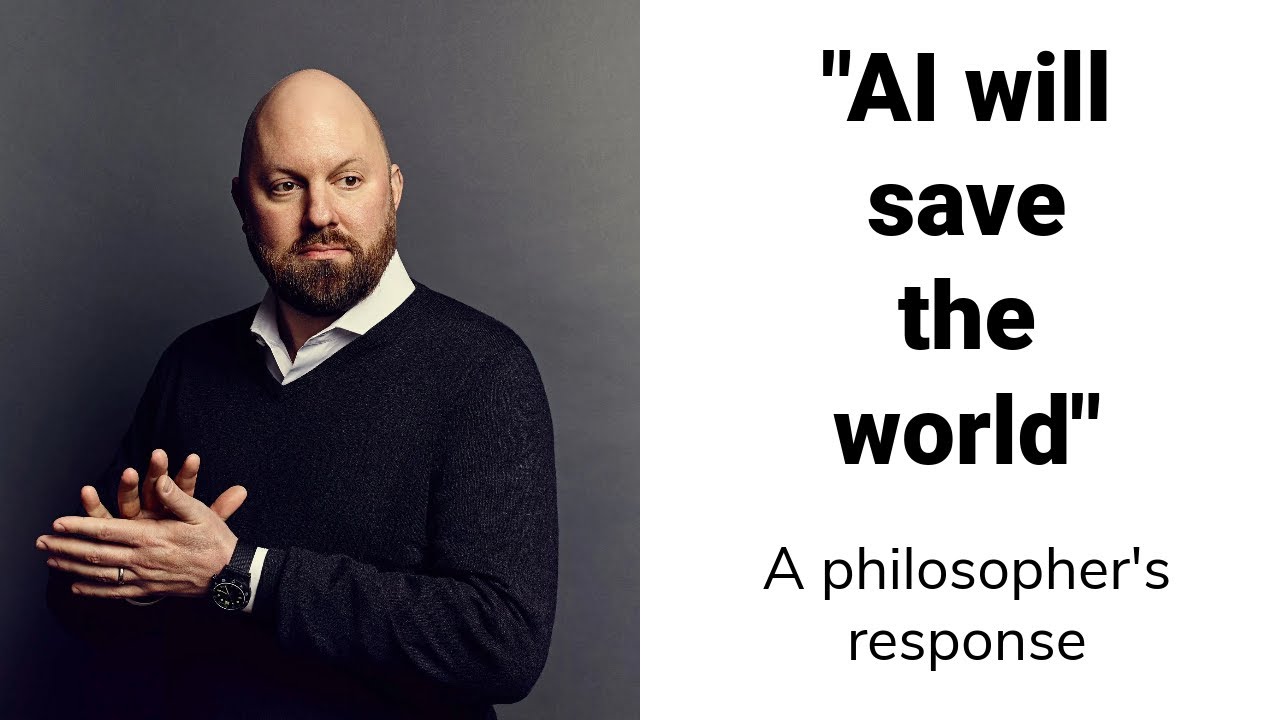
United Nations • Climate change refers to long-term shifts in temperatures and weather patterns. Human activities have been the main driver of climate change, primarily due to the burning of ...
---
an 10 24
for the first time in his career, billionaire investor Ben Horowitz donated to a political campaign earlier this summer when he gave to former President Donald Trump's 2024 campaign. But now he's doing an abrupt one-eighty.
Axios recently reported that Horowitz — one of the two main partners in the firm Andreessen Horowitz — is now throwing his considerable financial resources behind Vice President Kamala Harris' campaign in the final weeks of the election cycle. This comes despite him endorsing Trump in July, when President Joe Biden was still at the top of the Democratic ticket. Horowitz praised Harris and said he and his wife "will be making a significant donation" to the vice president.
...
---
The Verge
Elon Musk and tech elite back a pro-Trump super PAC
/ Joe Lonsdale, David Sacks, and the Winklevoss twins have helped America PAC raise millions for former President Donald Trump.
By Gaby Del Valle, a policy reporter. Her past work has focused on immigration politics, border surveillance technologies, and the rise of the New Right.
Jul 16, 2024, 15 Comments15 New
Several close friends of Elon Musk, including Palantir cofounder Joe Lonsdale, venture capitalist Doug Leone, and investor and podcast host David Sacks, have donated lavishly to a super PAC backing former President Donald Trump — and The Wall Street Journal reports that Musk plans on donating as much as $45 million a month to America PAC. In a post on X, Musk replied to the Journal’s article with a meme claiming it was “fake gnus” (fake news), though Bloomberg reported this weekend that he had already contributed an undisclosed amount to the super PAC.
Musk endorsed Trump on Saturday following the assassination attempt at a campaign rally in Pennsylvania and praised Trump’s selection of Ohio Senator J.D. Vance as his running mate. Several of Musk’s friends and business associates have contributed to the PAC, and others have reportedly said they’d do so. Multiple America PAC donors attended a $50,000-a-head fundraiser hosted by Sacks — the host of the All-In podcast, who decried “Democrat rule” in San Francisco in a Monday speech at the Republican National Convention — according to The Washington Post.
Recent financial disclosures show America PAC has raised more than $8.7 million since June. Founded in May by prominent Republican campaign finance lawyer Chris Gober, the PAC is focused on registering voters and encouraging early and mail-in voting in swing states, one source told the Journal. America PAC has reportedly hired hundreds of employees. In June, The New York Times reported that the PAC spent more than $6.6 million on behalf of Trump in a two-week period, most of which went toward “canvassing/field operations.”
“We believe that four more years of Joe Biden is a grave threat to the financial and physical safety of the United States,” an unnamed America PAC spokesperson said in a statement to The New York Times.
Other donors include Sequoia partner Shaun Maguire, Tyler and Cameron Winklevoss, early PayPal executive Ken Howery, and Valor Equity Partners founder Antonio Gracias, a former member of Tesla’s board of directors. Keith Rabois, a managing director at Khosla Ventures, told the Financial Times he would donate $1 million to the PAC. Marc Andreessen and Ben Horowitz told employees of their eponymous investment firm that they planned on donating to the PAC, The Information says. Andreessen and Horowitz reportedly told employees that they expect Trump to be more lax on industries like cryptocurrency.
---
===
an 9 23 no lnx
Billionaires envision a new utopian city to replace what they ruined
Image via SnapASkyline/Shutterstock.
Sonali KolhatkarandIndependent Media InstituteSeptember 02, 2023
Silicon Valley’s wealthy elites have been secretly buying up land in one of California’s poorest counties to build a new city from the ground up. Who will stop them?
What do billionaires do with all their money? Maybe they buy off a Supreme Court justice. Maybe they get their kicks from diving to the extreme depths of an ocean in a tiny metal capsule. Maybe they start a space company to fly into outer space for fun.
This article was produced by Economy for All, a project of the Independent Media Institute.
Or, perhaps they fantasize about building a brand-new California city from scratch, one with more housing than San Francisco and more walkability than Los Angeles. The billionaires have money to burn. And so, they pool together a few drops of their obscene wealth into realizing this wild fantasy.
It’s true. The New York Times, in a series of reports in late August 2023, revealed that a small group of white male billionaires—a “who’s who of Silicon Valley”—has been secretly buying up thousands of acres of rural land in northern California’s Solano County since 2017 to build a city from the ground up.
The idea originated with a young Czech-born billionaire and former Goldman Sachs trader named Jan Sramek. When he was only 22 years old, a profile in New York Magazine quoted Sramek as having adopted libertarian writer Ayn Rand’s credo: “The question isn’t who is going to let me; it’s who is going to stop me.” That sentiment forms the throughline of his long-term Utopian plan to build his new, perfect city.
At 36, Sramek has succeeded in charming fellow billionaires into investing in a company that has been the face of his mysterious project. Flannery Associates LLC is now the largest landowner in Solano County. What he and his rich friends want is to transform the Bay Area’s poorest county into a bustling, cultured, walkable metropolis, running on green energy and self-driving cars, with thousands of well-paid jobs. And they apparently think they know how to do it.
For years, local residents of Solano County wondered who was buying up parcels of land. News outlets speculated that the Chinese government was behind the purchases that circled Travis Air Force Base.
Even elected officials became concerned, with Ronald Kott, the mayor of nearby city Rio Vista, telling the press, “Nobody can figure out who they are… Whatever they’re doing—this looks like a very long-term play.” California congressional Representative John Garamendi, whose district encompasses Solano County, wanted to know, “Who are these people?” More importantly, “Where did they get the money where they could pay five to ten times the normal value that others would pay for this farmland?”
In retrospect, it’s not surprising that aside from government entities, the only ones with the money and audacity to embark on such a project are elite billionaires. They have a slick new website labeled California Forever, complete with attractive renderings of an idyllic city and platitudes about “good paying local jobs,” “homes of different sizes and price points,” and “walkable neighborhoods,” all built from a “consensus-minded plan.”
Now that the secret is out, what will we do about it? The billionaires are deluded in thinking they have the know-how, foresight, and intelligence to build a new city. But perhaps we as a society are equally deluded in believing that billionaires are smart enough to deserve the preposterous wealth they have accumulated.
Take Marc Andreessen, a Silicon Valley venture capitalist billionaire and one of Flannery’s investors. In a rambling, off-the-cuff essay in April 2020, Andreessen attempted to make the case that the only answer to society’s problems is to “build.” Build what? Anything! Everything!
Andreessen wanted to build more universities, more K-12 schools, and more highly automated factories. He wanted supersonic aircraft and millions of delivery drones. And if they weren’t being built, he wanted society to “force the incumbents to build these things.” To him, “building is how we reboot the American dream.”
In his essay, Andreessen laid down a challenge, ostensibly to governments: “Demonstrate that the public sector can build better hospitals, better schools, better transportation, better cities, better housing.”
Andreessen doesn’t understand why we as a society don’t want the same things that he does. “The problem,” he wrote, “is desire,” or the lack thereof. “We need to want these things.” How frustrating to be an idealistic billionaire and not have one’s desire to build masses of random things on a whim be shared by the rest of society!
Another Flannery investor and venture capitalist billionaire, Michael Moritz,has been more honest—at least to fellow investors—that it’s not about idealism as much as it is about profits. He wrote a 2017 note pitching the idea of building the fantasy California city in which, as the New York Times paraphrased, “[t]he financial gains [from the project] could be huge.” In Moritz’s own words, “If the plans materialize anywhere close to what is being contemplated, this should be a spectacular investment.” Unsurprisingly, billionaires, even in their wildest, most idealistic-sounding dreams, want to always ensure they can reap financial rewards.
Solano County, in addition to being the Bay Area’s poorest, is home to the region’s largest Black population by percentage and also has the highest unemployment rate. In other words, it is ripe for capitalist exploitation.
On the surface, it seems as though California’s real-world problems are cramping the billionaires’ style and all they want to do is realize a Utopian vision. But in truth, the billionaires are thesource of much of the state’s problems.
As their net worth has soared, billionaires have put upward pressure on the cost of living in cities like San Francisco, Oakland, Palo Alto, San Jose, and Mountain View. According to the 2023 Silicon Valley Index, “the San Francisco Bay Area is home to the greatest concentration of billionaires in the world.” The report also points out that Silicon Valley has the nation’s largest wealth gap, and, specifically, “the top 0.001 percent of Silicon Valley’s households [are] holding more wealth than the nearly 500,000 households in the bottom 50 percent.”
Rising housing prices, increased homelessness, traffic gridlock, and a generally higher cost of living are all the result of massive wealth differences—an inequality so deeply unnatural that it inevitably perverts the ability of cities to cope and skews the ability of ordinary people to survive and thrive.
The billionaires are steeped in so much hubris and so little wisdom that they don’t see beyond their own noses. Their answer to the problems they have created is to start from scratch and pour billions into a fantasy project whose details are so murky they won’t even share them with democratically elected representatives, and whose manifestation will likely replicate the same mess it is claiming to fix.
If their project fails, all they will lose is a few of their many billions.
What will the rest of us lose? Land, homes, resources, environmental regulations, tax revenues, and other perhaps things we cannot even foresee.
We need to have a good answer to the challenge that Sramek, Andreessen, Moritz, and their ilk have posed to the rest of us: “The question isn’t who is going to let me; it’s who is going to stop me.”
Will we stop them?
AUTHOR BIO:
Sonali Kolhatkar is an award-winning multimedia journalist. She is the founder, host, and executive producer of “Rising Up With Sonali,” a weekly television and radio show that airs on Free Speech TV and Pacifica stations. Her most recent book is Rising Up: The Power of Narrative in Pursuing Racial Justice (City Lights Books, 2023). She is a writing fellow for the Economy for All project at the Independent Media Institute and the racial justice and civil liberties editor at Yes! Magazine. She serves as the co-director of the nonprofit solidarity organization the Afghan Women’s Mission and is a co-author of Bleeding Afghanistan. She also sits on the board of directors of Justice Action Center, an immigrant rights organization.
===
bd
“This is a totally made-up controversy. It’s manufactured. There’s no there there,” said Reed, who joined The Intercept from The Nation in late 2015 with Greenwald’s blessing. “There’s no kernel of truth to Glenn’s crusade. That is what I think is fundamentally different from the old Glenn, who would often kind of overstate the case, and fall into hyperbole, but there was usually a kernel of truth. And I would say this time, he lost the kernel—or he doesn’t care about having that kernel. He’s become a practitioner of manufactured controversy in the service of the hard right in this country.”
Former New York Times journalist and “Riot Squad” author Robert Mackey—whom Greenwald had personally recruited to The Intercept on the strength of his Times work live-blogging major news events, making documentaries, and analyzing social media—practices his journalism while “sitting on his fat white ass on the couch,” Greenwald told Dore.
“That was his ‘reporting’”—here, Greenwald gestured scare quotes—"that was so innovative and that led The Intercept to hire him,” he added sarcastically. (Needless to say, Greenwald didn’t mention his key role in eagerly lobbying Mackey to leave the Times in 2016.)
In another curious omission on The Jimmy Dore Show, Greenwald went after one of his favorite targets, Times tech reporter (and former Daily Beast staffer) Taylor Lorenz, for her “unhealthy fixation” on billionaire Silicon Valley venture capitalist Marc Andreessen—but failed to mention that Andreessen is a major investor, to the tune of $15 million, in Substack, and is leading a new fundraising round of $65 million for Greenwald’s latest journalistic platform.
Hours later on the same day of his Dore guest-shot, Greenwald donned a suit and tie in Rio de Janeiro to trash Mackey some more on The Ingraham Angle and accuse The Intercept of deliberately inciting antifa members to physically assault TownHall.com videographer Julio Rosas and his Daily Caller counterpart, Jorge Ventura, “by dragging their faces into the light.” Never mind that the two young men, who clearly revel in the attention, had just appeared on Ingraham’s show before millions of Fox News viewers.
“I don’t pretend that my life is some avatar of working class values,” Greenwald elaborated in an email to The Daily Beast. “I do, though, think that’s true of Julio and Jorge. And that’s why I find it so repellent to watch a bunch of coddled, highly paid editors and journalists using a billionaire’s money from their $3 million/year office on the 18th floor of a Park Avenue tower to target actual working class journalists doing dangerous reporting about a violent group (Antifa) with which the Intercept ideologically identifies.”
He’s tapped into the rage machine. He understands that there’s no engagement like rage engagement.
— Roger Hodge, The Intercept editor
Greenwald’s most astonishing verbal assault, however, was aimed at computer security engineer Micah Lee, director of information security for the Intercept’s parent company, First Look Media, and author of the Gab story. Lee had been essential to Greenwald’s two greatest journalistic triumphs.
===
This sentiment was voiced recently by Reed Hastings, the chief ofNetflix and a director for Facebook and Microsoft. Speaking at the Stanford Directors’ College, a yearly retreat where public company directors learn the art of being a director, he reportedly cast skepticism on the traditional board model.
According to Kevin M. LaCroix of the D&O Diary, “Hastings said several times that for the board of a large publicly traded company ‘the fundamental job is to replace and compensate the C.E.O.’ Where the company has the resources to hire outside consultants as needed, it is not the board’s role to offer counsel or advice.”
After resistance from the audience during questioning, Mr. LaCroix reported, Mr. Hastings backpedaled, stating that his remarks applied only to “the largest public companies” or “special situations” where a board was required to act. (Mr. Hastings did not respond to requests made through Netflix for a comment.)
Such a sentiment is at odds with what corporate governance advocates and others suggest for boards. Today, boards are expected to be actively involved in supervising executives and participating in major decisions affecting the company. This represents a revolution from the 1970s, when the chief executive ruled, directors were often cronies of the chief and boards were extremely deferential.
Mr. Hastings’s attitude can be found elsewhere among Silicon Valley’s new elite. When Mr. Zuckerberg negotiated to acquire Instagram for $1 billion, he reportedly told his board only about 24 hours before the deal was approved, appearing to present it as a fait accompli.
Even if these boards did feel free to challenge these founders, they are tight and interlocking. Two of the directors of Netflix sit on the board of LinkedIn. Reid Hoffman, the chairman and co-founder of LinkedIn, sits on the board of Zynga, which has a director who is a partner of Kleiner Perkins Caufield & Byers and sits on the boards of Klout and Amazon.com. Mr. Hastings is joined on the board of Facebook by Marc Andreessen, one of the biggest deal makers in Silicon Valley who sits on the board of eBay. And so on.
===
https://en.wikipedia.org/wiki/Marc_Andreessen
Marc Lowell Andreessen (/ænˈdriːsən/ ann-DREE-sən; born July 9, 1971) is an American entrepreneur, investor, and software engineer. He is the co-author of Mosaic, the first widely used Web browser; co-founder of Netscape;[3] and co-founder and general partner of Silicon Valley venture capital firm Andreessen Horowitz. He founded and later sold the software company Opsware to Hewlett-Packard. Andreessen is also a co-founder of Ning, a company that provides a platform for social networking websites. He sits on the board of directors of Facebook, eBay, and Hewlett Packard Enterprise,[4] among others. Andreessen was one of six inductees in the World Wide Web Hall of Fame announced at the First International Conference on the World-Wide Web in 1994.[5] Andreessen was depicted in the 2019 National Geographic series Valley of the Boom by actor John Karna.
Contents
- 1Early life and education
- 2Netscape
- 3Loudcloud
- 4Andreessen Horowitz
- 5eBay
- 6Industry influence
- 7Current ventures
- 8Personal life
- 9Criticism
- 10References
- 11Further reading
- 12External links
Early life and education[edit]
Andreessen was born in Cedar Falls, Iowa, and raised in New Lisbon, Wisconsin.[6] He is the son of Patricia and Lowell Andreessen, who worked for a seed company.[7] In December 1993,[6] he received his bachelor's degree in computer science from the University of Illinois at Urbana–Champaign.[8] As an undergraduate, he interned twice at IBM in Austin, Texas.[9] He worked in the AIX graphics software development group which was responsible for the MIT X-windows implementation and ports of the 3D language API's: SGI's Graphics Language (GL) and PHIGS. He also worked at the National Center for Supercomputing Applications (NCSA) at the University of Illinois, where he became familiar with Tim Berners-Lee's open standards for the World Wide Web. Andreessen and full-time salaried co-worker Eric Bina worked on creating a user-friendly browser with integrated graphics that would work on a wide range of computers. The resulting code was the Mosaic Web browser.
In the Web's first generation, Tim Berners-Lee launched the Uniform Resource Locator (URL), Hypertext Transfer Protocol (HTTP), and HTML standards with prototype Unix-based servers and browsers. A few people noticed that the Web might be better than Gopher. In the second generation, Marc Andreessen and Eric Bina developed NCSA Mosaic at the University of Illinois. Several million then suddenly noticed that the Web might be better than sex.
— Bob Metcalfe, InfoWorld, August 21, 1995, Vol. 17, Issue 34.[10]
Netscape[edit]
After his graduation from UIUC in 1993, Andreessen moved to California to work at Enterprise Integration Technologies. Andreessen then met with Jim Clark, the founder of Silicon Graphics, who had recently exited the firm. Clark believed the Mosaic browser had great commercial possibilities and suggested starting an Internet software company. Soon, Mosaic Communications Corporation was in business in Mountain View, California, with Andreessen as co-founder and vice president of technology. The University of Illinois was unhappy with the company's use of the Mosaic name, so Mosaic Communications changed its name to Netscape Communications, and its flagship Web browser was the Netscape Navigator.[11]
Netscape's IPO in 1995 put Andreessen into the public eye. He was featured on the cover of Time[12][13] and other publications.[14]
Netscape was acquired in 1999 for $4.2 billion by AOL. Andreessen's hiring as its Chief Technology Officer was contingent on the completion of the acquisition.[15] The same year, he was named to the MIT Technology Review TR100 as one of the top 100 innovators in the world under the age of 35.[16]
Loudcloud[edit]
After AOL acquired Netscape in late 1998, Andreessen went on to found Opsware with Ben Horowitz, Tim Howes, and In Sik Rhee,[17] originally named Loudcloud, a company providing computing, hosting and software services to consumer facing internet and e-commerce companies. Loudcloud sold its hosting business to EDS and changed its name to Opsware in 2003, with Andreessen serving as chairman. Acquired by Hewlett-Packard for $1.6 billion in 2007, it was one of the first companies to offer software as a service and to attempt cloud hosting.[18]
Andreessen Horowitz[edit]
History and founding[edit]
Between 2005 and 2009, Andreessen and longtime business partner Ben Horowitz separately invested a total of $4 million in 45 start-ups that included Twitter and Qik.[19] The two became well known as super angelinvestors.[19] On July 6, 2009, Andreessen and Horowitz announced their Silicon Valley venture-capital firm Andreessen Horowitz.[20]
The firm had been scrutinized among several other venture capital firms for lack of diversity in its workforce.[21] The Information's Future List 2015 & 2016 ranked Andreessen Horowitz 55th and 47th, respectively, based on their ethnic and gender diversity as well as the age of people on their investment teams. According to the data, the firm's senior investment team was 94% male in 2015,[22] scoring 0.0 for gender diversity in 2016 and April 2018.[23][24]
In an interview with New York Magazine, Andreessen stated the diversity discussion was valid, however, he believed the firm, as well as other venture capital firms of Silicon Valley, had been wrongly accused of intentionally discriminating against women and people of color.[25] When asked specifically about the critique of ethnic and gender diversity in Silicon Valley, Andreessen responded that the issues were the "same thing."[26]
Investments[edit]
Begun with an initial capitalization of $300 million,[27] within three years the firm grew to $2.7 billion under management across three funds.[28] Andreessen Horowitz's portfolio holdings include Facebook, Foursquare, GitHub, Pinterest, Twitter, and Honor, Inc.[29]
On September 1, 2009, an investor group that included Andreessen Horowitz acquired a majority stake in Skype for $2.75 billion,[30] which was considered risky.[31] The deal paid off in May 2011 when Microsoft bought Skype for $8.5 billion.[31] Additionally, Andreessen and Horowitz made personal investments in headset maker Jawbone in 2006. In 2010, the firm assisted Silicon Valley attorney Ted Wang in creating the first free standardized seed round financing documents, the Series Seed Documents.[32] The firm announced a $49 million investment in Jawbone in March 2011.[33] In February 2011, Andreessen Horowitz's $80 million investment in Twitter made it the first venture firm to hold stock in all four of the highest-valued, privately held social media companies (at that time): Facebook, Groupon, Twitter, and Zynga.[34]
eBay[edit]
Andreessen first joined eBay board of directors in 2008, and served on the board for six years.[35] In October 2014, Andreessen announced his resignation from the board due to the company's decision to break off its online payments unit PayPal. The decision to cut ties with PayPal was a point of contention between Andreessen and investor Carl Icahn. Icahn advocated for the PayPal split while Andreessen opposed the spin off, resulting in public disputes. Andreessen was accused by Icahn of putting his own interests in front of what was best for shareholders. Icahn published his argument in an open letter that detailed alleged conflicts of interest in eBay's 2009 sale of Skype to a group of private investors, which included Andreessen's own firm.[36][37]
Industry influence[edit]
Andreessen advises the leaders of companies in which Andreessen Horowitz invests, including Mark Zuckerberg of Facebook and Mark Pincus of Zynga.[38]
Andreessen and Horowitz were ranked no. six on Vanity Fair's 2011 New Establishment List,[39] no. 1 on CNET's 2011 most influential investors list[40] and no. 2 and 21, respectively, on the 2012 Forbes Midas List of Tech's Top Investors.[41]
In April 2012, Andreessen and Andreessen Horowitz General Partners Ben Horowitz, Peter Levine, Jeff Jordan, John O'Farrell, and Scott Weiss pledged to donate half of their lifetime incomes from venture capital to charitable organizations.[42]
In 2012, Andreessen was named in the Time 100, an annual list of the 100 most influential people in the world assembled by Time.[43]
In 2013, Andreessen was one of five Internet and Web pioneers awarded the inaugural Queen Elizabeth Prize for Engineering.[44]
Current ventures[edit]
Andreessen cofounded and was chairman of Ning, the third company he established after Netscape and Loudcloud.[45] In September 2011, it was announced that Ning had been sold to Mode Media for a reported price of $150 million. Andreessen joined Glam Media's board of directors following the sale.[46]
He is a personal investor in companies including LinkedIn[47] and boutique bank Raine.[48]
Andreessen serves on the board of Facebook,[3] eBay, Hewlett Packard Enterprise, Kno,[49] Stanford Hospital,[50] Bump Technologies, Anki,[51] Oculus VR,[52] Dialpad, and TinyCo.[53]
Hewlett Packard Enterprise announced in February 2018 that board member Andreessen would not seek reelection at the 2018 Annual Meeting of Stockholders on April 4.[54] In his time at Hewlett Packard, Andreessen had been partially blamed for some of the company's failures, including the recruiting of Leo Apotheker as well as the acquisitions of Autonomy and Palm.[55][56]
He serves as advisor to Asana and director of CollabNet.[57]
Andreessen is a proponent of Bitcoin and cryptocurrency[58] and has described the technology as "innovative and radical".[59] His venture capital firm Andreessen Horowitz has invested more than $227 million in bitcoin-related startups as of July 19, 2015.[60]
Andreessen serves on an advisory board for Neom, the Saudi Arabia’s plan to build a futuristic "mega city" in the desert.[61][62]
Personal life[edit]
Andreessen married Laura Arrillaga in 2006.[63] She is the founder of the Silicon Valley Social Venture Fund and daughter of Silicon Valley real estate billionaire John Arrillaga. They have one son together.
In 2012, Andreessen expressed some support for Republican candidate Mitt Romney.[64] During the 2016 primary season, he endorsed Republican candidate Carly Fiorina, but after Fiorina dropped out of the race, Andreessen switched his endorsement to the Democratic nominee Hillary Clinton, citing the Republican nominee Donald Trump's anti-immigration stance.[65][66]
Criticism
In February 2016, Marc Andreessen posted a tweet in response to India's decision to apply net neutrality to Facebook's proposed project Free Basics. The tweet suggested that anti-colonialism had been catastrophic for the Indian people. Andreessen later deleted the tweet following criticism from Indians and non-Indians alike (including Facebook founder Mark Zuckerberg).
:[67][68][69] Facebook spent millions advertising Free Basics to the Indian public.[70] The project failed due to violations, setting preferential tariffs in accessing content and setting up a "walled garden" on the internet.[71][72]
Andreessen was a supporter for the controversial British journalist Milo Yiannopoulos, whose verified status was revoked by Twitter in 2016 for abusive behavior and hateful conduct, growing into an ongoing controversy. Marc Andreessen tweeted in support of Yiannopoulos.[73]
Conflict of interest[edit]
In April 2016, Facebook shareholders filed a class action lawsuit to block Zuckerberg's plan to create a new class of non-voting shares. The lawsuit alleges Andreessen secretly coached Zuckerberg through a process to win board approval for the stock change, while Andreessen served as an independent board member representing stockholders.[74]
According to court documents, Andreessen shared information with Zuckerberg regarding their progress and concerns as well as helping Zuckerberg negotiate against shareholders. Court documents included transcripts of private texts between Zuckerberg and Andreessen.[75]
Reference
===