ilya shapiro
mofo pluto racust
pow he helped gut 1964-5 voting act?!
clarence
west va v epa
UFW cdar points nursery
u chic
voter suppression shelby v
yass hedge
manhattan inst harlan crow and singer vulture
cspan some claremont inst /grad pgm geezer listed him as victim
MCBRIDE JAN 6 INGRASSIA TATE
Justia Law
https://law.justia.com › appellate-division-first-department](https://law.justia.com/cases/new-york/appellate-division-first-department/2025/index-no-452564-22-appeal-no-2834-2835-2836-case-no-2023-04925-2024-01134-2024-01135.html)
The McBride Law Firm, PLLC, New York (Joseph Daniel McBride of counsel), and The Manhattan Institute for Policy Research, New York (Ilya Shapiro of counsel), ...
no lnx see blum
https://www.levernews.com/the-paid-pundits-defending-clarence-thomas-and-his-billionaire-benefactor/
lever
after ProPublica reported that Supreme Court Justice Clarence Thomas had failed to disclose two decades worth of luxury trips provided by billionaire conservative mega-donor Harlan Crow, right-wing pundits and think-tank staffers raced to defend Thomas and his benefactor — without mentioning what they all had in common: their own financial ties to Crow.
The episode is a reminder of how many conservative pundits and scholars owe their sinecures to the same billionaires who fund Republican election campaigns and efforts to influence the judiciary.
Hours after ProPublica dropped its report on Thomas, Ilya Shapiro, a senior fellow at the right-wing think tank Manhattan Institute, tweeted, “Unless Harlan Crow has some business before the Court, the @propublica report about Justice Thomas is a big breathless nothingburger.”
Unmentioned: The Manhattan Institute, where Shapiro leads an amicus brief filing program lobbying the Supreme Court to rule certain ways on issues like student debt cancellation and corporate taxation, boasts Crows’ wife Kathy on its board of trustees and has been called “wonderful” by Crow himself.
Many of these pundits came forward to vouch for Crow’s honor and moral character after ProPublica’s story prompted renewed scrutiny of Crow over his collection of Nazi memorabilia, which includes two paintings by Adolf Hitler himself and a signed copy of Mein Kampf.
In 2016, Supreme Court justices — including Thomas — unanimously voted to condone the practice of giving lavish gifts to public officials in exchange for access.
“There’s Not Even An Appearance Of Impropriety”
Crow, heir to a Dallas real estate empire, is the CEO of Crow Holdings, a sprawling real estate investment and private equity firm that manages retirement savings for public employees. A relatively private man, Crow has long been a major donor to Republican political campaigns and outside groups.
He’s also been a donor to tax-exempt dark money groups and charitable organizations that do not have to report their donors. In 2011, Crow told the New York Times, “I disclose what I’m required by law to disclose, and I don’t disclose what I’m not required to disclose.”
While those donations are not for the most part traceable, it’s clear that Crow has been generous to conservative think tanks, legal groups, and media outlets.
ProPublica reported last week that Crow has for years offered Thomas, the conservative Supreme Court justice, free trips on his private jet and superyacht. Those trips should have been disclosed under federal ethics rules, according to seven experts consulted by the nonprofit news outlet.
Shapiro, who joined the Manhattan Institute last summer, took time away from a trip to Legoland last week to record an audio clip defending Crow’s gifts to Thomas, in addition to tweeting his support for the justice.
“It is not against the rules to receive all sorts of gifts — even lavish gifts, even yachts, and rides on private jets, and stays at luxury resorts,” he said. “Nor do the Supreme Court ethics rules even require reporting such gifts if they’re personal hospitality — gifts from friends, things like that.”
While Shapiro suggested that maybe the rules should be changed, he asserted that “there’s not even an appearance of impropriety, unless Harlan Crow has some business before the court, which no one has alleged — not even in ProPublica’s big, breathless, nothingburger report.”
It’s an interesting argument, given that Shapiro effectively lobbies the Supreme Court for the Manhattan Institute. Last summer, Kathy Crow was added to the board of trustees listed on the Manhattan Institute’s website. Harlan Crow, for his part, lavished praise on the organization during a debate at his Dallas business compound in 2021.
in his role at the Manhattan Institute, Shapiro regularly files amicus briefs attempting to persuade justices to rule certain ways on cases. Shapiro recently submitted a brief calling on the Supreme Court to issue a decision blocking President Joe Biden’s student loan cancellation plan.
:{
}:
Last month, Shapiro filed a brief calling on the Supreme Court to review a case upholding the constitutionality of a one-time repatriation tax imposed on foreign earnings accumulated by foreign subsidiaries of U.S. companies, which was passed as part of President Donald Trump’s 2017 tax law.
:{
}:
On Tuesday, Shapiro tweeted that he didn’t know Kathy Crow sits on the Manhattan Institute’s board,while downplaying the significance.
“Alas no private-jet travel here,” he wrote, “but what you’re saying is that conservative donors support conservative organizations? Amazing.”
“Deeply Honorable, Decent, And Patriotic”
As controversy mounted over Harlan Crow’s undisclosed gifts to Thomas, public attention extended to the Texas businessman’s extensive collection of Nazi artifacts — which includes oil paintings by Hitler, a signed copy of Mein Kampf, a teapot engraved with Hitler’s initials, and linen napkins embroidered with swastikas.
Those items have drawn scrutiny before. In 2015, Democrats called on Sen. Marco Rubio (R-Fla.) to cancel a presidential campaign fundraiser scheduled at Crow’s house on the eve of Yom Kippur.
In 2019, after scholars who dined at Crow’s mansion were disturbed by his collection of Nazi artifacts, Crow offered a half-hearted apology to their host organization, according to a letter obtained by Mother Jones.
“I am sorry that anyone would be offended,” wrote Crow, adding: “I would very much hope it would be completely obvious that having anything that related to Nazis or slavery could not possibly be interpreted as support or glorification for those evils.”
Over the weekend, several conservative pundits came forward to defend Crow and his collectors items, without mentioning that they have benefited from his family’s financial support for their think tanks and media outlets.
Jonah Goldberg, co-founder and editor-in-chief of the conservative news site The Dispatch, tweeted, “Harlan Crow is a deeply honorable, decent, and patriotic person.” He characterized Crow’s separate garden of dictator statutes — featuring Russia’s Joseph Stalin and Vladimir Lenin — as “an attempt [to] commemorate the horrors of the 20th century in the spirit of ‘never again.’”
Goldberg later tweeted, “My conscience is clear. Harlan Crow is a good man and the farthest thing from a Nazi.”
As The Dispatch separately noted in a news article covering Crow’s gifts to Thomas, “Harlan Crow is a minority investor in The Dispatch and a friend of the founders.”
Goldberg is also a senior fellow at the American Enterprise Institute, a right-wing think tank where Crow serves on the board of trustees.
Previously, Goldberg was a senior fellow at the National Review Institute, the nonprofit affiliated with the conservative National Review magazine. The National Review Institute has regularly hosted its debate series at Crow’s Old Parkland campus.
Crow was additionally a co-chair of a 2021 National Review Institute dinner honoring Leonard Leoand Eugene Meyer of the Federalist Society, the conservative lawyers network. (Leo, also a friend of Thomas, was a key architect of conservatives’ 6-3 supermajority on the Supreme Court.)
David French, a former National Review Institute senior fellow and former senior editor at The Dispatch, defended Crow, too.
“I know Harlan also,” French tweeted. “I’ve participated in several debates at Old Parkland. The idea that he’s a Nazi sympathizer is utterly ludicrous. He abhors tyranny, from fascism to communism to everywhere in between.”
Crow’s character was also defended by Charles Murray, a longtime American Enterprise Institute scholar who’s best known for mainstreaming racist pseudoscience via his book, The Bell Curve.
“Harlan Crow surely has enemies but, as far as I can tell, they consist exclusively of people who don’t know him,” Murray tweeted. “Everyone who does know him may disagree with him on some issue, but they universally recognize his decency, integrity, and kindness. Including people of the left.”
Murray dedicated his most recent book, Human Diversity: The Biology of Gender, Race, and Class, “to Harlan Crow.”
:{
}:
Cato Podcast on Obamacare's mandates
March 28, 2012
By TIMOTHY SANDEFUR
I talked today with Cato’s Caleb Brown about today’s fascinating Supreme Court argument about Obamacare and federalism. You can listen here.
Update: One small correction. I’m actually coauthor, with John Eastman and Ilya Shapiro, of two joint PLF/Cato/Claremont briefs (1, 2) in the cases argued this week.
lotta amicus
evenwel v. Abbott, 136 S. Ct. 1120 (2016), was a United States Supreme Court case in which the Court held that the principle of one person, one vote, under the Equal Protection Clause of the Fourteenth Amendment of the United States Constitution allows states to use total population, not just total voting-eligible population, to draw legislative districts.[1]
Background
The suit originated when Sue Evenwel and Edward Pfenninger filed suit in the United States District Court for the Western District of Texas, arguing that districts drawn based on total population dilute their vote compared to those in other Texas Senate districts. The district court dismissed the complaint for lack of a claim on which relief could be granted.[2]
The question presented to the Court was the following: "Whether the 'one-person, one-vote' principle of the Fourteenth Amendment creates a judicially enforceable right ensuring that the districting process does not deny voters an equal vote."[3]
Opinion of the Court
The Supreme Court affirmed the District Court and held that total population may be used in redistricting. It did not rule on whether states are permitted to base districts on the number of eligible voters, instead of the total population.[4][5]
See also
- Edward Blum – director of Project on Fair Representation
- Reynolds v. Sims – a United States Supreme Court case that ruled that state legislature districts had to be roughly equal in population.
https://www.supremecourt.gov/search.aspx?filename=/docketfiles/14-940.htm
| No. 14-940 | Title: | Sue Evenwel, et al., Appellants | v. | Greg Abbott, Governor of Texas, et al. | Docketed: | February 4, 2015 | Lower Ct: | United States District Court for the Western District of Texas | Case Nos.: | (1:14-cv-335) | Decision Date: | November 5, 2014 David B. Rivkin Jr. Baker & Hostetler LLP Ilya Shapiro Cato Institute ... | Aug 5 2015 | Brief amicus curiae of American Civil Rights Union filed. | Aug 7 2015 | Brief amicus curiae of Eagle Forum Education & Legal Defense Fund, Inc. filed. | Aug 7 2015 | Brief amicus curiae of Project 21 filed. | Aug 7 2015 | Brief amicus curiae of Tennessee State Legislators and The Judicial Education Project filed. | Aug 7 2015 | Brief amici curiae of Cato Institute and Reason Foundation filed. | Brief amici curiae of Cato Institute and Reason Foundation filed. |
Shapiro is a 2003 graduate of the University of Chicago Law School, a senior fellow in constitutional studies at the Cato Institute, and editor-in-chief of the Cato Supreme Court Review. Before joining Cato, he was Special Assistant/Advisor to the Multi-National Force-Iraq on rule of law issues. Professor Tom Ginsburg provided commentary. This talk was recorded October 2nd, 2008 and was sponsored by the Federalist Society and the Tony Patino Fellowship.
:{
}:
2 mos 2007 no offical status, schmoozed petreus at a conf?
:{
}:
Lewis Paul Bremer III (born September 30, 1941) is an American diplomat. He was the de facto head of state of Iraq as leader of the Coalition Provisional Authority (CPA) following the 2003 invasion of Iraq by the United States, from May 2003 until June 2004.
off BS miss stinktank staff?!
as in thank god for
ilya Shapiro is the director of the Robert A. Levy Center for Constitutional Studies at the Cato Institute. Before joining Cato, he was a special assistant/adviser to the Multi-National Force in Iraq on rule-of-law issues and practiced at Patton Boggs and Cleary Gottlieb.
PROTECTING THE MINISTRY OF OIL?
Multi-National Force – Iraq (MNF–I), often referred to as the Coalition forces, was a military command during the 2003 invasion of Iraq and much of the ensuing Iraq War, led by the United States of America (Operation Iraqi Freedom), United Kingdom (Operation Telic), Australia, Italy (Operation Ancient Babylon), Spain and Poland, responsible for conducting and handling military operations.
Shapiro is the co-author of Religious Liberties for Corporations? Hobby Lobby, the Affordable Care Act, and the Constitution (2014), and editor of 11 volumes of the Cato Supreme Court Review (2008-18). He has contributed to a variety of academic, popular, and professional publications, including the Wall Street Journal, Harvard Journal of Law & Public Policy, Washington Post, Los Angeles Times, USA Today, National Review, and New York Times Online. He also regularly provides commentary for various media outlets, including CNN, Fox News, ABC, CBS, NBC, Univision and Telemundo, the Colbert Report, PBS NewsHour, and NPR.
Shapiro has testified before Congress and state legislatures and has filed more than 300 amicus curiae “friend of the court” briefs in the Supreme Court, including one that The Green Bag, selected for its “Exemplary Legal Writing” collection. He lectures regularly on behalf of the Federalist Society, is a member of the Legal Studies Institute’s board of visitors at The Fund for American Studies, was an inaugural Washington Fellow at the National Review Institute and a Lincoln Fellow at the Claremont Institute, and has been an adjunct professor at the George Washington University Law School.He is also the Chairman of the Board of Advisors of the Mississippi Justice Institute and Senior Fellow at Mississippi Center for Public Policy.In 2015, National Law Journal named him to its 40 under 40 list of “rising stars.”
Before entering private practice, Shapiro clerked for Judge E. Grady Jolly of the U.S. Court of Appeals for the Fifth Circuit. He holds an AB from Princeton University, an MSc from the London School of Economics, and a JD from the University of Chicago Law School (where he became a Tony Patiño Fellow).
DN 6 30/23 sackett v epa alito wife property lease;singer HEAD of manhat amicus; website gay marriage fake doc adf; missouri loan no $ 15 yrs, no intention, no knowledge used by AG for standing; KBJ scathing dissent let them eat cake obliviousness; change law no change life
https://www.alternet.org/otomayor-military-academies-arbitrariness-ruling/
===
https://www.businessinsider.com/sam-alito-luxury-fishing-trip-singer-block-student-loan-forgiveness-2023-6
biz insider
no lnx
Conservative Supreme Court Justice Sam Alito, Jr. took a fishing trip with a billionaire who has donated to — and serves as chairman for — a group that asked the Supreme Court to block student-loan forgiveness.
That news comes as borrowers are waiting for the Supreme Court to announce a decision this month on whether or not to uphold President Joe Biden's plan to cancel up to $20,000 for federal student-loans.
On Wednesday, ProPublica published an investigation on a vacation Alito took in July 2008 at a luxury fishing lodge in Alaska that reportedly cost over $1,000 a day. He was accompanied by Paul Singer, a billionaire whose hedge fund appeared before the Supreme Court at least ten times following the fishing trip and won votes from Alito in some of those cases.
As ProPublica reported, Singer has given over $80 million to Republican political groups — including the Manhattan Institute, a conservative think-tank for which Singer has served as chairman since 2008. That group also filed an amicus brief with the Supreme Court asking it to block Biden's relief plan — a decision the court is expected to hand down in the coming days.
"If the government's purpose were truly to reduce the harm of more frequent defaults, there are far more direct means available to that end," the Manhattan Institute wrote in its February brief referring borrowers who risked defaulted on their debt following the pandemic. "These include more aggressive measures to put borrowers on income-based repayment plans and, perhaps even more straightforward, waiving some of the legal consequences of missed payments."
"A $400 billion debt-forgiveness plan is a major policy decision that must be made by Congress, and Congress has declined to enact that policy," it added. "The administration's debt-forgiveness action should be vacated."
A spokesperson for Singer told ProPublica that Singer was not aware Alito would be on the fishing trip when he chose to attend, and that Singer "never discussed his business interests" with Alito during the trip. The spokesperson also said that Singer did not have "any pending matters before the Supreme Court, nor could Mr. Singer have anticipated in 2008 that a subsequent matter would arise that would merit Supreme Court review."
Meanwhile, instead of responding directly to ProPublica's questions on the investigation, Alito wrote an opinion piece published on Tuesday in the Wall Street Journal, in which the conservative justice denied the claims the investigation made and wrote that "I have spoken to Mr. Singer on no more than a handful of occasions, all of which (with the exception of small talk during a fishing trip 15 years ago) consisted of brief and casual comments at events attended by large groups."
"On no occasion have we discussed the activities of his businesses, and we have never talked about any case or issue before the Court," Alito wrote.
ProPublica also reported that Alito delivered a keynote address in 2010 for donors to the Manhattan Institute, during which Singer called Alito "a model Supreme Court justice" in his introduction. Of course, it's unclear how the Supreme Court will rule on Biden's student-debt relief plan — just as it's unclear how big of an influence donors could have on the impending decision.
Following ProPublica's report, advocacy group Student Borrower Protection Center sent a letter to Alito on Wednesday — obtained by Insider — that demanded he recuse himself from the two lawsuits seeking to block Biden's debt relief: Biden v. Nebraska, and Brown v. US Department of Education.
The SBPC wrote in its letter that the Job Creators Network, which represented the plaintiffs in Brown v. US Department of Education, received financial support from the Judicial Crisis Network — a group that Singer has donated to in the past.
"Paul Singer's direct and indirect financial ties to parties in Brown and amici in Brown and Nebraska raise serious questions about your ability to decide neutrally and impartially," the SBPC wrote.
Along with the conservative groups who filed amicus briefs on the issue earlier this year, Democratic lawmakers and advocates did the same — and expressed confidence in the legality of student-debt cancellation for millions of borrowers.
"As these diverse groups made clear today, student loan borrowers from all walks of life suffered profound financial harms during the pandemic and their continued recovery and successful repayment hinges on the Biden Administration's student debt relief plan," Education Secretary Miguel Cardona said of the briefs in January. "We will continue to defend our legal authority to provide the debt relief working and middle-class families clearly need and deserve."
POLITICS
Supreme Court Justice Samuel Alito wrote a WSJ op-ed instead of commenting for a story that revealed his ties to a billionaire who had 10 cases before SCOTUS
ah an 4 23 1 of 2
On April 6, ProPublica published a bombshell report saying that U.S. Supreme Court Justice Thomas had, for "over 20 years," been "treated to luxury vacations by Republican donor Harlan Crow" and failed to report it. Thomas' allies were quick to rush to his defense. And some of those defenders, according to The Lever's Andrew Perez, are Crow associates themselves.
:{
}:
One of them is The Manhattan Institute's Ilya Shapiro.
Perez, in an article published by The Lever on April 11, explains, "Hours after ProPublica dropped its report on Thomas, Ilya Shapiro, a senior fellow at the right-wing think tank Manhattan Institute, tweeted, 'Unless Harlan Crow has some business before the Court, the @propublica report about Justice Thomas is a big breathless nothingburger.' Unmentioned: The Manhattan Institute, where Shapiro leads an amicus brief filing program lobbying the Supreme Court to rule certain ways on issues like student debt cancellation and corporate taxation, boasts Crow's wife Kathy on its board of trustees and has been called 'wonderful' by Crow himself."
READ MORE: How Clarence Thomas’ concurring opinion suggests other rights may be vulnerable after Roe: analysis
Perez also notes that conservative journalist Jonah Goldberg, formerly of the National Review and now editor-in-chief of The Dispatch, has been defending Crow vigorously. On April 8, Goldberg tweeted, "Harlan Crow is a deeply honorable, decent, and patriotic person. He's not the strawman Thomas haters are trying to make him."
:{
}:
According to Perez, "As The Dispatch separately noted in a news article covering Crow's gifts to Thomas, 'Harlan Crow is a minority investor in The Dispatch and a friend of the founders.' Goldberg is also a senior fellow at the American Enterprise Institute, a right-wing think tank where Crow serves on the board of trustees. Previously, Goldberg was a senior fellow at the National Review Institute, the nonprofit affiliated with the conservative National Review magazine."
READ MORE: Democrats must do all they can to expose 'corrupt' Clarence Thomas and 'destroy his reputation': journalist
Read The Lever’s full article at this link.
links
on April 6, ProPublica published a bombshell report saying that U.S. Supreme Court Justice Thomas had, for "over 20 years," been "treated to luxury vacations by Republican donor Harlan Crow" and failed to report it. Thomas' allies were quick to rush to his defense. And some of those defenders, according to The Lever's Andrew Perez, are Crow associates themselves.
One of them is The Manhattan Institute's Ilya Shapiro.
Perez, in an article published by The Lever on April 11, explains, "Hours after ProPublica dropped its report on Thomas, Ilya Shapiro, a senior fellow at the right-wing think tank Manhattan Institute, tweeted, 'Unless Harlan Crow has some business before the Court, the @propublica report about Justice Thomas is a big breathless nothingburger.' Unmentioned: The Manhattan Institute, where Shapiro leads an amicus brief filing program lobbying the Supreme Court to rule certain ways on issues like student debt cancellation and corporate taxation, boasts Crow's wife Kathy on its board of trustees and has been called 'wonderful' by Crow himself." READ MORE: https://www.alternet.org/2022/06/clarence-thomas-2657559336...How Clarence Thomas’ concurring opinion suggests other rights may be vulnerable after Roe: analysis ttt Perez also notes that conservative journalist Jonah Goldberg, formerly of the National Review and now editor-in-chief of The Dispatch, has been defending Crow vigorously. On April 8, , "Harlan Crow is a deeply honorable, decent, and patriotic person. He's not the strawman Thomas haters are trying to make him."
https://www.levernews.com/the-paid-pundits-defending-clarence-thomas-and-his-billionaire-benefactor/
According to Perez, "As The Dispatch separately noted in anews article covering Crow's gifts to Thomas, 'Harlan Crow is a minority investor in The Dispatch and a friend of the founders.' Goldberg is also a senior fellow at the American Enterprise Institute, a right-wing think tank where Crow serves on the board of trustees. Previously, Goldberg was a senior fellow at the National Review Institute, the nonprofit affiliated with the conservative National Review magazine." READ MORE:...
BRIEF OF THECATO INSTITUTE AND
MOUNTAIN STATES LEGAL FOUNDATION
AS AMICI CURIAE IN SUPPORT OF PETITIONERS
Joseph A. Bingham
MOUNTAIN STATES
LEGAL FOUNDATION
2596 S. Lewis Way
Lakewood, CO 80237
(303) 292-2021
jbingham@mslegal.org
December 16, 2021
Ilya Shapiro
Counsel of Record
William Yeatman*
CATO INSTITUTE
1000 Mass. Ave., NW
Washington, DC 20001
(202) 842-0200
ishapiro@cato.org
*Admitted to the D.C. Bar
under D.C. App. R. 46-A.
Supervised by a D.C. Bar
member.
https://www.propublica.org/article/a-colorblind-constitution-what-abigail-fishers-affirmative-action-case-is-r
when the NAACP began challenging Jim Crow laws across the South, it knew that, in the battle for public opinion, the particular plaintiffs mattered as much as the facts of the case. The group meticulously selected the people who would elicit both sympathy and outrage, who were pristine in form and character. And they had to be ready to step forward at the exact moment when both public sentiment and the legal system might be swayed.
That's how Oliver Brown, a hard-working welder and assistant pastor in Topeka, Kan., became the lead plaintiff in the lawsuit that would obliterate the separate but equal doctrine. His daughter, whose third-grade innocence posed a searing rebuff to legal segregation, became its face.
Nearly 60 years after that Supreme Court victory, which changed the nation, conservatives freely admit they have stolen that page from the NAACP's legal playbook as they attempt to roll back many of the civil rights group's landmark triumphs.
In 23-year-old Abigail Noel Fisher they've put forward their version of the perfect plaintiff to challenge the use of race in college admissions decisions.
Publicly, Fisher and her supporters, chief among them the conservative activist who conceived of the case, have worked to make Fisher the symbol of racial victimization in modern America. As their narratives goes, she did everything right. She worked hard, received good grades, and rounded out her high school years with an array of extracurricular activities. But she was cheated, they say, her dream snatched away by a university that closed its doors to her because she had been born the wrong color: White.
The daughter of suburban Sugar Land, Texas, played the cello. Since the second grade, she said, she dreamed of carrying on the family tradition by joining her sister and father among the ranks of University of Texas at Austin alumni.
And the moment for her to lend her name to the lawsuit might never be riper: The Supreme Court has seated its most conservative bench since the 1930s. The Court is expected to issue a decision any week now in what is considered one of the most important civil rights cases in years.
On a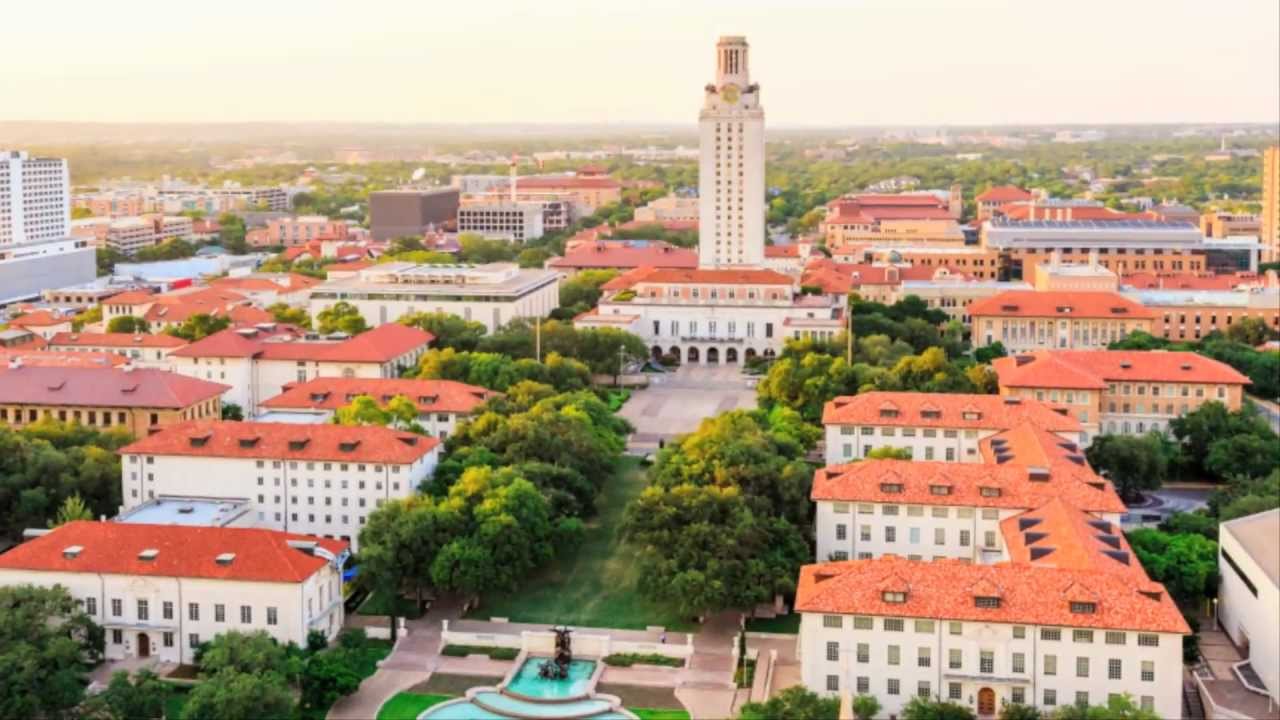 posted by Edward Blum, a 1973 University of Texas graduate whose nonprofit organization is bankrolling the lawsuit, she is soft-spoken, her strawberry blond hair tucked behind one ear. Not even a swipe of lip gloss adorns her girlish face.
"There were people in my class with lower grades who weren't in all the activities I was in, who were being accepted into UT, and the only other difference between us was the color of our skin," she says. "I was taught from the time I was a little girl that any kind of discrimination was wrong. And for an institution of higher learning to act this way makes no sense to me. What kind of example does it set for others?"
It's a deeply emotional argument delivered by an earnest young woman, one that's been quoted over and over again.
Except there's a problem. The claim that race cost Fisher her spot at the University of Texas isn't really true.
In the hundreds of pages of legal filings, Fisher's lawyers spend almost no time arguing that Fisher would have gotten into the university but for her race.
If you're confused, it is no doubt in part because of how Blum, Fisher and others have shaped the dialogue as the case worked its way to the country's top court.
Journalists and bloggers have written dozens of articles on the case, including profiles of Fisher and Blum. News networks have aired panel after panel about the future of affirmative action. Yet for all the front-page attention, angry debate and exchanges before the justices, some of the more fundamental elements of the case have been little reported.
Race probably had nothing to do with the University of Texas's decision to deny admission to Abigail Fisher.
In 2008, the year Fisher sent in her application, competition to get into the crown jewel of the Texas university system was stiff. Students entering through the university's Top 10 program — a mechanism that granted automatic admission to any teen who graduated in the upper 10 percent of his or her high school class — claimed 92 percent of the in-state spots.
Fisher said in news reports that she hoped for the day universities selected students "solely based on their merit and if they work hard for it." But Fisher failed to graduate in the top 10 percent of her class, meaning she had to compete for the limited number of spaces up for grabs.
She and other applicants who did not make the cut were evaluated based on two scores. One allotted points for grades and test scores. The other, called a personal achievement index, awarded points for two required essays, leadership, activities, service and "special circumstances." Those included socioeconomic status of the student or the student's school, coming from a home with a single parent or one where English wasn't spoken. And race.
Those two scores, combined, determine admission.
Even among those students, Fisher did not particularly stand out. Court records show her grade point average (3.59) and SAT scores (1180 out of 1600) were good but not great for the highly selective flagship university. The school's rejection rate that year for the remaining 841 openings was higher than the turn-down rate for students trying to get into Harvard.
As a result, university officials claim in court filings that even if Fisher received points for her race and every other personal achievement factor, the letter she received in the mail still would have said no.
It's true that the university, for whatever reason, offered provisional admission to some students with lower test scores and grades than Fisher. Five of those students were black or Latino. Forty-two were white.
Neither Fisher nor Blum mentioned those 42 applicants in interviews. Nor did they acknowledge the 168 black and Latino students with grades as good as or better than Fisher's who were also denied entry into the university that year. Also left unsaid is the fact that Fisher turned down a standard UT offer under which she could have gone to the university her sophomore year if she earned a 3.2 GPA at another Texas university school in her freshman year.
In an interview last month, Blum agreed Fisher's credentials and circumstances make it difficult to argue — as he and his supporters have so ardently in public — that but for her race Fisher would have been a Longhorn.
"There are some Anglo students who had lower grades than Abby who were admitted also," Blum told ProPublica. "Litigation like this is not a black and white paradigm."
Blum started his one-man nonprofit, the Project on Fair Representation, in 2005. The organization is funded by deep-pocketed conservatives to, according to its website, influence "jurisprudence, public policy, and public attitudes regarding race and ethnicity" in voting, education, contracting and employment. To do so, Blum — who is not a lawyer — helps arrange pro bono representation to fight race-based policies that were meant to address inequalities.
According to a Reuters profile, Blum has brought at least a dozen lawsuits against such programs and laws — including four that made it to the Supreme Court. He has two on the current docket, Fisher and the Shelby County, Ala., case challenging a key provision of the Voting Rights Act.
In the Fisher case, while the young woman may have lent her name to the lawsuit, the case before the Court has very little to do with her. Her name appears just five times in the thousands of words that make up the body of the complaint. She has already gone on to graduate from Louisiana State University, her second choice, and is working in finance at a firm in Austin.
Asked by a news reporter what harm she had suffered, she cited only her inability to tap into UT's alumni network and possibly missing out on a better first job. If she wins, Fisher seeks only the return of her application fee and housing deposit — a grand total of $100 in damages.
So while the Fisher case has been billed as a referendum on affirmative action, its backers have significantly grander ambitions: They seek to make the case a referendum on the**14th Amendment**itself. At issue is whether the Constitution's equal protection clause, drafted by Congress during Reconstruction to ensure the rights of black Americans, also prohibits the use of race to help them overcome the nation's legacy of racism.
The Supreme Court has never ruled that the Constitution bars any and all laws and government programs that consider race. But Blum and his supporters, seeing an opening with the current Court, seek to overturn more than a century of precedent.
The true crux of the suit is not Fisher's failed application, but that government officials violate the constitutional rights of white Americans when they consider race in a way that might help African-Americans and Latinos.
"An argument can be made that it is simply impossible to tease out down to the last student who would have been admitted, and who would have not been admitted, had they been a different skin color," Blum said. "What we know is skin color is weighed and ethnicity is weighed by the University of Texas in their admissions process, and that alone is enough to strike down the plan."
Blum and his supporters say the reasoning is simple. The Constitution is colorblind and the equal protection clause of the 14th Amendment prohibits the government from treating people differently because of race.
It's an argument first successfully championed by the NAACP and other civil rights groups, most notably in the landmark Brown v. Board of Education case, in which the Supreme Court declared the notion of "separate but equal" to be a fallacy.
"In its history, colorblindness has this progressive, anti-racist push behind it," said Ian Haney-López, a constitutional scholar at the University of California, Berkeley School of Law.
But following the Brown decision, the very groups that had ardently — and violently — defended laws mandating separation by race used the notion of a colorblind Constitution to challenge court orders to integrate schools.
"They began to say, yes, the Constitution is colorblind, and so the state cannot distinguish between races when it tried to remedy segregation," he said.
As a result of Southern resistance, it would take six years after Brown before 6-year old Ruby Bridges, wearing crisp white socks and black-bowed shoes, became the first black student to attend a white elementary school in the South. The image of the diminutive brown-skinned girl who needed U.S. marshals to protect her from an angry white mob inspired Norman Rockwell to preserve the moment in a painting that now hangs in the White House occupied by the first black president.
Initially, the Supreme Court unambiguously knocked those arguments down. In a 1971 ruling, it said that government could not mandate colorblindness when doing so would defeat the integration requirement of Brown v. Board of Education. A few years later, in a ruling on affirmative action, Justice Harry Blackmun wrote, "In order to get beyond racism, we must first take race into account. There is no other way."
But as the Supreme Court's make-up has grown more conservative, it has taken up a steady stream of so-called reverse discrimination cases, in which white plaintiffs have argued that race-specific measures born of the civil rights movement discriminate against white Americans and violate the 14th Amendment.
Supreme Court decisions have eroded programs and laws that use race to remedy inequalities, but not eliminated them altogether. And in a 2003 opinion written by centrist Sandra Day O'Connor, the justices narrowly upheld affirmative action in college admissions when it is the only means to ensure diversity.
But the Court's make-up changed in what scholars consider a significant way when Samuel Alito, considered the third most conservative Supreme Court justice since 1937, replaced O'Connor in 2006. Since then, several justices have made their constitutional disdain for race-conscious programs known. In a controversial 2007 decision, Chief Justice John Roberts sent a clear message when he used the equal protection argument at play in Brown v. Board of Education to strike down voluntary desegregation plans in schools.
Evoking a colorblind Constitution, Roberts said, "The way to stop discriminating on the basis of race, is to stop discriminating on the basis of race."
And just last month during oral arguments over the constitutionality of a key aspect of the Voting Rights Act, Justice Antonin Scalia derisively called what's considered the most successful civil rights law in history a "racial entitlement."
Public opinion on race has changed over time as well. In the 1950s, surveys show, most white Americans believed that black Americans faced substantial discrimination but that they themselves experienced little. Today, despite gaping disparities between black and white Americans in income, education, health care, homeownership, employment and college admissions, a majority of white Americans now believe they are just as likely, or more likely, to face discrimination as black Americans.
Blum chose the University of Texas to mount what could be a decisive challenge to affirmative action in college admissions because it already had what was regarded as a "race-neutral" process — the Top 10 program. Since many Texas high schools remain segregated, taking the top 10 percent of students from black and Latino high schools ensured a substantial population of students of color at the UT.
As a consequence, Blum believed he could challenge whether the additional use of race to fill out the entering class passed constitutional muster.
To get standing in court, Blum needed a victim. That's when he started looking for a version of the Brown family, someone who could represent the arguable hurt caused when public officials used race.
This approach, too, mirrors an NAACP tactic from half a century ago. Then, knowing the Supreme Court was unlikely to throw out segregation in one fell swoop, the civil rights group brought a narrower challenge to segregated school facilities first.
One of those cases, ironically, targeted the same university as Blum — the University of Texas at Austin. The university, which had been closed to black students since its founding, denied the law school application of Heman Marion Sweatt because the state constitution required that black and white students attend separate schools.
Because Texas had no black law school, the NAACP sued, arguing that the state violated the constitutional mandate to provide equal facilities for black and white students. The Supreme Court ruled that the hastily put together black law school created to avoid admitting Sweatt could not possibly be equal. It ordered Texas to admit Sweatt as its first black student in 1950.
That suit launched the stone that would shatter separate but equal just four years later when the Court struck down segregation in schools in Brown.
Blum and his supporters hope to use the Fisher case, and the 14th Amendment challenge to the Voting Rights Act that Blum is also behind, in the same way.
According to Blum, the Constitution sees affirmative action policies — in college, in contracting, in employment — and Jim Crow laws as twin evils.
"I don't see the distinction," he said.
But several constitutional scholars interviewed for this piece dispute this notion. Neil Siegel of Duke University called this interpretation of the 14th Amendment "perverse." Georgetown law professor Girardeau A. Spann called it "discriminatory."
While the 14th Amendment doesn't mention race, the drafters went on to pass race-specific legislation aimed at helping former slaves and other black Americans overcome more than a century of racial oppression.
Erwin Chemerinsky, founding dean of the University of California, Irvine School of Law, said that the concept of colorblindness holds great rhetorical appeal but that "there is no basis for concluding that the 14th Amendment equal protection clause requires colorblindness." In drafting the 14th Amendment, he said, Congress recognized "an enormous difference between a white majority disadvantaging minorities and a white majority acting to remedy past discrimination."
Conservatives challenging these types of programs purport to champion the legacy of the civil rights movement, Haney-Lopez said, but the historical roots of their efforts are much more cynical.
"I think that is incredibly important that people realize that today's proponents of colorblindness pretend that they are the heirs to Thurgood Marshall and John Marshall Harlan," he said. "But that is a lie. They are the heirs of Southern resistance to integration. And the colorblindness arguments that they use come directly from the Southern efforts to defeat Brown v. Board of Education."
Ilya Shapiro, a senior constitutional studies fellow at the Cato Institute, which filed an amicus brief supporting Fisher, thinks otherwise.
"I am not going to speak to anyone else's motives. It is unfair to paint people with the Jim Crow brush because they have those kinds of arguments," he said. "I don't like people being judged based on the color of their skin." If a program "treats people different because one has a different skin color, I find that offensive and I think the Constitution does as well."
But when asked why the drafters created programs targeted to black Americans if they did not intend the Constitution to allow the government to use race to help minority groups, Shapiro said, "It was a curious period."
At the same time Congress drafted the equal protection clause, he said, it also "voted for segregated schools in the District of Columbia."
That example is the very same one that segregationists Strom Thurmond and Richard Brevard Russell used when they drafted the 1956 Southern Manifesto urging officials to resist the Supreme Court's use of the equal protection clause to overturn school segregation.
The impact of a ruling that bans all racial considerations by universities, employers and governments "could have devastating impact on the ability to overcome past inequalities," Siegel said.
Few experts think Blum and his supporters are apt to win that big a victory in the Fisher case. And so he will likely be on the hunt again for another case, and another perfect plaintiff.
Nikole Hannah-Jones covered civil rights and fair housing for ProPublica. Previously, she covered governmental issues, the census, and race and ethnicity at The Oregonian.
- Nikole.Hannah-Jones@propublica.org
- @nhannahjones
no lnx
INSIDER
Georgetown Law students staged a sit-in to demand firing of academic who said Biden would name a 'lesser Black woman' to SCOTUS
Sophia Ankel
Wed, February 2, 2022
In this article:
William Treanor
American lawyer
Explore the topics mentioned in this article
Ilya Shapiro
Ilya Shapiro at a September2021 talk hosted by the Cato Institute in Washington, DC.Screenshot/C-Span
Ilya Shapiro, an incoming Georgetown Law professor, was put on administrative leave.
But students staged a sit-in on Tuesday, calling for more aggressive action, National Review reported.
Shapiro faced backlash for saying Biden will pick a "lesser Black woman" for the Supreme Court.
Georgetown Law students occupied an auditorium on Tuesday to demand the firing of an academic who said President Joe Biden would nominate a "lesser Black woman" to fill Justice Stephen Breyer's Supreme Court seat, National Review reported.
Ilya Shapiro, who was set to start as a professor at Georgetown Law on February 1, was placed on administrative leave earlier this week pending an investigation after his comments prompted widespread condemnation, including from the law school's dean, William Treanor.
But students were unsatisfied with this decision, calling for Shapiro's "immediate termination" in a Monday message chain tweeted by National Reviews' Nate Hochman.
Students, who were asked to wear all black in solidarity, staged the sit-in in an auditorium at the law center, where Treanor spent more than an hour answering questions, National Review reported.
Many of the students appeared to be on the Georgetown Black Law Students Association (BLSA) leadership team, which had previously already called for Shapiro's termination, National Review reported.
"The school needs to make a statement between what is acceptable conservatism and what is racism so the people who want to be here can be here, and the people who don't, don't," one student said in a video of the stage-in that BLSA tweeted.
In two now-deleted tweets, Shapiro had suggested that Biden's commitment to naming a Black woman to the Supreme Court would result in his ignoring other candidates.
Shapiro suggested Biden consider Judge Sri Srinivasan, chief judge of the DC Circuit Court of Appeals, and said: "But alas doesn't fit into latest intersectionality hierarchy so we'll get lesser black woman. Thank heaven for small favors?" Shapiro has since issued an apology for the tweets, calling his comments "inartful."
According to National Review, Treanor told the students he was "appalled" by Shapiro's comments and said the faculty would "do better," but refrained from commenting further on whether Shapiro will face further action.
"Since we're a private institution, the First Amendment doesn't apply to us," Treanor said, per National Review. "On the other hand, the university does have a free speech and expression policy which binds us."
Treanor previously said Shapiro would remain on leave until the completion of an investigation into whether his posts violated university policy.
Shapiro declined to comment.
Read the original article on Business Insider
Dartmouth evades questions after moving Andy Ngo event online, so FIRE goes to the source.
Sabrina Conza | January 31, 2022
READ MORE
FIRE statement on Georgetown’s suspension and investigation of Ilya Shapiro
FIRE | January 31, 2022
READ MORE
FIRE statement on Georgetown’s suspension and investigation of Ilya Shapiro
by FIRE
January 31, 2022
FIRE strongly condemns Georgetown Law’s suspension and investigation of Ilya Shapiro for tweets about potential replacements for Justice Breyer that some found offensive. In response to online outrage stoked by critics of Shapiro’s political views and aimed at his employment, Georgetown has chosen to ignore its commitments to expressive and academic freedom. Georgetown’s embarrassing capitulation is antithetical to the tenets of liberal education and cannot be squared with its :{promise:(style="box-sizing:border-box"):}: to provide “all members” of its community “the broadest possible latitude to speak, write, listen, challenge, and learn,” even if others find it “offensive, unwise, immoral, or ill conceived.”
There is nothing to investigate. Dean William Treanor has made the wrong decision in authorizing this witch hunt, and every day that it continues is an affront to free speech and fairness at Georgetown. FIRE Legal Network member Jesse Binnall is representing Shapiro, and we look forward to seeing his rights vindicated.
Schools: Georgetown University
BRIEF OF THE CATO INSTITUTE AND NFIB SMALL BUSINESS LEGAL CENTER AS AMICI CURIAE IN SUPPORT OF PETITIONERS ___
Karen R. Harned Rob Smith NFIB SMALL BUSINESS LEGAL CENTER 555 12th Street, NW Suite 1001 Washington, DC 20004 (202) 314-2061 karen.harned@nfib.org December 31, 2020 Ilya Shapiro Counsel of Record Trevor Burrus Sam Spiegelman CATO INSTITUTE 1000 Mass. Ave., NW Washington, DC 20001 (202) 842-0200 ishapiro@cato.org
fedsoc bs
lya Shapiro is a senior fellow in constitutional studies at the Cato Institute and editor-in-chief of the Cato Supreme Court Review. Before joining Cato, he was a special assistant/adviser to the Multi-National Force in Iraq on rule-of-law issues and practiced at Patton Boggs and Cleary Gottlieb.
Shapiro is the co-author of Religious Liberties for Corporations? Hobby Lobby, the Affordable Care Act, and the Constitution (2014). He has contributed to a variety of academic, popular, and professional publications, including the Wall Street Journal, Harvard Journal of Law & Public Policy, L.A. Times, USA Today, Weekly Standard, New York Times Online, and National Review Online. He also regularly provides commentary for various media outlets, including CNN, Fox News, ABC, CBS, NBC, Univision and Telemundo, the Colbert Report, and NPR.
Shapiro has testified before Congress and state legislatures and, as coordinator of Cato’s amicus brief program, filed more than 150 “friend of the court” briefs in the Supreme Court, including one The Green Bagselected for its “Exemplary Legal Writing” collection. He lectures regularly on behalf of the Federalist Society, is a member of the Legal Studies Institute’s board of visitors at The Fund for American Studies, was an inaugural Washington Fellow at the National Review Institute and a Lincoln Fellow at the Claremont Institute, and has been an adjunct professor at the George Washington University Law School. In 2015, National Law Journalnamed him to its list of 40 “rising stars” in the legal community.
Before entering private practice, Shapiro clerked for Judge E. Grady Jolly of the U.S. Court of Appeals for the Fifth Circuit. He holds an AB from Princeton University, an MSc from the London School of Economics, and a JD from the University of Chicago Law School (where he became a Tony Patiño Fellow).
Education
- A.B., Princeton University
- M.Sc., London School of Economics
- J.D., University of Chicago
The Federalist Society takes no position on particular legal or public policy issues. The people listed as Experts have spoken or otherwise participated in Federalist Society events, publications, or multimedia presentations. A person's appearance on this list does not imply any other endorsement or relationship between the person and the Federalist Society. All expressions of opinion by an expert are those of the expert.
Publications and Multimedia
Protecting Eligible Voters: Evenwel v. Abbott and the Future of Redistricting - Podcast
Civil Rights Practice Group Podcast
August 05, 2016
Evenwel v. Abbott: The Court Shanks Its Punt on “One Person, One Vote”
Federalist Society Review, Volume 17, Issue 2
June 02, 2016
Short video featuring Ilya Shapiro discussing Friedrichs v. California Teachers Association
January 06, 2016
Redskins Trademark in Court, and More - Podcast
Litigation Practice Group Podcast
October 26, 2015
Obergefell v. Hodges - Post-Decision SCOTUScast
SCOTUScast 6-26-15 featuring John Eastman and Ilya Shapiro
June 26, 2015
Gay Marriage Cases Decided: Obergefell v. Hodges - Podcast
Religious Liberties Practice Group Podcast
June 26, 2015
When is a law too vague to be Constitutional?
Short video with Ilya Shapiro discussing Johnson v. United States
April 18, 2015
Executive Action on Immigration - Event Audio/Video
Sponsored by the Federalist Society's Practice Groups
February 20, 2015
Gay Marriage in the Supreme Court - Podcast
Religious Liberties Practice Group Podcast
January 28, 2015
The Future of Voting Rights - Event Audio/Video
Civil Rights in the United States
September 14, 2014
Short video with Ilya Shapiro discussing Hobby Lobby decision
June 30, 2014
Mount Holly v. Mt. Holly Gardens Citizens in Action, Inc. - Post-Decision SCOTUScast
SCOTUScast 1-6-14 featuring Ilya Shapiro
January 06, 2014
Mt. Holly Settlement - Podcast
Civil Rights Practice Group Podcast
November 25, 2013
Anti-discrimination and Individual Liberties: Elane Photography v. Willock - Podcast
Civil Rights and Religious Liberties Practice Groups Podcast
September 11, 2013
Sekhar v. United States - Post-Decision SCOTUScast
SCOTUScast 7-23-13 featuring Ilya Shapiro
July 23, 2013
Same-Sex Marriage: A Variety of Perspectives on United States v. Windsor and Hollingsworth v. Perry
Engage Volume 14, Issue 1 February 2013
March 22, 2013
Redistricting Litigation Update - Podcast
Civil Rights Practice Group Podcast
April 02, 2012
Perry v. Perez - Post-Decision SCOTUScast
SCOTUScast 02-03-12 featuring Ilya Shapiro
February 03, 2012
The Impact of Judicial Activism on the Moral Character of Citizens
Engage Volume 12, Issue 2, September 2011
September 12, 2011
The Impact of Judicial Activism on the Moral Character of Citizens - Event Audio/Video
UC Berkeley Student Chapter
October 28, 2010
United States v. Comstock - Post-Decision Debate SCOTUScast
SCOTUScast 05-25-10 featuring Stephen R. McAllister, Ilya Shapiro, & Erin Sheley
May 25, 2010
United States v. Comstock - Post-Argument Debate SCOTUScast
SCOTUScast 05-03-10 featuring Stephen R. McAllister, Ilya Shapiro, & Erin Sheley
May 03, 2010
SCOTUScast 7-15-09 featuring Ilya Shapiro
Safford Unified School District v. Redding
July 15, 2009
ggl 6 23
Ilya Shapiro
Claremont Review of Books
https://claremontreviewofbooks.com › author › ilya-sh...
Ilya Shapiro is the director of constitutional studies at the Manhattan Instituteand author of Supreme Disorder: Judicial Nominations and the Politics of ...
Ilya Shapiro - Mississippi Center for Public Policy
Mississippi Center for Public Policy
https://mspolicy.org › staff › ilya-shapiro
Ilya Shapiro is the director of the Robert A. Levy Center for Constitutional ... National Review Institute and a Lincoln Fellow at the Claremont Institute, ...
Ilya Shapiro, Author at Harvard Law Review
Harvard Law Review
https://harvardlawreview.org › author › ilyashapiro
Ilya Shapiro is a senior fellow in constitutional studies at the Cato Institute and editor-in-chief of the Cato Supreme Court Review.
Ilya Shapiro
The American Mind
https://americanmind.org › interviewee › ilya-shapiro
Ilya Shapiro is a senior fellow in constitutional studies at the Cato Institute and editor-in-chief of the Cato Supreme Court Review.
Ilya Shapiro
Legal Talk Network
https://legaltalknetwork.com › guests › ilya-shapiro
Ilya Shapiro is a vice president of the Cato Institute, director of the Robert A. Levy Center for Constitutional Studies, and publisher of the Cato.
Ilya Shapiro at Republican National Lawyers Association
Republican National Lawyers Association
https://www.rnla.org › ...
Ilya Shapiro is a senior fellow in constitutional studies at the Cato Institute and editor-in-chief of the Cato Supreme Court Review.
Ilya Shapiro ~ The Cato Institute
The American Law Journal
https://lawjournaltv.com › find-lawyer › ilya-shapiro
Ilya Shapiro is a senior fellow in constitutional studies at the Cato Institute and editor-in-chief of the Cato ... Claremont Institute, Lincoln Fellow
Town Halls
Claremont Institute
https://www.claremont.org › town-hall › right-to-life
Shapiro is the senior fellow in constitutional studies at the Cato Institute and editor-in-chief of the Cato Supreme Court Review. We were pleased to have Mr.
Town Halls
https://www.claremont.org › town-hall › overreach
Caso, the Cato Institute's Ilya Shapiro, and Regent University's Lynne Marie Kohm—for a fascinating discussion and debate about two landmark Supreme Court cases ...
Ilya Shapiro: books, biography, latest update
Amazon.com
https://www.amazon.com › Ilya-Shapiro
Shapiro is the author of Supreme Disorder: Judicial Nominations and the Politics of America's Highest Court (2020, updated paperback 2022), coauthor of ...
Missing: claremont | Must include: claremont
ILYA SHAPIRO
Ole Miss
https://law.olemiss.edu › Resume-1-28-19
Mar 21, 2019 — http://www.cato.org/people/ilya-shapiro. EMPLOYMENT. Cato Institute, Director, Center for ... Lincoln Fellow, Claremont Institute, 2015.
Faculty Letter in Support of Ilya Shapiro, January 31, 2022
Foundation for Individual Rights in Education
https://www.thefire.org › research-learn › faculty-lette...
Jan 31, 2022 — Klein Professor, Harvard Law School; Charles R. Kesler, Dengler-Dykeman Distinguished Professor of Government, Claremont McKenna College and ...
Georgetown Abandons Its Free-Speech Policy Over Ilya ...
New York Magazine
https://nymag.com › intelligencer › 2022/06 › georgeto...
Jun 6, 2022 — Ilya Shapiro resigned from the Georgetown Law center after being ... the Shapiro episode for National Review, recently wrote in Claremont ...
1 Written Testimony to the House Committee on ...
House.gov
https://edworkforce.house.gov › uploadedfiles
Mar 29, 2023 — 2 See Ilya Shapiro, “Mob Rule and Cancel Culture at Hastings Law School,” ... “How Texas A&M Went Woke,” Report of the Claremont Institute ...
Ilya Shapiro
IQ.Wiki
https://everipedia.org › wiki › lang_en › ilya-shapiro
Ilya Shapiri is a Senior Fellow in constitutional studies at the Cato Institute and ... University Law School, a Lincoln Fellow at the Claremont Institute.
Thinking It Through: Claremont Institute panels cite COVID ...
Victorville Daily Press
https://www.vvdailypress.com › opinion › 2020/09/23
Sep 23, 2020 — A recap of Claremont Institute panel discussions related to COVID-19, ... Ilya Shapiro of the Cato Institute pressed the matter further by ...
Ilya Shapiro -FreedomFest 2019 - Sched
Sched
https://freedomfest2019.sched.com › speaker › ilya_sh...
Shapiro was an inaugural Washington Fellow at the National Review Institute and a Lincoln Fellow at the Claremont Institute. He clerked for Fifth Circuit Judge ...
Who is Ilya Shapiro, an Employee for a Billionaires 'Non- ...
LawsInTexas.com
https://lawsintexas.com › LIT News
Ilya Shapiro is VP & Director, Robert A. Levy Center for Constitutional Studies at ... University Law School, a Lincoln Fellow at the Claremont Institute.
Supreme Disorder Book Forum Featuring Ilya Shapiro
Competitive Enterprise Institute
https://cei.org › Events
Oct 8, 2020 — Ilya Shapiro, Director, Robert A. Levy Center for Constitutional ... Review Institute and a Lincoln Fellow at the Claremont Institute, ...
Images for ilya shapiro claremont
Ilya Shapiro | Cato Institute
Who is Ilya Shapiro? | The US Sun
Ilya Shapiro | The Federalist Society
Leftists Try To Cancel Ilya Shapiro For Opposing Racist ...
Who is Ilya Shapiro, an Employee for a Billionaires 'Non ...
Ilya Shapiro Quits Georgetown's Law School Amid Free Speech ...
Amazon.com: Ilya Shapiro: books, biography, latest update
Ilya Shapiro Wiki
Ilya Shapiro Breaks Silence On Quitting Georgetown Law After Investigation Over 'Racist Tweet'
Video
Who is Ilya Shapiro, an Employee for a Billionaires 'Non ...
Supreme Court should put an end to unjust government ...
Washington Examiner
https://www.washingtonexaminer.com › fairness-justice
Supreme Court should put an end to unjust government seizures of home equity. By. Ilya Shapiro. April 25, 2023 06:00 AM.
High on Federalism: Marijuana's Challenge to State ...
University of Kentucky
https://uknowledge.uky.edu › presentations
by I Shapiro · 2019 — By Ilya Shapiro, Published on 02/27/19. ... Ilya Shapiro, Cato Institute ... the National Review Institute and a Lincoln Fellow at the Claremont Institute, ...
Judicial Abdication and the Growth of Government (Ilya Shapiro
:{
}:
YouTube
https://www.youtube.com › watch
1:01:29
Ilya Shapiro is a senior fellow in constitutional studies at the Cato ... Review Institute and a Lincoln Fellow at the Claremont Institute, ...
YouTube · Acton Institute · Jan 17, 2017
Leftists Try To Cancel Ilya Shapiro For Opposing Racist ...
:{
}:
The Federalist
https://thefederalist.com › Latest
Jan 29, 2022 — John Daniel Davidson is a senior editor at The Federalist. His writing has appeared in the Wall Street Journal, the Claremont Review of Books, ...
Free Speech | RCP Story Stream
:{
}:
RealClearEducation
https://www.realcleareducation.com › stream
I don't agree with the idea conservative lawyer Ilya Shapiro expressed in January, when he objected to Preside... higher education · free speech on campus.
Unusual Cross-Ideological Agreement in Tyler v. Hennepin ...
Constitutional Accountability Center
https://www.theusconstitution.org › News
Apr 26, 2023 — Ilya Shapiro of the Manhattan Institute (reminder: he is a ... such as the Claremont Institute's Center for Constitutional Jurisprudence.
Join our SCOTUS Book Talk-Discussion on "Supreme ...
Princeton Club of Washington
https://www.pcw-dc.org › article
Join our ZOOM BOOK TALK with author Ilya Shapiro '99 and extended discussion ... National Review Institute and a Lincoln Fellow at the Claremont Institute, ...
Result Page 7 for Constitution news & latest pictures from ...
Newsweek
https://www.newsweek.com › topic › constitution
By Ilya Shapiro On 9/9/20 at 6:30 AM EDT ... Author Joel L. Daniels debates Ryan P. Williams, president of the Claremont Institute.
Manhattan Institute(@manhattaninstitute) ...
https://www.instagram.com › manhattaninstitute
Ilya Shapiro: "My parents took me out of the Soviet Union because they didn. Show more posts from manhattaninstitute. Related accounts.
Would Conservative Cato Institute Mouthpiece Be Best ...
Blue Virginia
https://bluevirginia.us › 2021 Elections
Oct 6, 2021 — Cato Institute Vice President Ilya Shapiro is running for FC school board.... Claremont Institute: Widely known for its early, continued, ...
What Politicized the Supreme Court? –
Law & Liberty
https://lawliberty.org › Book Reviews
Jun 18, 2021 — Jesse Merriam reviews Ilya Shapiro's Supreme Disorder. ... Shapiro holds that because political polarization and judicial illegitimacy are ...
Unusual Cross-Ideological Agreement in Tyler v. Hennepin ...
Reason Magazine
https://reason.com › ... › Property Rights
Apr 26, 2023 — Ilya Shapiro of the Manhattan Institute (reminder: he is a ... such as the Claremont Institute's Center for Constitutional Jurisprudence.
Tag: University of Chicago
The Chicago Thinker
https://thechicagothinker.com › tag › university-of-chi...
Tag: University of Chicago · Symposium at UChicago to Host Atlas, Bhattacharya, Turley, and More · Letter: Ilya Shapiro Responds to Thinker's Ben Ogilvie.
Minnesota County Had No Right to Confiscate Elderly ...
National Review
https://www.nationalreview.com › news › minnesota-c...
May 25, 2023 — As the legal scholar, Ilya Shapiro, summarized in late April for the ... the Claremont Institute's Center for Constitutional Jurisprudence.
Docket for 20-1214
Supreme Court of the United States (.gov)
https://www.supremecourt.gov › docket › html › public
Claremont Institute 1317 W. Foothill Blvd., Ste 120. Upland, CA 91786 tcaso@claremont.org, 877-855-3330 ... Ilya Shapiro Counsel of Record, Cato Institute
Recent Ethical Lapses by Lower Court Justices
Fix the Court
https://fixthecourt.com › uploads › 2022/08 › E...
Aug 8, 2022 — ... defending Georgetown University Law Center's Ilya Shapiro for ... Judge Carlos Bea accepted an award at an event hosted by the Claremont.
US Law
mandiner.hu
https://precedens.mandiner.hu › tag › us_law
Ryan Williams, President of the Claremont Institute pointed out in a conversation with Lénárd Sándor ... “Supreme Disorder” – conversation with Ilya Shapiro.
Constitution Day Events – copy
Jack Miller Center
https://jackmillercenter.org › Constitution Day
Christopher Newport University's Center for American Studies held its Annual Constitution Day Debate on September 14, 2021 with Ilya Somin and Ilya Shapiro, ...
Ilya Shapiro | Cato Institute
https://www.cato.org/people/ilya-shapiro
1.
Ilya Shapiro discusses the SCOTUS rejecting assault ... - Cato Institute
https://www.cato.org/.../ilya-shapiro-discusses-scotus-rejecting-assault-weapons-cases-...
1.
Ilya Shapiro (@ishapiro) · Twitter
https://twitter.com/ishapiro:{}:
Indeed, tomorrow in Atlanta displaying my FHA expertise at a Law & Econ conference. twitter.com/adamjwhited…
15 hours ago · Twitter
Ilya Shapiro : Experts : The Federalist Society
www.fed-soc.org/experts/detail/ilya-shapiro
2.
Ilya Shapiro - Bio, News, Photos - Washington Times
www.washingtontimes.com › Topics
2.
Ilya Shapiro, Cato Institute, discusses Supreme Court (3/30/16 ...
www.colorado.edu/cwctp/events/ilya-shapiro-cato-institute
1.
Ilya Shapiro | LinkedIn
https://www.linkedin.com/in/**ilya**-**shapiro**-a585a5
1.
:{Ilya Shapiro - The Constitutional -:(style="background-color:#ffffff;"):}::{ Forbes:(style="background-color:#ffff66;"):}:
www.forbes.com/sites/ilyashapiro/
2.
Ilya Shapiro: Executive Profile & Biography - Businessweek - Bloomberg
www.bloomberg.com/research/stocks/private/person.asp?personId=142469854...
1.
==fedsoc rubber chickenJul62023Supreme Court RoundupBaltimore Lawyers ChapterPhilips Seafood601 E Pratt StBaltimore, MD 21202Speakers:Ilya ShapiroSponsors:Baltimore Lawyers Chapter In-Person Event10th Annual Supreme Court RoundupJul26202310th Annual Supreme Court RoundupTulsa Lawyers ChapterSummit Club (Ballroom)15 West 6th StreetTulsa, OK 74119Speakers:Mithun Mansinghani • Ilya ShapiroSponsors:Tulsa Lawyers Chapter===
LI
ExperienceManhattan Institute Senior Fellow and Director of Constitutional StudiesSenior Fellow and Director of Constitutional StudiesManhattan Institute · Full-timeManhattan Institute · Full-timeJul 2022 - Present · 1 yrJul 2022 - Present · 1 yrFalls Church, Virginia, United StatesFalls Church, Virginia, United StatesGeorgetown University Law Center logoExecutive Director and Senior LecturerExecutive Director and Senior LecturerGeorgetown University Law Center · Full-timeGeorgetown University Law Center · Full-timeFeb 2022 - Jun 2022 · 5 mosFeb 2022 - Jun 2022 · 5 mosWashington, DCWashington, DCCato Institute logoCato InstituteCato Institute14 yrs 5 mos14 yrs 5 mosVice President and Director, Robert A. Levy Center for Constitutional StudiesVice President and Director, Robert A. Levy Center for Constitutional StudiesApr 2021 - Jan 2022 · 10 mosApr 2021 - Jan 2022 · 10 mosWashington, DCWashington, DCDirector, Robert A. Levy Center for Constitutional StudiesDirector, Robert A. Levy Center for Constitutional StudiesJan 2019 - Jan 2022 · 3 yrs 1 moJan 2019 - Jan 2022 · 3 yrs 1 moWashington D.C.Washington D.C.Senior Fellow in Constitutional StudiesSenior Fellow in Constitutional StudiesSep 2007 - Dec 2018 · 11 yrs 4 mosSep 2007 - Dec 2018 · 11 yrs 4 mosSquire Patton Boggs logoAssociateAssociatePatton Boggs LLPPatton Boggs LLPMar 2006 - Sep 2007 · 1 yr 7 mosMar 2006 - Sep 2007 · 1 yr 7 mosCleary Gottlieb Steen & Hamilton LLP logoAssociateAssociateCleary Gottlieb Steen & Hamilton LLPCleary Gottlieb Steen & Hamilton LLPNov 2004 - Feb 2006 · 1 yr 4 mosNov 2004 - Feb 2006 · 1 yr 4 mosShow all 8 experiencesEducationEducationUniversity of Chicago Law School logoUniversity of Chicago Law SchoolUniversity of Chicago Law SchoolJ.D., LawJ.D., Law2000 - 20032000 - 2003The London School of Economics and Political Science (LSE) logoThe London School of Economics and Political Science (LSE)The London School of Economics and Political Science (LSE)M.Sc., International RelationsM.Sc., International Relations1999 - 20001999 - 2000Princeton University logoPrinceton UniversityPrinceton UniversityAB, Woodrow Wilson SchoolAB, Woodrow Wilson School1995 - 1999EndorsementsAll (11)Highly skilled (1)Marc Levin profile pictureMarc LevinMarc Levin· 3rd· 3rdChief Policy Counsel at Council on Criminal JusticeChief Policy Counsel at Council on Criminal JusticeManuel A. Miranda profile pictureManuel A. MirandaManuel A. Miranda· 3rd· 3rdAttorney and Counselor at Law (Retired)Attorney and Counselor at Law (Retired)Alice Marie Beard profile pictureAlice Marie BeardAlice Marie BeardLawyerLawyerItzchak Kornfeld, Ph.D. profile pictureItzchak Kornfeld, Ph.D.Itzchak Kornfeld, Ph.D.· 3rd· 3rdConsultant at I. E. Kornfeld, Ph.D.Consultant at I. E. Kornfeld, Ph.D.Rachel Maxam profile pictureRachel MaxamRachel Maxam· 3rd· 3rdAttorney at Civil Rights Litigation Group, PLLCAttorney at Civil Rights Litigation Group, PLLCNick Dranias profile pictureNick DraniasNick Dranias· 3rd· 3rdGeneral Counsel at Honduras Próspera Inc. and affiliatesGeneral Counsel at Honduras Próspera Inc. and affiliatesDavid Kopel profile pictureDavid KopelDavid Kopel· 3rd· 3rdColumnist at Reason Magazine, Volokh Conspiracy law professor weblogColumnist at Reason Magazine, Volokh Conspiracy law professor weblogSteve Savage profile pictureSteve SavageSteve Savage· 3rd· 3rdScreenwriterScreenwriterKenneth Marcus profile pictureKenneth MarcusKenneth Marcus· 3rd· 3rdFounder and Chairman of the Louis D. Brandeis Center for Human Rights Under Law | Civil rights lawyer | Anti-Semitism expert | Author | ProfessorFounder and Chairman of the Louis D. Brandeis Center for Human Rights Under Law | Civil rights lawyer | Anti-Semitism expert | Author | ProfessorRob Douglas profile pictureRob DouglasRob Douglas· 3rd· 3rdI help organizations stop data breaches and identity theft by providing security awareness presentations and workshops.I help organizations stop data breaches and identity theft by providing security awareness presentations and workshops.Ilya ShapiroDirector of Constitutional Studies at the Manhattan InstituteIndustry KnowledgeResearchResearch5 endorsements5 endorsementsLegal ResearchLegal Research
Endorsed by Marc Levin who is highly skilled at thisEndorsed by Marc Levin who is highly skilled at this11 endorsements11 endorsementsPolicy AnalysisPolicy Analysis
Endorsed by Marc Levin and 3 others who are highly skilled at thisEndorsed by Marc Levin and 3 others who are highly skilled at this
Endorsed by 2 colleagues at Squire Patton BoggsEndorsed by 2 colleagues at Squire Patton Boggs18 endorsements18 endorsementsPolicyPolicy15 endorsements15 endorsementsConstitutional LawConstitutional Law13 endorsements13 endorsementsPoliticsPolitics9 endorsements9 endorsementsLitigationLitigation23 endorsements23 endorsementsPublic PolicyPublic Policy29 endorsements29 endorsementsCoalitionsCoalitions3 endorsements3 endorsementsForeign PolicyForeign Policy2 endorsements2 endorsementsPolitical CampaignsPolitical Campaigns1 endorsement1 endorsementLegal WritingLegal Writing8 endorsements8 endorsementsPolitical SciencePolitical Science4 endorsements4 endorsementsIntellectual PropertyIntellectual Property2 endorsements2 endorsementsPeople also viewed
James Copland out of network3rd+Senior Fellow and Director, Legal Policy at Manhattan Institute
Charles Fain Lehman out of network3rd+Fellow at Manhattan Institute, Contributing Editor at City Journal
Ilana Golant out of network3rd+ EVP, Manhattan Institute | CEO, Food Allergy Fund
Leor Sapir out of network3rd+Fellow at Manhattan Institute
Carolyn Gorman out of network3rd+Researcher at JPMorgan Chase Institute