Humor/Comedy/Satire
neglected
see stand-up
see late night KIMMEL
trump press suppress?! dictators hate
see provocateur eg milo; coulter does standup?!
beck and rush used to retreat when busted as just entertainer/clown
alt rt trolls get to spew hate then say, just kidding, just pwning/ owning the libs, can't believe you fell for it?
ok to trigger the snowflakes, yet rt is under attack, free speech being crushed, identity politics, victim narrative (mirror)
---
---
-=-=
AN 10 26
A Texas Republican Party leader is threatening to sue comedian Sacha Baron Cohen after he discovered he fell for a humiliating prank in what he thought was an immigration documentary.
Michael Aboud, chairman of the El Paso County Republican Party, appears in Baron Cohen's new movie, Ali G: Who Iz I?, alongside supporters of President Donald Trump, according to a Thursday report by The Guardian.
The footage shows Aboud taking part in a bizarre training exercise led by Baron Cohen’s character Col. Erran Morad, who is a fictional former Israeli intelligence operative who previously appeared in Cohen’s 2018 show Who is America?
The Texas Republican and other MAGA folk are taught supposed self-defense techniques, including wearing a protective plastic buttock. He also teaches them how to fire bullets from the middle of these buttocks by stroking a rubber penis.
In a hilarious twist, Aboud and other gullible participants are recruited for what they are told is a mission to prevent a South American drug kingpin's child from being born in the United States.
The supposed mission involves kidnapping a heavily pregnant woman, who is played by actress Morgana Robinson, and taking her to an abandoned medical facility.
After a staged birth with a prosthetic baby, the participants are seen driving the infant toward Mexico. In another scene, Aboud chooses to drop the supposed baby from a drone rather than allow it to come to America
Despite the ridiculous task asked of him, Aboud said he had no idea he had been duped when asked by the publication.
He said he was fooled into believing the prank was a documentary about illegal crossings at the southern border.
Aboud blasted Cohen and his team and said he plans to sue them for the deception.
“No one should spend one penny watching anything he produces or appears in," he said. "I plan to sue him.”
The film states that the participants were not aware they were involved in a prank.
However, Joshua Loudermilk, a MAGA fan seen participating with Aboud, gushed a bout his participation in the movie on social media.
“I got to spend 12 hours one on one with Sasha [sic] and he taught me soooo much about the fun of making others laugh” as well as a link to a video promo for the film, saying, “I am in the trailer.” On 10 January, he also posted a headshot of himself, saying: “Howdy. Done with Sasha Cohen movie and ready for more.”
However, producers on the film state that he also did not know he was pranked.
The movie also features former Republican Rep. George Santos. In 2020, Rudy Giuliani was pranked by Cohen in his “Who Is America?" Series.
-=-=
---
YT PRETTY GOOD ANALYSIS
https://www.friendlyatheist.com/p/the-christian-right-tried-to-make
The Christian Right tried to make a late-night talk show—and it bombed spectacularly
Eric Metaxas and his backers spent hundreds of thousands of dollars trying to copy Fallon and Kimmel. They forgot to hire talent.
Oct 09, 2025
*This newsletter is free and goes out to over 22,000 subscribers, but it’s only able to sustain itself due to the support I receive from a small percentage of regular readers. Would you please consider becoming one of those supporters? You can use the button below to subscribe or use my usual Patreon page!
The ongoing joke about Christian culture is that it’s a sad attempt to replicate everything that’s great about secular culture. Christian movies like God’s Not Dead are bad because they’re more interested in hammering you over the head with a religious message than telling a decent nuanced story (or hiring good actors). Contemporary Christian Music might be catchy but the Jesus-heavy lyrics are so predictable, South Park can spoof it with remarkable accuracy. Even attempts to make overly right-wing sitcoms are embarrassing; it becomes very clear, very quickly, that acting and writing talent are low priorities for the people writing checks.
The bottom line is that when it comes to popular culture, Christians that are never as good as the real thing.
The same apparently goes for late-night talk shows.
According to The Guardian, a wealthy conservative group spent “hundreds of thousands of dollars” developing a late-night talk show hosted by conspiracy theorist Eric Metaxas. At least four pilot episodes were filmed and they were so bad that the show was picked up by literally no one.
As you watch the “highlight” clip below, it becomes glaringly obvious the money was spent on the set and not on hiring joke-writers.
The Guardian sat through nearly four hours of the Talk Show, and found it to be an almost exact copy of existing late-night shows, just worse: with hack jokes about tired issues and has-been, conservative guests. The show was never picked up, presumably to the chagrin of Ziklag and its investors, who had lofty expectations.
…
Unfortunately, across the four pilots, Metaxas’s comedic bent was noticeable only by its absence.
…
Ziklag claimed the show would welcome “guests who are routinely shadow banned on other talk shows”, and quoted Metaxas as saying: “It’s kind of like Stalin has air-brushed these people out of the culture.”
But the common theme among the guests was that they had been naturally phased out of existing talkshows due to their irrelevance.
…
Ziklag’s pitch to investors had promised big-name guests. It didn’t deliver apart from an interview – heavily touted by Metaxas – with film-maker Ron Howard. The interview turned out to be from a press junket, where directors or actors sit in a room for eight hours and basically anyone with a press pass can schedule time to question them.
The news here is not that Metaxas filmed the talk show. In fact,

 are
 and have been available since January of 2023. The news is how much money was spent on this project, who funded it, and how badly it failed.
The project was funded by a group called Ziklag.
In the Bible, the town of Ziklag is where the character David lives for a time while he’s being persecuted. It’s his safe space. It’s a place from which David can plan counterattacks. But as reporting from Andy Kroll of ProPublica and Nick Surgey of Documented showed in 2024, the Christians behind Ziklag had assets of “nearly $12 million” to make sure Republicans were mobilizing their base while also trying to purge Democrats from the voter rolls in swing states.
The Guardian got ahold of “leaked documents” from Ziklag showing that they were seeking up to $500,000 to film episodes of the talk show so that they could pitch the show to “digital distributors, networks and tv ownership groups.”
“Spoiler alert! The secular elites who currently reign over late-night tv are about to find out the joke’s on them!” Ziklag’s pitch email read. It lauded Metaxas, a conservative radio host and author who was an eager proponent of the false claim that the 2020 election was stolen, claiming: “His comedic bent has gone largely unnoticed until now that is…”
…
In its email, Ziklag said it was offering the opportunity to invest as part of the “Media Mountain”, a reference to the Seven Mountain Mandate, a theology popular among the Christian right. The theology proposes that Christians should seek to take over seven spheres of influence in public life: religion, the government, the media, education, culture, entertainment and business.
It’s unbelievable that people with this much money couldn’t see that Metaxas is a talentless hack—How much does it cost to buy a clue?—and believed this kind of humorless show would be an alternative for people who can’t handle the razor-sharp political satire of… Jimmy Fallon.
The producer of the show insisted to The Guardian that this whole thing is being mischaracterized. They weren’t trying to create a right-wing talk show or even a Christian one. They were trying to create a universally beloved show rather than one where Republicans were always the butts of the jokes.
Chris Himes, who produced the Talk Show, said the show was not intended to be a “rightwing late-night show”. The aim, Himes said, was “to create a broad, throwback late-night program for the entire country – not just one side”.
“These are not partisan or ‘right-wing’ shows. Think Letterman or Dick Cavett in tone: humor first, with no space for snark or ‘clapter’,” he said in an email.
“Sadly, much of late night over the past decade has shifted from being genuinely funny to becoming a vehicle for tribal signaling – even occasionally straying into messaging far beyond comedy. We believe the country deserves something better.”
Himes added: “To be clear, a ‘right-wing’ late-night show would be a terrible idea. What we’re building is something more essential: a genuinely funny, unifying alternative.”
The problem with that assessment is that the shows they made weren’t funny. Plus, avoiding politics takes away the main reason so many people enjoy late night talk shows; it’s a way of informing them about the news without being so damn boring. A show that allows right-wing guests to talk about their lives and humanize themselves could find an audience, I would think, but bringing on those guests and then ignoring politics is just a waste of everyone’s time. What’s the point of watching a late-night comedy show if it doesn’t tackle current events or ask pointed questions revolving around the guests’ relevance?
It’s also a mark of stupidity for Himes to pretend the problem with current late-night hosts is that they’re too one-sided. When Republicans with power do so much damage to the country, through cruelty and ignorance and their embrace of extremism, they deserve to be ridiculed and condemned for their actions. Anyone who claims to be in the political center, at this point in our history, is someone who doesn’t understand the stakes. They deserve to be ignored.
“The Talk Show” is hardly apolitical, though. You just have to know where to look. In one monologue, when Metaxas about Biden possibly dropping out of the presidential race, he says “Yesterday, President—’president’—Biden shocked the nation when he said he might not run for a second term.” Metaxas literally puts air-quotes around the word “president” as if Biden wasn’t legitimately elected.
[](https://substackcdn.com/image/fetch/$s_!F5wb!,f_auto,q_auto:good,fl_progressive:steep/https%3A%2F%2Fsubstack-post-media.s3.amazonaws.com%2Fpublic%2Fimages%2Fb5da53a0-913d-40ee-b3af-1bf186924823_1812x1014.png)
Himes is also wrong that there’s currently no “alternative” to liberal late-night hosts. Bill Maher is hardly a liberal ally at this point with his routine demonization of trans people and “wokeness.” And the most popular late-night talk show right now is Gutfeld! on Fox News—not because host Greg Gutfeld is funny but because it’s on Fox. Those shows regularly punch down by mocking the marginalized—something Metaxas has been doing for years—but even they have professional staffs.
No one needed this show. And even if there was room for another late-night host, they picked the wrong guy to helm this particular ship because Metaxas is just unlikeable.We’re talking about a guy who tweeted this in response to a thoughtless comment from Joe Biden:
[](https://substackcdn.com/image/fetch/$s_!FuL2!,f_auto,q_auto:good,fl_progressive:steep/https%3A%2F%2Fsubstack-post-media.s3.amazonaws.com%2Fpublic%2Fimages%2Ffa479cf0-d4cb-4d4a-b4b0-76830680d246_1182x1130.png)
He sucker-punched a guy on a bike. He’s literally the poster boy for how white evangelicals have lost their damn minds in the age of Trump. He believes so many right-wing conspiracies, it’s hard to keep track at this point.
Which is a long way of saying Ziklag is funded by very foolish people. The sort of people who believe the problem with late-night talk shows is not enough Eric Metaxas and not enough jokes that appeal to nobody. I could have told them that for $100,000 and saved them a lot of hassle.
We shouldn’t be surprised this vanity project failed because it just reveals the rot at the center of white evangelical culture and the cynical machinery that funds it. Christian entertainment has always operated under the delusion that religious sincerity can replace substance. This show, however, exposed something darker: a movement so insulated by ideology and grievance that it no longer understands what art, humor, or relevance even look like. Metaxas’ show is a parody of itself—a joyless imitation of secular creativity, built by people who can’t tell the difference between propaganda and truth. This show is what happens when no one in your life has the decency to tell you that you’re untalented and full of shit.
When late-night comedy is done well, it’s a place to speak truth to power, as we saw with Jimmy Kimmel. But in the hands of Metaxas and his supporters, it’s a place to soothe the powerful with lies, a place where the news doesn’t matter because the producers don’t think there’s anything happening that viewers need to know about.
This project didn’t just fail because the host doesn’t know what he’s doing. It failed because there’s as much heart and soul in it as there is laughter: none. Without that passion, why the hell would anyone waste their time watching it?
---
an 8 25
Historically, U.S. presidents who were mercilessly lampooned by comedians were able to laugh at the joke.
On "Saturday Night Live" during the 1970s, Chevy Chase famously portrayed GOP President Gerald R. Ford as a total klutz — and Ford went on the show to embrace that caricature of him even though, truth be told, he was an accomplished athlete before he got into politics. And former "SNL" comedian Dana Carvey actually became friends with the Bush family because of his popular parody of President George H.W. Bush.
But President Donald Trump and his allies become engaged when comedians make fun of him. After "South Park" — a show known for brutally mocking both the left and the right — turned its attention to Trump in July, White House spokesperson Taylor Rogers angrily told Rolling Stone, "This show hasn't been relevant for over 20 years and is hanging on by a thread with uninspired ideas in a desperate attempt for attention. President Trump has delivered on more promises in just six months than any other president in our country's history — and no fourth-rate show can derail President Trump's hot streak."
READ MORE: 'Doddering old man': Trump’s Russia-Alaska blunder fuels concerns
In an article published by The Guardian on August 12, reporter Rachel Healy takes a look at comedians who fear possible retaliation during Trump's second presidency.
Sam Jay, a former "SNL" writer, told The Guardian, "The mood in America.… chaos. There's no way to keep up. People are also very desensitized. S—— just keeps happening in more extreme ways that people are losing a metric for it."
Jena Friedman recalled a troubling encounter with a U.S. border control agent when she was traveling.
The agent, finding out she was a comedian, asked Friedman, "What do you joke about?"
Friedman told The Guardian, "I just froze because I am a political comedian, and I didn't know what to say. Then, he said, 'Do you joke about politicians?'…. It was such a quick, on its face benign, interaction. But it did feel like a scene out of 'The Handmaid's Tale.' I'm a blonde, white woman who looks like a Republican's wife, and I have an American passport. But what if I had said, 'Yes?' Don't we want to live in a country where we can joke about politicians, where we can joke about anything?"
READ MORE: Trump's worst crimes and destructions haven't even happened yet
Comedian Michelle Wolf, who now lives in Barcelona but often returns to the U.S. for work, told The Guardian that so far, she hasn't had any problems traveling yet — but is concerned about things that are happening during Trump's second presidency.
Wolf told The Guardian, "I feel like I have to address the whole America and Trump thing.… people expect me to say something about it….. I don't like making it a large part of my set, because it bores me. There's always something crazy happening, but it's hard to come up with creative angles other than: can you believe this?"
READ MORE: 'Not plausible': Trump-appointed judge hands him major loss in court
*Read Rachael Healy's full article for The Guardian at this link.
'Big balls' Musk fires back at Mike Myers and SNL for mockery in 'far-left propaganda' skit
AN 3 25
===
---
an 1 25
Days before he becomes president of the USA — and minutes after the release of a prosecutor’s bombshell report into the Jan. 6 election interference case — Donald Trumptook to Truth Socialearly Tuesday to attack a comedian.
“How bad is Seth Meyers on NBC?" the president-elect asked at 1:24 a.m.
It came just minutes after special counsel Jack Smith’s report revealed that he believed he had the evidence to convict Trump.
Trump was reacting to a 10-minute segment on Meyers show Monday in which he mocked infighting in the MAGA movement which has seen allies like Steve Bannon and Elon Musk go head to head.
“Trump is caught in the middle between the MAGA diehards and the rich oligarchs who helped him get elected,” Meyers said. “And he doesn’t even really know what the hell they’re talking about.”
Trump hit back that the comedian was a “moron” and that his network, NBC, was “run by a truly bad group of people.”
ALSO READ:Fox News has blood on its hands as Trump twists the knife
“Remember, they also run MSDNC,” he added.
“I got stuck watching Marble Mouth Meyers the other night, the first time in months, and every time I watch this moron I feel an obligation to say how dumb and untalented he is, merely a slot filler for the Scum that runs Comcast.
“These guys should be paying a lot of money for the right to give these “in kind” contributions to the Radical Left Democrat Party. These are not shows or entertainment, they are simply political hits, 100% of the time, to me and the Republican Party. Comcast should pay a BIG price for this!”
Watch the Seth Meyers video below or at this link.
---
---
AN 12 24
Throughout the 2024 election cycle, reproductive rights were an electoral vulnerability for Donald Trump. Though popular with the Republican base, his appointment of antiabortion judges gave serious pause to many key voting blocs, including undecided young men.
In pursuit of these voters, Trump’s strategy wasn’t demagoguery but comedy.
Trump’s October appearance on comedian Andrew Schulz’s podcast, “Flagrant,” demonstrated his approach to the touchy issue.
Schulz playfully invoked Trump’s youngest son, who’s a student at New York University – “Barron is 18. He’s unleashed in New York City. Are you sure you want to reverse Roe vs. Wade now?” After a beat, Trump laughed, Schulz laughed, and then, presumably, thousands of young male listeners joined in.
Trump continued with boilerplate answers about states rights, but this substance – as is so often the case – was divorced from the strategy. Schulz had helped Trump turn an unpopular position into a frat boy punchline, something to be discarded along with last night’s empties. Trump won that media cycle and, ultimately, a majority of the votes of young men on his way to a second White House win.
 Podcaster Andrew Schulz pokes fun at the touchy issue of abortion in an interview with Donald Trump on Oct. 9, 2024.
Vice President Kamala Harris, by contrast, appeared on mainstream comedy shows with aging, liberal audiences like “The Late Show with Stephen Colbert.” Pundits criticized her failure to engage young voters in online comedy platforms. They also urged liberals to develop a new crop of political comedians to match the influence of Schulz and podcaster Joe Rogan.
However, these criticisms of Harris’ strategy miss the failure of liberal comedians to evolve with media and political trends.
While Jimmy Kimmel cries and Jon Stewart rants, the right wing in the U.S. has successfully depicted itself as the new home for free speech and cutting edge comedy. We explored this development in our book, “That’s Not Funny: How the Right Makes Comedy Work for Them.”
The right has become a home for comedians not by making political arguments through jokes, but by positing that there are funnier things to do than to argue.
A formula goes stale
Liberal comedy and political satire have stuck to the same formula of Stewart’s “The Daily Show” for much of the 21st century.
It goes something like this: A sarcastic, eloquent host uses meticulously researched data to describe a pressing social issue, and then delivers a punchline directed at right-wing hypocrisy. The resultant pairing of righteous laughter and anger has been repeated by “The Colbert Report,” “Full Frontal with Samantha Bee” and “Patriot Act with Hasan Minhaj,” among other comedy programs.
These satirical shows filled the void left by an increasingly profit-driven news media. However, they have come to prioritize political preaching at the expense of laughs.
Perhaps Stewart’s most successful successor – and the best example of liberal satire’s patronizing tone – is HBO’s “Last Week Tonight with John Oliver.” Because the show appears on prestige cable, Oliver has a bigger budget to tackle controversial topics in depth.
Indeed, journalists and academics alike have celebrated the “John Oliver effect,” in which viewers mobilize behind a cause shortly after the host devotes an episode to it, whether it’s vaccines or internet regulation.
Oliver’s long-form lectures can be compelling. However, his appeal is not to young undecided voters who can’t afford HBO, but to college-educated liberals predisposed to support progressive reforms. [VID]
Twice in a recent , he reminded viewers of topics his show has covered in depth, like a professor chiding students for not remembering recent lessons. In one segment about Trump’s disingenuous economic message, Oliver pleaded that his show had already “explained inflation for 24 human minutes.”
While Oliver’s exasperation can be amusing, he’s clearly more upset at – even disdainful of – the American electorate, chastising them for failing the final exam of election night.
For liberals to reconnect with young voters – especially young men – we think they have to reinvent political comedy. Doing so will mean moving beyond the haranguing that has long been its primary delivery style. This will be a challenge, however, as the right fortifies the relationship between its own comedians and political power.
Comedians like John Oliver and Jon Stewart tend to appeal to college-educated liberals predisposed to support progressive reforms. Brad Barket/Getty Images for Comedy Central
Rise of the right-wing comedy complex
Trump’s success with comedy is a result of the new relationship between digital media and the business of joking. For decades, liberals were thought to hold a monopoly on comedy. Moreover, there was little money to be made in comedy acts devoted to right-wing politics.
Since 2016, however, a new crop of right-wing comedians has taken to digital platforms and algorithmically driven audience targeting in order to change this reality.
Libertarian podcasters like Rogan have long danced around the political spectrum, finding diverse positions that intrigue his primary target of young male listeners. He routinely platforms right-leaning cultural and comedic voices, features them as guests, and promotes their shows and products. In doing so, he has helped create a de facto right-wing comedy network.
Although each comedian or show in this network doesn’t have the audience and impact of, say, “The Daily Show” in its prime, their aggregate strength is precisely targeted at coveted young consumers and potential voters.
It is no coincidence that the most heralded stops on Trump’s October podcast tour were shows hosted by three regulars on “The Joe Rogan Experience”: Schulz, comedian Theo Von and libertarian scientist Lex Fridman. Trump also appeared on Rogan’s show for a three-hour episode.
Changing styles and platforms
Importantly, the type of political comedy featured on these programs is distinct from that of liberal satire of the past two decades.
“The Daily Show,” “Last Week” and their ilk dazzle viewers in 30-minute episodes using intricate arguments and sardonic punchlines.
Rogan and his affiliates hang out for hours, and audiences can listen as they go about their daily routines. In the process, podcast hosts shape their audience’s taste in culture, technology and recreation in what’s known as parasocial bonding.
Trump’s appearance on Von’s podcast “This Past Weekend,” for example, featured little in the way of biting jokes and rollicking laughter. Instead, Von
[VID] and Trump held a meandering conversation full of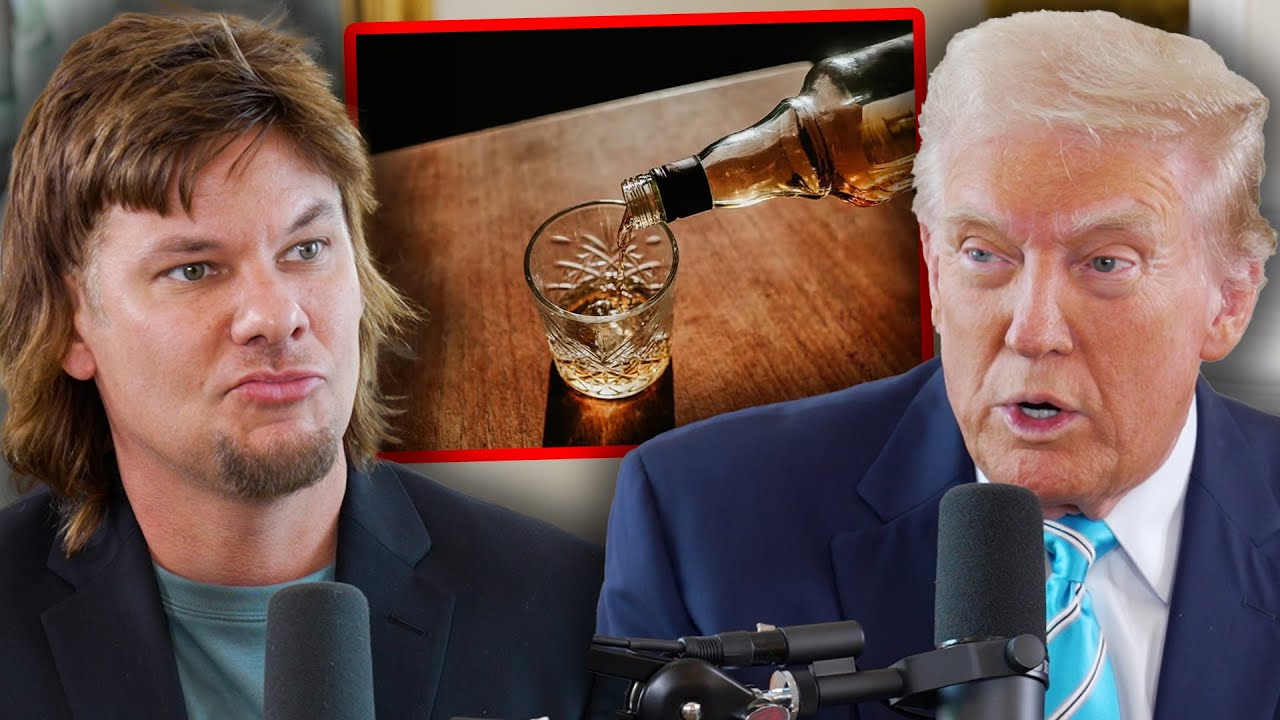 interspersed with gestures to political topics.
Comedy styles are cyclical. In the 1950s, stand-up comedian Mort Sahl would read a newspaper on stage, peppering in sarcastic observations about the day’s headlines. The Smothers Brothers played with yo-yos before they introduced protest songs. The apolitical observational humor of Jerry Seinfeld reigned supreme in the 1980s and ’90s.
The 2000s liberal satire of Stewart and Oliver was driven by cable television industry mandates to court young men. The tastes and media habits of this audience have moved on, but liberal comedy has failed to follow them.
Nick Marx, Associate Professor of Film and Media Studies, Colorado State University and Matt Sienkiewicz, Associate Professor of Communication and International Studies, Boston College
This article is republished from The Conversation under a Creative Commons license. Read the original article.
---
an 8 24
When Vice President Kamala Harris held a large campaign rally with her running mate, Tim Walz, at Philadelphia late Tuesday afternoon, August 6, the Minnesota governor was more than happy take credit for an insult that numerous Democrats are using to attack former President Donald Trump, Sen. J.D. Vance (R-Ohio) and other MAGA Republicans: "weird."
The "weird" insult originated with Walz. And Harris' running mate drew loud applause when he told the Philly crowd, "You know it, you feel it: These guys are creepy and, yes, just weird as hell."
In an op-ed published by MSNBC the following day, historian/author Ruth Ben-Ghiat lays out some reasons why the "weird" insult infuriates MAGA Republicans.
READ MORE:Ex-fundamentalist sounds alarm about presidential election and 'Christian patriarchy'
"For scholars of authoritarianism," Ben-Ghiat explains, "the success of 'weird' is no surprise. That's because humor has long been one of the most effective weapons of anti-authoritarian politics. Behind the facade of their omnipotence, most strongmen are brittle and insecure personalities. They don't mind being called evil, but being ridiculed is a different matter."
During its 49-year history, "Saturday Night Live" has lampooned one U.S. president after another. Most of them, from Gerald R. Ford to George H.W. Bush to Joe Biden, had a sense of humor about it. But Trump was seriously offended by Alec Baldwin's portrayal of him.
Ben-Ghiat, author of the book "Strongmen: Mussolini to the Present Reprint Edition," emphasizes that one thing authoritarians really can't stand is being mocked.
"Strongmen have their own sadistic sense of humor, which is amply displayed in the awful authoritarian spectacles staged by their governments," according to Ben-Ghiat. "The Nazis enjoyed making communists who entered Dachau concentration camp in 1933, like Hans Beimler, wear signs that said 'A hearty welcome!' But they cannot take a joke when they are the targets."
READ MORE:New rule to 'threaten' possibility of 'secure election results' in Georgia: report
Ben-Ghiat continues, "That's why they have to surround themselves with sycophants and lackeys, and their enablers know their prestige must be policed. When a man brought his pet rabbit named Mussolini to a bar in fascist Italy, thinking others would enjoy seeing him order it around, he was quickly arrested and served a year in confinement."
READ MORE:'No caller ID': Walz reportedly didn't answer when Kamala Harris called to offer VP nod
*Ruth Ben-Ghiat's full op-ed for MSNBC is available at this link.
:{===
---
aha cruel punches down vs Jon Stewart etc punch up
mma 1123
an 7 24
Right-wing media outlets have repeatedly attacked the left for "cancel culture," and not all of the criticism has come from the right. Former President Barack Obama has complained that cancel culture has gone too far, and "Real Time" host Bill Maher has argued that progressives need to aggressively debate conservatives they disagree with — not try to silence them.
But in an article published on July 19, The Spectator's Brendan O'Neill cites an example of "cancel culture" coming from the right: Donald Trump supporters trying to shut down people who have made "tawdry" comments following the attempted assassination that Trump survived during a campaign rally in Western Pennsylvania on July 13.
"People who've made tawdry comments about the shooting are being hunted, doxxed, shamed, sacked," O'Neill observes. "Most decent folk will think it is wrong to make wisecracks about an incident in which a presidential candidate was targeted for death and an ordinary citizen was killed. I do. But should it be a cancellable offence, a reputation-shattering crime? I'm not sure it should."
READ MORE: **Economist Paul Krugman: Here’s the main thing Trump and Vance have 'in common'**
O'Neill cites the comedy duo Tenacious D as an example, noting that their tour was canceled after a tasteless joke about Trump during an appearance in Sydney, Australia.
"Crass? Yes," O'Neill writes. "Too soon? Sure. But a speech crime of such epic proportions that Tenacious D must now consider its future? That's an overreaction, surely?.... We need some perspective here."
The journalist adds, "A 64-year-old comedy rocker making fun of a tragic incident might not be everyone's cup of tea, but it is not the end of the world."
O'Neill emphasizes that some far-right Trump supporters who decry "cancel culture" are guilty of the very thing they rail against.
READ MORE:**'Moment of shame': Teamsters president ripped for GOP convention speech**
"So this is what we have to look forward to if Trump ousts Biden?" O'Neill laments. "Four more years of cancel culture? Those of us whose commitment to free speech is principled rather than contingent, who think everyone from JK Rowling to the Home Depot lady should enjoy the liberty of expression, really do have our work cut out for us."
READ MORE:**Did the assassination attempt help Trump, and if so, how?**
*Read Brendan O'Neill's full article for The Spectator at this link.
....
- ## LGBTQ community
- Gutfeld has regularly targeted the LGBTQ community, particularly trans and gender-nonconforming people, in his jokes, usually mocking their gender expression or intentionally misgendering them. His disparaging attitude is an extension of Fox News’ campaigns attacking openly queer people and promoting the hundreds of bills endangering LGBTQ rights across the country.
- Dylan Mulvaney
- Gutfeld called trans social media influencer Dylan Mulvaney “Pee-wee her/him.” Fox News, *Gutfeld!*, [4/10/23]
- Gutfeld misgendered Mulvaney and mocked her campaign with Bud Light, saying it “made the Hindenburg look like a gender reveal party.” Fox News, *Gutfeld!*, [5/23/23]
- Gutfeld: “What do a group of transvestite atheists have to do with baseball anyway? You know, other than they both like rubbing pine tar on their bats? Nothing. Just like what Dylan Mulvaney had to do with beer. Nothing.” Fox News, *Gutfeld!*, [6/1/23]
- Gutfeld said Mulvaney was “portraying a beer-drinking bubblehead in a bubble bath.” He continued, “Dylan didn’t just ape a woman, she played them as ditzy morons. I’m surprised she didn't heat that bubble bath by tossing in a toaster.” Fox News, *Gutfeld!*, [7/28/23]
- After announcing that the International Chess Federation had banned trans women from competing in women’s events, Gutfeld suddenly attacked Mulvaney, saying, “But don't cry, Dylan Mulvaney — you'll always have beer pong. And a penis.” Fox News, *Gutfeld!*, [8/18/23]
- Trans athletes
- Gutfeld mockingly suggested dolphins should be allowed to participate in swimming: “The whole thing smacks of specie-ism.” Fox News, *Gutfeld!*, [1/10/22]
- Gutfeld commented on a ruling that USA Powerlifting must allow trans women athletes to compete, saying, “On the plus side, when they fill a cup for the urine test, they could do it from a distance.” Fox News, *Gutfeld!*, [3/6/23]
- Gutfeld ran a segment titled “Trans Tuesday” where he explained, “Each topic has a little extra junk in the trunks.” He proceeded to mock trans female athletes, commenting repeatedly on their genitalia. Fox News, *Gutfeld!*, [9/12/23]
- Transitioning
- Gutfeld said that “all kids go through phases. For one year, I was convinced I was Lassie.” Fox News, *Gutfeld!*, [4/8/22]
- Gutfeld claimed doctors are “cutting up kids like a Thanksgiving turkey.” He later said, “Because as we all know, there's no better treatment for autism, depression, and unhappiness than putting your privates in a blender.” Fox News, *Gutfeld!*, [2/21/23]
- Gutfeld mocked the idea of trans women getting uterus transplants, describing them as “a man’s emotional-support womb.” He added, “All of this makes Victor Frankenstein look like an amateur. Even he never tried to turn a groom into a pregnant bride.” Fox News, *Gutfeld!*, [8/24/23]
- General
- Gutfeld: “Not only is ballet racist, it's transphobic too. Just look at the title The Nutcracker.” Fox News, *Gutfeld!*, [7/18/22]
- Gutfeld claimed that “it’s not risky” to come out as transgender or nonbinary. He also listed supposed advantages of doing so: “You get double the movie roles and double the bathrooms.” Fox News, *Gutfeld!*, [7/21/22]
- Gutfeld used a study about self-driving cars to make transphobic comments: “I'm worried about a transphobic car because if you have a gender setting, and yet you have chosen a different gender than your biology, what will the car do? And if the car says, ‘Look, I can only identify with your biology, your biological underpinnings because you haven't changed that,’ then the car is technically transgender -- I mean transphobic. And I don't want to be in a transphobic car.” Fox News, *The Five*, [8/3/22]
- Gutfeld opened a segment about the Cambridge Dictionary adjusting the definition of a woman to include trans women by saying, “They're putting the ‘dick’ in dictionary.” Fox News, *Gutfeld!*, [12/13/22]
- Gutfeld made a joke about what he called “the straw trans argument,” which he said was “like a straw man argument, but with boobs and a bulge.” Fox News, *Gutfeld!*, [1/24/23]
- Gutfeld joked that he knows men can’t get pregnant or menstruate because he hasn’t experienced either. Fox News, *Gutfeld!*, [3/6/23]
- Gutfeld said wokeness is “so bad” at Disney that “Peter Pan started identifying as Tinkerbell.” Fox News, *Gutfeld!*, [3/8/23]
- ## Homeless people
- Homeless people are another favorite target of Gutfeld’s jokes, which are mostly limited to repetitive taunts about public defecation, depicting homeless people as good-for-nothings who ruin cities. This is nothing new for Fox News, which has scorned homeless people for years.
- Gutfeld joked about Gov. Gavin Newsom stepping “in human feces on his way out of the French Laundry.” He said: “Newsom decided to tackle California's homeless problem after he stepped in human feces on his way out of the French Laundry. Too bad the French Laundry wasn't a real laundry, am I right?” Fox News, *Gutfeld!*, [4/20/22]
- Gutfeld mocked San Francisco’s plans to build tamper-proof trash cans. “San Francisco is considering filling the city with $20,000 trash cans designed to keep homeless from rummaging through them,” he said. “If successful, they'll try to build a trash can big enough to hold a Walgreens.” Fox News, *Gutfeld!*, [8/19/22]
- Gutfeld joked about “brownouts” in San Francisco and “on the sidewalk.” “So people are stealing city water and power as they please,” he said. “Soon there will be brownouts in the city and on the sidewalk.” Fox News, *Gutfeld!*, [10/26/22]
- Fox contributor Charlie Hurt declared that homeless people “should be rounded up and put someplace where you can go to the bathroom not on the sidewalk.” Gutfeld responded, “A big, giant bathroom.” Fox News, *Gutfeld!*, [1/16/23]
- Gutfeld called San Francisco “the bidet by the bay.” Fox News, *Gutfeld!*, [3/23/23]
- Gutfeld said Oregon wants to protect homeless people who “poop” on doorsteps. He said: “Oregon's newly proposed Right to Rest Act aims to decriminalize camping in public places. The bill wants to give legal protections to the homeless population, while telling law-abiding citizens, ‘Meet the new neighbor who just pooped on your doorstep.’” Fox News, *Gutfeld!*, [4/28/23]
- Gutfeld made a parody of a San Francisco public relations campaign, with the spoof claiming that the city was covered in excrement and needles. Fox News, *Gutfeld!*, [6/1/23]
- Gutfeld joked, “The homeless problem is so bad in Cali, they're going to change its motto from the Golden State to the Golden Shower State.” Fox News, *Gutfeld!*, [6/6/23]
- In a segment criticizing San Francisco for targeting Elon Musk over his installation of a sign on the roof of X’s headquarters without a permit, Gutfeld repeatedly mocked homeless people defecating in public. “Officials say replacing or installing a giant one on top requires a permit. Ironically, something that doesn't require a permit? Taking a dump on the sidewalk. No wonder they're doing it.” Fox News, *Gutfeld!*, [7/31/23]
- After Charlie Hurt remarked he “would rather see an animal go to the bathroom” than live in New York, Gutfeld responded, “Yeah, well, you can do that on 8th.” Fox News, *Gutfeld!*, [8/11/23]
- Gutfeld joked that in the fall the city smells like “pumpkin spice urine.” “Now is the time of year where leaves start to fall on the homeless people,” he said. “And along with the smells of skunk weed and rotting drug addicts, the sidewalks have added seasonably appropriate pumpkin spice urine.” Fox News, *Gutfeld!*, [9/18/23]
- In a segment complaining about New York City removing statues, Gutfeld said, “The real question is where are the homeless going to urinate?” Fox News, *Gutfeld!*, [9/19/23]
- ## Addicts
- Even though Gutfeld has said he believes drugs should be legalized, he doesn't pass up opportunities to mock those addicted to them. In dehumanizing terms, Gutfeld has blamed drug addicts for ruining cities across the country. Fox figures regularly malign addicts and mock harm reduction efforts in their coverage.
- Gutfeld called a proposed law in Oregon that sought to protect homeless people from harassment in public spaces “right redistribution.” “It's right redistribution,” Gutfeld said. “So your right to walk your street safely is gone, but they can shoot up on your lawn.” Fox News, *The Five*, [4/27/23]
- Gutfeld joked about enjoying hazy skies caused by Canadian wildfires because they obscured “junkies shooting up” and “homeless defecating” in the streets. “It's really hard to see what's going on on the street and, when you live in New York, that's a good thing,” Gutfeld said. “You got your junkies shooting up, you got the homeless defecating, you got Kilmeade just hitchhiking. All of that is obscured by that surreal magnificent haze.” Fox News, *The Five*, [6/7/23]
- Gutfeld: “Oakland is overrun by so-called ‘drug tourists’ now, who have turned an entire neighborhood into an open-air drug market, affectionately called ‘fentanyl island’ … it's like Fantasy Island if your fantasy is to OD on a pile of garbage and feces.” Fox News, *Gutfeld!*, [8/9/23]
- In a segment about an apparent “guided walking tour of SF's decayed, drug-infested downtown,” Gutfeld joked: “The best part, everyone who buys a ticket gets a used hypodermic needle absolutely free. You just have to remove it from your foot. But you'll get $10 off your next hepatitis vaccine.” Fox News, *Gutfeld!*, [8/16/23]
- Gutfeld proposed rounding up homeless people and placing them on government property outside cities and said, “I volunteer as mayor. I will be mayor of opium town.” Fox News, *The Five*, [9/15/23]
- ## Teachers
- Gutfeld frequently trains his jokes on teachers, portraying them as “selfish and lazy.” Even though teachers across the country have become targets of harassment from right-wing governors and activists who accuse them of indoctrinating students — with some educators even receiving death threats — Gutfeld has continued to use them as a political punching bag. Many of his colleagues at Fox have done the same.
- Gutfeld: “Teachers hate teaching, and they hate their students, and they hate the students' parents.” Fox News, *The Five*, [4/12/21]
- Gutfeld on the American education system: “If this isn’t a cult, I’m Charles Manson.”“It is a cult, one that guarantees your kids turning on each other and then you,” Gutfeld said. “We used to let puberty do that.” Fox News, *Gutfeld!*, [4/23/21]
- In response to a New York Post article that reported the American Federation of Teachers influenced Center for Disease Control’s guidelines on school reopenings during the coronavirus pandemic, Gutfeld joked that the union’s actual goal was to ensure teachers never had to teach again: “Translation: ‘We are never teaching again. Screw your stupid kids. Let's get drunk.’” Fox News, *Gutfeld!*, [5/3/21]
- Gutfeld made light of Attorney General Merrick Garland’s comments that the Justice Department would look into a “disturbing spike” in violent threats against teachers: “That’s right, a mom yelling at school board members at a public meeting is the same as her donning an explosive vest and blowing up a school. Demanding quality schools is now like crashing a plane into the Pentagon.” Fox News, *Gutfeld!*, [10/5/21]
- Gutfeld reacted to news that a group of teachers in Portland, Oregon, proposed a four-day school week by saying: “We’re seeing teachers create a three-day weekend so they can start drinking on Thursday afternoon at Friday's happy hour.” Fox News, *The Five*, [12/1/21]
- Gutfeld on teachers unions: “Our educational system is just like the Washington Generals in that we pay them to lose.” He added, “The only thing worse is that they’re teaching our children to lose.” Fox News, *The Five*, [1/5/22]
- Gutfeld called teachers “the KKK with summers off.” Fox News, *The Five*, [7/7/22]
- ## Migrants
- Gutfeld often uses migrants as punchlines for his jokes. He portrays them as “cheap labor” for the wealthy liberal elite and regularly touts the number of migrants who enter the U.S. via the southern border to fearmonger about the danger they supposedly represent. (Unsurprisingly, Gutfeld does not mention that those living in the U.S. without legal permission commit crimes at lower rates and are less likely to be imprisoned than U.S.-born citizens.) Gutfeld isn’t the only Fox figure who regularly demonizes migrants.
- Gutfeld mocked former Biden Press Secretary Jen Psaki for saying migrants weren’t “intending to stay” in the United States for long, chiding, “I’m sure they’ll head back home once their non-existent visas expire.” “Not intending to stay? Isn’t that the whole point of crossing the border illegally?” Gutfeld asked. “Yeah, I'm sure they'll head back home once their non-existent visas expire, like 22 million other temporary illegal immigrants. Or maybe they just wanted to live under the bridge in 100-degree weather for a quick vacation.” Fox News, *Gutfeld!*, [9/21/21]
- In response to a segment on The View regarding migrants, Gutfeld said, “Save your outrage, you gargantuan gas bags. You are just worried about losing the cheap labor that trims your hedges and your bikini area.” Fox News, *Gutfeld!*, [9/15/22]
- Gutfeld on the unauthorized migrants Florida Gov. Ron DeSantis sent to Martha’s Vineyard in 2022: “Think about all the time saved, the cheap labor will be right there on location, ready to set up the tables for Obama's next superspreading birthday party.” Fox News, *Gutfeld!*, [9/15/22]
- Gutfeld joked that “all 245,000” of the migrants encountered by the Department of Homeland Security in the Rio Grande Valley sector in 2023 “came out of one Nissan Altima.” Fox News, *Gutfeld!*, [10/5/23]
- Gutfeld on suspected terrorists supposedly crossing the southern border: “At this point we’re saying, ‘You’re a drug mule for a Mexican cartel? What a relief.’” Fox News, *Gutfeld!*, [10/16/23]
---
---
ABC’s late night star Jimmy Kimmel isn’t big on endorsements but he is endorsing a Democratic U.S. Senator for re-election, in something of a non-endorsement video he recorded criticizing the far-right Republican trying to unseat her.
Kimmel’s endorsement of Democratic U.S. Senator Catherine Cortez Masto of Nevada mocks her opponent, Adam Laxalt, an anti-choice, anti-LGBTQ Republican who joined with Donald Trump to lie about the results of the 2020 election.
Kimmel put it all another way: “unbalanced people don’t belong in the Senate.”
“Hi, I’m Jimmy Kimmel,” the video begins. “I know everyone has complaints about politics, Republicans complain about Democrats, Democrats complain about everything, let’s be honest.”
“But if there’s one thing I think we can all still agree on, it’s that unbalanced people don’t belong in the Senate.”
“And that’s why I am not endorsing Adam Laxalt and neither is his family. 14 members of Laxalt’s own family back his opponent, Catherine Cortez Masto,” Kimmel says.
“Why? Because they know him.”
“You know, that creepy cousin in every family no one wants to sit with at Thanksgiving? That’s Adam Laxalt.”
“The guy supports a QAnon wacko for Secretary of State. I mean, seriously, these people think JFK is coming back from the dead. I have some bad news for you, Adam. JFK isn’t coming back. And even if he did, he wouldn’t be voting for you.”
“Forget what side you’re on. Nevada needs a sane person in the Senate: Catherine Cortez Masto. I know her, we both went to Clark High School. She’s a good person, a hard worker. And guess what? Her family is voting for her.”
While he didn’t get into specifics in the 30-second spot, on nearly every issue Laxalt has taken a right-wing or far-right stance, including abortion, same-sex marriage, climate change, voting rights, and more. Laxalt even believes businesses have a right to not do business with LGBTQ people.
On Sunday Jewish Insider reported the “Laxalt campaign paid thousands to [a] political operative linked to Twitter account that denigrated Jews, women.”
“A Twitter account connected to former Laxalt staffer Michael Pecjak has compared abortion to the Holocaust and claimed that ‘Jews are not a religious sect and are a cult,’ among other comments,” Jewish Insider stated.
Kimmel’s endorsement of Catherine Cortez Masto comes just after Oprah Winfrey surprised some on Thursday when she endorsed Democrat John Fetterman for a U.S. Senate seat in Pennsylvania, over her protégé, Republican Dr. Mehmet Oz, along with a string of other Democrats she said she would vote for if she could.
Watch Kimmel’s endorsement below or at this link.
---
https://www.desmog.com/2008/03/04/cei-letter-outlines-tv-ad-attack-campaign/
kevin g
Below is a fundraising letter one of our loyal readers sent along, penned by Fred Smith, president of the Competitive Enterprise Institute.
It’s quite the vitriolic and desperate pitch for money – something the CEI is no doubt in need of after their fall from grace with oil giant ExxonMobil. This vast government, media, science conspiracy theory stuck in Smith’s head isn’t going to save any shred of credibility he and his organization might have left.
And it won’t endear him with media, who he describes in the letter as being “remarkably gullible.”
The letter also outlines the CEI‘s plans to run a national TV campaign to expose the “… hypocrisy and distortions of global warming mania.”
Wow, a national TV campaign by CEI!? Hopefully it goes as well as their last one.
[[https://www.desmog.com/2006/08/08/kimmel-spoof-makes-ceis-laughable-ads-hilarious/
This clip was posted on a while ago. It is piece done by late-night talk show host Jimmy Kimmel in response to the notorious “C02, we call it life ads” produced by the oil money laden Competitive Enterprise Institute. These ads were so laughable to begin with, I didn’t think anyone could make them funnier, but Jimmy sure does. While it is enjoyable to poke fun at such blatant PR spin, there is the very serious fact that these ads were played heavily in 10 states across the US and probably did exactly what they intended to do; that is confuse the public even more on the issue of climate change.
https://www.google.com/search?q=Jimmy+Kimmel+climate+scientist
404 flashplayer
http://web.archive.org/web/20060809071438/https://www.youtube.com/watch?v=fMTKa-zoxOQ
putin ass kiss ukraine
https://www.alternet.org/2022/03/snl-russia/
---
---
an 2 22
no lnx twt
This Michigan Republican and Giuliani 'star witness' promoted Trump’s voter fraud lies — now she’s running for office
Alex Henderson February 21, 2022
In December 2020, MAGA Republican Mellissa Carone was attorney Rudy Giuliani’s “star witness” at a Michigan State House Oversight Committee hearing — where she claimed, with zero proof, that Michigan had been stolen from then-President Donald Trump in the 2020 election. Now, in the 2022 midterms, Carone is running for a seat in the Michigan State Legislature — and she is still promoting the Big Lie.
Journalist Brittany Gibson, in an article published by Politico on February 21, explains, “Carone is one of a large cohort of pro-Trump Republican conspiracy theorists and election deniers running for public office this fall in Michigan, where his baseless claims about a stolen election continue to roil the political landscape. Among those candidates, Carone might be the best known nationally.”
Giuliani was one of Trump’s top attorneys during and after the 2020 election — and the former New York City mayor claimed, in December 2020, that Carone’s testimony would prove that Trump really won Michigan. But she never offered any proof of her over-the-top claims, and election recounts left no doubt that Biden won the state fairly.
Gibson notes, “In an affidavit from November 10, 2020 — six days after the AP called Michigan for Joe Biden — she alleged that some ballots were counted 4 or 5 times; that more than 100,000 ballots were then ‘found’ after vans dropped off food for the poll workers; that poll workers were filling out ballots on behalf of voters — and that her managers, who were responsible for overseeing the voting site where she was present and submitting the data, were incompetent…. She snapped at lawmakers from both parties and went on a tangent about dead people voting.”
Carone’s unhinged testimony was famously mocked in a “Saturday Night Live” skit, with “SNL” star Cecily Strong playing Carone. Carone claimed that Dominion Voting Systems helped Biden steal the election from Trump in Michigan, and the company sent her a cease-and-desist order.
Some of Trump’s allies have endorsed Carone’s 2022 campaign for a Michigan State Legislature seat, including Giuliani and MyPillow CEO Mike Lindell. But Trump himself has yet to endorse her.
So far, no Democrat in Carone’s district has filed to run for that seat. And Mark Brewer, who formerly chaired the Michigan Democracy Party, believes that Carone has a good chance of winning.
“A lot of the Republican base here, particularly in Macomb County, believes Trump should have been elected, the election was stolen, there should be an audit — I mean, the whole story,” Brewer told Politico. “And that’ll be what Carone will play to. A lot of Republican primary voters believe in the Big Lie …. If she gets through a primary, she could win.”
---
https://www.alternet.org/2021/09/right-wing-comedy/
In August 2021, Fox News' “Gutfeld!," a late-night comedy-talk show hosted by right-wing pundit Greg Gutfeld, overtook “The Late Show with Stephen Colbert" in overall ratings.
Surprised?
We weren't.
As media and comedy scholars, we've been tracking the recent ascension of right-wing comedy, which has flourished thanks to shifts in media industry economics and political ideologies.
Gutfeld's success might come as a shock because it punctures long-standing assumptions about what comedy is, who can produce it and who will enjoy it. These prejudices obscure an important truth: Right-wing comedy has become both a viable business strategy and a crucial element of conservative politics.
Yes, “Gutfeld!" is on Fox News, the cable channel known for partisan, right-wing political perspectives and news commentary. But it has all the markers of late-night comedy, too. The opening monologues are filled with Jay Leno-like punchlines that draw laughs from the studio audience, and the interviews with conservative politicians, pundits and other comedians frequently center on “owning the libs" with one-liners[vid]
[opening monologue of the Sept. 17, 2021, episode of 'Gutfeld!'
Then, of course, there are the silly “Saturday Night Live"-like sketches. One recent episode broke from a panel discussion on cancel culture in order to imagine what a politically correct James Bond would look like.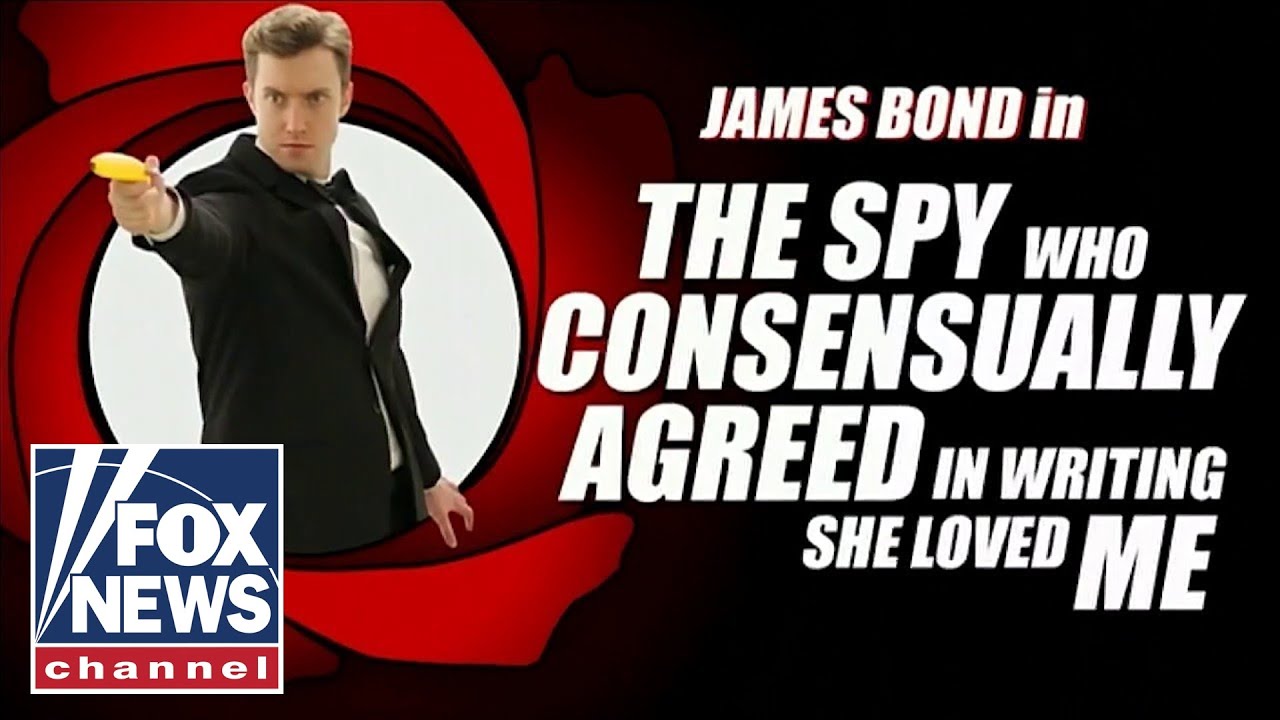 , a crudely costumed actor chases down a thief and pulls a banana on him instead of a gun. Then “Bond" heads to a bar to order a latte – a soy latte – instead of a martini. You get the idea.
Regardless of whether or not this comedy is to your taste, it's working for Gutfeld and his audience.
Hiding in plain sight
Despite its growing prominence, right-wing comedy remains largely invisible in both mainstream and scholarly discussions of media and humor. In part, this has happened because social media algorithms don't send users jokes likely to challenge or offend their political sensibilities.
There are also intellectual trends that make it possible for Greg Gutfeld to spend two decades sneaking up on the Colberts of the world. Comedy theorists tend to diminish, or at least distinguish, right-wing humor from what they deem to be more authentic, liberal humor.
Philosopher Umberto Eco, for example, demotes joking that fails to critique power structures to the status of mere “carnival."
Others make similar arguments, saying “true" liberal comedy is more likely to “punch up," while dismissing conservative comedy as mere mockery that reaffirms unjust systems of power.
This effort to use ideology in order to categorize comedy can lead audiences, political analysts and even comedians to downplay or outright dismiss right-wing humor.
But even if conservative comedy doesn't fit liberals' tastes, it's still comedy. And it's increasingly becoming a feature of right-wing politics. Even “Daily Show" host Trevor Noah noted how former president Donald Trump's performances at rallies mirrored those of stand-up comedians.
Some studies go as far as to identify innate, psychological differences that explain why liberals are more likely to laugh while conservatives are more prone to seethe. This research, often inspired by the success of liberal satirists such as Colbert, Jon Stewart and Samantha Bee, certainly provides intriguing looks into the relationship between politics, psychology and sense of humor. They are, without question, pleasing to the liberal reader's ego.
They do not, however, square with the way Trump changed the country's politics and culture.
The political comedy of the early 2000s, with its relatively big tent media companies and pre-Barack Obama politics, tended to joke primarily in the political direction of the largest audience segment interested in satire at that moment. “The Colbert Report" and “The Daily Show" became hugely successful during the years of president George W. Bush and inspired countless imitators, crowding the media marketplace for liberal laughs.
However, comedy's perceived political bias at the time was more likely driven by specific economic circumstances, which have now radically changed.
Since then, further audience fragmentation, along with the proliferation of podcasts and social media platforms, has made it possible for right-wing comedians like YouTuber Steven Crowder to rise to prominence beyond conventional cable television. And it's forced networks like Fox News to take comedy seriously.
On one level, Gutfeld succeeds today because he has virtually no competition from fellow conservatives in the late-night television comedy space. On another, he thrives because the current media industry moment is built not for a big tent of all viewers, but for audiences who share specific demographic, psychographic and political traits.
In this environment, the partisanization of comedy to the right was perhaps inevitable.
What's in a definition?
If you find comedians such as Gutfeld unfunny or, more to the point, offensive, you may ask whether he should be granted the honorific of comedian.
Failing to do so, we argue, obscures the ways in which the right-wing political world uses comedy as a recruiting tool and unifying force. Republican politics have long been built upon an uneasy fusion that aims to bind together libertarian and traditionalist values, despite their apparent contradictions. The crassness of Trumpism has only added to this conceptual tension.
Right-wing comedy, we argue, serves to iron out, or at least paper over, such philosophical divides.
In addition to his show's success, Gutfeld today resides at the center of a growing complex of comedians reflecting elements of right-wing worldviews, ranging from libertarian, libertine podcasts like “The Joe Rogan Experience" to Christian satire websites like The Babylon Bee to Proud Boys founder and Gutfeld-protégée Gavin McInnes:{. While the creators of this content don't always agree on specific issues, they are united in their motivations to hilariously own the libs. They strategically }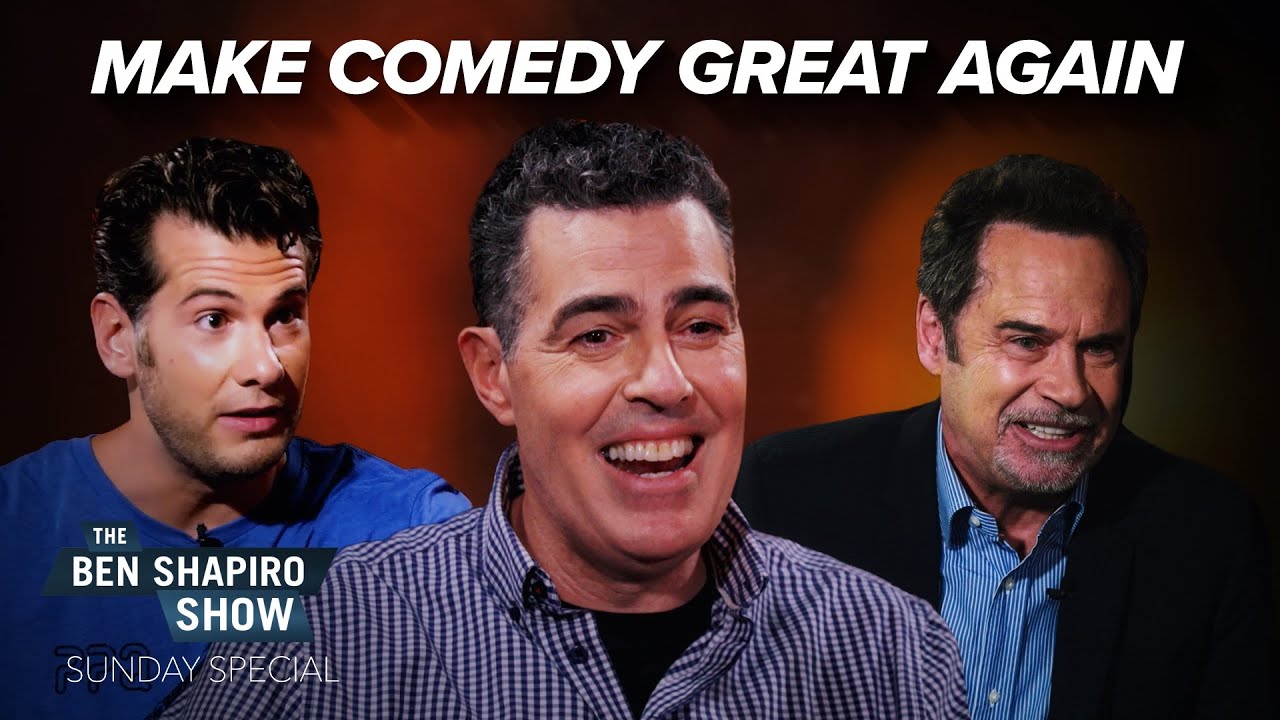 :{, while social media algorithms urge fans of one program to check out other flavors of right-wing comedy.}:
Gutfeld may be the biggest star, but a range of right-wing comedians are coming together in a constellation that allows young, right-wing-curious consumers to find a place in the universe of American conservative media and politics. The value, or danger, of right-wing comedy is a matter of political opinion.
Its reality, however, is no joke.
Nick Marx, Associate Professor of Film and Media Studies, Colorado State University and Matt Sienkiewicz, Associate Professor of Communication and International Studies, Boston College
==
The Great American Railroad War: HowAmbrose Bierce and Frank Norris Took On the Notorious Central Pacific Railroad
Dennis Drabelle
Macmillan, Aug 21, 2012 - History - 320 pages
https://books.google.com/books?id=lSMPBuHcCbUC
---
went after SPRR octopus?
https://psmag.com/social-justice/the-corrections-45618
THE CORRECTIONS
In 1896, William Randolph Hearst unleashed his pit-bull ace reporter, Ambrose Bierce, in the nation’s capital to expose the Railroad robber baron's grip on California’s Legislature. Reforms happened. The state was returned to its people. Trouble is, some of those fixes are bringing California to its knees.
DENNIS DRABELLE UPDATED:JUN 14, 2017 ORIGINAL:AUG 28, 2012
THE MORASS THAT IS CALIFORNIA POLITICS today may have originated in mid-January of 1896, when a middle-aged man boarded an eastbound train in Oakland. With his ex-soldier’s ramrod bearing and his red-gold hair turning gray, the traveler was not likely to have gone unrecognized. He was Ambrose Bierce, the West’s most famous newspaperman, who used his San Francisco Examiner column to skewer fools and rogues, as well as to coin the acerbic definitions later collected in his Devil’s Dictionary. (Example: “PEACE, n: In international affairs, a period of cheating between two periods of fighting.”)
Although the conservative Bierce admired businessmen, he was en route to Washington DC to lead a SWAT team of journalists, cartoonists, and accountants in an effort to prevent California’s most powerful corporation, the Central Pacific Railroad, from doing what American capitalists so love to do: obtain a favor from Congress.
Bierce was overriding his instincts for two reasons. First, his boss, Examiner publisher William Randolph Hearst, a Democrat,had asked him to go afterthe railroad, which had long been identified with the Republican Party. Hearst not only paid Bierce a handsome salary but also let him write what he pleased. Bierce couldn’t deny that Hearst had earned the right, for once, to draft him for a pet cause.
Then, too, Bierce loathed dishonesty more than he revered capitalism. Backed by generous federal subsidies, the Central Pacific came into being as a segment of America’s first transcontinental line, linking up with the Union Pacific at Promontory Summit, Utah, in 1869. In the process, the Central Pacific’s owner-builders—Collis Huntington, Mark Hopkins, Leland Stanford, and Charles Crocker, known as the Big Four—had each siphoned away a private fortune of about $20 million from the federal pot.By ’96, death had reduced the Big Four to a Big One, but the 74-year-old Huntington was overbearing enough for four.In pitting the pugnacious columnist against the notorious robber baron, Hearst was practically doing Bierce a favor.
Huntington couldn’t help but take notice of Bierce’s journey—it had been trumpeted on the Examiner’s front page. But Huntington had deep pockets, a couple dozen lobbyists at his disposal, and the ear of the Republican Party, which controlled both houses of Congress. What’s more, the issues involved were geographically remote and hard to understand: In addition to land, the subsidies had consisted of federal bonds handed over to the railroad to sell as its own certificates.Those bonds—with interest, the tab added up to roughly $75 million—were now coming due, and the Central Pacific sought to postpone repayment to the United States for 75 more years. Huntington reckoned that Congress wouldn’t want to dwell on such distant complexities for long.
Out in California, the Progressive movement was making some noise, but Huntington was accustomed to having his way in the Golden State. He saw no reason why it shouldn’t be the same at the national level.
Huntington was about to learn how mighty the pen can be, and the Progressive movement would take heart from the outcome. Yet given the current state of governance in California, it’s fair to say that the railroad tycoon had the last laugh.
BORN IN 1842, Ambrose Bierce grew up in rural Indiana, where he cultivated a deep love of reading. When the Civil War broke out, Bierce joined the Ninth Indiana Volunteers. He was a distinguished cartographer andaide to a general, until he took a bullet in the head during the 1864 Battle of Kennesaw Mountain. He recovered, and his time in action ended shortly thereafter. After the war, he fetched up in San Francisco, where he tried his hand at writing. Bierce’s Civil War tales exude authenticity because he, almost alone among 19th-century American fiction writers, could draw upon firsthand knowledge of combat. In the 1870s, he found a niche as an elegant gossip columnist, a forerunner of Herb Caen and his “three-dot journalism.”
In 1887, at a point when Bierce’s career was stagnating, Hearst beckoned. Newly installed as the publisher of a newspaper that his millionaire father had given him as a present, the young mogul wanted to make a splash in journalism, and who better than Bierce to send water flying? At the Examiner, Bierce consolidated his position as the West Coast’s chief scourge of blockheads and knaves, the Big Four very much among them.
Huntington, Stanford, Hopkins, and Crocker were all Easterners lured by the Gold Rush to California, where they quickly realized that the surest way to succeed was not by prospecting but byselling prospectors what they needed. All four settled in Sacramento, where Huntington and Hopkins met and became partners in a hardware store, Stanford sold groceries, and Crocker peddled dry goods. They also had in common their opposition to slavery, allegiance to the Republican Party, and outsized ambition. In the early 1860s, they saw merit in a scheme proposed by an engineer named Theodore Judah. At the time, everyone paid lip service to the idea of connecting the American West and East by train, but Judah had gone so far as to scout the least troublesome route over the Sierra Nevada.
Judah died of yellow fever in 1863, but his know-how had helped persuade Congress to subsidize the grand project. The Big Four carried on without him. Stanford was the group’s unctuous figurehead, Hopkins the geeky bookkeeper, Crocker the swaggering construction manager, and Huntington—operating out of New York and Washington—the crafty fund-raiser and influence-peddler.
They entered into a race from opposite directions with the Union Pacific (the more miles of track laid by a railroad, the larger its share of thefederal subsidies). On the way, both sets of owners had the same underhanded idea: they should establish a construction firm, ostensibly independent, but in fact owned by them. After steering construction contracts to the new company, they could pay themselves fat dividends on the sly. The Union Pacific came to grief when it was learned that the firm had bribed members of Congress, in what became known as the Crédit Mobilier scandal. Hopkins made sure that the Central Pacific eluded scrutiny—by destroying the company’s ledgers—but his efforts accomplished only so much.
For a while, the Big Four had a fifth partner, David Colton, who bought his way into the Central Pacific but never paid his full share. After his death in 1878, the surviving partners tried to collect from his widow, who fought back by releasing damning letters to the press. Spelled out for all to read were Huntington’s recommendations that Colton stoop to such methods as bribing state legislatures to enact pro-railroad bills.
In California, strategic payments gave the railroad such a stranglehold that when a state constitutional convention established a commission to regulate the railroad, the Central Pacific managed to dominate it, too. Nor was the corporate image burnished when three of the Big Four built gaudy mansions on San Francisco’s Nob Hill.[spite fence?] A magazine cartoonist played upon the company’s growing unpopularity by depicting it as anoctopus whose tentacles were squeezing the life out of various sectors of the California economy. (Frank Norris was to borrow that motif for his muckraking novel about a thinly disguised version of the Central Pacific, The Octopus, published in 1901.)
Still, the railroad’s power remained intact. In early 1896, Huntington and his lobbyists sought to punt repayment of the company’s federal debt well into the next century, and few sporting men in Washington would have bet against them.
Once he reached Washington, Bierce set up shop in a hotel near the White House. He faced two challenges. He had to master a wealth of factual, financial, and legal material that Huntington and his minions already knew intimately. And he had to make Easterners care about a subject removed from them by three decades and three thousand miles. Hearst stood ready to bankroll a special Washington edition of the Examiner. Printing it was one thing, however; getting people to read it was another. Bierce’s job was to fill that special’s pages with cogent, sparkling copy.
He had some advantages, though. He lived in an age when verbal combat was a much-practiced art—words didn’t just ring out; they slapped, kicked, gouged, and pulled hair—and there was no better word warrior than Bierce. Nor, as Huntington’s forces soon discovered, was he slow to take advantage of an opening.
In early February, the Huntington-friendly Washington Post reprinted a telegram in which a number of prominent Californians endorsed the railroad’s bid for debt postponement.As it turned out, however, some of the nabobs listed as signers had never even heard of the telegram and in fact, their views were quite the opposite. Bierce gleefully devoted several articles to this sloppy work by Huntington’s staff.
Soon he was launching broader attacks. He cited facts and figures, but above all he flexed his rhetorical muscles. Here, for example, is his diatribe against Huntington after the old man testified before a House committee:
Mr. Huntington is not altogether bad. Though severe, he is merciful. He tempers invective with falsehood. He says ugly things of his enemy, but he has the tenderness to be careful that they are mostly lies.... Mr. Huntington’s rancor blown about in space as a pestilential vapor will outlive all things that be. It is his immortal part.
Elsewhere in the same piece, Bierce summed up Huntington as “an inflated old pigskin.”
Before long, le tout Washington couldn’t wait for its daily dose of salty witticisms at Huntington’s expense. Bierce had succeeded admirably in calling attention to the railroad’s scheme. Meanwhile, the California congressional delegation lined up against the railroad, with one exception: a Democratic representative named Grove Johnson, whom Bierce mocked as a hireling of the railroad. At one hearing, Bierce wrote, Johnson “modestly bent his goatlike head and emitted a faint odor of violets.”
Huntington met with another setback after an anti-railroad senator questioned him at length about how much he’d invested at the dawn of the project. (The idea was to highlight the disparity between how little he had put in, and how much he had taken out.) Lots and lots of money, Huntington replied, the implication being that his great wealth was justified by the risks he’d taken. Then the senator sprang his trap, giving Huntington copies of his Sacramento tax records for the early 1860s. They exposed him as a man of decidedly modest means. “It was obvious that the old man had been caught in rank perjury,” Bierce commented.
But the Republican majority stuck with Huntington, until he pushed his luck by asking Congress for a second favor—to referee a conflict between Santa Monica and Los Angeles over the location of a deepwater port for Southern California. Huntington favored Santa Monica, and it soon became clear why: he owned land there, and a port would surely multiply the land’s value. Bierce jumped all over this “coincidence,” which, unlike the matter of the Central Pacific’s federal bonds, was easy to comprehend. Bierce’s next story was headlined “Another Thieves’ Scheme on the Pacific Coast.”
In California, leaders of the state Republican Party took note of Bierce’s scathing and relentless reports. For the sake of its candidates in the upcoming fall elections, the party made a dramatic decision: to break with Huntington and oppose his railroad bill. The national party deferred to its California offspring, and with that—five months after it had started—the game was over. Congress ultimately settled the matter by ordering the Central Pacific to retire its debt within 10 years, and Bierce and Hearst were lauded as giant-killers.
Emboldened by Huntington’s defeat, California Progressives went on to score impressive victories, notably the election of their man for governor in 1910. His name was Hiram Johnson, and in a twist that almost defies belief, he was the son of Grove Johnson, the congressman whose steadfast support of the railroad in 1896 had left him odd man out in the California delegation. Governor Johnson pushed through a series of measures to bring railroads under control, as well as state constitutional amendments authorizing the initiative, referendum, and recall.
OF ALL THE BIG FOUR'S SINS, the most grievous was its poisoning of the California body politic. The Progressive-era safety valves were put in place to assuage the widespread fear that big money had swamped government and left the normal checks and balances unable to loosen corporations’ grips on the levers of power. A century later, however, the perverse effect of that “cure” has been to hobble the state, which finds itself drowning in deficits, furloughing its employees, beggaring its educational system, and sometimes going for months on end without a budget.[PROP 13 HOWARD JARVIS SWORN NEMESIS OF MTA PROP 49/59]
As they were designed to do, initiatives bypass the normal legislative process by which, as bills are refined and debated, diverse interests get to have their say. Instead, voters are presented with up-or-down votes on what are typically raw and rigid proposals. And in an irony that the Big Four might have appreciated, gathering signatures to put an initiative on the ballot, buying ads to influence voters, hiring lawyers to contest alleged defects in an election—all of these tasks have become so costly that large corporations [GUN TO HEAD SODA TAX] and well-heeled interest groups enjoy a decided advantage whenever a measure touches upon their prerogatives. In 1996, for example, an initiative to establish a no-fault insurance system for motor-vehicle accidents drew the ire of trial lawyers, and they opened their wallets to beat it.In 2005, after a disastrous experiment in deregulation of the state’s electric utilities, the utilities poured millions of dollars into defeating an initiative to reimpose strict regulation. Big money, in short, still has California over a barrel, just as it did in the Gilded Age.
The state is a prisoner of its own reforms, especially those traceable to the frustration people felt in the late 19th century over how single-mindedly, and with so little regard for ethics, the Central Pacific worked its will. A healthy representative government should be able to do without the initiative, referendum, and recall. Today it can be argued that California government will never fully regain its health with them.
WHILE IRONIC, of course the state’s current troubles can’t be blamed on Bierce or Progressives; they were only trying to save their state. One thing seems clear now, however: among the actors in the 1896 drama, the defeated Huntington is the one who left the deepest, and darkest, imprint on the state.
This article is adapted from Dennis Drabelle’s new book, The Great American Railroad War: How Ambrose Bierce and Frank Norris Took on the Central Pacific Railroad, published in August by St. Martin’s Press.
---
---
https://www.alternet.org/2021/04/fox-news/ comedy fail? gutfeld
---
==
oCTOBER 3, 2020 booktv
Late Night with Trump
University of Mary Washington political science professor Stephen Farnsworth looked at how late-night talk show hosts…
---
==
What makes something ironic?
Roger J. Kreuz, University of Memphis
Irony is a slippery concept. Sometimes it's used in speech, other times it's used to describe a situation – oh, and it can also characterize an attitude. Is its versatility its downfall?
==
---
https://www.mediamatters.org/facebook/full-frontal-samantha-bee-highlights-media-matters-research-exposing-conservatives-bogus
==
The issue of expertise and knowledge caught the attention of another communications expert, Dr. Dannagal Young, author of “Irony and Outrage: The Polarized Landscape of Rage, Fear, and Laughter in the United States” (Salon interview: Part 1/Part 2). “Truth still exists, and there are those working to study it, report on it, and illuminate it,” Young said. “We are still here. And we will be here, regardless of the economics of digital and social media that prioritize and reward spin and partisan mis- and disinformation over tedious truth”:
==
STAND-UP COMEDY:
observational humor: andy rooney does curmugeon version? didj ever notice... // djt on efficiency, but imposed by mindless bureaucrats? he is a pseudo-populist, so pretends to share the aggravation/grievances of everyday real americans, but sits on gold toilet.
Jerry Seinfeld stereotyped for doing shopping cart jokes?
wages have been flat for decades, jobs outsourced, opium epidemic, so very real problems, but DJT offers no systemic structural analyis or real solutions, he'll just find the bad guy and punish them (slap on taruifss etc). your life will work better via his sharpie (get rid of burdensome regulations that slow down the economy, makes for fewer good mfg jobs b/c they went overseas where there are no regs[does the analysi argument go that far?]
==
no lnx
Trump slammed for bizarre sexist rant about dishwashers
Written by Matthew Rozsa / Salon December 20, 2019
President Donald Trump claimed that women have complained to him about faulty dishwashers during a misogynistic rant about cleaning on Wednesday night.
“Remember the dishwasher? You’d press it. Boom! There’d be like an explosion. Five minutes later, you open it up. The steam pours out,” Trump said.
He added, “Now, you press it 12 times. Women tell me . . . ‘You know, they give you four drops of water.'”
The president also touted his administration’s achievements on “electric” — presumably energy-efficient light bulbs — claiming that “we’re bringing back standards that are great.” Trump appeared to suggest that his administration had created new regulations for dishwashers.
In late November, the Department of Energy announced that it was implementing a rule-making change that would exempt dishwashers from previous energy efficiency standards. In September, the administration said it would loosen standards for energy-efficient light bulbs.dishwashers in the home — and not men, too.
“Frankly this comment tells you a lot about how elite this guy is. And sexist,” former Sen. Claire McCaskill of Missouri said on Twitter. “He’s never run a dishwasher. And thinks only women do. Btw dishwashers today work great. Much better than they used to. What an idiot.”
Daniel Dale of CNN wrote, “Trump says that you used to press a dishwasher once and it was an ‘explosion’ and five minutes later steam would come out. ‘Now you press it 12 times. Women tell me.’ Women tell me.”
Molly Jong-Fast of The Daily Beast tweeted that “Trump’s weird obsession with dishwashers and low flow toilets is so incredibly soul crushingly on brand I can’t stand it….”
This is not the first time that Trump has mentioned household issues during his political speeches. Earlier this month, he told reporters at a White House press conference: “We have a situation where we’re looking very strongly at sinks, and showers and other elements of bathrooms where you turn the faucet on — and areas where there’s tremendous amounts of water — where the water rushes out to sea, because you could never handle it. And you don’t get any water.”
The president added, “You turn on the faucet, and you don’t get any water. They take a shower, and water comes dripping out. Just dripping out. Very quietly dripping out. People are flushing toilets 10 times, 15 times, as opposed to once. They end up using more water. So the EPA is looking at that very strongly at my suggestion.”
==
https://www.alternet.org/2019/12/how-different-are-sean-hannity-and-samantha-bee-a-media-scholar-explains-how-right-wing-outrage-and-left-liberal-satire-have-reshaped-our-world/
no lnx
How different are Sean Hannity and Samantha Bee? A media scholar explains how right-wing outrage and left-liberal satire have reshaped our world
Written by Paul Rosenberg / Salon December 8, 2019
Sean Hannity and Bill O’Reilly are masters of outrage — not just the emotion, but a genre of political theater— just as Stephen Colbert and Jon Stewart are masters of ironic satire. They’re poles apart, and yet — ironically or outrageously — they’re profoundly similar, both in how they’re impacting their audiences, and why their genres emerged when they did. That’s perhaps the central thesis of “Irony and Outrage: The Polarized Landscape of Rage, Fear, and Laughter in the United States,” by Dannagal Goldthwaite Young, who’s both a professor in the Department of Communication at the University of Delaware and an improv comedian with the troupe ComedySportz Philadelphia. That’s among the many different hats she wears.
The idea for the book, Young explains, came from two decades of research on the effects of late-night comedy, and always encountering the same question: “How come your examples are all from liberal satire?” Of course, she also knew that the political talk genre was dominated by conservatives, and as she read the work of scholars who studied that genre the same way she studied satire, “I started seeing these sort of parallel tracks,” she recalls. “And that opened up this possibility that perhaps these are the natural genres to which each of these sides are drawn.”
I was hooked on her premise from the first time I saw her tweet about her forthcoming book, many months ago. Young had so much to say that I’ve split our interview in two: The first part focused on the book’s central findings, the second on a range of examples — mostly in pairs — that illustrate how her insights shed light on different facets of our political media culture, as well as facets of ourselves. The interview has been edited for clarity and length.
Your prologue talks about Samantha Bee bringing Glenn Beck on her “Full Frontal” show shortly after Trump was elected. What happened there, and why did you use it to open with?
I used Samantha Bee to open the book because she invited former outrage host Glenn Beck onto her show to have that sort of weird coming-to-Jesus moment, and I think it was actually useful for both of them. I am interested in what it reveals to us that Samantha Bee decided to invite Beck onto the show, and decided to go public with his line that she was turning into him.
I think her willingness to go there, and admit that, speaks to some of the themes I’m talking about the book. Which is that these are two genres that seem to be on two different planets — in terms of the goals and the internal spirit of the genre — but they’re not that different in terms of what they provide to their viewers.
I find Samantha Bee to be a particularly interesting example in the era of Trump, because it often seems that when you watch her show, she is authentically angry. She will use jokes intermittently, but many of her jokes are drawn not from irony, but from hyperbole, She does a lot of exaggeration-based humor, but you come away feeling her anger, and that to me puts her in a different category from some of her more mainstream counterparts.
That’s a way in which she’s not being satirical.
Exactly. The definition of satire I go with in the book is that it’s a kind of rhetoric that is playful and meant to induce laughter, but it aims at a target and it issues a judgment. That judgment tends to be not just at institutions, people or policies, but also at the society that has given rise to those. So I think she does that latter part really well. I think she is playful. But there are times when it feels that she is leading with her politics. I think that a lot of the most successful political satirists — successful in terms of their broad appeal — they lead with the laughter, they lead with the joke. And she is often leading with her politics. I’m not making a normative judgment on that, it just changes her categorization a bit.
The core of the book involves political and psychological issues, but you start off with somehistory that’s really crucial to set the stage. Our current political media environment began in the late 1990s, you explain, but the pattern was set more than a generation earlier. So how is that pattern expressed in the late ‘50s and ‘60s? How did it first emerge?
Once I started digging into this, I realized this really was the first chapter of the book, because there are things that we would consider to be the roots of, or the precursors to these dominant genres as we know them today. What was super helpful here on the right was the book by media historian Nicole Hammer, her book “Messengers on the Right” really traces this back through the 1950s.
She points to these radio show hosts that had these small followings, usually they were funded by sponsorships. They were almost like preachers — very fire-and-brimstone — talking about anti-desegregation movements, talking about how the United States needed to exit the United Nations.A lot of them were concerned about communists lurking inside the Supreme Court, or inside Washington and Congress. I’m talking about people like Clarence Manion and Dan Smoot. When you listen to these original broadcasts, they have a similar kind of clear, didactic, angry, imploring tone that is reminiscent of what we hear from our outrage hosts today.
These kinds of radio shows were really taking hold at the very same moment as our formative ironic satirists — those to whom we still refer today, and those to whom our top satirists today say, “They are the reason I got into this business” — when those individuals were engaging in their craft. We’re talking about the late 1950s into the 1960s, folks like Dick Gregory, Lenny Bruce and Mort Sahl who pioneered an entirely new spirit of social and cultural commentary that was quite radical, not even liberal but radical in its orientation. The fact that those two moments coincided was something that just seemed like — this can’t be just a coincidence, that this is how these two things are articulating themselves, and that they look so similar to what we witness today in our bifurcated cable landscape.
I was struck that the outrage on the right was specifically reacting to social changes they don’t like, they feel threatened by, while on the radical side these same changes are opening up and exposing contradictions in the status quo that they probe and engage with.
They engage with them and start asking more questions about them. And the way that they’re exploring these issues is not to try to put these constructs back into boxes, but to really unpack them, and say, “Wait! Why do we even …” There’s a wonderful example I got from Ed Greenberg who’d been in The Committee and talked about the show The Cockettes, who were these sort of gender-fluid, cross-dressing men, and when he described it, he just described like just being mind-blown, thinking about “What is gender? Is gender a social construct?” To be thinking about that in the 60s like that, that is forward thinking — unpacking some of these things that we used to think of as fixed identities and exploring their truth value. That’s what I think satire is particularly gifted to do.
So, moving on to the 1990s. A lot happens from that early period to then, but what’s most salient to explain what happens to create today’s genres on the left and right?
Just as we look back in the ‘50s and say, “Look at these two ideological genres crystallizing at that moment,” the fact that Bill O’Reilly and “The Daily Show” emerge on cable within three months of each other also strikes me as something that shouldn’t be thought of as a coincidence. We have the erosion of trust in media, that has been catalogued through the 1980s into the ‘90s, and that in turn sets us up for the possibility of people wanting alternative sources of political information in new places where they can derive political meaning.
To understand that decline in trust, we have to go back to everything from changes in media technology to changes in media regulations. Massive deregulation in the 1980s under Reagan changes the media enterprise into one that is well-suited for profit, and that comes to affect the news industry in ways that change the mandate placed on news from serving the public good to generating profits for shareholders. That comes to shape what news looks like in important ways.
All of this is happening at the very same moment that the two political parties — who have experienced this sort of realignment into the 1970s — then come to put their flag in the ground on issues that are not just generic policy issues, but are issues related to social and cultural politics. We witness this cleavage with the notable moment of the “Contract With America” in 1994, and increasingly the parties separate from each other at the elite level, which then signals increasing division to the public.
So we have polarization happening in the public, a lack of trust in news organizations that is, in part, because of media deregulation and changes in news, and all of these lead to the possibility that the appetite for partisan-oriented political content is going to be great.That, combined with cable and Internet advances, means a media ecosystem that has a gazillion places for people to go and also a gazillion outlets that need to be filled with stuff. And so, with the lower-stakes game, we have experimentation and the creation of new kinds of programming and it’s sort of a perfect storm. Voilà! Fox News and “The Daily Show.”
The patterns are repeating. Conservatives feel threatened by change, but this time their obsession with media plays a much bigger role. They see it driving the threatening changes, promoting if not causing them — so they double down, as it were. While on the progressive side, the response was bifurcated, or layered. With the cultural substance they were still using the new to explore contradictions in the old, but regarding the media’s erosion of journalistic values, they were going back to the old to probe contradictions in the new.
That’s interesting, yeah. Some wonderful scholars have explored the way in which “The Daily Show,” in particular, adapted a sort of journalistic lens more akin to what we would think of as the dominant lens in the 1950s and ‘60s where there is a knowable truth, we can articulate it and we can advocate for it in ways that the news media in the 1990s were not willing to do, because they were so wedded to the sense of media “objectivity.”
Folks like Geoffrey Baym [“From Cronkite to Colbert“] and Jeffrey Jones [“Entertaining Politics“] have done a nice job on how what we got from Jon Stewart in his years on “The Daily Show,” even though it was an entertainment show, was almost a Walter Cronkite-type sense of: People might be trying to pee on your shoe and tell you it’s raining, but it’s actually pee. This is actually what’s happening, in a way like Cronkite ending his broadcast, “And that’s the way it is.”
We don’t have that kind of journalistic or moral authority from our newscasters anymore, except for in our partisan news outlets. I think it’s kind of interesting that the fact we don’t have journalistic authority from folks who are nonpartisan, perhaps, is part of the problem. Because there is an unwillingness to “take a side,” when truth does have a side.
People generally have a sense of what irony and satire are, but how do you define them precisely, so people know exactly what you’re saying?
The definition of irony that I’m using is that is a form of rhetoric that issues an argument that has a literal and an implied meaning that are at odds with one another. So the valence of the statement is inverted. So if you say something is wonderful, it means it’s terrible, if you say it’s terrible, it means it’s wonderful. That is way oversimplified, but when you really boil it down, that is how ironic juxtapositions are generally used in satire.
Satire itself is more broad. It’s playful, it invokes laughter, it has a target and it makes a judgment. Now, irony is a wonderful way to deliver a satirical text because irony invites this layered meaning between the way the world is and the way the world really ought to be. So by describing the way things are as though they’re perfect, when they’re clearly terrible, or by describing the ideal world as though it is what we’re living in, when it’s clearly not, both of those kinds of juxtapositions invite us to issue these sorts of societal judgments in ways that really lend themselves to satire.
You have also said that in satire the argument is delivered through the joke, not in it. Could you elaborate?
One of the things I loved about studying the psychology of humor is just how magical it is. Hundreds of years ago, the satirist was considered almost like a sorcerer, because people can’t understand, “How this person criticizing the king and not getting beheaded?” Well, because they’re doing it through jokes. When you start thinking about how jokes are constructed, it becomes clear that the power of the satirist is in the fact that they do not issue the judgment themselves, they create some kind of clever juxtaposition, almost like a riddle, and it is in the solving of the riddle that the audience issues the judgment. [METAPHOR: TARGET DONOR DOMAIN MAPPING]
One of my favorite jokes that I unpackin the book is when Conan O’Brien says that Trump’s numbers in the poll are slipping, but there’s good news: he’s polling No. 1 among Germans from the 1930s. So when you listen to that joke, it happens all very quickly, it feels like it’s easy. But it’s not particularly easy. Your brain has to go back and say, “Wait a second, what was Germany in the 1930s? OK, that was the rise of Hitler and the Third Reich. OK, so what does that mean, if he is polling No. 1 among those people? Oh, OK, so that means he’s appealing to the same things that were used to appeal to them. OK, so that’s what? Racism, anti-Semitism, white nationalism, right?”
So you’re filling in all these blanks, it’s not as though Conan O’Brien states, “Donald Trump is a racist,” or “The people who like Donald Trump are Nazis.” He doesn’t say that. Because that’s a completely different kind of equation in terms of what that’s going to do to your audience. He invites the audience to issue that judgment. And that to me is the most delicious piece of understanding satire.
On the other side, what’s most important for us to understand about outrage, as you are treating it?
Outrage in this context is directly tied to a prior work called “The Outrage Industry,” by Jeffrey Berry and Sarah Sobieraj. I’m not speaking about outrage as the emotion, I’m talking about outrage as a genre, which they define explicitly as a genre that usually has a solo host who has a clear political point of view and whose opinions drive the editorial content of the program. They engage in didactic speech, slippery-slope language, and usually that brings us into the land of hyperbole — so the land of overstatement and exaggeration. The nature of the content of what they’re saying is generally slanted towards theidentification of threats — threats in the form of the people, policies and institutions — but they’re doing it in a way that has profound moral certainty. They’re morally serious, and they are certain about statements they are making.
What’s also important for the case that I’m building is that outrage has the trappings of news. It is supposed to be processed through the lens of serious information, not entertainment but serious information. Now sometimes these “analysis” programs, including Sean Hannity and Tucker Carlson and Judge Jeanine Pirro, they’ll say, “No, no, no, I’m not a news show, you don’t have to hold me to the same standards as a journalist. I’m a talk-show host.” But then in the next breath they will double down on their seriousness and how important they are in terms of breaking news and providing important serious insight.
That is profoundly different from the kind of self-reflection we get from late-night comics and satirists, who really do not want to speak of their importance to the political process. They downplay their own moral seriousness, they downplay their importance in the political process.
So you’ve touched on how outrage and irony fit the psychologies of right and left. I’d like you to bring it center stage. What’s the most important thing we’ve learned?
In the last two decades, political psychologists have done experimental and survey work, and even physiological work, that has consistently pointed to distinct psychological traits between the left and the right.Liberals tend to be higher in tolerance for ambiguity. That means they are more comfortable with situations, schedules, routines and contexts that are uncertain, and they tend to have higher need for cognition, which simply means that they seek out and enjoy the process of working through information that is complex.
On the other hand, conservatives tend to be higher in need for closure. They are less tolerant of ambiguity, they are less comfortable with uncertainty, they like constructs, routines and situations that are predictable, ordered and fixed. They are lower in need for cognition, which, as I always say, is not an indication that conservatives are not smart. It’s not an indication that they don’t know things. It is an indication that they have a different motivation as they process information in the world. They are governed by peripheral cues, which are heuristics or shortcuts that allow them to efficiently tap into gut reactions or emotional reactions, and they do it in a way that is consistent across judgments over time. So they respond to things quickly and efficiently in a way that liberals do not.
Right. That makes sense.
These two packages to me seem to tap in intuitively to these genres — not only how they frame their arguments, but the entire spirit, aesthetic and package that they are delivered in. On the one hand, you have ironic satire, which as I have said is incomplete until the audience chimes in. It’s cognitively taxing. We know from studies with an fMRI machine that irony is actually quite complex to unpack in the brain. We also know that it is inherently an explicitly hybrid form of information, where political satirists are often delivering information and even news stories, but they’re framed as play and as entertainment. For liberals who are more tolerant of ambiguity and more comfortable with uncertainty, the fact that they’re kind of a hybrid — a little serious, a little play — they’re more open to that. They also really enjoy the process of unpacking and understanding and comprehending information that is layered, like irony.
On the other side, the reason that conservatives have a lower tolerance for ambiguity and a lower need for cognition is in part attributable to differences in brain structure and physiology that is more like a well-oiled machine designed to monitor for threat and respond to it. So conservatives are just more skilled at efficient quick responses to threats. That is what many psychologists believe leads to these psychological traits on the right.
Conservative outrage is so threat-oriented and presents information very clearly, very didactically. You don’t have to work to understand what Sean Hannity is saying.You don’t have to work to understand who he thinks we should be angry at, who we should fear, and what we should do about it. It’s very, very clear. He also — someone like Hannity, especially — presents himself as morally serious and as certain, as news for someone who would perhaps be less comfortable with that hybridity that you have in the world of satire.
Hannity, while he may technically be a hybrid show because he’s a little entertainment and is not really a journalist, he does everything he can to hide that from you. He speaks like someone who is to be trusted, there’s no room for questions. He has the information. Between that and the constant orientation toward threat, it’s really a fascinating kind of content to observe through that lens, because it really works so consistently with the conservative psychology. Sometimes when I was writing this book, I thought, “Doesn’t everybody know this already?” Because it feels like it works so well and it just makes so much sense.
Our conversation continues in Part 2, coming soon.
==
---
C&C kathy griffin severed head to sharon angle? bull's eye over rival cands, "2nd amendment remedies"; tiller baby killer, pipe bombs mail; stella ilhan hanged as traitor...
==
==
https://theconversation.com/too-many-people-think-satirical-news-is-real-121666
In July, the website Snopes published a piece fact-checking a story posted on The Babylon Bee, a popular satirical news site with a conservative bent.
Conservative columnist David French criticized Snopes for debunking what was, in his view, “obvious satire. Obvious.” A few days later, Fox News ran a segment featuring The Bee’s incredulous CEO.
But does everyone recognize satire as readily as French seems to?
Our team of communication researchers has spent years studying misinformation, satireand social media. Over the last several months, we’ve surveyed Americans’ beliefs about dozens of high-profile political issues. We identified news stories – both true and false – that were being shared widely on social media.
We discovered that many of the false stories weren’t the kind that were trying to intentionally deceive their readers; they actually came from satirical sites, and many people seemed to believe them.
Fool me once
People have long mistaken satire for real news.
On his popular satirical news show “The Colbert Report,” comedian Stephen Colbert assumed the character of a conservative cable news pundit. However, researchers found that conservatives regularly misinterpreted Colbert’s performance to be a sincere expression of his political beliefs.
The Onion, a popular satirical news website, is misunderstood so often that there’s a large online community dedicated to ridiculing those who have been fooled.
But now more than ever, Americans are worried about their ability to distinguish between what’s true and what isn’t and think made-up news is a significant problem facing the country.
Sometimes satire is easy to spot, like when The Babylon Bee reported that President Donald Trump had appointed Joe Biden to head up the Transportation Security Administrationbased on “Biden’s skill getting inappropriately close to people and making unwanted physical advances.” But other headlines are more difficult to assess.
For example, the claim that John Bolton described an attack on two Saudi oil tankers as “an attack on all Americans” might sound plausible until you’re told that the story appeared in The Onion.
The truth is, understanding online political satire isn’t easy. Many satirical websites mimic the tone and appearance of news sites. You have to be familiar with the political issue being satirized. You have to understand what normal political rhetoric looks like, and you have to recognize exaggeration. Otherwise, it’s pretty easy to mistake a satirical message for a literal one.
Do you know it when you see it?
Our study on misinformation and social media lasted six months. Every two weeks, we identified 10 of the most shared fake political stories on social media, which included satirical stories. Others were fake news reports meant to deliberately mislead readers.
We then asked a representative group of over 800 Americans to tell us if they believed claims based on those trending stories. By the end of the study, we had measured respondents’ beliefs about 120 widely shared falsehoods.
Satirical articles like those found on The Babylon Bee frequently showed up in our survey. In fact, stories published by The Bee were among the most shared factually inaccurate content in almost every survey we conducted. On one survey, The Babylon Bee had articles relating to five different falsehoods.
For each claim, we asked people to tell us whether it was true or false and how confident they were in their belief. Then we computed the proportion of Democrats and of Republicans who described these statements as “definitely true.”
If we zero in on The Babylon Bee, a few patterns stand out.
Members of both parties failed to recognize that The Babylon Bee is satire, but Republicans were considerably more likely to do so. Of the 23 falsehoods that came from The Bee, eight were confidently believed by at least 15% of Republican respondents. One of the most widely believed falsehoods was based on a series of made-up quotes attributed to Rep. Ilhan Omar. A satirical article that suggested that Sen. Bernie Sanders had criticized the billionaire who paid off Morehouse College graduates’ student debt was another falsehood that Republicans fell for.
Our surveys also featured nine falsehoods that emerged from The Onion. Here, Democrats were more often fooled, though they weren’t quite as credulous. Nonetheless, almost 1 in 8 Democrats was certain that White House counselor Kellyanne Conway had questioned the value of the rule of law.
It’s no surprise that, depending on the headline, satire might be more likely to deceive members of one political party over another. Individuals’ political worldviews consistently color their perceptions of facts. Still, Americans’ inability to agree on what is true and what is false is a problem for democracy.
Flagging satire
The larger question, though, is what we should do about this problem.
In other recent work, we compared the effectiveness of different ways of flagging inaccurate social media content.
We tested a couple of different methods. One involved including a warning that fact-checkers had determined the inaccuracy of a post. Another had a message indicating that the content was from a satirical site.
We found that labeling an article as “satire” was uniquely effective. Users were less likely to believe stories labeled as satire, were less likely to share them and saw the source as less credible. They also valued the warning.
Facebook tested this feature itself a few years ago, and Google News has started to label some satirical content.
[pix]
The New Yorker’s Borowitz Report – a satirical column written by Andy Borowtiz – is labeled ‘satire’ when it appears in Google News searches. Google News Screenshot
This suggests that clearly labeling satirical content as satire can help social media users navigate a complex and sometimes confusing news environment.
Despite French’s criticism of Snopes for fact-checking The Babylon Bee, he ends his essay by noting that “Snopes can serve a useful purpose. And there’s a space for it to remind readers that satire is satire.”
On this point, we couldn’t agree more.
---
https://www.alternet.org/2019/08/too-many-people-think-satirical-news-is-real/
ggl news labels?
==
https://www.motherjones.com/politics/2019/04/right-wing-groups-are-training-young-conservatives-to-win-the-next-meme-war/
april 2019
no lnx twit
POLITICS
APRIL 2, 2019
“The Left Can’t Meme”: How Right-Wing Groups Are Training the Next Generation of Social Media Warriors
Memes helped elect Donald Trump. Now well-funded conservative groups are using them to proselytize.
STORY BY STEPHANIE MENCIMER, VIDEO BY MARK HELENOWSKI
Benny Johnson took to the stage at the convention center in Palm Beach, Florida, before an audience of cheering young Trump supporters in December to lead a session titled “How to Own the Libs.”
“I ask myself every day: How do we own the libs?” said Johnson, at the time a reporter for the right-wing Daily Caller. “How do we do it in a way that makes a difference? Because these people deserved to be wrecked.”
According to Johnson, the answer to that question is memes. These bits of humor or political propaganda—generally images overlaid with a caption designed to go viral—are best known for littering social media, but some experts think they might have helped elect Donald Trump. Or as notorious internet troll Chuck Johnson has said, “We memed the president into existence.”
Following that unexpected meme-driven success, well-funded conservative groups are making a more organized push to train young internet-savvy right-wingers in the art of meme-making, enlisting a growing army in what they see as the coming meme war of 2020.Turning Point USA, the conservative campus group that organized the conference, is merely one of these organizations seeking to sway hearts, minds, and elections via meme trainings. And it’s clear that when it comes to political memes, the left—which has never taken them very seriously—is trailing the right badly, and falling even further behind.
“Right-wing speaker training has been around for decades,” says Angelo Carusone, president of the liberal media watchdog group Media Matters, which did a study of Facebook memes last summer. “Memes are a new front in the asymmetry. What you’re looking at here with memes is storytelling around the bend, and what you’re seeing is the future.”
Memes are best known for littering social media, but some experts think they might have helped elect Donald Trump president.
Trump’s presidential campaign keyed into the power of memes early on, monitoring obscure meme sites and boosting pro-Trump images and videos onto mainstream platforms like Facebook. Facebook’s algorithms favor images and videos over more nuanced text posts or links to news articles, so pro-Trump memes quickly went viral. During the campaign, memes also helped spread misinformation about Hillary Clinton’s health and the Pizzagate conspiracy theory that prompted an armed North Carolina man to show up at aDC pizza parlor to break up a nonexistent child sex ring supposedly led by Democratic Party operatives.
Perhaps no one understood the effectiveness of memes better than former Trump campaign strategist Steve Bannon, who had served as executive chairman of the far-right publication Breitbart News. In 2016, only 5 percent of Breitbart‘s posts were of images, but those images accounted for half of the site’s most-shared posts on Facebook.
Jeff Giesea, a consultant who has worked with venture capitalist Peter Thiel and the Koch brothers, is a self-described “memetics” expert. During the 2016 campaign, he joined with men’s rights agitatorMike Cernovichto organize MAGA3X, a grassroots army of online trolls who worked to meme Trump to the White House. The effort produced tens of thousands of social media accounts, all working in concert to promote Trump, with a heavy emphasis on iconography. They even created a flash-mob meme generator to make it easy for Trump supporters to hook up in real life.
Giesea has long argued that memes are such a powerful tool they should be used as cyberwarfare to combat propaganda from ISIS and other foreign threats. In 2015, he wrote in a NATO journal on information warfare that “it seems obvious that more aggressive communication tactics and broader warfare through trolling and memes is a necessary, inexpensive, and easy way to help destroy the appeal and morale of our common enemies…Memetic warfare is about taking control of the dialogue, narrative, and psychological space. It’s about denigrating, disrupting, and subverting the enemy’s effort to do the same.”
The same could be said of memes in politics. Cheap, subversive, and designed to provoke an emotional response, memes are a disruptive form of information guerrilla warfare. Republicans have gotten Giesea’s message, while Democrats have all but ignored it.
“Right-wing speaker training has been around for decades,” says Media Matters president Angelo Carusone. “Memes are a new front in the asymmetry.”
Johnson’s skill in this area launched him to Washington media fame for a while, until he was ousted from BuzzFeed and then the Independent Journal Review after being accused of plagiarism. He seems to have found his calling with Turning Point USA, the conservative campus activist group that sponsored the student convention in Palm Beach and is itself something of a meme factory.
Founded in 2012, TPUSA got its startup funding from Foster Friess, a wealthy Republican donor, and it has since raked in donations from the oil and gas industry and organizations affiliated with the Koch brothers. With a budget of more than $8 million last year, TPUSA amplifies its campus presence by churning out endless “Big Government Sucks” memes on Instagram, Twitter, and Facebook.
Turning Point USA
Like most memes, a few of TPUSA’s are clever and spread far, and many more have been trashed by internet trolls, who have created a whole meme subgenre they call “Toilet Paper USA.” Johnson was on hand in Florida to help TPUSA members up their game.
Johnson started his tutorial with “based Lindsey Graham,” a video montage of the South Carolina senator’s angry performance during the contentious confirmation hearing of Supreme Court Justice Brett Kavanaugh, who was accused of sexually assaulting a woman in high school. “That is a special moment,” he explained, noting that Kavanaugh was confirmed in spite of the allegations.“In your lifetime, there has never been a culture war that conservatives have won except for this.”
He proceeded to walk the audience through the evolution of Graham memes that went viral during the hearing and may have helped change public opinion on Kavanaugh. On the big screen, Johnson showed photos and a video he had taken of Graham coming out of the Capitol after a day of hearings. In the video, Graham is coolly adjusting his tie and smiling, while in the background, a police officer restrains a hysterical-looking woman who’s screaming at him about Kavanaugh. Johnson tweeted that he had just taken “the most thug life @LindseyGrahamSC photos of the entire Kavanaugh saga.”
View image on TwitterView image on Twitter
Benny
?
@bennyjohnson
I hate to brag.
I just took the most thug life @LindseyGrahamSC photos of the entire Kavanaugh saga.
[Story soon]
From there, the internet took care of the rest. “Did this sucker meme?” Johnson asked, laughing. The answer was yes. Creative internet users tweaked and photoshopped the image, both still and video, as it spread. Johnson showed one meme of the tie-adjusting Graham superimposed on the burning Twin Towers. Then one featuring Joe Biden planting a kiss on the screaming woman. And finally, one that turned Graham into a “thug life” rap video star.
Embedded video
Benny
?
@bennyjohnson
???? MUST WATCH: SOUND ON ????
???? MUST WATCH: SOUND ON ????
???? MUST WATCH: SOUND ON ????
???? MUST WATCH: SOUND ON ????
???? MUST WATCH: SOUND ON ????
???? MUST WATCH: SOUND ON ????#kavanaugh
2,539
8:16 PM - Oct 7, 2018
818 people are talking about this
Twitter Ads info and privacy
“This is how you know you’ve made it in this profession,” Johnson told his audience. “When memes take life.”
In February, TPUSA hired Johnson to do this sort of thing full time as its chief creative officer, a sign of just how seriously well-funded pro-Trump organizations are taking the business of memes.
The TPUSA conference also included a second, more interactive session on memes, hosted by two minor Instagram stars, Rogan O’Handley (Instagram handle DC_Draino) and Grant Godwin (the_typical-liberal), who got into the nuts and bolts of the art form—or, as Godwin explained, how to get your Pepe the Frog memes to go viral.
Two weeks earlier, meme training got top billing at the American Priority Conference, which billed itself as an “America First,” pro-Trump political gathering.Speakers included Roger Stone, the longtime Trump associate who was indicted the next month for obstruction and false statements in the special counsel investigation, and AnthonyScaramucci, who lasted less than a week as White House communications director. The conference featured a session on memetics by Tom Shadilay, a producer for Mike Cernovich. (Shadilay’s name may itself be a meme: It’s a popular hashtag on Gab, the social media site favored by the far right, and a code word for trolls on 4chan. Shadilay is the name of a 1986 Italian disco song by a band called P.E.P.E., whose album art featured a cartoon frog that resembles Pepe the Frog. Tom Shadilay does not appear to have any internet presence before his Twitter account was created in May 2017. He stopped responding to my emails after I asked whether that’s really his last name.)
In January, Liberty Con, a national convention of libertarian students, offered advice from David Gay, a libertarian activist who runs the Facebook group Liberty Memes, which has nearly a half-million followers spreading his political message through memes. (Until late 2016, Giesea, the meme expert, was on the board of Students for Liberty, which sponsored the conference.)* Johnson has four events scheduled this month on college campuses on “winning the meme wars.”
Boston University professor Gianluca Stringhini studies memes for a living. When I told him that well-funded right-wing organizations were specifically training activists for the next great meme war, he was surprised. Typically, he says, memes are seen as organic, emerging from the dark corners of the internet, not propaganda directed by people in politics. “Memes are tools for information warfare,” he says. “Probably this is a new way of doing politics. A new weapon that campaigns can use.”
It’s not clear exactly whether memes do, in fact, change public opinion, but conservative groups working to train grassroots troops seem to think so. So do the Russians. In the 2018 report commissioned by the Senate Intelligence Committee to investigate the Internet Research Agency, a Russian troll farm that meddled in the 2016 presidential election, researchers discovered that the IRA was especially fond of memes put out by TPUSA. Using accounts that it created to look like ordinary Americans and spread misinformation and propaganda, the IRA gave TPUSA memes a boost across multiple social media platforms. But the researchers couldn’t determine exactly what the impact of all those memes was.
Last year, Stringhini and six colleagues published a study on the origins of memes, analyzing more than 2 billion social media posts on Twitter, 4chan, Reddit, and Gab, tofigure out where the most popular memes get their start. Stringhini says the most trafficked memes start on right-wing internet forums, places like 4chan’s politically incorrect /pol/ channel and Reddit’s /r/the_Donald/ subreddit. From there, the far right has been extremely successful in getting its stuff to take off on mainstream platforms.Stringhini notes that after the 2016 presidential election, Trump’s campaign spokeswoman, Katrina Pierson, tweeted her thanks to 4chan and Reddit users for making it all happen, putting a sharp point on how much people on the right believe that memes are influencing public opinion.
As a result, conservative groups seem to be incorporating memes into their training arsenal for grassroots activists in a way that has no parallel on the left. In fact, “the left can’t meme” is itself a subgenre of memes, reflecting an idea accepted on both ends of the political spectrum that progressive activists are really bad at this form of political warfare.
One potential exception is long-shot Democratic presidential candidate Andrew Yang, who has recently catapulted to fame thanks to memes. But those memes are coming from the same sources, on Reddit and 4chan, that promoted Trump, not from liberal groups, creating a bizarre movement of Yang fans among white nationalists.
Media Matters’ Carusone says people on the left are more concerned with nuanced facts and gray areas that can’t always be boiled down accurately into a photo with a caption. On the left, he says, “every meme has to have a million qualifiers, so that it’s no longer a meme. It’s a Medium post.” Conservatives, on the other hand, tend to communicate their ideas “in ways that are very reductionist. They’re also much more comfortable lying, and their audiences are much more likely to accept it.”
Benny Johnson has his own take on what makes a good political meme. The first step for successful lib ownership, he told the students assembled in Palm Beach, is to “challenge the culture,” as Graham did during the Kavanaugh hearings. Second, “join the conversation” by creating an interaction, but be sure it will “demonstrate the superiority of conservative ideas.”
As an example, he played a goofy video he made withFederal Communications Commission Chairman Ajit Pai. In the video, Pai is dressed like Santa Claus, wielding a light saber, and he defends his plan for “internet freedom” in response to criticism of the Trump administration’s move to end net neutrality. “We were trolling the internet,” Johnson said. And it worked.
He flashed through a host of viral memes that took off after the video was posted. In the video, there’s a shot of Pai in front of a screen eating popcorn and watching a movie. Meme-makers have swapped in clips to make it look like Pai is watching Hitler rallies or the burning Twin Towers. Even Luke Skywalker weighed in:
View image on Twitter
View image on Twitter
Mark Hamill
?
@HamillHimself
Cute video Ajit "Aren't I Precious?" Pai ??-but you are profoundly unworthy 2 wield a lightsaber-A Jedi acts selflessly for the common man-NOT lie 2 enrich giant corporations. Btw-did you pay John Williams his royalty? @AjitPaiFCCorpShill #AJediYouAreNOT
The third step in successful lib ownership, Johnson instructed the crowd, was critical: “Have more fun than the left.” He played a video he had made in 2015 of Texas Sen. Ted Cruz cooking bacon on a machine gun. “Can you think of three thing libs hate more?” he exclaimed with a laugh. “Ted Cruz, bacon, guns.” All the ingredients for a good meme.
Finally, Johnson concluded: “Smile. You’re on the winning side.”
==
---
Far-right commentator Mike Cernovich is on a bus tour with Republican Arizona Senate candidate Kelli Ward. He was recently one of the main trolls organizing against liberals like James Gunn, Michael Ian Black, Patton Oswalt, and Sarah Silverman, focusing largely on digging up old tweets and then gleefully portraying them out of context.
==
https://www.alternet.org/mad-magazine-reboot
---
https://www.alternet.org/news-amp-politics/press-response-michelle-wolfs-comedy-routine-should-frighten-us
==
https://www.cbsnews.com/news/what-did-michelle-wolf-actually-say-about-sarah-sanders-at-the-white-house-correspondents-dinner/
==
1/18 the great unravelling?
, in the wake of several high-profile gaffes, Conway’s TV appearances were dramatically cut back — so much so that "Saturday Night Live” devoted an entire sketch asking of Conway’s whereabouts.
According to journalist Michael Wolff, it seems that White House staff members wanted Conway yanked off the air because they thought her strident and angry defenses of every single Trump action made the White House look ridiculous.
“Others in the White House… however much the president enjoyed her, found her militancy idiotic,” writes Wolff in the Hollywood Reporter. “Even Ivanka and Jared regarded Conway’s fulsome defenses as cringeworthy.”
Among other things, Conway infamously used the term "alternative facts" to describe the White House's approach to disseminating information, while also concocting a completely fictional terrorist attack in Bowling Green, Kentucky, to justify the president's ban on travel from multiple Muslim-majority countries
https://www.alternet.org/news-amp-politics/ivanka-trump-had-kellyanne-conway-yanked-cable-news-report
==
Morton Lyon Sahl (born May 11, 1927) is an American comedian, actor, and social satirist, considered the first modern stand-up comedian since Will Rogers.[1][2] Sahl pioneered a style of social satire which pokes fun at political and current event topics using improvised monologues and only a newspaper as a prop.
Sahl spent his early years in Los Angeles and moved to the San Francisco Bay Area where he made his professional stage debut at the hungry i nightclub in 1953.[3] His popularity grew quickly, and after a year at the club he traveled the country doing shows at established nightclubs, theaters and college campuses. In 1960 he became the first comedian to have a cover story written about him by Time magazine. He appeared on various television shows, played a number of film roles, and performed a one-man show on Broadway.
Television host Steve Allen claimed that Sahl was "the only real political philosopher we have in modern comedy." His social satire performances broke new ground in live entertainment, as a stand-up comic talking about the real world of politics at that time was considered "revolutionary." It inspired many later comics to become stage comedians, including Lenny Bruce, Jonathan Winters, George Carlin and Woody Allen. Allen credits Sahl's new style of humor with "opening up vistas for people like me."[4]:545^
Numerous politicians became his fans, with John F. Kennedy asking him to write his jokes for campaign speeches. After Kennedy's assassination in 1963, however, Sahl became obsessed with the Warren Report's inaccuracies and conclusions, and spoke about it often during his shows. This alienated much of his audience and led to a decline in his popularity for the remainder of the 1960s. By the 1970s, however, his shows and popularity staged a partial comeback which continues to the present.[5] A biography of Sahl, Last Man Standing, by James Curtis, was released in 2017.[6]^
- 1Early life and education
- 2Career
- 3Personal life
- 4Discography
- 5Selected filmography
- 6Bibliography
- 7Notes
- 8References
- 9External links
Early life and education
Sahl was born on May 11, 1927 in Montreal, Quebec, Canada,[7] the only child of Jewish parents.[4][8] His father, Harry Sahl, came from an immigrant family on New York's Lower East Side, and hoped to become a Broadway playwright. He met his wife when she responded to an advertisement he took out in a poetry magazine. Unable to break into the writing field they moved to Canada where he owned a tobacco store in Montreal.[2]^
The family later relocated to Los Angeles, California where his father, unable to become a Hollywood writer, worked as a clerk and court reporter for the FBI. Sahl notes, "My dad was disappointed in his dreams and he distrusted that world for me."[4]:55 Sahl went to Belmont High School in Los Angeles where he wrote for the school's newspaper. Actor Richard Crenna was a classmate.[4]:55^
When the U.S. entered World War II after Pearl Harbor, Sahl, then fourteen, joined the school's Reserve Officers' Training Corps (ROTC). He won a medal for marksmanship and an American Legion Americanism award.[4]:55 Wanting to express his patriotism, he wore his ROTC uniform to school and in public[2] and, when he turned fifteen, he dropped out of high school to join the Army by lying about his age.[4]:55 His mother tracked him down and brought him back home two weeks later after she revealed his true age.[4]:55^
Upon graduating from high school, his father tried to get him into West Point and had received his Congressman's help.[2] But Sahl had by then already enlisted in the United States Air Force. He was later stationed in Alaska with the 93rd Air Depot Group. In the military, however, he resisted the discipline and authoritarian control it had over his life. He expressed his nonconformity by growing a beard and refusing to wear a cap as required. He also wrote articles for a small newspaper criticizing the military, which resulted in his being penalized with three months of KP duty.[2]^
He was discharged in 1947 and enrolled in Compton College, followed by the University of Southern California. He received a B.S. degree in 1950 with majors in traffic engineering and city management.[2][7] He continued with the masters program but dropped out to become an actor and playwright.[2]^
Career
Breaking into comedy
Between 1950 and 1953 he tried to get jobs as a stand-up comedian in about 30 nightclubs throughout Los Angeles, but with no success. NBC, where he once auditioned, told him he would never succeed as a comedian.[2] He even offered to perform free during intermissions for the chance to show his talent. He recalls that period: "Despite all the folklore about the faith of friends in the struggling young artist, my friends constantly discouraged me."[4]:56 He and a friend then rented an old theater, which they called Theater X, for "experimental," and he began writing and staging one-act plays. One of his plays was titled "Nobody Trusted the Truth."[2] But unable to attract a large enough audience, they eventually closed the theater.
For income, Sahl began doing odd jobs and writing. He worked as a used car salesman and a messenger, and wrote an unpublished novel and short stories. He went to New York hoping to sell his plays, but only managed to earn about eighteen dollars a week. He recalls, "I couldn't get a thing going. I was working on a novel, I was out of work, and I was out of gas."[4] As a result, he decided to try something different, by performing his plays as monologues. He felt it would be easier to do his monologue on stage instead of trying to sell it to others.[4]:56 "I knew that if I was going to get anything done, I'd have to do it myself," he says.[4]:56 He returned to Los Angeles where he appeared at some clubs but his new style of monologue comedy received little attention.
In 1953 he began dating Sue Babior. Whenshe moved to Berkeley to study at the University of California, Sahl hitchhiked there to be with her. He spent his time auditing classes and hanging out at local coffee houses. For income he wrote for a few avant-garde publications. He slept in the back seat of a friend's car since Babior was living with roommates, including Nancy Droeger and Althia Sims. "Things were simple then," he says. "All we had to worry about was the destiny of man."[9] He felt at home in the San Francisco Bay Area, commenting, "I was born in San Francisco." The three years he lived in Berkeley were a valuable experience, he said.[4]:57^
He sought out any clubs where he could perform as a stand-up, and Babior suggested he audition for the hungry i, a nightclub in San Francisco.[7] Its owner, Enrico Banducci, took an immediate liking to Sahl's comedy style and offered him a job at $75 a week, which became his first steady job as a stand-up comedian.[2]^
Word about Sahl's satirical comedy acts spread quickly. He received good reviews from influential newspaper columnist, Herb Caen, which gave him instant credibility: "I don't know where Mr. Sahl came from but I'm glad he's here," he wrote after watching his show.[4]:62 Caen began inviting his own friends, such as film comedians Danny Kaye and Eddie Cantor, to watch Sahl's performances.[4]:62 Cantor took him "under his wing" and gave him suggestions.[4]:71By the end of his first year at the hungry i, Sahl was earning $3,000 a week and performing to packed houses. "I'd be washing cars if it weren't for Enrico," he said later in his career, appreciating that Banducci was the first club owner to give him the chance to perform as a stand-up comedian.[4]:62^
Nightclub shows and national acclaim
After a year at the hungry i, Sahl began appearing at clubs throughout the country, including the Black Orchid and Mister Kelly's in Chicago, the Crescendo in Los Angeles, and the Village Vanguard and the Blue Angel in New York City.[10] Many of the clubs had never before had a stand-up comedian perform, which required Sahl to break in as a new kind of act. "I had to build up my own network of places to play," he says.[4]:68^
He was the best thing I ever saw. There was a need for revolution, everybody was ready for revolution, but some guy had to come along who could perform the revolution and be great. Mort was the one. He was the tip of the iceberg. Underneath were all the other people who came along: Lenny Bruce, Nichols & May, all the Second City. Mort was the vanguard of the group.
— Woody Allen[11]:160^
Numerous celebrities dropped by to see his shows after they heard about the "new phenomenon," referring to Sahl's unique style of comedy. Woody Allen, who saw his show at the Blue Angel in 1954, commented that "he was suddenly this great genius that appeared who revolutionized the medium."[4]:68 British comedy actor John Cleese became immediately interested in Sahl's radical style of humor, and accorded to him the same level of respect that the Beatles once reserved for Elvis Presley.[5]^
Sahl dressed casually, with no tie and usually wearing his trademark V-neck campus-style sweater. His stage presence was seen as being "candid and cool, the antithesis of the slick comic," states theater critic Gerald Nachman.[4]:50 And although Sahl acquired a reputation for being an intellectual comedian, it was an image he disliked and disagreed with: "It was absurd. I was barely a C student," he said.[4]:67 His naturalness on stage was partly due to his preferring improvisation over carefully rehearsed monologues. Sahl explained:Television host Steve Allen, who originated the Tonight Show, said he was "struck by how amateur he seemed," but added that the observation was not meant as a criticism, but as a "compliment". He noted that all the previous successful comics dressed formally, were glib and well-rehearsed, and were always in control of their audiences.[4]:63 Allen said that Sahl's "very un-show business manner was one of the things I liked when I first saw him work."[4]:63^
I never found you could write the act. You can't rehearse the audience's responses. You adjust to them every night. I come in with only an outline. You've got to have a spirit of adventure. I follow my instincts and the audience is my jury.[4]:64^
His casual style of stand-up, where he seemed to be one-on-one with his audience, influenced new comedians, including Lenny Bruce and Dick Gregory. Sahl was the least controversial, however, because he dressed and looked "collegiate" and focused on politics, while Bruce confronted sexual and language conventions and Gregory focused on the civil rights movement. After seeing Mort Sahl on stage, Woody Allen, whose writings were often about his personal life, decided to give it a try: "I'd never had the nerve to talk about it before. Then Mort Sahl came along with a whole new style of humor, opening up vistas for people like me."[4]:545^
Commenting about Sahl's monologues, Nachman describes him as a "gifted narrator, so good at taking you along on his travels that you didn't quite realize until the show was over that you had been on a labyrinthine journey."[4]:64 The speed with which Sahl gave his monologues was also notable. British film critic Penelope Gilliatt recalls how Sahl's improvisation "goes on a breakneck stammering loop and you think it will never make the circle. It always does." For her it was like watching a circus act: "He freewheels a bike on a high wire tightrope with his brain racing and his hands off the handlebars."[4]:65^
Sahl's popularity "mushroomed like an Atomic cloud during the 50s," says filmmaker Robert B. Weide, adding, "Simply put, Mort Sahl reinvented stand-up comedy."[1] Time magazine in 1960 published a cover story about him and his rise to fame, in which they described him as "the best of the New Comedians [and] the first notable American political satirist since Will Rogers."[2] Along with his nightclub performances, he appeared in some films and on television shows, including his network debut on The NBC Comedy Hour in May 1956.[12]^
His audience had also widened to include not only students and a "hip" public, but now even noted politicians sought out his shows. Some became friends, such as presidential candidate John F. Kennedy, who asked him to prepare a bank of political jokes he could use at public functions.[2] Kennedy liked his style of political satire and what he described as Sahl's "relentless pursuit of everybody."[2] Adlai Stevenson and Hubert Humphrey were fans, Humphrey stating that "whenever there is a political bloat, Mort sticks a pin in it."[2]^
They valued the fact that he stayed current and took material from major newspapers and magazines. He kept his material fresh, wrote few notes, and entertained his audiences by presenting otherwise serious news with his brand of humor.[2] He was not fond of television news, however, which he blamed in 1960 for "spoon-feeding" the public, and was therefore responsible for the "corruption and ignorance that may sink this country."[2]^
As a result of Sahl's popularity, besides getting on the cover of Time, he also became the first comedian to make a record album, the first to do college concerts and was the first comedian to win a Grammy.[13]^
Declining career in 1960s
I had the pleasure of seeing and hearing Nancy Wilson, George Shearing and Mort Sahl, on the same bill at a nightclub in LA, 1961. Wilson did a fabulous set, followed by Shearing. Then Mort Sahl came on, and began as usual, sitting on a stool, with a newspaper, making comments about the daily happenings. A group of sailors in the back of the room began heckling Sahl, and the [rest of the] audience was definitely on Sahl's side of frustration. After five minutes or so of this heckling, Sahl suddenly blurted out that it was "too bad the sailors had missed the plane that morning." You could have heard a pin drop, and then the boo's at Sahl began ... because a U.S. Navy plane had crashed in the ocean that day, with no survivors. Mort had to leave the stage. It was a lead story in most of the newspapers the following day.[14]^
Following Kennedy's assassination in 1963, Sahl's interest in who was responsible was so great that he became a deputized member of New Orleans District Attorney Jim Garrison's team to investigate the assassination.[7] As a result, Sahl's comedy would often reflect his politics and included readings and commentary about the Warren Commission Report, of which he consistently disputed the accuracy.[15] He alienated much of his audience, was effectively blacklisted and more of his planned shows were cancelled. His income dropped from $1 million to $19,000 by 1964.[citation ^needed] According to Nachman, the excessive focus on the Kennedy assassination details was Sahl's undoing and wrecked his career. Sahl later admitted that "there's never been anything that had a stronger impact on my life than this issue," but added that he nonetheless "thought it was a wonderful quest."[9]^
Partial comeback in the 1970s to the present
Mort Sahl has charted one of the most precipitous courses in American entertainment for last thirty years and has gone from celebrity to internal exile. There was no precedent for what he did. There were no prototypes. He's a genuinely self-created man and a true existential in that sense. Once he passes from the scene, people will begin to lionize him and call him the great American and take to heart all the things he said.
— Los Angeles Times, 1983[4]:54^
By the 1970s the rising tide of counterculture eventually fueled Sahl's partial comeback as a veteran comedian, and he was included along with the new comedians breaking into the field, such as George Carlin, Lily Tomlin and Richard Pryor.[4]:89 In the 1980s he headlined for Banducci's new clubs in San Francisco. In the late 1980s he was trying to write screenplays, besides doing sporadic shows around the country. In 1987 he had a successful multiweek run in Australia.[16]^
In 1988 Sahl was back in New York and performed a one-man Off-Broadway show, Mort Sahl's America, which, despite getting good reviews from critics was not a box office success. The New York Times stated, "History has returned Mort Sahl to the spotlight when he is most needed. His style has an intuitive spontaneity. His presence is tonic."[4]:92 Robert Weide produced a biographical documentary, Mort Sahl: The Loyal Opposition, which ran on PBS in 1989.[1]^
However, the level of success he once had now eluded him. One Los Angeles Times critic wrote, "Sahl is a man with a country but not a stage."[4]:96 A number of television specials gave him a venue to perform in front of live audiences. The Monitor Channel broadcast a series of eight shows called Mort Sahl Live beginning in November 1991.[17][18]^
From the 1990s on he has performed, but less often and mostly in theaters and college auditoriums.[19] When Woody Allen saw him perform in 2001 at one of his rare New York club appearances, Allen told him, "this is crazy—you should be working all the time."[4]:96 Allen then called his manager Jack Rollins: "Listen, this guy is hilarious. We gotta bring him to New York."[4]:96 Sahl then did shows at Joe's Pub in Manhattan to standing-room only audiences.[4]:97^
Sahl is #40 on Comedy Central's list of the 100 greatest stand-up comedians of all time, ranked between Billy Crystal and Jon Stewart.[20] In 2003 he received the Fifth Annual Alan King Award in American Jewish Humor from the National Foundation for Jewish Culture.[21]^
In 2011, the Library of Congress placed his 1955 recording, At Sunset, on the National Recording Registry.[22]^
Satire comedy style
Sahl's humor is based on current events, especially politics, which led Milton Berle to describe him as "one of the greatest political satirists of all time."[5] His trademark persona is to enter the stage with a newspaper in hand, casually dressed in a V-neck sweater. He would often recite some news stories combined with satire.[7] He was dubbed "Will Rogers with fangs" by Time magazine in 1960.[23]^
Sahl would discuss people or events almost as if he were reporting them for the first time, and would digress into related stories or his own experiences. TV executive Roger Ailes said he saw him read the paper one day and after a few hours Sahl got up onstage with an entire evening's worth of new material. "With no writers, he just did what he had seen in the afternoon paper. He was a genius."[4]:52^
Sahl's presentation of news commentary as a form of social satire created a wide assortment of celebrity and political fans, including Adlai Stevenson, Marlene Dietrich, S.J. Perelman, Saul Bellow and Leonard Bernstein. Arthur M. Schlesinger, Jr. said his popularity was due to the public's "yearning for youth, irreverence, trenchancy, satire, [and] a clean break with the past."[4]:71 And Steve Allen introduced him on one of his shows as being "the only real political philosopher we have in modern comedy."[24]^
Combined with his improvisational skill, Sahl's naturalness was also considered unique for a stage performer. Woody Allen notes that other comics were jealous of Sahl's stage persona and did not understand how he could perform by simply talking to the audience.[4]:52 Nachman states that the "mere idea of a stand-up comic talking about the real world was in itself revolutionary ... [and] the comedians who followed him—Lenny Bruce, Woody Allen, Dick Gregory, Phyllis Diller, Shelley Berman, Jonathan Winters—were cast in a familiar nightclub mold."[4]:51^
Personal life
Sahl has been married three times. He married Susan J. Babior in 1955; they divorced in 1958.[citation ^needed]
In 1967 he married actress and model China Lee and they divorced in 1991.[25] They had one son, Mort Sahl Jr., who died in 1996, aged 19, from an unknown drug-related reaction.[4]:92[26][27]^
In 1997 he married Kenslea Ann Motter; they divorced around 2009.[28] He regrets their separation, saying "I'm sorry I divorced Kenslea; I'm still in love with my wife. If you love a woman it'll make her a better woman."[28]^
In 1976, Sahl wrote an autobiography called Heartland. In June 2007 a number of star comedians including George Carlin and Jonathan Winters, gave Sahl an 80th birthday tribute.[29]^
Sahl does not drink, smoke, use drugs or use swear words, on or off stage.[4]:92 In 2008, Sahl moved from Los Angeles to Mill Valley, California a suburb of San Francisco, where he became friends with comedian Robin Williams who lived nearby. Sahl works every Thursday night with his take-no-prisoners approach, taking questions from the live audience and from Periscope/Twitter.[30][31]^
...
---
lenny bruce
...Bruce was a roommate of Buddy Hackett in the 1950s. The two appeared on the Patrice Munsel Show (1957–1958), calling their comedy duo the "Not Ready for Prime Time Players",[20] twenty years before the cast of Saturday Night Live used the same name. In 1957, Thomas booked Bruce into the Slate Brothers nightclub, where he was fired the first night for what Variety headlined as "blue material"; this led to the theme of Bruce's first solo album on Berkeley-based Fantasy Records, The Sick Humor of Lenny Bruce,[21] for which Thomas shot the album cover. Thomas also shot other album covers, acted as cinematographer on abortive attempts to film their screenplays, and in 1989 authored a memoir of their ten-year collaboration titled Lenny Bruce: The Making of a Prophet.[22] The 2016 biography of Perilli titled The Candy Butcher,[23] devotes a chapter to Perilli's ten-year collaboration with Bruce.
Bruce released a total of four albums of original material on Fantasy Records, with rants, comic routines, and satirical interviews on the themes that made him famous: jazz, moral philosophy, politics, patriotism, religion, law, race, abortion, drugs, the Ku Klux Klan, and Jewishness.These albums were later compiled and re-released as The Lenny Bruce Originals. Two later records were produced and sold by Bruce himself, including a 10-inch album of the 1961 San Francisco performances that started his legal troubles. Starting in the late 1950s, other unissued Bruce material was released by Alan Douglas, Frank Zappa and Phil Spector, as well as Fantasy. Bruce developed the complexity and tone of his material in Enrico Banducci's North Beach nightclub, the "hungry i", where Mort Sahl had earlier made a name for himself.
Branded a "sick comic", Bruce was essentially blacklisted from television, and when he did appear thanks to sympathetic fans like Hefner and Steve Allen, it was with great concessions to Broadcast Standards and Practices.[24] Jokes that might offend, like a bit on airplane glue-sniffing teenagers that was done live for The Steve Allen Show in 1959, had to be typed out and pre-approved by network officials. On his debut on Allen's show, Bruce made an unscripted comment on the recent marriage of Elizabeth Taylor to Eddie Fisher, wondering, "Will Elizabeth Taylor become bar mitzvahed?"[25]^
On February 3, 1961, in the midst of a severe blizzard, Bruce gave a famous performance at Carnegie Hall in New York. It was recorded and later released as a three-disc set, titled The Carnegie Hall Concert.[full ^citation ^needed] In the liner notes, Albert Goldman described it as follows:[This ^quote ^needs ^a ^citation]
This was the moment that an obscure yet rapidly rising young comedian named Lenny Bruce chose to give one of the greatest performances of his career. ... The performance contained in this album is that of a child of the jazz age. Lenny worshiped the gods of Spontaneity, Candor and Free Association. He fancied himself an oral jazzman. His ideal was to walk out there like Charlie Parker, take that mike in his hand like a horn and blow, blow, blow everything that came into his head just as it came into his head with nothing censored, nothing translated, nothing mediated, until he was pure mind, pure head sending out brainwaves like radio waves into the heads of every man and woman seated in that vast hall. Sending, sending, sending, he would finally reach a point of clairvoyance where he was no longer a performer but rather a medium transmitting messages that just came to him from out there—from recall, fantasy, prophecy.
A point at which, like the practitioners of automatic writing, his tongue would outrun his mind and he would be saying things he didn't plan to say, things that surprised, delighted him, cracked him up—as if he were a spectator at his own performance!
==
https://en.wikipedia.org/wiki/Dick_Gregory
Richard Claxton Gregory (October 24, 1930 – August 19, 2017) was an American comedian, civil rights activist, social critic, writer, conspiracy theorist,[1][2][3][4] entrepreneur,[3][4] and occasional actor. During the turbulent 1960s, Gregory became a pioneer in stand-up comedy for his "no-holds-barred" sets, in which he mocked bigotry and racism. He performed primarily to black audiences at segregated clubs until 1961, when he became the first black comedian to successfully cross over to white audiences, appearing on television and putting out comedy record albums.[5]^
Gregory was at the forefront of political activism in the 1960s, when he protested the Vietnam War and racial injustice. He was arrested multiple times and went on many hunger strikes.[6] He later became a speaker and author, primarily promoting spirituality.[5]^
Gregory died of heart failure at a Washington, D.C., hospital at age 86 in August 2017.[5]^
Contents
- 1Early life
- 2Post-standup career
- 3Personal life
- 4Activism
- 5Death
- 6Discography
- 7Books
- 8Filmography
- 9See also
- 10References
- 11External links
Early life
...
[black power anniv?]
Activism
Political activism
Civil rights movement
Gregory in 1969 in Tallahassee

Gregory was active in the civil rights movement. On October 7, 1963, he came to Selma, Alabama, and spoke for two hours on a public platform two days before the voter registration drive known as "Freedom Day" (October 7, 1963).[37]^
In 1964, Gregory became more involved in civil rights activities, activism against the Vietnam War, economic reform, and anti-drug issues. As a part of his activism, he went on several hunger strikes and campaigns in America and overseas. In the early 1970s, he was banned from Australia, where government officials feared he would "...stir up demonstrations against the Vietnam war."[38]^
In 1964, Gregory played a role in the search for three missing civil rights workers, James Chaney, Andrew Goodman, and Michael Schwerner, who vanished in Philadelphia, Mississippi. After Gregory and members of CORE met with Neshoba County Sheriff Lawrence A. Rainey, Gregory became convinced that the Sheriff's office was complicit. With cash provided by Hugh Hefner, Gregory announced a $25,000 reward for information. The FBI, which had been criticized for inaction, eventually followed suit with its own reward, and the rewards worked. The bodies of the three men were found by the FBI 44 days after they disappeared.[39]^
At a civil rights rally marking the 40th anniversary of the Voting Rights Act of 1965, Gregory criticized the United States, calling it "the most dishonest, ungodly, unspiritual nation that ever existed in the history of the planet. As we talk now, America is 5 percent of the world's population and consumes 96 percent of the world's hard drugs".[40]^
Native American rights
In 1966, Gregory and his wife were arrested for illegal net fishing alongside of the Nisqually people in Washington state in a protest fish-in. The tribe was protesting against the state laws that ban forms of fishing other than hook-and-line because it barred their rights guaranteed to them through a federal treaty that allowed them to fish in their traditional ways.[41] He was later released from jail in Olympia, Washington after six weeks of fasting to call attention to the violation of Native American treaties by the United States government.[41]^
Political career
Gregory began his political career by running against Richard J. Daley for Mayor of Chicago in 1967. Though he did not win, this would not prove to be the end of his participation in electoral politics.[42]^
Gregory ran for President of the United States in 1968 as a write-in candidate of the Freedom and Peace Party, which had broken off from the Peace and Freedom Party. He garnered 47,097 votes, including one from Hunter S. Thompson,[43] with fellow activist Mark Lane as his running mate in some states. His running mate in New Jersey was Dr. David Frost of Plainfield, a biologist, Rutgers professor, and Chairman of NJ SANE (Committee for a Sane Nuclear Policy). Famed pediatrician Dr. Benjamin **Spock was the running mate in Virginia[44] and Pennsylvania[45] garnering more than the party he had left.[46] The Freedom and Peace Party also ran other candidates, including Beulah Sanders for New York State Senate and Flora Brown for New York State Assembly.[47] His efforts landed him on the master list of Nixon's political opponents.
Gregory then wrote the book Write Me In about his presidential campaign. One anecdote in the book relates the story of a publicity stunt that came out of Operation Breadbasket in Chicago. The campaign had printed dollar bills with Gregory's image on them, some of which made it into circulation, causing considerable problems, but priceless publicity. The majority of these bills were quickly seized by the federal government.[48] A large contributing factor to the seizure came from the bills resembling authentic United States currency enough that they worked in many dollar-cashing machines of the time. Gregory avoided being charged with a federal crime, later joking that the bills could not really be considered United States currency, because "everyone knows a black man will never be on a U.S. bill."[49] On 15 October 1969, Gregory spoke at the Moratorium to End the War in Vietnam demonstration in Washington, D.C. where he joked to the crowd: "The President says nothing you kids do will have any effect on him. Well, I suggest he make one long distance call to the LBJ ranch".[50]^
Warren Commission
Shortly after this time, Gregory became an outspoken critic of the findings of the Warren Commission concerning the assassination of John F. Kennedy by Lee Harvey Oswald. On March 6, 1975, Gregory and assassination researcher Robert J. Groden appeared on Geraldo Rivera's late night ABC talk show Goodnight America. An important historical event happened that night when the famous Zapruder film of JFK's assassination was shown to the public on TV for the first time.[51] The public's response and outrage to its showing led to the forming of the Hart-Schweiker investigation, which contributed to the Church Committee Investigation on Intelligence Activities by the United States, which resulted in the United States House Select Committee on Assassinations investigation.
Feminism
Gregory at the Million Woman March in 1997
Gregory was an outspoken feminist, and in 1978 joined Gloria Steinem, Betty Friedan, Bella Abzug, Margaret Heckler, Barbara Mikulski, and other suffragists to lead the National ERA March for Ratification and Extension, a march down Pennsylvania Avenue to the United States Capitol of over 100,000 on Women's Equality Day (August 26), 1978, to demonstrate for a ratification deadline extension for the proposed Equal Rights Amendment to the United States Constitution, and for the ratification of the ERA.[52] The march was ultimately successful in extending the deadline to June 30, 1982, and Gregory joined other activists to the Senate for celebration and victory speeches by pro-ERA Senators, members of Congress, and activists. The ERA narrowly failed to be ratified by the extended ratification date.
Anti-Apartheid
On July 21, 1979, Gregory appeared at the Amandla Festival where Bob Marley, Patti LaBelle, and Eddie Palmieri, amongst others, performed.[53] Gregory gave a speech before Marley's performance, blaming President Carter, and showing his support for the international Anti-Apartheid Movement.
US Embassy Hostage Crisis in Iran
Gregory was an outspoken activist during the US Embassy Hostage Crisis in Iran. In 1980, he traveled to Tehran to attempt to negotiate the hostages' release and engaged in a public hunger strike there, weighing less than 100 pounds (45 kg) when he returned to the United States.[54]^
Martin Luther King, Jr.
Gregory and Mark Lane conducted landmark research into the assassination of Dr. Martin Luther King Jr., helping move the U.S. House Select Assassinations Committee to investigate the murder, along with that of John F. Kennedy. Lane was the author of conspiracy theory books such as Rush to Judgment. The pair wrote the King conspiracy book Code Name Zorro, which postulated that convicted assassin James Earl Ray did not act alone. Gregory also argued that the moon landing was faked and the commonly accepted account of the 9/11 attacks is incorrect, among other conspiracy theories.[3][4]^
In 1998, Gregory spoke at the celebration of the birthday of Dr Martin Luther King Jr., with President Bill Clinton in attendance. Not long after, the President told Gregory's long-time friend and public relations consultant Steve Jaffe, "I love Dick Gregory; he is one of the funniest people on the planet." They spoke of how Gregory had made a comment on Dr. King's birthday that broke everyone into laughter, when he noted that the President made Speaker Newt Gingrich ride "in the back of the plane," on an Air Force One trip overseas.[55]^
Health
Gregory was diagnosed with lymphoma in late 1999. He said he was treating the cancer with herbs, vitamins, and exercise, which he believed kept the cancer in remission.[56]^
Beginning in the mid-1980s, Gregory was a figure in the health food industry by advocating for a raw fruit and vegetable diet. He wrote the introduction to Viktoras Kulvinskas' book Survival into the 21st Century. Gregory first became a vegetarian in the 1960s and lost a considerable amount of weight by going on extreme fasts, some lasting upwards of 50 days. He developed a diet drink called "Bahamian Diet Nutritional Drink" and went on TV shows advocating his diet and to help the morbidly obese. Gregory founded a nutrition center called Dick Gregory Health enterprises, run by longtime friend and entertainment manager John Bellamy.[42]^
Animal rights
In 2003, Gregory and Cornel West wrote letters on behalf of People for the Ethical Treatment of Animals (PETA) to Kentucky Fried Chicken's CEO, asking that the company improve its animal-handling procedures.[57]^
Pollution
In 2008, Gregory stated he believed that air pollution and intentional water contamination with heavy metals such as lead and possibly manganese may be being used against black Americans, especially in urban neighborhoods, and that such factors could be contributing to high levels of violence in black communities.[58]^
Hunger strikes
On September 10, 2010, Gregory announced that he was going on a hunger strike.[citation ^needed]
Health Enterprises, Inc.
In 1984, he founded Health Enterprises, Inc., a company that distributed weight-loss products. With this company, Gregory made efforts to improve the life expectancy of African Americans, which he believed was being hindered by poor nutrition and drug and alcohol abuse.[59] In 1985, Gregory introduced the "Slim-Safe Bahamian Diet", a powdered-diet mix.[60] He launched the weight-loss powder at the Whole Life Expo in Boston under the slogan "It's cool to be healthy". The diet mix, if drunk three times a day, was said to provide rapid weight loss. Gregory received a multimillion-dollar distribution contract to retail the diet.[61]^
In 1985, the Ethiopian government adopted, to reported success, Gregory's formula to combat malnutrition during a period of famine in the country.[62] Gregory's clients included Muhammad Ali.[8]^

In 2014, Dick Gregory updated his original 4X formula, which was the basis for the Bahamian Diet and created his new and improved "Caribbean Diet for Optimal Health".[63]
Some of his health treatments have been described as "unorthodox" and "profitable rot".[8]^
Death
A week prior to his death, Gregory was hospitalized in Washington, D.C., with a bacterial infection.[64] He died at the hospital in Washington, D.C., on August 19, 2017, at the age of 86.[54] The cause was heart failure.[65]^
---