One Nation gps
same as others/ similar names? Rove
see steven law Mcconn mafia am action network
---
ajc 2026
Reinforcements are coming for Republican U.S. Senate nominee Mike Collins.
The congressman is getting a boost from One Nation, a GOP-aligned group that said Thursday it plans to spend $15 million in Georgia targeting Democratic U.S. Sen. Jon Ossoff.
That comes on top of the $44 million the Senate Leadership Fund, the GOP super PAC linked to One Nation, has already pledged to spend on the race.
---
an 5 24
Democratic strategists, according to Roll Call, are feeling increasingly optimistic about their chances of flipping the U.S. House of Representatives — but worried about holding their small U.S. Senate majority.
Democrats know they are likely to lose a Senate seat in West Virginia, where Democratic Sen. Joe Manchin isn't seeking reelection. And that makes races in Ohio, Montana and other states all the more important.
Politico's Burgess Everett reports that the conservative group One Nation is investing another $70 million in races against "vulnerable" Senate Democrats — including Sen. Sherrod Brown in Ohio and Sen. Jon Tester in Montana.
READ MORE:GOP's path to reclaiming Senate majority goes through these two popular red state Democrats
"The nonprofit advocacy outfit, which is closely aligned with GOP leaders and the top GOP super PAC, is dropping tens of millions into five key battleground states to join a campaign already up in Montana," Everett explains in a report published on May 13. "The group is diving into Ohio, Pennsylvania, Michigan, Wisconsin and Nevada in a sweeping ad buy focused on the southern border and inflation, an effort branded as the 'Stop the Insanity' campaign."
Everett adds, "The push includes spending on radio, mail, TV and digital. The total spend for the campaign this cycle is $88 million, more than double the $43 million run of ads the group ran last cycle."
According to Everett, the "lion's share" of One Nation's spending will be on Republicans targeting "the most vulnerable" Democrats — namely, Brown and Tester. But Republicans also "believe they have a good shot against" Sen. Bob Casey Jr., who is seeking a fourth term in Pennsylvania.
National Republican Senatorial Committee (NRSC) Chairman Steve Daines recently said that Republicans "are at a cash-on-hand disadvantage in virtually every race."
READ MORE:'Strap on a glock': Kari Lake tells Republicans 'the next 6 months is going to be intense'
But "One Nation's onslaught," Everett reports, is "so important" because "it gives the GOP critical air cover in half a dozen states while the rest of the party braces for the crucial fall ad buying season."
READ MORE:Trump mocks US senator seeking his support for reelection: report
ref politio
conservatives-drop-70m-more-on-senate-dems-00157355
conservative outside group drops $70M on Senate Democrats in battlegrounds
The lion’s share of the new money will go into what Republicans currently see as their top three pick-up opportunities.

05/13/2024
One Nation, a top conservative group, is plowing $70 million more into hitting vulnerable Democrats in key Senate races nationwide according to details first shared with POLITICO, an extraordinary sum that’s roughly double the group’s Senate investment last cycle.
The nonprofit advocacy outfit, which is closely aligned with GOP leaders and the top GOP super PAC, is dropping tens of millions into five key battleground states to join a campaign already up in Montana.
The group is diving into Ohio, Pennsylvania, Michigan, Wisconsin and Nevada in a sweeping ad buy focused on the southern border and inflation, an effort branded as the “Stop the Insanity” campaign. The push includes spending on radio, mail, TV and digital.
The total spend for the campaign this cycle is $88 million, more than double the $43 million run of ads the group ran last cycle. The lion’s share of the new money will go into what Republicans currently see as their top three pick-up opportunities: The group will start $28.6 million in ads in Ohio on May 22 and $18.6 million in Pennsylvania starting in mid-June. The group previously announced a $17.9 million tranche of ads in Montana.
One Nation will also air $9.4 million in ads in Michigan and $7.5 million in Wisconsin starting in August and $5.9 million in Nevada beginning on June 18. The summer ads are still under development; the two that have run in Montana both hit Sen. Jon Tester (D-Mont.) on his border record.
“President Joe Biden and liberals in Congress have enacted policies that are hurting our country and it’s time to tell them to stop the insanity,” said One Nation President and CEO Steven Law. “Americans are increasingly concerned about our porous Southern border and saving for the future because the cost of living is so high. There are solutions to these problems, but liberals in Washington, D.C., aren’t listening.”
The campaign excludes two other prospective battlegrounds in Arizona and Maryland, though money could be added later this summer.
Many Democrats are staking their border security politics on the bipartisan border deal hatched earlier this year by Sens. Chris Murphy (D-Conn.), James Lankford (R-Okla.) and Kyrsten Sinema (I-Ariz.).
At-risk Democrats, including Tester, are pressing Majority Leader Chuck Schumer to hold another vote on it, arguing the GOP’s rejection of that bill, directed by Donald Trump, demonstrates their position is all politics. Tester also recently signed onto the Laken Riley Act, which would detain undocumented immigrants who are arrested for stealing.
With the border still a hot issue nationally, Tester and Sen. Sherrod Brown (D-Ohio) are widely seen as the most vulnerable Democrats this election cycle, and Republicans believe they have a good shot against Sen. Bob Casey (D-Pa.) as well. Spending in the other three states shows Republicans are still playing on a wide field.
The top GOP super PAC, Senate Leadership Fund, has already reserved fall ads in Montana and Ohio, while Democrats have already invested more than $300 million across the Senate map between Senate Majority PAC and the Democratic Senatorial Campaign Committee. That’s to say nothing of the Democratic senators and candidates themselves, who are generally outraising their opponents.
As NRSC Chair Steve Daines put it in an interview this week: “We are at a cash on hand disadvantage in virtually every race.”
That’s what makes the One Nation's onslaught so important: It gives the GOP critical air cover in half a dozen states while the rest of the party braces for the crucial fall ad buying season.
---
---
judd
12 22
andrew Ross Sorkin speaks with FTX founder Sam Bankman-Fried during the New York Times DealBook Summit on November 30, 2022 (Photo by Michael M. Santiago/Getty Images)
Former FTX CEO Sam Bankman-Fried, better known as SBF, burst onto the political scene and cast himself as the financial savior of the Democratic Party. In May, SBF said he was prepared to spend up to $1 billion to help Democrats win in 2022 and 2024.
Like many of SBF's claims, that turned out to be bluster. Public campaign finance filings show that SBF spent just $41 million in the 2022 midterm elections. Much of that was spent propping up unsuccessful Democratic primary candidates, including $11 million to Carrick Flynn, who lost a Congressional primary in Oregon. Still, SBF made substantial donations to Democratic Super PACs, including $6 million to the House Majority PAC, the Super PAC affiliated with Speaker Nancy Pelosi (D-CA). The spending made SBF one of the top two donors to Democrats in the 2022 cycle. (Billionaire George Soros technically spent more, but most of it was donated to Soros' own PAC and not distributed.)
When FTX collapsed and declared bankruptcy, the media portrayed it as a serious blow to Democrats.
grfx]
Even based on public campaign finance reports, this was an oversimplification. SBF donated to Republicans favorable to crypto, including Senator-elect Katie Britt (R-AL), Senator John Hoeven (R-ND), and Senator Lisa Murkowski (R-AK). SBF also donated to the National Republican Campaign Committee, which supports the election of Republicans to the House. Further, another FTX executive, Ryan Salame, publicly donated about $23 million in the midterms, and almost all of it went to Republicans.
FTX itself donated to a slew of Republican Super PACs just before the election, including $1 million to the Senate Leadership Fund (SLF), $750,000 to Congressional Leadership Fund (CLF), and 150,000 to the American Patriots PAC. These donations would have almost certainly required the approval of SBF, the company's then-CEO.
Now, SBF has admitted that his image as a top supporter of Democratic candidates was a ruse. After FTX's bankruptcy, in a phone interview with crypto content creator Tiffany Fong, SBF said that he gave just as much money to Republicans in the 2022 cycle. SBF just made sure that those donations were secret.
I donated about the same amount to both parties this year. That is not generally known because, despite Citizens United being literally the highest-profile Supreme Court case of the decade and the thing everyone talks about when they talk about campaign finance, for some reason, in practice, no one can possibly fathom the idea that someone in practice actually gave dark. All my Republican donations were dark. And the reason was not for regulatory reasons. It's just reporters freak the fuck out if you donate to a Republican. They are all secretly liberal and didn't want to have that fight. So I made all the Republican ones dark.
If SBF is telling the truth, it would make him one of the Republicans' top donors.Since much of SBF's spending on behalf of Democrats went to failed Democratic primary candidates, it's possible that SBF spent significantly more helping Republicans than Democrats in the general election.
SBF blames "reporters" for his deception, but he chose to hold himself out as someone who was willing to spend $1 billion to elect Democrats. That generated an enormous amount of media coverage and raised the profile of FTX. All the while, he was engaged in the much more mundane task of buying influence from both parties. How did SBF do it?
The top Super PAC for Republican Senate candidates was Mitch McConnell's SLF. But the largest donor, by far, to the SLF is One Nation. Through September 30, 2022, One Nation donated $53.5 million to the SLF. Like the SLF, One Nation is run by Steven Law, a former Chief of Staff to McConnell. But unlike the SLF, One Nation is organized as a 501(c)4 non-profit organization and can keep its donors secret. One Nation can collect unlimited donations from people like SBF, keep their identities secret, and then pass the money on to the SLF. The top Super PAC for Republican House candidates, CLF, also has an affiliated non-profit, the American Action Network, that operates the same way.
The truth about SBF's political spending is an example of his duplicity. But, more importantly, it illustrates how the public has no idea who is actually funding candidates in the United States. The largest sums of money spent on elections come from anonymous donors. Making disclosure effectively optional allows unscrupulous individuals like SBF to manipulate public perception.
The DISCLOSE Act is one solution to this problem. It would require "organizations spending money in elections – including super PACs and 501(c)(4) dark money groups – to promptly disclose donors who have given $10,000 or more during an election cycle." If the DISCLOSE Act was law, SBF's donations to all candidates would be public. The bill would also "crack down on the use of shell corporations to hide the identity of the donor by requiring companies spending money in elections to disclose their true owners."
The Senate brought the DISCLOSE Act up for a vote in September. All Democratic members voted for it, and all Republican members opposed it. Since the bill required 60 votes to pass, it failed.
"The American people are fed up with dark money influence campaigns that rig their government against them and stymie their priorities," Senator Sheldon Whitehouse (D-RI), who sponsored the legislation, said. "The DISCLOSE Act would shine a light on special interest spending to neutralize its toxic effect, giving Americans’ voices a chance to be heard. Republicans heeded the wishes of dark money donors today, but the fight to pass this bill isn’t over."
---
---
https://www.alternet.org/2022/07/billionaires-gop-congress/
no lnx table grfx
Just 27 billionaires have spent $90 million to buy GOP congress: report
[ brk windows london? ]
Rupert Murdoch receiving the 2015 Global Leadership Award, Wikimedia Commons
Kenny Stancil and Common Dreams July 19, 2022
A few dozen billionaires are spending tens of millions of dollars on the 2022 midterm elections—mostly to support Republican candidates, including many who have parroted the dangerous lie that the 2020 presidential election was stolen—in a bid to ensure that Congress is full of lawmakers willing "to make their wealthy benefactors even richer," according to a fresh analysis.
Titled Billionaires Buying Elections, the report from Americans for Tax Fairness (ATF) details how "billionaires are increasingly using their personal fortunes and the profits of connected corporations to drown out regular voters' voices and elect hand-picked candidates who further rig the nation's economy—especially the tax system."
A pair of super PACs tasked with securing Republican majorities in the House and Senate—the Congressional Leadership Fund (CLF) and the [cnp?] Senate Leadership Fund (SLF)—raised a combined $188.3 million through the first 16 months of the 2022 campaign cycle, according to ATF. Nearly half—$89.4 million, or 48%—came from just 27 billionaires. A whopping 86% of the GOP's billionaire money came from "Wall Street tycoons" who are arguably the biggest beneficiaries of glaring loopholes in the tax code.
The Democratic counterparts of those two super PACs—the House Majority PAC and the Senate Majority PAC—raised a combined $154 million over the same time period. A smaller share—$25.8 million, or 17%—came from 19 billionaires. A majority of billionaire contributions to Democratic candidates also came from the finance and investment sector (35%), but other industries were also well-represented, including cryptocurrency (26%), and tech (18%).
"Unlike candidates and party committees, super PACs can raise unlimited donations from individuals and corporations," ATF explained. "In return they are not supposed to coordinate activities with the campaigns they support but instead act independently, though that rule is often flouted."
Top billionaire donors to congressional super PACs include hedge fund magnate Ken Griffin, who has given more than $28.5 million to CLF and SLF, and private equity mogul Stephen Schwarzman, who has pumped $20 million into the GOP's two super PACs.
"Anti-democratic vote-buying," ATF wrote, "has been facilitated by—and is facilitating—the accelerating wealth growth of the billionaire class and the record profits of the corporations they own."
The combined net worth of the nation's roughly 750 billionaires surged by $2 trillion, or 70%, during the first two years of the Covid-19 pandemic. The collective wealth of the 27 billionaires bankrolling the GOP's super PACs alone soared by $82.4 billion over that time period, meaning that the $89.4 million they have donated to CLF and SLF constitutes less than 0.1% of their overall pandemic-era gains.
Meanwhile, the return on that modest investment could amount to billions of dollars if Republicans take back Congress in November and preserve their 2017 tax cuts or further slash taxes on superrich people and the corporations they own.
Over a recent nine-year period, the 400 wealthiest people in the U.S. paid an average effective federal income tax rate of just 8.2% when the increased value of their stock holdings is included in their income. That is a lower rate than the nationwide average of 13.3% in 2019.
As ATF explained, focusing on contributions to congressional super PACs fails "to capture the full political influence of billionaires, who in addition to personal donations also steer money to favored candidates from related corporations and organizations."
Billionaires are among the ultrawealthy Americans who control corporations through their extensive stock holdings. Many corporate giants have been distorting the upcoming midterms, ATF pointed out, by spending tens of millions to help GOP candidates who have vowed to defend special tax breaks for the top 1% get elected, including 144 far-right members of Congress who voted to overturn President Joe Biden's electoral victory.
According to the report, seven powerful corporations—AT&T,Chevron, ExxonMobil,FedEx, GM, Merck, and UPS—have collectively given nearly $1.5 million to dozens of election deniers and various Republican PACs and election committees this campaign cycle.The companies' demonstrated lack of concern for democracy, ATF noted, likely stems from their desire to keep dodging taxes. In 2021, these firms paid an average federal income tax rate of just 2.7% on a combined $78.4 billion in profits.
Notably, Peter Thiel, the co-founder of PayPal who is worth about $5 billion and openly opposed to democracy, has been spending big on his preferred Republican candidates but not through the GOP's congressional super PACs.
Thiel "has so far spent almost $30 million through super PACs supporting the 2022 senatorial bids of two former employees who share his anti-democratic and anti-tax beliefs," ATF found. "J.D. Vance won the Ohio Republican U.S. Senate primary thanks in part to Thiel's $15 million in spending. Blake Masters has a fighting chance in Arizona's GOP U.S. Senate primary in August due to Thiel's $13.5 million in contributions."
Another source of "billionaire dominance of campaign financing, especially on the Republican side," wrote ATF, are so-called "dark money" groups, which are not required to disclose the identity of their donors. Some dark money groups—including Club for Growth, which has received $32 million from billionaire Wall Street trader Jeffrey Yass over the years—are "notorious for having bankrolled insurrectionist members of Congress" like Sen. Josh Hawley (R-Mo.) and Lauren Boebert (R-Colo.), ATF noted.
According to the report:
Politically active billionaire Charles Koch has not personally donated to either GOP super PAC this cycle, but his corporation—Koch Industries—has so far given them a total of $1.75 million.
Two of the biggest "dark money" groups, which do not disclose their donors, are essentially sister groups to thetwo congressional GOP super PACs. American Action Networkgave at least $26 million to CLF in the 2020 cycle and $18.7 million so far this cycle. One Nation donated $77.5 million to SLF last cycle and has given $16.5 million so far this cycle.
The ability of the nation's wealthiest individuals to translate their disproportionate economic power into political clout has increased exponentially since the U.S. Supreme Court's 2010 Citizens United decision eliminated effective limits on campaign contributions.
According to the report:
Billionaires pumped $1.2 billion into the 2020 elections, almost 40 times more than the $31 million they donated in 2010, when the Citizens United rules were first in effect. In the 2020 election cycle, billionaires contributed nearly $1 out of every $10, while making up just 0.01% of all donors contributing more than $200.
Billionaires donated almost $240 million to the combined campaign efforts of Donald Trump's two runs for president. Over half came from just one billionaire household, that of casino magnate Sheldon Adelson (who has since died).
"Billionaires, who are used to buying whatever they want, have increasingly dedicated their almost unlimited resources to buying American elections," Frank Clemente, executive director of ATF, said in a statement.
"The problem is what's good for billionaires—including cutting taxes on the rich and corporations—is bad for working families," said Clemente. "We need to rein in billionaire political and economic power through campaign finance reforms and tax reforms such as a billionaires income tax."
Several legislative proposals have emerged to tax the increased value of assets owned by the nation's wealthiest households each year regardless of whether they sell or keep them, which would ensure that income derived from wealth is taxed more like income earned from work.
Biden's plan would raise an estimated $360 billion over 10 years, while Sen. Ron Wyden's (D-Ore.) plan would raise an estimated $550 billion over a decade, and Rep. Jamaal Bowman's (D-N.Y.) proposal possibly even more.
Billionaire-backed Democratic Sen. Joe Manchin (W.Va.), however, has joined Senate Republicans in opposing such a measure.
https://www.alternet.org/2020/05/mitch-mcconnell-is-pouring-dark-money-into-maine-to-save-susan-collins-from-electoral-disaster
A dark-money group aligned with Senate Majority Leader Mitch McConnell, is dropping more than half a million dollars on an advertisement shielding Sen. Susan Collins of Maine, an embattled Republican incumbent, from criticism of her response to the coronavirus outbreak.
The group, One Nation, is a political nonprofit that doesn’t have to disclose its donors. It also shares offices and staff with the Senate Leadership Fund, a McConnell super PAC.The 30-second will run across Maine on radio, TV and the web.
The ad responds to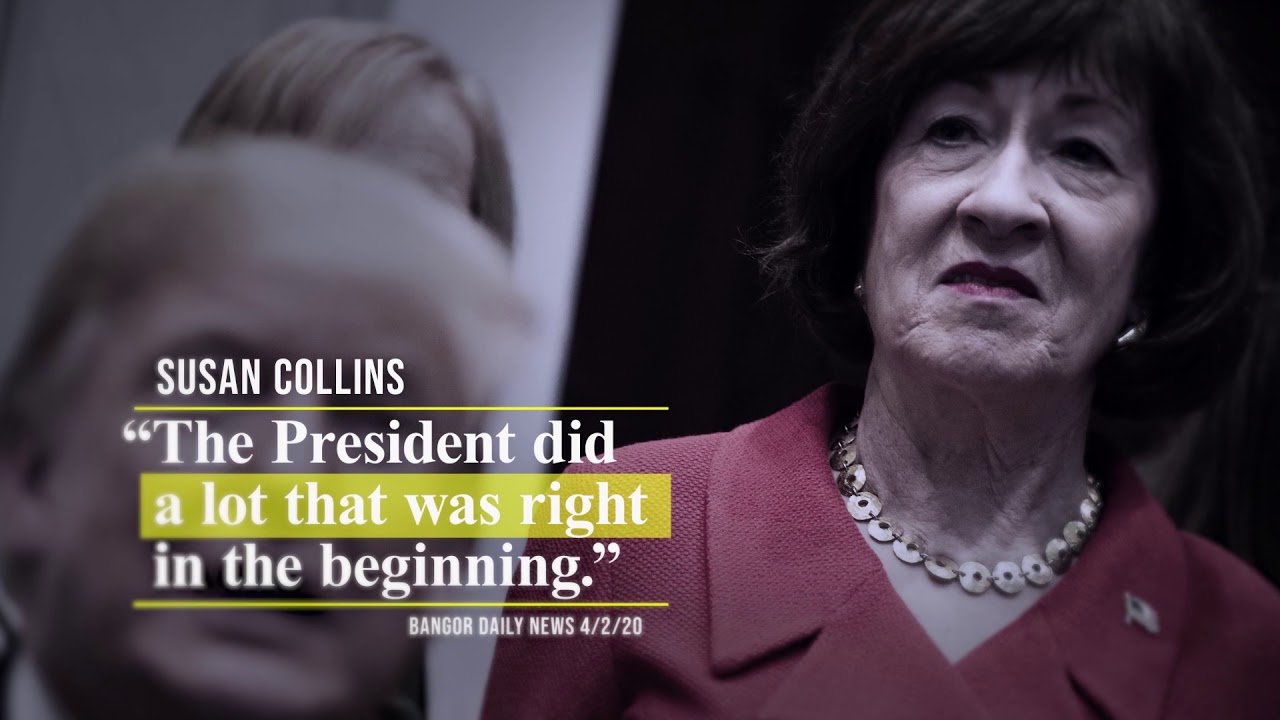 , called “Scrounging,” that criticizes Collins for neglecting to secure enough protective gear and other equipment for the state’s beleaguered frontline health care workers.
“Susan Collins defends the president,” the narrator of that ad says, over a graphic that quotes Collins claiming, “The president did a lot that was right in the beginning."
That ad was paid for by a competing Democratic dark-money organization, Majority Forward, linked to Senate Minority Leader Chuck Schumer’s Senate Majority super PAC, which sees Collins as particularly vulnerable in 2020.
The One Nation ad comes to Collins’ defense, claiming she has been “working to get that help, but dark money groups are spreading false information about those efforts.”
The 2020 race between Collins and Democrat Sara Gideon, current speaker of the Maine House of Representatives, is one of a handful of Senate races that will determine whether the GOP, which currently holds a 53-47 majority, will maintain control of the upper chamber, and keep McConnell in the majority leader’s office.
One Nation and the Senate Leadership Fund have raised a combined $190 million to protect the most vulnerable Republican seats: Those held by Martha McSally in Arizona, Cory Gardner in Colorado, Thom Tillis in North Carolina, Joni Ernst in Iowa and David Perdue in Georgia.
One Nation is also affiliated with Karl Rove, top political strategist to former President George W. Bush, and financially backs organizations that promote conservative positions on abortion and gun rights.
One Nationdropped more than $58 million on Republican Senate candidates in the 2018 midterms, and the group has already spent more than $1 million to boost Collins this year, including a $400,000 ad that ran in early January and touted her work to knock down the cost of insulin.
Collins voted against the Affordable Care Act, as well as legislation to close the Medicare Part D coverage gap.
“Our investors understand the Senate is the ultimate firewall against socialism, and we are gearing up for a massive fight next year,” said Steven Law, a McConnell associate who chairs the group, in a 2019 statement.
“The Supreme Court, Green New Deal, Medicare for None — it’s all going to be on the line,” he added.
It was Collins’ pivotal vote to confirm Supreme Court Justice Brett Kavanaugh — combined with her ACA votes and her transparently cynical waffling on Trump — that earned her a challenge from Gideon, one of the state’s most prominent elected Democrats.
Last summer Collins drew sardonic criticism when her campaign posted several minutes of B-roll of the senator meeting with Mainers in factories, a classroom, a kitchen and so on. The video was mocked as a transparent gift of content for outside groups to pull from.
FEC rules bar candidates from coordinating with outside groups. The B-roll trick, however, has proven to be a popular end-around.
Last September a Republican super PAC ran an ad that used a lengthy clip from that B-roll, leading the Maine Democratic Party to complain to the FEC that it was an illegal in-kind contribution, “almost entirely comprised of footage that the campaign created.”
Though Maine’s politics can be peculiar (and Donald Trump won one of its four electoral votes in 2016) it has drifted toward Democrats in recent years. Collins, a nominally pro-choice, middle-of-the-road Republican was a good fit for Maine for decades, but now appears increasingly vulnerable. In January she nabbed the title of “most unpopular senator” — previously held, of course, by Mitch McConnell.
Watch the full ad from One Nation below via :
https://theintercept.com/2020/04/14/one-nation-pfizer-lobbyist-drug-prices/
one NATION, ONE of the dark-money groups spending the most to back Republican candidates for Senate, added a former Pfizer lobbyist and U.S. Chamber of Commerce board member to its board of directors at the end of 2019. One Nation has spent $1.7 million already this year on ads praising the efforts of Republican senators, including the push for lower drug prices, a cause both Pfizer and the Chamber have lobbied against.
:{
}:
The group is part of the network of conservative fundraisers — under the “Crossroads” umbrella — launched by Karl Rove and Ed Gillespie after the Supreme Court’s 2010 decision in Citizens United. Former staffers for Crossroads GPS, the 501(c)(4) wing of Rove and Gillespie’s Super PAC, American Crossroads, started One Nation in 2015 after a yearslong fight with the Internal Revenue Service for tax-exempt status. Crossroads eventually received that status in 2016. Although the group has been relatively dormant since 2014, it maintains fundraising efforts and ended 2019 with $35.5 million cash on hand.
Ken W. Cole,who has long worked in government relations for companies like General Motors and Honeywell, as well as the pharmaceutical giant Pfizer, joined the board of One Nation last year. The group listed Cole as a director on its latest annual report, filed to the Virginia State Corporation Commission in March, but he’s not yet listed publicly on its website.
Cole lobbied on behalf of Pfizer as senior vice president of government relations from 2010 to February 2018, on issues including drug pricing and drug shortages. Pfizer has placed the blame for high drug prices on health care providers and insurers, while it has fought recent legislative efforts aimed at reducing drug prices. Since at least 2014, Cole has also served on the board for the Chamber of Commerce, which has similarly opposed legislative efforts to cut drug costs or allow the government to fine companies for inflating prices.
Pfizer and the Chamber of Commercehave collectively spent just under $1 billion on lobbying over the last decade, with Pfizer typically spending around $10 million each year, and the Chamber spending more than $60 million. In recent years, that included efforts to kill legislation aimed at lowering the cost of prescription drug prices, including a bipartisan prescription drug-pricing bill put forward last September by Iowa Republican Sen. Chuck Grassley and Oregon Democratic Sen. Ron Wyden. President Donald Trump has praised the bill and earlier this year called on Congress to pass legislation to address rising drug costs. The Senate bill, which Grassley has accused Senate Majority Leader Mitch McConnell of sabotaging, remains deadlocked, while a companion bill in the House, which Pfizer and the Chamber also lobbied against, passed last year. The Chamber, meanwhile, supported a separate drug-pricing bill from Idaho Republican Sen. Mike Crapo, saying that it “would help reduce drug prices without resorting to destructive price controls,” citing “inflation cap penalties” in the Grassley-Wyden bill and “government negotiation provisions” in the House bill.
Cole is currently the CEO and managing director of Cactus Consulting LLC, a firm registered in January 2019 in the District of Columbia, with principal offices based in Florida.
One Nation defended its board appointment of Cole, claiming that his work for Pfizer was not a conflict since he left the company early last year. “Ken has been a respected leader in a variety of different companies and industries. After he retired, we sought him out for his breadth of management experience and judgment,”One Nation President Steven Lawsaid in a statement to The Intercept. “Our boards provide guidance on macro issues like financial controls, budgets, compensation and management policies. They do not direct day-to-day activities.”
Law, the CEO of Crossroads GPS, American Crossroads, Senate Leadership Fund, and One Nation, is also a former chief of staff to McConnell and a former legal officer for the Chamber of Commerce.
AS A 501(C)(4) GROUP, One Nation is not required to disclose its donors, but voluntary disclosures from a number of interest groups shed light on its funds. The dark-money group received major contributions of $1 million in 2016 and 2017 from Andeavor, an oil company bought in 2018 by an Ohio petroleum conglomerate. In 2018, One Nation also received $50,000 from the American Petroleum Institute, and another $50,000 from the Real Estate Roundtable in 2017.
**One Nation**is the single largest group contributing to the Senate Leadership Fund, the McConnell-aligned Super PAC backing Republican Senate candidates. It’s the political action committee’s second-largest donor overall this cycle, after Blackstone CEO Stephen Schwarzman. It has also contributed to conservative groups working on policy issues like abortion and gun rights, like the National Rifle Association and the Susan B. Anthony List:{, an anti-abortion group. The group has spent more than$1 million already this year backing Maine Sen. Susan Collins, including } :{ in}:January:{, }:February:{, and }:March:{ highlighting “Collins’ effort to lower the price of insulin.” Democrats note that Collins — like almost every other Republican — }:voted repeatedly against:{ the }:Affordable Care Act:{ and closing the Medicare Part D coverage gap. Collins has taken }:$431,604:{ from the pharmaceutical industry throughout her career. }:
Collins, whose chances of securing a fifth term became less certain after her vote to confirm Supreme Court Justice Brett Kavanaugh in 2018 and increased criticism over her stance on abortion rights, is facing a challenge from Maine House Speaker Sara Gideon, backed by the Democratic Senatorial Campaign Committee, and Betsy Sweet, backed by Justice Democrats. In the wake of Collins’s vote to confirm Kavanaugh, activist Ady Barkan helped raise more than $4 million to support whoever wins the state’s Democratic primary in July.
In addition to Collins, One Nation is backing Iowa Sen. Joni Ernst:{and started running }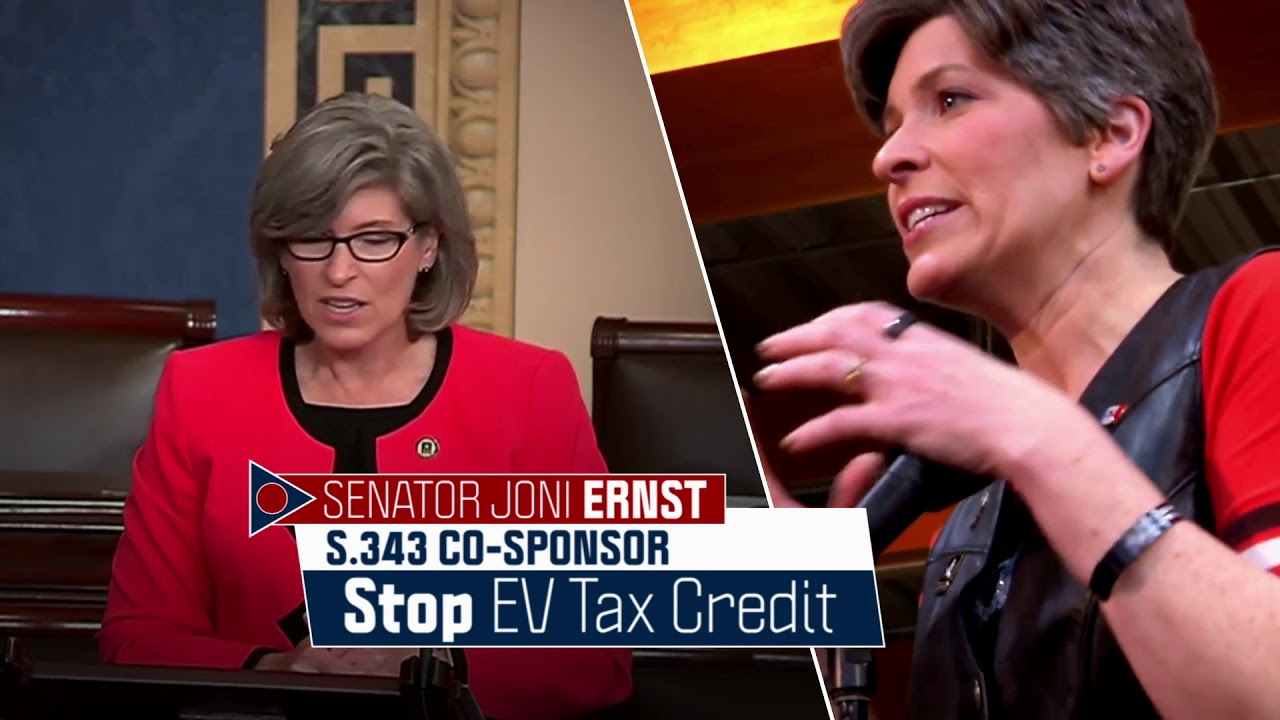 :{ supporting her last year.}: On March 18, One Nation announced another $970,000:{ in television, radio, and digital ads praising Ernst as a champion for lower drug prices. Ernst said she supported, but did not sponsor, the Wyden-Grassley bill that Pfizer and the Chamber lobbied against, but voted against a 2017 }:bill:{ that would have allowed the U.S. to import cheaper drugs from Canada. }:
Ernst in 2018 co-sponsored a Republican-led bill as part of a party effort to assuage fears among its base after its successful repeal of parts of the Affordable Care Act. Republicans said the bill would protect people with preexisting conditions, but it would still have allowed insurers to discriminate against patients for other reasons, or sell policies that don’t cover other medical problems, HuffPost reported.
Critics say it’s unsettling, if not unsurprising, that a McConnell-aligned dark-money group would add a former pharmaceutical lobbyist to its board while running ads celebrating Republican senators for pushing lower drug prices, a cause McConnell himself has stymied in Congress.
“One Nation’s mission is to make sure that Republicans hold their majority in the Senate. They are going to craft their message around that,” said Robert Maguire, research director at Citizens for Responsibility and Ethics in Washington. “It does not mean that One Nation has staked out that policy. They think that voters in Maine want to hear that.”
https://www.opensecrets.org/news/2019/11/dark-money-group-one-nation-2018/
Karl Rove-linked ‘dark money’ group raised, spent big ahead of 2018 midterms
One Nation, a “dark money” group that primarily backs Senate Republicans, saw its revenue spike last year ahead of 2018 midterm elections where the GOP picked up two seats in the upper chamber. The 501(c)(4) nonprofit hauled in $58 million last year, more than triple the $17 million it received in 2017. Read more
1Nation, a “dark money” group that primarily backs Senate Republicans, saw its revenue spike last year ahead of 2018 midterm elections where the GOP picked up two seats in the upper chamber.
The conservative 501(c)(4) nonprofit hauled in $58 million last year — more than triple the $17 million it received in 2017, new tax returns obtained by OpenSecrets show. The group was bolstered by a $10 million contribution from a single anonymous donor.
Masterminded by former White House Deputy Chief of Staff Karl Rove,One Nation launched in 2015 and effectively replaced the once-dominant Crossroads GPS. One Nation spent more than it raised in 2018, totaling $64.1 million, as it funneled money to other conservative groups.
Last year, One Nation gave $18.6 million to the Senate Leadership Fund, a GOP-allied super PAC that shares staff and offices with the nonprofit. The super PAC spent $95 million to back Senate Republicans ahead of the midterms, shelling out more than $20 million in ads attacking then-Sen. Claire McCaskill (D-Mo.) alone. That’s after One Nation laid the groundwork earlier in the year and in 2017 with ads McCaskill’s record and
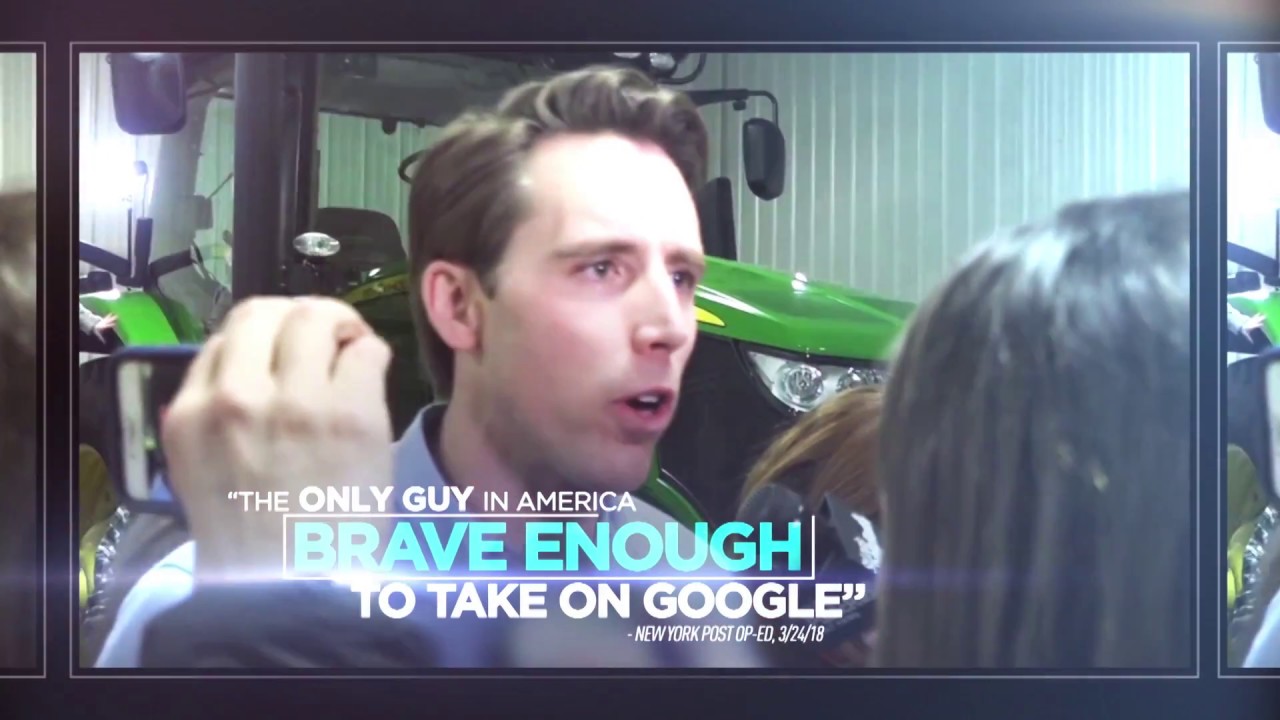 her successful Republican challenger.
One Nation is already targeting 2020 Senate races, running ads to support vulnerable Sens. Joni Ernst (R-Iowa) and Susan Collins (R-Maine). One Nation is applauding Ernst over her bill to end the electric vehicle tax credit, claiming the tax break “subsidizes wealthy car buyers but hurts farmers and jobs.” In Maine, One Nation’s as a fighter for those with diabetes and promote her bill to reduce insulin prices.
Meanwhile, liberal dark money groups have been hammering Ernst and Collins with their own ads attacking their records on healthcare. The amount spent by dark money groups on these “issue ads” — which don’t directly advocate for or against the senators’ elections — is not required to be reported to the Federal Election Commission unless an election is near.
One Nation has shelled out nearly $2.6 million on Google and Facebook ads since the platforms began tracking political ads in May 2018. Among its ads aired this year are those attacking Medicare for All, the healthcare proposal championed by some 2020 Democrats.
As a 501(c)(4) nonprofit, One Nation is not required to disclose its donors’ identities. Tax returns from the American Petroleum Institute reveal that the trade group gave $50,000 to One Nation last year, but the vast majority of its funding remains a mystery.
Another $5.4 million came from Crossroads GPS, which raised $7 million last year according to tax filings. That’s an uptick from the meager $75,000 Crossroads GPS raised in 2017, but the group still appears to be just an arm of the larger One Nation at this point.
One Nation gave out a total of $3.8 million in grants to other conservative nonprofits, including anti-abortion groups such as Susan B. Anthony List and National Right to Life, last year. Pushing for more restrictive abortion laws across the states, both groups spent millions of dollars to influence state legislatures and drafted model legislation for anti-abortion lawmakers to follow, the Center for Public Integrity reported. Susan B. Anthony List, which received $1.6 million, has become more active on the federal level, spending $2.4 million during the 2018 midterms to back congressional Republicans.
The Rove-linked dark money group also gave $250,000 to Citizens for a Working America, a little-known dark money group based in Virginia. The group has been an active donor to several super PACs in recent years, bankrolling several groups that launched multimillion-dollar ad campaigns in federal and state elections. Some of the groups, such as Hometown Freedom Action Network, are closely tied to the dark money group.
One Nation itself also funded groups running expensive ad campaigns in competitive races. It coughed up $1 million to American Economic Freedom Alliance, a D.C.-based dark money group that spent more than $330,000 running ads in Indiana boosting former Rep. Luke Messer’s (R-Ind.) failed Senate bid last year. The alliance also gave $600,000 to pro-Messer super PAC Hoosiers for Conservative Values, records show.
early daRK $
https://www.opensecrets.org/news/2019/08/dark-money-1m-on-joni-ernst-2020-senate-race
First-term Sen. Joni Ernst‘s (R-Iowa) 2020 re-election bid and Iowa’s congressional races are a million-dollar battleground for anonymously funded political groups.
Groups aligned with Democrats and Republicans, but not run by particular candidates’ campaigns, have already spent more than $600,000 apiece in Iowa to sway voters’ opinions of Ernst, a Republican, or attack “Medicare for All,” the health care plan championed by some Democrats, according to filings with the Federal Communications Commission and compiled with OpenSecrets’ ad data tool.
The ad campaigns come more than a year before the general election and are airing when the state’s political bandwidth is otherwise consumed by the Democratic presidential caucus race. The onslaught could be a precursor to a flood of cash as Republicans work to maintain their majority in the Senate in 2020, and Democrats aim to flip it.
Rather than advocate for or against a candidate’s election, which would require reporting the spending with the Federal Election Commission, these groups advertise for or against issues Ernst has weighed in on, and then urge viewers to contact her office and share their opinions.
New progressive-aligned group spends big against Ernst
Iowa Voices, which operates as Iowa Forward and has a mailing address in Kellogg, formed in March, according to documents filed with the state. In its less than six months of existence, it has bought or reserved more than $600,000 worth of criticizing Ernst for her vote to repeal the Affordable Care Act.
The group wheeled out a billboard at the Iowa State Fair that urged Iowans to call Ernst and “tell her to stop voting to gut our health care.” It brought it out again at a recentDes Moines-area town hall Ernst hosted.
Iowa Voices claims it isn’t focused on the election, but rather it wants “to hold Senator Ernst accountable for her actions on health care and taxes,” and pressure her to drop her push to repeal the Affordable Care Act, its communications director, Ben Cobley, said in an email. The group is gathering Iowans’ stories to try to persuade Ernst, he said.
Iowa Voices is building a grassroots movement, according to its website. But as a 501(c)(4) nonprofit, it isn’t required to disclose its donors, leaving the public with no information about where its money comes from. While it doesn’t currently solicit donations on its website, Iowa Voices amassed enough cash to launch its six-figure ad campaign within months of its incorporation in March.
Cobley declined to specify its funding source beyond “folks who share our mission and feelings that an (Affordable Care Act) repeal would harm hundreds of thousands of Iowans.” It has partnered with several progressive groups, including the Iowa Citizen Action Network, Progress Iowa, Indivisible Iowa and the Iowa Federation of Labor, Cobley said. An online donation button is also on the way, he said.
It originally launched under the name Heartland Forward and renamed itself Iowa Forward on May 30. It then purchased or reserved more than $434,000 worth of TV ads in the Des Moines market and nearly $160,000 in Cedar Rapids to air 1,738 spots from late July through early November, according to Federal Communications Commission records.
Ernst is no stranger to mysterious political groups. Outside groups spent tens of millions to influence voters during Iowa’s expensive 2014 Senate race, including several prominent Democratic and Republican-aligned nonprofit groups that do not disclose their funders. The Iowa contest, a titanic struggle to win the seat vacated by the retirement of 30-year Democratic U.S. Sen. Tom Harkin, was the third most expensive Senate race that cycle. Outside groups accounted for almost $63 million out of the $92.6 million spent on it, according to a tally by OpenSecrets.
In an interview in August, Ernst floated enacting disclosure requirements as a way to police anonymously funded ads without infringing on people’s First Amendment rights to express their political opinions. Ernst predicted Iowa will be one of the top targets for spending by independent groups, with unlimited anonymous donors supporting and opposing her re-election bid.
“What I fear is that there is so much outside money being spent that my message is not going to be heard,” Ernst said. “How will people be able to sort through that, and understand that I am not supporting these other messages?”
If people need to disclose who is funding these groups, “then maybe people are a little more cautious about what they’re throwing up on TV or in the newspapers,” Ernst said.
Jordanna Zeigler, the campaign manager for leading Democratic rival Theresa Greenfield, blamed Ernst for “letting special interests spend unlimited amounts of secret money.” She flagged votes Ernst made as far back as her Iowa state Senate service that Zeigler characterized as protecting anonymous spending, and highlighted Greenfield’s support for funding disclosure.
While Greenfield officially has three fellow Democrats she needs to defeat in next year’s primary, her campaign received immediate endorsements from prominent Democrats when it launched in June, and she holds a commanding fundraising lead. She ended the second quarter of 2019 with almost $600,000 on hand, more than triple the next nearest Democrat, according to the most recent FEC filings. Ernst had $3.4 million cash on hand.
Democrats in Congress have led the charge to increase transparency of secret money groups such as political nonprofits and shell companies. Prominent Republicans have pushed back, with Senate Majority Leader Mitch McConnell (R-Ky.) arguing that limits on political spending infringe on free speech rights.
But Democrats are also staffing Iowa Voices, which does not disclose its funding. Former staffers for Hillary Clinton’s and Barack Obama’s presidential campaigns are among its staffers. The group is run by Emily Holley, former political director for Iowa state Sen. Rob Hogg and Midwest field organizer for Obama’s 2008 presidential campaign. Cobley and fellow Iowa Voices staffer Kate Vibbert are both former Clinton campaign aides.
Republican-aligned groups weigh in to support Ernst
One Nation, an anonymously funded nonprofit associated with Republican strategist Karl Rove, has also shelled out more than $600,000 on TV and digital ads in Iowa. The group is running a batch of ads attacking Medicare for All, and urging viewers to call their members of Congress about it, as well as ads defending Ernst’s record.
Because of how it files its ads with the Federal Communications Commission, it’s difficult to track exactly how much it has spent to sway voters in the Hawkeye State.
One of the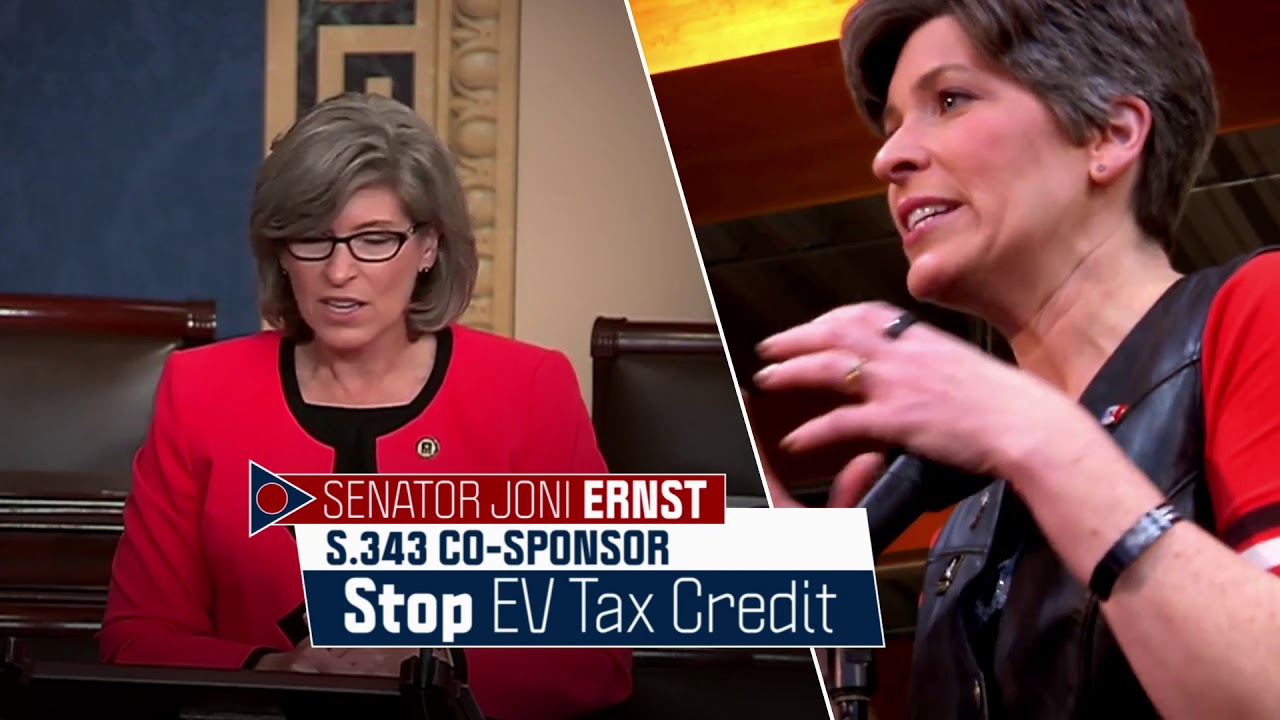 praises Ernst for her support of a bill that would eliminate subsidies for electric vehicles and contends that the tax credits force Iowa taxpayers to subsidize wealthy individuals in California and New York.
In addition to its ties to Rove, One Nation shares its staff and Washington, D.C., offices with Senate Leadership Fund, a powerful super PAC that is linked to McConnell. Now-shuttered outside spending groups linked with Rove spent more than $5.4 million backing Ernst in 2014,according to tracking by OpenSecrets.
These aren’t the only anonymously funded Washington-tied groups to jump into the fray.
Iowa Values, yet another political nonprofit with a generic name, launched a six-month digital ad and voter canvassing effort to support Ernst in late June. The group, run by Johnston mayor Paula Dierenfeld, former Rep. Tom Tauke (R-Iowa) and political strategist Sara Fagen, has spent almost $18,000 on digital ads backing the Republican senator so far, according to Google and Facebook ad databases. It plans to spend six figures on a digital ad campaign, according to a news release.
In a statement announcing its launch, the group also pledged to canvass the state and knock on at least 150,000 doors.
“No other organization will match the work that Iowa Values is doing in 2019,” Tauke, a Republican who represented northeast Iowa in Congress from 1979 to 1991, said in the statement. “With a sophisticated mix of digital advertising and personal contact, Iowa Values will help create a friendly environment for conservative ideas in 2020.”
While this race is still more than a year away, Ernst’s 2014 race against Democrat Bruce Braley attracted a dozen outside groups that spent $1 million or more, and another 37 that spent at least $100,000, according to OpenSecrets. And in all, the vast majority — $44.5 million out of the $62.77 million total — was spent to oppose their candidacies.
==
==
2018 midterms
https://www.opensecrets.org/news/2019/01/dark-money
no lnx graph
Dark money’ groups funneled millions to powerful super PACs during 2018 midterms
By Karl Evers-Hillstrom
January 3, 2019
(AP Photo/Jon Elswick, File)
Even in the most expensive midterm election cycle ever, outside spending reported by “dark money” 501(c)(4) and 501(c)(6) nonprofits was surprisingly sparse, falling to $126 million from $161 million in 2014.
Don’t let that fool you. Rather than spend it themselves, dark money groups instead chose to funnel their funds through super PACs, with which they are often closely linked or directly connected.
Groups that do not disclose their donors and shell corporations gave more than $176 million to super PACs and outside spending hybrid PACs during the 2018 election cycle, according to data from the Center for Responsive Politics.
The surge in dark money giving came as super PACs spent nearly $818 million in the 2018 elections, a monumental increase from the $345 million they spent in the previous midterm cycle.
The top outside spending super PAC this cycle, Congressional Leadership Fund,also got the most dark money, receiving more than $26 million from the closely-linked American Action Network. The same officials run the two conservative groups and share a Washington, D.C. office.
:{
}:
Similarly, conservative dark money groupOne Nationgave more than $18.5 million to the neighboringSenate Leadership Fund,with which it shares an office and president.
:{
}:
The Democrat-aligned Senate Majority PAC, the second-largest outside spending group this cycle, got $6.8 million from dark money sources, including $4.5 million from the Greater New York Hospital Association, a trade association that does not disclose its donors. The super PAC also took in $1.4 million from the closely-tied Majority Forward, by far the top dark money spender this cycle.
Looking beyond the biggest political players, several super PACs directly connected with political nonprofits got significant funds, if not all their money, from the corresponding non-disclosing nonprofit.
One prominent example of this isDemocrat-supporting Environment America Action Fund, which got pretty much all of its money from dark money sources and more than $14 million from its own subsidiaries.
Even super PACs supporting single candidates get in on the dark money action. Hometown Freedom Action Network, a single-candidate super PAC supporting Tommy Pope — a Republican who lost the primary in South Carolina’s 5th District race — got nearly all of its $3.4 million fromCitizens for A Working America,a non-disclosing group.
Change Now PAC emerged as a large spender seemingly out of nowhere, shelling out $7.9 million to aid House Democrats despite popping up a few months before the election. The group took nearly $3 million from dark money group Sixteen Thirty Fund and another $1.8 million from partially-disclosing groups, which include fellow super PACs that accept dark money.
In total, 33 super PACs and hybrid PACs received more than $1 million from dark money sources.
These groups are allowed to spend unlimited sums on advertisements and other literature supporting or opposing candidates. Super PACs must disclose their donors, but large givers can shield their identities by contributing to dark money nonprofits that funnel the funds to super PACs. Those super PACs then identify the respective dark money group as the donor.
“It is clear that any long-term solution to the dark money problem will require addressing transfers between groups,” said Tyler Cole, legislative director at Issue One, a cross-partisan Washington, D.C. group that aims to reduce the influence of big money on politics. “Real disclosure requires identifying what individual donors are behind the groups that spend millions to influence American elections.”
It’s possible dark money’s influence is greater than CRP’s numbers convey, as super PACs also accept funds from fellow partially-disclosing groups — groups that take money from dark money sources. Contributions from these groups could be dark money, but it’s nearly impossible to tell.
Additionally, dark money groups have been known to spend funds on issue advocacy advertisements that they do not register with the FEC.
Though not considered dark money in CRP data, “Pop-up PACs” are a new kind of strategy to dodge donor disclosure. These super PACs waited until Oct. 18 to spend for or against candidates, allowing them to hide their donors until after election day.
“The American public is fed up with our broken political system and their anger is starting to boil over,” Cole said. “Political consultants and dark money groups know this, but they are still not willing to engage in meaningful disclosure.”
==
==
https://www.opensecrets.org/news/2018/11/karl-rove-crossroads-gps-is-dead-long-live-dark-money-operation
One Nation, a conservative 501(c)(4) “dark money” nonprofit masterminded by Karl Rove, raised nearly $17 million last year, according to the most recent IRS tax filings released Friday.
Meanwhile, Crossroads GPS — formerly a dominant group in conservative circles and also run by Rove — raised just $75,000 last year, all but confirming its demise less than a year after the IRS granted it tax-exempt status.
The two dark money groups — along with the conservative American Crossroads and Senate Leadership Fund (SLF) — share the same Washington, D.C. office and employees. Each organization is run by Steven Law, a former chief of staff to Senate Majority Leader Mitch McConnell, who remains closely aligned with the groups.
One Nation does not reveal its donors, but it reported receiving four contributions north of $1 million, the biggest being an individual $7.9 million contribution.
The dark money group handed out only one grant last year — a $500,000 grant to the National Rifle Association for “social welfare” purposes.
It spent nearly $6.5 million by the end of the year, including $3.1 million on media services. One Nation spent $1.7 million with Main Street Media Group, which has long been associated with One Nation and SLF. Politically active 501(c)(4) nonprofits are supposed to exist for the purpose of promoting “social welfare” and not allowed to have politics as their primary purpose but the IRS has not established any “bright line” rules governing how much politicking is too much, a vagueness even Crossroads GPS has lamented.
One Nation paid a total of 10 independent contractors more than six figures in 2017.Some of its other large payments to contractors include six figures for legal services to a high-powered law firm that helped the group win the battle for tax-exempt status the prior year and another $250,000 payment to opposition research firm America Rising LLC.
As it was not an election year, One Nation’s spending in 2017 was down from 2016, when it reported spending more than $63 million. Politically active nonprofits are not required to disclose spending totals in tax filings with the IRS until 10-and-a-half months after the end of an organization’s fiscal year — long after the group wrapped up its political spending.
Crossroads GPS was once a dominant outside spending group, shelling out $71 million in an attempt to defeat Democrats in 2012. The group was so prolific that its legal battles ultimately spawned new guidance from the FEC earlier this year that now requires all “dark money” groups that spend at least $250 on independent expenditures explicitly advocating for or against a candidate to report every donor who gave at least $200 for “political purposes” in the calendar year.
The nonprofit reported raising more than $16 million in 2016, but its funding appears to have disappeared almost entirely as the focus shifts to One Nation.
The tight-knit super PACs and dark money groups like to shuffle their money around and have remained active in the 2018 election cycle. SLF reported accepting one contribution of $6.8 million from One Nation in September 2018 and two additional $3 million contributions last month.
SLF — which spent nearly $94 million to support Republican Senate candidates, mostly through attack ads — is the second-largest donor to American Crossroads in 2018, giving more than $690,000.
RELATED TOPICS
- 501(c) groups
- American Crossroads
- Anna Massoglia
- Crossroads GPS
- dark money
- karl evers-hillstrom
- Karl Rove
- One Nation
- senate leadership fund
==
....Figures are from either January 1, 2017 through July 29, 2018 (full cycle) or June 5, 2018 through July 29, 2018. Numbers include broadcast television. “Full” means the outside group discloses its sources of funding to the FEC. (Kantar Media/CMAG with analysis by the Wesleyan Media Project)
In Senate races, non-disclosing organizations accounted for about 51 percent of ads purchased by pro-GOP groups this cycle. About 38 percent of the ads purchased by pro-Democrat organizations in Senate races this cycle have come from non-disclosing groups, according to the study.
The Senate Majority PAC, a super PAC that supports Democratic candidates running for Senate seats, was the top ad spender in House, Senate and gubernatorial races since June 5, the study found. SMP, which has accepted money from dark money groups this cycle, spent roughly $5.1 million on nearly 20,000 ads in races nationwide from June 5 to July 29.
Other top political ad spenders since June included the conservative Florida Grown PC, which spent about $3.3 million on nearly 8,000 ads, and the conservative One Nation, a dark money nonprofit tied to Senate Republican leadership, which spent about $3 million on about 9,500 ads.
:{Despite its considerable spending,One Nation has not reported any of its spending to the Federal Election Commission (FEC). This is because the group’s ads are framed as “educational” or “issue” ads — like }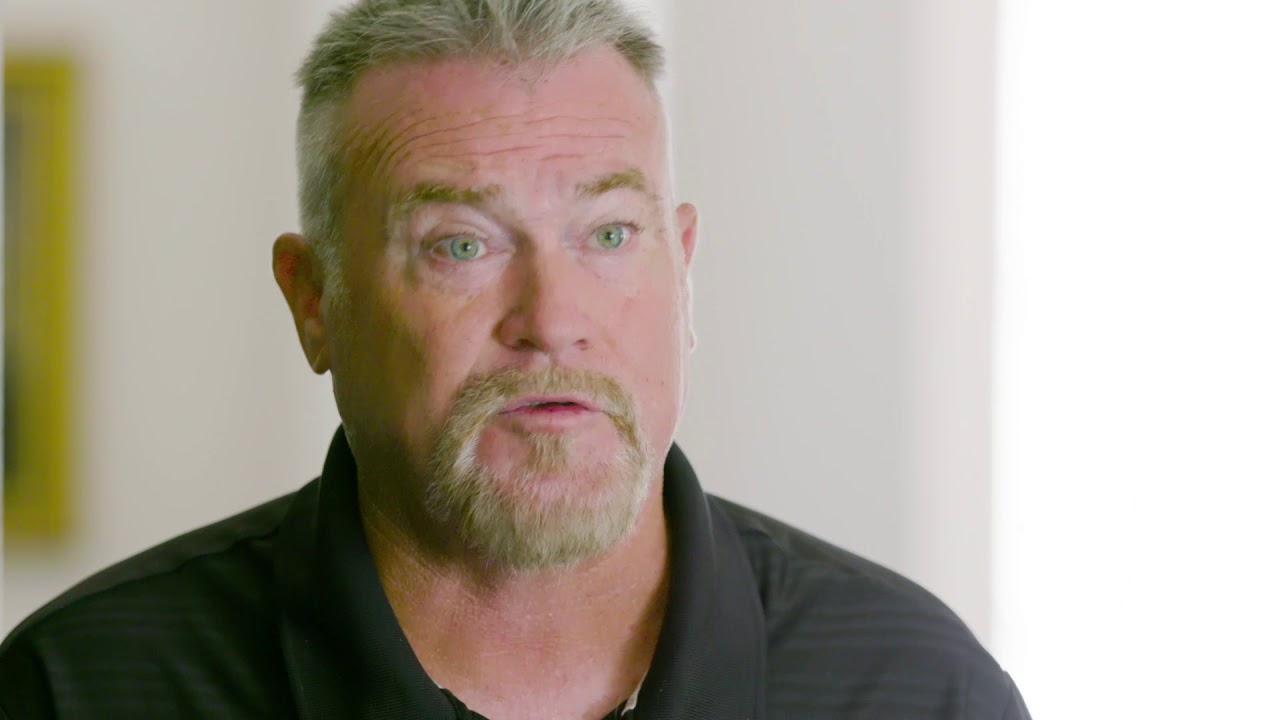 :{ that doesn’t tell viewers how to vote, but asks them to “Tell Senator Heller to keep fighting for us and to improve V.A. nursing homes.”}:
Such ads only have to reported to the FEC 30 days before a primary election or 60 days before a general election. As OpenSecrets has reported in the past,dark money groups use these reporting windows to flood TV stations with ads that won’t be reported to the FECso that the group can claim the expenditures as part of its social welfare function activities when it files its tax returns with the IRS.
One Nation certainly isn’t alone. Liberal and conservative groups — like Majority Forward, which supports Senate Democrats, and the Koch-flagship group Americans for Prosperity — have spent millions of dollars on ads, while reporting almost none of it to the FEC.
As more groups take advantage of this loophole, less spending by dark money groups is actually reported to the FEC. In the 2018 cycle, dark money groups have reported $39.5 million to the FEC compared to $44.1 million at this point in 2014. However, as the WMP/CRP report showed in June — when the same trend was evident — dark money spending was up both in terms of volume and percentage of overall ads run by outside groups.
...
coverage of dark money, breaking, for instance, the story that the IRSgrantednonprofit status to Karl Rove’s group after five years of back-and-forth. Read about how it happened. (Our story caused the New York Times to lash out with an editorial titled “Karl Rove Bamboozles the I.R.S.”) The shadowy giant Crossroads GPS reported $114 million in political spending in its first four years, and dodged reporting millions more. Conversely, GPS’s new incarnation, One Nation, went from reporting no revenue to bringing in more than $10 million in 2015.
==
ref
https://www.opensecrets.org/news/2016/11/one-nation-rising-rove-linked-group-goes-from-no-revenue-to-more-than-10-million-in-2015/
robt mcG
One of the most active groups in the 2016 cycle wasn’t a super PAC — though those were plenty busy — but a 501(c)(4) social welfare organization, One Nation. From mid-2015 through 2016, the group spent about $40 million in a largely successful push to protect the GOP’s fragile majority in the Senate. And it did so without disclosing a single donor to the public.
This was One Nation’s first election in its current form, but the group is not new. Founded in 2010 as the Alliance for America’s Future, it had been dormant for years until operatives from another dark money powerhouse, Crossroads GPS, took over last year.
Under new management and a new name, One Nation’s revenues went from nothing to more than $10 million, according to newly filed tax documents obtained by the Center for Responsive Politics that cover 2015. (One Nation’s tax filing covering its 2016 activities isn’t due until November 2017.)
More than 61 percent of those revenues came from just four anonymous donors who gave $1 million or more; one topped out at $2.5 million.
Politically active nonprofits like One Nation are not supposed to be primarily focused on political activity. But a mixture of lax oversight, unclear rules and the best lawyers in the country have allowed some of these groups to spend much of their time and money politicking without significant risk of penalty.
One Nation’s ad buys through August 2016 alone were enough to rank it 27th on a list of the top 50 outside spending groups (including super PACs) that have aired the most ads since 2000, according to a report published by the Wesleyan Media Project and CRP in August.
Despite having millions of dollars in the bank, One Nation has no employees and no volunteers. Of the $7 million it spent in 2015, 78 percent went to two media firms that specialize in political ads. The vendor that received the bulk of those payments, Main Street Media Group, counted among its top clients this year two super PACs — Senate Leadership Fund and Granite State Solutions — that are run by the same people who operate One Nation.
While both super PACs were required to report their spending to the Federal Election Commission throughout the election cycle, One Nation was not. Its ads in 2015 all referenced Republican senators in tight races, but they were framed as so-called “issue ads” — supposedly advertisements aimed at educating the public or mobilizing grassroots support for an issue. Those don’t have to be reported to the FEC except when they air shortly before an election — 30 days or less in the case of a primary, 60 or fewer prior to a general. Politically active nonprofits increasingly spend the bulk of their money before those reporting windows open, and in 2016, that trend continued.
During the period covered by its latest form 990, One Nation spent nearly $6 million on ads mentioning endangered senators, according to a CRP analysis of One Nation’s press releases.
One Nation spokesperson Ian Prior confirmed in an email that, in all, One Nation spent about $40 million in the 2016 cycle, enough to put it in the top 10 of all groups active this cycle, had it reported the spending to the FEC. As it stands, though, the group only reported $3.4 million.
[img]
Prior noted that two pieces of legislation advanced in the wake of being featured in One Nation’s ads. The first was the Comprehensive Addiction Recovery Act which passed overwhelmingly in the Senate with bipartisan support. It hardly seemed in danger of failing even if it had lacked the support of Sen. Kelly Ayotte (R-N.H.), who was featured in the $1.1 million ad buy. The second was the Military Family Stability Act, which was passed by the Senate as a part of the National Defense Authorization Act.
Other ads, however, didn’t reference a particular bill, but called on listeners and readers to contact Sen. Richard Burr (R-N.C.) or with a vague request “to keep working across party lines to preserve Medicare and Medicare Advantage— and support legislation to replace the Affordable Care Act with pro-patient reforms.”
In the seven races in which One Nation was active early in the cycle, four of the candidates it supported won. And even where it lost, the margins were slim — with the exception of Democratic Rep. Tammy Duckworth’s resounding defeat of GOP incumbent Sen. Mark Kirk in Illinois.
In its new filing with the IRS, One Nation didn’t report any of the $6 million it spent on ads in 2015 (out of about $40 million for the two-year cycle). On the section of the form that asks whether the group engaged in “direct or indirect political campaign activities on behalf of or in opposition to candidates for public office,” it answered no.
Former head of the IRS exempt organization division Marc Owens says that, had some or all of this spending been reported to the IRS as campaign-related, “it would certainly be a ‘red flag.'”
Owens added that media spots can be “carefully constructed” to fit the argument that the group’s intent was to engage only in permissible “lobbying or educational communications,” but “whether those arguments could withstand scrutiny in an IRS audit is another matter as the IRS would review internal documents for evidence of campaign intervention.”
Luckily for One Nation, there’s very little chance the group’s filings will be audited. In 2015, the IRS closed 2,831 audits in a year when more than 787,000 annual returns were filed by exempt organizations, according to the IRS 2015 Data Book. Roughly speaking, that’s about 1 in every 278 filings.
Still kicking
The third largest payment One Nation made in 2015, after the outlays to media firms, was to Crossroads GPS: $674,808 for “administrative services” linked to the groups’ shared staff and office space.
Started in 2010, GPS quickly became one of the largest and most powerful political organizations in the country. In its first four years, it reported nearly $114 million in spending to the Federal Election Commission, and tens of millions more that the group spent, particularly in 2014, were framed as “issue ads” and run during periods when such ads don’t have to be reported to the FEC.
Tax documents obtained by CRP show that Crossroads GPS was largely dormant in 2015. Its revenues dropped from $69 million in 2014, when it was very active in helping Republicans take the Senate, to just $3.5 million in 2015. Some of its largest payments in 2015 — aside from $775,000 it paid to the opposition research firm America Rising LLC — went to high powered law firms that were helping the group battle, and beat, the IRS for tax exempt status.
In 2016, Crossroads GPS did not report any spending to the FEC, sitting out an election for the first time since it was created in the immediate wake of the Citizens United decision.
Categories: 501(c) groups Outside Money
Tags: 501(c), 501(c)(4), 501c, 501c4, dark money, One Nation, Robert Maguire, Shadow Money Trail, social
==