Pfizer
see sedition caucus, rev dr, lobbyist akin gump lamar smith
no merri
see vaxx
corp bad actor
tax dodger
trump slush inaug
disater capitalism
raga Coc
===
111pp bk ?!
2015?
DISTRICT OF COLUMBIA Advanced Medical Technology Association Political Action Committee NP $5,000.00 Biotechnology Innovation Organization PAC (BIO PAC) NP $10,000.00 Business-Industry Political Action Committee NP $2,500.00 Chamber Of Commerce Of The United States Of America PAC (US CHAMBER PAC) NP $10,000.00 CHC BOLD PAC D $10,000.00 Congressional Black Caucus PAC D $10,000.00 Consumer Healthcare Products Association PAC (CHPA/PAC) NP $10,000.00 Council For Responsible Nutrition Political Action Committee NP $5,000.00 DCCC D $30,000.00 Democratic Attorneys General Association (DAGA) D $100,000.00 Democratic Governors' Association (DGA) D $708,519.03 DSCC D $30,000.00 DSCC (Building Fund) D $25,000.00 Emily’s List NP $10,000.00 GOP Convention Strategies R $25,000.00 Moderate Democrats PAC D $10,000.00 National Association Of Manufacturers PAC (NAM-PAC) NP $5,000.00 New Democrat Coalition PAC D $7,500.00 NRCC R $30,000.00 NRCC (Building Fund) R $5,500.00 NRSC R $30,000.00
State Committee Name Party Corp PAC 95 NP Non-Partisan NRSC (Building Fund) R $45,000.00
Pharmaceutical Research & Manufacturers of America (PhRMA) NP $507,449.00 Pharmaceutical Research & Manufacturers Of America Better Government Committee NP $10,000.00 Republican Attorneys General Association (RAGA) R $200,000.00 Republican Governor's Association (RGA) R $850,000.00 Republican Mainstreet Partnership PAC R $10,000.00 Republican National Committee R $30,000.00 Republican National Committee (Convention Fund) R $5,000.00 Republican State Leadership Committee (RSLC) $115,000.00 FLORIDA Democrats Win Seats (DWS PAC) (Rep. Debbie Wasserman Schultz) D $1,000.00 Florida Democratic Party (Non-Federal) D $22,500.00 Florida Republican Senatorial Campaign Committee R $45,000.00 Floridians for Limited Government (Sen. Douglas Vaughn Broxson) R $2,500.00 Floridians for Strong Leadership (Sen. Anitere Flores) R $2,500.00 Friends of Dana Young (Sen. Dana D. Young) R $2,500.00 House Majority 2016 R $10,000.00 Let’s Get To Work R $25,000.00 Protect Florida’s Families R $7,500.00 Republican Party of Florida (Non-Federal) R $15,000.00
big funder gmu judge dude ranch junkets
In 2023, Pfizer *made more than $27 billion in revenue and paid zero federal income tax
freddy brewster
while jacking up drug prices, Pfizer recently reported more than $27 billion in revenue from its US sales in 2023. But the Big Pharma titan owes nothing in federal income taxes, despite being one of the most profitable pharmaceutical companies in the world. That’s largely thanks to existing loopholes and a 2017 tax law signed by former president Donald Trump.
Pfizer is not the only giant corporation raking in huge profits but paying less taxes than the typical American household: more than one hundred of the country’s most profitable corporations paid zero federal income taxes in at least one year since the Trump tax cuts were enacted.
Pfizer’s tax dodge illustrates how those corporations — in particular pharmaceutical and tech giants — are able to enjoy astonishingly low tax rates by using a system of lucrative tax loopholes. While legislation to halt such tax schemes has stalled in Congress, corporate giants often stash intellectual property rights for their drugs and other products in offshore tax havens and force their US-based operations to “buy” the rights to manufacture and sell those drugs and products here in the United States.
Pfizer, which is headquartered in New York and received billions of dollars from the federal government for its COVID-19 vaccine, reported an overall 2023 loss of $4.4 billion domestically, bringing its effective corporate income tax rate to -105.4 percent, the company reported in a recent regulatory filing.
Conversely, Pfizer reported more than $31 billion in revenue from international market sales, netting more than $5.4 billion of income for 2023. Pfizer has more than three hundred subsidiaries in more than sixty different countries, with ninety-eight subsidiaries based in known tax havens such as Ireland, Switzerland, the Netherlands, the British Virgin Islands, Singapore, and Puerto Rico, according to a Lever review of Pfizer’s recent 10-K filing.
The 2017 tax law championed by Trump cut the federal corporate income tax rate from 35 percent to 21 percent, but many corporations offshore profits and exploit other loopholes to pay even less.
From 2018 to 2022, the Trump tax cuts allowed 342 of the largest US-based corporations to pay just $562 billion in taxes on nearly $4 trillion in profits, an effective average rate of 14.1 percent, according to a recent study from the Institute on Taxation and Economic Policy, a nonpartisan tax policy organization.
Pharmaceutical companies comprise a significant portion of the companies engaged in tax avoidance. In 2022, major US pharmaceutical companies reported more than $214 billion in revenue and only $10 billion in profits in the United States. Those same companies reported more than $171 billion in foreign revenue and more than $90 billion in profits overseas, despite the fact that Americans pay the highest pharmaceutical costs in the world, said Brad Setser, a senior fellow at the Council on Foreign Relations.
“A large number of American pharmaceuticals report getting the bulk of their revenue from the US, earning no income in the US, and earning very substantial sums outside the US,” Setser told The Lever. “And that same set of companies typically tends to report the bulk of their profits that they earn globally are in some combination of Ireland, Switzerland, Singapore, and Puerto Rico.”
While such tax avoidance is not illegal, the Inflation Reduction Act of 2022 tried to crack down on the practice by implementing a 15 percent tax on worldwide profits for companies making more than $1 billion in annual profit. But many of the loopholes and tax breaks were left in place — including some championed by Sen. Kyrsten Sinema (I-AZ).
“Tax avoidance by American pharmaceutical companies is a very real problem,” Setser said last year in Senate testimony, adding that Pfizer is one of the companies aggressively shifting profits out of the United States. “Straightforward changes to the US tax code would encourage American and global pharmaceutical companies to produce more patent-protected pharmaceuticals in the United States, and to onshore rather than offshore their global profit.”
Pfizer did not respond to a request for comment.
Billions in Offshore Earnings
Pfizer reported a total international tax bill of $490 million for its $5.4 billion in international taxable income, according to the company’s 10-K filing. Pfizer routinely reports making profits overseas and losses in the United States, Setser said.
“If you look at Pfizer historically, you will find it is fairly typical to report losing money in the US and making gobs of money abroad,” he added. “In some cases [Pfizer is] paying all of [its] income tax abroad.”
Sixteen of Pfizer’s 300-plus subsidiaries are based in Ireland, a known tax haven that is home to Apple, Microsoft, and other large corporations’ subsidiaries. In 2020, a European Union–funded report found the country had an effective corporate tax rate of just 7 percent.
According to a 2021 article by the *Currency*, an Irish investigative news outlet, Pfizer’s Irish operations are worth $100 billion, making it one of the largest companies operating in the country.
More than one hundred of the country’s most profitable corporations paid zero federal income taxes in at least one year since the Trump tax cuts were enacted.
Ireland is a “leading manufacturing base for Pfizer globally,” and part of Pfizer’s “Worldwide Research and Development” is based in the country, the drug company states on its website. But the pharmaceutical company is tight-lipped about the specifics of its operations there.
“None of [Pfizer’s] 25 current or recently liquidated Irish subsidiaries publish financial data,” the Currencyreported in 2021. “Instead, they are consolidated into CP Pharmaceuticals International CV, which is the central holding entity for the group’s non-US activities.”
CP Pharmaceuticals is based in the Netherlands and is not subjected to corporate taxes, which allows the company to provide “a blanket guarantee for the liabilities of Pfizer’s Irish subsidiaries, for the specific purpose of exempting them from filing accounts in Ireland,” the outlet wrote.
Ireland and the Netherlands are not the only tax havens where Pfizer operates. According to its regulatory filing, Pfizer also has subsidiaries in Switzerland, the British Virgin Islands, and Singapore, among other locales with low tax rates.
The use of offshore subsidiaries can allow companies to dodge tax bills in their home countries, according to a recent study by the Institute on Taxation and Economic Policy.
“Corporations can use convoluted accounting schemes to make the profits they earn in the United States appear to be earned in countries like Ireland, which has a very low corporate tax rate, or countries like Bermuda and the Cayman Islands, which have no corporate tax,” the study notes.
Pfizer claims that it is “continuing to leverage a global supply chain and manufacturing network that spans four continents and includes more than 20 facilities.”
In its regulatory filing, Pfizer said it has thirty-seven plants across the world that “manufacture products for our commercial divisions, including in Belgium, Germany, India, Ireland, Italy, Japan, Singapore, and the US.”
One of the main arguments used for the 2017 Trump tax cuts was that dropping the tax rate from 35 percent to 21 percent would incentivize corporations to bring some of their global profits and earnings back to the United States.
“The argument was there are all these unused offshore dollars that could be put to work investing in the US if we just provided a tax holiday,” said Setser with the Council on Foreign Relations.
After the Trump tax cuts were passed in 2017, Pfizer reported a $11 billion earnings boost related to the tax cuts in January 2018. That same month, Pfizer promised to begin paying $15 billion in “repatriation taxes” over the succeeding eight years, thereby shifting some of its overseas profits back to the United States.
According to its recent regulatory filing, six years into its promise, Pfizer still has $6 billion left to pay in repatriation taxes. In total, this $15 billion is just a fraction of what Pfizer has in offshore earnings — and the drug company said it has no plans to bring any of it back to the United States.
“As of December 31, 2023, we have not made a US tax provision on $49.0 billion of unremitted earnings of our international subsidiaries,” the drug company wrote in their 10-K filing. “As these earnings are intended to be indefinitely reinvested overseas, the determination of a hypothetical unrecognized deferred tax liability as of December 31, 2023 is not practicable.”
One way countries could start to rein in corporate tax dodging is the Organization for Economic Co-operation and Development (OECD) agreement — a global minimum corporate tax agreement among more than 130 nations.
Established in 2021, the “groundbreaking” OECD deal would allow countries to institute a standard 15 percent global tax on companies making more than $21 billion dollars globally that are headquartered within their jurisdictions. If the deal is fully implemented, it would affect more than 90 percent of the world’s economic output.
If the United States decides not to enter into the OECD agreement, lawmakers will ‘basically be leaving money on the table.’
If a corporation’s home country decides not to tax the corporation at least 15 percent, then countries that are home to the corporation’s subsidiaries have the right to boost taxes to meet the 15 percent requirement, Setser said.
“The idea is there’s no incentive to have profits in [tax havens], because you’re going to be forced to pay 15 percent either in your headquarters’ jurisdiction, or in some other location where you have an operating subsidiary,” he added.
Pfizer admits in its regulatory filing that a change in US tax laws or “the adoption of global minimum taxation requirements outside the US” could pose a potential financial risk to the company’s bottom line. The drug company spent $81.7 million since 2017 lobbying on issues related to intellectual property rights, the 2017 Trump tax cuts, an international global minimum tax, drug pricing, and other topics, disclosures show.
While the United States has entered the OECD agreement, fully enacting it remains a hurdle. In order for the United States to enter into the agreement, two-thirds of the Senate would have to approve, and the deal is facing stiff opposition from some Republicans.
A group of fourteen Republican Senators said the deal “may ultimately put US businesses at risk” and could “jeopardize US competitiveness.” Additionally, Rep. Jason Smith (R-MO) introduced legislation that would impose retaliatory taxes on “any foreign country that imposes unfair taxes on US businesses and workers under the [OECD]’s global tax deal,” noted a press release from the House Ways and Means Committee.
Pfizer has donated $43,000 to Smith’s campaign efforts since 2015, according to Federal Election Commission data.
If the United States decides not to enter into the OECD agreement, lawmakers will “basically be leaving money on the table,” said Matthew Gardner, a senior fellow at the Institute on Taxation and Economic Policy.
Some senators are trying to crack down on corporate tax dodging by introducing legislation that would institute a $0.07 tax on “book income” over $100 million. The legislation, called the Real Corporate Profits Tax Act, would generate nearly $700 billion in revenue over a ten-year period, according to a press release from Sen. Elizabeth Warren (D-MA), cosponsor of the bill.
“Companies cannot be allowed to continue reporting billions in profits to shareholders and then turn around and pay nothing in taxes to the IRS,” she wrote.
How to Dodge the Taxman
For years, the Institute on Taxation and Economic Policy has been tracking how the 2017 Trump tax cuts have affected corporate income taxes.
Their latest study, published in February, found that the 342 most profitable corporations based in the US are paying an average corporate tax rate of 14 percent, far less than the 21 percent rate instituted in the Trump tax bill.
“What appears to be happening is a straightforward use of tax breaks that Congress, either recently or in decades past, has chosen to enact,” said Gardner, one of the study’s lead authors. “It’s not that [corporations] are cheating, it’s just that they’re using the tax breaks that they’ve lobbied for.”
Many corporations dodge US taxes through a combination of four different avenues. Along with offshore profit shifting, the loopholes include exploiting research and development tax breaks, paying executives in stocks, and taking advantage of “accelerated depreciation” — a policy put in place in the 2017 tax law that allows corporations to immediately write off equipment costs rather than writing off the costs as the equipment breaks down over time.
“Lawmakers often justify these provisions as necessary to achieve some important goal, such as encouraging investment or research,” the study states. “But they seem to accomplish little beyond reducing tax revenue that could pay for public investments.”
Corporations can earn tax breaks for several reasons, but the most exploited loophole is the research and development tax break, note the study’s authors. The tax break has been exploited by some companies to research seemingly trivial subjects, such as Nike conducting research on how to make more comfortable shoes and Chipotle exploring “ways to modify their foods,” the researchers state. The authors added that it is difficult to determine how much corporations benefit from this tax break, because most do not disclose how much they save through it.
Utilities, gas, and electric corporations are the worst offenders of corporate tax avoidance, followed by oil and gas pipeline companies and then motor vehicle industries.
By paying executives in stocks rather than dollars, corporations are also able to write off the pay for tax purposes. The Institute on Taxation and Economic Policy report notes that the tech sector overwhelmingly uses this loophole, with Apple and Microsoft reporting more than $6 billion in stock option tax benefits from 2018 to 2022.
The accelerated depreciation loophole allows corporations to write off equipment costs faster than the equipment breaks down, which can incentivize corporations to buy unnecessary equipment and then write it off. This policy has been in place for quite some time, the study notes, but the Trump tax cuts implemented the “most extreme version” of the loophole and allowed corporations to write off the costs immediately, which are essentially “interest-free loans from the IRS.”
“In theory, accelerated depreciation is merely a shift in the timing of tax payments,” the study’s authors note. “Tax deductions that would otherwise be taken later are taken now, and taxes that would otherwise be paid now are paid later.”
The study found that utilities, gas, and electric corporations are the worst offenders of corporate tax avoidance, followed by oil and gas pipeline companies and then motor vehicle industries.
“Carry Forward Losses Indefinitely”
According to its regulatory filing, Pfizer attributes much of its 2023 losses to “significant declines in revenues” of Comirnaty, its COVID-19 vaccine, and Paxlovid, an antiviral medication used to treat COVID-19.
Pfizer’s reported loss of $4.4 billion dollars allows the company to achieve lower tax rates in future years, said Gardner with the Institute on Taxation and Economic Policy.
“The idea that governs our corporate taxes is that losses should be able to [be carried] forward,” he added. “And right now the way it works is that you can carry forward losses indefinitely, there’s no limit on how long you can take to use them [for tax reductions].”
Pfizer’s top five products include Comirnaty, a blood thinner called Eliquis, the Prevnar vaccines used to protect against pneumococcal bacteria, the breast cancer drug Ibrance, and Vyndaqel, which treats nerve damage. These five products have raked in billions of dollars for the drug company, and it charges Americans exponentially more for many of these drugs than it charges in other countries — even though the development of some of these medicines, like nearly all US drugs, was heavily subsidized by taxpayers.
Eliquis, Prevnar, Ibrance, and Vyndaqel all reported increases in year-to-year sales and earned Pfizer more than $21 billion last year combined.
Eliquis, a drug meant to reduce the risk of stroke, is coproduced and sold by Pfizer and Bristol-Myers Squibb. The annual list price for Eliquis is $7,100 in the United States, compared to just $760 in the UK and $650 in France.
Ibrance, the breast cancer drug, costs Americans $12,811 for twenty-one pills, while the same dosage costs $2,905, $4,325 and $3,176 in Australia, Canada, and France, respectively, according to a 2021 Government Accountability Office report.
Pfizer acknowledges that US-based sales contribute a significant portion of its yearly revenue.
“The US was the only country to contribute more than 10% of all Pfizer revenue in 2023, 2022, and 2021,” the company wrote in a regulatory filing.
In its filing, Pfizer attributes its low tax rate, -105.4 percent, to research and development tax breaks, state and local tax deductions, charitable donations, and other reasons.
“The reduction in our effective tax rate is a result of the jurisdictional location of earnings and is largely due to lower tax rates in certain jurisdictions, as well as manufacturing and other incentives for our subsidiaries in Singapore and, to a lesser extent, in Puerto Rico,” Pfizer wrote.
Pfizer also noted that it is regularly audited by the Internal Revenue Service, and that its 2016–2018 taxes are currently under audit.
Until Congress reins in tax avoidance by Pfizer and other corporations, the American economy will pay the consequences, said Setser with the Council on Foreign Relations.
“The United States now stands out by allowing many of its major companies to achieve effective tax rates of 10 percent by moving both production and profits out of the United States — a giveaway to the shareholders of the pharmaceutical companies that comes at substantial cost to both the US Treasury and the US economy,” he said.
===
lamar smith rev dr
Lamar Smith (R-Texas) – Akin Gump
The now-retired Texas Republican served in the House since 1987. Smith, who was chairman of the House Science Committee, was an ardent opponent of environmental regulations and a denier of climate science and a major recipient of oil and gas industry money Smith pushed the Trump administration to allow a controversial copper and gold mine in Alaska’s Bristol Bay, a remote area in southwestern Alaska. Hired by Akin Gump in January, Smith has now registered to lobby in favor of the Pebble Limited Partnership, which has proposed the mine and is owned by Vancouver-based Northern Dynasty Minerals Ltd. Pebble Mine is opposed by environmental groups, commercial fishermen and was opposed by one of the richest men in Alaska, a Trump supporter who died last year. In addition to the proposed mine, Smith also has registered to lobby for drug giant Pfizer Inc, agricultural tracking technology firm HerdX and oil and gas pipeline construction firm Otis Eastern Service.
inaug
31
163 486 ORG PFIZER, INC. $1,000,000 12/22/2016 235 EAST 42ND STREET NEW YORK NY 10017 Pfizer Pharmaceuticals:
(1) Announced a joint venture to produce pharmaceuticals inRussia in July 2016.
(2) Paid about $60M in fines in 2012 bribery of Russian government health officers.
(3) Address checks out.
===
---
an 1 24
conservative provocateur James O'Keefe recently attempted to ambush billionaire entrepreneur Mark Cuban while he was at the gym in an apparent 'gotcha' attempt, but it didn't work out as planned.
O'Keefe — who founded the far-right media outlet Project Veritas and is known for doctoring video and audio to suit GOP-aligned causes — had a run-in with Cuban as part of his ongoing efforts to discredit both vaccines and DEI (diversity, equity and inclusion) initiatives. Cuban posted the highlights to his X (formerly Twitter) account, including a part of the conversation where he repeatedly insulted O'Keefe to his face with profanity.
"So @JamesOKeefeIII decided to ambush me during the water break of my workout class," Cuban tweeted. "I wanted to give the highlights as I enjoyed the conversation. First the part I enjoyed the most I asked him if he was recording this. (Of course he was). He wouldn’t answer. He kept mumbling s---. So I looked him in the eyes and called him a Motherf-----g P---y."
"I asked again. I think the 2nd time I may not have MF’d him," he continued. "The next 2 or 3 times I asked, as we were walking, and he deflected , I definitely called him a motherf-----g p---y."
In a subsequent tweet, Cuban elaborated that O'Keefe asked him specifically about Cuban's previous assertion that he was a "liar" regarding a video in which O'Keefe confronted a Pfizer official. While speaking about the Pfizer confrontation to an audience at the Conservative Political Action Conference (CPAC), O'Keefe said that the video proved Pfizer "mutated" the Covid-19 virus. Cuban asserted to O'Keefe that there was never any mutation.
O'Keefe also apparently asked Cuban why he blocked Chinese student Wei Wu, who launched an online trolling campaign to have Cuban add her to the Dallas Mavericks roster and make her the first official female player in the NBA in the name of DEI. Cuban added that he at first just muted Wei, but then became annoyed at Wei's followers brigading the replies of his tweets, ultimately leading him to block her.
"I told him only a motherf-----g moron thinks DEI is about quotas," Cuban added. "[I]t was the middle of an hour leg day, I was going to MF everything lol."
READ MORE:Embattled far-right 'gotcha' group Project Veritas fights for survival post-O'Keefe
---
February 6, 2023 5:20 pm
- Outraged about Sam Smith’s performance at the Grammys, Ali Alexander declares that blasphemy and Satan worship “should warrant prison time.”
- Pete Santilli was so enraged by Pfizer’s sponsorship of the Grammys that he encouraged listeners to literally attack Pfizer’s production facilities: “Destroy Pfizer now! Do it now. Go over the wall. Get into their frickin’ buildings. Unplug all their frickin’ equipment.”
- Vincent James gripes that “from ‘To kill a mockingbird’ and the Scottsboro Boys, to the Diary of Anne Frank, all curriculum & reading lists are designed to make whites feel guilty, and shut them up while their countries get taken over.”
- Right-wing conspiracy theorists Greg Locke and Lin Wood are fighting.
- Rick Joyner
 that increases in fires, floods, and natural disasters are not the results of climate change but are actually “the judgments of God.”
- Finally, Tim Gionet (aka Baked Alaska) reported to federal prison today to begin serving a 60-day sentence for his role in the Jan. 6 Capitol insurrection, claiming that he’s “being politically persecuted because of my politics.”
Tags: Ali Alexander Baked Alaska Greg Locke Lin Wood Pete Santilli Rick Joyner Tim Gionet Vincent James Capitol Insurrection Leftovers
an 1 23
U.S.-based pharmaceutical giant Pfizer reported Tuesday that it brought in a record-breaking $100.3 billion in revenue in 2022 and $31.4 billion in profit, sums that campaigners decried as "sickening" in the face of an ongoing pandemic and persistent inequities in coronavirus vaccine access.
"In one year alone, Pfizer's revenue has exceeded the total health expenditures of more than 100 countries combined," Julia Kosgei, policy co-lead for the People's Vaccine Alliance, said in a statement. "If it were a country, Pfizer would sit in the wealthiest third of nation-states. And it has amassed this fortune while jacking up prices on Covid-19 vaccines amid a pandemic that has devastated people’s livelihoods. Put simply, Pfizer has plundered health systems for profit."
Pfizer, led by CEO Albert Bourla, is the manufacturer of one of the two available mRNA vaccines for Covid-19, as well as the oral coronavirus treatment Paxlovid. The company reported $56 billion in sales of its Covid-19 vaccine and Paxlovid, though it said it expects sales to drop in the coming year as it moves to hike prices significantly on its vaccine—a plan that has drawn international alarm and outrage.
Globally, more than 2,600 people are dying from Covid-19 each day on average. According to Our World in Data, just over 26% of people in low-income nations have received at least one coronavirus vaccine dose as Pfizer and other pharmaceutical giants refuse to make their vaccine technology available to all—even though it was developed with the help of government funding and scientific advancements.
"Billions of people in developing countries still cannot access affordable Covid-19 medicines," said Kosgei. "Companies like Pfizer are gobbling up ever-greater proportions of health budgets and handing the spoils to wealthy shareholders—all while treating access for developing countries as little more than a PR initiative. We cannot go on like this."
The U.K.-based advocacy group Global Justice Now called Pfizer's record earnings report "sickening."
"With this latest 'all-time high' announcement, Pfizer now has revenues higher than the GDP of 133 countries, including 8 E.U. member states, and is the first pharma company ever to make $100 billion in a year," noted Tim Bierley, the group's pharma campaigner. "But not content with doubling its revenues with a pandemic windfall, they are now still moving to aggressively hike the price of Covid-19 booster doses, putting even more pressure on already struggling public health systems."
"Their latest record-breaking revenues are further proof that the company treated the pandemic as an opportunity to enrich its shareholders," Bierley added. "We can't allow Big Pharma companies to hold us to ransom in this way. We need the government to be bold and break with the monopoly patent model that fails people everywhere. It's time to put people's lives above corporate profit."
Both Pfizer and Moderna have signaled plans to raise the prices of their vaccines to somewhere between $110 to $130 per dose in the U.S.as the Biden administration moves ahead with the commercialization of coronavirus inoculations, tests, and treatments—shifting costs onto patients and insurers and leaving the uninsured to shoulder significant payments.
The U.S. government has previously paid around $30 per dose for Pfizer's vaccine.
In recent days, the Biden administration has faced growing calls to use the federal government's ownership of key patents and other leverage to force Moderna and Pfizer to make their vaccines affordable and readily available to all who want them.
"The Biden administration should not allow Moderna to more than quadruple the price of the Covid vaccine to $130 when it costs just $2.85 to produce," Sen. Bernie Sanders (I-Vt.) tweeted on Sunday. "The Covid vaccine must be used to save lives, not to further enrich the billionaire owners of Moderna."
Moderna and Pfizer are also facing backlash from lawmakers overseas over their planned price increases.
In a letter to Bourla and Moderna CEO Stéphane Bancel on Tuesday, British MP Caroline Lucas of the Green Party and three other lawmakers wrote that with the National Health Service "already under significant pressure and the costs of medicines increasing year on year, we are extremely concerned about the multiple impacts of a possible price hike."
"Throughout its development, the Pfizer/BioNTech vaccine received huge amounts of public money and support internationally," the lawmakers wrote. "Even the mRNA technology that Pfizer/BioNTech employed in the Covid-19 vaccine is rooted in decades of publicly funded research. A people-funded vaccine should be cheap and freely available."
fake elector ron johnson mike kelly rev dr
kelly “recently touted the results of an ‘internal investigation’ that identified Matt Stroia, his chief of staff at the time, as the intermediary for the lists…. Kelly’s office…said Stroia, now a Pfizer lobbyist had a previous relationship with members of the Trump team”
8 22
https://www.alternet.org/2022/08/moderna-sues-two-competitors-vaccine/
https://www.alternet.org/2022/02/pfizer/
profiteer, someone's mrna vacc reverse engr from open records? but still need license?!
pharma massive $ lobby
drug cost
https://www.alternet.org/2022/02/big-pharma/
Coronavirus Criminals and Pandemic Profiteers
:{
Accountability for Those Who Caused the Crisis
by John Nichols
}:
furious denunciation of America’s coronavirus criminals
Hundreds of thousands of deaths were caused not by the vicissitudes of nature but by the callous and opportunistic decisions of powerful people, as revealed here by John Nichols.
On March 10, 2020, president Donald Trump told a nation worried about a novel coronavirus, “We’re prepared, and we’re doing a great job with it. And it will go away. Just stay calm. It will go away.” It has since been estimated that had Trump simply taken the same steps as other G7 countries, 40 percent fewer Americans would have died.
And it was not just the president. His inner circle, including Mike Pence and Jared Kushner, downplayed the crisis and mishandled the response. Cabinet members such as Betsy DeVos and Mike Pompeo undermined public safety at home and abroad to advance their agendas. Senators Ron Johnson and Mitch McConnell, governors Kristi Noem and Andrew Cuomo, judges such as Wisconsin Supreme Court justice Rebecca Bradley all promulgated public policies that led to suffering and death. Meanwhile, profiteer Pfizer (and anti-government propagandists such as Grover Norquist) fed at the public trough, while the billionaire Jeff Bezos added pandemic profits to a grotesquely bloated fortune.
John Nichols closes with a call for a version of the Pecora Commission, which took aim at what Franklin Delano Roosevelt called the “speculation, reckless banking, class antagonism, and profiteering” that stoked the Depression. There must be accountability.
921 intercept
According to newly unsealed court documents acquired by The Intercept, Sen. Joe Manchin’s daughter, a former pharmaceutical CEO, collaborated directly with the CEO of Pfizer to keep EpiPen prices artificially high.
Heather Bresch — then the CEO of Mylan, which holds a patent for EpiPens — orchestrated a scheme in which Pfizer would divest from its EpiPen competitor, giving Mylan a virtual monopoly on the lifesaving medication. In just a few short years, the price for two EpiPens skyrocketed from $100 to $600.
https://www.alternet.org/2021/05/capitol-riot-2653051980/
Corporations have sent $2.6 million to ‘Sedition Caucus’ Republicans who promoted the January 6 sinsurrection': report
ah 521
A common talking point among far-right Trumpistas — from Sen. Josh Hawley of Missouri to Rep. Matt Gaetz of Florida — is that Corporate America, especially big tech, has it in for Republicans and is using "cancel culture" in an effort to bully them into silence. Hawley, in his fundraising e-mails, has claimed that "woke" corporations are "canceling" him for promoting election security. But according to a new report by the watchdog group Citizens for Responsibility and Ethics in Washington, corporate dollars have been flowing, in a big way, to Republican "insurrectionists" in Congress who voted against certifying President Joe Biden's Electoral College victory over former President Donald Trump in the 2020 election.
CREW members Robert Maguire and Caitlin Moniz, in an article published by its website this week, explain, "In just the first few months since the (January 6) insurrection, corporate and industry PACs have contributed more than $2.6 million to campaigns, leadership PACs, and party committees allied with the 147 members of Congress who fed the Big Lie that led to the deadly attack on the Capitol. In all, 170 business PACs — some of which had previously committed to stop giving — have donated to political committees that support and defend the members who voted not to certify the election results."
The many Senate and House Republicans who voted against Biden's Electoral College certification have been slammed as "the Sedition Caucus" by Democrats as well as by some Never Trump conservatives. And Corporate America, according to CREW, has been generous with Republicans who promoted the Big Lie.
"So far, at least 103 of the 147 members of the so-called Sedition Caucus, along with the two main GOP congressional party committees, the (National Republican Senatorial Committee) and (National Republican Congressional Committee), have benefited from corporate giving after January 6," Maguire and Moniz note. "The ten members with the most corporate donations as of the end of March, which is the latest date for which data is available, have nettedmore than $22,000 each from an average of ten business PACs per member."
Maguire and Moniz cite Rep. Glenn Thompson of Pennsylvania as a member of the GOP "Sedition Caucus" who received "$44,000 from 17 corporations and industry groups." Another Republican they mention is Rep. Blaine Luetkemeyer of Missouri.
"The NRCC and NRSC — the two main party committees backing Republicans in the House and Senate — have brought in a combined $1.7 million from PACs tied to more than 57 companies and industry groups," Maguire and Moniz note. "The list includes household names like Pfizer, Intel, T-Mobile, and CVS, as well as PACs tied to trade groups that represent industries as varied as real estate, mortgage banking, and insurance agents."
Another company mentioned in CREW's report is Cigna.
According to Maguire and Moniz, "The health insurer Cigna…. released a statement after the insurrection saying that it would "discontinue support of any elected official who encouraged or supported violence, or otherwise hindered a peaceful transition of power." But within a month, its PAC was back to making contributions, starting with a $15,000 contribution to the NRSC — soon followed by another $15,000 to the NRCC."
FROM YOUR SITE ARTICLES
- Inside the Capitol riot: What more than 500 Parler videos reveal ... ›
- Capitol riot suspect from Florida claims he was breaking into the ... ›
- Democrats move to censure GOP House members who downplay ... ›
RELATED ARTICLES AROUND THE WEB
- U.S. House approves Capitol riot probe; many Republicans buck ... ›
- McCarthy Opposes Commission to Investigate Capitol Riot - The ... ›
- What we know about the Capitol riot arrests - CBS News ›
https://www.alternet.org/2020/09/trump-administration-keeps-hiring-companies-with-histories-of-ripping-off-our-government/
phil m
you needed a plumber or a caterer, you would avoid a service provider who had in the past tried to bill you for work not performed or grossly overcharged for what was completed. The Trump Administration takes a different approach. In selecting contractors to provide the goods and services the federal government needs to deal with the pandemic, it has turned to dozens of corporations with a history of cheating Uncle Sam.
This finding emerges from a comparison of the recipients of coronavirus-related contracts to the data in Violation Tracker. The analysis focuses on a list of about 175 larger corporations and non-profits that account for nearly half of the roughly $12 billion in contracts awarded so far for laboratory services, medical equipment and much more.
These are not trivial matters. Twelve of the contractors paid total penalties of more than $100 million and the average per parent company was $27 million.
among this group,69 contractors, or more than one-third of the total, have paid fines and settlements during the past decade for healthcare fraud and other violations relating to the federal False Claims Act or related laws. They have been involved in 189 individual cases with total penalty payments of $4.7 billion.
These are not trivial matters. Twelve of the contractors paid total penalties of more than $100 million and the average per parent company was $27 million.
Overcharging Healthcare Programs
The company with the largest penalty total is pharmaceutical giant Pfizer, which received a $13 million contract from the Department of Health and Human Services and whose separateCOVID-19 vaccine effort is being touted by the Trump Administration.Over the past decade, Pfizer has been penalized in 15 contracting cases, paying out a total of $987 million, most of it stemming from a 2016 lawsuit in which its subsidiary Wyeth had been accused of overcharging federal healthcare programs by misrepresenting its financial relationships with hospitals.
Drug wholesaler McKesson, which has been awarded contracts worth a total of $9 million, has paid penalties of $453 million to resolve allegations such as reporting inflated pricing information for a large number of products, causing Medicaid to overpay for those drugs.
Dispensing Unneeded Insulin Pens
The Walgreens pharmacy chain, which received a $72 million contract for COVID-19 testing services, has paid $367 million in contracting penalties, three-quarters of which stemmed from a 2019 case in which the company had been accused of billing federal healthcare programs for hundreds of thousands of insulin pens it knowingly dispensed to beneficiaries who did not need them and that it overcharged Medicaid by failing to disclose lower drug prices it offered the public through a discount program.
Smaller but still significant penalties have been paid by the companies receiving the largest COVID-19-related awards. The Dutch company Philips, recipient of $646 million in ventilator contracts, paid a penalty of $34 million through a subsidiary for giving illegal kickbacksto suppliers that purchased sleep apnea masks that were sold to Medicare beneficiaries. AstraZeneca, the recipient of $436 million in contracts, has paid $170 million in penalties for False Claims Act and related violations.
Business as Usual
The discovery that many COVID-19 federal contractors have a history of misconduct in their government business is consistent with the recent finding by Good Jobs First that thousands of companies receiving CARES Act grants and loans have similar track records, including more than 200 healthcare providers that have paid $5 billion in False Claims Act penalties over the past decade.
Some of those aid recipients are also COVID-19 contract recipients. Large companies such as Walgreens, Quest Diagnostics and Becton Dickinson are receiving money from the federal government through multiple channels despite having paid penalties in the past for contracting abuses.
The awarding of federal contracts to corporations with a history of misconduct dates back long before the pandemic or this administration, but maybe now is the time to begin doing something about this wrong-headed practice.
https://theintercept.com/2020/04/14/one-nation-pfizer-lobbyist-drug-prices/
one NATION, ONE of the dark-money groups spending the most to back Republican candidates for Senate, added a former Pfizer lobbyist and U.S. Chamber of Commerce board member to its board of directors at the end of 2019. One Nation has spent $1.7 million already this year on ads praising the efforts of Republican senators, including the push for lower drug prices, a cause both Pfizer and the Chamber have lobbied against.
:{
}:
The group is part of the network of conservative fundraisers — under the “Crossroads” umbrella — launched by Karl Rove and Ed Gillespie after the Supreme Court’s 2010 decision in Citizens United. Former staffers for Crossroads GPS, the 501(c)(4) wing of Rove and Gillespie’s Super PAC, American Crossroads, started One Nation in 2015 after a yearslong fight with the Internal Revenue Service for tax-exempt status. Crossroads eventually received that status in 2016. Although the group has been relatively dormant since 2014, it maintains fundraising efforts and ended 2019 with $35.5 million cash on hand.
Ken W. Cole,who has long worked in government relations for companies like General Motors and Honeywell, as well as the pharmaceutical giant Pfizer, joined the board of One Nation last year. The group listed Cole as a director on its latest annual report, filed to the Virginia State Corporation Commission in March, but he’s not yet listed publicly on its website.
Cole lobbied on behalf of Pfizer as senior vice president of government relations from 2010 to February 2018, on issues including drug pricing and drug shortages. Pfizer has placed the blame for high drug prices on health care providers and insurers, while it has fought recent legislative efforts aimed at reducing drug prices. Since at least 2014, Cole has also served on the board for the Chamber of Commerce, which has similarly opposed legislative efforts to cut drug costs or allow the government to fine companies for inflating prices.
Pfizer and the Chamber of Commercehave collectively spent just under $1 billion on lobbying over the last decade, with Pfizer typically spending around $10 million each year, and the Chamber spending more than $60 million. In recent years, that included efforts to kill legislation aimed at lowering the cost of prescription drug prices, including a bipartisan prescription drug-pricing bill put forward last September by Iowa Republican Sen. Chuck Grassley and Oregon Democratic Sen. Ron Wyden. President Donald Trump has praised the bill and earlier this year called on Congress to pass legislation to address rising drug costs. The Senate bill, which Grassley has accused Senate Majority Leader Mitch McConnell of sabotaging, remains deadlocked, while a companion bill in the House, which Pfizer and the Chamber also lobbied against, passed last year. The Chamber, meanwhile, supported a separate drug-pricing bill from Idaho Republican Sen. Mike Crapo, saying that it “would help reduce drug prices without resorting to destructive price controls,” citing “inflation cap penalties” in the Grassley-Wyden bill and “government negotiation provisions” in the House bill.
Cole is currently the CEO and managing director of Cactus Consulting LLC, a firm registered in January 2019 in the District of Columbia, with principal offices based in Florida.
One Nation defended its board appointment of Cole, claiming that his work for Pfizer was not a conflict since he left the company early last year. “Ken has been a respected leader in a variety of different companies and industries. After he retired, we sought him out for his breadth of management experience and judgment,”One Nation President Steven Lawsaid in a statement to The Intercept. “Our boards provide guidance on macro issues like financial controls, budgets, compensation and management policies. They do not direct day-to-day activities.”
Law, the CEO of Crossroads GPS, American Crossroads, Senate Leadership Fund, and One Nation, is also a former chief of staff to McConnell and a former legal officer for the Chamber of Commerce.
AS A 501(C)(4) GROUP, One Nation is not required to disclose its donors, but voluntary disclosures from a number of interest groups shed light on its funds. The dark-money group received major contributions of $1 million in 2016 and 2017 from Andeavor, an oil company bought in 2018 by an Ohio petroleum conglomerate. In 2018, One Nation also received $50,000 from the American Petroleum Institute, and another $50,000 from the Real Estate Roundtable in 2017.
**One Nation**is the single largest group contributing to the Senate Leadership Fund, the McConnell-aligned Super PAC backing Republican Senate candidates. It’s the political action committee’s second-largest donor overall this cycle, after Blackstone CEO Stephen Schwarzman. It has also contributed to conservative groups working on policy issues like abortion and gun rights, like the National Rifle Association and the Susan B. Anthony List:{, an anti-abortion group. The group has spent more than$1 million already this year backing Maine Sen. Susan Collins, including } :{ in}:January:{, }:February:{, and }:March:{ highlighting “Collins’ effort to lower the price of insulin.” Democrats note that Collins — like almost every other Republican — }:voted repeatedly against:{ the }:Affordable Care Act:{ and closing the Medicare Part D coverage gap. Collins has taken }:$431,604:{ from the pharmaceutical industry throughout her career. }:
Collins, whose chances of securing a fifth term became less certain after her vote to confirm Supreme Court Justice Brett Kavanaugh in 2018 and increased criticism over her stance on abortion rights, is facing a challenge from Maine House Speaker Sara Gideon, backed by the Democratic Senatorial Campaign Committee, and Betsy Sweet, backed by Justice Democrats. In the wake of Collins’s vote to confirm Kavanaugh, activist Ady Barkan helped raise more than $4 million to support whoever wins the state’s Democratic primary in July.
In addition to Collins, One Nation is backing Iowa Sen. Joni Ernst:{and started running }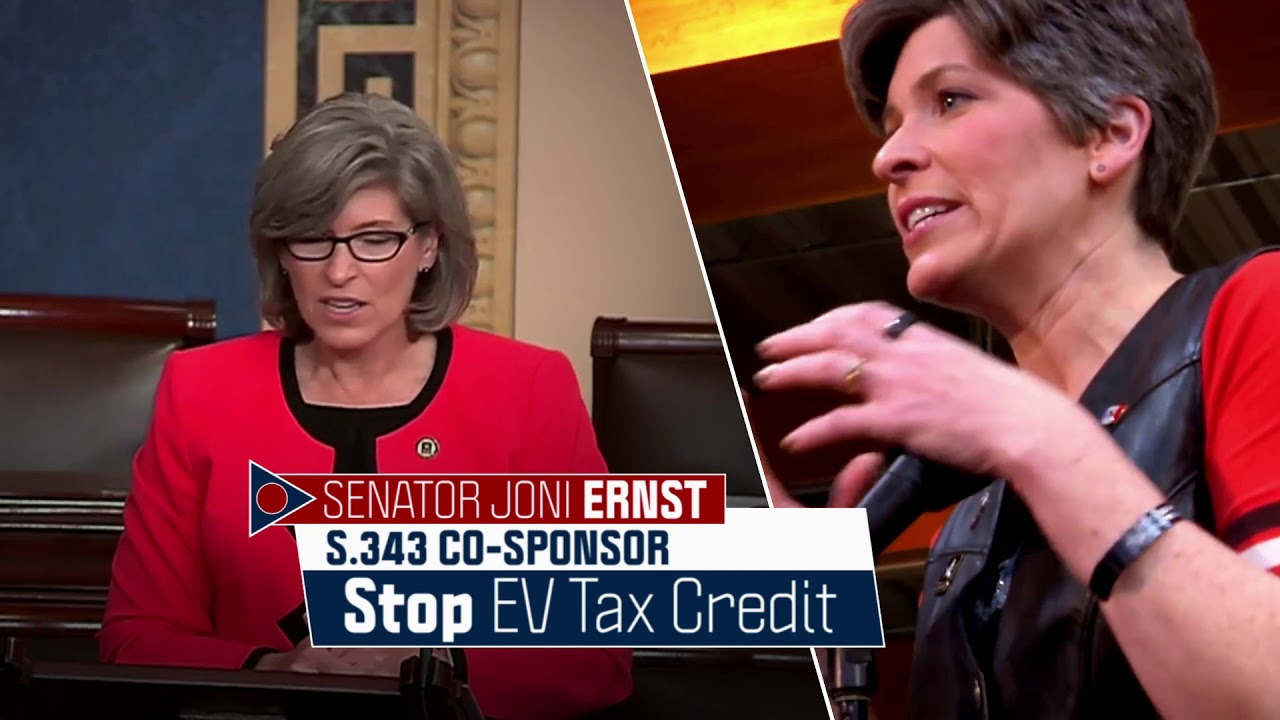 :{ supporting her last year.}: On March 18, One Nation announced another $970,000:{ in television, radio, and digital ads praising Ernst as a champion for lower drug prices. Ernst said she supported, but did not sponsor, the Wyden-Grassley bill that Pfizer and the Chamber lobbied against, but voted against a 2017 }:bill:{ that would have allowed the U.S. to import cheaper drugs from Canada. }:
Ernst in 2018 co-sponsored a Republican-led bill as part of a party effort to assuage fears among its base after its successful repeal of parts of the Affordable Care Act. Republicans said the bill would protect people with preexisting conditions, but it would still have allowed insurers to discriminate against patients for other reasons, or sell policies that don’t cover other medical problems, HuffPost reported.
Critics say it’s unsettling, if not unsurprising, that a McConnell-aligned dark-money group would add a former pharmaceutical lobbyist to its board while running ads celebrating Republican senators for pushing lower drug prices, a cause McConnell himself has stymied in Congress.
“One Nation’s mission is to make sure that Republicans hold their majority in the Senate. They are going to craft their message around that,” said Robert Maguire, research director at Citizens for Responsibility and Ethics in Washington. “It does not mean that One Nation has staked out that policy. They think that voters in Maine want to hear that.”
Johnson & Johnson is cheating women and girls out of the chance to beat poverty.
Turns out the pharmaceutical giant that has promised generations of children 'no more tears' is dodging its taxes.
And it’s not the only member of the big pharma club that systematicallystashes its profits in overseas tax havens. According to a new report by Oxfam International, Pfizer, Merck & Co (MSD), and Abbott are at it too. In doing so,they’re cheating governments out of millions that could be invested in public services – healthcare, education, and infrastructure.
==
u az
Egregious attacks on science are escalating. So we spent July fighting for researchers, evidence, and facts. Here's what we've been up to.
Arizona Case Update: We filed our fourth legal brief in support of the University of Arizona and its ongoing effort to keep scientists’ private files out of the hands of a conservative group that seeks to inhibit, discredit, and distort established climate science. This case has bounced around Arizona state courts since 2013 and is now before the Arizona Supreme Court in a special action.
Our brief, filed in partnership with the American Meteorological Society and Pfizer, Inc., argues that scientists must be protected from invasive attempts—like the ones in this case—to misuse open records laws to obtain their confidential correspondence and research materials. Forcing the release of such documents will set a dangerous precedent and be extremely damaging to the scientific endeavor.
http://www.alternet.org/election-2016/bernie-sanders-us-treasury-block-pfizers-tax-evasion
Bernie Sanders urged U.S. Secretary of the Treasury Jack Lew to block a move by pharmaceutical company Pfizer that would create a major tax evasion. In aletter to the Treasury Department on Friday, Sanders explained why the planned $160 billion merger between Pfizer and Allergan would evade U.S. taxation when the headquarters moved from America to Ireland, where Allergan is based.
The potential for Pfizer's tax inversion, or corporate relocation to a tax haven, has a deadline, as the merger would be created in the second half of 2016, theWall Street Journal reports....
==
http://www.opensecrets.org/news/2015/11/pfizer-wont-lack-resources-in-lobbying-for-160-billion-allergan-deal
==
viagra and botox
pfizer allergan scam irish tax haven
viagra and botox upfront 11/25/15
https://kpfa.org/episode/upfront-november-25-2015/
RR law allows trasnational tp offshore taxes? Ensign? jobs bill let Pfizer fire 40K ppl, tho spozed to create 600K
==
==
blog: And Hank A. McKinnell, Jr.’s, whose five-year tenure as CEO of Pfizer was marked by a $140 billion drop in Pfizer’s stock market value. Notwithstanding, McKinnell walked away with a payout of nearly $200 million, free lifetime medical coverage, and an annual pension of $6.5 million. (At Pfizer’s 2006 annual meeting a plane flew overhead towing a banner reading “Give it back, Hank!”)
http://www.sourcewatch.org/index.php/Pfizer
Pfizer Inc is the world's largest pharmaceuticals corporation. Brand namesViagra, Celebrex, Norvasc, and Lipitor. The company also manufactures animal care products such as Revolution, an anti-parasitic. In 2009, Pfizer acquired its rival Wyeth for 68 billion dollars.[1] Wyeth's over the counter brands included Advil, Centrum, Robitussin and ChapStick.[2] The majority of its sales are conducted through the whole sale companies McKesson and Cardinal Health. ^[3]^ See also complete listing of the company's prescription drugs. ^[4]^
In 2010, Pfizer had a total revenue of $67.81 billion[5] Its CEO, Ian Read, had an annual compensation of $17.4 million the same year.
Connection to the American Legislative Exchange Council
Michael Hubert, Vice President for "Leadership Communications," is Pfizer's representative on ALEC's corporate board, as of 2011. Furthermore, Pfizer was a "Vice Chairman" level sponsor of 2011 ALEC Annual Conference,[6][7]
A list of ALEC corporations can be found here.
| About ALEC |
|---|
| ALEC is a corporate bill mill. It is not just a lobby or a front group; it is much more powerful than that. Through ALEC, corporations hand state legislators their wishlists to benefit their bottom line. Corporations fund almost all of ALEC's operations. They pay for a seat on ALEC task forces where corporate lobbyists and special interest reps vote with elected officials to approve “model” bills. Learn more at the Center for Media and Democracy's ALECexposed.org, and check out breaking news on our PRWatch.org site. |
Overview & history (subsection)
See also History of Pfizer.
Lobbying
Pfizer spent $10,740,000 on lobbying in 2010. $2,120,000 of this amount went to 17 outside firms with the remainder being spent using in-house lobbyists. ^[8]^
According to Holly Bailey of Open Secrets:
"Over the last two years, Pfizer has been waging a legal battle to extend its patent on the epilepsy drug, Neurontin, and in its merger with Pharmacia, the company will gain access to dozens of new drugs whose patents expire in coming years. Even before its announced merger, Pfizer was among the most aggressive in the industry when it comes to fending off legislation that would seemingly make patent laws more lax, claiming that such legislation would curb the industry’s research and development into drugs that could cure rare diseases.[9]
To make that argument, Pfizer has retained some of the Washington’s best known lobbyists, including former Reps. Bill Paxon (R-N.Y.) and Norman Lent (R-N.Y.) and former Sen. Dennis DeConcini (R-Ariz.). The company also retains Scott Hatch, son of Sen. Orrin Hatch (R-Utah), who authored the drug patent law that remains in effect today. Since 1997, Pfizer has reported nearly $20 million in lobbying expenditures, according to the Secretary of the Senate. (Pharmacia spent $13.4 million during the same period.)" ^[10]^
Political contributions
Open Secrets reports that in 2010, Pfizer gave $1,581,836 to candidates. $826,045 was given to federal Democratic candidates and $738,791 on federal Republican candidates.
Hank McKinnell, then Chair & CEO of Pfizer, was a Bush Ranger having raised at least $200,000 for Bush in the 2004 presidential election. ^[11]^
Pfizer gave $2,865,575 dollars to federal candidates in the 2008 election cycle through its political action committee (PAC) - 50% to Democrats and 50% to Republicans. ^[12]^
Pfizer was among several companies giving record political contributions four years after a law was passed attempting to reduce the impact of corporate money in U.S. politics. According to Bloomberg:
"The companies are working around the law, which banned unlimited contributions to parties, by giving more money through their political action committees than ever before in the first year of an election cycle, and writing checks to loosely regulated independent groups, financial disclosures show." ^[13]^
Pfizer and health care reform
In January of 2006, Pfizer, through its public affairs agency Spectrum Science, hoped to, "open dialogue about, and ultimately reform, the nation's health care system." Spectrum started organizing the "Ceasefire on Health Care" town meetings for Pfizer in June 2005. The idea, originated from former U.S. Senator John Breaux. According to Spectrum's director of public affairs, Claire Barnard:
"The thrust of the campaign ... is to make incremental changes. I think the public is really yearning for this. I think people are tired of turning on the TV and seeing all the name calling."
The "Ceasefire on Health Care" town meetings are funded by Pfizer and American University. They have featured Senator Hillary Clinton and former Congressman Newt Gingrich. C-Span has covered the events, which have been held at the Brookings Institution, Heritage Foundation and National Press Club. ^[14]^
Corporate Accountability
Shareholders may attend and vote in annual meetings and add items to the agenda. They may also nominate candidates for board member elections. There are no exceptions to the one share, one vote principle. Pfizer has initiated a series of reforms to improve shareholder control, including annual elections for all directors.[15]
Stakeholder engagement
Pfizer has two stakeholder specific engagement policies: Pfizer’s Global Policy on Interactions with Healthcare Professionals and Pfizer Principles for Working in Partnership with Patient Advocacy Groups. Both identify key principles that should underpin engagement with health care professionals and Patient advocacy groups, respectively.
Both make a commitment to being open about how shareholders affect decisions, but they do not identify when shareholders may participate in company decisions. Furthermore, there is no assurance that Pfizer will change policy as a result of stakeholder wishes (or even provide explanations). The two policies are overseen by a number of senior executives. The Global Policy on Interaction with Healthcare Professionals is overseen by multiple senior executives. It covers global marketing, research and development; and global business conduct. The Vice President of Global Alliance Development and the Senior VP of Philanthropy and Stakeholder Advocacy, oversee Pfizer’s Principles of Working in Partnerships with Patient Advocacy Groups. Each policy is disseminated through multiple mediums and translated into at least 20 languages. Pfizer does not provide training for staff on stakeholder engagement issues. Also, Pfizer has not institutionalized external stakeholder engagement in corporate decision-making. The company created a Worldwide Public Affairs and Policy department dedicated to philanthropy and shareholder advocacy, which solicits feedback from stakeholders. However, shareholders do not participate directly in any committee or group.
Human rights
Pfizers Corporate Equality Index Rating from Human Rights Watch for 2006 was 100.[16]
Social responsibility initiatives
In 2001, Pfizer announced that it will provide an unlimited free supply of Diflucan, a drug that combats fungal infections associated withAIDS, to 50 of the world’s poorest countries.Previously, Pfizer had conducted a successful pilot program in South Africa. The patent on Diflucan expired in 2004. ^[17]^
Public relations
Strategy
In the wake of a CEO change in 2006, Pfizer changed the name of its corporate affairs practice to public affairs, in order to "better reflect the increasing importance of influencing public policy and opinion to the company's success." The change was described as, "a larger reorganization of Pfizer's management structure," that included Jeff Kindler's promotion from head of corporate affairs to CEO:
"Rich Bagger will head Pfizer's new worldwide public affairs and policy division, which previously had been called the corporate affairs division." In that role, Bagger will oversee "public policy development, government relations, communications, media, philanthropy, and stakeholder advocacy." ^[18]^
According to a memo from the new CEO to employees, the changes would help Pfizer make decisions more quickly, an important goal, as "patients and their families are using newly available information to take more control over their health care decisions." ^[19]^
Americans for Medical Progress
Pfizer personnel sit on the board of AMP. See also Americans for Medical Progress.
Drug controversies
Lipitor ads
In September 2008, Pfizer resumed advertising for its cholesterol drug Lipitor. In February 2008, the drugmaker pulled its Lipitor ads, over charges they were misleading. The old ads featured artificial heart inventor Robert Jarvik, who appeared to be giving medical advice though he isn't a practicing physician. The new ads feature "John E.," a baby boomer and heart-attack survivor who "didn't take a cholesterol-fighting drug before his heart attack ... despite a history of high cholesterol." A Pfizer marketing executive said, "When we did testing with consumers ... John really resonated with them." Pfizer is eager to maximize sales before its patent on Lipitor ends in 2011. ^[20]^
Celebrex
In November 2004 Ogilvy Public Relations Worldwide, part of the WPP Group; took over accounts for Pfizer's Celebrex and Bextra pain medications. In December of 2004, a report linked high doses of Celebrex (a member of the class of drugs referred to as Cox-2 inhibitors) to increased risk of heart attacks.[21] The co-managing director of the WPP Group's health and medical practice, Sherry Pudloski, told O'Dwyer's PR Daily that they still held the account, but would not elaborate on what they did for the company. ^[22]^
Off-label promotional practices (Neurontin)
Access to pharmaceutical industry documents in 2006 revealed marketing strategies used to promote Neurontin for off-label use. ^[23]^ In 1993, the US Food and Drug Administration (FDA) approved gabapentin (Neurontin®, Pfizer) only for treatment of seizures. Warner-Lambert, which merged with Pfizer in 2000, used activities not usually associated with sales promotion. This included continuing medical education and research, sponsored articles about the drug for medical literature and alleged suppression of unfavorable study results, to promote gabapentin. Within 5 years, the drug was being widely used for the off-label treatment of pain and psychiatric conditions. In 2004, Warner-Lambert admitted to violating FDA regulations by promoting the drug for pain, psychiatric conditions, migraines and other unapproved uses. The company paid $430 million to resolve criminal and civil health care liability charges.[24], ^[25]^
Diflucan (fluconazole)
Pfizer has been involved in controversies over the medicine Diflucan (generic name fluconazole). In 1998, a campaign by Thai public health groups led to the elimination of the Pfizer monopoly on selling fluconazole in Thailand. Subsequently, the price decreased from 200 baht to 6.5 baht in nine months. Faced with pressure for compulsory licenses to the Pfizer patent on this drug, the company later established a program for limited access to the medicine in Africa. ^[26]^
Antivirals (Viracept & Maraviroc)
Drugs used to treat HIV and AIDS are various classes of toxic chemotherapies known as "antivirals" or "antiretrovirals". AIDS drugs manufactured by Pfizer include Viracept (protease inhibitor), Maraviroc and Maraviroc Rescriptor (entry inhibitors).[27] See also AIDS industry.
According to company information, in the U.S., 46% of all new HIV/AIDS cases occur in the South. From 2003 to 2006, the Pfizer Foundation funded 23 innovative HIV/AIDS prevention programs and strengthened the capacity of community-based organizations to reach and serve their communities.[28] Since 2003, the company has committed a $3 million dollar grant supporting a southern HIV/AIDS prevention (by way of Pfizer pharmaceuticals). However, according to he European AIDS Treatment Group (EATG), collection of activists from 31 European countries:
"The design of the trial for Pfizer's CCR5 inhibitor Maraviroc (previously known as UK-427,857) is putting people with HIV infection at unnecessary risk of developing AIDS."[29]
On June 20, 2007 Maraviroc was received a letter of approval from the Food and Drug Administration (FDA) advisory board. The letter was a product of expedited review of the novel HIV compound.
Premarin
The Bitter Truth about Premarin. - United Animal Nations
Premarin & PMU ranches
Premarin was approved by the USDA in 1942 for manufacture by Wyeth (now Pfizer). Premarin, a drug derived from pregnant mares’ urine (PMU), is prescribed for "symptoms of menopause". The urine is collected from mares confined in barns on over 70 "PMU ranches" in the United States and Canada. Despite the availability of humane and safer alternatives, Premarin is among the most widely prescribed and profitable drugs in America. The industry is "self-regulated through manufacturer Pfizer’s Code of Practice". Mares in Premarin production commonly suffer from abrasions, leg swelling, excessive boredom, stress, and early death. Strapped to urine collection bags six months out of the year; they are tied to stalls too narrow to turn around or lie down in and are denied free access to water. There is no minimum code of practice for exercise or even that they be exercised at all. ^[30]^
Studies of Premarin health risks
Premarin has been classified as a "dangerous drug" and the number one most likely to cause disability or other serious outcome. ^[31]^ Premarin increases risks of uterine cancer, heart attacks, strokes, breast cancer and blood clots. ^[32], ^[33]^
See also Premarin.
Global drug issues
Nigeria
In May 2006, the Washington Post published a Nigerian government report that had remained unreleased for five years. In this report, a panel of Nigerian medical experts found that Pfizer violated international law, stemming from the company's alleged testing of an unapproved, oral form of**Trovafloxacin**, on children with**meningitis**in Nigeria.
According to Pfizer, they conducted the trial with full knowledge of the Nigerian government.[34] These allegations have been the subject of litigation in both America and Nigeria. On June 5, 2007 the Nigerian government filed a civil lawsuit for $7 billion in damages against Pfizer, in relation to the experimental meningitis treatment given to children. ^[35]. Two hundred children received Trovan in Kano, Nigeria, in 1996, according to Pfizer. The Nigerian and Kano state governments alleged that the antibiotic was administered without parental consent and that it disabled or killed some children. ^[36]^
In July 2007, the Nigerian government filed criminal charges against Pfizer over the trials. ^[37]^ In turn, Pfizer hired investigators to unearth embarrassing information about Nigeria's attorney general Michael Aondoakaa, in hopes that the charges would be dropped.[38]
Philippines
In March of 2006, Pfizer sued the Philippine government and government health officials, to prevent Philippine drug regulators from allowing the importation of less expensive versions of a Pfizer heart disease drug. ^[39]^
Brazil
In 2001, Pfizer requested the U.S. government pressure the Brazilian government against issuing compulsory licenses for the patents on the AIDS drug nelfinavir.
Thailand
In 1998, the Thai government acquiesced to requests by public health groups and eliminated Pfizer’s monopoly on fluconazole, a leading AIDS drug, reducing the price of the drug from 200 baht to 6.5 baht within a year. ^[40]^
Clinical trials
Toxic drug trials on foster children
See also Foster child drug trials.
Animal testing
Pfizer does animal testing.
Facility information, progress reports & USDA-APHIS reports
For links to copies of a facility's U.S. Department of Agriculture (USDA)-Animal Plant Health Inspection (APHIS) reports, other information and links, see also Stop Animal Experimentation NOW!: Facility Reports and Information. This site contains listings for all 50 states, links to biomedical research facilities in that state and PDF copies of government documents where facilities must report their animal usage. (Search: Pfizer, Inc., New York, New York; Wyeth, Philadelphia, Pennsylvania; Wyeth Vaccines, Marietta, PA; Fort Dodge Laboratories, Fort Dodge, Iowa.)
This facility performed animal experiments involving pain or distress but no analgesics, anesthetics or pain relievers were administered. For links to copies of this facility's USDA-APHIS reports, other information and links, see also Facility Reports & Information: Fort Dodge Animal Health, Monmouth Junction, New Jersey.[41]
This facility performed animal experiments involving pain or distress but no analgesics, anesthetics or pain relievers were administered. For copies of this facility's USDA-APHIS reports, other information and links, see also Facility Reports & Information, Pfizer, Inc., White Hall, IL. ^[42]^
USDA AWA reports
As of May 26, 2009, the USDA began posting all inspection reports for animal breeders, dealers, exhibitors, handlers, research facilities and animal carriers by state. See also USDA Animal Welfare Inspection Reports.
Contract testing
Pfizer contract tests out to Huntingdon Life Sciences (HLS). ^[43]^ Hungtindon Life Sciences is the 3rd largest contract research organization (CRO) in the world and the largest animal testing facility in all of Europe. Firms hire HLS to conduct animal toxicity tests for agrochemicals, petrochemicals, household products, pharmaceutical drugs and toxins.HLS has a long history of gross animal welfare violations. See also Huntingdon Life Sciences.
Pfizer also contract tests out to SNBL, ^[44]^ an international contract research organization (CRO). SNBL has a history of gross animal welfare violations. See also SNBL.
Leadership
- Ian Read - CEO - $17.4 million in 2010
- Olivier Brandicourt - President & General Mgr, Primary Care
- Frank D'Amelio - Executive VP, CFO - $6.5 million in 2010
- Mikael Dolsten - President, Global R&D
- Geno Germano - President & General Mgr, Specialty Care & Oncology
- Chuck Hill - Executive VP, Global Human Resources
- Doug Lankler - Executive VP, Chief Compliance Officer
- Freda C. Lewis-Hall - Executive VP, Chief Medical Officer
- Kristin Peck - Executive VP, Global Business Development
- Cavan Redmond - Group President, Animal Health, Consumer Healthcare, Capsugel & Corporate Strategy
- Amy Schulman - Executive VP, General Counsel & Business Unit Lead Nutritionals
- David Simmons - President & General Mgr, Emerging Markets and Established Products
- Sally Susman - Executive VP, Policy, External Affairs & Communications[45]
Former executives
- Jeff Kindler - CEO
- Hank McKinnell - CEO
- Robert M. Amen - former board member
Key executives & pay
- Ian C. Read (57) - Chairman & CEO - $3.30 M
- Frank A. D'Amello (53) - CFO & Senior VP, Bussiness Operations - $3.08 M
- Freda C. Lewis-Hall (55) - Chief Medical Officer & Sr. VP of Executive Compliance Committee
^[46]^
Board members
- Dennis A. Ausiello
- Michael S. Brown
- M. Anthony Burns
- Robert N. Burt
- W. Don Cornwell
- Frances D. Fergusson
- William H. Gray III
- Constance J. Horner
- Suzanne Nora Johnson
- James M. Kilts
- George A. Lorch
- John P. Mascotte
- Ian C. Read
- Stephen Sanger
- William C. Steere, Jr.[47]
^==^
Constance J. Horner
Birthplace: Summit, NJ
Gender: Female
Race or Ethnicity: White
Sexual orientation: Straight
Occupation: Government, Business
Nationality: United States
Executive summary: Former Civil Rights Commissioner
Husband: (two children)
University: BA English Literature, University of Pennsylvania (1964)
University: MA, University of Chicago (1967)
US Commission on Civil Rights (1993-98)
White House Staff Director of Presidential Personnel (1991-93)
:{US Health & Human Services Department:(style="background-color:#fff200"):}: Deputy Secretary (1989-91)
President's Commission on White House Fellowships
Office of Personnel Management Director (1985-89)
:{US Office of Management and Budget:(style="background-color:#fff200"):}: Associate Director (1983-85)
Member of the Board of Foster Wheeler (1996-2003)
Member of the Board of Ingersoll-Rand
Member of the Board of Pfizer (1993-)
Member of the Board of Prudential
Annie E. Casey Foundation Trustee
Brookings Institution Guest Scholar (1993-2005)
:{Bush-Cheney '04:(style="background-color:#fff200"):}:
National Academy of Public Administration Fellow
^==^
Contact
Pfizer
235 E. 42nd St.
New York, NY 10017
Phone: 212-573-2323
Fax: 212-573-7851
Web address: http://www.pfizer.com
Articles & sources
SourceWatch articles
- AIDS industry
- American Cancer Society
- Animal testing
- Consensus Research Group
- Foster child drug trials
- Glover Park Group
- Humane Movement
- Human rights
- National Alliance on Mental Illness (NAMI)
- National Primate Research Center System
- Pfizer Inc/stats, details
- Pfizer Australia Neuroscience Research Grants
- Pharmaceutical industry
- SANE Australia
- Spectrum Science Communications
- War on Animals
- War on Cancer
References
- ↑ Company Description: Pfizer Inc, Hoovers, accessed December 2009
- ↑ Wyeth, Hoovers, accessed January 2009
- ↑ Company Description: Pfizer Inc, Hoovers, accessed December 2009
- ↑ Products, Pfizer, accessed December 2009
- ↑ Pfizer Annual Financials,"Bloomberg BusinessWeek"
- ↑ [American Legislative Exchange Council, 2011 Conference Sponsors, conference brochure on file with CMD, August 11, 2011]
- ↑ ALEC Private Enterprise Board, American Legislative Exchange Council. ALEC.org. Accessed Aug. 11, 2011.
- ↑ Pfizer Inc lobbying expenses, Open Secrets, accessed January 2011
- ↑ Holly Bailey, Prescription Drugs: A Look at Contributions from Pfizer & Pharmacia, Open Secrets, July 18, 2002
- ↑ Holly Bailey, Prescription Drugs: A Look at Contributions from Pfizer & Pharmacia, Open Secrets, July 18, 2002
- ↑ Pioneers and Rangers, Texans for Public Justice, accessed August 2007.
- ↑ 2008 PAC Summary Data, Open Secrets, accessed March 2010
- ↑ Jonathan D. Salant, "GM, Comcast, Pfizer Boost Political Giving, Skirt Federal Ban", Bloomberg, February, 21, 2006.
- ↑ PR Week, January 2006
- ↑ 2006 GAR Corporate Accountability Profile: Pfizer, One World Trust, 2006 (Search Pfizer)
- ↑ Corporate Equality Index, Human Rights Campaign, 2006
- ↑ Barbara Crossette AIDS Fungus Drug Offered to Poor Nations, New York Times, June 2001
- ↑ PR Week, August 2006
- ↑ PR Week, August 2006
- ↑ Jon Kamp, "Pfizer Drops Celebrity Pitch in New Lipitor Spots: As Generics Catch Up, Dr. Jarvik Is Jettisoned From Heart-Drug Ads," Wall Street Journal (sub req'd), September 2, 2008.
- ↑ FDA urges alternatives to Celebrex,"MSNBC.com" 12/18/2004
- ↑ O'Dwyer's PR Daily, 2004
- ↑ Michael A. Steinman, MD; Lisa A. Bero, PhD; Mary-Margaret Chren, MD & C. Seth Landefeld, MD Narrative Review: The Promotion of Gabapentin: An Analysis of Internal Industry Documents, Annals of Internal Medicine, Volume 145, Issue 4, pg. 284-293, 2006
- ↑ Jane E. Henney, MD Safeguarding Patient Welfare: Who's In Charge?, Annals of Internal Medicine, vol 145, no. 3, pp. 305-307, 2006
- ↑ Warner-Lambert to pay $430 million to resolve criminal and civil health care liability charges, U.S. Department of Justice press release, accessed August 2006
- ↑ Emelia Sithole S. Africa okays Pfizer AIDS drug distribution, Reuters, February 21, 2001
- ↑ (Search brand names) Products, Pfizer, accessed December 2009
- ↑ Doing Business Responsibly, Pfizer, accessed December 2009
- ↑ AidsMeds, aidsmeds.com, 2005
- ↑ Premarin, American Society for the Prevention of Cruelty to Animals, accessed January 2011
- ↑ Premarin, Injury Board, Sept 2007
- ↑ Prescription Drugs: Premarin, PDR Health, accessed August 2009
- ↑ Premarin, Drugs.com, January 2006
- ↑ Pfizer faulted over drug trials in Nigeria, msnbc.com, 2006
- ↑ Chris McGreal Nigeria sues Pfizer for $7bn over 'illegal' tests on children, The Guardian, June 2007
- ↑ Nigeria suing Pfizer over study of drug: Officials seek $7b, say some children disabled or killed, Bloomberg News, June 5, 2007
- ↑ Camillus Eboh The Nigerian federal government has filed criminal charges against U.S. drugmaker Pfizer alleging improper behavior in a 1996 drug trial in the northern state of Kano in which it says 11 children died., ABUJA (Reuters), 2007
- ↑ WikiLeaks cables: Pfizer used dirty tricks to avoid clinical trial payout, The Guardian, 9 December 2010
- ↑ Forbes, March 2008
- ↑ Donald G. McNeil, Jr. Medicine Merchants: Patents and Patients; As Devastating Epidemics Increase, Nations Take On Drug Companies, New York Times, July 9, 2000
- ↑ Facility Reports and Information: Fort Dodge Animal Health, Monmouth Junction, New Jersey, Stop Animal Exploitation NOW!, accessed October 2009
- ↑ Facility Reports and Information: Pfizer, Inc., White Hall, IL, SAEN, accessed January 2010
- ↑ Inside Customers, SHAC.net, accessed January 2011
- ↑ Chris Halsne Monkey Boiled Alive At Research Lab, KIRO 7 Eyewitness News, February 2008
- ↑ Pfizer Executive Leadership Team, accessed January 2011
- ↑ Pfizer Profile: Key Executives, Yahoo Finance, accessed January 2011
- ↑ About Pfizer: Board Members, Pfizer, accessed January 2011
External articles
- Martha Rosenberg Pfizer: The Drug Giant That Makes Bank from Drugs That Can Kill You, Alternet, Health & Wellness, July 2010
- PETA Names the 10 Worst CEOs for Animals in Laboratories, People for the Ethical Treatment of Animals, accessed December 2009
- Stephanie Saul, "Celebrex Commercial, Long and Unconventional, Draws Criticism," New York Times, April 10, 2007
- Rick Weiss, "'Serious Misconduct' by NIH Expert Found: Scientist Did Not Report Sending Tissues to Drug Firm and Getting Paid, Report Says," Washington Post, June 14, 2006
- Alex Berenson, "End of Drug Trial Is a Big Loss For Pfizer and Heart Patients", New York Times, December 6, 2006
- Marc Kaufman, "FDA Was Told of Viagra-Blindness Link Months Ago: Senator Criticizes Delay in Alerting Consumers After Safety Officer Warned Agency About D rug", Washington Post, July 1, 2005.
Books
- Peter Rost, M.D. The Whistleblower, Confessions of a Healthcare Hitman", Soft Skull Press, September 2006, ISBN 978-1933368399 (Dr. Rost is a former VP of Pfizer).
- ALEC Exposed
- Global corporations
- Pharmaceutical industry
- United States
- Human rights abuses
- Animal testing
- Huntingdon Life Sciences
- International
- AIDS
- Cancer
- Agriculture
- Gross Animal Welfare Violations
- ALEC Corporations
Deep-pocketed corporate interest are writing big checks to members of the supercommittee, the group of 12 senators and members of Congress who have been tasked with coming up with a plan to cut over $1 trillion from the budget in the next decade.
Ten members of the committee got $83,000 from some of the biggest corporate donors in the country in the three-week period in August that is covered in the latest federal election filings, according to a new analysis by the Sunlight Foundation.
$10,000 of the total came from the political action committee (PAC) of pharmaceutical giant Pfizer. Another $8,000 came from the military contractor Lockheed Martin. Also on the list of donors: Goldman Sachs and Comcast. These are corporations seeking to protect lucrative government contracts.
The supercommittee faces a Nov. 23 deadline to come up with a budget cuts package that will then get an up-or-down vote in the House and the Senate.
The biggest recipient of big donor contributions on the committee was Rep. Dave Camp (R-MI), with $28,500. The biggest recipient on the Democratic side was Rep. Xavier Becerra (D-CA), who took in $15,000.
Remember, these are preliminary numbers. It’s going to be a lucrative few months for those lucky enough to have been appointed to the supercommittee.
[http://www.salon.com/2011/10/07/supercommittee_rakes_in_corporate_donations/]()
Constance J. Horner
Birthplace: Summit, NJ
Gender: Female
Race or Ethnicity: White
Sexual orientation: Straight
Occupation: Government, Business
Nationality: United States
Executive summary: Former Civil Rights Commissioner
Husband: (two children)
University: BA English Literature, University of Pennsylvania (1964)
University: MA, University of Chicago (1967)
US Commission on Civil Rights (1993-98)
White House Staff Director of Presidential Personnel (1991-93)
US Health & Human Services Department Deputy Secretary (1989-91)
President's Commission on White House Fellowships
Office of Personnel Management Director (1985-89)
US Office of Management and Budget Associate Director (1983-85)
Member of the Board of Foster Wheeler (1996-2003)
Member of the Board of Ingersoll-Rand
Member of the Board of Pfizer (1993-)
Member of the Board of Prudential
Annie E. Casey Foundation Trustee
Brookings Institution Guest Scholar (1993-2005)