Truthout -dig
---
TRUTHOUT
IN a Truth Social post last week, President Donald Trump referred to Supreme Court Justice Ketanji Brown Jackson as a “low IQ person.”
Trump repeated that line of attack in a separate post this past weekend, directed at former MAGA ally Candace Owens. His post included a doctored image of *Time*magazine labeling the conservative pundit as “Vile Person of the Year.”
Trump’s use of the insult “low IQ” to deride political rivals or people he considers enemies is not exclusive to people of color. But an examination of the president’s social media posts shows that he overwhelmingly uses the term to target nonwhite people — and communications experts say that the phrase serves as a racist dog whistle to members of his political base.
Using search tools available at TrumpsTruth.org, Truthoutexamined every Truth Social post by Trump that included the term “IQ” from January 20, 2025, through April 25, 2026. In total, Trump used the term “low IQ” or some variation of it in 24 posts.
Trump referred to a white person as “low IQ” in just 32 percent of those posts, while 84 percent of the posts were directed at Black or Brown people.
Trump Shares Racist Podcast Transcript Full of Attacks on Immigrants
Recent polling shows that half of American voters view Trump as a racist.
By Chris Walker , TruthoutApril 23, 2026
In his comments last Wednesday, Trump attacked the Supreme Court in general, whining that the liberal bloc of justices “ALWAYS vote as a group.” But he singled out Jackson as “that new, Low IQ person, that somehow found her way to the bench.”
Although Trump didn’t list her by name, the insult was clearly directed at Jackson, as he noted that the justice in question was appointed by former President Joe Biden. The post referred to the strong likelihood that the court will rule against Trump’s attempt to rewrite the 14th Amendment’s interpretation of birthright citizenship, an effort widely understood as an attempt to further codify white supremacy in the U.S.
In the first 10 months of his second term, Trump never once referred to a white person as “low IQ,” leveling that attack solely against nonwhite people. Although Trump has called figures like California Gov. Gavin Newsom (D) and actor Robert De Niro “low IQ” since then, most of his “low IQ” attacks on white people have been directed at former Republican congresswoman Marjorie Taylor Greene and conservative pundits like Tucker Carlson and Megyn Kelly. Notably, the white people Trump most often refers to as “low IQ” are not his typical political adversaries (e.g. Democrats, progressives, etc.), but rather right-wing individuals who once endorsed him but have since criticized his actions in office.
Among the Black or Brown individuals Trump has targeted with the term are House Minority Leader Hakeem Jeffries (D-New York), Chicago Mayor Brandon Johnson, hosts of the television program The View, Rev. Al Sharpton, radio host Charlamagne “Tha God,” and Reps. Ilhan Omar (D-Minnesota), Rashida Tlaib (D-Michigan), and Jasmine Crockett (D-Texas), among others. Trump has targeted Crockett with no fewer than eight separate posts, calling her “low IQ” in each of them.
Trump — never one to stray from name-calling his political opponents — appears to take a more hostile tone against Black and Brown people. Many of his posts describing Black or Brown individuals as “low IQ” contain additional negative monikers. In one, he described commentator Donna Brazile as “dumb as a rock”; in another, he described female members of the Democratic “Squad” as having “bulging, bloodshot eyes of crazy people,” calling them “LUNATICS, mentally deranged and sick who, frankly, look like they should be institutionalized.”
The president has also indicated that his hatred for people he deems to be “low IQ” is based on a bigoted understanding of genetics. In one post, for example, he states that he believes people with lower IQs are “born that way.”
Experts say Trump’s disproportionate attempts to associate the term with nonwhite individuals are intended as a signal for racists within his far right base.
“Trump’s characterization of people of color as ‘low IQ’ is a racist dog whistle with a long history in the U.S.,” said Karrin Vasby Anderson, communications studies professor at Colorado State University, speaking to AFPabout the matter.
Trump and his audience can say that there’s nothing racist about ‘low IQ’ because that label could be applied to anyone. When Trump uses it primarily against Black people, however, and when it’s connected to this very specific history of how Black people have been framed in US culture since the 19th century, the white supremacists and casual racists in Trump’s audience will respond favorably.
Trump’s use of “low IQ” as a racist dog whistle is just one example of the president publicly expressing bigoted views. Over the past few years, Trump has:
- Posted a transcript of a far right podcast in which the host complained that immigrants from China and India aren’t “like the European Americans of today and their ancestors”;
- Shared a video on social media depicting former first lady Michelle Obama and former President Barack Obama as apes, a centuries-old racist trope against Black people;
- And
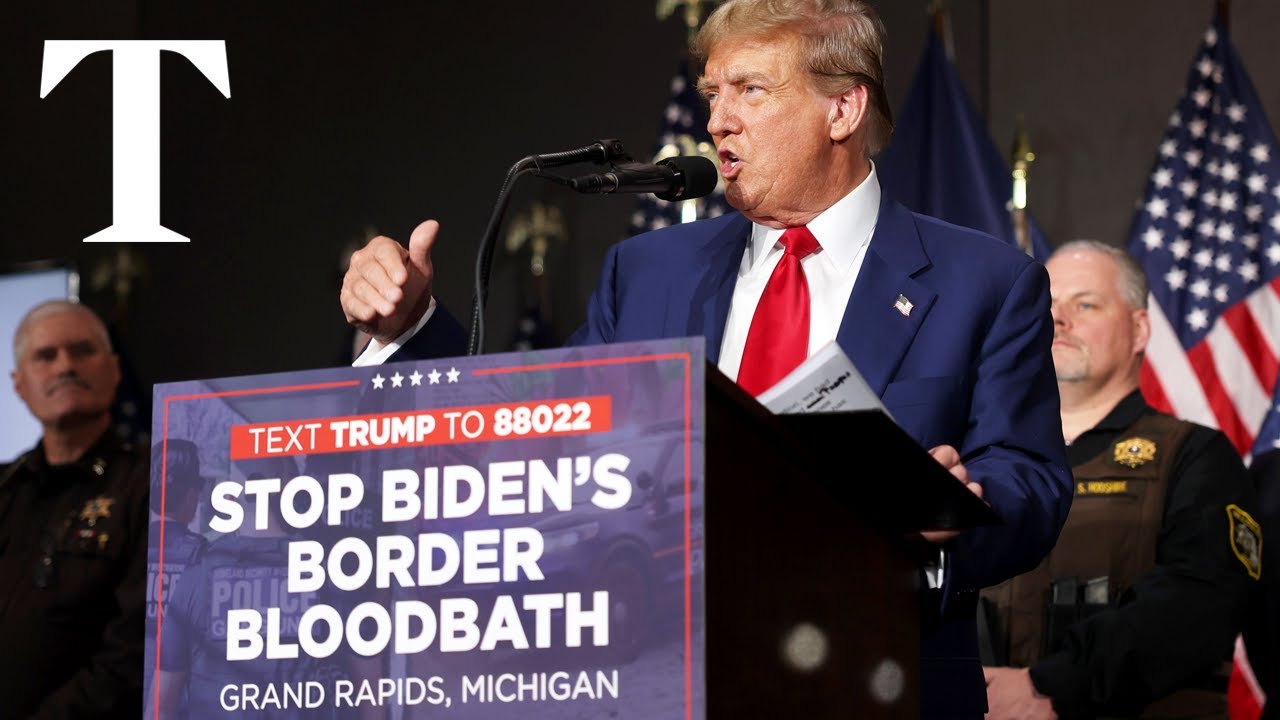 saying they are “poisoning the blood of our country” during a 2024 presidential campaign event — commentary that echoes rhetoric by Nazi dictator Adolf Hitler.
---
https://truthout.org/articles/capitalisms-bullets-in-latin-america-invisible-empires-state-power-and-21st-century-colonialism/
no lnx
Capitalism’s Bullets in Latin America: Invisible Empires, State Power and 21st Century Colonialism
BY Benjamin Dangl, Upside Down World
June 21,2014
Police open fire on protestors blocking road in Bagua Grande, Peru. June 5, 2009. (Image: powless / Flickr)]
Updated 6/17/14
“Soccer, metaphor for war, at times turns into real war,” wrote Uruguayan author Eduardo Galeano. For many people in Brazil, a war has indeed broken out surrounding the current World Cup. Poor communities have been displaced by stadiums and related infrastructure for the event, the high level of security has increased police violence, and the enormous economic costs of the World Cup are seen by many as a blow against the rights of the country’s most impoverished people. As a result of these controversies, the international sports event has been met with wide-spread protests.
Cracking down on some of these protests are Brazilian security forces trained by the US private military and security company Academic, previously known as Blackwater. This training was brought to light by the Brazilian press and US sportswriter David Zirin, who, in an article on the topic, pointed to a 2009 diplomatic cable released by Wikileaks, which showed that Washington anticipated the World Cup-related crises in Brazil would provide opportunities for various types of US involvement. Zirin wrote that for Washington, “Brazil’s misery created room for opportunism.”
Capitalism’s bullets follow the World Cup just as they do Free Trade Agreements (FTAs) signed with the US. Five years ago this month, protests were raging in northern Peru where thousands of indigenous Awajun and Wambis men, women and children were blockading roads against oil, logging and gas exploitation on Amazonian land. The Peruvian government, having just signed an FTA with the US, was unsure how to deal with the protests – partly because the controversial concessions in the Amazon were granted to meet the FTA requirements. According to a diplomatic cable released by Wikileaks, on June 1st, 2009 the US State Department sent a message to the US Embassy in Lima: “Should Congress and [Peruvian] President Garcia give in to the [protesters’] pressure, there would be implications for the recently implemented Peru-US Free Trade Agreement.” Four days later, the Peruvian government responded to the protest with deadly violence, leading to a conflict which left 34 dead, including 24 police officers and 10 civilians. The US-supported escalation of the conflict worked; the FTA moved forward as planned.
The US is infamous for its imperial history in the region. But Washington isn’t the only empire in its backyard. Global and local forces of capitalism, imperialism and modern-day colonialism are at work across Latin America, from soccer stadiums to copper mines.
China has outpaced the US as the primary trading partner with the region’s richest countries; most of its business is in the area of natural resource extraction. And for many nations in the southern cone, Brazil – now a world superpower outpacing Britain as the 6th largest economy – is an imperial force, utilizing much of the region’s natural wealth, land and hydroelectric power to fuel its booming industries and population.
Capitalism has many faces and allies, and they’re not just based in the global north or within these economic giants. As sociologist William Robinson writes “The new face of global capitalism in Latin America is driven as much by local capitalist classes that have sought integration into the ranks of the transnational capitalist class as by transnational corporate and financial capital.” From Mexico to Argentina, this local capitalist class has created some 70 globally-competitive transnational conglomerates.
Friends of empire and capital are found at the heights of power among Latin America’s political leaders. While the US has spied on Latin America for years, as recently made clear by Edward Snowden’s leaks, Chile’s Michelle Bachelet administration asked for the US government’s help in spying on Mapuche indigenous leaders defending land rights during her first term in office. While the US supported the coup against Fernando Lugo of Paraguay in 2012, before he was pushed out of office, Lugo himself called for a state of emergency in the countryside to expand repression of campesino activists fighting soy company incursions on their land.
For many indigenous communities in Latin America, the state, often in alliance with transnational corporations, maintains a colonialist worldview into the 21st century, particularly in the area of natural resource extraction in mining, oil and gas industries. As Professor Manuela Picq of the Universidad San Francisco de Quito in Ecuador writes, “The unilateral expropriation of land for mining today is a continuation of the Doctrine of Discovery. It conceptualized the New World as terra nullis, authorizing colonial powers to conquer and exploit land in the Americas. […] Today, the idea of ’empty’ lands survives in extractivist practices.”
Indeed, mining concessions have been granted on 80% of Colombia’s legally-recognized indigenous territories, and 407,000 square kilometers of Amazon-based mining areas are on indigenous land. As a part of this region-wideextractivist land grab, Picq explains that 200 activists were killed in Peru between 2006 and 2011, 200 people were criminalized in Ecuador for protesting the privatization of natural resources, and 11 anti-extractivist activists have been murdered in Argentina since 2010.
The mining industry is also typically devastating for the environment, whether it’s run by the state or the private sector. Picq points out that Guatemala’s Marlin mine, owned by theCanadian company Goldcorp, utilizes in just one hour the same amount of water a local family uses over the span of 22 years, and the mining industry in Chile – where the state owns the largest copper producing company in the world – utilizes 37% of the nation’s electricity.
Capitalism, empire and 21st century colonialism come from afar and descend on their victims in Latin America. But these forces are also in the tear gas canisters that Brazil’s security forces use at the World Cup, in the state that extracts natural resources on indigenous territory, and in the free trade deals signed in blood.
AN
If you clicked this story, or have any desire to listen to the interview embedded within, odds are you’re a consumer of independent media. Yet even as you’re reading these words, your ability to do so in a timely manner is in grave jeopardy.
Since the repeal in June of Obama-era rules guaranteeing net neutrality, websites like Truthdig, Democracy Now!, Common Dreams and more risk being pushed into an internet slow lane that could severely hamper their readership, if not drive them out of business entirely. For Jeff Cohen, editor and co-founder of the media watchdog Fairness and Accuracy in Reporting (FAIR), it may be the most urgent threat to the First Amendment no one is talking about.
“The biggest issue of freedom of the press is not that Trump is mean to reporters, as he was last week with CNN’s Jim Acosta and Yamiche Alcindor of “PBS NewsHour,” he tells Robert Scheer. “The biggest freedom-of-the-press issue is that Trump is working with Comcast and AT&T and Verizon to end net neutrality. … Ownership of the media and the ownership of the internet, the fact that these big internet providers are [a] few giant companies that also produce content—it’s very, very dangerous.”
In the latest installment of “Scheer Intelligence,” Cohen plumbs a range of topics, including the myriad failures of our political press and the Blue Wave election that wasn’t (quite), as well as the future of the progressive movement. No matter how many congressional seats it ends up flipping, he contends, the Democratic Party is unlikely to change course until it replaces its leadership: “It’s too indebted to the donor class. So they talk with mush in their mouths. ‘We should have more accessibility to affordable housing’—no! What’s popular is ‘Medicare for all.’ ”
Cohen also expounds on the larger mission of FAIR and the kind of counterweight it can provide to an increasingly monolithic media industry. “We set up FAIR because progressive points of view were excluded from mainstream media,” he says. “Typically in mainstream media … the spectrum went from the center to the right. So I spent decades trying to get the progressive view there.”
Between the Federalist Society’s iron grip on the Supreme Court and the ever-encroaching dangers of global warming, the future—both for the country and the planet as a whole—looks impossibly bleak. Yet even in these dark, frenetic times, Cohen maintains we still have reason for optimism. “I study the polls,” he says. “And the polls show that the most progressive demographic, by age, by far, are people under 30, under 35. They’re the most anti-racist demographic, they’re the most tax-the-rich demographic, [and] they’re the most we-better-do-something-about-climate-change demographic.”
Listen to Cohen’s interview with Scheer or read a transcript of their conversation below:
Robert Scheer:Hi, this is Robert Scheer with another edition of Scheer Intelligence, where I hasten to add the intelligence comes from my guests. In this case, it’s Jeff Cohen. I think I most recently had seen you in action at the Democratic Convention in Philadelphia, and you were organizing sort of a grassroots activity. Of course I’ve known you for years, you—way back in the 1980s you started a group called FAIR, Fairness and Accuracy in Reporting, one of the major media watchdog organizations. And then more recently, in 2011, you organized RootsAction.org, and this very effective million and a half people who can push for progressive things. But the reason I wanted to talk to you is, I’m interviewing you the day after the midterm election, here at USC at the Annenberg School for Communication and Journalism. We had a lot of activity at the school, a lot of screens going all last night. Then everyone woke up this morning and not quite sure—there certainly wasn’t the blue wave, but there was blue impact; you get the House. And as I say, when I last saw you, it was a much more optimistic moment, in some sense, for progressives, but the tide was turning within the Democratic Party. And so take me back to the Philadelphia convention, and were you a Bernieite?
...
==