LEO 4 teneo baehr
3 23
see fla desantis ct pack
SEE FED SOC THREE
PRIMARIED BAILEY FOR SCHARF 2024
see pjt 2025 jdv
see artl ii davis stack
merri ok
see CNP
bak 12 24
---
drilled graves
---
-=-=
“What Ginni Thomas and Leonard Leo wrought: How a justice’s wife and a key activist started a movement”
September 10, 2023, 2:42 pmcampaign finance, chicanery, Supreme Court
Very deep dive by Politico’s Heidi Pryzybyla:
At the time, the Citizens United ruling was widely expected, as the court had already signaled its intentions. When it came, it upended nearly 100 years of campaign spending restrictions.
The conservative legal movement seized the moment with greater success than any other group, and the consequences have shaped American jurisprudence and politics in dramatic ways.
From those early discussions among Leo, Thomas and Crow would spring a billion-dollar force that has helped remake the judiciary and overturn longstanding legal precedents on abortion, affirmative action and many other issues. It funded legal scholars to devise theories to challenge liberal precedents, helped to elect state attorneys general willing to apply those theories and launched lavish campaigns for conservative judicial nominees who would cite those theories in their rulings from the bench.
The movement’s triumphs are now visible but its engine remains hidden: A billion-dollar network of groups, most of which are registered as tax-exempt charities or social welfare organizations. Taking advantage of gaps in disclosure laws, they shield the identities of most of their donors and some of the recipients of the funds. Among those who’ve been paid by the groups are leading thinkers and individuals with close personal ties to Leo — including a whopping $7 million to a group run by a close friend and his wife. They also include a for-profit business for which Leo himself is chairman and which received tens of millions of dollars from his nonprofit network.
Leo’s role as the central figure in this movement has long been known, culminating in his acquisition last year of what many believe to be the largest political donation in history. Few are aware of the extent to which the movement’s baby steps were taken in concert with Ginni Thomas.
Two months before the Citizens United decision, but after the justices had signaled their intentions by requesting new arguments, attorney Cleta Mitchell — later to play a role in Donald Trump’s false claims about the 2020 elections — filed papers for Ginni Thomas to create a nonprofit group of a type that ultimately benefited from the decision. Leo was one of two directors listed on a separate application to conduct business in the state of Virginia. Thomas was president. She signed it on New Year’s Eve of 2009, and Crow provided much of the initial cash. A key Leo aide, Sarah Field, would come aboard to help Thomas manage the group, which they called Liberty Central.
After Liberty Central went public, it provoked an outcry over a Supreme Court justice’s wife promoting causes like overturning Obamacare that were before her husband’s court. Leo and Thomas changed gears. His network reactivated a dormant group, the Judicial Education Project, which would go on to become a major supplier of amicus briefs before the nation’s highest court. She created a for-profit consulting business using a similar name — Liberty Consulting — that enabled her to perform consulting work for conservative activist groups.
The Judicial Education Project supplied some of her business: Documents indicate Leo ordered at least one recipient of his groups’ funds, Kellyanne Conway, to make payments to Ginni Thomas for unspecified work, according to a Washington Post story earlier this year.
Now, Liberty Consulting is a focus of interest from congressional committees probing the Supreme Court’s ethics disclosures. Senate Democrats have demanded that Leo and Crow provide a list of “gifts, payments, or other items of value” they’ve given Thomas and her husband.…
-=-=
---
5 26 Billionaires’ Shocking Plan To Silence Working-Class Voters
May 18, 2026
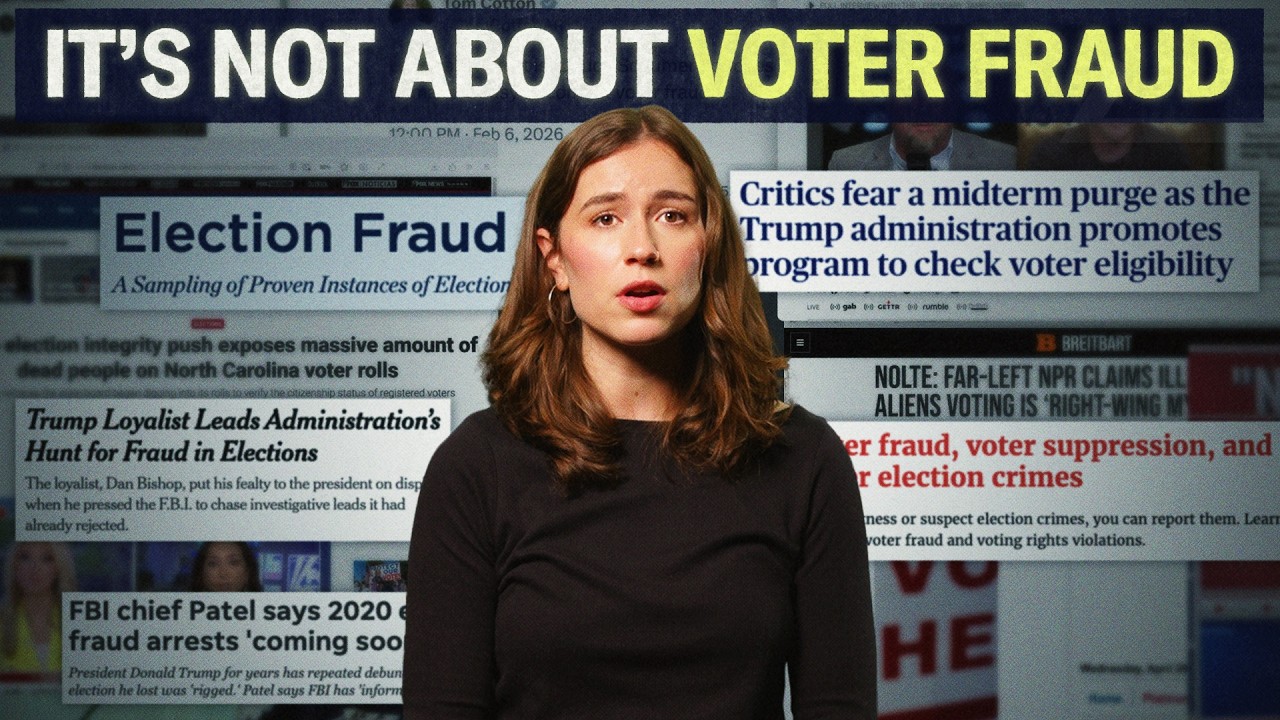
50% of voters say being forced to show a passport would be a barrier to voting, according to a new poll we conducted. Billionaires like Elon Musk, the Uihleins, and Leonard Leo are funding Trump’s attempts to take over elections and nullify your vote.
---
"You Will Rule for Them 100% of the Time": Sen. Whitehouse to Leonard Leo-Aligned Judicial Nominee
BUG GRAPHIC
ALLIANCE FOR CONSUMER ACTION, 5 GPS;
Apr 15, 2026
April 15 | Senator Whitehouse (D-RI) untangles the web of fictitious groups behind Leonard Leo's court capture scheme and confronts Trump's circuit court nominee on his connections to Leo's shady network. Sheldon Whitehouse represents Rhode Island in the U.S. Senate, where he champions policies to uphold American leadership in the world, protect our planet in a changing climate, and hold the powerful accountable.
JUSTIN D SMITH
BUG 5 --> 20 ---ACTION
0:54
54 seconds
BARONS WHO RAN MINES CAPTURE THE MINING SAFETY COMMISSION, SO THEY ALWAYS GOT THE RULES THEY WANTED, AND IN THE SAME WAY THAT
1:01
1 minute, 1 second
RAILROAD ERRANDS CAPTURE THE RAILROAD RATE COMMISSIONS, SO THEY ALWAYS GOT PAID WHAT THEY WANTED.
1:07
1 minute, 7 seconds
AN EFFORT WAS MADE THAT HAS BEEN EFFECTIVE TO CAPTURE THE SUPREME COURT THAT IS THE BACKGROUND THAT I START WITH.
1:17
1 minute, 17 seconds
ONE OF THE POINT PEOPLE FOR THIS CREW OF RIGHT-WING BILLIONAIRES IS A GUY NAMED LEONARD LEO.
1:23
1 minute, 23 seconds
HE WAS SORT OF THEIR AGENT AND COURT FIXER IN THIS EFFORT.
1:31
1 minute, 31 seconds
-- I HAVE DESCRIBED A GRAPH BEFORE THAT DESCRIBE THE CORPORATE STRUCTURES HE SET UP FOR THIS EFFORT. I REFERRED TO IT AS THE LEO BUG,
1:39
1 minute, 39 seconds
BECAUSE IT LOOKS LIKE AN INSECT.
1:43
1 minute, 43 seconds
THIS IS THE ORIGINAL SHAPE OF HIS EFFORT.
1:47
1 minute, 47 seconds
THESE CENTRAL GROUPS TEND TO BE ACTUAL CORPORATE ENTITIES. THESE ARE FICTITIOUS NAMES.
1:56
1 minute, 56 seconds
CTITIOUS NAMES THROUGH WHICH THE OTHER ENTITIES CAN OPERATE.
2:02
2 minutes, 2 seconds
LEXINGTON FUND IS YELLOW HERE BECAUSE UNTIL RECENTLY IT WAS CALLED CONCORDE FUND.
2:07
2 minutes, 7 seconds
WHAT HAPPENED WITH THE LEO BUG IS THAT A BILLIONAIRE DUMPED ON LEONARD LEO A $1.6 BILLION SLUSH
2:15
2 minutes, 15 seconds
FUND THROUGH THE MARBLE FREEDOM TRUST.
2:18
2 minutes, 18 seconds
AND IN THE WAKE OF THAT ENORMOUS
2:24
2 minutes, 24 seconds
FLOOR FUNDS WE HAVE SEEN THE LEO BUG METASTASIZE.
2:31
2 minutes, 31 seconds
ONE NEW ELEMENT IS SOMETHING CALLED ALLIANCE FOR CONSUMERS ACTION.
2:36
2 minutes, 36 seconds
IT IS ANOTHER FICTITIOUS NAME IN THIS CASE FOR THE RENAMED LEXINGTON FUND.
2:43
2 minutes, 43 seconds
IF YOU TAKE A LOOK AT ALLIANCE FOR CONSUMERS ACTION YOU SEE THAT THERE ARE ACTUALLY FIVE
2:51
2 minutes, 51 seconds
DIFFERENT GROUPS THAT ARE ALMOST IDENTICALLY NAMED.
2:54
2 minutes, 54 seconds
ALLIANCE FOR CONSUMERS ACTION FUND, LINES FOR CONSUMERS FUND, LINES FOR CONSUMERS ACTION,
3:00
3 minutes
ALLIANCE FOR CONSUMERS ACTION FUND, AND ALLIANCE FOR CONSUMERS ACTION FUND.
3:07
3 minutes, 7 seconds
AND THEY ARE CONNECTED TO VARIOUS DIFFERENT GROUPS FOR WHICH THEY OPERATE UNDER FOR DISHES NAMES.
3:16
3 minutes, 16 seconds
SO, LEXINGTON FUND AND CONCORD ARE TWO IN THE ORIGINAL LEO BUG.
3:22
3 minutes, 22 seconds
IF YOU GO BACK TO THE ORIGINAL BUG YOU ALSO SEE THE HONEST ELECTIONS PROJECT.
3:27
3 minutes, 27 seconds
THIS WAS USED TO FILE AN AMICUS BRIEF IN THE SUPREME COURT WITHOUT DISCLOSING ITS AFFILIATION WITH THE JUDICIAL CRISIS NETWORK, WHICH SPENT
3:35
3 minutes, 35 seconds
MILLIONS OF DOLLARS TO GET THREE LEONARD LEO-SELECTED SUPREME COURT JUSTICES APPOINTED TO THE COURT.
3:43
3 minutes, 43 seconds
THEY DIDN'T BOTHER TO DISCLOSE THAT.
3:47
3 minutes, 47 seconds
THEY FILED AN AMICUS BRIEF IN COURT UNDER A FICTITIOUS NAME.
3:52
3 minutes, 52 seconds
AND POST-MARBLE FREEDOM TRUST AND THE $1.6 BILLION WE HAVE SEEN THE HONEST ELECTIONS PROJECT ALSO METASTASIZE.
4:00
4 minutes
NOW THERE IS AN HONEST ELECTIONS PROJECT, THERE IS AN HONEST ELECTION PROJECT -- NOT PLURAL
4:06
4 minutes, 6 seconds
-- THERE IS AN HONEST ELECTION PROJECT ACTION FUND, THERE IS AN HONEST ELECTIONS PROJECT FUND,
4:13
4 minutes, 13 seconds
THERE IS AN HONEST ELECTIONS PROJECT ACTION, AND HONEST ELECTION PROJECT ACTION.
4:20
4 minutes, 20 seconds
AND THEY CONNECT TO, AS FICTITIOUS NAMES FOR THOSE SAME FOUR LEONARD LEO ENTITIES, LEXINGTON TRUST, LEXINGTON FUND,
4:27
4 minutes, 27 seconds
YORKTOWN FUND, 85 FUND, CONCORDE FUND, AND THE NEW ONE, THE PUBLIUS FUND.
4:35
4 minutes, 35 seconds
THAT IS A LOT OF CORPORATE ACTIVITY.
4:37
4 minutes, 37 seconds
IF YOU WANT TO PULL THIS OLD LEO BUG IN ITS RATHER DARK SIMPLICITY LOOKS LIKE, THIS IS KNOW WHAT IT LOOKS LIKE.
---
---
NOTUS
Leonard Leo speaks to media at Trump Tower in New York City on Nov. 16, 2016.
April 13, 2026
Conservative legal activist Leonard Leo’s “dark money” operation is getting a makeover.
The Concord Fund quietly filed articles of termination on Jan. 6 of this year, according to previously unreported Virginia business records. Leo’s Concord Fund, which was previously known as the Judicial Crisis Network, has for years been a key node in a network of nonprofits used to steer tens of millions of dollars each year to conservative political committees and causes.
A branch of The Concord Fund remains active in Missouri, where it’s spent millions trying to influence state elections in recent years. It’s unclear why The Concord Fund otherwise terminated its operations. Gary Marx, The Concord Fund’s president, did not respond to emails requesting comment on the organization’s status, and a phone number listed on the group’s latest annual report to the IRS was disconnected.
Leo, a lawyer and businessman, is co-chair of the board of directors for the Federalist Society, which has — until recently — had close ties to President Donald Trump and many prominent Republicans.
Other dark money groups with ties to Leo are taking up activities previously undertaken by The Concord Fund. The ultimate source of the money, funneled through nonprofits or donor-advised funds that do not have to disclose their donors, remains obscured.
“Because the names change, I think most Americans have no idea what’s going on or how many of these differently named groups are the same through line with Leonard Leo at the sort of center of the spider web,” Lisa Graves, founder and executive director of the left-leaning watchdog group True North Research, told NOTUS.
The Concord Fund’s demise — and apparent reimagining — appears to have begun late last year.
In December 2025, a few days before The Concord Fund dissolved, another Leo-linked nonprofit called The Lexington Fund registered several alternative names including Judicial Crisis Network and Honest Election Project Action, according to Texas business records.
Also in December, a new nonprofit popped up in Tennessee: The Yorktown Fund. The nonprofit added the alternative name “Honest Election Project Action” on Dec. 29, the same day The Lexington Fund registered the same pseudonym, according to state business records.
Another Leo-linked nonprofit, The 85 Fund, lists the Honest Elections Project among its alternative names. Rolling Stone first reported the addition of the Lexington Fund and the Publius Fund to Leo’s nonprofit network in 2024.
Trump’s nominee to the U.S. Court of Appeals for the 8th Circuit, Justin Smith, disclosed sitting on the board of the Yorktown Fund and the Publius Fund, Patrick McNeil reported for the Substack newsletter Nomination Notes. (Smith’s nomination hearing before the Senate Judiciary Committee is slated for April 15.)
Neither Smith nor Oramel Skinner, director of The Lexington Fund, responded to requests for comment.
At the end of 2024, The Lexington Fund reported just $305,000 in grants and contributions, according to its latest report to the IRS. The Concord Fund has a prior connection to The Lexington Fund, having reported giving it $105,000 from July 2023 to June 2024.
But by the end of 2025, The Lexington Fund had steered millions into political committees that spent big money in state attorneys general races in 2025.
Now, it’s poised to shape 2026 midterm campaigns, particularly those involving state attorneys general.
The Lexington Fund gave $1 million to the Republican Attorneys General Association in July 2025, according to the organization’s year-end report filed March 30, 2026. First Principles Action, which shares an address with The Yorktown Fund, also gave $200,000 to the Republican Attorneys General Association in December.
The Concord Fund had been the top donor to the Republican Attorneys General Association, but the nonprofit suddenly stopped contributing to the organization in 2025. The Lexington Fund appears to be stepping in to help seed the state attorneys general organization — and other conservative committees.
The Lexington Fund also contributed nearly $3.3 million to the First Principles PAC in 2025, according to Federal Election Commission data.
First Principles PAC and First Principles Foundation were incorporated in Tennessee on Nov. 20, 2024, along with First Principles Action. First Principles is reportedly run by Peter Bisbee, who previously worked for the Republican Attorney General Association and the Federalist Society, and all three First Principles entities share an address with Yorktown Fund.
First Principles PAC steered seven-figures worth of money to state election committees in 2025, including $1 million to the Republican State Leadership Committee, $325,000 to Republican James Uthmeier’s successful bid for attorney general of Florida and $252,000 to Defend Kansas PAC.
Bisbee did not respond to requests for comment.
The Lexington Fund also gave $1 million in June 2025 to Pine Tree Results PAC, a super PAC supporting Republican Sen. Susan Collins, who faces a tough reelection campaign this cycle. And Sentinel Action Fund, a super PAC focused on expanding the Republican majority in Congress, received $500,000 from The Lexington Fund in May 2025.
Leo, who played a key role in helping Trump select three Supreme Court justices in the president’s first term, has long been a boogeyman among liberals.
He’s also controversial on the right: When Trump publicly lambasted Leo as “sleazebag” who “probably hates America” last May, Leo appeared unceremoniously shunned from the inner political circle he had once inhabited. The break came as Trump-appointed judges that the Federalist Society helped select — including three sitting Supreme Court justices — have ruled against some of Trump’s second-term policies, such as his sweeping tariffs.
But the nonprofits and political committees within Leo’s dark-money apparatus continue spending aggressively to the benefit of Republicans as the 2026 midterms approach.
The Concord Fund has for years steered millions of dollars of dark money into politics not only through the Republican Attorneys General Association, but also through the Club for Growth, One Nation and other groups active in elections.
Groups at the forefront of advancing conservative policy and priorities also got grants from The Concord Fund. For example, since the Supreme Court in 2022 struck down the federal right to an abortion, The Concord Fund has poured millions into anti-abortion groups involved in state abortion-ban efforts and the decades-long fight at the federal level to restrict access to mifepristone, a drug used to induce abortions.
Dark money is hardly limited to conservatives. Democrats and Republicans both rely on dark money to fund their operations, including super PACs aligned with their respective leadership in the House and Senate.
“It matters when these groups shape shift because it makes it harder for people to track them, you know, and to tell that story of continuity: how much this one person, over the past decade, has had such an extraordinary influence,” Graves told NOTUS.
---
LESSIG SAYS 2 SUPERPACS TO KILL mAINE EFFORT ARE ll?
ON W KARA S 2 26
The Supreme Court could end Super PACs — here's how
Feb 5, 2026 On with Kara Swisher
Lawrence Lessig — Harvard law professor, former presidential candidate, and founder of Equal Citizens — joins Kara to explain why Super PACs are one of the root causes of political corruption in the U.S. and how a little-noticed legal case could fundamentally change how elections are funded. He breaks down why Citizens United didn’t actually create Super PACs, how the Supreme Court could dismantle them without overturning precedent, and why both parties are trapped in the same broken system. Their conversation also digs into:
- How tech leaders went from libertarian-light idealists to political power brokers
- Why billionaires and institutions so easily cave to authoritarian pressure
- The Epstein scandal, dirty money, and institutional moral failure
- Why AI-driven engagement is already undermining democracy
- How citizen assemblies could offer a real alternative to broken governance
Lessig argues that unless the U.S. confronts the role of money in politics, and the media systems amplifying division, democracy itself may not survive in its current form Introductio
 Why money in politics is worse now than eve
 The lawsuit that could end SuperPAC
 Major voting rights cases in the Supreme Court
 Explaining Trump's FBI raid in Georgia
 Jeffrey Epstein, dark money, and institutional corruptio
 The message Democrats need to win the next electio
 Why AI is already breaking democracy
 Citizen assemblies and the future of governance
---
---
AN PP 4 26
Across the country, Republican-led state legislatures are passing a slate of laws that effectively shield oil and gas companies from legal claims that they are responsible for the destruction and mounting toll caused by climate change. Fifteen laws have either been passed or are currently being debated in 11 states. Together, they threaten to remove long-standing tools for the public to hold corporations accountable.
A ProPublica investigation has found that most of these bills are part of a coordinated effort, orchestrated by a constellation of groups that share staff or have funding ties to the prominent conservative activist Leonard Leo, who is credited with placing conservative justices on the U.S. Supreme Court. These groups have drafted state legislation, planned its dissemination and engaged a well-connected lobbying firm to get them signed into law.
The effort is unfolding as courts are weighing more than 30 significant lawsuits by states, counties and municipalities accusing fossil fuel companies of misrepresenting the risks their products posed to consumers and seeking to recoup the costs of disasters and other climate impacts like wildfire losses or coastal flooding that their products helped cause. A goal of the legislation is to block these cases from going forward and prevent new ones from being filed.
The strategy to establish state laws that will make it all but impossible to sue oil and gas companies was laid out in detail by a group of lobbyists and political operatives in December, during a panel presentation at the annual States and Nation Policy Summit of the American Legislative Exchange Council — the influential organization that brings together state lawmakers, corporate leaders and conservative activists to draft and promote legislation.
During the session, one of the panelists, Will Hild, the executive director of a nonprofit called Consumers’ Research, described the climate cases as a liberal effort to use the judicial system to exact a new tax on energy companies in the form of civil judgments. Another panelist, Oramel H. Skinner, the former solicitor general for Arizona and the executive director of the nonprofit Alliance for Consumers, warned that those judgments will trickle down to make citizens’ lives less affordable and ultimately make many of their choices — whether to own pickup trucks or purchase a side of beef — illegal.
ProPublica reviewed an audio recording of the event obtained by the nonpartisan watchdog group Documented.
Hild and Skinner had come to the session with a ready-made fix: a set of pre-written bills and plenty of funding.
Consumers’ Research and the Alliance for Consumers are both funded by organizations connected to Leo. ProPublica examined lobbying records across 25 states, federal tax disclosures for more than a dozen organizations and notes from other closed-door strategy sessions among ALEC members and found that several Leo-supported groups are part of a national strategy to give legal immunity to companies for their climate emissions.
Since 2021, Leo has been deploying a $1.6 billion gift through a series of nonprofits and other organizations that obscure the source and the recipients of donations — so-called dark money groups. Much of that money has been routed through a nonprofit judicial advocacy group Leo founded — now called The 85 Fund — which both receives and disseminates Leo’s funding. Many of these nonprofits are increasingly focused on issues related to climate change.
The panel session’s moderator, Michael Thompson, is a senior vice president at CRC Advisors, Leo’s for-profit Virginia-based political and corporate consulting firm. He also sits on ALEC’s Private Enterprise Advisory Council. Hild’s organization, Consumers’ Research, received more than 65% of its funding in 2024 through a dark money group called Donors Trust. The 85 Fund contributed more than $67 million to Donors Trust in 2024. Consumers’ Research also works closely with — and contracted more than $670,000 of work in 2024 to — CRC Advisors. Another panelist, Paul N. Watkins, was a legal fellow at Consumers’ Research. According to tax filings, his law firm received more than $2.2 million in 2024 from the group. As recently as 2024, Skinner was also counsel for Leo’s 85 Fund, according to the nonprofit’s tax filings.
= POWELL MEMO BS
“For decades, the left has leveraged immense resources to capture the institutions that shape our society — the legal system, universities, medical and scientific bodies, the entertainment industry, and our biggest corporations,” Leo wrote to ProPublica in a text message. “That takeover resulted in a radically woke culture that does not reflect the will of the American people, or the pillars of limited constitutional government that made our country great. That is why our enterprise supports organizations that are committed to crushing liberal dominance and restoring balance in the institutions that shape society.”
At the ALEC session, Skinner presented a model bill that would effectively bar cities and towns from bringing public nuisance lawsuits against corporations and others when the issue is a broad public harm like climate change. In several cases, plaintiffs have argued that the impacts of climate change — the buckling of a road from extreme swings in temperature, for example — are a “nuisance” caused by fossil fuel companies.
Nuisance claims are common in the American legal system, giving individuals, companies or communities a way to sue when someone else’s actions damage their property, degrade the health or safety of the environment around them or interfere with their rights. Under these laws, parties can ask for financial compensation or seek court orders to remedy problems, such as pollution. Skinner, however, argues that nuisance laws should only be used to address local, easily fixable problems, like excessive noise from a bar. His bill would curtail the use of public nuisance suits in climate cases by limiting liability for manufacturers and other businesses and giving state attorneys general the sole authority to bring them.
“Think really hard about every lever you have in your states to shut off the ability for this woke lawfare machine to churn,” Skinner told the audience. “The left’s goal is to reshape society around you using the courtroom.”
The second draft law, called the Energy Freedom Act, was produced by the policy nonprofit associated with Hild’s organization. It would, among many provisions, shield businesses from liability related to emissions of greenhouse gases if those releases did not violate the federal Clean Air Act.
Critics of the bills say they subvert the rights of local communities. They send the message that “you can pollute with impunity,” said Carly Phillips, a senior scientist with the Union of Concerned Scientists. “It’s really a thumb in the eye of places that are affected by climate change.”
The push to block climate suits across the states comes as several of the cases against the oil industry approach, or have already entered, the perilous legal phases of discovery, when plaintiffs will have the opportunity to seek confidential industry documents and depose oil executives. The stakes for oil companies are enormous. By some estimates more than $10 trillion in damages can be attributed to U.S. emissions.
:{:{There’s a reason why state and local governments have increasingly brought these suits. The frequency and cost of climate-influenced disasters, including severe storms, drought and flooding, continues to mount — between $350 billion and $450 billion in each of the last three years — stretching government budgets.}:
Significantly, the science that makes it possible to attribute how much any one disaster was influenced by climate change has steadily advanced. To cite one example, the March heat waves across the U.S. would have been virtually impossible without the emissions that have caused climate change, according to the European science group World Weather Attribution, and were about four times as likely to happen as they were a decade ago.}:
Boulder, Colorado, is among the places facing increasing droughts, more extreme precipitation and larger wildfires — all of which are significantly propelled by climate change linked to the emissions from the use of fossil fuels. The state has estimated the costs of these perils will run into the many hundreds of millions of dollars. In 2018, Boulder County sued Exxon Mobil and the Canadian oil company Suncor Energy, accusing the companies of “intentional, reckless and negligent conduct.”
Among its claims, the county alleged the oil companies engaged in a conspiracy to mislead the public and violated consumer protection rules by mischaracterizing the dangers of their products. They accused the oil companies of creating a public nuisance by altering the environment and leaving the county to pay to abate growing hazards such as the flooding that tests roads and bridges. Exxon Mobil and Suncor Energy have never filed a response in Colorado but asked for the case to be dismissed.
Ever since, the lawsuit has been mired in a dispute over whether Colorado courts were the correct venue, with the state Supreme Court ultimately ruling last May that they were. Suncor filed to the U.S. Supreme Court to reconsider, and this fall it will weigh the company’s petition asking whether federal environmental law preempts the state law.
:{:{The high-profile national court case is just one facet in an increasingly tense fight over liability for the fossil fuel industry. In January, the American Petroleum Institute, the largest fossil fuel industry group in the United States, said fighting the climate liability lawsuits was one of its top priorities in 2026. Lobbying records for the group from last year show that it advocated for legislation to protect oil producers from climate lawsuits at the state level. }:
The Trump administration; other industry groups, including the Chamber of Commerce; and several of the nonprofit advocacy groups associated with Leo have argued that state courts are the wrong venue for claims that ultimately concern emissions that drift widely across borders, and they wish to see other cases moved or dismissed. They say that because the federal government already has the authority to regulate those emissions, the federal courts, not the states, should hear the claims.}:
In an interview, Hild told ProPublica that he sees the suits as an illegitimate effort to enact policy through the courts and to “regulate the entire U.S. economy from a single state.”
In an email, Skinner wrote: “Our effort is not one focused on climate change. But it is true that left-wing activists and their dark money donors have put vast sums of money and years of groundwork into pushing a coast-to-coast campaign of climate-focused public nuisance lawsuits.”
Neither Watkins nor Thompson responded to requests for comment.
When Skinner and Hild finished their presentation at ALEC they made a QR code available to download the language of the model bills and directed the audience to a woman named Catherine Gunsalus, who was in the back of the room. She would be able to answer any questions, they said.
Gunsalus until recently worked for the Heritage Action Fund, the political and lobbying arm of the Heritage Foundation, the Trump-aligned think tank that is most recently known for promoting the Project 2025 agenda. Records show that Gunsalus has also lobbied in collaboration with another Leo-affiliated group, Americans for Public Trust.
In April 2025, she formed a lobbying firm called Varidon Strategies and began registering in states almost immediately afterward, according to records. By mid-summer, Varidon was representing Alliance for Consumers Action Fund; Consumers’ Research; The Honest Election Project, an affiliate of The 85 Fund; as well as other Leo entities in 25 states. In the majority of those filings, Varidon used an email address at the domain of Holtzman Vogel, a Virginia-based law firm that is often retained by Leo’s organizations.
Gunsalus did not reply to a detailed list of questions.
In the four months since the ALEC summit, there has been substantial activity in the states where Varidon has registered. On Jan. 5, representatives in Missouri introduced the loosely related Eliminate Criminal Profiteering Act, which could stop revenues flowing to law firms from settlements in the sort of nuisance suits often used in climate cases. Two days later, legislators took up the Public Nuisance Reform Act, which proposes narrowing the definition of what could be considered a nuisance.
That same month, similar bills were introduced in Indiana, Oklahoma and Tennessee. In February, eight more followed in Oklahoma, Iowa, South Carolina, Utah, Louisiana and Kansas. Skinner, who is registered to lobby in Kansas, was invited to testify in a hearing about that state’s bill and launched a new “End the Lawfare” website targeting the “left-wing” agenda. As of April 2, versions of the model legislation offered at the ALEC meeting have been introduced across 11 states altogether. In Utah, the governor has signed two related bills into law, and in Tennessee and Indiana, bills are awaiting their governors’ signature.
The more states there are with some sort of waiver in place, the narrower the pathway for cities and states to seek redress as environmental conditions worsen, and the costs continue to rise. Hild and Skinner and the Leo network’s bills also serve another purpose: teeing up a conflict that pits states against one another, a conflict that only the Supreme Court or Congress can finally resolve.
As Hild put it at the ALEC gathering, “This is economic civil war.”
---
12 25 YTFEDSOC
TRUMP JUDGE ~ TARIFF
MARK JOS STERN
=----
---
JCN $ tpusa KIRK
---
TFG 5 25
opus dei dtr canon wisc mark kelly
TFGuy leo and Musk 5 25
:{:{In our 20th (!!) episode of This F*cking Guy, Erin and Alyssa take a look at a guy who may not be a household name but has played a leading role in creating the current hellscape of American politics. His name is Leonard Leo and as one of the leading architects of Donald Trump's Project 2025 he has been a key player in securing the conservative majority on the Supreme Court and drowning our elections in dark money. Join us for a deep dive into his efforts to impose a right-wing Christian agenda onto all of America and how he is now setting his sights on the entertainment and tech industries.}:
CHAPTER
 Intr
 Early Lif
 DC Internship and The Federalist Societ
 The Judicial Confirmation Networ
 “The Honest Elections Project
 Leonard’s Judges and Their Luxury Gift
 Dark Money and Trump’s Judge
 Ad Brea
 Leonard’s Lavish Lifestyl
 CRC Advisors and “$1.6 Billion is a cross
 Cafeteria Catholicis
 Moves into Influencing the Entertainment Industr
 Electoral Failure
 Rating Leonard Leo }:
:{:{:{SOURCES:}:
https://www.propublica.org/article/we... https://www.ebsco.com/research-starte... https://www.washingtonpost.com/nation... https://www.rollingstone.com/politics... https://jacobin.com/2023/07/leonard-l... https://www.propublica.org/article/da...https://www.nytimes.com/2024/05/28/ma... https://www.washingtonexaminer.com/in...https://www.washingtonpost.com/invest...https://www.washingtonpost.com/invest...https://www.propublica.org/article/sa...https://www.axios.com/2020/01/07/leon...https://www.washingtonexaminer.com/tr...https://www.judiciary.senate.gov/pres...https://www.theguardian.com/law/2024/...https://www.politico.com/news/2023/09...https://www.motherjones.com/politics/...https://slate.com/news-and-politics/2...https://www.motherjones.com/politics/...https://jacobin.com/2024/08/leonard-l...https://www.nytimes.com/2024/05/28/ma...https://www.politico.com/news/2023/11...https://www.levernews.com/tag/leonard...https://www.levernews.com/how-dark-mo...https://www.levernews.com/how-a-secre...https://www.propublica.org/article/le...https://jacobin.com/2024/11/dark-mone...https://www.propublica.org/article/cl...https://www.propublica.org/article/le...https://maplightarchive.org/story/new...https://www.propublica.org/article/da...[https://www.citizensforethics.org/rep...]
Political commentator and comedy writer Erin Ryan and former White House Deputy Chief of Staff Alyssa Mastromonaco are joined by a bicoastal squad of funny, opinionated women to talk through everything from reproductive rights to romcoms. They break down the political news of the week, plus the topics, trends, and cultural stories that affect women’s lives. New episodes drop every Thursday. Get in touch: hysteria@crooked.com.}:

comment:
thcarter123
Terrific YouTube. Really good. I’d say spot on for everything about Leonard Leo (my boss from 2009-2012 at USCIRF) except that he or his court picks believe in “originalism.” Originalism is a rebranding, a marketing scam. Like you say toward the end, Leonard is an extreme right Catholic true believer. That is his political faith. He is a Catholic Crusader. It is called Catholic Integralism, based on Aquinas “natural law.” Today’s intellectual deans of Integralism are Patrick Deneen and Adrian Vermeule. In short, US separation of church and state is heresy. The state must be run by Catholic king, with immunity. This theology runs thru the Inquisition, the Papal States, Opus Dei’s Franco Spain, Hitler’s Carl Schmitt and Leo’s Supreme Court. Leo spent 35 years and $600 million finding and placing Catholics in important slots. Only extreme Catholics. Six Supremes, Kevin Roberts and Roger Severino at Project 2025. JD, a disciple of Deneen, in the White House. Again, terrific video. You tell the Leo story better than most. Hope it gets millions of views.
---
---
---
GMAIL 10 25
pORTLAND, Maine*– Leonard Leo, the conservative operative who built Donald Trump’s radical right-wing supermajority on the Supreme Court, is spending big money to make it harder to vote in Maine, ahead of Susan Collins’s crucial reelection fight next year.
Leo is already a divisive figure in the Pine Tree State: His mansion in the Bar Harbor area has been the site of frequent protests ever since the high court’s conservatives overturned Roe v. Wade, eliminating the federal right to an abortion. Neighbors and visitors regularly decry Leo’s influence on US politics and the judiciary, much of which flows through his historic $1.6 billion dark-money slush fund.
Serving as Trump’s first-term judicial adviser, Leo helped select three conservative justices, while his dark money network spent millions on PR campaigns supporting them. Those justices were essential in overturning Roe.
As Maine prepares for a competitive and likely ultra-expensive Senate race next year, in which Democrats will again try to unseat Collins, Maine’s Republican senator, Leo’s dark money network and his allies are bankrolling the main donor behind Question 1, a ballot measure that would change how many Maine residents participate in that election.
Maine Secretary of State Shenna Bellows, a Democrat, tells Zeteo that Question 1 was “written by people that don’t fully understand Maine elections,” and would create “irregularities” that conflict with how elections are currently administered. “It indicates the influence of dark money and out-of-state interests in drafting the statutory changes,” she says.
‘The Core Leo Playbook’...
---
---
RWW
08/25/2025
by
- Steve Benen @ The Maddow Blog: The problem(s) with Trump’s radical new executive order on flag burning
In this country, a presidential executive order cannot override a Supreme Court ruling. On flag burning, Trump doesn't appear to care.
- David Gilmour @ Mediaite: Trump Rages That ‘Biased’ ABC, NBC Should Have Licenses ‘Revoked’: ‘Threat to Democracy’
President Donald Trump doubled down on his late Sunday attacks on ABC News in fresh demands that ABC and NBC should both lose their broadcast licenses because of what he called “biased and untruthful” coverage of his presidency.
- Emell Derra Adolphus @ The Daily Beast: MAGA Mainstay Nancy Mace Cancels Speech After Just Eight People Show Up
The South Carolina gubernatorial candidate is known for her theatrics but reportedly struggled to find an audience—any audience.
- Ryan Bort @ Rolling Stone: Supreme Court Architect Is Pumping Money Into the Midterms
Leonard Leo, the longtime Federalist Society honcho, is lending a hand to Republican candidates in key races.
- Alan Feuer @ The New York Times: In Trump’s Second Term, Far-Right Agenda Enters the Mainstream
President Trump has embraced an array of far-right views and talking points in ways that have delighted many right-wing activists who have long supported those ideas.
- Cathy Young @ The Bulwark: How Chris Rufo Stopped Worrying and Learned to Love Cancel Culture
The anti-woke warrior’s authoritarian roots are showing.
---
---
GIBNEY DK MONEY DOCU 2025
BIG PR CAMPAIGN TO STYMIE MERRICK GARLAND; ATTACK AD: bo IGNORED CONST FOR A YEAR; WENT AFTER JERRY MORAN?
---
AN 525 COMM DR
A letter that a group of 20 far-right House Republicans released earlier this week as part of a campaign in support of slashing Medicaid appears to have been authored by the head of a research institute with ties to the Koch network.
Politicoreported Friday that "digital metadata embedded in a PDF copy" of the letter that was circulated inside the House of Representatives "lists the author as Brian Blase, president of Paragon Health Institute."
InfluenceWatch notes that in 2021, Paragon received a nearly $2 million donation from Stand Together, "a right-libertarian funding organization that acts as the umbrella organization for the political network that is largely funded by right-leaning businessman and political donor Charles Koch."
Paragon recently urged federal policymakers to require states to conduct more frequent eligibility checks for Medicaid recipients in a purported effort to root out improper payments. Health policy advocates say such a change would make it more difficult for eligible enrollees to keep their Medicaid coverage.
The letter signed by Rep. Chip Roy (R-Texas) and other House Republicans aligns with Paragon's objectives, claiming that "political abuse" of Medicaid "is helping to bankrupt the federal government" and calling for "structural Medicaid reform" in the party's forthcoming reconciliation package.
Tony Carrk, executive director of the watchdog group Accountable.US, said in a statement that "you'd be hard pressed to find a more shameless example of congressional Republicans taking their cues from special interests at the cost of the American people than Chip Roy copying and pasting a letter directly from... special interests."
"This remarkably blatant kowtowing to conservative billionaires is a sad reflection of the congressional Republicans' willingness to make devastating cuts to Americans' healthcare to pay for lower taxes for the richest," said Carrk.
The letter was released as congressional Republicans grappled internally with how and how much to cut Medicaid as they seek to offset the massive projected costs of another round of tax breaks for the rich.
Earlier this week, as Common Dreamsreported, Rep. Don Bacon (R-Neb.) said he would not accept more than $500 billion in cuts to Medicaid over the next decade. Cuts of that magnitude would still be the largest in the program's history and would strip health coverage from tens of millions of people.
ref
A letter signed by 20 hard-line House Republicans calling for deep cuts to Medicaid in the GOP’s domestic policy megabill appears to be written at least in part by a conservative think tank with ties to top Republican leaders.
Rep. Chip Roy of Texas led the letter and promoted it publicly but digital metadata embedded in a PDF copy circulated inside the House and obtained by POLITICO lists the author as Brian Blase, president of Paragon Health Institute.
Blase served on the White House National Economic Council during President Donald Trump’s first term. He and other conservative health wonks launched Paragon in 2021, and it has rapidly gained influence in GOP policy circles. Former Paragon staffers are now top health aides to Speaker Mike Johnson and President Donald Trump.
According to tax records gathered by InfluenceWatch, Paragon has received seven-figure donations from groups linked to high-profile conservative activists Charles Koch and Leonard Leo.
The push from Roy and his fellow hard-liners to enact massive “structural” reforms across Medicaid comes as centrists and even some more conservative-leaning members have raised concerns about cutting too deeply into the program. Trump is also wary of slashing the program but has signaled he supports some efforts to curb spending.
The letter urges House Republicans to pursue “meaningful” reforms to the safety-net health program: “If the House budget reconciliation package does not include structural Medicaid reform that achieves desired Republican outcomes, we will be setting up massive tax increases and benefit cuts in the future,” Roy & Co. wrote. “For once, Congress should stop procrastinating, using excuses, and finally fulfill the Republican agenda.”
Asked if Blase was in fact the document’s author, Paragon spokesperson Anthony Wojtkowiak said in a statement that the group “sent a list of Medicaid reform principles to policymakers.”
“It appears that the excellent letter by Chip Roy and colleagues incorporated some of our ideas,” Wojtkowiak said, noting the group frequently works with lawmakers on policy issues.
A Roy spokesperson did not respond to a request for comment.
xitter https://x.com/chiproytx/status/1918039017955926054
eli crane and clyde Stutzman mary miller mark harris scot perry keith self, andy fucing ogles, eric burlison sheri biggs barry moore Byron donalds, clay higgins, gosar, any biggs, andy harris MD, josh brecheen, Michael cloud, ralph norman
---
---
raga primer
You may have noticed a recurring line in news stories over the past decade: 12 Republican attorney general file suit, or 19 Republican attorneys general call on so-and-so to rethink their policy on diversity or guns or birth control, or 14 Republican attorneys general sign onto an amicus brief in x or y constitutional challenge. In the vast majority of cases, any hint of coordination amongst these AGs ends there. It shouldn’t, because it doesn’t. Republican attorneys general don’t just wind up joining suits and letters and briefs en masse because they have a group chat. These efforts are coordinated by a central body, the Republican Attorneys General Association, or RAGA. Regular listeners or readers of Drilled will be all too familiar with this name, we’ve covered them multiple times over the years, but after reading the thousandth story today about 19 Republican AGs signing onto something (this time trying to pressure CostCo to drop its DEI policies), I realized we should probably pull it all together in one spot for easy reference. So herewith: a primer on RAGA.
But first, credit where it’s due: I first came across RAGA while working on a season of the podcast This Land, about the various lawsuits taking aim at the Indian Child Welfare Act, and specifically while talking to former Senate investigator and longtime oppo researcher Lisa Graves, of True North Research, who is probably the reason anyone knows about RAGA (or Leonard Leo and the Federalist Society, or the Koch universe; honestly Lisa’s research is at the root of so many groundbreaking stories over the past decade or more). That conversation with Lisa sparked an ongoing obsession and I’ve since learned everything I can about this organization and how strategically important it is to many of the big political changes we’ve seen over the past 20 years.
RAGA was organized back in the late 1990s by Republicans as a response to widespread tobacco litigation, which had been spearheaded by Democratic attorneys general. Republicans looked at that and realized (a) it was a good idea, and it had worked, (b) Democrats outnumbered Republicans in attorneys general offices, and (c) if they were going to protect other industries from legal action (like, oh I don’t know, the fossil fuel industry), they needed to tip that balance and start strategizing their own multi-state cases.
The attorneys general of Alabama (William Pryor), Texas (John Cornyn), and South Carolina (Charlie Condon) came together to start RAGA, and then set about fundraising and strategizing to get more Republican attorneys general elected. That was step one: get more Republican AGs elected. So at that point, RAGA was no different than any other party-aligned group. Within a decade, they had tipped the scales in favor of Republicans. But since about 2013 RAGA has shifted into a new phase, taking major donations from corporations and dark-money groups and then strategically signing onto suits that help those individuals or industries. Thanks to Citizens United, the 2010 Supreme Court case that gave corporations the right to donate anonymously to political campaigns, RAGA was able to create a Political Action Committee to funnel dark money from industry groups and corporations straight to the attorneys general that are supposed to regulate those industries, but are now working on their behalf instead.
“Since 2013 we've seen their funding build and the Judicial Confirmation Network and the Concord Fund are by far the biggest funders of RAGA,” Graves explained to me. “Their funding dwarfs what RAGA gets from the U.S. Chamber of Commerce or Koch Industries.”
That’s important because JCN and Concord are the funding vehicles controlled by former Federalist Society president Leonard Leo, the guy who’s been picking judicial nominees for the Republican party for the past decade or so, and in more recent years has been masterminding the legal attack on abortion, LGBTQ rights, climate policy and more.
“In 2015 I started a project where we were doing FOIAs [Freedom of Information Act requests] of these AGs all over the countries, and we ended up getting RAGA's fundraising chart, which showed here's what you get for this amount and that amount. But Leo is giving them way more than the top level. You can see what Koch is buying but not what Leo's buying because it's so huge. Then Ken Paxton came in as AG elect in Texas, and one of his advisors was Leonard Leo.”
I asked Graves if Democrats had a similar operation going. But while DAGA exists, it has one fatal weakness when going up against RAGA: “They're at a huge competitive disadvantage because they're not raising money from the corporations that they're regulating,” Graves said.
"We know that it's a pay-to-play operation," Graves said of RAGA."It's had an enormously distorting effect on U.S. law. It provides a mechanism for corporations to pass money through to help attorneys general in ways that they would not be able to individually solicit for their own campaigns, given their regulatory role over those very industries."
So how does it work? Well the case that opened my eyes to RAGA is a good example: Brackeen v Haaland. It went all the way to the Supreme Court in 2023, but it started in Texas, with Paxton. The case challenged the constitutionality of the Indian Child Welfare Act (ICWA), claiming that it was race-based and therefore violated the equal protection clause of the 14th amendment. It was filed on behalf of a white couple in Forth Worth who felt they’d had to jump through too many hoops to adopt a native child. Ultimately, Paxton couldn’t get many other AGs to sign on and the suit failed, but it’s not the last we’ll see of a RAGA-backed attack on ICWA.
Graves said the Brackeen case is a perfect example of the sort of suit that has been made possible by the rise of RAGA. "Texas has hardly any tribal lands," she said. "So you have this attorney general in a state that is particularly friendly and warm to Koch, to the other oil and refinery companies, and to Leonard Leo. And it has very, very few tribal holdings in the state, but yet it's getting involved here."
The same day the Brackeen case was filed, David Hacker, an attorney in Paxton's office who has since left to work for First Liberty Institute, the legal nonprofit spearheading attacks on LGBTQ rights, wrote an email to the RAGA member list with the subject line "New Federalism Case Opportunity."
"Friends, today, Texas filed a new complaint against the federal government concerning application of the Indian Child Welfare Act," he wrote. "I write to ask if any of you want to join this effort as co-plaintiffs. … ICWA creates foster-care and adoption preferences that require state courts to choose Indian families over non-Indian families when determining placement of an Indian child. These preferences set aside state law that would look to the best interest of the child in favor of racial discrimination that violates the Fourteenth Amendment."
Compared to Paxton's anti-abortion, anti-immigration, and anti-climate policy cases, which typically entice a dozen or so co-plaintiffs, Hacker's efforts were relatively unsuccessful. Indiana and Louisiana signed on as co-plaintiffs, and Ohio wrote an amicus brief. Indiana and Louisiana eventually dropped out of the case. Despite that, the Brackeen case shows how well the Republican judicial machine works in Texas, and how critical the AG's office is to making it all work, not just in Texas but on a national level. "What you have now with the judicial selection committee in Texas [headed by Cornyn and Ted Cruz] and the very strategic composition of the 5th Circuit, and then the Supreme Court now too, is an extreme form of forum shopping, where all you need is someone willing to file the initial complaint," Graves said. "The Texas AG's office really sets the docket for the 5th Circuit. It's a really important role."
A Biden administration climate case is another example.
Back in 2016, climate policy researcher Peter Erickson published a paperthat looked at how expanding oil production in the U.S. increased oil consumption worldwide. I’ve said it before and I’ll say it again: despite all of its claims to the contrary, the fossil fuel industry does not just supply a demand. It manufactures demand.
Erickson used the Department of Interior’s own math, which has historically been quite friendly to the fossil fuel industry, to determine that if the U.S. were to expand oil production by X barrels, global oil consumption would increase by about 0.5X barrels, because the fossil fuel industry somehow always finds a way to spur demand. He shared his findings with the Department of the Interior, andin 2022 a D.C. federal court judge used those findings as part of his justification for canceling oil and gas leases of more than 80 million acres in the Gulf of Mexico.
You might recall that Biden canceled those leaseshimself in 2021 via executive order. But almost immediately a RAGA-coordinated group of 13 Republican attorneys general, led by Louisiana Attorney General Jeff Landry, sued and a federal judge in Louisiana blocked that order mandating that the Biden administration hold the lease sales that had already been scheduled.
Environmental groups sued to block them again, saying the Department of Interior had used outdated environmental information to authorize those leases in the first place, and had thus violated the National Environmental Protect Act (NEPA). That’s what federal judge Rudolph Contreras affirmed in his 2022 decision, making the very obvious, but somehow also groundbreaking, conclusion that If you expand oil production, you also expand oil consumption and, therefore, greenhouse gas emissions. What’s really huge about that decision was that it actually took into account the fact that U.S. oil companies supply the rest of the world too.
This case is a perfect example of how and why the courts are so critical when it comes to climate accountability. It’s easy to see RAGA’s fingerprints all over this, but equally, it’s yet another example of them not always winning. The West Virginia v. EPA case, on the other hand, was an example of RAGA working perfectly as designed. To start, the case should never have been heard. It was accepted when Obama’s Clean Power Plan was a thing. By the time it was heard, that policy was dead in the water. So why hear a case about a policy that doesn’t even exist? To preemptively block similar policies from ever being passed.
It was unprecedented for the Supreme Court to step in on such a matter, and it effectively kept the federal agency tasked with environmental protection from following science. That fact was further underscored in Justice Kagan’s dissent, which took the case out of the weeds of the particular Clean Air Act section in question and placed it back into reality: the science is unambiguous on climate, and the impacts will be unprecedented, surely now is not the time to quibble about whether “clean air” explicitly means maintaining a livable atmosphere?
It’s also important to note that West Virginia v EPA didn’t come from some poor, cash-strapped coal producer who was worried about how the Clean Power Plan would affect their business. It was a case crafted very strategically by RAGA. At the time that the case was filed, Scott Pruitt was Attorney General of Oklahoma and led RAGA. He met with failing coal producers in early 2015, then helped coordinate and file the case in November 2015, right around the time those very same coal producers made large contributions to the RAGA coffers. Then, as Trump’s EPA head, Pruitt drafted a proposal in early 2017 to repeal the Clean Power Plan. In that proposal, he introduced the idea that the Clean Power Plan represented a “major question” that ought to be answered by Congress or the courts, not a regulatory agency. It’s the very same argument Chief Justice Roberts repeated in his defense of the court taking up the case.
So, there you have it, RAGA is a pay-for-play operation that enables industries, companies and wealthy individuals who want to shape the regulatory landscape to fund attorneys general in a way they would not be legally allowed to do directly. Those attorneys general then work together to file strategic constitutional challenges or sometimes, as in the CostCo case, just to intimidate people who aren’t playing ball. When you see a story that mentions more than two Republican AGs teaming up on something, it’s almost certainly a RAGA effort, which means you have to question whose interests it’s serving, those of the citizens an attorney general is supposed to protect or those of the wealthy donors RAGA has sworn to serve?
The largest of those donors, Leonard Leo, has been quite clear about what he’s trying to do. In a speech to the Council on National Policy a few years back he said that America stands at the precipice of what he called “the revival of the structural constitution.”
“He told the audience that no one alive in that room had seen the type of legal revolution that America was about to see based on the appointments to the Supreme Court and other courts to revive this so-called structural constitution to the law as it existed pre-New Deal,” Graves said. “And that affects a whole host of laws: civil rights laws, labor laws and labor rights, environmental regulation and more. It's an attempt, in my view, to really limit the ability of Congress to pass laws, to limit the ability of agencies, to regulate corporations and and to sort of change the whole modern structure of government. It’s an extreme, radical, reactionary agenda, to change our rights and and limit our powers in our democracy through our representatives in ways that serve a very elite agenda.”
That’s what we’re dealing with and it would be helpful if journalists made that clear.
---
---
How the Federalist Society came to dominate the Supreme Court — Harvard Gazette
mar 2021
In a new audiobook, Law School professor explores the rise of the Federalist Society and why its sway may be waning
Beginning in the early 1980s, when it was not exactly cool to be a conservative law student, a small group of students started a club, named in honor of The Federalist Papers, where they could safely discuss their right-of-center views. Fast-forward 40 years and six of the nine sitting Supreme Court Justices are current or former members of that club.
In “Takeover: How a Conservative Student Club Captured the Supreme Court” (Pushkin Industries), Harvard Law School professor and “Deep Background” podcast host Noah Feldman explores the rise of the most influential legal organization in U.S. history and how it has managed to shape judicial policy over the last three decades.
Feldman, one of the four legal scholars called upon to testify at the first impeachment hearings on former President Trump, with “Deep Background” co-host Lidia Jean Kott, takes listeners into the offices and chambers of the people who know the organization best.
Listen to the preface and start of Chapter 1, “How to Start a Revolution.”
---
yale
How the Federalist Society shaped America’s judiciary - Yale Daily News
When former President Donald Trump began the review process for nominating a Supreme Court justice in 2017, Leonard Leo — the former vice president and current co-chairman of the Federalist Society — worked with the Trump administration and Republicans on the Senate Judiciary Committee to propose potential candidates.
Under Leo’s guidance in 2018, Trump nominated Brett Kavanaugh ’87 LAW ’90, who has been connected with the Federalist Society for at least 24 years. In 2017 and 2020, Leo’s creation of a list of potential Supreme Court nominees for Trump helped to advise the appointment of two other Federalist Society affiliates, Justices Neil Gorsuch and Amy Coney Barrett.
By 2024, six of the nine Supreme Court justices considered themselves members or affiliates of the Federalist Society — the culmination of a longstanding pipeline connecting members of Federalist Society chapters at America’s top law schools to high-level judgeships and political offices.
But how exactly does this pipeline work, and how has it shaped conservative thought within the American judiciary?
The Federalist Society, a debating organization that hosts political events and acts as a network for conservative and libertarian students and professionals, was founded at Yale Law School in 1982 by three Yale alumni: Steven Calabresi ’80 LAW ’83, David McIntosh ’80 and Lee Liberman Otis ’79. Today, the Society is represented at all 204 ABA-accredited law schools in the country, has established communities of affiliated lawyers in 60 cities and has over 70,000 members.
The organization is divided into three divisions — students’ division, lawyers’ division and faculty division — allowing for collaboration between law students, practicing lawyers and judges and law school professors.
From humble beginnings to political heights
In April 1982, the Federalist Society held its first event: a referendum entitled “A Symposium on Federalism: Legal and Political Ramifications.” Held over the course of a weekend, it featured a series of speaker events, debates and workshops.
The Federalist Society has since defined itself as a “group of conservatives and libertarians interested in the current state of the legal order,” according to its website. According to its three founders, the Federalist Society’s original goal was to provide a space on law school campuses for debating ideas across the political spectrum.
“It’s fair to say that none of us, when we started it, had any idea how large it would eventually grow to be,” Calabresi said.
With six of the nine current Supreme Court justices serving as members or affiliates of the Federalist Society — Clarence Thomas LAW ’74, Samuel Alito LAW ’75, John Roberts, Kavanaugh, Barrett and Gorsuch — the group’s impact on the national judiciary is notably more significant than its founders anticipated.
Other affiliates include former Supreme Court Justice Antonin Scalia, FBI Director Christopher A. Wray ’89 LAW ’92, former U.S. Attorneys General Edwin Meese ’53 and John Ashcroft ’64 and senator Josh Hawley LAW ’06.
An “affiliate relationship” to the society is defined by membership in one of its divisions, regular attendance at events or speaking at events.
The idea for the Federalist Society originated when Calabresi, McIntosh and Liberman Otis, all Yale College graduates, started their legal studies — Calabresi at Yale Law School and McIntosh and Liberman at the University of Chicago Law School. They felt that libertarian and conservative perspectives on issues were not represented on their campuses.
All former members of the Yale Political Union in 1978 and 1979, they noted the “debate and discussion” that fueled their time in the YPU was not present at their respective law schools.
“The Political Union, at the time we were active in it, … was very different from what it is now,” Calabresi said. “We really believed in the value of debate and discussion that the Yale Political Union fostered and wanted to bring it to our law school campuses.”
The three began reaching out to prominent professors and thinkers on the political right to organize their first event: a “Symposium on Federalism” hosted on Yale’s campus. They managed to secure a speaker lineup that included Robert Bork, a candidate for a Supreme Court nomination during Ronald Reagan’s presidency; Scalia, who was a high-level UChicago Law School professor at the time; and Morton Blackwell, president of the Leadership Institute, an organization committed to “turn[ing] principled conservatives into powerhouse leaders,” according to the organization’s website.
A funding sum of $24,000 from the John M. Olin Foundation and the Institute for Educational Affairs — an organization run by Irving Kristol, a prominent neo-conservative thinker— allowed the Federalist Society to pay for the travel expenses of 60 students and 20 legal scholars to the symposium, which was co-sponsored by the Harvard Journal of Law and Public Policy.
On April 23, 1982, the News published an article announcing the symposium, which was to be held on the last weekend of April. “Several hundred law students are expected to attend a conference on ‘Federalism: Legal and Political Ramifications’ this weekend,” the News wrote. “The symposium, including speeches, debates, and discussions, will provide students and the speakers with a forum for discussing the proper balance of power among federal, state, and local governments.”
Topics covered at the first symposium included originalism — a philosophy of constitutional interpretation that believes in reading the law as it would have been understood at its birth — and best practices for high-level success for right-wing students.
Blackwell shared reflections on how to get “better people” on law school faculties and how to reshape cultures on law school campuses, according to records by the Harvard Journal of Law and Public Policy. Bork spoke about political issues, including abortion and the “gentrification of the Constitution.”
At the symposium, Scalia said that “conservatives had been outgunned at the federal level for half a century.”
On May 2, 1982, the event was featured in The New York Times — an instance of high-profile coverage that foreshadowed the Federalist Society’s subsequent momentum and a new era of conservative thought on law school campuses, one defined by concentrated and organized representation, events and programming.
Within two years of its first referendum, the Federalist Society had officially filed for national nonprofit status and was operating on dozens of new elite law school campuses, including Harvard, Georgetown University, the University of Virginia and Stanford University. It hosted another symposium in 1983 at Harvard Law School and a third in 1984 at the University of Chicago. By the 1990s, the Federalist Society operated a branch at every law school in the country.
A pipeline from law school to the courts
As original members began graduating from their respective law schools and entering the national court system, they maintained their ties to the Federalist Society.
The development of the Lawyers’ Division of the organization in 1986 ensured that graduates could still maintain their intellectual ties to the society through organized speaker events and annual conventions. The creation of a Faculty Division in 1999 allowed law school professors to take an invested stake in “encourag[ing] constructive academic discourse,” according to the Federalist Society’s website.
This led to a high-powered pipeline to the national court system facilitated by the Federalist Society’s vast alumni and affiliate network.
Noah Feldman, a law professor at Harvard, participated in a number of Federalist Society events as an “arguer on the other side” of the society’s stated political affiliations, he said. A self-identified “liberally-inclined” thinker and debater, Feldman authored the audiobook “Takeover: How a Conservative Student Club Captured the Supreme Court” in 2021 alongside co-author Lidia Jean Kott, wherein they unpack the Federalist Society’s “pipeline” to high-level national politics.
Feldman told the News that the Federalist Society’s community of thinkers with similar intellectual, political and legal commitments enables members to support one another over the course of their careers.
“It basically creates a framework in which there can be a clear path to go from smart, first-year law student with conservative leanings to law clerk to a Court of Appeals judge or to the Supreme Court,” Feldman said.
High-powered connections like those between the society and national judiciary politics abounded over the course of the society’s early years. During Ronald Reagan’s presidency, Attorney General Edwin Meese was known to give key positions in the Justice Department to members of the society, helping to ensure that judicial nominees were “compatible with the philosophical and policy orientation of the President,” according to an article published by the Federalist Society Review.
During the presidency of George H.W. Bush ’48, Otis, co-founder of the society, was selected as an associate White House counsel. The role of a White House counsel is to advise the president on all legal issues concerning the president and their administration, including judicial candidates, according to the Federal Register.
“Organizations and institutions, if they’re small enough and have a sense of community, are very good at creating a sense of reputation and of mutual trust,” Feldman said.
Calabresi echoed Feldman’s sentiments.
“The Federalist Society has kind of grown into an extended family, and so it’s a bit of a network of sorts,” Calabresi said.
He explained that he believes that people with right-of-center political views often feel isolated and marginalized at Yale Law School. According to Calabresi, the society allows people to form friendships with “other people who agree with them.” Additionally, he explained that the society puts students in touch with judges who share similar views, whom students can then “go on to clerk for.”
This relationship, according to Calabresi, has reciprocally shaped judges’ vetting processes for potential clerks.
“Judges and thinkers who are right of center often find that they’re in a minority in the courts that they’re on, and they equally draw sustenance from being part of a group that is a national group of people who think the way that most Federalist Society members do,” Calabresi said.
Despite this unforeseen pipeline of power, Calabresi emphasized that the Federalist Society’s day-to-day operations still echo its original goal of fostering debate on college campuses.
He pointed to an event hosted by the Federalist Society at Yale Law School on Sept. 24, 2024, titled “Where Have All the Trials Gone? The Vanishing Jury Trial and What It Means for the Legal Profession and the American System of Justice,” which saw Judge Richard Sullivan LAW ’90 of the U.S. 2nd Circuit Court of Appeals speak on the future of jury trials in America.
“The Federalist Society contributes vitally to the intellectual life of this place,” Sullivan said at the event. “I’d like to thank them for having me today and for supplementing law school students’ educations.”
Calabresi reflected on the Federalist Society’s importance on campuses, one that he sees as more powerful than the society’s operations in the legal world.
“We are, at our core, a society for debating ideas,” Calabresi said. “I just think it’s informational, both for Federalist Society members and for non-Federalist Society members to come and hear what our speakers, like Judge Sullivan, have to say on law school campuses.”
On a larger scale, the high-powered network facilitated by the society continued to manifest on the national stage. Under former President George W. Bush’s ’68 administration, two new justices with Federalist Society ties — Alito and Roberts — were appointed to the nation’s Supreme Court. Joining Thomas, a Reagan appointee, their appointments ensured that one-third of America’s highest court had ties to the Federalist Society.
Building ties to the Supreme Court
Eleven years later, in 2017, President Donald Trump began the review process for a successor for the late Supreme Court Justice Antonin Scalia. During the judiciary vetting process, his administration worked closely with Leonard Leo, former executive vice-president of the Federalist Society and current co-chairman, to evaluate potential candidates.
Leo — a Cornell Law School graduate who founded Cornell’s Federalist Society chapter in 1986 — stepped down from his role as co-president of the society in 2017, when the Trump administration had just begun its review process for potential new Supreme Court justices. During this time, Leo devised a list of potential candidate names for the former president that proved to include the three justices Trump would ultimately appoint during his presidency.
As a confidant to Trump, Leo played a considerable role in the 2017 appointment of Neil Gorsuch. Trump’s later appointments of Brett Kavanaugh and Amy Coney Barrett, also Federalist Society affiliates, were under Leo’s counseling, as well. This aligned with a promise that Trump had made earlier in 2016 during his election campaign: if elected, his judicial nominees would “all [be] picked by the Federalist Society.”
Over the course of the past 40 years, Leo has played a significant role in accelerating the Federalist Society’s rapid growth on the national stage.
After graduating from Cornell, Leo moved to Washington to take on a full-time job with the Federalist Society. He focused on identifying sources of funding for the organization, developing relationships with donors such as the Koch Family Foundation and the Scaife Foundation. As Leo’s personal career developed, he kickstarted The 85 Fund, a group that funds conservative causes nationwide. The 85 Fund donated $5.6 million in funds to the Federalist Society in 2020 and $3.5 million in 2021.
Leo quickly rose within the ranks of the society, becoming vice president of operations in 1990. He took leaves of absence from this position during the judicial review processes for Bush’s Supreme Court nominations in the early 2000s, and he stepped down from his role as operational vice president to become honorary co-chairman of the organization during Trump’s judicial review processes for the Supreme Court.
“When you see that Leonard Leo … took a leave from the Federalist Society to actually go work in the Trump administration on judicial appointments, it just couldn’t be more explicit that there’s a strong tie between the society and our national judiciary,” Feldman said.
Leo, a self-identified conservative who has closely aligned himself with the Christian right, sees his ties with the Federalist Society as a means to realign national politics.
Leo did not respond to multiple requests for comment.
After receiving $1.6 billion in donations from 2020 to 2022 from Barre Seid, who is a Federalist Society affiliate and political donor, Leo has outlined a plan for a conservative takeover of the courts.
“We need to crush liberal dominance where it’s most insidious,” Leo told the Financial Times.
In Feldman’s opinion, Leo’s connections with the White House and national judiciary processes since his start at the Federalist Society are proof of the society’s strong influence on the national stage.
Calabresi clarified that despite this perceived link, the goals of the organization remain focused on hosting debates and holding conversations that feature different viewpoints.
“The Federalist Society plays no role in judicial selection under either Republican or Democratic Administrations,” Calabresi wrote to the News. “We are a 501(c)3 non-profit organization, which holds debates and conferences in which all points of view are presented as much as is possible.”
Feldman, though, described the past 20 years under Leo’s leadership at the Federalist Society as a “conservative constitutional revolution.”
Politicians like Sen. Sheldon Whitehouse ’78, United States senator for Rhode Island since 2007 and chairman of the Senate’s Judiciary Subcommittee on Federal Courts, see Leo’s political influence as setting a dangerous precedent.
In a statement to the News,Whitehouse, who has been outspoken in his criticisms of the Federalist Society pipeline, critiqued Leo’s contributions to national judiciary politics.
“Leonard Leo’s secretive judicial selection and confirmation operation use[s] the Federalist Society’s name as a cover,” Whitehouse wrote to the News.
He described Leo’s influence as an advisor to President Trump as a “covert operation … to control Republican judicial appointments.”
Whitehouse claimed that the Federalist Society is a “pawn” in what he perceives to be Leo’s efforts to expand conservative influence over the national court system. In Whitehouse’s opinion, Leo’s actions do not align with the stated goals or values of the national Federalist Society as it operates today.
Calabresi specified that the role of independent actors like Leo in judicial processes did not reflect the stances or positions of the society at large.
“Contrary to the press reports, the Federalist Society plays no role at all in judicial nominations and never has,” Calabresi wrote to the News.
He said that while individual members of the society’s board of directors have sometimes played a role in judicial decisions, this has been in a strictly private capacity.
What does this mean for the 2024 election?
Noah Feldman drew a connection between the 2024 election and the future influence of the Federalist Society.
Feldman said he believes the Federalist Society perceives conservatism as being an “underdog” in national politics. This perception, he said, is subject to change depending on the outcome of the 2024 election.
Given Trump’s strong connection to the Society, Feldman said that a Trump victory would challenge the society’s position as an “underdog” in national politics, draining energy from the movement in the long-term.
When asked about how the society might operate differently in an election year, Calabresi clarified that the Federalist Society intends to be strictly apolitical.
“The Federalist Society … takes no positions on pending legislation, cases pending before the Supreme Court or any other court, or on judicial nominations,” Calabresi wrote to the News.
Irrespective of the Federalist Society’s intentions, Feldman discussed the organization’s wide-ranging — but perhaps, inadvertent — impact on national politics. Feldman said he sees the past five years as the “apex” of the Federalist Society’s influence, with the 2024 election representing an essential turning point.
He pointed to splinterings within the national court system that exemplify this decline.
“Once you’ve gotten your main objectives, it is much harder to hold on to your place of influence,” Feldman said. “Right now, the conservative justices are starting to splinter in terms of their jurisprudential and ideological commitments, and you can see that in the court’s opinions.”
In the past, the Federalist Society was committed to the three elements of modern legal conservatism: textualism in statutory interpretation, originalism in constitutional interpretation and judicial restraint. According to Calabresi, while the society is committed to hosting debates featuring multiple perspectives, members “tend to agree on how to interpret the law.”
Feldman echoed this idea. “If there’s any other group that wants to achieve similar influence to the Federalist Society, it similarly has to have cohesion in its ideological commitments and the long time horizon and the patience to get there,” Feldman said.
However, Feldman sees this shared interpretation as being at risk. He cited examples of how justices associated with the society, like Alito and Gorsuch, have begun to deviate from textualism, contrary to the society’s stated goals.
In Feldman’s opinion, this loss of a cohesive legal stance and philosophy, coupled with the rapid growth of conservatism in national judiciary politics in the last 10 years, could foreshadow the Federalist Society’s downfall.
According to Feldman, should Trump win the 2024 election, Trump’s close ties to the Federalist Society’s network would ensure that any judge appointments within the next four years are members of the tight-knit society.
Two judges — Thomas, 72, and Alito, 74 — are approaching the age of retirement, and politicians expect a Supreme Court vacancy to open during the upcoming 60th presidency.
Alongside the presidential election, 305 appellate court seats are on the ballot in 2024, including 69 state supreme court seats this November. 32 of the candidates running for state supreme court positions are affiliated with the Federalist Society.
Feldman’s notion of the society’s “apex” cannot be disentangled from the organization’s long history of judicial impact.
As the 2024 election approaches, the Federalist Society provides a new lens by which to view the growth of conservatism as a concentrated body of thought on the national scale.
This April will mark the 43rd year since the Federalist Society’s founding.
---
===
an 12 24
*ProPublica
Sen. J.D. Vance, whom Donald Trump named as his vice presidential running mate Monday, told a group of influential young conservatives in a closed-door speech in 2021 that they should stand up for “nonconventional people” who speak truth, such as Infowars founder Alex Jones.
“If you listen to Rachel Maddow every night, the basic worldview that you have is that MAGA grandmas who have family dinners on Sunday and bake apple pies for their family are about to start a violent insurrection against this country,” Vance said. “But if you listen to Alex Jones every day, you would believe that a transnational financial elite controls things in our country, that they hate our society, and oh, by the way, a lot of them are probably sex perverts too.”
Vance went on, “Sorry, ladies and gentlemen, that’s actually a hell of a lot more true than Rachel Maddow’s view of society.”
He said that every person in attendance for his speech believed “something that’s a little crazy.” In his case, he said, “I believe the devil is real and that he works terrible things in our society. That’s a crazy conspiracy theory to a lot of very well-educated people in this country right now.”
Vance made these remarks at a September 2021 gathering of the Teneo Network, an invitation-only group of young conservatives that counts elected officials, pro athletes, financial executives and media figures among its members. Vance joined Teneo six years ago. ProPublica and Documented obtained a video recording of his 30-minute speech and question-and-answer session, which has not been previously reported.
Vance’s remarks at the conference — which you can read a transcript of or watch in full below — give a rare unvarnished look at his thinking and illustrate how aligned he is with various factions within the conservative and MAGA movements. “I’ll throw out the standard campaign speech,” he began his Teneo talk. “[I’ll] actually just try to level with you guys about what I do see is the big — a few big problems that are in our country right now.”
According to tax records, the Teneo Network’s chairman is Leonard Leo, the legal activist who built a pipeline of lawyers who interpret the Constitution based on the “original intent” of the framers or the meaning of the words in the text when they were written. One of the most influential conservatives of the past three decades, Leo helped confirm all six conservative justices currently serving on the U.S. Supreme Court. Leo-aligned judges have pushed to restrict abortion rights and rein in the government’s power to regulate corporations.
Leo has said he views the Teneo Network as a way to extend his influence beyond the judiciary to industries including finance, media, government and Silicon Valley. The network identifies and cultivates conservative leaders in “other areas of American culture and American life where things are really messed up right now,” as Leo put it in a Teneo video.
According to internal Teneo documents, Vance joined Teneo in 2018, several years before he ran for Senate in his home state of Ohio. His book, “Hillbilly Elegy,” had already become a bestseller, and Vance was a commentator for CNN while running his own nonprofit and investment fund backing startup companies outside of Silicon Valley.
Spokespeople for the Trump campaign, Leo and Teneo did not immediately respond to requests for comment.
By the time Vance spoke at Teneo’s 2021 conference, he had joined the race to fill outgoing Sen. Rob Portman’s seat. Despite his past criticisms of Trump, which included calling the former president an “idiot” and comparing him to Adolf Hitler, Vance won Trump’s endorsement in 2022 and cruised to a comfortable victory.
Vance’s connection to Teneo could form a bridge between different factions of the Republican Party that seem to be at odds. Previous news stories have reported that Trump and Leo, who advised the former president on judicial nominees during his administration, are no longer as close as they once were. Russ Vought, a Trump ally, publicly denigrated the Federalist Society, the legal networking group Leo and others built into a juggernaut.
Adding Vance to the ticket bolsters the connections between Leo’s network and the Trump 2024 campaign. It also strengthens ties between Trump’s reelection bid and the Project 2025 blueprint, which outlines plans for a second Trump administration, including firing thousands of career civil servants, shuttering the Department of Education and replacing ambitious goals to combat climate change with ramped-up fossil fuel production. In a recent TV interview, Vance said the document contained “some good ideas”but claimed that “most Americans couldn’t care less about Project 2025” and that the Trump campaign wasn’t affiliated with it.
In his Teneo remarks, he bemoaned that decades ago major corporate CEOs reliably donated money to Republicans but now they give heavily to Democrats. He lamented that conservatives had “very few oligarchs on our side,” had “lost every institution in American society” and needed to make corporations “taking the side of the left in the culture wars feel real economic pain.”
“So we’ve not just lost the academy,” meaning universities, “which we’ve lost for a long time; we haven’t just lost the media, which has been on the side of the left for a long time; we now find ourselves in a situation where our biggest multinational corporations are active participants in the culture war on the other side,” he said. “It’s really been a few of us over the past few years who have recognized that the big corporations have really turned against conservatives in a very big and powerful way.”
He argued that conservatives needed to take action against corporations that, say, defended abortion rights or punished employees who spoke out against abortion access. “If we’re unwilling to make companies that are taking the side of the left in the culture wars feel real economic pain, then we’re not serious about winning the culture war,” he said.
He said that Americans were “terrified to tell the truth” and “point out the obvious,” including that “there are real biological, cultural, religious, spiritual distinctions between men and women.” He added, “I think that’s what the whole transgender thing is about, is like fundamentally denying basic reality.”
Shortly before he spoke at the Teneo conference, Vance drew criticism when he tweeted that “Alex Jones is a far more reputable source of information than Rachel Maddow.” Jones, founder of the online show Infowars, gained a following with his promotion of conspiracy theories about the Sept. 11 terrorist attack. More recently, judges in several states ordered him to pay $1.5 billion to the families of the victims of the Sandy Hook school shooting, which Jones had called a hoax.
Vance told Teneo members that he was “just trolling” with his defense of Jones, but added “that doesn’t mean what I said is in any way untrue.”
“Look, I think there’s a not-terrible chance that one of you is going to be sharing cellblock 12A in Premier Harris’ prison detention camp in a few years,” he explained, seemingly referring to Vice President Kamala Harris. “If we’re going to all end up in that place, we might as well have a little fun while we get there. It’s OK to troll when you make and speak fundamental truths. But, look, I do think what I said was correct.”
If the conservative movement was going to survive, he continued, its members needed to “speak for truth.” He mentioned donors in Ohio who had asked him if he would condemn inflammatory remarks made by Rep. Marjorie Taylor Greene.
“And I say, ‘Why? Why do you want me to denounce this person?’” Vance said. “‘Well, she believes these crazy things.’ Who cares?”
He went on, “Believing crazy things is not the mark of whether somebody should be rejected. Believing important truths should be the mark of whether we accept somebody, and if they believe some crazy things on the side, that’s fine. We need to be OK with nonconventional people.”
----
---
10/25/2024 RWW
by
- Alex Griffing @ Mediaite: ‘WHEN I WIN’: Trump Vows Crackdown On ‘Unscrupulous Behavior’ With ‘Prison Sentences’ At ‘Levels Never Seen Before’
Former President Donald Trump posted an ominous threat to Truth Social on Friday, promising prosecutions at “levels, unfortunately, never seen before in our Country.”
- David Gardner @ The Daily Beast: Trump Calls America a ‘Garbage Can for the World’ in Dark Illegal Immigration Rant
Donald Trump likened America to a “garbage can for the world” while ranting about illegal immigration in a doom-laden rally speech in Arizona on Thursday.
- Devlin Barrett, Jonathan Swan and Maggie Haberman @ The New York Times: Chinese Hackers Are Said to Have Targeted Phones Used by Trump and Vance
The targeting of the Republican presidential ticket’s phones is part of what appears to be a wide-ranging effort to gather information about American leaders.
- Nikki McCann Ramirez and Andrew Perez @ Rolling Stone: Supreme Court Puppetmaster Tries to Buy Protection in Congress
Leonard Leo spends big to help Republicans win the Senate and keep the House, as he defies Dems’ subpoena over gifts to Supreme Court justices.
- Angry White Men: Joel Webbon: The Civil Rights Movement ‘Destroyed Our Culture’
On an Oct. 23, 2024 livestream, Christian nationalist pastor Joel Webbon condemned Martin Luther King Jr. and declared that the civil rights movement “destroyed our culture.” Webbon also expressed hope that, one day, the “average normie” American will come to believe that the Civil Rights Act “was a disaster.”
an 1024
In his first term, former President Donald Trump leaned on the conservative establishment to help him vet federal judges. But in a potential second term, that job would likely go to a far-right media personality who would prioritize loyalty to the MAGA agenda.
The Washington Post reported Saturday that attorney-turned-pundit Mike Davis is positioning himself to be Trump's go-to authority on who to appoint to vacant Article III judgeships. That marks a sharply rightward shift from Trump's previous dependence on the Federalist Society's Leonard Leo, who helped elevate alumni like Amy Coney Barrett, Neil Gorsuch and Brett Kavanaugh to the Supreme Court.
Davis — who once clerked for Gorsuch — is a regular on Steve Bannon's "War Room" podcast who has now become "a key adviser on legal issues and judicial selection," according to the Post. The former president has described Davis as "tough as hell" and promised he would serve "in a very high capacity" in a second Trump White House.
READ MORE:'Push the envelope': How Trump plans to confirm hundreds of far-right judges in 2nd term
As a lawyer who worked for former Senate Judiciary Committee chairman Chuck Grassley (R-Iowa), Davis helped move hundreds of Trump's hand-picked federal judges through the U.S. Senate to various district and circuit-level positions. And after Leo and the Federalist Society put Trump at arms' length in the wake of the January 6, 2021 insurrection, Davis has positioned himself at the head of the ex-president's judicial vetting operation.
“A broad spectrum of conservatives were pleased with judicial selection in Trump’s first term, but I don’t think we can have faith that his nominees in a second term will live up to that standard, especially if he’s more likely to listen to a faction that wants a more aggressively right-wing judiciary,” Gregg Nunziata, executive director of the Society for the Rule of Law, told the Post. “I do worry that in a second administration, Trump and his allies will be more willing to apply personal or political loyalty tests.”
Davis' most high-profile role was being the lead counsel to oversee Kavanaugh's controversial nomination in 2018. The conservative jurist's appointment was nearly derailed after Christine Blasey Ford went under oath before the committee to describe her sexual assault allegations against Kavanaugh (the Post recently reported that the Trump White House made sure the FBI investigation he authorized into the allegations went nowhere). Davis told the Post that he was undeterred by Blasey Ford's testimony.
"There was no way in hell I was going to let Kavanaugh fail, even if the allegations were true," he said.
READ MORE:Why the conservative activist behind SCOTUS' right-wing supermajority set his sights on Maine
Michael Zona, who served as Grassley's communications director during the Kavanaugh confirmation hearings, said Davis "simply didn't sleep" as he battled to get Kavanaugh across the finish line.
"He would update allies, reporters, and other offices so many times a day with everything from talking points to data and analysis that it was tough to keep up — or manage," he said. "By the end of the Kavanaugh confirmation, there was no china left for Mike to break."
If he wins the November election, Trump may get to appoint two new Supreme Court justices in a second term, as both Justices Samuel Alito and Clarence Thomas are well into their seventies. If Trump replaces them, he would have appointed five of nine justices on the High Court.
Click here to read the Post's full article (subscription required).
READ MORE:['The real villain': How the Supreme Court is quietly working to keep Trump out of jail
---
===
9 24
As a key figure in The Federalist Society, far-right judicial activist Leonard Leo spent decades trying to get Roe v. Wade overturned. And he got his wish when, in 2022, the U.S. Supreme Court handed down its controversial, widely criticized 5-4 ruling in Dobbs v. Jackson Women's Health Organization.
Leo, for many years, aggressively lobbied to make hardline social conservatives dominant on the High Court. And he supported all of the justices who now comprise the Court's far-right supermajority.
The New York Times' Thomas B. Edsall, in his September 18 column, details Leo's plans to "push America ever further to the right."
READ MORE:Right-winger Leonard Leo pledges $1B to 'crush liberal dominance'
"In the world of political fundraising, there is hard money, soft money, dark money — and Leonard Leo money," Edsall explains. "Political advocacy and charitable groups controlled by Leo now have far more assets than the combined total cash on hand of the Republican and Democratic National, Congressional and Senatorial Committees, $440.9 million."
Although a major ally of far-right white Protestant evangelicals, Leo isn't an evangelical himself but rather, embraces a severe and strict form of Catholicism — not unlike Supreme Court Justices Clarence Thomas and Samuel Alito. And Leo, Edsall notes, has railed against Americans he views as "secularists" and "barbarians."
"Leo is determined to wrest the levers of power from 'the grasp of liberals' and restore them, permanently if possible, to what he sees as their rightful owner: social and economic conservatives," Edsall explains. "Leo has most famously used his network and personal influence to establish a 6-3 conservative majority on the Supreme Court, and to win appointment of deeply conservative justices throughout the federal and state court systems."
The Times columnist continues, "At the same time, Leo has provided essential support to the full gamut of right-wing advocacy and lobbying organizations, including the Federalist Society, Susan B. Anthony Pro-life America and the Faith and Freedom Coalition…. The most likely outcome of the controversies surrounding Leo is that he will continue, unabated, in his drive to make America great again by devoting vast sums, relentless pressure, and every kind of imaginable financial ingenuity to alter the balance of power and push America ever further to the right."
READ MORE:Why the conservative activist behind SCOTUS' right-wing supermajority set his sights on Maine
*Thomas B. Edsall's full New York Times column is available at this link (subscription required).
===
an 9 24
When the U.S. Supreme Court overturned Roe v. Wade after 49 years in its Dobbs v. Jackson's Women Health Organization ruling of 2022, two of the far-right social conservatives who helped make that happen were Justice Samuel Alito and longtime judicial activist Leonard Leo.
Known for his extensive work with the Federalist Society, Leo spent years lobbying to push the High Court to the far right. Overturning Roe was among his top goals, and in 2022, Leo got his wish.
In an article published on September 17, The Guardian's Martin Pengelly details the connection between Alito, Leo and Gloria von Thurn und Taxis — a German billionaire with "close links to the far-right Alternative für Deutschland (AfD) party."
READ MORE:[SCOTUS is meant to be a court — not our supreme ruler
Alito, according to Pengelly, once "accepted expensive concert tickets" from und Taxis."
Pengelly reports, "(Justice Clarence) Thomas and Alito….. have been the subject of numerous reports about undeclared gifts from right-wing donors, fueling an ethics crisis now stoked by news of Alito's acceptance of concert tickets valued at $900 from von Thurn und Taxis…. Von Thurn und Taxis told German media that Alito and his wife, Martha-Ann, attended a concert at her castle in Bavaria last year as 'private friends.'"
According to Pengelly, Alito and und Taxis are both linked to the Napa Institute, which the Guardian reporter describes as an "ultra-conservative Catholic U.S. group whose board members include" Leo.
Pengelly notes, "Also among Napa Legal Institute directors is Alan Sears, founder of the Alliance Defending Freedom. The ADF was the principal driver of Dobbs v. Jackson Women’s Health Organization, the case in which the Supreme Court ended the federal right to abortion, with Alito writing the ruling handed down in June 2022.
READ MORE:['The real villain': How the Supreme Court is quietly working to keep Trump out of jail
*Read The Guardian's full report at this link.
===
an 9 24
pledge one billion
conservative activist Leonard Leo is pledging a major financial investment to "crush liberal dominance" he perceivers in corporate America and the media.
The former executive vice president of the Federalist Society and architect of the right-wing U.S. Supreme Court assembled by Donald Trump told the *Financial Times* in a rare interview that his nonprofit Marble Freedom Trust intended to turn its attention – and considerable war chest – to the private sector.
“We need to crush liberal dominance where it’s most insidious, so we’ll direct resources to build talent and capital formation pipelines in the areas of news and entertainment, where leftwing extremism is most evident,” Leo told the publication.
“Expect us to increase support for organizations that call out companies and financial institutions that bend to the woke mind virus spread by regulators and NGOs, so that they have to pay a price for putting extreme leftwing ideology ahead of consumers."
Leo has worked to shape the judiciary for more than two decades with the Federalist Society and played a crucial role in getting three ultra-conservative justices appointed to the Supreme Court during Trump's presidency, but he stepped back from daily operations of that organization after the 2020 election.
He founded Marble the following year with a $1.6 billion donation from electronic device manufacturing mogul Barre Seid, and public financial disclosures show he's spent about $600 million in that organization's first three years.
Leo said his goal was to find “very leveraged, impactful ways of reintroducing limited constitutional government and a civil society premised on freedom and personal responsibility and the virtues of western civilization."
His $1 billion pledge will go toward opposing diversity, equity and inclusion policies, climate and social concerns in the investment sector and the supposed “debanking” of politically conservative customers, and he intends to invest in an as yet undetermined local media company in the next 12 months.
“The political environment is more topsy-turvy and more uncertain than it’s ever been in my lifetime,” said Leo. “Political investing is not as good a bet as it used to be.”
===
drilled 7 24 2025 epa
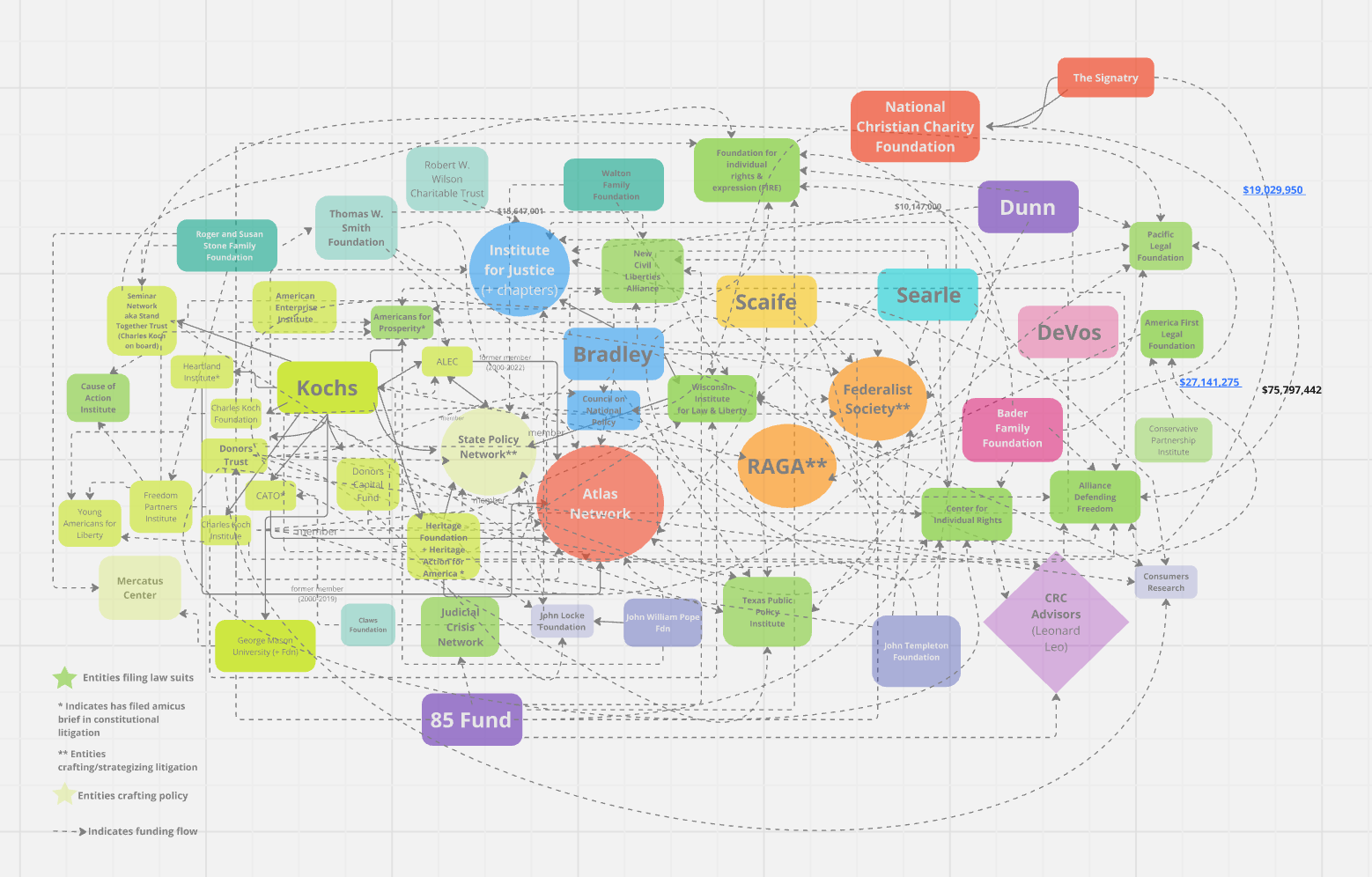
---
jdv teneo says jones a truth teller < maddow
i am a bad lawyer b/c i went to yale ah shucks
devil is real
do not dismiss wacko thiel and musk bc they can be 40 percent right
New reporting from ProPublica and Documented revealed that Trump’s vice presidential pick, Ohio Sen. J.D. Vance, praised far-right conspiracy theorist Alex Jones as a truth teller during a closed-door meeting with the Project 2025 partner organization the Teneo Network in 2021.
Meanwhile, Jones said today that he was in a meeting with Vance “a month ago.”
The Teneo Network, an “invitation-only group of young conservatives” that ProPublica and Documented said Vance joined six years ago, is one of over 100 conservative partner organizations included on the Heritage Foundation’s advisory board for Project 2025. Project 2025 is an extreme right-wing initiative to provide policy and personnel to the next Republican presidential administration.
*Note: The Teneo Network is a distinct entity that has no relation to the Teneo consulting firm.
- ### Vance called Alex Jones a truth teller
In a private speech in 2021 given to the Teneo Network, Vance said that he got backlash when he said that the far-right conspiracy theorist Alex Jones “is a better source of information than Rachel Maddow, the MSNBC gal,” which he described as a “plainly obvious observation.”
He went on to add that “the most important truths often come from people who are crazy 60 percent of the time but they’re right 40 percent of the time.”

- ### Vance was speaking before the Teneo Network, which is a Project 2025 partner
The Teneo Network is a right-wing networking group spearheaded by prominent conservative legal activist Leonard Leo. ProPublica and Documented reported on Vance’s speech to the group and what it means for a future Trump second term:
Adding Vance to the ticket bolsters the connections between Leo’s network and the Trump 2024 campaign. It also strengthens ties between Trump’s reelection bid and the Project 2025 blueprint, which outlines plans for a second Trump administration, including firing thousands of career civil servants, shuttering the Department of Education and replacing ambitious goals to combat climate change with ramped-up fossil fuel production. In a recent TV interview, Vance said the document contained “some good ideas” but claimed that “most Americans couldn’t care less about Project 2025” and that the Trump campaign wasn’t affiliated with it."
- ### Jones also claimed he was recently in a meeting with Vance
On his show on July 16, Jones said he was “in a meeting with J.D. Vance a month ago,” calling him “a great guy” and adding that “he's defended me when I was being censored.”
mma
---
===
no lnx
MISSOURI’S ATTORNEY GENERAL ISN’T MAGA ENOUGH FOR LEONARD LEO
The conservative megadonor’s network is plowing money into the Republican primary to support Will Scharf, Trump’s personal attorney.
Shawn Musgrave
July 2 2024,
CONSERVATIVE MEGADONOR Leonard Leo is funneling millions of dollars into the primary race for Missouri’s attorney general. His anointed candidate is Will Scharf, a personal attorney to Donald Trump who represented the former president in the immunity case decided Monday by the U.S. Supreme Court.
What’s remarkable about the Missouri race is that the Republican incumbent, Andrew Bailey, is also an archconservative star-in-the-making, with endorsements from the National Rifle Association, top Missouri lawmakers, and state law enforcement unions.
Despite Bailey’s deeply conservative agenda and rhetoric, Leo is helping bankroll a primary challenge.
Since his appointment in 2023, Bailey has sued the Biden administration over student loan cancellation, protections for transgender students, and federal officials’ efforts to influence social media content moderation practices around Covid-19.
This isn’t enough for Leo. Despite Bailey’s deeply conservative agenda and rhetoric, Leo is helping bankroll a primary challenge that’s pitting national rightwing donors against wealthy conservative Missourians. The primary will be held on August 6.
Leo’s Largesse vs. Old Beer Money
Campaign finance disclosures show that Leo and his allies have underwritten much of Scharf’s bid to be the next state attorney.
The Concord Fund, one of Leo’s dark-money organizations, has given $3.5 million so far to two pro-Scharf PACs: $500,000 to Defend Missouri last year, plus another $3 million to Club for Growth Action Missouri so far in 2024. (One of these $1 million checks was initially misreported as coming from Leo personally, rather than from the Concord Fund.)
Republican megadonor Paul Singer — a hedge fund billionaire and fishing buddy of Justice Samuel Alito who is closely aligned with Leo — has chipped in another $1.5 million to support Scharf, also via Club for Growth Action. Singer and his firm are based in West Palm Beach, Florida.
To try to keep up with this flood of national money to a state primary, the main committee supporting Bailey — Liberty and Justice PAC — has turned primarily to wealthy Missourians. These include the heir to the Anheuser-Busch beer fortune, August A. Busch III, who has given $200,000 in the past two years. Mike and Carolyn Rayner, a retired couple that are part of the family that owns Cargill, have given more than $1 million to Liberty and Justice PAC over this period. Another wealthy couple, Rex and Jeanne Sinquefield, gave $500,000, and a Kansas City law firm, Ketchmark & McCreight, gave more than $230,000.
As of April 1, Liberty and Justice PAC had just under $2 million in the bank, and Club for Growth Action had just under $2.2 million. Since then, Bailey’s mostly local highrollers have contributed around $750,000, compared to the $3.4 million that Club for Growth Action got in just two checks from Singer and the Concord Fund.
Bailey has been unable to unlock one crucial war chest: the Republican Attorneys General Association, a collective of his conservative counterparts in 27 other states. In the Louisiana attorney general race last year, RAGA spent $1.8 million to support the winner, Elizabeth Murrill.
In his brief time as a RAGA member, Bailey has led various coalition efforts, including letters warning CVS and Walgreens in 2023 that sending abortion pills by mail would violate the Comstock Act. He has also led group briefs to the Supreme Court, including in the mifepristone case and the challenges to Texas and Florida laws regulating social media platforms.
Still, RAGA — to which Leo’s Concord Fund is a top contributor and which is also a client of Leo’s consulting firm, CRC Advisors — has not backed Bailey. So far, RAGA has not made a formal endorsement in the race, though its executive director actually donated a small amount to Scharf’s campaign. Last September, Missouri Gov. Mike Parsons, who appointed Bailey, wrote a letter to RAGA complaining about its “unprecedented and deeply concerning” lack of support for an incumbent.
RAGA and Bailey’s campaign did not respond to The Intercept’s questions, including whether Leo’s support for Scharf impacted RAGA’s decision not to back Bailey.
Longstanding Ties
Scharf has a longstanding relationship with Leo and the Concord Fund, which was previously called the Judicial Crisis Network.
Scharf’s campaign website emphasizes that he “played an instrumental role” in building “the most conservative Supreme Court in almost a century” by helping with the confirmation battles over Justices Brett Kavanaugh and Amy Coney Barrett.
For both confirmations, Scharf would have worked closely with Leo, who was the Trump administration’s “court whisperer.”
Related
The Supreme Court Wants a Dictator]
Kavanaugh’s confirmation took place in the summer and fall of 2018. During this period, Scharf was a consultant for the Judicial Crisis Network, according to profiles when Scharf first announced his candidacy. (Scharf’s LinkedIn profile indicates he was a self-employed “consultant” and “portfolio manager” for an undisclosed “private foundation” at the time.)
Scharf joined CRC Advisors in January 2020, around the same time that Leo announced he was stepping down as executive vice president of the Federalist Society to join the firm.
In September 2020, Scharf joined the Justice Department, where he served as nominations counsel at the Office of Legal Policy, according to his LinkedIn. The same month, Trump nominated Barrett to fill the seat of the late Justice Ruth Bader Ginsberg.
Since Scharf left the Justice Department for private practice, he continued working alongside Leo as part of the membership committee for Teneo, a private network for conservatives that Leo chairs.
Leo and others at CRC Advisors were early backers of Scharf’s campaign. Leo gave $2,650 to Scharf in December 2022, as did the CEO of CRC Advisors, Greg Mueller, and its president, Jonathan Bunch, who is also a trustee of Leo’s primary dark-money vehicle the Marble Freedom Trust.
The firm’s chief financial officer, Neil Corkery — who is listed as the keeper of records for multiple Leo-linked groups, including the Marble Freedom Trust, Rule of Law Trust, the 85 Fund, and the defunct BH Fund — chipped in $1,000 to Scharf’s campaign in February 2023. The same month, Corkery’s wife, Ann, who works for the 85 Fund, also contributed $1,000.
A handful of lower-ranking CRC Advisors employees also contributed to Scharf’s campaign since 2022.
As observers of the race have pointed out, there is almost no daylight between Scharf and Bailey when it comes to campaign issues. But only one of them has Leo’s blessing and the cash that comes with it
literally flew the flag?!
an 6 24 no lnx
America is under assault by a cancerous mind virus the founders warned against
Thom Hartmann June 05, 2024
Twenty-eight states, nearly all Republican-controlled, are now spending billions of taxpayer dollars to support indoctrinating children in religion through voucher programs that can be used for mostly Christian schools. Five Republican-controlled states are in the process of letting vouchers ghettoize their entire public-school systems.
As The Washington Post noted yesterday:
“Billions in taxpayer dollars are being used to pay tuition at religious schools throughout the country, as state voucher programs expand dramatically and the line separating public education and religion fades.”
Meanwhile, the Speaker of the House of Representatives, Mike Johnson, flies an “Appeal to Heaven” flag outside his official congressional office that, since 2013, has been the semi-official logo of a militant arm of charismatic Christianity involved with January 6th. Supreme Court Justice Sam Alito flew a similar flag outside his summer home.
READ: Buckle up for Trump's 'October Surprise'
Another man flying that flag is outspoken Catholic evangelist Leonard Leo, who now controls over a billion dollars and helped run the process that selected Trump’s picks for the Supreme Court as well as hundreds of federal bench nominees. As ProPublica pointed out in a story about “the man that remade the American judicial system”:
“Leo is a major supporter of the [Catholic Information Center], and its unabashed projection of political power aligns with the central role of religion in Leo’s political project.”
Proselytizers for evangelical Christianity believe they are on the verge of taking over our country, from our schools to our courts to Congress itself. History warns us — as did the Founders and Framers of the Constitution — that, if successful, this will be deadly to American democracy.
Religious evangelism can be a deadly thought virus. It explicitly posits that, “There is only one right way to live and we know what it is” along with, “There is only one true god and he is the one we worship — and now you must, too.”
From the Crusades of the High Middle Ages, to Hitler anointing as Reichsbischof (Reich’s Bishop) Ludwig Müller and outfitting his entire army with belt-buckles declaringGott Mit Uns (God is with us), to the persecution of women in early New England colonies, evangelical Christianity has distorted the history of western societies and often led to rivers of blood. A similarly destructive dynamic plays out today with evangelical Islam across the Middle East and parts of Southeast Asia.
Judaism, Buddhism, and most forms of Hinduism are not evangelical; only Christianity and Islam have historically called for conversion, sometimes under threat of violence, imprisonment, or even death.
In this regard, one could compare the crusade associated with the Appeal to Heaven flag — which is so far successfully using the force of law to control American women and school curriculum in multiple Republican-controlled states — to the Iranian and Saudi imposition of Sharia law on their own people.
Cancer describes a biological system where one group of cells rises up and seizes control over all the resources of the rest of the cells in a body. When evangelical religions rise up to take control of political systems — the mechanism by which people govern themselves — they act as a political cancer within the society they’re attacking.
Native American tribes learned this lesson early on during their 20,000-year occupation of the Americas, which is why thousands of different tribes and language groups, most practicing their own unique religion, viewed evangelism and coerced conversion as a cultural sin that had to be punished.
From Marshall Sahlins’ Stone Age Economics(defining “the original affluent society”) to Peter Farb’s masterpiece Man's Rise to Civilization as Shown by the Indians of North America From Primeval Times to the Coming of the Industrial Stateto Graeber and Wengrow’s recent and brilliant The Dawn of Everything: A New History of Humanity we find that virtually no native societies practiced what we would today call evangelism. Including the Iroquois Confederacy, which provided the Founders and Framers with the first template they used to create our Constitution.
Their religions were rooted in tribal identity and their own land, finding the spiritual present in all of nature while focusing on maintaining harmonious relationships, rather than conversion. This worldview was not conducive to aggressive proselytism; it was, in fact, the opposite.
Some, like the Mayans and Incans, demanded that everybody in their realm worship their particular gods — who were the patrons of the ruling dynasties — but they had no interest in converting nearby tribes to their religion unless they first seized control of their land and subjugated their people.
Even the Celts and the pre-Christian Romans, who sequentially conquered most of Europe three and two thousand years ago respectively, largely allowed people to continue to practice their own local religions. None said, “We have the one great truth, and the one great god, and everybody on Earth must know this truth, live by it, and worship our god.”
The ancient Celts, Greeks, and Romans knew that was a logic that would lead to that era’s equivalent of ISIS, the Taliban, or the Crusades and wanted nothing to do with the cultural cancer of evangelism.
As I detail in The Hidden History of American Democracy, from time immemorial most pre-modern tribes and peoples of the Earth practiced what Thomas Jefferson wrote:
“The legitimate powers of government extend to such acts only as are injurious to others. But it does me no injury for my neighbor to say there are twenty gods, or no God. It neither picks my pocket nor breaks my leg.”
But now America finds itself under assault by a new, zealously evangelical movement called the New Apostolic Reformation (among other names) that seeks to use the force of law and the power of billions in untaxable dollars to create a new, two-tiered society in America.
At the top of this new America are the Catholic conservative majority on the Supreme Court, Speaker Mike Johnson and his followers in Congress, and an army of televangelists who claim moral superiority by virtue of their religion. They’re backed up by a small army of fundamentalist billionaires and politicians like Donald Trump who are willing to give them power and wealth in exchange for support at the ballot box.
Under them are the rest of us Untermenschen, whose opinions are tolerated so long as we don’t take away their nonprofit tax status (ensuring we must continue subsidizing them), stop their takeover of our schools, or correctly point out that the Founders were horrified at the prospect of America ever becoming a “Christian nation.”
But that is exactly what the majority of this nation’s Founders feared. It’s why they wrote a Constitution that forbids a religious test to hold office and put into the First Amendment “Congress shall make no law respecting an establishment of religion, or prohibiting the free exercise thereof…”
It’s why George Washington refused to say publicly whether he was a Christian or not, and authored the Treaty of Tripoli that begins with, “As the government of the United States of America is not in any sense founded on the Christian Religion…”
It’s why Ben Franklin fled Massachusetts as a teenager to avoid mandatory church attendance and wrote, “I have found Christian dogma unintelligible. Early in life I absented myself from Christian assemblies.”
It’s why James Madison, one of the few actual Christians among that core group of Founders and the “Father of the Constitution,” made his first veto as president in 1811 against a bill that would have given government money to a Washington, DC church to run a poorhouse. It would, he said, “be a precedent for giving to religious societies, as such, a legal agency in carrying into effect a public and civil duty.”
Madison added, in a July 10, 1822 letter to his old friend Edward Livingston:
“We are teaching the world the great truth, that Governments do better without kings and nobles than with them. The merit will be doubled by the other lesson: that Religion flourishes in greater purity without, than with the aid of Government.”
It’s why Jefferson took a razor blade to the Gospels and cut out all of the stories of miracles, producing The Jefferson Bible that presents Jesus as a wise philosopher instead of a god. The book is still in print and, to this day, a best-seller.
The cancer of evangelicalism now has its sights on literally every aspect of American society with its “Seven Mountain Mandate,” which argues that evangelical Christians must assert control over every other religion, every family in America, the US government itself, all public and private education, the arts and entertainment, all American media, and ultimately regulate all commercial business in our nation.
And they’re succeeding in every realm, even commerce. Recently, Southwest Airlines fired a flight attending for spamming their internal message boards with hostile anti-abortion messages and calling the company’s CEO “a murderer” because he supported women’s abortion rights. A Trump-appointed judge ruled in the flight attendant’s favor and required the company’s senior executives to take “religious liberty training” from an evangelical rightwing anti-abortion group.
Once today’s Christian Taliban made common cause with the 1980 Reagan campaign, the first great mission they undertook was seizing control of the rest of the Republican Party. Now that that has been accomplished, they’re coming for the rest of us.
As the tribal people who first occupied this land would tell you, this is the Great Sin. It turns religion from a spiritual exercise into a social, cultural, and political cancer that continually grows while devouring everything in its path.
Like biological cancer, it ultimately kills its host — as America’s founders knew well from the experience of Cromwell in England and seventeenth-century Salem here.
And now it’s made an unholy alliance with the billionaires behind Project 2025 and our rapist-in-chief, Donald Trump, the modern incarnations of the Roman empire and Prefect Pilate, who ordered Jesus crucified.
G-d help us all if they succeed.
NOW READ: Buckle up for Trump's 'October Surprise'
===
---
an 5 24
the bombshells over the past few weeks revealing U.S. Supreme Court Justice Samuel Alito flew flags associated with the January 6, 2021 insurrection and Christian nationalism over two of his homes were followed by a report that Leonard Leo, the right-wing legal activist behind Donald Trump’s Supreme Court nominees, also flew one of those flags.
The “Appeal to Heaven” flag has a “close association with both far-right Christian nationalists and the insurrectionists who stormed the Capitol on Jan. 6,” Rolling Stone reported last week, adding it “raises serious questions about Alito’s ability to rule impartially.”
“The conservative court on which Alito sits is largely the product of right-wing dark-money overlord Leonard Leo, and — wouldn’t you know it — Leo flew the same ‘Appeal to Heaven‘ flag outside of his house in Maine,” Rolling Stone also reported.
On social media Rolling Stone noted: “Justice Samuel Alito is under fire for flying the far-right ‘Appeal to Heaven’ flag outside his home. Turns out Supreme Court puppetmaster Leonard Leo has flown it too, according to an image provided to Rolling Stone.”
READ MORE: Pence Defense of Alito’s Insurrectionist Flag Highlights Its Ties to Violent Government Overthrow
Rolling Stone editor Andrew Perez on Memorial Day via social media added: “Some of Leo’s neighbors send pics from his house today — he is back to flying this flag.”
Alex Aronson is the former Chief Counsel, U.S. Senate Judiciary Committee for Senator Sheldon Whitehouse (D-RI) who now serves as Executive Director of the non-profit organization Court Accountability.
“Leo’s decision to re-hoist this theocrat flag is two things at once,” Aronson wrote on Monday. “1) an arrogant Alito-esque display of impunity, and 2) recognition of a strategic misstep in ever removing it, as he and his goons now lean into the gaslighting claim that it’s an innocent revolutionary banner.”
READ MORE: ‘You Just Don’t Do It’: Federal Judge Denounces Alito’s Flags as ‘Stop the Steal’ Stickers
In 2019, even before Trump appointed Amy Coney Barrett to the nation’s highest court, The Washington Post reported, “few people outside government have more influence over judicial appointments now than Leo.”
Leo has served on the Board of Governors of the Council for National Policy (CNP), a highly-secretive right-wing organization that has been described as a “pluto-theocracy.” In 2021 Americans United for Separation of Church and State called CNP “The Scariest Christian Nationalist Group You’ve Never Heard Of.”
CNP’s members have included far-right activist Charlie Kirk and the heads of at least a half-dozen groups that appear on the Southern Poverty Law Center’s list of hate or extremist groups.
Last year ProPublica branded Leo as “The Man Behind the Right’s Supreme Court Supermajority” who “built a machine that remade the American legal system.”
Leo also served as a vice president for the Federalist Society for many years, and has worked to support the nominations of every right wing justice on today’s Supreme Court, including Clarence Thomas, John Roberts, Samuel Alito, Neil Gorsuch, Brett Kavanaugh, and Amy Coney Barrett.
See the social media posts above or at this link.
---
---
May 2, 2024 5:11 pm
- Kate Riga @ Mediaite: Fearing Blowback, A Couple Arizona Senate Republicans Join Democrats To Repeal 1864 Abortion Ban
A couple Arizona Senate Republicans crossed over Wednesday to help Democrats repeal the state’s 1864 ban as national Republicans hope to avert electoral punishment.
- Jaxon White @ Lancaster Online: Conservative lawmakers, faith leaders meet with Christian dominionist activist in Harrisburg
Two Republican state lawmakers and several faith leaders were among those who met Wednesday with a controversial Christian activist to discuss promoting a prayer rally in Harrisburg ahead of the general election. Sean Feucht, an evangelical musician who has become increasingly active in politics, told several dozen people at the Capitol media center in Harrisburg that his organization, Let Us Worship, will host a prayer rally on the steps of the Pennsylvania Capitol in October to “prophesize over” the fall election.
- Angry White Men: AZ State Senator Anthony Kern Appears On Rumble Show Of Holocaust Denier Stew Peters
On May 1, 2024, AZ State Sen. Anthony Kern made a guest appearance on the Rumble show of Stew Peters. Peters is a Holocaust denier and Nazi sympathizer with a history of violent, racist, anti-LGBTQ, and antisemitic rhetoric. Kern, who was recently indicted for his role in Donald Trump’s fake electors plot, claimed that God was “raising up” Trump and Peters.
- David Badash @ The New Civil Rights Movement: MAGA State Superintendent Supports Chaplains in Public Schools – But Not From All Religions
As several Oklahoma news outlets report, there’s a wrinkle lawmakers may not have anticipated.
- Joe Jervis: MAGA Prophet: Trump Critics Will Be Struck With Boils
“My children, you are about to see biblical-type plagues strike some of your enemies, even on their faces. Boils will be seen. See who was infected by them. See how they will try to explain it away. But know your enemies are very afraid just as they were in Egypt.”
- Evan Vorpahl @ True North: True North Issues New Research Report Detailing Who Is Targeting State Courts to Limit Freedoms
True North is issuing a new research report shining a light on those men–Leonard Leo, Dick Uihlein, Charles Koch, and Jeff Yass–and right-wing groups targeting state courts and other levers of power to change the rules and limit our freedoms. This new report also documents how Leo used the Federalist Society to target state supreme courts and the judicial selection process in order to advance his agenda, and more.
---
an 5 24
although Democratic nominees have won the popular vote in seven of the United States' last eight presidential races, two-thirds of the U.S. Supreme Court consists of justices nominated by Republican presidents. One activist who can take a lot of credit for the High Court's shift to the far right is Leonard Leo, former executive vice president of the Federalist Society.
Leo helped select all three of former President Donald Trump's Supreme Court appointees: Brett Kavanaugh, Neil Gorsuch and Amy Coney Barrett. And he remains a prominent figure in the right-wing judicial movement, still co-chairing the Federalist Society while heading his consulting firm CRC Advisors.
In a report published by **:{Rolling Stone on April 29, journalists Andrew Perez and Adam Rawnsley describe the connection between CRC, billionaire Charles Koch's political network and a "dark-money group that is currently arguing a Supreme Court case designed to preempt a wealth tax."}:
READ MORE:
"Like many consulting firms," Perez and Rawnsley explain, "CRC does not publicly disclose its clients. However, several of the firm's clients were named in resumes that applicants submitted to an online jobs bank hosted by the Conservative Partnership Institute, which accidentally left the files exposed online. One CRC employee's 2024 resume says his clients include the Competitive Enterprise Institute, a dark-money group arguing a case before the Supreme Court this term that is designed to slam the door shut on a federal wealth tax. Experts say the case could upend the nation's tax code."
The Rolling Stone journalists note that the CRC employee's resume shows the person has "also worked for the Koch network's political advocacy arm, Americans for Prosperity."
Leo's judicial activities led to the overturning of Roe v. Wade with the U.S. Supreme Court's 2022 ruling in Jackson v. Women's Health Organization —ashe specifically recommended Supreme Court nominees he thought would favor that outcome.
Caroline Ciccone, president of the watchdog group Accountable.US, told Rolling Stone, "It's no surprise that Leonard Leo's for-profit consulting firm — which has pulled down a whopping $100 million from Leo's own nonprofit network — counts the Koch network and the group leading the Supreme Court billionaire bailout case as clients. We knew that Leo's fingerprints were all over these far-right causes, but now, it appears he's directly profiting off of them, too."
READ MORE:Trump's 'court whisperer' unleashes GOP assault on DC attorney general investigating him
Ciccone adds, "There's no cause Leo won't take up if it means he'll profit."
*Read Rolling Stone's full report at this link (subscription required).
---
Former Federalist Society VP tied to campaign to keep Trump on Colorado ballot
when the U.S. Supreme Court heard oral arguments in Trump v. Anderson on Thursday, February 8, the justices — including Barack Obama appointee Elena Kagan — appeared to be extremely skeptical about the Colorado Supreme Court's reasons for banning Donald Trump from the state's presidential ballot based on Section 3 of the U.S. Constitution's 14th Amendment.
Many legal experts on MSNBC, including Neal Katyal (former acting solicitor general under President Barack Obama) and former federal prosecutor Joyce White Vance, have predicted that the High Court will strike down the Colorado decision and keep Trump on the state's ballot.
Trump's loyalists have been attacking the push to remove him from state ballots as nothing more than Democratic partisanship. But it fact, one of the most vocal proponents of the 14th Amendment argument is conservative legal scholar J. Michael Luttig, a retired federal judge who believes that Trump committed "insurrection" after the 2020 election and is therefore ineligible to run for president in 2024.
Meanwhile, other right-wing legal figures have been fighting to keep Trump on the ballot in Colorado and other states, including — according to Guardian reporter Rachel Leingang — Federalist Society Co-Chairman Leonard Leo.
"Through this extensive network," Leingang explains in an article published by The Guardian on February 9, "he is tied to several of the filers of amicus briefs in the 14th Amendment case that could prevent Trump from running for reelection. In those briefs, a variety of conservative groups argue against Trump's removal, aligning with Trump's arguments that he should remain on the ballot."
The reporter adds, "The consequential case has brought in amicus briefs on both sides from outside groups, historians, law professors and elected officials, who've parsed through legal language and the implications of removing a presidential candidate from the running."
READ MORE:Former Trump advisor Peter Navarro loses bid to stay out of prison during appeal
Leonard's ties to these amicus briefs, according to Leingang, have been documented by the nonprofit Accountable.US.
"In this instance," Leingang reports, "Accountable.US found ties between Leo and the following groups or their lawyers that filed amicus briefs in the 14th Amendment case: Citizens United, the Public Interest Legal Foundation, the Claremont Institute, Landmark Legal Foundation, Judicial Watch, Jones Day, Wyoming's secretary of state Chuck Gray, and America's Future. Citizens United, a conservative group whose name is synonymous with the 2010 Supreme Court ruling that allows unlimited political spending by outside groups and corporations, filed a brief alongside Steven Calabresi, Leo's fellow co-chair of the Federalist Society."
Leingang adds, "Other lawyers tied to the Society are signed on to the group's brief as well."
The Federalist Society co-chair's connection to amicus briefs submitted in other "high-profile" U.S. Supreme cases was described by journalist Heidi Przybyla in an article published by Politico on December 3, 2023.
Read The Guardian's full report at this link.
---
Leonard Leo’s Concord Fund Top Funder of Republican AGs Group in 2024
The Republican Attorneys General Association brought in $5.3 million in contributions in the first quarter of 2024, as its latest Federal Elections Commission disclosure CMD examined shows. The amount raised is almost a million more than RAGA raised in the first quarter of 2020, the last major election cycle. You can read the full story here.
---
an 3 24
in August of 2023, Politico reported that right-wing billionaire Leonard Leo is "best known as Donald Trump's White House 'court whisperer," having "played a behind-the-scenes role in the nominations of all three of the former president's Supreme Court justices and promoted them through his multi-billion-dollar network of nonprofits."
Caroline Ciccone, president of the watchdog Accountable.US, told Politico "Leo spent years stacking the court with ideological kindred spirits. Now he's funding a dark web of special interest groups to push an extreme agenda."
According to a Monday, March 18 report published by Rolling Stone, the billionaire — "long averse to media attention" — in a recent podcast interview first reported by Accountable.US "spoke about his $1.6 billion dark money fund, called the Marble Freedom Trust, explaining: 'We’re trying to really institute a lot of legal and social change through philanthropy.'"
The conservative activist, according to Rolling Stone, "also offered his thoughts on how billionaires can help conservatives limit regulations, take over corporate C-suites, reshape America’s education system, and influence our culture," and as a "devout Catholic, additionally discussed his interest in reforming religious institutions."
Speaking "with Joe Lonsdale, the co-founder of surveillance company Palantir and the University of Austin, a conservative alternative college he started with journalist Bari Weiss," Rolling Stone notes, Leo said, "It’s really important that we flood the zone with cases that challenge misuse of the Constitution by the administrative state and by Congress," urging "the ultra-wealthy to support these litigation efforts."
Referring to the conservative-majority high court, he emphasized, "We have a great Overton window in the next couple of decades to really try to create a free society. And I think we should take full advantage of it."
Additionally, as a proponent of the effort to establish a publicly funded religious school in Oklahoma, Leo also "talked about the need to reform the clergy," during the interview, saying, "This is one that I just started thinking about, there’s the whole issue of clergy, and this is a tough one to crack. This may not be for everybody, but my own perspective is: God made us to know him, to love him, and to serve him. And I think our religious leaders need to center more on that, and less on knowing, loving, and serving ourselves, and whatever personal desires or affections we may have."
Furthermore on the subject of education, the billionaire added, "We need to create talent pipelines for K-12 education and for higher ed, something like you’re doing with the University of Austin, so that we remind people that the purpose of higher ed, for example, is to basically build a citizenry that’s committed to the Constitution as it was originally written."
Rolling Stone reports "Leo explained this means recruiting teachers and working to influence education board races, 'so that we can begin to have some sanity and local education.'"
READ MORE:Leonard Leo allies lead effort to establish publicly funded religious school
*Rolling Stone's full report is availableat this link (subscription required)
---
an 2 24 --> guk
the man behind the conservative effort to move the judiciary to the right has ties to many of the groups and people arguing that Donald Trump should stay on the ballot in a case heard before the US supreme court this week.
Leonard Leo’s advocacy and financial network played a major role in Trump’s judicial nominations and confirmation hearings as part of his years-long push to make the courts more friendly to conservatives and their causes. Justice Clarence Thomas once joked that Leo was the “No 3 most powerful person in the world”.
US ethics groups hail Senate subpoenas for Leonard Leo and Harlan Crow
Read more](https://www.theguardian.com/law/2023/nov/30/supreme-court-ethics-scandal-leonard-leo-harlan-crow)
Leo is the co-chairman of the Federalist Society, a conservative legal organization that counts five of the current nine justices as current or former members. He also heads a well-funded financial network that works to advance rightwing causes, having received a massive $1.6bn donation to boost his work. His maneuvers have been part of the recent scandals at the supreme court, including a payment he directed to be paid to Thomas’s wife, Ginni, the Washington Post reported in 2023.
Through this extensive network, he is tied to several of the filers of amicus briefs in the 14th amendment case that could prevent Trump from running for re-election. In those briefs, a variety of conservative groups argue against Trump’s removal, aligning with Trump’s arguments that he should remain on the ballot.
The consequential case has brought in amicus briefs on both sides from outside groups, historians, law professors and elected officials, who’ve parsed through legal language and the implications of removing a presidential candidate from the running.
According to research by Accountable.US, a non-profit that focuses on calling attention to special interests in US politics, Leo has ties – including professional associations, funding through his own groups or those he’s exchanged money with, and allies in the Federalist Society – to a handful of groups that filed amicus briefs against Trump’s removal.
The ties are part of a pattern, documented by Politico, of Leo himself and his network being connected to amicus briefs in high-profile supreme court cases in recent years. The Politico review also found “multiple instances of language used in the amicus briefs appearing in the court’s opinions”.
In this instance, Accountable.US found ties between Leo and the following groups or their lawyers that filed amicus briefs in the 14th amendment case: Citizens United, the Public Interest Legal Foundation, the Claremont Institute, Landmark Legal Foundation, Judicial Watch, Jones Day, Wyoming’s secretary of state Chuck Gray and America’s Future.
Democrats plan to subpoena Leonard Leo over perks to supreme court justices
Read more](https://www.theguardian.com/law/2023/oct/31/leonard-leo-subpoena-harlan-crow-supreme-court)
Citizens United, a conservative group whose name is synonymous with the 2010 supreme court ruling that allows unlimited political spending by outside groups and corporations, filed a brief alongside Steven Calabresi, Leo’s fellow co-chair of the Federalist Society. Other lawyers tied to the society are signed on to the group’s brief as well.
The Public Interest Legal Foundation’s brief is co-filed with a man who has been featured in more than 100 Federalist Society events, and the group has received funding from groups tied to Leo. The Claremont Institute has also received funds from groups tied to Leo’s funding network, and the brief’s author wrote a book that includes a quote from Leo on the back cover and featured in society events.
Leo has complimented the chairman of the Landmark Legal Foundation as a “great patriot” and  ”. The Judicial Watch president is also president of the Council for National Policy, which Leo has reportedly been involved with. Jones Day, a conservative law firm whose attorneys authored an amicus brief for the National Republican Senatorial Committee, has given money to the Federalist Society, and the firm is where Leo, Trump and others met to come up with a list of supreme court candidates.
The lawyers who filed Wyoming secretary of state Gray’s brief include a Federalist Society contributor who’s received a fellowship from the group. America’s Future has gotten funding from a group that’s exchanged millions with Leo’s financial network.
“It’s no surprise that Leonard Leo is backing efforts to support Trump at the supreme court,” said Accountable.US president Caroline Ciccone. “Leo helped Trump draw up his supreme court nominee shortlist – many of whom are justices on the bench set to hear this critical case – and now, Leo’s deploying his rightwing network in support of Trump as he faces consequences for his violent insurrection. It couldn’t be clearer where Leo stands.”
---
:{:{January 2, 2024 rww}:
- Ed Mazza @ HuffPost: Lauren Boebert Cooks Up Bonkers New Excuse For Bailing On Her District.
Rep. Lauren Boebert (R-Colo.) knows who to blame for her decision to ditch her own constituents and run in a different district in the upcoming election: Barbra Streisand and Ryan Reynolds.
- Heidi Przybyla @ Politico: Public Christian schools? Leonard Leo’s allies advance a new cause.
Groups aligned with the conservative legal movement and its financial architect, Leonard Leo, are working to promote a publicly funded Christian school in Oklahoma, hoping to create a test case to change the Supreme Court’s interpretation of the First Amendment’s separation of church and state.
- Ken Block @ USA Today: Trump paid me to find voter fraud. Then he lied after I found 2020 election wasn’t stolen.
If voter fraud had impacted the 2020 election, it would already have been proven. Maintaining the lies undermines faith in the foundation of our democracy.
- Steve Benen @ The Maddow Blog: Republican support for the ‘big lie’ moves in the wrong direction.
Three years after Jan. 6, two-thirds of Republicans still reject the legitimacy of the 2020 presidential election — which carries lingering consequences.
- Paul Rosenberg @ Salon: Meet the New Apostolic Reformation, cutting edge of the Christian right.
Christian nationalism has new momentum — and a new movement that openly longs for “dominion” over secular America
---
AN 12 23
The U.S. Supreme Court has leaned conservative for decades, but a key difference between the High Court of the 1990s and the High Court of 2023 is the strong influence of social conservatives. Former Justice Anthony Kennedy and the late Justice Sandra Day O'Connor were conservative Ronald Reagan appointees but often sided with liberals when it came to abortion and gay rights; today's Supreme Court is much more sympathetic to the religious right.
In Oklahoma, social conservatives are pushing for a taxpayer-funded Catholic school — inspiring, according to Politico's Heidi Przybyla, heated debates over what the U.S. Constitution's First Amendment says about the separation of church and state. And social conservatives, she reports, may have a sympathetic audience at the Roberts Court.
"At issue is the Roman Catholic Archdiocese of Oklahoma's push to create the St. Isidore of Seville Catholic Virtual School, which would be the nation's first religious school entirely funded by taxpayers," Przybyla explains. "The school received preliminary approval from the state's charter school board in June. If it survives legal challenges, it would open the door for state legislatures across the country to direct taxpayer funding to the creation of Christian or other sectarian schools."
Paul Collins, a legal expert at the University of Massachusetts, Amherst, believes that the religious right could have a major advantage if the Oklahoma debate goes to the Roberts Court.
Collins, author of the 2008 book "Friends of the Supreme Court: Interest Groups and Judicial Decision Making," told Politico, "The Christian conservative legal movement, which has its fingerprints all over what's going on in Oklahoma, is a pretty small, tight-knit group of individuals. They recognize the opportunity to get a state to fund a religious institution is a watershed moment. They have a very, very sympathetic audience at the Supreme Court. When you have that on the Supreme Court you're going to put a lot of resources into bringing these cases quickly."
The religious right has been claiming, for decades, that there is no such thing as separation of church and state in the U.S. Constitution — a claim promoted by far-right House Speaker Mike Johnson (R-Louisiana). But critics of the religious right, including the American Civil Liberties Union (ACLU) and the late Norman Lear's People for the American Way, have been countering that although the First Amendment promises freedom of religion, it is very clear about government not favoring one religion over another.
The First Amendment states, "Congress shall make no law respecting an establishment of religion, or prohibiting the free exercise thereof; or abridging the freedom of speech, or of the press; or the right of the people peaceably to assemble, and to petition the Government for a redress of grievances."
READ MORE:How the Supreme Court could make same-sex marriage into second-class marriage
Attorney Andrew Seidel, whose book "American Crusade: How the Supreme Court is Weaponizing Religious Freedom" was published in 2022, warns that the religious right has gained considerable influence on the Roberts Court.
Seidel told Politico, "Schools are the last bastion of church-state separation, and they have been the target of Christian nationalists and the shadow network for decades. That's why it's so striking. In 2022, they got a change in the personnel on the court thanks to [conservative legal activist Leonard] Leo."
*Heidi Przybyla's full article for Politico is available at this link.
---
===
hypoc
an 12 23 no lnx
Busted: Jim Jordan and James Comer have a new judicial plan
Matt Laslo
andRaw Story
December 25, 2023
WASHINGTON – Republicans in Congress aren’t just doing all they can to impeach the Biden name – and possibly President Joe Biden himself – they’re also going to extraordinary lengths to protect two billionaire GOP megadonors who helped the party remake the Supreme Court in recent years.
For one, House Judiciary Committee Chair Jim Jordan (R-OH) and Oversight Committee Chair James Comer (R-KY) are trying to stymie Washington, D.C. Attorney General Brian Schwalb’s investigation into Federalist Society co-chairman Leonard Leo.
Schwalb is looking into allegations that Leo is illegally profiting off non-profits. Jordan and Comer have responded by threatening to subpoena Schwalb.
ALSO READ: A neuroscientist’s guide to surviving Christmas with Trump-loving relatives
Meanwhile on the other side of the U.S. Capitol, Republicans on the Senate Judiciary Committee walked out en masse, boycotting Democrats’ effort to subpoena Leo and Republican jurisprudence sugar daddy Harlan Crow over the hundreds of thousands of dollars in gifts he’s given to Justice Clarence Thomas and his wife Ginni over the decades, according to a ProPublica investigation.
The GOP offensive to protect two billionaire donors is blatant hypocrisy, according to ethics watchdogs.
“There are many senators who will say anything. I mean, as long as it's their guy, they'll defend anything, and they have no consistency whatsoever and they're completely hypocritical,” Melanie Sloan, a senior adviser for nonpartisan watchdog American Oversight, told Raw Story.
ALSO READ: Florida judge’s son is a neo-Nazi patron: data leak
In today’s tribal and perpetually warring Congress, it seems even pay-to-play politics are now partisan. While Senate Republicans are vowing to use all procedural tools at their disposal to block Leo and Crow from being subpoenaed, most in the party are also backing the Biden impeachment inquiry because they say Hunter Biden was selling access to his father — an accusation for which they’ve provided no evidence to date.
On paper – paper stamped with GOP letterhead, mind you – the impeachment inquiry is focused on buying access.
“It better be, because, quite honestly, Hunter Biden's personal problems aren't the issue. The issue is whether he was selling access to a vice president willing to provide that access, and whether the vice president at the time – the current president – was enriched by it,” Sen. Kevin Cramer (R-ND) told Raw Story.
As for the hundreds of thousands of dollars in private jet travel, stays at his private retreat and luxurious free vacations aboard his 162-foot yacht that Supreme Court Justice Clarence Thomas and his wife Ginni admitted to receiving from Harlan Crow?
“That's not enriching yourself, because you went on a boat ride for God's sake. That's not the same as cash in your checking account,” Cramer said of ProPublica’s revelations.
Cramer argues, if the trips weren’t free “maybe he wouldn't have gone on it.”
“The difference is … he’s a friend. Friends are allowed to provide hospitality for you in their home or on their boat. That's very different than a foreign adversary providing cash to a sitting vice president of the United States through his son. That's barely, barely even in the same ballpark, if at all,” Cramer said. “It’s a stretch, to say the least. It's just, it's not the same thing.”
That’s not even mentioning the free private school tuition Thomas’ nephew – who he raised like a son – received from Crow, which ProPublica estimates could have totaled upward of $150,000.
ALSO READ: Busted: These healthcare nonprofits are accepting millions from Big Tobacco
Senate Democrats, some of whom argue Thomas was in a prime position to rule on cases that effect Crow’s fortune, are particularly interested in whether Crow declared the lavish free vacations and travel as business expenses on his federal taxes.
For Leo – co-chairman of the Federalist Society, including the $1.6 billion fortune it now controls – Campaign for Accountability filed an IRS complaint alleging he’s funneling money from seven nonprofit entities he controls to his for-profit businesses, thus illegally profiting off campaign donations. The apparent interference from Jordan and Comer is appalling to watchdogs.
“Then, at the same time, they're screaming about the politicization of justice when they talk about Donald Trump, but they want to tell a sitting U.S. attorney – you know, the state's attorney for D.C. – who he can and can't look at because they don't want him looking at Leonard Leo,” Sloan said. “They just are bowing down at the altar of Leonard Leo and his $1.6 billion.”
House Republicans deny they’re interfering with an ongoing investigation.
“I’m confused. So it’s OK for Democrats to subpoena Leonard Leo and Harlan Crow, but not OK for us to look into AG Schwalb? Isn’t that literally the definition of a double standard — a.k.a Democrats can do something, but we can’t?” Russell M. Dye, communications director and counsel for the House Judiciary Committee, emailed Raw Story.
ALSO READ: ‘Too preposterous to be real’: College hires ‘pink slime’ publisher as journalism prof
Republicans say there’s no reason for an investigation, because the megadonors aren’t accused of trying to change the outcomes of specific cases before the Supreme Court.
“I really think there's like a fundamental difference here between trading favors and not, right? The difference here is the consideration. I've seen no evidence that any of the Supreme Court justices, least of all Clarence Thomas, offered to give anything back. To me, that’s the big difference,” Sen. J.D. Vance (R-OH) told Raw Story.
“Now look, if Harlan Crow or anybody else wrote $100 million to a Supreme Court Justice, and say, ‘Hey, please do this thing in my benefit’ — well, that raises some serious problems. But is it the standard that a Supreme Court justice can't have a rich friend?” Vance continued. “If they want to set that standard, it’s up to them, but I don't think that that raises nearly the same pay-to-play concerns as Joe Biden’s situation.”
Gifts are different than business appears to be the current GOP ethical standard for such matters.
“We're not talking about gifts. This is business. So with Hunter [Biden], this is, you know, he's on the Burisma board. He's doing these foreign business deals in Ukraine and China and lots of offices, and he is openly out there selling his dad,” Sen. Josh Hawley (R-MO) told Raw Story. “At the very least, he's clearly making money off his father. The question is, did the president benefit from that? That's what they need to answer. So that's why we have the inquiry.”
When pressed on the impeachment inquiry into Biden, former Senate Judiciary Committee Chair Sen. Chuck Grassley (R-IA) wasn’t up to date on the specifics, even as he proudly remembers getting the investigative ball rolling for House Republicans.
“You’re talking about the substance of it. I’m not sure I can talk about the substance of it,” Grassley told Raw Story. “Except, the process is necessary to complete what [Sen. Ron] Johnson (R-WI) and I started four years ago, and that is to get all the information that Congress is entitled to in our oversight capacity and that's what it's all about, as far as I know.”
The Supreme Court adopted a new code of ethics since the lavish gifts were first reported, so Democrats’ complaints are outdated, Grassley argues.
ALSO READ: You blew it in New Hampshire, Joe Biden. Pray it doesn’t hurt you — and then some
“Because the judicial branch put out their … new regulation, and if that doesn’t take care of it – and we won't know that for a little while, maybe a year or two – then maybe that'd be a legitimate question,” Grassley said. “But right now it’s not a legitimate question considering the initiative of the Supreme Court.”
After all, 10 Republicans on the Senate Judiciary Committee walked out of the vote to subpoena Leo and Crow on November 30 – allowing Democrats to pass the measure 11-0 – Senate Republicans argue the vote broke committee rules.
“They’re not legal,” Sen. John Kennedy (R-LA) told Raw Story. “Anybody who knows a lawbook from a J. Crew catalog knows they can get those subpoenas quashed in one hearing.”
Because of wholesale GOP opposition, there doesn’t seem to be the votes to formalize the subpoenas on the Senate floor where Republicans are threatening to require a 60-vote threshold.
“You’ll never see this come to the floor,” Judiciary Committee ranking member Sen. Lindsey Graham (R-SC) told Politico. “We’ll attack it legally, we’ll vote against it. It’d be a s—show.”
Even as the party hasn’t decided how it will proceed in the Senate, many Democrats expected this.
“We're going after the icons of the Republican Party, Leonard Leo, of course, and, to some, Justice Thomas. They’re very sensitive to that,” Senate Democratic Whip Dick Durbin (D-IL) told Raw Story. “Public sentiment is overwhelmingly in our favor, so they have got to be strident in opposition.”
The two different standards for Biden and GOP donors is remarkable to Democrats.
“Republicans want to protect the court that they have packed, and they protect the court by maintaining its status as an unaccountable highest court of the land,” Rep. Hank Johnson (D-GA) told Raw Story. “It looks like they're doing everything they can to keep hidden the secret relationships that are going on at the court with powerful interests that bring cases before the court.”
To the top Democrat on the House Oversight Committee, Rep. Jamie Raskin (D-MD), this made-for-Fox-and-Newsmax drama shows how completely former President Donald Trump has remade the GOP in his own image.
“It is just sad the way that Donald Trump has completed his stranglehold over the Republican Party,” Raskin told Raw Story. “Donald Trump has taught them – from the Charlottesville riot forward – that there should be no enemies on the right. And they have no enemies on the right, and they will take no principled stance against anybody on the right, no matter how fascistic they are.”
===
===
an 12 23
Trump's unofficial Supreme Court advisor who was actively involved in all three of his justice nominations has been revealed as the sole trustee of a perplexing group that generated more than $80 million in dark money in 2018.
A unfiled tax return for Rule of Law Trust (RLT) shows the name of Federalist Society co-chairman Leonard Leo, according to CREW. The mysterious tax return also includes a number of questionable details that raise alarms about the origin of the money.
In its first year of operation, there were no employees or volunteers working the firm's main address which appears to be a virtual office located in Virginia. The only people associated with RLT have statuses similar to Leo being Federalist Society officials who now work as "consultants" or have a long history of ties to companies circulating dark money.
The company's mission statement also notes that it strives "to advance conservative principles and causes through communications, research, strategy and assistance to other organizations."
In addition to the mysterious cash circulating and the business' hallow history, it also appears to have funneled nearly $2.7 million in company expenditures through another business known as the BH Group.
*"The filing vastly expands the amount of money known to be flowing into the growing constellation of dark money groups tied to Federalist Society co-chairman Leonard Leo."
Leo is also listed as the partial owner of that firm. While there has been speculation of Leo's affiliation with the company, his true status within the company had not been confirmed until recently. The BH Group garnered attention back in 2016 after it donated a cool $1 million to Trump's first presidential election campaign. The firm also has a history of funneling funds for the purpose of campaign contributions.
Wellspring Committee and Judicial Crisis Network (JCN), both 501(c)(4) social welfare groups relatively similar to RLT, also funneled money through the BH Group to sway elections and Supreme Court nominations.
Here is a quick timeline of how dark money has influenced politics over the last four years:
- In 2016, JCN shelled out millions of dollars to dissuade senators from considering President Barack Obama's last Supreme Court nominee, Judge Merrick Garland.
- In 2017, JCN dumped millions into having Trump's first Supreme Court nominee Justice Neil Gorsuch fill the seat Obama's nominee was denied.
- In 2018, the group repeated the same process to back Trump's second nomination of Justice Brett Kavanaugh.
- Now, in 2020, JNC has poured millions into the confirmation of Trump's nomination, Amy Coney Barrett to quickly fill the seat of the late Ruth Bader Ginsburg before the upcoming election.
//
- Trump judicial adviser tied to 'secretive network' of 'dark money ... ›
- Meet the Federalist Society executive and unofficial Trump judicial ... ›
- Trump allies want conservative legal activists to fight impeachment ... ›
- Supreme Court declines to take action on Trump’s Pennsylvania appeal prior to certification of Biden win - Alternet.org ›
- Legal experts mock Trump for getting a 'disgraced white supremacist' to file a 'crazy’ Supreme Court case - Alternet.org ›
- Trump is practically begging for the Supreme Court to slap him down - Alternet.org ›
- How 'dark money' from the Koch network and others is fueling Senate opposition to voting rights bill: watchdog - Alternet.org ›
- 'Troubling' questions raised about disappearing millions from Trump’s dark money machine: report - Alternet.org ›
- 'How democracy gets corroded': Right-wing group receives 2 dark money donations of $425 million - Alternet.org ›
- A 'dark money group' tied to a former Federalist Society VP was 'dissolved' 3 days after report on Conway sale - Alternet.org ›
- D.C. AG probing Trump mega-donor’s 'multi-billion-dollar network of nonprofits': report - Alternet.org ›
- 'Extreme agenda': GOP megadonor who stacked SCOTUS is bankrolling payday lenders in high-profile case - Alternet.org ›
- 'Fury from the conservative base': Meet the man behind the right’s Supreme Court supermajority - Alternet.org ›
- Inside the saga of Trump megadonor Leonard Leo's judicial strategy - Alternet.org ›
- How right-wing activists influence SCOTUS to boost 'their historical narrative': report - Alternet.org ›
- 'Nightmare for John Roberts': How 'two Trump curveballs' may be 'decisive chapter' for SCOTUS’ 'legitimacy' - Alternet.org ›
---
an 11 23
the Senate Judiciary Committee on Thursday approved subpoenas for conservative billionaire Harlan Crow and the Federalist Society's Leonard Leo despite loud objections from the committee's Republican members.
Axios reported that during the roll call for the subpoenas, Republicans repeatedly "shouted objections." Sen. Lindsey Graham (R-South Carolina) was quoted yelling "come on, man" as chairman Dick Durbin (D-Illinois) conducted the vote. Punchbowl News reporter Heather Caygle tweeted that Republicans then "left the room during the vote."
The chaos started after Durbin moved to suspend rule IV, which allows for debate, in order to move directly to the subpoena vote. Republicans were upset, claiming debate over the confirmation of judicial nominees was being prematurely stifled. Durbin responded that the committee had already debated the nominees "at great length" during a prior hearing before moving ahead with the rule IV motion.
"You're going to have a lot of consequences coming if you go down this road," Sen. Tom Cotton (R-Arkansas) told the committee. "Listen to me, I've cautioned a lot of you."
"So you're telling us to shut up? You want us to shut up? That's what you're saying," Sen. Marsha Blackburn (R-Tennessee) said to Durbin.
Even though the uproar in the committee was ostensibly over the process of debating judicial nominees, a Senate Republican aide speaking anonymously to Axios told the publication that senators' anger was more in relation to the subpoenas of Crow and Leo.
:{:{The Senate Judiciary Committee ordered the subpoenas for both Harlan Crow and Leonard Leo in relation to Crow's numerous undisclosed gifts to Supreme Court Associate Justice Clarence Thomas, and Leo's facilitation of those gifts. Currently, all federal judges — including members of the Supreme Court – are banned from receiving gifts and compensation for speeches and public appearances under the Ethics Reform Act of 1989.}:
READ MORE:Ex-judge: Clarence Thomas RV loan another example of justice 'doing an end run' around ethics rules
"Leo’s efforts to keep Thomas happy meant 38 destination vacations, a voyage on a yacht around the Bahamas, 26 private jet flights (plus eight by helicopter), a dozen VIP passes to professional and college sporting events (typically sitting in a box), two stays at luxury resorts in Florida and Jamaica, and a standing invitation to an exclusive golf club overlooking the Atlantic coast," Gertner wrote. "Most of these were arranged by Leo and paid for by conservative billionaires."
---
==
two of the House of Representatives’ most powerful committee chairs, Republicans Jim Comer and Jim Jordan, are targeting the District of Columbia’s Attorney General’s reported investigation into Leonard Leo, a right-wing judicial activist who heads a myriad of dark money groups and has worked to help pick or confirm every Republican-appointed U.S. Supreme Court Justice who currently sits on the nation’s highest court.
Leonard Leo has strong ties to the ultra-conservative Federalist Society, which then-President Donald Trump used as a recommendation engine for his Supreme Court nominees. Leo served in different roles at the Federalist Society for more than a quarter century.
Calling him a “conservative activist,” The Washington Post in 2019 reported, “Leonard Leo helped conservative nonprofits raise $250 million from mostly undisclosed donors in recent years to promote conservative judges and causes.”
READ MORE: ‘There Are American Hostages’: House GOP Slammed for ‘Exploiting a War to Pass a Tax Cut’
That was before a single donor handed Leonard Leo $1.6 billion to remake the federal judiciary.
“In the largest known political advocacy donation in U.S. history, industrialist Barre Seid funded a new group run by Federalist Society co-chair Leonard Leo, who guided Trump’s Supreme Court picks and helped end federal abortion rights,” ProPublica reported last year. The investigative nonprofit called Leo “one of the prime architects of conservatives’ efforts to reshape the American judicial system, including the Supreme Court.”
In August, Politico reported that “Washington D.C. Attorney General Brian Schwalb is investigating judicial activist Leonard Leo and his network of nonprofit groups, according to a person with direct knowledge of the probe.” Schwalb’s office has not confirmed the existence of the investigation.
“The scope of the investigation is unclear. But it comes after POLITICO reported in March that one of Leo’s nonprofits — registered as a charity — paid his for-profit company tens of millions of dollars in the two years since he joined the company. A few weeks later, a progressive watchdog group filed a complaint with the D.C. attorney general and the IRS requesting a probe into what services were provided and whether Leo was in violation of laws against using charities for personal enrichment.”
Now, as The Messenger first reported Monday, House Oversight Committee Chair Jim Comer and Judiciary Chair Jim Jordan “are probing the D.C. attorney general’s investigation of the conservative legal mastermind behind the Supreme Court’s hard right turn.”
The two chairs in a Monday press release call the investigation into Leonard Leo “politically motivated.”
In their letter the pair of Republicans claim they are “concerned about potential infringement on free association and donor privacy.”
They allege Attorney General Schwalb does not have jurisdiction to investigate “because Mr. Leo and the organizations with which he is affiliated are, according to publicly available information, based outside of Washington, D.C.”
Last year, The New York Times reported the “network of increasingly influential conservative groups that Leonard A. Leo has helped to create and shape is not easily defined or quantified.”
“It is funded mostly by so-called dark money that is difficult to trace. The roster of nonprofit groups has evolved, with some ceasing operations and others being added. Mr. Leo has formal leadership roles in some groups, while he is an informal adviser to others. Most of the nonprofit groups have paid him or his for-profit firms, CRC Advisors and BH Group.”
Earlier this month ProPublica reported Leo “drew up the lists of potential justices that Donald Trump released during the 2016 campaign. He advised Trump on the nominations of Neil Gorsuch, Brett Kavanaugh and Amy Coney Barrett. Before that, he’d helped pick or confirm the court’s three other conservative justices — Clarence Thomas, John Roberts and Samuel Alito.”
---
text 3 parts? We Don’t Talk About Leonard: The Man Behind the Right’s Supreme Court Supermajority — ProPublica
https://www.wnycstudios.org/podcasts/otm/segments/we-dont-talk-about-leonard-episode-1-part-1-on-the-media
on the media pro pub; singer ~ OLA orderly liq assests post gr recession, lost ; leo boost SG sol gen'l; ~ dodd frank, cfinance eliz w cfpb
leo makes a big push to promote SG sol gen’l , many more cases state scotus than scotus, and former are pipeline to latter
very good, detailled pt 2 Part 1: Leonard Leo Throws a Party | On the Media | WNYC Studios
fed soc sep of powers comm? states rights?
===
no lnx missoulian
Architect of US court shift used Montana as stepping stone
EDITOR'S PICK TOPICAL
Architect of US court shift used Montana as stepping stone
Andy Kroll, Andrea Bernstein and Ilya Marritz - ProPublica Oct 17, 2023 3
Editor's note: ProPublica and WNYC’s “On The Media" reporters investigated the web of money, influence and power behind the conservative takeover of America’s courts — and the man at the center of it all: Leonard Leo.
Historians and legal experts say there is no comparable figure in American jurisprudence. To the extent Leo is known, it’s for his role helping to install the conservative supermajority on the U.S. Supreme Court. But his reach extends far beyond that. Decades ago, he realized it was not enough to have justices on his side. Those jurists needed to decide the right cases, brought by the right lawyers and heard by the right lower court judges. He built a machine to do just that.
Find “We Don't Talk About Leonard” wherever you get your podcasts or read the complete text version here.
The following excerpt covers Leonard Leo’s influence placing Federalist Society-backed lawyers in state attorneys general offices, including Montana’s, to influence the national legal agenda.
In 2013, Mike Black, Leo’s former classmate at Cornell Law, was leading the civil division of the Montana attorney general’s office as a career employee. A new attorney general had just been elected, bringing with him a number of new staffers to the office. Black had a matter to discuss with one of them: a tall, rangy Harvard Law School graduate named Lawrence VanDyke. VanDyke had been hired as solicitor general, the top appellate litigator in the attorney general’s office, responsible for defending state laws.
Standing in VanDyke’s office, Black noticed several bobblehead dolls on a shelf. “There was like Scalia for sure. And I think probably Alito, there were like four or five. And then there was this one younger-looking guy, and I said, ‘Well, who the heck is this?’” Black recalled. “And he goes, ‘Well, that’s Leonard Leo.’”
Black was astonished.
What Black did not know was that by that time Leo had helped to cultivate an entire generation of conservative lawyers on the rise. The system was like a positive feedback loop: Young attorneys could accelerate their own careers by affiliating with the Federalist Society and then prove their worth by advancing bold, conservative doctrines in the courts. Leo himself would suggest candidates to state attorneys general. According to one former Republican attorney general: “He won’t say, ‘Hire this person,’ in a bossy way. He’ll say: ‘This is a good guy. You should check him out.’”
Senate OK's appeals court judge over home-state opposition
In this Sept. 23, 2014, file photo, former Montana Solicitor General Lawrence VanDyke, center, talks with law students Jason Collins, left, and Tyler Dugger before a Montana Supreme Court candidate forum at the University of Montana. The Senate confirmed VanDyke as a federal appeals court judge despite a “not qualified” rating from the American Bar Association and sharp opposition from his home-state senators.
Lido Vizzutti, Associated Press
In 2014, the Republican Attorneys General Association, a campaign group, became a standalone organization. The first 17 contributions were for $350 apiece. Then came a donation of a quarter of a million dollars. It came from JCN (Judicial Crisis Network). Rebranded as The Concord Fund, the group remains RAGA’s biggest and most reliable funder today. (In response to questions for this story, RAGA’s executive director said, “Leonard Leo has done more to advance conservative causes than any single person in the history of the country.”)
Attorneys general are more likely than private plaintiffs to have the ability, or standing, to bring the types of high-impact cases prioritized by Leo and his network. After the federal government itself, state attorneys general collectively are the second-largest plaintiff in the Supreme Court.
National approach to law
VanDyke had been a Federalist Society member since his time at Harvard Law. He was an editor of the conservative Harvard Journal of Law and Public Policy. He worked at a major firm in Washington under Gene Scalia, the Supreme Court justice’s son, before becoming assistant solicitor general in Texas.
Despite his skill and credentials, VanDyke quickly alienated colleagues in the Montana attorney general’s office. Black said VanDyke had little appetite for the bread-and-butter state court cases that came with the job. Instead, emails show, VanDyke was excited by hot-button issues, often happening out of state. For example, he recommended Montana join a challenge to New York’s restrictive gun laws, passed after the Sandy Hook school massacre, adding as an aside in an email, “plus semi-auto firearms are fun to hunt elk with, as the attached picture attests :)” VanDyke persuaded Montana to join an amicus in the Hobby Lobby case, which led to the Supreme Court recognizing for the first time a private company as having religious rights.
For many years, solicitor general was considered a slow-metabolism job. VanDyke, who declined to comment, represented a new generation who had a distinctly aggressive, national approach to the law. Just recently, state solicitors obtained an injunction blocking federal agencies from working with social media companies to fight disinformation, persuaded the U.S. Supreme Court to undo the Biden administration’s student debt relief plan and limited the federal Environmental Protection Agency’s ability to regulate greenhouse gases. Dobbs, the ruling that ended women’s right to an abortion, was argued by Mississippi’s solicitor general.
For VanDyke, state solicitor general was a stepping stone on the judiciary path, especially with Leo’s hand at his back. In 2014, he quit the Montana attorney general’s office to run for state Supreme Court, in what turned out to be a bitter contest inflamed by record independent expenditures. The Republican State Leadership Committee, which received funding from JCN, spent more than $400,000 to support VanDyke. He lost. After that, Leo made at least one call on VanDyke’s behalf to an official who might be in a position to give him a job, a person with knowledge of the situation said. This was not an uncommon move.
Leo said he did not recall making calls on VanDyke’s behalf. He acknowledged nurturing the careers of a whole generation of young conservative attorneys, among them VanDyke; Andrew Ferguson, the Virginia solicitor general; Kathryn Mizelle, the federal judge who struck down the federal mask mandate for air travel; and Aileen Cannon, the federal judge overseeing the Trump Mar-a-Lago documents case.
After Montana, VanDyke landed in Nevada as solicitor general under Adam Laxalt, an ally of Leo’s. In the Trump administration, VanDyke worked briefly for the Justice Department before the president nominated him to be a judge on the 9th U.S. Circuit Court of Appeals. Less than a year later, Trump released a fourth list of potential Supreme Court nominees. More than a third of the names were alumni of state attorneys general offices.
The final name on the list: Lawrence VanDyke.
'Entirely nutty'
In August 2012, the attorney general of Texas, Greg Abbott, had a conference call scheduled with Leo. It was Leo’s third calendar meeting with Abbott that year, records show. (Abbott is now the governor.) This meeting included not only Abbott and Leo, but also hedge fund manager Paul Singer. Two attorneys representing a small Texas bank, which had sued the Obama administration over its rewrite of banking laws, were invited. The meeting, which hasn’t previously been reported, highlights another key lever in Leo’s machine: The ability to bring donors’ policy priorities to public servants who can do something about those priorities.
After the 2008 financial crisis, Congress passed the Dodd-Frank regulatory overhaul, aimed at preventing another meltdown. Singer became one of the law’s biggest critics. In op-eds and in speeches, he argued that the new banking rules were unworkable and that efforts to prevent banks from becoming too big to fail could in fact make the system more fragile. Singer was especially critical of a provision known as “orderly liquidation authority,” which allows regulators to quickly wind down troubled institutions, calling it “entirely nutty.”
Leo took up the cause. According to interviews and meeting details obtained by the liberal watchdog group Accountable.US, Leo spoke with attorneys general in at least three states about a legal challenge to Dodd-Frank. He scheduled conference calls with the Oklahoma and Texas attorneys general at the time, Scott Pruitt and Abbott, respectively, to talk about what they could do about Dodd-Frank.
Oklahoma and Texas joined the bank’s case as co-plaintiffs. Montana joined, too. A person who worked in the Montana attorney general’s office said Leo called its newly elected leader, Republican Tim Fox, about the case. Montana would not have joined the suit, this person said, if Leo had not called Fox. VanDyke, then Montana’s solicitor general, became an attorney of record on the case.
Singer, Fox, Abbott and VanDyke did not comment for this story. Leo told ProPublica he didn’t recall a meeting with Abbott and Singer, and didn’t remember placing a call to Fox. He said he supported a legal challenge to the Dodd-Frank law on the grounds that its creation of the Consumer Financial Protection Bureau was unconstitutional.
In total, 11 states signed on. When they joined, the suit was amended to specifically challenge orderly liquidation authority as unconstitutional — the provision that Singer had singled out for criticism. For two years, the suit advanced through the courts, landing in the U.S. Court of Appeals for the District of Columbia Circuit in 2015. After an adverse ruling there, the attorneys general dropped out.
There had been doubters. A high-ranking attorney in the Texas attorney general’s office thought the suit was likely to fail. One former Republican attorney general from a different state said he didn’t believe the suit was critical to his state’s interests.
Leo’s network made an example of one. After Greg Zoeller, Indiana’s Republican attorney general, did not sign on, The Washington Times ran an opinion piece by JCN’s policy counsel — himself a former assistant attorney general in Missouri — speculating that Indiana’s attorney general may have been motivated by “strong alliances with Wall Street banks.” After two terms, Zoeller chose not to run for reelection in 2016, saying before he left office, “I don’t know if I fit today’s political arena.”
ProPublica is a nonprofit newsroom that investigates abuses of power. See all its reporting at propublica.org
---
Fury from the conservative base': Meet the man behind the right’s Supreme Court supermajority - Alternet.org](https://www.alternet.org/leonard-leo-2665891182/)
PRO P ANDY ET AL
Series: Friends of the Court:SCOTUS Justices’ Beneficial Relationships With Billionaire Donors
Supreme Court Justice Clarence Thomas’ decades-long friendship with real estate tycoon Harlan Crow and Samuel Alito’s luxury travel with billionaire Paul Singer have raised questions about influence and ethics at the nation's highest court.
The party guests who arrived on the evening of June 23, 2022, at the Tudor-style mansion on the coast of Maine were a special group in a special place enjoying a special time. The attendees included some two dozen federal and state judges — a gathering that required U.S. marshals with earpieces to stand watch while a Coast Guard boat idled in a nearby cove.
Caterers served guests Pol Roger reserve, Winston Churchill’s favorite Champagne, a fitting choice for a group of conservative legal luminaries who had much to celebrate. The Supreme Court’s most recent term had delivered a series of huge victories with the possibility of a crowning one still to come. The decadeslong campaign to overturn Roe v. Wade, which a leaked draft opinion had said was “egregiously wrong from the start,” could come to fruition within days, if not hours.
Over dinner courses paired with wines chosen by the former food and beverage director of the Trump International Hotel in Washington, D.C., the 70 or so attendees jockeyed for a word with the man who had done as much as anyone to make this moment possible: their host, Leonard Leo.
Short and thick-bodied, dressed in a bespoke suit and round, owlish glasses, Leo looked like a character from an Agatha Christie mystery. Unlike the judges in attendance, Leo had never served a day on the bench. Unlike the other lawyers, he had never argued a case in court. He had never held elected office or run a law school. On paper, he was less important than almost all of his guests.
If Americans had heard of Leo at all, it was for his role in building the conservative supermajority on the Supreme Court. He drew up the lists of potential justices that Donald Trump released during the 2016 campaign. He advised Trump on the nominations of Neil Gorsuch, Brett Kavanaugh and Amy Coney Barrett. Before that, he’d helped pick or confirm the court’s three other conservative justices — Clarence Thomas, John Roberts and Samuel Alito. But the guests who gathered that night under a tent in Leo’s backyard included key players in a less-understood effort, one aimed at transforming the entire judiciary.
Many could thank Leo for their advancement. Thomas Hardiman of the 3rd U.S. Circuit Court of Appeals had ruled to loosen gun laws and overturn Obamacare’s birth-control mandate. Leo had put Hardiman on Trump’s Supreme Court shortlist and helped confirm him to two earlier judgeships. Kyle Duncan and Cory Wilson, both on the 5th U.S. Circuit Court of Appeals, both fiercely anti-abortion, were members of the Federalist Society for Law and Public Policy Studies, the network of conservative and libertarian lawyers that Leo had built into a political juggernaut. As was Florida federal Judge Wendy Berger, who would uphold that state’s “Don’t Say Gay” law. Within a year of the party, another attendee, Republican North Carolina Supreme Court Justice Phil Berger Jr. (no relation), would write the opinion reinstating a controversial state law requiring voter identification. (Duncan, Wilson, Berger and Berger Jr. did not comment. Hardiman did not comment beyond confirming he attended the party.)
The judges were in Maine for a weeklong, all-expenses-paid conference hosted by George Mason University’s Antonin Scalia Law School, a hub for steeping young lawyers, judges and state attorneys general in a free-market, anti-regulation agenda. The leaders of the law school were at the party, and they also were indebted to Leo. He had secured the Scalia family’s blessing and brokered $30 million in donations to rename the school. It is home to the C. Boyden Gray Center for the Study of the Administrative State, named after the George H.W. Bush White House counsel who died this May. Gray was at Leo’s party, too. (A spokesperson for GMU confirmed the details of the week’s events.)
The judges and the security detail, the law school leadership and the legal theorists — all of this was a vivid display not only of Leo’s power but of his vision. Decades ago, he’d realized it was not enough to have a majority of Supreme Court justices. To undo landmark rulings like Roe, his movement would need to make sure the court heard the right cases brought by the right people and heard by the right lower court judges.
Leo began building a machine to do just that. He didn’t just cultivate friendships with conservative Supreme Court justices, arranging private jet trips, joining them on vacation, brokering speaking engagements. He also drew on his network of contacts to place Federalist Society protégés in clerkships, judgeships and jobs in the White House and across the federal government. He personally called state attorneys general to recommend hires for positions he presciently understood were key, like solicitors general, the unsung litigators who represent states before the U.S. Supreme Court. In states that elect jurists, groups close to him spent millions of dollars to place his allies on the bench. In states that appoint top judges, he maneuvered to play a role in their selection.
And he was capable of playing bare-knuckled politics. He once privately lobbied a Republican governor’s office to reject a potential judicial pick and, if the governor defied him, threatened “fury from the conservative base, the likes of which you and the Governor have never seen.”
To pay for all this, Leo became one of the most prolific fundraisers in American politics. Between 2014 and 2020, tax records show, groups in his orbit raised more than $600 million. His donors include hedge fund billionaire Paul Singer, Texas real estate magnate Harlan Crow and the Koch family.
Leo grasped the stakes of these seemingly obscure races and appointments long before liberals and Democrats did. “The left, even though we are somewhat court worshippers, never understood the potency of the courts as a political machine. On the right, they did,” said Caroline Fredrickson, a visiting professor at Georgetown Law and a former president of the American Constitution Society, the left’s answer to the Federalist Society. “As much as I hate to say it, you’ve got to really admire what they achieved.” Belatedly, Leo’s opposition has galvanized, joining conservatives in an arms race that shows no sign of slowing down.
Historians and legal experts who have watched Leo’s ascent struggle to name a comparable figure in American jurisprudence. “I can’t think of anybody who played a role the way he has,” said Richard Friedman, a law professor and historian at the University of Michigan.
To trace the arc of Leo’s ascent, from his formative years through the execution of his long-range strategy to his plans for the future, ProPublica drew on interviews with more than 100 people who know Leo, worked with him, got funding from him or studied his rise. Many insisted on anonymity for fear of alienating allies or losing access to funders close to Leo. This article also draws on thousands of pages of court documents, tax filings, emails and other records.
After months of discussions, Leo agreed to be interviewed on the condition that ProPublica not ask questions about his financial activities or relationships with Supreme Court justices. We declined and instead sent a detailed list of questions as well as facts we planned to report. Leo’s responses are included in this story.
Having reshaped the courts, Leo now has grander ambitions. Today, he sees a nation plagued with ills: “wokism” in education, “one-sided” journalism, and ideas like environmental, social and governance, or ESG, policies sweeping corporate America. A member of the Roman Catholic Church, he intends to wage a broader cultural war against a “progressive Ku Klux Klan” and “vile and immoral current-day barbarians, secularists and bigots” who demonize people of faith and move society further from its “natural order.”
Leo has the money to match his vision. In 2021, an obscure Chicago businessman put Leo in charge of a newly formed $1.6 billion trust — the single-largest known political advocacy donation in U.S. history at the time. With those funds, Leo wants to expand the Federalist Society model beyond the law to culture and politics.
The guests at Leo’s party in June 2022 celebrated into the night. One esteemed attendee imbibed so much he needed help to get up a set of stairs. Eventually, the guests boarded buses back to their hotel. The next morning, the Dobbs v. Jackson Women’s Health Organization news broke: The Supreme Court had overturned the constitutional right to an abortion. When Leo next stepped out for his regular walk, it was into a world he had remade.
When Leo was in kindergarten, he got in a fight over Matchbox cars. “There was a classmate who had a nasty habit of punching me in the nose on the playground,” Leo wrote in response to a question about his earliest memories of growing up Catholic. “I gave him one of my Matchbox cars, hoping a little kindness would help. He accepted the gift and punched me again anyway. I saw then that doing what our faith requires isn’t always going to make life easier or more comfortable, but you have to do it anyway.”
Leo was born on Long Island in 1965. When he was a toddler, his father, a pastry chef, died. His mother remarried and the family eventually settled in Monroe Township, a central New Jersey exurb where you’re not sure if you root for the Yankees or the Phillies.
In the 1983 yearbook for Monroe Township High School, Leo, who often dressed in a shirt and tie, was named “Most Likely to Succeed.” He shared the distinction with a classmate named Sally Schroeder, his future wife. In the yearbook photo, they sit next to each other holding bills in their hands, with dollar signs decorating their glasses. Leo told ProPublica that he was so effective at raising money for his senior prom and class trip that his classmates nicknamed him “Moneybags Kid.”
When Leo arrived at Cornell University as an undergraduate in the fall of 1983, a counterrevolution in the legal world was gaining momentum. Iconoclastic scholars led by Yale University’s Robert Bork and the University of Chicago’s Antonin Scalia were building the case for a novel legal doctrine known as originalism. When interpreting the Constitution, they argued, judges and scholars should rely solely on the “original intent” of the framers or the “original public meaning” of the document’s words when they were written. Originalism was a rebuke to the idea of a “living Constitution” and the more expansive approach taken by the liberal Supreme Court majority under Chief Justice Earl Warren.
Law students were also fueling this new movement: In the spring of 1982, three of them founded the Federalist Society, a debating and networking group for conservatives and libertarians who felt ostracized on their campuses. Scalia and Bork spoke at the group’s first conference, at Yale Law School. There weren’t enough people to fill the school’s auditorium, so they held it in a classroom.
Leo encountered the Federalist Society while working as an intern for the Senate Judiciary Committee in Washington in the fall of 1985. At a luncheon hosted by the group, Leo heard a speech that he later said “had an enormous impact on my thinking.” It was delivered by Ed Meese, Reagan’s new attorney general. Meese made an impassioned declaration that originalism would be the guiding philosophy for the Reagan administration. “There is danger,” Meese said, “in seeing the Constitution as an empty vessel into which each generation may pour its passion and prejudice.”
Leo continued to Cornell Law School. The Federalist Society had no presence on campus, so Leo founded a chapter in the fall of 1986. He brought Meese and other conservative scholars to give talks. This went largely unnoticed by Leo’s classmates. To be a conservative legal thinker in those days was to be dismissed as a fringe type. Originalism “wasn’t something that I personally took very seriously,” said Mike Black, a classmate of Leo’s at Cornell Law. “I was clearly wrong.”
If his early brushes with the Federalist Society shaped Leo’s legal philosophy, then the battle over Robert Bork’s Supreme Court nomination in the fall of 1987 showed him how rancorous judicial fights could be. The attacks on Bork’s views were “character assassination,” Leo would later say, fueling a sense of grievance that liberals and the mainstream media demeaned conservatives. But it was also a failure on the part of the Reagan White House, which hadn’t anticipated the fierce opposition to Bork and was unprepared to defend him.
Leo and his new wife, Sally, moved to Washington after Leo finished law school so he could clerk for two federal judges. Then he had a choice: Take a job with a firm, or work full time for the fledgling Federalist Society.
Leo chose the Federalist Society. But first, he took a short leave to work on what would turn into one of the most contentious Supreme Court nominations in modern history. The nominee was an appeals court judge named Clarence Thomas who Leo had befriended during a clerkship. Leo was only 25 years old. Allegations of sexual harassment by law professor and former Thomas adviser Anita Hill had surprised Thomas and his supporters, and the George H.W. Bush White House scrambled to discredit her. Leo was tasked with research. He spent long hours in a windowless room gathering evidence to bolster Thomas. The Senate confirmed him 52 to 48, the narrowest tally in a century.
The searing experience of the Thomas nomination was soon followed by another shock.
In a 5-4 decision in 1992, the U.S. Supreme Court ruled in Planned Parenthood of Southeastern Pennsylvania v. Casey to uphold the constitutional right to an abortion. The three justices who wrote the majority’s opinion — Anthony Kennedy, Sandra Day O’Connor and David Souter — were all Republican appointees. Here was the greatest challenge to the movement: Even an ostensibly conservative nominee could disappoint. So Leo and his allies set out to solve this recurring problem. They needed to cultivate nominees who would not only start out loyal to the cause but remain stalwart through all countervailing mainstream pressures. Leo and his allies concluded that they needed to identify candidates while they were young and nurture them throughout their careers. What they needed was a pipeline.
That meant finding young, talented minds when they were still in law school, advancing their careers, supporting them after setbacks and insulating them from ideological drift. “You wanted Leonard on your side because he did have influence if you wanted to become a Supreme Court clerk or an appellate clerk,” said one conservative thinker who has worked with Leo. “He was very good at making it in people’s interests to be cooperating with him. I don’t know if he did arm-twisting exactly. It was implicit, I would say.”
The strategy was a hit with donors. As Leo took on more responsibilities as the group’s de facto chief fundraiser, the Federalist Society’s budget quadrupled during the ’90s, with industry executives and major foundations making large donations. The Federalist Society did not respond to a detailed list of questions.
When George W. Bush became president, Leo seized the opportunity to have even greater influence. He recommended lawyers to hire for key administration jobs and was tapped as one of four outside advisers on judicial nominees — a group nicknamed the “four horsemen.” Leo and Brett Kavanaugh, then a young White House lawyer and an active Federalist Society member, teamed up to break a logjam in the Senate blocking Bush’s lower-court nominees. In one email, a White House aide called Leo the point person for “all outside coalition activity regarding judicial nominations.”
In another email chain, previously unreported, a group of Bush Justice Department lawyers discussed how best to publicize a white paper promoting a controversial nominee to an appeals court. One lawyer said he was looking for an organization to “launder and distribute” the paper, presumably so it wouldn’t come from the Bush administration itself. “Use fed soc,” Viet Dinh, a Federalist Society member who was then a high-ranking official at the DOJ, replied. “Tell len leo I need this distributed asap.” (Leo declined to comment on this.)
In 2005, Leo’s bonds with the White House tightened further, when Bush was presented with two U.S. Supreme Court vacancies in rapid succession. On a flight on Air Force Two, Vice President Dick Cheney gave Steve Schmidt, then a White House deputy assistant, two duffel bags full of binders on potential nominees. Schmidt gathered a team to push through the nomination of John Roberts, Bush’s choice to fill the seat of Chief Justice William Rehnquist. The group met in the Eisenhower Executive Office Building, a warren of offices next to the White House. At first, Leo was one among the crowd. But he pushed his way up, Schmidt said. “If you take it down to a school committee, like the PTA committee, who’s going to be the chairperson of the committee? It’s going to be the person who cares the most and shows up to all the meetings,” Schmidt said in an interview. “This is what Leonard Leo did.”
Leo worked outside the administration, too. In a sign of his growing sophistication, he formed what would be a key weapon in furthering the conservative takeover of the courts. He and several other lawyers launched the Judicial Confirmation Network, a tax-exempt nonprofit that could spend unlimited sums without publicly revealing its donors. The group did something unusual for that time: It treated a confirmation battle like a political campaign. JCN ran positive ads about Roberts while its spokespeople fed reporters glowing quotes. On paper, the network was independent of the Federalist Society and the White House, but the boundaries were porous. Leo didn’t formally run it, but White House staffers understood that JCN was a Leo group. “Leonard was the guy,” Schmidt said. “A hundred percent.” In his response to questions, Leo confirmed he helped launch the group. (JCN did not respond to repeated requests for comment.)
Roberts’ confirmation was swiftly followed with yet another Supreme Court opening. Bush at first nominated his counsel, Harriet Miers. Conservatives — Leo’s allies — protested: Her resume was thin, her views on abortion suspect. Bush soon withdrew her nomination and offered a hard-right conservative: Samuel Alito. JCN ran yet more ads.
At a 2006 Federalist Society gala, Leo introduced now-Justice Alito to rapturous applause. He also made light of the group’s growing influence over judicial selection, which had drawn suspicions from Democrats. “It is a pleasure to stand before 1,500 of the most little known and elusive of that secret society or conspiracy we call the Federalist Society,” he said. “You may pick up your subpoenas on the way out.”
One of the first things a visitor sees upon entering the Catholic Information Center in downtown Washington is a painting of a smiling young girl. Jesus Christ stands above her, eyes closed and a hand on her head. The girl is identified as “Margaret of McLean.” Margaret was Leo’s oldest child, who died in 2007 from complications related to spina bifida when she was 14 years old. Leo has said that his faith was deepened by Margaret’s life and death.
The Catholic Information Center is a bookstore, event space and place of worship. Its location in the nation’s capital is no accident: On its website, the center boasts that it is the closest tabernacle to the White House. Leo is a major supporter of the CIC, and its unabashed projection of political power aligns with the central role of religion in Leo’s political project. Standing at the nexus of the conservative legal movement and the religious right, Leo forged a connection with several of the Supreme Court’s conservative justices, who shared a deep Catholic faith and a legal ideology with Leo. Antonin Scalia, Leo has said, became “like an uncle.” Thomas is a godfather to one of Leo’s daughters and keeps a drawing by Margaret in his chambers. Leo has dined and traveled with Alito, displaying in his office a framed photo of himself, Alito and Alito’s wife, Martha-Ann, standing outside the Palace of Versailles.
George Conway saw this courtship firsthand. Before he became one of the most prominent “Never Trumpers,” Conway had been a veteran of the conservative movement. He served on the Federalist Society Board of Visitors, donated to the group and was briefly considered for a top position in the Trump Justice Department. His then-wife, Kellyanne Conway, was a prominent pollster who later managed Trump’s 2016 presidential campaign.
From his rarefied position, Conway watched Leo become what he called a “den mother” to the justices. In liberal Washington, conservatives — even the most powerful ones — believed themselves to be misunderstood and unfairly maligned. Leo saw it as his responsibility, Conway said, to help take care of the judges even after they had made it to the highest court in the country. “There was always a concern that Scalia or Thomas would say, ‘Fuck it,’ and quit the job and go make way more money at Jones Day or somewhere else,” Conway said, referring to the powerful conservative law firm. “Part of what Leonard does is he tries to keep them happy so they stay on the job.”
On the sidelines of the Federalist Society’s annual conference, Leo made a habit of hosting a dinner at a fancy restaurant where he invited one or two justices or prominent political or legal figures (Scott Pruitt, the Oklahoma attorney general who would later serve in Trump’s cabinet, was one guest) and major donors. “With Leonard, it went both ways,” Conway said. “It made the justices happy to meet people who revered them. It made the donors happy to meet the justices and no doubt more inclined to give to Leonard’s causes.”
In 2008, as ProPublica first reported, he helped organize a weekend of salmon fishing in Alaska that included Alito and Paul Singer, the hedge fund billionaire and Leo donor. Leo invited Singer on the trip, according to ProPublica’s reporting, and Leo also asked Singer if he and Alito could fly on Singer’s plane. The Alaskan fishing lodge where the three men stayed was owned by Robin Arkley II, a California businessman and also a Leo donor. (Alito has written that the trip did not require disclosure.)
Leo has helped arrange for Scalia and Thomas to attend private donor retreats hosted by the Koch brothers dating as far back as 2007; once, Leo even interviewed Thomas at a Koch summit. The Federalist Society flew Scalia to picturesque locales like Montana and Napa Valley to speak to members. After his Napa appearance, Scalia flew to Alaska for a fishing trip on a plane owned by Arkley. Both Singer and Arkley were generous and early donors to JCN. (Arkley said in a statement: “Nothing has been more consequential in transforming the courts and building a more impactful conservative movement than the network of talented individuals and groups fostered by Leonard Leo.” Singer did not comment.)
Leo came to the aid of Thomas’ wife, Ginni, when she launched her own consulting firm, and he directed Kellyanne Conway in 2012 to pay her at least $25,000 as a subcontractor, according to The Washington Post. “No mention of Ginni, of course,” Leo instructed Conway. Leo denied that the payments had any connection to the Supreme Court’s work, and he said he obscured Ginni Thomas’ role to “protect the privacy of Justice Thomas and Ginni.”
Leo was not the only person who used faith and ideology as a bridge to the justices. Reverend Rob Schenck is a longtime evangelical Protestant minister who spent decades as a leader in the religious right. Schenck didn’t work directly with Leo, but he said he too befriended several justices, praying with them in their chambers and socializing with them outside of the court. He came to recognize the justices’ “feet of clay,” their human appetites and frailties.
“I know how much it benefited me to say to donors, ‘I was with Justice Scalia last night or last week’” or that I “‘had a lovely visit with Justice Thomas in chambers,’” Schenck said in an interview. “Anybody can try to get change at the Supreme Court by filing an amicus brief — almost anybody, let’s put it that way. But how many people can get into chambers, or better yet into a justice’s home?”
In 2007, Leo gave the young Republican governor of Missouri, Matt Blunt, a career-defining test. A vacancy had opened up on the state Supreme Court. Missouri has had a nonpartisan process for picking new justices, in which a panel of lawyers and political appointees select candidates for the governor to choose. Known as the Missouri Plan, it had been adopted in some way by dozens of states. Blunt, the scion of a Missouri dynasty, was likely to uphold that tradition as his state’s governors had for the last 60 years. But Leo pressed him to jettison it. Leo did not do this politely.
That year, with the Alito and Roberts confirmations in hand, the Federalist Society was turning its attention to the state courts, devoting nearly a fifth of its budget to the initiative. Leo traveled the country, delivering a stump speech of sorts. His early target, in ways that have not been previously reported or understood, was Missouri.
He and his allies did not like the state’s system. To conservatives, the plan’s nonpartisan structure was a cover for allowing the left-leaning bar to pack the bench with centrist or left-wing justices. Leo’s allies preferred, according to interviews, that the power to select judges be put in the hands of the executive or given to voters at the ballot box. “If you could beat the Missouri Plan in Missouri, you could tell the rest of the states, ‘There is no more Missouri Plan,’” the former chief justice of Missouri’s supreme court, Michael Wolff, said in an interview. “It was a big deal.”
To achieve that, Leo worked a back channel directly to Blunt. The outlines of Leo’s campaign are contained in the paper records of an old whistleblower lawsuit and in emails obtained by The Associated Press as part of a 2008 legal settlement with the Missouri governor’s office. These records show Leo lobbying Blunt’s chief of staff, Ed Martin, and sometimes Blunt himself.
In the summer of 2007, the judicial panel offered Blunt three finalists. Two were Democrats. The third was Patricia Breckenridge, a centrist Republican. When her name appeared, Leo and his team mobilized, collecting negative research on Breckenridge and lobbying the governor. “I was shocked to see the slate tendered by the Commission the other day,” Leo wrote in an email to Blunt. “It would be very appropriate for you to scrutinize the candidates, and if they fail to pass those tests, to return the names.”
“Return the names” sounded anodyne; it was not. Leo and other Federalist Society leaders had a strategy: They wanted to tarnish Breckenridge’s reputation, spike her candidacy and then use the ensuing disarray to pry Missouri away from its long-standing way of picking justices. Blunt found the character attacks distasteful and worried that if he rejected Breckenridge, the panel would pick one of the Democrats, according to a person familiar with his thinking. Leo wasn’t having it. “He will have zero juice on the national scene if he ends up picking a judge who is a disgrace,” Leo wrote to Martin, the chief of staff. “If this happens, there will be fury from the conservative base, the likes of which you and the Governor have never seen.”
Blunt appointed Breckenridge anyway. Leo piled on. “Your boss is a coward and conservatives have neither the time nor the patience for the likes of him,” he wrote to Martin.
The person familiar with Blunt’s thinking said the governor did not feel threatened. But a few months later, Blunt, surprising nearly everyone, said he wasn’t running for reelection. He had, he said, accomplished all he wanted. At 37 years old, his political career was over.
For four more years, Leo’s team continued to target the Missouri Plan in Missouri. The Judicial Confirmation Network, now rebranded as the Judicial Crisis Network, gave hundreds of thousands of dollars to the effort. It failed again. But Leo, JCN and the Federalist Society took the lessons they learned in Missouri and applied them elsewhere, with profound implications for democracy.
As Leo continued to work his influence with state judicial appointments, he also homed in on what proved to be a softer target: states that elected their top judges. Judicial elections were low-information races, where money could make a difference. After a decade and a half, he achieved what he had not in Missouri: more partisan courts, with hard-line conservatives having a shot and many taking their places on the bench.
Leo became interested in Wisconsin in 2008. An incumbent state Supreme Court justice, Louis Butler, had angered the state’s largest business group with his ruling in a lead paint case. The ensuing ad campaign was contentious and expensive, featuring commercials showing Butler, who is Black, next to the picture of a sex offender who was also Black. To have those two pictures “right next to each other, one sex offender, one a justice on the Wisconsin Supreme Court, took our breath away,” Janine Geske, a former justice on the court, said in an interview. (She was initially appointed by a Republican governor to fill a vacancy.) “Most of us were looking at that, thinking, what have we descended to in terms of ads?”
Behind the scenes, Leo himself raised money for Butler’s challenger, Michael Gableman, according to a person familiar with the campaign. Leo passed along a list of wealthy donors with the instructions to “tell them Leonard told you to call,” this person said. Each donor gave the maximum. Gableman won the race, the first time a challenger had unseated an incumbent in Wisconsin in 40 years. Leo declined to comment on his role.
The push for loyal conservatives intensified after the 2010 election cycle. Republicans took over many state houses and legislatures. But they realized they could sweep to power, yet judges could overrule their initiatives. Republicans counted on Leo for $200,000 to elect a judge who would back Republican Gov. Scott Walker, who was then embroiled in a recall campaign, according to emails. That judge won. Walker stayed in power.
In 2016, Walker had a vacancy to fill, and it was a plum one: The new justice would fill out three and a half years before having to run for the seat. Walker had three people on his shortlist: two court of appeals judges and Dan Kelly. Kelly had been an attorney for an anti-abortion group and was the Milwaukee lawyers chapter head of the Federalist Society, but he had never been a judge.
“Leo stepped in and said it’s going to be Dan Kelly,” a person familiar with the selection said. “There is zero question in my mind, the Federalist Society put the hammer down.” When asked about this, Leo wrote, “I don’t remember,” adding, “I have known Dan Kelly for a number of years.” Walker said he had not discussed the race with Leo. Kelly did not respond to requests for comment.
Over the next several years, Leo, through the Judicial Crisis Network, continued to back conservative candidates in Wisconsin, where judicial elections are, putatively, nonpartisan. In one 2019 race, JCN funneled over a million dollars into the contest in its final week; the Republican narrowly won. But money can’t always deliver in politics. In the complicated political year of 2020, Kelly, even with the backing of Leo and Trump, lost the race to hold on to his seat.
He ran again in 2023. By this time, the Democrats had caught on and the arms race was joined. Democrats, activated by the Dobbs decision and a gerrymander that had left Republicans with a dominant position in the state Legislature, ponied up with big money.
At least $51 million was spent, including millions from groups associated with Leo. He personally donated $20,000, the maximum allowable, to the Kelly campaign. This was after Kelly aligned himself with those rejecting the outcome of the 2020 presidential election.
The most expensive state Supreme Court race in U.S. history ended the night of April 4, 2023. The candidate the Democratic Party supported, Janet Protasiewicz, won handily, giving the liberals control of the state court for the first time in years. Kelly conceded on a bitter note. “It brings me no joy to say this,” he told the affirming crowd. “I wish in a circumstance like this I would be able to concede to a worthy opponent. But I do not have a worthy opponent to which to concede.”
Kelly’s loss was Leo’s loss. But it was also, paradoxically, a win. Conservatives were acting as if judgeships were a prize for a political party, rather than an independent branch of government — what Geske calls “super-legislators.” And thanks to Leo, those super-legislators could be especially hard-line.
In North Carolina, Leo and his allies found another lab for their strategy.
In 2012, JCN began spending in North Carolina, part of an infusion of funds that toppled Judge Sam Ervin IV, the grandson of the Watergate prosecutor. “All of a sudden we started seeing what I would consider misleading and distortive” political ads, Robert Orr, a former Republican state Supreme Court justice in North Carolina, said in an interview. “We’d never seen those in judicial races.” Democrats were able to resist the onslaught for several years, maintaining control of the high court. But conservative outside groups consistently outspent their Democratic-leaning counterparts, according to the Brennan Center for Justice, a nonpartisan legal institute. The Republican State Leadership Committee, or RSLC, a group focused on state elections, outspent all the other groups. JCN has been a top donor to the group.
By 2021, tax returns show, virtually all of JCN’s budget came from the Marble Freedom Trust, for which Leo is trustee and chairman. JCN and RSLC did not respond to requests for comment.
In 2022, a year generally unfavorable to Republicans, the RSLC claimed credit for flipping North Carolina’s top court to a 5-2 Republican majority. Almost as soon as it was seated, the freshly Republican-dominated court did something extraordinary. In March 2023, the court reheard two voting rights cases its predecessor had just decided. The first was over gerrymandered districts that heavily favored Republicans. The second was over a voter identification law the previous court had found discriminated against Black people.
Nine months earlier, Justice Phil Berger Jr., son of the state Senate president, had attended the party at Leo’s home, in Northeast Harbor, Maine, as conservatives basked in the triumph of their movement.
Now, the newly elected conservative majority delivered victories for Republicans in the two cases. The voter ID decision was authored by Berger.
In 2013, Mike Black, Leo’s former classmate at Cornell Law, was leading the civil division of the Montana attorney general’s office as a career employee. A new attorney general had just been elected, bringing with him a number of new staffers to the office. Black had a matter to discuss with one of them: a tall, rangy Harvard Law School graduate named Lawrence VanDyke. VanDyke had been hired as solicitor general, the top appellate litigator in the attorney general’s office, responsible for defending state laws.
Standing in VanDyke’s office, Black noticed several bobblehead dolls on a shelf. “There was like Scalia for sure. And I think probably Alito, there were like four or five. And then there was this one younger-looking guy, and I said, ‘Well, who the heck is this?’” Black recalled. “And he goes, ‘Well, that’s Leonard Leo.’”
Black was astonished.
What Black did not know was by that time that Leo had helped to cultivate an entire generation of conservative lawyers on the rise. The system was like a positive feedback loop: Young attorneys could accelerate their own careers by affiliating with the Federalist Society and then prove their worth by advancing bold, conservative doctrines in the courts. Leo himself would suggest candidates to state attorneys general. According to one former Republican attorney general: “He won’t say, ‘Hire this person,’ in a bossy way. He’ll say: ‘This is a good guy. You should check him out.’”
In 2014, the Republican Attorneys General Association, a campaign group, became a standalone organization. The first 17 contributions were each for $350 apiece. Then came a donation of a quarter of a million dollars. It came from JCN. Rebranded as The Concord Fund, the group remains RAGA’s biggest and most reliable funder today. (In response to questions for this story, RAGA’s executive director said “Leonard Leo has done more to advance conservative causes than any single person in the history of the country.”)
Attorneys general are more likely than private plaintiffs to have the ability, or standing, to bring the types of high-impact cases prioritized by Leo and his network. After the federal government itself, state attorneys general collectively are the second-largest plaintiff in the Supreme Court.
VanDyke had been a Federalist Society member since his time at Harvard Law. He was an editor of the conservative Harvard Journal of Law and Public Policy. He worked at a major firm in Washington under Gene Scalia, the Supreme Court justice’s son, before becoming assistant solicitor general in Texas.
Despite his skill and credentials, VanDyke quickly alienated colleagues in the Montana attorney general’s office. Black said VanDyke had little appetite for the bread-and-butter state court cases that came with the job. Instead, emails show, VanDyke was excited by hot-button issues, often happening out of state. For example, he recommended Montana join a challenge to New York’s restrictive gun laws, passed after the Sandy Hook school massacre, adding as an aside in an email, “plus semi-auto firearms are fun to hunt elk with, as the attached picture attests :)” VanDyke persuaded Montana to join an amicus in the Hobby Lobby case, which led to the Supreme Court recognizing for the first time a private company as having religious rights.
For many years, solicitor general was considered a slow-metabolism job. VanDyke, who declined to comment, represented a new generation who had a distinctly aggressive, national approach to the law. Just recently, state solicitors obtained an injunction blocking federal agencies from working with social media companies to fight disinformation, persuaded the U.S. Supreme Court to undo the Biden administration’s student debt relief plan and limited the federal Environmental Protection Agency’s ability to regulate greenhouse gasses. Dobbs, the ruling that ended women’s right to an abortion, was argued by Mississippi’s solicitor general.
For VanDyke, state solicitor general was a stepping stone on the judiciary path, especially with Leo’s hand at his back. In 2014, he quit the Montana attorney general’s office to run for state Supreme Court, in what turned out to be a bitter contest inflamed by record independent expenditures. The Republican State Leadership Committee, which received funding from JCN, spent more than $400,000 to support VanDyke. He lost. After that, Leo made at least one call on VanDyke’s behalf to an official who might be in a position to give him a job, a person with knowledge of the situation said. This was not an uncommon move.
Leo said he did not recall making calls on VanDyke’s behalf. He acknowledged nurturing the careers of a whole generation of young conservative attorneys, among them VanDyke; Andrew Ferguson, the Virginia solicitor general; Kathryn Mizelle, the federal judge who struck down the federal mask mandate for air travel; and Aileen Cannon, the federal judge overseeing the Trump Mar-a-Lago documents case.
After Montana, VanDyke landed in Nevada as solicitor general under Adam Laxalt, an ally of Leo’s. In the Trump administration, VanDyke worked briefly for the Justice Department before the president nominated him to be a judge on the 9th U.S. Circuit Court of Appeals. Less than a year later, Trump released a fourth list of potential Supreme Court nominees. More than a third of the names were alumni of state attorney general offices.
The final name on the list: Lawrence VanDyke.
In August 2012, the attorney general of Texas, Greg Abbott, had a conference call scheduled with Leo. It was Leo’s third calendar meeting with Abbott that year, records show. (Abbott is now the governor.) This meeting included not only Abbott and Leo, but also Paul Singer, the hedge fund manager who had been on the Alaska fishing trip. Two attorneys representing a small Texas bank, which had sued the Obama administration over its rewrite of banking laws, were invited. The meeting, which hasn’t previously been reported, highlights another key lever in Leo’s machine: The ability to bring donors’ policy priorities to public servants who can do something about those priorities.
After the 2008 financial crisis, Congress passed the Dodd-Frank regulatory overhaul, aimed at preventing another meltdown. Singer became one of the law’s biggest critics. In op-eds and in speeches, he argued that the new banking rules were unworkable and that efforts to prevent banks from becoming too big to fail could in fact make the system more fragile. Singer was especially critical of a provision known as “orderly liquidation authority,” which allows regulators to quickly wind down troubled institutions, calling it “entirely nutty.”
Leo took up the cause. According to interviews and meeting details obtained by the liberal watchdog group Accountable.US, Leo spoke with attorneys general in at least three states about a legal challenge to Dodd-Frank. He scheduled conference calls with the Oklahoma and Texas attorneys general at the time, Scott Pruitt and Abbott, respectively, to talk about what they could do about Dodd-Frank.
Oklahoma and Texas joined the bank’s case as co-plaintiffs. Montana joined, too. A person who worked in the Montana attorney general’s office said Leo called its newly elected leader, Republican Tim Fox, about the case. Montana would not have joined the suit, this person said, if Leo had not called Fox. VanDyke, then Montana’s solicitor general, became an attorney of record on the case.
Singer, Fox, Abbott and VanDyke did not comment for this story. Leo told ProPublica he didn’t recall a meeting with Abbott and Singer, and didn’t remember placing a call to Fox. He said he supported a legal challenge to the Dodd-Frank law on the grounds that its creation of the Consumer Financial Protection Bureau is unconstitutional.
In total, 11 states signed on. When they joined, the suit was amended to specifically challenge orderly liquidation authority as unconstitutional — the provision that Singer had singled out for criticism. For two years, the suit advanced through the courts, landing in the U.S. Court of Appeals for the District of Columbia Circuit in 2015. After an adverse ruling there, the attorneys general dropped out.
There had been doubters. A high-ranking attorney in the Texas attorney general’s office thought the suit was likely to fail. One former Republican attorney general from a different state said he didn’t believe the suit was critical to his state’s interests.
Leo’s network made an example of one. After Greg Zoeller, Indiana’s Republican attorney general, did not sign on, The Washington Times ran an opinion piece by JCN’s policy counsel — himself a former assistant attorney general in Missouri — speculating that Indiana’s attorney general may have been motivated by “strong alliances with Wall Street banks.” After two terms, Zoeller chose not to run for reelection in 2016, saying before he left office, “I don’t know if I fit today’s political arena.”
On a chilly day in March 2017, about six weeks into Trump’s presidency, Leo arranged for a select group to have a private audience with Justice Clarence Thomas at the U.S. Supreme Court. The attendees were a group of high-net-worth donors who had been organized by Singer to marshal huge resources toward electing Republicans and pushing conservative causes. That afternoon, the donors spoke with Thomas. The previously unreported meeting was described by a person familiar with it and corroborated by planning documents.
The donors left the meeting on a high and walked a short distance to the soaring Jefferson building of the Library of Congress. Singer’s group, the American Opportunity Alliance, was holding a gala dinner for 75 people, where they would hear from “scholars, university leaders and academics bringing unique insights on the issue of free speech,” according to planning documents obtained by ProPublica. Leo told ProPublica that while not all of the alliance’s donors give money to his causes: “They are thought leaders who should know more about the Constitution and the rule of law. I was happy to arrange for them to hear about these topics from one of the best teachers on that I know, Clarence Thomas.” Singer declined to comment. The Supreme Court didn’t respond to a request for comment.
A year and a half later, when Brett Kavanaugh’s nomination to the U.S. Supreme Court was teetering, Leo turned to Alliance donors to raise emergency funds for advertisements that would counter the relentless stream of negative press. He told donors that he needed to raise $10 million as fast as possible, according to a person familiar with the call. Swiftly, JCN was on the airwaves defending Kavanaugh. Leo called Mike Davis, the top aide on nominations for Senate Republicans, and urged him to press ahead, emails show. (Leo declined to comment on this.)
Leo had been in a state of high mobilization since Scalia’s death in February 2016 while Barack Obama was still president. “Staring at that vacancy,” Leo later said, “fear permeated every day.” In late March, with Trump’s nomination all but wrapped up, Leo, Trump and his campaign lawyer Don McGahn met at the offices of the law firm Jones Day. Trump emerged with a list of potential nominees to the U.S. Supreme Court and then advertised it: “We’re going to have great judges, conservative, all picked by the Federalist Society,” he said.
With Scalia’s vacancy and two more justices approaching the end of their careers, Leo embraced a more public position. “He makes a calculation to kind of come out from the shadows and put himself front and center, because he knows that that will give Republican voters confidence to vote for Donald Trump in the 2016 election,” Amanda Hollis-Brusky, a Pomona College professor and author of “Ideas With Consequences: The Federalist Society and the Conservative Counterrevolution,” said in an interview. “But that’s sort of an Icarus moment too, where they’re getting really close to the sun.”
Once Trump took office, he gave control over judicial picks to Leo, McGahn and other conservative lawyers with strong connections to the Federalist Society. With Leo’s help, Trump appointed 231 judges to the bench in his four years. Of the judges Trump appointed to the circuit courts and the Supreme Court, 86% were former or current Federalist Society members.
The Federalist Society’s alliance with Trump appalled some of its prominent members. Andrew Redleaf, a longtime donor and adviser to the group who has known its co-founders since college, viewed Leo’s work for Trump as “an existential threat to the organization,” he said in an interview. Redleaf and his wife, Lynne, offered to donate $100,000 to pay for a crisis communications firm that could distance the group from Leo and his work for Trump. Federalist Society President Gene Meyer was “genuinely sympathetic” to his position, Redleaf said, but declined the money and advice. Meyer did not respond to requests for comment.
Leo said in a statement: “The Federalist Society today is larger, more well-funded, and more relied upon by the media and thought leaders than ever before. So much for Mr. Redleaf’s ‘existential threat.’”
In early 2020, Leo told the news site Axios he planned to leave his day-to-day role at the Federalist Society after nearly 30 years, though he would remain on the board. Soon, Leo received all the money he would ever need to fuel his next efforts. For more than a decade, he had cultivated a relationship with a businessman named Barre Seid, who ran and owned the Chicago electronics manufacturer Tripp Lite.
Seid, who is Jewish, had long donated to conservative and libertarian causes, from George Mason University to the climate-skeptic group the Heartland Institute. Seid decided to put Leo in charge of his fortune — $1.6 billion, what was then the largest known political donation in the country’s history. Through a series of complicated transactions, Seid transferred ownership of his company to a newly created entity called Marble Freedom Trust, of which Leo was the sole trustee. (Seid did not respond to requests seeking comment.)
In late 2021, Leo took over as chairman of a “private and confidential” group called the **Teneo Network. In a promotional video for the group, Leo sits on a couch in a charcoal jacket, no tie. Over upbeat music, Leo says: “I spent close to 30 years, if not more, helping to build the conservative legal movement. At some point or another, I just said to myself, ‘Well, if this can work for law, why can’t it work for lots of other areas of American culture and American life where things are really messed up right now?’” Leo went on to say his goal was to “roll back” or “crush liberal dominance.” The group had long quietly gathered conservative capitalists and media figures with politicians like Missouri Sen. Josh Hawley. Under Leo’s watch its budget soared, and new members have joined from all the corners of Leo’s network: federal and state judges, state solicitors general, a state attorney general and the leaders of RAGA and RSLC.
Other of Leo’s ventures show a willingness to embrace increasingly extreme ideas that could have sweeping consequences for American democracy. The Honest Elections Project, a direct offshoot of a group in Leo’s network, focused on election law and voting issues, was a major proponent of a legal concept known as independent state legislature theory. That theory claimed that, under the Constitution, state legislatures had the sole authority to decide the rules and outcomes of federal elections, taking the role of courts out of the equation entirely. If the theory prevailed, experts said, it could have given partisan state legislators the power to not only draw gerrymandered maps but potentially subvert the result of the next presidential election.
The Honest Elections Project filed an amicus brief when a case about the theory reached the Supreme Court. (The Supreme Court ultimately ruled against an expansive reading of the theory but did not entirely rule it out in the future.) Leo defended the Honest Elections Project, saying that “in all of its programming” it “seeks to make it easy to vote and hard to cheat. That’s a laudable goal.”
Leo’s own rhetoric has grown more extreme. Late last year, he accepted an award from the Catholic Information Center previously given out to Scalia and Princeton scholar Robert George. Rather than strike a celebratory tone, he reminded his audience of Catholicism’s darkest days in history starting with the Siege of Vienna by the Ottomans in the 17th century. Today, he continued, Catholicism remained under threat from what he called “vile and immoral current-day barbarians, secularists and bigots” who he calls “the progressive Ku Klux Klan.” These opponents, he said, “are not just uninformed or unchurched. They are often deeply wounded people whom the devil can easily take advantage of.” And after Dobbs, these barbarians were “conducting a coordinated and large-scale campaign to drive us from the communities they want to dominate.”
It wasn’t long before the backlash to Dobbs, and to Leo’s role in that decision, arrived on his doorstep. In 2020, Leo and his family moved to Northeast Harbor, a wealthy enclave on the Maine coast. The Leo family had spent time each summer there for almost two decades. In 2019 they bought a $3 million mansion, Edge Cove, from an heir of W.R. Grace, founder of the chemicals corporation.
Leo told The Washington Post that Edge Cove — which underwent more than a million dollars’ worth of renovations — would serve as “a retreat for our large family and for extending hospitality to our community of personal and professional friends and co-workers.” The Leo family eventually started living there most of the year.
But Northeast Harbor has not proven to be the quiet retreat that Leo hoped it would be. In 2019, Leo hosted a fundraiser at the Maine house for Republican Sen. Susan Collins. Collins had cast the deciding vote in favor of Kavanaugh’s nomination, and the news of the fundraiser sparked protests by local residents and liberal activists in the area. After the Dobbs decision, locals say, Leo’s presence became an ongoing flashpoint and a source of drama in a town unaccustomed to such things.
On the evening of the Dobbs decision, protesters held a vigil outside Leo’s house, which was followed by frequent protests. One resident planted a sign in her yard that urged passersby to “Google Leonard Leo.” Another wrote messages like “LEONARD LEO = CORRUPT COURT” in chalk in the street outside Leo’s house.
Bettina Richards runs a record company in Chicago and spends the summers in Northeast Harbor. She lives just down the road from Leo. She didn’t know much about Leo until the Dobbs decision, but afterward, she said protestors got permission from a neighbor of Leo’s to hang a pink fist flag across from his house. Leo displayed several different flags with Catholic iconography outside his house.
One day Richards got a call that Leo’s security guard had walked onto private property to tear the fist flag down. Richards biked over to repair it. Leo approached with his guard, and Richards told them not to touch it. “I will allow it,” Leo replied, according to Richards. (Leo said in his written statement: “The owner of that property came to us some weeks later stating that whoever put the flag up did not have permission and that the property owner would be taking it down.” Richards said another household member had OK’d the flag.)
As Leo enters his fifth decade of activism, he has become too big to ignore. Liberal opposition research groups with their own anonymous donors have launched campaigns to expose his influence and his funders; one group even projected an image of Leo’s face onto the building that houses the Federalist Society’s headquarters in Washington. In August, Politico reported that the District of Columbia’s attorney general was investigating Leo for possibly enriching himself through his network of tax-exempt nonprofit groups. A lawyer for Leo has denied any wrongdoing and said Leo will not cooperate with the probe. In response to ProPublica’s reporting about Leo’s role in connecting donors with Supreme Court justices, Senate Judiciary Committee Chairman Dick Durbin, D-Ill., and Sen. Sheldon Whitehouse, D-R.I., demanded information from Leo, Paul Singer and Rob Arkley about gifts and travel provided to justices. A lawyer for Leo responded that he would not cooperate, writing that “this targeted inquiry is motivated primarily, if not entirely, by a dislike for Mr. Leo’s expressive activities.”
Through it all, Leo has remained defiant. His vision goes beyond a judiciary stocked with Federalist Society conservatives. It is of a country guided by higher principles. “That’s not theocracy,” he recently told a conservative Christian website. “That’s just natural law. That’s just the natural order of things. It’s how we and the world are wired.”
==
===
an 8 23
:{:{ former United States Department of Justice trial attorney under ex-President Bill Clinton is probing Republican billionaire and ex-President Donald Trump donor Leonard Leo along with "his network of nonprofit groups," POLITICO exclusively reports.}:
}:
Washington, D.C. Attorney General Brian Schwalb's investigation comes after the GOP billionaire and Federalist Society leader's trust fund, Marble Freedom Trust's latest Internal Revenue Service (IRS) filing revealed in June Leo's mission to control right-wing politics, according to a Truthout report.
Truthout notes the IRS filing obtained by progressive watchdog Accountable.US "shows the Federalist Society leader 'has dumped at least $411 million into fueling right-wing infrastructure in the U.S. since mid-2020.'"
POLL: Should Trump be allowed to hold office again?"
According to POLITICO, the probe also "comes after POLITICO reported in March that one of Leo's nonprofits — registered as a charity — paid his for-profit company tens of millions of dollars in the two years since he joined the company.'
The news outlet notes that "a few weeks later, a progressive watchdog group filed a complaint with the D.C. attorney general and the IRS requesting a probe into what services were provided and whether Leo was in violation of laws against using charities for personal enrichment."
POLITICO reports:
Best known as Donald Trump's White House 'court whisperer,' Leo played a behind-the-scenes role in the nominations of all three of the former president's Supreme Court justices and promoted them through his multi-billion-dollar network of nonprofits. Trump chose his three Supreme Court picks, Neil Gorsuch, Brett Kavanaugh and Amy Coney Barrett, from a list drawn up by Leo. More recently, Leo was the beneficiary of a $1.6 billion contribution, believed to be the biggest political donation in U.S. history.
"There are questions as to whether Leo-affiliated nonprofits have diverted substantial portions of their income and assets, directly or indirectly, to the personal benefit of Leonard Leo," the Campaign for Accountability's complaint said. "Such payments were generally listed as made in exchange for alleged consulting, research, public relations, or similar services. However CFA has reasonable questions about whether those alleged services were actually rendered at all or, if services were rendered, whether the payments made were substantially in excess of fair market value."
READ MORE:How a Republican megadonor is 'playing fast and loose' to push 'dangerous, extreme agenda': watchdog
Per the report, "The news of the investigation comes as the nonprofit that was a subject of the complaint quietly relocated in recent weeks from the capital area to Texas, according to paperwork filed in Virginia and Texas," after "for nearly 20 years the nonprofit, now known as The 85 Fund, had been incorporated in Virginia."
The news outlet notes:
The Leo-aligned nonprofit The 85 Fund — which is registered as a tax-exempt charity — paid tens of millions of dollars to a public relations firm in Virginia which he co-chairs in the two years since he joined the firm, known as CRC Advisors. The watchdog complaintalleges the total amount of money that flowed from Leo-aligned nonprofits to his for-profit firms was $73 million over six years beginning in 2016.
According to POLITICO, attorney David B. Rivkin Jr., who represents the parties in the probe, "said in a statement that the complaint 'is sloppy, deceptive and legally flawed and we are addressing this fully with the DC Attorney General's office.'"
Politico's full report is available at this link.
HEIDI PRZYBYLA
08/22/2023
Washington
D.C. Attorney General Brian Schwalb is investigating judicial activist Leonard Leo and his network of nonprofit groups, according to a person with direct knowledge of the probe.
The scope of the investigation is unclear. But it comes after POLITICO reported in March that one of Leo’s nonprofits — registered as a charity — paid his for-profit company tens of millions of dollars in the two years since he joined the company. A few weeks later, a progressive watchdog group filed a complaint with the D.C. attorney general and the IRS requesting a probe into what services were provided and whether Leo was in violation of laws against using charities for personal enrichment.
David B. Rivkin Jr., an attorney for the parties in the investigation, said in a statement that the complaint “is sloppy, deceptive and legally flawed and we are addressing this fully with the DC Attorney General’s office.”
The news of the investigation comes as the nonprofit that was a subject of the complaint quietly relocated in recent weeks from the capital area to Texas, according to paperwork filed in Virginia and Texas. For nearly 20 years the nonprofit, now known as The 85 Fund, had been incorporated in Virginia.
Gabe Shoglow-Rubenstein, Schwalb’s communications director, declined to confirm or deny the existence of the probe, including whether the attorney general took any action in response to the complaint.
Schwalb, who took office in January, has a background in tax law and served as a trial attorney in the tax division of the Department of Justice under President Bill Clinton.
Best known as Donald Trump’s White House “court whisperer,” Leo played a behind-the-scenes role in the nominations of all three of the former president’s Supreme Court justices and promoted them through his multi-billion-dollar network of nonprofits. Trump chose his three Supreme Court picks, Neil Gorsuch, Brett Kavanaugh and Amy Coney Barrett, from a list drawn up by Leo. More recently, Leo was the beneficiary of a $1.6 billion contribution, believed to be the biggest political donation in U.S. history.
He is also the co-chair of the Federalist Society, the academic arm of the conservative legal movement, for which he worked in various capacities for decades while building his donor base.
While Leo grants few interviews, in mid-July he was featured in a two-part podcast with the Maine Wire, a conservative news organization. Asked why he’s become a “lightening rod for criticism,” Leo cited his commitment to “defend the Constitution” and spoke about the “long history” of dark money in U.S. politics.
“It’s not to hide in the shadows,” he said. “It’s because we want ideas judged by their own moral and intellectual force.”
He did not address any allegations of potential misuse of nonprofit tax law.
Real estate and other public records illustrate that the lifestyle of Leo and a handful of his allies took a lavish turn in the course of the making of the current ultraconservative court, beginning in 2016, the year he was tapped as an unpaid adviser to Trump. Citing the report, a progressive watchdog group called on the IRSand D.C. Attorney General a few weeks later to investigate whether the groups may be violating their tax-exempt status by “siphoning” assets or income for personal use.
:{:{}:
Anthony Burke, a public affairs specialist with the IRS, declined to comment. “Under the federal tax law, federal employees cannot disclose tax return information,” he said.
The Leo-aligned nonprofit The 85 Fund — which is registered as a tax-exempt charity — paid tens of millions of dollars to a public relations firm in Virginia which he co-chairs in the two years since he joined the firm, known as CRC Advisors.
The watchdog complaintalleges the total amount of money that flowed from Leo-aligned nonprofits to his for-profit firms was $73 million over six years beginning in 2016.
“There are questions as to whether Leo-affiliated nonprofits have diverted substantial portions of their income and assets, directly or indirectly, to the personal benefit of Leonard Leo,” read the Campaign for Accountability’s complaint.
“Such payments were generally listed as made in exchange for alleged consulting, research, public relations, or similar services. However CFA has reasonable questions about whether those alleged services were actually rendered at all or, if services were rendered, whether the payments made were substantially in excess of fair market value,” said the complaint, which covers the period between 2016 and 2020.
POLITICO reported that a total of $43 million flowed to Leo’s company over two years and that the bulk of it came from The 85 Fund, a nonprofit run by his allies which has spent tens of millions of dollars over the past decade to promote Trump’s Supreme Court picks, file briefs before the court and, more recently, used an alias to push for voting restrictions and of cheating in the 2020 election.
It is now run by Carrie Severino, an attorney and former clerk for Justice Clarence Thomas listed as director in the group’s most recent IRS paperwork and is collecting massive amounts of anonymous funds: $117 million in 2021.
In discontinuing the group in the state of Virginia, the new address Severino listed is a virtual office suite in Fort Worth, Texas, shared by a “Two Men and a Truck”franchise. The office building advertises virtual and coworking spaces.
Further complicating the picture: in Texas, a new registration for “The 85 Fund” was filed on June 27 under yet a different address in a different city than the one listed on the Virginia paperwork. It is also registered in Texas as a for-profit entity.
This location is a UPS store in a strip mall next door to a restaurant called the “Snooty Pig Cafe.” As POLITICO previously reported, The 85 Fund had been using a UPS drop box in DC’s Georgetown neighborhood as its principal office address.
Beginning in 2016, Leo formed or helped reorganize two for-profit businesses — CRC Advisors and BH Group — to perform millions of dollars in services for his aligned nonprofits.
In those five years, BH Group brought in $15 million from the nonprofits. Yet unlike CRC, BH Group doesn’t appear to have advertised itself as a consulting or public relations firm, or even have had a website. During some of that time, Leo was employed full-time as a vice president at the nonprofit Federalist Society, raising questions about how he could have reasonably generated millions of dollars in consulting fees at the same time, the complaint says.
}:
The 85 Fund’s switch to the Fort Worth office building came days after POLITICO inquired, on June 30, about certain Leo allies who may have personally benefited from millions in anonymous donations that moved through the 85 Fund over the past decade.
A number of the groups that receive contributions from Leo’s “dark money” network, in turn, hold sizable contracts with his firm, CRC Advisors. This includes the Federalist Society, the nation’s preeminent conservative debating society where Leo was executive vice president and still serves as co-chairman. Among payments the complaint flagged to the IRS and DC attorney general is $3.1 million which the Federalist Society paid to CRC between 2020 and 2021 for “media training.”
On July 7, a Leo spokesperson offered an initial response to inquiries POLITICO had made about The 85 Fund, previously known as the Judicial Education Project. That was the day paperwork with Severino’s signature was filed “surrendering” The 85 Fund’s charter in Virginia.
In the paperwork, Severino stated the plan to move to Texas was adopted by a majority of the board of directors on Dec. 8, 2022. It has three board members. In addition to Severino, they include treasurer Gary Marx and chair Todd Graves, according to the latest IRS paperwork available.
It’s not the only major conservative nonprofit to have moved to Texas in recent years. The National Rifle Association, contesting multiple lawsuits from attorneys general in New York state and Washington, D.C., alleging violations of nonprofit law, announced in early 2021 that it would relocate to Texas.
Yael Fuchs, who was a senior lawyer on the New York case against the NRA, said Texas has limited regulation over charities, making it a more attractive legal environment for nonprofits.
“This gambit isn’t going to deprive the regulator [DC] of jurisdiction over past wrongdoing but it could create some hurdles,” she said. They include complications in gaining injunctive relief or obtaining evidence, “but there are ways of getting over those,” said Fuchs, former head of charities enforcement in the New York attorney general’s office.
It’s also not the first time a Leo-aligned group has shifted operations after media scrutiny.
A separate Leo-aligned group that appears to have been involved in the 2017 sale of GOP pollster Kellyanne Conway’s company was dissolved last fall,three days after POLITICO inquired about whether it helped to facilitate the multi-million-dollar deal while she was advising Trump on judicial candidates.
In his statement, Rivkin, the lawyer for the groups targeted in the CFA complaint, said CFA was connected to Arabella Advisors, a firm that was founded by former Bill Clinton appointee Eric Kessler. Leo has long compared his business practices to those of Arabella.
Both Michelle Kuppersmith, CFA executive director, and Steve Sampson, Arabella spokesperson, said their groups have no financial relationship. However, CFA was originally part of the Hopewell Fund, a nonprofit for which Arabella provides administrative support. CFA spun off from Hopewell in 2017, both groups confirmed.
Arabella is a for-profit company that provides administrative, HR and accounting services to largely philanthropic nonprofits which are largely independently run.
- FILED UNDER:
- U.S. SUPREME COURT,
- U.S. SUPREME COURT,
- FEDERALIST SOCIETY,
===
===
https://www.alternet.org/playing-fast-loose-megadonor-watchdog/
an no lnx
How a Republican megadonor is 'playing fast and loose' to push 'dangerous, extreme agenda': watchdog
Maya Boddie June 18, 2023
Republican billionaire Leonardo Leo's trust fund, Marble Freedom Trust's latest Internal Revenue Service (IRS) filing, revealing the former President Donald Trump donor's mission to control right-wing politics, Truthout reports.
Progressive watchdog Accountable.US obtained the recent IRS filing, which according to Truthout, shows the Federalist Society leader "has dumped at least $411 million into fueling right-wing infrastructure in the U.S. since mid-2020."
Furthermore, according to Truthout, the filing reveals "Leo has spent at least $182 million during the Biden administration to fund right-wing groups from May 1, 2020, through April 30, 2022," noting, "This surge has come as Leo has become more publicly outspoken in attacking reproductive rights as well as efforts to protect our environment and crucial measures that advance Americans' equality."
READ MORE: Conservative activist arranged for Clarence Thomas’ wife to get secret payouts
Additionally, it "adds to the growing public knowledge of how Leo's for-profit business works in tandem with nonprofit groups he funds to change the rules in our democracy, and also provides a glimpse of how lucrative this effort is."
The news outlet reports prior to Accountable's findings, "the Campaign for Accountability filed an IRS complaint against Leo based on other filings showing that seven of his affiliated nonprofits had sent $73 million to his for-profit CRC Advisors."
Truthout also notes:
As Sen. Sheldon Whitehouse (D-Rhode Island) has noted, before the public learned of the existence of Marble Freedom Trust, Leo rose to prominence as a volunteer advising Trump by creating the list of Supreme Court candidates that Trump chose from, as well as by helping to secure the confirmation of three controversial high court nominees — Neil Gorsuch, Brett Kavanaugh and Amy Coney Barrett (and helped get numerous other lower court judges appointed). As True North documented, Leo's network played a central role in this right-wing court packing, raising over $600 million from 2014 through the 2020 election. This dark money network has received more than $2 billion when accounting for Marble.
Accountable President Kyle Herrig told Truthout he believes "Leonard Leo is playing fast and loose with his $1.6 billion slush fund, enriching himself and doling out paychecks and favors for his cronies," adding, "This kind of corruption is par for the course for Leo. It clearly pays to do his bidding."
READ MORE: Charities often move 'dark' money that shapes public policy: report
Herring said, "This is just the latest development in Leonard Leo's decades-long scheme to push his dangerous, extreme agenda and get rich while doing it. From personal enrichment for himself and his inner circle to his machine of nonprofits advancing the MAGA agenda, we’ve only scratched the surface of Leo’s devastating impact on our democracy."
READ MORE: 'Largest political donation ever': Trump ally received $1.6 billion through Federalist Society contact
Truthout's full report is available at this link.
FROM YOUR SITE ARTICLES
New report details Clarence Thomas’ 'shady ties to sprawling network of dark money' ›
'No mention of Ginni': Kellyanne Conway may have confirmed payments made to Clarence Thomas’ wife ›
Trump Supreme Court advisor Leonard Leo tied to more than $80 mllion in dark money ›
RELATED ARTICLES AROUND THE WEB
Leonard Leo used Federalist Society contact to obtain $1.6B ... ›
Leonard Leo Pushed the Courts Right. Now He's Aiming at ... ›
Federalist Society's Leonard Leo is helping Trump make courts ... ›
ref
apr 2023
https://truthout.org/articles/new-details-from-leonard-leos-trust-fund-expose-the-inner-workings-of-the-right/
newly obtained documents show that the billion-dollar trust fund given to Leonard Leo — the right-wing attorney and longtime leader the Federalist Society who orchestrated Donald Trump’s Supreme Court picks — has dumped at least $411 million into fueling right-wing infrastructure in the U.S. since mid-2020.
The latest IRS filing of the new nonprofit, Marble Freedom Trust — obtained by Accountable.US, a progressive watchdog group — shows that Leo has spent at least $182 million during the Biden administration to fund right-wing groups from May 1, 2021, through April 30, 2022. This surge has come as Leo has become more publicly outspoken in attacking reproductive rights as well as efforts to protect our environment and crucial measures that advance Americans’ equality.
Leo chose to have most of that, more than $153 million, wash through the Schwab Charitable Fund, a “donor-advised fund” that serves as a passthrough to help obscure the money trail between a funder and its beneficiaries. In recent years, since Leo secured control of $1.6 billion in the largest single gift of its kind from Chicago billionaire Barre Seid, Leo’s network of groups has relied heavily on donor-advised funds to move cash between entities in ways that can help keep the original donor secret from the public.
marble’s filing included only one other grantee: the Concord Fund (also known as the Judicial Crisis Network), to which it gave a $29 million gift. The Concord Fund then paid $12 million in fees to CRC Advisors, a for-profit PR firm that Leo has helped helm since 2020.
Kyle Herrig, the president of Accountable told Truthout that in his opinion “Leonard Leo is playing fast and loose with his $1.6 billion slush fund, enriching himself and doling out paychecks and favors for his cronies. This kind of corruption is par for the course for Leo. It clearly pays to do his bidding."
before Accountable’s latest revelations, theCampaign for Accountability filed an IRS complaint against Leo based on other filings showing that seven of his affiliated nonprofits had sent $73 million to his for-profit CRC Advisors.
Despite more than $1 billion in assets, Leo’s Marble Freedom Trust has no publicly known website, and its street address is actually a UPS drop box in Utah. Meanwhile, however, Marble disclosed spending nearly $250,000 on “office expenses.” Its disclosed phone number, with an area code for southeastern coast of Florida, has been held for years — well before Marble was created — by Leo’s longtime collaborator Neil Corkery, an anti-gay rights and anti-abortion operative central to Leo’s court capture network.
This latest filing also adds to the growing public knowledge of how Leo’s for-profit business works in tandem with nonprofit groups he funds to change the rules in our democracy, and also provides a glimpse of how lucrative this effort is.
Marble’s filing shows that in its second year of operations Leo gave himself a raise from $350,000 to $400,000 a year for working part-time (25 hours a week) for the trust he controls. It also reported that he spends 10 hours a week on Rule of Law Trust, a 501(c)(4) nonprofit launched in 2018 with a gift of nearly $80 million from a donor kept secret from the public. Leo is the only trustee of that entity, and Corkery holds its books. Like Marble, it has no website and its address is a drop box location. Its listed phone goes to a law firm.
Marble’s latest filing shows that Leo’s billion-dollar trust also added a new employee to its operations: Alex Marshall as CIO, an acronym that typically stands for Chief Information Officer. His salary was listed at a whopping $764,000.
According to Accountable, until 2021 Marshall was likely working as a branch manager for the investment firm Oppenheimer & Co., a brokerage firm and investment bank, and was likely making hundreds of thousands less because Marshall’s broker record indicates he completed “entry-level” financial industry exams for principal and supervisory roles.
How did Alex Marshall get plugged into Leo’s operation?
As True North Research’s Lisa Graves first uncloaked, Alex Marshall is married to Maria Marshall, who currently works at Leo’s CRC Advisors and previously worked for the Federalist Society, the networking group created to get right-wing lawyers into powerful offices. Marshall’s title was “director of operations” in the “Office of the Federalist Society’s Executive [Vice President].” That was Leo’s office, where she handled his schedule, among other roles. She previously worked as U.S. Sen. Arlen Specter’s scheduler.
She left her day job to work with Leo, who also left his day job at the Federalist Society in 2020 to help lead the PR firm Creative Response Concepts, which rebranded as CRC Advisors, though he still helps lead and fund the Federalist Society as co-chair of its board.
While she was working for Leo at the Federalist Society, Leo’s Rule of Law Trust paid nearly $600,000 to YAS, LLC. That is the name of the Washington, DC-filed consulting firm created in 2015 and owned by Maria Marshall. Leo’s Rule of Law Trust paid YAS another $175,000 in 2020, after he left his employment but not his leadership role with the Federalist Society.
The Marshalls were also guests at the special table purchased by the major “anonymous” donor to the renaming ceremony of George Mason University’s law school in tribute to Antonin Scalia, an event cohosted by Leo.
Allison Pienta, a George Mason student who worked with UnKoch My Campus to obtain public records, revealed that the anonymous donor who gave $20 million to rebrand the law school and put Leo in a key role was none other than Barre Seid. (Charles Koch also gave $10 million to fund the law school.) There is no indication that Seid, a notoriously secretive billionaire, was there at the Scalia tribute dinner cohosted by Leo.
The Marshalls were at that special table alongsideJonathan Bunch, who was later named as a successor trustee at Marble, meaning he is Leo’s potential successor at the billion-dollar trust. Bunch, who is now listed as president of CRC Advisors, was paid more than $1.5 million for consulting by Leo’s Rule of Law Trust in 2018, when he was also working at the Federalist Society with Leo. Two years later, as Heidi Przybyla from Politico documented, Bunch and his wife closed on a $1.28 million home on the Chesapeake Bay, a second home a few hours south of their longtime home in a suburb of Washington, D.C.
As Accountable uncovered, since the launch of YAS, the Marshalls also purchased a second home near the beach in Avalon, New Jersey, the third most expensive zip code in the state. That research revealed that the Marshalls rent out the home, valued at $1.38 million home, for up to $7,700 a week depending on the season.
As Robert O’Harrow Jr. and Shawn Boburg documented in the Washington Post, on the eve of the Senate vote on Brett Kavanaugh’s nomination by Donald Trump to the U.S. Supreme Court,Leo bought a $3.3 million seaside mansion in Maine.
Just two months after that story broke, and less than a year after he closed on the mansion, Leo paid off the mortgage in full, for more than $2 million, while he was still working as the executive vice president of the Federalist Society, with a six-figure salary. As the Post revealed, a year earlier, after Supreme Court Justice Anthony Kennedy announced his retirement and as Leo was advising Trump on packing the Supreme Court as well as aiding the effort to get Trump’s nominees confirmed, Leo paid offhis 30-year mortgage 22 years ahead of schedule.
As Politicolater detailed, after officially joining CRC Advisors, Leo bought a second mansion in Maine, and has spent his growing wealth by purchasing four new cars, paying private school tuition for his children, and obtaining a wine buyer and locker at Morton’s Steakhouse. He has also donated hundreds of thousands of dollars to religious groups and he has also spent money on electoral candidates himself. Additionally, Leo-tied nonprofits have directed millions of dollars to playing an increasing role targeting voters around elections.
As Sen. Sheldon Whitehouse (D-Rhode Island) has noted, before the public learned of the existence of Marble Freedom Trust, Leo rose to prominence as a volunteer advising Trump by creating the list of Supreme Court candidates that Trump chose from, as well as by helping to secure the confirmation of three controversial high court nominees — Neil Gorsuch, Brett Kavanaugh and Amy Coney Barrett (and helped get numerous other lower court judges appointed). As True North documented, Leo’s network played a central role in this right-wing court packing, raising over $600 million from 2014 through the 2020 election. This dark money network has received more than $2 billion when accounting for Marble.
As Politico noted, “Campaign-style politics — and the generous paydays that go along with it — are now adjacent to the Supreme Court, the one U.S. institution that’s supposed to be immune to it.”
Leo’s ties to such efforts are not only recent. Last month, the Washington Post revealed that in2012 Leo had been instructing Kellyanne Conway, who ran the Polling Company, to bill the Judicial Education Project (now known as the 85 Fund and the Honest Elections Project) to pay Ginni Thomas up to $100,000.She is the wife of Supreme Court Justice Clarence Thomas.That is, Leo was secretly orchestrating the pay of the wife of a Supreme Court Justice, Clarence Thomas, from a secret funder. That funder’s identity remains hidden. That year, the Judicial Education Project also paid CRC $165,000. CRC later acquired the Polling Company in 2017, with the help of another Leo group, as Politico revealed late last year.
Leo’s income from his for-profit operations or any consulting, such as CRC Advisors, is not required to be publicly disclosed.
The new filing that Accountable.US obtained provides vital insights into how Leo is using the billion that Seid gave him and also provides new information about the shape of his efforts to remake our courts and our country to advance his view of the world.
“This is just the latest development in Leonard Leo’s decades-long scheme to push his dangerous, extreme agenda and get rich while doing it,” Herrig told Truthout. “From personal enrichment for himself and his inner circle to his machine of nonprofits advancing the MAGA agenda, we’ve only scratched the surface of Leo’s devastating impact on our democracy.”
Note: Lisa Graves, True North’s executive director, contributed to this piece. A correction was made post-publication to correct a typo in a date (changing “May 1, 2020” to “May 1, 2021).
===
===
an 8 23
leonard Leo, the co-chair of the conservative Federalist Society's board of directors, may not be a household name. But the fifty-eight-year-old lobbyist holds significant sway over Republican Party politics. For instance, The Guardian's Ed Pilkington recalls on Wednesday, all three associate justices who thrice-indicted former President Donald Trump nominated to the United States Supreme Court were names recommended by Leo.
According to Pilkington, Leo has also marketed himself as a defender of the First Amendment. But Pilkington points out that "a couple of eye-catching, and seemingly incongruous, events have led to speculation that his commitment to free speech might be more complicated than he professes, and more self-serving. If all American citizens are equal in front of this vital element of the US Constitution, could it be that some people – notably Leo himself – are more equal than others?"
Pilkington alludes to two instances that he says are evidence of Leo's "duality" regarding individual freedom of expression.
READ MORE: Dem Senators demand full accounting of gifts to SCOTUS justices from Paul Singer and Leonard Leo
"The first of the two events took place in the bailiwick of the Bangor Daily News, in Maine, where Leo has a $3m waterfront estate on an elite island community in Northeast Harbor. On 20 July, Jane Mayer of the New Yorkerreported on a new lawsuit that had been brought by a 23-year-old local resident for wrongful arrest," Pilkington writes. "Eli Durand-McDonnell, a landscaper, was part of a group of progressive activists who staged a series of peaceful protests outside Leo's home. They were angry about his role in securing a rightwing supermajority on the US supreme court, and the evisceration of fundamental rights that flowed from that."
Although "Leo isn't named as a defendant in the civil lawsuit, which accuses two local police officers of making an illegal and retaliatory arrest of Durand-McDonnell during one of the protests on 31 July 2022, a month after the devastating abortion ruling," Pilkington continues, "it does claim that the arrest was made 'at the direct behest of Leo, a powerful and wealthy conservative political activist who has used millions of dollars as political speech to influence American politics and courts.'"
Event number two "burst into public view five days after Mayer'sNew Yorkerarticle. On 25 July, Leo wrote a letter through his lawyer to two leading Democratic US senators on the judiciary committee, Dick Durbin and Sheldon Whitehouse,"Pilkington explains. "The senators wanted Leo to answer a series of questions about his ties to the Supreme Court justices as part of an ethics investigation they were conducting. Leo has long been a figure of interest for Congress, given his outsized influence on US politics and the courts."
Leo's attorney, however, argued that their client "is entitled by the First Amendment to engage in public advocacy, associate with others who share his views, and express opinions on important matters of public concern,'" Pilkington says, adding, "Leo declined to cooperate with Congress
lnk to pilk
- ffederalist Society leader’s 'lavish' lifestyle under scrutiny after $43 million dark money transfer ›
- New report details Clarence Thomas’ 'shady ties to sprawling network of dark money' ›
- Trump Supreme Court advisor Leonard Leo tied to more than $80 mllion in dark money ›
RELATED ARTICLES AROUND THE WEB
- Leonard Leo played outsized role shaping Supreme Court and ... ›
- Leonard Leo Pushed the Courts Right. Now He's Aiming at ... ›
- A :(style="background-color:#ffffffff"):}::{New Lawsuit Alleges That Leonard Leo Called for the Arrest of a ... ›
===
no lnx
'Dead as fried chicken': Senate Republicans lash out after Supreme Court ethics bill clears committee
https://www.alternet.org/as-fried-chicken-senate/
Brandon GageJuly 20, 2023
The United States Senate Judiciary Committee on Thursday in an 11-10 vote along party lines advanced The Supreme Court Ethics, Recusal, and Transparency Act for a floor debate in the upper congressional chamber. According to its sponsor, Senator Sheldon Whitehouse (D-Rhode Island), the bill "would require Supreme Court justices to adopt a code of conduct, create a mechanism to investigate alleged violations of the code of conduct and other laws, improve disclosure and transparency when a justice has a connection to a party or amicus before the Court, and require justices to explain their recusal decisions to the public."
But as Politico reports, the measure faces almost certain defeat in the House of Representatives, which just like in the Senate, Republicans view "as an erosion of separation of powers and an attack on the conservative court."
Thursday's hearing lasted more than three hours, Politico notes, wherein lawmakers "struck down more than a half dozen Republican amendments, on topics such as the size of the court, punishing leakers and further regulating stock trades by lawmakers. But GOP committee members never called up the vast majority of the more than 60 amendments they said they planned to offer."
READ MORE: Democrats 'don’t like democracy' claims Ted Cruz, who voted against certifying the 2020 election
According to Politico, "The Whitehouse proposal would give the court 180 days to adopt and publish a code of conduct and allow the public to submit ethics complaints that would be reviewed by a randomly selected panel of lower court judges. It also would establish more stringent rules for disclosure of gifts and travel. Justices would also be subject to clearer rules on recusing themselves from cases where they may have a conflict of interest, or an appearance of one."
Multiple jurists on the High Court — most notably Associate Justice Clarence Thomas — are under intense scrutiny for receiving gifts and having personal financial relationships with individuals who had stakes in the outcomes of cases that came before the Court. Nonetheless, Republicans were less than cordial about the legislation.
"You're going to fail miserably. This bill is going nowhere," said Senator Lindsey Graham (R-South Carolina), while Senator John Kennedy (R-Louisiana) voiced similar, albeit more colorful criticism.
:{:{}:
}:
"You don't have to be Oliver Wendell Scalia to figure out that this legislation is meant to be a court-killing machine," Kennedy quipped. "This thing's dead as fried chicken on the Senate floor and it's dead as fried chicken in the House."
READ MORE: Expand the Supreme Court? Activists livid Senate Democrats are holding out
Meanwhile, Whitehouse pushed back against the GOP's claims that Democrats are attempting to "pack" the Court:
:{:{}:
}:
I would like to make a few points as we wrap this up. The first is I would react to the comments that some of my colleagues said Democrats wanna pack the court. My sense is the court has already been packed. It has been packed as the result of a very long and expensive effort run by a handful of secretive right-wing billionaires through a bunch of front groups.
:{:{}:
}:
The tally of the cost of the operation has risen from the original $250 million estimate of The Washington Post to now $580 million spent on trying to make sure that those billionaires succeeded in what has been characterized in this room as the long effort to make this a conservative court.
Watch Whitehouse's statement below via The Recount or at this link.
READ MORE: How the Supreme Court pulled a right-wing doctrine 'out of thin air' to 'invalidate' Biden’s policies
Politico's analysis continues here.
FROM YOUR SITE ARTICLES
Refusal by Roberts to testify over Supreme Court ethics scandals called 'untenable' ›
'Shady and corrupt': Barrett real estate deal added to list of Supreme Court ethics scandals ›
Scathing parody mocks Supreme Court justices’ excuses for dodging ethics code ›
RELATED ARTICLES AROUND THE WEB
Outside groups take a first stab at a Supreme Court ethics code : NPR ›
Dems start Round One in Supreme Court ethics 'boxing match ... ›
Senate probes Supreme Court ethics after questionable financial ... ›
===
[[ ===
GOP evang grifter BS boosts unwanted [teen] pregnancy, then they outlaw abortion, then go for birth control?!
extort trump GOTV --> scotus supermajority LEO
no lnx many
Trump’s Pro-Abstinence HHS Appointee Fits an Unnerving ‘Pattern’
Jennifer Gerson Uffalussy·Contributing Writer
June 7, 2017
On Tuesday, the Trump administration quietly appointed Valerie J. Huber as chief of staff for the Office of the Assistant Secretary of Health within the Department of Health and Human Services (HHS).
Huber most recently served as president and CEO of Ascend, an organization focused on promoting abstinence-only education in schools. She was previously the abstinence-education coordinator for the state of Ohio, where she oversaw abstinence programs for more than 100,000 students per year.
Valerie J. Huber
In a memo to HHS staffers by Acting Health Secretary Doug Wright, he called Ascend “a Washington DC-based professional association that champions youth to make healthy life and relationship decisions.”
But abstinence-only education — or what many on the far right call “sexual risk avoidance” — is seen by many health advocates as ineffective, and frequently leave out certain demographics of young people that are especially vulnerable, including LGBTQ teens and pregnant and parenting teens.
Why Experts Are Concerned
Diana Thu-Thao Rhodes, the director of public policy for Advocates for Youth, says there is a pattern not only of Trump appointees being named to offices whose very mission they seem to oppose, but also one emerging among HHS appointees specifically who are united in their opposition to contraception.
“There is definitely in HHS and the Trump administration a focus on rolling back birth control coverage and access to contraception in general,” Thu-Thao Rhodes says. “And yet another pattern of this administration is that they don’t see contraception as a preventative service and integral to women’s health. There’s a pattern here of people being appointed to key positions by the administration who think this way.”
Echoes Leslie Kantor, PhD, MPH, and the Vice President of Education at Planned Parenthood Federation of America, “At Planned Parenthood, we are very concerned about an increasing number of anti-women’s health, anti-sex education, anti-science appointments in the Trump administration.”
.
Last month, Teresa Manning was tapped as deputy assistant secretary for population affairs at HHS, the role that oversees the administration of Title X, the national family planning program. In a 2003 interview, Manning stated on the record that she believes that contraception doesn’t work. Manning has also criticized the American Congress of Obstetricians and Gynecologists for recommending that prescribers offer advance prescriptions of the morning-after pill and has called emergency contraception “medically irresponsible” and “anti-family.”
Charmaine Yoest, Trump’s appointee to serve as assistant secretary of public affairs for HHS, is opposed to intrauterine devices (IUDs) as a form of birth control and has falsely said that they have “life-ending properties.” As noted in a memo circulated to Senate Democrats from the staff of the minority members of the Senate Health, Education, Labor and Pensions Committee earlier this week, “IUDs do not work after implantation and therefore cannot end pregnancies. Additionally, recent data from the Guttmacher Institute found that unplanned pregnancies are at a 30-year low, largely a result of an increase in the use of long-acting reversible contraceptives like IUDs. The [Affordable Care Act] has been critical in increasing access to IUDs by removing cost barriers for women seeking contraceptive services.”
HHS Secretary Tom Pricehas also spoken on the record about his opposition to the contraception mandate of the ACA, telling a reporter in 2012 that “there’s not one woman” who does not have access to birth control — and thus does not need it guaranteed as part of her insurance coverage at no cost. Price is also vehemently outspoken on his opposition to federal funding for Planned Parenthood and his support of seeing the organization dropped as not just a Medicaid provider, but also a Title X provider. Planned Parenthood serves more than 40 percent of Title X patients, including teens, despite making up just 13 percent of all Title X health centers.
And Dr. Scott Gottlieb, Trump’s appointee to head the Food and Drug Administration (FDA), has repeatedly insisted in his own words that the contraception mandate of the ACA harms women’s health.
“These appointments have an enormous impact on the lives and future success of young people in our nation,” Ginny Ehrlich, CEO of The National Campaign to Prevent Teen and Unplanned Pregnancy, tells Yahoo Beauty in a statement. “We hope these officials will exercise their responsibilities in a way that builds on past successes in reducing teen and unplanned pregnancy, rather than going backwards.”
Bipartisan Support for Comprehensive Sex Ed
According to the Guttmacher Institute, research “suggests that strategies that promote abstinence-only outside of marriage while withholding information about contraceptives do not stop or even delay sex. Moreover, abstinence-only programs can actually place young people at increased risk of pregnancy and STIs.”
“The point of sex education is that you want to get to young people before they become sexually active. You don’t want them to get critical information after the fact,” Kantor says. “Good sex ed lays the groundwork throughout childhood and the teen years so that when you’re in the situation when you’re in a relationship and navigating and negotiating having sex for the first time, you are well prepared and have all the information you need to protect yourself.”
Adds Kantor, “There was a very, very important change in the country in2010 when for the first time, rather than pouring money into abstinence-only-until-marriage programs, money started to be appropriated for evidence-based approaches — approaches found to help young people change their behavior either by delaying sex or by using condoms and contraception when having sex. We don’t want to see things roll backwards to the bad old days of abstinence-only-until-marriage education.”
January 2017 polling by the National Campaign to Prevent Teen and Unplanned Pregnancy found that 85 percent of American adults — including 89 percent of Democrats and 75 percent of Republicans — favor maintaining federal funding for the Teen Pregnancy Prevention Program and the Personal Responsibility Education Program, both of which utilize evidence-based, comprehensive sex education curricula.
Furthermore, the National Campaign’s polling found that 79 percent of Americans — including 81 percent of Democrats and 73 percent of Republicans — believe that teens should receive more information about abstinence and birth control and sexually transmitted infection protection.
Read more in Yahoo Beauty + Style:
Trump’s ‘Religious Liberty’ Order Threatens Women’s Health, Experts Say
:{:{}:
}:
6 Threats to Women’s Health Baked Into Trump’s New Budget
:{:{}:
}:
Better Birth Control Access Could Drop Abortion Rate by 67%, Save $12 Billion
Follow us on Instagram, Facebook, and Pinterest for nonstop inspiration delivered fresh to your feed, every day. For Twitter updates, follow @YahooStyle and @YahooBeauty.
]]
===
spiffy signs
https://www.levernews.com/its-dark-moneys-court-we-just-live-under-it/
jun 30
once again, the Supreme Court has issued rulings triggering national uproar. This time, the court has ruled that universities’ race-conscious admission policies are unconstitutional, that businesses can deny services to LGBTQ+ customers, and that President Joe Biden can’t move forward with his student loan forgiveness plan. And just like the justices’ decision last year to end federal abortion protections and other troubling SCOTUS developments this term, the court’s new decisions are all examples of how dark money reigns supreme.
That’s because one person’s fingerprints are all over these developments: conservative legal activist Leonard Leo, the king of dark money. And based on Biden’s response to some of these new court rulings, it appears the president isn’t going to do anything to stop him.
As President Donald Trump’s judicial adviser, Leo helped build the conservative supermajority on the Supreme Court that killed Roe v. Wade. As *The Lever* helped expose last year, Leo’s judicial activism was supercharged in 2021, when a conservative surge protector magnate secretly funneled $1.6 billion to his new dark money fund — the largest known political advocacy donation in U.S. history.
Leo’s dark money operation has since been working to influence some of the Supreme Court’s most consequential cases.
That includes the court’s rulings on affirmative action. In 6-3 and 6-2 decisions, the Supreme Court struck down affirmative action policies at both public and private universities. Both cases were brought by Students for Fair Admissions,which purports to be a “membership group of more than 20,000 students, parents, and others who believe that racial classifications and preferences in college admissions are unfair, unnecessary, and unconstitutional.”
But in truth, the group is funded by Leo’s sprawling network of opaque nonprofits that are all trying to roll back protections deemed antithetical to a conservative way of life. In 2020, Students for Fair Admissions received $250,000, more than a third of its total revenue that year, from the 85 Fund, an organization steered by Leo.
Several other Leo-backed interestsfiled Supreme Court briefs backing Students for Fair Admissions’ fight to overturn affirmative action. That includedSpeech First, a nonprofit that received $700,000 from 2020 to 2021 from the 85 Fund, as well as 19 Republican attorneys general. Leo’s network has long been the top donor to the Republican Attorneys General Association (RAGA), which helps elect GOP attorneys general across the country.
Leo also had a hand in the Supreme Court’s decision that a Colorado website designer WHO HAS NEVER SISIGED A WEDDING WEBSITE AND THE REQUEAT IN CASE WAS FAKE] was within her rights to refuse a same-sex wedding project. The decision has the potential to render anti-discrimination protections across the country as unenforceable.
The court ruled this way even though the designer’s lawyers never actually argued to the high court that she had ever been asked to do an LGBTQ+ project. The only time they apparently tried to make such a point was with an exhibit that appears to have been a fake website design request.
Once again, the effort is tied to Leo and his colleagues. At least six conservative groups that filed briefs supporting the Colorado suit have received millions in dark money contributions from Leo’s network.
Finally, the Supreme Court struck down President Joe Biden’s student loan forgiveness plan, a potentially catastrophic development for tens of millions of Americans struggling under onerous student loans. Leo is connected to this matter, too.
The case in question was led by two Republican attorneys general and backed by a brief filed by 17 other GOP attorneys general — all of whom are connected to the Leo-backed RAGA. The Foundation for Government Accountability, a conservative think tank, filed another brief in support of abolishing student loan forgiveness. Between 2019 and 2021, Leo’s network donated nearly $4 million to the foundation and its advocacy arm.
Even the design of the student debt case reeks of Leo’s involvement, since just like the Colorado suit, it appears to have been based on D.C. machinations. As *The Lever* reported, the student loan servicer at the heart of the case — whom Republican attorneys general argued would be harmed by Biden’s student loan plan — would in reality face no financial harm at all.
Biden acknowledged the judicial racket as the recent Supreme Court rulings began coming down, telling reporters on Thursday that this court has “done more to unravel basic rights and basic decisions than any court in recent history.”
But at the same time, he refused to do anything of consequence to fix the problem, such as adding justices to the court, which conservatives control 6-3.
“I think if we start the process of trying to expand the court, we're going to politicize it maybe forever in a way that is not healthy,” Biden said on MSNBC.
Leo, meanwhile, isn’t just using his millions to put key cases and supporting arguments in front of the Supreme Court. He’s also working behind the scenes, connecting justices like Clarence Thomas and Samuel Alito with conservative tycoons happy to ply these figures with luxury trips and other cushy benefits. As The Nation recently noted, Leo is the “matchmaker” who “makes it his job to keep right-wing judges, donors, and political actors in alignment.”
Leo isn’t just doing this so he can spend long weekends with his arch-conservative buddies. As The Lever noted in May,this entire system is designed to stymie a historical trend of GOP justices getting more liberal as they get older:
In light of that, the money and gifts flowing to conservative justices can be seen not merely as cheap influence-peddling schemes to secure specific rulings in individual cases. It can also be seen as a grand plan to deter the ideological freedom that lifetime appointments afford.
In short, the largesse from billionaires and Leo — who helped assemble the Supreme Court’s 6-3 conservative supermajority as President Donald Trump’s judicial adviser — creates personal financial incentives for justices to remain doctrinaire ideologues and resist any deviation from the conservative line, even if they might once in a while have an inkling to dissent.
To be clear, Leo’s system isn’t fully foolproof. His billion-dollar Supreme Court remote control doesn’t always work as planned.
In recent weeks, the court issued surprise rulings upholding the Voting Rights Act. Conservative justices joined with their liberal colleagues to reject a fringe legal theory that would have given state lawmakers free rein to pass voter suppression laws without oversight from state courts.
Last year, the nonpartisan watchdog group Accountable.US found that Leo-backed organizations and other dark money groups had spent nearly $90 million in support of the case. That’s a $90 million project that can now be considered a failure.
For the most part, though, Leo’s dark money network has notched hugely consequential — and destructive — wins. The king of dark money now has nearly full control of the high court. Will anyone stop him?
===
rough transcript of the episode is available here.
Links:
- Justice Samuel Alito Took Luxury Fishing Vacation With GOP Billionaire Who Later Had Cases Before the Court (ProPublica, 2023)
- Alito Could Deliver Another Ruling For Billionaire Benefactor (The Lever, 2023)
- Clarence Thomas And The Billionaire (ProPublica, 2023)
===
===
OMG
an 6 23
no lnx
for decades, Florida had a reputation for being an incredibly volatile swing state. Floridians often split their tickets, and President George W. Bush won the state twice before it went to President Barack Obama in both 2008 and 2012. Democrats and Republicans had to work extra hard with Florida voters because the Sunshine State was neither ultra-Democratic Massachusetts nor ultra-Republican Alabama.
But that was before the Ron DeSantis era, which has found Florida moving way to the right. Republicans now dominate all three branches of Florida's state government: executive, legislative and judicial.
In a report published on June 20, Washington Post reporters Beth Reinhard and Josh Dawsey describe DeSantis and his allies' campaign to push the Florida Supreme Court way to the right.
READ MORE: Ron DeSantis accuses teachers of 'forcing' students to pick pronouns
"For decades, the ambitions of Florida's Republican governors were stymied by the liberal-leaning (Florida) Supreme Court," Reinhard and Dawsey explain. "That is, until Ron DeSantis was elected. The Court let him erase a congressional district with a large Black population. It opened the door to a law making it easier to impose the death penalty. Now, it's poised to rule on the governor's plan to outlaw most abortions in the third-most-populous state."
:{:{}:
}:
The reporters emphasize that theFlorida Supreme Court's "hard-right turn" was "by design" —and encouraged by the right-wing Federalist Society.
"DeSantis seized on the unusual retirement of three liberal justices at once to quickly remake the court," according to Reinhard and Dawsey. "He did so with the help of a secretive panel led by Leonard Leo — the key architect of the U.S. Supreme Court’s conservative majority — that quietly vetted judicial nominees in an Orlando conference room three weeks before the governor's inauguration."
Leo, known for his many years as vice president of the Federalist Society, played a major role in the demise of Roe v. Wade. And Reinhard and Dawsey stress that Leo helped give Florida "one of the most conservative state supreme courts in the country."
READ MORE: Ron DeSantis vows to 'destroy leftism' and 'woke ideology' if elected president
"(DeSantis) repeatedly points to his overhaul of the state court as a sign of how he would approach the (federal) judiciary if elected (president)," the reporters note. "He has called Justice Clarence Thomas 'our greatest living justice' and pledged to move the U.S. Supreme Court even further to the right than President Donald Trump did."
READ MORE: 'Boxed in': Why Trump’s 2020 fixation is a 'fundamental problem' for Ron DeSantis
Read The Washington Post's full report at this link (subscription required).
---
ref
no lnx
https://www.washingtonpost.com/politics/2023/06/20/gov-ron-desantis-used-secretive-panel-flip-state-supreme-court/
Democracy in America
Election 2024
Gov. Ron DeSantis used secretive panel to flip state Supreme Court
Leonard Leo, the key architect of the U.S. Supreme Court’s conservative majority, led the advisers who helped DeSantis reshape the state court
By Beth Reinhard and Josh Dawsey
June 20, 2023
A day after taking office, Gov. Ron DeSantis announces that Barbara Lagoa will be appointed to the state Supreme Court. (Joe Raedle/Getty Images)
For decades, the ambitions of Florida’s Republican governors were stymied by the liberal-leaning state Supreme Court.
That is, until Ron DeSantis was elected.
The court let him erase a congressional district with a large Black population. It opened the door to a law making it easier to impose the death penalty. Now, it’s poised to rule on the governor’s plan to outlaw most abortions in the third-most-populous state.
The hard-right turn was by design. DeSantis seized on the unusual retirement of three liberal justices at once to quickly remake the court. He did so with the help of a secretive panel led by Leonard Leo — the key architect of the U.S. Supreme Court’s conservative majority — that quietly vetted judicial nominees in an Orlando conference room three weeks before the governor’s inauguration.
“So what I do is I convene a group of people that I trust — some people in Florida, some people outside of the state who you would know, who I’m not going to say, because you know, it’s private,” DeSantis later said on a conservative podcast. “Then they put these candidates through the wringer.”
After taking office in January 2019, DeSantis appointed three new justices in two weeks, flipping the court from what he described as a 4-3 liberal majority to a 6-1 conservative advantage.
More recently, two justices appointed by past Republicans stepped down and took more lucrative jobs with allies of the governor, allowing DeSantis to handpick his own stalwarts.
:{:{}:
}:
The governor’s efforts have yielded one of the most conservative state Supreme Courts in the country, reflecting Florida’s shift from a politically competitive state to a testing ground for culture warlegislation over immigration, race and sex education that is now at the heart of DeSantis’s presidential bid.
He repeatedly points to his overhaul of the state court as a sign of how he would approach the judiciary if elected. He hascalled Justice Clarence Thomas “our greatest living justice” and pledged to move the U.S. Supreme Court even further to the right than President Donald Trump did.
In Florida, the governor’s confidential vetting process for the high court was one of the earliest examples of what would become a signature tactic of his administration — testing the boundaries of executive authority, while defying protocols aimed at transparency and accountability. It also foreshadowed the governor’s allegiance to the Federalist Society, the organization led by Leo that worked behind the scenes at the national level to build the conservative Supreme Court supermajority that overturned the right to abortion.
Conservatives are winning the battle for America’s courts, a triumph decades in the making. This is how they did it. (Video: Dalton Bennett, Jesse Mesner-Hage, Jorge Ribas/The Washington Post)
DeSantis’s “core is not the Bible. It’s not the Catholic Church. It’s the Federalist Society and its constitutionalist principles,” said John Stemberger, president of the Florida Family Policy Council, a religious conservative group that closely monitors judicial appointments.
The governor is battling to keep private the names of the other advisers who worked with Leo in a court case that could have sweeping ramifications for access to government records in Florida. But people familiar with the process, who spoke on the condition of anonymity to describe the confidential panel, confirmed several participants to The Washington Post. The elite group of conservatives included a former U.S. senator from Florida and Chris Kise, now a top member of Trump’s defense team in his classified records case. The panel grilled the judicial nominees about whether their principles matched those of the Federalist Society, which has pushed conservative and libertarian judges onto the nation’s courts through multimillion-dollar influence campaigns fueled by secret donors.
“That panel was truly unprecedented when you consider Florida’s tradition of government in the sunshine,” said Craig Waters, a lawyer who was the state Supreme Court’s spokesman for 35 years. “The result is a court that lacks diversity of viewpoints, and that’s very troubling in terms of checks and balances.”
DeSantis, who has denounced diversity initiatives in higher education and the corporate world, has nonetheless touted the gender and ethnic makeup of his judicial appointments, which have included two Hispanic men, two Hispanic women and one Black woman.
The governor’s office declined to answer questions from The Post about his judicial appointments and relationship with Leo. DeSantis has picked five of the seven justices currently on the court, the most of any governor in a generation. “A huge, huge legacy,” he said recently.
“As governor, Ron DeSantis took a state Supreme Court from being one of the worst in the country to probably one of the best in the country, if not the best,” Leo told The Post in a rare interview.
A shadow panel
DeSantis was at Harvard Law School when he joined the Federalist Society, a club founded in 1982 to challenge liberal ideology in legal academia. An archived page of the group’s website from the 2002-2003 school year shows a close-cropped “Ronald DeSantis” in a collared shirt among 22 first-year students.
Leo, the organization’s executive vice president at the time, came to speak to the group in April 2003, the site shows. It’s not clear whether DeSantis, who is now 44, attended, but the 58-year-old Leo has said they first met while DeSantis was a law student. They reconnected after DeSantis’s election to Congress in 2012; Leo donated to his campaign and helped fundraise for his leadership PAC, according to campaign records and an invitation obtained by The Post.
After DeSantis narrowly won election as governor in 2018, one of his first moves was to bring in Leo to help him replace the high court’s three most liberal justices, who were stepping down in accordance with the state’s mandatory retirement age of 70.
DeSantis’s approach departed from a process established in state law dating back to the 1970s, when a string of public corruption scandals led to the abolishment of “patronage committees” openly used by governors to install supporters on the court. Instead, nonpartisan judicial nominating commissions — with members chosen by the governor and the Florida Bar — were set up to screen applicants for circuit and appellate courts and make recommendations for appointments.
The changes ushered in a generally liberal state Supreme Court that lasted for decades. It rejected Republican proposals for taxpayer-funded vouchers for private schools, expanded casino gambling and a 24-hour waiting period before abortions. A law signed by Gov. Jeb Bush (R) in 2001 broadened executive control over the commissions and weakened the bar’s role, laying the groundwork for a conservative takeover.
Flipping the court “reduced a roadblock to getting my legislative agenda to ‘stick,’” DeSantis wrote in his book, “The Courage to Be Free.” “For years, the old liberal court had acted less as a judicial body than as a political council of revision, blocking conservative policy enacted by the legislature.”
As governor-elect, DeSantis received a list of 11 nominees the judicial nominating commission had chosen from a pool of 59 applicants in the final weeks of Republican Gov. Rick Scott’s term. He and Scott had a chilly relationship from the outset, and the governor-elect didn’t yet trust the sitting governor’s commission or its choices, according to people who spoke on the condition of anonymity to describe the confidential process.
So he turned to Leo for an ideological backstop. He had been a top adviser to Trump on judicial appointments, including for Supreme Court Justices Neil M. Gorsuch and Brett M. Kavanaugh.Rep. Matt Gaetz (R-Fla.), who helped lead DeSantis’s transition into office, said in an interview that DeSantis envisioned Leo leading a “concierge screening process” to recommend which of the 11 nominees to choose.
“It was just Ron and the Fed Soc crew, and they made it clear they didn’t need any other help,” Gaetz said. “Ron delighted in the intellectual heft Leo brought to the transition.”
Under Florida’s open government laws, the judicial nominating commission’s interviews with court applicants were advertised and open to the public. By contrast, when Leo and his unofficial panel met with the finalists in Orlando over two days in mid-December 2018, neither the press nor the public was invited.
DeSantis described to conservative podcaster Hugh Hewitt how the nominees faced Leo and the other advisers, who later offered their assessments: “They will go into a room, and you’ll have six or seven pretty big legal conservative heavyweights, and they have to answer questions. And I’m not there for that, but then I get debriefed by them, and then I’ll sit and do interviews with each individual candidate.”
Leo and the panel asked the finalists about interpreting the Constitution according to its original intent and without applying more-current social, political or cultural lenses, as the Federalist Society advocates, according to the people familiar with the process interviewed by The Post. Those principles of “originalism” and “textualism” have been cited by Federalist Society judges in courts across the country to strike down legal protections for women, racial and ethnic minorities, and the LGBTQ community.
“The reason why I think that’s the right way to do it is because you have to have some objective measure to go by,” DeSantis said in a Federalist Society speech in late 2019. “It can’t just be flying off the seat of your pants philosophizing and imposing whatever idiosyncratic views you have on society under the guise of constitutional interpretation.”
Soon after his inauguration, with the panel’s recommendations in hand, DeSantis established a new conservative supermajority on the court at the same time Republicans dominated the state legislature.
The governor publicly acknowledged Leo’s involvement months later. Two of the early judicial appointments, Barbara Lagoa and Robert Luck, confirmed Leo’s role in written testimony to Congress after Trump appointed them to a federal appeals court in 2019. Lagoa said Leo and the panel did not ask about how she would decide particular cases. “I do not know how that group was selected,” she wrote. Luck said he didn’t recall the questions from what he described as “an advisory committee” that included Leo.
After the governor’s office resisted disclosing the names of the other advisers, a lawsuit filed last fall accused DeSantis of breaching public records laws. In January, stateCircuit Judge Angela Dempsey accepted DeSantis’s claim of “executive privilege.”
:{:{}:
}:
“To effectively discharge his constitutional duty, the Governor must be permitted to have access to candid advice in order to explore policy alternatives and reach appropriate decisions,” Dempsey said.
That ruling is being appealed. Government watchdogs worry that the governor could cite executive privilege to aggressively deny public records requests.
“We are entitled to know how the people on the court of last resort in the state of Florida, that hears the most important matters, were selected,” said Justin Hemlepp, a First Amendment lawyer representing the plaintiff.
But people familiar with the process identified a number of the panel’s members to The Post. They included Kise; George LeMieux, a former U.S. senator who is chairman of the board of a major Florida law firm; and Joe Jacquot, who served as deputy chief counsel for the U.S. Senate Judiciary Committee and went on to be general counsel to DeSantis. DeSantis in his book identified another participant he describes as a friend: Robert Giuffra, a nationally known litigator at a New York-based white-shoe law firm. Ben Gibson, a Tallahassee lawyer who has served as counsel to the Florida GOP, notes in his professional biography that he advised DeSantis on his first three judicial appointments as general counsel to the transition team.
The group’s backroom conversations with the nominees tainted the process, according to Mary Adkins, a professor at the University of Florida Levin College of Law who has studied the state Supreme Court. “If the public isn’t watching, we don’t know what kind of information they’re getting and passing along to the governor. So it kind of subverts the purpose” of the judicial nominating commissions, Adkins said.
Kise was the only adviser reached by The Post who would comment about the interviews. “The process was a very fair and effective process, and the governor selected three outstanding jurists,” Kise said.
Jason Unger, a Republican lawyer who led the official judicial nominating commission when DeSantis was elected, said he wasn’t aware at the time that DeSantis was also seeking advice from Leo and others. But he said that was the governor’s prerogative.
“It was perfectly normal and appropriate for him to reach out to lawyers he knew and respected to help with the vetting process,” said Unger, who served on the official commission from 2008 to 2019, under three governors.
Handpicking justices
Early in his first term, DeSantis had built the clear conservative majority he’d sought on the state Supreme Court. But with several justices appointed by his Republican predecessors still serving, it wasn’t fully DeSantis’s court yet.
That would soon change.
Justice Alan Lawson announced his departure in April 2022, shortly after his colleagues chose one of the governor’s new appointees for chief judge. Lawson, a Scott appointee, went on to launch a law firm with Jason Gonzalez, a top adviser to DeSantis on judicial appointments.
In a recent podcast interview, Gonzalez said Lawson told him he was among the first to know he was stepping down from the court.
“He gave me the opportunity to go tell the governor, which was a nice honor that he gave me,” Gonzalez said. “Of course, the governor gets to appoint his replacement. So I knew he’d be excited to know that.”
Gonzalez, who said in the podcast that he met DeSantis years ago through the Federalist Society, did not respond to requests for comment.
Lawson, 62, said in an email to The Post that after a long career in state government, he left the court of his own volition. “This was a very personal decision and was made without the pressure of any outside influence,” he said, adding that he decided to help start the firm after a three-month sabbatical.
DeSantis secured another opening when Justice Ricky Polston, 67, resigned this year — just a few months after seeking and winning a new six-year term, as judges appointed by the governor must periodically do to keep their seats. Polston, who had been appointed by Republican Gov. Charlie Crist, was recruited to work as general counsel for the state-backed Citizens Property Insurance Corp. by its new chief executive, Tim Cerio. Cerio is also a DeSantis appointee to the judicial nominating commission, which would help pick Polston’s replacement. Polston declined to comment.
Cerio said in an interview that the governor and his allies had no role in his efforts to lure Polston off the court. “That was my idea. I recruited him,” he said.
DeSantis used Lawson’s retirement to install Renatha Francis, a Jamaican-born circuit judge he had tried to add two years earlier. In response to a legal challenge, the high court had unanimously rejected her because she had not been a Florida Bar member for 10 years as required. DeSantis allies point to the decision as evidence of the court’s independence.
The governor successfully added her to the court in 2022 after she had crossed the bar threshold.
In his book, DeSantis wrote about looking for judicial nominees unpopular with the professional bar, legal academia and the media. “I insisted on justices who were willing to reject theseelite influences, and I hoped for nominees who would relish defying them.”
Polston’s vacancy initially attracted only three applicants. Longtime prosecutor Victoria Avalon, who was among 15 applicants after the deadline was extended, bluntly told the commission in her May interview that the apparent lack of interest reflects a widespread impression that DeSantis had already settled on a favorite. “I am not throwing shade at the judiciary, but that is the perception on the street,” Avalon, who has unsuccessfully applied to be a judge several times, said in an interview.
Fred Karlinsky, the commission’s current chairman, declined to comment.
A conservative court
With its new right-of-center majority, the Florida Supreme Court has repeatedly enabled DeSantis’s political agenda — and soon will decide his legacy on abortion rights.
In the lead-up to the 2022 midterms, the governor proposed a congressional map that expanded the number of Republican-friendly seats and eliminated a northern Florida district represented by a Black Democrat. The map was challenged by voting rights groups that argued it would dilute the power of Black voters, but the court declined to interfere.
More recently, DeSantis signed a law reducing the number of jurors needed to recommend a death sentence to the lowest threshold of any state with capital punishment. The law followed a series of court decisions making it easier to impose the death penalty, including the reversal of a ruling requiring a unanimous jury.
The court also did away with long-standing protocols requiring judges to take courses in diversity and fairness, describing them as “overbroad” in a ruling at the same time the governor was cracking down on similar efforts in higher education.
Barbara Pariente, one of the three liberal justices who retired after DeSantis took office, blamed what she called the current court’s lack of “respect” for precedent on a clubby appointment process.
“Our method of selecting justices and other appellate judges has gone from a merit-based system to a much more political one that’s influenced by a view of judicial decision-making that favors those in power who are willing to agree with the governor’s agenda,” Pariente said.
But to hard-line conservatives like Stemberger, who worked for decades to replace what they viewed as the “activist” liberal majority with conservative justices rooted in the antiabortion movement, “it’s become the court of our dreams.”
Under DeSantis, the court has impaneled statewide grand juries useful to the governor as political ammunition. The juries are typically approved by the high court and overseen by a statewide prosecutor picked by theattorney general — currently Republican Ashley Moody, a DeSantis ally.
In 2019, DeSantis requested a grand jury to investigate security failures surrounding the 2018 mass shooting at a Parkland, Fla., high school; he later cited its report in suspending four Democrats on the Broward County School Board. A 2023 grand jury report blasted President Biden’s immigration policies and laid the groundwork for more-stringent penalties DeSantis recently signed into law.
The governor last year requested a grand jury to probe alleged fraud by coronavirus vaccine manufacturers, arguing that the vaccines were falsely advertised as preventing transmission. In fact, the companies touted studies showing the shots were effective at blocking symptoms and preventing serious illness.
Previous governors sought grand juries to investigate more wide-ranging issues of insurance, health care and securities fraud, but the process has become more politicized under DeSantis, said Jacksonville lawyer Hank Coxe, a former Florida Bar president.
“The creation of the statewide grand jury system was to identify and eliminate organized criminal activity,” he said. “Its current use does the original legislative intent an injustice.”
In coming months, the court will rule on a law DeSantis signed last year that outlaws abortions after 15 weeks. A six-week ban he approved this year after the U.S. Supreme Court overturned Roe v. Wade also hangs in the balance. For decades, the state court has affirmed that an unusually explicit privacy clause in the Florida Constitution protects the right to abortion. Even its chief justice, Carlos Muñiz, whose appointment by DeSantis was hailed by religious conservatives, once wrote that one purpose of the privacy amendment was to buttress the right to abortion.
“That case is going to be a very important indicator of where the court’s going,” said Neil Skene, author of a 2017 book on the high court. “It will be seismic in terms of abortion rights and women’s rights and to see how this court approaches the reversal of a major constitutional precedent.”
On the presidential campaign trail, the court makeover is a major talking point for DeSantis. “We now have the most conservative state Supreme Court in the United States,” he said to loud applause at a recent event in Cedar Rapids, Iowa.
DeSantis also has pointed to the judiciary to draw distinctions with the Republican front-runner. He said last month that unlike Trump, who could serve only one more term, he would “have the opportunity to fortify” a far-right court over eight years. And this month, he said he would one-up Trump’s appointments to the U.S. Supreme Court.
“I would say we’ll do better than that,” DeSantis told Hewitt in another podcast episode. “I respect the three appointees he did, but none of those three are at the same level of Justice Thomas and Justice [Samuel A.] Alito. I think they are the gold standard.”
CORRECTION
This story originally misstated Jason Gonzalez's past work with Gov. Ron DeSantis. He was an adviser on judicial appointments.
Alice Crites, Shawn Boburg and Hannah Knowles contributed to this report.
===
===
https://www.alternet.org/playing-fast-loose-megadonor-watchdog/
How a Republican megadonor is 'playing fast and loose' to push 'dangerous, extreme agenda': watchdog
Maya Boddie June 18, 2023
Republican billionaire Leonardo Leo's trust fund, Marble Freedom Trust's latest Internal Revenue Service (IRS) filing, revealing the former President Donald Trump donor's mission to control right-wing politics, Truthout reports.
Progressive watchdog Accountable.US obtained the recent IRS filing, which according to Truthout, shows the Federalist Society leader "has dumped at least $411 million into fueling right-wing infrastructure in the U.S. since mid-2020."
Furthermore, according to Truthout, the filing reveals "Leo has spent at least $182 million during the Biden administration to fund right-wing groups from May 1, 2020, through April 30, 2022," noting, "This surge has come as Leo has become more publicly outspoken in attacking reproductive rights as well as efforts to protect our environment and crucial measures that advance Americans' equality."
READ MORE: Conservative activist arranged for Clarence Thomas’ wife to get secret payouts
Additionally, it "adds to the growing public knowledge of how Leo's for-profit business works in tandem with nonprofit groups he funds to change the rules in our democracy, and also provides a glimpse of how lucrative this effort is."
The news outlet reports prior to Accountable's findings, "the Campaign for Accountability filed an IRS complaint against Leo based on other filings showing that seven of his affiliated nonprofits had sent $73 million to his for-profit CRC Advisors."
Truthout also notes:
As Sen. Sheldon Whitehouse (D-Rhode Island) has noted, before the public learned of the existence of Marble Freedom Trust, Leo rose to prominence as a volunteer advising Trump by creating the list of Supreme Court candidates that Trump chose from, as well as by helping to secure the confirmation of three controversial high court nominees — Neil Gorsuch, Brett Kavanaugh and Amy Coney Barrett (and helped get numerous other lower court judges appointed). As True North documented, Leo's network played a central role in this right-wing court packing, raising over $600 million from 2014 through the 2020 election. This dark money network has received more than $2 billion when accounting for Marble.
Accountable President Kyle Herrig told Truthout he believes "Leonard Leo is playing fast and loose with his $1.6 billion slush fund, enriching himself and doling out paychecks and favors for his cronies," adding, "This kind of corruption is par for the course for Leo. It clearly pays to do his bidding."
READ MORE: Charities often move 'dark' money that shapes public policy: report
Herring said, "This is just the latest development in Leonard Leo's decades-long scheme to push his dangerous, extreme agenda and get rich while doing it. From personal enrichment for himself and his inner circle to his machine of nonprofits advancing the MAGA agenda, we’ve only scratched the surface of Leo’s devastating impact on our democracy."
READ MORE: 'Largest political donation ever': Trump ally received $1.6 billion through Federalist Society contact
Truthout's full report is available at this link.
FROM YOUR SITE ARTICLES
New report details Clarence Thomas’ 'shady ties to sprawling network of dark money' ›
'No mention of Ginni': Kellyanne Conway may have confirmed payments made to Clarence Thomas’ wife ›
Trump Supreme Court advisor Leonard Leo tied to more than $80 mllion in dark money ›
RELATED ARTICLES AROUND THE WEB
Leonard Leo used Federalist Society contact to obtain $1.6B ... ›
Leonard Leo Pushed the Courts Right. Now He's Aiming at ... ›
Federalist Society's Leonard Leo is helping Trump make courts ... ›
===
https://newrepublic.com/article/172480/barre-seid-leonard-leo-dark-money-king
no lnx
a few months before the midterms, with pollsters spewing red wave predictions and post-Roe conservatives planning to force raped children to give birth, a bit of political news added to progressives’ gloom. A Chicago billionaire had gifted anti-abortion Supreme Court fixer Leonard Leo the largest known tranche of dark money in U.S. history: $1.6 billion. The sum is staggering; it will finance at least a generation of extreme right-wing political proselytizing. And almost no one—except for the conservative cabal that bagged the whale—had heard of him.
The gift from nonagenarian electronics magnate Barre Seid (pronounced Barry Side) is effective altruism in reverse: a fire hose of cash aimed at destroying American liberal culture through lawsuits and support for politicians challenging gay rights, unions, environmental protection, voting rights, and public education. The money will last a good long while. Philanthropic recipients usually follow a 5 percent rule: They try not to spend more than 5 percent of the endowment per year. Seid’s pile is so large that it could return an average $136 million a year, or north of $230 million on a good year, to influence U.S. law and policy. Without ever having to touch the nut. For a sense of how enormous that is, consider this. The Heritage Foundation and its affiliates spent about $86 million in 2021. Heritage is a huge, and hugely influential, conservative think tank. Leo could create two Heritage Foundations and one more sizable organization on the side—all, again, without having to dip into the principal at all.
Leo, a New Jersey Roman Catholic and grandson of an Italian immigrant who worked for Brooks Brothers, hobnobs around the upper echelons of American power in natty suits with vests and a pocket watch on a gold chain.This foppish dandy is the Penguin in the pantheon of Washington, D.C., DC Comics villains. Leo is a proud “Knight of the Sovereign Order of Malta,” and his long career has been motivated by fanatical opposition to women’s rights to reproductive choice. Since Seid handed the money over in 2021, part of the pile has been funneled into black boxes like Donors Trust, a mega-donor money-washing machine. Having succeeded at subjecting American women to forced pregnancy, Leo, 57, is directing the money toward other goals: stopping “woke” culture, ending federal regulations on climate change, and limiting voting rights. Ultimately, Seid’s money will be used to shore up society’s winners—the American oligarchy, inherited trusts, CEOs, self-made billionaires, corporations—against the demands of the weak. It will be used to make the United States a tougher and, for many, a nastier country, where big money always wins, under the eye of Rambo Jesus.
All that from a man nobody knows.
Mr. 999
Steven Baer is, like Leonard Leo, a career anti-choice fanatic, but with a political style from the Roger Stone School of Ratfuckery. The Illinois fringe conservative built himself a minor national reputation by shaming enemies like Donald Trump and Kevin McCarthy with salacious dirt. Even the conservative National Review finds Baer hard to stomach, calling him “the world’s most successful email harasser.” After decades in Illinois conservative politics, Baer now resides in Florida part-time, and spends his time sipping tequilas and IPAs, and texting streams of Atlantic Coast sunrises, cats, bloody aborted fetuses, and the sins (he uses that word) of Donald Trump and Kevin McCarthy to email addresses and phone numbers of right-wing donors, politicians, and journalists.
Baer had his fetal rights epipha ny as a student at Brown in the early 1980s, when he “saw photographs of piles of corpses at Auschwitz juxtaposed to photographs of piles of dead babies,” he told me, suggesting that legal abortion was equivalent to the Holocaust and abortion clinics the feminist version of Hitler’s gas chambers. He then spent much of his career raising hell and money from a wacky corner of fringe right-wing politics. He famously mass-emailed a rumor about Kevin McCarthy and an extramarital affair in 2015, and before that Baer became known as a kind of right-wing merry prankster, with stunts like holding a press conference in Illinois with fake lawmakers dressed as pigs. He was known in the local press as “a major irritant,” forever pulling political pranks and “high jinks,” but always good for a quippy quote and some political gossip.
And now, he is the mystery donor’s self-appointed Boswell.
When The New York Times broke news of the bequest in August, Baer was the only source among Seid’s friends and acquaintances who talked to journalists. And he’s still at it. He told me that he wants to talk about the old man because he’s afraid that Seid, whom he describes as a father figure, will die without ever getting his proper due as one of the great right-wing financiers of the age.
In 1986, Baer was a twentysomething conservative with a job soliciting money for a fringe offshoot of the Illinois GOP called the United Republican Fund. The organization wasn’t doing so well. Baer studied the Lotus spreadsheet and noticed one consistent donor who repeatedly gave $999. The guy had, as Baer saw it, “a funny name, looked Arabic.” But the precision of the number and regularity of the gifts suggested a money tree that might be shaken a little harder.
He decided to track down the donor he had taken to calling Mr. 999. He found Barre Seid at the helm of a company called Trippe Manufacturing, in a rented building in the city’s downtown, “a rat warren” packed with carrels—a phone operation. The company was just then transitioning from one that produced police and ambulance lights to one that sold digital-age electronic gadgetry. The president explained that he had chosen the $999 number to keep himself anonymous. “He didn’t know if it was solicitors or [Federal Election Commission] types or government,” Baer recalled. “He had just intuited that nine-nine-nine keeps you off more radars than a thousand. He did it out of a kind of a shyness or a desire not to be in the targets.”
Baer quickly recognized in Seid a cultivatable mark. He began spending long evenings talking politics with the old man, who liked to work late after his employees went home. He bought Seid a copy of Chris Matthews’s book Hardball to help the older man understand that politics, as generations of Chicago politicians would say, ain’t beanbag. Seid, a secular Jew, didn’t seem to care much about the abortion issue, but Baer saw his potential. He describes their relationship as a kind of father-son situation (Baer’s father was born exactly one day before Seid, who is childless). Mr. 999 was happy to contribute to Baer’s United Republican Fund and its events, but he remained adamant about avoiding attention. Nevertheless, by 1990, Baer had persuaded Seid to poke his head above the anonymous parapet. Seid made local news with a $500,000 loan to Baer for a failed gubernatorial run. After that baptism by media, Seid was ready to meet other conservative donors.
“Elbert Howell”
Baer likes to say of his father figure that “he’s shy,” and indeed Seid, who turned 91 in April, has gone to great lengths to protect his “anonymity paranoia,” as Seid calls it. Baer noticed that he kept his donations just under the reporting limit. He’s been implicated in covert endeavors like trying to transform a broke liberal arts college into a capitalist incubator and rename a public law school after one of the Supreme Court’s staunchest right-wingers. Seid even used an alias, Elbert Howell, on official papers as CEO of his own company.
But the shadowy Mr. Howell has lived too many years into the internet age to erase his story entirely. His father and grandparents arrived in New York from Russia before the turn of the last century. Father Reuben heaved himself out of the garment trade, became a prominent Chicago optometrist, and had two sons. Young Barre was very smart. He built a TV remote control as a child. He entered the University of Chicago at age 14 as part of an advanced program for teens and got degrees in English and economics from the universities of Colorado and Pennsylvania.
After a short stint in the Army, Seid went to work. He was good at a lot of things. He had a natural aptitude for engineering and a head for numbers. In 1959, he joined a company that made rotating lights for police cars and ambulances and later became a de facto chief engineer, even though he was not trained in engineering. Within a decade, Seid bought Trippe Manufacturing and became president of Tripp Lite—the company that he expanded into the global electronics concern that Leonard Leo sold for $1.6 billion.
Neither Seid nor Leo would talk to me. Baer would—in fact, he wouldn’t stop talking, albeit with brazen exchange demands that involved, at one point, a request that I phone up Herschel Walker and ask him about abortion (I didn’t).
To try to cut through the veil, I decided to do my own tour of Barre Seid’s Chicago, hoping to coax out former colleagues and friends and relatives. I started with a drive-by of a factory he owns, not far from the shores of Lake Michigan in Michigan City, Indiana. Seid made his fortune in electronics, but his business interests have included industrial chemicals and related manufacturing. While at Tripp Lite, Seid was also president of a chemical company, Yates Manufacturing, in Chicago.
In 1975, he bought a company called Fiber Bond, then located in a heavily polluted industrial swath of Chicago. The company had been in the fiber and fabrics division of Union Carbide, producing padding and fibers, which at the time contained asbestos, for the car industry. Fiber Bond’s original Chicago site is fouled with lead paint and asbestos. Seid moved the Fiber Bond factory to Michigan City, and from a blue-and-white plant on an expanse of prairie weeds, it still makes high-tech, nonwoven materials and “paint/finishing filtration” products for HVACs and industry.
From Michigan City, I tooled back to Chicago via the hectic expressway that rims Lake Michigan and passes Gary, Indiana. That city is best known as the birthplace of the Jackson 5. It is also home to the Ninth Avenue Dump, one of the Superfund sites that Fiber Bond and other companies used. Three decades of environmental remediation and lawsuits have still not cleaned the 17-acre site of a witches’ brew of poisons including cyanide, chlorinated ethane, PCBs, volatile organic compounds, and ketones, dumped by a large group of polluters. The Environmental Protection Agency’s most recent report states that concerns about area groundwater are still being addressed.
I could find no evidence that Seid ever contributed to the cleanup.In a building application in Chicago, Seid acknowledged that Fiber Bond was notified in 1986 and again in 1989 that it was deemed potentially responsible for dumping at Superfund sites in Michigan City and Gary, but he rejected responsibility. He wrote in the application that “Fiberbond, during the time it has been an ‘affiliated entity’ of Applicant, did not dispose of waste at such landfills.” He added that the company had not been ordered to pay “damages, costs, or expenses.”
Seid expanded Tripp Lite’s products from ambulance, fire truck, and police car lights to electronics in the mid-1980s and started selling surge protectors, power strips, and other digital-age electronic hardware. These products proved to be the old man’s ticket to donor Valhalla, ensuring the uninterrupted power supply every man, woman, child, office, hospital, and video gamer needs. “As the computer boom took off, people would get really pissed when there was a power blip, and they’d lose all their Lotus 1-2-3 data,” Baer recalled of Tripp Lite’s surge protector. “Barre was just an incredibly brilliant Jewish entrepreneur.” (Baer is a Christian.)
Seid was perfectly positioned as Bill Gates and Steve Jobs were inventing their products on the West Coast. But he was the opposite of a disruptor. He was not looking to make something to change the world. If a product could be made for less and still work, that was more than good enough for him. His fortuitous timing and penny-wise approach made him very rich. Seid’s annual income exploded in the mid-2000s, hitting $157 million in 2018, of which $136 million was from Tripp Lite, according to tax records obtained by ProPublica.
After a visit to Tripp Lite headquarters, I drove north on the first long night of November, the night before the 2022 midterms, to Seid’s house. By billionaire standards, the man lives very humbly, in a modern brick two-story, valued at around $2 million, on a street in the upper–middle-class neighborhood of Lincoln Park. It is a family-friendly enclave of wine bars, restaurants, stately homes with porches, sidewalks shaded by large maples, and residential apartment buildings. Seid’s five-bed, four-bath, 3,848–square-foot with a three-car garage and roof deck is no fortress, but it’s not inviting either—nestled behind ivy-covered walls. The few windows, very high and very small, look like factory exhaust portals.
The arc of Seid’s personal life lies entirely in Chicago. It includes two wives and a playboy period spent buying and racing Porsches. In 1968, he married Adrienne Gruber, the child of a Ukrainian immigrant who was apparently hit so hard by the Depression that he sent his son (but not his daughter) to live with foster parents in central Illinois. Adrienne Gruber Seid was a student at the School of the Art Institute of Chicago, or SAIC. In June 1970, two years after their wedding, she died. Seid later founded a small fellowship in her name at SAIC. Next came the decade-long playboy phase. Then, in the early 1980s, with Tripp Lite’s surge protectors about to make him superrich, he settled down and married an aspiring Greek American opera singer 25 years younger.
Around the time of his second marriage, he pulled a Charles Foster Kane and founded the Chamber Opera Chicago, a small company that for the next decades showcased Chicago-born mezzo-soprano Barbara Landis Seid in teeny-tiny operas performed at various venues, including a theater not far from their home. A reviewer of the Chamber Opera’s production of Il Trovatore in 2003 wrote, “Mezzo soprano Barbara Landis Seid, an attractive young woman, seems to delight in playing deranged ladies, which makes her just right for Azucena.”
The couple tried, but never had children. No pets. They favor a spartan lifestyle. They order in, eat at home, and watch old movies, Baer said. Seid fancies himself an aesthete, and, like David Koch in New York, he has donated to his city’s cultural institutions. “I’m a successful adult male who gets pleasure out of seeing nice things happen,” Seid once told a journalist about founding the opera. “I’m not a musician but I have a talent for running things.” He has donated millions to the arts in Chicago, including the University of Chicago, area orchestras, and the School of the Art Institute, where he’s an honorary member of the governing committee.
It’s a good bet that the School of the Art Institute’s administrators and other culture beneficiaries do not support, say, the seating of homophobes and right-wing extremist justices on the nation’s highest court, who will reinstate back-alley abortions, discrimination against gays, and limiting voter rights to favor a fascist minority. But school officials I reached out to declined to talk about him. Former and current Chamber Opera creative directors, musicians, and set directors also ran for the hills. A Bulgarian sculptor whose work is planted in the Tripp Lite HQ parking lot was the only one who talked. In the aughts, Seid bought a large work—a delicately wrought iron model of a ship—by Boyan Marinov, and invited him to his office to close the deal. Marinov remembers a small man with a large telescope near his desk. “It was like meeting Bruce Wayne,” he said.
Entering the Big Leagues
After Baer came along, Seid was dabbling in the political influence game, but mostly on local candidates who supported issues like school choice. He made four- and five-figure donations in local races in Illinois and Wisconsin and Iowa where candidates were pushing his pet issues. Baer introduced Seid to the Koch network. “Around 2005, 2004, 2005, I’m pushing Barre to swing for the fences regarding applying his money to affect American politics and culture,” Baer said. “I spoke at two of Koch’s big famous donor gatherings in Palm Springs and Aspen.” Seid, of course, didn’t attend these events, but through Baer he started “fraternizing” with Charles Koch, who had just set up the Cato Institute as a nonprofit think tank. In the early 1990s, Seid forked over what Baer reckons to be many tens of millions for a Cato spin-off, U.S. Term Limits. The project was an early test of the power of Koch dark money, and an incubator for rising right-wing politicos like Mike Pompeo. “Barre had this low profile and a kind of a fearlessness,” Baer said. “When he intuited yeah, this is really good and it’s compelling, he would then drop unbelievable amounts of money, by my standards. I remember one year it was $20 million. All of it 501(c)(4) invisible.”
During those years, Baer encouraged Seid to deepen his support for Israel, introducing him to a project that connected Israeli right-wingers with American evangelicals, so-called Christian Zionism. Seid then became a generous donor to Israeli causes. In 2011, he traveled to Israel with his wife to accept an honorary degree from Bar-Ilan University for “supporting those organizations which will fortify Israel’s position in the world.” A photo from the award ceremony is one of the few publicly available pictures of Seid.
Besides the cultural recipients of Seid’s largesse, political beneficiaries have largely maintained omertà. To mangle an idiom: Why expose a gift horse with your mouth? The Chicago-based climate-denial Heartland Institute, for example, received many of Seid’s millions. Its leaders refused to acknowledge him publicly, even after he was outed, continuing to refer to him as “anonymous.” “He is entitled to his privacy,” said Joseph Morris, the chairman of Heartland’s board of directors, when I called his office.
The only chatterer has been Steve Baer, a man who, before retiring, dabbled in reverse mortgages for senior citizens. As I reported on this story, Baer veered between helpful and avenging-angel righteous, hell-bent on converting a feminist into an “abortion abolitionist.” He put me on a text string that he boasted included Ohio Representative Jim Jordan and Leonard Leo. Few recipients replied to his memes and effusions, with the exception of one or two delicate flowers from the anti-choice movement, presumably female, horrified at Baer’s repeated use of the word “pussy,” who begged to be removed. He ignored them.
As crude as he is, Baer has clearly been useful to both Seid and Leo. Baer was a key link in the chain between the reticent Midwestern billionaire and the powerful D.C. fixer whom The Washington Post has anointed as a man “on a mission to turn back the clock,” and whom Clarence Thomas has called “the number three most powerful person in the world.”
About 20 years ago, as Seid was turning 70 and rolling in the dough, he started thinking about his legacy, Baer recalled. His younger brother Richard is a liberal with six kids—Seid refers to one of the children as “nepot” and tried to help get that one into law school. Gifting already comfortably well-off relatives didn’t appeal to him. Nor did buying a “Seid” wing for a hospital or a university. Baer recalled: “He’s 70. He’s making maybe 30 million a year on S-corp profits. He joked about the Edifice complex. He would give what he wanted to give, but he was never motivated by the plaque or the name.”
Seid had very particular political interests, simultaneously regressive and grand. In 2007 and 2008, a tiny, nearly broke Chicago-area college that focused on the Great Books received an anonymous infusion of $825,000. The money saved Shimer College but it came at a price. First, the college’s board of trustees was expanded, with 13 new members, who all turned out to be right-wing activists. Most had financial ties to Seid, either as employees, colleagues, or recipients of his political donations. They included John C. Marienau, at the time president of Fiber Bond, and an array of beneficiaries of Seid’s political money, including Joseph Bast, the president and chief executive of the Heartland Institute; television producer Bob Chitester, who founded the right-wing Palmer R. Chitester Fund; and Dennis Katz, a rabbi of the Congregation Shaare Tikvah B’nai Zion in Chicago.
Shimer’s new president, Thomas Lindsay, who served in the Bush administration as deputy chairman of the National Endowment for the Humanities, installed the new trustees. Soon, the tiny school (enrollment around 100) was offering a new class called the Morality of Capitalism, created and taught by Marsha Familaro Enright, a member of the adjunct faculty. Enright was also talking about creating a college, to be called the College of the United States, which was going to offer a “curriculum that demonstrates the virtues of Western culture, capitalism, and markets.”
Before the school could be turned into anything resembling the College of the United States, a former student ferreted out the source of the funds: the Barbara and Barre Seid Foundation. The school’s students and faculty rebelled, and the takeover failed. But the goal of selling capitalism as a moral virtue never died. Prior to his death in 2011, Seid’s CEO Marienau arranged for an annual posthumous symposium in his name at his alma mater in Nebraska. The John C. Marienau Symposium on the Morality of Capitalism appears to still be functioning. Just before the Covid shutdown in March 2020, the symposium sponsored a two-day event in Omaha promoting the benefits of market-based rural health care. The theme of the symposium was “Schumpeter’s Creative Destruction: How Market Forces and Technology Will Reshape Rural Health Care.”
Elbert Howell moved on to bigger institutions. Between 1998 and 2006, Seid pumped more than $3 million to the Mercatus Center, a free-market think tank at George Mason University.
Seid soon bankrolled a much more successful right-wing school takeover at GMU’s law school. In 2016, the George Mason School of Law announced it was changing its name to the Antonin Scalia Law School. At the time, The Washington Post reported that a $20 million grant from an anonymous donor had made the name change a condition of the gift. A former student discovered the likely source, gaining access to a trove of emails through the Freedom of Information Act. The group UnKoch My Campus eventually issued a report, based on a public-records request, implicating Seid as the anonymous donor behind the name change.
Besides that revelation, the 800 pages of FOIA’ed emails showcase the fawning obsequiousness of GMU’s law school dean and others. They flatter Seid’s intellect.They trash climate change, the welfare state, and the “ugly apparatus of modern government” with him, hurl loathing at the American Bar Association for its judicial accreditation process, and sneer at the university accreditation system. The men never miss a chance to turn an interaction with the whale into an opportunity for personal puffery, book promotion, and general unctuousness.
In August 2019, Seid shot Francis H. “Frank” Buckley, a conservative GMU law professor, a link to an article about how lawyers had moved dangerously to the left.“This change in an important class of citizens contributes greatly to the restless state of our republic,” wrote the author, John O. McGinnis. “Lawyers as a group also pose the greatest obstacle to a revival of a sound jurisprudence, like an originalism that appropriately respects precedent.” Buckley shot back: “Yeah. And I’m teaching them! My hope is that the Scalia brand tends to inoculate them.”
The emails also suggest Seid was pushing certain people on to GMU faculty, such as Douglas Ginsburg, a former chief judge of the U.S. Court of Appeals for the District of Columbia Circuit. In addition, according to UnKoch My Campus volunteer advocate Allison Pienta, Seid may have had a say in appointing Brett Kavanaugh as an adjunct. He was appointed three months after GMU notified a donor—believed to be Seid—regarding potential faculty hires. Any hint of a Seid-Kavanaugh connection is catnip for researchers and conspiracy theorists who have tried and failed to learn who paid Kavanaugh’s credit card debt (estimated to be between $60,000 and $200,000) before he was nominated to the Supreme Court. There has never been an on-the-record answer to this question. The FBI briefed the Senate Judiciary Committee on Kavanaugh behind closed doors. Among the attendees was Rhode Island Democratic Senator Sheldon Whitehouse, a Judiciary Committee member and opponent of dark money.
Whitehouse told me he wouldn’t rule out a Seid connection. “It would not surprise me,” Whitehouse said. “Kavanaugh was a very enthusiastic and energetic campaigner auditioning for the Supreme Court. He made 50 appearances at the Federalist Society, where Leo was executive vice president for many years. He managed to get himself on the Leo-managed Trump list. Clearly there was a lot going on behind the scenes.”
The Seid-Leo Relationship
The first public connection between Barre Seid and Leonard Leo is believed to have happened around 2011, when Leo joined the board of an entity Seid had founded, the Chicago Freedom Trust, which was in some ways a predecessor to Marble Freedom Trust, the portal through which Seid’s $1.6 billion entered Leonard Leo’s right-wing dark money sphere.
Seid could have donated his fortune to any number of right-wing players. But he chose a Catholic fanatic whose main issue has been forcing women to give birth—
never an issue Seid was really moved by.Why Leonard Leo? Precisely because of Leo’s control over the court system.
Seid could have donated his fortune to any number of right-wing players. But he chose a Catholic fanatic whose main issue has been forcing women to give birth—never an issue Seid was really moved by, according to Baer. Why did he choose Leo? Precisely because of Leo’s control over the court system. “The intersection is the Supreme Court,” Baer said. “Because the Supreme Court deals in all subject matter, and if you could get a Supreme Court that’s originalist along Scalia/Thomas lines, then that’s great. And Leonard’s famous skill building the Federalist Society and then eventually, most famously, becoming the guy who holds the hors d’oeuvre tray up to Trump that says: Here, pick Amy [Coney Barrett] or pick Neil [Gorsuch]. That, I believe, is what closed the sale for Barre. I think [the deal] was going before, say, Amy, but that proximity to power and the ability to serve up originalist judges, because it really covers all of American life, business, as well as the one thing Leonard cares about.” (Leo pulled back from the Federalist Society in 2020 but has remained involved in right-wing judicial activism.)
Seid’s bequest to Leonard Leo was a complex tax maneuver long in the planning. The legacy involved cashing in not only his own businesses, but his brother’s pigeon repellent company. In 2021, Seid’s brother’s company, Bird-X, and Tripp Lite formally combined. Seid donated 100 percent of the shares of Tripp Lite to Marble Freedom Trust, just before Tripp Lite was sold to an Irish company for $1.6 billion. The operation was cloaked in secrecy. Eaton, the Irish company that bought Tripp Lite in March 2021, revealed nothing in its purchase announcement. As a private company, Tripp Lite was not required to disclose the donation.
As trustee and chairman of the Marble trust, Leo makes $350,000 a year and has “primary authority” to decide how the money is spent, according to a tax filing reviewed by The New York Times. And in its filing, Leo’s Marble trust never named Tripp Lite, “to protect donor confidentiality,” according to the Times. The scheme enabled Seid to avoid about $400 million in federal and state tax.
Leo has only made one statement about the bequest—comparing Seid to the Hungarian billionaire George Soros, the mythic bogeyman for the right wing. “It’s high time for the conservative movement to be among the ranks of George Soros, Hansjörg Wyss, Arabella Advisors, and other left-wing philanthropists, going toe-to-toe in the fight to defend our Constitution and its ideals,” Leo said to The New York Times.
Since the bequest was revealed, researchers and journalists have been trying to identify how the money is being used. Leo appears to be funneling it into a dark money network that buys election influence through what the IRS classifies as “social welfare” and indirectly through the courts. Some of the money already appears to be influencing the 2024 election: According to an April report in The Lever, Leo has directed funds to a super PAC backing Ron DeSantis and to nonprofits affiliated with Mike Pence and Nikki Haley.
The amicus curiae brief is one of the network’s favored weapons. ProPublica has identified at least six groups funded by Leo’s network that have filed amicus briefs supporting a Colorado web designer, Lorie Smith, who wants to refuse to work for gay people, and whose lawsuit, now at the Supreme Court, would overturn Colorado’s anti-discrimination law. Twenty Republican attorneys general have also filed an amicus brief in support of the case through the Republican Attorneys General Association. RAGA has received huge tranches of Leo’s largesse for years. In 2022, a Leo-connected group donated $6.5 million to RAGA, according to ProPublica. RAGA money went into PACs targeting Democrats in the midterms. RAGA coordinates Republican attorneys general in pro-corporate, anti-progressive legal action. Those include 19 attorneys general who are pressuring investors like BlackRock to abandon environmental, social, and governance, or ESG,investments aimed at curtailing climate pollution. RAGA money has also been traced to organizations involved in the January 6 insurrection, and the group filed an amicus brief in support of dismissing federal criminal charges against Michael Flynn, the Trump administration’s former national security adviser who pleaded guilty to lying to the FBI.
Other organizations linked to Leo, including the Judicial Crisis Network and the Republican State Leadership Committee’s Judicial Fairness Initiative, are pouring money into state judge races. A Grid News investigation found that Leo-connected groups have put “$31 million in campaign funds into at least 42 races for seats on state Supreme Courts or other high-level state judgeships in 15 states since 2010.” These obscure, low-interest races are increasingly critical as the Supreme Court tosses decisions about everything from abortion to elections down to the states.
Senator Whitehouse has devoted himself to tracking dark money, especially money aimed at reshaping the law and court-packing. He has given much thought to what motivates a man to leave his entire fortune to a regressive, dark money funnel. “Poor man wanna be rich, rich man wanna be king,” Whitehouse said, quoting Bruce Springsteen. “That’s the song. If you are a creepy right-wing billionaire and you know the public hates your view of the world, the only way to be king is to work your way around democratic processes, go clandestine, and find a scamp like Leonard Leo who knows how to move levers secretly.”
What $1.6 Billion Means
Seid’s bequest is believed to be the largest dark money donation in U.S. history. Charitable nonprofits are required to disclose their major donors, but the IRS class of political recipients defined as “social welfare” groups like Leo’s Marble trust are not. “Seid’s donation seems to be one of the largest, if not the largest, single political donation ever given,” said Kathleen Enright, president of the Council on Foundations, a nonprofit association of philanthropic entities. “But to be clear, this is not a charitable contribution by any means. It is a political contribution made to support a political agenda.”
How it works is: If Warren Buffett sets up a charitable foundation, a 501(c)(3) organization under IRS rules, it must spend transparently. Political action committees engaging in candidate support also must disclose donors. But when a billionaire throws a fortune at a “social welfare,” 501(c)(4) status organization, the IRS doesn’t require donor disclosure. Beyond Leo and his coterie, nobody knows how the money is being spent, or whether Seid put any restrictions on it. If Leo’s past is precedent, the money will support cherished right-wing goals: expanded gun rights, further erasure of the wall between church and state, rollbacks of civil rights on various fronts, and federal and state judges who will rule favorably on those issues.
Some of the money might wind up in the pockets of Leo and his pals. In March, Politico published an investigation finding that Leo-controlled nonprofits moved $43 million into his for-profit political consultancy, CRC Advisors, which he has been running since around the time of the Seid donation. The investigation dated the start of Leo’s “lifestyle upgrade,” with real estate and other perks, to 2016, the year he became Trump’s judge-picker.
In the wake of the Politico report, Senator Whitehouse and others are calling for an IRS investigation. “Leonard Leo’s new lavish lifestyle appears to be his reward for helping anonymous right-wing billionaires capture our Supreme Court,” Whitehouse said in a statement to The New Republic. “But questions remain about how he is getting paid and by whom, and who is behind the front groups communicating instructions to the justices through amicus briefs. People need to understand the level of coordination among dozens of supposedly independent groups that are played like piano keys by a manipulative donor elite. It’s an operation, not a coincidence.”
Whitehouse cited “Republican political battering of a previous IRS Commissioner” for the agency’s oversight “ineffectuality.” Kathleen Enright concurred. “The charitable sector has always valued and supported fair oversight,” she said. “However, the IRS division that regulates these organizations has been hollowed out in recent years, so the mechanisms to ensure the checks and balances that preserve the credibility of nonprofits, and the people and organizations that fund them, is woefully inadequate. Rebuilding that accountability and enforcement capacity is an important first step to rebuilding trust in the sector.”
Besides the question of what to spend Seid’s pile on, Leo can also decide how long to hold on to the money. He could spend Seid’s money all at once, essentially dropping a billion on a candidate or cause on one or a few cycles. Or he could treat it more like an endowment, invest it, and spend the income. That choice is not available to most charitable entities, since they rarely receive such large gifts, Enright said. “An operating nonprofit that received a gift of this size would be wise to put some portion into an endowment for future needs, given that it’s unlikely they will receive similar gifts in the future.”
Gara LaMarche is a past president of Democracy Alliance, a group of liberal donors, and no stranger to allocating big money. In his previous position as president of Atlantic Philanthropies, LaMarche spent half a billion dollars a year in the process of doling out a $4 billion fund according to the wishes of billionaire Chuck Feeney, who made his fortune in duty-free shops. Feeney had mandated that the money be spent over a short time on four program areas: population health, aging, disadvantaged youth, and human rights and reconciliation. Atlantic laid a great deal of grassroots groundwork for the passage of Obamacare.
Still, LaMarche is impressed by the Seid donation, which he compared to the endowment of a very significant charitable foundation. The Democracy Alliance has never spent more than $100 million a year, he said. He wouldn’t hazard a guess as to what Leo plans to spend it on, but LaMarche suggested several possible spending styles. Leo could spend it fast—say, $400 million over four election cycles. “Shorter time, bigger impact,” said LaMarche. “Or he could save it and spend it as an endowment. It’s enough money so you could have a very significant program just off the interest of the endowment—hundreds of millions of dollars without touching the nut. My guess is it will be a combination.”
Besides legally saving him hundreds of millions in taxes, Seid’s structuring the gift as a stock transfer increased the size of the gift by 20 to 25 percent over what it would have been if Seid first sold his shares and then made the donation. “Under current law, that approach just makes sense,” Enright said. “However, the broader questions remain of whether this scale of influence on our elections is good for our democratic system, and whether donors to political causes should be able to reap tax benefits by structuring gifts in this way. If you believe unchecked political giving is unhealthy, as we do, that requires changes to the law.”
Philip Hackney is associate professor of law at the University of Pittsburgh, specializing in nonprofits and their tax exemptions. Hackney explained that the IRS has been battered from the right, first in 2014, after a manufactured scandal alleging that the Obama IRS targeted conservatives, and further with a Trump-era IRS decision to stop requiring recipients of political dark money to reveal the names of donors. “The system is allowing people to completely avoid wealth tax on future generations and accomplish political goals,” Hackney said. “Then the IRS moves in 2019–2020 made it very hard to see these wealth games happening. We are ensconcing dynasties and giving federal money to accomplish that. Why would you allow a billionaire to use this system to get more money from government to accomplish their goals?” Hackney offered an answer to his own question: “There is a part of our institutional structure that believes wealthy people are brilliant and deserve the right to ample political speech.”
The Barre Seid bequest should alert all Americans to the extent of the damage Citizens United does to democracy. So far, it has only caused ripples of fear through the political junkie class on the progressive side. But it should freak you out, and here’s why.
The Federalist Society, with an annual expenditure of around $20 million, remade the Supreme Court and seeded the federal bench with enough extremists to overturn gun control laws in places like New York and Chicago, chip away at the Affordable Care Act, and overturn the Food and Drug Administration when it comes to approval of an abortion pill. Leo’s people spent a mere $6.5 million to gin up an amicus curiae machine that, for example, aims to ensure that discriminating against gay people is federally protected.
With Seid’s help, Leo and friends can blow $30 million a year – almost twice the Federalist Society’s old budget, a drop from the Seid bucket, pushing the federal bench further to the right. They could blow another $30 million promoting lies about fossil fuels. And on and on and on.
Why stop there? With Seid’s help, Leo and friends can blow $30 million a year—almost twice the Federalist Society’s old budget, a drop from the Seid bucket, pushing the federal bench further to the right. They could blow another $30 million promoting lies about fossil fuels. And another $30 million helping radical right-wing state legislators ban the teaching of slavery. They could found a whole institution dedicated to the cherished extremist goal of ending the progressive income tax. Spend $100 million on that project—and still not have touched the principal.
All that, and Mr. Leo will have spent just $200 million, a mere 12.5 percent of the Seid bequest, easily covered by the average income it accrues annually. Leonard Leo, Sovereign Knight of Malta, can run such projects, and anything else that strikes his regressive fancy, year after year, remaking American society in as many ways as there are right-wing causes, as long as money exists.
Medieval popes had less power.
Nina Burleigh @ninaburleigh
Nina Burleigh is working on a memoir about growing up Iraqi American.
===
===
https://www.alternet.org/activist-arranged-thomas-wife-payouts/
an 5 23
no lnx
clarence Thomas' wife, "Ginni" Thomas, reportedly received tens of thousands of dollars for consulting work, and her name was intentionally left off of the paperwork.
:{:{}:
}:
Ginni Thomas received the funds from conservative activist Leonard Leo—who has also helped former President Donald Trump select judicial nominees—according to the Washington Post's investigation. The news comes at a time when Clarence Thomas himself is under firefor reportedly receiving undisclosed gifts.
:{:{}:
}:
Leo made the arrangements through former Trump Administration official Kellyanne Conway, according to the Washington Post's report.
:{:{}:
}:
"In January 2012, Leo instructed the GOP pollster Kellyanne Conway to bill a nonprofit group he advises and use that money to pay Virginia 'Ginni' Thomas, the documents show," according to the report. "The same year, the nonprofit, the Judicial Education Project, filed a brief to the Supreme Court in a landmarkvoting rights case."
The investigation further uncovered the circumstances surrounding how the payments were made secret.
"Leo, a key figure in a network of nonprofits that has worked to support the nominations of conservative judges, told Conway that he wanted her to 'give' Ginni Thomas 'another $25K,' the documents show. He emphasized that the paperwork should have 'No mention of Ginni, of course,'" according to the Washington Post.
:{:{}:
}:
The Polling Company, Conway's firm, reportedly sent the Judicial Education Project a $25,000 bill, and listed the reason only as "Supplement for Constitution Polling and Opinion Consulting."
"In all, according to the documents, the Polling Company paid Thomas's firm, Liberty Consulting,$80,000 between June 2011 and June2012, and it expected to pay $20,000 more before the end of 2012," according to the Washington Post's investigation. "The documents reviewed by The Post do not indicate the precise nature of any work Thomas did for the Judicial Education Project or the Polling Company.
In a statement, Leo reportedly told The Post that, "Knowing how disrespectful, malicious and gossipy people can be, I have always tried to protect the privacy of Justice Thomas and Ginni."
FROM YOUR SITE ARTICLES
'Ethics be damned': Legal experts aghast over bombshell report on Clarence Thomas’ luxury lifestyle ›
Why Clarence and Ginni Thomas have done more than anyone to 'damage the High Court’s reputation': journalist ›
Ex-GOP rep. slams 'slimy and unethical' Clarence and Ginni Thomas business enterprise ›
RELATED ARTICLES AROUND THE WEB
Why the Clarence and Ginni Thomas scandal still matters. ›
Is Ginni Thomas a Threat to the Supreme Court? | The New Yorker ›
The Long Crusade of Clarence and Ginni Thomas - The New York ... ›
---
ref no lnx
Judicial activist directed fees to Clarence Thomas’s wife, urged ‘no mention of Ginni’
Leonard Leo told GOP pollster Kellyanne Conway to bill nonprofit, then use money to pay spouse of Supreme Court justice
By Emma Brown, Shawn Boburg and Jonathan O'Connell
May 4, 2023
Leonard Leo, a conservative judicial activist, speaks at the National Catholic Prayer Breakfast in D.C. in 2019. (Michael Robinson Chavez/The Washington Post)
Conservative judicial activist Leonard Leo arranged for the wife of Supreme Court Justice Clarence Thomas to be paid tens of thousands of dollars for consulting work just over a decade ago, specifying that her name be left off billing paperwork, according to documents reviewed by The Washington Post.
In January 2012, Leo instructed the GOP pollster Kellyanne Conway to bill a nonprofit group he advises and use that money to pay Virginia “Ginni” Thomas, the documents show. The same year, the nonprofit, the Judicial Education Project, filed a brief to the Supreme Court in a landmark voting rights case.
Leo, a key figure in a network of nonprofits that has worked to support the nominations of conservative judges, told Conway that he wanted her to “give” Ginni Thomas “another $25K,” the documents show. He emphasized that the paperwork should have “No mention of Ginni, of course.”
:{:{}:
}:
Conway’s firm, the Polling Company, sent the Judicial Education Project a $25,000 bill that day. Per Leo’s instructions, it listed the purpose as “Supplement for Constitution Polling and Opinion Consulting,” the documents show.
:{:{}:
}:
In all, according to the documents, the Polling Company paid Thomas’s firm, Liberty Consulting, $80,000 between June 2011 and June 2012, and it expected to pay $20,000 more before the end of 2012. The documents reviewed by The Post do not indicate the precise nature of any work Thomas did for the Judicial Education Project or the Polling Company.
The arrangement reveals that Leo, a longtime Federalist Society leader and friend of the Thomases, has functioned not only as an ideological ally of Clarence Thomas’s but also has worked to provide financial remuneration to his family. And it shows Leo arranging for the money to be drawn from a nonprofit that soon would have an interest before the court.
Clarence Thomas gift disclosures
The polite struggle to do something — anything — about Clarence Thomas
Crow tuition payment for Thomas relative adds to outcry over court ethics
A brief timeline of Clarence Thomas’s ethics questions
Analysis
Despite outrage from some, Congress reluctant to act on Supreme Court ethic...
Clarence Thomas has for years claimed income from a defunct real estate fir...
Clarence Thomas’s ethics are not the Supreme Court’s only problem
Analysis
Veteran U.S. judge joins calls for Supreme Court ethics code
Veteran U.S. judge joins calls for Supreme Court ethics code
Gorsuch property sale renews calls for Supreme Court ethics reform
The low cost (for a rich person) of sponsoring a Supreme Court justice
The low cost (for a rich person) of sponsoring a Supreme Court justice
Analysis
Complaints about Justice Thomas’s disclosures sent to judicial committee
Clarence Thomas might have recognized law at issue in his real estate deal
Analysis
Senators call for probe of Thomas amid report of real estate deals with GOP donor
Judicial activist directed fees to Clarence Thomas’s wife, urged ‘no mention of Ginni’
Judicial activist directed fees to Clarence Thomas’s wife, urged ‘no mentio...
Parsing Clarence Thomas’s statements on the gifts he didn’t disclose
Analysis
Justice Thomas: Advisers said no need to report travel with GOP donor
Supreme Court justices under new ethics disclosures on trips, other gifts
Justice Thomas accepted luxury travel for years from GOP donor, report says
What is Bohemian Grove? The secretive camp visited by Clarence Thomas.
Who is Harlan Crow, the GOP megadonor who vacations with Justice Thomas?
End of carousel
In response to questions from The Post, Leo issued a statement defending the Thomases. “It is no secret that Ginni Thomas has a long history of working on issues within the conservative movement, and part of that work has involved gauging public attitudes and sentiment. The work she did here did not involve anything connected with either the Court’s business or with other legal issues,” he wrote. “As an advisor to JEP I have long been supportive of its opinion research relating to limited government, and The Polling Company, along with Ginni Thomas’s help, has been an invaluable resource for gauging public attitudes.”
Of the effort to keep Thomas’s name off paperwork, Leo said: “Knowing how disrespectful, malicious and gossipy people can be, I have always tried to protect the privacy of Justice Thomas and Ginni.”
Leo’s statement did not address questions about whether he had arranged other work for Ginni Thomas or how much money he directed to her in all from the nonprofit.
Conway, who was a senior adviser in the Trump White House, did not respond to messages seeking comment.
Virginia “Ginni” Thomas, wife of Supreme Court Justice Clarence Thomas, on Capitol Hill last year. (Jabin Botsford/The Washington Post)
The Thomases did not respond to messages seeking comment. Ginni Thomas, a political activist and former GOP aide on Capitol Hill, has long maintained that she and her husband keep their careers separate.
In December 2012, the Judicial Education Project submitted an amicus brief in Shelby County v. Holder, a case challenging a landmark civil rights law aimed at protecting minority voters. The court struck down a formula in the Voting Rights Act that determined which states had to obtain federal clearance before changing their voting rules and procedures. Clarence Thomas was part of the 5-to-4 majority.
Thomas issued a concurring opinion in the case, arguing that the preclearance requirement itself is unconstitutional. Thomas’s opinion, which was consistent with a previous opinion he wrote, favored the outcome the Judicial Education Project and several other conservative organizations had advocated in theiramicus briefs. He did not cite the Judicial Education Project brief.
Legal ethics experts disagreed about whether the arrangement outlined by Leo and the payments from Conway should have led Thomas to recuse himself from the Shelby case.
Federal law requires justices to recuse if their “impartiality might reasonably be questioned,” a standard that has not been well-defined as applied to filers of amicus briefs, the experts said. Law professor Kathleen Clark of Washington University said that if the Judicial Education Project paid Ginni Thomas $100,000 in the year and a half before it filed its brief, the size and timing of the payments would have been enough to cast doubt on Clarence Thomas’s impartiality and require his recusal. Law professor Stephen Gillers of New York University, however, said that as the rule is now interpreted, the link appeared too “attenuated” to require recusal.
But both experts said the arrangement shows that current ethics rules and disclosure requirements fail to protect public confidence in the independence of the courts. For example, although justices must report the name of companies that pay their spouses, they are not required to report the names of the companies’ clients. In this case, even if there were such a requirement, it is not clear that the Judicial Education Project would have been listed as a client, because the fees intended for Ginni Thomas were to go through Conway.
“The idea that Leonard Leo, who has a passionate ideological interest in how the court rules and who has worked hard for years to advance that interest, could pick up the phone and generate substantial compensation to Virginia Thomas, which also benefits Clarence Thomas — that idea is bad for the country, the court and the rule of law,” Gillers said. “It’s not the way the Supreme Court should do its business or allow its business to be done.”
The effort to keep Ginni Thomas’s name off paperwork makes the arrangement seem “more egregious,” said Clark.
In his statement to The Post, Leo said that Ginni Thomas’s work had no bearing on her husband’s opinions.
“I have known Clarence and Ginni Thomas since 1990. They are dear friends and are people of tremendous good will and integrity. Anybody who thinks that Justice Thomas is influenced in his work by what others say or do, including his wife Ginni, is completely ignorant of who this man is and what he stands for. And anybody who thinks Ginni Thomas would seek to influence the Supreme Court’s work is completely ignorant of the respect she has for her husband and the important role that he and his colleagues play in our society.”
Leonard Leo and the Supreme Court's push to the right
28:51
Conservatives are winning the battle for America’s courts, a triumph decades in the making. This is how they did it. (Video: Dalton Bennett, Jesse Mesner-Hage, Jorge Ribas/The Washington Post)]
Leo, 57, has for years been the behind-the-scenes leader of a network of interlocking nonprofits that has raised and spent hundreds of millions of dollars to support conservative judges and causes. Marble Freedom Trust, one of the organizations Leo chairs, received a contribution worth $1.6 billion in 2020 from a Chicago businessman, Barre Seid.
The Judicial Education Project was part of that network, although Leo was not listed on its tax filings or incorporation records. Leo’s allies founded the Judicial Education Project in 2004. Its mission was to “conduct research and educate the public on the role of the judiciary as laid out in the U.S. Constitution,” according to its tax filings. It secured tax-exempt status in 2011 and was not initially well-funded, filing paperwork with theIRS indicating it brought in less than $50,000 annually.
In 2012, it received about $1.5 million from donors whose identities were not publicly disclosed,the tax filings show. The Judicial Education Project spent $150,000 on “polling” that year, according to its tax filing. The filing does not identify which firm did the work.
The president of the Judicial Education Project that year was Neil Corkery, a Leo ally and bookkeeper for several of his nonprofit groups. Corkery certified on the group’s 2012 tax filing that no one other than the group’s officers or key employees had control over the nonprofit.
Corkery declined to comment.
Clarence Thomas has been under scrutiny since ProPublica revealed in April that Texas billionaire Harlan Crow took him on lavish vacations and also bought from Thomas and his relatives a Georgia home where Thomas’s mother lived; the transaction was not listed on the justice’s annual disclosure forms.
Senate Democrats this week held a hearing focused on Supreme Court ethics. Chief Justice John G. Roberts Jr. declined an invitation to testify, offering instead a statement signed by all the justices in which they reaffirmed their commitment to abide by “foundational ethics principles and practices.”
During the hearing, Sen. Sheldon Whitehouse (D-R.I.) mentioned Leo, who The Post has reported used the nonprofit network during the Trump administration to conduct publicity campaigns in support of nominees he helped select. “This guy doesn’t have business before the court,” Whitehouse said. “His business is the court.”
Leo’s ties to the Thomases go back decades and span their personal and professional lives.
Leo advised Clarence Thomas through his contentious confirmation process in the early 1990s and made Thomas the godfather of one of his children. Leo also has hosted the justice at his New England vacation home, according to the New York Times.
At a Federalist Society event in 2018, Thomas shared a stage with Leo and jokingly told him, “You’re the Number Three most powerful person in the world.”
The year before that, Ginni Thomas called Leo a “mentor to me” and “a hero” when she honored him with one of her Impact awards for conservative activists.
“Leonard Leo has single-handedly changed the face of the judiciary,” she said at the awards dinner, held at what was then the Trump International Hotel in Washington. “He has many hats. That isn’t even all he does. He does not really tell all that he does. But I know enough to know the man is a force of nature.”
In 2009, when Thomas founded a tea party-aligned nonprofit called Liberty Central, Leo served on the board, tax filings show. Corkery was the nonprofit’s accountant, public records show.
Thomas stepped away from Liberty Central in late 2010 amid controversy over whether its anonymous funding — including one donation for $500,000 — posed a potential conflict of interest for her husband. (Politico reported the following year that thedonation had come from Crow.)
She then formed Liberty Consulting, a for-profit firm. On her LinkedIn page, Thomas describes her work as collaborating with “citizen activists, leaders and nonprofits to succeed and have impact in defending the principles that have made America an exceptional nation.”
Liberty Consulting began receiving payments from Conway’s firm within months of its creation in 2011, documents reviewed by The Post show. On multiple occasions, Thomas contacted the Polling Company to discuss her payments, the documents show.
The documents do not indicate whether Thomas knew of Leo’s role in the arrangement with Conway’s company, or of the Judicial Education Project’s role. (Conway sold the company in 2017 to what is now known as CRC Advisors, another firm that Leo chairs.)
Since its first amicus brief, in the voting rights case in 2012, the Judicial Education Project has submitted about a dozen amicus briefs to the Supreme Court. It has argued for limiting or rolling back race-based college admissions policies,regulations on greenhouse-gas emissions and gun-control measures.
In 2014, the group filed a brief in theHobby Lobby case, which challenged a mandate in the Affordable Care Act that employers make contraception available to workers at no cost to the workers. The court’s ruling struck down part of the requirement in a split decision, with Clarence Thomas again in the narrow majority.
:{:{}:
}:
Supreme Court Justice Clarence Thomas at the White House in 2018. (Chip Somodevilla/Getty Images)]
Thomas’s votes were aligned with the Judicial Education Project in six of the cases in which it filed briefs, including the Hobby Lobby case and two involving affirmative action at public universities. Thomas, a longtime critic of affirmative action, voted with the majority to uphold Michigan’s prohibition on race-based admissions at its public universities, and he dissented in a ruling that upheld admissions policies at the University of Texas.
Thomas’s votes did not align with the group’s position in three other cases, including one that largely upheld the Environmental Protection Agency’s ability to regulate greenhouse-gas emissions. The court did not take up all the cases in which the Judicial Education Project filed briefs.
The group’s interest in the Supreme Court extended beyond the courtroom. It spent money on campaigns to support President Donald Trump’s nominations of Brett M. Kavanaugh and Neil M. Gorsuch to the Supreme Court. And it is listed as a funder in the credits of a 2020 documentary that celebrated Thomas. Clarence and Ginni Thomasare featured extensively in the documentary, titled “Created Equal: Justice Thomas In His Own Words,” talking about the justice’s upbringing and his judicial philosophy.
As the Judicial Education Project pushed for a conservative court, the group grew into a financial juggernaut and was rebranded as the 85 Fund. Between 2020 and 2021, its revenue nearly doubled from about $66 million to more than $117 million, tax forms show.
Even so, the group has never had more than a handful of employees, tax filings show. It has listed its main office address as a UPS Store situated amid rowhouses and retail stores in the Georgetown neighborhood of D.C.
Alice Crites contributed to this report.
===
am 5 23
no lnx
'Largest political donation ever': Trump ally received $1.6 billion through Federalist Society contact
.
Meaghan EllisMay 02, 2023
Leonard Leo — who assisted former President Donald Trump in selecting judicial nominees — received a groundbreaking $1.6 billion dollar gift for his network through the Federalist Society; an organization with a tax status that condemns political activism.
A new report published by Politico explains the series of events that led to the announcement of the billion-dollar contribution.
"Leo first met Barre Seid, the now 91-year-old manufacturing magnate turned donor, through an introduction arranged by Eugene Meyer, the longtime director of the Federalist Society," the report reads.
READ MORE: Inside the 'private and confidential' conservative group that promises to 'crush liberal dominance'
"At the time, Leo was the society’s executive vice president, and he is currently its co-chair," it continues. "Meyer envisioned Seid as a contributor to the society, according to a person familiar with the introduction. Instead, Leo cultivated Seid as a funder of his own dark money network. The result was a $1.6 billion gift announced last year — which is believed to be the largest political donation ever."
According to the news outlet, Leo's political activism along with his use of the funds has led to some opposition between him, Meyer, and his fellow co-chair, Steven Calabresi a law professor at Northwestern University.
While some have defended Leo's actions, critics have pushed back by arguing that they are, at the least, questionable.
"Critics, including some within the society, note that Leo’s dual arrangement provides a potential end-run around prohibitions on political activity by nonprofit educational organizations, with the prestigious debating society attracting the donors and Leo collecting the funds through politically active independent groups," the report notes.
READ MORE: 'A kingmaker in conservative big money politics': This electronics mogul made the 'biggest' GOP donation ever
Despite the latest reports that suggest problems are brewing, Meyer released a statement applauding Leo for his work.
"Leonard Leo did an outstanding job at the Federalist Society for 20 years and we are enormously grateful for his faithful service," Meyer said in the emailed statement.
READ MORE: 'A flagrant violation': More legal, ethics experts slam Clarence Thomas over bombshell corruption allegations
FROM YOUR SITE ARTICLES
New report details Clarence Thomas’ 'shady ties to sprawling network of dark money' ›
Federalist Society leader’s 'lavish' lifestyle under scrutiny after $43 million dark money transfer ›
Trump Supreme Court advisor Leonard Leo tied to more than $80 mllion in dark money ›
RELATED ARTICLES AROUND THE WEB
Leonard Leo played outsized role shaping Supreme Court and ... ›
Leonard Leo: the secretive rightwinger using billions to reshape ... ›
Leonard Leo Pushed the Courts Right. Now He's Aiming at ... ›
ref
leonard Leo, who helped to choose judicial nominees for former President Donald Trump, obtained a historic $1.6 billion gift for his conservative legal network via an introduction through the Federalist Society, whose tax status forbids political activism.
Leo first met Barre Seid, the now 91-year-old manufacturing magnate turned donor, through an introduction arranged by Eugene Meyer, the longtime director of the Federalist Society. At the time, Leo was the society’s executive vice president, and he is currently its co-chair. Meyer envisioned Seid as a contributor to the society, according to a person familiar with the introduction. Instead, Leo cultivated Seid as a funder of his own dark money network. The result was a $1.6 billion gift announced last year — which is believed to be the largest political donation ever.
The unusual arrangement in which Leo met his top donor through the prestigious Federalist Society — which describes itself as a nonpartisan educational organization — suggests closer ties between the society and Leo’s activist network than previously known. Leo has used the dark money network to donate millions of dollars to the society and to pay at least $1.54 million to one Federalist Society employee and $775,000 to an entity run by another, according to federal disclosure forms.
Interviews with people familiar with the internal workings of the Federalist Society, including two board members, paint a picture of a symbiotic relationship in which Leo uses his connection to the vast network of scholars in the society to earn credibility with donors, who then contribute to dark money operations that engage in the kind of partisanship the society officially eschews.
Leo’s political activism and his use of donor money to enhance his own wealth have prompted increasing tensions between him and his fellow co-chair, Northwestern University Law Professor Steven Calabresi, and Meyer, who has been executive director or president for more than 30 years, according to three people familiar with the society. But they said Leo’s ties to the conservative donor base fans fears that a rift would leave the society struggling for funds, while members also worry that any breach in the facade of the conservative legal movement would only empower the liberals that all sides disdain.
Leo’s business empire and his leadership position at the society “easily gets blurred,” creating “a public relations problem,” said professor Lloyd Hitoshi Mayer, an expert on nonprofit organization advocacy at the University of Notre Dame.
The society must decide whether Leo’s “personal activities” have become detrimental enough to its image that he should leave, he said.
“That can happen in a smooth way,” with Leo agreeing to leave, “or it can happen in an ugly way, with that person threatening to take donors with them or maligning them publicly,” said Mayer, who is listed as a contributor on the society’s web page, meaning that he participated in events.
Leo appears to have used his network to pay between $1 million and $5 million to Trump adviser Kellyanne Conway (pictured) for the sale of her business while she was advocating for Leo’s list of preferred court nominees. | Aaron P. Bernstein/Getty Images
The society remains highly dependent on Leo’s network. It received $5.6 million in grants in 2020 and $3.5 million in 2021 from The 85 Fund, a rebranded dark money group that Leo has said he plans to use to fund conservative causes nationwide, according to federal disclosures. This makes the Federalist Society the second biggest beneficiary of Leo’s primary dark money vehicle, aside from Donors Trust, another conservative nonprofit.
Calabresi and Meyer did not respond to requests for comment. In a sign of the close professional relationship between the Federalist Society and Leo’s for-profit businesses, a spokesperson at Leo’s new for-profit company, CRC Advisors, sent POLITICO a statement on behalf of Meyer. “Leonard Leo did an outstanding job at the Federalist Society for 20 years and we are enormously grateful for his faithful service,” Meyer said in the emailed statement.
Seven other board members contacted by POLITICO either declined to comment or did not respond to requests for comment on Leo’s activities.
One board member, granted anonymity to freely discuss a sensitive topic, defended Leo’s dual roles as activist and society leader. The board member said others in the organization have similar dual loyalties, pointing to David McIntosh, another Federalist Society co-founder and current board member who is also president of the Club for Growth, which spends heavily on House and Senate campaigns through its affiliated political action committees. The Club also paid for ads related to Trump’s Supreme Court picks.
But critics, including some within the society, note that Leo’s dual arrangement provides a potential end-run around prohibitions on political activity by nonprofit educational organizations, with the prestigious debating society attracting the donors and Leo collecting the funds through politically active independent groups.
“The great majority [of Federalist Society members] is in this debating society mode, and then you have this one person [Leo] who is kind of influential in a different mode,” said one longtime member, who was granted anonymity to speak freely about a sensitive topic.
Leo appears to be planning to use Seid’s money to create a new ecosystem of conservative activism that he’s likening to a Federalist Society for cultural institutions from schools to boardrooms. That he and a small circle of his friends appear to be getting wealthy in the process is all the more in contrast with many of the society’s largely academic members who’ve spent 40 years building the group’s pedigree as the nation’s premier debating society, which is above the political fray.
Seid did not respond to a request for comment.
Leo’s dual roles have served to attract one key backer — Trump. As a presidential candidate in 2016, Trump promised that his nominees would “all [be] picked by the Federalist Society.” Yet, according to a person with direct knowledge of the situation, the list of Supreme Court nominees that Trump drew from in creating a conservative supermajority was devised by Leo alone. Neither the organization’s top brass nor its board directors had any official role in crafting it.
It is another example of how Leo’s association with the society helped Leo build his brand with donors and politicians.
“There’s always been a tension” between the society’s scholarcentric majority and Leo’s money-making juggernaut, said the person. Now, the society member says, Leo’s role in creating the court’s supermajority has created unwanted challenges for the society. This includes trouble lining up Democrats or more moderate speakers to participate in its events due to harsh feelings over Leo, said the member.
“The Society has a strong reputation for hosting speakers on all sides of the ideological spectrum,” it boasts on its website.
Steven Teles, a Johns Hopkins University political science professor who authored a book on the rise of the conservative legal movement, including the Federalist Society, concurred.
“It is possible that tension that was always there may have become more impossible to manage, but it was always there,” he said.
In 2020, that tension seemed to break the surface when Leo left the society’s payroll as deputy director, in a move that seemed designed to separate him from the society’s day-to-day dealings. But at the same time he has continued to reign as co-chair along with Calabresi, who is widely considered an intellectual leader in conservative legal circles.
The rise of Leo’s dark money groups has coincided with an increase in his personal wealth and an expansion of his lavish lifestyle, beginning in 2016, when Trump came into office, as POLITICO reported previously.
During this period, Leo’s network also facilitated millions of dollars in combined payments to at least two co-workers at the Federalist Society, both of whom have since joined him at his private company, CRC Advisors. An entity listing Maria Marshall, previously director of operations at the society, as its sole officer received $775,000 over three years from the Leo-connected Rule of Law Trust, while Jonathan Bunch, now president at CRC Advisors, received $1.54 million from the same nonprofit, which lists Leo as its principal officer, according to federal disclosure forms.
Bunch and Marshall did not respond to requests for comment, and CRC “won’t be providing additional comment” on the matter, said spokesperson Adam Kennedy.
Leo also appears to have used his network to pay between $1 million and $5 million to Trump adviser Kellyanne Conway for the sale of her business while she was advocating for Leo’s list of preferred court nominees, which raised concerns among ethics experts and led to at least one complaint from a liberal watchdog group that called on Congress to investigate.
The dark money group Leo used to facilitate the transaction, BH Fund, was dissolved days after POLITICO inquired about its role in facilitating the sale of Conway’s polling company.
A second for-profit entity tied to Leo was also dissolved around the same time. The Barton Group — registered to the same address as Leo’s BH Fund — took in $2.59 million from the same nonprofit, the Rule of Law Trust, which lists Leo as its principal officer. Virginia State Corporation Commission filings show that, along with BH Fund, the Barton Group was also dissolved days after POLITICO’s story ran in December.
The Federalist Society, an organization of 60,000 lawyers, law students and scholars, has made clear that it does not lobby, take policy positions, or sponsor or endorse political candidates.
But the philosophical distance between its top leaders couldn’t be more evident.
Calabresi, who has remained an academic and an unpaid Federalist Society leader, has been vocal about the politicization of the high court and, in 2020, publicly arguedfor 18-year justice terms.
On Oct. 24, 2022, Calabresi co-authored an amicus brief in Moore v. Harperarguing against the idea that state legislatures could act without any check in regulating federal elections. Traditionally conservative organizations such as the Rutherford Institute and the Niskanen Center co-authored a similar amicus brief alongside the ACLU.
These briefs are in opposition to several filed in support of the petitioner and linked to Leo and the funders of the Federalist Society, including the Honest Elections Project, the Claremont Institute’s Center for Jurisprudence, Citizens United and the American Legislative Exchange Council.
More broadly, Leo became a fixture advising Trump on judicial appointments that coincided with a loss in confidence in the court.
Meanwhile, Calabresi called for the impeachment of Trump — twice. In a July 2020 op-ed, he called “unconstitutional” Trump’s suggestion the Nov. 2020 election be delayed. Calabresi again called for Trump’s impeachment on Jan. 12, 2021, following the Jan. 6 U.S. Capitol riot.
- FILED UNDER:
- U.S. SUPREME COURT,
- U.S. SUPREME COURT,
- FEDERALIST SOCI...
===
https://americanindependent.com/leonard-leo-conservative-power-broker-judicial-elections/}:
as the former vice president and current co-chair of conservative legal think tank the Federalist Society, Leonard Leo sits atop one of the most influential right-wing organizations in the country. The Federalist Society counts at least five sitting U.S. Supreme Court justices among its members, as well as dozens of judges on lower courts.
But Leo’s influence extends far beyond the Federalist Society and its sway over the Supreme Court.
Over the past two decades, Leo has operated behind the scenes of several well-funded dark money groups — political nonprofits that can spend money on political activities but don’t have to disclose their donors — that have spent tens of millions of dollars to boost conservative candidates in state supreme court elections across the country. According to an investigation published by the website Grid in December, nonprofit political groups connected to Leo have spent at least $31 million in 42 supreme court races across 15 different states since 2010.
The web of political nonprofits and organizations tied to Leo isn’t easy to define. On paper, Leo’s name isn’t associated with any of the major dark money groups that have directly spent money on political advocacy or to influence judicial elections. But a 2022 New York Times investigation of Leo revealed the extent of his connections to these groups, explaining how he solicits money from wealthy donors and directs the money to specific political causes through several for-profit and nonprofit groups.
Leo is most closely associated with the Judicial Crisis Network and the 85 Fund,though his name doesn’t appear in the tax filings for either of these groups and he’s not on their payrolls. According to the same New York Times article, Leo is connected to both groups through several for-profit groups of which he is a full or partial owner. One of the groups is CRC Advisors, a Virginia-based policy incubation group that Leo co-founded in 2020 with communications executive Greg Mueller. The other is BH Group, an LLC that dissolved earlier this year, days after Politico revealed a potential conflict of interest between the company and former Trump senior adviser Kellyanne Conway.
The Judicial Crisis Network, which goes by the name Concord Fund on its tax filings and was previously known as Judicial Confirmation Network, is a 501(c)(4) nonprofit organization — considered under tax law a “social welfare” organization that can engage in political advocacy — that advocates for and supports conservative policies and legislation and limited government. There’s no limit as to how much these groups can spend on political activity, so long as it’s not in direct campaign contributions, and they don’t have to disclose their donors.
During Donald Trump’s presidency, the Judicial Crisis Network spent millions of dollars in dark money advocating for the Supreme Court confirmations of Neil Gorsuch, Brett Kavanaugh, and Amy Coney Barrett. Leo is connected to the Judicial Crisis Network through the group’s president, Carrie Severino, a former law clerk for Supreme Court Justice Clarence Thomas whom the Daily Beast describes as Leo’s “protégé.”
Severino is also the president of The 85 Fund, a nonprofit formerly called the Judicial Education Project, which has a similar mission to JCN’s. Unlike JCN, though, The 85 Fund is registered as a 501(c)(3) nonprofit, which can’t directly spend money on political advocacy. But a 501(c)(3)y can give money to a 501(c)(4) social welfare group, which can directly spend money on political ads as long as it’s not in coordination with any specific political campaign.
Because of these laws, The 85 Fund doesn’t directly spend money on political advocacy. But the group’s close relationship to JCN — particularly when JCN was spending millions of dollars on advocacy efforts to support Trump’s Supreme Court picks — raised ethics concerns with Sen. Sheldon Whitehouse (D-RI).
During a confirmation hearing for Barrett on Oct. 13, 2020, Whitehouse condemned the Leo and Severino-backed organizations, saying:
In all cases, there’s big anonymous money behind various lanes of activity. One lane of activity is through the conduit of the Federalist Society. It’s managed by a guy – was managed by – a guy named Leonard Leo, and it’s taken over the selection of judicial nominees. How do we know that to be the case? Because Trump has said so over and over again. His White House counsel said so. So we have an anonymously funded group controlling judicial selection run by this guy Leonard Leo.
Then in another lane, we have again anonymous funders running through something called the Judicial Crisis Network, which is run by Carrie Severino, and it’s doing PR and campaign ads for Republican judicial nominees. … Somebody … spent $35 million to influence the makeup of the United States Supreme Court. Tell me that’s good.
The JCN and The 85 Fund have paid both of Leo’s for-profit groups, CRC Advisors and BH Group, tens of millions of dollars since 2016, according to the New York Times. Most of the money going through all of these groups trickled down from a dark money group called the Wellspring Committee, according to the New York Times, which was founded and primarily funded by the Koch Brothers until it dissolved in 2019.
Leo-affiliated dark money found its way into state supreme court races through the Republican State Leadership Committee, a super PAC that focuses its spending on right-wing candidates in state elections. An arm of the RSLC called the Judicial Fairness Initiative focuses on state judicial elections and, according to Grid’s investigation, spent more than $10 million on state judicial elections between 2014 and 2018. Over the past several election cycles, JCN has been a top donor to the RSLC, giving the group nearly $5.5 million since 2016.
The RSLC has played a pivotal fundraising role in some of the most contentious state supreme court races of the past several years. In the 2021 Pennsylvania Supreme Court race, for example, the group spent $1.2 million in last-minute ads to support Kevin Brobson, the conservative candidate who won the election. Last fall, the RSLC spent $2 million in support of three right-wing justices running for reelection to theOhio Supreme Court. Most recently, the group spent at least $200,000 to support Dan Kelly, the conservative Wisconsin Supreme Court candidate who lost in April in what was the most expensive state judicial election in U.S. history.
In 2020, Leo founded a new organization called Marble Freedom Trust, which, according to its tax filings, was created to “maintain and expand human freedom consistent with the values and ideals set forth in the Declaration of Independence and the Constitutionof the United States.”
Leo’s new group flew under the radar until the New York Times reported in August that Barre Seid, the billionaire owner of the electrical products manufacturer Tripp Lite, had given the organization 100% of the shares in the company in a massive $1.6 billion donation the previous year.
Because Marble Freedom Trust is registered as a 501(c)4 nonprofit organization, the group can spend an unlimited amount of money on political advocacy as long as it’s not given directly to a campaign. Since its founding, Marble Freedom Trust has given at least $229 million to other nonprofits, including $153 million to the conservative legal organization the Rule of Law Trust and $16.5 million to the JCN, according to the New York Times.
Leo told the New York Times in a statement, “It’s high time for the conservative movement to be among the ranks of George Soros, Hansjörg Wyss, Arabella Advisors and other left-wing philanthropists, going toe-to-toe in the fight to defend our constitution and its ideals.”
Published with permission of The American Independent Foundation.
===
4 23 gmail
Heritage and its political arm, Heritage Action for America, have spent tens of millions of dollars promoting their own model bills that impose strict restrictions on voting. They have targeted the investment on key battleground states such as Arizona, Georgia and Michigan that could hold the balance of power in the 2024 presidential race.
Heritage began hosting annual gatherings of Republican secretaries of state at the start of the Trump presidency in 2017. February’s in-person conference was the first to be sponsored by three rightwing powerhouses of election denial and voter suppression – Heritage, together with the Public Interest Legal Foundation (Pilf), and the Honest Elections Project (HEP).
Pilf is a conservative legal group that sues election officials to force them to purge voter rolls, a process that has affected eligible US voters. The group is led by J Christian Adams, a former justice department lawyer who tried to use the Voting Rights Act to claim voting discrimination against white people.
Trump’s former lawyer Cleta Mitchell also sits on the Pilf board.
HEP is a conservative dark-money group closely tied to the Republican operative Leonard Leo who was instrumental in engineering the current conservative supermajority on the US supreme court. Reporting by ProPublica and the New York Times last year revealed that Leo has received control of a staggering $1.6bn to advance rightwing causes.
Concern about the potential of top election officials to subvert democracy intensified during the 2022 midterm elections when a number of individuals committed to Trump’s stolen election lie also ran for office. They formed the “America First Secretary of State Coalition” which became a conduit of far-right conspiracy theories linked to QAnon.
Most of those candidates failed in their bid to take over the reins of election administration in their states. But the Heritage conference suggests that the desire to deploy Republican secretaries of state as channels of voter suppression and election misinformation remains very much alive.
Though chief election officials are tasked with ensuring that ballots are fair and impartial, the Heritage conference was attended only by Republican secretaries of state.
The Guardian asked Heritage to explain why its conference was held in secret and with only Republican attendees. The group did not answer those questions.
Von Spakovsky said that the event was an “educational summit intended to provide information on current issues in elections and ensure that our election process protects the right to vote for American citizens by making it easy to vote and hard to cheat”.
He disputed the argument that security measures at the ballot box such as voter ID suppressed turnout. “The claim that secure elections somehow promote greater restrictions is outrageous and has been clearly disproven,” he said.
Von Spakovsky also pointed to Heritage’s election fraud database, which he said sampled “proven instances of election fraud from across the country”. The database records 1,422 “proven instances of voter fraud” stretching back to 1982 – a 41-year period during which billions of votes have been cast in the US.
Several of the participants at the conference have election denial and voter suppression track records. They include Florida’s secretary of state, Cord Byrd,who, soon after beingappointed by Governor Ron DeSantis last spring, refused to say whether Joe Biden had wonthe 2020 presidential election.
Byrd runs Florida’s “election integrity unit” that was set up by DeSantis last year to investigate election crimes, even though there is scant evidence of substantial voter fraud. More than a dozen citizens accused of illegally voting have been arrested at gunpointunder DeSantis’s crackdown on supposed voter fraud.
Another attendee – Jay Ashcroft, secretary of state of Missouri – has been a leading proponent of that state’s new restrictive voting law. His office has been named in numerous lawsuits in the last year for imposing extreme constraints on voter registration, including a recent lawsuit accusing Ashcroft of illegally blocking a ballot measure.
Tennessee’s secretary of state, Tre Hargett, another listed participant, has been accused by Democratic leaders in Tennessee of purging thousands of voters from the official rolls.
===
===
an 3 23 oops no mizelle
texas judge procrastinates on releasing date of first medication abortion hearing to the public: report
Judge Matthew Kacsmaryk, the "most lawless jurist" who could potentially ban medication abortion nationwide in the coming weeks, delayed releasing the date of the first hearing to...
===
omfg
https://www.alternet.org/the-right-wing/leonard-leo-2659565456/
3 23 an pro publ
a few months ago, Leonard Leo laid out his next audacious project.
Ever since the longtime Federalist Society leader helped create a conservative supermajority on the Supreme Court, and then received more than a billion dollars from a wealthy Chicago business owner to disburse to conservative causes, Leo’s next moves had been the subject of speculation.
Now, Leo declared in a slick but private video to potential donors, he planned to “crush liberal dominance” across American life. The country was plagued by “woke-ism” in corporations and education, “one-sided journalism” and “entertainment that’s really corrupting our youth,” said Leo amid snippets of cheery music and shots of sunsets and American flags.
Sitting tucked into a couch, with wire-rimmed glasses and hair gone to gray, Leo conveyed his inspiration and intentions: “I just said to myself, ‘Well, if this can work for law, why can’t it work for lots of other areas of American culture and American life where things are really messed up right now?’”
Leo revealed his latest battle plan in the previously unreported video for theTeneo Network, a little-known group he called “a tremendously important resource for the future of our country.”
Teneo is building what Leo called in the video “networks of conservatives that can roll back” liberal influence in Wall Street and Silicon Valley, among authors and academics, with pro athletes and Hollywood producers. A Federalist Society for everything.
Despite its linchpin role in Leo’s plans, Teneo (which is not the similarly named consulting firm associated with former officials in the Bill Clinton administration) has kept a low public profile. Its one-page website includes bland slogans — “Timeless ideas. Fresh approach” — and scant details. Its co-founder described Teneo as “private and confidential” in one presentation, and the group doesn’t disclose the vast majority of its members or its funders.
But ProPublica and Documented have obtained more than 50 hours of internal Teneo videos and hundreds of pages of documents that reveal the organization’s ambitious agenda, influential membership and burgeoning clout. We have also interviewed Teneo members and people familiar with the group’s activities. The videos, documents and interviews provide an unfiltered look at the lens through which the group views the power of the left — and how it plans to combat it.
In response to questions for this story, Leo said in a statement: “Teneo’s young membership proves that the conservative movement is poised to be even more talented, driven, and successful in the future. This is a group that knows how to build winning teams.”
The records show Teneo’s members have included a host of prominent names from the conservative vanguard, including such elected officials as U.S. Sens.J.D. Vance of Ohio and Missouri’s Josh Hawley, a co-founder of the group. Other members have included Rep. Elise Stefanik of New York, now the fourth-ranking House Republican, as well as Nebraska’s attorney general and Virginia’s solicitor general. Three senior aides to Florida Gov. Ron DeSantis,a potential 2024 presidential candidate, are members. Another is the federal judge who struck down a Biden administration mask mandate. The heads of the Republican Attorneys General Association, Republican State Leadership Committee and Turning Point USA — all key cogs in the world of national conservative politics— have been listed as Teneo members.
Conservative media figures like Ben Shapiro of the Daily Wire, several pro athletes and dozens of executives and senior figures in the worlds of finance, energy and beyond have also been members.
Leo joined Teneo’s board of directors as chairman in 2021 and has since become a driving force.
Teneo co-founder Evan Baehr, a tech entrepreneur and veteran of conservative activism, said in a 2019 video for new members that Teneo had “many, many, many dozens” of members working in the Trump administration, including in the White House, State Department, Justice Department and Pentagon. “They’re everywhere.”
The goal, Baehr said in another video, was “a world in which Teneans serve in the House and the Senate, as governors — one might be elected president.”
Here’s how “the Left” works in America, according to Baehr.
“Imagine a group of four people sitting at the Harvard Club for lunch in midtown Manhattan,” he said in a 2020 Teneo video: “a billionaire hedge funder,” “a film producer,” “a Harvard professor” and “a New York Times writer.”
“The billionaire says: ‘Wouldn’t it be cool if middle school kids had free access to sex-change therapy paid for by the federal government?’” Baehr continued. “Well, the filmmaker says, ‘I’d love to do a documentary on that; it will be a major motion film.’ The Harvard professor says, ‘We can do studies on that to say that’s absolutely biologically sound and safe.’ And the New York Times person says, ‘I’ll profile people who feel trapped in the wrong gender.’ ”
After a single lunch, Baehr concluded, elite liberals can “put different kinds of capital together” and “go out into the world” and “basically wreck shop."
In a recorded video “town hall” held for incoming members, Baehr, a graduate of three Ivy League universities and a serial entrepreneur fluent in tech startup lingo, recalled the moment when he had the epiphany to create a conservative counter-effort.
It happened a decade earlier when he was eating lunch at a “fairly uninviting” Baja Fresh in Dupont Circle in Washington, D.C., with his then-boss Peter Thiel, the iconoclastic venture capitalist.
Baehr explained in the video that he had become frustrated as he kicked around right-of-center politics and activism for a few years, working on Capitol Hill, in the George W. Bush White House and for right-of-center groups including the American Enterprise Institute and the Becket Fund for Religious Liberty.
Baehr and Thiel lamented what they saw as the fragmented state of conservative networks, with their hidebound think tanks and intellectual centers that hold sway over right-of-center politics. A rare bright spot on their side, Baehr and Thiel agreed, was the Federalist Society. Thiel had, in fact, served as president of the Stanford Federalist Society. What if there were a group similar to the Federalist Society for venture capitalists or corporate CEOs or members of the media? (Thiel did not respond to a request for comment.)
In 2008, Baehr, Hawley and others launched Teneo — Latin for “I grasp" or “I endure.” Hawley, then an associate lawyer in private practice, authored Teneo’s founding principles, according to the new member talk hosted by Baehr, and served on the group’s board. Its core beliefs align with the broader conservative establishment’s: limited government, individual liberty, free enterprise, strong national defense and civil society and belief in a “transcendent order” that is “founded in tradition, philosophy, or theology.”
For a long time, the group didn’t live up to expectations. In its first year, Teneo raised a paltry $77,000, according to its tax filing. From 2009 to 2017, the group, based first in Washington, D.C., and later in Austin, Texas, never raised more than $750,000 in a single year, tax records show. One member described in an interview Teneo’s early days as little more than a run-of-the-mill dinner club with partisan overtones: “Instead of being an organization about ideas, it was all about being a Republican.”
Enter Leo. In the early years of the Trump administration, he and the Federalist Society had remarkable influence within the new government. The Federalist Society had brought the legal doctrines of originalism and textualism — close readings of laws and the Constitution to adhere to the intent and words of the authors — into the mainstream. Leo had taken a leave of absence from the group to advise President Trump on judicial appointments, helping shepherd the appointments of Neil Gorsuch, Brett Kavanaugh, and Amy Coney Barrett to the Supreme Court and helping to fill more than 200 other positions in federal district and appellate courts. By the time Trump left office, he had put on the bench28% of all federal judges in America.
In the town hall video, Baehr explained how he modeled Teneo on the Federalist Society. Leo’s “secret sauce,” he said, was to identify an “inner core” group of people within the Federalist Society’s 60,000 members.Leo was “identifying them and recruiting them for either specific roles to serve as judges or to spin up and launch critical projects often which you would have no idea about.”
Soon after Leo took an interest in Teneo, the group’s finances soared. Annual revenue reached $2.3 million in 2020 and nearly $5 million in 2021, according to tax records. In 2021, the bulk of Teneo’s income — more than $3 million — came from one source:DonorsTrust, a clearinghouse for conservative, libertarian and other charitable gifts that masks the original source of the money. In 2020, the Leo-run group that received the Chicago business owner’s $1.6 billion donation gave $41 million to DonorsTrust, which had $1.5 billion in assets as of 2021.
Teneo’s other funders have included marquee conservative donors: hedge fund investorPaul Singer, Home Depot co-founder Bernie Marcus, the Charles Koch Foundation, the Bradley Foundation, and the DeVos family, according to Baehr.
As the group’s finances improved, its videos became much more professionally produced, and its website underwent a dramatic upgrade from previous iterations. All of this was part of what Baehr called “Teneo 2.0,” a major leap forward for the group, driven in part by Leo’s guidance and involvement.
Baehr declined an interview request. He said in a statement: “Since Teneo began, I've been building hundreds of friendships among diverse leaders who have a deep love for this country and are working on innovative solutions to drive human flourishing for all. Teneo has made me a better husband, father, and leader.”
Teneo aims to help members find jobs, write books,meet spouses, secure start-up financing or nonprofit donors and learn about public service. As described in a “Community Vision” report from 2019, Teneo seeks to distinguish itself by acting as “the Silicon Valley of Conservatism — a powerful network of communities where the most influential young leaders, the biggest ideas, and the most leveraged resources come together to launch key projects that advance our shared belief that the conservative worldview drives human flourishing.”
Many of the connections happen at Teneo’s annual retreat, which brings together hundreds of members and their spouses, plus allies including politicians like Texas Sen. Ted Cruz and DeSantis as well as business leaders and prominent academics. Speakers at past Teneo retreats have included luminaries spanning politics, culture, business and the law: New York Times columnistDavid Brooks, federal judge Trevor McFadden, Blackwater founder Erik Prince, “Woke, Inc.” author and 2024 presidential candidate Vivek Ramaswamy, former Trump cabinet official and 2024 presidential hopeful Nikki Haley, ultrawealthy donors and activists Dick and Betsy DeVos, and Chick-fil-A board chair Dan Cathy.
But the group’s internal documents and videos also show the widening sprawl of its other activities. Teneo currently has 20 regional chapters nationwide, plus industry working groups focused, most recently, on media, corporate America, finance and law. In April, the group is hosting a “finance summit” in South Beach that its invitation says will “convene rising conservative talent from major financial institutions, funds, and family offices to connect and discuss key industry issues fundamental to the future of our country.”
Teneo members represent different facets of the conservative movement writ large. Some Teneo members were “very strong Trump defenders,” Baehr said in the 2019 town hall video, while others have opposed Trump vehemently. Baehr said there were clear divisions within the group’s members about immigration and trade policy. “Hopefully other ones, maybe Green New Deal, I hope that’s more like 99 to 1” in opposition, he said.
It’s in the town hall video that Baehr assured new members that Teneo “is private and confidential.” He said the group will never reveal the names of its members without their permission, though they are free to disclose their membership if they want to. Members must be in their 40s or younger to join.
Baehr said Teneo’s website is crafted so as not to pique the interest of Senate staffers who might look up the group if one of its members mentions Teneo during a confirmation process for a judgeship or a cabinet position. “We think a lot about that to protect your current and future leadership opportunities,” Baehr explained.
This strategy appears to have worked. A spokesperson for Sen. Sheldon Whitehouse, D-R.I., a critic of Leo’s who has spoken extensively about dark money and the courts, said the senator’s staff was “not familiar with Teneo.” During the confirmation process of Ryan Holte, a Trump appointee to the U.S. Court of Federal Claims, Holte was asked several written questions by Sen. Dianne Feinstein, D-Cal., about his membership in Teneo, but Feinstein spelled the group’s name wrong each time. (Asked what the mission of the group was, Holte responded that Teneo was a “nonpartisan, and nonprofit, organization that gathers members from a variety of professional backgrounds for dinners and social activities to discuss current events.”)
A recent Teneo fundraising email laid out how the group can bring its members' influence together in service of a cause.
To “confront” what he dubbed “woke capitalism,”Jonathan Bunch, a longtime Leo deputy and now Teneo board member, wrote that the group had brought together a coalition of Teneans “working with (or serving as) state attorneys general, state financial officers, state legislators, journalists, media executives and best-in-class public affairs professionals” to launch investigations, hold hearings, pull state investment funds and publish op-eds and news stories in response to so-called environmental, social and governance, or ESG, policies at the corporate level.
“Our members were in the rooms where it happened,” Bunch wrote.
Another project underway, Baehr explained in a 2020 presentation, was a “surreptitious and exciting” effort to map key institutions in major cities — private schools, country clubs, newspapers, Rotary and so on — and find ways to get Teneo members inside those institutions and help members connect with each other. The initiative has begun by mapping Atlanta and several cities in Texas.
For those Teneo members who run for elected office, the network offers easy access to a large pool of donors and allies. A Leo acolyte and member of Teneo’s Midwest membership committee, Will Scharf, is now running for Missouri attorney general. Campaign finance records show that dozens of Teneo members made substantial early contributions to Scharf’s campaign, including Leo, Baehr and other members of Teneo’s leadership, who last year each gave the maximum allowable donation of $2,650.
In an email, Scharf said many of his “dearest friends are members of Teneo, and it has been a privilege to be involved with such an extraordinarily talented and committed group of young conservatives.”
Leo’s own statements about Teneo suggest that his plan for the group extends well beyond achieving near-term political victories.
“When you’re fighting a battle for the heart and soul of our culture, you want to know you’re in the trenches with someone you can trust, someone you know, and someone who will have your back,” Teneo’s “Community Vision” report quotes Leo as saying. “We don’t win unless we build friendship and fellowship with other people — and that’s what you’re doing here with Teneo.”
FROM YOUR SITE ARTICLES
===
===