Bearberry (Uva Ursi)
See also: Arctostaphylos (genus)
Videos
Identification
Growth Habit
- Low, creeping, mat‑forming shrub—rarely more than 2–8 inches tall.
- Forms dense carpets across open, sunny ground.
- Stems are woody, reddish‑brown, and trailing, often rooting where they touch soil.
Leaves
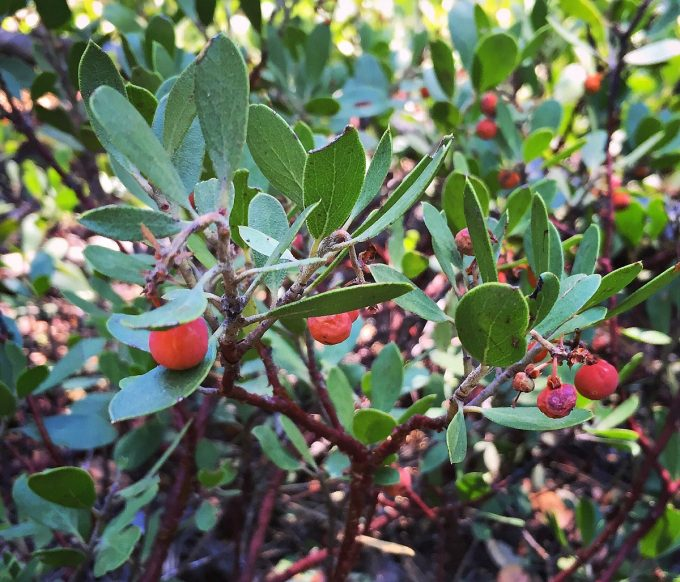
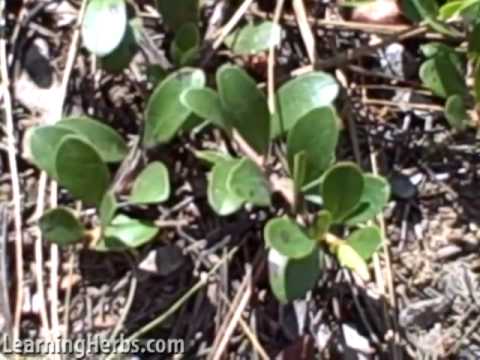
- Evergreen, thick, leathery, and distinctly spatulate (spoon‑shaped).
- Rounded tip, narrowing toward the base.
- Upper surface: dark green, smooth, glossy.
- Lower surface: pale, dull, often with a faint network of veins.
- Margins: entire (no teeth).
- Leaves persist through winter and feel firm and rubbery when handled.
Flowers
- Appearing in spring.
- Small, urn‑shaped, classic Ericaceae form.
- Usually white to pale pink, with a slightly inflated base and contracted opening.
- Arranged in short clusters at the ends of stems.
Fruit
- Bright red berries, smooth, shiny, and mealy inside.
- Typically single‑seeded drupes (though they look like berries).
- Ripen late summer into fall.
- Berries persist into winter and are a key ID cue when leaves are buried by snow.
Stems & Bark
- Reddish, thin, and woody.
- Older stems become shiny and mahogany‑colored.
- Young stems may appear greenish before lignifying.
Habitat
- Prefers dry, acidic, sandy, or rocky soils.
- Common in pine forests, open ridges, dunes, and boreal or montane zones.
- Thrives in full sun but tolerates partial shade.
- Often found in nutrient‑poor soils where other shrubs struggle.
Key Differentiators
- Evergreen, spoon‑shaped leaves with entire margins (separates it from Vaccinium species).
- Creeping mat‑forming habit (distinct from upright shrubs).
- Urn-shaped Ericaceae flowers + bright red berries.
- Leaves are thicker and more leathery than most groundcovers.
- Stems trail and root, forming continuous mats rather than discrete bushes.
⚠️ Common Lookalikes
Vaccinium vitis‑idaea (Lingonberry)
- Leaves more elliptical, not spoon‑shaped.
- Growth habit more upright, not creeping.
- Berries similar but plant architecture is different.
Gaultheria procumbens (Wintergreen)
- Leaves larger, more oval, often with minty scent when crushed.
- Growth habit is patchy, not mat‑forming.
- Berries are white → red, often with a bloom.
Overview
Part Used: the leaf and fruit
Qualities: Warming, , constricting, astringent (berries are also a bit sweet), cold, dry; solidifying, restoring, calming, stabilizing movement
Properties: Antiseptic, diuretic
Tropism: urogenital organs, intestines
Ground: all
Constituents:
Listing on Duke's Phytochemical Database
Glycosides (incl. arbutin 10%, methyl-arbutin, ericolin), tannins (up to 15%) gallic, malic & urosodexoxycholic acids, essential oil, myreten, resin (ursone), quercetin and myricetin -like flavonoid glycosides, minerals & trace minerals (incl. iron, calcium, chromium, selenium, magnesium
The major constituent is arbutin (5–15%). Related hydroquinone derivatives present include hydroquinone and methylarbutin (up to 4%). Gallic acid is the major phenolic carboxylic acid present, together with galloyl arbutin and up to 20% of gallotannins, flavonoids and triterpenes, mainly ursolic acid and uvaol
Phenolic constituents of *Arctostaphylos uva-ursi* L. Spreng
Effects
The tannins act as an astringent, and the phenol glucosides and their aglyca have an antibacterial effect. The antimicrobial effect is associated with the aglycon hydroquinone released from Arbutin (transport form) or arbutin waste products in the alkaline urine. The drug has urine-sterilizing properties that are attributed to bacteriostatic hydroquinones, conjugates of glucuronic acid and sulfuric acid.
Based on pharmacological studies, some practitioners recommend that Uva-ursi be used internally and externally as adjuvant treatment of inflammatory conditions, such as contact dermatitis, edema, arthritis, and in Hyperpigmentation disorders.
Antimicrobial Effects
The effect of aqueous extract leaves to decrease surface hydrophobicity of 155 Escherichia coli strains was determined in cattle. The adhesion of microbes in host cells is important for development of gram-negative microbe-induced infections and is influenced by the surface hydrophobicity of the microbial cell. Bactericidal action of Uva-ursi was low, but the decrease in cell surface hydrophobicity may influence the bacteria's virulent properties. (Turi, 1997)
The aqueous extract of the leaves was also studied in Helicobacter pylori strains to determine possible changes in cell surface hydrophobicity. The tannic acid was determined to have the highest activity of decreasing cell surface hydrophobicity as well as antibacterial against H. pylori. (Annuck, 1999). A decoction of leaves enhanced cell aggregation of various H. pylori strains, and possessed a remarkable bacteriostatic activity in vitro. (Annuk et al, 1999)
Hyperpigmentation Effects:
The leaves, particularly species Arctostaphylos patula and A. viscida, can be applied as a whitening agent for the skin. In a study, an ethanol extract of dried leaves of 5 species of Uva ursi were freeze-dried and lyophilized for the study. All extracts showed strong superoxide dismutase-like activity. No correlation was found between the arbutin content of the extracts and their anti-tyrosinase activity. The authors conclude that Uva-ursi is a promising cosmetic whitening agent because of its potent anti-tyrosinase activity, inhibition of melanin production, superoxide dismutase-like activity, and ability to absorb ultraviolet light. (Matsuda et al, 1996)
Tissue State Relevance
Arctostaphylos uva‑ursi (Bearberry) has one of the clearest cold, dry, astringent, downward‑tonifying energetic profiles in the materia medica. It’s a tightening, cooling, drying herb with a strong affinity for the urinary tract, mucosa, and lax/damp tissues. it sits squarely in Damp/Stagnation → Dry/Atrophy (tonifying) → Cold/Depression (secondary).
Bearberry is primarily a Damp/Stagnation clearing and Dry/Atrophy tonifying/astringent herb, with secondary relevance for Cold/Depression when coldness expresses as boggy, lax, or poorly contained tissues. It is not appropriate for Heat/Excitation or hot‑dry patterns.
1. Damp / Stagnation — Primary
Why:
- Uva‑ursi is drying + astringent, reducing excess moisture
- Strong urinary affinity → clears cold‑damp bogginess in the bladder
- Tannins tighten and reduce watery discharge
- Hydroquinone derivatives act as antimicrobial agents in cold‑damp UTIs
Patterns it addresses:
- Cold‑damp urinary stagnation
- Boggy bladder tissue
- Watery leucorrhea
- Damp diarrhea with laxity
- Puffy, waterlogged mucosa
Energetic signature:
Drying, cooling, tightening, antimicrobial.
2. Dry / Atrophy — Primary (Tonifying)
This is the nuance:
Uva‑ursi is drying, but it is also tonifying for lax, atonic, atrophic tissues.
Why:
- Tannins → astringent tightening
- Restores tone to tissues that are weak, lax, or leaking
- Helps mucosa that is thin + boggy, not thin + dry‑hot
Patterns it addresses:
- Atonic bladder
- Chronic urinary leakage
- Atrophic mucosa with dampness
- Lax pelvic tissues with cold-damp overlay
Does NOT help when:
- Atrophy is hot‑dry
- Atrophy needs moistening (Marshmallow, Aloe)
3. Cold / Depression — Secondary
Bearberry is cooling, but its astringency helps cold tissues that are weak, pale, and boggy.
Helps when:
- Cold + damp + lax
- Cold + atonic bladder
- Cold + watery discharge
Aggravates when:
- Cold + dry
- Cold + weak digestion
- Cold + constricted tissues
4. Heat / Excitation — Contraindicated
Bearberry is not for hot, inflamed urinary patterns.
Signs of mismatch:
- Burning urination
- Red, irritated mucosa
- Hot-damp UTI
- Sharp, hot pelvic pain
It can increase irritation in hot patterns.
5. Wind / Tension — Not primary
Uva‑ursi does not relax tension.
It may indirectly reduce tension when tension arises from boggy, lax, damp tissues, but it is not a spasmolytic or aromatic relaxant.
Functional Summary (Energetic + Physiologic)
- Astringent → tightens lax tissues
- Drying → reduces dampness and watery discharge
- Cooling antimicrobial → supports cold-damp urinary infections
- Urinary tonic → strengthens bladder tone
- Downward-moving → directs action to pelvic tissues
TCM & Western Herbal Uses
Approved by Commission E;
Infections of the urinary tract
Used for inflammatory disorders of the efferent urinary tract. In folk medicine, the herb is used for all forms of urogenital and biliary tract disease.
Homeopathic: used for inflammations of the efferent urinary tract.
1. CLEARS HEAT, REDUCES INFLAMMATION AND CLEARS TOXINS; RESTRAINS INFECTION AND DRIES MUCOUS DAMP
bladder & kidney damp heat: frequent urgent painful urination, dry mouth, fever
URETHRITIS, acute cystitis, pyelitis, glomerulonephritis
colon damp heat; painful urgent defecation with pus and blood in stool, scanty urine
DYSENTERY, enteritis
genitourinary damp heat; fetid purulent discharges, mucous and blood in urine, frequent scanty painful urination
VENEREAL INFECTIONS with genital discharges, incl. gonorrhea, cervicitis, urethritis
CANDIDA albicans with thick purulent discharge
Researchers believe the herb works best when a person's urine is alkaline since acid destroys its antibacterial effect. Uva ursi works best at the first sign of infection.
2. CREATES ASTRICTION, ARRESTS BLEEDING AND DISCHARGE, PROMOTES TISSUE REPAIR
CHRONIC or ACUTE HEMORRHAGE:blood in urine, stool or spittle, uterine bleeding
DIARRHEA and dysentery in general, esp. chronic
GENITAL and URINARY DISCHARGES in general
HEMORRHOIDS, SORE spongy gums, cankers
SPRAINS, swellings, POSTPARTUM tissue trauma
3. RESTORES THE UROGENITAL ORGANS, LENIFIES IRRITATION AND HARMONIZES URINATION; RESTORES THE PANCREAS
genitourinary Qi deficiency (Kidney Qi infirmity); lower back soreness, frequent scanty or dribbling urination, bedwetting, prostate irritation, leucorrhea, nocturnal emission
GENERAL BLADDER IRRITATION due to any cause
URINARY SAND & STONE (also preventive)
BLADDER ULCERATION
DERMATITIS
DIABETES (supportive)
HIGH URINE SUGAR (glycosuria)
4. STIMULATES THE UTERUS, PROMOTES CONTRACTIONS AND ENHANCES LABOR
REMEDIAL for DIFFICULT or STALLED LABOR
EDIBLE PROPERTIES
Key takeaway: Arctostaphylos uva‑ursi (bearberry, kinnikinnick) has two edible/usable parts:
- Fruit — technically edible, bland, mealy, improved by cooking.
- Leaves — not food, but used for tea and medicinal preparations with important cautions.
EDIBLE PART 1: THE FRUIT
The red berries are edible, though dry, bland, and astringent. Multiple sources describe them as mealy with “white sawdust‑like pulp” under the skin.
Traditional & practical uses
- Raw (but not very palatable)
- Cooked — becomes slightly sweeter
- Added to stews as a carbohydrate source
- Preserves, jellies, marmalades, sauces, pastes
- Dried for storage
- Mixed with other berries or fats (e.g., pemmican) edibleplantdb.org
- Better after frost — cold improves flavor and reduces dryness edibleplantdb.org
Flavor profile
- Insipid, dry, mealy
- Slight sweetness when cooked
- Seeds remain rock‑hard even after cooking edibleplantdb.org
Safety notes
- Eating too many raw berries can have a mild laxative effect. pei-untamed.com
EDIBLE/MEDIATED PART 2: THE LEAVES (TEA ONLY — NOT FOOD)
Bearberry leaves are not eaten as food, but they are used for tea and medicinal preparations.
Traditional uses
- Tea for kidney and bladder issues
- Smoking mixtures (kinnikinnick)
- Headache remedies
- Antibacterial, diuretic, UTI‑related uses (modern research supports this) pei-untamed.com
Important cautions
- Leaves contain tannins and arbutin.
- Not for casual consumption — only small, controlled amounts for short periods.
- Overuse can cause nausea, vomiting, tinnitus, and potential liver/kidney damage. wellnd.com
- Pregnant or breastfeeding individuals should avoid bearberry entirely. wellnd.com
NOTES - HOLMES
Bearberry's major disinfectandanti-inflammatoryagent is arbutin;since it can only be transmuted into hydroquinone through alkaline urine its important when using this herb for disinfecting and heat clearing purposes to ensure alkaline conditions through a vegetarian diet high in vegetable content. Bearberry leaf should not be over nine months old, otherwise it will have lost most of its arbutin content and with it much of its medicinal properties. For toning and astringing the urogenital organs it will still be effective, however. Leaves and berries gathered in autumn are the most effective overall, and alpine plants are definitely stronger than lowland one.
The history of Bearberry's medicinal uses demonstrates how a plant, almost forgotten in Galenic medicine, once introduced to the American continent can become a top used medicinal in the hands of natives. A mention by CHARLES DE L'ECLUSE (1601) , who was a botanist, not a physician, and by the pharmacist GERHARD (1763), does not alter the story; the fact remains that Bearberry as a therapeutic tool was forgotten in Europe until very recently. Even the encyclopedic dinosaur tomes of Renaissance apothecarist J.J. BERGZABERN fail to show an entry for this herb! We have a case of a remedy that was known well enough in the distant past, in this case in Scandinavia and the British Isles (the Welsh Myddfai physicians made use of it, for example), then neglected for over a millennium, and finally rediscovered on the other side of the Atlantic by the Native Americans. Or did the latter in fact received this plant from the early Vikings during the first centuries A.D. and used it ever since? Like the migration of plants around the world, the migration of herbal remedies from one continent to another is often a mysterious thing.
We do know that Native Americans used Kinnikinnik, as one tribe called this herb as a toner to the urinary organs, in urogenital infections and for urinary stones. In Oregon, natives thought that ingesting the berries helped the bears, who eat massive amounts of them every fall, have a deep and regenerating winter's sleep. (The bush was also known as Bear's bilberryand Bear's whortleberry).Further southeast, Spanish and French missionaries reported cures of gonorrhea with extracts prepared from the entire plant. The Cheyenne and Sioux used the whole plant for promoting labor contractions. Meanwhile, according to eighteenth century fur traders of the Scottish Northwest Company, certain tribes such as the Nez Perce, Crows, Modocs, Cayuse and Yakimas were using the leaves in a longevity electuary mixed with honey, pollen and other unidentified herbs.
Bearberry is a remedy of limited and specific application, as opposed to, say, the plants whose essential oil we use, which have a rainbow spectrum of uses. It is almost a "symptomatic" plant like Arnica or Comfrey, yet still better suited to certain urogenital conditions than others. Above all, Bearberry is a urogenital damp heat clearer and a soothing urinary restorer. Its astringent cold qualities, assisted by disinfectant and lenitive properties, make it better place in acute urinary and intestinal infections rather than chronic ones, especially those with blood in the discharge. Bearberry's actual diuretic effect is very weak, which shows that promoting urination is not the only, or main, way to rid acute damp heat. In treating blood line types of urinary problems mainly and urogenital damp heat generally it is very close o the herbs of the same class such as Huang bai, cortex Phellodendri and Shan zhi zi, fructus Gardeniae use in Chinese medicine, for which it could serve as an excellent replacement if required. Bearberry combines well with cold demulcents such as Cornsilk, Plantain, Couch grass and Hydrangea for Lower Warmer damp heat conditions.
If on the other hand we need Bearberry's disinfectant and toning effects in cases of chronic damp heat or chronic infections, then it should be combined with active diuretics that seep and drain water in order to flush the area through; Dandelion, Horsetail, Nettle, as a few examples. Bearberry also has one of the highest reputations of all herbs for preventing stone formation.
The Physiomedical Dispensatory by William Cook, M.D., 1869
Properties and Uses: These leaves are principally astringent, with which they combine mild tonic and soothing properties. They increase the flow of urine; and while their powers are more or less expended upon all mucous membranes, they particularly show their influence upon the urino-genital structures. In chronic and sub-acute mucous discharges–such as catarrh of the bladder, leucorrhea, gonorrhea, and gleet–they serve an admirable purpose in lessening the discharge gradually, and giving tone to the parts. We have cured several cases of lingering gonorrhea, in females, with them alone; and have found them a valuable addition to the usual tonics, in leucorrhea. So, in aching of the kidneys and bladder, congestion and ulceration of the bladder and prostate gland, involuntary seminal emissions, and incontinence of urine, they serve a good purpose. They may be used in chronic diarrhea and dysentery; and are especially suited to an ulcerated condition of the bowels in such cases–when they may advantageously be combined with hydrastis. They are more grateful to the stomach than nearly any other astringent and give relief to the achings that usually accompany the above maladies. I have used them as a tonic and astringent in a bleeding stomach, bowels and kidneys, to very good advantage–being careful at the same time to distribute the blood to the surface. They are reputed good in diabetes, gravel and strangury, but of these connections I know nothing.
They unquestionably influence the uterus, and give tone to it. This action is of service in the treatment of leucorrhea, especially when connected with a flaccid condition of the womb and vagina, and with prolapsus. Also in parturition, when the parts are very moist and flaccid and the pains trifling, an infusion of the leaves will secure very positive uterine contractions. They also prepare the parts against flooding, under such conditions; and will be found of use in passive menorrhagia. As a parturient, they may be combined with some diffusive stimulant, as ginger or xanthoxylum. Dose, in powder, one to three scruples three times a day. They are seldom administered in this form, the decoction being preferable. Dr. M. S. Davenport, of Illinois, tells me he has used it as a local application to the bites of poisonous reptiles; and says it abstracts the poison, relieves the pain, and quiets nervous agitation.
Physio-Medical Therapeutics, Materia Medica and Pharmacy BY T. J. LYLE, A.M.M. 1897
The leaves are a mild, soothing, bitter astringent, tonic, diuretic. They influence the mucous membrane, especially that of urinary and genital structures, increasing the flow of urine, relieving congestion and toning the parts. They are valuable in leucorrhoea, gonorrhoea and gleet. The discharge is lessened and the parts toned