Limbic System
Return to Nervous System Menu
Videos


Biology/Traits: The Limbic System
Limbic System: Sex, Hallucinations, Emotion, Memory, PTSD, Amygdala...
Emotions: limbic system | Processing the Environment
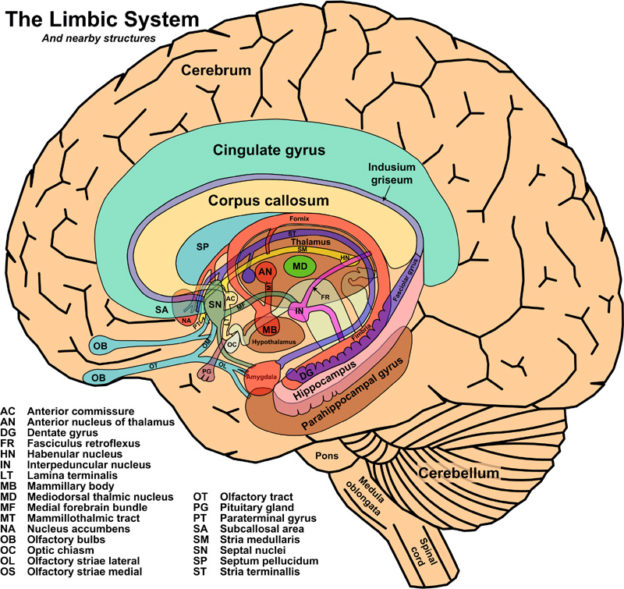
The limbic system is a complex set of brain structures located on both sides of the thalamus, right under the cerebrum. It is also commonly referred to as the paleomammalian brain although this term "is no longer espoused by the majority of comparative neuroscientists in the post-2000 era." It is not a separate system but a collection of structures from the telencephalon, diencephalon, and mesencephalon. It includes the olfactory bulbs, hippocampus, hypothalamus, amygdala, anterior thalamic nuclei, fornix, columns of fornix, mammillary body, septum pellucidum, habenular commissure, cingulate gyrus, parahippocampal gyrus, limbic cortex, and limbic midbrain areas.
The limbic system supports a variety of functions including emotion, behavior, motivation, long-term memory, and olfaction. Emotional life is largely housed in the limbic system, and it has a great deal to do with the formation of memories.
Although the term only originated in the 1940s, some neuroscientists, including Joseph LeDoux, have suggested that the concept of a functionally unified limbic system should be abandoned as obsolete because it is grounded mainly in historical concepts of brain anatomy that are no longer accepted as accurate.
The following areas have been considered part of the limbic system.
- Cortical areas:
- Limbic lobe
- Orbitofrontal cortex: a region in the frontal lobe involved in the process of decision-making
- Piriform cortex: part of the olfactory system
- Entorhinal cortex: related to memory and associative components
- Hippocampus and associated structures: play a central role in the consolidation of new memories
- Fornix: a white matter structure connecting the hippocampus with other brain structures, particularly the mammillary bodies and septal nuclei
- Subcortical areas:
- Septal nuclei: a set of structures that lie in front of the lamina terminalis, considered a pleasure zone
- Amygdala: located deep within the temporal lobes and related with a number of emotional processes
- Nucleus accumbens: involved in reward, pleasure, and addiction
- Diencephalic structures:
- Hypothalamus: a center for the limbic system, connected with the frontal lobes, septal nuclei, and the brain stem reticular formation via the medial forebrain bundle, with the hippocampus via the fornix, and with the thalamus via the mammillothalamic fasciculus; regulates many autonomic processes
- Mammillary bodies: part of the hypothalamus that receives signals from the hippocampus via the fornix and projects them to the thalamus
- Anterior nuclei of thalamus: receive input from the mammillary bodies and involved in memory processing
Other areas that have been included in the limbic system include the:
- Stria medullaris
- Central gray and dorsal and ventral nuclei of Gudden
Chronic Illness: One of the common symptoms among those with chronic diseases express is a combination of anxiety and insomnia as a result of different stressors that rev up the body’s nervous and limbic system. Many of these illnesses are neurotoxic, or at least neurotoxins play a key role. Whenever we’re in a state of perpetual anxiety and sleeplessness it’s very difficult to have a clear perspective on anything and remain motivated to take necessary steps towards recovery.
Effect of Essential Oils
The scientific rationale of essential oils use in aromatherapy to improve mood and the mild symptoms of stress disorders, such as anxiety, depression, and chronic pain, is supported by both the physiological and psychological effects caused by the inhalation of volatile components that are believed to act via limbic system structures, such as the hippocampal formation, the hypothalamus and the pyriform cortex. Indeed, several clinical and experimental data indicate that aromatherapy can improve mood, alertness, and cognition.
Oats: The alkaloids in oat nourish the limbic system and motor ganglia, increasing energy levels and a sense of well-being.
Lemon Balm: German studies indicate that lemon balm’s volatile oils help protect the cerebrum from excess external stimuli. It affects the limbic system and helps balance emotional states