Micturition Reflex
Return to Urinary System Menu
The micturition reflex is one of the autonomic reflexes, but the release of urine is regulated by voluntary neural mechanisms that involve centers in the brain and spinal cord.The micturition reflex is a bladder-to-bladder contraction reflex for which the reflex center is located in the rostral pontine tegmentum (pontine micturition center: PMC). There are two afferent pathways from the bladder to the brain. One is the dorsal system and the other is the spinothalamic tract.
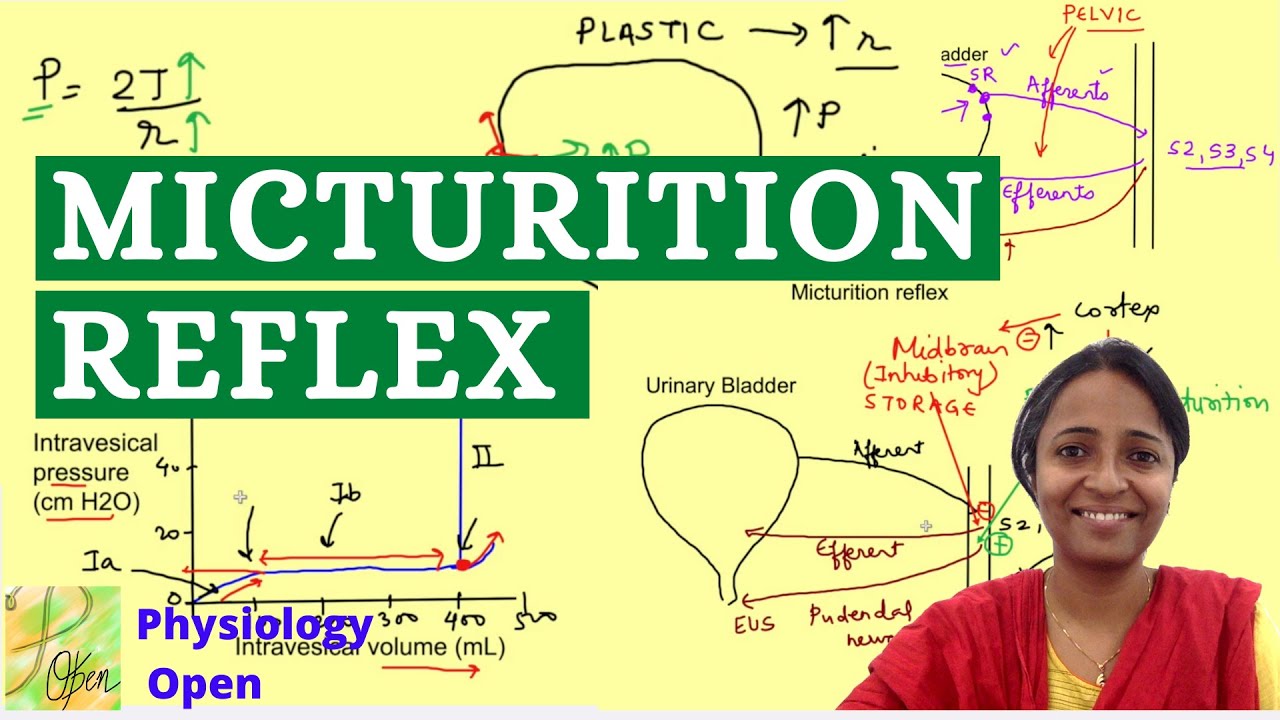

The micturition reflex is a complex physiological process that involves the coordination of the nervous system and the urinary system to control the act of urination. This reflex is essential for maintaining homeostasis by regulating the excretion of urine from the bladder.
ANATOMY OF THE URINARY SYSTEM
To fully grasp the micturition reflex, it is important to understand the anatomy of the urinary system, which includes:
- Kidneys: These bean-shaped organs filter blood to produce urine, which contains waste products and excess substances.
- Ureters: Tubes that transport urine from the kidneys to the bladder.
- Bladder: A muscular sac that stores urine until it is ready to be expelled.
- Urethra: The duct through which urine exits the body.
The Role of the Nervous System
The micturition reflex is primarily controlled by the nervous system, which involves both the central and peripheral nervous systems. Key components include:
- Autonomic Nervous System (ANS): This system regulates involuntary bodily functions and is divided into the sympathetic and parasympathetic nervous systems.
* Sympathetic Nervous System: Inhibits bladder contraction and promotes urine retention.
* Parasympathetic Nervous System: Stimulates bladder contraction and facilitates urination.
- Somatic Nervous System: Controls voluntary muscle movements, including the external urethral sphincter.
Mechanism of the Micturition Reflex
The micturition reflex involves a series of coordinated events:
- Filling Phase: As the bladder fills with urine, stretch receptors in the bladder wall are activated. This sends signals to the spinal cord and brain, indicating the need to urinate.
- Storage Phase: During this phase, the sympathetic nervous system is active, causing the detrusor muscle (the muscle of the bladder wall) to relax and the internal urethral sphincter to contract, preventing urine leakage.
- Voiding Phase: When the bladder reaches a certain volume, the parasympathetic nervous system is activated. This causes the detrusor muscle to contract and the internal urethral sphincter to relax, allowing urine to flow into the urethra.
- Voluntary Control: The somatic nervous system allows for voluntary control over the external urethral sphincter, enabling the conscious decision to initiate or delay urination.
Factors Affecting the Micturition Reflex
Several factors can influence the micturition reflex, including:
- Age: Infants and young children have an immature nervous system, leading to involuntary urination. As they grow, they develop the ability to control the reflex.
- Neurological Disorders: Conditions such as spinal cord injuries, multiple sclerosis, or Parkinson's disease can disrupt the micturition reflex, leading to urinary incontinence or retention.
- Medications: Certain drugs can affect the nervous system and alter bladder function, impacting the micturition reflex.
- Lifestyle Factors: Fluid intake, diet, and stress levels can also influence bladder function and the micturition reflex.
Clinical Implications
Understanding the micturition reflex is important for diagnosing and treating urinary disorders. Some common conditions related to the micturition reflex include:
- Urinary Incontinence: The involuntary leakage of urine, which can result from an overactive bladder or weakened pelvic floor muscles.
- Urinary Retention: The inability to empty the bladder completely, often caused by an obstruction or nerve dysfunction.
- Overactive Bladder: A condition characterized by a sudden, intense urge to urinate, often leading to incontinence.
Management and Treatment
Treatment for disorders of the micturition reflex may involve:
- Behavioral Therapies: Techniques such as bladder training and pelvic floor exercises can help improve bladder control.
- Medications: Drugs that target the nervous system or bladder muscles can help manage symptoms.
- Surgical Interventions: In some cases, surgery may be necessary to correct anatomical issues or implant devices that aid in bladder control.