Babbitt I
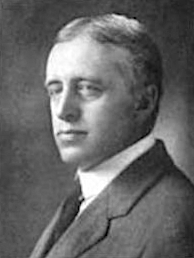
Achievements: Literary criticism, ethical and cultural philosophy
Born: August 2, 1865; Dayton, Ohio
Died: July 15, 1933; Cambridge, Massachusetts (Aged 68)
Field & Discipline: Art; Literature; Criticism
Language: English
Father: Edwin Dwight Babbitt
Mother: Augusta Darling
Siblings: Unknown
Spouse: Dora May Drew
Children: Edward; Esther
Education: Woodward High school, Cincinnati, Ohio; Harvard College
Major Work:
"Rousseau and Romanticism" (1919)
"Democracy and Leadership" (1924)
Life & Times:
Babbitt worked as a reporter in Cincinnati and then as a cowboy on a ranch in Wyoming before relatives paid for him to enter Harvard College in 1885. He graduated in Classics in 1889 and took a job teaching at a College in Montana. He wanted to extend his knowledge of oriental studies and in 1891-2 he spent a year in Paris, working under Professor Sylvain Levi.
He returned to Harvard where he continued his oriental studies and received his master's degree in 1893. He then took a job teaching French, Spanish and Italian at Williams College before being appointed to the Harvard faculty in 1894. He taught in the Department of Romance Languages and Literature, and in the Department of Comparative Literature.
Babbitt was hostile to the progressive reforms in education introduced to Harvard, in particular the elective system, which reduced the importance of classics and put science on the curriculum. The basis of his opposition was the belief that the wisdom of the past was being thrown out. He did not hide his views and his lectures caused great controversy.
In 1906 Babbitt published his first book, "Literature and the American College" in which he stated that a traditional classical education was the necessary antidote to the cult of the individual and the declining standards of contemporary society. In "The New Laokoon" (1910), he criticised the prevailing ideas on experimentation in modern art. In 1912, he was made full professor and in spite of his controversial views, was attracting large numbers of pupils, including the poet [taught] TS Eliot*.
Babbitt was now actively developing an intellectual movement called New Humanism. Babbitt believed that the romanticism and naturalism of the nineteenth and twentieth centuries had resulted in a decline in American culture because romanticism glorified the instinct against the rational, and naturalism removed the sense of personal responsibility by attributing all behaviour to racial and environmental background.
Among the influences he held to be sentimental and indulgent were the writings of the
eighteenth-century French philosopher, [criticized] Rousseau*, who advocated bringing up children without constraint and praised “the noble savage.”
In 1919 Babbitt wrote what was probably his most important book, "Rousseau and Romanticism" in which he launched a critique of romanticism with reference to Rousseau's theories. In his "Democracy and Leadership" (1924) he applied his ideas to the political arena.
The New Humanism was popular in colleges and universities, and Babbitt had a following among teachers of literature in particular. He also had his detractors. The Harvard philosophy teacher, [was criticized by] Santayana*, for example, and the writer [criticized by] Mencken* both wrongly bracketed Babbitt with the New England snobs and Puritans.
Babbitt’s belief that an elite leadership was a necessary force in democratic society and his stress on classical restraint were not compatible with a society sinking into the Great Depression of the 1930's,where radical solutions and social change were being demanded.
Babbitt's last works of literary and cultural criticism were "On Being Creative" (1932) and "The Spanish Character" (1940). In 1936 he published his original translation of the "The Dhammapada,” a Buddhist holy text, together with an interpretive essay on the work.
Assessment: Babbitt was out of step with his times but his theories have since influenced many conservative intellectuals.
Oneliner: Irving Babbitt, American literary and cultural critic
Bibliography:
- Babbitt, Irving, ed. Panichas, George A, Irving Babbitt, Representative Writings, University of Nebraska Press, London, 1981.
- Ryn, Claes G, Will, Imagination and Reason, Babbitt, Croce and the Problem of Reality, Transaction Publishers, London, 1997.