Verlaine
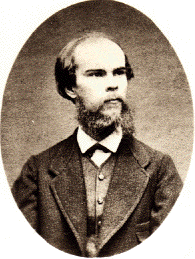
Verlaine, Paul Marie
ACHIEVEMENTS: One of the first poets to embody the Impressionist and symbolist ideals of rendering art that conveys impressions and emotions, and is capable of being expressed in terms of one of the other arts.
NICKNAME/ALIAS:
DATE AND PLACE OF BIRTH: 30 March 1844, Metz, France
DATE/PLACE OF DEATH/AGE AT DEATH: 8 January 1897, Paris, France. Agd 52
DISCIPLINE: Poet
FIELD: Literature
LANGUAGE: French and English
PARENTS: Captain Nicolas Verlaine; Stéphanie Dehée Verlaine
SIBLINGS: Elisa Moncomble (adopted niece of Stéphanie Verlaine); 3 other siblings, stillborn
SPOUSE: Mathilde Mauté de Fleurville
CHILDREN: Georges Verlaine (b. October 1871, d. 1926, Paris)
EDUCATION: Institution Landry, Paris
MAJOR WORK: “Poèmes saturniens” (1866), “Fêtes galantes” (1869), “Romances sans paroles” (1874) and “Sagesse” (1881).
LIFE AND TIMES:
Verlaine became interested in literature at school, and sent his first poem to <influenced by> Hugo*. He was also influenced by <influenced by> Baudelaire’s* “Fleurs du Mal.”
After graduation Verlaine returned to Paris, and began attending the evening soirées that included poets like <knew> France* and <knew> Mallarmé*
The first published collection of Verlaine’s poems, entitled “Les Amies” (“Friends”) were immediately controversial. French censors reviewed the book and found Verlaine’s poems about relationships, particularly one about the Greek poet Sappho, to be pornographic. Only eight copies survived the subsequent banning of the sale of the book in France by the French courts.
Verlaine’s next book, “Fêtes Galantes,” was published in 1869. It was well received by the critics and his peers, but popular success did not follow. Then his father died. Verlaine began drinking heavily, mainly beer and wine. One of his friends, the poet Charles De Sivry, took him to a café to help him forget his troubles one evening, and bought him an absinthe.
Absinthe was one of the most popular and fashionable forms of alcohol among the educated and artistic communities of the Latin Quarter and Montmartre in Paris from the mid-nineteenth through the early twentieth centuries. Verlaine began drinking absinthe on a regular basis, getting drunk and quarrelsome.
Then he met the half-sister of his friend De Sivry, Mathilde Mauté de Fleurville. He and Mathilde married late in August 1870, and soon Verlaine began drinking again. When he was drunk, he and Mathilde would quarrel, Verlaine would hit her, then apologize the next day. Then Mathilde became pregnant. Verlaine resolved to start over, and become a model husband and father.
At about that same time, a young poet, <had affair with> Rimbaud*, who was also a fan of Baudelaire, sent a few of his poems to Verlaine for review. In his letter, he referred to Baudelaire as a “king of poets, a very God!”
Verlaine was impressed by Rinbaud's poetry, and sent him an invitation to come stay with him and his family, along with the train fare to Paris. Their on-again, off-again relationship lasted five years.
Over the next year or so, Verlaine and Rimbaud were inseparable. Verlaine began joining in the campaign to experience the “derangement of the senses” which Rimbaud felt was essential for a true artist. Gradually, this led to several of Verlaine’s older friends abandoning him, since part of the process for Rimbaud was to be as rude to others as possible, as well as being offensive and violent. Mathilde told Verlaine that he had to choose between his friend and his wife. Verlaine chose Rimbaud.
Some of Verlaine’s best poetry was written during this tumultuous association with Rimbaud. The collection titled “Romances sans Paroles” came directly out of his years of imprisonment. The publication process was difficult, and sales were worse; only one copy of the book was sold, and only one review of the book appeared upon its release in March 1874.
The poems reflected Verlaine’s new, and only, rule of poetry: “L’Art, mes enfants, c’est d’être absolument soi-même.” (“Art, my children, is being absolutely yourself.”)
Today, almost every modern poet and writer accepts this rule as being a primary reason for writing - it’s called: “finding your voice.”
When was told that Mathilde was being granted a legal separation from him Verlaine turned to the Church for comfort, and began writing poetry which reflected this new support. The collection was eventually published under the title “Sagesse” (“Wisdom”). Verlaine finally realized that the old life was over, and he went to Linconshire, England, to teach French. While there, he became friends with Canon Coltman.
In 1884, Verlaine was asked to write introductions to selections of poems for a series titled “Les Poètes Maudits.” Verlaine chose as his poets Rimbaud, Mallarmé and Tristan Corbière. This book became very popular among young poets, and the Symbolist artists. Verlaine and Mallarmé were suddenly fashionable, and Rimbaud’s work became the basis of a cult following among young artists. Publisher Gustave Kahn published Verlaine’s work in a new Symbolist journal, and his name became irrevocably tied with that movement.
Between 1886 and 1889, Verlaine attended soirées held by Mallarmé and others, and began holding salons of his own, with the money and sponsorship of new patrons of the Symbolists.
Verlaine began to suffer from leg sores at about this time. Drinking made his leg trouble worse, sending him from hospital to hospital looking for a cure. He continued writing and publishing, and branched out to short stories and plays in addition to his poetry. Then he worked on three more books in the “Poètes Maudits” series, including a volume about one “Pauvre Lélian,” an anagram of Paul Verlaine.
During this time, Verlaine and the painter <knew> Gauguin* were occasional visitors at each others’ homes. They shared a similar life history: years of near-starvation, isolation from their fellow artists, and unrequited regard for their estranged wives. They were both important figures to Symbolist artists.
In an attempt to alleviate the continual poverty of these two leaders of the movement, a group of Symbolist artists and writers decided to hold a fundraiser to benefit Verlaine and Gauguin at the Théâtre Vanderbilt in 1891. Gauguin moved to Tahiti before the fundraiser. Verlaine attended in person.
In October 1892, Verlaine was engaged on speaking tours in Holland and Brussels. Arthur Symons, British author and Francophile, met Verlaine, Mallarmé and other poets during a visit to Paris in 1889. He introduced Verlaine to Havelock Ellis, and took Verlaine’s work back with him to England to translate into English. In 1893, Symons helped organize a brief speaking tour in England for Verlaine.
As Verlaine’s fame spread, poets from England came to France to visit, including <visited by> Wilde* and <visited by> Yeats*. In 1893, the English painter <painted by> Rothenstein* did a portrait lithograph of Verlaine.
Verlaine’s influence went beyond literature. His evocative early poems attracted the attention of the composer <work set by> Debussy*, who set selections from “Fêtes Galantes” to music. In Verlaine’s poems, Debussy saw a concrete example, in poem form, of what he wanted to do with music.
In December 1895, he contracted bronchitis, and complications developed. During the next month, he managed to write one last poem, “Les Ames ont tu leurs ordres en attendant."
After Verlaine’s death, his work continued to influence poets and writers across Europe and America. <plagiarized by> Brecht 2* encountered Verlaine’s work at an early age, translated his poems into German, and imitated Verlaine’s style. <influenced> D. H. Lawrence* discovered the poetry of Baudelaire and Verlaine when he attended school at Croydon in 1908. <influenced> T.S. Eliot* read Verlaine’s poetry in translation by Arthur Symons.
One of his last appearances in literature occurred twenty-three years after his death. In 1919, Verlaine became a character, along with absinthe, William Rothenstein, Aubrey Beardsley, Catulle Mendès, Stéphane Mallarmé, Charles Baudelaire, Villiers de l’Isle-Adam, Frank Harris and others, in Max Beerbohm’s short story “Enoch Soames.”
ASSESSMENT: One of the major figures of the mid-nineteenth century literary world, Verlaine is known today more as an inspiration to the generation of writers who followed. His use of language, imagery and emotion in his work, and especially his insistence that there should be no distance between the artist and his art, make him the first “modern” poet.
EXTRA CONNECTIONS: He influenced the work of <influenced> Apollinaire*
In preparation for Operation Overlord, the BBC via Radio Londres had signaled to the French Resistance that the opening lines of the 1866 Verlaine poem "Chanson d'automne" were to indicate the start of D-Day operations.
Bob Dylan secretly studied the French Symbolists, and later his iconic "You're Gonna Make Me Lonesome When You Go," has the lyric, "Situations have ended sad; Relationships have all been bad; Mine've been like Verlaine's and Rimbaud".
ONELINER: Paul Verlaine, influential French Symbolist poet
BIBLIOGRAPHY:
Hanson, Lawrence and Elisabeth Hanson, Verlaine: Fool of God, Random House, New York, 1957.
Wikipedia