Mallarme
Mallarme, Stephane
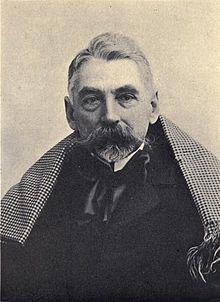
other-name: Etienne Mallarme (christened name)
birth: 1842; Paris, France
death: 9 September 1898; Paris, France
discipline: Literature
category: Poetry
Assessment: Stephane Mallarme is generally considered a part of the Symbolist school of French poets, but his works are very individual. His poems are powerful, beautiful, and, in many cases, so individually phrased as to be obscure to many (or most) readers. His work influenced subsequent generations of poets, such as George Stefan and Paul Valery.
language: French; English
education: school for "sons of gentlemen" at Auteuil, France; Lycee Imperiale, Sens, France
achievements: By and large, except for his poetic achievements, an undistinguished life
major-work: L'Apres-midi d'un Faune (Afternoon of a Faun, 1876); Herodiade (1869)
Details: Stephane Mallarme was born in 1842 in Paris to a family which had been connected with the civil service for generations. His christened name was Etienne Mallarme but he preferred Stephane and used that name for most of his life.
The men of the family were generally well-educated but had displayed no sign of literary talent prior to Stephane's birth.
At sixteen Mallarme began writing poetry under the influence of Victor Hugo* At the age of twenty, he went to England to improve his English, thinking to earn a living teaching the language. It was in England that he married.
By the time he returned to France, he had become a lifelong Anglophile and had decided to study English letters rather than take up the family's customary civil service work.
Though a university career seemed the likeliest course, he never completed the necessary examinations. He found himself with a career teaching English in secondary schools in Tournon, Besancon, Avignon and Paris, and this was his profession from 1864 until his retirement in 1894.
As far as his poetic life is concerned, it can be said to have begun in earnest in 1861 when he came across “Fleurs du Mal,” published by Baudelaire* four years earlier. He was much struck by the beauty and sonority of Baudelaire's work.
His first original poems, such as "Galanterie Macabre" and "Enfant Prodique,” shped Baudelaire’s influence, but already displayed some of the qualities that would become characteristic of Mallarme's more mature works.
These qualities resulted in part from his fastidious craftsmanship. Mallarme rewrote his poems until they were as close to perfection as he could bring them. As a result of this meticulous re-working, his total production of works was not large.
Another distinction of his work was the relationship he tried to evoke between the structure of music and the structure of poetry. So striking was this relationship that composer Claude Debussy* wrote the ballet ‘L'Apres-midi d'un Faune’ (illustrated by Manet*) as a consequence of Mallarme's publication of his poem of the same name in 1876.
The poem presents the wandering thoughts of a faun on a drowsy summer afternoon:
"Forgetful let me lie where summer's drouth
“Sifts fine the sand and then with gaping mouth
“Dream planet-struck by the grape's round wine-red star.
“Nymphs, I shall see the shade that now you are." (trans. Aldous Huxley*)
A late work, ‘Toast Funebre’ was written in memory of writer Theophile Gautier*
Mallarme's individuality as a poet meant that he did not establish a school, but he was a good friend to many younger creative talents and from the 1880’s in Paris held a weekly salon (a meeting of writers, painters and the like for the purposes of conversation and mutual inspiration). The group included writers Andre Gide*, Paul Valery*,Proust*, and artistsDegas* andGauguin*
Readers and critics were (and still are) often unsure of how to respond to Mallarme's works. Even his friend Degas said he didn’t understand what Mallarme was talking about. Much of the time his poetry used language whose meaning was long-forgotten. He believed that the point of a poem was the beauty of its language, and that a poem should be read the way an object was viewed, as an object in itself. He preferred to hint at meaning so that the reader found pleasure in turning over and over the words to search for understanding, rather than have meaning presented straightforwardly, as ‘in a newspaper.’
Even though he did not ally himself with any poetic movement, he is now often included in the group of French poets collectively called the ‘Symbolists.’
Mallarme was also a devotee of ballet and a fan of Wagner*. He also wrote essays on literary subjects, and these were collected in a volume titled Divagations, published in 1897. He never finished a book (‘Great Work’) on his literary theories, but his free verse inspired twentieth century French poetry.
extra-connections:
From 1931 to 1933, Matisse* provided etched illustrations for Mallarme's "Poesies.”
Symbolist poet George Stefan* admired Mallarme's work
He was an influence on the work of surrealist poet Apollinaire*
He was influenced by the anarchist Kropotkin* was a renowned proponent
He translated the works of American writer Edgar Allen Poe*
oneliner: Stephane Mallarme, influential French Symbolist poet
bibliography:
http://www.kirjasto.sci.fi/mallarme.htm
"Biography" and "Interview with Stephane Mallarme." http://www.studiocleo.com/librarie/mallarme/biography.html
Simon, John. "Squaring the Circle: Stephane Mallarme." The New Criterion Online. 13:5 (Jan 1995). http://www.newcriterion.com/archive/13/jan95/simon.htm
Kunitz, Stanley J. and Veneta Colby, eds. "Mallarme, Stephane," in European Authors 1000-1900: A Biographical Dictionary of European Literature. New York: The H.W. Wilson Company, 1967. pp 592-594.
Millan, Gordon, A Throw of the Dice: The Life of Stephane Mallarmé, 1994.
parents: Numa Joseph Mallarme; Elisabeth Desmoulins
spouse: Marie Gerhardt
siblings: Maria
children: Anatole (1872-1879); Genevieve Mallarme Bonniot