Al Battani
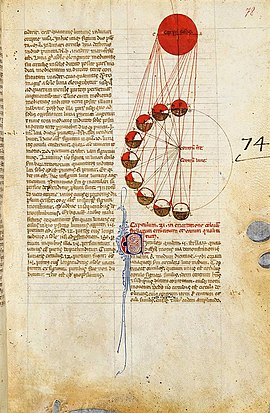
Full Name: Abu Allah Mohammad ibn Jabir ibn Sinan al-Raqqi al-Harrani al-Sabi al-Battani
Nickname/Alias: Al-Battani
Achievements: The best known Arab astronomer in Europe during the Middle Ages.
Born: c. 858; Harran, near Urfa, Mesopotamia (now Syria or Turkey)
Died: Around 929; Qasr al-Jiss, near Samarra, Iraq
Field & Discipline: Astronomy; Mathematics
Language: Arabic
Father: Jabir ibn Sinan al-Harrani
Mother: Unknown
Siblings: Unknown
Spouse: Unknown
Children: Unknown
Education: Unknown
Major Work:
“Zij” (c.900; printed versions 1537 and 1645)
Life & Times: Most information on the life of al-Battani comes from the “Fihrist,” compiled by the bookseller, Ibn an-Nadim in 988. It gives an account of the Arabic literature available in the 10th century and describes some of the authors. Nadim described al-Battani as “one of the famous observers and a leader in geometry, theoretical and practical astronomy and astrology.”
Al-Battani produced his own set of astronomical tables. The most best-known work to date had been [work related to] Ptolemy's* “Almagest,” but through his own observations of the sun and moon al-Battani gave a more accurate description of their motions than had Ptolemy.
His observations lasted from 877 to 918. His star catalogue was composed in the year 911, by which time al-Battani had become expert in astronomy and had turned his hand to astrology.
He wrote several works, the greatest of which was the “Kitab al-Zij,” thought to have been completed before 900. The “Zij” opened with practical definitions and problems such as the division of the celestial sphere into the signs of the zodiac and the arithmetical operations on sexagesimal fractions and trigonometrical functions.
Of fifty-seven chapters, five to twenty-six followed a similar content to Ptolemy's “Almagest” and considered many astronomical problems. Al-Battani then discussed the motions of the sun, moon and planets.
Chapters thirty-three to forty-eight were made up of his astronomical tables, together with instructions on how to read and use them. He also included two chapters on the theory of lunar parallax and how to use the Moon’s distance from Earth when computing eclipses. Chapter fifty-six gave instructions on how to construct a sundial, and led on to instructions for the use of various different astronomical instruments including a new type of armillary sphere known as “al-bayda” (the egg).
In the “Zij,” al-Battani catalogued a total of 489 stars. The accuracy of his calculations was remarkable, as is shown by his conclusion that a year was equal to 365 days, 5 hours, 48 minutes and 24 seconds. He also introduced a new method of computing the magnitude of eclipses by using trigonometry instead of geometry.
The Zij made a huge impact on the history of science, influencing the work of the Jewish philosopher, [influenced] Maimonides* and then (through the 12th-century Latin translation by [influenced] Plato of Tivoli*) that of [influenced] Albertus Magnus*, [influenced] Levi ben Gershom* and [influenced] Regiomontanus*. [influenced] Copernicus* was particularly indebted to the work of al-Battani and along with [influenced] Peuerbach* quoted him on many occasions. Later, al-Battani also influenced the work of [influenced] Brahe*, [influenced] Kepler*, and [influenced] Galileo*.
Assessment: Al-Battani was probably the most outstanding of the Arabian astronomers.
Oneliner: Al-Battani, the most famous medieval Arab astronomer
Bibliography:
- O'Neill, W. M., “Early Astronomy: From Babylonia to Copernicus,” Sydney, Sydney University Press, 1986.