Albertus Magnus
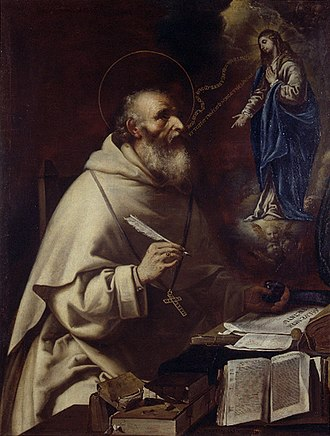
Nickname/Alias: Saint Albert the Great; Albert of Cologne
Achievements: Introduced Greek and Arabic science and philosophy to the medieval world
Born: c. 1200; Lauingen an der Donau, Bavaria, Germany
Died: November 15, 1280; Cologne, Germany (Aged about 80)
Field & Discipline: Science; Philosophy; Natural Science
Language: German
Father: Count and Countess of Bollstadt
Mother: Unknown
Siblings: Unknown
Spouse: None
Children: None
Education: University of Padua, Italy
Major Work:
"De vegetabilibus et plantis"
Life & Times:
Albertus was the eldest son of a wealthy German aristocrat, the Count of Bollstadt, and probably spent his childhood at the family manor in Bollstadt. At the University of Padua, in Northern Italy, he studied the liberal arts. Against strong opposition from his family, he was recruited into the recently-founded Dominican Order of preachers at Padua in 1223. He continued his studies there and the University of Bologna, then returned to Germany, where he was ordained and taught theology at several German priories.
When he was about 40, Albertus was sent to the priory of Saint-Jacques at the University of Paris, where he lectured on the Bible for two years, and then (for two more years) on [lectured on] Peter Lombard*'s "Four Books of Sentences,” the theological textbook of medieval universities. When Albertus graduated in 1245, he was the first German Dominican to become a master of theology and to lecture in the chair "for foreigners.”
Albertus was a key figure in the adoption of Aristotelian philosophy by medieval Scholasticism and in the revival of natural science triggered by Aristotle's philosophy.
While a student in Paris, he became familiar with the works of [studied] Aristotle*, newly translated from Greek and Arabic by [studied] Gerard of Cremona* and James of Venice in the late 12th century, and read the commentaries on Aristotle by [studied] Averroes*, a 12th-century Spanish-Arabian philosopher, as well as those by [studied] Avicenna*, an 11th century Arabic scholar. But his fellow church scholars knew only Aristotle's logic, and were suspicious of the rest of his works. In fact, by 1234, the ecclesiastical authorities at Paris had condemned all of Aristotle's works on natural philosophy and prohibited their teaching under pain of excommunication.
However, a few of Albertus' Dominican superiors began to realize that Aristotle and the Arabic philosophers could not be ignored, and they asked Albertus to explain Aristotle's "Physics" in Latin. Albertus then began working on a project that went far beyond the request. He commented not only on the natural sciences but also on Aristotle's logic, mathematics, ethics, politics, and metaphysics, and included the discoveries by the Arabs. The work, which took about 20 years to complete, became a monumental presentation of the entire body of knowledge of Albertus' time, and was recognized as one of the marvels of the age. (English philosopher [criticized by] Roger Bacon*, perhaps the only contemporary Western scholar of equal stature, did not like Albertus, and bewailed the fact that Albertus had become an authority in the schools on an equal footing with Aristotle, Avicenna and Averroes.)
In scientific pursuits, Albertus speculated on the cause of heat, was aware of the laws governing the refraction light, and made important additions to English philosopher [work related to] Grosseteste*’s ideas about the rainbow. Albertus correctly concluded that individual raindrops must be the basis of a rainbow, and this idea paved the way for the first proper theory of the rainbow by another German Dominican, [prefigured] von Freiberg* (possibly one of Albertus’ students). Albertus also experimented with alchemy, compiled a list of minerals and their properties, and is said to have been the first to isolate the element arsenic.
Albertus' status as a precursor of modern science stems from his empirical methodology. He maintained that evidence based on sense perception is superior to reasoning without experimentation. His contributions to biological sciences were tremendous. His treatise on vegetables and plants ("De vegetabilibus et plantis") was a masterpiece of accuracy and systematic classification. He ranged plants on a scale from fungi to flowering types. He is credited with being the first to mention spinach in Western literature, the first to note the influence of light and heat on the growth of trees, and the first to establish that sap is tasteless in the root and becomes flavored as it climbs the plant. In his: "On Animals," he discussed reproduction, embryology, anatomy, veterinary and medical science, and dentistry.
In 1248, Albertus went to Cologne to establish the first Dominican house of students. He presided over the house for six years, during which he also studied, taught and wrote. His chief disciple was Italian theologian [taught] Aquinas*, who had followed him to Cologne, but who returned to Paris in 1252. The two men differed on various doctrinal issues, but maintained a close relationship.
In 1254, Albertus took an administrative post as Provincial of "Teutonia,” the German province of the Dominicans. He remained three years, writing and doing scientific research. In 1257, he resigned and returned to teach in Cologne until 1259, when he was appointed by Pope Alexander IV to succeed the bishop of Regensburg. After the Pope died in 1261, Albertus resigned and returned to Cologne.
In 1263, he spent a year as legate of Pope Urban IV. He lectured at Wurzburg and at Strasbourg, but by the end of the decade had settled in Cologne. In 1270, he sent a memoir to Paris in support of Aquina, who had been quarrelling with the radical thinker [work related to] Siger of Brabant* and the Averroists. Aquinas won his case, and soon after, the Bishop of Paris condemned 13 errors arising from Averroist teaching, and Averroism ceased to be taught in the University of Paris.
As a theologian, Albertus was outstanding among medieval philosophers. In his "Summa Theologiae" (c. 1270), he attempted to reconcile Aristotelianism and Christian teachings, maintaining that though human reason could not contradict divine revelation, philosophers still had the right to investigate divine mysteries.
Extra Connections: Work related to that of [work related to] Al Battani*
Discovered silver nitrate, later key in photography
Gerbert, Albert Magnus and Roger Bacon said to make speaking heads.
Assessment: Largely responsible for the revitalization of Aristotelian thought in the 13th century. His observations in the natural sciences advanced botany, zoology, and mineralogy.
Oneliner: Albertus Magnus, great medieval philosopher
Bibliography:
- Catholic Encyclopaedia.
- Dictionary of Scientific Biography.
- Encyclopedia Britannica
- Leaman, Oliver (ed.), "Routledge History of Medieval Philosophy" , New York & London: Routledge, 1998.