Delius F
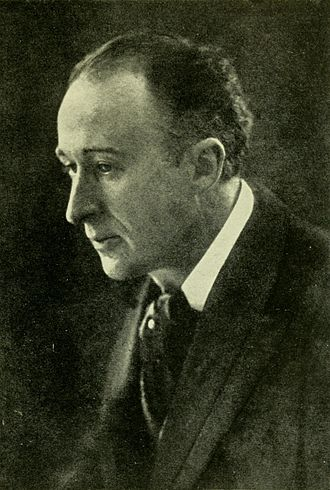
NAME: Delius, Frederick Theodore Albert
ALIAS: none
DATE OF BIRTH: 29 January 1862
PLACE OF BIRTH: Bradbury, England
DATE OF DEATH: 10 June 1934
PLACE OF DEATH: Grez-sur-Loing, France
DISCIPLINE: Music
FIELD: Composition
ASSESSMENT: Best remembered for his orchestral tone-poems and for his characteristically English style of composition.
LANGUAGE/S: English
EDUCATION: Bradford Grammar School, International College at Isleworth, apprenticed in the wool trade, private music instruction with Thomas F. Ward in Solona Grove, FL, Danville College, VA, Leipzig Conservatory
ACHIEVEMENTS: Delius is considered to be one of the most significant composers of characteristically English classical music of which his orchestral tone poems have proved most enduring.
MAJOR-WORK/S: Irmelin (1890-92), The Magic Fountain (1893-5), A Village Romeo and Juliet (1899-1901), Paris (1899), A Mass of Life (1904-1905), Appalachia (1898-1903).
PARENTS: Father: Julius Delius
SPOUSE: Helena Rosen
SIBLINGS: one of fourteen children
CHILDREN: none
LIFE AND TIMES:
Frederick Delius was born into a large musical family. His father was a fine musician who made himself wealthy as a businessman in the wool trade. Although music and culture were a respected part of family life, Delius’ father expected Frederick to work in the family business. However, Delius did not distinguish himself in school and was not interested in the business. He transferred to another school near London where he could attend concerts and opera.
After graduation, he spent three years of apprenticeship in the family business. His unhappiness caused enough family friction for his father to realize that Delius needed to pursue other interests.
In 1884, Delius was sent to Florida to run his father’s orange plantation. He took the opportunity to study music privately with Thomas F. Ward, a gifted musician who was greatly influenced by black singers in Brooklyn and black music in the southern United States. Ward taught Delius more than music – he taught him the musical discipline that Delius was to find useful throughout his life. After training with Ward, Delius was sufficiently prepared to teach music at Danville College in Virginia.
He returned to Europe to study at the Leipzig Conservatory from 1886 to 1888. It was at Leipzig that Delius met one of his life-long friends, composer Grieg*. Grieg convinced Delius’ father to allow his son to pursue a career in music.
After leaving Leipzig, Delius lived a bohemian lifestyle in Paris. He had a wide circle of friends many of whom were painters: Edvard Munch, Gauguin*, John* and Strindberg*, Swedish author and painter. He met his wife, a painter named Helena Rosen, in Paris. They moved to her house at Grez-sur-Loing where he made his home. The Parisian lifestyle was the downfall of many artists, including Delius. He contracted fatal syphilis in 1896.
Nonetheless, Paris was an important period of musical growth for Delius. He was meeting stimulating, creative artists and composers such as Ravel* and Fauré* and he was writing music prolifically. He wrote operas: Irmelin (1890-92), The Magic Fountain (1893-95) and A Village Romeo and Juliet (1899-1901). Delius drew on themes that were popular among the bohemian artists of Paris. The Magic Fountain drew on the exoticism of the Americas for its subject matter. A Village Romeo and Juliet, thought to be his finest opera, incorporated an element of Gypsies / Roma People.
He also composed his most famous work for orchestra in 1899. Although he wrote a great deal of music, he did not have the opportunity to hear it played. He had to seek other venues in other countries to hear his music performed.
Slowly, Delius gained some recognition and performances in Norway and Germany. Norway was in many ways a spiritual home for Delius – he enjoyed the natural beauty and felt an artistic connection with the people. Still, it was not until 1899 that his own country, England, held a performance of his works. Delius himself put the concert together. It was successful, but failed to inspire further invitations.
In 1907, a supporter, Henry Wood, performed Delius’ Piano Concerto in London and Delius’ orchestral work Appalachia was on the same bill. His most influential supporter was Beecham*. Beecham conducted many of Delius’ works and was given great license by the composer as far as interpreting his scores. Beecham and Delius had a similar spirit – they enjoyed hiking in Norway together in 1909. It was Beecham who gave a series of premieres of Delius’ work to promote his music in England. Beecham gave the first complete performance of A Mass of Life (1904-5), one of Delius’ largest works and still considered a masterpiece.
During World War I, Delius and his wife had to leave their home in France and spend the year of 1914 in Norway. For Delius, it was a period of traditional-form compositions such as the Violin Sonata No. 1 (1914). He returned to France after the war. Soon after, his health began a steady decline. He eventually was unable to lift the pen to write. Fortunately, in 1928, he received a proposal from a young English musician, Eric Fenby. Fenby was to write the music that Delius dictated.
As he struggled with his health, he continued to receive recognition for his music. In 1929, Beecham organized a festival of six concerts of Delius’ music. The composer, who could no longer walk, traveled to England for the last time, to attend the concerts. He then returned to France where he continued to write music with the aid of Fenby.
In 1933 he met Elgar* who was in Paris to conduct a performance of in Violin Concerto with Yehudi Menuhin as soloist. As they had many of the same interests, Elgar and Delius got along quite well. They met late in life; both men died the following year.
Delius is remembered for a musical style that is characteristically English and evokes a romanticism of the natural world. He composed music in many genres but is best remembered for the rich harmonies and “nostalgic rhapsody” of his orchestral tone poems.
EXTRA CONNECTIONS:
Public interest in Delius's life was stimulated in the UK in 1968, with the showing of the Ken Russell film Song of Summer on BBC Television. The film depicted the years of the Delius–Fenby collaboration.
ONELINER: Frederick Delius, major 20th Century English classical composer
BIBLIOGRAPHY:
Sadie, S. and Tyrell, J. (2001), in New Grove Dictionary of Music and Musicians, 2nd ed. London: Macmillan.