Sperry, EA
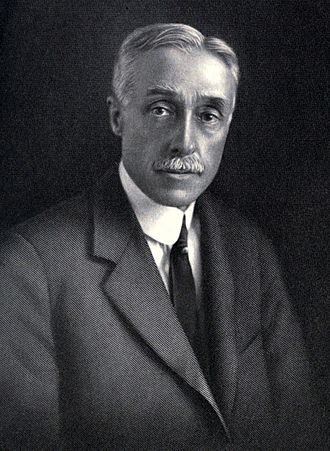
ACHIEVEMENTS: Gyroscope compass and stabilizer
DATE AND PLACE OF BIRTH: October 12, 1860, Cortland, NY
DATE/PLACE OF DEATH/AGE AT DEATH: June 16, 1930, Brooklyn, NY. Aged 69
DISCIPLINE: Inventor/Entrepreneur
FIELD: Electricity/Mechanics/Industry
EDUCATION: Cortland Normal School
MAJOR WORK: autopilot
LIFE AND TIMES:
When Sperry was 16, his father took him to the Philadelphia Centennial Exposition of 1876, where he was fascinated by Jacquard's* loom. By the time he left school four years later, he had taken an interest in electricity, stimulated by Edison*'s invention of the light bulb in 1879. By 1882, Sperry had developed a new type of arc lamp, an improved dynamo, and an arc-light system.
In 1882, Sperry moved to Chicago to promote his inventions, and a year later, founded the Sperry Electric Light, Motor and Car Brake Co. Although he installed arc lights all over the Midwest, and spectacularly illuminated the Chicago Board of Trade building, he made little money because of competition from light bulbs and from the alternating-current lighting being developed by Tesla*.
In 1888, Sperry decided to sell all his patents and set up a manufacturing company, the Elmer A. Sperry Co., to develop special projects in mechanics and electricity. In 1889, he founded the Sperry Electric Mining Machine Co. to manufacture the electric pick and locomotive he had invented for mining operations.
In 1892, he founded the Sperry Electric Railway Co. to manufacture machinery he invented for streetcars, including electric brakes, power transmissions, and a speed control. From 1894, he made electric automobiles powered by his own patented storage battery. Many of his companies were sold or merged with other successful companies. (Long after Sperry's death, one of his companies was merged with Rand*, and became Sperry Rand, which produced the pioneering Univac computer.)
In 1907, Sperry began work on the gyro* (aka gyroscope, which always points in the same direction) and in 1908, produced a gyroscopic ship-stabilizer using feedback from the ship’s movement. (The concept was used by Second World War mathematician Wiener* in applying prediction theory to the firing of anti-aircraft guns.) The U.S. Navy recognized the usefulness of Sperry's system and asked him to solve other navigational and gunnery problems. Given that the traditional magnetic compass did not work well in an iron-hull ship, Sperry created a gyroscopic compass replacement. During the First World War (1914-18), Sperry's Gyroscope Co. supplied the U.S., British and Russian navies.
Sperry also invented a gyrostabilizer for airplanes, demonstrated in France by his aviator son, Lawrence. Sperry's company also developed improved fire-control systems for battleships, bomb and gunnery sights for aircraft, anti-submarine weapons, and searchlights used by anti-aircraft batteries in Paris and London. In 1922, he successfully tested his invention of an automatic pilot system for ships.
On a trip to Europe, Sperry dined in Rome with Marconi* and in Paris, visited the museum containing the original gyroscope invented by physicist Foucault.
In the last year of his life, he met John D. Rockefeller and President Herbert Hoover.
ASSESSMENT: A prolific inventor who was granted more than 400 patents. Many of his inventions involved the use of feedback.
EXTRA CONNECTIONS:
Offered a gyroscopically-controlled wheelbarrow to Barnum* for use in a high-wire act.
Developed injection system for diesel engine
His gyro-compass was first used on a passenger liner (Aquitania) by John Brown & Co* shipbuilders
LANGUAGE: English
PARENTS: Stephen Sperry; Mary Burst
SIBLINGS: None
SPOUSE: Zula Goodman
CHILDREN: Elmer; Lawrence; Edward; Helen
ONELINER: Elmer Sperry, who developed the gyroscope
BIBLIOGRAPHY:
Hughes, Thomas Parke,* Elmer Sperry, Inventor and Engineer*, The John Hopkins Press, Baltimore and London, 1971
Hunsaker, J.C.,* Biographical Memoir of Elmer Ambrose Sperry,* National Academy of Sciences, Washington, 1955