Geissler
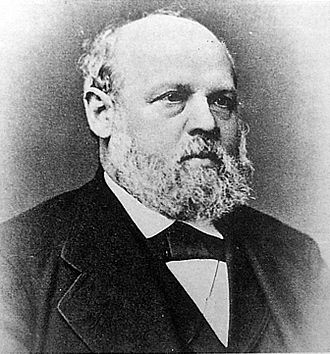
Name: Geissler, Heinrich
ACHIEVEMENT(S): Geissler tube.
NICKNAME/ALIAS: in full, Johann Heinrich Wilhelm Geissler
DATE/PLACE OF BIRTH: 26 May 1814, at Igelshieb, Thuringia, Saxe-Meiningen
[Germany]
DATE/PLACE/AGE AT DEATH: 24 January 1879, in Bonn, Prussia [Germany]. Aged 64
DISCIPLINE: Glassblower
FIELD: Glassmaking
LANGUAGE: German
PARENTS: Johann Georg Jacob Geissler and Johanne Rosine Eichhorn
SIBLINGS: Friedrich Wilhelm Florenz and one other brother
SPOUSE: Unknown
CHILDREN: Unknown
EDUCATION: Unknown
MAJOR WORK: Papers in 'Annalen der Physik und Chemie', 1852-74
LIFE AND TIMES:
Heinrich Geissler began as an apprentice to a glassblower, and as a young man practised this trade at several universities, including Munich. He moved to The Hague in the Netherlands in 1839, where he founded a glass workshop.
By 1852 Geissler had returned to Germany, setting up a workshop at the University of Bonn to make chemical and physical instruments and apparatus, including many for physicist Plucker* and his assistant Hittorf*.
In 1852 Geissler became well-known in the European scientific community for his work with Plucker in the construction of his famous standard thermometers. These were a great improvement on the thermometers currently in use as they were constructed of thinner glass, utilized capillary action, and were very accurate.
Geissler used his new glass balance (with a sensitivity of 0.1 mg. of mercury) and these thermometer tubes enabled Geissler in the same year to construct an instrument for measuring the expansion of freezing water and ice, demonstrating with Plucker that water reaches its maximum density at 3.8° C.
Also in 1852, Geissler was commissioned by a Bonn industrialist to construct an instrument for measuring the alcoholic strength of wine. The result was his "vaporimeter", which measured the pressure of vapours of alcohol and air against mercury, and which Geissler used to measure the strength of liquid ammonia.
In 1855, while trying to solve the problem of obtaining a vacuum with the piston pumps then used (based on the idea of using Torricelli's* vacuum for evacuation, as described by Swedenborg* in 1722), Geissler developed his mercury air pump, made entirely of glass and thick rubber.
Until this point, the pumps used to evacuate a closed space had gaskets or piston seals made of leather or similar materials, and when the inner pressure had been reduced to between a tenth and a hundredth of normal atmospheric pressure further reduction was virtually impossible because of leaks around the seals.
Geissler's pump used a column of mercury as a piston which was operated manually by moving a second tube up and down. Although slow, the pump was highly effective, and with it much lower pressures could be achieved. Using this pump, Geissler was then (1856-57) able to evacute small glass tubes with electrodes melted into the ends - which became known as "Geissler tubes" - in which rarefied gases at very low pressure glowed when subjected to an electrical voltage.
These tubes provided a much better vacuum than could previously be achieved, and using them Plucker (and later Hittorf) was able to study in detail the interesting phenomenon of stripes in the discharge light (or cathode rays) which he discovered in 1859.
Geissler publicly demonstrated his mercury air pump at a scientific meeting at Giessen in 1864.
Meanwhile, in 1858 Geissler had suggested to the chemist Liebig* that the chemical nature of gases could be identified by means of the discharge in "Geissler tubes", and in 1860 he converted white phosphorous into its red form "by electricity". Then, in 1868, in collaboration with Vogelsang, he described a vacuum tube in which liquids occluded in minerals could be identified chemically by means of the new technique of spectral analysis.
In 1873 Geissler demonstrated his conversion of white phosphorous into red.
ASSESSMENT: An important contributor to experimental work of the period.
EXTRA CONNECTIONS: His vacuum-pump work was further developed by Sprengel*
Geissler made a hand-crank mercury pump, and glass tubes that could contain a superior vacuum.
The Geissler tube was used for entertainment throughout the 1800s and evolved around 1910 into commercial neon lighting. Advances in Plucker and Geissler's discharge tube technology developed into the Crookes tube, with which the electron was discovered in 1897, and in 1906 into the amplifying vacuum tube, the basis of electronics and long-distance communication technologies like radio and television.
Geissler was awarded an honorary doctorate in 1868.[1]
ONELINER: Heinrich Geissler, inventor of the Geissler tube
BIBLIOGRAPHY:
DSB, EB
Anderson, David L., The Discovery of the Electron, Princeton, New Jersey:
D. van Nostrand Company Inc., 1964.