Torricelli, A
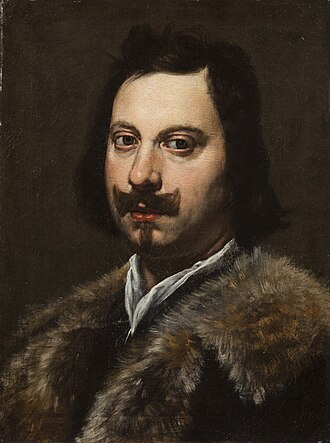
Name: Evangelista Torricelli
Achievements: A mathematician and physicist who laid the foundation for the development of integral calculus. Invented the barometer.
Born: October 15, 1608; Faenza, Italy.
Died: October 25, 1647; Florence, Italy (Aged 39)
Field & Discipline: Science; Mathematics; Physics
Language: Italian
Father: Gaspare Torricelli
Mother: Caterina Angetti
Siblings: Two younger siblings
Spouse: None
Children: None
Education: Jesuit College, Faenza (1624-26); Collegio Romano (1626-32)
Major Work:
“Opera Geometrica” (1644)
Life & Times:
From 1624 to 1626, Torricelli studied mathematics and philosophy at the Jesuit school at Faenza, and did so well that he was sent to Rome for further education at the Collegio Romano, which was run by Benedetto Castelli, a Camaldolese monk famed as a mathematician and hydraulic engineer, and a former pupil of Galileo.
Castelli immediately recognized Torricelli's genius. Within a few months, the student had become his secretary, a job he held until 1632. During the years with Castelli, Torricelli became a master mathematician, studying the geometry of Apollonius, Archimedes, and Theodosius, and the astronomy of Ptolemy, Brahe, Kepler and Longomontanus, which led him to adopt the Copernican doctrine.
From 1632 to February 1641, his movements are unclear, but it seems most likely that he became secretary to Monsignor Giovanni Ciampoli, Galileo's friend and protector, who, from 1632, was governor of various cities in the Marches and Umbria, including Montalto, Norcia, San Severino and Fabriano.
In early 1641, Torricelli went back to Rome with a draft of his treatise on mechanics entitled “Trattato del Moto” (“Treatise Concerning Movement”), which discussed and amplified Galileo's doctrine on the motion of projectiles.
Castelli thought that the treatise was excellent, and in April 1641, submitted the manuscript to Galileo himself, proposing that he accept Torricelli as an assistant.
[assistant to] Galileo agreed and Torricelli joined him at Arcetri, arriving there, after delays caused by the death of his mother, in the following October.
He went to live in Galileo's house, along with [worked with] Viviani*, and stayed there until Galileo's death on 8th January 1642.
While Torricelli was preparing to go back to Rome, on the recommendation of the hydraulic engineer Andrea Arrighetti, [patron was] Grand Duke Ferdinand II* of Tuscany made him professor to the [member of] Accademia del Cimento*, court mathematician and philosopher.
As court philosopher, Torricelli was often asked for advice on contemporary scientific and technological problems, and in 1643 he was consulted on the phenomenon that in suction pumps water did not rise more than about 33 feet or 9 metres.
Galileo had suggested a force, the "force of a vacuum,” that occurred inside the pump and was capable of balancing a column of water 18 braccia high. The case against was strengthened when, in 1640, [work related to] Berti* carried out an experiment in Rome in which water in suction pumps rose higher than 18 braccia.
Earlier, in 1630, [work related to] Baliani* had suggested that it was the weight of the air which prevented the water rising, and, to test this idea, Torricelli developed an experiment, using progressively heavier liquids such as seawater, honey and finally mercury.
Proposing to fill a 4-foot glass tube to the rim with mercury, to close it with one finger and overturn it, and to immerse the open end into mercury in a dish, Torricelli asked Viviani to make one, and his colleague carried out the experiment.
Torricelli described the results in a letter dated 11th June 1644, to [corresponded with] Ricci*, emphasizing how, as some of the mercury did not flow out, the result, he explained, of atmospheric pressure, the space above the mercury in the tube must be a vacuum.
Torricelli had become the first man to create a sustained vacuum, and his work led directly to the achievements of the English physicist [anticipated] Boyle* with his air pump in the late 1650s.
Torricelli predicted that if, instead of mercury, the tube had contained water, the height of the column would have been greater by the proportion that the weight of mercury exceeds that of water. This result was verified by [his theories verified by] Blaise Pascal*, with the help of [his theories verified by] Perier*, in 1647.
After observation, Torricelli concluded that the variation of the height of the mercury from day to day was caused by changes in atmospheric pressure, a concept that led directly to the development of the [invented] barometer*.
In 1644, Torricelli published “Opera Geometrica,” “Geometric Works,” in three parts, containing both valuable advances in pure mathematics as well as his findings on fluid and projectile motion.
Torricelli soon achieved fame throughout Italy and Europe, in particular for his clear exposition and extension of Cavalieri's geometry of indivisibles, a new geometry which was being advanced at the same time by [work related to] Roberval*, [work related to] Fermat* and [work related to] Descartes* in France, who all greatly admired Torricelli's work.
Expanding Cavalieri's work, Torricelli found the length of the arc of the cycloid, the geometric curve traced by a point on the circumference of a rotating circle, or turning wheel.
He made use of early infinitesimal methods to determine the point in the plane of a triangle, so that the sum of its distances from the vertices was a minimum, known as the isogonic centre.
In his “De Motu,” Torricelli also proved that the flow of liquid through an opening is proportional to the square root of the height of the liquid, a result now known as Torricelli's theorem.
The 19th-century Austrian physicist [influenced] Mach* considered this demonstration so important that he called Torricelli “the founder of hydrodynamics.”
During the 1640s Torricelli began to correspond with noted Italian scientists, such as [corresponded with] Borelli*, and French scholars, including [corresponded with] Mersenne*
His correspondence with Roberval caused a serious priority dispute over the discovery of certain properties of the cycloid, including quadrature, centre of gravity, and his theorem concerning the measurement of the solid generated by its rotation round the base. In order to prove his priority, in 1646, Torricelli began to organize his correspondence with the French mathematicians, with a view to publication, but his sudden death prevented it.
Death
 Evangelista Torricelli portrayed on the frontpage of Lezioni d'Evangelista Torricelli
 Torricelli's experiment
 Torricelli lunar crater map
Torricelli died of fever, most likely typhoid,[4][14] in Florence on 25 October 1647,[15] 10 days after his 39th birthday, and was buried at the Basilica of San Lorenzo. He left all his belongings to his adopted son Alessandro. "Belonging to that first period are his pamphlets on Solidi spherali, Contatti and the major part of the propositions and sundry problems which were gathered together by Viviani after Torricelli's death. This early work owes much to the study of the classics."[7] Sixty-eight years after Torricelli had died, his genius still filled his contemporaries with admiration, as evidenced by the anagram below the frontispice of Lezioni accademiche d'Evangelista Torricelli published in 1715: En virescit Galileus alter, meaning "Here blossoms another Galileo."
Honours
In Faenza, a statue of Torricelli was created in 1868 in gratitude for all that Torricelli had done in advancing science during his short lifetime.[8]
The asteroid 7437 Torricelli and a crater on the Moon were named in his honour.
The mountain range Torricelli Mountains on New Guinea carry his name.
In 1830, botanist Augustin Pyramus de Candolle published Torricellia, which is a genus of flowering plants from Asia belonging to the family Torricelliaceae. They were named in Evangelista Torricelli's honour.[16]
Several Italian Navy submarines were named after Evangelista Torricelli:
- A *Micca*class submarine, built in 1918, stricken in 1930
 Title page to a 1823 copy of Lezioni accademiche
 1959 Evangelista Torricelli commemorative stamp of the U.S.S.R.An *Archimede* class submarine (1934), transferred to Spain in 1937 and renamed General Mola, stricken in 1959
- A *Benedetto Brin* class submarine (1937), sank in the Red Sea due to the British Navy in 1940
- *Evangelista Torricelli*, the former USS *Lizardfish*, transferred to Italy in 1960 and decommissioned in 1976


Extra Connections: His work related to that of [work related to] Beeckman*
He influenced the work of [influenced] Geissler* and [influenced] Wallis*
Assessment: During the 1640s he discovered that, because of atmospheric pressure, water will not rise above 33 feet in a suction pump, and from this developed the fundamental principles of hydromechanics.
He also gave the first description of a barometer, or "Torricellian tube,” greatly improved both telescopes and microscopes, and made several mathematical discoveries.
Oneliner: Evangelista Torricelli, discoverer of the vacuum
Bibliography:
- Dictionary of Scientific Biography.
- Encyclopedia Britannica.