Careme
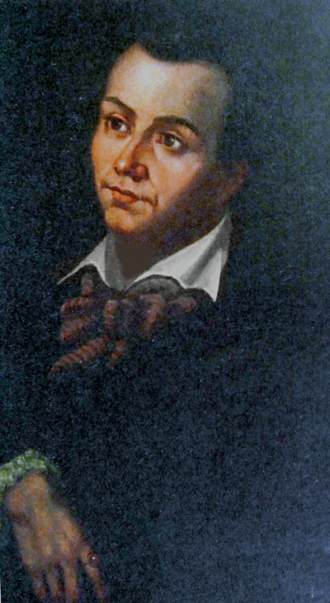
Achievements: Great chef
Born: June 8, 1784; Paris, France
Died: January 12, 1833; Paris, France (Aged 48)
Field & Discipline: Cuisine; Chef
Language: French
Education: No formal education
Major Work: “The Art of French Cuisine in the 19th Century"
Life & Times:
Careme found a job in a Parisian restaurant as a kitchen boy, but some time later, probably around 1799, entered the service of Bailly, the celebrated “patissier” in the rue Vivienne. While studying the art of pastry, Carême taught himself how to read so that he could consult recipe books. His mentors were impressed with his eagerness and his willingness to learn and experiment.
He quickly proved an extremely talented and inventive young cook. When he was not at the pastry shop, he was at the Cabinet des Estampes (the national print museum) copying motifs that could be used in his pastry creations. Careme’s interest in architecture inspired his ever more elaborate creations. He experimented with various types of dough, preserved fruits, creams and sherbets.
French statesman [worked for] Talleyrand*, a regular Bailly customer, began to notice the increasingly elaborate and impressive pastry, and in 1804 hired the 20-year-old Careme away from Bailly’s to work in his kitchens, which Careme managed for 10 years.
Careme recorded practically everything he cooked. After returning from the market in the morning, he would write or rewrite the menus and recipes he would be supervising or executing during the day. In the evening, he would write down the modifications he had made and the reasons why. In his list of creations, for example, he included 196 French soups and 103 foreign ones. But his greatest achievements were in pastry. His elaborately sculptured confections even reached the tables of [cooked for] Napoleon*.
Carême briefly served as chef for: a) Tsar Alexander I of Russia (1814-15, most notably during the Congress of Aix-la-Chapelle); b) British ambassador Lord Stewart at the court of Vienna (1815); c) the Prince Regent (future George IV) in London (1815-17); d) Princess Bagration at the British embassy in Paris (1817); e) the Prince of Württemberg; and f) the Marquess of Londonderry. Careme also catered special banquets, and often spent months organizing them. Careme also invented “cold cuisine”. His meatless cold cuisine was particularly successful.
At the marriage of Prince Jerome and the Princess of Wurttemberg, Careme supervised the cold dishes, a series of innovative delicacies: galantines, head cheese, jellied veal loin, jellied beef, aspics of rooster crests and kidneys, salmis of young red partridge chaud-froid, cold salmon steaks, galantine of eel in Montpellier butter, and borders of tender green ravigote sauce and jellied truffles.
Eventually, Careme became fascinated by the cuisine of ancient Rome, and whenever. possible would research this subject in the Imperial Library. While he considered the dishes served by the Roman emperors extremely rich and heavy, he was impressed by their furnishings and decorations -- their goblets, golden vases, amphora, tableware engraved with gold, white Spanish candles, silk rugs, African fabrics, and above all their use of flowers and music to enhance the overall effect. In 1815, after six years’ research, Careme published his famous “The Artistic Pastry-Chef,” with 128 plates by the author.
In 1819, Careme, now 35, began seven years service with the financier [worked for] the Rothschild family* at the Ferrières estate, the Chateau of Bologne. Since Rothschild allowed Careme to spend what he liked, the chef excelled himself in creating elaborate and sumptuous meals.
Careme’s interest in architecture led him to write “An Anthology of Architecture” published in 1821, and “Architectural Projects” published in 1823. This latter volume consisted mainly of plans for buildings for St. Petersburg. Careme dedicated the book to Tsar Alexander I, and as a token of gratitude, the Tsar gave Careme a magnificent ring studded with diamonds.
Careme’s later important works on cuisine included “Le Maitre d'hotel français, traité des menus à servir à Paris, à Saint-Pétersbourg, à Londres, à Vienne (The French Head Waiter: Based on Meals Prepared in Paris, Saint Petersburg, London, and Vienna"). Published in 1820, the volume compared old and new-style cuisines. Other books by Careme were: “The Parisian Cook, or the Art of French Cooking in the 19th Century" (1828); “The Royal Parisian Pastry-Chef", illustrated with 41 plates by Careme (1828).
A talented artist, Careme made all the engravings for his books. He made a huge fortune from his writings, which he left to his only daughter. At the end of 1832, at 46, Careme began to feel the first pains of the respiratory illness that would lead to his death, and he died in January, 1833. It is assumed his lung disease was brought on by a lifetime of breathing in the coal-fumes in the hot kitchens. He spent the last two days of his life dictating recipes to his daughter.
Extra Connections:
Careme met opera composer [created dish for] Rossini*, and created a steak dish he named after him: “tournedos Rossini”
He knew [knew] Dumas pere*.
He cooked for the Emperor [cooked for] Franz Josef*
Assessment: The founder of La Grande Cuisine Francaise, the classic French style of cooking that is still a culinary inspiration throughout the world; perhaps the first international celebrity chef, creator of the standard hat.
Oneliner: M-A Careme, great 19th-century chef and creator of tournedos Rossini
Bibliography:
- Archivebiographiques francaises.
- Encyclopedia Britannica.
- Krohn, Norman Odya, Menu Mystique, Paris, 1983.
- Revel, Jean-Francois,Culture and Cuisine: A Journey through the History of Food, trans. Helen R. Lane, New York: Doubleday & Co., 1982.
Multimedia:
How A Destitute, Abandoned Parisian Boy Became The First Celebrity Chef
Father: Unknown
Mother: Unknown
Siblings: 14
Spouse: Unknown
Children: 1 daughter