Stanislavsky
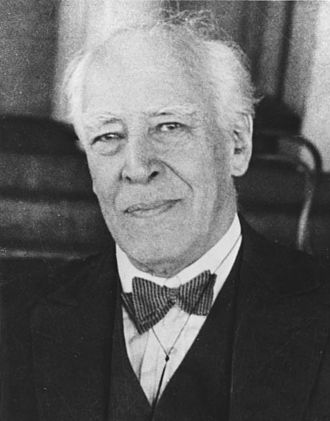
NAME: Stanislavsky, Constantin Sergeivich
OTHER-NAME: born Constantin Sergeyevich Alexeyev
BIRTH: 5 January 1863, Moscow, Russia
DEATH: 7 August 1938, Moscow, Russia
CATEGORY: Fine Arts
DISCIPLINE: Theatre, Actor, Director
ASSESSMENT: He had a major influence on modern theater with his development of method acting.
LANGUAGE: Russian
EDUCATION: Lazarev Institute of Oriental Languages in Moscow from 1878-1887
ACHIEVEMENT: Awards include Order of Lenin; Order of the Red Banner of Labor; People’s Artist of the USSR, 1936
MAJOR-WORK: My Life in Art (1924); An Actor Prepares (1936); Building a Character (1949); Creating a Role (1961); Co-founder of Moscow Art Theater
DETAILS:
Constantin Stanislavsky was born Constantin Sergeyevich Alexeyev on January 5, 1863 in Moscow, the second son of a wealthy textile manufacturer.
Although he entered the family business, Stanislavsky simultaneously devoted himself to a semi-professional theater career. He took the stage name Stanislavsky from another actor he met in amateur theatricals, using it for the first time on March 3, 1884 to hide his theatre work from his parents. In late 1887, Stanislavsky started the Moscow Musical-Dramatic Amateur Circle, presenting its first production on December 6.
In 1888, he founded the Society of Art and Literature with Kommissarzhevsky and Fedotov and began directing and acting in performances.
In April 1890, the company of the German Duke of Saxe-Meiningen made a theatrical tour in Moscow. Stanislavski took extensive notes during the company’s productions and was fascinated by the director Chronegk. Chronegk’s style of strict discipline in rehearsals and the company’s on-stage precision greatly influenced Stanislavsky’s early method of directing inexperienced casts.
Stanislavsky’s original and sometimes controversial productions made his name within the theater community despite his amateur status.
In May 1892 Italian actress Eleonora <inspired by> Duse* was on tour with Dumas' La Dame aux Camélias, Shakespeare's Anthony and Cleopatra, and Sardou's Odette. Seeing Duse perform inspired Stanislavsky, and he strove to identify the method by which she reproduced the same character night after night.
Stanislavsky’s production and portrayal of Othello, which opened on January 19, 1896, was met with widespread acclaim. In spite of the financial concerns of his family, Stanislavsky felt compelled to establish a popular theatre. And became involved in the creation of the Moscow Art Theater, which would offer seats at prices the populace could afford.
The Moscow Art Theatre opened on October 14, 1898 with a successful production of Tolstoy’s Tsar Fyodor Ivanovich. Unfortunately, the next several productions of the season were failures and the future of the new company relied on Chekhov’s The Seagull, which opened on December 17.
It was a great success for both the Moscow Art Theatre and for Anton <collaborated with> Chekhov*, who had resolved never to write a play again after a disastrous production of The Seagull in 1896. Chekhov went on to write both The Three Sisters and The Cherry Orchard for the Moscow Art Theatre. Although the rest of the first season was a critical and financial failure, the Moscow Art Theatre was pronounced a success.
The production of Uncle Vanya in the Company's second season led Maxim Gorki to confess to Chekhov that the play had deeply affected him emotionally. Lenin went to his first production on February 18, 1900 and his support of the theatre would later assure the company's survival.
The company went to St. Petersburg, the Russian capital, in February, 1901. Despite bad reviews from the critics, audiences were very receptive. A performance of An Enemy of the People on March 13 provoked much excitement and support from the crowd of students who had only earlier that day been in jail after protesting a government draft policy.
Formerly known only for his short stories, Gorki wrote his first plays for the Moscow Art Theatre. The first, Small People, opened in February 1902 in St. Petersburg. The Lower Depths, a huge success, followed in December.
The Art Theatre's first foreign tour began in Berlin on February 10, 1906. The tour was an unqualified success, marking the beginning of the Company's international influence.
In 1906, Stanislavsky experienced a crisis, believing that his acting had become too mechanical. He began a very thorough examination of the actor's process. Over the next two years, he re-examined his work and developed the Stanislavsky System of acting.
His new system was greatly inspired by the theory of Affective Memory, developed by the French psychologist Théodule Ribot, which held that memories of all experiences could be evoked by appropriate stimuli. By evoking personal experiences Stanislavsky’s early system tried to create a fusion between the actor and the character being played.
Stanislavsky met Edward Gordon <collaborated with> Craig* in Moscow on October 15, 1908. Although they had intrinsic disagreements about the theatrical process, Craig and Stanislavsky respected each other greatly. Craig was to have artistic control of the Art Theater’s 1910 production of Hamlet, directed by Stanislavsky. The production was postponed until 1911 due to Stanislavsky's poor health. When rehearsals began again, Craig was no longer actively involved in the process and Stanislavsky pushed through the rehearsals with his new method.
In 1912 Stanislavsky formed the First Studio to train the next generation of actors and directors in the System. Although Stanislavsky's personal fortune and the family business were stripped from him when the government took over the factory in the revolution of 1917, thanks to Lenin the Art Theatre survived.
In 1919 Stanislavsky founded an Opera Studio, connected with the Bolshoi Theatre, where his teaching was based in part the work of on his friend, opera singer <inspired by> Chaliapin*.
Chaliapin applied psychological techniques to operatic performance and Stanislavsky was greatly impressed by the way Chaliapin merged the elements of his performance.
During 1922-1924, Stanislavsky and the Art Theatre toured Europe and the U.S. His impact in America led to the creation of the American Laboratory Theatre, which then led to the establishment of the Group Theatre and the Actors’ Studio. Lee Strasberg was an early member of the American Laboratory Theatre, having been greatly influenced by Stanislavsky's portrayal of Vershinin in Three Sisters.
On October 29, 1928, Stanislavsky suffered a heart attack while acting in the Moscow Art Theatre’s 30th Anniversary production of The Three Sisters. He retired from acting and spent the rest of his life directing and teaching.
In February 1931 Joshua <inspired> Logan* witnessed the Stanislavsky "sitting on hands" technique while attending rehearsals for The Golden Cockerel. He told Stanislavsky that he wanted to create a theatre based upon the Moscow Art Theatre model. Stanislavsky advised Logan to find his own way and not simply copy the Art Theatre.
Stanislavsky died August 7, 1938 and is buried in the cemetery of the New Maiden Monastery close to the grave of Anton Chekhov.
EXTRA-CONNECTIONS: None
ONELINER: Constantin Stanislavsky, who started method acting
BIBLIOGRAPHY:
Contemporary Authors Online, Gale, 2002. Reproduced in Biography Resource Center. Farmington Hills, Mich.: The Gale Group. 2002.
“Constantin Stanislavsky.” BBC Education - Biography. http://www.bbc.co.uk/history/programmes/centurions/stanislavky/stanbiog.shtml. Accessed August 14, 2002.
“Constantin Stanislavsky.” Encyclopedia of World Biography, 2nd ed. 17 vols. Gale Research, 1998. Reproduced in Biography Resource Center. Farmington Hills, Mich.: The Gale Group. 2002.
“Konstantin Stanislavsky.” International Dictionary of Opera, 2 vols. St. James Press, 1993. Reproduced in Biography Resource Center. Farmington Hills, Mich.: The Gale Group. 2002.
“Konstantin (Sergeivich) Stanislavsky.” International Dictionary of Theatre, Volume 3: Actors, Directors, and Designers. St. James Press, 1996. Reproduced in Biography Resource Center. Farmington Hills, Mich.: The Gale Group. 2002.
“Konstantin Sergeyevich Stanislavsky.” Almanac of Famous People, 6th ed. Gale Research, 1998. Reproduced in Biography Resource Center. Farmington Hills, Mich.: The Gale Group. 2002.
“Moscow Art Theater.” The Columbia Encyclopedia, 6th ed. Columbia University Press, 2001.
Benedetti, J. (1988). Stanislavski: A Biography. Routledge: New York.
“Stanislavsky, Constantin.” The Columbia Encyclopedia, 6th ed. Columbia University Press, 2001.
“Stanislavsky, Konstantin Sergeyevich.” Encyclopedia Britannica. http://search.eb.com/eb/article?ue=71211. Accessed August 14, 2002.
PARENTS: Vladimir Vladimirovich Alekseyev (d. 1/17/1893) and Elizaveta Vasilievna Yakoliev
SPOUSE: Maria Petrovna Perevostchikova (née Lilina) on 7/5/1889
SIBLINGS: 9 siblings; 8 survived (Vladimir, Zinaïda, Anna, Georgi in the 1860s, Boris, Liubov, Pavel, and Maria in the 1870s)
CHILDREN: Xenia (b. 3/1890, d. 5/1/1890); Kira (b. 7/21/1892); Igor (b. 9/14/1894)