Craig EG
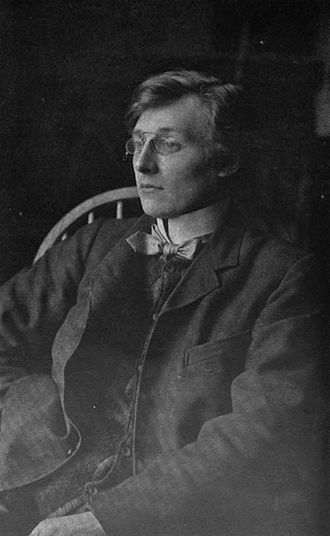
NAME: Craig, Edward Gordon
OTHER-NAME: Edward Henry Gordon Craig; Edward Godwin (birth); Teddy (nickname)
BIRTH: 16 January 1872; Stevenage, Hertfordshire, England
DEATH: 29 July 1966; Vence, France
CATEGORY: Performing Arts & Sports
DISCIPLINE: Theatre
ASSESSMENT: As an actor, director, designer, producer, and theorist, Craig influenced the development of theatre in the 20th century.
LANGUAGE: English
EDUCATION: Tunbridge Wells (1883-86); Bradfield College (1886-88); Heidelberg College (1888)
ACHIEVEMENTS: Order of the Knights of Dannebrog (1930); member of Royal Society of Arts (1938); French Syndicat des Metteurs en Scèene (1946); Companion of Honour (1956); United Scenic Artists (1961); elected president of the Mermaid Theater in London (1964).
MAJOR-WORK: The Art of Theater (published in 1905); The Actor and the Über-marionette (1907); The Theater Advancing (1919); Scene (1923); Noting or the Bookplate (1924); Books and Theatres (1925); biographies of Henry Irving and Ellen Terry (1930).
PARENTS: Edward William Godwin (an architect); Ellen Terry (an actress)
SPOUSE: May Gibson (m. 1893, div. 1905); had several lovers, including Elena Meo and Isadora Duncan
SIBLINGS: Edith
CHILDREN: Sons Edward Anthony, Peter, Phillip, and Robin ("Bobby"); daughters Ellen ("Nelly"), Deidre, and Rosemary ("Rosy")
DETAILS: From birth, Craig lived in the atmosphere of the theatre. His father, architect William Godwin had a passion for it, and his mother, Ellen Terry*, was to become one of England's most celebrated actresses. Craig himself appeared onstage as a child, and his mother helped him launch his acting career at age 16.
Craig's first professional acting experience came in 1889 at the famous Lyceum Theater, under director Henry Irving*. He spent eight years at there, observing and learning from other actors and gaining a practical knowledge of stagecraft from Irving, who became like an adopted father to him. Through acquaintances, Craig developed a fascination with the practice of wood-engraving. In his spare time, he also cultivated a love of drawing, museums, and poetry. He produced his first theatrical piece at Uxbridge Town Hall in 1893.
Following his acclaimed but controversial performance as Hamlet in 1897, Craig abandoned acting. The next three years were spent drifting, and developing his own aesthetic principles.
In 1900, working with composer and pianist Martin Shaw, Craig produced Dido and Aeneas for the Purcell Operatic Society. An artistic success, this production introduced entirely new scenery.
Craig's scene designs, reduced to a few essential elements and fundamental colors, emphasized the spaciousness of the stage without the usual clutter of painted canvas and furniture. The properties of color and light were of prime importance, contributing to dramatic expression and helping to convey the central ideas of the piece.
With this piece, Craig also revealed his gifts as a producer in the fullest sense of the word: he directed the performers' movements and style of acting; designed the scenes, costumes, and lighting; and ultimately established harmony among the various elements of the performance. He believed in simplicity and symbolism, and rejected realism: "Let us leave period and accuracy to detail to the museums and to curiosity shops."
With publicity and financial assistance from his mother Craig went on to produce a series of plays for the Imperial Theatre in 1903, among them Ibsen's The Vikings and Shakespeare's Much Ado About Nothing. These were artistic triumphs but commercial failures, and were the last productions that Craig would stage in his home country.
In 1904 Craig was invited to the Weimar Court in Germany to stage productions at the Lessing Theatre in Berlin. The experience left Craig cautious of misrepresentation of his ideas as some of his scene designs were modified without his approval.
His Art of the Theater, published in 1905, took only a week to write but proved to have widespread influence and was translated into several languages. While in Berlin he met the already legendary dancer Isadora Duncan*. In her work Craig recognized an art closely related to his own: the art of pure movement.
Their love affair gave them both inspiration and produced a daughter, Deidre, in 1906. For nearly two years, they enjoyed life together; Craig accompanied Duncan on tour around Europe and published drawings of her in Isadora Duncan: Six Movement Designs. They parted in 1906, and a year later Craig settled in Florence, Italy, embarking on the most productive period of his career.
By now Craig had considerable expertise as an actor and producer and began committing his theories to paper. In 1908 he launched a magazine (The Mask) which would become one of the most prominent theatrical publication of the twentieth century.
In 1907, Craig published another major work, The Actor and the Über-marionette, critica of contemporary actors, whom Craig believed had a tendency to be a slave to their emotions. Craig believed that an actor should remain outside his role and retain mastery over his instincts through imagination and intelligence.
Craig also experimented with movable stage architecture. He invented vertical screens whose leaves could be folded forwards and backwards. These were meant to alter the appearance of the stage space and could adapt to actors' movements.
In 1908, invited to serve as stage director at the Moscow Arts Theater and to stage Hamlet there, Craig worked with Stanislavsky*. This collaboration produced a clash of principles; Stanislavsky stuck to the ideals of "realistic illusion" while Craig wanted to present the play as a "symbolical drama." The result pleased neither of them.
In 1913 Craig announced the foundation of the School for the Art of the Theatre at the Arena Goldoni in Florence. The school would not limit itself to any one branch of theater or type of play; students attended open-air classes that eliminated stifling classroom atmosphere and gave them a sense of adventure. It was, however, also a place of discipline; Craig exercised complete authority over the school; students had to seek special permission to perform elsewhere and were not allowed to talk about their studies with outsiders.
After World War I intervened, Craig eventually gave up hope of reopening the school and turned to theatrical history, publishing several books including The Theater Advancing (a collection of essays and articles), Scene (his views on the history of theatre architecture and reproductions of his etchings), Noting or the Bookplate (reproductions of woodcuts), Books and Theatres (a volume of essays), and biographies of Irving and Terry.
His last major work for the stage was of Ibsen's The Pretenders at the Royal Theater in Copenhagen.
He made his last visit to England in 1931 before traveling to Moscow and Warsaw and finally settling in the South of France, where he wrote and published his memoirs: Index to the Story of My Days, in 1957.
EXTRA CONNECTIONS: The actor Gielgud* was his cousin.
Craig's idea of using neutral, mobile, non-representational screens as a staging device is probably his most famous scenographic concept. In 1910 Craig filed a patent which described in considerable technical detail a system of hinged and fixed flats that could be quickly arranged to cater for both internal and external scenes. He presented a set to William Butler Yeats for use at the Abbey Theatre in Ireland, who shared his symbolist aesthetic
ONELINER: Gordon Craig, 20th-century theater producer/designer
BIBLIOGRAPHY: "(Edward Henry) Gordon Craig." International Dictionary of Theater, Volume 3: Actors, Directors, and Designers. St. James Press, 1996. Reproduced in Biography Resource Center. Farmington Hills, Mich.: The Gale Group. 2004.
/0-galenet.galegroup.com.mill1.sjlibrary.org:80/servlet/BioRC.
Bablet, Denis. "Edward Gordon Craig." Encyclopaedia Britannica. 2004. Encyclopaedia Britannica Online. 12 May 2004 search.eb.com/article?eu=27169
Bablet, Denis. Edward Gordon Craig. Translated by Daphne Woodward. London: Heinemann, 1962.
Craig, Edward. Gordon Craig: The Story of His Life. London: Victor Gollancz Ltd., 1968.