Ayrton WE
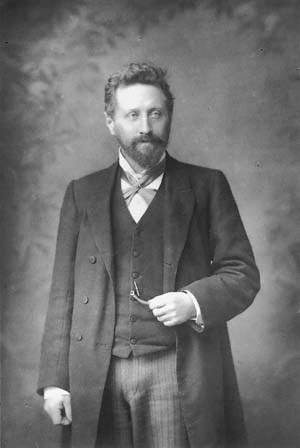
ACHIEVEMENTS: Pioneered the application of electricity.
NICKNAME/ALIAS: None.
DATE/PLACE OF BIRTH: 14th September 1847, in London, England.
DATE/PLACE OF DEATH/AGE AT DEATH: 8th November 1908, in London, England. Aged 61.
DISCIPLINE: Electrical engineer.
FIELD: Engineering.
LANGUAGE: English.
PARENTS: Father, Edward Nugent Ayrton, mother, unknown.
SIBLINGS: Unknown.
SPOUSE: First, Matilda Chaplin, second, Sarah Marks.
CHILDREN: By Matilda Chaplin: 1 daughter: Edith. By Sarah Marks: 1 daughter: Barbara Bodichon.
EDUCATION: University College School; University College, London.
MAJOR WORK: "Practical Electricity" (1877).
LIFE AND TIMES:
Before he sent him off to school at the age of thirteen, Ayrton’s father, a barrister and a linguist made his son practice a different language each day. At eighteen, Ayrton went to London University on a math scholarship and graduated with a degree in mathematics in 1867.
His first job was with the Indian telegraph service and before he went to India, he was sent to Glasgow, to learn about electricity, studying under William Thomson, who later became Kelvin*.
In 1868, Ayrton sailed for Bombay to begin work as an assistant-superintendent. While he was there, he revolutionized the overland telegraphic system when he developed a method of detecting faults that made the system much more efficient.
He was given leave-of-absence in England, where he was put in charge (under Kelvin) of the testing equipment for the Great Western Railway.
Instead of returning to India, in 1873 Ayrton went to Tokyo, where he took the job of Professor of Physics and Telegraphy at the new Imperial Engineering College in Tokyo, which for a time was the largest technical university in the world. In his time at the college, Ayrton set up the first laboratory for teaching applied electricity. It became a model for future laboratories.
For the next five years, Ayrton worked in collaboration with Dr John Perry on experimental research that included dielectrics, terrestrial magnetism, contact electricity and the thermal conductivity of stone. They also carried out telegraphic tests, worked on electrolytic polarisation and together wrote a called "The Music of Colour and Visible Motion".
In 1878, Ayrton went back to England, and the following year, at a meeting of the British Association for the Advancement of Science in Sheffield, he addressed a meeting of workers on the subject of electricity distribution. He believed that the safest and most economical way to distribute power was to transmit it in small quantities of high voltage currents. The electricity could then be reduced to a lower, safer voltage by means of a transformer at the destination.
In this way, not only was the current greatly reduced but also the required weight of the wire, meaning that electricity could more easily be transmitted over long distances. Five years later, Westinghouse* was stimulated by the work of Nicola Tesla to look at the possibilities of doing this with alternating current, rather than the direct current considered safer in the United States, and he bought up all of the patents for transformers available at the time.
In 1879, Ayrton became Professor of Physics and Electrical Engineering at the City and Guilds of London Institute for the Advancement of Technical Education. This was a new foundation that had been set up by City of London companies to promote technical knowledge. Ayrton was Professor of Applied Physics at the Finsbury Institute from 1881 to 1884.
While Ayrton was at the Institute, John Perry joined him and the two of them began to work together again. One of their first projects, in 1881, was an investigation into picture transmission, using the light sensitive properties of selenium that had been discovered by Willoughby Smith in 1873.
In the same year, they invented a surface-contact block signalling system for electric railways and, in 1882, they developed a system of overhead transport known as telpherage, in which an electrically driven truck ran along a rail or cable, with the load carried in a container suspended beneath it.
In the 1870s, cycling had become a popular pastime and, in 1882, Ayrton and Perry designed an electric tricycle. At the same time they made several contributions to the electrical industry, with portable electrical measuring instruments, an electric power meter, a voltmeter and an instrument for measuring induction. Their output was enormous, covering almost every aspect of electric engineering, as well as those aspects of mechanical engineering which related to electronics.
Ayrton also researched galvanometer construction, glow lamps, accumulators, alternating current dynamos and transformers. At the same time, he was working as an electrical consultant for government and commerce, and as an expert witness in patent cases. In 1884 he became the first Professor of Physics and Electrical Engineering at the Central Technical School in South Kensington.
In all of this, he somehow found the time to act as a jury member at several international exhibitions, including the Chicago Expo* of 1893 and the Paris Exhibition in 1900. In 1901, he joined a committee set up to advise on electrical equipment for the Royal Navy, which gave him the chance to carry out research on sparking pressures, the wiring of warships, and searchlights.
In his later years, Ayrton remained committed to education and gave up much of his time to promoting technical study.
When he died in 1908, Professor Perry and Ayrton’s son-in-law, Zangwill*, both read eulogies at his funeral.
ASSESSMENT: Ayrton was a pioneer of practical electronics and of the teaching of technology.
EXTRA CONNECTIONS: He influenced Fleeming Jenkin*
ONELINER: WE Ayrton, electricity pioneer
BIBLIOGRAPHY:
Dictionary of National Biography, Oxford University Press.
Singer, Charles et al, eds., History of Technology, Clarendon Press, Oxford, 1958.