Stevenson RL
Robert Louis Balfour Stevenson
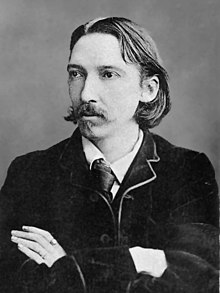
Achievements: “Treasure Island”
Born: November 13, 1850; Edinburgh, Scotland
Died: December 3, 1894; Vailima, Samoa (Aged 44)
Field & Discipline: Literature; Writer
Education: The Academy, Edinburgh; Spring Grove boarding school, Isleworth, London; Mr Thompson's school, Edinburgh; Edinburgh University
Major Work:
Novels:
“Treasure Island” (1883).
“The Strange Case of Dr Jekyll and Mr Hyde” (1886).
“Kidnapped” (1886).
“The Black Arrow” (1888).
“The Master of Ballantrae” (1889).
“Catriona” (1893).
“Weir Of Hermiston” (1896).
Travel:
“Travels with a Donkey” (1879).
Poetry:
“A Child's Garden of Verses” (1885).
Life & Times:
Stevenson was expected to follow in his father’s footsteps and join the civil engineering firm set up by his grandfather [grandfather was] Robert Stephenson*, but he had other plans. He wanted to be a writer, partly influenced by [influenced by] Sir Walter Scott*, the novelist who had been a friend of his grandfather.
At Edinburgh University, while studying engineering, Stevenson came under the influence of the professor of engineering, [taught by] Jenkin*, but, in spite of their friendship, Stevenson abandoned engineering for the law in 1871.
In 1873, Stevenson was ill and went to the French Riviera to recuperate. The next year, he visited London and joined the Savile Club, the aim of which was to encourage conversation, wit and argument.
Stevenson began to make friends in literary circles, among them the writer Edmund Gosse and, in 1874, was finding some success having his work published. One of his published pieces was an essay on the French novelist, [wrote about] Hugo*, which appeared that year in the “Cornhill Magazine,” which was edited by Leslie Stephen, father of novelist [knew] Woolf*.
Although Stevenson became a lawyer in 1875, he never practised. In the same year, Leslie Stephen met Stevenson in Edinburgh and introduced him to another of his literary protegees, [a pal of] Henley*, who was in Edinburgh Infirmary under the care of [knew] Lister* and they became great friends.
Stevenson began to spend time in France, where a cousin introduced him into the artistic circles around Fontainebleu. It was in France, in 1876, that Stevenson met and fell in love with Fanny Osbourne, an American who was separated from her husband. He continued to write essays for the “Cornhill Magazine” and was publishing short stories in other London journals. In 1878, Jenkin took Stevenson on as his secretary, when he visited the Paris Exhibition. In the same year, Stevenson published “An Inland Voyage,” an account of a canoeing trip in Belgium and France, then he spent a month in the Pyrenees, which resulted in his travel book, “Travels with a Donkey in the Cevennes,” published in 1879. By now Stevenson had a reputation in literary circles, but had yet to become known to the public. He planned a series of plays in collaboration with Henley and had written and published a series of fantasies called “New Arabian Nights.”
Stevenson followed Fanny to California in 1879, arriving in bad health after a tough journey by immigrant ship and train. The next year, they got married and spent a few months inland from the Californian coast, where his new wife nursed him back to health. Stevenson used this episode in his life in his story “Silverado Squatters.” Later that year, the couple left the US to live in Scotland.
It turned out that Stevenson was suffering from tuberculosis, so they spent the winter of 1880 to 1881 in Davos, Switzerland, before going home to Scotland. When he got home, he published a collection of essays, “Virginibus Puerisque” and, in Braemar, began writing “Treasure Island,” which originated as a game he played with Fanny's son, Lloyd Osbourne.
In 1881, what was written of the story was serialized in a children’s magazine, “Young Folks,” under the title “The Sea-Cook.” Back in Davos, Stevenson wrote more of the story and then started on “Prince Otto,” one of his less successful books, influenced by the writing of [influenced by] Meredith*.
During a second winter in Davos, he finished “Treasure Island” and, in 1882, went back to Scotland again and wrote two of his best short stories, “Thrawn Janet” and “The Merry Men.” He was still ill, so in September 1882 he and Fanny moved to the South of France and settled in Hyeres.
After enjoying great success with “Treasure Island,” Stevenson was now writing “A Child's Garden of Verses” and had begun “The Black Arrow,” a story of history and adventure. After a year of relatively good health, Stevenson became ill again and they left France for England.
From 1884 until 1887, he and Fanny lived in Bournemouth, where Stevenson was visited by the American writer [a pal of] Henry James*, and the two became very close friends. In 1886, he wrote two of his most successful books, “Kidnapped” and “The Strange Case of Dr Jekyll and Mr Hyde.” Both were instantly popular and were translated into several languages.
The English climate did nothing for Stevenson's health, so, in 1887, he and Fanny went to the US. He was greeted in New York as a famous author and made a lot of good contacts. He lived in the Adirondacks, where he began his novel “The Master of Ballantrae” and wrote essays for “Scribner's Review.”
In 1888, Stevenson and his wife chartered a yacht and sailed from San Francisco. The plan was for a short voyage, but when they saw the extent to which Stevenson’s health improved, they prolonged the voyage and ended up spending the rest of their lives in the southern hemisphere.
After visiting the Marquesas Islands, Stevenson went to Fakarava Atoll and Tahiti, then stayed almost six months in Honoloulu. In 1889, he went to the Gilbert Islands and then to Samoa, where he bought an estate called Vailima. The following year, he went to Sydney, Australia, but his health began to break down again. In April 1890, he and Fanny went back to Samoa and gave orders for a house to be built at Vailima.
In September, they went back again to Samoa to live in their new home. He was known to the natives as Tusitala, “teller of tales” and lived quietly while continuing to write and to keep in touch with friends in England. One of the friends he wrote to regularly was [a pal of] Kipling*, who admired him greatly.
Across 1890 and 1891, he completed “The Wrecker,” which he co-wrote with his stepson. It was his only attempt to write a full-length novel of modern life and it was not very successful.
“A Footnote to History,” written about the politics of Samoa and the islands, appeared in 1892 and he also published “Across the Plains” (a collection of essays and several new stories).
He began to write a whole range of works, some featuring life in the South Seas and others that were driven by his nostalgia for Scotland. “Weir of Hermiston,” a tragic tale set in the Scottish border country, was published posthumously in 1896. Although unfinished, “Weir” was considered to be among his finest work.
Assessment: Stevenson was admired during his lifetime as an essayist and for his stories of romance and adventure.
Extra Connections: Met [met] Twain* in New York, early 1888.
Oneliner: Robert Louis Stevenson, author of “Treasure Island”
His other grandfather, also an engineer with a similar name, designed a lighthouse based on the Eddystone.
Bibliography:
Furnas, J.C., Voyage to Windward, 1950.
Calder, Jenni, RLS, A Life Study, Hamish Hamilton, London, 1980.
McLynn, F., Robert Louis Stevenson: A Biography, 1993.
A literary celebrity during his lifetime, Stevenson now ranks among the 26 most translated authors in the world.[1] His works have been admired by many other writers, including Jorge Luis Borges, Bertolt Brecht, Marcel Proust, Arthur Conan Doyle, Henry James, Cesare Pavese, Ernest Hemingway, Rudyard Kipling, Jack London, Vladimir Nabokov,[2] J. M. Barrie,[3] and G. K. Chesterton, who said of him that he "seemed to pick the right word up on the point of his pen, like a man playing spillikins."[4]