Kipling
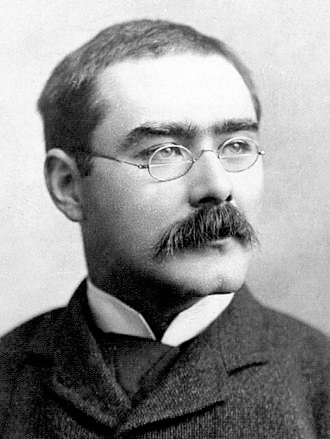
ACHIEVEMENTS: Popular British-Empire writer.
NICKNAME/ALIAS: None
DATE AND PLACE OF BIRTH: December 30, 1865, Bombay, India
DATE/PLACE OF DEATH/AGE AT DEATH: January 18, 1936, London, England. Aged 70
DISCIPLINE: Writer
FIELD: Literature
LANGUAGE: English
EDUCATION: United Services College, Westward Ho, Devon, England
MAJOR WORK: "Stalky & Co.", "Plain Tales from the Hills", "The Jungle Books"; "Kim"; "Just So Stories"
LIFE AND TIMES:
Born in India, but brought up in England, Kipling occasionally spent his vacations with his maternal aunt, who was married to pre-Raphaelite painter Burne-Jones*. He played with the children of designer William Morris*. At 17, he returned to India and worked as a journalist on the "Civil and Military Gazette" in Lahore. He began writing verse and sketches about the life in Anglo-Indian high society and in the villages and cities.
In 1886 he published his first short stories, notably "The Man Who Would Be King" and "Baa Baa Black Sheep". In 1887, he was transferred to a larger newspaper in Allahabad, where he edited a magazine supplement in which he usually included one of his own stories.
In 1888, a collection of his stories was published under the title "Plain Tales from the Hills". Later collections were brought out in paperback, and were known as the Railway Series, since they were perfect reading for the train.
Kipling was already known as a writer when he visited England in 1889 at the age of 24. He made friends with other writers, including Henley* and Thomas Hardy*. He admired writer Robert Louis Stevenson* and although the two never met, they corresponded.
In 1892, Kipling published a book of verse about life in the Indian army called "Barrack-Room Ballads". His writing was seen as a refreshing contrast to that of the esthetic writers then in vogue, such as Oscar Wilde.
After spending some time in South Africa, Australia, and New Zealand, Kipling traveled to Ceylon (now Sri Lanka) with William Booth*, the founder of the Salvation Army, then went on to visit his parents in Lahore. Kipling and his wife spent four years in the U.S. (she had property in Vermont), where he wrote "The Light that Failed" and "Captains Courageous", the latter being his only novel of that time that had an American setting.
"The Jungle Books", the first of which were published while he was in America, were collections of tales and poems for children and were immensely successful.
While living in America, Kipling met Theodore Roosevelt*, whom he greatly admired.
Back in England in the mid-1890s, Kipling became the youngest member of the prestigious Athenaeum Club. At a dinner at Balliol College, Oxford, the students gave him a standing ovation. He was invited aboard flagships during naval maneuvers, and even given column space in "The London Times".
In 1895, at the urging of politician Balfour*, Kipling was offered the post of poet laureate. He refused, fearing his independence would be compromised. He was at the zenith of his popularity. But Kipling was a fanatical proponent of British imperialism, and soon his zeal would become suspect.
From 1898, Kipling spent several months a year in South Africa to escape the wet English winters. He became friendly with Rhodes*, the colonial founder of Rhodesia (now Zimbabwe), and Rhodes built a house for the Kipling’s on his estate. Kipling shared Rhodes's dream of expanding the British colony throughout Africa and during the war between the British colonists and the mainly Dutch Boer settlers in South Africa (1899-1901), Kipling helped edit a paper for the British troops and raised money for soldiers' comforts. In 1901, his novel "Kim" was published.
In 1902, Kipling returned to England and settled in Sussex where he remained until his death. Some of his stories , such as "The Army of a Dream" (1904) and "The Mother Hive" (1908) were full of belligerent imperialism. Others, which reflected the imaginative and sensitive side of his character, included the "Just So" stories for children, still widely read, and "They" (1904), a story in which he expresses his grief at the death of his daughter five years earlier.
He also wrote his own version of English history for children in "Puck of Pook's Hill" (1906) and "Rewards and Fairies" (1910), both of which were influenced by his deepening love of the English countryside.
In 1907, Kipling accepted the Nobel prize for literature, though he always refused any honor offered to him by the British government. He was vehemently against Home Rule for Ireland and considered the abandonment of Ulster a betrayal. He even fell out with his own cousin, Stanley Baldwin, a Conservative politician. In 1915, his son, John, was killed in France in the First World War.
Kipling retired from public life for some years, spending his time writing an official history of "The Irish Guards in the Great War". In his later years, he traveled for the War Graves Commission. By the time he died in 1936, he had written three novels, nearly 300 short stories and over 500 poems.
ASSESSMENT: Became a popular and acclaimed figure at an early age but during the 20th century, his jingoistic imperialism alienated many former admirers
EXTRA CONNECTIONS: Forbes-Robertson* staged “Of Mice and Men.”
Doubleday*?
...In the course of this journey to North America he met Mark Twain in Elmira, New York, and was deeply impressed. Kipling arrived unannounced at Twain's home, and later wrote that as he rang the doorbell, "It occurred to me for the first time that Mark Twain might possibly have other engagements other than the entertainment of escaped lunatics from India, be they ever so full of admiration."[35]
As it was, Twain gladly welcomed Kipling and had a two-hour conversation with him on trends in Anglo-American literature and about what Twain was going to write in a sequel to Tom Sawyer, with Twain assuring Kipling that a sequel was coming, although he had not decided upon the ending: either Sawyer would be elected to Congress or he would be hanged.[35] Twain also passed along the literary advice that an author should "get your facts first and then you can distort 'em as much as you please."[35] Twain, who rather liked Kipling, later wrote of their meeting: "Between us, we cover all knowledge; he covers all that can be known and I cover the rest."[35] Kipling then crossed the Atlantic to Liverpool in October 1889. He soon made his début in the London literary world, to great acclaim.
ONELINER: Rudyard Kipling, popular British-Empire writer
BIBLIOGRAPHY:
Harrison, James, Rudyard Kipling, Twayne Publishers, Boston, 1982.