Bronte, Emily
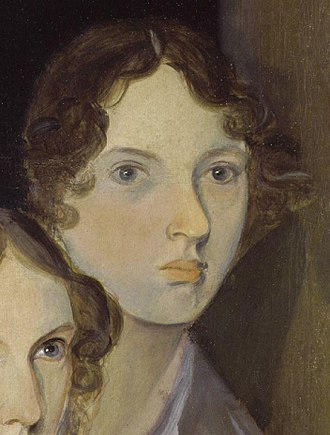
NAME: Bronte, Emily Jane
ACHIEVEMENT(S): Great English novelist
NICKNAME/ALIAS: None
DATE AND PLACE OF BIRTH: July 30, 1818, Thornton, Yorkshire
DATE/PLACE OF DEATH/AGE AT DEATH: December 19, 1848, Haworth, Yorkshire. Aged 30
DISCIPLINE: Novelist
FIELD: Literature
LANGUAGE: English
PARENTS: Patrick Bronte; Maria Branwell
SIBLINGS: Maria; Elizabeth; Branwell; Charlotte; Anne
SPOUSE: None
CHILDREN: None
EDUCATION: Largely instructed at home
MAJOR WORK: "Wuthering Heights"
LIFE AND TIMES:
Despite the lack of formal education, Emily and her siblings had access to a wide range of published material; favourites included Sir Walter Scott, Byron, Shelley, and Blackwood's Magazine.[10]
Inspired by a box of toy soldiers Branwell had received as a gift,[11] the children began to write stories, which they set in a number of invented imaginary worlds populated by their soldiers as well as their heroes, the Duke of Wellington and his sons, Charles and Arthur Wellesley. Little of Emily's work from this period survives, except for poems spoken by characters.[12][13] Initially, all four children shared in creating stories about a world called Angria.
In the winter of 1842, Emily and her sister Charlotte went to Brussels to teach at a school, the Pensionnat Heger, and at the same time to study French. Emily hated the forbidding school, finding it like a prison, and grew gradually more withdrawn and frail. She was rude and hostile to almost everybody and clashed particularly with Constantin Heger, the school mistress's husband. (Charlotte would use him as a model for Paul Emmanuel in "Villette".)
Emily wrote little poetry at this time, but her essays in French showed a remarkable originality. In "Le Chat", for example, she expressed an admiration for cats, because, she said, like humans, they are ungrateful, hypocritical and cruel. In 1843, the death of their aunt brought both sisters home, and Emily was to live at the parsonage in Haworth for the rest of her life.
In 1845, Charlotte came across Emily's poems and insisted they be published. Though angry that Charlotte had found her poetry, Emily reluctantly agreed. The poems, along with others by Charlotte and their sister Anne, appeared in 1846 under the title "Poems by Currer Ellis and Acton Bell".
The chronology of Emily Bronte's masterpiece, "Wuthering Heights" is largely a mystery. It is not known when it was begun, but the version that has become a classic was completed in mid-1846 and published by Thomas Newby , together with Anne's "Agnes Grey," in December, 1847. Some people believe Emily did not intend her novel to be a single-volume novel, but that she worked through 1846 and 1847 to turn it into a two-volume work.
"Wuthering Heights" was not favorably received by Victorian readers. Critics were baffled, criticizing it for coarseness, violence and immorality, though readers acknowledged it had a strange power. An intense, highly imaginative tale of passion and revenge, it is set in the wilds of 18th-century Yorkshire, and tells of passion between the two leading characters, Catherine Earnshaw and Heathcliff. By implication, and through the structure of the novel, the world of the reader is shown to be trivial compared with the wild natural environment of country Yorkshire.
The story is told by several narrative voices, each expressing its social prejudice and level of intelligence, and this heightens the novel's complexity. The eminent writer Matthew Arnold, in "Haworth Churchyard", linked Bronte's genius to that of Shakespeare.
In her last year of life, after the publication of "Wuthering Heights", Bronte wrote a single poem. The poor reception of the book depressed her. Then her brother, Branwell, died in September, 1848. A month later, Charlotte wrote in her diary that Emily had a cough and a cold. In fact, she had tuberculosis. Refusing all medical attention, she persisted in doing her domestic chores, some extremely difficult, almost until the day she died.
ASSESSMENT: Frail and emotional but with a strong will and intense integrity, she was hard to get along with, and seemed to find it difficult to function in normal social contexts
EXTRA CONNECTIONS: She was a fan of Thackeray*
BIBLIOGRAPHY:
Katherine Frank. A Chainless Soul: A Life of Emily Bronte, Houghton Mifflin Company; Boston, 1990.