Quiz / game Show
A game show is a type of radio, television, or stage show in which contestants, individually or as teams, play a game which involves answering questions or solving puzzles, usually for money or prizes. Alternatively, a gameshow can be a demonstrative program about a game [while usually retaining the spirit of an awards ceremony]. In the former, contestants may be invited from a pool of public applicants. Game shows often reward players with prizes such as cash, trips and goods and services provided by the show's sponsor
History

Game show
1930s–1950s
Game shows began to appear on radio and television in the late 1930s. The very first television game show, Spelling Bee, as well as the first radio game show, Information Please, were both broadcast in 1938; the first major success in the game show genre was Dr. I.Q., a radio quiz show that began in 1939. Truth or Consequences was the first game show to air on commercially licensed television; the CBS Television Quiz followed shortly thereafter. Its first episode aired in 1941 as an experimental broadcast. Over the course of the 1950s, as television began to pervade the popular culture, game shows quickly became a fixture. Daytime game shows would be played for lower stakes to target stay-at-home housewives. Higher-stakes programs would air in primetime. During the late 1950s, high-stakes games such as Twenty-One and The $64,000 Question began a rapid rise in popularity. However, the rise of quiz shows proved to be short-lived. In 1959, many of the higher stakes game shows were discovered to be rigged and ratings declines led to most of the primetime games being canceled.
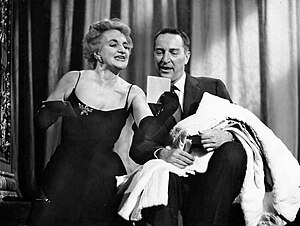
An early variant of the game show, the panel game, survived the quiz show scandals. On shows like What's My Line?, I've Got A Secret, and To Tell the Truth, panels of celebrities would interview a guest in an effort to determine some fact about them; in others, celebrities would answer questions. Panel games had success in primetime until the late 1960s, when they were collectively dropped from television because of their perceived low budget nature. Panel games made a comeback in American daytime television (where the lower budgets were tolerated) in the 1970s through comedy-driven shows such as Match Game and Hollywood Squares.
In the UK, commercial demographic pressures were not as prominent, and restrictions on game shows made in the wake of the scandals limited the style of games that could be played and the amount of money that could be awarded. Panel shows there were kept in primetime and have continued to thrive; they have transformed into showcases for the nation's top stand-up comedians on shows such as Have I Got News for You, Would I Lie to You?, Mock the Week, QI, and 8 Out of 10 Cats, all of which put a heavy emphasis on comedy, leaving the points as mere formalities. The focus on quick-witted comedians has resulted in strong ratings, which, combined with low costs of production, have only spurred growth in the UK panel show phenomenon.
1960s–1970s
Game shows remained a fixture of US daytime television through the 1960s after the quiz show scandals. Lower-stakes games made a slight comeback in daytime in the early 1960s; examples include Jeopardy! which began in 1964 and the original version of The Match Game first aired in 1962. Let's Make a Deal began in 1963 and the 1960s also marked the debut of Hollywood Squares, Password, The Dating Game, and The Newlywed Game....
Extra Connections:
I’ve Got a Secret:
Beyond the standard celebrity guests, several notable people with secrets appeared, including Colonel Harland Sanders ("I started my restaurant with my first Social Security check"), drummer Pete Best ("I used to be one of The Beatles"), and a 95-year-old man, Samuel J. Seymour, who was the last surviving eyewitness to Abraham Lincoln's assassination (he was five years old at the time).
In 1958, an episode devoted to the theme of "teenage appreciation" was the show's answer to media reports of teenage delinquency, and featured nine teenagers of unusual accomplishment including the then 15-year-old chess champion Bobby Fischer, 16-year-old pop star Paul Anka, and 19-year-old college basketball star Oscar Robertson. Sgt. Ira Jones, who served as Elvis Presley's First Sergeant in Germany, made an appearance. Scientist Philo T. Farnsworth, the inventor of electronic television, made his only televised appearance as a contestant on the show.
What’s My Line:
Most notably, the mystery guests ran the gamut of show business' most legendary icons, including Jack Benny, John Wayne, Gary Cooper, Elizabeth Taylor, Ava Gardner, Joan Crawford, James Cagney, Julie Andrews, Jack Lemmon, Jackie Gleason, Steve McQueen, Alfred Hitchcock, Doris Day, James Garner, Ronald Reagan, Jane Russell, Rosalind Russell, Fred Astaire, George Raft, Edward G. Robinson, Gene Autry, Lena Horne, Paul Newman and Joanne Woodward, Andy Griffith, Harry Belafonte, Ginger Rogers, Roy Rogers, Lucille Ball, Desi Arnaz, Bob Hope, Frank Sinatra, Dean Martin and Jerry Lewis, Sammy Davis Jr., Peter Lawford, Sean Connery, James Stewart, Henry Fonda, Salvador Dalí, Aretha Franklin, and many more....
One of the first rotating sponsors was the Remington Rand Corporation, who used their time to promote their line of electric shaver and computers such as the UNIVAC.
Near the end of its run, sponsors would be introduced in the opening title and given commercials during the show, but would not be displayed on the set. Frequent sponsors in the 1960s were Kellogg's cereals, Allstate Insurance, and Geritol.
2011: Watson. IBM's supercomputer Watson won on the TV game show Jeopardy! against Ken Jennings and Brad Rutter. The competition was presented by PBS.
1950s quiz show scandals - Wikipedia
Sandbox Quiz Show