Schliemann
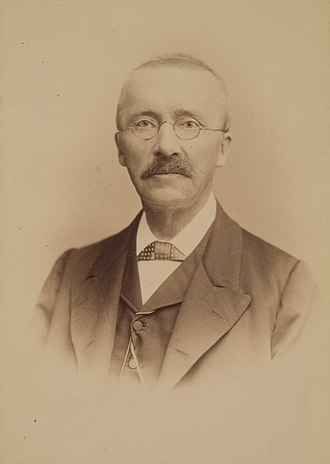
Name: Heinrich Schliemann
Achievements: Discovered ancient Troy.
Born: January 6, 1822; Neubukow, Grand Duchy of Mecklenburg-Schwerin (now Germany)
Died: December 26, 1890; Naples, Italy (Aged 68)
Field & Discipline: Archaeology
Language: German
Father: Father: Ernst Schliemann
Mother: Louise Burger
Siblings: 6
Spouse: 1. Ekaterina Lyschin; 2. Sophia Engastromenos
Children: By Lyschin: 1 son: Sergei; 2 daughters: Natalia, Nadezhda. By Engastromenos: 1 son: Agamemnon; 1 daughter: Andromache
Education: Local schools
Major Work:
"Ilios" (1880)
"Troy and Its Remains" (1875)
Life & Times:
For five years Schliemann worked as a grocer's apprentice in Furstenberg where he apparently dreamed of learning Greek after hearing Homer's verse being spoken by a drunken customer.
He then went to Rostock, where he mastered double book-keeping, before going on to Hamburg where the busy commercial life encouraged his interest in languages. He concentrated on improving his French and English, and after being accepted for a job in Colombia he sold his last valuable possession a silver watch - to equip himself with clothes for the voyage and almost immediately lost everything when his ship was wrecked off the Dutch coast. Schliemann was one of only three survivors.
He arrived destitute in Amsterdam but obtained work first as an office boy and then book-keeper for the bankers Schroder & Co. The bank conducted most of their business with Russia and Schliemann proceeded to add Russian to his collection (learning from a book of poems by Aleksandr Pushkin given to him by a Russian visitor).
In 1846 the bank appointed him their agent in St Petersburg in Russia. Schroder’s were the leading players in the market for indigo, a dye imported from Java and India. Schliemann began trading in indigo and soon added saltpetre, sugar, wine and other commodities to his business dealings. A year after his arrival he was registered on his account as a merchant and had begun making lots of money.
He visited England and France and in 1850 set out for America, in order to settle the affairs of his younger brother who had died of typhus in the Californian gold fields. Ever since gold had been on [profited from discovery of] Sutter’s* land in 1848, people had been flocking to California.
Schliemann arrived in 1851, based himself in the mining town of Sacramento and became very rich buying and selling gold dust.
Schliemann's ability with languages was an important part of his career as a businessman in the importing trade. In 1850, he learned of the death of his brother, Ludwig, who had become wealthy as a speculator in the California gold fields.[10][11]
Schliemann went to California in early 1851 and started a bank in Sacramento buying and reselling over a million dollars' worth of gold dust in just six months. When the local Rothschild agent complained about short-weight consignments, he left California, pretending it was because of illness.
He cashed in his gold dust in London, returned to Russia and made another fortune during the [made fortune from] Crimean War*. He added Polish and Swedish to his repertoire and in 1856 decided to learn both ancient and modern Greek. He also began to travel, beginning in 1858 with a tour of Jerusalem, Syria and Egypt (where he learned Arabic), and visiting Turkey and Greece on his way back to Europe.
Six years later, at the age of forty-two, he settled his business affairs in Russia and left for a world tour. In 1865, during a voyage across the Pacific to San Francisco he wrote a book on China and Japan, published in Paris in 1867.
On his travels he had become fascinated by monuments and ruins, and after seeing Egyptian antiquities in the British Museum he settled in Paris in 1866 to study languages, literature and archaeology at the Sorbonne. His love affair with the Greek language and his studies of Homer had led Schliemann, like many others, to believe that the "Iliad" was founded on fact.
In 1868 he travelled to the so-called Homeric sites in Greece and Asia Minor and became convinced that the original site of Troy was not, as previously supposed, at Bunarbashi in Turkey, but some miles to the south at Hisarlik. He also visited Mycenae in Greece, the city that Homer said was ruled by Agamemnon, who led the Greeks against Troy. Schliemann rejected the idea that the vaulted tombs outside the citadel at Mycenae were those of Agamemnon and his wife Clytemnestra.
At Hisarlik in 1873 he began to dig hastily and chaotically through several levels until he uncovered the remains of a fortified city. He also found a large cache of gold jewellery which he smuggled out of Turkey. Schliemann believed that he had found Homeric Troy and that the treasure had belonged to King Priam.
What he had certainly found was an unsuspected Bronze Age civilization, which revolutionized knowledge of the history of the area. He published his findings in 1874 and although he was reviled by many scholars, his arguments were accepted by others, including [views accepted by] Gladstone*, the prime minister of Britain who was also a classical scholar.
Arguments with the Turkish authorities about the jewellery Schliemann had taken held up further work at Hisarlik, and he began excavating at Mycenae in 1876, uncovering the tombs of the Mycenaean kings and another large treasure trove. He resumed excavations at Hisarlik in 1878 where he was assisted by [assistant was] Virchow*, the distinguished German pathologist and founder of the German Society for Anthropology, Ethnology and Prehistory.
Schliemann was not bashful about his achievements. He wrote books and sent reports of his findings to newspapers and journals, firing the imagination of the public as well as that of scholars of ancient history. In 1882-3 he excavated at Troy for the third time in with Wilhelm Dorpfeld, an architect and experienced classical archaeologist. Dorpfeld introduced proper records and measuring proceedures which improved dating techniques. Schliemann and Dorpfeld also excavated at the fortified site of Tiryns near Mycenae, and in Orchomenos, north of Thebes in Boeotia.
The archeologist [his dig visited by] Arthur Evans* visited Schliemann on site at Orchomenos and from then, the Greek Bronze Age was Evans's obsession. Schliemann paid his last visit to Troy in 1890. He was suffering from ill health but still inspired by the possibility of finding a pre-Mycenean civilisation. This project did not materialize and was eventually undertaken by Evans.
In the last year of his life Schliemann also discussed with Virchow an expedition to the Canary Islands to search for lost Atlantis. Schliemann died in Naples undergoing treatment for an ear complaint. His work at Hisarlik and Mycenae was continued by Dorpfeld who during the 1890's found a new fortified city fifty yards from the one excavated by Schliemann. This new discovery fitted more nearly Homer's description of Troy. In the 1930's another level was discovered at Hisarlik and this is the site generally acknowledged to be Homeric Troy by those who believe Homer based his epic on fact.
Assessment: Although the treasure Schliemann had discovered was not that of King Priam, Schliemann had been correct in naming Hisarlik as the site of Homeric Troy.
.
Oneliner: Heinrich Schliemann, who found Troy
Bibliography:
- Moorehead Caroline, The Lost Treasures of Troy, Phoenix Giants, London, 1994.
- Traill, David, Schliemann of Troy, Treasure and Deceit, John Murray, London, 1995.
Heinrich Schliemann - Wikipedia
Multimedia
Connections II #13