Foucault, JBL
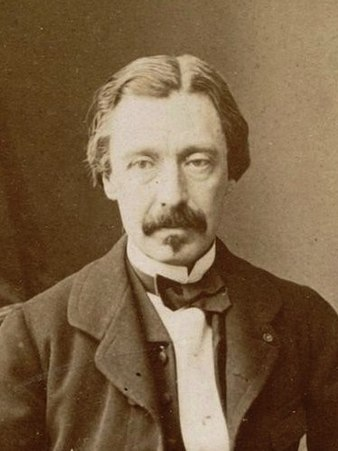
ACHIEVEMENT(S): Gyroscopic principle
NICKNAME/ALIAS: None
DATE AND PLACE OF BIRTH: September 19, 1819, Paris, France
DATE/PLACE OF DEATH/AGE AT DEATH: February 11, 1868, Paris, France. Aged 48
DISCIPLINE: Experimental Geophysics
FIELD: Physics
LANGUAGE: French
PARENTS: Father was a publisher
SIBLINGS: Unknown
SPOUSE: None
CHILDREN: None
EDUCATION: Ecole de Medicine, Paris
MAJOR WORK: Foucault's Pendulum; Gyroscope
LIFE AND TIMES:
Between 1845 and 1847, Foucault and Fizeau* made photographic history. Using a new photographic technique developed by Daguerre*, the pair took the first picture of the sun. The two went on to develop the theory of the wave structure of light, proving that interference occurs between rays of light.. By comparing heat rays of the sun with radiant heat they also discovered that the wavelength of heat was identical to that of light.
When Arago* failed to determine the speed of light in air, Foucault and Fizeau decided to give it a try. Though each worked on his own, they both used the rotating-mirror method first applied by Wheatstone* in his experiments to determine the speed of electricity. Fizeau was the first to measure the speed of light at the Earth's surface.
Then Foucault became the first to discover that light travels faster in air than in water. Using a variation of the rotating-mirror apparatus, Foucault compared the speed of the reflection of a source of light bouncing off a rotating mirror and passing through air to a stationary mirror with the speed of the same source of light bouncing off the same mirror, but passing through water to be reflected in another stationary mirror.
The fact that the reflection traveling through water was more often deflected by the spinning mirror than the reflection passing through air, proved that light traveled faster in air than in water.
In his work in astronomical photography, Foucault found that pictures of celestial objects required especially-long exposures and, therefore, special telescopes were needed that could follow the photographic subject. Foucault used a clock whose pendulum had an iron rod, and he noticed that if the rod were set vibrating while fixed in lathe, it maintained its plane of vibration even when the lathe was rotated.
This gave him the idea for an experiment, which he carried out in the cellar of his house. Using steel thread two meters long, he suspended a free-swinging pendulum with a 5-kilogram bob. On Jan. 8, 1851, he recorded that the pendulum gradually turned "in the direction of the diurnal movement of the celestial sphere", meaning in the direction of the sun.
He did the same experiment on a larger scale in the Pantheon in Paris, and over the next two years, the experiment was repeated at different locations around the world. For this work, Foucault was awarded the French Cross of the Legion of Honor.
Later in 1851, Foucault discovered the principle of the gyroscope, (aka the gyro* : a heavy, spinning disk, mounted to move freely in any direction) that showed the rotation of the earth more visibly than the pendulum.
The principle of the gyroscope helped meteorologists like Buys Ballot* and Ferrel* study the behavior of wind and ocean currents moving on a turning Earth. The American Sperry* would later use the gyroscope to stabilize ships and guns.
Not entirely satisfied with his pendulum device, Foucault continued to research better ways to make mechanical movement uniform. He came up with a "heliostat", which could be used to keep a telescope continuously directed at the sun, and a "siderostat" (perfected after his death), which kept a telescope continuously trained on a star.
Among many other innovations produced by Foucault was a regulator for the electric arc lamp. With a special talent for explaining science in accurate and understandable terms, between 1844 and 1846 Foucault wrote texts on geometry, arithmetic and chemistry for secondary schools.
ASSESSMENT: His discoveries led to the founding of geophysics and contributed to the developing fields of meteorology and oceanography
EXTRA CONNECTIONS: His work related to that of Maury*, Coriolis*.
He knew Kelvin*
He anticipated then spectroscopic work of Kirchhoff*
He may have anticipated the schlieren work of Toepler*
ONELINER: JBL Foucault, discoverer of the gyroscope
BIBLIOGRAPHY:
Dictionary of Scientific Biography